
![행성우주과학 II-2. 별의 거리 측정 [3차시]](https://i.ytimg.com/vi/FjdjS_UNu4U/maxresdefault.jpg)















Our understanding of the Milky Way has evolved dramatically from ancient times to today, driven by technological advances and scientific discoveries. Galileo first revealed the Milky Way consists of countless individual stars rather than a continuous fog of light. William and Caroline Herschel created the first serious map of the galaxy using star counts and assumptions about uniform star distribution. Henrietta Leavitt's discovery of the period-luminosity relationship for Cepheid variables provided the essential tool for measuring cosmic distances, enabling Harlow Shapley to prove the Sun is not at the galactic center and Edwin Hubble to demonstrate that the Milky Way is just one of many galaxies in an expanding universe. Modern missions like Gaia are now mapping billions of stars to reveal the galaxy's true structure, while future gravitational wave observatories like LISA will probe the stellar graveyard to understand the Milky Way's evolutionary history.
Decoding the Milky Way: From Star Counts to Gravitational Waves
Added:on the NSN chat.
>> Yes.
>> All right. So, we um All right, I went ahead and I hit live. So, we are in fact live. Um first to all of our NSN folks out there, I do want to apologize. There seems to be a technical issue with Zoom tonight. Um but welcome to the February 2026 NASA Night Sky Network web member webinar. I am Cat Trout here with my colleagues Vivian White and my former colleague Brian Cruz who is joining us um from retirement and our colleague Chanel Vanny. We are hosting tonight's webinar from the Astronomical Society of the Pacific in San Francisco, California. And we are very excited to welcome our rescheduled guest speaker Shane Larson with his talk on a storm of stars knowing the Milky Way from star counts to gravitational waves. And before we introduce Dr. Larson, here is Vivian with some additional announcements aside from the fact that the Zoom link is not working tonight.
>> Yeah, you'll be getting an email from us any moment. Uh, and hopefully you can just catch up with this where we started. So, um, I just want to make sure you get your club active on the NSN website and we'll throw some links in the chat on YouTube. The Night Sky Network is a coalition of more than 400 astronomy clubs across the US. And if you're not already connected to your local astronomy club, you can find one close to you at the link that Cat will put in the chat. Um, nights sky.jpl.nasa.gov should get you there. Your active reporting helps us keep the night sky network going. So, thanks to all of the clubs who join us and tell us all about what you're doing. For those of you joining a webinar for the first time, welcome. We are thrilled that this monthly webinar series is provided by the NASA Night Sky Network and the Astronomical Society of the Pacific.
This is where NASA scientists share the latest updates from current missions and surveys. Um, you can find upcoming webinars and a trove of past webinars in the series on our YouTube page, which you're probably already joining us from.
Um, and Cat can throw that link in the chat as well. So, Kat, I'll send it back to you for introductions.
>> Thank you so much, Vivian. Uh, so again, uh, welcome to, uh, thank you. Welcome to NASA's Night Sky Network February 2026 webinar, A Storm of Stars, Knowing the Milky Way from Star Counts to Gravitational Waves. And tonight our guest speaker is Shane Larson, a professor of physics at Clarkson University and the director of integrated engineering and applied science projects in the culture school of engineering and applied sciences. He works in the field of gravitational wave astrophysics special gravitational waves I should say waves astrophysics specializing in studies of compact stars binaries and the galaxy with both the groundbased LIGO project and the forthcoming spacebased project observatory known as Lisa. He is an award-winning teacher and a fellow of the American physical astronom um society. Wow. Tonight has just been a comedy of errors.
He is an avid amateur astronomer with um two telescopes that are homebuilt, both dosonians, a 12 and a half inch named Equinox and a 22in named cosmos mariner.
He contributes regularly to a public science blog at writcience.wordpress.com and I will add that link in the YouTube chat since that's where everyone is. and he is a regular contributor on Blue Sky at the handle Science Jedi. With that, Shane, I t I pass it over to you.
>> Okay. Well, thank you everyone uh for coming and certainly thank you uh for the invitation. Uh as was mentioned, I'm both an amateur and a professional astronomer. It's kind of one of the great pleasures of my life. So, it's always a great uh uh enjoyment for me to be able to talk to uh folks in amateur astronomy and the general public about things that I do that are very near and dear to my heart. So, tonight uh we're going to talk about the Milky Way. So, let me go ahead and share some slides.
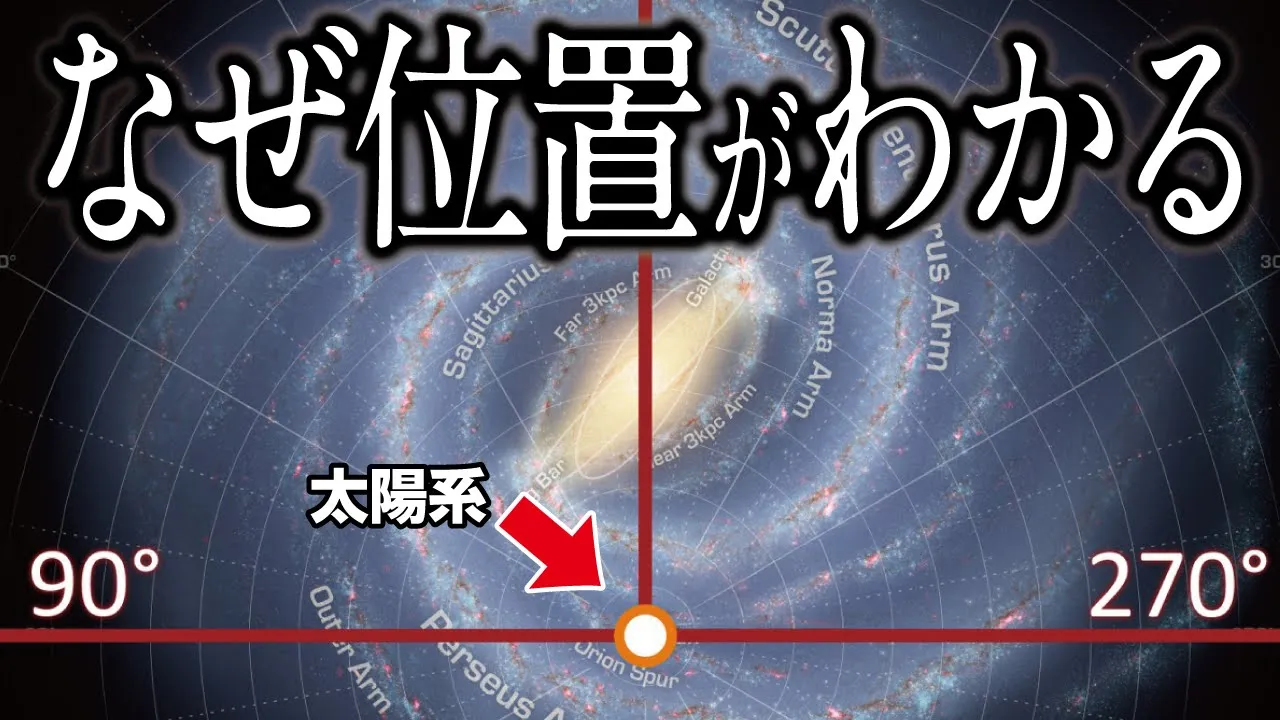
Um so, the Milky Way is something that we encounter often uh as amateur astronomers. uh but it's something that I work on um uh as a professional astronomer as well. Um so my uh blog post is there, my my handles are there uh on social media and you can see in the background uh an artist rendition of what our current thinking of the shape and structure of the Milky Way is. We are as we say a grand design spiral galaxy, a large uh vast spiral-shaped maelstrom of stars. uh we have decided there is a bar in the middle of the galaxy. You can see that structure there. Um and the sun as we will discuss we have discovered lives somewhere out uh towards the edge not near the center.
Uh we're in a region of the galaxy known as the karina signis arm. Okay. Now this is the kind of typical picture that you might have uh when you uh uh imagine a spiral galaxy or when you're taught about spiral galaxies for the first time. But the way the Milky Way has appeared to 40,000 generations of humans and those of us who are amateur astronomers and have the chance to get away from city lights and go out into the dark spaces will see the Milky Way like this um during the forthcoming spring and summer nights of the year.
It's a diaphous band of light that kind of strikes up uh out of the horizon here in the northern hemisphere and arches overhead. It is um uh pocketed with kind of dark lanes. We'll talk about those a little bit. Um and then surrounding it throughout the rest of the sky, the more familiar studded patterns of the stars in the night sky. Um you and I have kind of uh lived into the future of astrophotography and so uh photographers take lots and lots of pictures of the Milky Way these days. So you may have seen some of them.
This is a massive mosaic of the Milky Way taken from various parts of the world and then digitally assembled panning around the entire sky showing you the Milky Way. This bright spot going by here right now is the center of the Milky Way galaxy towards the direction of Sagittarius. You can see some small satellite galaxies, the large and small melanic clouds here that orbit the Milky Way. We'll talk about those here um as we go on. They are part of the story. Now, to start with here, um I, you know, almost anyone you talk to, whether you're an amateur astronomer or a scientist or just a general person on the street, has heard of the Milky Way or has heard of spiral galaxies and often knows some things about it. But, but to start with tonight to really understand the story that I want you to uh absorb is I want you to take the advice of Master Yoda and I want you to unlearn what you have learned. I think to fully appreciate how remarkable it is that we as humans um understand the Milky Way in the detail that we do and that we're still discovering things about the Milky Way um really kind of depends on the fact that we forget that we know all the things that we kind of know off the top of our heads. It's important, I think, to remember how hard it was to figure these things out. And so the story I want to uh take you through tonight is to go back to a time before we really knew anything about the Milky Way and work our way forward into the future to where you and I are today.
Okay? And so to do that, um I want to go back just a little bit more than 400 years uh to when we didn't know the Milky Way was anything more than this fog of light that you could see on the sky. The first person to understand and know what that fog of light was was Galileo. Uh, famously, Galileo had heard of a Dutch invention that you and I today call a telescope. And, uh, before anyone else thought to, he had the wherewithal to point it at the night sky. And during the year6009, he discovered a great many things that today in astronomy you and I take for granted. But it's it's I think kind of remarkable to think about the fact that at the time he did this, he didn't really know what to expect when he pointed the telescope at the planets or at the Milky Way or, you know, at the moon. He discovered things that we just flat out didn't know that today to you and I are very familiar uh with because we have telescopes and we have astrophotography and we've seen pictures and take astronomy classes and listen to night sky network uh webinars. So in6009 he kind of discovered a great many things. You've probably heard about many of those discoveries but I want to focus specifically on what he discovered about the sky uh the Milky Way. Um he published all of his results in 1610 in a book called Cidurius Nudius. Uh so this is the starry messenger. Uh the original book of which these are two pages from is written in Latin. Um although you can get English translations of it and I'll show you some translations here. Uh but what you see here are two of Galileo's sketches of what he could see when he turned his telescope toward the sky. Uh on the right there you can see his sketch of the Pletes uh M45 or the seven sisters.
Uh those of you who haven't seen Pleades before, uh go look at the front of a Subaru, right? It's the constellation shape that's in the logo of a Subaru car. Subaru is the another name for the seven sisters. And so you can see there in his sketch, right, the kind of bright stars, the big stars are the familiar stars you could see with your naked eye.
But through the telescope, he could see a great many other dimmer stars. And indeed, when he looked anywhere in the sky, he saw similar things. There were bright stars you could see with your naked eye, and then there were other stars that could not be seen that were revealed by using the telescope. And this is kind of the most important lesson there is about telescopes.
Telescopes are doing something that your body already knows how to do. It's just doing it in a bionic way, right? A telescope is really a enhancement of what your bodily sense of your sight already knows how to do. It takes that that that light, it gathers it, it amplifies, it magnifies. And so this is how Galileo was able to discover that there were stars that our eyes could not see because the telescope was his bionic extension. So what he wrote about the Milky Way was the following. So translated uh into English, he wrote, "The galaxy is nothing else than a conjur." So that's a common word that was used. It means a disorderly jumble.
Um, a conjureries of innumerable stars distributed in clusters to whatever region of it you direct your spy glass.
An immense number of stars immediately offer themselves to view, of which very many appear large and very conspicuous, but the multitude of small ones is truly unfathomable. And I've added that emphasis there in yellow. Right? It's the multitude of small ones that Galileo very quickly realized were in every direction and far too numerous for him to count. Whether or not he realized there would be more if he built a built a new telescope, he may not have known, but certainly was very rapidly discovered that as you build bigger telescopes, you can see more. And so this is really the first inkling that people had that there were far more stars available to a telescope than you can see with your naked eye. there are only some 9,000 across the entire northern and southern hemisphere that you can see with your naked eye. Okay.
So, uh once the telescope kind of caught on, uh they kind of started appearing uh all over Europe in particular. They kind of became drawing room curiosities.
You'd go over to someone's house uh you know for a dinner party and they would you know uh take their telescope out for to the garden and you know show you cool things on the sky. Okay. But uh you know scientists were starting to pop up and in those days you know scientists were much like amateurs are today right they were the only ones who kind of knew how to do this and they would find themselves uh kind of working on astronomy for a career if they could find a way to do it um and building better and bigger telescopes and trying to map out all the things that you could see in the sky which Galileo started when he when he did the first uh survey in6009.
So I'm going to leap ahead more than a hundred years to the kind of really next part of the story. People people started mapping things in the sky and you know looking all over the sky. Everyone kind of came to the realization that Galileo was right that the Milky Way was kind of composed of lots and lots of stars. Um but but no one really kind of knew anything about the Milky Way itself. So, I'm going to leap ahead to 1784 when the first serious attempt to map the Milky Way was made. And this was done by William and Carolyn Hershel. They decided that they were going to use the telescope and look at as much of the Milky Way as they can um and then map out uh as well as they could the distribution, the sizes, the shapes of the stars to determine what the Milky Way was really like. Okay. So they used a technique which I'll describe to you here in a moment called star gauges.
Okay. And the beautiful thing about this is uh you can still go uh get the papers from the Royal Society. So uh a paper about what they did and their first map was published in 1785 and you can still go get it and read it. Um it's in the archives of the Royal Society. um it was written in paper and so the paper one's now been scanned and you can read it in a thoroughly modern PDF form if you want to go get it. Okay. So what was it that they decided to do? So at this point in time we were using telescopes. We could see stars in the sky. We were discovering nebulas and star clusters and things. We didn't know what all of them were. But we still had the fundamental problem which is we literally didn't know anything about stars at all. We didn't know why they were bright. We didn't know why they uh shed light at all. Um we didn't know how far away they were. Um and so in order to do this this um exercise here, the Hersels had to make some assumptions about the stars. And this this is a theme we'll come back to repeatedly during this conversation tonight is that in the absence of knowledge, we have to make assumptions. We know the assumptions aren't perfect, but they also aren't that bonkers either, right?
They're clearly going to give us some errors, but they're going to allow us to kind of make the first attempt that we could to try and map out this kind of vast structure that is around us. Okay, as humans, it's literally the only choice we have, right? Even today, in the age in which you and I live, no human has been farther from the Earth than the moon. But we're talking about mapping the vastness of the Milky Way, which is at such great distances, no human now or in any foreseeable time in the future will be able to go there. So when you don't know anything, you do the best you can. And that's what the Hersels did. So Star Gauges is really about doing the best you can. So Stargaza is about making some assumptions. So this is a figure from Hershel's paper. So if you get the PDF and look at it, you'll see this figure in there. Hershel made the following assumption. He said, "I'm going to assume that the density, the distribution, the number of stars in any area in the Milky Way, no matter where I am in the Milky Way, is constant." That is to say, the stars are uniformly distributed throughout the Milky Way.
And what that allows him to do is when he points his telescope in a particular direction, he can kind of imagine the long uh ice cream cone shape of what his telescope can see. and calculate how many stars are in the view of his telescope. Okay? Because he knows that there's an equal number close as far away as farther away as farther away.
The other assumption he makes is that his telescope could see all of the stars in a given direction that he looked.
Okay? Now, you and I know that's not true. You and I live in the future. We know better than that. Uh but for Hershel, it was the only thing he could do. So, we made the assumption. Okay.
Now, another thing you'll often hear associated with the idea of star gauges is that there was an assumption made that all the stars were intrinsically the same brightness. Okay, so I liken this to light bulbs, right? You can imagine the brightness of a star is like the wattage on a light bulb. Okay, so light bulbs come in 100 watt bulbs and 40 watt bulbs and 20 watt bulbs. And the point in that is that a bright bulb really far away looks exactly the same as a dim bulb that is really close.
Okay? And so that's the assumption that Hershel was going to make about stars.
He said, let's imagine all the stars were 100 watt bulbs. And so if a star is bright, that means it's really close.
And if a star is dim, that means it's really far away. Okay? Okay. So, to demonstrate that, I went out in my backyard. Um, and I did this with flashlights. Okay. So, this is photography. You can see here. It's not perfect, but you'll you should be able to get the gist. So, when you take a picture of a bright light in the dark, and you don't let your phones do that thing they can do now, which is long-term exposure, just have it snap a picture. The brightness of the of the light source that you're looking at, in this case, my flashlight, is basically how big it looks in the picture. So a dimmer light looks uh smaller and a brighter light looks bigger. So when I have two identical flashlights the same distance away, they look more or less the same size in the photograph. But if I take and I push one farther away, then it looks smaller. That is to say, it's dimmer in the picture. And if I bring it closer, then it gets bigger and the other one looks smaller. Okay? So, this isn't central to the way the star gauges are used, uh, but it's it's built into some of the calculations. And so, you'll often hear people talk about this if you go read about the star gauges. And you can imagine using this yourself if you wanted to go out in your backyard and try and replicate the Hershel's mapping exercise.
So, to do this, um, Hershel was famous for building bigger and bigger telescopes. Uh, so this is the famous 20ft telescope, uh, that, uh, that he used. Um so he would stand up here in this cage okay or sit on the stool. The eyepiece was mounted right here on the edge. Um the telescope will pivot in azimuth and tip up and down in altitude.
So it works in some sense like a modern dosonian but you see there have to be people pushing it around. So Hershel would sit up here. He would look through the eyepiece on the edge and as things drifted by the telescope, he would call them out to Carolyn who was down at the bottom keeping notes about the observations.
In those days, telescopes were described by their focal length. So this is a 20 foot focal length whereas today you and I would describe it by the aperture. So this is a 19inch diameter uh telescope that he was using. Okay. So to do the mapping exercise, the Hersels did 683 lines of sight. They had the telescope set up in uh England and then they packed the whole thing up and took it uh to the southern hemisphere and did the exercise again. And so they had a total of 683 lines of sight that they looked through the telescope and counted all of the stars they could see and arranged them by brightness and then went back through that kind of assumptions that you and I just talked through um to figure out how many stars were close and how many stars were far away and in what directions they were from the Earth. And the output of that is probably one of the most famous maps of the Milky Way.
This is the Hersel map of the Milky Way.
Okay, you see it has a elongated kind of irregular structure. There are some interesting kind of missing places. You and I know this space right here as the great rift in Signis. Okay? And you can see that the sun is this bright spot that's located right here in the center.
So when they published this, this is what the Hersel wrote. They said the galaxy is a very extensive branching compound conjuries that jumbled disorderness again of many millions of stars, right? They did 683 lines of sight. They they they have millions of stars they were counting. It most probably owes its origin to many remarkably large as well as pretty closely scattered small stars that may have drawn together the rest. And I've again added the emphasis there. um at the end right that red part is really an indication that the Hersels were beginning to understand the implications of Isaac Newton's universal law of gravitation which he had published in the Principia in 1687 just barely a hundred years before okay that was the first time that we as scientists had the understanding the realization that gravity was really the force that made all the things in the universe go and what you see here Hershel's noting is that it's the mass of all the stars in the galaxy, the gravity of them that's actually keeping them together to become what you and I call the Milky Way. Okay.
So, I think that's kind of remarkable.
Okay. And there uh there of course is the sun in the center. Okay. Now, if you uh are uh visiting Chicago or you're in Illinois and you go to the Adler Planetarium, there is a great display there that I like. This is an acrylic rendition of the Hershel map. But what I like about this is if you go look at it, it's part of a larger display. So you can see here on this side of the display is the Hershel map rendered in acrylic.
And on this side of the display, they have the galaxy in uh built out of acrylic discs. So it's that kind of spiral disc shape that you and I are familiar with. Half of the galaxy is here. It's cut in half. So you can kind of see how the Hershel map results from the Milky Way. But when you stand on this side of it, they have a mirror here. So you can see the whole galaxy looking like a flat disc as it really is. Okay. So uh if you get a chance to visit the Adler, there's lots of awesome things to see at the Adler. Uh but this is this is one of my favorite things since I'm a I'm a galaxy nerd. So okay, so that was the late 1700s. Okay. And for a long time, people kept trying to do this. People would make maps. They would count stars. They would try and improve on the Hersel's map. But fundamentally, the thing that was limiting us is what I usually call the hardest problem in astronomy.
The hardest problem in astronomy is well, it's one of two things. One is we didn't know anything about the stars. We didn't know what their intrinsic wattage was, what their brightness really was all about. But the real fundamental problem is astronomy is that we didn't know how to measure distances to anything, right? So all that business about, you know, close stars are are bright and dim stars are far, right?
That sort of thing was really a difficult thing to kind of figure out and untangle from the attempt to understand what the shape and structure of the Milky Way was. Okay, so we were never going to improve things until we solved this problem. Okay. And uh as it turns out uh the hardest problem in astronomy was solved just barely a hundred years ago by this woman. Okay.
So people often ask me what's the most important discovery in the history of astronomy. People will argue about this but I without uh fail will always say Henrietta Swan Levit made the most important discovery in the history of astronomy. She's the one who broke through the fundamental problem of measuring the distances to stars and that built on what today we now call the distance ladder but it all started with Henrietta Swan Leovit. She was a graduate of Radcliffe College which was the women's college associated with Harvard. Um she was a member of this very famous group of women who worked at college uh Harvard College Observatory called the Harvard computers. Um, she was technically trained, so she was extraordinarily skilled. Um, she was, uh, a woman, so they paid her less than they could pay men. She earned about 30 cents an hour or 10 $10.50 a week. Um, and so she worked at the Harvard College Observatory looking at variable star data. Um, she was, uh, uh, deaf. Um, and she only lived till about the age of 53 or so. So she died of stomach cancer um at a very young age. But before uh before that uh she made this this kind of big discovery. So let me tell you what that discovery was and explain to you how it works. So this is kind of a typical picture of what you and I might see when we go out and we look at the night sky. You see lots of stars.
There's a profusion of them. They have lots of different colors, right? That's a another problem that was resolved by the Harvard computers. uh uh uh uh Levit's uh colleague Annie Jump Cannon had a lot to do with that. That's another story for another day. Um so they have lots of colors, but in this picture in particular, you can see they have lots of different brightnesses.
Okay? And so we can't tell the difference just by looking at this picture which of these stars are bright because they're dim and close and which of these stars are bright because they're just intrinsically bright, but they're a little bit farther away. Okay?
And the way Levitz solved that problem is she erased the problem of distance with a group of stars she was looking at. How did she do that? Well, she was looking at stars in the Melanic clouds.
Okay, so the Magelanic clouds are these small satellite galaxies that we mentioned right at the start of the talk. They orbit the Milky Way. So, they're small galaxies that are captured in the Milky Way's gravity. In fact, the Milky Way is slowly tearing them apart.
Okay. But what she realized is that if you were to just look at stars that lived in the large melanic cloud, they're so far away from us that you can basically treat them like they're all at the same distance. If the large Mageline clouds 50,000 light years away, it doesn't matter if one of those stars is 50,000 and 100 light years away and another star is 49,900 light years away, right? They're all more or less 50,000 lighty years away. And those small differences across the shape of the large Mageline cloud don't make a lot of difference to the appearance, the overall brightness of those stars to us here on Earth. It would make a huge difference if they were closer to us because we can tell the difference between a 100 lighty years from Earth and 500 lighty years from Earth, but it's very hard to tell it when those differences are already 50,000 light years away. Okay. So she was looking at collections of stars in the uh Magelant clouds and in particular what she discovered is there's a certain class of stars that today we call sephiid variables. Okay. So the first Sephiid variable known is in the constellation Sephus. It's called Delta Sephi. You can see it in your telescope. It's visible to your naked eye. It's a fun star to look at. But it slowly gets brighter and dimmer over time. And in the melanic clouds, she saw a lot of different sephiots. And because she thought they were all or she was treating them all as if they were more or less the same distance away, then she knew which ones of the sephiids were brighter and which ones of the sephiids were dimmer. And when she looked at them, she discovered that how long it took you to get bright and dim only depended on how bright you actually were, what your intrinsic wattage was.
So 100 watt sephiids get bright and dim on a different time scale than low wattage sephiids. And what that means is you don't have to measure the brightness of a sephiid. You can measure how long it takes to get bright and dim. and determine what its true brightness is.
And if you can determine what the true brightness is, then you can just look at how bright it is in a telescope and instantly know how far away it is. Okay?
So this is usually called Leovit's law or we in astronomy call it Leavit's law.
She wrote it down in 1912. Um and the technically technical name is called the Sephiid period luminosity relationship.
This relationship has to be calibrated.
Um it was famously calibrated early on um and then it must have been in the 40s I guess that Walter Bad uh discovered there were two different kinds of sephiids and so we have a much more accurate sephiid relationship than we do now. But the first calibration was done here in the early 1900s. Okay.
Once she discovered this astronomers knew instantly what she had done. They knew they had the ruler they needed to start measuring the universe. And so they immediately set about to using Leovit's law to start making all of these maps that we've been trying to make for so long more and more accurate.
This was the age when the 100-in telescope was being built. So it was completed in 1917 on Mount Wilson. It's still there today. If you go to Los Angeles, you can certainly visit it. Um it was the largest telescope of its day and uh was the largest telescope for uh many decades after that. Um it as you will discover uh here in a moment uh it was the first telescope to be able to measure distances in the Milky Way. It was the first telescope to be able to measure distances in the universe itself. Um and as it turns out in the 1930s it was the first telescope to discover evidence of dark matter. Okay.
And that's a another talk for another day as well. So the first person to use this and to use Levit's law was the director of Mount Wilson who was a guy named Harlo Shappley. Uh Chappley's name is uh synonymous with many of the early discoveries in astronomy and certainly with many of the early debates about the nature of galaxies and the nature of the universe itself. Um but what he was interested in at the time, one of the first things he used Leovit's law for was measuring the distances to globular clusters. So globular clusters uh some of you may know are these balls, these collections of stars that orbit the Milky Way. They're well they orbit all galaxies, but the Milky Way has about 150 of them. Uh they are uh we know now very old stars typically and there are so many stars in this collection. uh there's typically maybe half a million stars in a globular cluster that the gravity of all these stars keeps them together in this little tight ball and that ball orbits the Milky Way in not not a way that's dissimilar from the Magelanic clouds. They're just much more compact and much smaller. So there were lots of these known. Those of you who have spent time observing in telescopes and work through your Messier cataloges and things like this will have seen many of these. Um this is a particularly nice one called NGC 6388. Um but Chapley was interested in these and he wanted to know how far away they were. Okay. So he mapped out the location of the globular clusters. He knew where they were in the sky and Leovit's law gave him a way to measure the distance and he constructed a map of where the globular clusters uh were. Now I'm going to project the map in two dimensions. Um I Shappley didn't have a way of visualizing in three dimensions. So I'm going to put it down the way Shappley did it. You can see the location of the sun there. And this is what map Chappley's map of the globular clusters look like. And what you notice is there is a very irregular distribution. That is to say, all of the globular clusters are on one side of the sun. Okay? And what makes sense is that the globular clusters, if they're tied to the Milky Way, are orbiting the center of the Milky Way. So you put a big red X where the center of all the globular clusters are. and that must be the center of the Milky Way. And so this was the first time 1918 that we realized the sun was not at the center of the Milky Way. And to be honest, we should have known that a long time ago because that is the ultimate expression of the Capernac principle, which is the sun's not the center of the universe. Of course, it's not the center of the Milky Way, right? But this is sharply measuring for the first time that the sun was not at the center of the Milky Way.
Now, this uh this uh was just the beginning. People were beginning to try and count stars and measure the distances to stars and star clusters and structures in the Milky Way and improve finally at last on the map that the Hersels had made. And so the first attempt to really make a model, what we would call a a mathematical model of the Milky Way, uh was Capta. So Captain was a Dutch astronomer. Uh this was really the culmination of his lifetime's work.
Um it was published after he retired, the year after he retired. Um but he was taking all of the star counts he could.
Uh there was a new star count uh uh survey being done from Mount Wilson. Uh they were trying to see the dimmest stars they could and map out uh as much of them as they could. And so Captain was going to take all of that survey and create a new map, a new model for the Milky Way. Um there are lots of things in his model he discovered uh he discovered the proper motion that is to say stars move in the sky or the close ones do slowly. Um at the time they didn't know what that was but we know today it's the evidence of the galaxy rotating. Uh but no one understood that when he did it. Um, and his ultimate model was flawed just a little bit because he didn't know about the fact that there was lots of dust in the Milky Way absorbing light from all of the stars, which means the star counts weren't accurate when you're looking through the galaxy. Okay, but this is what his model looked like. Okay, it was a flattened, as we say, ellipsoid of revolution. So that's kind of like a rugby ball, right? It's kind of an egg shape that's the same on both sides. Um he estimated there were some 47.4 billion stars in the Milky Way. Uh that the Milky Way had a radius of about 8,500 parex. So a parex is just a little bit more than three light years. A thickness of about 3,000 parexs and the sun is 650 parex from the center. Now we know those numbers aren't correct, but again capine didn't know that some of the light from the stars was being absorbed and they couldn't see the faintest stars in the Milky Way. If you correct for the interstellar absorption, his model actually is pretty close to the true numbers. The important thing about Captain's uh model um is that throughout his paper, if you go read it, and again you can get these papers online and go go read what he wrote. Um, one of the things he did is he constantly emphasized throughout his paper the deficiencies in what he was doing, the uncertainties they had in what they were doing and predicted that as new data got better, we would learn more and our model of the Milky Way would get better, right? Um, and this I think is really the hallmark of what good science is and it really illuminates what we have to do in astronomy all the time. Right? it. This paper is a masterclass in how scientific understanding works with our current best understanding. We do the best we can. We say these are the implications and then we admit in with full knowledge that this is going to change. It's going to get better. Um and so we will improve when uh we have bigger telescopes when we have better data when we understand astrophysics better. And so Captain's paper I think is really a remarkable example of that kind of honesty that we as astronomers and scientists um try to try to project. Okay.
Okay. So people were starting to use the um the uh Levit's law to measure distances and at this same time there was raging in astronomy something known as the great debate. Okay. So the great debate was the question of whether or not the Milky Way was the entire universe or whether or not the Milky Way was in fact just one of many galaxies strewn through the universe. Okay. The debate had been raging since the 1840s. Um it had famously uh been exhibited in a debate at the Smithsonian Institution in 1920.
uh a debate between uh Harlo Shappley who we just mentioned and the director of the Alagini Observatory in Pittsburgh named uh Heber Curtis. Um but the fundamental problem as is always the case in astronomy is we just didn't have enough good data. And so this had gone unresolved for 70 years or so. Uh but it was Levit's law and the largest telescope in the world, the Mount Wilson 100inch telescope. Uh that allowed us to make a breakthrough. And that breakthrough really finally put on firm ground our understanding of what the Milky Way was. Okay. So in 1924 Hubble discovered that the Milky Way was not the only galaxy. Okay. So he was measuring uh the Andromeda Nebula as it was called then M31, the Andromeda galaxy as we call it today. And he was basically looking for these things called novas. They're stars that periodically erupt. They're not supernovas, but they're brightenings and explosive events on stars that make them flare up and then they fade away and then you don't see them again. And so he has famously taken a picture of the Andromeda galaxy in October of 1924 and he had marked a star up here at the top uh with an N meaning nova. So the star, it's probably hard to see in the projection here, but if you go see this plate, it's at the Carnegie Observatories. Uh there's a star right there between the black marks. And then he had another plate. He took another picture of the Andromeda Nebula looking for no more novas and he noticed that the star got brighter again. And so he famously crossed out N and he wrote the word var exclamation point next to it.
Okay. So this is known as the var plate.
And that variable he discovered was the first sephiid variable discovered in another galaxy. It has a period of 31.4 4 days. And if you use uh Leovit's um uh law as it was calibrated at that time, Hubble discovered that the distance to the Andromeda nebula was 900,000 lighty years.
Okay, so if you think about that, right, Captain's size for the galaxy was only about 20,000 lighty years, 24,000 light years. But suddenly Hubble was saying, "Look, here's something in the universe that's 900,000 light years away. The universe suddenly was 400 times larger than anyone had ever measured or imagined it to be."
Okay, so astronomers firmly believed in Leovit's law at this time. We knew the calibration still had to be worked on, but this this literally transformed astronomy overnight.
Okay. Five years later he would use similar measures to discover the expansion of the universe. We'll talk about that uh at some later time. Okay.
So why is this important? So the first reason it's important is because it means the Milky Way is a galaxy just like here the Andromeda galaxy is a is a is a galaxy. The Andromeda nebula is a galaxy. And so as you start looking then at all of the spiral nebula, you basically have snapshots of how spiral nebula, how spiral galaxies look in different form, different uh uh perspectives, in different ages in their evolution. And it allows you to see what spiral galaxies are all about. And so if you believe that the Milky Way is uh a spiral galaxy, this allows you to do what we call comparative galactic morphology. You get to look at spiral galaxies and say, "Well, the Milky Way must be similar to other galaxies." And so I can study these galaxies and use them, take that Capernac hypothesis to the extreme, use them to say those galaxies behave that way. There's nothing special about the Milky Way, so it must behave in a similar way. Okay.
As the century wore on, we of course developed other ways of observing the Milky Way, other kinds of light. It took until the 1970s or 80s before we had kind of used all of the different parts of the electromagnetic spectrum, all the different kinds of light, radio waves, gamma rays, infrared light, ultraviolet light, optical to look at the Milky Way.
And here you can see all of the different appearances of the Milky Way in those different colors of light. So, in the lifetime of many of us probably in this room, but certainly in the lifetime of our grandparents, our understanding of the Milky Way has gone from we didn't even know if there were other galaxies to we can kind of map out what all the physical structure and the composition of the Milky Way is and we know how far away things are. Okay? So, it's literally happened just in the most recent human lifetime. And and that that always amazes me because that's not that long ago. But you and I will often read about the Milky Way or talk about the Milky Way in very bllythe terms like these are things humans have known for thousands of years, right? Well, no.
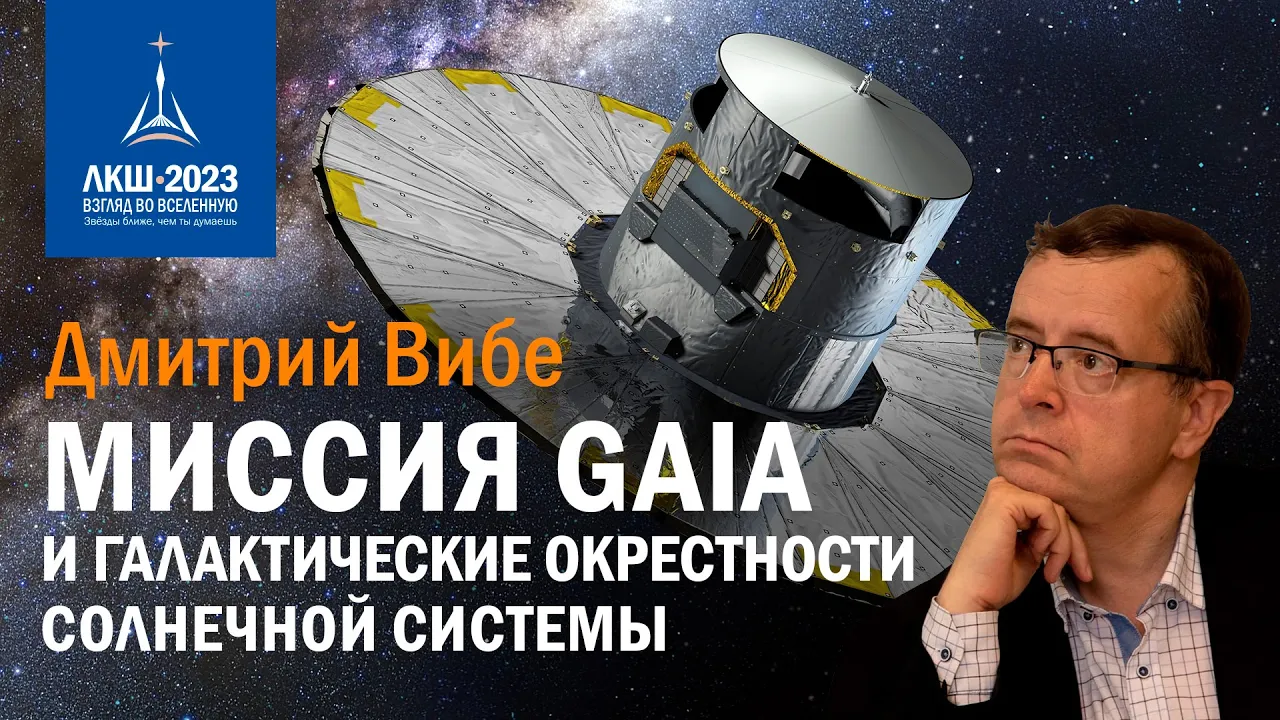
It's just kind of very recent knowledge that we've come to understand what our home is really like. Okay. So, let's talk about a little bit here as we approach the end about what modern studies of the Milky Way look like. So probably one of the most important things is this recent mission called Gaia. So Gaia just sat down but Gaia's mission was to accurately measure it was a satellite space telescope. Its uh mission was to accurately measure the distances to two billion stars in the Milky Way. Okay. So this is a picture of all of the sight lines that Gaia made.
In the end I think it's 1.8 8 billion stars. We've measured the positions and the motions of those stars are. You can see it stretches in every direction and covers vast amounts of the Milky Way.
And you can all the data is public. You can get it and you know play with it if you want to. Um we certainly do science with it. But the coolest thing I've seen done with it is this is a picture of the Milky Way. It looks like a photograph, not unlike the photo mosaic I showed you at the beginning of the talk. uh but it's actually composed of simply taking the stars in the Gaia database and just putting a dot on the picture everywhere that we have a star data from Gaia and in the end it looks just like a picture is supposed to look right. So it's very very cool. So where are we today? So this is our current understanding of the Milky Way. It is about 100,000 light years in diameter. That's 588 quadrillion miles. Uh if you get in your car and you obeyed the 60 mph speed limit, it'll only take you a trillion years to drive from one side to the other, the sun's out there. Uh but it takes the sun about 250 million years to orbit around the Milky Way. Okay? So that means the Earth is really just a teenager, right? The Earth has only made 18 orbits around the Milky Way in its entire existence.
Okay? So it's it's just a teenager as far as you know the sun's concerned right it has uh you know a lot more time to go but the kind of funny thing about the orbit is if you look at that 250 million years things that you and I think of as being in the past ancient history of the earth have only happened in our most recent orbit around the center of the galaxy. So the last time the earth was where it is today that was 250 million years ago that was during the triacic era. Okay, Panga was the superc continent. All the continents were together and the very first dinosaurs were just coming out on Earth.
Um, if you love Stegosauruses, right, they're one of my favorite dinosaurs, right? Well, they only appeared uh 200 million years ago when the Earth was maybe 3/4 of the way back around the orbit from where it is today. Um, the giant sequoas appeared 150 million years ago. So, may just a little bit more than half an orbit ago. So they've been around for a lot of time here, but only half of an orbit around the Milky Way.
Similarly, flowers were only 130 million years ago, right? All of this we get from the fossil record. So the fossil record that you and I are used to talking about is really just a representation or at least the parts we talk about of the last orbit of the Earth around the Milky Way. Gives you a sense of how long this time is as you go around. uh Triceratops which are arguably uh the coolest dinosaur were 100 million mega years ago and then 65 million years ago the tyrannosaurs existed and that was when we had the great KSt extinction event. Okay. And those of you who are um astronomy and geology buffs uh there are places around the world where you can go see that aridium layer that resulted from the uh KT extinction event. Uh this is a place outside Trinidad Lake State Park in Colorado. Uh I went there a couple years ago and put my pocketk knife on it and said uh this is where it happened. There are dinosaurs below this line and no dinosaurs above that line. Okay, but that was only a quarter of the Earth's orbit ago, right? Only a quarter of a way to our last birthday that this all happened. Okay, and modern humans of course only appeared very recently about 500,000 years ago.
Okay, so let me tell you the last little bit here about how computers and technology are changing our understanding of the Milky Way. So the beginning of computational studies of the Milky Way actually started in 1941.
Okay, so this is uh I don't know if it's a famous paper. I think it's a famous paper by Eric Holberg. Uh so those of you who know a little bit about computer history uh will know that this was before the invention of computers for doing any of this. But uh Eric Holberg did a calculation uh in the following way. He set up a little series of robots, okay, uh on circles like this.
So you can imagine these circles are orbits around the center of the Milky Way. And all of the robots had a light on them, okay? And then all of the robots had a light sensor on them. And what would happen is light um gets dimmer across this distribution of robots he built in the same way that gravity gets weaker across the Milky Way. And so a robot would measure all the light it gets from all of the other robots around it. And then it would move based on the brightness it could see as if it was moving under the influence of gravity. because the brightness basically tells it in in this model how strong the gravity is from different directions based on how bright this the stars are. Okay? And so what ends up happening if you let these robots run for a little while, you can see these evolution pictures is eventually spiral arms begin to form. Okay? So this was this was an awesome an awesome experiment because people were trying to understand what's the deal with the spiral arms and galaxies. We didn't have computers at the time, but he could do this massive computation by just having these robots act as if they were under the influence of gravity. So, this is one of my favorite things. I really want to get like a hundred Lego Mindstorm robots and recreate this on the gym floor somewhere and do it again. But, uh, uh, I would love to see that done, but this was the very first one of these. Uh, today we do a lot of computational work in galaxies. There's kind of two things that people do.
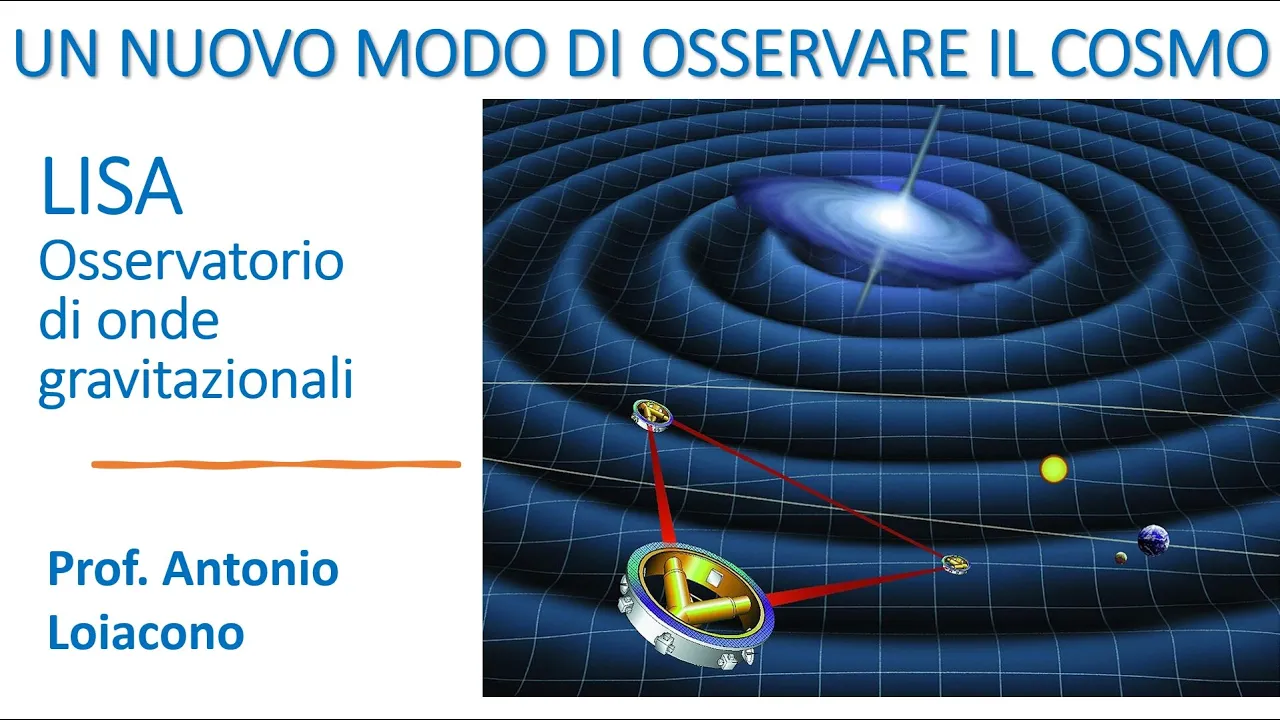
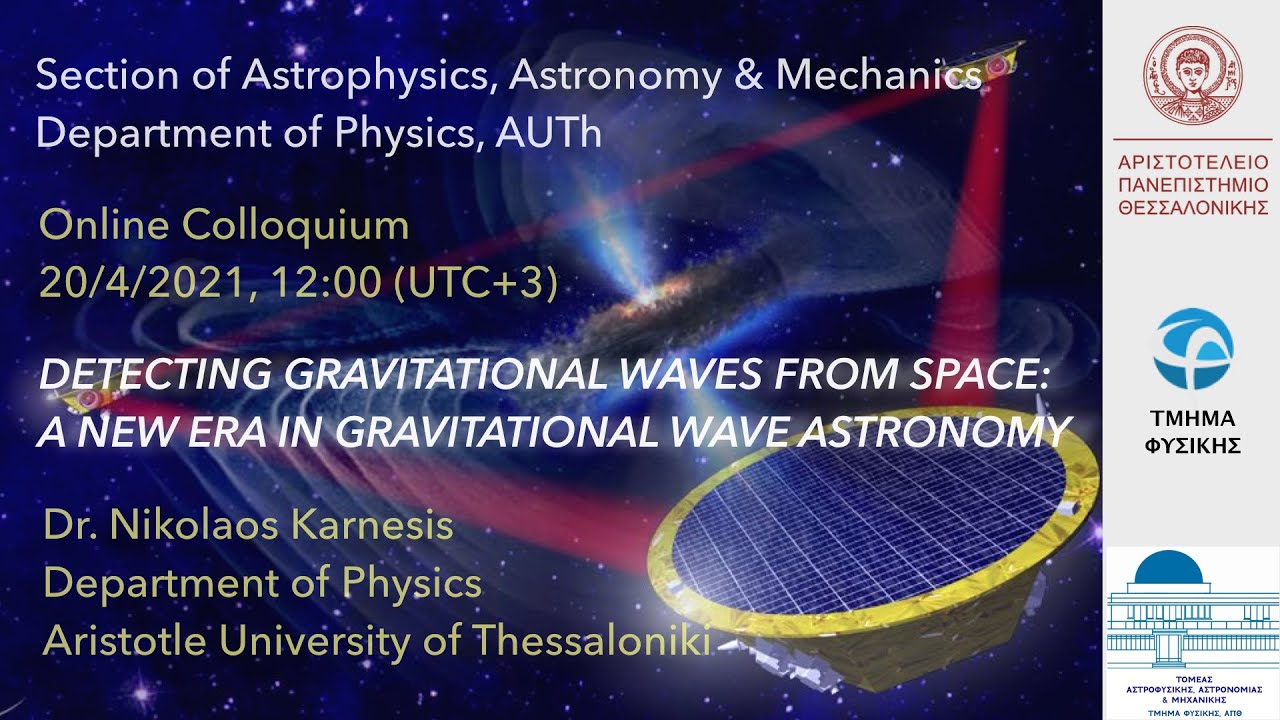
There's something called Nbody simulations. And what limits us to do endbody simulations is computer memory today. In these simulations, you basically do what Homeberg did with his robots. You just set up the stars in a computer. You keep track of where they are, measure their distances to each other in the computer, and then you move them incrementally under the influence of gravity. The other thing we do, this is what my group works on, is called population synthesis. So in this kind of modeling what you do is you create stars at the beginning of their lives. You evolve them throughout their entire life taking into account all the things that happen to them in stellar evolution as they burn hydrogen, become red giants, explode in supernovas or die and become white dwarfs. You kind of evolve them from the beginning of their lives to the end of their lives. And the limitation for us here in doing this kind of work is really time because it takes a long time to do these kind of evolutions, especially if you're doing all the stars in the Milky Way galaxy. Okay, there's 400 billion stars in the Milky Way. So why are we doing work like this? Well, you and I are entering an era where understanding the Milky Way is kind of crucial to the astronomy that we're doing. Major observatories like the Reuben Observatory are coming online and they're going to measure you know 10 terabytes of data every night which includes all the stars all the variable transient things that are happening in the galaxy and we need to be able to interpret and understand what's going on. Um my group does this because we work in gravitational waves. So in particular I work on a mission called LISA. Uh LISA has been uh formally adopted and uh our spacecraft contractors have been identified. So they're going to start building spacecraft here in the next year or so and it should launch in about 2034. It is three spacecraft that are 2 and a half million kilometers apart. They shine lasers back and forth from each other and they will measure gravitational waves with that measurement. Okay? And so the thing that we care about, the only thing I'll tell you about gravitational waves tonight is that the galaxy is full of dead stars, in particular white dwarfs orbiting other white dwarfs that are very close together. Okay, so we call these things ultra compact binaries and they interact with each other. So they exchange mass, they change each other's shape, but they also emit gravitational waves that Lisa can measure. Okay, so the entire galaxy then is a binary stellar graveyard. And what we can do with Lisa is probe that graveyard just in the same way an archaeologist probes a graveyard to understand the evolutionary history, the past of the Milky Way. And so for Lisa, there are going to be between 10 and 100 million binary stars in the stellar graveyard that we can see. Okay? And so that will be the most prolific collection of gravitational wave sources and sources that we can see with both gravitational waves and telescopes of any gravitational wave mission you've ever heard about. So my group right now is simulating galaxies so we can try and understand um for the things that we don't know about the Milky Way, the different ways the Milky Way may look.
So, this is uh a couple of models we ran showing the different shapes of the Milky Way that might be true based on the fact that we can't see the stellar graveyard right now. So, we don't really know how fat it is, how thick it is. Um, this is a movie sailing through the Milky Way. We're zooming outward from the sun and each of the little spots that appears is a gravitational wave source. The black spots are white dwarfs that we can already see in telescopes and know will be visible to Lisa. And then in the background galaxy, you can see we'll definitely see the shape of the galaxy, but all of the purple stars are multime messenger white dwarfs, things we can see in telescopes and with LISA. And all of the red stars are the parts of the stellar graveyard that we'll only be able to see with Lisa.
Okay. So, 10 years from now, Lisa will launch. We'll get out to our orbit and after about six months or a year, we'll have the first catalog and you'll be able to walk in my office and I'll throw down that first group of white dwarfs that will allow us to make this map of the stellar graveyard that I'm showing you here. Okay. So, this is about to become a very u very uh important and uh transformational time in observational astronomy because we're going to be able to measure and map the Milky Way in ways that we've never been able to before.
Okay. So, uh in conclusion here, right, I just want to remind you, right, the home galaxy, our understanding of the home galaxy changes with our ability to observe and our ability to observe constantly changes with the introduction of new technology, new telescopes, new ways of observing, uh bigger telescopes, better kinds of light, whatever it is.
Um we get to ask lots of new questions.
So, there are things about the Milky Way that we now know that we didn't know long ago. But of course there are lots of new questions and things that we don't understand. And I think you know in just my time as a professional astronomer I think the most important thing is that there are things that are going to be discovered in my lifetime as has already happened um that we really don't have any idea what it's going to be. Right? Our imaginations just aren't up to the task of predicting what kind of awesome things this new technology is going to allow us to discover.
Okay. So uh I always like to leave you with a few things to read. So, here's a few books. Uh, a couple about uh the uh Harvard astronomers, a couple about the Milky Way, and for those of you who like to program in your spare time, this is my favorite computational uh astronomy book uh which you can get from Wilmont Bell. Um it has a couple of chapters in here about simulating different aspects of the galaxy. So, I'll point your attention to that. Okay. So, I will end there and say thank you for your attention and I will pass it back to our hosts.
Oh, Shane, that was fantastic. There's so much fun. There's so many fun comments. Uh, and hopefully you all have a lot of questions. We only have a few minutes to get to them, but I want to make sure that if you have any questions, just go ahead and throw them in the chat on YouTube. Again, I apologize for the confusion tonight.
But, uh, what a fantastic lecture. We're Everybody's clapping from around and there's lots >> everybody. Yeah.
Uh um I think there might be a fight breaking out in the chat about the best dinosaur ever. Somehow that was thing you said which I love.
That's wonderful.
>> Um if there are any chat any questions go ahead and put those in the chat. I think you just did an excellent job you know putting things in perspective talking about how science works and um and and just how we get to know things better and better as we go. I really appreciate that. I think that's kind of important for for for you know we have these conversations all the time about how we wish people understood science better and I think of all the things we wish people understood better about science this is the one thing is that science isn't facts that get immuted and put on Wikipedia forever right they're just our current best understanding of the universe and we will build on them and take what we know and what we thought before and transform it into what we think now um it doesn't ignore what we knew before but but it improves what you before. Kind of the same way practicing a guitar teaches you to play better if you if you learn more chords, right? It's kind of the same thing.
>> Absolutely. And getting all of these different pieces, those um uh images of the different wavelengths of the Milky Way, putting all of those pieces together is phenomenal.
>> Yeah, it's kind of cool.
>> It's great.
>> Yeah, >> we've got some students here who are uh studying for their midterms and listening in. Uh >> it is midterm season. Yes. Hopefully you have a astronomy astronomy midterm on the galaxy. So >> fantastic. And so um there's a question about Lisa and how that will really supplement LIGO. It sounds like it's going to be much more um >> so so the difference between let's see I think I have a slide here. Let me show you a slide. So the difference between LIGO and LISA um is that um we observe different parts of the gravitational wave spectrum. So this is this is the spectrum of gravitational waves. It's just like the spectrum of light. There are different wavelengths or different frequencies we observe and LISA observes at longer wavelengths than LIGO. So if you were to draw analogy with with telescopes, this is like the difference between, you know, observing with an infrared telescope versus observing with an ultraviolet telescope. And so you can see here up above there are different kinds of sources that we will see. LIGO sees much smaller sources that move much faster in their orbits. Lisa will observe orbits that are much slower and very often much bigger sources than we observe with LIGO. So you really need both of them together with our partners who do pulsar timing and observe gravitational waves in the cosmic microwave background. We need all of them to kind of form this complete picture of what the gravitational universe might look like.
>> That is so cool. I had no idea there was a spectrum of gravitational waves.
>> You learn some physics. It helps everywhere. Right.
>> Exactly. All right. We'll leave you with a good softball question. Uh well, I don't know. It could create more controversy. What is your favorite globular cluster?
>> Ah, well, okay. My favorite globular cluster is in Hercules, and most people will think it's M13, but they're wrong.
The best globular cluster in Hercules is M92, uh, which is in the head of Hercules.
Um, and I just like it because it's a lot compact and so it looks a little brighter and it's just, I think, funner to look at than M13. So, >> and that is controversial indeed.
>> It is controversial, but if you come to my telescope at a star party, I'll never show you M13. and we'll show you M92.
So, >> all right. I love that. Thank you so much, Dr. What a treat.
>> Thank you, everybody.
>> Cat, did you have anything you want to >> Yes. Um, so once again, I do want to apologize to our NSN members. Thank you so much for sticking with us on YouTube.
You can find the survey pinned in the YouTube chat. So, when you have a moment, please go ahead and fill that out. And again, thank you so much, Shane, for spending your time with us tonight. Um, you're uh this was fantastic and I will actually cosign M92. I'm sorry. I'm you know I I I like all clusters but you know M13 is only okay in my opinion.
>> It's only okay.
>> That's just that's just my opinion. Um but uh thank you so much for every uh for joining us all tonight and join us again on Wednesday, March 25th along with Dave Dudy where we will discuss sidewalk outreach for Jupiter's moon Europa, the Jovian system and the Europa mission. Until then, keep looking up and we will see you again next month.
>> Bye everybody.
Okay. Are we good?
>> We are all set.
>> Thanks, Jane. Have a great night. Thank you.
>> Thanks, everyone. Yeah.
>> Sorry for all the >> We'll see you all again sometime soon.
Okay.
Up Next
The Paradox of Polaris: Why the North Star Defies Stellar Models
@astrumspace
801.6K views•2025-08-25
First Billion Years of the Universe with the Square Kilometre Array
@iaaudc
121 views•2022-05-26

Kepler's Laws of Planetary Motion Explained (Educational Astronomy Video)
@Peekaboo_Kidz
404.9K views•2023-02-17
Gamma-Ray Bursts: Cosmic Snipers Explained | Astronomy
@kurzgesagt
15M views•2016-07-31
Related Study Plans & Knowledge Roadmaps
Structured learning paths in Astronomy