


![Zwiedzamy Galaktykę w Andromedzie 💫 Obserwacja na żywo przez teleskop 🔭 - [134]](https://i.ytimg.com/vi/dKDNJmK8qu8/maxresdefault.jpg)












![SACANI RESPONDE [TUDO SOBRE COSMOLOGIA] - Ciência Sem Fim #273](https://i.ytimg.com/vi/CoDF65uzm88/maxresdefault.jpg)




Polaris, the North Star, appears simple as a fixed point in the sky but is actually a complex triple star system whose primary star exhibits unusual behavior that challenges our understanding of stellar evolution and cosmic distance measurements.
The Paradox of Polaris: Why the North Star Defies Stellar Models
Added:The mechanism of Cepheid variable stars, specifically how their pulsation periods relate to their intrinsic luminosity (the Period-Luminosity relation).
The basics of the Cosmic Distance Ladder, including stellar parallax and the role of standard candles in measuring astronomical distances.
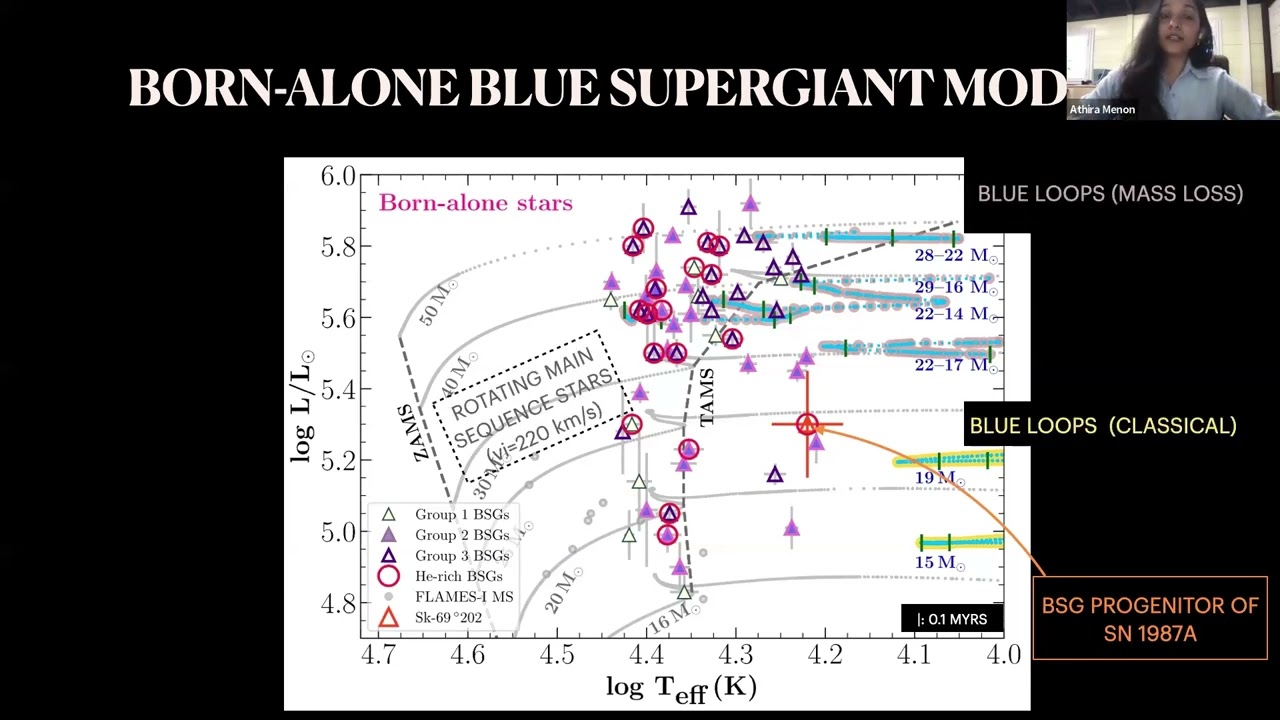
Fundamentals of stellar evolution and the Hertzsprung-Russell (H-R) diagram, which describes how stars age based on their mass and luminosity.
The dynamics of binary and multiple star systems, as Polaris is not a single star but part of a triple system.
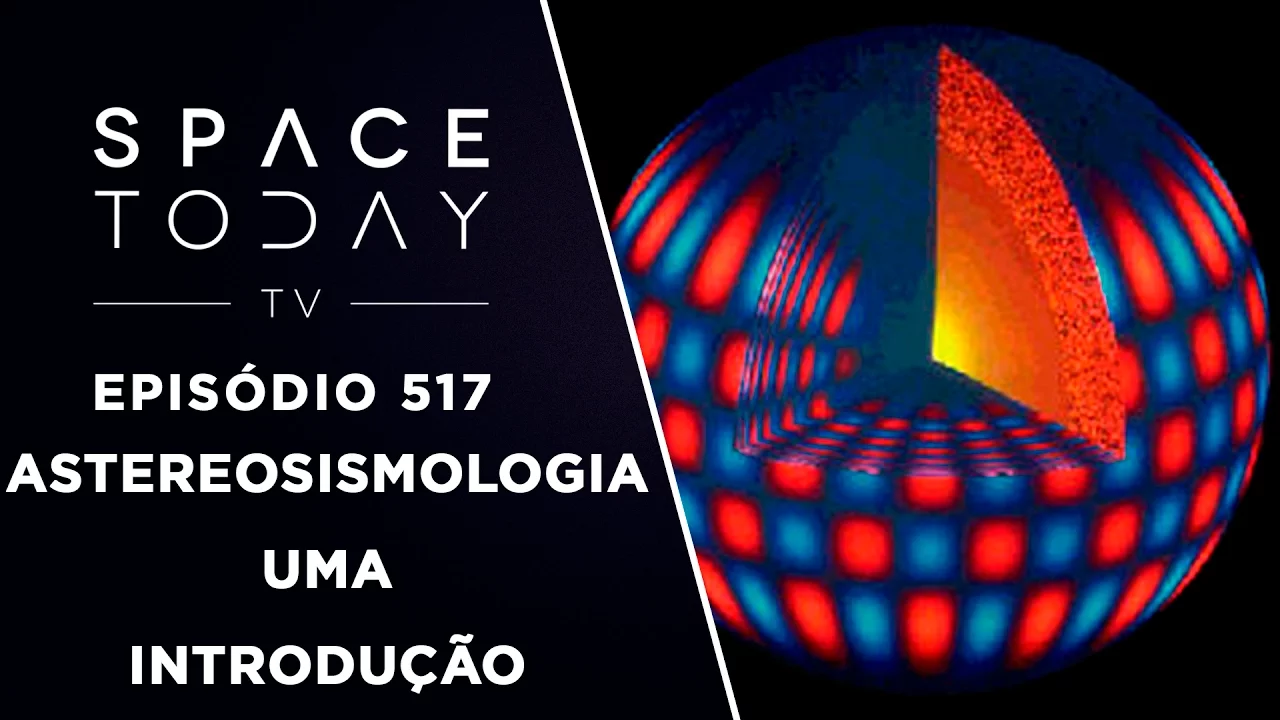
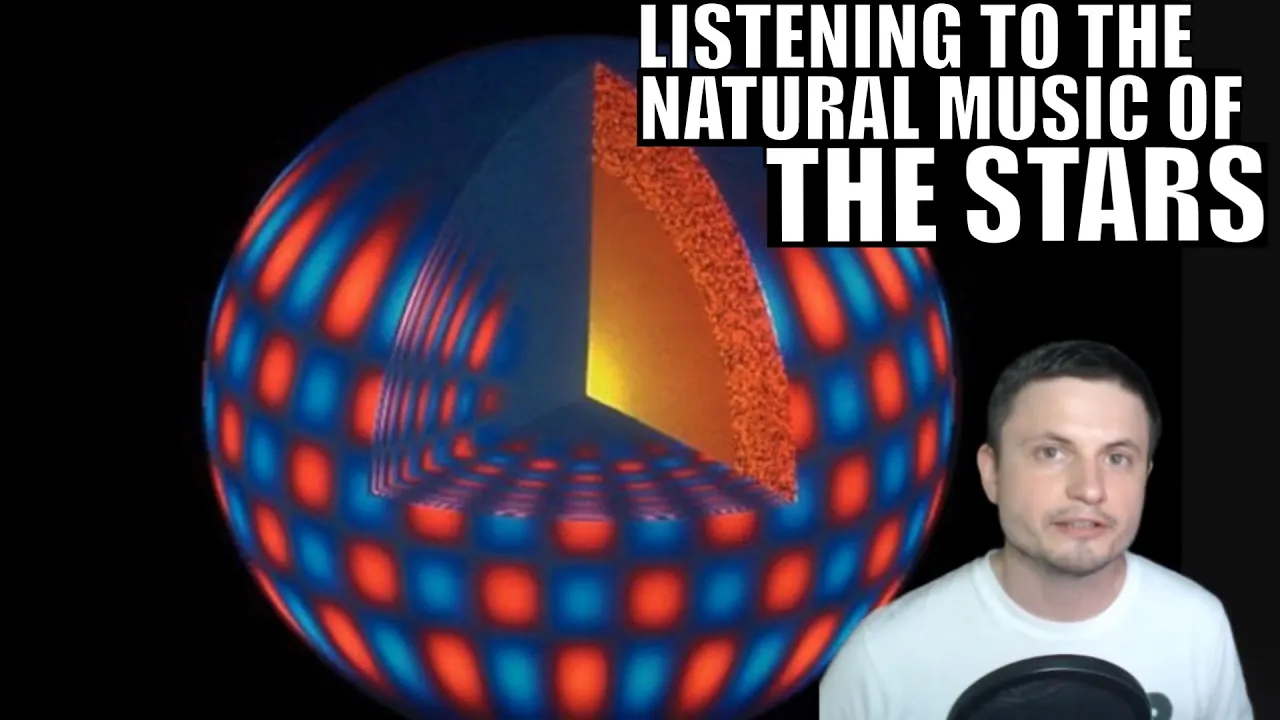
Asteroseismology: The study of stellar oscillations to probe the internal structures and magnetic fields of pulsating stars.
The Hubble Tension and Cosmic Distance Scale: How uncertainties in Cepheid calibration affect measurements of the expansion rate of the universe.
Stellar Merger Theory: Investigating how stellar collisions and mergers can create anomalous stars like blue stragglers, potentially explaining the Polaris age paradox.
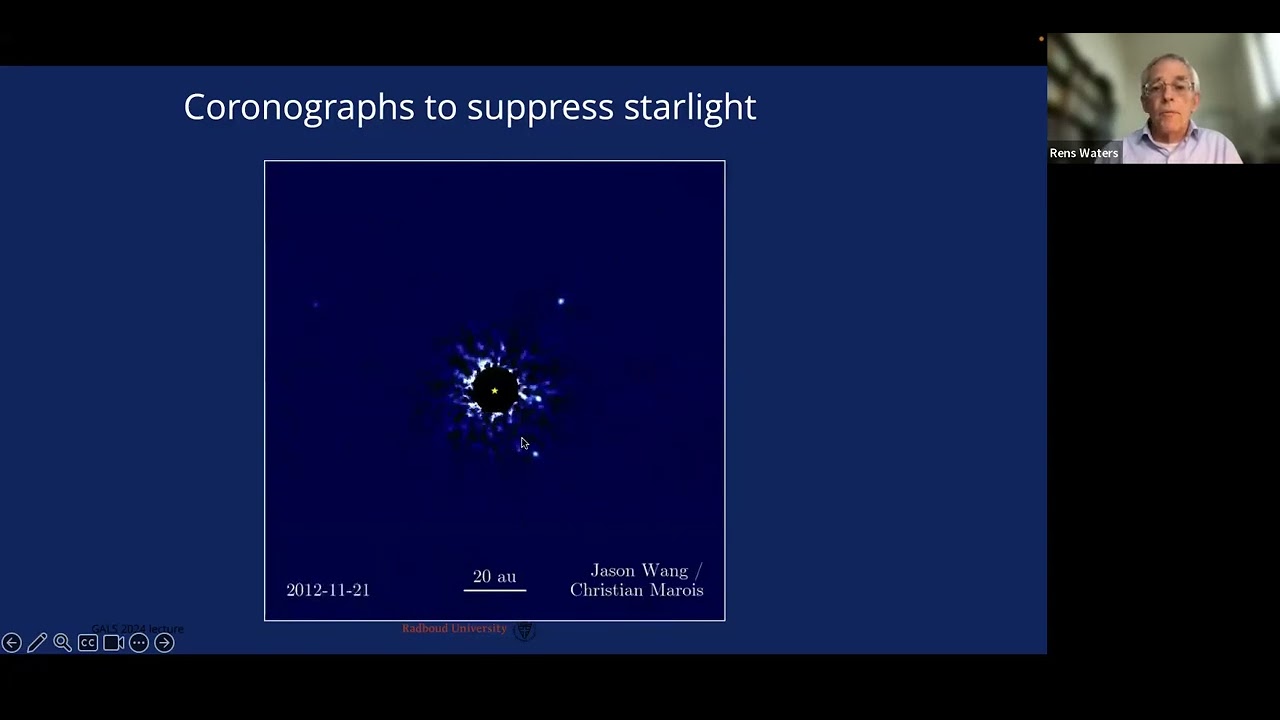
Advanced Interferometric Techniques: How modern optical stellar interferometry is used to resolve tight binary systems and measure stellar diameters directly.
801.6K views21.4Klikes20:04Original Release: 2025-08-25
Scientists have a problem with Polaris.
From afar, the North Star's permanent position in the night sky has guided us for centuries. But from up close, it seems to behave in confusing and bizarre ways. And the closer we look, the less it makes sense. Polaris doesn't act as our stellar models predict, and it is surprisingly hard to get basic measurements for it. How can a star be so clearly visible to our eyes but evasive to our scientific instruments?
Sounds pretty ironic. So, let's dive into everything we know and don't know about this enigmatic star.
I'm Alex Mccoan and you're watching Astramm. Join me today as we unravel Polaris's hidden companions, explore its peculiar behavior, and reveal why this star could reshape our map of the universe. No, really. Wait and see.
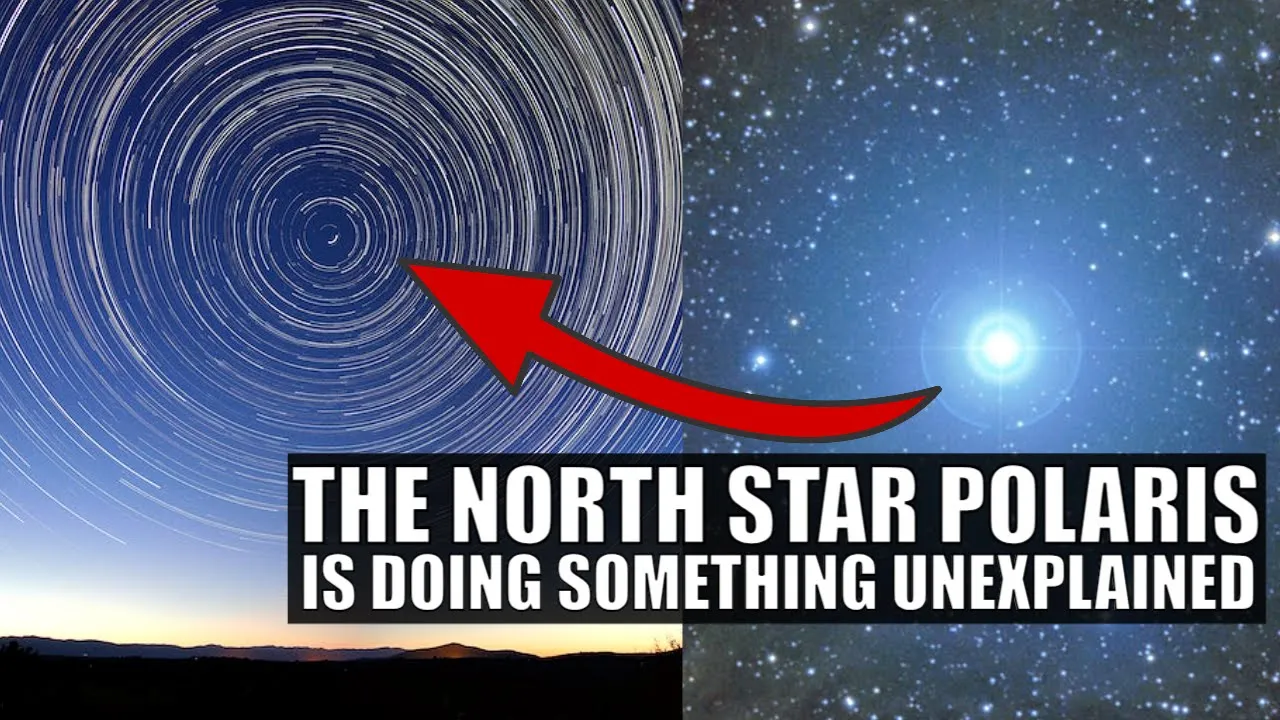
It's a moonless summer night, and you've wandered to your favorite stargazing spot. Looking up, you recognize Öza Major, which contains the Big Dipper, a constellation of seven stars in the shape of a ladle. You follow the two pointer stars up and up until you hit a noticeably bright star in the sky. This is Polaris.
It sits almost exactly above Earth's rotational axis. So while all other stars appear to wheel around the sky, this one stays put. At the north pole, Polaris appears nearly directly overhead. As you move south, it appears lower and lower in the sky until you reach the southern hemisphere and it disappears behind the horizon.
But while we've relied on Polaris to navigate the world, it turns out that Polaris itself is far more mysterious and far more complicated than anyone once believed. To us down on Earth, Polaris appears as a solitary, unchanging point of light. That is unless you use a telescope. In 1779, William Herschel did, and he discovered Polaris had a second star, Polaris B, in a wide orbit.
120 years later, in 1899, astronomer William Wallace Campbell noticed Polaris A had variable radial velocity, suggesting it might have another companion star, one not visible through a telescope. In 1929, a spectroscopic study confirmed this, and we only got our first images of the third Polaris star, Polaris AB, in 2006, thanks to the Hubble telescope.
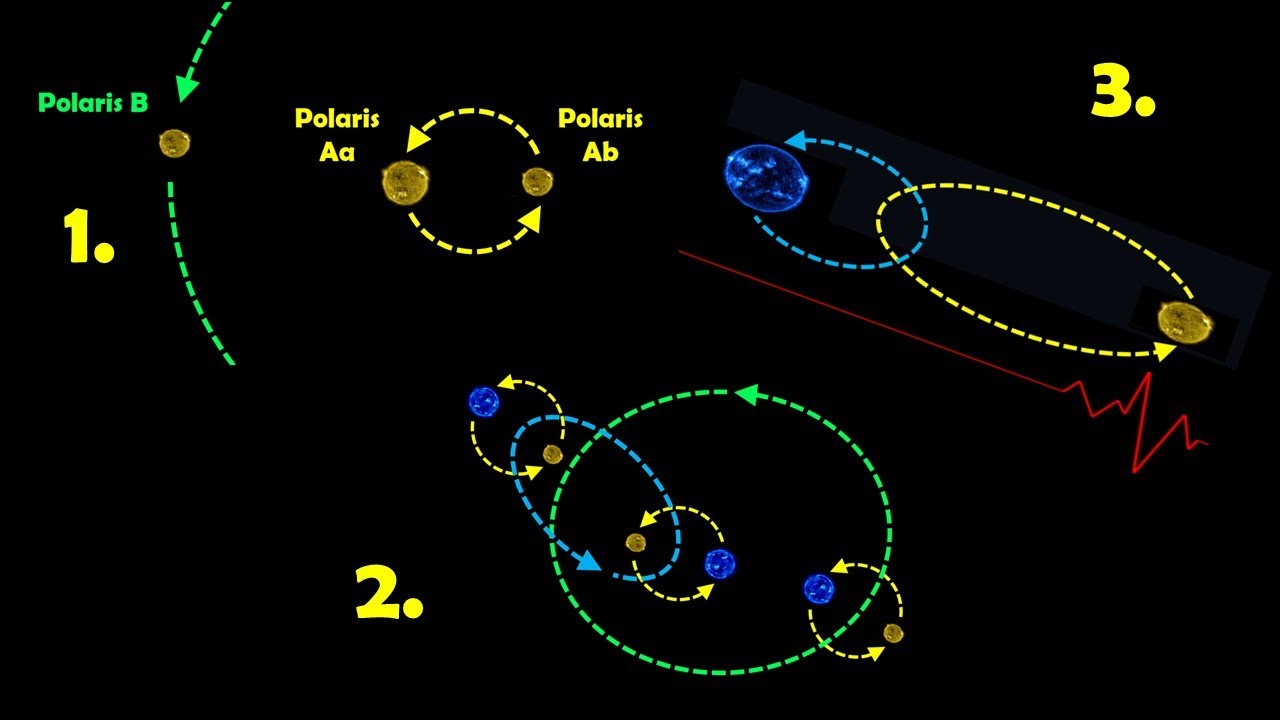
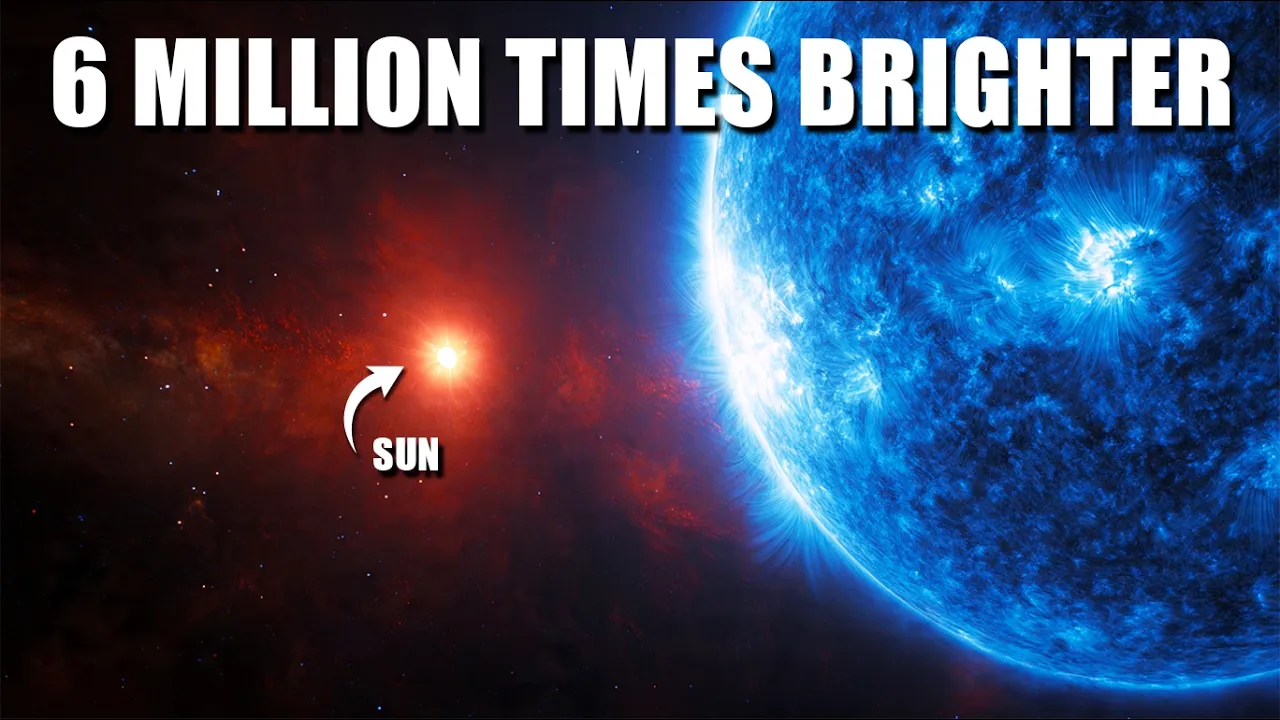
These three stars are bound together by gravity in a triple star system. The brightest component, Polaris AA, is what we think of as the North Star. It is an evolved yellow super giant 5.13 times the mass of our sun and 46 times wider.
If you placed it in our solar system, it would reach over halfway to Mercury.
2.8 billion km away is its close companion, Polaris AB. Together, these two stars form a binary system that completes an orbit every 29.6 years. The third star, Polaris B, circles this inner duo every 40,000 years at a distance of 386 billion km. That's about 24 times further than Voyager 1 is from us after 48 years of travel.
Both Polaris B and A are yellow white dwarf stars about 500 times fainter than their primary star. Polaris B is 1.39 times the mass of our sun, while Polaris AB is slightly smaller at 1.26 solar masses.
But Polaris's triple star system is the least interesting thing about it. Its primary star, Polaris AA, belongs to a rare class of stars known as seafared variables, which as it turns out are one of the keys to mapping the cosmos.
In 1908, an astronomer named Henrieta Levit was working at Harvard College Observatory studying the small Magelanic cloud. She was looking at seafared variable stars, stars in a specific phase of stellar evolution which pulsate regularly growing brighter and dimmer in predictable cycles. She discovered that there was a direct relationship between how bright a seafood appears and how long its pulsation period lasts. The brighter the star, the longer it takes to complete one cycle of pulsation.
This turned seafoods into standard candles, objects whose true brightness we can determine just by measuring their pulsation period. Since we know how bright they actually are, we can calculate how far away they must be based on how bright they appear to us.
It's like knowing the true wattage of a light bulb. The dimmer it looks, the further away it must be. Sephiids became a crucial rung in what astronomers call the cosmic distance ladder. Our method for measuring distances throughout the universe. Before the period luminosity relationship breakthrough, we could only measure objects a few hundred lighty years away using stellar parallax, a measurement of how far a star shifts in the sky as visible from Earth.
But with this new discovery, suddenly scientists could measure intergalactic distances of millions of light years.
Now we could use nearby methods like parallax to calibrate seafoods. Then use sephiids to measure distances to other galaxies, which in turn helps us calibrate even more distant markers like type 1A supernova.
As the closest seafood to Earth, you'd think that would make Polaris a gold mine for astronomical research. It could help us calibrate the size, age, and fate of the universe. Everything from the distance to Andromeda to the rate of the universe's expansion.
But here's where things get complicated.
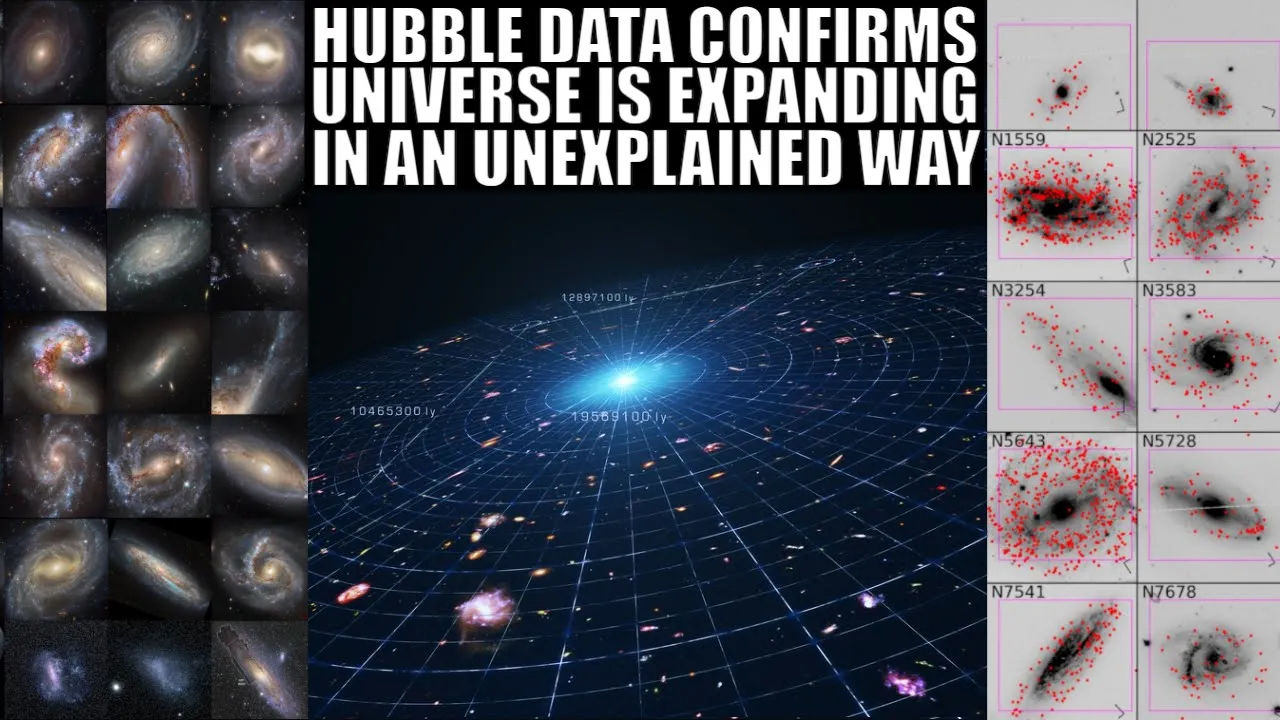
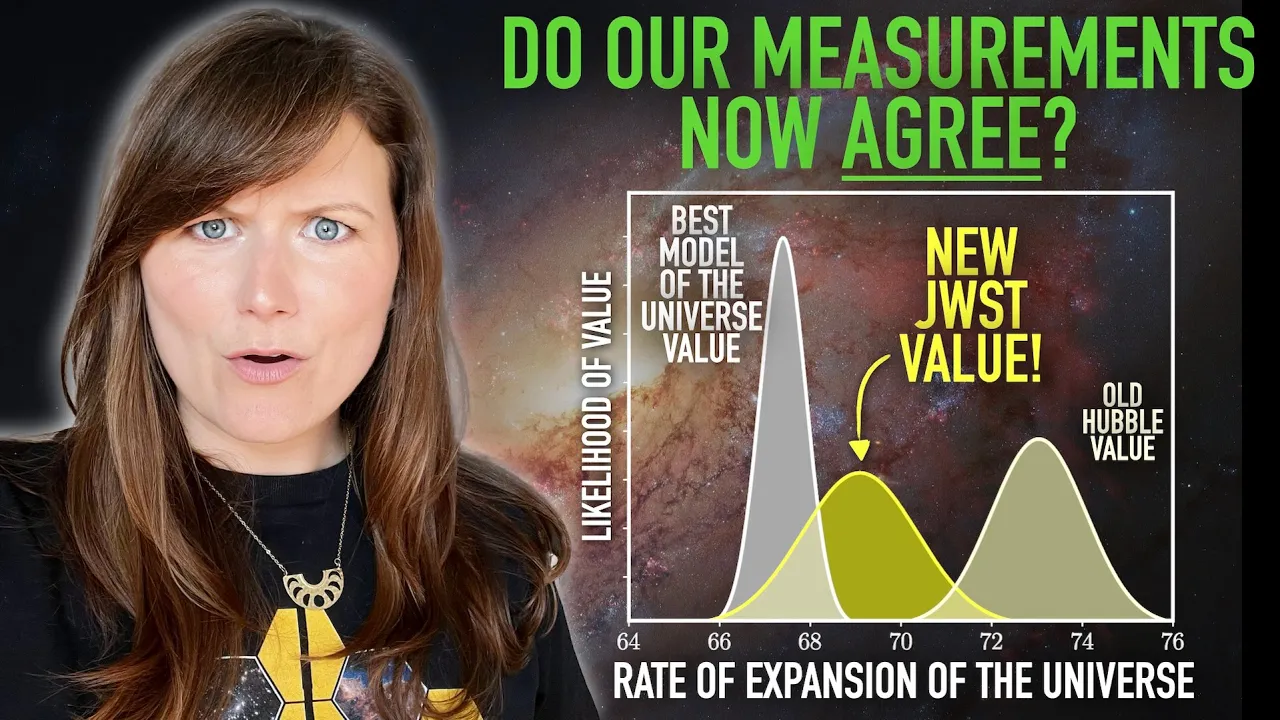
There's still some debate about how fast exactly our universe is expanding.
Measure it one way and the number is 73 km/s per mega parcel. But measure it another and you get 67 km/s per mega parcel. In an article from our advertising sponsor, The Economist, I learned that this difference has actually strengthened as more data came out. So something might be wrong with our models. Personally, that fascinated me. And you should check out their article on the topic if you want to dive more into that mystery. I like The Economist. It's a great independent news source that offers more than just breaking news. It gives insight and analysis on the things that matter. If you're interested in science, technology, business, world events, and more, it's got you covered. You can even listen to more information about Seafooded Variable Stars on the go thanks to their audio version of this article, which I'll link to in the description. or you can enjoy other topics in their videos or podcasts. If you want to be more informed and to learn about our world and beyond, go to the link economist.com/astramm in the description below or scan the QR code. Either will get you access to the special 35% off discount for Astramm viewers.
Turns out Polaris AA is quite a weird seafood for a number of reasons.
First off, its amplitude is erratic.
Scientists noticed the difference between its brightest and dimst points declined through the 1960s to 1990s, down from above 0.1 to below 0.05 magnitude.
It leveled off and remained stable for a while before starting to creep up again in the year 2000. A pattern never seen in any other seafood.
But it's not just his amplitude that's raised eyebrows. For the 150 years we've been observing it, Polaris's period of around 4 days has been increasing by 4.5 seconds per year.
That's an incredibly fast rate of period change for a seafood, which suggests Polaris is evolving quickly.
One theory astronomers have for this unusual behavior is that Polaris AA might be entering an unstable phase of its life. All stars go through an unstable phase when they leave the main sequence, but they don't necessarily all become seafoods. What kind of pulsating star they become depends on several characteristics including its mass, luminosity and pulsation period among other things. Most seafoods go through three big instability events in their lives. The first happens very fast lasting from 10 to 100,000 years. It occurs when hydrogen fusion in the center has stopped and the star leaves the main sequence moving towards becoming a red giant or super giant.
It's the least studied of the instability phases because it's so brief relatively speaking. The second instability occurs when the star begins burning helium in its core, stabilizing the star and making it burn hotter and bluer in color. This transition can take anywhere from 100,000 to 10 million years. When the star finally runs out of helium, expands again and becomes unstable for the third time with a similar timeline as the second phase.
Nearly all the seafoods we've seen in these unstable phases have been in the second or third phase, making their behavior relatively predictable. But catching a seafood on their first instability is extremely rare and their behavior in this state is much less understood. There isn't a consensus on which instability stage Polaris is in.
Some claim it's in the first while others say it must be in the third. And just as these theories emerged to explain the changing period, Polaris suddenly reversed the trend. Since 2010, its period has been getting shorter year after year, and no one knows why. We think it might be due to Polaris AB disturbing it whenever they pass each other at their closest point, but no one knows for sure. But even more fundamental than that, there's still a key piece of the puzzle missing to fully understanding Polaris' properties.
something embarrassingly simple that's proven brutally challenging to solve.
[Music] You might expect that with modern technology, measuring the distance to our north star would be straightforward, but it's actually trickier than you might imagine for a few reasons.
Firstly, Polaris is hundreds of light years away. The further a star is, the smaller its parallax shift is. For context, the Hypocus mission from the '90s measured Polaris' parallax as 0.00754 arcsec or 2.094 * 10 -6°.
An unimaginably small movement. On top of that, Polaris is so bright it can saturate our detectors, making our readings unreliable.
Couple that with the fact it is a pulsating seafared star with a close companion, and brightness-based distance readings get even more complicated.
All this makes Polaris' distance from Earth surprisingly hard to pin down.
Estimates range from 323 to 520 lighty years away and there's still no universal agreement in the scientific community. For example, Hippacos mission placed Polaris at 434 lighty years while the more recent Gaia data from ISSa puts it at 447 lighty years away. Without a clear idea of how far Polaris is, estimating other properties like mass, radius, and luminosity is complicated.
The mass and radius estimates I shared earlier are based on the Gaia data. But if we were to use different inputs, we'd get pretty different predictions.
To make matters worse, the estimates we do have of Plarus' age, mass, and pulsation period don't seem to match our stellar evolution models whatsoever. And again, we don't really know why. For example, Polaris AA appears to be much less massive than we expected and much younger than its companion, Polaris B.
We'll come back to this age discrepancy in a moment.
One possible explanation is the limitations of the stellar evolution models themselves. Firstly, all stars rotate. This rotation can have profound effects on stars structure, evolution, and pulsation behavior. However, modeling rotation is incredibly complex and involves many unknowns. So, many researchers don't include this crucial factor in their stellar evolution models. For a star like Polaris AA, this emission could be leading to significant errors in our evolutionary predictions.
Another possibility is that Polaris AA has lost mass during its evolution, perhaps through solar winds or interactions with its companions. Mass loss would explain the stars rapid period change and could account for some of the discrepancies with evolutionary models. Researchers have tried to estimate mass loss with some studies placing it at 2 septillion kg per year.
That's a two with 24 zeros behind it.
But so far there hasn't been much convincing evidence to support this theory. And finally, 2024 observations using the Charara array detected giant star spots on Polaris AA surface. These spots are consistent with the presence of a magnetic field which might also affect the stars pulsations.
If we're missing crucial physics in our understanding of how these stars evolve and behave, it could affect the accuracy of seafoods as standard candles. And if our model of seafoods is wrong, so is our map of the universe.
All right, Polaris is mysteriously pulsing faster and faster. We're not sure how far away it is, and it's making us rethink our stellar evolution models.
As if that wasn't enough, Polaris has another ace up its sleeve. Remember that age discrepancy?
If Polaris A a A and Polaris B are gravitationally bound as they seem to be, they most likely form together. This means we'd expect them to be the same age. However, our observations indicate the opposite.
Assuming a distance of 447 lighty years, Polaris AA appears to be about 50 million years old. But estimates put Polaris B at 2 billion years old. So what happened here? A couple of theories have attempted to untangle this knot.
One is simply that Polaris B is not a companion of Polaris A after all, despite strong evidence to the contrary.
But another more enticing idea hinges on a phenomenon we've known about since the 1950s.
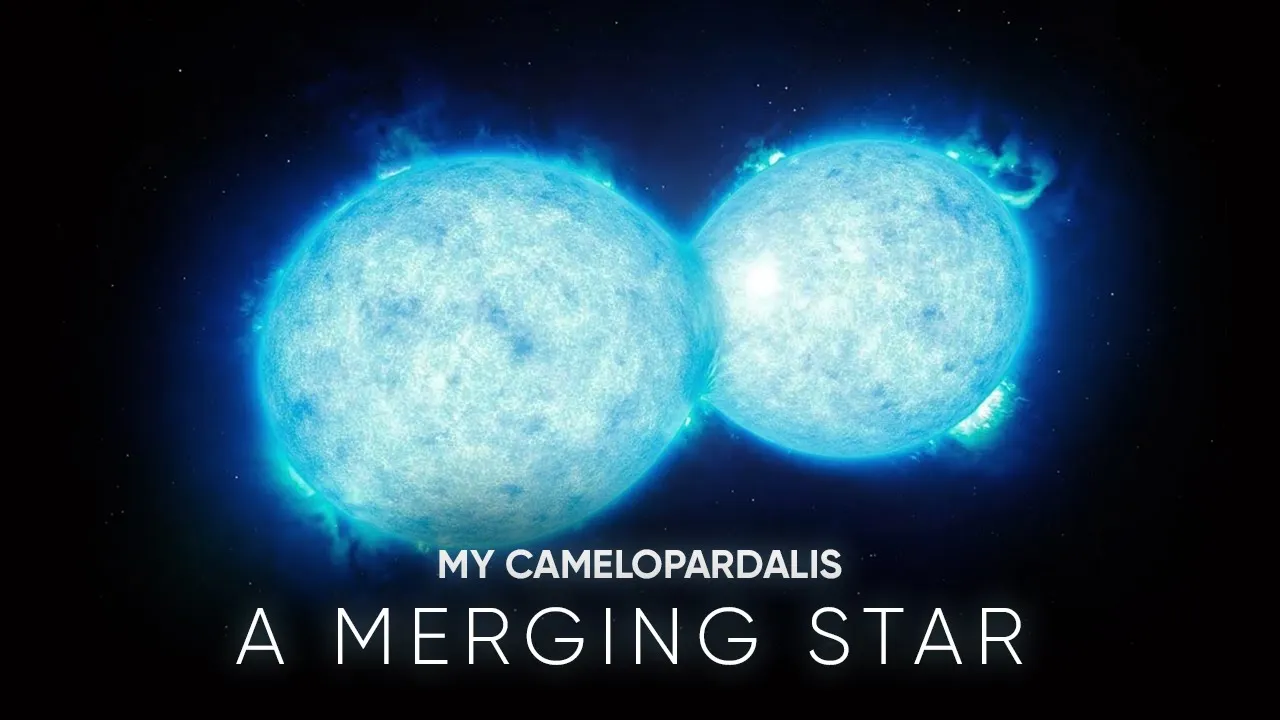
Globular clusters are dense environments of stars that all formed around the same time. And yet in 1953, Alan Sandage noticed some stars appeared much, much younger than others, bluer, hotter, and more massive. He named them blue stragglers. We think they form as the result of star collisions when binary stars merge. The result is a star that appears much younger than its true age.
It's possible that this is what happened to Polaris AA. It could have been rejuvenated by a collision with another star originally in close proximity to it. While this merger hypothesis is speculative, it demonstrates how the Polaris system challenges our understanding of stellar evolution and binary star formation. At the end of the day, this age gap remains one of the big enigmas surrounding the Polaris system.
While the Polaris star is our north star today, it won't stay that way forever.
Earth's rotational axis wobbles much like a spinning top. As a result, our celestial pole wanders in a closed circle, sweeping past different stars.
About 14,000 years ago, the celestial pole pointed towards the bright star Vega, and it will once again return to that position in about 12,000 years. For millennia, Polaris has guided humanity across oceans and deserts. But today, it guides us in a different way, forcing us to confront what we still don't know about the stars, the universe, and even our own scientific limits. And as the next round of Gaia data approaches, set to release in mid 2026, we may finally get some more conclusive insight into this perplexing star system.
Thanks for watching. If you like this video, you may like this one about Proxima Centuri, our closest star.
And thanks to our crew of astrome lords over at Patreon who help us make science knowledge freely available to everyone.
Chasing the algorithm can be hit and miss sometimes, so your contributions help us keep making the content we love.
And if you want to join the Patreon, there's never been a better time to get in on the party. Just sign up with the link in the description. When you join, you'll be able to watch the whole video ad free, see your name in the credits, and submit questions to our team.
Meanwhile, click the link to this playlist for more Astramm content. I'll see you next time.
Up Next
13:41
How Gravitational Lensing Predicted Supernova Refsdal
@veritasium
5.3M views•2020-10-20
61:17
First Billion Years of the Universe with the Square Kilometre Array
@iaaudc
121 views•2022-05-26
23:26
Supernova SN 2024ggi: Observing a Star's Explosion in Real Time
@astrumspace
970.9K views•2026-03-04
6:10
Gamma-Ray Bursts: Cosmic Snipers Explained | Astronomy
@kurzgesagt
15M views•2016-07-31
Related Study Plans & Knowledge Roadmaps
Structured learning paths in Astronomy
astronomy
Reionization: Pop III Stars, IGM & 21cm Line
01Foundations of Cosmology & the Early Universe
02Population III Stars & Cosmic Dawn
03Physical Mechanisms of Reionization
+ 2 more learning modules
17h5 modules
Explore Roadmap
astronomy
Planetary Rings: Dynamics, Roche & Resonances
01Foundations of Gravity and Orbital Mechanics
02Tidal Forces and the Roche Limit
03Structure, Composition, and Collisions
+ 2 more learning modules
10h5 modules
Explore Roadmap
astronomy
Asteroseismology: Stellar Waves, Ages & Cores
01Foundations of Stellar Astrophysics & Wave Mechanics
02Stellar Oscillation Modes: P-modes and G-modes
03Mathematical Framework of Asteroseismology
+ 2 more learning modules
35h5 modules
Explore Roadmap
astronomy
Adaptive Optics: Physics, Engineering & Control
01Foundations of Wave Optics and Wavefronts
02Atmospheric Turbulence & Optical Distortion
03Wavefront Sensing Technologies
+ 3 more learning modules
35h6 modules
Explore Roadmap