




![L'Univers Et Ses Mystères - S02E09 - Les Supernovas [HD]](https://i.ytimg.com/vi_webp/jnOdMv4QxSg/maxresdefault.webp)






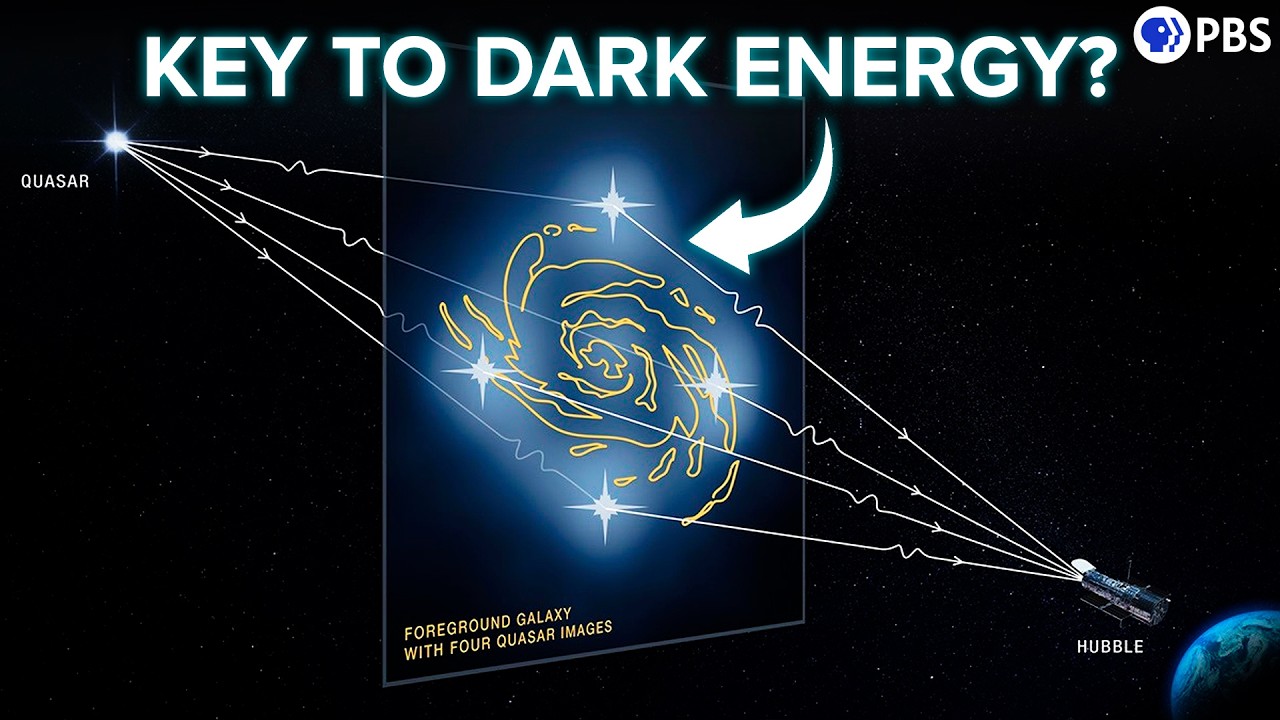








Astronomers predicted and successfully observed Supernova Refsdal in 2015 by leveraging gravitational lensing, where light from a distant supernova took multiple paths through a massive galaxy cluster, creating four images that appeared at different times (ranging from 5 days to over 20 years apart). By modeling the mass distribution of the lensing cluster and measuring these time delays, scientists calculated the Hubble constant at 64 km/s per megaparsec, providing an independent method to measure the universe's expansion rate and contributing to resolving the ongoing debate between different measurement techniques.
How Gravitational Lensing Predicted Supernova Refsdal
Added:Einstein's Theory of General Relativity, specifically the concept of mass warping spacetime and bending the path of light (gravitational lensing).
The fundamental nature of supernovae as transient, highly energetic stellar explosions.
The concept of cosmic expansion and the Hubble-Lemaître Law, which describes how the universe is expanding over time.
Basic optical principles of lensing, particularly how light paths can be deflected, magnified, and delayed by intervening mediums.
Time-Delay Cosmography: The mathematical techniques used to calculate cosmological distances by measuring the arrival times of lensed images.
The 'Hubble Tension': Exploring the conflict between different observational methods used to measure the universe's rate of expansion.
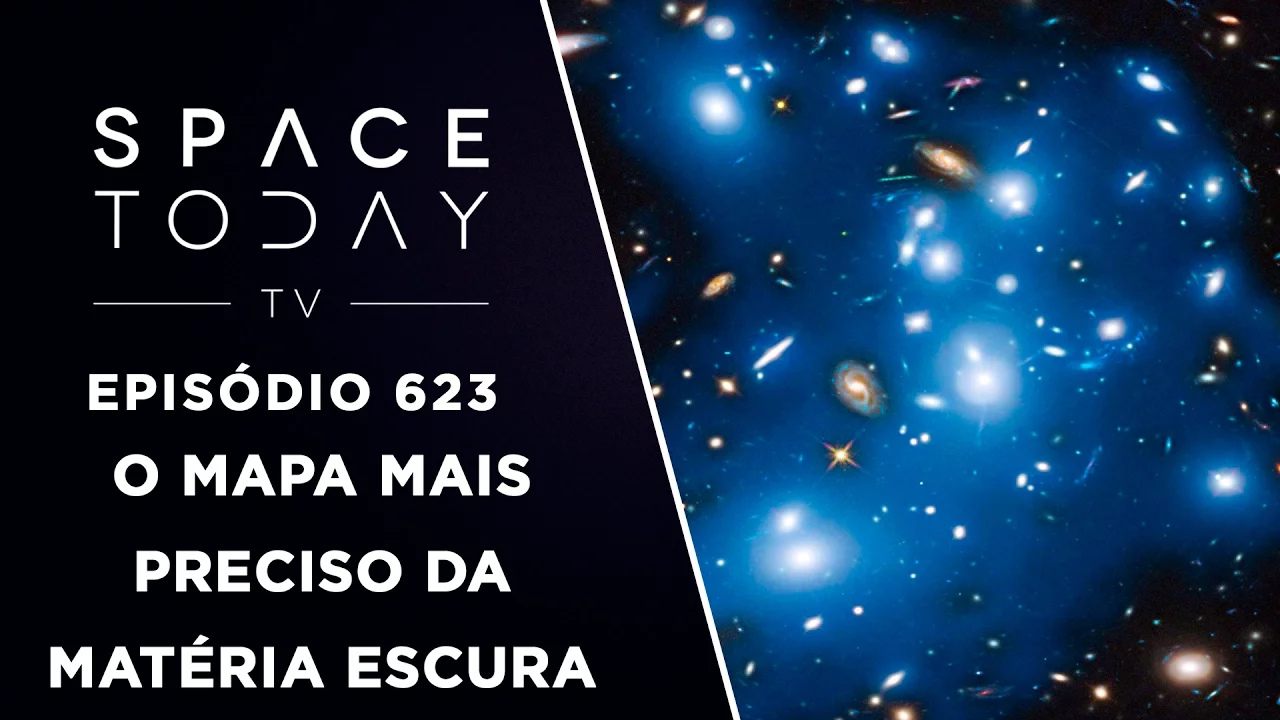
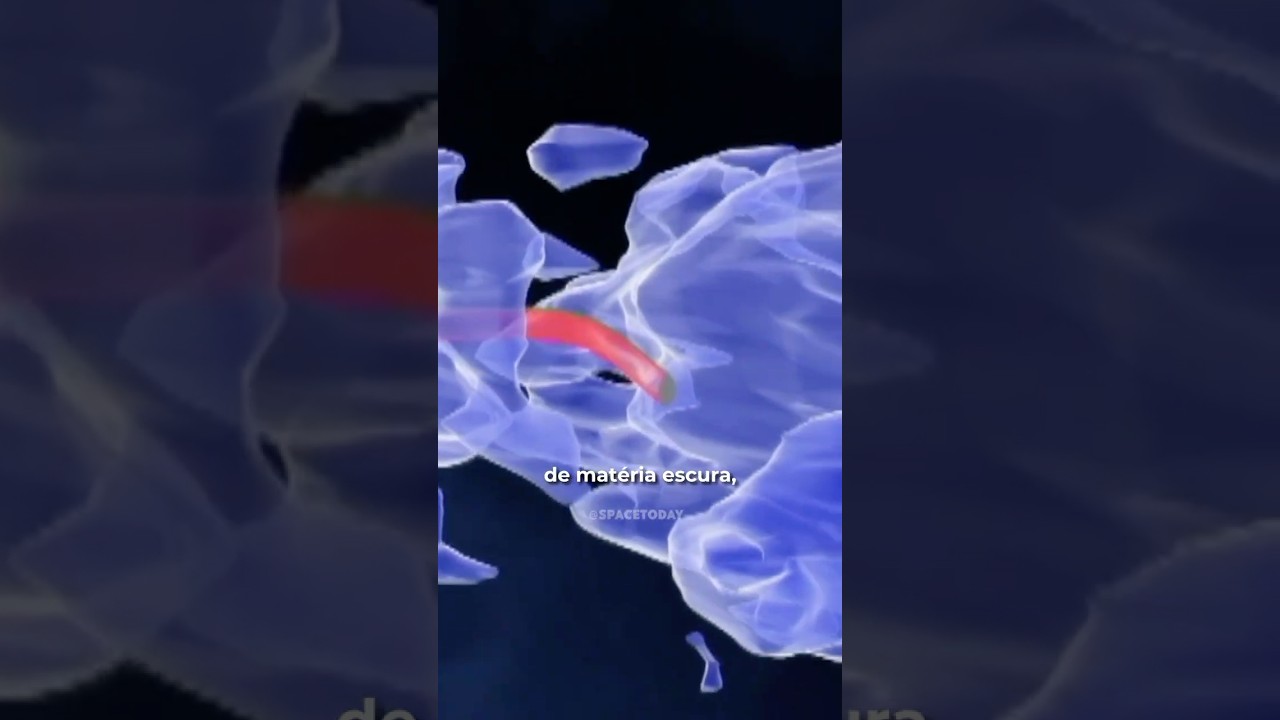
Dark Matter Mapping: How scientists use gravitational lensing to detect and map the distribution of invisible dark matter in galaxy clusters.
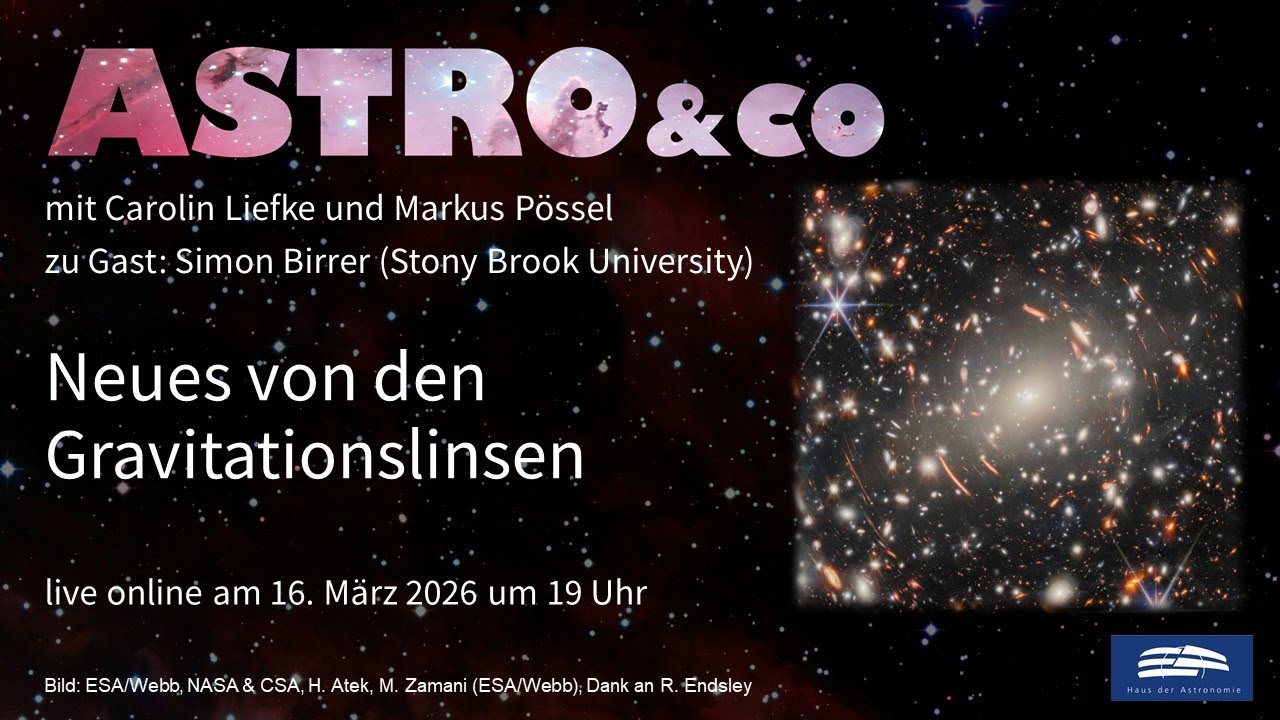
Next-Generation Time-Domain Astronomy: Studying how upcoming observatories like the Vera C. Rubin Observatory will detect thousands of lensed transients.
5.3M views167.6Klikes13:41Original Release: 2020-10-20
This video was sponsored by Fasthosts, who are offering UK viewers the chance to win a 5,000 pound tech bundle if you can answer my Techie Test question later in the show.
On May 1st, 2015 a group of scientists predicted that the following November, we would see a star go supernova billions of light years away in a spiral galaxy designated SP1149.
This was the first time anyone had ever tried to predict a supernova.
And for good reason: they are incredibly rare and unpredictable.
For a star larger than 8 times the mass of our sun, a supernova marks the end of its life cycle.
Running out of fuel in its core, the star collapses in on itself, and then, in the ensuing crush of matter, it violently explodes.
A supernova can be as bright as a whole galaxy.
And importantly, the light emitted follows a predictable pattern: it glows brightly for weeks and then fades down over a period of months But supernovae are rare.
In any galaxy of 100 billion stars or so, you can expect on average only two per century.
So just try picking the star that is going to explode.
Now, we can say how long a given star will live based on its mass, luminosity and color temperature.
These data pinpoint its stage of life in a predictable life cycle.
But the estimate of exactly when a large star will go supernova has big error bars.
Take the red supergiant Betelgeuse, for example, in our own Milky Way Galaxy.
It is a great candidate to go supernova.
Scientists think Betelgeuse will explode any day now in the next few... hundred thousand years.
When it does, it'll be so bright you can see it in the daytime, and it will rival the full moon’s brightness at night.
Compared to the lifespan of a star, a hundred thousand years is a brief window of time, but for us short-lived humans, it may as well be forever.
So you might think it would have been a tough sell when the scientists who predicted we’d see a supernova in November 2015 asked for time on the Hubble Space Telescope to take pictures of galaxy SP1149.
But their request was granted.
They could image this part of the sky roughly once a month starting on October 30th.
Before this, the galaxy was too close to the sun to point Hubble at it.
In this first image taken at the end of October there is no supernova.
The next image was taken on Nov. 14 Again, no Supernova.
But in third image, taken on Dec. 11th, jackpot.
There’s a supernova right where they predicted it would be and almost exactly when they said it would happen So how did they manage to predict a supernova, almost to the month?
Well the truth is they had seen this same exact supernova before.
Not once, not twice, but four additional times!
A year earlier and five months before the predictions, Hubble took this image.
See those 4 bright dots?
Those are multiple images of that same supernova.
The reason we see the same supernova in four different locations is because there is a lens between us and the exploding star not a lens made of glass of course but a gravitational lens made of a huge amount of ordinary matter and dark matter.
Gravitational lensing tends to magnify distant sources and increase their apparent brightness, as rays of light become concentrated.
This smears the image of distant galaxies into arcs, strands, and all kinds of weird shapes.
And of course, to some distant observer in another galaxy, the light from our sun and Milky Way galaxy may be similarly warped In gravitational lensing, there are three essential components -- the source, the lens, and the telescope.
If the lens and the source are spherically symmetric, And if the source, lens, and telescope are all perfectly aligned, you get what’s known as an Einstein ring.
The light from the source is bent around the lens, equally in all directions, leading to the image of a smeared out ring.
If the source and the lens are spherically symmetric, but are not perfectly aligned, what we end up seeing is a break in the Einstein ring -- it splits into two semi-circles.
And if the source, lens and telescope are aligned but the lens is not axially symmetric for example it could have an elliptical shape - then you get four images in the shape of a cross, an Einstein cross.
So what happened to our supernova is 9.3 billion years ago, a dying star in a galaxy far, far away went out with a bang as a supernova.
The explosion sent out a blast of light in all directions.
About 5 billion years ago, before the Earth even existed, that light encountered a very massive object that warped spacetime it was a cluster of galaxies called MACS J1149.5+2223.
(I know that’s a mouthful. But the name just tells us where in the sky it was discovered by the MAssive Cluster Survey.)
This galaxy cluster is made of lots of massive substructures like individual galaxies and halos of dark matter.
At some point as the light traveled through this region, it encountered an elliptical galaxy almost perfectly lined up with where the Earth would eventually be.
The gravitational deflection focused light rays that were initially diverging onto paths that converged at the Earth.
This is why we saw the same supernova in four different locations.
Not only did the supernova appear at 4 different places, the images also appeared at different times.
Relative to the first image, the others were delayed by periods ranging from 5 days to over 3 weeks.
We could measure this time delay because of the distinctive light-curve of the supernova.
Some of the images of the explosion were further along in their light curve than others.
This was a particularly lucky discovery - the first time a multiply-lensed supernova has ever been observed.
There are other objects that due to gravitational lensing appear multiple times on the sky, like multiple images of galaxies.
But these objects don’t change predictably with time so there is no way to use their images to work out the relative time delay between them.
One reason for the time delay is because the four paths the light took were different lengths.
So it took the light longer to travel further.
But there is another reason: Light passing through curved spacetime appears to travel more slowly relative to an external observer.
This is much less intuitive, but is a well established and well tested part of General Relativity.
Back in 1964, Irwin Shapiro suggested it would be possible to test this gravitational time delay by sending radar signals to Venus, and measuring how long it takes for the echo to come back.
He calculated that, due to the gravitational influence of the sun, the signals would take an extra 200 microseconds when Venus was on the other side of the sun compared to when it was close to us.
This is solely a gravitational time delay, not related to the extra distance the light has to travel.
And within a couple years, experimental data revealed the gravitational time delay for light traveling past the sun, was exactly as predicted.
Today, in order to accurately determine the distance to the Voyager and Pioneer spacecraft, this Shapiro time delay must be taken into account.
Now I want you to have a look at the four supernova images again.
Do you notice how the same galaxy appears three times in this image?
That is the supernova’s host galaxy.
It is itself lensed by the massive galaxy cluster MACS J1149.5+2223 In fact, this cluster lenses tens of galaxies.
So scientists had been studying and modeling the distribution of matter in the cluster long before the supernova.
They asked: if we see these four images of the supernova in one image of its host galaxy, when would the supernova appear in these other two images of the host galaxy?
Using the models of mass distribution and General Relativity, they calculated that in this image the supernova would have appeared twenty years earlier - in 1995!
Now there are no close-up pictures of this part of the sky from 1995 so there is no way to check.
But in the other image of the galaxy they predicted the supernova would appear again in about one year's time Almost exactly when it showed up in that Hubble image.
This successful prediction is a fantastic confirmation of our understanding of light and gravity on the scale of the whole universe.
But it has even bigger implications.
One of the hottest debates in astronomy right now is: how fast is our universe actually expanding?
This is measured by the Hubble constant: the rate at which distant galaxies are receding, depending on their distance apart.
There are two main ways this measurement has traditionally been made.
One is to look for stars in the nearby universe whose absolute luminosity we know.
Then we can use how bright they appear to us to determine how far away they are.
If you combine this distance information with how redshifted their light is, you can work out how fast the universe is expanding.
This is known as the distance ladder method and the value of the Hubble constant it produces is around 74 kilometers per second per megaparsec.
Meaning for every megaparsec that separates two galaxies, they will on average be moving apart at 74 km/s The other way to measure the Hubble constant is to study the features in the cosmic microwave background radiation- which is essentially just a picture of the early universe.
Using the standard model of cosmology (which is called Lambda-CDM) we can work out how this early universe picture would expand over time.
The result obtained from this method comes out to 67 kilometers per second per megaparsec, substantially slower than the 74 found via the other method.
Over the years both of these techniques have been refined, reducing their uncertainties but the values have not gotten closer together.
So at this moment the two values really seem different - they are on the cusp of being a 5 sigma result.
Astrophysicist Joseph Silk has called it a “possible crisis for cosmology” But there are independent ways to measure the Hubble constant.
One of them is to look at a mutiply-lensed supernova and use the time delay between their appearances to work it out.
This was first proposed by a Norwegian astronomer Sjur Refsdal in 1964.
Since this is the first observed multiply-lensed supernova, it has become known as Supernova Refsdal.
Calculations of the Hubble constant from this data yield a value of 64 kilometers per second per megaparsec.
And although the result has large error bars, it is more in line with the measurements of the cosmic microwave background than with the distance ladder method.
The thing I keep thinking about is how strange space is.
I mean, I used to think of it essentially like glass, fundamentally transparent with some foggy regions or some slight distortions.
But here we have space warping light on multiple curved trajectories, making the same event appear in six different places on the sky separated by days, weeks, a year and twenty years.
And what is contained in those distortions is information about the workings of our entire universe.
Hey this video was sponsored by Fasthosts, who are offering UK viewers the chance to win a 5,000 pound tech bundle including your dream PC setup - if you can answer my Techie Test question.
Now, Fasthosts provides of a wide range of web hosting products.
If you’re in the UK and looking to start a podcast, blog, or business, you’re going to need a website.
And Fasthosts have got you covered.
They offer easy registration for a huge range of domain names with powerful management features included.
Plus a website builder with drag and drop templates.
You can create a custom, mobile-optimized website with no coding required.
Get up to three months free and if you’re not satisfied in the first 30 days you can cancel without paying a penny.
Now on to my techie test question: Which famous scientist criticized Newtonian gravity saying: "That Gravity should be innate, inherent and essential to Matter, so that one body may act upon another at a distance through a vacuum, without the mediation of anything else... is to me so great an absurdity that I believe no Man who has in philosophical Matters a competent Faculty of thinking can ever fall into it."
If you know the answer and you live in the UK, click the link below for your chance to win the ultimate tech bundle.
I want to thank Fasthosts for sponsoring the video and I want to thank you for watching.
Up Next
30:04
Cosmology's Observational Journey: From Slipher to Supernovae
@specolavaticana8118
100 views•2017-06-09
61:17
First Billion Years of the Universe with the Square Kilometre Array
@iaaudc
121 views•2022-05-26
14:09
How Fast Radio Bursts Solved the Missing Baryon Problem
@veritasium
5.2M views•2020-07-31
6:10
Gamma-Ray Bursts: Cosmic Snipers Explained | Astronomy
@kurzgesagt
15M views•2016-07-31
Related Study Plans & Knowledge Roadmaps
Structured learning paths in Astronomy
astronomy
Reionization: Pop III Stars, IGM & 21cm Line
01Foundations of Cosmology & the Early Universe
02Population III Stars & Cosmic Dawn
03Physical Mechanisms of Reionization
+ 2 more learning modules
17h5 modules
Explore Roadmap
astronomy
Planetary Rings: Dynamics, Roche & Resonances
01Foundations of Gravity and Orbital Mechanics
02Tidal Forces and the Roche Limit
03Structure, Composition, and Collisions
+ 2 more learning modules
10h5 modules
Explore Roadmap
astronomy
Asteroseismology: Stellar Waves, Ages & Cores
01Foundations of Stellar Astrophysics & Wave Mechanics
02Stellar Oscillation Modes: P-modes and G-modes
03Mathematical Framework of Asteroseismology
+ 2 more learning modules
35h5 modules
Explore Roadmap
astronomy
Adaptive Optics: Physics, Engineering & Control
01Foundations of Wave Optics and Wavefronts
02Atmospheric Turbulence & Optical Distortion
03Wavefront Sensing Technologies
+ 3 more learning modules
35h6 modules
Explore Roadmap