




![Interstellar Medium - Secrets of the Cosmic Ocean – [Hindi] – Infinity Stream](https://i.ytimg.com/vi_webp/0kI9SptK3_c/maxresdefault.webp)






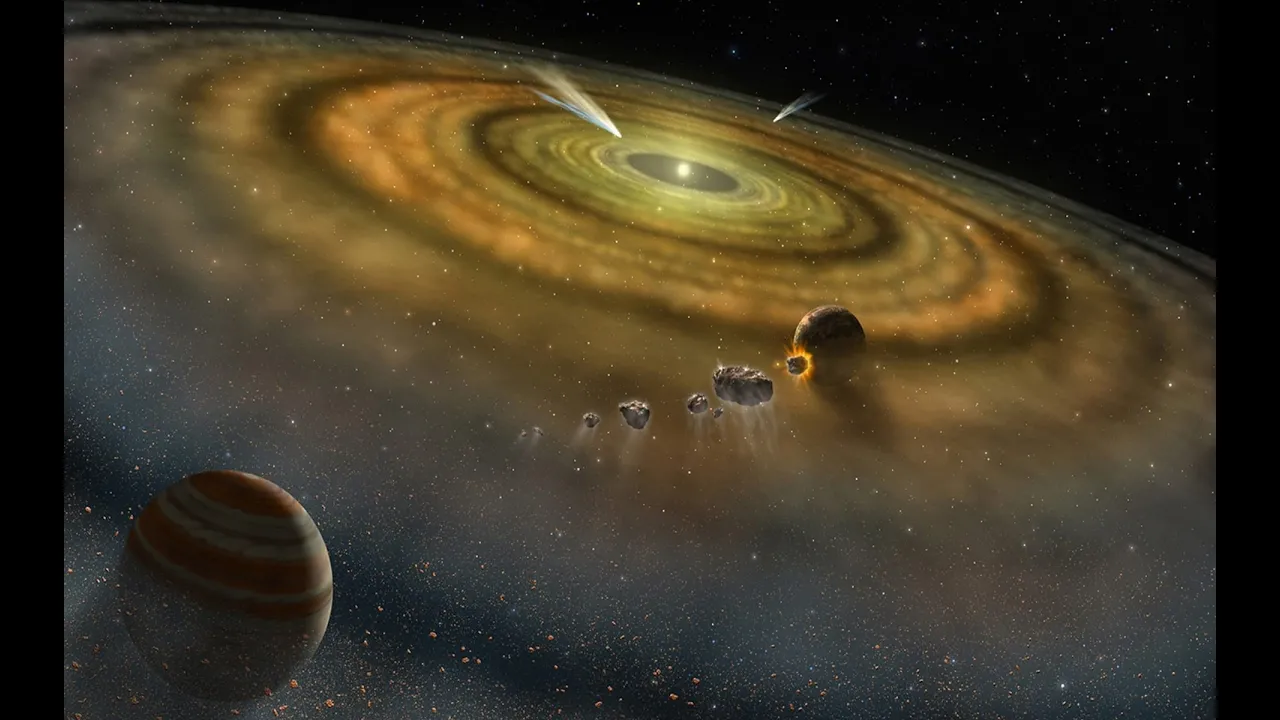









Astrochemistry is the interdisciplinary study of the chemical composition of the interstellar medium (ISM), which consists of approximately 99% gas (primarily hydrogen and helium) and 1% dust. The ISM exhibits widely varying physical conditions, from diffuse regions with densities below 1 particle per cubic centimeter to dense star-forming cores with densities exceeding 10^4 particles per cubic centimeter. Molecules in the ISM are observed through rotational transitions in the millimeter domain, requiring molecules to have dipole moments. The field involves complex gas-phase reactions (neutral-neutral, ion-neutral, radiative association) and grain surface chemistry (hydrogenation, diffusion, desorption), with astrochemical models using rate equations to simulate molecular abundances across different environments including diffuse clouds, photodissociation regions, cold dense cores, and protoplanetary discs.
Astrochemistry: From Atoms to Molecules | Lecture Series Part 1
Added:[Music] So I'm going to say a few words about myself uh to start before I do the conference. So uh I'm a assistant astronomer at the University of Bordeaux. I did a bachelor in physics and chemistry and then a master's in astrophysics and then I did my PhD already in Bordeaux on the interstellar medium of local group galaxies messier 33 in particular. uh and after that I went and did a postdoc atam institute radio millimetric in Grenob where I still observed the interstellar medium but from our galaxy much closer no farther than 200 parc um and then in 2016 I got a position in Bordeaux at an assistant astronomer. So yesterday uh Stefan talked to you about the sen positions in France. We have another kind of position which are called astronomer and assistant astronomer and this is intermediate between a professorship and senes. So sen only do research professors do half research half teaching and in my case I do half research some teaching not a lot and also we have things that are called um community service. The idea being that if you build an instrument, if you maintain a database, if you uh contribute to the community as an observer, it's based on observation both of Earth and the the universe, then it's counted in in your work. So, enough about me. Let's talk about a bit of astrochemistry. So, today is a two-part lesson. I will doing the be doing the first part. We will go from atoms to simple molecules and then Vasilis Savino Gardov will do the second part. uh more so I will stop at um protolanetary discs. So what is astrochemistry? So astrochemistry is the study of the chemical composition of the interstellar medium. Uh it's a very strongly interdisciplinary field. I'll show it to you along the way and this is the overall uh outline that going to follow.
I'm going to need to be able to you to understand what are the condition of the interstellar medium before we can do any chemistry in it. So we'll talk about a bit about its composition, what it's made of, what are the physical conditions, uh the residive fields and and things like that. Then we'll do a bit of observation. How do we observe the interstellar medium? How do you observe the molecules both in the dust, in the ice mantles and in the gas phase?
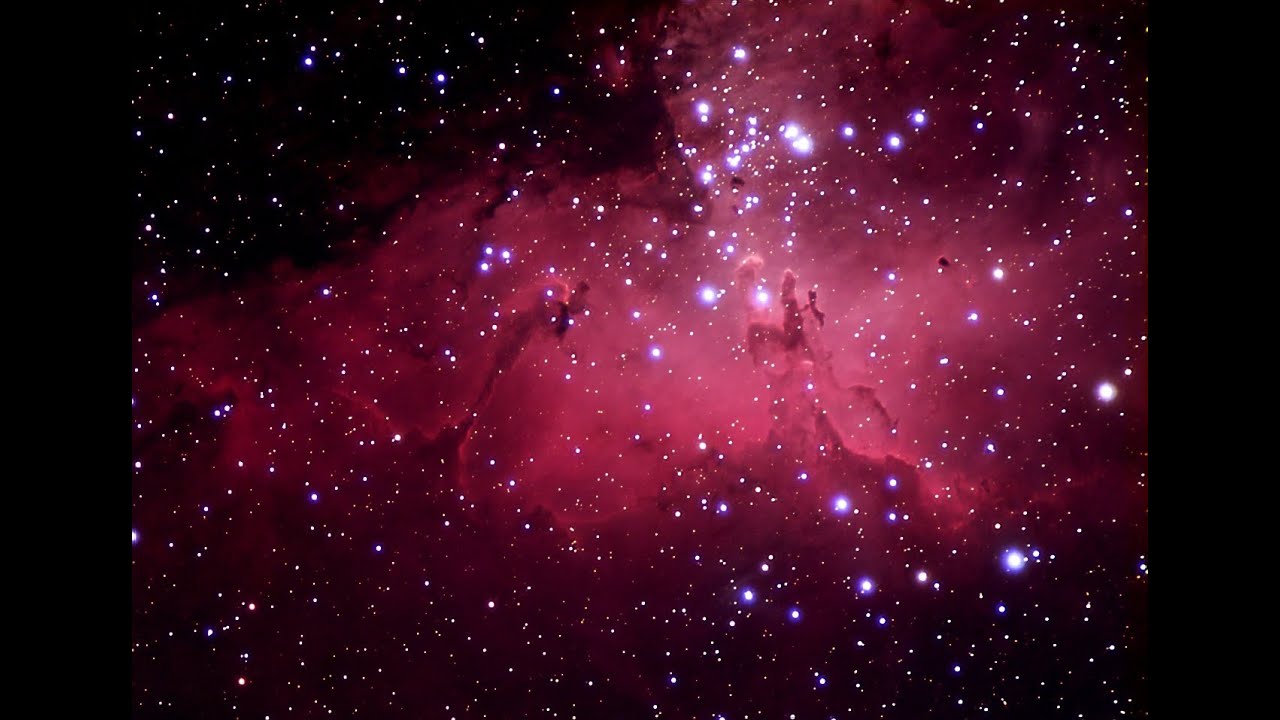
And then we'll talk about astrochemical modeling. How do we do astrochemical models to compare with these observations and understand the interstellar medium? and then we'll do a a series of uh focus on uh astrochemistry in different environments that we can find in the interstellar medium. So first of all what is the interstellar medium? So the interstellar medium by name is what you find between the stars. So if you take a few hours time of telescopes and you integrate here you see the stars you see mostly black between the stars but sometimes you see light that don't come directly from the stars uh you can see different colors you can see blue light uh you can see reddish light here so the reddish light is going to come from one kind of excited gas which is the first component that you have in interstellar medium gas uh and the blue light here is going to be diffused light from the stars that diffuse on another component of the interstellar medium which is interstellar dust. Uh it's very fine dust more like soot than uh the dust that you would find or or grains that you would find on the beach. And another uh clue that there is dust in the interstellar medium is when you see dark lanes like that is because the dust is a very strong absorber of visible light and especially UV. And so the main composition if you take the interstellar medium the gas to dust ratio is about 1% you get 99% gas and 1% dust. If we look now at the elemental abundances that there's been a few talks about it already. The reference here that is a bit hidden is asplundental 2009. So this is the reference of the sun composition and you see it's a logarithmic uh plot of abundances and there's widely varying abundances for the the different elements with the the most uh abundant being hydrogen and helium and the rest being orders of magnitude less abundant.
So this is why uh molal in 2001 made the astronomers periodic table. If you look at the peric table for astronomer, it looks like that. There's mostly a huge chunk of hydrogen, a bit of helium, and then the rest is almost only traces. But these traces are very important. You see uh if you're a ge geologist, you see ways of making mantels and uh and rocks.
If you're a chemist, you see ways of doing uh organic chemistry here. And here we saw yesterday the importance of uh the noble gases to trace um the formation of of the uh of the protolanetary discs. Now I'm going to talk a little bit about star formation itself because it's a a complex problem. We could have a whole lesson about star formation but uh uh you have to see it as a cycle of matter through successive stages.
uh it's often showed in in this way where you have a cycle here with arrows of different step. You go from diffused gas that is destabilized and starts to gravitationally uh contract and in this uh contraction you get the face of the cold dense core which itself part of it might become more unstable and condensed to a protoar and then a protoaretary discs disc at at the end. Uh this is a bit misleading image. It's easy to to to show and to explain but it's a bit misleading because each step doesn't have a 100% efficiency at each time. There is energy and matter feedback and only a small fraction of the matter actually goes into each of the steps. Sometimes the efficiency is higher, sometimes it's a bit lower. But you have to see it as a cycle where all the time you get some feedback and some of the matter go back uh at the end. You have to remember that at the beginning of the universe was the lesson of last year about nuclosynthesis. You only had H and H2.
You had nothing else. The first stars formed from H and H2 uh from H and helium and nothing else. There were no other elements or really trace elements.
And so uh this cycle of the uh star formation enriches the ISM in heavier elements. And as you get more and more generations of stars, you get more and more bricks of other elements that we call metals which are not metals but astrophysicists call them metals uh that you can use to form other molecules. Uh an idea about the physical conditions of the interstellar medium.
This is a a plot of a temperature against uh voluicuh density or number density. Uh and you see that you have widely varying densities and widely varying temperatures. But if you look here 10 to the 19 here would be the room here. Basically 10 to the 19 particles per cubic centimeters in in our atmosphere around 20°. And you see that most of the interstellar medium is very diffuse. the order of magnitude being a few or less than one particle per centimeter cubed to a few hundred thousand or million for the interstellar medium. After that this is the star forming phase with uh densification and then you reach the stars here and you see that the main arrows is this uh densification and uh uh cooling of the gas to form stars but you always have feedback. The the dotted lines here can be feedback from the stars themselves either end of life or during their life.
But also during the star formation phase you get feedback all the time. Uh so this concludes the first introduction about what is the interstellar medium and now I'm going to talk about how we observe the interstellar medium. Uh first of all uh a bit uh I talked about what kind of matter we have the interstellar medium.
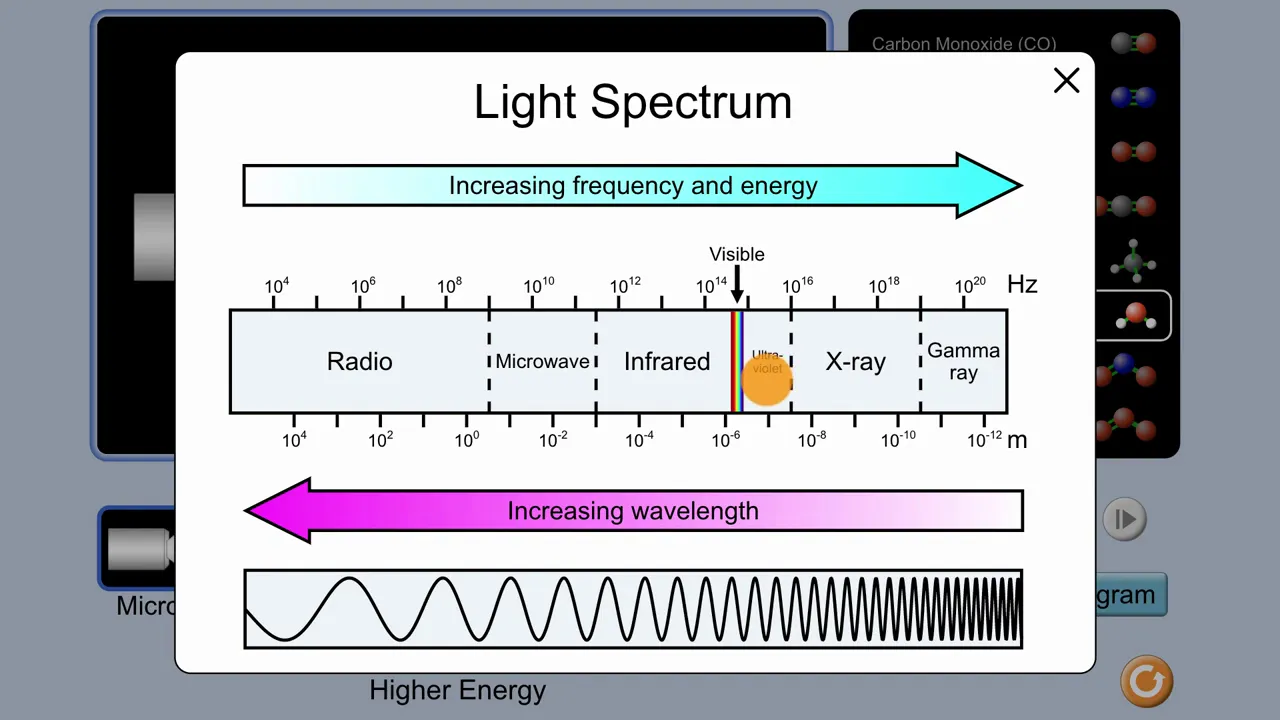
going to take talk about what kind of radiative energy we have in the interstellar medium. If you take an average average measurement over quite a large band of uh uh wavelength, this is a UV and this is a millimeter wavelength. You don't see a flat spectra. This is the energy density and you see several bumps and each of the these bumps come from a different component of the interstellar medium or the the the or even the stars. So starting from high UV, you see that you have the first bump here that peaks in the UV. It's a very young stars. Uh there are not a lot uh young stars, but they're very important for the heating of the interstellar medium and for very strong UV radiation that will kick off the chemistry in some region called photo dissociation region. I'll talk about it later. Then the second bump is the old stars. old stars is because less massive stars are going to live for a long time. So this is why we call them old stars. They've been here for a long time and they'll be here again for a long a long time. And this is a peak that's from the visible but peaks actually into in in the infrared. And then you get uh this blue blue part which is comprised of two two parts a very regular part here which is actually heated dust. So the UV photons here when they they interact with a dust grain they heat it up and this dust grain then will reriate as a black body but at much lower temperature. So this is why you have here a black body for the stars several thousand of of degrees and here a black body for the dust which is 10 to 100 degrees depending on on the places the part here is the phes polylicomatic hydrocarbon it's much more jagged because they are uh macroolelecules but they are small enough that you can see the individual vibration bands of the species themselves here is just black body emission and then the last part is not the intestinal medium. It's the cosmic microwave background that is a remnant from the uh uh big bang. So long time ago, but it's still everywhere and all around us. Okay, so this is what is in the interstellar media. But how can we observe it actually? So I I aligned it here with a a plot from EO where they put the different telescopes uh with here the transmission of the atmosphere. So if you have zero transmission here, the atmosphere is opaque at this wavelength.
You cannot see anything, cannot see through the atmosphere. And you see that it's mostly opaque at high energy uh from the X-rays to uh UV. Uh this is well also the ozone layer protects us from this strong UV. There's a a clear window here uh at visible light. Okay, this is why we can see the stars and see the sun. There's another big window here in the uh radio domain uh which is closed again because of the ionosphere later on. But between the visible and the radio domain is complicated. There are some narrow windows where you can observe but most of most of the of the atmosphere is opaque. So you cannot see the uh the intermission. So this is why we have to make uh telescopes so that we can go in space and remove the atmosphere. And so you see here to observe stars from the ground it's okay but if you want to come and start observing the dust it has to be complicated because uh it's going to be opaque. So what instruments do we use?
Uh I'll first talk about observing uh molecules in ice mantles. So uh you know that uh when you go to intermium the the dust particles are are are the model of dust particle is is a core refractory core and then on top of that you can add uh molecules volatiles and we observe them infrared vibration transitions in the infrared domain from basically 3 to 25 micrometers. And to give you an idea of the evolution in the last years of this of this field uh until 2020, the largest telescope we had was the Spitzer telescope which was only um 85 cm diameter and since uh 2021 now we have the James Webb telescope and it's been a huge jump because now we have a 6.5 m telescope observing at these wavelengths in the interstellar medium.
So the James Web telescopes looks like that. It's actually too big to fit into a a payload fairing of a of a rocket.
You have to fold it. Uh this part here was a three part folded. This part here was folded at the back. And this here uh it's huge actually for scale. You have here you have a pizza for scale. You have a standard uh here uh banana for scale and uh we all learned yesterday the best way of doing scaling is to have a geologist in in the field. So here you have a standard geologist for scale. So these these telescopes are huge and u they are huge and uh just for the collecting area JWST is 50 times larger than uh so we're going to be doing completely different science with the JWST. Uh so what kind of science do we do for observing molecules into in the Tala medium? uh uh we do absorption uh against continuum infrared background. We cannot do emission well at least not in the cold interstellar medium because this transition would be need to be uh uh have energies that would require much higher temperatures.
So we could not observe them in a cold intestinal medium but in absorption we can observe them anyway. And so what we do is that we find a field where we think there is dust. We look at the stars that are in that field and we look at their spectra. So if there were no uh dust in front we would see a continuum that is something like the dotted lines here. So this is data that comes from the ice age early release science of mlloral actually here there are two sources uh a gray one and and a blue one. So focus on the color uh part of the graph. So the continuum itself if there were no uh dust would be the dotted line and you see a lot of uh features of absorption some of them very narrow for example for CO2 and CO some of them much wider some of them have different vibrational modes for a given molecule you see the uh water stretch uh mode here the water bend mode and the water liberation modes that are farther away here but it's complicated it's complicated Because uh sometimes for example if you want to observe ammonia it's hidden actually inside of the silicut band which itself is not has a certain shape which is not gion shape like you would have for example for these ones. You have a lot of effects.
The fact here that for example you have an asymmetry between this part here and this part here of the edge of the CO2 band is probably an indication of grain growth. Then you need to have some miscattering. It's very complicated and it's a new science. So we are it's the first time we've seen these kinds of of spectra from space. We have some samples in the lab, but we need to compare them both. And and the difference also with Spizzer is that Spitzer might have one part here with worse signal to noise ratio, but now we're getting these kinds of of spectra against hundreds of stars in one single field, which means that we're going to be able to probe the chemical composition within a cloud of the of the dust the dust mantles.
So how do we observe molecules in the interstellar medium? For that we're going to have to do a bit of spectroscopy. Interstellar is mostly cold. So it's a spectroscopy that appears in the um rotational transitions. Uh first of all the molecules need to have a dipole moment. If you want to observe them uh the homopolar or two symmetrical molecules are going to be invisible. For example, in the millimeter domain, you will not be able to see CO2, no transition lines of CO2 because it's too symmetric and there's no net dipole moment for this molecule. Whereas for water, it works very well. You see that there is indeed a net dipole moment because of the different electro negativity of oxygen and hydrogen.
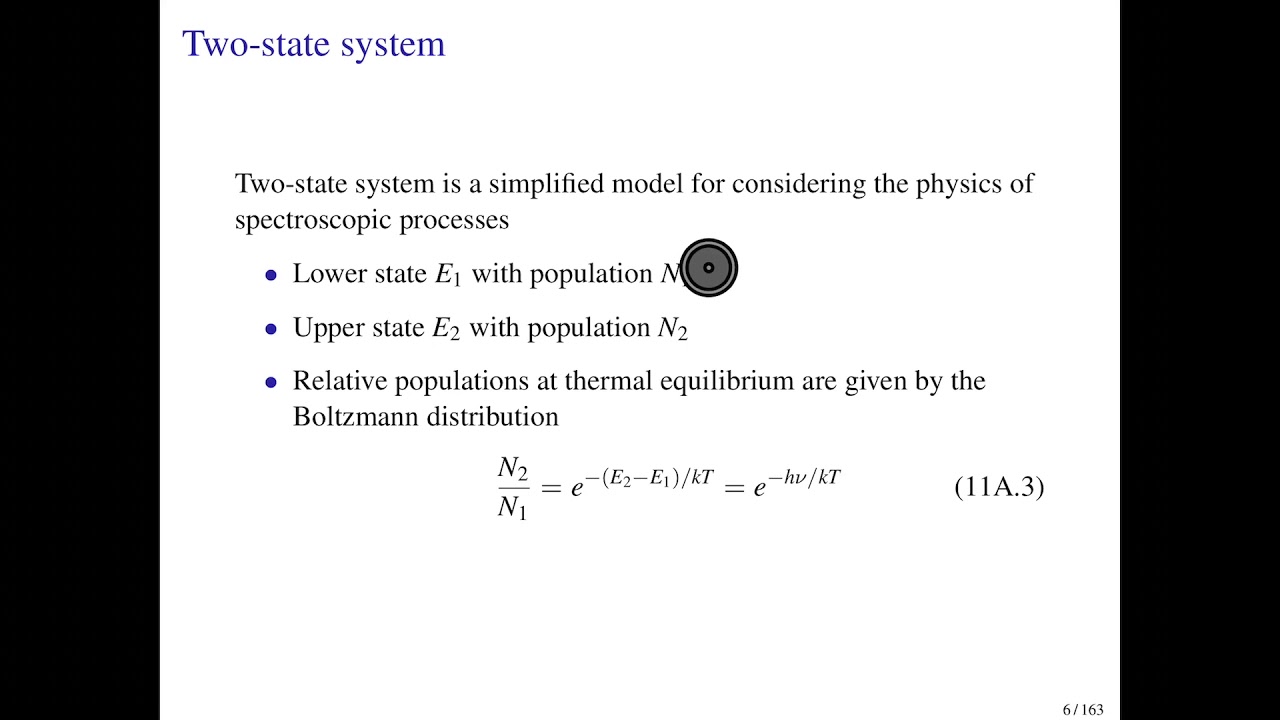
Uh the second point is that because of quantum mechanics the rotational energies of these molecule these ones are going to be uh quantified. You see here the different uh energy level for simple rotor. This is very simple molecules just to give you an idea of how it works. Uh and and there are also selection rules. I mean radiative transition can only be for example in these kinds of molecules between adjacent uh rotational levels. So in the end if you check what are the possible radiation uh transitions and the energy levels then each molecule is a unique set of lines. For example, if it's a simple rotator, it's a regularly spaced lines, but it can be a much more complex uh spectra, rotational spectra. And uh which means that in theory since each molecules has a a different set of line, we should be able by doing spectroscopy of to identify the different compos chemical composition of the intestinal medium. uh the first uh interdisciplinary point I want to make is that for example for this we cannot do it if we do not have spectroscopists that actually measure in the lab some of the transitions of the given molecules model the Hamiltonian and fit it to the molec to the to the few lines they observe and extrapolate them to the whole uh domain where we want to observe it in the millimeter domain. So there are some names of uh of spectroscopy database like the CDMS in in Colonia or the DPL in in the US and the splatalog is a big catalog that centralizes a lot of the other cataloges. But so how do we observe them? What kind of instrument do we use to observe a millimeter rotational transition in the interstellar medium?
Um we so I said that it was a very uh low energy transitions so a few ten of Kelvin I think it's a tenth of it's a tenth of a kilogjle per mole so it's very small uh and so we need to observe them uh in the millimeter range and in this range this is a bit of a zoom of the picture I showed with the transmission of the uh of the atmosphere You see that at lower frequency around uh 1 millimeter 1 millimeter and 3 mm there are some windows between very strong oxygen lines uh where we can observe where the atmosphere is transparent but as you increase the frequency it becomes more and more complicated. There are water water bands that where you cannot observe and even there between the bands it depends a lot on the precipitable water vapor on the water vapor content of the atmosphere. If you have too much water you cannot observe and these are small values. Uh so you need to go to high altitude to have less column of of atmosphere and you need to go to desert very dry places. Uh and then you can open some of the windows you see here. If you have less than 1 mm of water vapor, you can open the window here that was that was closed before. So what kind of instrument we use? We use radio telescopes. Uh we place them on top of mountains. Uh and we have two types of telescope. We have a single dish telescope where we have a unique antenna and then uh well the angular resolution is going to be of the order of the uh wavelength divided by the diameter of the telescope. And here you have typical uh typical um angular resolution of uh 30 arcsec. If you use a telescope optical telescope without any adapt adaptative optic you're going to get one arcsec resolution. And you if you get adaptive optics, you're going to get much better than one arcsec resolution. So actually we don't see that very well in the interstellar medium is uh we're a bit myopic. We don't see very well and and and to get higher resolution observations. Well, one way would be to get a larger dish, but it starts to be complicated because you need to have the precision of the dish here that needs to be paraboloid to a fraction of the wavelength. And basically here this is a 30 meter antenna here at Sierra Nevada in in south of Spain above Granada. And you have a precision here of a hair width run random RMS precision over 30 meter and that's the limit of what we can do.
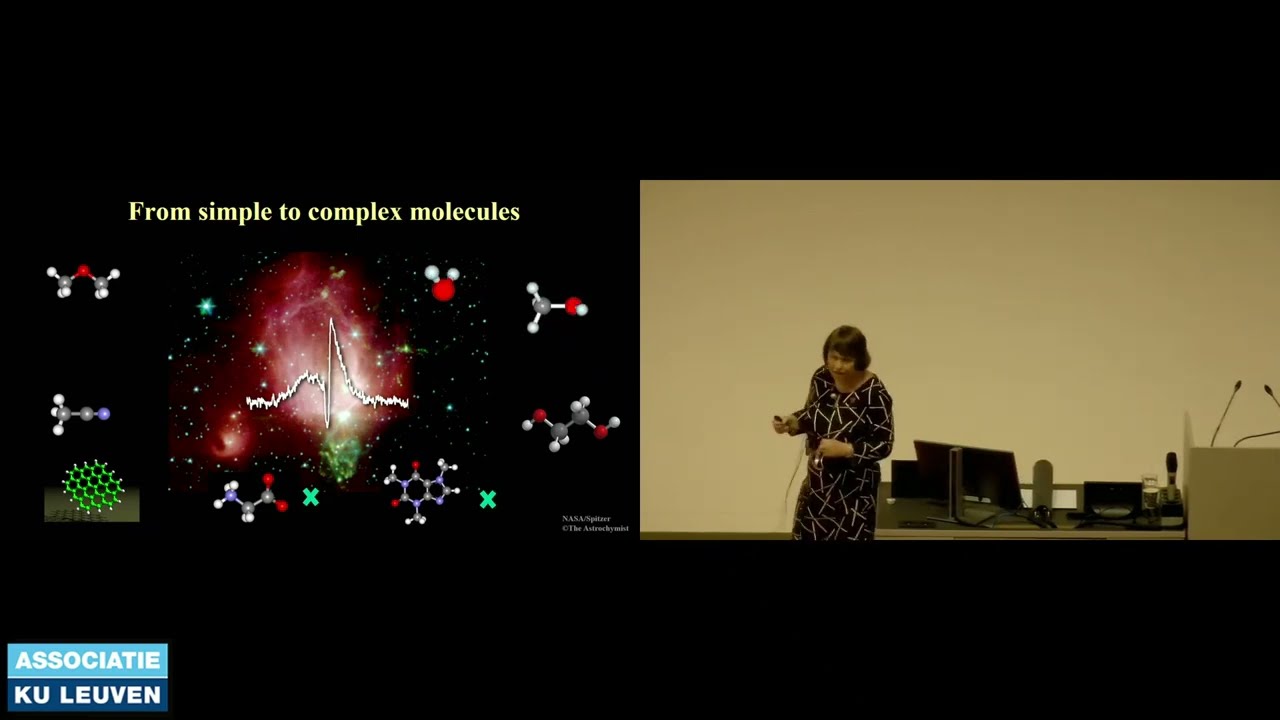
It's difficult to to do that at a higher higher antennas. So we were going to simulate higher antennas by doing interpherometer. We're going to combine the lights from different uh telescopes that are typically a bit smaller and we're going to spread them out on larger distances up to kilometer scales which means that uh we get an equivalent resolution which is typical of the distance between the telescope instead of the size of a single telescope. And this means that we can reach resolution even sub arcsec resolution if you go to higher higher um frequency also it helps this this also also remains as a as as a defraction law and it means that for example in alma you can get higher resolution at the same resolutions. So what what kind of of molecules do we observe in the interstellar medium? So this is a bit of a of a busy plot and it's becoming busier every year because new molecules are detected all the time. This this is from the colon um spectroscopic database and they they they they say that we should use sentences like in the order of 330 or 300 molecules are detected because since they appear all the time uh we cannot get a definitive answer about the number of molecules we detect them all the time. So as of February a few hours ago there were uh 332 molecules detected in the interstal medium or circumstellar objects. You see here at the column is the number of atoms in the molecule. So this is the diatomic molecules and then you increase three two and then this is above 12 atoms and the first thing you see that there's some kind of distribution. And you have a histogram here and you see more small molecules and less and less larger molecules. Uh we can have a look at some of the molecules here. And uh let's try to zoom in. It works great. Uh you see that you have the usual small molecules.
Okay, you have HCL. Okay, it's been detected CO which is the most abundant molecule in the in the interstellar medium. And then as as you increase the size, you start to see some uh a bit strange molecules. You see some strange um cyanopolines, for example, where you're going to get long chains of saturated carbon with nitrogen on one side and hydrogen on the other side.
You're going to see some uh very strange uh radicals. uh you're going to see some C7H okay molecules that you wouldn't even uh be able to uh uh maybe synthetize on Earth but you see them in interal medium. So the condition are very different we'll see there that when we do some modeling than what we have on earth. Uh but you also as if you go to the left here start to see maybe some of your favorite molecules. There's some methanol somewhere. there's some acetic acid and then you you start to to get more and more complex molecules. We start to call complex organic molecules.
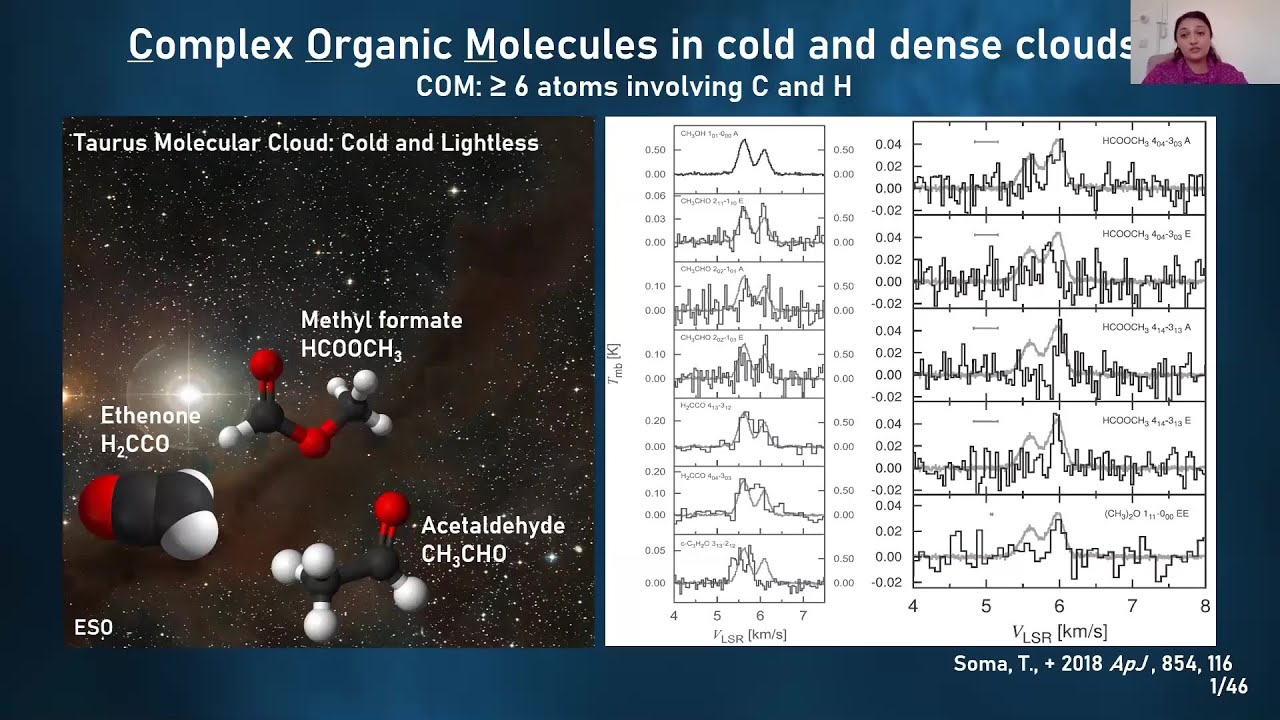
We've set a limit I think around six atoms. Someone did a review in 2009 or something like that saying that above six is a complex organic molecules.
Okay. And biologists laugh at us but it's okay. We don't mind.
Um and uh also you see more and more saturated molecules uh and sometimes you see molecules that you could start to recognize with names activity letter and things like that. Uh at what's are we going to stop detecting molecules? Have we detected them all or are we still on a slope positive trend for detection? So this is a plot taken from a talk from Pepe Sanicho which is one person who is detecting the most molecules at the moment and you see as a function of time uh using different telescopes. So you see the the the the peak time of telescopes. For example, Kit Peak was the best telescope to observe in the 80s. And then in the 80s the telescopes like the Aram 30m arrived online and then some summ telescopes new with new receivers or higher antenna started to arrive and you had typical slopes here of uh one to two uh molecules per year and it doesn't seem to to be stopping. And the the the big change in the last years has been uh the Kiote uh project so led by Pepe Shao uh that uses and so why are they getting like four new molecules per year. What changed?
Well, what changed is that they went to a different frequency domain a bit lower the Qband around between 20 and 50 GHz which had not been really observed before. And also what they did is that they increased a lot their bandwidth. So now in one go they can observe tens of gigahertz whereas before you had to go 500 MHz by 500 meghertz very slowly to map uh to do a spectral survey. Now they do and so they exch in exchange of doing septups one by one they just integrate on a full setup and they reach really really really low uh sensitivities and so they can detect molecules that are much less abundant and so this is why here uh there's this huge uh acceleration here by more than a factor two of the number of new molecules per year and they are publishing every every month we get new detections of molecules. But actually, it's you also need to have a spectroscopic background to be able to do that. And and I have colleagues in spectroscopy lab where you can send them ideas of I think I've detected the molecule. Can you check if indeed it's the it's this molecule or not. You takes a group effort to be able to do things like that. So what do the data actually look like? This is an example. Okay, it's maybe an extreme example, but it's to show you how difficult it is to get uh information on new molecules, new complex molecules. Uh because actually the ones that are detected here are detected in cold dense course and they are not that complex. We're not reaching the edge of complexity, but there are new molecules that are just less abundant, but they are not too big. Here it's more in the case of massive star formation. So it's hotter and there's been more possibility of doing chemistry and so you have huge amount of lines and actually so this is a plot of the full uh 3 mm band you go from 80 GHz to 115 GHz was one of the windows that we could observe through the the the atmosphere and you see here is actually the same data but we are zooming in on the on the antenna temperature scale which is an intensity measure we use and You see if you go from 0 to 100 you see a few bright lines and then when you start to zoom in from 0 to 5 and especially from 0 to one it's a forest of line and actually we've reach a a level where even if you integrate more you're not going to get lower uh baseline because actually the baseline is not noise the baseline is smaller lines. they call it pseudo continuum because you're reaching a a point where even if you integrate more you're not going to get more information about weaker lines. So this is why they call it confusion limited uh surveys and this is a problem to uh increase the complexity of the molecules we detect is because that in the sources where we think we're going to find complexity is too complex. uh we're starting to have lines everywhere. And actually these lines here, some of them can be identified, but some of them are still unidentified. And for unidentified line, it's difficult to know if it's indeed a new molecule that you want to detect.
It's complicated to see patterns here.
If you had one molecule, we could identify patterns. Spectroscopic could tell you it's this kind of symmetry, but here there are lines everywhere. So we do it step by step. We identify the most abundant one, remove them and then try to find new ones. But actually when we talk about the people who work on these kinds of of of surveys, they think that the lines that they observe, some of them might actually come from vibrationally excited uh well rotational uh transition in vibrationally excited mo modes of very simple molecules and these have not yet been measured in the lab. So we are a bit stuck here now to get new complexity. Um so this was the part about uh observation. We're going to go to the second part about how we model the interstellar medium. How do we try to recover the uh abundances? So I've skipped all the part where we go from the position of the line to the actual quantity of matter the abundances that we detect in the interstellar medium because I didn't have time to to do to do that. But there are ways we do forward model where we do modeling of knowing the spectroscopy and physical parameters and a given abundance. We can simulate a spectrum and we invert that.
It's a bit complicated because there are a lot of parameters because it depends both on the chemical composition and also the physical composition of the of the region you're observing. If it's hotter, if it's denser, it's sometimes out of equilibrium relative transfer. So it's not easy, but I would need another half hour to to present it. So I'm just going to assume that now we have a composition for an object and we want to simulate it and see if by uh chemical principles we can get back to the to the observed abundance. So I'll again I'll start by dust. uh and so the models of dust uh they've been created to uh fit some of the constraints. We have a lot of constraints on dust and a lot of different constraint. We have dust constraints about the ex extinction curves in the far UV how the dust actually uh differentially absorbs light in the UV. There's a UV extinction bump that you need to explain. There are some mid-infrared emission. There are even infrared emission bands, the one I've showed you before that are not compatible with black body, but you that you need to explain. And for that, we need some very small, you see this is a fraction of a nanometer scale carbonus uh grains in the interstellar medium.
And here here the frontier is not clear about when you start to have an aggregate of ph aah's a cluster of phahes or a grain in itself. And so a here is for amorphos uh so it's amorphous carbon or amorphous hydrogenated carbon and you get the whole range between things that are more graphite or diamondl like which would be pure carbon and things that would be much more saturated where you would get other other level and they need a mixture. they cannot explain it with a simple uh composition. What they also need is to get the infrared absorption bands and the visible uh mid- infrared extinction and the sub millimeter emission at larger wavelength. They don't they need not only grains that are made of carbon but they also need grains that have silicate cores. So this is also amorphosicate different kind of composition and they have mixtures to as best as possible recover the shape of all these constraints here and this here still is in uh the most diffused medium.
There are no volatiles that are stuck on the grains, but they still needed to to to do that. And they also need to have some things where even on the silicate grain, you start to stick an outer edge of some uh suit and carbonated matter. when they increase the AV and you go to a more extincted region, higher density region and you go from the more diffused ISM to the more dense ISM. Uh you get an evolution of the grains. You start from the grains as I've shown before the amosilicate and the amorphos carbon. They are photoprocessed. They are here submitted to a strong UV field. And then uh as you go to more dense ISM, you have an accretion of an outer edge again of a different type of of a carbon sorry carbon uh carbon component. And then what becomes interesting I think for me is that when you get the ice meant that arrive, you start to get some coagulation. So you get clusters of these very small grains that are the that begin to make larger grains. And you also get mantles of ice that I'm going to focus on just a bit later. And that helps uh as Alandro said in in his uh talk to glue the small grains together. So how do we model actually uh gas and uh and the gas phase and the ice mantles of the ISM? We don't model the the refractory core in our case. If we take them as a given like the Tmis model do the the refractory core and we are going to add on them u volatile mantle and its interaction with the with the gas phase. So we include as many uh microfysical processes that we can think of. I'll talk to them about them in detail a bit later. And uh we do that in a framework of rate equation. Even though sometimes uh Monte Carlo simulation would be more appropriate.
But the rate equation enables us to have a large number of reaction and do some chemical dynamic kinetics with it and we make a a big chemical network with it and we try to solve the equation. We couple the gas and isis through processes that go at the interface. And basically what the code does is that inte it integrates the kinetic first order differential equation from a single starting point of given abundances at the beginning. And the typical input parameters that we have of our models can be possibly time varying the density the dust and gas temperatures the cosmic ionization rate and the UV extinction. the basic uh parameters that we use as input in our models. Okay, a bit of detail about uh how they actually work. There are three levels that we need to stack to be able to do these simulations. Uh the kinetic chemical models themselves are actually just solving these equations. So it's big uh networks of equ of reactions basically. Now we have something like um 800 to 1,000 species and 10,000 reactions between them.
Uh and so typical names in Bordo we do the notious code in London they did the UCL chemical but basically we all do the same thing. we solve this uh these kinds of equations. Then there's the reaction network. What actually are the values that we put here for the different uh reaction rates and what reaction do we actually take into account or not? Some of them have bias, some of them are endothermic. So we need to filter all of the possibilities of the combination of all 100 molecules with other 100 one,000 molecules. 1,000 molecule. And so, uh, again, this is where we need our physical chemist colleagues to tell us what reactions are possible. Uh, what reaction won't happen. Some people do experiments. I'll talk a bit later. Some people do computations. And we get these kinds of networks. Uh, this is a very small part of the network. It's a old old paper where at the time you could still graph some subp parts of the of the network.
Now it's much more complex. Uh but you see that from oxygen here you can go both ways with starting to ionize or get some radicals. And of course all of these are linked because CO appears here and CO appears here. So the the network itself is completely linked uh with all the molecules and for typical names of reaction networks we have the KDA reaction networks and the umist reaction networks that you can check uh they are mostly standard in in the ways they present the data. So even with a given model you can check cross check with different networks to see if they have influence and then the reaction rates themselves are actually temperature dependent. So we need to to to store that information and for that in Bordeaux we have the KIDA database which is the kinetic database for astrochemistry where we store all kinds of reaction rates both uh from the lab uh from computation and we do aggregate of all this information and we do the work of if we have several rates for a given reaction doing a consensus with experts to get a single value to put into reaction network. But we still keep all the data. We compile everything so that also if people who want to do new experiments can go check what other people have made. And it's complicated because for example you see here these are some uh uh observed values so measured for example by Astri Bja in in in in Bordeaux of a reaction. I forgot to write uh which one it was but they all look the same almost all look the same as a function of temperature and you see here the possible parameterization of the rate as a function of time that could be possible and what we're interested actually is this part here very cold interstellar medium and depending on if indeed there are some tuning effects or quantum mechanical effects you can either have slightly strongly increasing also strongly decreasing rates at low temperature. So we're always uh trying to get new data to get more information about about these these things. Uh we try uh uh not to um fit the rates from observations of interstellar medium molecules. We try to go to first principle and talk to our chemist colleague to get most data but it's difficult. I mean one experiment here could take one year for one system.
Okay, one reaction it could take almost one year a month and we need tens of thousands. So we work by analogy and and and also that but evolving field. So actually how do we get the these values uh be it uh for the measuring points? So it's lab work. Uh people do some uh experiments where they can have uh supersonic flows or they can have uh cross beam or almost parallel beams where they actually measure the re reaction rates at the condition close to the interstellar medium sometimes down to a few tens of kelvin. And we also have uh people working in computational uh chemistry that can also measure these kinds of of of reaction rates.
So it's second point where interd disciplinarity is very important for for astrochemistry. Uh so for the gas phase chemistry uh we can neglect free body reaction.
We're not in the atmosphere. We don't care. It's only by molecular reaction.
It's easy. And there are two classes basically of of things that happen in the gas phase. Two body reactions and photoprocesses.
Uh so this is a a bit of a table of giving you the typical rates for the kind of uh of uh of reactions. The first one that you could think of maybe would be neutral neutral reactions. Okay, we get two neutral uh species we make them react and hey we get a new molecule.
Actually, it's not that easy. Um because the rates typical rates of coefficient can be go from negligible because sometimes there's actually an activation barrier along the along the reaction path. And for example, if you get H2 plus O, well, it won't react at cold interstellar uh conditions because there's a 3,00 Kelvin barrier. So, it's not going to happen. This is not how you get O in interstellar medium.
uh but for other molecules like example C uh CH +N it's bar or less and then you get typical 10 to the minus 10 uh rates ion neutral reactions are much more uh efficient because they are most of the timeless and for example you get an order magnitude uh quicker reactions for this uh for this okay so this is a rate here you have to multiply it by the concentr ation of both of the reactants to get the actual rate in seconds minus one. So it can be fast in theory but if you have no reactants it's not going to be fast. Uh there's also electronic or electron re combination where you get a cation here and you make it react with an electron. Uh you could expect that you would just neutralize and get the neutral large molecule but actually it's very energetic. So you break everything.
It's not a way of constructing new complex molecules. It's a way of breaking everything. So for example here you have you have ionized formaldihide and when it reacts with an electron actually everything is broken but they are very efficient. So they happen all the time as and there's always the the inter medium is always slightly ionized.
So these reactions happen a lot of the time. you have some radiative associations which are very difficult.
They're very very slow. You see here several orders of magnitude lower here.
Uh you need to emit a photon exactly at the right moment. It's complicated. It doesn't work in the instal medium very well. Sometimes when it's the only thing then it becomes the most important reaction but it's very rare that it's most important reaction. And for the photo processes we have two kind. you have the photo ionization for example C2 plus UV you get C2 plus so it's a way also of making ions that you need for the ion neutral reactions and to have the fast reactions and we also have photo dissociation and here the rates are typically uh uh 10 the minus 9 to 10 the minus 10 but this is for standard ISRF so for a molecule in a typical interstellar medium that has not been shielded by dust and actually most of the time there's a lot of dust and so the actual rates are much lower because uh there's no UV that arrives. This is the the race where you would have a typical UV which is not you get what you get in most of the the regions but sometimes very close to bright stars in PDR regions there can be very important reactions. Uh so what what is actually the importance of grain for chemistry?
Why do we do grain uh and heterogeneous chemistry? Why is it important? Well, if you look at the time scale for even dense regions, okay, for dense 10 to the 4 and and 10k, the mean free time between collision is actually two months. Okay, so this is the number.
Actually, we have time for millions of years.
But but what it's important to compare with is if you took at look at the typical time scale of diffusion of for example a hydrogen on the surface of a typical grain of au 100 nanometers it's the orders of hundreds of seconds. It goes very fast. So actually if you manage to put two molecules on the grain and one of them can move at least then going to react much faster than they would have in the interstellar medium.
So actually the greens are catalyst of the ISM chemistry in certain conditions.
They are catalyst of the interstellar chemistry. And so what are the photo the surface processes? So there are many more actually than the gas phase processes. Uh there are also photo processes. You can photos or actually photo dissociate. Photo disorption u was uh thought to be very important at a time because um in the first experiment we thought that actually the molecules could come out as pristine. If you irradiated metano, you could get out metanol. It's more complicated than that. You seem to break a lot of things. It's like a bit of electronic re combination. It's not that easy to get the molecules intact when you you leave them out. Um there's diffusion, there's disorption, and I will go a bit in more details now. So the first step is you have to get your molecules onto the grain. You have to make them stick onto the grains. Uh this is physion. We don't have enough energy to actually chemis the molecules on on on on the surfaces. So this is just physics options. So they are trapped into a local minima of the potential field of of the surface. Uh the rate will increase with the gas density and the gas temperature because the velocity is a bit higher and the grain cross-section. Okay. Uh remember that you have a distribution of grain sizes.
So I showed you the very small grains and the very large grains, but you have many more small grains than large grains. So depending exactly on the on the distribution you want the the surface can actually be dominated by the very very small grain. Uh up until now until recent year we usually used sticking coefficients. So the probability of a molecule sticking when it comes to a grain of one we said that as long as a molecule reaches the surface it will stick. And actually there's very recent papers of a team in Marseilles Kadal that show that it's actually not the case. If you look at uh this is lab work where they uh put molecules and bombard little cold very cold uh target of gold of olivine crystals or even ISM size grains and in that case actually on the gold it sticks all the time but if you look at other uh it doesn't stick that well so we might have to refine our models not going to change a lot of things going to change the time scale at which you you deplete all your gas. But uh still it's interesting that uh what we thought was the standard that everyone used to be equal to one. Now that we have new measurements, we actually see sticking coefficient that could be an order of magnitude lower on real analoges of of intestinal grains. Then once the molecules are on the surface, you need to make them react, but you need to keep them on the surface. So there's a tension here uh based on the on the langu mechanism in physical chemistry. So you have physicional species followed by diffusion and reaction. So it's parametricized by a disorption diffusion energy which is basically a level of energy at which molecules can start to move and that diffusion disorption energy actually increases with the species mass. So larger species won't be able to move as easily as light species on the surface and also depends on the surface composition. So it means that it's becoming very complicated to model correctly these energy uh disorption energies because the composition of the ice changes as you build the ice. So actually the later uh molecules won't stick the same as the first molecules that arrive on the pristine uh grains for example. And basically if it's too cold nothing moves and if it's too hot nothing sticks. So you need intermediate temperature where the molecules stay on the grains but they also move. And this is the range of temperature where you going to have efficient surface chemistry. Uh and you have to remember that it's highly dependent on the mass and the mass of the species are highly variable also. And so if you combine the fact that H is about 10 to the four 10 to the five more abundant than any other species on a grain and the fact that H is very mobile some molecules all other species are stuck and the H is very mobile. It means that most of the surface chemistry is going to be dominated by hydrogenation reactions of species that are already stuck on the grain and cannot move to make themselves higher larger molecules. So you get hydrogenation chains for example where you start from a atomic carbon and then you build up these strange radicals to reach saturated molecule like meth like methane. Same thing for water. This is how we make water in the in the universe. We make it make it on the grains basically. And in the case of CO that can be created in the gas P before.
If it sticks on the grain, you get first partially saturated formaldihide and then fully saturated metanol at the end. Uh another processes that uh we have I talked about thermal disorption.
So you heat the grain and the molecules disorb. Uh there are other ways to disor molecules which call non-therrmal disorption. It's all of the ways that you can get a species out of a grain without heating the grains. So there are many ways. There's photo disorption. I talked a little bit about it. There's a bit of chemical disorption. Actually, if you have an exothermic reaction, you can get some of the energy of the reaction when you build a molecule that a fraction of it is ejected. It doesn't stay on the grain. The efficiency is not very high and it's not very well constrained. And you get the interaction with cosmic rays. So cosmic rays are nuclei of molecules. There are some protons, but there are also larger larger atoms that are accelerated in in the interstellar medium and that can interact with grain. And when they do that, uh, they can do sputtering.
They're just so energetic that they that they they pull some of the species out of the molecu out of the grain or the grain can explode. Uh, they can heat locally the grain. So it's kind of a thermal disorption but because of localized heating by an interaction with the cosmic ray and you can also have a secondary electrons by the interaction and you can do some radiolysis of your uh your grain but this is very new uh processes processes that we are adding in the models and they are not very well constrained now but we used um like the ganil uh particle accelerator to bombard some ISIS tend to get some yields and and have information about that. So this was an overview of uh what kind of modeling we can do and uh now until the end I'm going to talk about astrochemistry in the different steps of star formation the the one I've showed you at at the beginning. So we're going to go from diffused gas uh dense uh interstellar medium through we're going to go through the PDR phase uh not a phase but it's a very important part of the intestinal medium the photo dominated regions and then I'll stop I'll stop here at the protolanetary discs uh for for this talk. So the diffuse ISM um it's not easy to observe even in in optical it's not easy to observe uh because the the main trace of absorpt of the diffused ISM is going to be that the stars are going to be slightly less bright because they are going to be a bit attenuated but if you have a field of stars uh one uh way of having a less bright star is to have a star that is slightly further away so it's very difficult to disentangle extinction and distances. So it's not easy. It's easy to measure high extinction. Can you see no stars? It's easy. But low extinctions are very hard to to to measure. And uh people who do actually astrophotography sometimes amateur astrophotography are starting to get very long poses in certain parts of the sky. And we actually see the dust not in absorption.
Okay. We see that some of the stars here behind might be missing. It's difficult to to see that but actually we see the dust that is diffusing the light from the whole galaxy. This is the places at high galactic latitude and this is how we know that there's dust here. But uh to look at the molecules there is complicated. Density is very low less than 1,000 particle per centime square.
The temperature is a bit higher and the UV radiation is typical which means that it's mostly atomic and ionized species.
you're not going to get large molecules, they're going to be destroyed by uh by UV radiation. But if you use very sensitive absorption studies against quazars, so you take a quaar like a very bright source in in a millimeter and you try to see if the line are not in emission but in absorption in front of the continuum of the quaar you actually detect even in quite diffused region CO uh HCO plus CF C3. So there's a review by Harvey Satal uh and actually there already even in this region where there's supposed to be a lot of UV and complicated you still start to see molecules. So it's not completely atomic. It's uh simple molecules a lot of ions and you're dominated by gasphase chemistry. The grains are too hot. Nothing is going to stick on them.
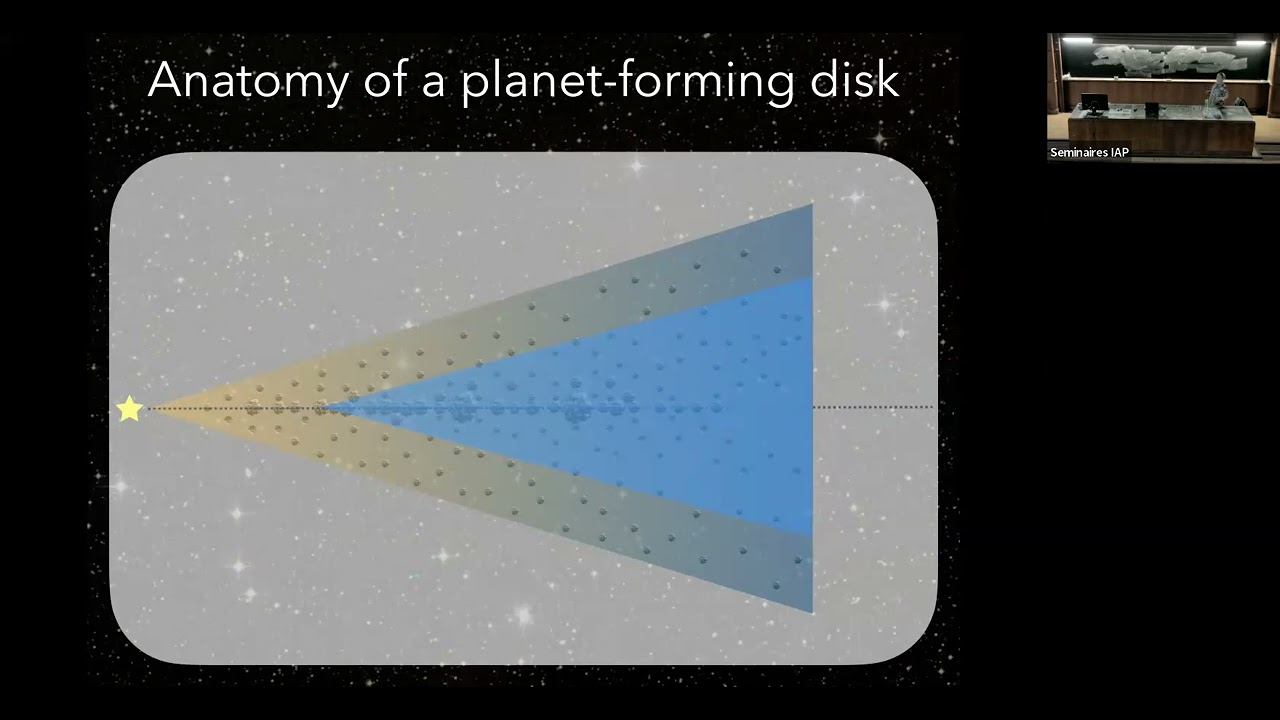
uh there is evidence of depletion of elements onto the guy's grains already in the diffuse phase. So you saw that the the teis model explained that you had grains that are built of carbon and and and you construct them. But even for the other elements, this is a a nice paper from 2009 by Jenkins. He studied gas phase absorptions of a lot of elements. I think he had 20 against a lot of different regions that had different uh densities and then he managed to get the differential um uh grain composition as a function of density. So how does the grain differentially the species differentially incorporate into the grains already in the diffused interstellar medium uh and the depletion varies between elements uh you get some of which have very uh sharp slopes and some of them which are mostly flat. Okay, nitrogen is not doesn't seem to be incorporated at the step of the diffused gas phase but uh magnesium and celium are very depleted right from the start. Now the photo dissociation regions. So the photo dissociation regions are the interface between hot ionized regions and colder molecular gas. So actually they are everywhere as long as you have a summer ionizing source. uh since the dust will try to uh well will absorb some of the light if you go along line of sight then you get to get less and less UV and at one point you're going to reach the cold molecular phase so PDRs are everywhere and PDRs are a very wide uh name because the densities can range from diffuse ISM densities to 10 to the 9 almost protostellar protostar like densities the UVI radiation can be a few like standard interstellar medium to 10 to the 5 or 10 to the 6 if you are ultra compact H2 region. So an O type S has just been born and is ionizing extremely strongly the gas that is just next to it even before it's being pushed out and the temperature is actually determined by the local UV field. So in in that case so this is an example standard example of the hosted nebula. So farther north here for a few parexs away there's a O type star that is ionizing. So every time you see a red reddish colors here it's because it's Halpha re combination line of ionized hydrogen. So it means that you at least had UV photons larger than 13.6 6 EV because you've ionized hydrogen and then you see the re combination and the interface here is in that case quite sharp where you go from a very diffused very hot gas to a much colder and completely obscure uh ISM. And so how do we model that? Uh we do uh PDR models which are going to at least be one dimension because you have broken the symmetry of the problem. you now have a incoming direction of the UV field and so in these kinds of models here the ionizing flux comes from the left the amount of remaining UV decreases as you go back as you go towards the right here because the UV is absorbed by the dust uh and so you go through different phases so on the right side here there's the temperature which is shown in dotted lines here so you start with high temperatures it's even higher in the ionized phase the plot here starts in already atomic phase and it can go down to very cold interstellar medium phases here and you get different regions. So they're a bit arbitrary but if you follow for example the hydrogen you go from fully atomic hydrogen to fully um molecular hydrogen somewhere around here in that case depends on the density depends on the temperature uh and of course on the UV radiation field. In a case of carbon, if you look just at very simple carbon chemistry, you go from fully ionized carbon to neutral carbon, atomic carbon to CO, which is going to main be the main reservoir of of carbon in in in these uh in these objects and even further uh further again here the CO is going to go down because it depletes on the grain.
uh and if you look at uh at the electron fraction the ionization fraction is very high here and it's almost the same as C++ because actually most of the electrons come from the ionization of C++ and when C++ goes down it it reaches very low values of 10 to the 8. So there's a very sharp contrast of ionization state between these two these two parts. And so there are many many different kinds of models to try to explain because there are so many different kinds of PDRs dense one diffused ones and uh and so on cold dense scores because these are my favorite objects. Uh the cold dense scores are the first step of star formation. And why do we know there are cold dense scores? Because actually when we look at fields of stars there are places where we see black holes. There are not the black holes that massive objects but there are places where there are no stars. So there could be two hypothesis. There could indeed be no stars in these regions or it could be just a mask and it's the correct explanation. It's a region where there's so much dust here that it blocks the light from the stars behind. The extinction which is the the the amount of light that is removed from the eye is so high that we actually don't see the stars through the dust. Uh they are very cold because light doesn't reach into them. So the UV cannot heat uh the grains and cannot heat the gas by photo electric effect. So it's very cold. They are quite dense. If they were not dense, they wouldn't block all the light and they have high extinction.
Okay, we don't see them. So basically no UV reach the inner parts. So it's very particular. Uh they are anti-PDRs. They have no UV, almost no UV. And so what kind of chemistry do we have in these sources? we have uh uh chemistry that basically everything is going to stick on the grain and the grains are too cold and there's no UV to bring them back out and everything just sticks on the grain and you build huge mantels on your grain surfaces. So this is a simulations done by the notilus code by a few years ago where we see the composition and the amount. So it's measured in a number of layers of ices on the surface measurement of the amount of ice that we built. And you see that uh after a few hundred thousand years you start to build this huge hund 100 model layer is on top of the bare grains that you had before. And the composition is uh depends quite a lot on the temperature exact temperature of the grains because what's complicated also is that because of the disorption energies the chemistry on the grain is very dependent on threshold. If you're above a certain threshold, things start to move and you can make, for example, if you manage to be able to move CN O, you can make CO2 is if it's too cold and you never go through that phase, then they will never move and you will get almost no CO2 on the surfaces. And so you get composition which are water, CO, some CO2 and not a lot of nitrogen.
Nitrogen reservoir on the on the surfaces is not well known.
And so an interesting thing about cold dense cores they seem to be simple like that but actually it's interesting because they have similar uh conditions they are cold they are dense but they show varying chemical composition within a cloud and between clouds and uh this is but because the chemistry in the stella medium is highly out of equilibrium. So the history of how you reach a physical condition is as important as the physical condition themselves. And uh we showed that by using uh MHD simulation of a galaxy where we ext our colleagues who do m hydrodnamic simulation extract a small part and then reimulate it at higher resolution and they actually can simulate the formation of these uh these dense cores and they give us the traces of all the particles that reached this core and we can simulate uh here. So this is the trace that they give us.
They all the particles here reach the dense core phase. So high opacity, high density, low temperature. But not all of them arrive through the same way. Some of them have uh here for example very low density phase before going to high density and some of them have a slightly higher density phase before reaching the the the high density. And we do simulation with our models for all of these uh tracks. And what we find is that uh indeed for a given end density, so here within a cloud for one color here, you can have wide orders like five orders of magnitude difference for some molecules.
And the only difference for given here density is how you reach that if you've been through a dense phase before or not. uh it's the same for a lot of molecule. Of course, the the main point here is that there is depletion. Okay, if you increase the density more quickly, you stick everything on the grain. So the main trend is is going down here, but the variability here is very high. So now we want to observe many many dense cores and many many molecules to be able to quantify this variability. Uh in cold dense course, we also observe actually some complex molecules. Okay, so metal formate and deilator and for this they've been detected in 2012. Actually, it was quite complicated to at the same time understand how they could have formed because they cannot form in the diffuse phase. That's too much UV in the cold phase. Normally the precursors should not move on the surface. So it's difficult to make them and even if you make them when we observe them you observe them in the gas phase. So it's difficult to understand how you would be able to uh redisorb such large molecules in region where the the density is the temperature is very is very low. So this is why there's been a development of non-therrmal uh disorption mechanism because they could be enough to explain how we get some of these so large molecules and so cosmic rays come mostly from supernovas accelerator. Actually, we have people now working to see if at the edge of supernova remnants, some of them are near molecular clouds, we see a different chemical composition than the ones that are more isolated. Uh now I'm going to talk about the hot core hot corinoase. So I just re put this slide again to show you where we are. So the globules are the dense course that I've just shown you. The PDRs and the diffuse cloud were here.
And now we're going to go to through that phase. So there's been a gravitational instability and we're going to form a star at the end here.
And so the protoar here, there's a phase where you're going to have heat heating of the of the star as the density increases. So this is the phase that I'm going to talk about now. In that phase, the people who model them, for example, the team by Gotal, they do that by warm-up model. You see here that as a function of time here the temperature increases from 20K to 400K and in their models uh what they find is that the species in particular the radicals they can start diffusing on the surfaces uh before they disorb and so they can start to make large molecules. So I'm going to talk about two examples here. The dotted lines here are what happens on the grains and the solid line are in the gas phase. So if you look at the example of metanol, I've showed you that it's formed actually in the cold dense core phase. So it's already there at the beginning here and it just waits here reacts a bit with the other ones. It's one of the reservoir of of the of the ices. It's very um uh abundant. And when it reaches here this temperature well it goes out of the grain and it goes into the gas phase.
But in the case here for example of uh in yellow here of methyl formate actually there's no at the beginning you don't see any it's not formed marginally formed in the dense core phase and you have to wait until the precursor here which would probably be something like H2O radical and uh CH3 radical start to move on the grain so that it can react. The new molecule is still stuck on the grain. So this is why it's it's here here and then it dissors here actually it dissors here almost with everything because it dissor just when the water goes out. So the water is evaporated and everything goes with the water because the water is mostly the matrix of your ices. So when you dissolve water you disorbe everything almost everything.
uh and these uh these uh hot cores hot or hot cores are for high mass star formation and hot corinos are for the typical small stars like the sun formation. This is where we observe the highest complexity in the ISM. For example, I took the latest most complex one measured in these kind of sources.
And for for example, two mix two metthanol in NGC 6339. And this is the kind of of plots that I I talked to you about before. It was a zoom here. And you see that you get a lot of lines.
Some of them are other species that are more abundant. But if you do a full model of the thing then metoxia tunnel is the purple line here you see a line here this one is actually hidden by uh here it's blended this one also but you get can get a coherent model of all the line at the same time and convince yourself that you've detected all the lines that are detectable and you don't have uh emission at places where you don't expect lines so you need to be a bit rigorous but in that case I think it's a detection of metroton and I'm going to finish with prototidis going very quickly because it's much more complicated. Uh cold dense cores are very nice. The temperatures are low. There are not a lot of processes here. It's very complicated. So I took I took this picture from a recent review by Karenberg in 2023. If you want to check out protolanetary chemistry, it's the title of the of the review, I think. And you have many different processes. We've heard about snow lines. There's UV disorption. Then the the actually there's uh the protoar itself has some luminosity there's accretion on the star the variability of the luminosity of the star actually can vary quite a lot can have bursts of bursts of luminosity and then it goes down again there are turbulent flows uh there's infall of cloud material it's interesting to see that in this community the infall arrives from the midplane on the outside whereas Allesandro showed us that uh in his community the uh infall is much closer to the star. So maybe it's a different way of of seeing uh because in his models uh it arrives so close to the star that whatever complexity you had before I think it's going to be going to vanish. In our case uh maybe because we it's a wishful thinking we would like to have some of the complexity maybe to be kept and incorporated into the into the disk. I don't know what is the the real answer wait a few years for that and uh what we detect in protoarent discs actually we detect not that many very complex molecules because because the protoarent discs well they are small they're really small I mean like there are 50 AU and the cold dance scores I've showed you are like uh or those of hundred of thousands of AU so even if uh you have a nice telescope is still going to be very small in your beam and even if you want a small beam with interrometer you lose uh sensitivity. So actually uh in in the millimeter domain that we detected most of the molecules but they're actually quite small molecules some isotopes and things like that but maybe the most complex one is is probably this one here. Uh some of the molecules have been detected in infrared and far infrared but they're also very simple. Uh it doesn't mean they're not there. But it's difficult to absorb them and also the the protoarental discs tend to be quite cold. So it's not easy also to observe in the gas phase uh molecules if you have cold uh cold dust and the part that are warm are even smaller even more complicated. Uh so this is the end of my presentation. The three points I wanted to emphasis is that astrochemistry is interdisciplinary field. So we need spectroscopist, we need chemists, uh we need a lot of people actually to be able to build our models. Without them, we couldn't do it.
Uh the observation complexity in the ISM is limited both by sensitivity because we see that when we get more sensitive instruments in certain regions, we can detect new molecules, but it's going to be limited also by the confusion limit.
And it's going to be difficult to go beyond this confusion limit because you reach a point where there's lines everywhere. And so you need better databases to eliminate everything that is not what you're interested in the actual complexity of the lines you're molecules are interested in. And last point on modeling you have to remember that ISM chemistry is very out of equilibrium chemistry and the composition is influenced by how matter evolves from the previous steps of star formation. So actually you need to theoretically keep the full history of how you create a core or even maybe how you create a protot at a given physical parameters and since it's an interdisciplinary field it's sometimes not easy to follow the literature. So 8 years ago we built this um newsletter which called the astrochemical newsletter that you can subscribe here and um more importantly you can um um submit your abstracts. We take uh abstract from the physical chemist community from the observing community from the uh uh modeling community so that we can exchange and have a better information about all that is done around the astrochemistry. So thank you.
[Applause] [Music]
Up Next
Infrared Spectroscopy of Interstellar Dust | Astronomy Seminar
@SETIInstitute
3.3K views•2014-03-11

Triumph of Orthodoxy Icon: Byzantine Art & History Explained
@BenCallan
2.1K views•2024-08-06

FastAPI vs Flask vs Django: Choosing the Right Python Web Framework
@TechWithTim
302.5K views•2024-05-26

Game of Thrones Opening Credits: A Cinematic Analysis
@gameofthrones
46.3M views•2011-04-18
Related Study Plans & Knowledge Roadmaps
Structured learning paths in General & Interdisciplinary Studies