
![Giải mã những bí ẩn lớn của Vũ trụ [Replay] | Khoa học vũ trụ - Top thú vị |](https://i.ytimg.com/vi/QIXPN4GyZPo/maxresdefault.jpg)












![[DNDE Live] Minage d'Astéroïdes, HyprSpace, tourisme suborbital et autres !](https://i.ytimg.com/vi/J0kSecQ8JBc/maxresdefault.jpg)





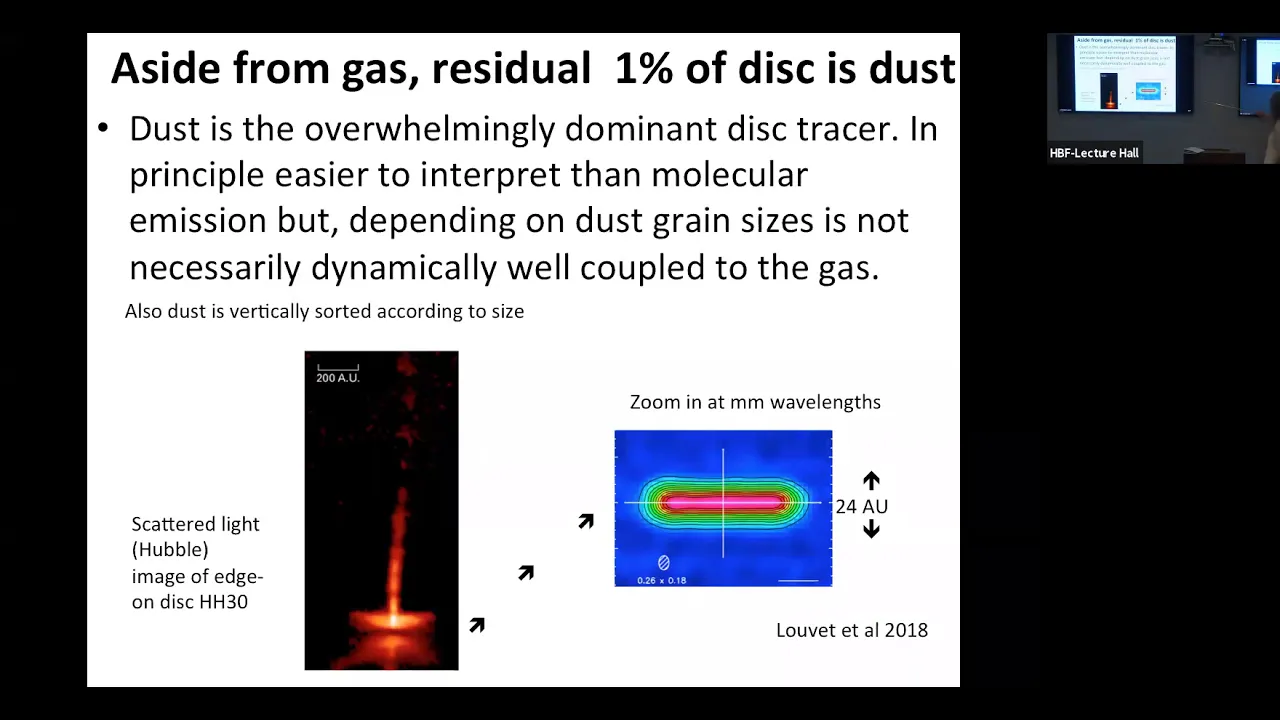

The chemistry occurring in protoplanetary disks during planet formation fundamentally determines planetary compositions and their potential for hosting life; ALMA observations reveal that different volatile compounds (water, CO, CO2) have distinct snow lines that create compositional boundaries in disks, and recent observations show that organic molecules detected in disks match those found in comets, suggesting that the chemical building blocks for life may be common throughout planetary systems.
Chemistry of Protoplanetary Disks & Nascent Planets | Karin Öberg
Added:The Nebular Hypothesis of Solar System formation, including how a rotating cloud of gas and dust collapses into a protostar and a circumstellar disk.
Basic principles of astrochemistry, specifically how temperature gradients in space determine 'snowlines' (condensation fronts) of volatiles like water, carbon monoxide, and methane.
Fundamentals of observational astronomy, particularly how radio telescopes (like ALMA) use molecular spectroscopy (rotational transitions) to identify chemical compounds in gas phases.
Elementary chemical concepts such as volatile vs. refractory materials, organic molecules, and isotopic ratios.
The connection between disk chemistry and planetary atmospheres, specifically how carbon-to-oxygen (C/O) ratios in disks influence the atmospheric compositions of giant exoplanets.
Prebiotic chemistry and astrobiology, focusing on how complex organic molecules (COMs) found in protoplanetary disks may seed the origins of life on terrestrial planets.
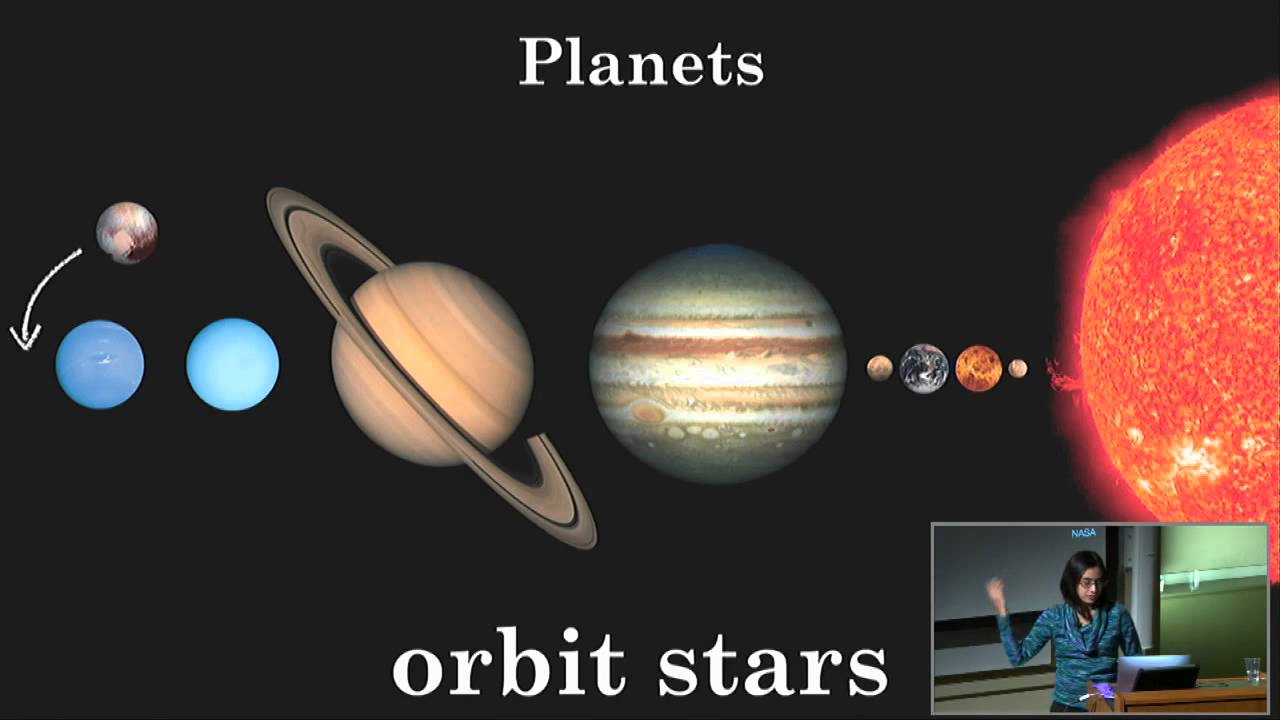
Comparative planetology within our own Solar System, using meteorites and comets as physical archives of our early protoplanetary disk's chemical makeup.
Advanced disk modeling, exploring how gas dynamics, dust settling, and radial drift interact with chemical reactions using computational astrophysics.
2.4K views47likes1:05:00Original Release: 2016-11-01
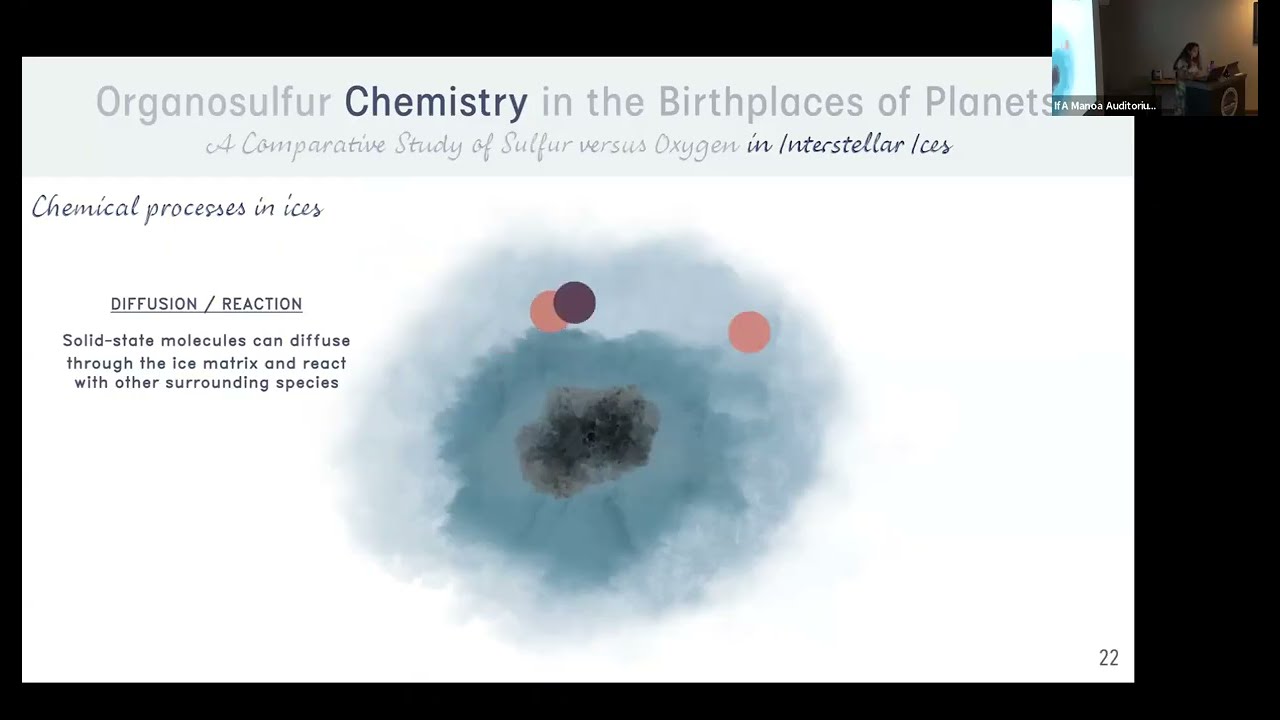
thank you very much it's uh such a pleasure to be here it's my first visit to Princeton and I walked around yesterday and it's just gorgeous so so happy to be here uh yeah so what I want to talk about is how the chemistry that happens at the early stages of Planet formation how that affects the kind of kind of planets you end up with and uh I will be mostly talking uh about Theory and observations today rather than laboratory studies and the reason for that is Alma that as of a few years uh few years ago we have this amazing new set of ice on the on the chemistry of stum plan formation which is Alma Dan atakama desert and it's just I mean in astronomy whenever you get an order magnitude Improvement in sensitivity and resolution at the same time you're going to see new things and we are seeing new things so that's going to be most of the things I talk about but I am going to try to emphasize uh also where we need laboratory work and give you some ideas of what we are planning to do there uh my own laboratory has been up and running for about a year we're still sort of the version I think 0.7 maybe uh compare to to the what what was planned when I applied for the Harvard physician uh but we we are we are making stades forward and I think combining these laboratory results with this new Fantastic telescopes in the next few years is going to be really powerful powerful combination before getting into the talk I just want to take a moment and acknowledge that um as is common for observational and Laboratory work this is uh a team work and I have a fantastic team at Harvard that is responsible for most of the results that I will be showing today and of course having funding is very important so I'm also very grateful to the Simons Packard and stone foundations for helping me there so the the fundamental there two two questions that bothers me and that I I try to address in different ways with this research uh one is that if we look even if we just look in our solar system we see very different planets and if we expand our view to outside of our solar system we see even more kinds of variety in what kind of kind of planets and the planet compositions that that we find so and this is something we would like to understand right why we end up with such different planets why Planet formation which we think start in the same way fundamentally why can have such different outcomes so that's question number one what uh why you get such different phys bulk compositions of planets the second question is uh zooming in on a very small but very interesting subset of of planets that is rocky planets in the so-called habitable zone and what kind of compositions they will have the habitable zone is defined as the temperature range around a young star or like around any kind of star where water can be in its liquid form and we think that is a reasonable Criterium for habitability uh not just because Life as we know it here on Earth relies on liquid water but water is just such a fantastic solvent so if you want to have a rich and diverse chemistry you want to have liquid water as your solvent in which that chemistry takes place but this kind of habitability Criterion doesn't really matter if you don't have water in the first place I mean it doesn't matter can if you have liquid water if you can have liquid water if there's no water around and second this habitability Criterion doesn't really matter if you don't have the building blocks of life that is organic material since the whole reason we want to have the good water is for Organics to be able to meet one another in an effective way so the second thing that I want to talk about is uh thinking about habitability sort chemical habitability uh of planets that are in in this sort physically habitable zone and the underlying theme of this talk is that which I think is a common sensical sense one is that the composition of planets are fundamentally set by the composition of material from which they form from which means the composition of protoplanetary Diss and this is obviously a cartoon but what's really exciting is that with with Alma we can actually start start seeing this and uh I'll come back to that at the very end if I have time but this is not a a bad cartoon this it turns that this is roughly what we see when we turn elma's eye onto some of these thiss but I don't want to talk about the structure however interesting these are I want to talk about the the chemistry of these discs and then I have to go to even uh let's say a coarser cartoon of what's going on because chemistry adds so much complexity in itself so this is a a cross-section what we think uh of how we think about these protoplanetary discs from a dis chemistry point of view and first of all I want to draw your attention to what's going on here these diss are not static objects there are are lots of dynamical processes going on that moves material around both on large scales and small scales um now when I told you that this happens I'm going to ask you to forget about it for roughly the next 40 minutes and instead focus on that much more smoo static looking right part of the dis not because this isn't important it's actually really important uh but we have to start somewhere and we are starting by looking at processes where we think this is not that important for the chemical structure so if you turn your eyes to the right hand side of the dis what's really depicted there the main thing you see is that these discs are characterized by thermal gradients both in the radial Direction and in the dis height Direction so in the radial Direction I think it's easy to very intuitive the further way you go from the Star the cooler it gets uh the reason you have also vertical uh gradient is that exterior to Fu the thermal profile of these discs are mainly set by radiation from the Star and this radiation intercepts the dis surface when you have a flare disc therefore you have a hotter surface and a cooler cooler midplane because you have this thermal gradient you will have phase changes of volatile material as you go further and further away from the start in particular you go go from having uh major volatiles such as water uh going from being mainly Vapor to being mainly uh condensed out onto onto grains and this uh midplane location where this happened we we call a snow line which we think are very important the other things that are important is that you have a lot of energy input going into these discs you have phys Thal radiation you have UV you have x-rays this means that you have energy to break chemical bonds and therefore form new molecules and when I go into the second half of my talk I will be going back to that chemistry but for now I just want to focus on this condensation process and what that does to Planet formation one thing that we think it does to plan formation at least that it did in the solar system is that it changes the mode of PL formation it changes uh what kind of planet you form if we look at our own solar system there's a clear difference between the inner four rocky planets and what happens exterior to the asteroid belt that is Jupiter um it is a so the Orthodoxy of the field though whether we have proven this beyond all doubt I'm not entirely certain of that um the water did you have a question or sorry um that if we when if we looked back to the early solar NE to the young solar nebula so before any planets had formed that we had this transition for water between water being in a vapor phase and water being frozen out that it happened on a scales of a few Au four Au and therefore that we had grains that remain the silicat maybe some carbon in the inner uh foru or so and if we go beyond that water Snow Line you have grains that are covered with water rce uh as grains Clump together in the first step of uh towards plant formation you then get Rocky plet tesol in the inner solar system and islet Tes and outer solar system and eventually we think that that difference between the Rocky and isop Planet tmals lead to rocky planets versus gas and ice giants now there are several different reasons is what you might expect that kind of change in plant formation happening around the snow line um I mean the simplest one is that you just add a lot of mass into the solids which gives you a bit of a head start to to form those first first Pebbles um icy grains are definitely stickier than rocky grains so you would expect that process of coagulating to forming larger and larger bodies uh would be more efficient when you're exterior to the snow line um we think that uh if two Boulders that icy Collide um you have a lower probability of breaking it AP part compared to if they are rocks you have just different material properties and there are also different kind of interactions between Dynamics and condensation that how can happen around a snow line that can need a very rapid buildup of material so right right at the snow line so I think it's it's not a bad bad idea that you that this would the Snow Line happened that really did um let's say that it's not the coincidence that where we think the snow line was and where we had this Chang in plan formation um we think there's really some underlying physics that that led to that outcome now water is certainly a very important volatile uh when we look in general in interstellar environments but it's not the only one so these are all Spectra that are taken in the infrared toward young stars and what we're seeing is uh so if you had if you only had some sort of diffuse non-chemical U medium between it's just some fine fin fine dust grains between us and those Stars you would see a smooth uh distribution here something resembling a black body but what we do see is we have this very broad features superimposed on this on the radiation that's coming from the protostar and we can identify uh those different features with different molecules in the ice uh frozen out onto grains between us and the protostar and water is very prominent I mean water is very a very abundant volatile but we also see a bunch of other molecules and including Co and CO2 being the second most abundant ones and when we look towards large samples of solar type prot Stars we can start putting together some sort of sketch of what the typical volatile abundance is uh during the early early phas phases of star formation so everything so if water is a so the bars here the blue bars show the medium composition that we have during solar type uh star formation and then the sort of Arrow bars show the range between the first and the third quartile so the first thing to note is that water is in most cases the most abundant ice that we have during star formation but Co CO2 are common as well as sort a 20 to 30% level typically but up towards being similar to water in the most extreme cases and these are going to be the three most important for now and we'll come back to these minor constituents methanol ammonia and methane in a little bit exactly and this actually question gives me a chance to bring up uh how you do that because the reason we can identify what these molecules are uh is because we have laboratory experiments doing the spectroscopy of analog these Interstellar Isis but this and the and what these laboratory experiments also give you is a band strength and when we apply we identify things correctly and then apply this band strength we can calculate the column density of these different molecules in the line of sight and from there we can derive Subs sorry uh yeah so these are sorry so I'm not sure I understand the question yeah so this uh so this is actually uh a subtle question in some sense uh so what we see here here is all what's in the ice if you saw if it was in the gas uh we would see uh actually a range of much more narrow features which would be the row vibrational transitions of the molecule since it's in the solid we don't have rotations so we only get this sort of broad vibrational features now this does not look like the kind of ice that you like the kind of feature that you would see if you looked at Water eyes around I don't know what but it is an American around 20 in the 20s I guess right below the the free like a bit below the freezing point of water uh you would actually see something that looked much more structured because the ice we're used to here is a true crystalline ice that has some very specific modes of vibration what we're looking at here are amorphous Isis so it's actually something like a liquid even though it's it's frozen and that's why you have this unstructured broad broad spectral features so when we think about that we have more volatiles than water what that implies is that when we look in a a dis uh is that we don't have just one single Snow Line we have a sequence of snow lines belonging to different volatiles uh especially uh water it turns out is one of the least volatile of the volatiles so that's pretty much going to set the boundary between having bare grains and having grains covered with ice but as we go outward we will get more and more different kinds of ises condensing out onto these grains which would change the material properties of these grains as well as leading to potential discontinuities in the column densities in these discs at each of these snow lines and therefore changing potentially changing the mode of plant formation as you go outward that is not the only effect that uh these ice this series of snow lines have um they will maybe even more obviously change the composition of the gas and the solids as you sort of uh walk out uh in the in the disc so what this is shown here is on the X AIS axis is a radius in a disk model we're licking in the mid plane of a dis on the Y AIS is in this case the carbon over oxygen ratio uh in the top here in the gas and the bottom in the solid so if we start looking at and these sort sharp transitions here Mark the locations in this particular disk model where water CO2 and Co condenses out so where we have these different snow LS so if we start looking at what happens at the water Snow Line well you take all the water that was previously in the gas phase and you put it into grains and as a result your carbon to oxygen ratio in the gas will go up because you just moved a bunch of oxygen out of the gas space and you will end up with these grains that have mainly water on them as you cross the CO2 and Co snow lines you will have uh well analogous effects as it close the CO2 Snow Line you will increase the carbon of oxygen ratio again because you are removing two oxygen for each carbon from from the gas space and that will actually give you a carbon to oxygen ratio on the gas which is Unity this is the main carrier of carbon oxygen is now is co is the only thing that's left in the gas space and you will have a change in Grain composition that becomes more and more carbon Rich so if we're thinking about gastri information that are accreting their gaseous envelope from the gas phace we are very interested in that you might be able to change the composition of those and there are evidence that are exoplanets that have this weird like weirdly high carbon toxin ratio which might signify that they formed very far out in the dis where you can get this high carbon toxin ratio in the gas and Sim and we're also interested in this changing composition of the icy grains since that will change the composition of planetesimal such as asteroids and comets which may at a later State be delivering the volatiles to places like like Earth uh so there snow lines of different of different kinds uh have potentially a large impact on the kind of planet compositions that you end up with so we would like to know where they are at the different EO of PL formation this uh fundamental this is actually turns out to be maybe trickier problem than you would think it should be fundamentally where snow lines are where Snow Line is for a particular species depend basically on three things one is the temperature profile of the dis uh this is actually surprisingly difficult to measure but we have some ideas of what they are for at least some discs that we have characterized quite well so we're going to put that one aside the second is The Binding energy of the molecule to to the grain so the reason the water snow lines much further in is that water binds much more strongly through these grains than CO2 or Co does and then the third thing is the Dynamics of the disc and I want to start with this question about how um really sublimation and Dynamics interact to say to tell you where these snow lines should be in a disk assuming that we know that or two that is The Binding energy and the temperature profile of the dis in question sorry uh so that is an excellent question um it we don't think that it affects where these snow lines are here that are in the midplane however uh they may cause a second set of uh a second sort of outer boundary kind of snow line to happen and I will actually come back to that that this UV photodesorption uh does have an effect for the overall structure but it doesn't but here it's really the thermal profile that dominates exactly I mean I I will come back to exactly that question that once you get far enough out in the disc where you have this low density flared kind of dis then photons can propagate quite far into the midplane and really affect the um the distribution of a molecule between the gas and the solid but here we're still pretty far in and we're deep into the midplane so here U photons don't make it down here so what's shown here so if you start just look at the black solid and dash lines first that is basically what was on the previous plot so that is the carbon dioxygen ratio expected in the gas and the solids if you just had a static disc where things were not moving around we just calculate the steady state uh between condensation and sublimation at each radius dependent on temperature then you get this these black dashed and solid lines now if we take into account uh the process of uh grain drift uh which or like Pebble drift uh we will things will start happening in this disc so this is a very sort simple idea that seems to be really important in diss which is that if if you have a solid body of some sort like a planet around the star it wants to orbit at the speed told us by kepor Slo uh this is true also for a pebble uh if want to go at at that speed however if we're looking at the gas in this discs and these are gas Rich discs uh they feel a pressure uh from the gas the more dense and warmer gas that is interior to the package of gas we're interested in and because of that it will be orbiting the star at a different velocity slower velocity compared to a planet would now a planet doesn't care if there's a bit of gas that is going slower and Tiny grains don't care because they will just get mixed up with a gas and follow in this slower slower velocity the gas is moving at but if you have a pebble on the size of a centimeter up to Boulder sort meter size Boulder they will care they will try to orbit at the the capian velocity but they will feel really feel headwind from the gas and because of that they will lose angular momentum and start spiraling uh Inward and this uh can be very efficient process for uh for centimeter to meter size uh objects and it can be so efficient that a pebble can cross where the snow line should be by quite a bit before sublimation has caught up uh with this drifting uh inward drifting velocity so what's shown here if you look at the colored lines it's just how far in this drift can happen if it it's not stopped by any substructure or anything else that's going on in the dis and this radius here is at the logarithmic scale so if we focus in on the C snow line up here uh you can change the C of snow line location by but a factor of two through this process that is like in the Solar if we think about the solar system that's the difference between having what ice giants and Jupiter is right like or ice giants and Saturn this is a big difference when we're thinking about why a planet might have the composition that it does if we take into account that there's also accretion going on in the dis which is moving the gas uh you get this slightly different picture but the overall conclusion is the same that you can move these snow Lines by butter factor of two because of this dynamical process the problem gets worse if we take into account the uncertainty that we have in the binding energy of different molecules and it's not really an uncertainty in the theoretical sense because we have laboratory experiments so we can measure what The Binding energy of these molecules are in different environments but as you will see it really matters exactly what environment we have and we don't know exactly what the Grain and Ice environments are in these discs exactly so it depends a little bit on the geometry of the grain but once you have grown grains Beyond uh sort of hundreds of enstrom's level the curvature of the grain doesn't matter that much and once you have built up the initial layers of ice the sort of fractality or paracity of the grain doesn't matter that much so actually the biggest thing as you'll see is what that matters is what else is on the grain and that is something that we can go into the lab and measure and the way we can measure it using setups like this so the main part is that there's a big vacuum chamber with the 4 Kelvin cryocooler going into the center where we build up our our ice but in cartoon form what we can do in in in the lab is we can build up very with quite some pris very thin IES of specific compositions and with thin I mean a few molecules thick so we can really do the same kind of thicknesses as we have in different Interstellar environments and we can set the composition as sort of molecular layer scale so we can we can really simulate the kind of compositions that you have in these grains especially in this case whether you have water and in what form water is and that affects the other molecules that are condensed out onto these grains and then we can inject energy into the system uh the same kind of sources of energy that we have in space which means thermal energy electrons UV xrays and in this case we're just going to look at what that does to the sublimation or disor of the molecules I'll come back to the chemistry uh later and we're even going to make it even simpler and only think about the thermal dsorption because that's how we measure these binding energies so the kind experiments that that we do then is that we take one of these thin ises we heat it up with a linear ramp and then we measure the sublimation rate as a function of time and temperature which have just this very simple linear relationship and by modeling those curve we can determine what The Binding energy was that uh for that particular ice so as shown here are three of those dsorption curves for Co and N2 two are the most abundant volatiles during plant formation and what they look like when we have a pure ice when we have a compact Water Ice and we we have a porous water ice and the main thing to take away is that again you can change you can change the binding energy by about a factor of two which means you change the sublimation energy or sublation temperature by about a factor of two which means that you change the snow line location by as it turns out a pretty potentially a pretty large number yeah sorry so this is when you have um water first of all just having water I so looking at comparing this curve and this curve uh suddenly what matters is not how much seal binds to se molecules but the binding energy this is really a bond I mean it's not a chemical bond it's a physical bond between Co and water molecules become what matters rather than than the bond between Co and Co and the co binds much more strongly to water molecules than it does to other Co molecules so that explains the difference between these curves and what's going up here the reason you have a little extra Peak here in front that's just the co that we're binding to co molecules that comes up first now the difference between this curve here and this curve here is that I changed the structure of the water ice so here we made the water ice as compact as possible which means that each Co molecule can only interact simultaneously with a few other water molecules here we made it as por as possible which means that now a lot of the SE molecules are sit in a little water cage and have many different inter interactions pairwise interactions with water molecules at the same time and that increases the overall the effective binding energy that answer so so please repeat the question I'll will try to answer that one okay sorry that that that I can also answer so what happens uh Absolut is an exponential increases you go up here here you run out of material so that was like much simpler thing to to answer and the reason I should say the reason that you don't have so here you have a pretty sharp drop off when we have in the in the Pure Ice case the reason you have this smooth drop up here is that here you have a distribution of binding SES so really what you would fit are a bunch of Curves with a sharp drop off here so if we're thinking about this in a protter dis context if we are dominated by co uh freezing out onto water grains we would expect the co SN line to be further inward if Co is mainly binding Co molecules then we should have it further outward and if we combine um this drift the process and the range of potential binding energies into one model uh we get the two figures shown here so this is similar to what I showed you before again focusing on the co Snow Line how we just assuming that we have pure Co I and we take into account that we have this uncertainty that we don't know how much the grains are drifting we get this s factor of two difference in the possible SE Snow Line if we now we do the same exercise but assume we have the porest water ice we also get the about factor of two difference for this P porest Water Ice model but now the innermost possible Co Snow Line has moved in by to 9 Au while in our most somehow pessimistic drif and composition uh scenario it was as at 65 So based on these I mean these are still more or less toy models but based on these considerations we have a huge diff a huge distribution in potential Snow Line locations for each of these fils and that means of course that you need measurements uh actually going measuring where the snow lines are in real real diss that we that think we understand this turned out to be a bit trickier than we had first imagined but I think the most straightforward way you would want to go about doing this is just observing a gas space Co in one of these protop planter discs and check where the Co Gas disappears uh space should result exactly basically just image the the co seal gas and seeing where the SE seal gas goes away uh this turned out to be trickier than we had imagined because we hadn't thought about how important it is that you have not just this radial temperature gradient but also the vertical one which means that even beyond the co Snow Line you will have a lot of Co in the gas phas if in the upper layers of the dis and uh that is something that is very easy to get tricked by as we discovered um and uh this and trying to model uh or sort of extract the co Snow Line out of these images which often have very subtle difference in the co emission happening around the snow line is very difficult uh because there are other things than CO3 that can cause uh a small decrease in Co column density for example that you have an overall decrease in the gas column density because we have no independent Tracer of of the gas so instead what we came up with as an alternative way of uh determining where the C SN line is is this chemical chemical scheme shown here which is uh one of the simplest and most straightforward astrochemistry slides I think you will ever see so and enjoy the Simplicity there will be more complex things to come uh s uh there are electrons and I'm going to actually explain where they come in in this scheme and in general so normally we have this balance between Co freeze out and Co in the gas now when Co um is in in the gas um it will readily react with H3 Plus which is probably the most abundant ion that we have in these discs is just molecular H2 with a proton attached to it to form h plus uh you would to go from h plus to co you would have a reaction with recombination with an electron so that's that's with that coming uh N2 is probably the most abundant nitrogen containing molecule and it has an analogous reaction so in the N2 will react with h 3 plus to form N2 H+ and it will also also has a Rec combination reaction to form N2 but in addition to that uh n+ if it meets the co molecule you will transfer that proton to the co molecule to form H+ this is um the reason you have that is somewhat is analogous to I think what's a more familiar concept which is that atoms and molecules have different electron affinities dependent on their polarity and charge distribution and the like and just this you can have different electron affinities you can have different proton affinities and Co has a much higher proton Affinity than N2 N2 has a higher one than H2 which is why this this reaction happened so because of that this noise you have Co in the gas phas you will never form large abundances of M plus because it will lose its proton pretty quickly to to C when Co freezes out the only destructive mechan destruction mechanism of n plus that remains is this re combination with an electron and that is much much slower because these discs are not that ionized and that leads to an expectation which is that if you look interior to the Sea of Snow Line we should not see any + there if we look exterior we should see it in this midplane region where Co is frozen out and in an image that should show up basically as a donut where the inner Rim traces is where the co starts freezing out and when we turned Alma towards one of of our discs tww Hydra and we looked at n plus we see exactly this kind of donut shape that we expected which gave us an initial pretty good estimate of the sea snow line around 30 a I think with a little bit more subtle modeling than we did in this discovery paper we would probably push it inward by at least 5 a or so there were some things we not take into account when it comes to the sharpness or non- sharpness of this inner edge of the N plus but still it's it's it works we actually can say where this C snow line is is in a dis no you shouldn't unfortunately I know it would have been so nice so I think it's um this is actually a general word of caution with these observations so these are all taken with an inter parameter which means that the data you get is not an image like this it's FX and pH as a function of telescope or Dish Dish Pairs and then you do an inversion basically for your transform to get the image and then you try to take into to account for the fact that you didn't have a perfect coverage of baselines uh to clean up the image and make it more looking the what the real Mission distribution should look like but part of this cleaning process and it's really called clean um is to try to is basically using putting in point sources of emission when you're reconstructing your image and this uh intrinsically lead to a clumpy looking image if you have low signal to noise so you can't really apply the normal sort three sigma Criterion looking at the the RMS here and here to say what's Real uh you have to actually model the original face and flux distribution that comes and when we do that this is consistent with just a smooth ring sorry that would be my expectation it doesn't affect it because this shows as the negative of the of the seal uh gas image so here we if we go back to this image here so we don't expect to see any an plus here which is good interior it's also not going to show up here in the atmosphere but we don't really care about not seeing n Plus in the atmosphere because what we're interested in is what's going on in the midplane and there we will see n plus wherever Co is frozen out there are there is some subtlety to so if if this is far more ionized than we think it is you would definitely increase your anti P destruction but I would say that observations in theory would suggest there's maybe less ionized than we thought it was at least when we get down into these midplane uh regions uh there is however something that I wasn't going to talk about that there is I guess a subtlty that is worthy of reflection which is that um removing having Co freezing out is not the only way to remove Co in this discs and that is probably the biggest source of uncertainty is that we might lose Co chemically before we lose it physically because of this condensation process and that might trick us into thinking that we're seeing the co Snow Line where we're really seeing the co of chemical destruction line so there there's definitely some soles that goes into understanding the chemistry in more detail than I have shown you here so the figure I showed you before that was from 2013 we have one more dis since then and uh I think there's nothing worse than having a two two object sample because there's no way they're going to be the same and that was definitely true for these so tww Hydra another figure here and then another dis HD 636 to your right we find that the condensation temperature uh of Co in these two discs is about 10 Kelvin different which about 30 30% different or 50% depend on which one you use as your reference this this might um be do either because we have different Dynamics in the dis or because we have different kind of grains in the diss these are two very different objects one is an AAR one is a more of a solar type star but only two objects and several different potential causes we of course can't tell uh why we have this difference which so the temperature estimates are coming from so we measure the radius of the of the Snow Line right and then these discs have been their temperature distrib temperature radial and vertical temperature distribution have been modeled using a combination of the spectral energy distribution and the continuum data from U places like Alma that gives you what the dust dust emission looks like and there are uncertainties in there but it seems we basically use the same kind of technique for both these diss uh so even if the absolute values there are some uncertainties I think it's clear that there is a difference in where C is freezing out in these two discs uh we have another five coming uh that have been observed by Elma some of them have also been reduced and sent to us so hopefully that will give us a little bit more insight of why we have these differences in different discs and whether it's Dynamics or chemistry there is the main main culprit the uncertainties of the temperature distributions um are unfortunately not possible to give you normal I would say Sigma errors too because the way that these are model um was not using this mcmc kind of simulation anything like that um so I cannot give you what what the uncertainty is what I can say is that there's no model that has been attempted that could move the temperature distribution for one of the discs and not the other so much that this was cancel out but it's it's two discs and that we that these discs are so fundament so different that there was some bias that we don't understand that affect one dis and not the other I cannot say for certain and I think having a sample that's more than two diss is the first step towards actually understanding that and especially having a few more in each class of objects having a few more tutor discs and a few more herbig discs it is not taken into account because we don't know how fast grains drift in these different discs so that depends on the combination of the uh grain distribution uh which we have at best qualitative constraints on it could it could uh it could we just don't know if it's that or if it is the chemistry that's causing this or even if it is some weird unfortunate bias that we are not accounting for because these are two different kinds of sources um it is it is not though I should say that our sort theoretical VI things came after we saw this even though I presented it in opposite opposite order um it is not too surprising but we don't know what the source is like which of these it is at the moment yeah so the the so even if you assume that you have the normal Interstellar cosmic ray penetrating first of all making it into the dis which there are questions about penetrating all the way into the mid plane uh the kind of UV and electron field you would generate which is what would cause aborption would still be very low compared to what would be needed to sort of move the snow line around and it's simply because the density is so high so freet is very fast so unless you have a very extreme um so not not anything that you would get in any uh so in addition to giving us the first constraint about where the sort sea of snow lines that we were looking at were Alma observations are also providing a few surprises when it comes to snow L this is actually coming back to your your earlier questions um and that is that we don't just have one inner snow line but we also seem to have an outer one which we had not expected so what's shown here is is a dis a29 this is the Continuum uh profile and then 12 Co 13 Co and c80 we expect the C isotopologues to have roughly the same distributions there's some subtlety in there uh but so that the difference in radial profile we think is mainly the ca of having different Optical depths so once you get to c80 you're optically thin and you're really tracing the true co distribution and what we see is we get this decrease in CO as we would expect due to combination of the overall gas profile of the dis is going down and also freeze out but then we get this bump and this is a really significant bump uh you would need to increase your Co abundance out here but on the order of a factor of 10 to get this to get this B and what we think we are seeing is that at some point we hit a a place in the disk where the dust is start to be so attenuated that UB photons can penetrate in and start UV photo desorbing the co off the grains and getting the C molecules back into the gas space sorry um so this is again goes back to anomet when we model the visibilities it is actually consistent with something that's aetric even though it looks I know it looks very Clump the low sign to noise uh issue yeah um not sure I understand the question so it's when we average over this part here is where you get the bumper yeah exactly and what we think what what is uh what this coincides with this BM is actually when we are changing the grain surface distribution in the very top panels we're have lost a lot of the grain emission by that time and is this flattened part of the of the radial grain distribution and that coincidence we think is no coincidence that right that we now in the outer part of the dis where most of the solids have drifted inward already because these dynamical processes we have very little uh grains left to absorb uh incoming uite uh which allows you to both heat up the outer dis this something IL Cleaves have work have worked on and also U photons to penetrate in and release the C and we actually see it even more clearly in a different dis using again a chemical trick uh this time for this is uh using dco plus so it's a more indirect method but it gives you a prettier picture so I thought i' show it uh so this shows the ion dco plus which forms from gas phase Co and this ion h2d plus and h2d plus will increase in abundance as you go to lower and lower temperatures and so you have sort of double effect once you get out here in the outer disk that you're releasing Co because of this UV phot absorption but you're also increasing the amount of h2d plus because you are in a colder part of the disc and because of that you get this really U magnificent second ring in the dis it's really just um tracing where C is coming up the grain by sort of emphasizing it because you also get more HDD Plus at lower temperatures that there are that h two rings so it's yeah so in a ring and out ring it's the so it's a so this really your as you go to lower temperatur it gets easier and easier to transfer transfer to you basically push it in this direction and this is just a a cartoon uh on what we think is going on so as you are in the outer disk you know things can penetrate C gets off the Grain and because it's low temperature you get this extra HD Plus which gives you the excess dco plus um so you can do it with one of four uh which is uh rough which is what I am Loop this particular disc is sitting in and this is a recent paper by ilsa Cleaves to that shows that so you don't need any crazy crazy Fields mainly because in this case you're so far out in the disc so you are really in a very attenuated part of the dis uh exactly these are all discs that are fairly mature in some sense I am Lo has a little bit of cloud material but it's very tenous and as29 is also free of cloud material these are already at a million or older uh discs that are free of their Nal Cloud more or less otherwise yeah you'll probably not be able to do it um so because there has been a lot of questions uh I am I'm going to take the second part select parts of this second part so if you want to uh know about the any of the slides I'm skipping over you can just ask me afterward because I want to spend a few minutes only talking about the likelihood of plan exoplanets that are in the so-called habitable zone that they are chemically habitable and I'm actually not going to talk about water at all there's an excellent paper by again Elsa Cleaves that shows that water is probably quite readily inherited from the birth Cloud into the Diss and uh we know that when you are in the birth CL Cloud you have tons of water so we expect that actually most planets form in discs that are rich in water and that that is not a problem is that I want to talk about the availability of small Organics for for these planets and um what I when when we try to compare you know what level of Organics is needed some the only thing we can compare what is the solar system where we KN know we had enough uh of the right kind of Organics around uh to to have the or of life and we can't compare with planets because on planets things have changed compositions have changed but we can compare with comets that should preserve pretty much what the what the original PE planter disc looked like when planets like Earth assembled so this shows what a typical Comet looks like uh chemically where the area of the molecule scaled to its abundance so water is very important you have lots of Co and CO2 but then on the few percent level you have all of these small Organics things like methanol methane ammonia methyl cyanide um and we think that it's that is what we want to try to compare with when we're looking towards other systems and I'm going to skip over this and go here which is to say that just as we know that water is very uh common in the early stages of star formation in the star forming clouds we also know Bas both based on Theory and on observations that different organic molecules are common at these early stages we think from laboratory studies we know how they form if you have your initial ice I said there was ammonia uh relation to water CO2 and Co you had methanol ammonia methane uh in that initial ice would just a little bit of U present you can break apart the fraction of that ice into radicals and those radicals can be combine as you get into the warmer parts of a protostar or protostar envelope to form larger molecules and these molecules when they get very close to the protostar they sublimate into the gas space and we can test these theories by observing what's going on here in protostars of course what we really interested in is whether they survive in corporation into the dis and when we do observe these complex organic molecules and we compare the ratio to the methanol that's observed in the same sources we think methanol is one of the most important starting material uh well the good news is we generally do see them this it seems like in general we do convert some of this initial methanol eyes into more complex species during star formation um there are two questions though that this races one is that was shown here here is the different kind of abundances that we see in this case where rather small but the biggest that had been observed sample of solar type Proto Stars we see about a two order of magnitude spread in this chemical richness let call it of the source and we don't know whether it that's intrinsic or an evolutionary uh State thing and the second thing is that we don't know whether this chemistry survives formation of the dis and uh which yeah I guess is shown here so we know that when we're up here we have this Rich chemistry but for planets we need to know what where do we still have it when we are in the planet forming uh St stage and there are the the most popular way to estimate whether um something formed cold in the the birth Cloud survived incorporation into the dis or into a planet is by looking at isotopic uh signature in that uh in that molecule so this shows a plot of 15n or for compared to Dum and hydrogen in different molecules in different solar system objects the main thing is that the Comets which are supposed to be this pristine material has both high 15m and high duum abundances Earth Moon and condr there something in the middle and then we have gas Giants which pretty much undiscriminating hydrogen cyanide to become dcn uh DC plus dco plus instead of h plus and so on and HDO instead of uh water so the key step is really that you need to form this ion and this happens at low temperatures so the idea is in general if we can see what this isotopic composition in the in our solar system and in diss compared to with earlier stages of star formation we should be able to tell how much of the initial material that survived and the other option would be that the chemistry is pretty much reset in the dis and that becomes much trickier to figure out how much of these initial Organics that survive so with Alma we can observe what these uh d uh patterns in theerum enrichment and patterns in nitrogen enrichment look like and what's what's shown here and I'm going to draw your attention to very specific part of it shortly is just images of these D plus and H+ and dcn and hcn in six different discs so each column is a dis each row is different molecule I'm going to focus in on dcn down here since that is something that's frequently measured also in the solar system and also in the earlier stages of star formation and really the only thing I want you to see here is that the distribution of dcn which should trace this efficiency of this uh deration process looks very different in different discs you have everything from very compact kind of distributions to something that's very diffuse what this is already suggesting is that um this is not the pure inheritance kind of scenario because the temperature profiles of these different diss at least these first four is not that different so if you just inherited and then this dcn hn ratio was set by some sort of sublimation condensation efficiency you would expect to see something rather similar between these different discs we do not we see different patterns and this suggests that you really have an very active organic chemistry in dis resetting uh what was originally resetting rather than just relying on what was originally delivered to the dis uh this is confirmed when we look at these discs in more details don't really want to spend time on it you can ask about it later basically there are there's definitely an active organic chemistry going on in this discs you do not just have what what you started with and instead I want to go to what I think is the most important which is that luckily Alma is giving us a direct eye onto the organic chemistry of distes and it's allowing us to directly go in and measure what the organic compositions are at these stages of PL formation sort of allowing us to bypass all the these different caveats about the when we look at the earlier and previously much more accessible stages of star formation that that organic chemistry might not survive we don't know if we're tracing different stages we're see sort of evolutionary sequence instead we can just turn the telescope onto these protop discs and look at organic chemistry directly and what we see and this is shows the first result uh looking at a family of cyanides which it turns out are very important for the currently most popular orians of life scario on Earth is that well first of all we detect this family of cides and if we look at their relative abundances and compare it with comets where we see the same kind of molecules it looks very similar it really looks like the composition within the uncertainties the composition of this dis and the comet forming region of this dis looks identical to what comets look like in our solar system now this is you know one dis and we also have very few comat measurements as it turns out of these um these slightly larger molecules so I wouldn't go out and say that all discs are going to have the same kind of organic chemistry as as we had in the young solar nebula but it would be very strange if the first dis where we managed to detect these organic molecules uh happened to be rare in its composition rate so we're following up with another five or six to start with to see whether this this holds but does seem like we are not that unique when it comes to the chemistry which you know is is good news when we're thinking about uh the possibility of origins of life elsewhere so with that I would just like to to summarize that when we're thinking about plant formation where it's the efficiency the bulk composition or the access to uh water and other molecules we think are important for ordinance of Life uh that's in some fundamental way that is all set by the chemistry that goes on in the protop lists uh snow lines are really important part of this uh both for setting the physics of plant formation and for determining what kind of chemistry you can end up with on the nent planets and the good news that Alma is really allowing us to to measure where these snow lines are we have Co we will try for some of the others in future cycles and it's also allowing us to directly see what the organic chemistry looks like in this disc but I want to end with that even Alma can only give us you know an instantaneous look at these discs it can't tell us what happened before or what's going to happen in the future and even with Alma there's going to be the majority of the chemistry will be hidden to us and the only way that we can get a holistic view of the chemistry in this discs is really by combining these Alma observations with Theory and with especially laboratory experiments and with that I want to thank you for your attention
Up Next

6:48
The History and Chemistry of Nylon: Understanding Polymers & Polyamides
@Nbclearn
74.2K views•2020-05-02

83:56
Biocatalysis and Catalysis in Islatravir Synthesis | Merck Webinar
@SCIwheresciencemeetsbusiness
675 views•2020-10-08
10:06
1H NMR: Determining Number of Peaks from Structure
@MSJChem
59.2K views•2017-04-06

17:31
Edible Water Bottles: A DIY Guide to Sodium Alginate Spherification
@ryan
10.5M views•2019-06-21
Related Study Plans & Knowledge Roadmaps
Structured learning paths in Chemistry
chemistry
Nuclear Chemistry: Decay, Meds & Fuel Cycle
01Introduction to Nuclear Structure and Radioactivity
02Decay Dynamics and Kinetics
03Radiation Interaction and Detection
+ 2 more learning modules
24h5 modules
Explore Roadmap
chemistry
Supramolecular Chemistry: Forces & Machines
01Foundations of Chemical Bonding and Intermolecular Forces
02Introduction to Host-Guest Chemistry
03Thermodynamics and Dynamics of Self-Assembly
+ 2 more learning modules
16h5 modules
Explore Roadmap
chemistry
Photochemistry: Excited States & Reactions
01Foundations of Light-Matter Interactions
02Molecular Orbitals and Electronic States
03Photophysical Processes and Jablonski Diagrams
+ 2 more learning modules
18h5 modules
Explore Roadmap
chemistry
Coordination Chemistry: Bonding & Properties
01Introduction to Transition Metals and Ligands
02Crystal Field Theory (CFT) and Geometry
03Magnetic Behavior and Spin States
+ 2 more learning modules
14h5 modules
Explore Roadmap