













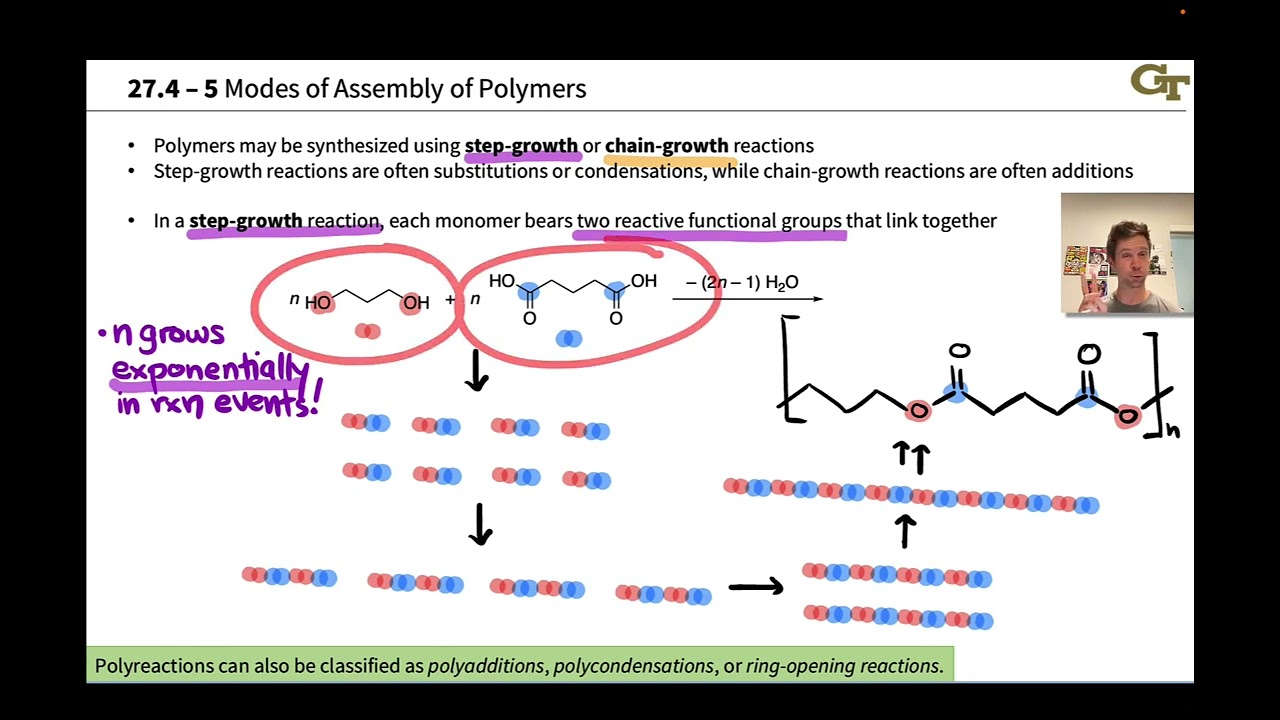



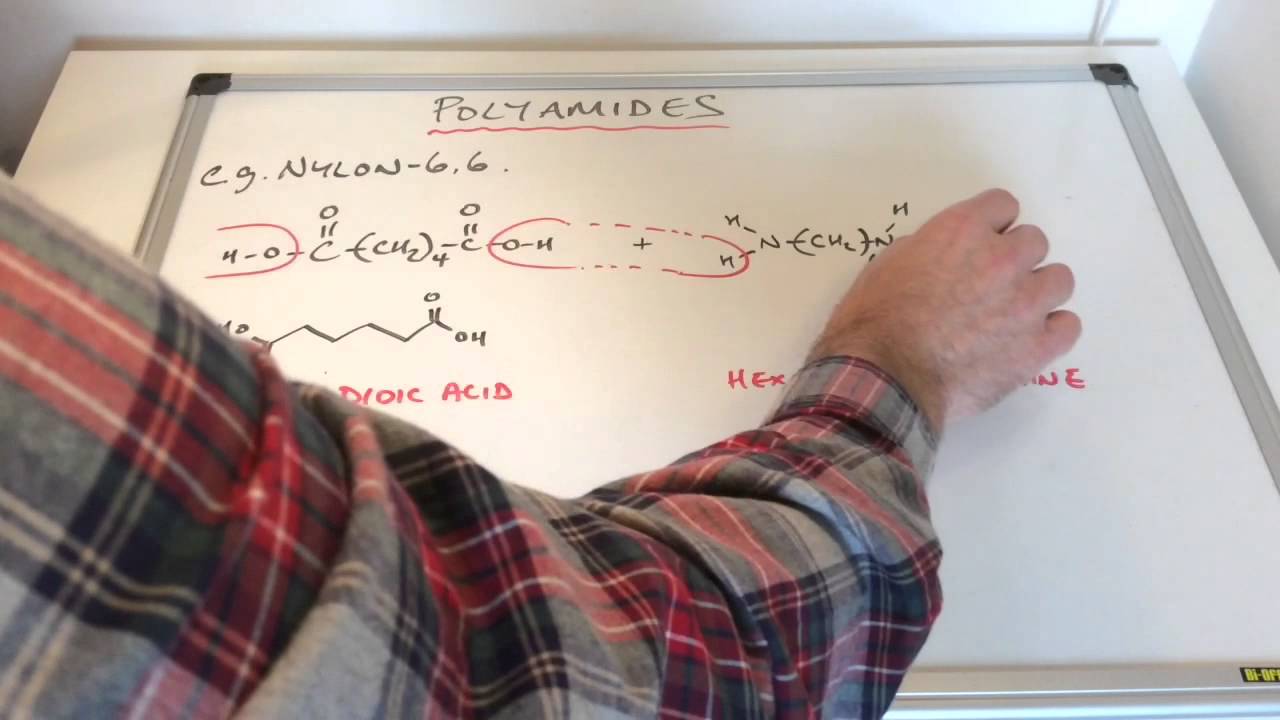






Nylon, invented by chemist Wallace Carothers at DuPont in the late 1930s, was the first synthetic fiber developed for mass production; it was created through condensation polymerization, where hexamethylenediamine and adipic acid chloride react at their interface to form long polymer chains with amide links (hence polyamides), mimicking the molecular structure of natural silk and spider webs to produce a strong, elastic, lightweight fabric that revolutionized textiles and became essential during World War II for military applications.
The History and Chemistry of Nylon: Understanding Polymers & Polyamides
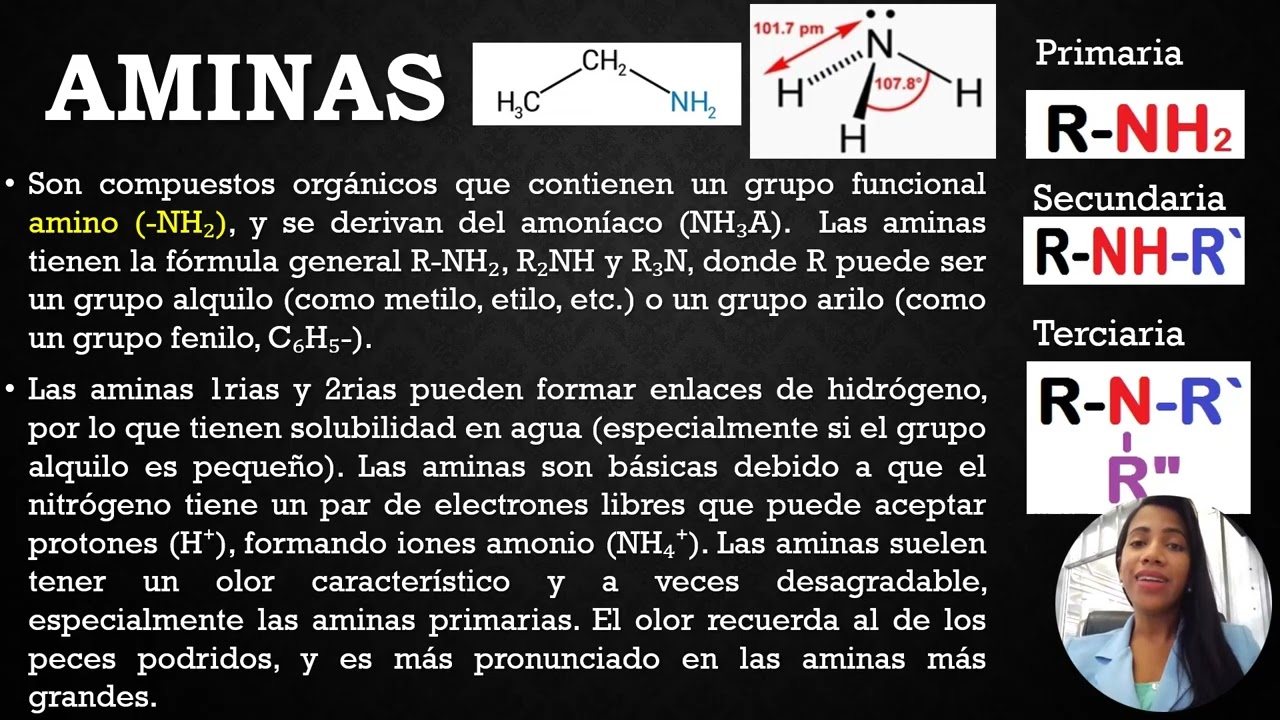
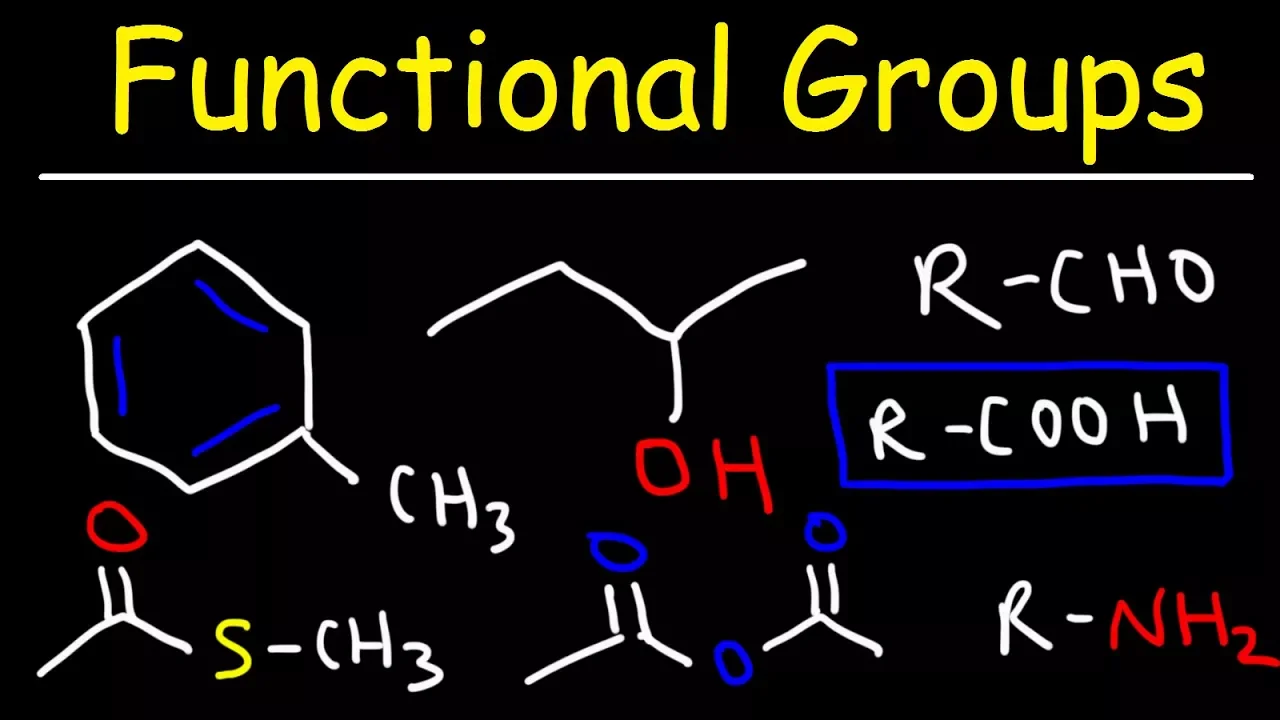
Added:Basic organic chemistry functional groups, particularly carboxylic acids, amines, and how they react to form amide bonds.
The fundamental concept of macromolecules, including the definitions of monomers and polymers.
An understanding of condensation reactions (dehydration synthesis) where two molecules combine with the loss of a small molecule like water or hydrogen chloride.
The nature of intermolecular forces, specifically hydrogen bonding, which influences physical properties of molecular chains.
The distinction between step-growth (condensation) and chain-growth (addition) polymerization mechanisms and kinetics.
The chemistry and molecular structure of high-performance polyamides, such as Kevlar (aramids), and natural polyamides like proteins and polypeptides.
Physical polymer chemistry concepts, including polymer crystallinity, tensile strength, and the glass transition temperature (Tg).
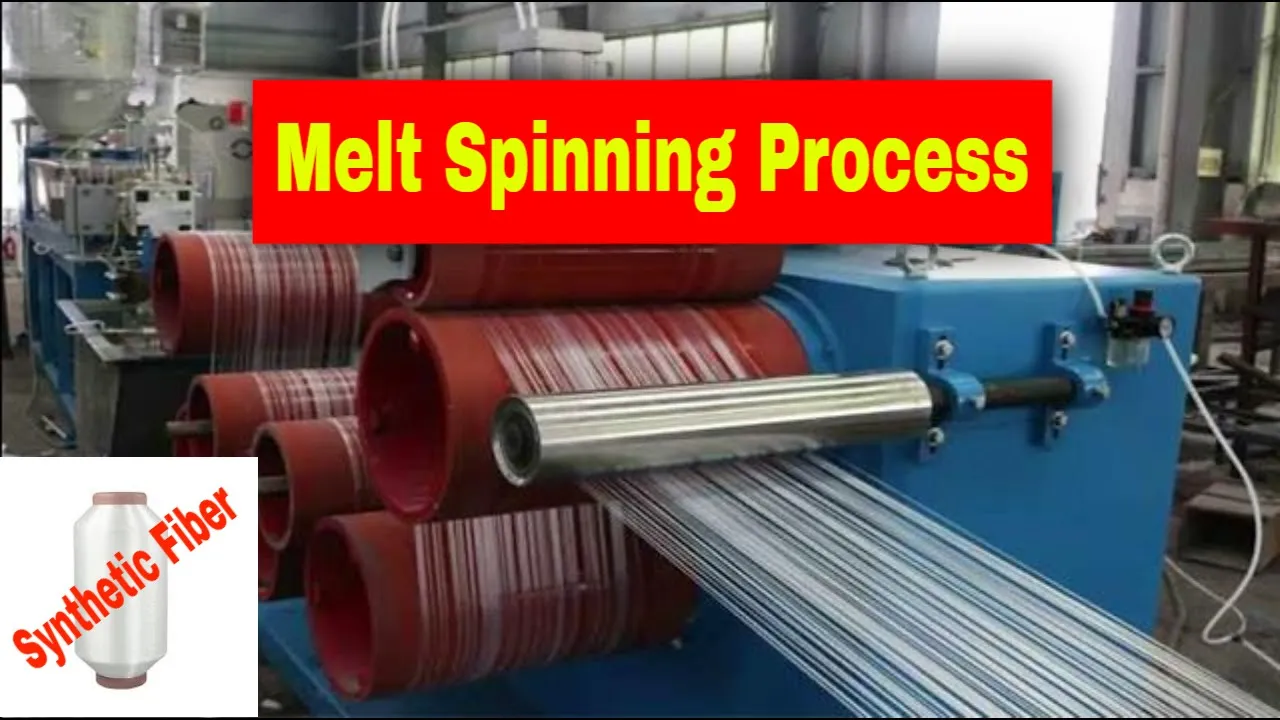
Industrial fiber processing technologies, such as melt spinning and cold-drawing, which align polymer chains to maximize strength.
The environmental impacts of synthetic polymers, microplastic pollution, and current research into biodegradable polymer alternatives.
74.2K views741likes6:48Original Release: 2020-05-02
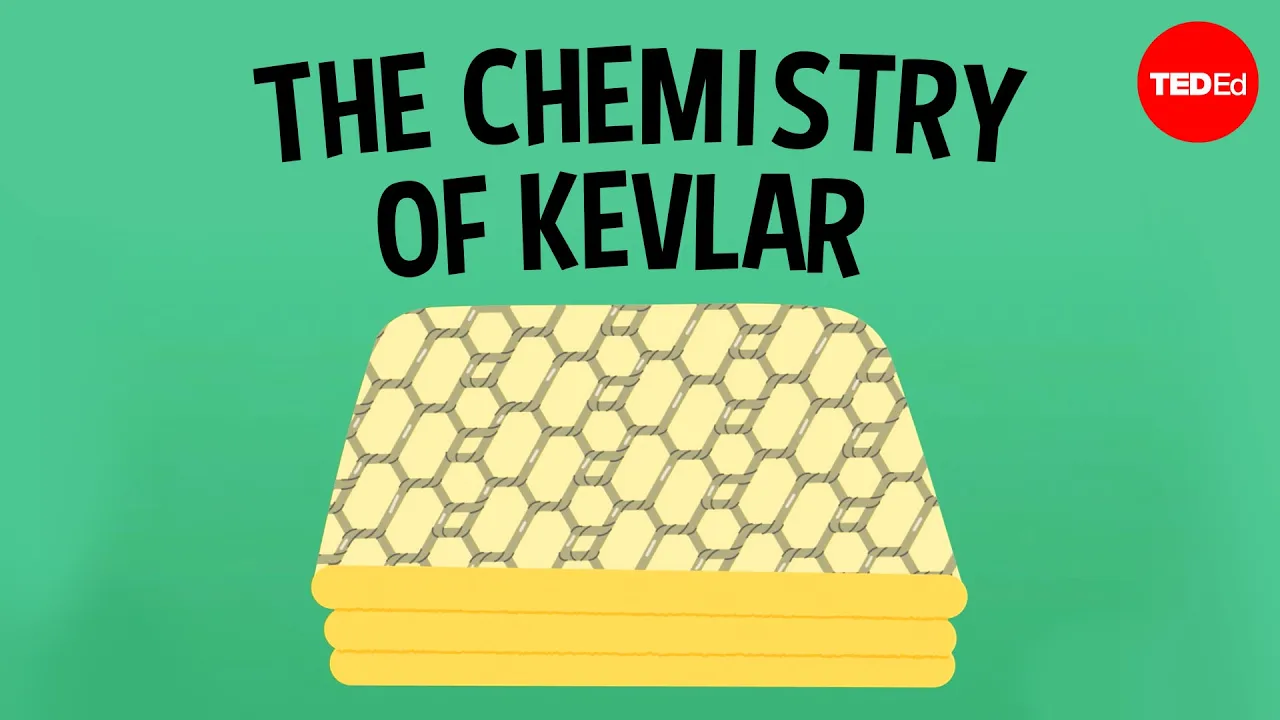
[Music] take a quick look at what you're wearing if any of your clothes are made of cotton you're wearing one of the most ancient fabrics known in ancient India cotton was spun into fibers woven into cloth flax was used in ancient Egypt silk in ancient China wool in ancient Rome all natural fibers from cotton bolls silkworm cocoons sheep fleece fibers still used to make cloth or fabric textiles all these centuries later it being in the nature of chemists to try to duplicate nature many tried over those centuries to invent artificial or synthetic fibers fibers that could be mass-produced at low cost in a lab no worry about crops and herds affected by weather and disease no need for labor-intensive harvesting sheering gathering but it wasn't until the late 1930s that someone finally succeeded this man Wallace Carothers a chemist in the wilmington delaware research lab of the DuPont company what he and his team did will tell you how in a minute was create not only the first synthetic fiber but a revolutionary material nylon strong yet elastic like silk only better in fact nylon became a huge commercial success in 1940 precisely because of its superiority over silk in making women's stockings nylon stockings didn't run or tear as easily as silk ones or cost as much American women bought sixty million pairs of nylons before the u.s. entered World War two when all nylon production went to the war effort the new material was strategically important during the war nylon was made into uniforms tents airplane tires and with silk supplies from Japan cut off military parachutes almost 4 million of them as for nylon stockings until the war's end they were famously rare women faked the look of stockings by drawing seams down the backs of their bare legs time to draw your attention back to how nylon was invented which will explain using paper clips and spider webs Wallace Carothers was fascinated by polymers which he correctly guessed were just ordinary molecules only longer here's the way generations of chemistry students have learned about polymers take a paper clip one paper clip represents one molecule or part called a mer since the Latin word for one is mono that's a monomer the Latin word for many is poly so if you link several paperclip monomers together you get a polymer actually a polymer chain single units linked together into a long chain there are many polymers in nature most notably in terms of this story spider silk what makes up spider webs in fact spider silk is the strongest natural polymer known stronger than steel of the same thickness to make synthetic silk Carruthers and his team had to mimic the way the molecules the polymers in natural silk were linked and structured they used raw materials from nature water and air and from the mineral kingdom Cole and later other carbon-based petroleum byproducts yes nylon comes from crude oil Carruthers and his team did make some early but flawed synthetic fibers they melted when ironed dissolved when dry-cleaned then in the spring of 1934 Carruthers suggested a different combination of molecules you can actually see a pretty good version of what happened in that lab in 1934 by watching what's called the nylon rope trick this one done for us in the chemistry labs at Iowa State University make nylon polymers out of these two chemicals here one is hexamethylenediamine the other is Civic oil chloride the names of the chemicals aren't as important in this story as how these two react when one less dense is poured on top of the other right where the two layers meet each other right there at what's called the interface is where it happens a chemical reaction that creates this a material that can be pulled out in long strong stretchy strings that have a silky texture and shine this is tough nylon what's happened is called polymerization different monomers in each solution like individual paperclips in two different colors have linked in an alternating pattern to form polymers like long paperclip chains all the different types of nylon let's use as our example the most common kind called nylon 6-6 are made from two kinds of monomers diamines let's let the green paperclips represent these and dicarboxylic acids the blue paper clips on the molecular scale both have similar basic structures backbones of six carbon atoms which is why this type of nylon is called nylon 6-6 we won't go into all the details here but you can see their ends are quite different when these different ends come together they react form what's called an amide link just so you know because of all those amide links synthetic polymers are called poly amides many amides as the monomers link small molecules of water are pushed out or condensed which is why this process is called condensation polymerization so now we have synthetic polymer chains that mimic the molecular structure of the natural polymers this is the depiction of spider silk Carruthers and his team at DuPont were also able to get the synthetic polymer chains to arrange themselves in the same parallel pattern as the natural ones and link the chains together in the same way with hydrogen bonds just so you know synthetic polymer chains made in carefully controlled conditions make perfectly uniform fine strands that can be woven into fabric that is lightweight but strong difficult to tear or puncture all properties that have made nylon the most used synthetic fiber in the US after polyester a descendant of nylon along with all polymer plastics so that's the story of a true American success exported around the planet and off it the Stars and Stripes planted on the surface of the Moon in 1969 an American flag made of nylon you [Music] you
Up Next
7:13
Nylon: Properties, Preparation & Uses | Class 8 Chemistry
@LearnoHubClass1112
26.4K views•2015-11-17
83:56
Biocatalysis and Catalysis in Islatravir Synthesis | Merck Webinar
@SCIwheresciencemeetsbusiness
675 views•2020-10-08
10:06
1H NMR: Determining Number of Peaks from Structure
@MSJChem
59.2K views•2017-04-06

17:31
Edible Water Bottles: A DIY Guide to Sodium Alginate Spherification
@ryan
10.5M views•2019-06-21
Related Study Plans & Knowledge Roadmaps
Structured learning paths in Chemistry
chemistry
Nuclear Chemistry: Decay, Meds & Fuel Cycle
01Introduction to Nuclear Structure and Radioactivity
02Decay Dynamics and Kinetics
03Radiation Interaction and Detection
+ 2 more learning modules
24h5 modules
Explore Roadmap
chemistry
Supramolecular Chemistry: Forces & Machines
01Foundations of Chemical Bonding and Intermolecular Forces
02Introduction to Host-Guest Chemistry
03Thermodynamics and Dynamics of Self-Assembly
+ 2 more learning modules
16h5 modules
Explore Roadmap
chemistry
Photochemistry: Excited States & Reactions
01Foundations of Light-Matter Interactions
02Molecular Orbitals and Electronic States
03Photophysical Processes and Jablonski Diagrams
+ 2 more learning modules
18h5 modules
Explore Roadmap
chemistry
Coordination Chemistry: Bonding & Properties
01Introduction to Transition Metals and Ligands
02Crystal Field Theory (CFT) and Geometry
03Magnetic Behavior and Spin States
+ 2 more learning modules
14h5 modules
Explore Roadmap