












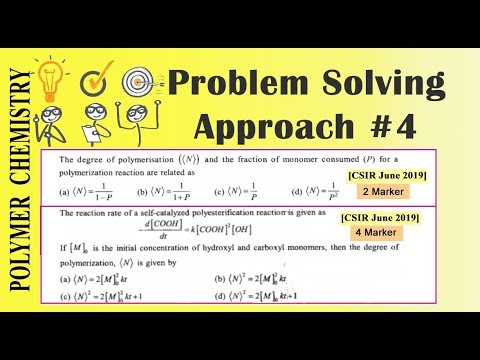

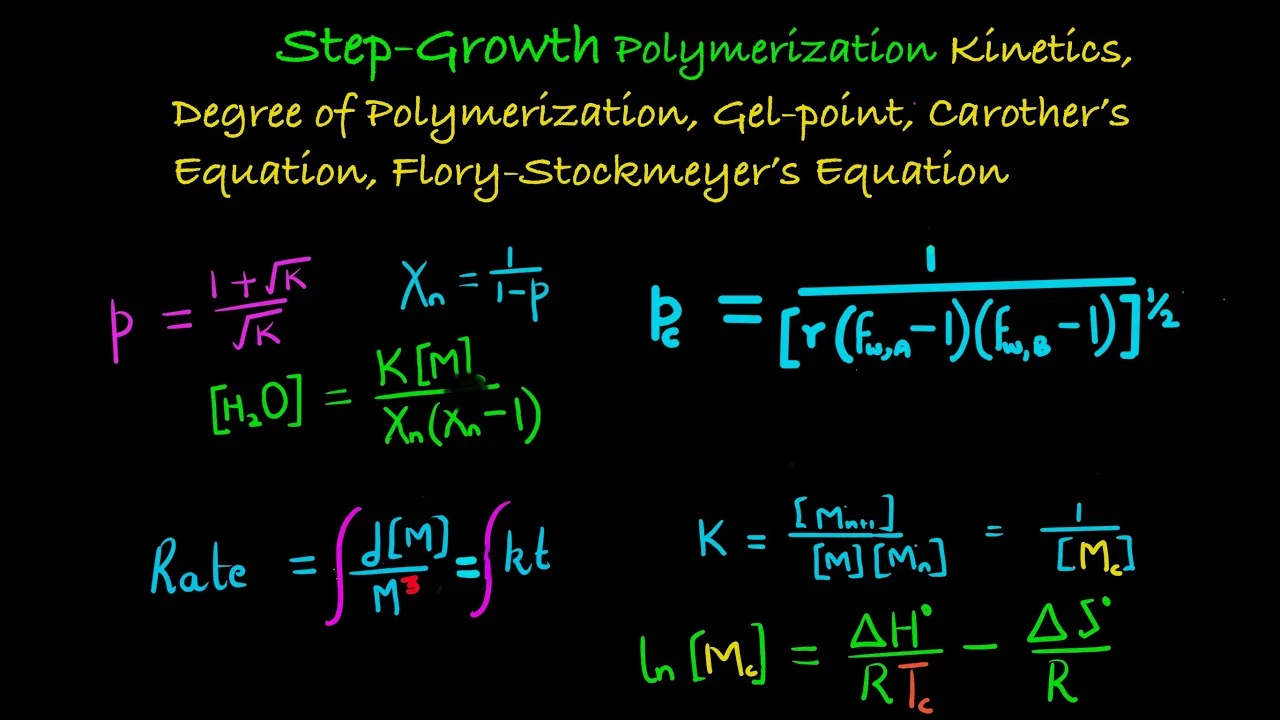

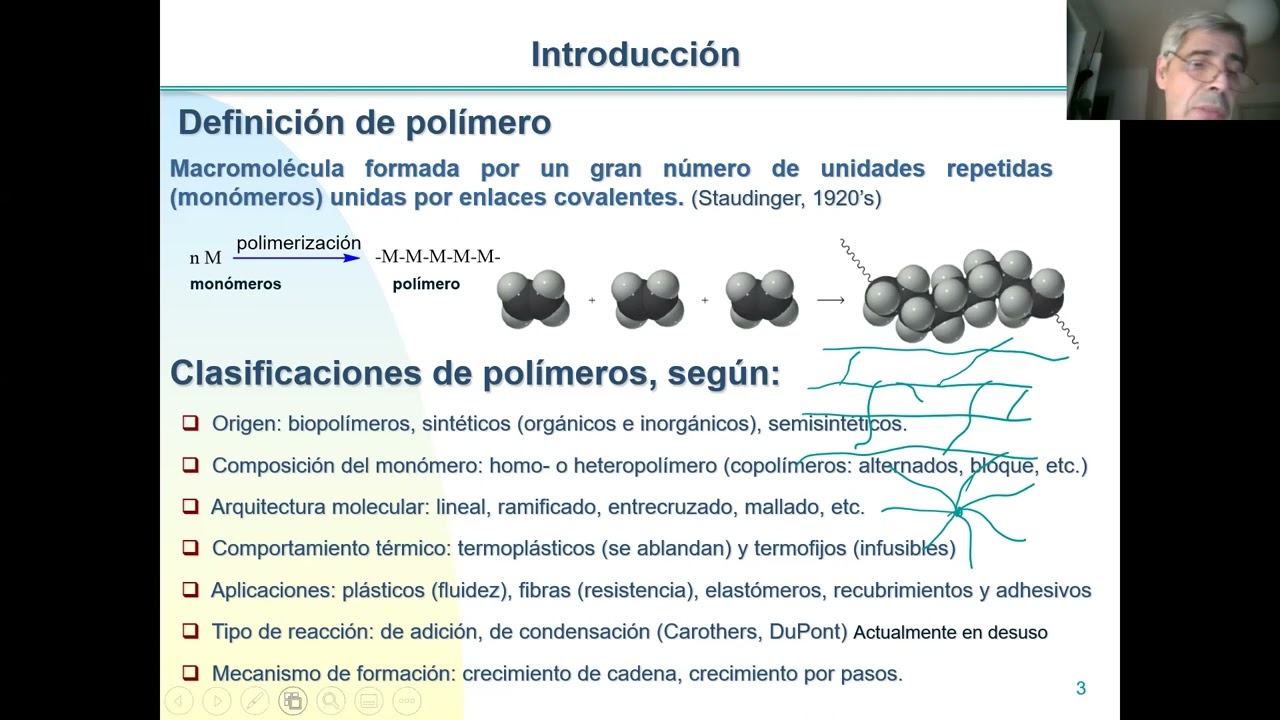

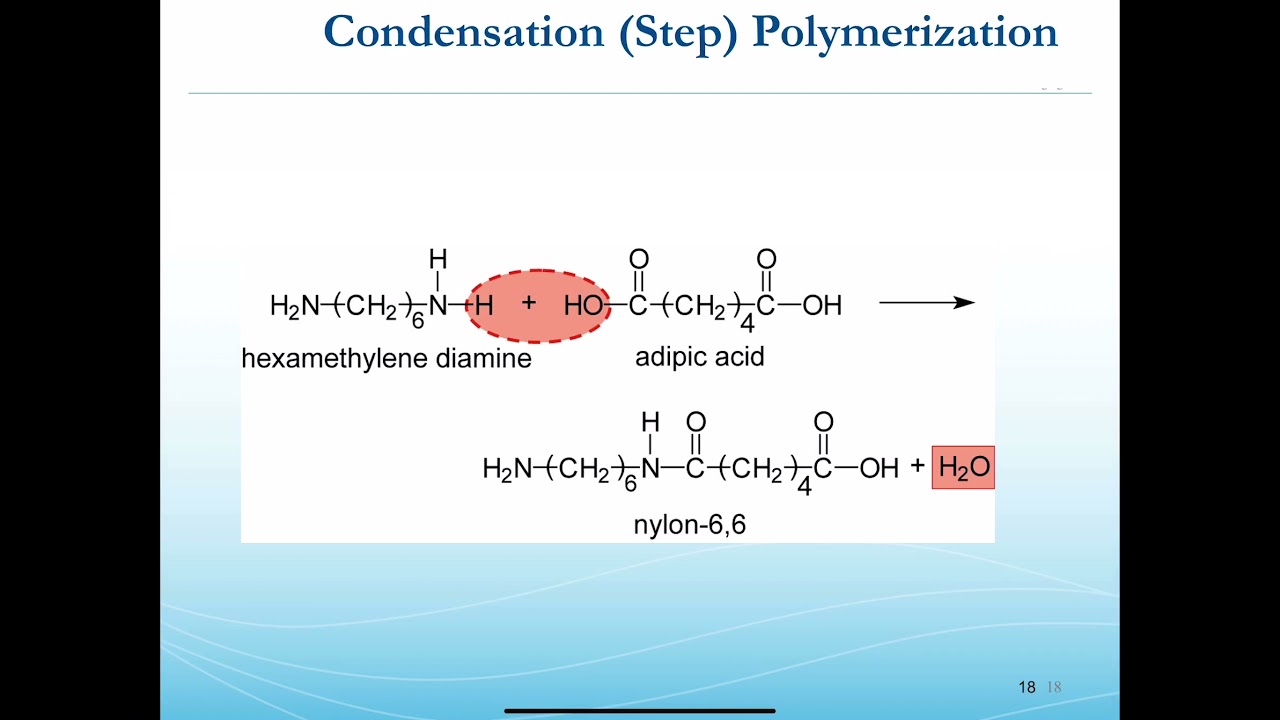
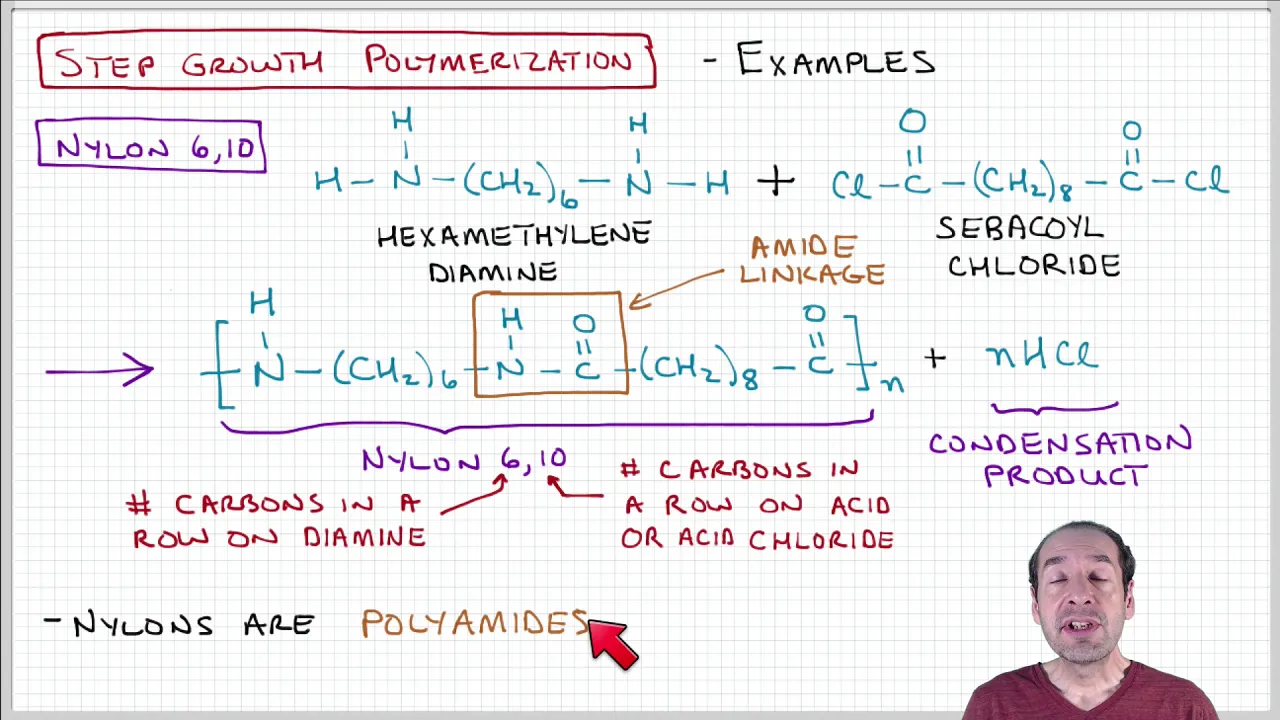

In step-growth polymerization, the number-average degree of polymerization (Xn) follows Carothers' equation Xn = 1/(1-p), where p is the extent of reaction; achieving high molecular weight polymers requires extremely high extents of reaction (>99%), and molecular weight can be controlled through stoichiometric imbalance using the modified Carothers equation Xn = (1+r)/(1+r-2rp), where r is the ratio of monomer moles.
Step-Growth Polymerization & Carothers Equation | Polymer Chemistry
Added:Basic organic chemistry functional groups and reactions, specifically condensation reactions such as esterification and amidation.
Fundamental concepts of polymer science, including definitions of monomers, oligomers, polymers, and the degree of polymerization.
Basic chemical stoichiometry, including the concepts of limiting reactants, molar ratios, and fractional conversion of functional groups.
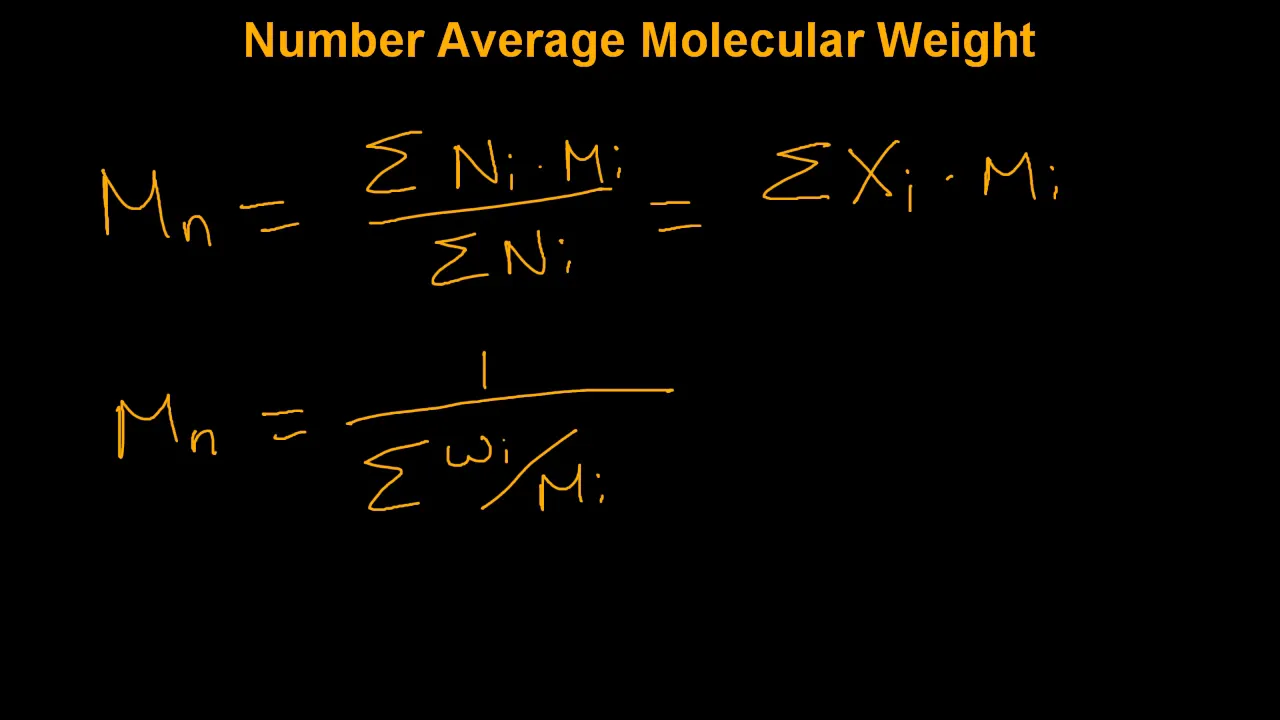
An understanding of polymer molecular weight definitions, specifically number-average molecular weight (Mn).
Chain-growth polymerization mechanisms (e.g., radical, ionic) and a comparative analysis of their kinetics versus step-growth systems.
Kinetics of step-growth polymerization, focusing on the rate equations for self-catalyzed and acid-catalyzed polyesterification.
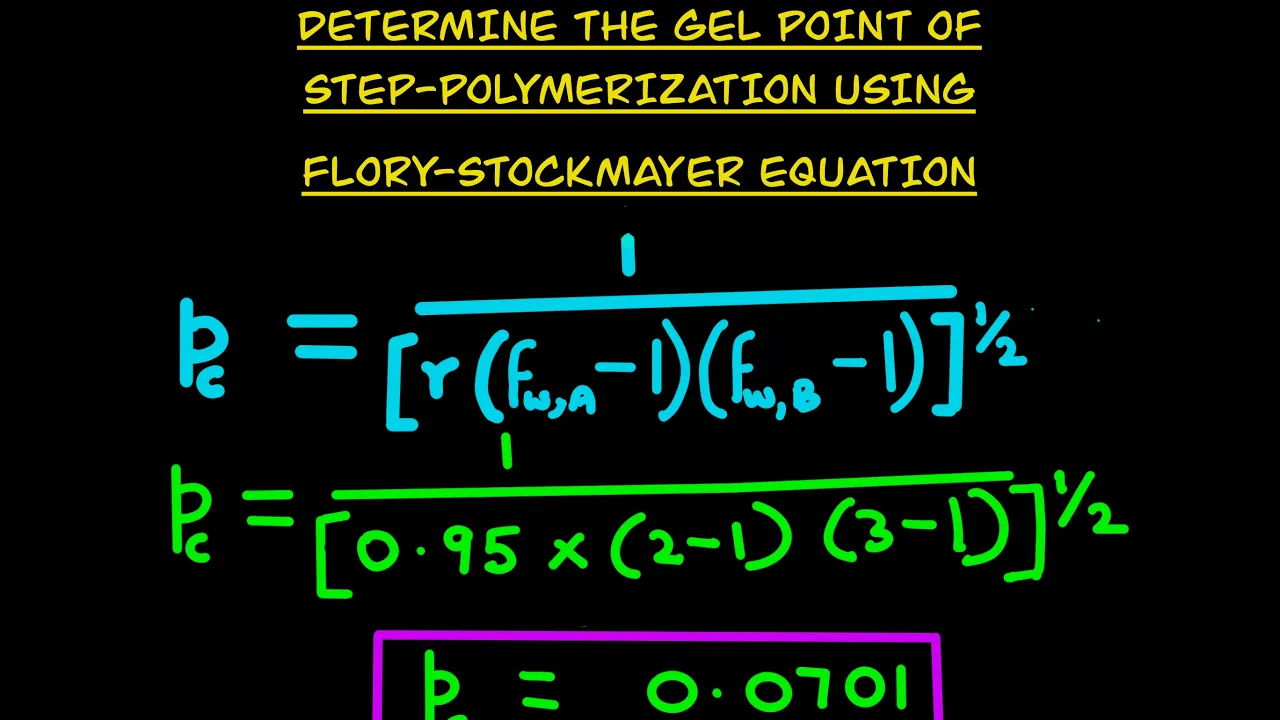
Predicting gel points and network formation in non-linear step-growth systems containing multi-functional monomers (using the modified Carothers equation and Flory-Stockmayer theory).
Industrial synthesis processes and material properties of commercial step-growth polymers such as polyamides (Nylons), polyesters (PET), and polyurethanes.
21.8K views303likes50:20Original Release: 2017-04-10
good morning happy Monday can you hear me in the back we good okay welcome to Pepper Canyon Hall 106 thank you for everybody uh uh coming to the new place I don't think I have enough microphones so if you have any more microphones to donate to me I'd be happy to accommodate them uh I wasn't happy with the sound quality in the last uh the last lecture so I'm trying a few different ways and I'll take the best vers version for the for the video so um how many of you had had an opportunity to watch the uh the supplement on rubber bands and why they heat up okay some people um I'm going to make that I I was so pleased with myself for how that turned out that I'm going to make that required viewing uh as homework it's only going to cost you six minutes of your time um but I I do want to make that an official part of the course because it really encapsulates um everything that uh that we talked about with regard to the distribution of go and trans States and how that affects um entropic elasticity and everyday effects like how if you cool a rubber structure um it actually uh expands which is unusual for most solid materials but it is true for uh for uh for elastomeric materials so so at the end of last class we talked about different chemical functional groups that are uh that that when you link them up like LEGOS give you uh give you polymers so I'm going to give you an example of a of a famous polymer that's made in this way so this is a called a poly condensation reaction and we can take some something like [Applause] this this is called adoil uh chloride and you can add it to something called uh hexamethylene diamine or hexane diamine and when you add these together and you add some uh a little bit of Base in the reaction you get a famous uh polymer called Nylon 66 six because there are six carbon atoms in each unit so six carbon atoms in the part that was formerly the adoil chloride and six carbon atoms that that are that were formerly in the hexane diamine and this is nylon 6 6 and it's fishing line has very high tensil strength usually when you make this uh you make it in a basic uh reaction V uh reaction so you have your organic phase which uh this is soluble in and then aquous phase where this is soluble and the they polymerize at the interface and you can draw this material out as it's made and that's really how fibers of nylon uh are are made now you can now this also generates uh two molecules of HCL as the condensation product so most condensation reactions give you some small molecule as a byproduct which is usually has to be removed from the reaction mixture otherwise the equilibrium could go the other way and instead of polymerizing it could hydroly and and fall apart again now if this were instead of the acid chloride at the group at the as the functional groups at the end but it were an a carboxilic acid like this were cble Bond o o you could still do this reaction but it wouldn't be as reactive and instead of 2 HCL you would have two H2O because that's the that's the part of this that that leaves that is not part of the uh the final product yes uh does the molecule form a straight chain or like a little circle yeah that's a really good question so the question is does the molecule form a straight chain or does it form a a loop it can form a loop um it can form a loop under uh very uh concentrated conditions um but generally what you get is a linear uh a linear polymer um so this this type of polycondensation reaction proceeds by a step growth mechanism and what I mean by step growth is that any reactive any end of any monomer or or the reactive ends of any polymer can react with any other polymer or any other monomer in the system as long as it's an amine reacting with the acid chloride now what does this mean if you have what is the what does the molecular weight distribution mean or what does it look like as a function of consuming these functional groups well if you have a dier a Diemer could add to another monomer or it could add to another Diemer so you could get go from two to 4 to 8 to 16 to 32 or you could add you know an eight Mr to a tumor and get tenton out a it's not a tumor you could add eight to a to a to a dier uh and uh and get 10 and then the uh and then the molecular weight distribution adds like that so any polymer can add to any other polymer and as a result at the beginning of the reaction you have relatively low molecular weight and then as the uh as the polymer chains add up and you start getting really huge molecular weights then the average molecular weight goes up kind of like a hockey stick yeah o territory here but a mechanism question so each uh each myrr attaches because we see the the chlorine end of an at oil reacts with the amine end right so if we just saw a single molecule each out chloride hexan diamine react with each other wouldn't we still see NS that are one sides of chlorine one sides of am yes so you would always end with so I I wrote parenthesis here because this is just the repeat unit but at the end of Any Given chain you know it doesn't go on forever and at the end of Any Given chain there's going to be a free amine or a free acid chloride yeah unless it forms the loop unless it forms a loop but um we're not going to form generally not going to form Loops in this class um but in general they react because the amine because of its lone pair is electron rich and the acid chloride because it's attached this carbon atom is the reactive carbon atom it's electron poor so it's really just kum's law I mean there's some quantum mechanics and stuff in there but it's really just really just positive and negative uh attracting to each other and Kicking out the HCL after the reaction so as a result of this uh of this growth profile that looks kind of like a uh like a hockey stick you can take the average uh molecular weight of a given uh of a given um of of a given polymer or of of a given polymer chain in the sample and and if you plot that as a function of percent conversion of end groups you get some profile that looks that looks like that does that make sense it's a little bit because you're adding diers to tetramers to to so and so on and at the very end you get large molecular weights it's a little bit like uh having a penny and doubling it every day for a month and at the end of the month you'll have a million dollars but on the 15th tax day you'll be poor still so here's tax day here's the end of the month now you can uh imagine other types of polymerization reactions for example what if instead of a freefor all which is what we have here or any change end can react with any other chain end or monomer what if only the growing chain end was reactive and only toward other monomers in that case instead of getting these these steps these this step growth mechanism we would have something which is a chain growth mechanism where the chain gets gets uh gets larger by adding one monomer after another so we have step growth versus chain growth but chain growth has two different flavors so you can have in a reaction you can have chains just just uh start polymerizing and go really fast and then stop like they're running into a brick wall so it goes from from a mon monomer Diemer Trier you know four more fmer six more and then it stops for some reason like the reactive end gets quenched by some some impurity or reacts with some other monomer or some other growing chain end in the system um but everything else in the whole reaction vessel is still a monomer and then it happens somewhere else just how do that go again one more time for emphasis and that is also uncontrolled so so that's that's an uncontrolled chain [Applause] growth I call that the popcorn uh mechanism because when you have an air popper or microwave it the the kernels pop kind of randomly what if instead of that all the popcorn kernels got bigger slowly at the same time that would be another type of uh that would give you a different um uh uh reaction profile and that's called a controlled or living polymerization mechanism and I liken that to instead of how popcorn is made it's how Grass Grows so this is like the grass mechanism step growth and uncont control uncontrolled chain growth both give us a reaction profile that look like this what would a controlled or living grass-like process give us it would more like more like this because they're all growing at the same time and they have pretty much the same molecular weight as a function of the percent of the end groups that have reacted at any given time yeah yes but so the an example of a controlled chain growth would be an amino acid polymerizing and biochemistry but I don't want to mention that yet because the reaction proceeds by polycondensation which is usually associated with step growth so that's an exception that I I don't want to I don't want to get into yeah um so you're saying that the uh chain growth is for uncontrolled is that still like more logarithmic or is that one also like for the popcorn mechanism would that also be like more linear or is it more like no it's more like the step growth so the uncontrolled um uh I actually uh did an an Excel spreadsheet over because you know what do I have to do on Sunday other than spreadsheets and I tried to make some visuals and they didn't come out so good so um so I'll just use chalk instead uh but but but there is in uncontrolled chain growth and step growth you you definitely have more of this exponential uh exponential profile I really do want to get get going but what is the question we have poly condensation for step growth so are uncontrolled chain growths usually from a homogeneous like single monom or is can it be multip uh you can have multiple kinds of monomers in a step growth but not contr in a controlled chain you also can have multiple kinds of monomers and that's actually a big area of of research is making uh polymers that have different functionalities like instead of a AA the whole way it's a b c a b d fxy okay so let's uh let's leave these chemical structures for a little bit yay and we'll abstract them as A's and B's and derive something called the kther equation which tells us what uh what our uh what our our average degree of polymerization is going to be as a function of the extent of the uh of the reaction so uh this is all step growth we're going to do chain growth in a couple days but we're going to we're going to stick to step growth for now I just want you to know that we will arrive at these other uh mechanisms soon so imagine we have this which is Imagine This is like a Lego piece that has a concave side and a convex side this is uh AB and when you polymerize this you get something like this so far so good now what do I mean by convex and concave this could be uh for example something like an amino acid and when we polymerize it we could get something that looks like this poly amid [Applause] notice that this monomer system is a little bit different from the monomer system that we were talking about before namely this has one functional group on either side of the molecule whereas before we had the same functional group on each side and it was reacting with something else that had the same functional group on each side it pretty much works the same way except that this is reacting with another molecule of itself as opposed to another molecule of something else as a molecule something else so similarly we could have something that was like a pill like an AA monomer plus a b b monomer to give us something like this that makes sense and this could be like a die acid plus a diamine where R1 and R2 are just some hydrocarbon some ch2 ch2 ch2 or it could be anything could be a Benzene ring could be could be anything and then when you add these two together you get something that's sort of superficially similar to what we had over there except that it's derived from two different monomers with the opposite functional groups this is also a polyamid this we would call a die acid and this would be a d amine to get this reaction to go you would need a catalyst or you would need really high heat and pressure in order to drive off the water which of course is that is the worst end ever you would need to drive off the water in order to to drive this reaction to the right usually it would be done with a catalyst and in fact it would probably usually be done with the acid chloride not the acid because it's more reactive but this is this is the general uh idea what we're going to do in this analysis is assume that all the functional groups are equally uh reactive [Music] [Music] so we're going to assume that all the functional groups are equally reactive so far so good and we're going to define a quantity uh Little X subn which is the number average chain length or the number average degree of polymerization so monomer a bunch of monomers is one uh half diers or half monomers and half half uh and half dimers X suben would be 1.5 because it's just the average uh degree of polymerization or the average chain length in units of monomers of what's in the pot so we're going to [Applause] imagine 16 monomers and this implies 32 fun functional groups because each monomer can react on one side or the other side so two functional groups per monomer and we'll draw them in a grid one more set of course molecules don't really exist in a grid they're moving all over the place and you have many more than 16 of them but the math is the same okay so you go from a scenario where you have all uh monomers and then what we're going to do is uh is is is react 25% of the functional uh of the functional groups in the uh in the pot so let's say that these react and form a dimer these react and form a dier these react and form a dier these react and form a dier you now have x subn equals 8 molecules time a length of 1 plus 4 molecules time a length of two divided by the total number of molecules in the pot which is now 12 it's no longer 16 it's now 12 because four of them are dimers and this G gives you this gives you 1.3 for 25% uh reaction so 25% of the reactive groups have reacted and we have an average degree of polymerization of 1.3 so far so good now let's uh let's increase in it to 50% reaction so let's say this became a trimer this is this is still a dier but these two merged and this one added another uh added this guy to become a a trimer so now we have by this same arithmetic we now have x subn = 2 at 50% reaction are we a little surprised that we've consumed half of the reactivity in the in the pot but we've now we now only have a pot full of dime an average of dimers it's kind of crazy right I mean used up half the reactivity and we still only have just dimers what if we increase that to uh to 75% reaction and now we have say this polymer and this one reacted all the way down here and we still have this one piece of chalk cost 75 cents uh and x sub is four I get them imported from Japan seriously four microphones chalk imported from Japan I love you guys this is now 75% reaction and our average degree of polymerization is only four I'm not going to draw this out again but even to achieve x subn equal 8 we have to react 87.5 uh% of the functional groups so this is still a very low degree of polymerization this is barely even a polymer we might call this an aliger because it's so short but we've consumed so many of the so many of the of the reactive groups so for high uh for high molecular weight so this is still very low so [Applause] for high molecular weight the reaction must go toward completion so like greater than 99% reaction and there's a general formula for coming up with uh with your average degree of polymerization based on the percent reaction and this was a an Insight attributed to ks a very famous dude in the anals of polymer science so this [Music] [Applause] is how we get the carther's equation and we're going to Define N Sub Z as the number of monomers originally present in the system and N without the subscript is the number of molecules so this is monomers plus any of the molecules that have been formed at a given time yep how are you reaction so we have 32 functional groups here that are available to be reacted and then over here how many do we have left we have two from this one one from this because it's only reacted on one side one from this one from this one from this and one from this and one from this so that's uh that should be that should be eight eight out of 16 eight out of 32 so that's that's the number unreacted so um 20 24 is is 75% yep what does it matter that it's high molecular weight or yeah oh why do yeah why do we care if it's high molecular weight if it's low molecular weight we basically have a have a waxy solid or a liquid that has a low melting temperature low tensil strength um we get no engineering properties uh out of it yeah that's a really good point you know I I have the value system that high molecular weight is good but but maybe you don't have that yet um High molecular weight is good if it's too high though it becomes insoluble um or unprocessable in a factory yeah good point so so n without the zero is the number of molecules present in the system at any time [Applause] [Applause] say anytime T we're not going to use T yet today but we will uh soon so the difference between n subz and n is actually the total number of functional groups of either A or B that have reacted at time t [Applause] okay we're going to Define another variable called lowercase p which is the extent of reaction which equals the difference in the number of Mo in in the total number of Mo monomers present initially in the system minus the number of molecules at any time T divided by the original number of monomers in the system and if we solve for n we [Music] get n * 1 minus p and since X subn equals the total number of of monomers present in the system at time zero and they didn't go anywhere so they're all still there some of them are incorporated into new molecules if we divide this by the number of of molecules present in the system at any time that is the average the number average number of monomers in each in each molecule in the system so we can combine these terms to give us x subn = 1 over 1us P very simple expression this is the K's equation named after Professor equation [Applause] I can use that joke once per quarter but that's it so this has some some serious consequences let's make a table it's a table with only two entries for an extent of reaction of 95% x subn equals 50 average degree polymerization of 50 how about 99% average degree of polymerization is still only 100 now 100 seems like a lot I'd like to have a $100 right now uh but consider the fact that a milk jug uh High molecular weight polyethylene probably has 10,000 an average average degree polymerization of like 10,000 so we need to we really need uh very high extens of polymerization in order to achieve uh to achieve High molecular weight so for example for good fibers of Nylon 66 say for fishing line or anything else that's uh that's nylon zip ties to have good uh good I'll get to your question in just a second to have good molecular weight say an M subn of 12 kilodalton where Dalton is just a gram per mole we need x subn uh of of around around 110 so um so P must be greater than 0.99 uh% so in order for Nylon 66 which is which is intrinsically a strong uh a strong polymer um because it it actually has you know there are 12 there are 14 atoms in the backbone um so it's in and it has lots of hydrogen bonding with the uh the the cble Bondo and the NH groups lots of uh lots of reasons why it has high tensil strength we still need to get quite High um degrees of polymerization yeah when p is 0.95 is X and um I don't yeah huh [Applause] good point 3 years first first person to see that actually proves my point even better okay how do we control the molecular weight if it is too low we have poor [Applause] properties if it's too high it's difficult to process and by process I mean either melt or solubilize so for example since we're talking about nylon there's the nylon uh rope trick where you have a beaker and you have two layers that don't uh don't want to mix this is the organic phase let's say it's some organic phase that has a density greater than than than the density of water and this is the aquous phase and this the organic phase contains the adoil [Applause] chloride and I drew the structure at the beginning of class and the aquous phase has the uh has the hexane uh [Applause] diamine now if we dissolve these together they would just form a solid block and you couldn't do anything with it but as it is if you take advantage of the fact that this is an interfacial polymerization you can take [Applause] a you can take a hook that you just say fashion out of wire and you can draw this material up in uh up into this hook and you can make basically fishing line directly from this uh from this process so another uh another thing you can do is control the Heat and the pressure so high heat and low pressure will drive off the condensation products so if water is formed during the condensation you'll drive it off and you'll by lat Lea's principle shift the equilibrium toward the toward the polymer side but if you reduce the Heat or reduce the pressure uh then you'll have uh then you'll have lower molecular weight stuff this is called glycerol and this is called subasic acid and this is uh one of the principal waxy components uh that forms on your skin from the sebaceous gland secretions fascinating largely the goal of a shower is to get rid of this or at least the feeling of cleanliness arises from having gotten rid of it and when you polymerize this you get [Applause] [Applause] [Applause] you get poly glycerol [Applause] coate or pgs which is a biodegradable [Applause] elastomer so it's a stretchy material that's used in for example tissue engineering applications um because it dissolves or it hydes under physiological conditions into things that aren't really that harmful yep make things biodegradable uh you for biodegradability you need um Ester linkages like this and what's implied but not necessary for biodegradability is um lack of toxicity of the byproducts so I mean you can have toxic byproducts but then why would anyone want it in a surgical implant um so Esther groups are good at biodegrading um that's by far the most common one you can also make um degradable uh degradable polymers that are degradable with um with enzymes for example that break uh specific bonds okay Y is the reason why styrofoam can't be dissolv because of high molecular weight so the reason styrofoam styrofoam can be be dissolved in organic solvents like acetone and stuff um but it can't be hydrolized like in the body or in uh I think what you mean is why can't it be biodegraded in uh in the outdoor environment or like in a biological system and the reason is because its backbone is a pure carbon chain and there's no place for the water to get in and break apart the chain so we'll talk about styrene polystyrene and styrofoam um more when we talk about chain growth polymerizations so it's actually made in a different type of mechanism uh than this and it gives you different reactive properties in the backbone so the last thing that I want to mention uh takes advantage of the fact that the ks equation is very sensitive to the extent of reaction uh P so this is a control by a sto ometric imbalance so that is an excess of of one reactant in an a a/ BB system uh limits the molecular weight so what you have in the case of and and the reason for this is is kind of is makes sense if you think about it like if you have an excess of the BBS even just like a 1% excess of the BBS then pretty soon all the chain ends are going to end in b and the bees can't react with B they can only react with a so as soon as there's a slight excess then you prevent those chains from growing growing any further and that can be Quantified through a modified cors equation which takes into account the stochiometric imbalance through this parameter lowercase R so it's x subn equal 1 + r over 1 uh 1 + r - 2 RP where R is the stochiometric imbalance um n subz of AA so the or the number of monomers of a a originally present and the number of monomers of b b originally present and this gives you this is equivalent to the number of unreacted functional groups and to do this calculation properly the XS goes in the denominator so that r is always less than one so in the last 60 seconds of class for a quantitative reaction where uh quantitative means that P is greater than or equal to 0.999 which ordinarily under the brother's equation with exactly the same number of AAS and BBs together it would give you fairly High degrees of polymerization but if you instead have a stochiometric imbalance suppose you have uh a stochiometric balance so R is 1 x subn equals 1,000 but instead what if you have a 5% excess of the B monomer then you have r equal 0.952 and X suben ready for this is just 39 so if we have a little bit of impurity in one of our starting materials and we put it into the reaction mixture that causes us to um uh that causes us to mismeasure one of the one of the components then we have reduced the um the the average degree of polymerization by 96% by only a 5% error conversely if we want to have lower molecular weight we can do this on purpose that's where we'll end today thanks for your attention
Up Next

12:18
Differential Scanning Calorimetry Basics: Thermal Analysis Guide
@TMGPlastics
189.9K views•2020-05-13
30:32
Ultrasonic Transducers: Resonant Frequency Measurement and Horn Design
@imajeenyus42
229.9K views•2017-02-22
48:40
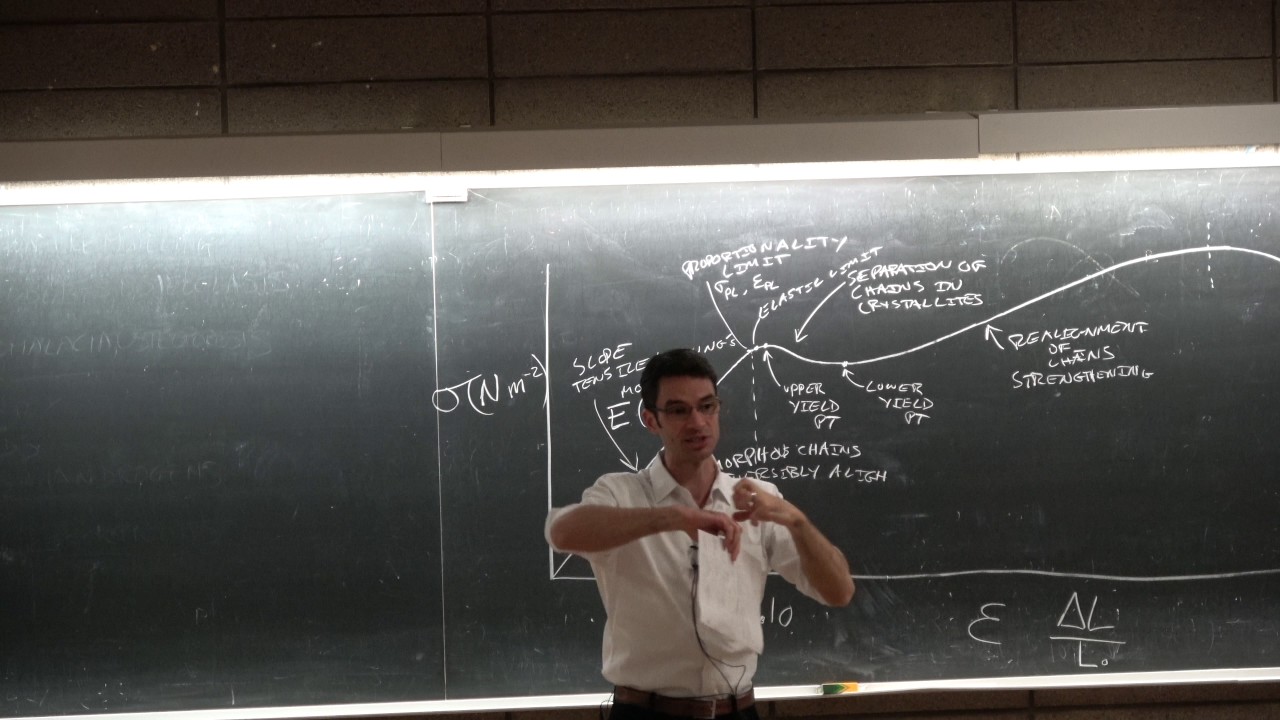
Mechanical Properties of Polymers & Viscoelastic Models | NANO 134 UCSD
@djlipomi
56.9K views•2017-06-01

33:39
How a Student's Question Saved a NYC Skyscraper from Collapse
@veritasium
22.8M views•2025-04-26
Related Study Plans & Knowledge Roadmaps
Structured learning paths in Engineering
engineering
Building Acoustic Levitators: Physics & Arduino
01The Physics of Sound and Standing Waves
02Piezoelectric Transducers and H-Bridge Drivers
03Arduino Programming: Generating 40 kHz Signals
+ 2 more learning modules
14h5 modules
Explore Roadmap
engineering
Building Peltier Cloud Chambers: Particle Tracks
01Cosmic Rays & Cloud Chamber Physics
02Thermoelectric Cooling (TEC) Fundamentals
03Custom Liquid-Cooling Loop Design
+ 2 more learning modules
18h5 modules
Explore Roadmap
engineering
Yagi-Uda Antennas: Modeling, Build & VNA Test
01Introduction to RF and Antenna Fundamentals
02Yagi-Uda Antenna Design Principles
03Antenna Modeling and Simulation in 4NEC2
+ 2 more learning modules
18h5 modules
Explore Roadmap
engineering
ECG Monitor Design: Op-Amps, Filters & Noise
01Electronics & Breadboard Basics
02Op-Amps and Instrumentation Amplifiers
03Bioelectricity and ECG Fundamentals
+ 2 more learning modules
18h5 modules
Explore Roadmap