

















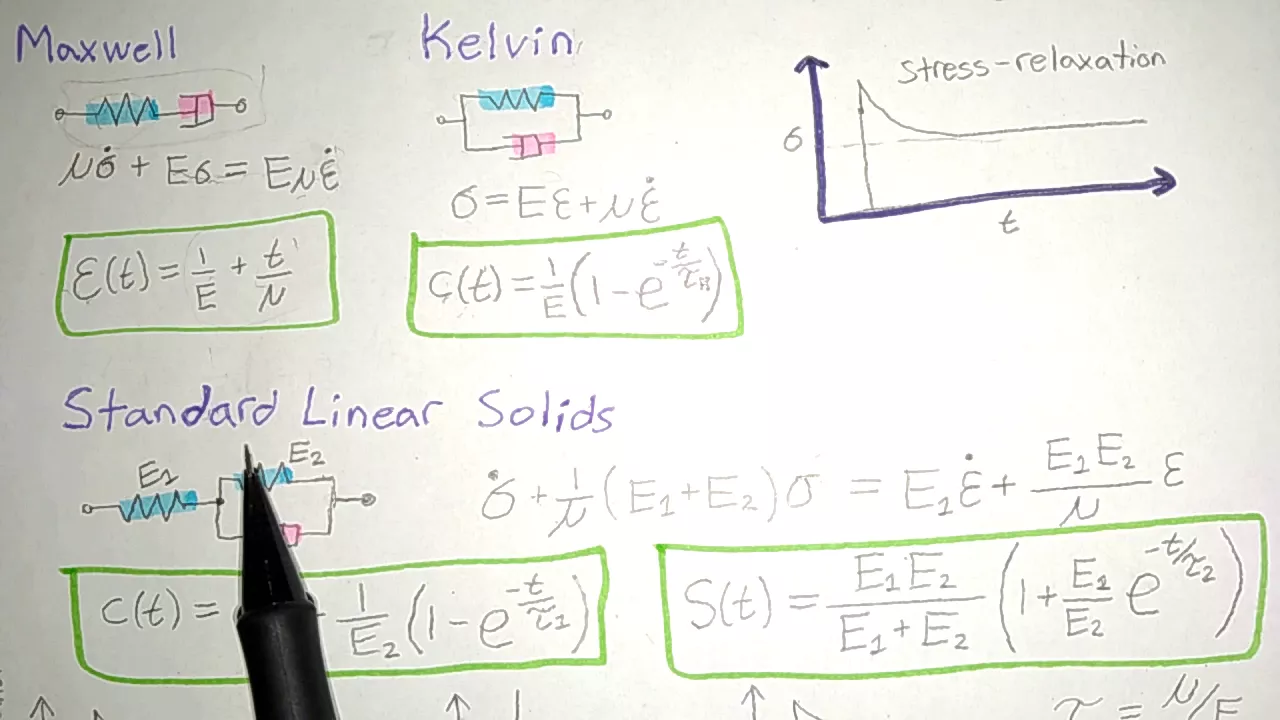
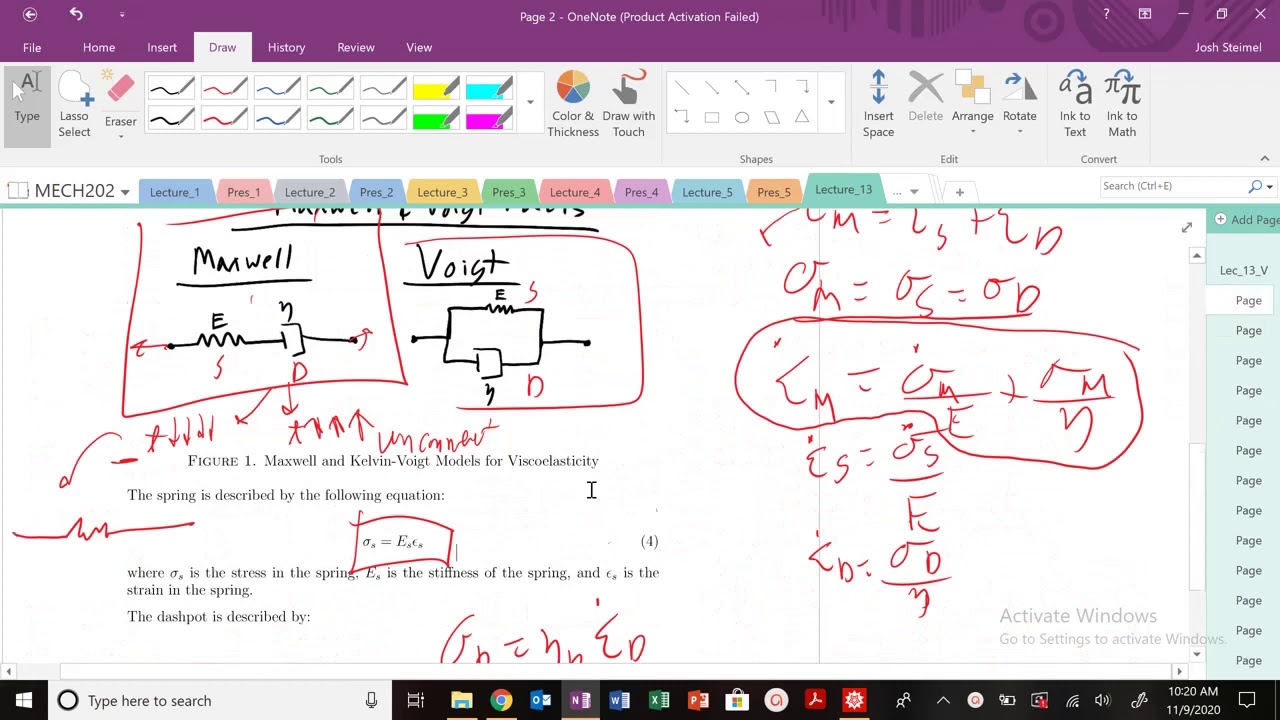





Polymers exhibit viscoelastic behavior characterized by a combination of elastic (energy-storing) and viscous (energy-dissipating) properties, which manifests in their stress-strain curves through distinct regions: the elastic regime (0-10% strain where entropic elasticity dominates), yielding (where crystallites break and chains realign), strengthening (where aligned covalent bonds provide resistance), and fracture (where bonds break and chains pull apart). Key mechanical properties include the tensile modulus (Young's modulus, E), representing the slope of the elastic region; the proportionality limit (where stress is linearly proportional to strain); the elastic limit (maximum reversible deformation); and the ultimate tensile strength (peak stress before fracture). The modulus of resilience represents energy absorbed elastically before yielding, while the modulus of toughness represents total energy absorbed until fracture. Polymers also exhibit time-dependent behavior including creep (gradual deformation under constant stress) and stress relaxation (decreasing stress over time under constant strain), which can be modeled using viscoelastic models such as the Voigt-Kelvin model (spring in parallel with dashpot for slow elastic recovery) and the Maxwell model (spring in series with dashpot for permanent deformation).
Mechanical Properties of Polymers & Viscoelastic Models | NANO 134 UCSD
Added:Good morning. A couple years ago, I went to Rubio's to get a burrito or something and I bought a plastic bag which is made of polyethylene and I cut it up into a million pieces and it has um continued to serve me well since then for this demonstration.
So, imagine you have a piece of a Rubio's bag and you tug on it a little bit and it's a little stretchy. It's a little stretchy before it starts deforming permanently. And that's the elastic regime. It's like a rubber band.
The uh entropic elasticity takes or is the dominant restoring force. So you straighten out the chains. But as you straighten out the chains, you reduce their entropic freedom. So they want to ball back up and as a result of balling back up, they produce a restoring force.
So that's maybe 0 to 10% strain. You can't really see 10% strain from back there, but I can see it here. Then if you stretch it a little bit more, but you stretch it kind of slowly and then it yields. So you've started to now affect the crystallin domains and you're starting to break up the crystallites and now you're breaking them apart and you're realigning them along the strained axis.
Then you continue to stretch out the sample and you continue to stretch it and you continue to stretch it. more chains are lining, more crystites are breaking apart, and then it it breaks.
Well, in between when it was being stretched out and when it broke, there was a little bit of loss in the stress per strain. And then um and that is the result of bonds breaking and chains pulling out of each other, which is what happens when you break the sample. um and at the very end so many bonds have broken and chains have pulled out that the the whole sample fractures.
Now that that is the slow case suppose or let's say that's the medium case of straining. What happens if you take this and I just pull on it really fast?
It'll break of course and it didn't extend very much did it. This tells us a lot about polymers that it takes a long time for the chains to realign with their new circumstances like an external load. What if we had a third piece of the Rubio's bag and we suspended a heavy weight from it and we just waited for days? What would happen?
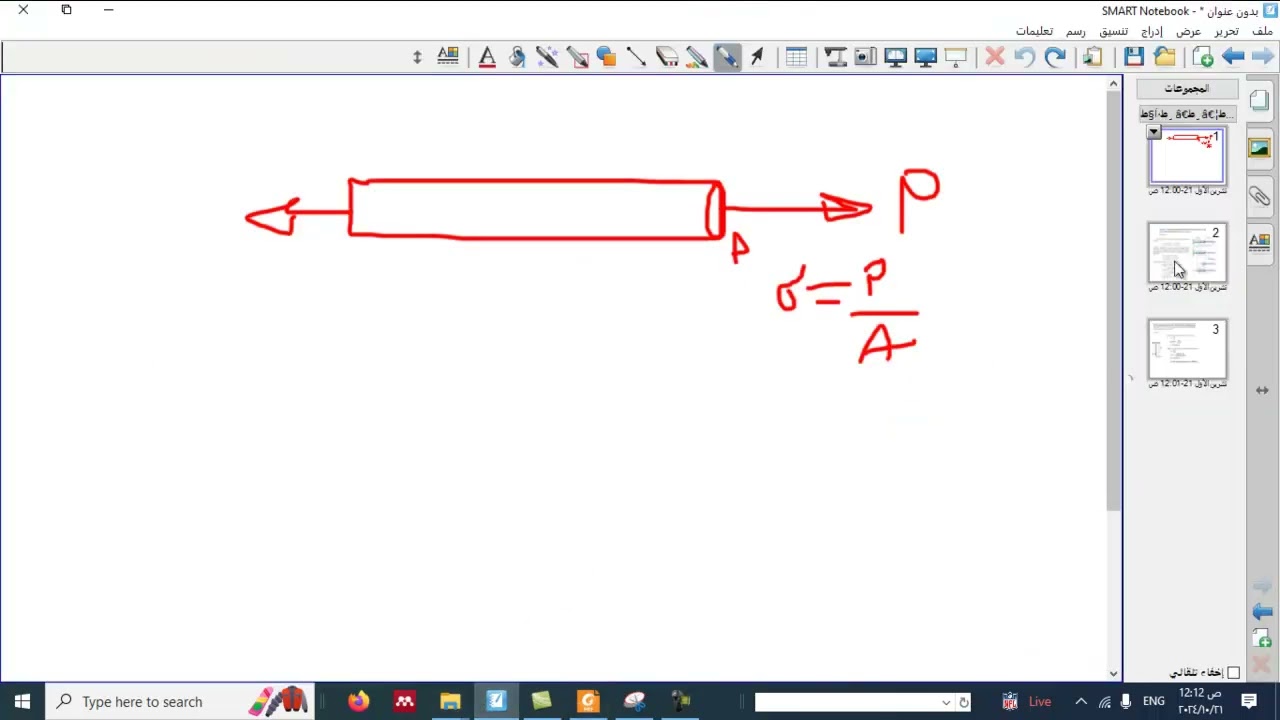
Eventually, eventually it would kind of I'm just going to speed this up. Time lapse. Eventually it would go like this and eventually you know it could take years could take a long time but eventually it would get to the point where you have ultimate tensil strength and depending on h depending on a lot of things it might break it might not depends on how heavy the weight is but over time you'll have this phenomenon called creep. Now, now this is a a phenomenon um associated with visco elasticity of polymer samples where polymers have um some combination of uh of elasticity which is attributed which is like a pure solid is purely pur purely elastic and viscosity which is a property of uh of liquids which is uh viscous. They don't store any energy uh mechanically they just dissipate it at all dissipate at all. whereas elastic solids um uh store all of the mechanical energy. So, uh, what does this look like if we were to plot a draw a plot of stress versus strain for a generic polymer and stress is force per unit area and strain is the change in length divided by the initial length as we discussed uh last class. So at the very beginning of the process you have the amor chains in the amorphous domains aligning along the axis of strain and this is all elastic behavior. But then something happens where the crystallites start to pull apart a little bit and then when you loosen up all the crystallites you could have a reduction in in stress with strain. Not always but you could but it does it does happen.
Then you have a period where the material strengthens where the chains start to align again and because you have covealent bonds that are now aligned with the axis of strain. You have the strongest component of the polymers which are the covealent bonds along the chain aligned with the axis of strain. They're providing a lot of uh of resistance to mechanical deformation.
Then you come to a point say around here where the uh where you start to have bonds um uh you start to have chains that are pulling out of each other. You start to have you can have bond sision events where the mechanical energy overwhelmed becomes concentrated at covealent bonds and they break and then the material has uh the the the stress starts going down with strain until finally uh it breaks.
So this is um the amorphous chains partially align uh reversibly partially align this point after you have yield of the polymer and it's no longer reversible here. This is where you have separation of the chains in the crystallites.
[Applause] Not every material is going to have a stress strain curve like this, but this shows many of the features that it could have.
This is where you have uh realignment of chains.
Or strengthening [Applause] This is where you have uh rupture of covealent bonds and uh overwhelming of the intermolecular forces between chains that allow them to slide completely past each other.
[Applause] [Music] And when enough of this happens, the material uh bifurcates or this is catastrophic failure.
And the parts of this curve have uh have names.
[Applause] The slope here is the tensil modulus.
The tensil or Young's modulus.
And we call this uh capital E and it has units of newtons per square meter.
Usually expressed just as Pascals.
At the this point in the curve, we have three points that lie pretty much back to back to back depending on what type of material it is and what side of the curve you're approaching it from. There is the uh the proportionality limit.
So you have the stress at PL and the strain at PL and that's where the stress is proportional to strain. And up until this up until this point the slope of this line is the is the elastic modulus for uh most semi-rystallin materials that are not uh cross-lin you know like polyophene or sorry not polyethylene not particularly elastoic this could be somewhere around 10%.
For silicone rubber it might be 200%. So this could could uh could vary.
Although for silicone rubber the it's it's elastic over a much larger range than the stress is actually proportional to strain. Which brings me to my next point. There could be a region in which the stress and the stress and the strain are still reversible. So deformability is still reversible but the stress isn't linearly proportional to strain. And for materials like the um uh like the uh like the Rubio's polyethylene bag, we have the elastic limit [Applause] beyond which if you stretch the material anymore, it's going to stay like that.
Like have you ever made faces to your parents and you're like and they said don't do that. Your face will stay like that. That's when you pass the elastic limit.
Yeah. Is that the elastic limit is the maximum of the curve whereas proportionality limit is the point. No, the maximum of the curve is the upper yield point which is infinite decimally close to the elastic limit but on the right hand side of it.
Then we have the lower yield point.
So the elastic limit is up to the is is as you stretch it out. If you stretch it infinite decimally more than the elastic limit, it's then the upper yield point.
Some materials have a lower yield point, others don't. It depends on what happens to the chains as they uh to the crystallin regions as they as you overcome the activation energy to pull the to pull the crystallites apart.
Sometimes you have a reduction in stress with strain. Sometimes it just continues.
Interestingly, stress strain curves for metals can look a lot like stress strain curves for polymers, but the mechanisms are totally different. So, if you stretch out a metal, it actually becomes it becomes strengthened. So, you can have a uh you can have this behavior where stress continues to increase with strain past the elastic or past past the um the yield point for a metal. And in that case, what's driving the increase in strength is the accumulation of dislocations in the crystal lattice. So the atoms move out of their uh their um uh their positions in the crystal lattice and they dislocate to accommodate the plastic flow that you are uh you're creating in the sample. That has the effect of what's called strain hardening or strain strengthening the metal. The same effect is observed in in polymers but the mechanism is different. In this case it's actually increasing the amount of order in the system by aligning the chains along the strained uh axis. The point um up here is called the ultimate tensil strength.
And it has units also of newtons per square meter. And there are a couple of energy density terms that are important.
In this region between zero between mechanical equilibrium and the elastic limit is the area under the curve is called the modulus of resilience or just the resilience. We never really say modulus of resilience but it has uh the uh the name u subr from zero strain to the strain at the proportionality limit of the elastic modulus times the strain times drain where the stress S at the proportionality limit equals the tensil modulus times the strain at the proportionality limit. And since this region is always uh linear and it's always a triangle, uh it's always a it's always a it's always a right triangle, you can actually just write without having to uh really integrate anything U of R equals the stress at the PL uh squar over 2 * the tensil modulus and this has units of jewels per cubic meter in SI units. So what is the significance of an energy density? It's that's the amount of en of of of energy per unit volume that can be accommodated in the elastic regime. So that's the total amount of energy that you can put in the system mechanically before the um uh before the material is no longer uh is no longer proportion proportionally elastic. And usually the proportionality limit and the and the uh elastic limit and yield point are so close to each other that if you add even just a little bit more energy in here, you'll permanently deform the sample. Yep. So just to be clear, is that E subscript epsilon or is that E* epsilon? This is E times epsilon. Okay.
There's another energy density that's important and that's called the modulus of toughness or just the toughness.
And this is the total energy absorbable prior to fracture. That includes the resilience plus all of this area.
So total energy density at fracture and it is U subt from zero to the strain at fracture.
[Applause] of the stress function times DE. And it also has units of jewels per cubic meter.
Question. Yeah.
[Applause] Difference is for your point and I guess the last limit.
So the elastic limit and the yield point are infinite decimally close to each other.
They're basically the same point. But we talk about elastic limit when we're talking about elasticity and we talk about the yield point when we're talking about yield. uh yield as in like the material itself is it means yield point means that the material is no longer storing mechanical energy it's dissipating mechanical energy by deforming permanently.
So it's elastic elastic elastic but then there's an there's an elastic limit and then infinite testing more it's a yield point.
You will never have to differentiate between the two in your working life but they will but it will be called both.
[Applause] Is that okay? It's just a matter of perspective whether we're talking about elasticity or uh or yield.
Suppose we have some generic stress strain curve and we have three samples with stress strain behavior that looks like this.
[Applause] This is strong but not tough. This is strong and tough. This is neither strong nor tough.
[Applause] [Applause] [Applause] So when you're talking to somebody who's faced a lot of adversity and overcome a lot of challenges and uh someone calls them that's a strong person you say no that's a tough person.
Okay.
So that's strength and toughness and resilience. What about what about modulus? So the modulus is like the spring constant for a three-dimensional solid. It's basically the force equals uh kx in um the hooks law where the modulus is the k but it's really it's really a three-dimensional solid not a not a spring but it means the same the same thing. It's how much the thing how much restoring force in the elastic regime the material provides uh per amount of of strain.
So if you have uh a few different materials and the modulus and usually the moduli are are quite high. So this is giga newtons per me per meter squared um or giga pascals. We usually refer to moduli in gpa. And then new which is the plusan ratio from last class. That's the amount something shrinks in the transverse direction relative to the amount that it expands in the stretched direction.
So let's look at uh diamond graphine, steel, let's look at glass, polyethylene, and latex.
Diamond has a modulus of a terapascal.
Really strong. No.
Um, really high modulus.
And a plus ratio of 0.2. Graphine also around a terap pascal.
Plus ratio of about 0.15.
Steel. Now this depends on how much carbon is in the steel but let's say around 200 and 0.28 28 glass 60 0 23 polyethylene and this would be particularly uh high molecular weight polyethylene would have a modulus this high but this is what this is what this reference measured so that's 24 gigap pascals and 0 38.
As things become more rubberlike, you get closer to 0.5 for pan ratio. And 0.5 is about the most that any natural material, any isotropic material is likely to have, which is 0.5. And uh pure rubber materials like latex really um max out at at at about 0.02 02 gigap pascals or 20 megapascals and a pan ratio that very nearly approaches 0.5 which is going to be the limit for rubbers at 0.49.
Now the modulus will be highly dependent on temperature.
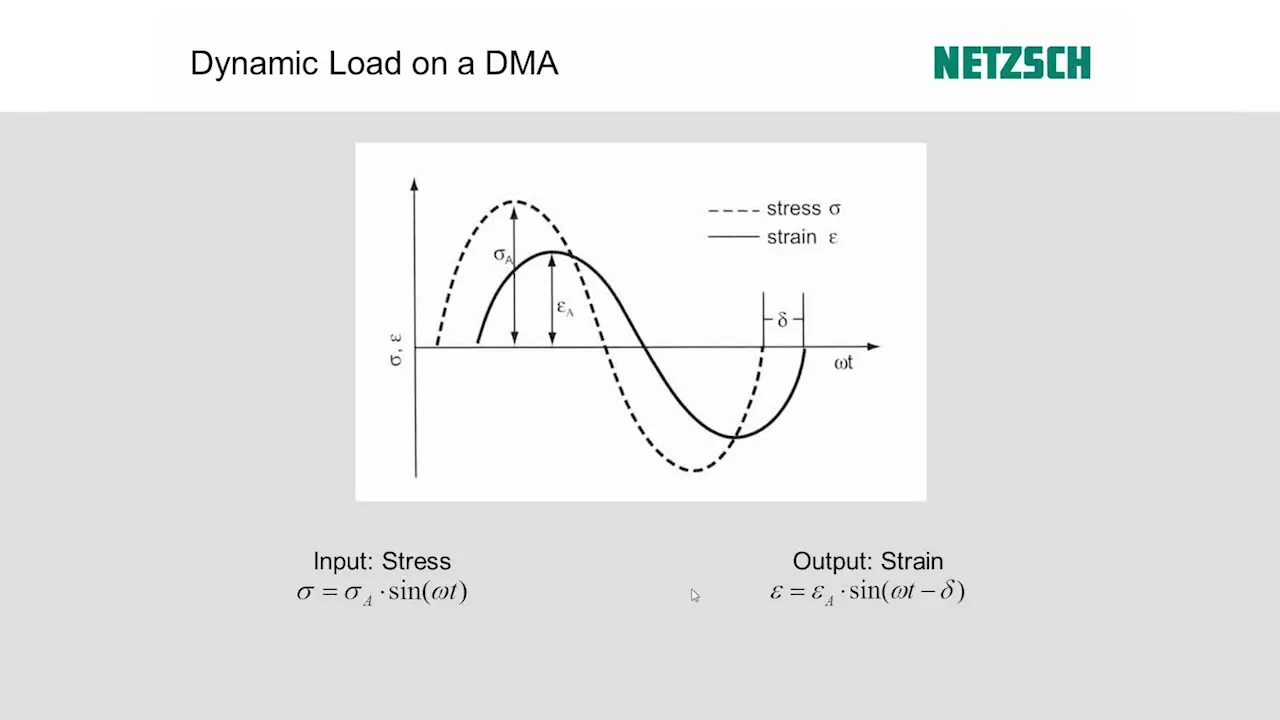
and where you are particularly in relation to the glass transition temperature. And what you what you do to measure uh the modulus as a function of temperature is you get what's called a relaxation modulus. Which means that you apply a uh that you uh that you apply a strain and then you wait a certain amount of time before you measure the force. And you measure the same amount of time before you measure the force before every measurement so that you're consistent because we know that the modulus changes or sorry that the uh that the force changes over time when you when you strain something quickly versus strain strain something slowly.
So this is the uh relaxation modulus.
[Applause] So we say like E subtals 10 seconds. So you stretch out the sample and you wait 10 seconds before reading the force gauge before reading the value uh of the force gauge.
And we'll plot this as a function of temperature in Kelvin. And this is say atactic [Applause] polystyrene.
And we'll go from 330 to 370 which is the Tg of atactic polystyrene to 410 to 4 50 and our modulus will vary over many orders of magnitude. So 10^ the 5, 10 the 7 and 10 to the 9. So here's our gigap pascal marker. Um atactic polystyrene and the glassy state is going to be uh is going to be really elastic, really solidlike, really glassy. So it's going to be above uh um uh 1 gigapascal.
And it's Tg is 370.
So there's the TG line.
And if we plot the uh the modulus, once we get to around the TG, it's going to take a nose dive, then plateau out a little bit and then become basically a uh a visco elastic liquid at the end.
So these regimes here we can label them roughly as the glassy state regime, the uh the leathery regime.
And this is uh uh highly elastic behavior and I mean it has time dependence to its elasticity. It's not going to provide a restoring force immediately.
Then we have two kind of loosely defined states here. This is the rubbery state.
where the time dependence partially goes away, but then we have a rubbery flow state and that could be like uh marshmallow fluff. Has anyone ever eaten that?
Nobody.
Okay, one person. It might not they might not have it in California.
Show of hands.
Okay. All right. Good. Okay.
And then at uh at at high enough temperatures you have the viscous state.
Now let's look at the time dependence under specific conditions. So let's look at constant stress.
A constant stress experiment is called a creep test. And the creep test means you put a given strain or sorry a given stress on an object like you hang a weight on it and you measure the elongation over time. Like imagine taking a piece of chewed gum out of your mouth and holding it there for a day.
That's a creep test where the stress is provided by uh mg divided by the cross-section of the wad of gum. That gives you the stress.
Otherwise, it's just the force.
So there's your stress. And what does the strain look like? Now depending on the depending on the sample you might get something that looks like this some time dependence.
So you apply the stress and you measure the elongation.
There is an analogous experiment we can do by applying a step strain of some amount and then measuring the stress by means of a force gauge. So you apply the strain that just means instantaneously stretch it out and then you you have it you have your sample between uh with a with a force gauge that can measure the way the force evolves over time. Now the force is going to be greatest at the beginning and then it might decrease to some to some value depending on where we are on the temperature curve. Now where are we on the temperature curve?
And these are called visco elastic models and we'll draw them for a couple of the states that we've shown over there on the left. This is the strain versus time for the glassy state [Applause] and we are applying step stresses or creeps. These are all creep experiments.
We'll call them creeps.
If you apply the step stress at T1 and you remove it at T2 for a purely elastic glassy material, the strain instantly responds. You apply the stress and there's instantly a strain of some percentage. This is true for all solid objects, right? Everything we're used to from diamonds to glassy polymers like petri dishes or eyeglass lenses. This is how they'll respond. So far so good.
What if we introduce some time dependence? So we say now, oh I should say this is important. This gives you complete elastic recovery.
And we can model this as a spring with some tensil modulus where the stress equals the tensil modulus times the uh times the strain. And this is just a spring.
We can all agree that a spring has this behavior. Pure spring.
Now, how about we increase the temperature to Tg. Now, we are solidly in the leathery.
I have no idea, by the way, why it's called leathery.
I don't think leather really has the mechanical properties of a leathery polymer, but there it is.
and you apply again the uh the step stress but now you have a time dependence. So now the strain is not going to respond immediately because the polymer molecules need time to rearrange to accommodate the new uh the uh the the load. So you have an increase over time and then as you release the load from the sample, it's not going to to go back to equilibrium immediately, but it will do so over time, but it will eventually recover to uh to mechanical equilibrium. So this is um this is slow elastic recovery and this is really an idealized state.
You could in in real systems you probably won't actually approach you probably won't actually get there.
You'll probably permanently deform the sample a little bit if it's at all visco elastic. So this could be full or partial, but we'll lean toward full for the sake of uh for the sake of the model. Now, how would you model this using a spring?
We might need another component to emphasize or to embody the viscous part.
And that is called a dash pot, which is a piston filled with honey.
And this spring and dash pot model are characterized by a spring with a tensil modulus of uh of of E and a dash pot with a viscosity of ADA which describes its time dependent um response to sheer forces.
And this we call a visco elastic solid.
And this particular model where we have in parallel a spring and a dash pot is called the voit Kelvin model.
[Applause] Now let's increase the temperature even more to the rubbery flow regime.
Question. Yep. Is that right next to piston adah?
viscosity and it's a dash pot.
Okay. Now, how about the rubbery flow regime?
We're not going to get elastic recovery uh we're not going to get total elastic recovery um anymore.
[Applause] We're going to have a quick response for the rubbery part.
So, the part that's still responding elastically, but then we have and then it's permanently deformed. But then when we remove the step stress, we get recovery down to the initial um the initial deformation.
And this is the rubbery part.
And this is the flow part.
And this could be marshmallow fluff.
What do I mean marshmallow fluff? Take marshmallow fluff and you poke it quickly, assuming it doesn't stick to your fingers. You've got olive oil on your fingers. You poke the marshmallow fluff and it rebounds immediately.
But you poke it and you hold your finger there and then marshmallow fluff oozes back and then when you move your finger it stays there.
And this is a spring and a dash pot in series.
[Applause] When you say marshmallow fluff, you mean the entire system can be treated as I mean marshmallow fluff is an example of a visco elastic liquid.
So this is a visco elastic liquid characterized by E and ADA. And we're not going to go into too much detail um on this because you can take an entire course in soft matter physics where you will come up with more spring and dash pop models than you care to imagine.
And this is called the Maxwell model.
Again, these are highly idealized.
Materials generally don't behave exactly like this, but there are useful mental models to understand how um how objects uh behave. Now, here you know that you can't completely permanently deform the system in the in the Voit Kelvin uh model.
There's no H in voit. I was thinking Voit Drive at UCSD because the spring is going to push the dash pot back together completely or mostly completely. But in the case of the Maxwell model, the dash pot can stay deformed.
So a jar filled a piston filled with honey if there's no force pushing it back like the spring in parallel in the case of the void Kelvin model then this is just going to stay elongated.
Okay. And then finally we have the purely viscous regime where we apply the [Applause] the uh the step stress and the strain just increases and there's no no elastic recovery.
And this would just be this would just be honey viscous liquid.
So this is a pure dash pot viscous liquid. Now let's make things really interesting.
[Applause] [Applause] more complex models could be necessary.
Suppose you have behavior that looks like this where the stress is applied here and the stress is removed over here.
What if you had an instantaneous elongation?
Then you had a lazy increase in elongation.
Then when you remove the stress it recovers partially but not always and slowly but or sorry recovers partially but only to this amount and slowly.
Let's postulate what would happen uh let's postulate a um spring dashpot model to account for this. Does anyone want to well some of you have the notes in front of you.
This is actually a it is a it is a a a void Kelvin model embedded in a Maxwell model.
So prior to any elongation, you might have this scenario.
And then as you apply the as you apply the stress The first spring is going to stretch way out.
But because the other spring is in contact with this dash pot, there's some viscosity of the dash pot.
And there's another dash pot down here that is keeping it that is keeping the keeping this part from elongating. This is instantaneous. So instantaneously the spring just stretches out. Whoop! But the rest of the system can't stretch out yet.
Now, in this regime, after you've allowed the uh the dash pots time to respond, you still have the spring, which is stretched out.
And now the dash pots are getting stretched out so that the dash pot has time to respond. So the spring in parallel with it can also start to stretch and this dash pot stretches.
Now when you remove the strain, what happens? This spring immediately responds to removing the strain.
So it goes back to uh a nice equilibrium coiled spring. But this spring is still extended because this dash pot has not had time to return back to equilibrium.
And this dash pot has not had time to uh to to move back to equilibrium. Now, will this dash pot ever go back to equilibrium?
No, because there's no spring pushing it back together.
So the final state is going to be a spring at equilibrium, a spring at equilibrium in parallel with its dash pot that's totally uh totally back to um its totally contracted closed state.
But this dash pot is still stretched out.
And by putting the arrows here, I mean that there are there are um there shouldn't be arrows here.
There's a force here, a force here, and then forces removed here, forces removed here. And this is what happens uh over time.
Okay.
Yeah. Wouldn't after the stress is removed, it would be vertical down for a bit and then curve out.
Which the top this one or this one? The left one. Left one. What if the top spring immediately contract? So it would be vertical. This is contracted.
Yeah. Yeah. So like the after it goes up it would be vertical down for a little bit and then curve as the as the dash down.
Um yes rubber flow model it goes down. Um [Applause] part of part of part of this elastic recover is still embodied in this part.
Okay.
So so it just be like a little steeper.
Yeah.
Okay, that is all the material before exam 3 which is Friday. Um, next week we have uh guest lectures on Monday, Wednesday and Friday. Um, those lectures may be podcasted but they will not be on YouTube. So, please come to class. Um, I think you'll really enjoy it. Uh we have Nathan Janeski from the chemistry department who's going to talk about polymers in uh drug delivery and cancer therapy and uh bioengineering.
On Friday next week, uh we will have a special guest lecturer who will talk about um computational modeling and we'll have a lot of pretty pictures and videos on uh that that show in two and three dimensions the kinds of things that we've been uh that we've been talking about using chalk. Uh and I will have a uh special office hour time to be determined later today.
Sorry, this the time will be determined later today, but the office hour will occur tomorrow for your last minute questions for the uh for the exam. Thank you very much for your attention. Wait.
Up Next

Teensy 3.2 DIY Synth Build: Audio Board Assembly & Test
@NotesAndVolts
53.4K views•2018-05-31
Ultrasonic Transducers: Resonant Frequency Measurement and Horn Design
@imajeenyus42
229.9K views•2017-02-22

Step-Growth Polymerization & Carothers Equation | Polymer Chemistry
@djlipomi
21.8K views•2017-04-10

How a Student's Question Saved a NYC Skyscraper from Collapse
@veritasium
22.8M views•2025-04-26
Related Study Plans & Knowledge Roadmaps
Structured learning paths in Engineering