







![IITK NPTEL Structural Geology_Lecture 10.2: Rheology Basics II [Prof. Santanu Misra]](https://i.ytimg.com/vi_webp/cE11gSfs9kU/maxresdefault.webp)


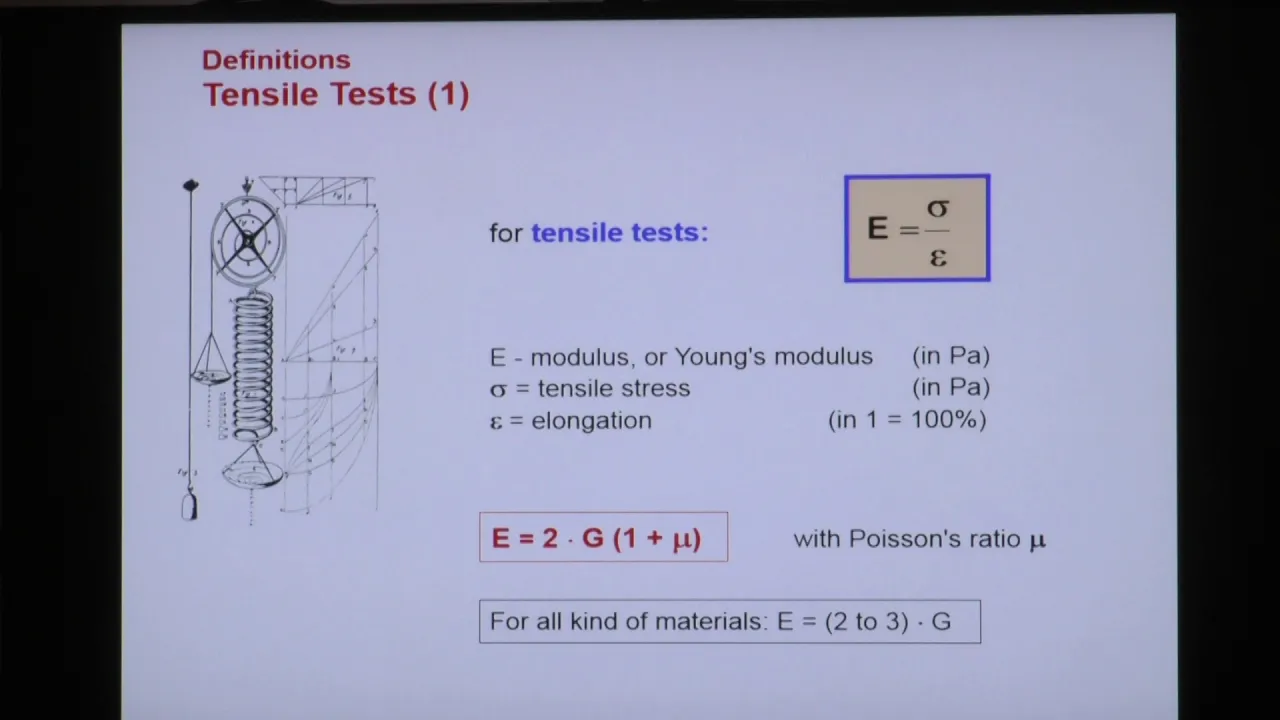














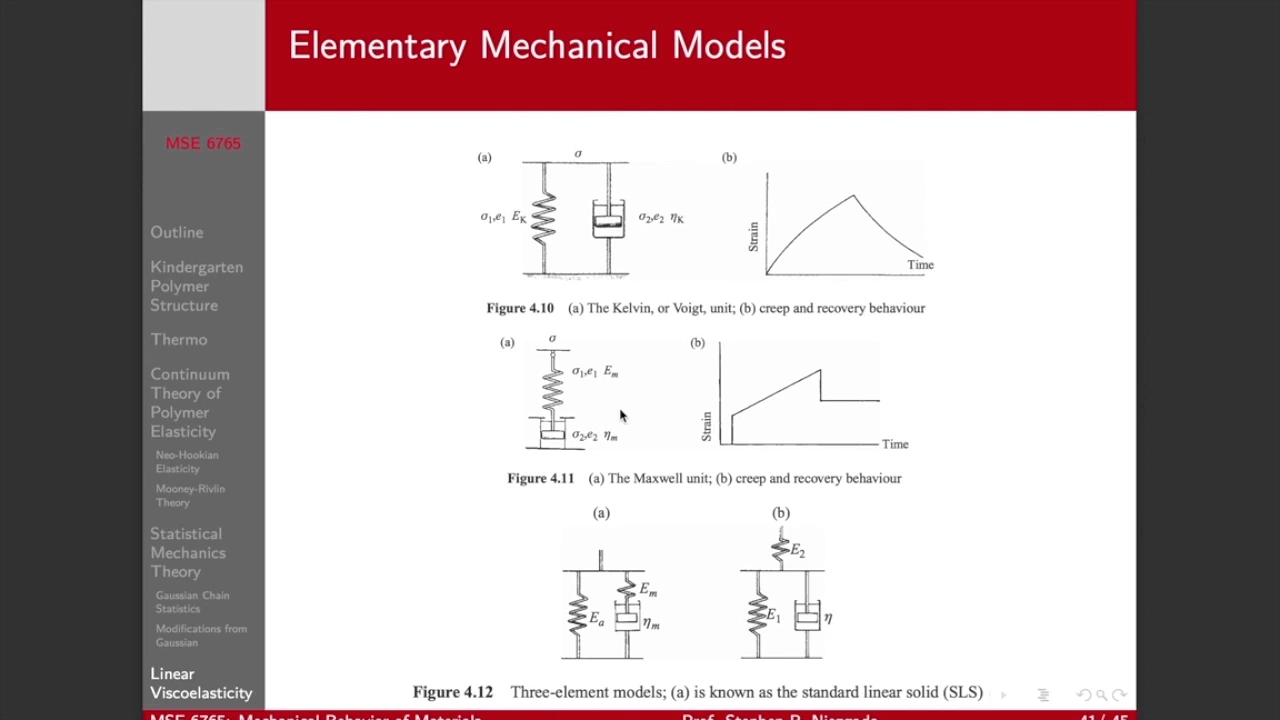
Viscoelastic materials exhibit both elastic (solid-like) and viscous (fluid-like) properties simultaneously, and their behavior can be modeled using three fundamental models: the Maxwell model (spring and dashpot in series, best representing stress relaxation), the Kelvin-Voigt model (spring and dashpot in parallel, best representing creep), and the Standard Linear Solid model (combination of both), where springs represent elastic deformation (stress proportional to strain) and dashpots represent viscous deformation (stress proportional to strain rate).
Modeling Viscoelastic Behavior: Maxwell, Voigt, and SLS Models
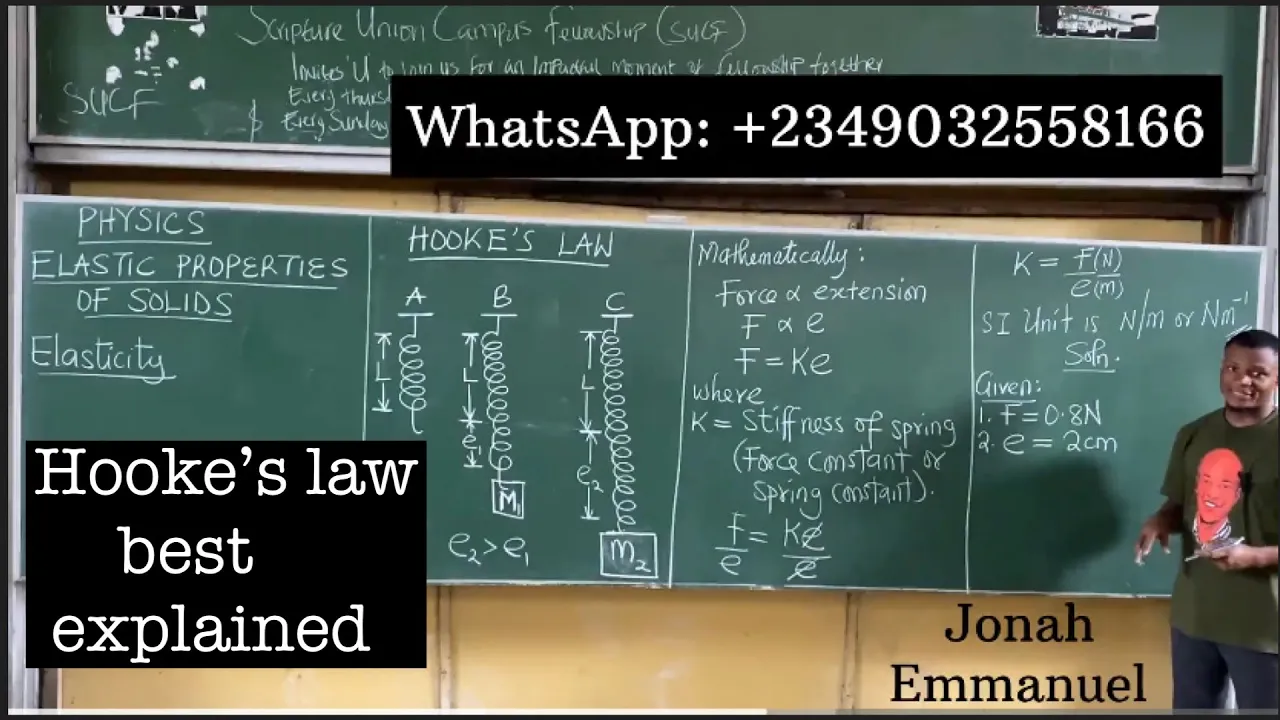
Added:Hooke's Law and elastic deformation behavior in solids (represented by springs).
Newton's Law of Viscosity and viscous flow behavior in fluids (represented by dashpots).
Basic ordinary differential equations (ODEs), as viscoelastic models are formulated using time-derivatives of stress and strain.
Fundamental concepts of stress, strain, and the physical differences between elastic, plastic, and viscous behaviors.
Generalized Maxwell and Kelvin-Voigt models (Prony Series) for representing complex polymer behavior with multiple relaxation times.
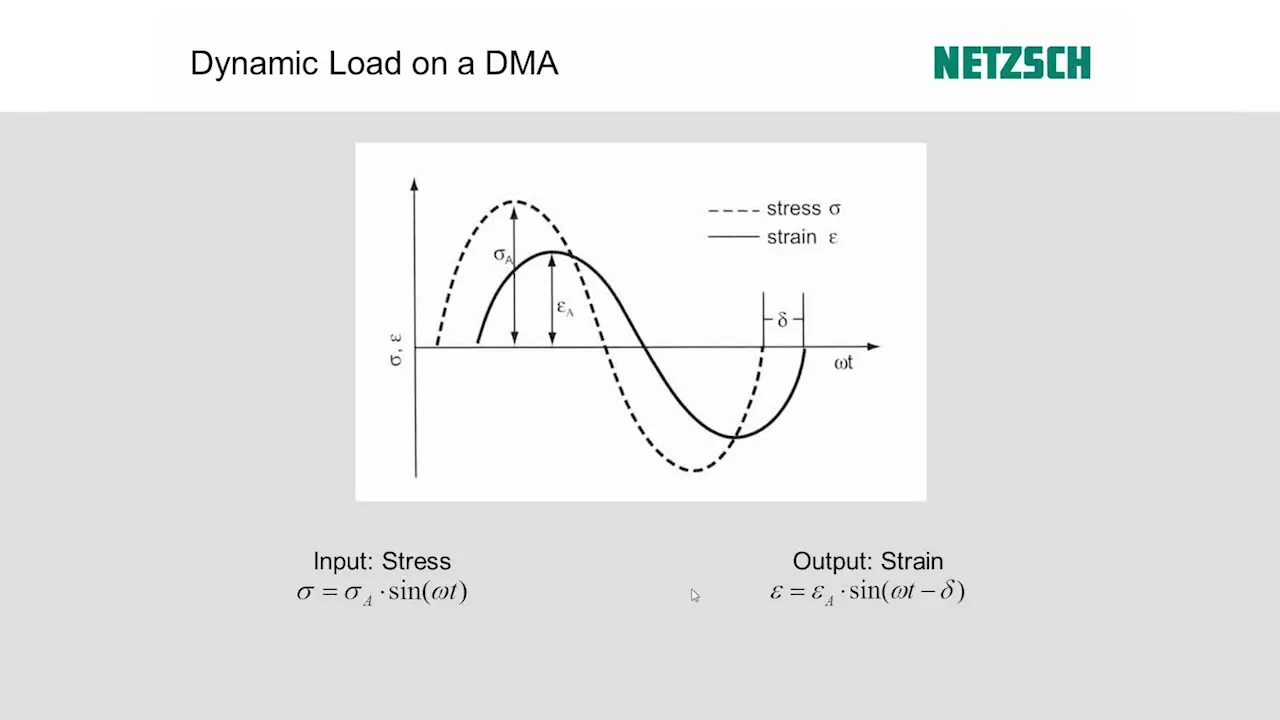
Dynamic Mechanical Analysis (DMA) to study storage modulus, loss modulus, and phase angle under oscillatory loading.
The Boltzmann Superposition Principle for predicting material response under complex, time-varying loading histories.
Time-Temperature Superposition (TTS) and the Williams-Landel-Ferry (WLF) equation to model viscoelastic behavior across different temperatures.
Practical applications in biomaterials, polymer engineering, and the design of vibration dampers and acoustic isolation materials.
52.9K views515likes11:47Original Release: 2015-12-05
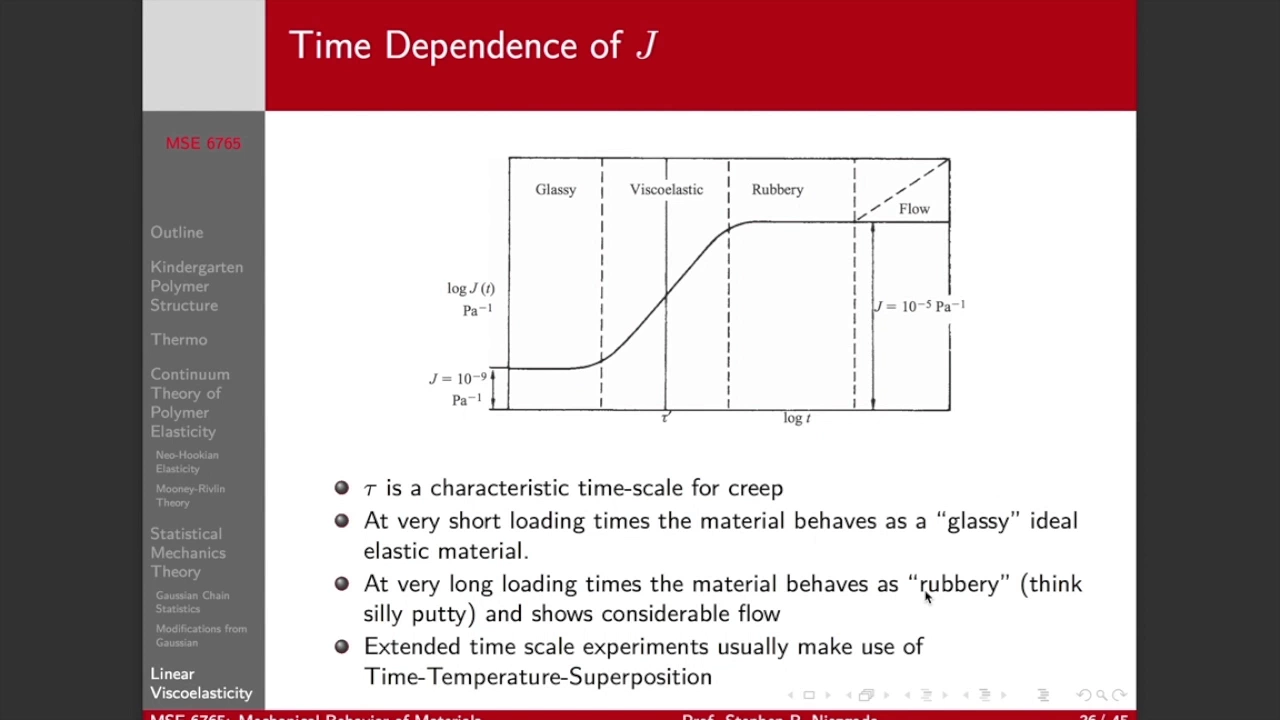
hi everybody in this video we will talk about modeling with elastic materials and this is important concept for the bio uh biom materials class so what are Risco elastic materials so these are materials that are basically um they have properties of both um solids and liquids right and so they tend to have like these wiscus and elastic behaviors when they undergo deformation um and these properties are basically a combination of fluid ly and cell like properties um and these uh materials they also exhibit um time dependent strain some common examples of visus visco elastic materials include uh living tissues in the body as well as certain polymers that can be constructed to exhibit um visco elastic Behavior so the way we um create these models is we have different um Springs and like for example we use Springs to represent the solid like properties and we use Dash pots to represent the liquid like properties right so in terms of a spring if you think about the stress and uh strain curve right you have stress is equals to the Young's modulus uh times The Strain right so for like for example if you were to imagine you put a solid like a weight on a spring and what it will do is like it will just pull it down and then you have a certain amount of stretching that occurred right so basically the amount of stress that you had was proportional to your strain which was how much it got stretched out times the elastic modulus of the spring right but notice that you know stress is linearly proportional to strain strain is basically constant right but in liquids that's not the case right so in liquid what happens is you have you have this scaling Factor but it's a different scaling Factor here it's a viscosity but you also have um uh The Strain right but the strain is not constant so it changes with time so the stress it's uh proportional to the time derivative of the strain right so these are the two um basically puzzle pieces that we use in the models when we want to model wh elastic Behavior so in terms of models we have three models right we have the Maxwell uh Calvin white and standard linear solid model so if you were to think about your um you know your physics 2 class you have your circuits right you know how we say that we can put circuits together in um in a series manner or a parallel manner Etc so basically these three models that's how they represent these puzzle pieces that we have right so you know as I mentioned the spring and Li uh the excuse me the springs and the dash pots these are basically the your you can think of them as your circuit elements you can either put them in series like in the Maxwell model or in parallel like in the white model or you know a combination of the two right so there's like a um you know Maxwell arm here and then you have your um extra Spring right so SL is like is like a combination okay so when we look at Maxwell model right a property that's really important so we look at what um describes the stress and the strain right because we want to find the best way to model with sastic behavior so in the Maxwell model we say that um basically each element it has the same stress okay so basically so going back here right so we see that both elements they'll have the same amount of stress right and that's equals to the total stress in the system but um the total strain is different so the total strain is going to be the strain from this guy and the strain from this guy combine them together then you get the strain right and it's kind of the opposite system when you look at so actually we'll talk about that in just a second so when we look at how we model the equations we have um the the total strain and then we just sum them together whereas the stress is the same right and here we just have subscripts one and two so we can just look at the model and we can say either of these are one or two it doesn't really matter right so either your spring is one or your in this case the spring is one and dashpot is two but it can be the other way around too but at the end of the day it means the same thing right that for the your strain you're going to add them together and for your uh stress they're all equal to each other now in terms of like generating the full equation to represent the strain right what we need to do is we we're going to have to sort of kind of take this equ the basic equations a bit further so first what we're going to do is we're going to differentiate so we're going to differentiate this equation um so we're going to say the change in uh in the rate of this property with respect to time right so here we just had the derivative of the this property which is the total strain with respect to time and we did the same for the other two right and now what we're going to do is we're going to have to figure out these two two values right these so we're going to say the total strain experienced by the system is this and it's equals to these two things but then we're going to have an actual equation to represent what is this D1 DT represent which is so one of these is representing the change in straight uh strain for the dashbot and the other one for the spring Okay so um so I know there's a lot going on in this equation I mean in this page but okay so first what we're going to do is we're going to look at the spring right so as I mentioned for the spring you look at your stress and it's just the Young's modulus times The Strain so if you rearrange this equation for your strain right so you're going to get strain is equals to your uh stress divided by Young's modulus but we want everything in terms of a derivative so that's why we just put a derivative in front of the stress and the strain but basically it's the same thing right so now we have an expression for one of those two things right so now we can plop this guy in here and then we're going to do the same thing for the dash so you're going to take your um equation that I mentioned in the dash pod section right so your viscosity times the change in your strain with respect to time rearrange for this guy and then you have this guy right and then once you take this component and put it here and take this component and put it there then that's these two terms together represent your um total strain uh that's changing uh with respect to time in the system right and you can do the same thing for um the weight model so the thing in weight model is you flip these properties around okay so in Maxwell model you had this type of thing where you're adding the two together to get the total Str here oh sorry excuse me uh so in the Maxwell model um each uh element had the same um the same stress right but in this case the total stress is not the same in each element actually the total stress is the sum of the stress in each element so it's not the same but the strain is the same so we just kind of flipped the equation around a little bit right so basically now the equations look like this so notice notice we're adding the stresses together to get the total stress right versus if you go back to Maxell equations we said that the stress was the same okay so um and similarly um The Strain is the same in this case so I have a challenge for you guys you have to come up with the equation for the white model the only thing is you don't need to do um the differentiation here okay so notice when we were here you know we took these basic equations and we did differentiation well in the case of the weight model you don't really need to do that so all you need to do is you're going to do a similar thing that we did uh initially you know we find the two components to plug in for um stress one and stress two but you don't need to differentiate it so um these are again these are going to be the um equations that are pertinent right so one corresponds to the dash the other to the spring you're going to rearrange it and just plug it in here right so if you complete this um challenge you're going to see that the stress is this right and basically we just rearranged these properties so we see that this is already solve for this the you know the stress of the dashb right so you can just put that maybe in here so we have that here on this side of the equation and then this equation we just rearranged for the Delta s i excuse me Sigma s right so that's your um stress of the spring now SLS model is a little bit more kind of involved okay so I kind of have everything sort of written out so first what you need to do is you're going to do this stuff for your Maxwell arm right and then you're going to do you're going to do like a parallel between this arm and this arm right so on this right side that's the whole Maxwell side right so we see what the stress and the strain is in the max will side and then what we do is we combine the two together right so now we come here we say that the stress between both of them excuse me the strain between both of them is the same and stress is a combination right and this is because we're talking about both of them together so that's a parallel system right so we sum them together okay now there is this concept of creep right so creep rers to um continuous time dependent extension that occurs when a load takes a um some time to achieve equilibrium um elongation and strain after you know you have applied a fixed load um and you see this occurring in you know metals and Ceramics um it and actually can occur at room temperature for polymers and this can be best um represented with the white model right so you know you've applied your stress and it will keep um straining at different rates and then this is the rup rupture point and this is going to be the minimum creep so you have like these three stages at which your strain is occurring meaning that you know you've put the load and it's like keep getting elongated basically so that's kind of what the creep refers to okay you also have this concept of stress relaxation and that gets best uh that's best model with the Maxwell model and basically you know you're trying to stretch a material to a fixed length and when you monitor the load you realize that the stress actually decline uh declines continuously um until equilbrium right so you have this much amount of load and then the stress is basically going towards this equilibrium okay and yeah so basically um so we have these you know three models and when we look at these properties of creep and stress relix that are important in uh Vis elastic materials you can best represent stress relaxation with maxall model and creep uh with the we model so um hope you find um this video helpful and thanks for tuning in
Up Next
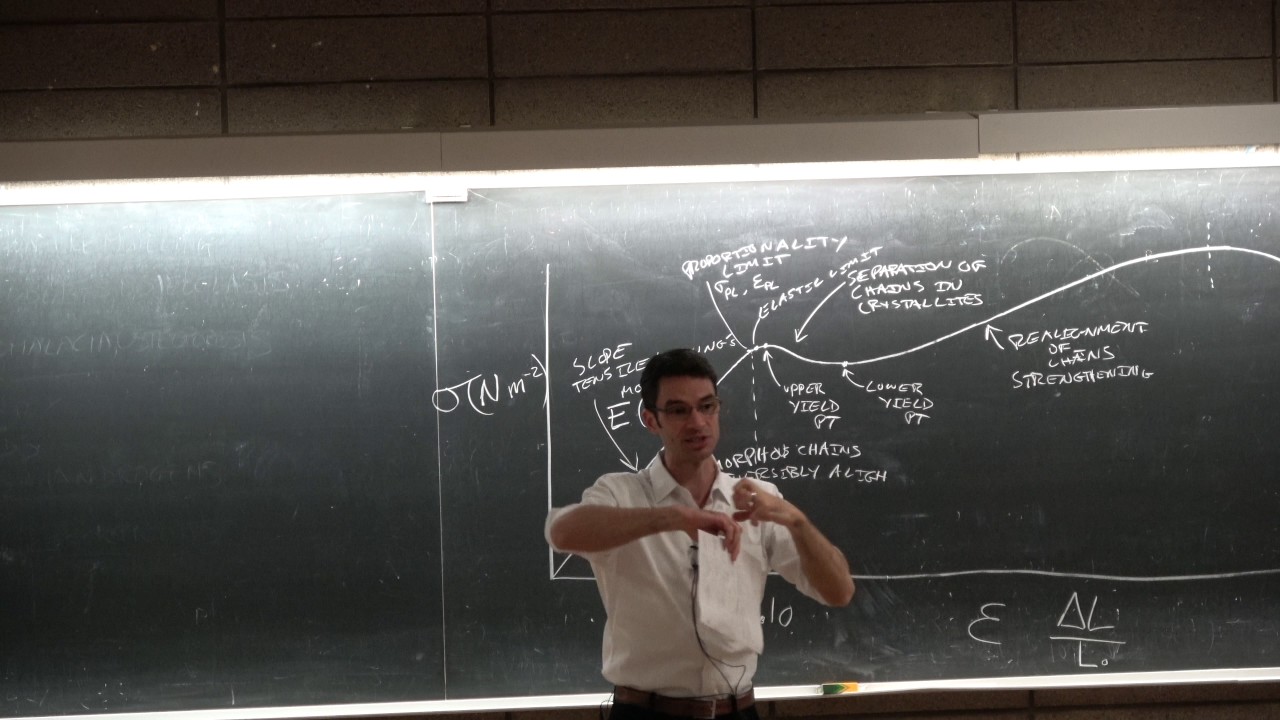
48:40
Mechanical Properties of Polymers & Viscoelastic Models | NANO 134 UCSD
@djlipomi
56.9K views•2017-06-01
30:32
Ultrasonic Transducers: Resonant Frequency Measurement and Horn Design
@imajeenyus42
229.9K views•2017-02-22
54:16
Polymer Environmental Degradation: Mechanisms & Stabilization
@iit
1.8K views•2012-07-10
33:39
How a Student's Question Saved a NYC Skyscraper from Collapse
@veritasium
22.8M views•2025-04-26
Related Study Plans & Knowledge Roadmaps
Structured learning paths in Engineering
engineering
Building Acoustic Levitators: Physics & Arduino
01The Physics of Sound and Standing Waves
02Piezoelectric Transducers and H-Bridge Drivers
03Arduino Programming: Generating 40 kHz Signals
+ 2 more learning modules
14h5 modules
Explore Roadmap
engineering
Building Peltier Cloud Chambers: Particle Tracks
01Cosmic Rays & Cloud Chamber Physics
02Thermoelectric Cooling (TEC) Fundamentals
03Custom Liquid-Cooling Loop Design
+ 2 more learning modules
18h5 modules
Explore Roadmap
engineering
Yagi-Uda Antennas: Modeling, Build & VNA Test
01Introduction to RF and Antenna Fundamentals
02Yagi-Uda Antenna Design Principles
03Antenna Modeling and Simulation in 4NEC2
+ 2 more learning modules
18h5 modules
Explore Roadmap
engineering
ECG Monitor Design: Op-Amps, Filters & Noise
01Electronics & Breadboard Basics
02Op-Amps and Instrumentation Amplifiers
03Bioelectricity and ECG Fundamentals
+ 2 more learning modules
18h5 modules
Explore Roadmap