
































![Rheology - introduction to the course [presented by Dr Bart Hallmark, University of Cambridge]](https://i.ytimg.com/vi/ft8z24SjSdo/hqdefault.jpg)
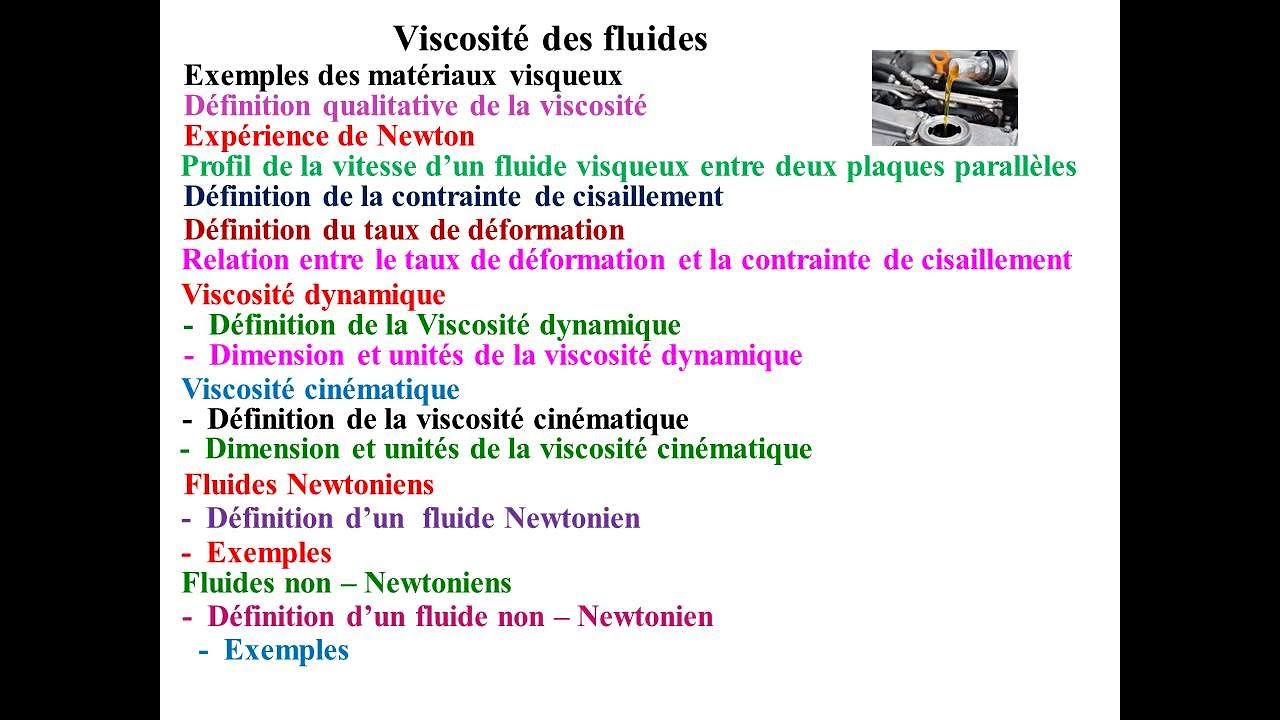
Fluid mechanics is the study of physical laws governing fluid flow, encompassing liquids and gases, and is essential for understanding phenomena from everyday breathing to advanced engineering applications like aerospace and submarine technology. A fluid is distinguished from a solid by its inability to resist tangential forces under static conditions—it continuously deforms when subjected to shear stress. The concept of continuum assumes that fluid properties vary continuously in space, which is valid when the Knudsen number (ratio of mean free path to characteristic dimension) is less than 0.01. Viscosity, a fundamental fluid property, describes a fluid's resistance to shear deformation and is defined by Newton's law of viscosity as the proportionality constant between shear stress and the rate of shear strain (velocity gradient). Newtonian fluids exhibit linear stress-strain relationships, while non-Newtonian fluids show nonlinear behavior, including pseudoplastic (n<1) and dilatant (n>1) types described by the Ostwald de Waele power law model. Ideal fluids are hypothetical zero-viscosity fluids used to simplify high-speed flow analysis, while Bingham plastics require a minimum yield stress before flowing.
Fluid Mechanics Lecture 1: Introduction & Fundamental Concepts
Added:Well, good morning to all of you to the very first session of this subject fluid mechanics; the course is fluid mechanics. So, at the outset I like to tell a few words to introduce this subject, after which I will describe the course contents. Now the subject fluid mechanics as such is not unknown to you. I feel so, because a part of this subject you have already read at your school level, and also at the first year level of your engineering course. Now the terms fluid literally means the things which can flow, and it technically encompasses liquids and gases; these two states of matter that you already know.
The subject fluid mechanics describes all the physical laws that govern the flow of fluids and gases, and ultimately help us to recognize the causes and effects of fluid flow through the determination of characteristic parameters like pressure field, velocity field in a fluid flow, along with the different properties of the fluid like density, viscosity and mainly an inter-relation between these two, and in different situations not only in the flow of fluid, but also in cases when the fluid is addressed.
This is basically the subject with mechanics deals. Now the importance of the subject I think is apparent. This is because probably you cannot find out single phenomena in the universe which is devoid of fluid as the working medium or substance or flow of fluid. For example, even our basic existence or survival depends upon breathing in and out, the circulation of the blood, this all depend on the principle of fluid flow.
We can imagine that we are living in the ocean of fluids that is air; the pressure that is exerted by the air on us is also governed by the laws of fluid. If you go up you know that we have experience less atmospheric pressure these are also laws of fluid.
If you seek engineering applications you will see, that starting from very simple engineering application by spring ling water in a long transportation of water different fluids oil through pipes, down to the high tech high tech areas that is the technology of sub-marine under deep sea water, proportion and launching of aircraft, and space settles all depend on the principle of fluid flow. So therefore, I feel it is leg lace to emphasize the humane importance of fluid mechanics not only in the field of engineering, but also in the field of daily life anymore. Well at the same time we know that fluid mechanics is a classical subjects like physics. So, if you want to find out it is origin probably gets back to the discovery of Archimedes discovery of buoyancy by Archimedes.
Well since then fluid mechanics have been developed by a number of scientist starting from Newton, then Lagrange, then Oilar, then Rayleigh they are the classical scientist who first made much contribution to its development. Initially the fluid mechanic the subject came up as the subject of other sciences based on natural observation better by a physical theory and analytical method, but afterwards it was found by engineers that many of the happenings down to earth happenings cannot be corroborated by theory analytical theory.
So, there becomes a widening gap between experiments and theory.
Then engineers put their enormous effect to carry out experiments to develop empirical rules in the field of fluid mechanism. From which the birth of classical hydraulics came up, this gave the birth of classical hydraulics. These are the terminologies probably you know today, as your popular known popular knowledge the classical hydraulics came up. But this continued for a long time, but in the beginning of this twentieth century scientist failed that strong theories are required to bridge up the gap between experiments and the theory; that means, what is found from the very simplified theory cannot explain all the phenomena in practice. So, then the famous persons like Prandtlnicorate say Taylor there were several others who developed fluid mechanics, and it is theory tremendously and tried to build the foundation of fluid mechanics on a very rigorous and rich mathematics and what we find today from a development from the field of classical hydraulics to the computational fluid mechanics, which is probably as you know the name the most modern and the bonding topic of the day. These were the fluid mechanics has been developed, but if you see through these developments you will find a common threat running between all these, which is the essential or the basis or the basic principles of fluid flow. Which will be brought from effectively in this course, and I hope this course will give you this primary level understanding. So, that you as an engineer can apply the principles of fluid mechanics to engineering design, and also can understand any advance level course of this subject.
Well, so now with this I will show you the introduction the contents of this course package.
This course package consists of this fluid mechanics, I think all of you can see well, a first level course; this is a first level course first it starts with introduction.
Now this does not give you an elaborate description of all the course content; it gives you in terms of the overall that is the brought topic that introduction. And this will include also fundamental concept; this may include three-four lectures.
So, it will go like that part one, part two, part three of introduction; then we will come to fluid statics which will cover all the aspects of fluid statics, then we will go to kinematics of fluid. So, lecture schedule will go like that.
So, fluid statics will take few lectures which will go like that fluid statics part one, fluid statics part two, fluid statics part three like this well, then kinematics of fluid, number 3.
Then we come to the next topic is this for your exposure I just tell you conservation equations for fluid flow. What are the conservation equations that govern the flow of fluid, then fluid flow applications. So, details of these will be available in your leaflet or the course curriculum that have been given to you, then number six will be viscous incompressible flow, number seven will be application of viscous flow through pipes, Then well number eight will be principles of similarity it is very important in the field of experiments; so one cannot do anything without the principle of similarity who want to predict the performance of any system in practice in field you will have to do the model experiments in laboratory, but the very pertinent question comes under what condition the model experiments have to be done what should be the altered skill factors of the in terms of all the variables not only that geometrical shape of the model which will allow you to predict the results from your laboratory test for that of the actual system in practice, and you remember that it is a very important subject at this level.
Well. So, principles of similarity then flow of ideal fluids, then number ten flows with a free surface, number eleven is few unsteady flow phenomena in practice, number twelve thirteen last two lectures introduction to laminar boundary layers this will go to little advance stage and then introduction to turbulent flow.
Well, after that I will tell you about the books as you know the subject is a classical subject there are number of books. So therefore, I as a teacher do not feel that always one book or two books you will follow you can follow any book which covers well the syllabus or the course curriculum you can find any book, but book reading is a must for your concept only teacher's lecture will not do, because you will have to read books you will have to solve problems from there are plenty of books any book will do, but a few such good books I am just mentioning text books. Well the first book is by me, S K Som and G Biswas I have already told you that pressure be sure that from IIT Kanpur, this book this was written based on our teaching experience IIT Kharagpur and IIT Kanpur.
So, you can see this book this book is in market this is published by data macro hill, then fluid mechanics by frank m white which is again a very good book this is published by macro hill, which is widely followed in American university, but this book you will get in library, but you cannot purchase probably this is costly. So, this book you can purchase others books are elements of fluid mechanic by Seshadri and Patankar.
Another book also you can see where well known classical books in the field that is also by macro hill, that is mechanics of fluids by Irving H Shames. So, these are the text books recommended for this subject. Well, now after this let us try to concentrate on the subject from the beginning what is fluid? What is mean by fluid from the view points of mechanics? How do you define fluid from the view point of mechanics? The very first definition of fluid from the view point of mechanics comes with its distinction, in its behavior from that of a solid. If we apply a tangential force or a shear stress to a solid our common experience or we have already read we see the solid under goes a definite deformation, even if the shear stress exist the solid may be under equilibrium with a particular deformation shear deformation. Alright, and if re if we lift up the load then what happens solid may or may not regain it shape it may completely regain it shape or may not completely regain it shape within certain limit you can know if the stress is relieve the solid regain its shape; or beyond certain limits solid may not regain its original shape, partly its original shape, but in this aspect fluid makes it very distinguishable makes a very distinguishable character that keeps it back behaves in a different way that if a tangential force is applied to a fluid body it goes on continuously deforming you cannot make fluid at rest fluid goes on deforming continuously.
Let, us see this in a very simple manner, that if we make a solid body like this if we just see a solid body. If a shear stress is applied on it let tau is the shear stress; this solid body may undergo a finite deformation let the deformation is denoted by this angle alpha, and the solid body can resist the shear stress at static conditions static equilibrium with this deformation. Whereas, if we have a fluid flowing in a fluid flowing let this is the fluid body this is the fluid flowing streams of fluid flowing.
So, if a shear stress is applied on the fluid element you just consider a fluid element in the body, you will see this line for example: linear element this goes on continuously deforming fluid, if we try to identify a fluid element this goes on continuously deforming; that means, if you just see a linear element zero one it goes on 02, 03, 04 like that that may; that means, a continuous deformation takes place and as such this continuous deformation constitutes the flow. So therefore, we come to two very important conclusions from the mechanics point of view which differs fluid from the solid that solid can resist the shear force or shear stress under static equilibrium condition with the finite deformation, and it can regain its original shape or partly its original shape when the load is relieved. Whereas, fluid goes on continuously deforming which means that fluid resist tangential force only on the dynamic condition it cannot resist tangential stress under static condition, it resist the tangential definitely it is resisting, but while resisting it goes on moving continuously; that means, the continuously deformation takes place. And another very important characteristics that if you relieve the load take off the load fluid cannot come back to its original shape, except every special case I will mentioned which is beyond the scope of this book the all books write like this that is why we tell that fluid is a zero memory substance, that it forgets its memory whereas, solid is not within certain limit it has perfect memory; that means, if load is removed it regains its full memory comes with the original shape where the fluid cannot have except a certain class of fluid known as visco elastic fluid which possess partly elastic property it is a very special class of fluid known as visco elastic fluid is beyond the scope of the present course, but except this visco elastic fluid all fluids have zero memory behavior; that means, when the load is removed the fluid cannot come back to its original or even in partly the original condition.
So, these two distinguishable features make it different from that of a solid this is the basic difference between solid and a fluid. Now you know that in case of solid you have already read this stress produces a strain; that means, a deformation there is the definite relationship between stress and the strain and that relationship is known as constitutive equation, you know within certain limits generalized of that stress is proportional linearly proportional to this strains. All right similar constitutive equations for fluids are there where stress is not related to strain, but related to what should be if there is a continuous strain; that means, continuous deformation. So, therefore, it should be related to the not the variables strain the variable will takes its time rate, because there is no definite strain. So, you cannot define a definite strain for a solid we can define a definite strain. So, it can resist the stress under static condition with a definite strain so relationship exist between stress and strain which is the constitutive equation of the solid. Similarly, the constitutive equation of fluid relates stress with rate of strain that is the basic difference in the constitutive equation between solid and the fluid; that means, fluid it is the rate of strain which comes into picture because fluid goes on deforming continuously under the action of external forces.
Okay, now after this I will tell you another very important concept before proceeding further that is the concept of continuum, you write concept of continuum what is meant by concept of continuum? Well, or continuous medium either of the continuous medium continuous medium the two terminologies are there continuum or continuous medium what is mean by continuum continuous medium? Very simple, now you see in the description of matter what we do? When we define the property or any parameter for example, for example, the pressure or velocity or any property the temperature well, we define it as a continuous function of space within the matter at any time or we can tell or define it as a function of space and time. So, at any time we define the property or these parameters as a continuous function of space within the matter. So, what does it assume basically it assumes that in each and every point in the matter there is a molecule, because matters are composed of molecules then only the property can be defined as a continuous function of space in the matter there is no discontinuity, though we know the matters are composed of molecules and there will be a gap between the molecules, but you always assume while defining this way the properties that always there is a molecule at any time at any point in the matter; that means, the gap between the molecule is almost zero.
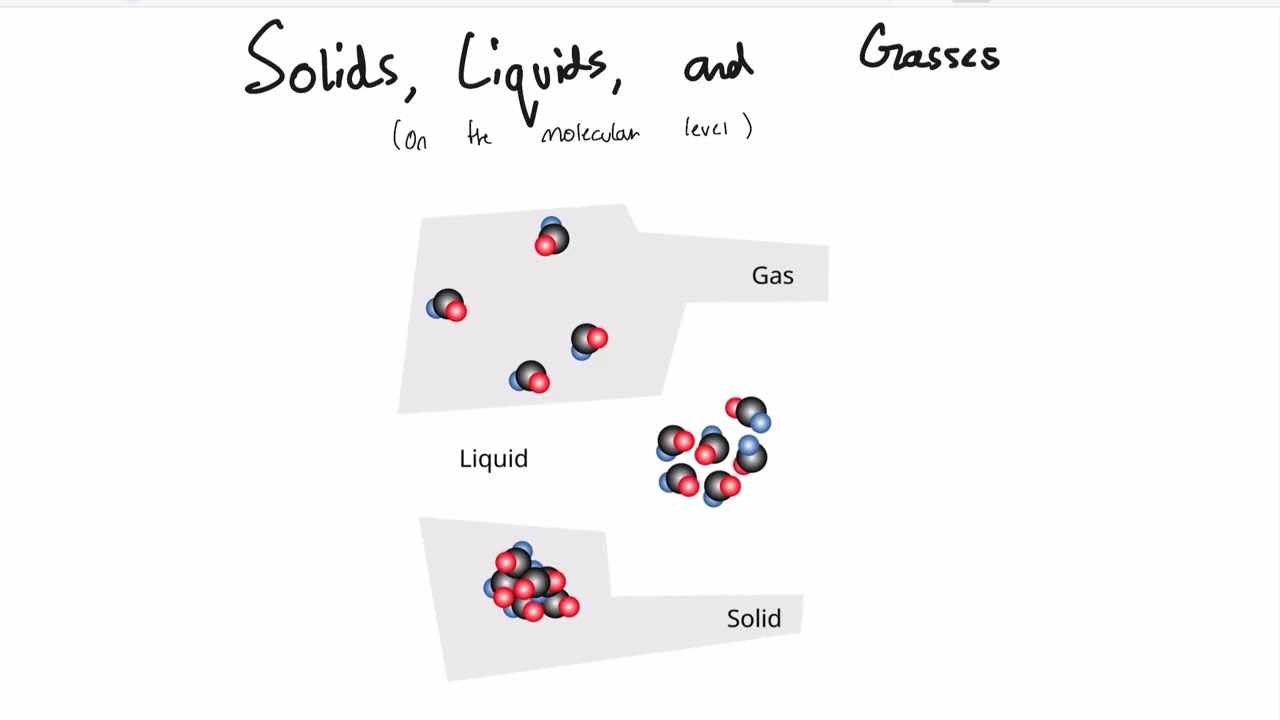
In fact, this is highly true for solids and liquids where the molecules are closely packed and we can consider this as an assemblance of a single substance, but this is not so far gas as you see in the gas pressure is very low this is not true, but under ordinary conditions we can find that for gases also molecules are very closely packed, you know the number of molecules within a certain volume of gas is given by avocrado hypothesis, if you recollect the number of molecules probably if collect the avocrado hypothesis it gives six point something like 0 to 3 into 10 to the power 23 molecules just you see this is of course, a standard temperature and pressure per 22.4 liters of gas.
So, that standard condition you can find out a molecular density of approximately 2 point 7 into 10 to the power 25 molecules per meter cube; that means divide this by 22 point 4 which gives per liter and multiply with 10 to the power 3.
So, this figure come this is a figure usually we refer approximately 3 into 10 to the power 25 molecules per meter cube, which is so high that under ordinary conditions we can also think that gas molecules are so closely packed that we can neglect the distance between the molecules and can define the properties or any other point functions of the fluid as a continuous function of space within the matter. This is presides the concept of continuum, but at the same time this comes into picture. So, that always concept of continuum or the continuous medium will be valid, for example: if you go on ratifying the gas, that if the pressure of the gas goes on decreasing continuously we know that the distance between the molecules increases. Well, and the cohesive force between the molecules decreases. So, whether the continuum will be valid or not, yes that pertinent question was answered by a scientist and he found out a criteria based on which the concept of continuum will hold good, and this criteria is based on the distance between the molecule you know the distance between the molecule is well characterized by mean free path. What is the definition of the mean free path?
That is the statistically average distance the molecules travel between two successive collisions; that means, if this path could have been zero theoretically; that means, the molecule is always under at any random at any standard time there is a collision; that means, there is no distance between the molecule. So, lambda is not zero it has got some value that is the statistical average distance molecules travel between two successive collisions. Now the measure of lambda relative to the characteristic dimension of the problem defines whether your continuum will be valid or not; that means, you want to investigate certain phenomena in a system, whose characteristic dimension is the order of the molecular dimensions definitely a very common sense even a school boy can tell know molecular the concept of continuum will not hold good, because we’ll hardly have a molecule within the system therefore, it comes by the concept of relative magnitude of this mean free path with the characteristic dimensions of the problem.
So, characteristic dimension of the problem will vary from problem to problem for example: it is a case of pie flow it will be the diameter of the pie it is a flow posture body some dimension of the body. So, characteristic dimension of the problem will depend upon the problem.
Now, if we recognize lambda as the mean free path, well lambda as the mean free path, lambda as the mean free path, well and L is the any characteristic dimension of the problem characteristics characteristic dimension of the problem it depends upon the problem concern that is a physical problem then the relative magnitude this ratio lambda by l is known as Knudsen number, Knudsen number the name is after the name of the scientist who first Knudsen.
Please, well Knudsen number lambda by l, well now this lambda by l serves as the criteria for the concept of continuum; that means, when lambda by l is less than zero point zero one then the concept of continuum is valid. Continuum concept is valid; that means, continuum is valid continuum is valid, well you must know that when the continuum the departure from continuum that when point zero 1 is less than lambda by l it is greater than that, but less than 0 point 1 then we call it as slip flow, then the concept of continuum will not be valid. From point 1 to 10 that lambda by l less than ten the flow regime is known as transition. What is that transition? that is transition from slip flow to free molecular, where the most idealistic case will be most realistic sorry, realistic case will be to analyze the behavior of individual molecules, this is the case when lambda by l greater than that this is the transition from slip flow to free molecular.
So, when lambda by l is greater than ten the flow is known as free molecular flow; however, our course does not consider this we will be only within this regime continuum or the continuous medium. So, in all ordinary cases of fluid flow; ordinary cases means, ordinary states of the thermodynamics states of the fluid medium the concept of continuum is well valid that is lambda by l is lambda less than point 0 1 0 point 0 1.
Now, we come to a very important property of fluid viscosity. Viscosity, now we come to a very important property of fluid viscosity, now this property viscosity you have heard I think since your childhood, but at the very beginning to tell anything about viscosity which is written in many books you know the all this will be a repetition do you because you have read it at school level also I first tell you that viscosity is a property of the fluid, but it is manifested only if the fluid is in motion.
So, the viscosity property has got nothing to do when the fluid is at rest. So, the concept of viscosity is realized through the motion of the fluid. So, until and unless we analyze the motion of the fluid we consider the motion of the fluid the viscosity effect is not understood or manifested. Let as consider this way that a flow of fluid in this fashion that there is a flow of fluid, where velocities are like this.
Let us consider a flow of fluid, let us consider this at the flow velocities, let us consider two axis this is x-axis, this is y-axis a situation of flow where the velocity u is in the x direction which is a function of y, this type of flow is known as one dimensional flow I will come afterwards or parallel flow where the flow velocity are in one direction that is here in the direction of the x-axis and parallel to each other that is the fluid velocities, which is function of y only at any section at any point or at any region which recognize the flow field the velocity of the flow like this as a function of y.
Now what happens you see at any distance y measured from this at any distance y; that means, at any location we find the existence of a shear stress; that means, a field of shear stress also exists along with this flow which varies in the y direction; that means, there is a flow which is varying in y direction; that means, the flow that is the velocity is a function of y. So, if a flow field is like this always when the flow takes place there will be a flow variation like there this is a very simple case of one dimensional flow, where we will find out that there is a shear stress at each and every location in the flow field. So, if you just see two adjacent levering layers at a distance y in an exaggerated view. Let us here itself we make that at this we find out two fluid layer they are adjacent layers, but it is drawn in a very exaggerated manner two layers at that distance y; that means, this is the distance y where two layers, so what happens the upper layer this is the upper layer for its, because of its velocity in this direction with respect to the lower layer tries to drag this lower layer or draw the lower layer in the direction of flow with a force f; obviously, because with relative to this layer is moving in this direction. So, it tries to draw this layer with a force f these are two adjacent layers line one over another. So, this photograph this h this figure which I have done in exaggerated manner; that means, the two layers are adjacent with each other two adjacent layers touching with each other.
So, upper layer is moving with a higher velocity because of the typical velocity field that I have described that you use a function of y such a way that u increases with increasing y; that means, we assume the upper layer is moving with a higher velocity; that means, relative to it is moving in this direction, so it tries to draw the lower layer in the same direction by giving a tangential force, by Newton’s third law the same force is given by these layer to the upper layer to retard the upper layer to a certain extern so therefore, the mutual action between these two layer through these two tangential forces is to oppose the velocity variations; that means, to equalize the velocity its tries to accelerate it tries to retard it; however, in both the cases what happens a field of stress is developed between the two layers it is balanced, but if you make an isolation just like a free body diagram of the fluid body we see that on this layer there is a tangential force or shear stress that is the force by area exists, which is the force exerted by the adjacent layer which we have separated out in concentrating our idea at a solid body for free body, sorry free body for that liquid with material.
So, this way we can conceive that a shear stress field is also developed in the field; that means, if we write the shear stress tau shear stress is tau is equal to f by a as you know if we find the area. So, therefore tau is also developed.
It was Newton first who due to Newton who found out from experiments that the shear stress in this type of flow, consider only this simple flow is linearly proportional directly proportional to the velocity gradient d u d y and the direction in which the shear stress will act depends upon the direction of d u d y or the sign of d u d y. It is directly proportional to d u d y, if d u d y is going to be less; that means, the curve becomes flat shear stress will go to a very low value shear stress is proportional to d u d y.
And this can be written as shear stress is equal to some proportionality constant mu into d u d y and this mu is the definition of viscosity, it is known as coefficient of viscosity coefficient of viscosity, or simply we tell viscosity sometimes, by viscosity we mean so therefore, this is an equation very simple equation in case of one dimensional parallel flow where u is a function of y that tau is equal to mu d u d y; which means, that shear stress divided by the velocity gradient at any location remains constant and that constant is known as the coefficient of viscosity; that means, this equation precisely describes the coefficient of viscosity, but here I had to say something which I can tell you will not find in no books probably in almost all books in my book you may find a line that initially this relation is known as the Newton's law of viscosity let me write that this is known as Newton's law of viscosity. So, I tell you one thing that whenever this is asked Newton's law of viscosity people tells that shear stress is proportional to the velocity gradient it is so. In the very first phase of this subject course we describe in such a way that this law states that, the law states that the shear stress is proportional to the velocity gradient at any location, but this is not the generalized statement that will be clear immediately afterwards after few classes this velocity gradient this is not the velocity gradient mathematically this is the velocity gradient, physically this is not the velocity gradient what is the physical entity of the velocity gradient?
Shear stress we understand this stress, this is the rate of shear strain.
In a very special case this will be shown afterwards in kinematics of fluids for a parallel flow when there is one component of flow u, which is a function of y see shear strain rate of shear strain becomes simply the velocity gradient, that is why I will tell you to recognize this d u d y as the rate of shear strain, rate of shear strain, rate of shear strain.
So, at the present moment you find this. So, therefore, therefore, shear strain Newton's laws of viscosity tells that shear stress is proportional to the rate of shear strain, and the proportionality constant is the coefficient of viscosity, which is constant for the fluid and the property of the fluid. So, therefore, the velocity gradient in a very simple case the way I explain is the rate of shear strain that is the rate at which the shear strain changes with time the rate of shear strain.
Now the fluids which obey the laws are known as Newtonian fluids. Now if I draw this in a graph d u d y, let us see the apt sides d u d y, which is the velocity gradient in a simple case of parallel flow or the shear strain rate of shear strain, and this is tau; we see that for a given fluid it is a straight line and its slope is the mu that is the coefficient of viscosity. So, for different fluids it will be differing.
So, this is known as Newtonian fluids Newtonian fluid, where the stress is linearly proportional to the velocity gradient or rate of shear strain this is known as Newtonian fluid, Now there are other fluids usually all engineering fluids water, commonly encountered in our practice air, oil, mercury all are Newtonian fluids, where the shear stress is proportional to the velocity gradient or rate of shear strain. And the proportionality constant is known as viscosity which is the property of the fluid, but, there are other fluids which do not obey this linearity law between shear stress and the velocity gradient these are known as non-Newtonian fluids non-Newtonian fluids these are known as non-Newtonian fluids non-Newtonian fluids.
So therefore, what are non-Newtonian fluids? whose constitutive equation that is the shear stress and this rate of shear strain or the velocity gradient for a simple case of flow I have explained is not linear is non-linear that is not linear but, non-linear that you understood. So, this kinds of fluid is known as non-Newtonian fluid, and there are several fluids which are not very much usually encountered in engineering applications, but in processing in any on bio-mechanics applications this fluid the fluids are there which are non-Newtonian, for example: blood is a non-Newtonian fluid, milk is a non-Newtonian, fluid polymer solutions different polymer solutions are non-Newtonian fluids well these are vast subject non-Newtonian fluid itself is a very vast discipline polymer solutions high molecular weight oil is a non-Newtonian fluid, gelatin is a non-Newtonian fluid, aqua suspension of starch is non-Newtonian fluid, ink is a non-Newtonian fluid these are the non-Newtonian fluid, but non-Newtonian fluid as such is very simple it not so easy to tell that non-Newtonian fluids are those fluids where stress and rate of strain relationship or shear stress and velocity gradient relationship is not linear; that means, which does not obey the basic Newton's law viscosity that tau is directly proportional to d u d y, it is not sufficient because there are many complications.
Non-Newtonian fluids, in fact may be divided into two groups this is beyond scope of the class but, as I tell you one is the time independent non-Newtonian fluid and time dependent non-Newtonian fluid. In a time independent non-Newtonian fluid the constitutive equation it may not be linear non-linear, but it remains invariant with time it does not depend with time, but with time dependent non-Newtonian fluid the constitutive equation the functional relationship itself goes on changing with time it depends upon the duration on which the force external force or stress acts on the fluid body. So, time dependent on non-Newtonian fluid even for the time independent non-Newtonian fluid there are various models given for its constitutive equations, but it is very difficult to give a generalized model which can describe the mechanistic behavior of all non-Newtonian fluids. So, one very generalized model I gave you for non-Newtonian fluid is Ostwald de Waele de Waele name of the scientists model which describes the behavior it is one of the simple class power law model is m into d u d y to the power n it can be written in a different fashion to denote the sign of tau with d u d y as n minus one separate with d u d y so, that this the sign of tau comes out with the sign of d u d y, this is known as power law model.
A class of fluids many polymer solutions follow this power law model, here m is known as flow behavior index flow behavior index and n is known as flow consistency index flow consistency index consistency index. If you plot this power law model we can get two curves one is for n less one this curve is n less than one there are fluids with power law model with n less than one in an greater than this is known as pseudo plastic fluid and this is known as dilatant fluid dilatant fluid. Pseudo plastic and dilatant these are two broad classes of very simple power law non-Newtonian models now again I tell here that this is the tau d u d y curve where this straight line represents Newtonian fluid whose slope is the viscosity of this fluid. I think time is up for today I will discuss it in the next class thank you well any query up to this please.
Good morning, I will come you all to this session of fluid mechanics, well last class if we recall we discussed the constitutive equations of a fluid which is basically a mathematical relationship between the shear stress and the rate of share strain which in a simple case we have shown it is a velocity gradient, well in a simple case of parallel flow where the velocity component takes place in one direction it is the velocity gradient and this class of fluids obeys a linear relationship between the shear stress and the velocity gradient known as Newtonian fluids. If you see recall it we see that the shear stress look if we consider a velocity field like this if these with the velocity felid u is the velocity field in this direction, which is a function of y where y is this direction y then we have seen that tau at any location y which is also a function of y tau we have seen that tau for a class of fluid is proportional to d u d y and this proportionality constant is this is the velocity gradient. So, tau is the shear stress this is the velocity gradient in this type of problem which is basically the rate of shear strain which I will explain afterwards when you will come to fluid kinematics so, this constant of proportionality is known as viscosity or the coefficient of viscosity, and if we recall we also discuss that if we show this in a tau verses d u d y plain then definitely then this linear relationship is shown by a straight line like this is the fluids which obey this law is known as Newtonian fluid since the law is known as Newton's law discovered first by Newton. Well, so constitutive equation is linear through origin this is the Newtonian fluid and this slope of this line determines the value of viscosity coefficient. On the other end we recognize that there are a classes of fluids which do not obey this linear relationship known as Non-Newtonian fluids, and this fluids in general behave differently from this, and in fact no just single model can be established for a class of non-Newtonian fluids. So, we discussed a very simple power law model for a class of fluids power law models for a class of fluids, which is very simple that this relationship between tau and d u d y bears a power law type relation; that means, m into d u d y to the power n or we expressed it in a little different way m into d u d y to the power n minus 1 into d y to give the sign of tau with this d u d y, here m and n are the constant parameters of this equations this is no these are known as I told you in the last class m as the flow consistency index n as the flow behavior index. So, this power law models are found by the scientist his name ostwald de waele model waele model ostwald de waele model. So, the fluids obey power law model a class of fluids with the values of n greater than one and less than one. So, if you plot the power law curve with the index n greater less than one the curve is like this and with the n greater than one the curve is like this, difference is that this slope decreases in this case tau for divided by d u d y with an increasing d u d y in this case when n is greater than one this slope increases with the increasing d u d y; slope means, tau by d u d y; that means, this slope decreases. So, therefore, you see these are the two curves. So, the liquids or the fluids which follow this n less than one is known as pseudo plastic fluid pseudo plastic fluid whereas, n greater than one is known as dilatant- sorry l a t a n t d i l a t a n t dilatants, but one interesting feature is that viscosity for any fluid is defined as tau divided by d u d y; that means, it is the ratio of shear stress divided by the velocity gradient in this case of flow or we will see afterwards the shear strain the rate of shear strain that is the definition of viscosity. So, if it does not bear a linear relationship then the ratio is not constant which simply means for any fluids whose constitutive equation is not linear this ratio is not constant for example, here if we see this ratio from this expression tau by d u d y will be simply equal to m d u d y simple school level mathematics n minus one tau by d u d y; here which means, we see that the definition of viscosity if we write tau by d u d y as mu since mu precisely depends upon the velocity gradient; that means, depends upon the flow situation. So, therefore it is no longer a constant and seizes to be a property of the fluid. So, therefore for Newtonian fluids only mu is a property of the fluid, but for non-Newtonian fluids mu is not a property of the fluid since it depends upon the flow situation not only these are the properties these parameters flow behavior index and flow consistency index. So, therefore, this mu is seizes to be a property of the fluid in this case this mu is known as apparent viscosity apparent viscosity viscosity apparent viscosity mu is known as apparent viscosity.
Now after this after this I will come to the definition of two very important things one is ideal fluid what is meant by ideal fluids? Ideal fluid, the simple definition of ideal fluid is a fluid whose viscosity is zero; that means, we consider a fluid hypothetical fluid whose viscosity is zero, but to be very frank all fluids in reality of a viscosity greater than zero there is no fluid whose viscosity is zero, but we consider an ideal fluid define ideal fluid whose viscosity is zero.
But this moment definitely the query comes why such an hypothetical fluid is defined and why there are certain laws and principles relating to ideal flow of fluids, because in your course curriculum I have shown that ideal flow of fluids there is a chapter like ideal flow of fluids. So, at this junction you just know this that real fluids have viscosity greater than zero. So, real fluids are known as viscous fluids now under certain situations of flow at very high velocities for viscous fluid the flow field away from the solid surface can be very accurately generated by the principle of ideal fluid, and the theories and principles of ideal fluid from the common sense as it appears will be much simpler from that of real fluids which have viscosity, because the parameter viscosity is not coming into picture. So, this is the reason for which theory of ideal field becomes so important. So, at the present moment we may not know all those things this is just for your interest we can simply know ideal flow is a hypothetical fluid whose viscosity is zero.
So, therefore, if we see this curve the abstruse represent ideal fluid why if the viscosity is zero this ideal flow whatever may be its flow condition or whatever may be its velocity gradient or rate of shear strain, whatever you tell there will be no shear strain developed in the flow field; that means, an ideal flow flow fluid or flow of ideal fluid is divide of any shear stress in the flow field the shear stress will not be generated. Similarly, if we see the ordinate will represents ideal solid this is ideal solid; obviously, this you know from your earlier knowledge that ideal solid is a solid where if you increase the stress to a very high value there will be no deformation this is an ideal solid concept.
So, ideal therefore, ordinate represents the ideal solid and the abstruse represents ideal fluid. Well, another class of fluids occur in nature they behave like this that a definite amount of stress is require to cause the motion; that means, the flow takes place after a definite stress is applied to those classes of fluids or substances that represent moment I tell and this stress value is known as the ill stress tau e ills tau y rather ills stress this is known as ill stress after which the flows takes place, and the relationship then between the stress and the velocity gradient may be of different nature, but a ideal relation will be a state line and this substances are known as ideal bingham plastic.
So, bingham plastic bingham plastic is are those substances which requires certain illstress to flow you know our paste and this type of liquid they require this type types of substances they require certain minimum stress for the flow to takes place, and in case of ideal bingham plastic ideal bingham plastic the stress and velocity gradient or standard relationship becomes linear, but there is a little reservation for this class of substances to tell as fluid this is because they do not start from the origin you know you know that this physical significance of any curve either linear or non-linear to start from the origin is that under a infinites moles shear stress the liquids starts flowing; that means, or fluids starts flowing; that means, fluid cannot resist even an infinite small shear stress under static condition.
Up Next

Modeling Viscoelastic Behavior: Maxwell, Voigt, and SLS Models
@bmevideos9905
52.9K views•2015-12-05

Ultrasonic Transducers: Resonant Frequency Measurement and Horn Design
@imajeenyus42
229.9K views•2017-02-22

Microfluidics Introduction | Micro & Nanofluidic Devices
@iit
37.1K views•2015-06-22

How a Student's Question Saved a NYC Skyscraper from Collapse
@veritasium
22.8M views•2025-04-26
Related Study Plans & Knowledge Roadmaps
Structured learning paths in Engineering