















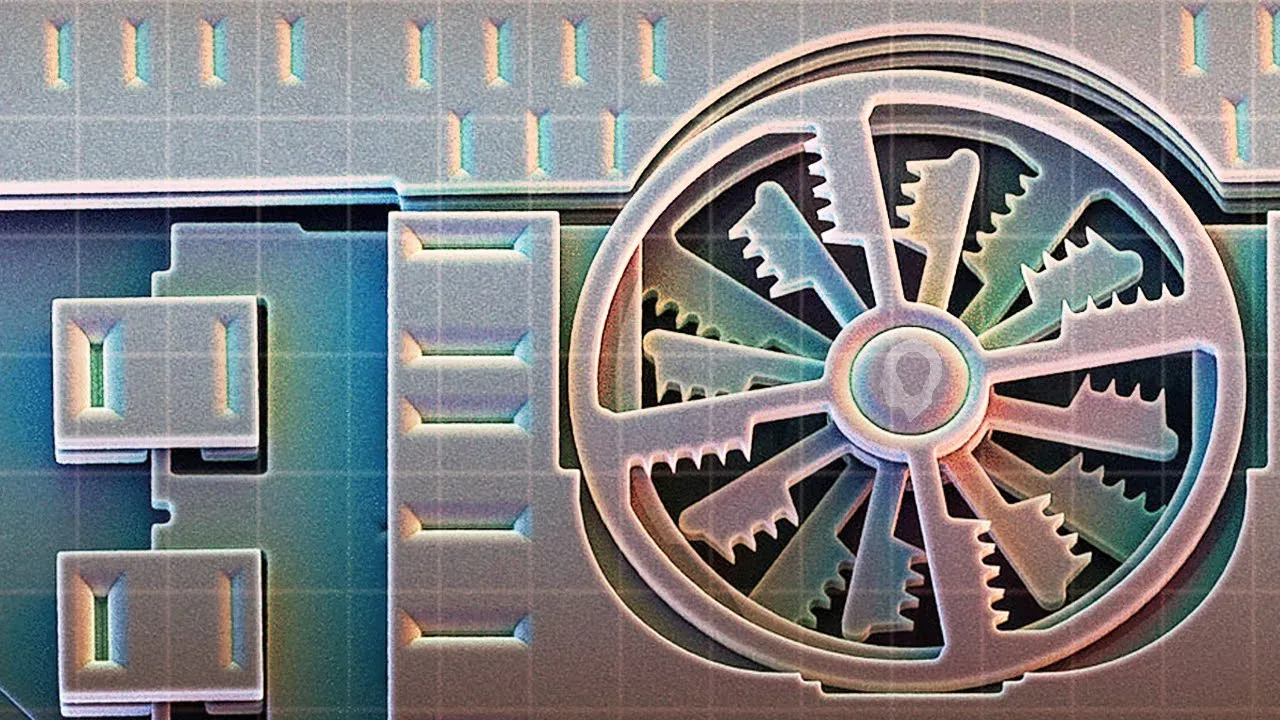

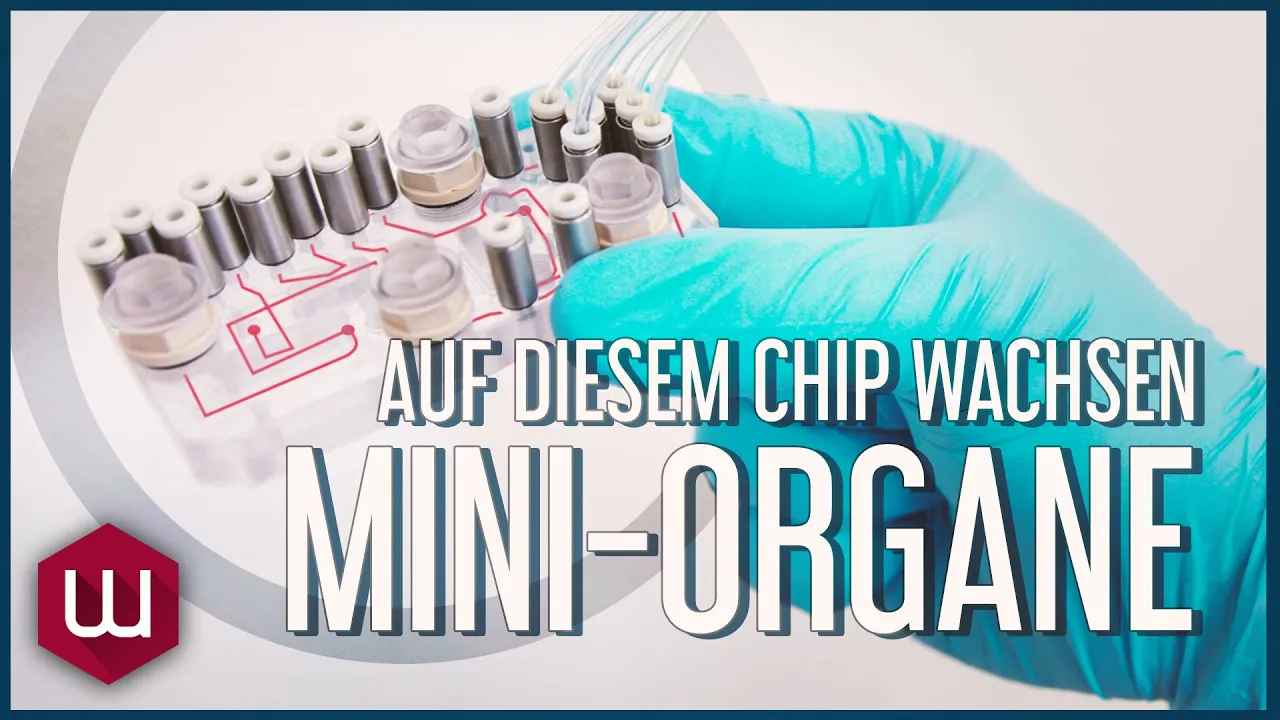













Microfluidics is the study of fluid flows at characteristic length scales of microns (approximately the thickness of a human hair), where surface effects dominate over volume effects due to the high surface-to-volume ratio. This interdisciplinary field combines microfabrication, chemistry, biology, mechanics, and control systems to create devices handling small fluid volumes (femtoliters to microliters) for applications including biomedical diagnostics, drug delivery, and precise chemical analysis. Unlike classical fluid mechanics, microfluidic systems exhibit unique phenomena such as slip boundary conditions, anomalous diffusion, and altered flow behavior due to molecular-level interactions. The field emerged from advances in micro and nanofabrication technologies, enabling engineers to translate fundamental scientific principles into practical devices for applications ranging from inkjet printing to healthcare engineering.
Microfluidics Introduction | Micro & Nanofluidic Devices
Added:[Music] uh welcome you all to the course of microfluidics uh today we will be starting with some introductory concepts related to microfluidics and uh before entering into the topic uh we will be discussing about certain motivations uh I mean which give us the necessary impetus to study microfluidics so uh but first of all we have to understand what is microfluidics and why is it important and what are its possible applications and uh we will go forward with that now microfluidic is not a technical term as such I mean it's not a scientific term uh I mean uh it's sort of an interface between various subjects and uh its interpretation depends on the manner in which you look into it like for example like uh I mean micr fluidics I mean it may I mean it may have the name micro but in terms of its scope it is like an elephant it it has a gigantic scope by by itself now if you want to say somebody wants to say what an elephant is now somebody who knows the tail of an elephant will say that the elephant is like a thread so obviously it depends on uh how you look into it so microfluidic being a multifaceted subject uh its interpretation depends on how we look into it now although this is an interdisciplinary course this course is being offered as as a part of our mechanical engineering curriculum so we look into it from a particular perspective and uh accordingly describe microfluidics like this that microfluidics is all about studying flows with characteristic length scales of the orders of microns so uh what is a characteristic length scale characteristic length scale is a length scale over which characteristic changes take place so uh when we say that the characteristic L scales are of the order of microns what we essentially mean is that the characteristic changes that take place these change these changes take place over length scales of the orders of microns now when we say microns there is no great sanctity about it it could also be nanometers now there is a closely Rel related subject which is called as nanofluidics a part of which we will also cover uh as as a part of this this particular course and uh uh when we go down to the length scale of nanometers it is not necessary that all the physics which is occurring over micrometer scales becomes invalid right over nanometer scales also typically beyond the critical length scale the physics which is occurring at the over micrometer scales is still valid but as you go down to length scales over which Continuum considerations do not work Continuum hypothesis do not doesn't work and you have to treat the discreetness of the individual system that means you have to consider the discreetness of the molecular Arrangement you have to consider the molecular entities and all those things then uh the Paradigm shifts a little bit and uh I mean many of the Continuum considerations which we will be considering as a major part of this particular course will not be valid and then you have to go for molecular understanding and molecular simulation so a part of this course we we will dedicate towards that so understanding nanofluidics and uh how to effectively address nanofluidics through molecular simulations but we have to understand that nanofluidics doesn't necessarily demand molecular simulations I mean it's not always necessary sometimes by stretching a little bit of uh uh imagination towards uh the uh I mean modifying the Continuum description one can uh address many nanofluidics problems so uh whatever I'm uh giving as uh like the description of microfluidics is a way is a way in which as a fluid dynamist I look into micr fluidics so obviously I will I will show you that microfluidics is an interdisciplinary subject and uh it is not possible for an individual to know all the facets of microfluidics from all the Angles and from all fundamental considerations but uh we will uh briefly talk about all the facets so when we say uh characteristic dimensions of the orders of microns I mean as Engineers we should have a feel of I mean how I mean how thick or how thin these are so typical dimensions of the ERS of microns are like dimensions of human hair right uh so that is the typical thing that you talk about so if you have a transparent substrate on which you have a micr channel it will look like a scratch if you uh look by a naked ey so microfluidic devices uh so and their Dimensions so if you look at this uh view graph you will see that uh I mean there are are wide ranges of dimensions of micr fluidic devices so uh I mean uh as I said that uh there may not be a sort of hard and fast distinction between micr fluidics and nanofluidics and U I mean you can think of Micro nanofluidic Devices even of the order of angstroms I mean it's not that engineering has made it possible to make those devices very effectively but we have to understand that the whole Advent of the subject microfluidics had come into the picture because of the advancement in micro and nanom Manufacturing or micro and Nano fabrication processes because many of the underlying scientific issues have been studied and have been uh reasonably well understood for a long time but Engineers could not translate those understandings in in the forms of devices until and unless there there has been a significant advancement in fabrication microfabrication and nanofabrication so keeping that in Spirit uh fabrication over small scales will also be a part of this course so uh we will sort of uh I mean try to see how fabrication influences fluidic and how fluidic influences fabrication I mean these considerations uh we will come across now so we can start with dimension of the orders of angstroms to nanometers and micrometers and then we can have uh I mean sort of uh large length scales where the microscale physics uh may not be that important but we have a sort of an intermediate L scale where uh some effects of microscale are apparent although not very significant like for example in engineering typically we talk about micro channels Nano channels there is a terminology called as mini Channel mini channel is sort of like it is it is not micrometer Dimension but it is not also macroscopic channel so it has its characteristic features somewhat in between the microscopic and the macroscopic channel so these are all terminologies I'm just trying to make you familiar with the terminologies but keep in mind that these are not scientific terminologies these are terminologies which have been coined by people to describe certain Technologies so uh uh like if you are thinking of like uh I mean how these Dimensions relate to real applications like when you talk of angstroms to nanometers you think of molecular Dimensions right of the orders of angstroms and then uh nanometers to micrometers you have uh smoke particles viruses and uh I mean over this regime you have Nano devices and the common basw word nano technology is used for technological applications over these length scales of nanometers uh to microns so uh little bit of larger L scales I mean you you think of uh like other substances which which closely relate to to to uh microfluidic devices like for example bacteria and uh you can think of uh substances uh or devices uh which are closely associated over these laying scales like micro needles micro reactors micro filters microanalysis systems so these are many terminologies which are used for microfluidic devices now microfluidic devices are commonly associated with certain names for example uh many microfluidic systems are integrated in the form of a chip so so uh it's like a credit card type of uh device on which you can have all operations of a laboratory like mixing metering valving pumping all these fluidic operations which you normally do in a process industry processing industry it may be chemical processing biological processing all these are miniaturized in the form of a small chip and these types of devices are called as lab on a chip or Laboratory on a chip so the lab on a chip and many of these lab on a chip devices are used for uh certain chemical analysis or biotechnical biotechnological or biomedical analysis and then these have alternative names as micro toal analysis systems and uh uh I mean these names are so uh popular that like for example there is a journal called as lab on a chip or uh you have uh like a conference named microtas so there are uh I mean these names have become quite popular uh to the community so and uh just uh to give you an idea of the uh volume flow rates that these devices can handle so like typically they will be uh in the range of fto ler picol to nanoliter to microl and uh not uh very commonly Beyond microl because Beyond microliter you enter into millimeter dimensions of length scales so uh typically whenever we are talking about micr fluidic devices we are essentially talking of devices which can handle small volume flates or which are designed to handle uh small volume fluides now when we say micr fluidic of course all of you uh have a fair idea that these days micro and nanot technology these are very fascinating uh areas of research I mean these are very popular areas of research not just uh in uh any specific country but globally the question is that uh why we should go for micr fluidic devices I mean what are the advantages that uh these devices are going to give us is it totally because of fashion or uh uh there are scientific or technological interests in the background so here are some reasons why uh we go for miniaturization so this is not true just for micro fluidics but for any devices where we are intended to miniaturize the product so the first point is one can minimize materials and Sample consumption so uh why we you can minimize the material consumption is because the device itself is small Now sample consumption I will give you an example let us say that you want to uh perform a blood test a medical diagonostic is one of the applications where which we will discuss briefly now and much more elaborately as as we proceed uh in the course now uh if you want to test a blood sample if you have one drop of blood then the amount of chemical reagents that are necessary to test the sample will also be of small amount on the other hand if you have a large amount of blood as a sample then you require large volume of chemicals so we can see that in a miniaturized system you may require a small volume of the reagents to achieve the necessary task not only that uh because of miniaturization one can run the device with low power so one can reduce the power budget many of these devices uh operate fast or operate because of favorable scaling over micro and Nano scales so we will discuss about this that different forces scale favorably as you reduce your dimensions for example if you reduce your Dimensions you will see that surface forces become more important so surface forces can help the transmission of fluid which uh are otherwise active but not so important over large scale systems so one can use that favorable scaling increase selectivity and sensitivity with nonlinear effects exploitation of favorable scaling laws which I have already explained and exploitation of new effects so some effects which are not when I say new what I mean is that which are not very intuitive which are not very intuitive over large scales some of those effects may become important so keeping that in perview we say that miniaturization is not always a fashion many times it's essential not only that miniaturization achieves certain thing which is very practical it makes the device small it makes the device portable see you think of of the old day computers gigantic and you think of the modern day uh Computing gadgets I mean which have become Slimmer and thinner so you can carry them and you can work while you are traveling so I mean it's not always just the scientific need but the demand from our fast changing lifestyle that has also given rise to uh the Advent of miniaturization based technology question is what are its applications or why is it important we will go for applications but first why is it important microfluidic is required when the application demands handling of very small volumes as we uh saw in the previous slide that the volumes volume flow rates that are handled in a micr fluidic device these volume flow rates are small because the volume flow rates are small you cannot use these devices for applications where large volumes are required so you essentially use micr fluidic for those applications which require the use of small volumes like injet printing in fact injet printing or injet printers are sort of the first generation micr fluidic products used in IND industry it was in early 1980s that injet printers were introduced in the market and in those days the subject was not known as microfluidics I mean it evolved as a subject by itself but uh I mean that was one of the technological revolutions so far as microfuidic is concerned uh you can use small volumes for precise drug delivery for example if you want to administer very small volumes volume flow rate of drug very precisely to certain diseased cells then you can use microfluidics cost or performance advantages in many cases we want to use microfluidic devices because they are less expensive and they have some advantages of performance by exploiting the signs so microfluidic is sort of a is located at a nice interface between s science and technology so on one hand the objective of studying micr fluidics from an engineering point of view is to make new devices for certain applications but these new devices have to be designed based on some fundamental scientific principles which come from the basic principles of physics chemistry and so on so it's at a nice interface uh improved reproducibility accuracy and reliability is what we expect that we have in microfuidic devices although there are questions uh I mean or issues to be addressed if we want to ensure this now uh there are certain terminologies called as self assembly and self- repair uh and which are closely linked with many of the micr fluidic systems although those are more associated with the nanotechnology than with with the with a little bit larger scale systems and uh many of the microfic devices like for example if you think of uh a microfluidic device for blood extraction so many of the microfluidic devices they are not just functioning nicely because of the small scale effects but they may also have minimal invasive pin so uh these are uh some of the features that uh uh we look for in microfluidic devices now see I'm teaching this microfluidics course to you but I must confess that I'm not a big expert in microfluidic because microfluidic is interdisciplinary so it requires the agglomeration of so many disciplines that is it is impossible for one individual to be an expert in the entire gamut of microfluidics so uh first for example let me talk about what are the uh what are the sort of uh specializations that are needed to address a microfluidics problem and once you understand this you will uh appreciate that any study of microfluidics is basically a team effort and how does it go on so microfabrication like to study micr fluidics you require to fabricate micro channels or if you go down to even smaller scales fa rate Nano channels so these are jobs of fabrication or manufacturing Specialists chemistry over small scales surface chemistry can dictate the flow in a very interesting way we will later on uh address those issues and see that how does surface chemistry alter fluid dynamics so but for the time being just take a as it is that uh chemistry of the surface can dictate the flow in a very interesting way so one requires chemistry biology it's not that one has to be a core biologist to work with the interface between biology and microfluidics but most of the or many of the challenging applications in microfluidics are actually from the area of biology so that is why many times uh like I have seen this experience uh uh I have uh gathered this experience that I mean when somebody some uh person some professional working in micr fluidics is asked that well uh what is your uh like specific area of application in micr fics he says I worked in two areas one is bio applications and other is non-bio applications that means it shows that bio applications is of a big thrust area of activity by itself so it is so important that a big application area of microfluidics has emerged which we call as biomicrofluidics and that also we will cover as a part of this particular course so and uh again the importance of the subject is such that there is a journal called biomicrofluidics so like biomicrofluidics is a very uh active area of research mechanics like I mean there are hardly Engineering Systems which we can think of without thinking of basic mechanics and micr fluidics is of no exception so mechanics uh is important and uh in particular uh we will talk about mechanics over micro and nanoscales so sometimes the classical laws of mechanics a little bit sort of they have to be explained in the light of small scales not that they become totally invalid but they have to be explained in the context of small scales and that is why mechanics becomes so attractive in small scales Control Systems so when we say Control Systems what we essentially mean is that uh like uh just like any engineering system if you have a m if you have a micr fluidic system which execute certain tasks uh I mean many of the micr fluidic systems are electric electromechanical systems and a closely related area which I mean which can be thought of as a more generic area is Micro electromechanical Systems or mems so sometimes we associate microfluidics very closely with mems and in fact for many of the mems applications micr fluidic appears to be a building block so in many of these systems you have to design a very nice control system for the system to operate efficiently and control systems become critical microscale physics and thermal fluidic transport I that is where we will mainly focus on uh in in this particular course so uh by microscale physics what we mean is that like uh the classical uh mechanics of fluids that we study commonly uh I mean many times uh I mean it's not that all those equations that you have learned in your basic fluid mechanics will be invalid but uh those equations sometimes do not take into consideration certain features which are not important at large scales but as you scale down your system those features are important and those features have to be taken care of numerical modeling numerical modeling is a very important area or or a very important aspect of microfic now when we say numerical modeling we have to keep in mind that uh numeric it's still a numerical modeling of fluid flow problems so uh broadly in the perview of cfd but not always traditional cfd because the traditional cfd you can use when the Continuum considerations are valid so uh that tradition cfd considerations are used for many microfluidic applications with certain modifications maybe in the boundary conditions and uh sometimes in the description of the effective properties of the fluid and so on on the other hand when Continuum considerations are not valid then one has to go for molecular simulations so molecular simulations uh I mean either explicit uh execution of the Dynamics over molecular scales that means uh directly capturing the Dynamics of individual molecules which is called as molecular Dynamics or some statistically averaged considerations over simulated molecules and like these are called as Monte Calo simulations for example so on one side you have molecular level simulations on another side you have Continuum simulations but there are some simulation paradigms which sort of act as a bridge between these two like which are neither fully of Continuum nature or they are apparently of Continuum nature but they incorporate certain molecular considerations not by explicitly capturing the molecules but implicitly and on the other hand you have the explicit capturing of molecules the in between Paradigm is called as miscopy simulation it is neither the Continuum scale nor not the molecular scale something in between which is called as miscopy simulation and one of the very wellknown miscopy simulation techniques is the latis busman method so uh there are issues of numerical modeling and in micr fluidics there are uh research groups working solely dedicated towards numerical modeling Material Science now uh I mean can you think of an engineering system system without due consideration of materials it is impossible because like in a micr fluidic device the surface effects have a strong role to play and the surface effects are in many cases dictated by the material property of the surface so you can engineer the surface Properties by designing the materials so and that you can choose a particular material for some functionality you can create the gradient of the functionality for example you can make a sub make a surface with a weight ability gradient so instead of a constant weight ability you can make a weight ability gradient surface and that weight ability gradient surface can use very low energy to achieve certain fluidic operations so it is it is possible to uh like achieve magical fits by playing with the surface and when we try to achieve that the material plays a very important and deciding role system integration and packaging so system integration and packaging when we say what we essentially mean is that like essentially if you want to make a usable microfluidic product it like if you want to translate it from the laboratory scale to a usable scale maybe a commercial scale so you have to uh package the product in a in a proper way and that and this pack by this I mean this packaging has also scientific issues by this packaging I don't mean a business uh oriented Outlook towards packaging that is a part of that but one needs to take care of many scientific issues as well for the packaging and system integration validation and experimentation so just like the numerical modeling is important it is so but by simulations whatever design parameters we get now whether those design parameters are good for operating a particular device how do you know so for that you have to validate and do experiments so validation and experiment reliability engineering so I I have not listed many more uh disciplines but just to make you feel make you understand make you feel that uh microfluidics uh is not just a subject of say maybe mechanical engineering chemical engineering biology chemistry like that or physics so it it's a subject where all aspects of Science and Engineering uh they Marge together to work on certain applications so it is very it is it is not possible for an individual to be experts in all these so now what should be the Outlook see I can share my personal Outlook with you that how I perceive micr fluidics research see uh it is very important that you may not know all aspects of microfic in depth but you should try to develop a working knowledge to interface with Experts of those but you should yourself be a domain expert in at least one of the areas that means at least in one of these facets you should be the last word so it it should not be an approach that by being a micr fluidic engineer we want we intend to be jack of all trades but master of none that should not be the spirit so we should be at least master of one particular aspect of microfluidics and for other aspects we should have a working knowledge to interface with the experts that's how a team work in in microfic develops now what are the applications of microfic so we have uh already discussed that what are the aspects that need to be taken care of for microfluidics applications so uh using uh if if all those features are there in a device then uh there are very special applications that we talk about mixing and reactive system analysis so why mixing is important in microscale so let me just give you a perspective so you know that when you think of classical fluid mechanics when you think of mixing the first concept that comes to your mind is turbulent flows because turbulent flows because of enhanced diffusive transport have good mixing now in micr fluidic typically because of the small length scale the renals number is small and at low enols number turbulence effects cannot be realized so you have to design that device by clever means to achieve mixing without necessarily having turbulence so that is a big challenge by itself and uh but why is mixing important you may always ask that why should we have enhanced mixing now to have rapid reaction if you have say two reactants these reactants must first mix before they react and so if you want to achieve rapid reaction you need to achieve rapid mixing as well so to enhance the rapidity of a process of a chemical process maybe it is important that you have also rapid mixing so mixing is a big problem in microfluidics fundamental understanding of biophysical processes fundamental understanding of biophysical processes like uh uh for example I will talk about this in details but uh just to create a perspective that in human body there are cells and uh cells are there in blood vessels of various Dimensions so blood vessels like there is a hierarchy of blood vessels and this hierarchical length scale variation is very interesting you have large arteries which are which are macroscopic scale features large veins small arteries small veins then arterioles veniales and micro capillaries micro capillaries in human body are micr channels so now it is it is a I mean there are many outstanding questions I will talk about one outstanding question that uh when a cancer cell is traveling through the this circulatory system right it there is a stage of cancer where a cancer cell from its origin moves to a distant location within the human body by the bloodstream and creates a new cancerous growth at a new location this process is known as metastasis and it's a very uh critical stage in cancer progression and uh during that stage the cancer cell has to also pass through micro capillaries and because of the extremely stressful condition it is very difficult for a normal cell to survive under those conditions but a cancer cell can survive we will try to address this question later on and see that how microfic can solve this problem but you can understand that biophysics of cancer progression or hemodynamics the Dynamics of blood in small capillaries in a human body so all these things are related to fundamental understanding of biophysical processes and these are critical now why we say these are critical because these are not straightforward extensions of the traditional understanding of fluid mechanics let me talk about a very simple apparently or elusively simple problem like flow of blood through arteries and veins or even flow of blood through micro capillaries now when you think of its analogy with a large scale engineering system it is like it's closest analogy is flow of water through pipes which we study normally in fluid mechanics in the undergraduate fluid mechanics course now if I ask you that what is the difference between that and FL of blood through a blood vessel right you will have certain Ready Answers what are those answers like for example like you may say that blood is a much more complex fluid than water I mean blood may have non- neutronian characteristics over certain regime and it may hold neonian characteristics over some other regime and uh the effective or apparent viscosity of blood uh varies in a very complicated way with the uh blood chemistry like blood composition and so on so blood is not a very simple fluid having appreciated that it is not that the blood the rological aspects of blood remain a mystery it is not like that rological aspects of blood have been reasonably well studied and extensively understood by people so one can borrow that understanding for for studying the flow of blood through blood vessels the there are in fact other more subtle uh complications the second point about this flow of blood through blood vessels is that the blood vessels are flexible unlike the standard rigid pipes these are flexible but mathematicians May argue okay it's fine let it be flexible let us assume the radius of the blood vessel r equal to r0 + R1 cos Omega t plus R2 sin Omega T whatever some nice FIA series may be but you know in reality the blood vessel the local diameter of the blood vessel varies in a very complicated way with the local blood pressure and it is not Universal that is the difference between the mechanical world and the biological world in the mechanical world when we say that this is the material it will behave in this way the same material will behave in that way provided the other conditions are the same but human beings the system is very complex like you will have a certain uh like variation of your blood pressure based on certain emotional conditions which are not sort of mimicked in the same way by some of your other friend so you do not have a universal rule of how the diameter of the blood vessel varies with local blood pressure it it is so much individualistic that it is very difficult to bring in bring it in the context of a fundamental mathematical model so you see that an apparently simple problem in in the living systems gives rise to such a complex understanding which is yet an unsolved problem so fundamental understanding of biophysical processes manipulation and Analysis of biological macro molecules like DNA RNA I mean these are important and I will show you that later on we will discuss that how these are related to biotechnological applications that is handling of DNA RNA handling of cells handling of proteins and all these biomedical Diagnostics biomedical Diagnostics is a big area and uh biomedical Diagnostics I mean I will discuss about this in more details that what are the demands of biomedical diagonistic which are more more aptly addressed by microfluidics than the traditional technique that why microfluidics is so important for biomedical Diagnostics drug delivery blood extraction I mean these are all related to Medical applications so biomedical Diagnostics drug delivery blood extraction all together there is a whole bunch of applications of microfluidics in medical sciences and uh because it is mainly an engineering interface with medical Sciences these days it is given a terminology called as Healthcare engineering so microfluidic is a sort of an essential element of healthcare engineering now non biological applications there are several applications like the injet printing I have already discussed with you that uh why injet printing uh is important and uh I mean important as a microfluidic device because it is traditionally like one of the very early micr fluidic devices uh that was introduced electronic schooling so electronic schooling is again another area see where if you want to have a miniaturized chip which because of uh Heating the it is trying to fail in terms of its thermal design then it has to be cooled now that cooling has to be done by a system which is matching in terms of miniaturization with the small device itself so if you have a small device you cannot have really a large fan to cool a small device I mean you may have of course but that will kill the purpose of miniaturization so you require micr fic system sys to cool electronic uh devices and systems and electronics cooling or uh I like a more scientific terminology that is associated with this field is called as thermal management of electronic device and devices and systems now we have uh uh learned about uh the micr fluidic uh uh I mean it's fundamental uh Inception and I mean what are the disciplines involved in studying microf fluidics the uh some basic motivation in studying microf fics and uh of course uh some applications now we will uh sort of uh uh get into it further by noting the fundamental flow physics how are microfluidics different from or microfluidic devices different from m mcro flows this is important because all of you have a particular perception about fluid mechanics because of your exposure to the classical subject of fluid mechanics now if all those issues can directly be used in microf fluidics there would perhaps not be a separate need of introducing another subject so one has to prepare this little bit of for scientific motivation that uh in terms of flow physics how things are different as the length scale becomes smaller surface effects tend to dominate why the reason is that uh as you reduce the length scale the surface area by volume ratio increases let me give you an example I mean uh not typically related to microfluidic device but let us say that you have a sphere of radius R okay so if you have a sphere of radius R then what is its volume 4X 3 pi r and what is it surface area 4 pi r² so area by volume is proportional to r² by R Cub that is 1 by R so as you reduce r as you reduce R the area by volume ratio increases right so this is a typical example of course there are hardly micr flued devices which are spherical so I don't want to mean that you borrow the understanding exactly on the phase value but just to give you the concept if you take r as a length scale if you make the length scale smaller and smaller then area by volume ratio of the geometrical feature increases so when the area by volume ratio increases what essentially uh happens is that uh whatever forces are important over surface that forces become more prominent so that means inertia forces may turn out to be negligible in comparison to electrostatic electrodynamic viscous or capillary effects that doesn't mean that inertia forces are important for all microfluidics problems please do not keep this Prejudice in mind there are many microfuidic devices which operate with important inertial effects and that particular aspect of microfluidics is known as inertial microfluidics so uh because it it covers certain special problems other than those special problems the more common problems are associated with negligible inertial effects as compared to other effects next Point layering of fluid atoms parallel to the atomic layers adhering the solid boundary May give rise to strong density local density fluctuations so when we say density we do not mean density as a Continuum property it's the local number density of molecules the local number density of molecules near the wall there is a structure that the molecules uh assume now these structures occur over length scales which are small small but if the device length scale itself is comparable with that length scale then the near wall variations in density or the near wall density distribution may have a strong role to play so in one in some case there maybe less density of liquid in the near wall region and then uh that kind of uh situation is typically encountered for hydrophobic surfaces that is surfaces which have IIA for water for example that is what uh I mean is a literal meaning of hydrophobic so on the other hand you can have surfaces where there is a strong local distribution of liquid so these density distribution differences May alter the local fluid dynamics so they might uh essentially invoke certain uh like sort of non-intuitive boundary conditions like sleep boundary condition instead of no sleep now the Sleep may also occur we will discuss about this in details but just to summarize uh I mean just to give you some initial thoughts slip may occur when liquid molecules are sheared very vigorously so that means uh so liquid molecules let us say they are attached to a solid boundary now with a very high Shear rate it is possible to dislodge them from the attraction of the solid boundary so how how is that Shear rate possible that Shear rate is so high that normally that will not occur but in devices approaching molecular length scales it may be possible because the shear rate is what so think of a quit flow you have flow between two parallel plates the shear rate like out of the two parallel plates one plate is moving at a velocity relative to the other if that relative velocity is U like uh let me draw a schematic to explain this so you have two parallel plates let us say this plate is moving with a velocity U relative to the bottom plate and the Gap is H so the shear rate is related to U byh okay so at a very high Shear rate the liquid molecules may be dislodged so high Shear rate will require a very small value of AG so for normal normally engineered channels that may not that kind of high Shear rate may not take place but in channels which approach molecular Dimensions that may take place and then you can have a literal dislodging of molecules liquid mole ules from the solid boundary this kind of sleep behavior is more common for gases uh because of uh relatively weak molecular compactness for liquids it is very difficult to dislodge the liquid from its surroundings because of a strong level of attraction but because liquid is a relatively dense system for gases the intermolecular attraction is relatively weak so it is possible it is more easily possible to dislodge the gases and sleep in sleep in in gas flows is uh not a very uncommon thing over micro and nanoscales we will discuss more about this just I'm trying to give you some preview of I mean what are the interesting scientific features different diffusion characteristics near the wall in comparison to that of the bulk may give rise to anomalous diffusion so normally when we solve a problem we use a problem of mass transfer we use a diffusion coefficient now that diffusion coefficient many times we use a common value for both the bulk and the near wall regime but the near wall Behavior may be different from that of the bulk in a small scale system where surface effects are very important so one has to think of a different as aspect of diffusion as we go from the surface to the bulk surface characteristics of the device strongly influence the flow Behavior this is uh quite intuitive and it follows from the argument that in a micr fluidic device the area by volume ratio is large therefore surface effects are important so surface characteristics like surface charge surface weight ability these strongly influence the flow Behavior so that is where like for example if surface charge is important then you have to consider the electrical aspects so the physics of the charge Dynamics or the charge distribution close to the wall will affect the fluid flow so these types of problems are called as multiphysics problems so where the physics of fluid flow is not just plain and simple fluid dynamics but it is related to electrostatics electrodynamics and so on so in many of the microfluidics problems you essentially have to address multiscale multi physics and also physics over multiple scales that is a length scale which is very close to the wall and the system length scale which dictates the bulk Behavior so multiple length scales or multiple physical scales and multiple physical features so these are called as multiscale multiphysics problems and many of the microfluidics problems are like that rology of the fluid may be very significant for flow manipulation and control so uh uh the constitutive behavior of the fluid that is the stress versus strain rate relationship may be very significant and uh the manner in which the fluid behaves close to the wall may be different from that in the bulk as I already mentioned and the rological aspects May interface with that and by that you can manipulate the flow in a very interesting way surface roughness being comparable to the system length scale is likely to play a very critical role this is something which is very important even for laminar flows the classical fluid mechanics says that for fully developed laminer flow the product of friction factor and ral's number is a constant which is independent of the surface roughness just is dependent on the geometry of the cross-section of the channel so uh this is the classical fluid mechanics understanding now these understandings assume that the surface roughness length scales are not comparable to the system link skilles but in micr fluidics in many of the micro channels and nanofluidic channels you may have the surface roughness elements comparable to the characteristics system length scales and then these May influence the flow non-trivially we will discuss about this and all these aspects taken into account mean that micr flows are often characterized by multif physics and multiscale features which I have already discussed so we have discussed some aspects of microfluidics and uh uh I mean how these are different from macroscale flows and what could be the possible applications what are the what are the challenges and so on and uh the way in which we will proceed further is like this that uh like uh we have to think of that what microtic can do by stretching our imaginations before getting into the mathematical description of the subject so uh I mean we will of course I mean after one or two more lectures move on to the mathematical description of micr fluidics which we will build up from classical fluid mechanics I am not assuming that all of you have sufficient background of classical fluid mechanics because I understand that many of you come from diverse backgrounds and it is an interdisciplinary course so I'm not presuming that everybody has undergone a standard course of undergraduate fluid mechanics so we will start with some basic considerations that lead towards the foundation of fluid mechanics and then more specialized towards micr fluidics but before that we will talk about by stretching our imaginations that what Marvels we can do with microfluidics so in the next lecture we will be talking about some interesting research findings related to microfluidics mostly from my own research group but also from the research activities of others as reported in the research literature World worldwide this is just to give you a feel that if you learn the basics of microfic what are The Cutting Edge problems that you might be in a position to solve anyway let us stop here today thank you very much [Music]
Up Next

Satellite Orbits, Coordinate Systems, and Propagation | Lecture 2
@SpaceTechSystems
9.1K views•2023-07-12

Ultrasonic Transducers: Resonant Frequency Measurement and Horn Design
@imajeenyus42
229.9K views•2017-02-22

Fluid Mechanics Lecture 1: Introduction & Fundamental Concepts
@iit
1.1M views•2013-07-02

How a Student's Question Saved a NYC Skyscraper from Collapse
@veritasium
22.8M views•2025-04-26
Related Study Plans & Knowledge Roadmaps
Structured learning paths in Engineering