




![অধ্যায় ১: ল্যাবরেটরির নিরাপদ ব্যবহার: মোল সংখ্যার ধারণা (Concept of Mole) [HSC]](https://i.ytimg.com/vi/Y9SG5gurfDk/hqdefault.jpg?v=63b4097a)










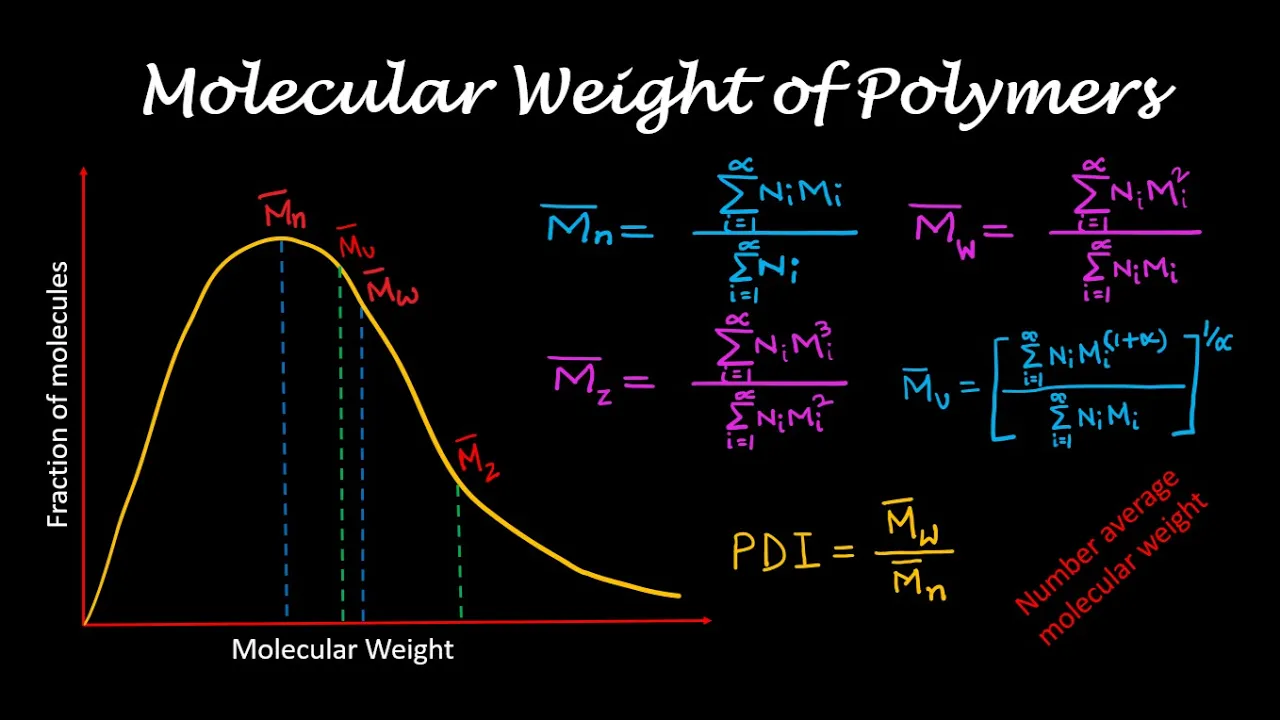
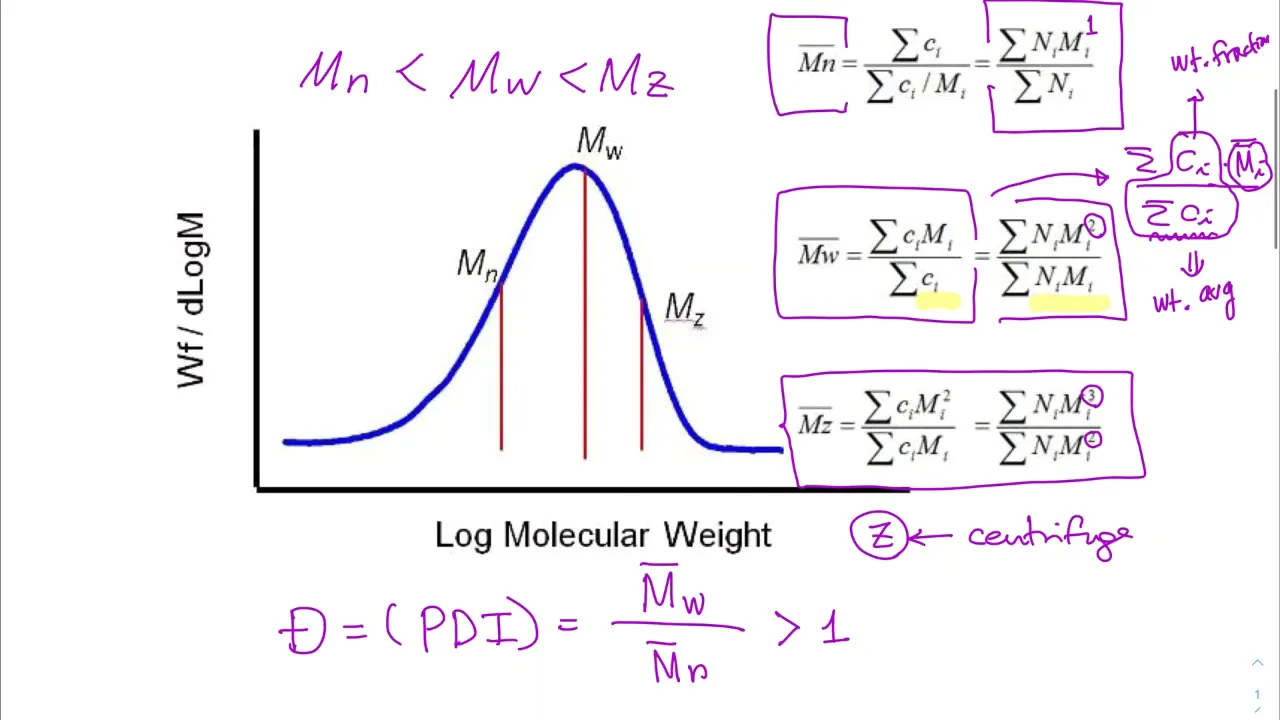







The number average molecular weight (Mn) characterizes polymer samples by representing the average chain size, calculated as the sum of (number of chains × molecular weight) divided by the total number of chains; for example, with chains of 10, 15, 20, and 25 kg/mol having 20, 25, 20, and 5 chains respectively, Mn equals (20×10 + 25×15 + 20×20 + 5×25)/(20+25+20+5) = 17.5 kg/mol.
Number Average Molecular Weight of Polymers | Calculation & Definition
Added:Basic polymer chemistry concepts, including the definition of monomers, polymers, and macromolecular chain structures.
The definition of molecular weight (molar mass) and its standard units (g/mol) for simple chemical compounds.
Fundamental statistical concepts, specifically how to calculate arithmetic means and weighted averages.
The mole concept, including how to calculate mole fractions and count molecules using Avogadro's number.
Calculation of Weight Average Molecular Weight (Mw) and understanding how it differs conceptually and mathematically from Mn.
Determination of the Polydispersity Index (PDI) to evaluate the breadth of a polymer's molecular weight distribution.
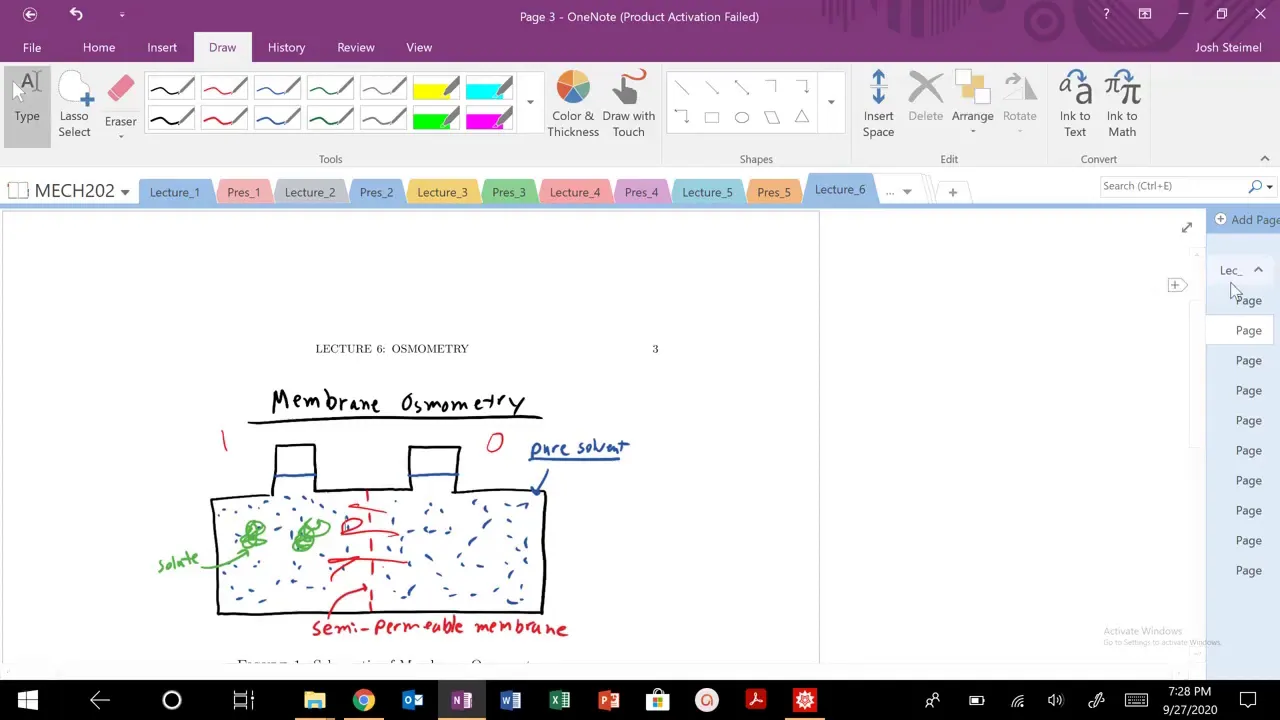
Experimental characterization techniques used to measure Mn, such as membrane osmometry and end-group analysis.
Analyzing the impact of polymer molecular weight averages on physical and mechanical properties, such as tensile strength, viscosity, and glass transition temperature.
24.5K views216likes4:17Original Release: 2019-05-11
the number average molecular weight is a common means of characterizing a polymer sample polymers typically consist of chains of varying size in order to characterize samples as a whole scientists will often use the number average molecular weight which is denoted by an uppercase n in a lowercase n and what it essentially tells you about a sample is within the sample what the average chains will like of a rate is not only does this give you information about the size of the chains within the sample it might also give you information about the degree of polymerization or the conversion experimentally this value can be determined by a number of different methods including GPC gel permeation chromatography and in Maher and osmotic pressure mathematically the number average molecular weight is to find a number of different ways one of the most common definitions is that it is equal to the sum of the number of chains with a molecular weight mi times their respective molecular weight over the sum of the total number of chains this is also equivalent to the sum of the mole fraction of chains with molecular weight mi times their respective molecular weight sometimes it's more convenient to define samples and determine the number average molecular weight using weight fractions and to do this it is equal to one over the sum of the weight fraction of chains with a certain molecular weight divided by their molecular weight now using these mathematical definitions we can solve for the number average molecular weight of a polymer sample so in this table we have a theoretical polymer distribution the left column we have the number of chains of a corresponding molecular weight which is in the right column these molecular weights are in kilograms per mole so using the definition we defined earlier we will be able to solve for the number average molecular weight so first we need to sum up the number of the product of the number of chains multiplied by their respective molecular weight so to do this we'll for the first case we have 20 chains that are 10 kilograms per mole plus 25 chains with a monthly rate of 15 kilograms per mole and so on and so on and that's all over the sum of the number of chains so that'll be just 20 plus 25 plus 20 plus 5 if you do the math it is equivalent to 1225 over 70 which works out to seventeen point five kilograms per mole so there we have our number average molecular weight this is just one means of characterizing a polymer sample and later videos I will talk about other numerical values that researchers use to characterize polymeric materials
Up Next

11:15
Polymer Chemistry Crash Course: Molecular Weights & Dispersity
@gatechemistry
37.1K views•2018-05-28

83:56
Biocatalysis and Catalysis in Islatravir Synthesis | Merck Webinar
@SCIwheresciencemeetsbusiness
675 views•2020-10-08
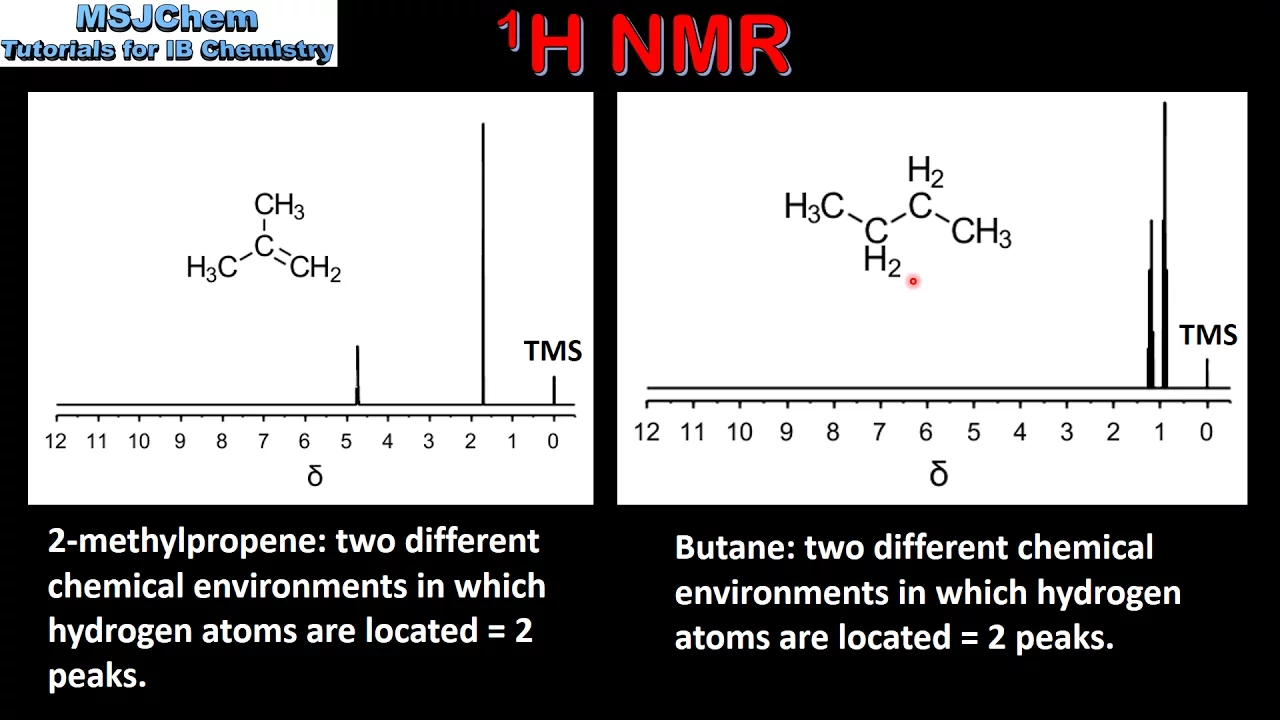
10:06
1H NMR: Determining Number of Peaks from Structure
@MSJChem
59.2K views•2017-04-06

17:31
Edible Water Bottles: A DIY Guide to Sodium Alginate Spherification
@ryan
10.5M views•2019-06-21
Related Study Plans & Knowledge Roadmaps
Structured learning paths in Chemistry
chemistry
Nuclear Chemistry: Decay, Meds & Fuel Cycle
01Introduction to Nuclear Structure and Radioactivity
02Decay Dynamics and Kinetics
03Radiation Interaction and Detection
+ 2 more learning modules
24h5 modules
Explore Roadmap
chemistry
Supramolecular Chemistry: Forces & Machines
01Foundations of Chemical Bonding and Intermolecular Forces
02Introduction to Host-Guest Chemistry
03Thermodynamics and Dynamics of Self-Assembly
+ 2 more learning modules
16h5 modules
Explore Roadmap
chemistry
Photochemistry: Excited States & Reactions
01Foundations of Light-Matter Interactions
02Molecular Orbitals and Electronic States
03Photophysical Processes and Jablonski Diagrams
+ 2 more learning modules
18h5 modules
Explore Roadmap
chemistry
Coordination Chemistry: Bonding & Properties
01Introduction to Transition Metals and Ligands
02Crystal Field Theory (CFT) and Geometry
03Magnetic Behavior and Spin States
+ 2 more learning modules
14h5 modules
Explore Roadmap