Supramolecular Chemistry: Forces & Machines
Learning Goal: Mastering Supramolecular Chemistry: Non-Covalent Interactions, Host-Guest Complexation, and the Design of Molecular Machines.
This intensive, video-based curriculum guides you from the fundamental quantum and electrostatic origins of intermolecular forces to the cutting-edge design of Nobel-prize-winning synthetic molecular machinery.
- Prerequisites: Strong foundation in Undergraduate Organic Chemistry and Basic Chemical Thermodynamics.
- Estimated Total Study Time: 16 hours.
Module 1: Foundations of Chemical Bonding and Intermolecular Forces
This module establishes the physical-chemical foundation of supramolecular systems. Supramolecular chemistry is often described as "chemistry beyond the molecule." To understand how discrete molecular entities interact without forming covalent bonds, you must first master the energetic, geometric, and spatial differences between strong intramolecular bonds (covalent, ionic) and weak, reversible non-covalent forces (hydrogen bonding, dipole-dipole, van der Waals, and -stacking).
Recommended Videos
- Why this video: This lecture segment from MIT provides an excellent academic comparison of the thermodynamics of covalent bonds (~90-100 kcal/mol) versus non-covalent interactions (~1-10 kcal/mol). It clearly establishes why the reversibility and cooperative nature of weak forces are essential for biological and synthetic supramolecular assemblies.
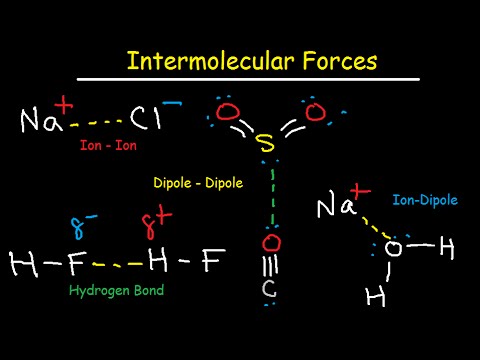
- Why this video: A rapid, highly visual breakdown of the primary intermolecular forces (IMFs) by electrostatics. It details how to predict which IMFs are active in a system based on molecular structure, dipole moments, and polarization, which is a critical skill for designing synthetic host molecules.
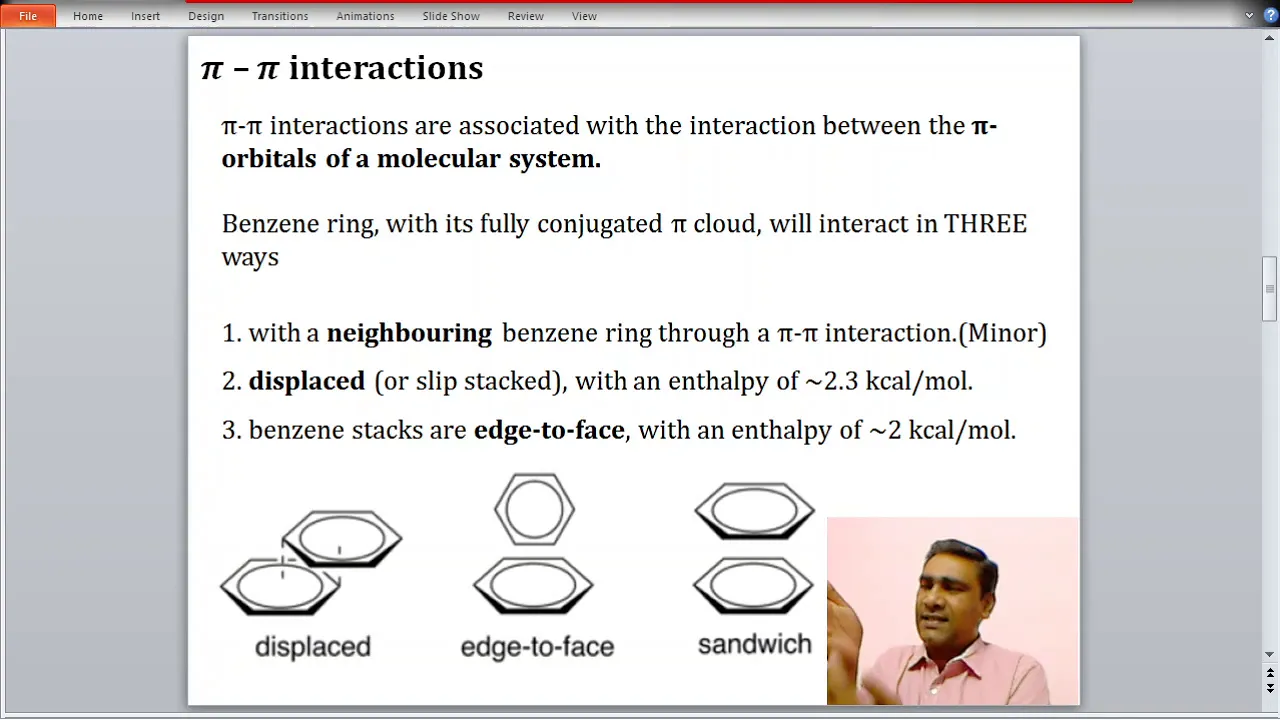
- Why this video: Focused specifically on - stacking, this video explains the electrostatic model of aromatic interactions (sandwich, T-shaped, and parallel-displaced geometries). Understanding the quadrupole moment of benzene and how substituents tune these interactions is critical for designing host cavities that bind conjugated guests.
Knowledge Checkpoint
- Explain why supramolecular systems utilize multiple weak interactions cooperatively rather than a single strong covalent bond.
- Differentiate between the electrostatic profiles of hydrogen bonding, dipole-dipole interactions, and London dispersion forces.
- Sketch the three primary geometries of - stacking and identify which configurations minimize electrostatic repulsion between aromatic -electron clouds.
Module 2: Introduction to Host-Guest Chemistry
Host-guest chemistry focuses on the complementary relationship between a large "host" molecule (possessing a cavity or pocket) and a smaller "guest" molecule or ion. This module covers the historical evolution of macrocyclic hosts, specifically detailing how crown ethers, cryptands, and cyclodextrins achieve molecular recognition through structural and thermodynamic complementarity.
Curriculum Note on Search Queries: When exploring this topic independently, refine search queries to exclude non-chemical matches (e.g., talk shows and "guest" interviews) by pairing terms: use "host-guest chemistry" crown ethers or macrocyclic host cavity recognition to bypass search noise.
Recommended Videos
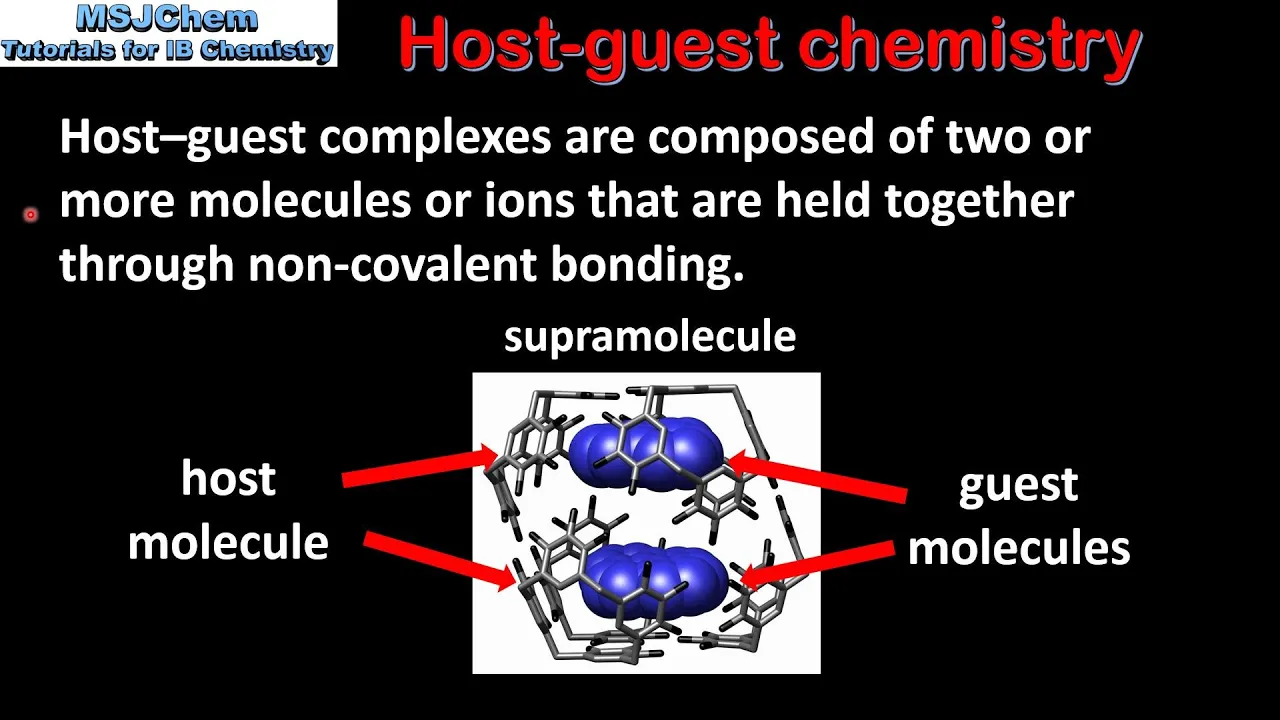
- Why this video: A concise, foundational introduction defining the key terms of host-guest complexes. It visualizes how host and guest molecules selectively bind to each other using non-covalent forces, serving as an ideal initial conceptual model.

- Why this video: This academic lecture details the synthesis, structure, and naming conventions of crown ethers (e.g., 18-crown-6) and cryptands. It walks through their function as phase-transfer catalysts and how their specific oxygen-ring sizes create highly selective cavities for alkali metal cations.

- Why this video: A clear exposition of how crown ethers selectively coordinate metal ions. It explicitly connects cavity size matching (e.g., 12-crown-4 for , 15-crown-5 for , 18-crown-6 for ) to the physical chemistry of ion solvation and organic solvent solubility.
- Why this video: This video focuses on cyclodextrins—naturally occurring cyclic oligosaccharides. It provides structural insights into their toroidal shape, featuring a hydrophilic exterior and a hydrophobic interior cavity, which allows them to encapsulate hydrophobic organic molecules in aqueous solutions.
Knowledge Checkpoint
- Define the "Lock and Key" principle in host-guest chemistry and explain how it differs from the induced-fit model.
- List the optimal alkali metal ion sizes that bind selectively to 12-crown-4, 15-crown-5, and 18-crown-6.
- Describe the structural features of a cyclodextrin molecule that make it an effective host for hydrophobic organic drugs in aqueous media.
- Self-Directed Study: Because calixarenes and cucurbiturils are not covered comprehensively in the video pool, research independently to explain how the carbonyl portals of cucurbit[n]urils dictate their high affinity for cationic ammonium guests.
Module 3: Thermodynamics and Dynamics of Self-Assembly
Self-assembly is the spontaneous organization of individual components into ordered, supramolecular structures without covalent intervention. This module explores the thermodynamics of self-assembly (), highlighting the crucial, entropy-driven role of the hydrophobic effect and the thermodynamic stabilization provided by the chelate and macrocyclic effects.
Recommended Videos
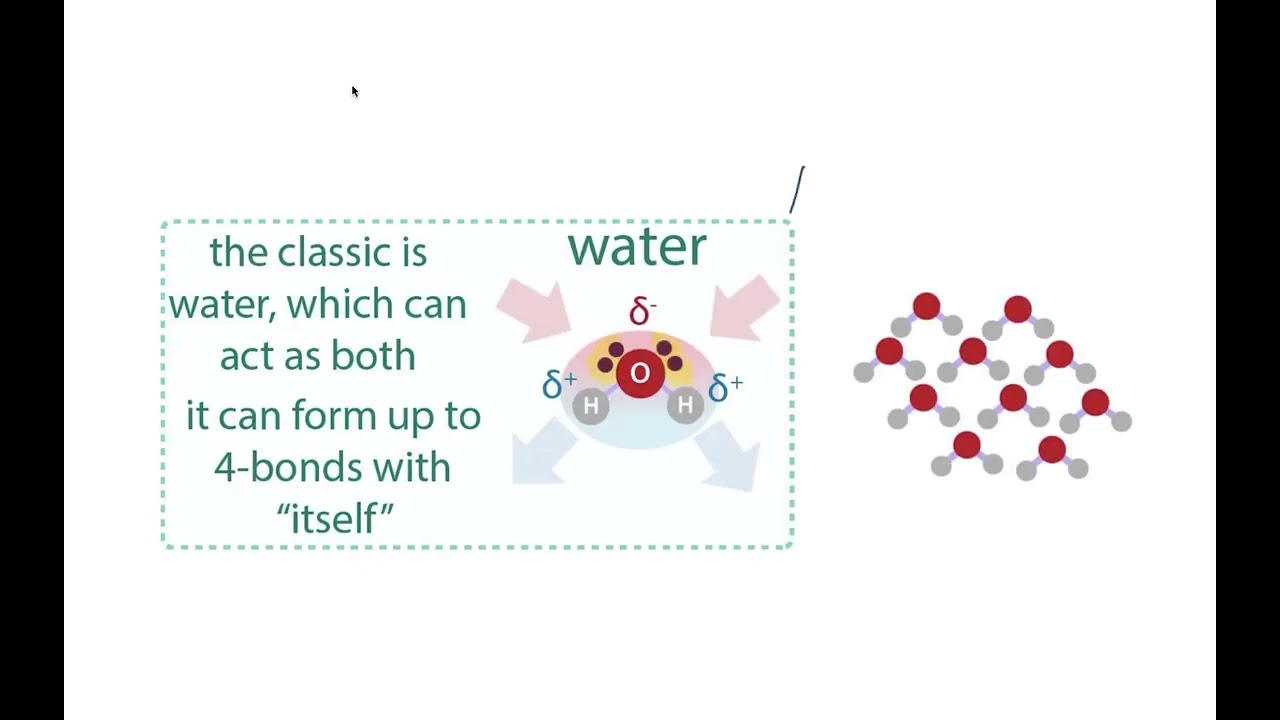
- Why this video: This presentation provides an exceptional thermodynamic treatment of the hydrophobic effect. It details how the exclusion of water is actually an entropy-driven process (), explaining how the release of highly ordered, structured water molecules from "cages" surrounding non-polar solutes drives self-assembly.

- Why this video: Further reinforces the physical chemistry behind aqueous supramolecular interactions, explaining the thermodynamics of water exclusion. It details how non-polar molecules aggregate to minimize the total surface area exposed to polar solvents, maximizing overall system entropy.

- Why this video: Explores the chelate effect, comparing polydentate ligand coordination to monodentate coordination. It uses thermodynamic equations to show how the release of coordinated solvent molecules (such as water) into bulk solution increases translational entropy, making complex formation highly favorable.
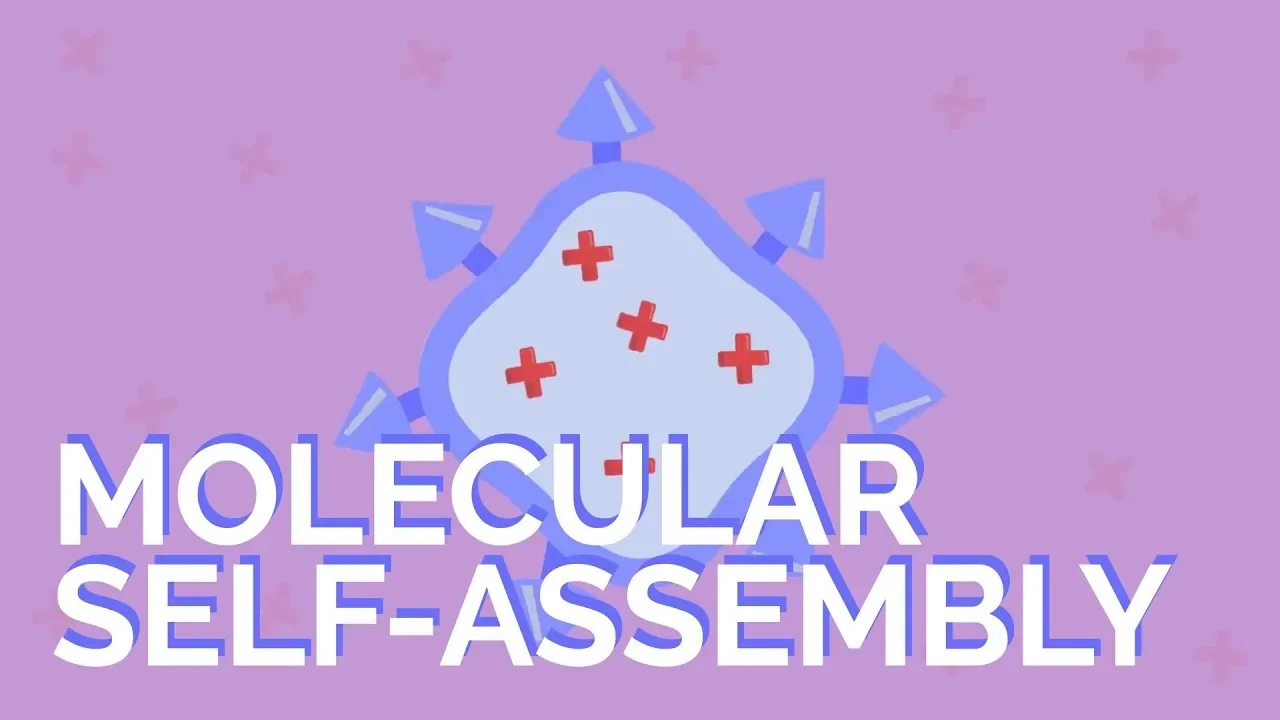
- Why this video: An engaging, animated conceptual overview of how molecules utilize complementary intermolecular forces to spontaneously self-assemble into complex biological and synthetic nanostructures.
Knowledge Checkpoint
- State the thermodynamic equation for Gibbs Free Energy and identify how the enthalpy () and entropy () terms change during water-exclusion events (the hydrophobic effect).
- Explain why a polydentate ligand (chelate) forms a thermodynamically more stable complex with a metal ion than an equivalent number of monodentate ligands.
- Define the macrocyclic effect and contrast its thermodynamic origins with the chelate effect.
- Define "cooperativity" in molecular self-assembly.
Module 4: Characterizing Supramolecular Systems
To verify host-guest complexation and self-assembled architectures, chemists must apply precise analytical methods. This module focuses on two main quantitative characterization tools: Isothermal Titration Calorimetry (ITC), which measures the heat of host-guest binding, and NMR titrations, which track changes in chemical shifts to determine binding constants ().
Recommended Videos
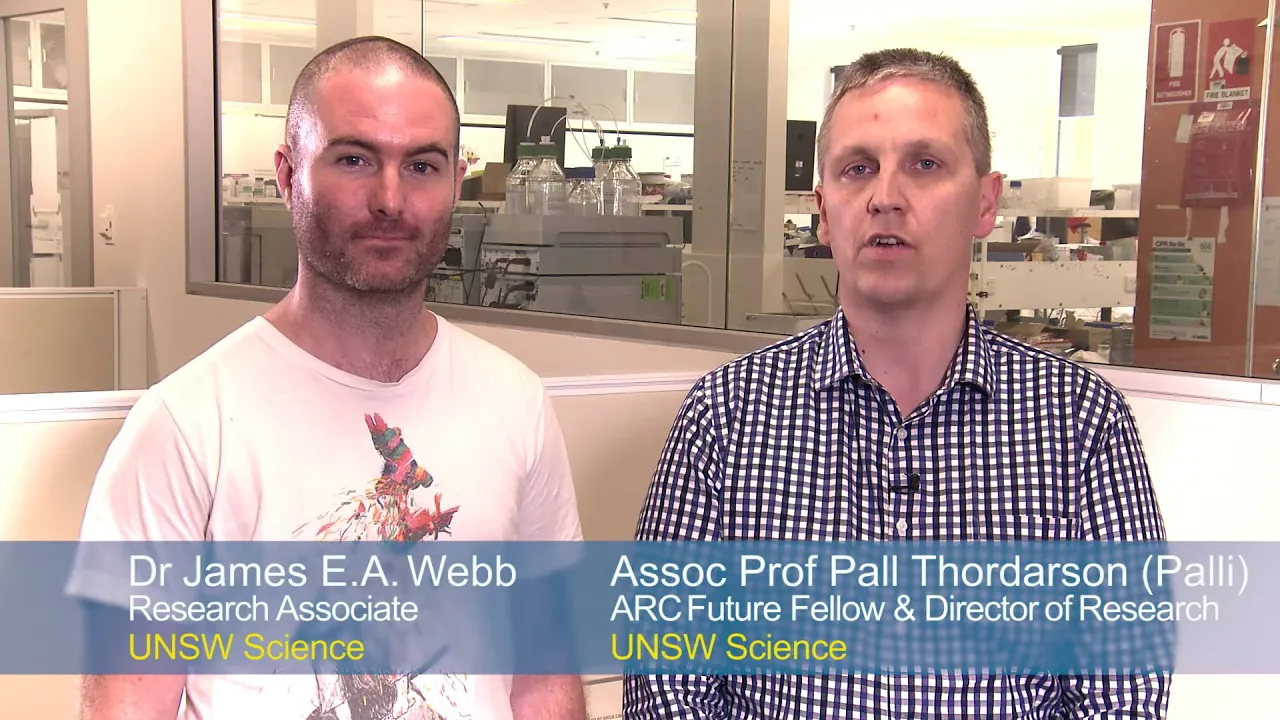
- Why this video: A brief but highly practical walkthrough by a leading supramolecular chemist on setting up and executing an NMR titration experiment. It outlines the preparation of host and guest solutions to maintain constant concentration ratios, which is a prerequisite for extracting reliable binding constants.

- Why this video: This video introduces the underlying principles of Isothermal Titration Calorimetry (ITC). It explains how measuring the minute heat changes released or absorbed during host-guest binding directly yields the thermodynamic profile: binding affinity (), stoichiometry (), enthalpy (), and entropy () in a single experiment.
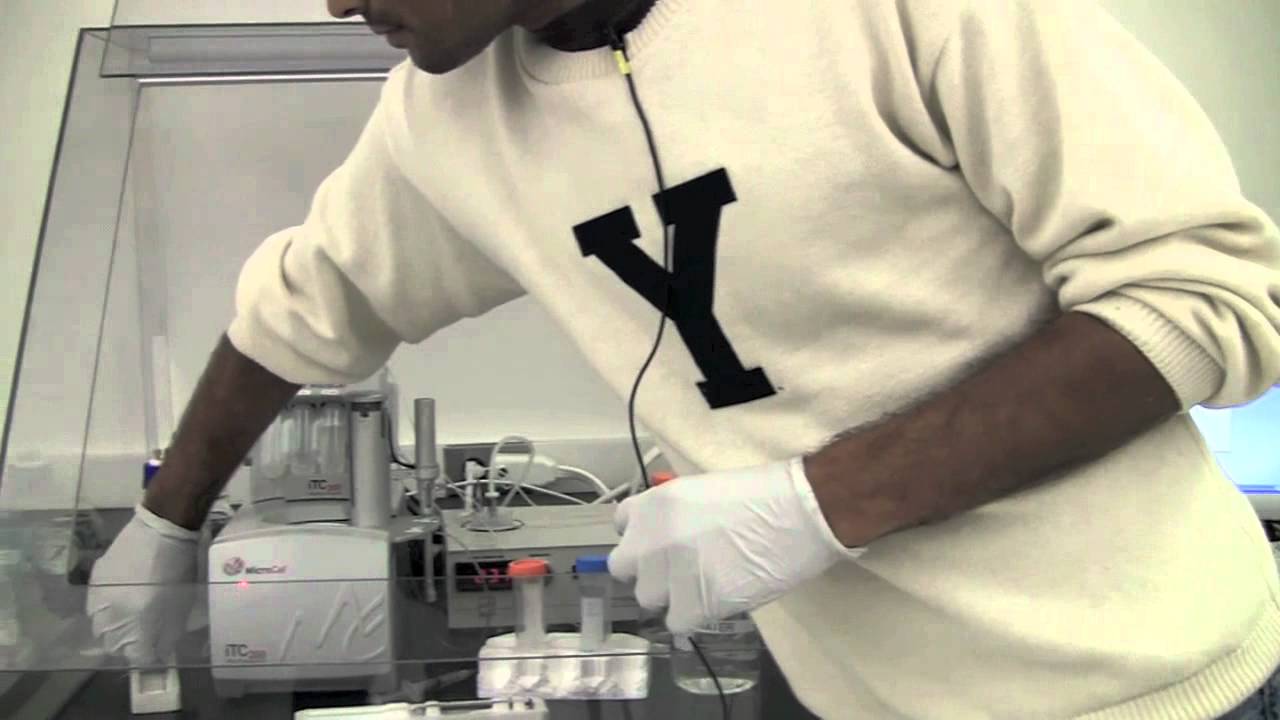
- Why this video: A detailed, step-by-step practical laboratory tutorial showing the preparation, cleaning, injection, and data acquisition of an ITC run. This video bridges the gap between theoretical physical chemistry and real bench-top analysis.
Knowledge Checkpoint
- During an NMR titration, how do you identify if host-guest binding is in "fast exchange" or "slow exchange" relative to the NMR timescale?
- List the four thermodynamic values that can be directly extracted from a single Isothermal Titration Calorimetry (ITC) curve.
- Why is it crucial to keep the host concentration constant during an NMR titration? Explain the typical experimental preparation designed to achieve this.
- Self-Directed Study: Due to limited video pool coverage on Mass Spectrometry (MS) of supramolecular systems, research "soft ionization techniques" (like Electrospray Ionization, ESI-MS) to understand how non-covalent complexes can be detected in the gas phase without fragmentation.
Module 5: Design of Molecular Machines and Nanotechnology
This module explores the pinnacle of synthetic supramolecular chemistry: the design of artificial molecular machines. Inspired by biological systems (like ATP Synthase), pioneers like Jean-Pierre Sauvage, J. Fraser Stoddart, and Ben Feringa unlocked the ability to control mechanical motion at the molecular level. You will explore mechanical bonds, molecular switches, catenanes, rotaxanes, and light-driven unidirectional molecular motors.
Recommended Videos
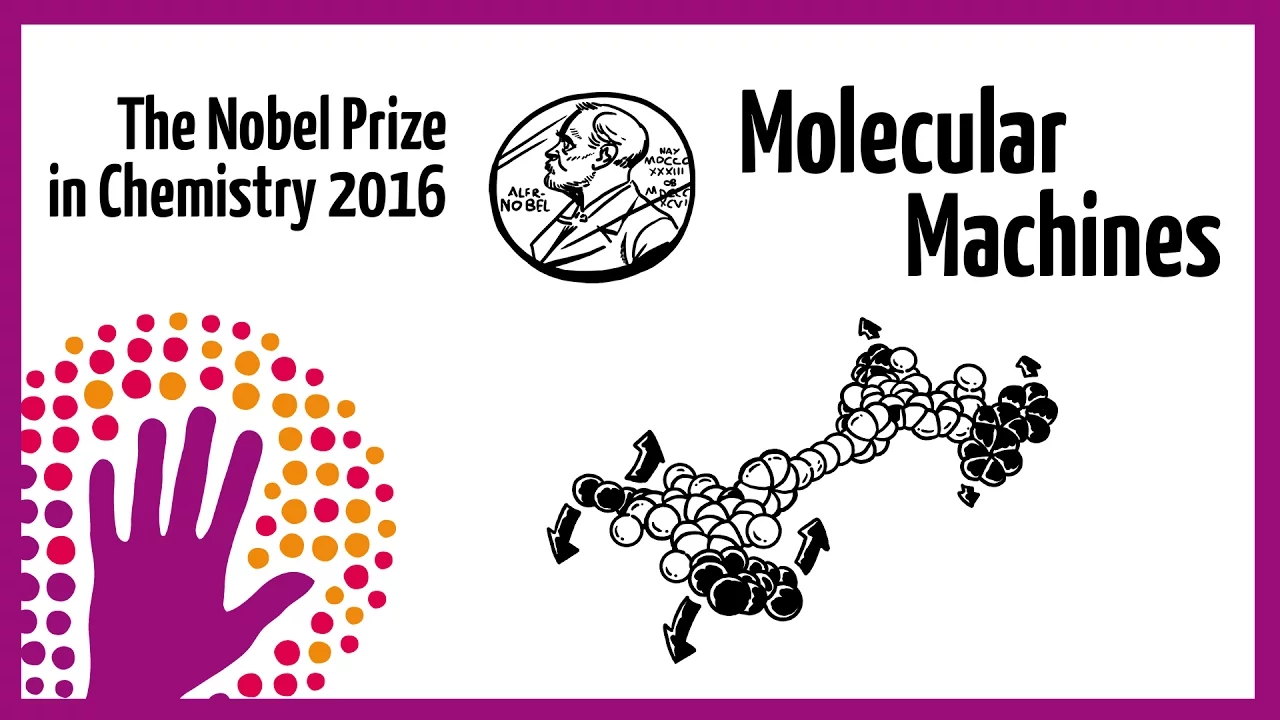
- Why this video: A clear, high-level overview of the 2016 Nobel Prize in Chemistry, explaining the conceptual breakthrough of taking static chemical architectures and converting them into functional molecular motors using controlled inputs.

- Why this video: This video details the structure and synthesis of catenanes (mechanically interlocked rings) and rotaxanes (rings threaded onto an axle with molecular stoppers). It illustrates how template-directed synthesis (using metal ions or donor-acceptor interactions) is used to assemble these mechanically interlocked molecular architectures (MIMAs).

- Why this video: Sir J. Fraser Stoddart's Nobel lecture details the journey of designing rotaxane-based molecular switches, shuttles, and molecular muscles. It is an exceptional primary resource highlighting how molecular recognition principles dictate the motion of mechanically interlocked systems.

- Why this video: Ben Feringa explains the design and synthesis of the first unidirectional, light-driven molecular motor. He describes how photochemically induced cis-trans isomerization, coupled with thermal helicity inversion, prevents backwards rotation, allowing continuous motion.
Knowledge Checkpoint
- Define a "mechanical bond" and distinguish it from a traditional chemical bond.
- Explain how Sauvage used transition-metal templating (such as complexes) to revolutionize the synthesis of [2]catenanes.
- Describe the function of a molecular "shuttle" based on a rotaxane architecture. What chemical triggers are typically used to move the ring along the axle?
- Detail the four-step cycle (two photochemical, two thermal) that allows Feringa's molecular motor to rotate unidirectionally.
Course Map
This flowchart maps your learning progression, illustrating how molecular forces build into host-guest complexes, thermodynamics, characterization, and molecular machines.
Key People Index
- Jean-Marie Lehn: Co-recipient of the 1987 Nobel Prize in Chemistry. Coined the term "supramolecular chemistry" and established the fundamental concepts of molecular recognition and "chemistry beyond the molecule."
- Charles Pedersen: Co-recipient of the 1987 Nobel Prize in Chemistry. Discovered crown ethers, which laid the foundation for synthetic host-guest chemistry.
- Jean-Pierre Sauvage: Co-recipient of the 2016 Nobel Prize in Chemistry. Pioneered the template-directed synthesis of catenanes using transition metals, creating the first mechanically interlocked molecules.
- Sir J. Fraser Stoddart: Co-recipient of the 2016 Nobel Prize in Chemistry. Developed rotaxanes and molecular shuttles, utilizing donor-acceptor interactions to drive mechanical movement.
- Ben L. Feringa: Co-recipient of the 2016 Nobel Prize in Chemistry. Synthesized and demonstrated the first light-driven unidirectional molecular rotor, overcoming random thermal fluctuation.
Final Self-Assessment
Complete this comprehensive self-assessment to verify your mastery of supramolecular chemistry.
- I can write down the approximate bond energies for covalent bonds, hydrogen bonds, and van der Waals interactions, highlighting their implications on thermodynamic reversibility.
- I can predict the matching alkali metal ion for 12-crown-4, 15-crown-5, and 18-crown-6 based on ionic radii and oxygen cavity size.
- I can describe the structural and hydrophobic difference between the exterior and interior cavity of cyclodextrins.
- I can write the thermodynamic derivation explaining why the hydrophobic effect is predominantly driven by entropy () rather than enthalpy ().
- I can contrast the chelate effect with the macrocyclic effect using entropy change () and structural preorganization.
- I can outline the laboratory preparation steps required to perform a standard supramolecular NMR titration to find an association constant ().
- I can explain how Isothermal Titration Calorimetry (ITC) uses reference and sample cells to measure heat exchange () during binding.
- I can define mechanically interlocked molecular architectures (MIMAs) and list two examples (catenanes and rotaxanes).
- I can draw a schematic diagram showing how a transition-metal cation can act as a temporary template to synthesize a [2]catenane.
- I can explain the thermodynamic and kinetic requirements needed to achieve unidirectional rotation in molecular motors, explicitly detailing how Feringa's system prevents thermal backtracking.