The 2016 Nobel Prize in Chemistry was awarded to Jean-Pierre Sauvage, J. Fraser Stoddart, and Bernard Feringa for developing molecular machines—tiny mechanical devices constructed from molecules and ions that can perform controlled movements, such as rotating rings around axles, moving like shuttles along tracks, or spinning rotor blades with UV light pulses, representing a revolutionary advancement in nanotechnology that could lead to future applications in medicine, computing, and materials science.
Molecular Machines: Nobel Prize in Chemistry 2016 Explained
Added:Deep Dive
Fundamental concepts of organic chemistry, including covalent bonding, molecular geometry, and stereochemistry (such as chirality and cis-trans isomerism).

Fundamental of organic chemistry | MCQ MDCAT | ECAT | NMDCAT | lecture 8 chapter 7
1K
This segment covers core organic chemistry concepts including carbon hybridization (sp3 for single bonds, sp2 for double bonds, sp for triple bonds), molecular geometries (planar for sp2, linear for sp), and isomerism. It explains cis-trans isomerism in alkenes, which requires each carbon of the double bond to have two different substituents. The video also covers functional groups like amides (-CONH2) and the distinction between saturated and unsaturated hydrocarbons.
Click to watch →
জৈব যৌগ - সমানুতা (পর্ব ২) | Organic Chemistry - Stereo Isomerism | Admission | Saikat Abdullah
239.4K
This comprehensive segment covers the fundamental concepts of stereoisomerism in organic chemistry. The instructor introduces geometric isomerism, explaining that it occurs due to restricted rotation around the carbon-carbon double bond, which consists of one sigma bond and one pi bond. Each carbon atom has sp2 hybridization with bond angles of approximately 120 degrees. The segment covers the cis-trans isomerism system and the more advanced E-Z notation, which assigns priorities based on atomic number. The instructor then transitions to optical isomerism, explaining that chiral molecules have non-superimposable mirror images called enantiomers. A molecule is chiral if it lacks an internal plane of symmetry and contains a stereocenter bonded to four different groups.
Click to watch →
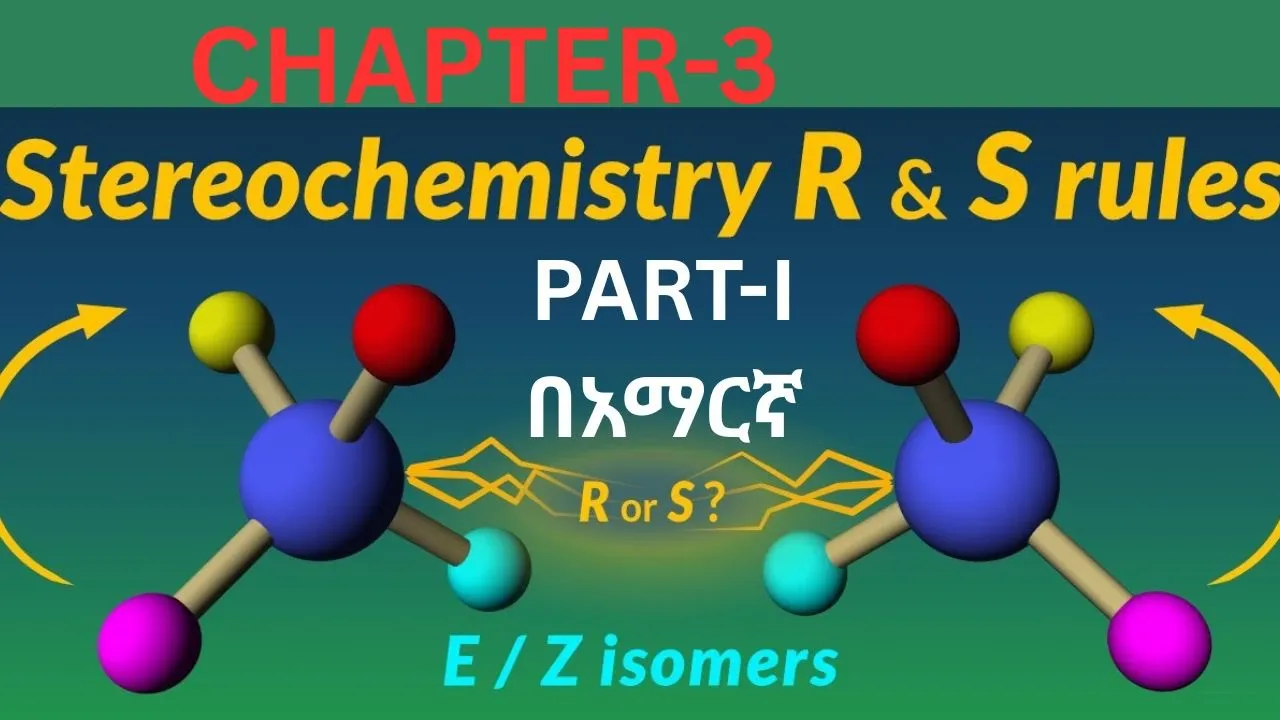
Stereoisomers, Enantiomers, Meso Compounds, Diastereomers, Constitutional Isomers በአማርኛ PART-I
18.7K
This segment covers two fundamental concepts in organic chemistry. First, cis-trans isomerism describes how molecules can have the same chemical formula but different spatial arrangements. In the 'cis' configuration, similar groups are on the same side of a double bond or ring structure. In the 'trans' configuration, similar groups are on opposite sides. This geometric isomerism occurs because of restricted rotation around double bonds or within ring structures. Second, the video introduces chirality, where a molecule is chiral when it cannot be superimposed on its mirror image, typically containing a chiral center—a carbon atom bonded to four different groups. Chiral molecules exist as non-superimposable mirror images called enantiomers, and the number of stereoisomers for a molecule with n chiral centers is 2^n.
Click to watch →

Stereo Chemistry Intro &Geometrical isomerism |ازاى احددCis, Trans & Z, E
6.4K
Stereochemistry studies how atoms arrange themselves in space within organic compounds, crucial for drug-receptor binding (lock and key mechanism). Isomers share molecular formulas but differ in arrangement. Constitutional isomers differ in structure (skeleton, functional group position, or type). Stereoisomers have same structure but differ in spatial arrangement. Stereoisomers divide into conformational (interconvertible by rotation, cannot be isolated) and configurational (cannot interconvert, can be isolated). Cis-trans isomerism occurs with restricted rotation around double bonds or ring systems. Each double bond carbon must have two different groups and share at least one common group. Cis: higher priority groups on same side. Trans: higher priority groups on opposite sides. Priority determined by atomic number. Cis isomers are polar (dipole moments don't cancel), trans isomers are non-polar (dipole moments cancel).
Click to watch →

L1 | Introduction to Stereochemistry | IIT JAM | CSIR-NET | GATE | Chemistry | Anoop Lamba
31.9K
Organic chemistry requires understanding carbon-carbon and carbon-nitrogen bonds along with three-dimensional molecular structures. Isomers are compounds with the same molecular formula but different physical and chemical properties. They are classified into constitutional isomers (different connectivity) and stereoisomers (same connectivity but different spatial arrangements). Stereoisomers are further classified into configurational isomers (cannot interconvert without breaking bonds) and conformational isomers (can interconvert by rotation around single bonds). A molecule is chiral (optically active) if and only if it lacks all symmetry elements (plane of symmetry, center of symmetry, and improper axis of symmetry). This relationship between symmetry and chirality is fundamental for determining optical activity.
Click to watch →
Deep Dive
The principles of intermolecular forces, specifically distinguishing between standard chemical bonds and non-covalent interactions like hydrogen bonding and van der Waals forces.

كيمياء الثاني متوسط منهج 2024 | الفصل الثاني المركبات الكيميائية | المحاضرة (2)
50.1K
Van der Waals forces are weak physical forces, not chemical bonds, arising from electron rotation in atoms or molecules. They are temporary and time-dependent. Hydrogen bonding is a stronger physical attractive force resulting from electrostatic attraction between negative poles (oxygen) and positive poles (hydrogen) in adjacent molecules. Both forces are physical attractions rather than true chemical bonds, with hydrogen bonds being stronger than Van der Waals forces but weaker than covalent or ionic bonds.
Click to watch →

12) TYT Kimya - Kimyasal Türler Arası Etkileşimler - Görkem ŞAHİN - 2026
468.8K
Strong interactions (chemical bonds) include: (1) Covalent bonds - electron sharing between non-metal atoms, (2) Ionic bonds - electrostatic attraction between cations and anions, (3) Metallic bonds - attraction between metal atoms and delocalized electrons. Weak interactions (physical bonds) include: (1) Van der Waals forces - weak attractive forces between molecules, (2) Hydrogen bonds - stronger weak interactions when H bonds to N, O, or F. Classification practice: atom-to-atom = strong, molecule-to-molecule = weak. Noble gases are exceptions with weak atom-to-atom interactions despite being atoms.
Click to watch →

Hydrogen Bonds vs Van der Waals Forces | Chemistry KSSM Form 4 Chapter 5
14.3K
Hydrogen bonds are stronger intermolecular forces that form between a hydrogen atom bonded to nitrogen, oxygen, or fluorine and another nitrogen, oxygen, or fluorine atom in a different molecule, while Van der Waals forces are weaker attractions between partially charged regions of molecules caused by electron cloud fluctuations; this difference in strength explains why substances with hydrogen bonding (like water and ethanol) have higher melting and boiling points and greater solubility in water compared to substances with only Van der Waals forces (like oil).
Click to watch →
Les interactions intermoléculaires
60.3K
Molecular solids are held together by two main types of intermolecular forces: Van der Waals forces (which include London dispersion forces between non-polar molecules, dipole-dipole interactions between polar molecules, and dipole-induced dipole interactions) and hydrogen bonds (which form between a hydrogen atom bonded to a highly electronegative atom and an atom with lone pairs). Van der Waals forces are weaker than ionic bonds but stronger than hydrogen bonds, with their intensity increasing with molecular size and polarizability; hydrogen bonds are stronger than Van der Waals forces but weaker than covalent bonds.
Click to watch →
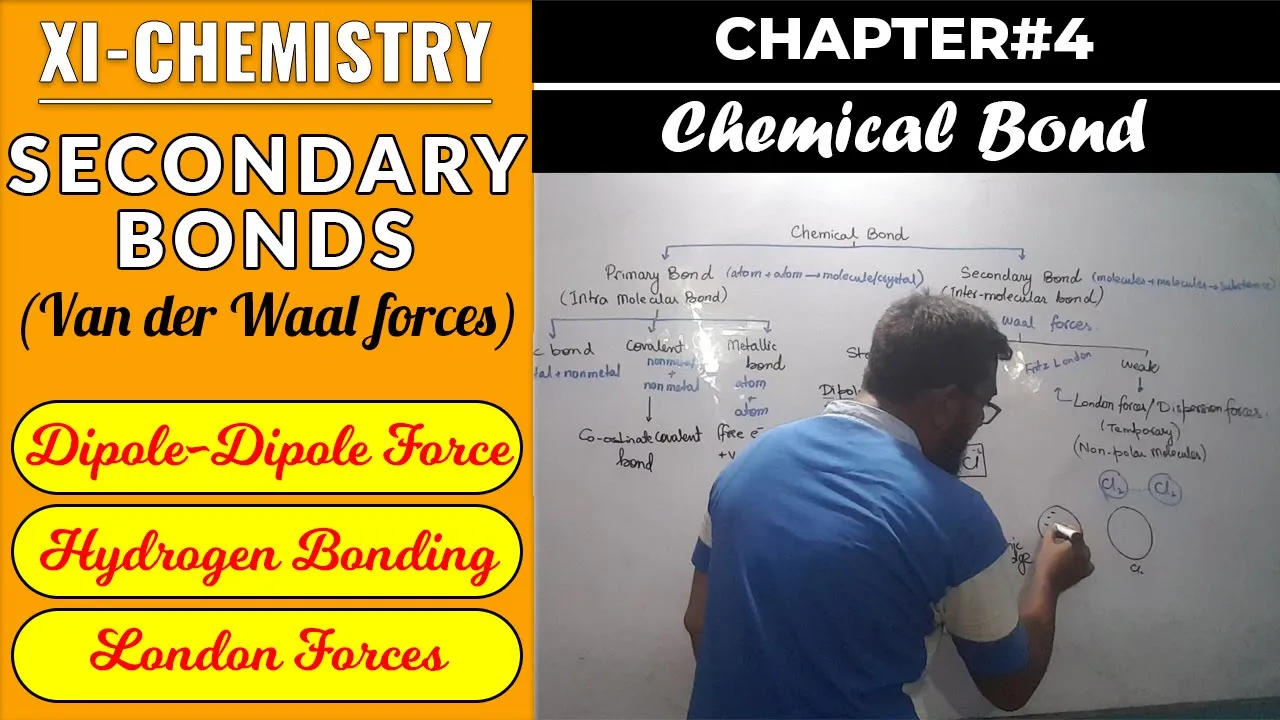
Van der Waal Forces || CH#4 || XI - Chemistry
17.5K
Chemical bonds are classified into primary bonds (ionic, covalent, and coordinate bonds) that hold atoms together within molecules, and secondary bonds (intermolecular forces) that hold molecules together. Van der Waals forces, a type of secondary bond, include London dispersion forces (temporary dipole-induced dipole interactions), dipole-dipole interactions (between polar molecules), and hydrogen bonding (a special case where hydrogen is bonded to highly electronegative atoms like fluorine, oxygen, or nitrogen). These intermolecular forces are weaker than primary bonds and are responsible for physical properties like boiling point and melting point, as demonstrated by water molecules forming hydrogen bonds that cause condensation during temperature changes.
Click to watch →
Deep Dive
Basic thermodynamics and kinetics, particularly how energy inputs (light, heat, or chemical energy) drive conformational changes and chemical reactions.
UA-PTC; CHEM 1303-CH 7 PP - Thermodynamics and Kinetics
106
Thermodynamics studies energy, work, and heat through three laws: energy cannot be created or destroyed (First Law), the universe spontaneously increases disorder (Second Law measured by entropy), and pure crystals at absolute zero have zero entropy (Third Law). Chemical reactions are classified as exothermic (releasing heat, heat on product side) or endothermic (absorbing heat, heat on reactant side), determined by enthalpy change (ΔH = H_products - H_reactants; positive ΔH = endothermic, negative ΔH = exothermic). Heat transfer is calculated using Q = mcΔT, where specific heat capacity varies by material. Kinetics examines reaction rates through activation energy—the minimum energy required to start a reaction—with higher activation energy resulting in slower reactions. Factors affecting reaction rates include reactant structure, molecular orientation, concentration, temperature, physical state, and catalysts (which lower activation energy without being consumed). Reversible reactions reach dynamic equilibrium where forward and reverse reaction rates equalize, and Le Chatelier's principle predicts how systems respond to disturbances by shifting to minimize the change.
Click to watch →

L-1, Basic-Introduction | अध्याय-5, ऊष्मागतिकी | Thermodynamics | 11th Chemistry
98.3K
Thermodynamics studies energy transformations in nature, including how energy converts from one form to another (wind to mechanical, mechanical to electrical, electrical to light, light to chemical). In chemical reactions, energy is either released or absorbed. When bonds form, energy is released (exothermic), and when bonds break, energy is absorbed (endothermic). For any reaction, the energy absorbed to initiate it and the energy released when products form are not equal. Exothermic reactions release net energy, while endothermic reactions absorb net energy. This fundamental principle explains why some reactions occur spontaneously while others require energy input.
Click to watch →
Organic 1 || Kinetic and thermodynamic, free radical reaction.
555
Thermodynamics (ديناميكا حرارية) deals with energy changes in chemical reactions - the energy that is produced or changes in compounds during a reaction. Kinetics (حركي) deals with the movement and behavior of molecules - how molecules move when exposed to heat or pressure, and the effects this has on the reaction. These are two fundamental concepts in chemistry that explain different aspects of how reactions occur.
Click to watch →
Thermodynamics Introduction | CBSE Class 11 Chemistry
324.1K
Thermodynamics is the branch of science concerned with heat and its relation to energy and work. The lesson covers systems (closed, open, isolated), internal energy, the first law of thermodynamics, and energy changes in chemical systems. Energy conversion occurs in everyday systems: vehicles convert chemical energy (petrol/diesel) to mechanical energy through heat; electric trains convert electrical to mechanical energy; batteries convert chemical to electrical energy; refrigerators convert electrical to heat energy. Energy sources are classified as solar (parent source), nuclear, and chemical. Chemical reactions involve energy changes appearing as heat, light, electrical energy, or work. At the molecular level, bond formation releases energy while bond breakage consumes energy. Thermodynamics helps determine whether reactions are feasible, why they occur, and to what extent they proceed.
Click to watch →
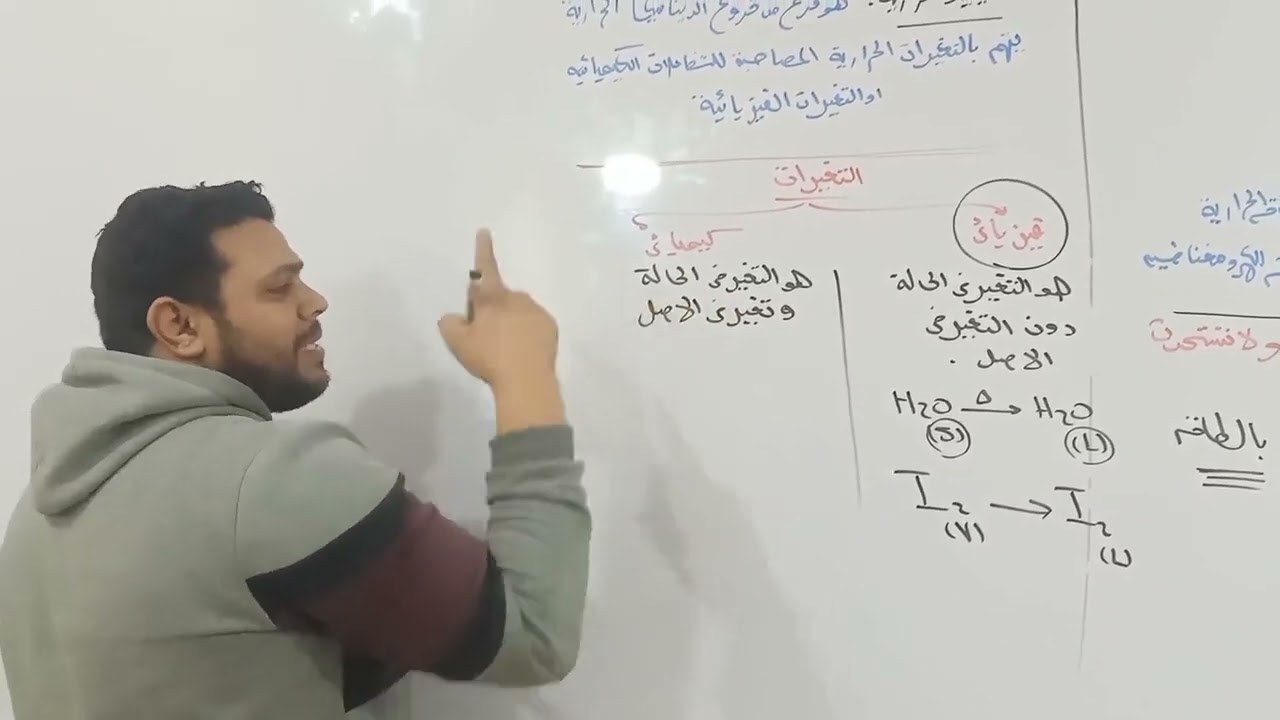
شرح الكيمياء الحراريه الباب الاول الدرس الاول 1 للصف الاول الثانوي الاستاذ اسلام عاطف
662
Thermodynamics is the science studying energy and its transformations. Energy sources include glucose combustion (biological energy) and fuel combustion (mechanical energy). Energy exists in forms: kinetic, light, thermal, nuclear, chemical, and electromagnetic. The Law of Conservation of Energy states energy cannot be created or destroyed, only transformed. Thermodynamics studies energy transfer and transformation. Chemical thermodynamics specifically examines thermal changes in chemical and physical reactions. Changes are classified as physical (state change, original substance preserved) or chemical (substance identity changes). Reactions are exothermic (heat flows out, negative sign) or endothermic (heat flows in, positive sign). This foundational knowledge enables understanding energy behavior in chemical processes.
Click to watch →
Deep Dive
An introductory understanding of nanotechnology scales (nanometers) and how thermal noise (Brownian motion) dominates at the molecular level.

Stefan Borsley | Molecular Ratchets
1.3K
At the nanoscale, thermal motion (Brownian motion) dominates over gravitational forces, making it impossible to simply scale down macroscopic machines. Instead, molecular machines must harness existing random thermal motion through rectification mechanisms like ratchets. This fundamental difference requires entirely different design principles compared to engineering at larger scales where inertia and gravity dominate.
Click to watch →

Why do some properties change at nanoscale?
1.1K
Random thermal motion becomes significant at nanoscales because particle size approaches thermal motion scales. Brownian motion occurs when suspended particles collide with fast-moving fluid molecules, observable in particles ~few microns or smaller. At the nanoscale, most cellular processes occur: DNA (2 nm diameter) stores genetic information using four bases, and hemoglobin (5 nm) carries oxygen. Hydrogen bonds, weak individually, become significant at large surface areas. These principles enable targeted smart medicine and applications in molecular self-assembly, self-organization, and green energy. Electronic processes occur at molecular levels through charge transfer, with molecules serving as wires, rectifiers, and transistors. Carbon nanotubes represent promising materials for macro-molecular electronic devices.
Click to watch →

Richard Jones - Nanotechnology and Life
1.4K
Brownian motion (thermal shaking from surrounding molecules) becomes increasingly important at smaller scales. Equipartition theorem states that every possible way to place energy in a system will have half a kT of energy, meaning nanoscale machines will have constantly jiggling internal parts. Surface forces (van der Waals forces) are always attractive and additive, becoming significant at colloidal scales. Proteins are particularly sticky, creating challenges for nanobots in biological environments like bloodstreams. These obstacles make nanoscale machine design extremely challenging.
Click to watch →

M-1.1. Why do some properties change at nanoscale?
320
Random thermal motion becomes significant at nanoscale compared to macroscopic objects. Brownian motion describes random particle movement due to fluid molecule collisions, visible in particles ~few microns but not in larger pollen grains. Biological processes occur predominantly at nanoscale: DNA (two-helix structure held by hydrogen bonds) controls all life functions; hemoglobin (~5nm) carries oxygen. Research enables targeted smart medicine, molecular self-assembly, self-organization, and photosynthesis-inspired green energy. Electronic processes occur via molecular charge transfer, with single-electron transfers charging molecules. Carbon nanotubes serve as promising molecular electronic devices.
Click to watch →

Идеальные конструкции
1.2K
At the nanoscale, thermal noise becomes a fundamental obstacle because thermal vibrations have amplitudes that are enormous compared to the size of nanomachines. This is analogous to how vibrations that would be negligible in a car (measured in centimeters) would completely destroy a nanomachine. This represents a serious physical limitation for creating nanorobots.
Click to watch →
Prerequisite Knowledge
- Concept 01Fundamental concepts of organic chemistry, including covalent bonding, molecular geometry, and stereochemistry (such as chirality and cis-trans isomerism).
- Concept 02The principles of intermolecular forces, specifically distinguishing between standard chemical bonds and non-covalent interactions like hydrogen bonding and van der Waals forces.
- Concept 03Basic thermodynamics and kinetics, particularly how energy inputs (light, heat, or chemical energy) drive conformational changes and chemical reactions.
- Concept 04An introductory understanding of nanotechnology scales (nanometers) and how thermal noise (Brownian motion) dominates at the molecular level.
Subsequent Learning
- Step 01Mechanostereochemistry: The study of mechanically interlocked molecular architectures, such as rotaxanes and catenanes, which form the joints of molecular machines.
- Step 02Stimuli-responsive smart materials and artificial muscles that harvest nanoscale molecular motion to perform work at the macroscopic level.
- Step 03Advanced nanomedicine applications, including the design of smart drug-delivery vehicles and nanobots capable of targeted cellular intervention.
- Step 04Molecular electronics and logic gates, exploring how molecular switches can be integrated into future computing architectures and sensors.
Molecular Machines
Future Impact
Molecular Machines
0:00Playing Section
- 1
Explains molecular machines as nanoscale tools built from molecules.
- 2
Details early designs like chains, rings, and axles by pioneers.
- 3
Highlights the shift from simple cranks to advanced molecular systems.
The Brownian Motion Challenge and the Practicality Gap
While the synthesis of molecular machines is a triumph of synthetic chemistry, critics and physicists highlight a significant gap between these nanoscale structures and practical utility. A primary critique focuses on the potentially misleading analogy to macroscopic machines. At the molecular scale, physical forces operate vastly differently: gravity and inertia are negligible, while viscous drag and constant thermal fluctuations (Brownian motion) dominate. Consequently, a 'nanocar' or 'molecular motor' does not behave like its macroscopic counterpart; it must constantly battle random thermal bombardment. Critics argue that harnessing these molecules to perform directed, macroscopic work is exceptionally difficult, and most designs remain confined to highly controlled, artificial laboratory solutions. This perspective suggests that the 'machine' metaphor may overhype the immediate real-world utility of these molecules, as translating them into revolutionary, everyday technology remains an unsolved engineering challenge.
Deep Dive
Mechanostereochemistry: The study of mechanically interlocked molecular architectures, such as rotaxanes and catenanes, which form the joints of molecular machines.

Yuanning Feng | A Molecular Replication Process Drives Supramolecular Polymerization
622
This video presents a novel approach to supramolecular polymerization where a self-catalytic monomer with quadruple hydrogen bond arrays drives its own replication through autocatalytic cycles, enabling the formation of self-assembling polymers with high diastereoselectivity; the system uses template-directed catalysis where the product of a 1,3-dipole cycloaddition reaction between monomers A' and B serves as a template to accelerate its own formation, achieving a 91:1 diastereoselectivity enhancement compared to the non-templated reaction, while the resulting supramolecular polymers exhibit layered crystalline structures confirmed by PXRD and SEM analyses.
Click to watch →

Reacciones Selectivas Bajo Condiciones Mecanoquímicas - James Mack
205
In mechanochemical reactions, the choice of metal cation can control stereochemistry. With bromide, cesium favors the trans-alkene while lithium shows poor reactivity. With chloride, cesium also favors trans-alkene but with lower yield. This demonstrates that mechanochemical reactions offer additional control parameters for stereochemical outcomes beyond what is available in solution chemistry.
Click to watch →

Dr. James Mack - Developing Selective Reactions under Mechanochemical Conditions
994
In traditional solution-phase vinylogous Michael reactions, the stereochemistry of the product depends on the mechanism and solvent effects. Under mechanochemical conditions without solvent, the absence of solvation forces the alkali metal-halogen ion pair to participate directly in the mechanism. This changes the stereochemical outcome: instead of the typical cis-stereochemistry seen in solution, mechanochemical conditions favor trans-stereochemistry. The six-membered ring intermediate adopts a conformation where the two phenyl rings occupy opposite sides of the ring rather than the same side.
Click to watch →

Methods of determining mechanism and Isotope effects (CHE)
13K
Product stereochemistry must be accounted for when studying reaction mechanisms, as stereochemical investigations have played a major role in developing our understanding of organic reaction mechanisms. Examples include Walden inversion in SN2 mechanisms, neighboring group participation, and reactions controlled by orbital symmetry. While the stereochemical course of many reactions is known, the mechanistic explanation may still be debated. Kinetically controlled reactions are most useful for controlling product stereochemistry, while thermodynamic control may take over under more vigorous conditions.
Click to watch →

2nd ChemPhysChem Virtual Symposium "Supramolecular Chemistry"
1.7K
Mechanical interlocking generates diverse stereogenic units beyond traditional covalent centers: (1) Mechanical planar chirality from asymmetric axle/macrocycle arrangements; (2) Topological chirality in catenanes; (3) Co-conformational stereogenic units where one component desymmetrizes a prochiral unit. As component count increases, new stereogenic possibilities emerge, creating an essentially infinite space for stereochemical exploration.
Click to watch →
Deep Dive
Stimuli-responsive smart materials and artificial muscles that harvest nanoscale molecular motion to perform work at the macroscopic level.

Smart Materials, from molecular switches to motors
190
Liquid crystal displays use rod-like molecules organized in helical arrangements, where color depends on helix pitch. Doping with molecular motors enables light-powered color-changing displays without electricity. Amplification of molecular motion to microscopic scales (at least one million-fold) enables practical applications. Liquid crystal polymers create artificial muscles that contract/expand under light, bending and grabbing objects autonomously. 3D printing with responsive materials creates flapping wings. Amphiphilic motors self-assemble into nano-fibers forming artificial muscles (95% water, 5% active material) that contract under light. Combining motors with magnetic nanoparticles enables devices guided by magnetic fields and activated by light. Biocompatible systems support living stem cells, which differentiate based on surface cues. Carbon nanotubes with glucose-converting enzymes create autonomous nano submarines. These developments bridge molecular machines with biology, opening paths to medical applications.
Click to watch →

The Art of Building Small - Ben Feringa
408
This section demonstrates how molecular motors create responsive materials with transformative potential. The speaker shows how incorporating motors into liquid crystal polymers enables walking materials that bend and twist under light irradiation, with chirality determining directionality. Molecular cars (2 nm in size) demonstrate translation of motion from rotational to translational modes through proper stereochemical design, requiring opposite wheel rotation (meso structure) for forward motion. The emergence of artificial muscles from small molecules through self-assembly represents a major breakthrough—amphiphilic molecules containing motors self-assemble into fibers in water, organized by calcium ions into aligned structures. Remarkably, only 5% of the mass consists of molecular motors while 95% is water—yet sufficient collective motion produces observable actuation. These developments demonstrate how molecular-level design produces macroscopic mechanical effects, enabling applications from self-cleaning surfaces to potential biomedical devices.
Click to watch →

Sophie Beeren - Stimuli-Responsive Smart Materials
684
Stimuli-responsive smart materials are chemical systems that can sense environmental changes (such as light, pH, temperature, or enzymes) and respond by changing their structure or function, enabling applications like targeted drug delivery where molecular capsules release contents only at specific locations in the body; these materials are typically created through bottom-up approaches where small molecular building blocks spontaneously self-assemble into responsive structures, as demonstrated by carbohydrate-based systems where glucose oligomers wrap around hydrophobic guests to form helical assemblies that can be reversibly broken apart and reassembled using molecular encapsulation and enzymatic triggers.
Click to watch →
Tipos de materiales inteligentes - Parte II
610
Smart materials (actuators) respond to external stimuli through molecular-level changes: electroactive materials (dielectric elastomers) expand when electrical current is applied due to charge polarization; thermoelectric materials convert temperature differences to electrical energy via Seebeck, Peltier, and Thomson effects; electro/magnetorheological fluids change viscosity reversibly under electrical or magnetic fields by organizing molecules into columns; and hydrophobic materials create self-cleaning surfaces through nanoscale structures that trap air, preventing water contact (lotus effect).
Click to watch →

Conferencia Premio Nobel de Química. Ben L. Feringa. The Art of Building Small. UCM
354
Molecular motors integrated into liquid crystal polymers create artificial muscles capable of contraction, expansion, and bending motions. Under light illumination, these motorized polymers exhibit programmed movements including outward-inward cycles and coordinated contractions. Surface-assembled molecular motors create responsive monolayers with synchronized rotational behavior, enabling nano-windmills and other surface-confined devices. Molecular motors incorporated into metal-organic frameworks (MOFs) create crystalline porous materials with dynamic properties, changing porosity in response to light. Photosensitizing layers combined with molecular motors create complete energy harvesting systems, converting light to mechanical work autonomously. These applications span self-cleaning surfaces, self-healing materials, biomedical devices, and sustainable energy conversion. The integration of molecular motors with diverse material platforms demonstrates the versatility of molecular nanotechnology for addressing global challenges in healthcare, environmental remediation, and renewable energy.
Click to watch →
Deep Dive
Advanced nanomedicine applications, including the design of smart drug-delivery vehicles and nanobots capable of targeted cellular intervention.

Mark Of The Beast💉🧬 NANOBOTS #nanotechnology #DNA #motb #IdoBachelet #revelation #cell
108
Nanobots solve the fundamental challenge of controlling drug delivery at the molecular level. Traditional drug development searches for safer drugs is flawed because drugs cannot be trained like soldiers. Nanobots act as well-programmed soldiers that can control existing drugs. They can safely sequester toxic drugs until reaching target cells. When unlocked, nanobots release cargo only at target sites, allowing even withdrawn toxic drugs to be used effectively. Nanobots can be programmed to search for specific tumor cells, ensuring only diseased cells are affected while healthy cells remain unharmed. Research teams have developed nanobots targeting approximately 10 types of cancer.
Click to watch →
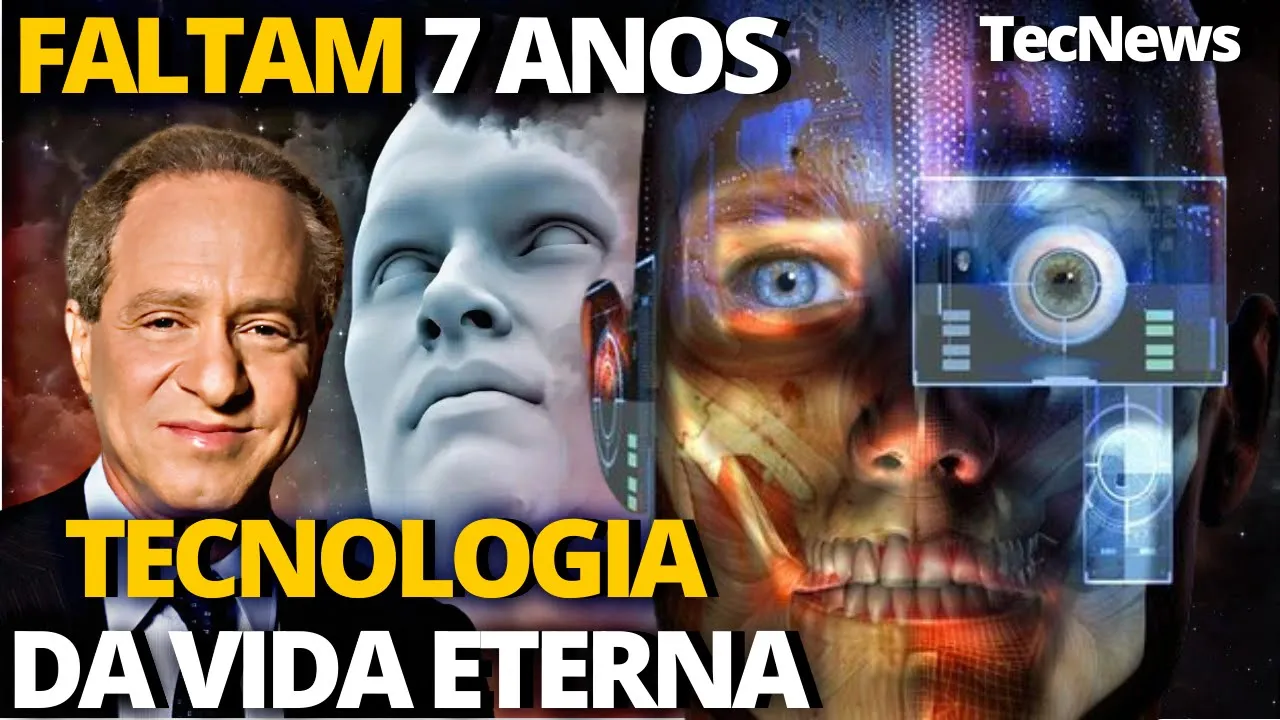
Tecnologia trará imortalidade humana em 7 anos?| Transplantar genes de centenários pode rejuvenescer
390K
Nanobots are microscopic robots measuring 50 to 100 nanometers in width. They are designed for medical applications including DNA probes, cellular imaging materials, and targeted cell delivery vehicles. Ray Kurzweil believes nanobots represent the future of medicine, as they will be capable of repairing the human body at the cellular level, making humans immune to diseases and aging, and eventually to death.
Click to watch →
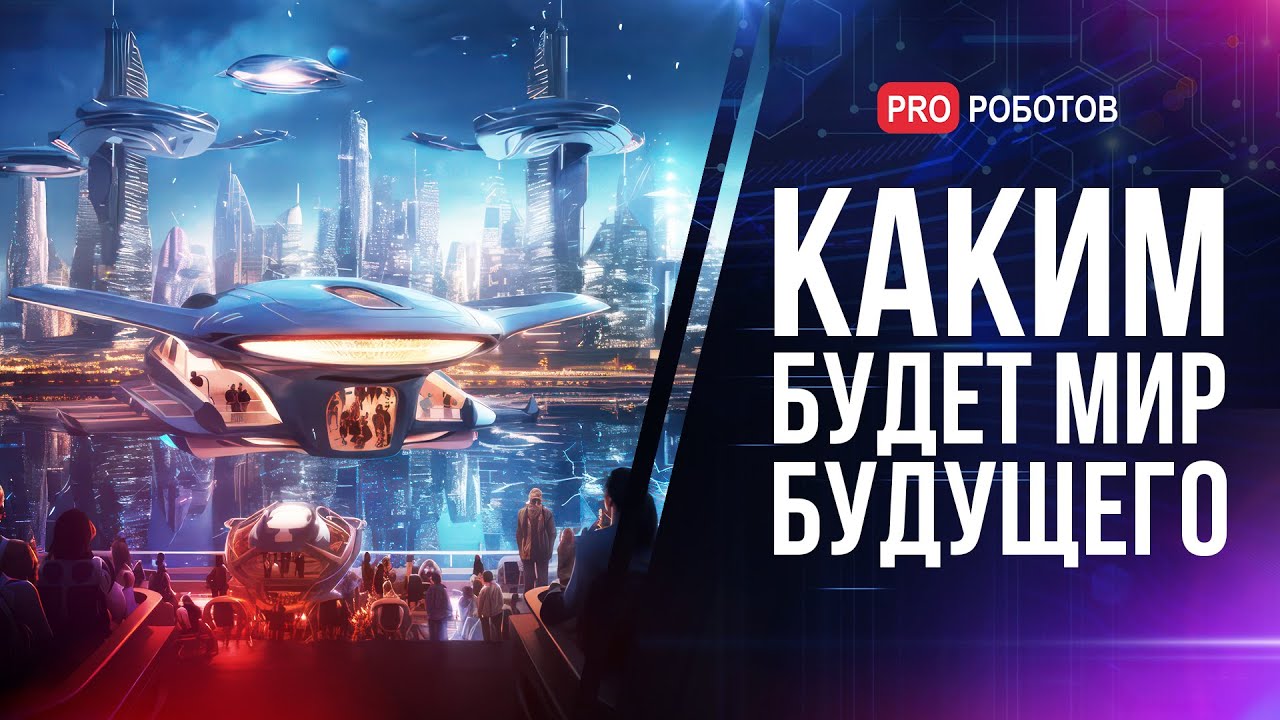
Мир будущего | Каким будет мир в 2050? | Технологии будущего | Люди будущего | Тренды будущего
312.2K
Nanobots—microscopic robots operating at the nanoscale—hold promise for targeted drug delivery, tissue and organ regeneration at the cellular level, and radical transformation of disease treatment approaches. Researchers have already developed autonomous nanobots capable of navigating human tissues, suggesting widespread medical application within 5-10 years. However, safety concerns persist regarding potential viral spread and catastrophic scenarios involving self-replicating nanobots consuming organic matter.
Click to watch →

The Illusion of a Bright Future
184.3K
Nanomedicine is the application of nanotechnology in medicine for disease prevention, diagnosis, and treatment. Nanoparticles can encapsulate or help deliver medication directly to cancer cells, minimizing damage to healthy tissue and potentially reducing toxic effects of chemotherapy. Nanobots are tiny packages that can complete tasks in an automated way, holding the ability to sense, respond, detect friend or foe within the body, and deliver payloads at the nano scale. They can be equipped with wireless transmitters to change treatment methods based on the state of medical conditions.
Click to watch →

Les avancées de la nanomédecine - Bienvenue dans le nanomonde : Des nano en nous - Documentaire HD
128.1K
Nanocapsule technology enables revolutionary chemotherapy delivery by encapsulating drugs in sugar-based nanoparticles that evade immune detection and circulate for up to a week. Acidic tumor environments trigger capsule dissolution, releasing medication directly at target sites—reducing required doses by 20 times while eliminating side effects. Parallel advances in tissue engineering use biocompatible polysaccharide scaffolds that guide cell growth and regeneration. At the nanoscale, researchers understand and reproduce cellular communication mechanisms, paving the way for controlled tissue repair. Nanomaterials enable unprecedented neural tissue repair by stopping bleeding, creating scaffolds for cell migration, and promoting nerve fiber regrowth and reconnection. In animal studies, this technology restored visual function after optic nerve severance—demonstrating complete functional recovery of complex neural connections. Beyond neural applications, these materials address surgical challenges by providing antiseptic barriers that immobilize bacteria without killing beneficial microbes.
Click to watch →
Deep Dive
Molecular electronics and logic gates, exploring how molecular switches can be integrated into future computing architectures and sensors.
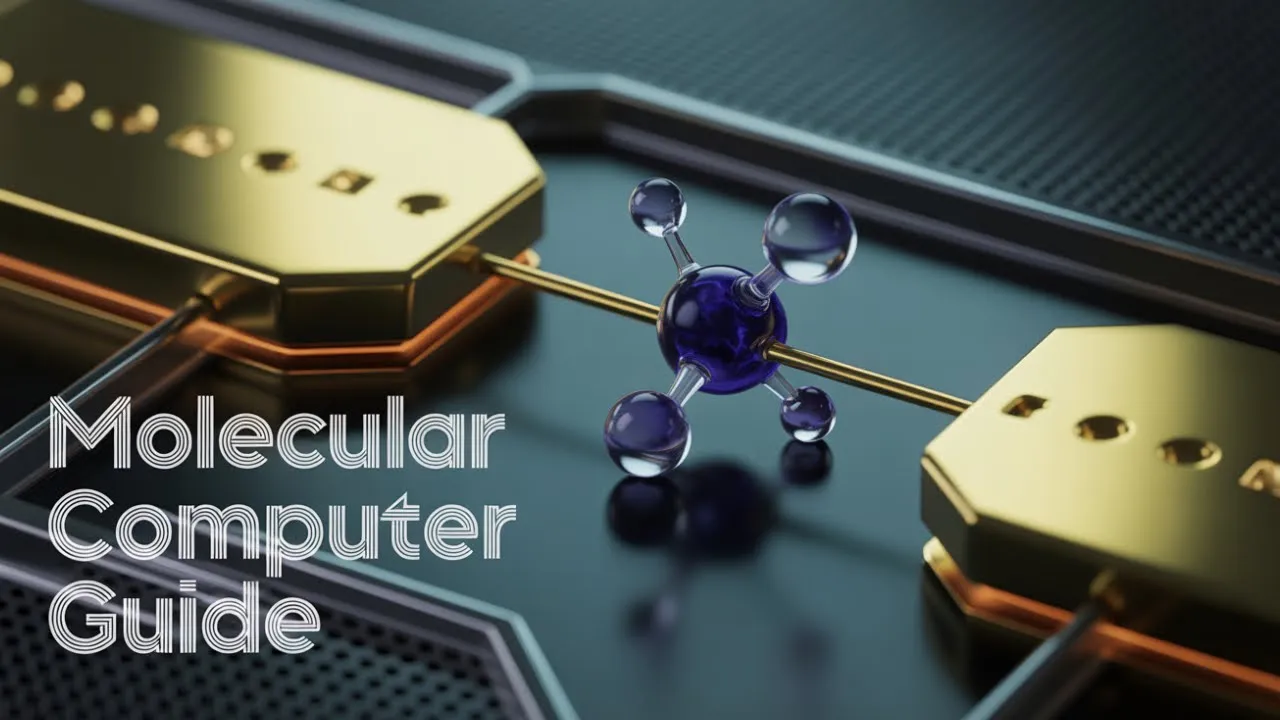
How to Build a Computer Out of Molecules
102
Quantum interference enables revolutionary molecular devices. Isomers with identical atoms and bonds can differ by factors of 1000 in conductance due to different interference patterns—one supporting constructive interference, another destructive. Electron tunneling through molecular barriers accumulates phase depending on path length and electronic structure. Fermi level alignment with molecular orbitals determines transport participation. Molecular geometry sensitivity allows single-bond rotations or anchor-point shifts to dramatically alter conductance. Molecular switches exploit this by toggling between ON (constructive interference, high conductance) and OFF (destructive interference, low conductance) states using light, electric fields, or chemical stimuli, achieving on-off ratios exceeding 1000:1. Molecular logic gates implement boolean operations through multiple independently modifiable sites, enabling AND gate functionality in single molecules. Ultra-sensitive chemical sensors detect single-target binding through conformational changes that trigger destructive interference, producing measurable conductance changes.
Click to watch →

Lecture 31
234
A molecular switch is a molecule that reversibly changes between an open (non-conducting) and closed (conducting) state. In the closed state, electrons conduct from one end to the other; in the open state, the circuit is broken. These switches can be controlled by specific light wavelengths: 365 nm light switches the molecule from open to closed (enabling conduction), while 600 nm light switches it back to open (stopping conduction). This light-controlled switching behavior allows molecular switches to function as optical electronic components and molecular logic gates, representing important applications in molecular computing and nanoscale electronic devices. The ability to control electron conduction through light input enables these molecules to perform logical operations, forming the basis for molecular-scale computing systems.
Click to watch →

Atomic Processing - Computerphile
108.3K
Researchers have created logic gates using molecular arrangements on surfaces. An AND gate can be constructed by setting up specific molecular configurations where bringing in control molecules at input positions triggers cascades that produce specific output changes. The output state depends on whether molecules are present at both input locations, demonstrating basic computational functionality at the molecular scale.
Click to watch →

MOLECULAR COMPUTERS - Can we put a computer in a living cell?
9.8K
Molecular computers use molecular switches that perform logical operations (like AND/OR/NOT gates) through molecular interactions, enabling early detection of cellular dysfunctions by reformulating biomedical questions as logic problems; these tiny molecular machines can fit inside living cells and offer promising applications for diagnosing and treating diseases such as atherosclerosis.
Click to watch →
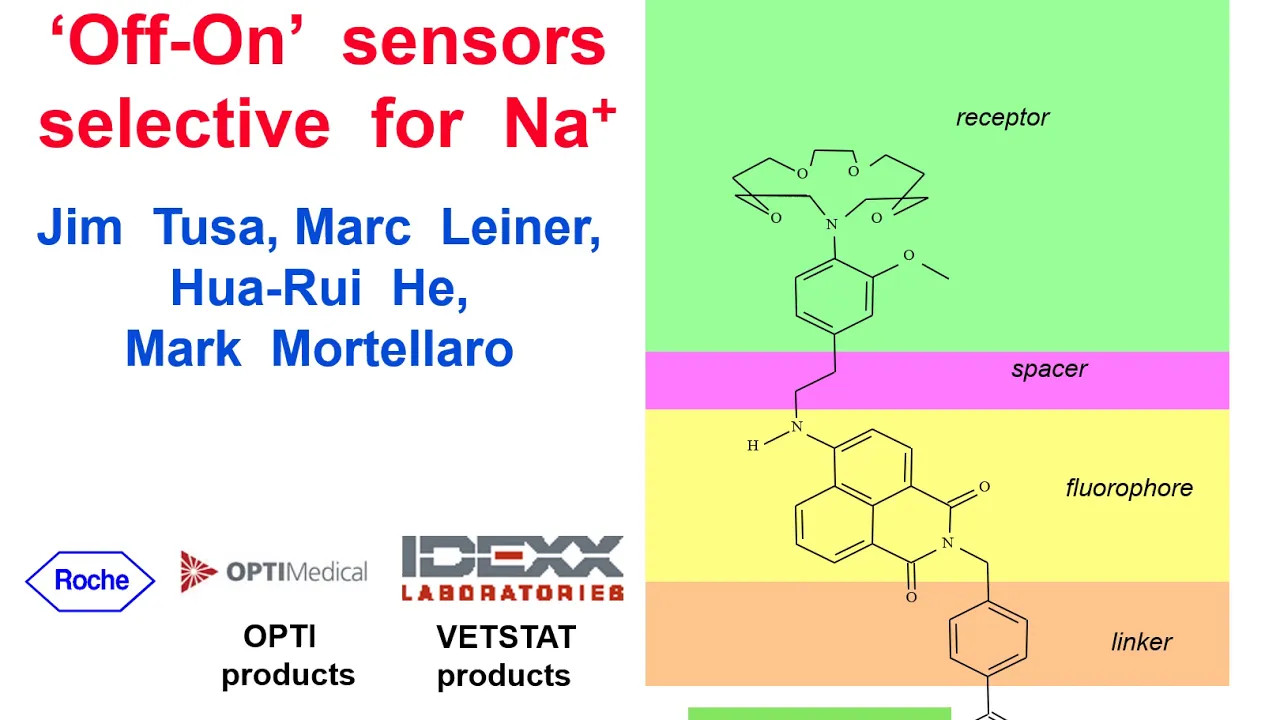
Professor AP De Silva - Fluorescent Sensors and Logic Systems for Problem Solving
439
Molecular logic extends PET sensor principles to perform computational operations. By combining multiple sensors with different logical functions (YES gates producing off-to-on signals, NOT gates producing on-to-off signals, PASS-1 gates maintaining constant output), complex computations can be performed at the molecular level. These logic gates operate on chemical inputs (substrates, reagents) and produce readable outputs (fluorescence intensity). The philosophy mirrors electronic logic devices: inputs come in, processing occurs, and outputs go out. This approach has spread to over 1,100 laboratories globally, including molecular biology labs working on synthetic biology and artificial life applications.
Click to watch →
Molecular Machines
Future Impact
Molecular Machines
0:00- 1
Explains molecular machines as nanoscale tools built from molecules.
- 2
Details early designs like chains, rings, and axles by pioneers.
- 3
Highlights the shift from simple cranks to advanced molecular systems.
The Brownian Motion Challenge and the Practicality Gap
While the synthesis of molecular machines is a triumph of synthetic chemistry, critics and physicists highlight a significant gap between these nanoscale structures and practical utility. A primary critique focuses on the potentially misleading analogy to macroscopic machines. At the molecular scale, physical forces operate vastly differently: gravity and inertia are negligible, while viscous drag and constant thermal fluctuations (Brownian motion) dominate. Consequently, a 'nanocar' or 'molecular motor' does not behave like its macroscopic counterpart; it must constantly battle random thermal bombardment. Critics argue that harnessing these molecules to perform directed, macroscopic work is exceptionally difficult, and most designs remain confined to highly controlled, artificial laboratory solutions. This perspective suggests that the 'machine' metaphor may overhype the immediate real-world utility of these molecules, as translating them into revolutionary, everyday technology remains an unsolved engineering challenge.
Fundamental concepts of organic chemistry, including covalent bonding, molecular geometry, and stereochemistry (such as chirality and cis-trans isomerism).
The principles of intermolecular forces, specifically distinguishing between standard chemical bonds and non-covalent interactions like hydrogen bonding and van der Waals forces.
Basic thermodynamics and kinetics, particularly how energy inputs (light, heat, or chemical energy) drive conformational changes and chemical reactions.
An introductory understanding of nanotechnology scales (nanometers) and how thermal noise (Brownian motion) dominates at the molecular level.
Mechanostereochemistry: The study of mechanically interlocked molecular architectures, such as rotaxanes and catenanes, which form the joints of molecular machines.
Stimuli-responsive smart materials and artificial muscles that harvest nanoscale molecular motion to perform work at the macroscopic level.
Advanced nanomedicine applications, including the design of smart drug-delivery vehicles and nanobots capable of targeted cellular intervention.
Molecular electronics and logic gates, exploring how molecular switches can be integrated into future computing architectures and sensors.
16.6K views225likes3:11@simpleshowfoundationOriginal Release: 2016-12-08
[Music] molecular machines what are they and why are they important meets Hannah she always works hard at her office during the day exhausted Hannah comes home and must wash her clothes and prepare to cook dinner cooling off in front of a fan Hannah considers that 200 years ago people had to work without these tools she wonders how they managed it at the time scientists had only invented spinning wheels and cranks which led to the tools Hannah uses in her busy day but can chores be made even simpler for future generations for that scientists must continue to develop tomorrow's machines today when reading about this year's Nobel Prize winners in chemistry Hannah discovers that scientists jeanpierre Sage sir J Fraser stodart and Bernard El finger have taken machines to an entirely new level the molecular level they have designed and synthesized machines out of molecules and ions much tinier than Hannah's food processor how is it possible to make these machines jeanpierre Sage began the development using minuscule molecules to create interlocking parts that can be moved in relation to each other he used a copper ion to stick together cresant and ring shaped molecules repeating this process he created a chain of molecules taking his first step towards a machine with a chain in which one ring rotates around the other Fraser stodart later built an open ring with no electrons and an electrically charged axle the ring was attracted to the electrons and threaded itself onto the axle with the ring closed it jumped between the electron rich areas of the axle like a tiny Ferry stodart has also designed a tiny lift a muscle and a super tiny computer chip taking it a step further feeding her produced the first molecular motor in which a rotor blade spun 180° repeatedly with each UV light pulse he has even built a four-wheel drive Nano car the four Motors function as wheels and are held together by a molecular frame inspired by previous research artistic expr and the possibility to create new materials these scientists brought chemistry to a whole new dimension Hannah considers this new dimension and its seemingly Endless Possibilities already other researchers have found ways to store energy with molecular Motors or even create a molecular robot that can grasp protein building blocks with the path now paves perhaps in another 200 years Hannah's a great great great grandchildren will wonder how she managed to survive without their widespread molecular machines
Up Next

28:54
Catenanes and Rotaxanes: Chemical Topology and Stereochemistry
@Vidyamitra
4.7K views•2015-12-01
83:56
Biocatalysis and Catalysis in Islatravir Synthesis | Merck Webinar
@SCIwheresciencemeetsbusiness
675 views•2020-10-08
10:06
1H NMR: Determining Number of Peaks from Structure
@MSJChem
59.2K views•2017-04-06
17:31
Edible Water Bottles: A DIY Guide to Sodium Alginate Spherification
@ryan
10.5M views•2019-06-21
Related Study Plans & Knowledge Roadmaps
Structured learning paths in Chemistry
chemistry
Nuclear Chemistry: Decay, Meds & Fuel Cycle
01Introduction to Nuclear Structure and Radioactivity
02Decay Dynamics and Kinetics
03Radiation Interaction and Detection
+ 2 more learning modules
24h5 modules
Explore Roadmap
chemistry
Supramolecular Chemistry: Forces & Machines
01Foundations of Chemical Bonding and Intermolecular Forces
02Introduction to Host-Guest Chemistry
03Thermodynamics and Dynamics of Self-Assembly
+ 2 more learning modules
16h5 modules
Explore Roadmap
chemistry
Photochemistry: Excited States & Reactions
01Foundations of Light-Matter Interactions
02Molecular Orbitals and Electronic States
03Photophysical Processes and Jablonski Diagrams
+ 2 more learning modules
18h5 modules
Explore Roadmap
chemistry
Coordination Chemistry: Bonding & Properties
01Introduction to Transition Metals and Ligands
02Crystal Field Theory (CFT) and Geometry
03Magnetic Behavior and Spin States
+ 2 more learning modules
14h5 modules
Explore Roadmap