



![[HÓA HỮU CƠ 1] 5 - Hoá lập thể (Stereochemistry)](https://i.ytimg.com/vi/MzGsVhJQNH4/maxresdefault.jpg)


![COMPLETE ORGANIC CHEMISTRY [ DAY 10 ] BY ONKAR SHARMA](https://i.ytimg.com/vi/jqDRzM4W4Fg/maxresdefault.jpg)



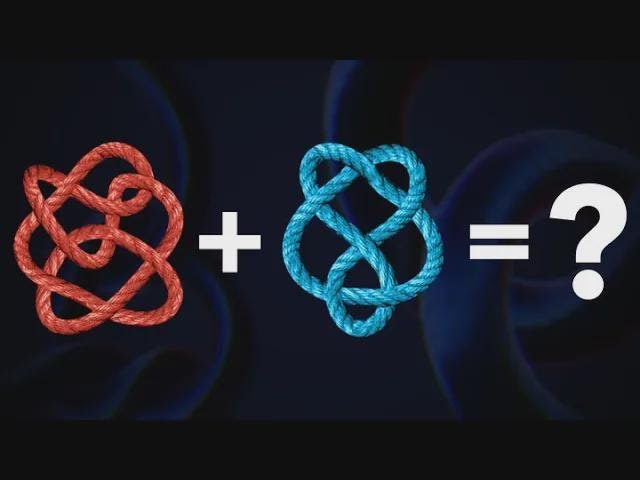

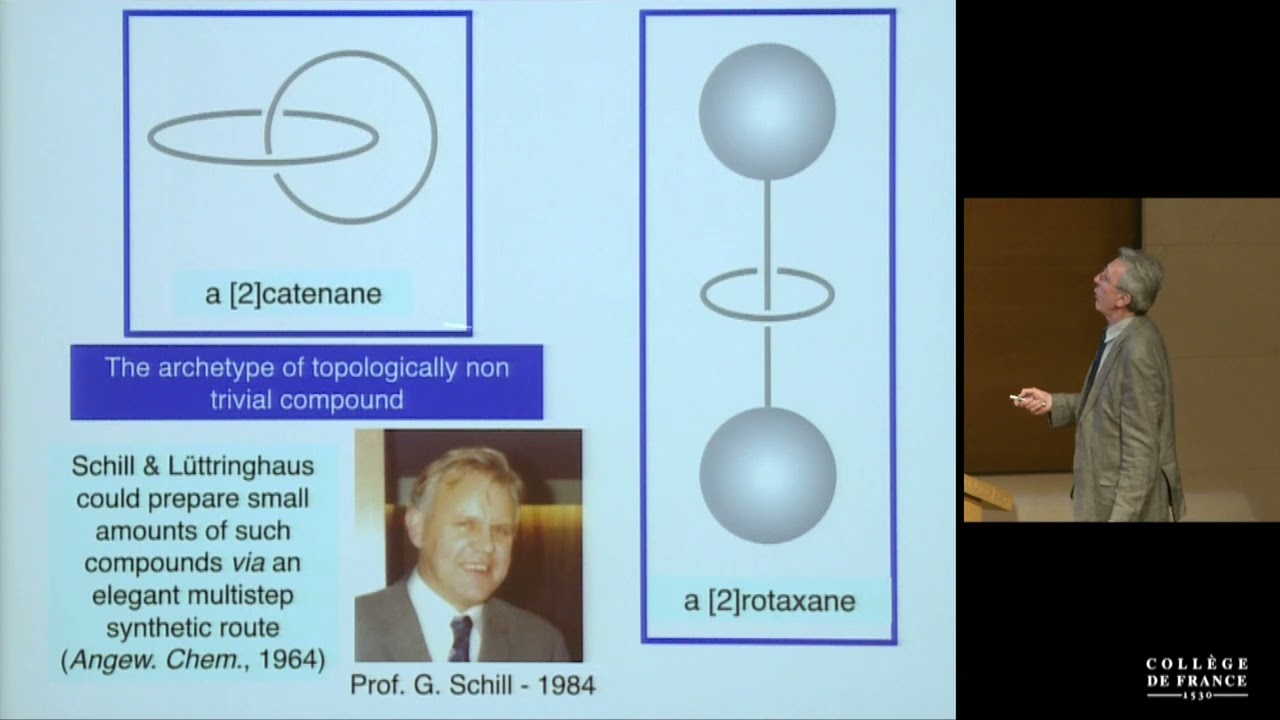



Catenanes are mechanically interlocked ring compounds where two or more rings are linked without chemical bonds, while rotaxanes consist of a linear molecule threaded through a macrocyclic ring, both representing fundamental concepts in supramolecular chemistry that emerged after the 1987 Nobel Prize awarded to Cram, Pedersen, and Lehn; these mechanically bonded structures exhibit unique stereochemical properties and have applications in molecular switches, electronic devices, and molecular machines due to their ability to undergo controlled mechanical motions.
Catenanes and Rotaxanes: Chemical Topology and Stereochemistry
Added:Fundamental concepts of supramolecular chemistry, specifically non-covalent interactions like hydrogen bonding, pi-pi stacking, and metal coordination.
Classical stereochemistry principles, including molecular chirality, enantiomerism, and traditional stereocenters.
The chemistry of macrocycles, including the structures and host-guest properties of crown ethers, cyclodextrins, and cucurbiturils.
Basic organic synthesis techniques, particularly templated synthesis and thermodynamic vs. kinetic control.
The design and operation of molecular machines and nanotechnology, such as molecular switches, shuttles, and artificial molecular motors.
Advanced chemical topology, including the synthesis and properties of molecular knots (trefoil knots, figure-eight knots) and Borromean rings.
Real-world applications of mechanically interlocked molecules (MIMs) in drug delivery systems, sensors, and molecular electronics.
The study of mechanically interlocked polymers (polyrotaxanes and polycatenanes) and their unique elastomeric and self-healing material properties.
4.7K views28likes28:54Original Release: 2015-12-01
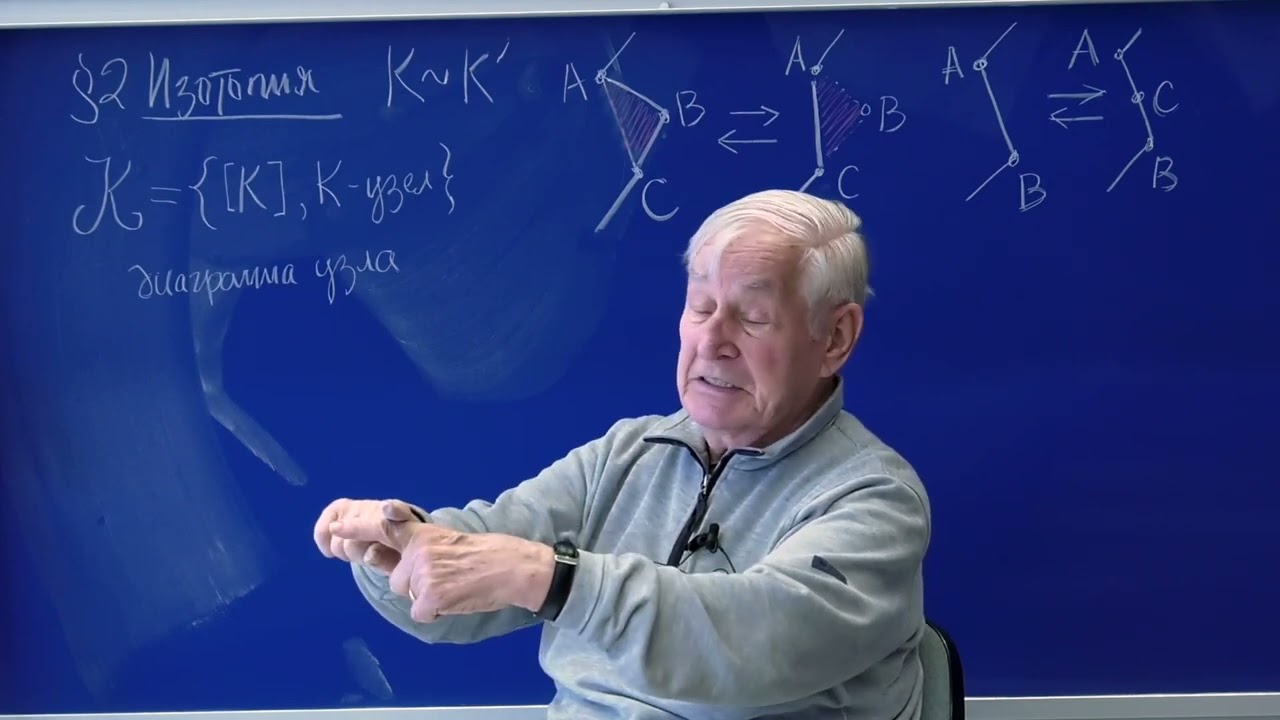
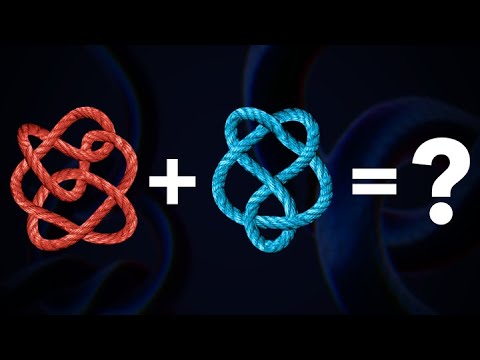
you dear students after studying this module you shall be able to learn about the basic knowledge of Catalans and rotor Zing's understand the normal nature of rotors Eanes as well as katha names you shall also analyze the chemical topology of protostomes and katha nails you will know how to determine the stereochemistry of rotor signs and cations as well and you shall also learn about the properties and applications of rotors eanes and Catalans in various fields now let us introduce this topic of rotors Eanes and Catanese this topic mainly falls under the category of supramolecular chemistry now in the late 1970s there emerged a new branch of chemistry called supramolecular chemistry and it has managed to expand very rapidly conservative by the award of the Nobel Prize in Chemistry which was conferred upon dr. CJ Patterson dr. DJ cram and dr. J M Glen in 1987 who carried out exceptional work in the field of supramolecular chemistry catenin Zandro designs differ from each other and all organic compounds synthesized to this state in a way that molecular subunits are linked mechanically in ketamine's as well as rotor scenes now let us first describe the term catenin for you kattiline is a compound consisting of two or more rings that are basically interlocked mechanically without there being necessarily any chemical interaction or so to say any chemical bond between the two subunits generally without breaking a chemical bond the Rings they cannot be separated now catenin is derived from the Latin word Katina which means chain in recent time students the terminology mechanical bond which is there present in cata nails but in the two subunits has been coined in that connection between the macrocycle of a ketamine has been applied to these macromolecules rotas eans now let us describe to you the rotor genes and how they are different from Catalans rotor Zayn's consists of long fairly linear molecules which thread through a macro cyclic ring like cotton threads through the eye of a needle same as ketamine's although rotor Zayn's also cannot decomposed into ring and chain without breaking chemical bonds hence the bulky groups terminated the linear chain part of the molecule and it is too large to fit through the cyclic fragment rotor Zayn's without such physical barriers in which the thread can left the needle are called pseudo rotor Zing's pseudo rotor scenes are necessary precursors for both rotors ins as well as Catalans now let us now understand the chemical topology of catenin Zandro designs after having described what they actually are so now you basically know that they are macro cycles but they are having mechanical bonds both rotors ins and ketamine's now students a compound can be usually described unequivocally by factors like the order in which the given number of atoms are joined together the types of bonds which connect them the configuration at an asymmetric atom or a rigid centers in that molecule the conformation as well as the topology that is the last factor now chemical topology deals with a structure and the property differences of compounds which are identical with regard to the aforementioned first three points which were the order in which the given atoms are joined together the types of bonds which connect them and the configuration an asymmetric center or a rigid Center now students another one is that which in spite apart from these factors they cannot be interconverted by conformational changes so that is chemical topology deals with structure and the property differences of compounds which are identical with regard to the first three points and in spite of that they cannot be interconverted by conformational changes which are conferred upon them such as rotation about an axis or modification of bond angles compounds which can be suitably classified in this manner are called as topological isomers and this was done by Frisch and was a man catenin one is described to you here and the twice threaded catenin catenin six are those topological isomers and for similar reasons as stated above rota Zayn's is not isomeric with its molecular subunits now you can understand that chemical topology by looking and considering this structure now consider the cations in this figure that is drawn since there is no chemical bond between the two rings fresh at all call it a mechanical bond whereas frisson was a man they suggested topological isomers as a name for these cations however you will note here as I previously stated that rotor Zing's for this reason cannot be isomeric with its molecular subunits as Catalans can be now this is one point of difference between rota sales as well as ketamine's now after considering the topological study of ketamine's and rota Sainz I shall move on and look into aspects of normal clay Chur of cations and dough designs now just as you know students that every organic compound or an inorganic compound has a name to itself so do ketamine's and rotor which are supramolecular structures now let us discuss them the nomenclature of khatyn is decided by the number of rings that is how many number of rings are interlocked to each other is done for example to catenin consists of two interlocked rings this is shown to you in the figure now analog that is in used in the end which is similar to alkanes it catenin mainly consists of an organic fragment that is it really consists of a hydrocarbon moiety now here I would like to tell your students that apart from the name ketamine the term n Katan and an N getting Nate are also analogous to crown ethers which are named their script aunts and crib dates for a metal center that is having they can encapsulate a metal inside their cavity the interlock ring system can also do the same and that can act as a ligand in this situation also for a suitable metal ion so apart from catenin get in and and catenate are also normal later systems for ketamine's the cat in and is the free ligand that forms a catenate complex in presence of a suitable metal center rotor Zayn's can also be named in an analogous manner students in the case of unbranched species such a numbering system is not necessary the names of the rings forming a branch to the main chain are numbered with subscripts and placed together with the ring on which branching takes place in one bracket now here you can see we have given you numerous examples on the nomenclature of catty signs and catty means and rota Zayn's and also pseudo rota saints in cata nails and resins containing multiple windings it is also necessary to designate the winding number which is designated by a term called alpha the quantity alpha basically since the number of times one microcycle wins about the other cat in ales which form a ring with themselves are designated as cyclo cat innings and also you should state here how many times does this find about itself which is designated by alpha as I told the examples figure will definitely clarify your concepts on the nomenclature of cyclo ketamine's and rota signs as well as other ketamine's now you can see here the concept of normal later in this figure clearly now let us come to another topic after normal a turn which is very important which is the stereochemistry of Catanese and Otis's stereochemistry of Catalans and rota Zayn's is not a very highly explore topic students except for discussion on simple structures of ketamine's in particular rotor Zayn's have been very minimally dealt with in this area of study here we discuss all the possible cases of stereochemistry with you in case of both Catanese as well as rota since now we will first discuss the stereochemistry of khatyn ins the stereochemistry of simple cargo cyclic to cut in Ian's can be categorized in the first is the Catalans which bear no substituent's do not occur as anti pawns second is the Catalans having substituent's in only one of the two rings are stereochemically related to the corresponding uncatted ated micro-cycles cata nians in which each subunit contains two substituents located on the same ring atom our stereo chemically related to aleene's and Spiro compounds if each ring has two substituent's a and B as shown in the formula in the given figure a necessary and sufficient condition for the occurrence of enantiomers is that a is not equal to B then only there will be called as enantiomers provided a is not equal to B that means the substituent a is different from substituent be the fourth is that Catanese very subunit contains two substituent's located on different ring atoms generally exist as an enantiomeric pair however doorknobs pointed out that this may not always be true now in this case consider catenin shown which is given in the figure as an example in this catenin students you will notice that each ring has the same two substituent's are on different ring atoms the segment's of the individual ring of the catenin have to be of such a nature that the molecule possesses a four-fold alternating axis of symmetry now here I would like to reiterate it that this figure in this catenin each ring is having the same two substituent's on different ring atoms now this segment of individual rings of the kattiline have to be of such a nature that the entire molecule it possesses a four-fold axis of symmetry alternating axis of symmetry in this case students the catenin becomes a car although the component rings are dis symmetrical now this example probably is the most important example of how the catalan becomes a chiral now v one v point about it is that a type of an angioma ism closely related to catenin is mentioned in point three was first pointed out by the scientist close on and in more generalized way by prolonging or prolong it all are the scientists who have done the nomenclature for rms systems in cali compounds and later by crews considered two cations which are cyclo enantiomers in themselves in order that this difference can be pertinent each ring of the catenin must consist of at least three different segments even though every segment appear in both the rings now let us consider in special case in point number six considering the stereochemistry of Quetta names special cases may arise if one of the two rings of a catenin is so small or has substituent's which are so large that free rotation of one ring within the other is hindered this case is shown in the figure very clearly wherein you can see the enantiomers basically arise because large substituent's a and B they prevent the free rotation of the rings and thus this hindrance makes them occur like enantiomers another type of stereoisomerism may arise in cations discussed above in the condition stated in the figure as you can see now both stereoisomers should be separable into two Antipodes now this figure clearly tells you about the same occurrence of the stereoisomers as Antipodes next point is that students the two catenin which is shown here to you in the figure having a winding number of alpha is equal to 2 that means the ring one winds about in number as 2 it is minding twice it's not identical with its mirror image and should therefore be optically active this isomerism corresponds to the mirror image relation which exists between alpha and beta releases the stereochemistry of 3 ketamine's as well as of the higher Catalans than 3 has not been considered except for very special cases a possibility to differentiate the 3 ketamine's as depicted in the figure by means of optically active compounds were was first pointed out by two scientists that is fresh and for salmon now let us discuss the stereochemistry of rota Zayn's the stereochemistry of rota sings closely resembles that of katha names illustrated with catenin and above in point number three as I discussed with you now in this figure you will see that the rotors is shown here our group is not the same as our - and a is not the same as B then it becomes a chiral then it exhibits geometrical isomers own as in the cases of cations roto sails may exist as cyclo enantiomers - the compound are mirror images as you can see they are rotations which differ only in the direction of ring segment sequences and this is how the rotations will also exist as cyclo enantiomers and this is how stereoisomerism basically arises in Rota scenes as well as ketamine's has discussed with you earlier now after having looked at the stereochemistry of rotations and ketamine's let us come on to the properties and applications of catenin Zandro Tizen's now when i introduce this topic students i said that after the nobel prize was a conferred upon the three scientists who have made major discoveries on supramolecular chemistry this field actually rose very rapidly now one may think that why does one particular field rise very rapidly it is because the compounds all these supra molecular structures which are actually discovered they have lot many applications and they have useful properties for various fields now let us discuss all of these now we'll discuss first the properties and applications of Quetta names and interesting property of many ketamine's is the ability of the rings to rotate with respect to one another this rotational motion of one ring with respect to another can often be detected and measured by NMR spectroscopy amongst other methods if in the finished catenin molecular recognition motives exist usually those that were used to synthesize the cat named the catenin can have one or more thermodynamically preferred positions of the Rings with respect to each other if in case one recognition site is a switchable moiety in mechanical molecules which results Venna catenin is synthesized by coordination of macro cyclic moieties around a metal center or a metal ion then removal and reinsertion of the metal can switch the free motion of the Rings on and off then they can function as molecular switches and can be used in various fields now here you can see the example of photo chemically driven switching system in case of two Catalans which finally functions as a molecular switch in different states as you can see there is state 1 state 2 and state 3 Katty nails have been synthesized by incorporation of many functional units including redox active groups for example while Eugen TTFN that is tetra Thea full Valene photo I summarize Abell groups for example as au benzene's fluorescent groups as well as many chiral groups many of these units have been used to create molecular switches as described above to you in the discussion of two cata names been being converted into molecular switches in different states as well as they have been used for the fabrication of molecular electronic devices and molecular sensors which are very useful in many of the fields now let us describe you the properties and applications of now rotors eans wrote a scene based molecular machine have been of particular interest for their potential uses in molecular electronics as logical molecular switching elements and also as molecular shuttles these molecular machines are usually based on macro cycle on the jumble the macro cycle can rotate around the axis of the tumble like a wheel and axle or it can slide along the axis from one side to another by controlling the position of the macro cycle it allows the rotor Zayn to function as a molecular switch with each possible location of the macro cycle corresponding to a different state these rotors in machines can be manipulated both by chemical and photochemical inputs into it rotation based systems have also been demonstrated as molecular muscles in 2009 domino effect was reported from one extremity to the other in case of glyco rotors a molecular machine in this case the 4c one or the 1c for chair like conformation of the man on fire and a side stopper can be controlled depending on the localization of the macro cycle unique pseudo macro cycles consisting of SS or molecular machines also known as rotor macro cycles have been reported in chemical science in 2012 so this means students that rota Zayn's and Katan ins are of such interest to scientists that each and every day their new applications and properties are being explored for the betterment of the human race for forming newer molecular switches for functioning in various fields these structures can be tightened or loosened that is the structures that I have discussed that is rotor macro cycles depending on varying pH a controllable jumprope movement was also observed in the new molecular machines now you can see here how to rotors ins and ketamine's are actually getting involved in PI rocketing shuttling and circum rotation to give you different type of molecular machines and modes of movements which are present in rotors means as well as Catanese and you can also see here how the photo chemically activated molecular switches are created in case of rotors ins in the last few years students several examples of molecular machines and motors have been designed and constructed it should be noted however that the molecular level machines described in this module which are formed from lota scenes and Catanese operate in solution that is in an incoherent fashion apart from more or less futuristic applications the extension of the concept of a machine on a molecular level is of interest not only for the development of the upcoming field that is nanotechnology but also for the growth of basic research looking at supramolecular chemistry from the viewpoint of functions with references to devices of the macroscopic world is indeed a very interesting exercise which introduces many novel concepts into chemistry as a scientific discipline now students we shall summarize this module for you ketamine's and rota z as we described differ from all other organic compounds synthesized to this state in a way that they are molecular subunits which are linked mechanically instead of chemically we describe to you catenin as a compound consisting of two or more rings that are interlocked mechanically without there being necessarily a chemical interaction or a bond between the two then we describe rotors Aames they are molecules consisting of long fairly linear molecule threaded through a macro cyclic ring like a cotton ring or a cotton thread threads through a I of the needle chemical topology we discussed and it deals with the structure and the property differences of compounds which are identical with regard to the aforementioned first three points that we discussed with you and which in spite of that cannot be interconverted by conformational changes those three points so basically how the atoms are attached how many of them are attached etc like can say conformational changes are the rotation about an axis or modification of the bond angles in this module we have classified the Catalans and rota scenes according to their chemical topology and we have discussed them in detail then we learnt about the stereochemistry of ketamine's and rota Zing's although it is not a very high topic which is explored but for discussion on simple rota scenes and cations have been carried out rotors ins have been very minimally dealt with in this area of stereochemistry in this module we have discussed all possible cases of stereochemistry of cations as well as the limited number which are available in case of rota sense ketamine's have been synthesized by incorporation of many functional units especially redox active groups like while gen tetra thio phil-billy photo i summarize herbal groups like osso benzene fluorescent groups as well as many career rooms now why are am i discussing the synthesis as I told you earlier many of these units have been used to create molecular switches as described to you clearly as well as for the fabrication of molecular electronic devices and molecular sensors now this forms the area of a lot of plethora of research on biotechnology rotors in based molecular machines have also mean a lot of interest for their potential uses in molecular electronics as a logical molecular switching elements and also molecular shuttles now students I think by discussing the properties of patience stereochemistry and topology I have given you the reason why I discussed in the introduction why this field of RO designs and cations has been functioning so rapidly and has been progressing so rapidly after the Nobel Prize was given to Patterson at all because their functions and their properties and applications are very wide in range I hope you develop more interest in this topic after this module I hope also that this module was very informative to you
Up Next

35:22
Nobel Lecture: Molecular Machines & the Mechanical Bond
@NobelPrize
19.1K views•2016-12-11
83:56
Biocatalysis and Catalysis in Islatravir Synthesis | Merck Webinar
@SCIwheresciencemeetsbusiness
675 views•2020-10-08
10:06
1H NMR: Determining Number of Peaks from Structure
@MSJChem
59.2K views•2017-04-06
17:31
Edible Water Bottles: A DIY Guide to Sodium Alginate Spherification
@ryan
10.5M views•2019-06-21
Related Study Plans & Knowledge Roadmaps
Structured learning paths in Chemistry
chemistry
Nuclear Chemistry: Decay, Meds & Fuel Cycle
01Introduction to Nuclear Structure and Radioactivity
02Decay Dynamics and Kinetics
03Radiation Interaction and Detection
+ 2 more learning modules
24h5 modules
Explore Roadmap
chemistry
Supramolecular Chemistry: Forces & Machines
01Foundations of Chemical Bonding and Intermolecular Forces
02Introduction to Host-Guest Chemistry
03Thermodynamics and Dynamics of Self-Assembly
+ 2 more learning modules
16h5 modules
Explore Roadmap
chemistry
Photochemistry: Excited States & Reactions
01Foundations of Light-Matter Interactions
02Molecular Orbitals and Electronic States
03Photophysical Processes and Jablonski Diagrams
+ 2 more learning modules
18h5 modules
Explore Roadmap
chemistry
Coordination Chemistry: Bonding & Properties
01Introduction to Transition Metals and Ligands
02Crystal Field Theory (CFT) and Geometry
03Magnetic Behavior and Spin States
+ 2 more learning modules
14h5 modules
Explore Roadmap