






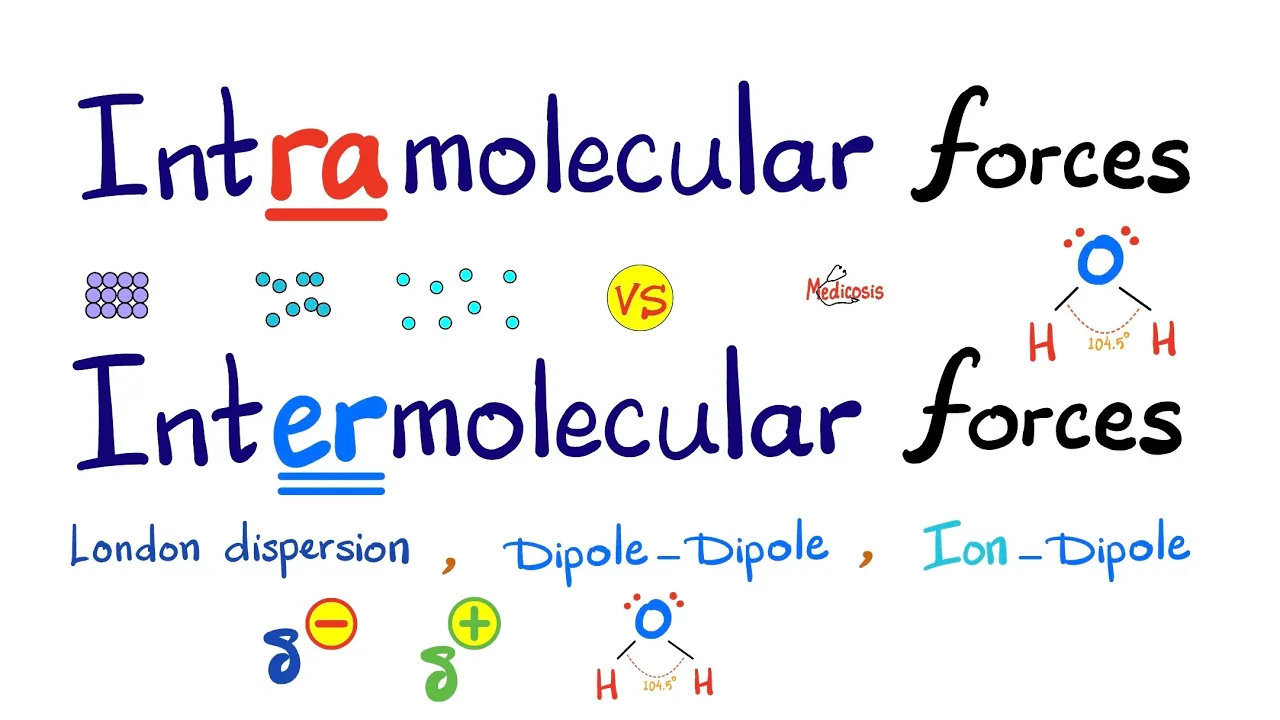

















Intermolecular forces are attractive forces between molecules that determine physical properties like boiling point and solubility. The five main types, ranked from strongest to weakest, are: (1) Ion-ion interactions (electrostatic attraction between oppositely charged ions), (2) Ion-dipole interactions (attraction between ions and polar molecules), (3) Hydrogen bonds (specialized dipole-dipole interactions between H and N/O/F), (4) Dipole-dipole interactions (attraction between polar molecules), and (5) London dispersion forces (temporary induced dipole interactions present in all molecules). The strength of these forces depends on factors including charge magnitude, molecular size, surface area, and polarity. For example, compounds with hydrogen bonding (like water) have higher boiling points than those with only dipole-dipole interactions, which in turn have higher boiling points than non-polar molecules relying only on London dispersion forces.
Intermolecular Forces: Hydrogen Bonding, Dipole-Dipole, Ion-Dipole
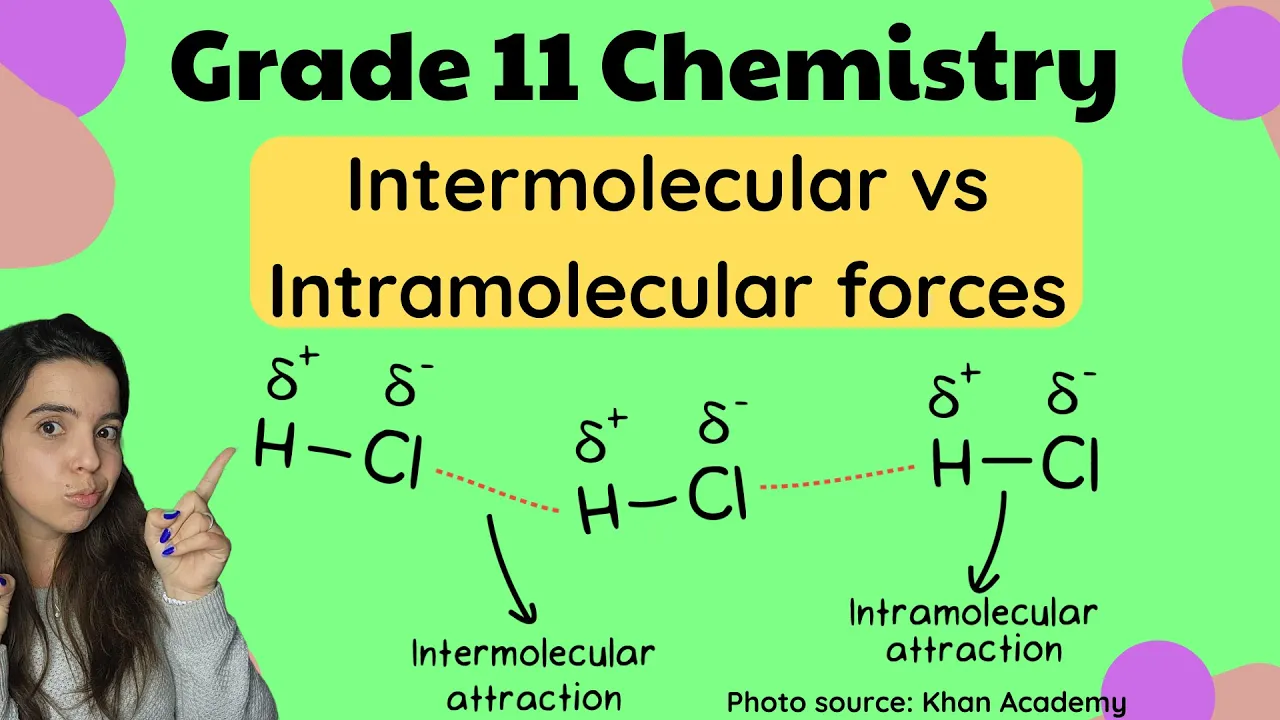
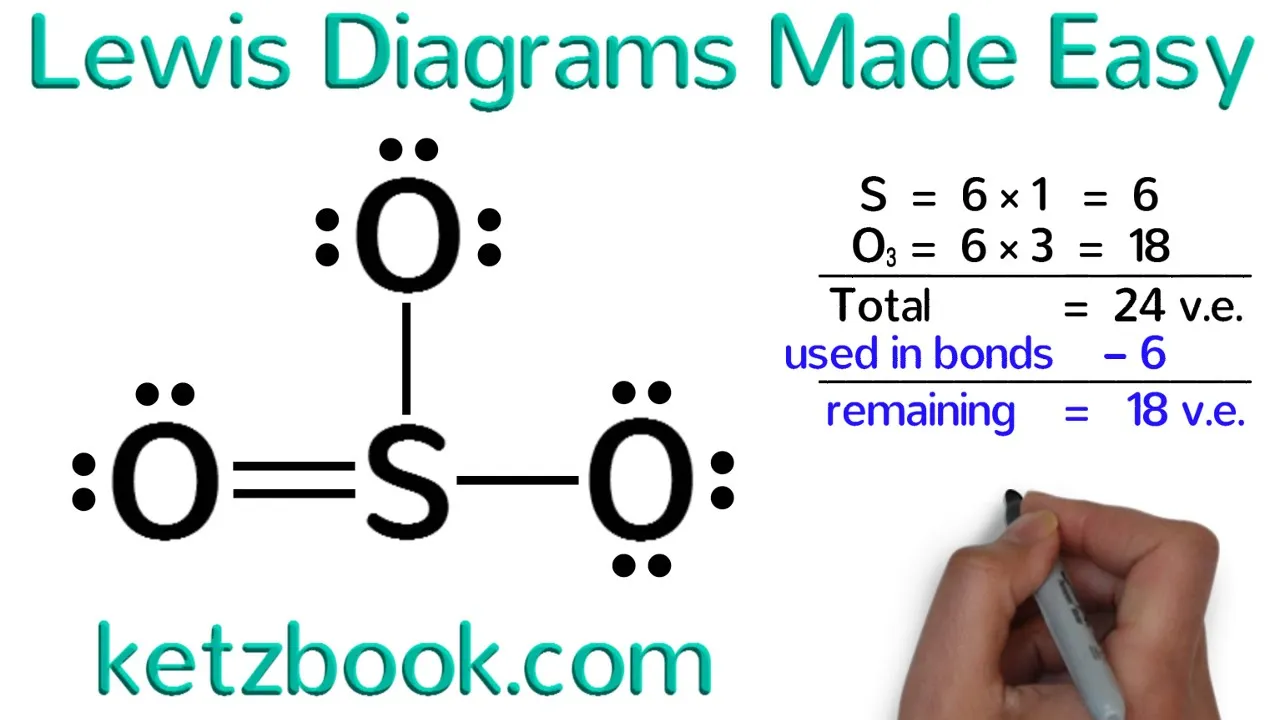
Added:in this video we're going to focus on inter molecular forces we're going to go over ion ion interactions ion dipole dipole dipole interactions including hydrogen bonds and we're going to talk about the difference between inter and intr molecular forces as well as going over Lon dispersion forces and vendall forces and towards the end of the video we're going to go over some examples I'm going to give you a list of compounds and then you can determine what type of interaction is found in each compound so let's go ahead and begin so let's start with the ion ion interaction so let's say if we have two ions the sodium plus ion and the chloride ion opposite charges attract a positive charge and a negative charge are attracted to each other and so they're pulled together by a force called an electrostatic force that electrostatic force is proportional to the charge and inversely related to the distance between them so for example let's say if we have the calcium plus 2 ion and the oxide ion notice that the magnitude of the charges is greater so therefore the interaction between calcium I and oxide is greater than the interaction between sodium and chloride because the charge is greater so the higher the charge the greater the ionic interaction so as charge increases the electrostatic force will increase and as the size of the ions increase the electrostatic force will decrease and there's another equation that's associated to this interaction it's called lattice energy lattice energy is proportion to the magnitude of the charges and inversely related to the distance between them but for electrostatic force the distance is squared but for lattice energy it's not squared so here's a question for you consider these two ionic compounds aluminum nitride versus magnesium oxide now in both compounds we have a metal and a non-metal so we know it's ionic in nature but which of these two ionic compounds will have a higher melting point the one that's going to have a higher melting point is the one that has more lattice energy it's the one where the electrostatic forces between the two ions are greater now aluminum has a positive three charge nitride has a negative3 charge magnesium has a plus two charge and so oxygen has a minus two charge if you multiply q1 and Q2 if you multiply the uh if you find the products of the charges for aluminum nitride it's 3 * 3 so it's n and for magnesium oxide it's going to be 2 * 2 so it's going to be four so therefore we should expect that aluminum nitride should have a higher melting point because the ion ion interactions are very strong in aluminum nitride so let's compare sodium fluide and potassium chloride between these two which one has more lattice energy which one's going to have a higher melting point so sodium is smaller than potassium potassium is larger because in a periodic table potassium is below sodium and they both have a plus one charge now fluoride is smaller than chloride so the magnitude of the charge is the same but because sodium floride is smaller than sodium chloride we should expect that sodium chloride should have a higher melting point it has more lattice energy because we remember that we said that as the size of the ions increase the lattice energy will decrease so the lattice energy for potassium chloride is smaller because potassium chloride is larger but in the case of sodium chloride as you decrease the size of the ions the atest energy goes up and the strength of the electrostatic force or the ion ion interaction that holds the sodium and fluoride ions together is going to be stronger because those ions are smaller so now let's go over the ion dipole interaction so you know what an ion is an ion is basically a particle with an unequal number of protons and electrons so what is a dipole but real quick let's go over definition of ions so looking at aluminum this is the aluminum atom it has a charge of zero the 13 is the atomic number the mass number is 27 um aluminum has 13 protons because the atomic number is 13 protons are always equal to the atomic number it has 14 neutrons which is the difference between the mass number and the atomic number and it has 13 electrons because it's an atom so as you can see an atom has an equal number of protons and electrons but the aluminum ion has a positive three charge the protons is still equal to 13 the number of protons is always equal to the atomic number the neutrons is 14 now the number of electrons is equal to the atomic number I'm going to write a n for atomic number minus the charge so in the case of aluminum it's going to be 13 minus +3 so aluminum has 10 electrons so this is an ion ions have charges and they have unequal number of protons and electrons so the aluminum plus three ion has 13 protons each proton has a positive charge and it has 10 electrons if you add + 13 and -10 you're going to get a net charge of positive3 so that's what what an ion is a dipole is a substance that has two charges where one side is positive and the other side is negative so this is a dipole d means two so there's two poles of charge so molecules that is overall neutral where one side is positive and the other side is negative that is a dipole a good example is carbon monoxide because oxygen is more electronegative than carbon oxygen is going to pull the electrons toward itself and therefore oxygen is going to carry a partial negative charge and carbon is going to have a partial positive charge so this molecule is said to be a dipole it's polar whenever one side is positive and the other side is negative it's a polar molecule and so that's what it's meant by the term dipole it has two poles of charge so the interaction between the sodium cation A cation is an ion with a positive charge and water this interaction is an ion dipole water is a polar molecule and the reason why water is polar is because one side is negative and the other side is positive so the oxygen atom of water has a partial negative charge the hydrogen has a partial positive charge because oxygen is more electronegative than hydrogen so oxygen pulls electrons toward itself so water is always polar because water always have a net dip moment it is said to be called a permanent dipole a permanent diple is a molecule that is always polar all the time um it never takes a break now the now the oxygen atom which has a partial negative charge is attracted to the sodium cation because it has a a positive charge so this electrostatic interaction that is called an ion dipole interaction because it's the interaction between an ion and a polar molecule and that's why it's called an ion dipole interaction so let's go over another example of an ion dipole so another example is between the chloride ion which is an annion anions are ions that have a negative charge and between water now the hydrogen part of water has a partial positive charge and chlorine has a negative charge so Opposites Attract so these two um atoms are attract to each other and so this is another example of an ion dipole interaction so if you were to dissolve sodium chloride in water the sodium cation is going to be surrounded by water molecules and all of the oxion atoms which are attracted to the positive charge of the sodium cation they're going to surround uh the sodium Caton so it's going to look like this and so that's how water can dissolve uh salt because the oxygen part of water is going to surround uh the sodium cine and the chloride part is going to be surrounded by the hydrogen atoms that are found in water and because hydrogen has a partial positive charge it's going to be attracted to the negative charge of the Chlor of the uh chloride ion and so as you can see the chloride ion solvates or the water solvates the chloride ion so these are all ion dipole interactions and that's how water um can dissolve sodium chloride because they form strong ion dipole interactions so the next intermolecular force that we're going to go over is the dipole dipole interaction so usually this is between uh two polar molecules so an example will be between two carbon monoxide molecules now as we mentioned before we said that the oxygen part of carbon monoxide has a partial negative charge and the carbon has a partial positive charge so these two atoms are attracted to each other and so therefore that is the dipole dipole interaction so as you can see opposite charges or opposite um atoms attract like charges repel opposite charges attract and that's always going to be the case so between two polar molecules you're going to have a dipole dipole interaction so another example could be like between one atom of hbr I mean one molecule of hbr and another molecule of hbr so bromine is more electronegative than hydrogen and so the hydrogen of one atom is going to be attracted to the bromine the hydrogen of one molecule is attracted to the bromine atom of another molecule and that interaction is known as a dipole dipole interaction now another specialized type of dipole dipole interaction is the hydrogen bond so let's look at the case associated with water so anytime you have an interaction between hydrogen and nitrogen oxygen or Florine and if it's an intermolecular interaction you have a hydrogen bond so keep in mind this o bond is not the hydrogen bond that is a calent bond in a calent bond the electrons are shared now there's two types you have polar calent bonds and non-polar calent Bonds in a nonpolar calent bonds the electrons are shared equally but in a polar calent bond the electrons are shared unequally so in the bond between hydrogen and oxygen well oxygen is more electronegative so it pulls the electrons toward itself and so it doesn't share the electrons equally and that's why oxygen develops this partial negative charge and hydrogen which is electron deficient develops a partial positive charge however the partially positive hydrogen atom is attracted to the partially negative oxygen atom of another water molecule and the interaction between two different water molecules or two separate water molecules that is the hydrogen Bond so because the hydrogen bond is between two water molecules and not within uh a water molecule the hydrogen bond is said to be an inter molecular Force the word inter means between so an intermolecular force or interaction in a case of water is between two water molecules and so the hydrogen bond is a type of intermolecular interaction now the coent bond it's inside or within a single water molecule so the coent bond is an example of an intra molecular interaction or molecular Bond so the word intra means inside or within so that's the difference between an intr molecular Bond or intr molecular force with versus an intermolecular force so an intermolecular Bond or force is inside a molecule within a single molecule and an intermolecular Bond or force is between uh two separate molecules so hydrogen bonds ion ion interactions ion dipole dipole dipole interactions these are considered intermolecular interactions or forces the next type of intermolecular force that we're going to talk about is the London dispersion force also also known as the uh vanderwal Force now these type of forces they're found in everything any type of molecule um or ion have L and dispersion forces however these forces are most significant in non-polar molecules non-polar molecules only contain uh London dispersion forces so now let's understand what exactly is the London dispersion force London dispersion forces they come from very very weak dipole interactions so let's consider the neon atom let's say that's the neon nucleus and here's the entire atom and there's electrons around it now I'm just going to draw six electrons but neon has much more electrons than six but for the sake of illustrative purposes I don't want to draw like 18 electrons so I'm just going to draw six now notice that these electrons are distributed evenly around this atom when the electrons are distributed evenly it's not polar it's going to be non-polar there's we don't have a distortion of charge one side is not positive and the other side is not negative it's neutral now sometimes the electrons or the electron cloud can be distorted so sometimes you might have more electrons on one side of the atom as opposed to the other side and when that happens what we have is a temporary dipole or momentary dipole a dipole that lasts for a very short time so at this instant one side is negative and the other is positive so right now this is a temporary uh dipole now think about what effect this atom is going to have on another a neon atom so let's say if another neon atom was very close to it it sees that there's a deficiency of electrons on this side so this side has a negative charge this side has a a slight positive charge so the electrons in this atom they're going to drift towards the left side and so as they drift towards the left side they're going to develop a negative charge on the left and a positive charge on the right and the interaction between these temporary uh dipoles that is the London dispersion force and these dipoles are very very weak so London dispersion forces are weaker than normal dipole dipole interactions so notice that this dipole was created by this dipole so whenever a dipole is created by another molecule or atom this is called an induced dipole because it was created by another atom or molecule so whenever you have a created dipole it's called an induced dipole but specifically a temporary induced dipole because it doesn't last for very long and so that's why London dispersion forces and Vandal forces they're associated with the term temporary induced dipol so keep in mind hydrogen bonds are very very strong dipole interactions Lon dispersion forces are very very like weak dipole dipole interactions so now let's review the strength of the intermolecular forces so the strongest is the ion ion interaction and then after that we have the ion dipole interaction that's pretty strong and then after that the next strongest interaction is the hydrogen bond which is a very very powerful dipole dipole interaction it's a specialized type and then you have your normal uh dipole dipole interactions which is typically between two polar molecules by the way if it has hydrogen bonds it's a polar molecule as well and then the weakest is the ldf the London dispersion forces or the Vander wall forces the temporary induced dipole interactions so you need to know the order of the strength of those intermolecular forces so now let's go over a list of compounds and what I want you to do is indicate the strongest intermolecular force that is found in that compound so let's start with magnesium oxide so magnesium is a metal oxide is a non-metal and so there are ions that make up this uh Crystal or this ionic compound and because there's ions we see that it has an ion ion interaction by the way for each of these examples feel free to pause the video and see if you can figure it out yourself so what about KCl potassium chloride and water so what is the strongest intermolecular interaction that is found between these two compounds so potassium has a positive charge and it's going to interact with water particularly the oxygen atom of water since oxygen has a partial uh negative charge and so that interaction is known as an ion dipole interaction and keep in mind the chloride ion which has a negative charge is going to interact with the hydrogen part of water which has a partial positive charge and so this is also considered an ion dipole interaction so what about methane what type of interaction is found in this compound now whenever you have a hydrocarbon that is a compound that is made up above only carbon and hydrogen know that this compound is non-polar so other examples would be like Benzene C6 H6 ethane C2 H6 if it is composed only of hydrogen and oxygen it's non-polar and if you have a non-polar molecule the only type of force that's found in it is the ldf forces the London dispersion forces now let's focus on methane the carbon hydrogen bond has a very very weak diap moment carbon has an electronegative it value of 2.5 and for hydrogen's 2.1 because the electro negativity difference is less than.5 the bond is considered to be non-polar and even though there's a small diap moment it points towards the carbon atom because carbon is more electronegative now because all of the hydrogen atoms are the same all of these little dipole moments they cancel notice that they all point in opposite directions and so therefore the next dipo moment is zero so this molecule is completely non-polar because all the dipo moments cancel there's no net dipo moment and so because it's non-polar the only type of force that it has is LIN and dispersion forces now even though there's no net diap moment sometimes an induced dipole can occur sometimes as you mentioned uh temporary induced dipoles may occur within non-polar molecules but they're very very weak so those temporary dipoles are considered ldf forces so what about the interaction between carbon dioxide and well just carbon dioxide for now what type of intermolecular forces are found in this molecule if you draw the L structure carbon dioxide looks like this it's a linear molecule it has a bond angle of 180 and the carbon is sp hybridized now if you focus on a carbon oxygen Bond oxygen has an electro negativity value of 3.5 and for carbon it's 2.5 so the electro negativity difference is greater than 0.5 it's about one and so the carbon oxygen bond is considered to be a polar bond so it has a very strong dipole and when you whenever you want to draw the dipole moment it points towards the more electron ative atom but notice that it has two dipoles so even though the bond is polar notice that these arrows they pretty much cancel because they point in opposite directions so because it cancels there is no uh net dipole and so carbon dioxide is considered to be a non-polar molecule so because it's non-polar the predominant force is going to be ldf London dispersion forces and not dipole dipole interactions so make sure you're aware of that so what about sulfur dioxide what type of inter molecular forces are found in this molecule so to draw the Le structure let's add up the veence electrons sulfur has six veence electrons and oxygen has six and there's two of them so the total is 18 now if you subtract 18 by the highest multiple of eight just under 18 18 multiples of eight are 8 16 24 but 24 is too high so if you subtract it by 16 you're going to get the number of electrons or dots that is on the central sulfur atom so sulfur has two dots or one lone pair and oxygen likes to form two bonds typically so this is the Le structure of sulfur dioxide so is this molecule polar or nonpolar now the sulfur oxygen bond is fairly polar sulfur has an electro negativity value of 2.5 and oxygen is 3.5 so the bond is polar but now these two arrows do they cancel it turns out that they do not cancel because of the bent shape of this sulfur dioxide molecule and also the presence of this lone paer now let's go into physics so we have a vector that goes in this direction and another Vector that goes in this way do these two vectors cancel now each Vector has a y component and they have an X component or horizontal component notice that the horizontal components cancel the blue lines because one goes to the right and the other goes to the left so they cancel out however the vertical components do not the red lines they both point in the same direction so there's a net dipole moment that goes in a downward Direction and so therefore sulfur dioxide is considered to be a polar molecule so if it's polar that means that it has dipole interactions so let's draw the dipole interactions for sulfur dioxide but let's draw it between two sulfur dioxide molecules so oxygen Bears a partial negative charge and sulfur has a partial positive charge so the sulfur in one molecule and the oxygen in another molecule they will be attracted to each other because opposes attract and so this is an intermolecular force because that interaction is between two separate molecules but specifically it's called a dipole dipole interaction now keep in mind a dipole is basically a polar molecule so the reason why we have dipole dipole is because there's two polar molecules it's an interaction between two polar molecules and so this is the dipole dipole interaction between the sulfur dioxide molecules hydrochloric acid what type of inter molecular forces are found in this molecule now this is hydrogen bonds because whenever H is bonded to n o or F hydrogen bonds can occur but keep in mind the hydrogen bond is not the bond between h and f that's an intr molecular Bond or calent Bond specifically a polar coal Bond since the electrons are shared unequal but the hydrogen bond exists between these two molecules or between the atom of the hydrogen atom of one molecule and the Florine atom of another so opposite attract The partially positive hydrogen atom is attracted to the partially negative Florine atom and that's the hydrogen bond notice that the electro negativity difference between hydrogen and Florine is very large hydrogen has an En value of 2.1 and for Florine is the most Electro negative element is 4.0 so it's a combination of two things the very high electro negativity of Florine and also the very small size of hydrogen and Florine those combined effects make hydrogen bonds very powerful now keep in mind we said that the electrostatic force between either two atoms of opposite charge is K q1 Q2 over R2 so as the magnitude of the charge Q increases the electrostatic force increases and also the lce energy goes up and as the radius or the size decreases the electrostatic force increases so look at the difference in electro negativity because it's so high that hydrogen bond is pretty strong and also the size of hydrogen floring because it's so small also increases the electrostatic force so which means that hydrogen bonds are very powerful forms of dipole dipole interactions consider the interaction between methanol ch3 and lithium chloride now lithium chloride is ionic and methanol it's a coent compound so you know this is going to be an ion dipole lithium has a positive charge and like water oxygen has a partial negative charge but I'm going to draw it like this so the interaction between the partially negative oxygen atom and the positive the positively charged lithium cation that is an ion dipole interaction and then we have the chloride ion which is attracted to the hydrogen part of methanol now this hydrogen has a partial positive charge and so it attracts to the negative charge of the chloride ion and so that is also considered to be an ion dipole interaction so what about C H2O and Co ch2o is form alide it looks like this and Co is carbon monoxide the carbon part has a partial positive and the oxygen atom is partially negative so there's an interaction between the oxygen of one molecule and the carbon of another and there's also another interaction between these two atoms because this is partially negative that's partially positive and so all of these are diol reactions because both these molecules are polar so this interaction and this one is considered a dipole dipole interaction so now we're going to talk about which molecule has a higher bowling point so we're going to go through some examples so let's compare I2 versus br2 now the first thing you want to do is identify the strongest type of intermolecular force that's found uh in these molecules now whenever you have a molecule composed of one element it's non-polar now because both of these are non-polar the only type of intermolecular force that is found in it are ldf London dispersion forces now when you're comparing two molecules that only have London dispersion forces you need to look at the the size iodine has more electrons than bromine because it has a higher atomic number as the number of electrons go up the PO polarizability of iodine goes up as well which means that iodine has a greater chance or greater probability of having its electron cloud distorted which means that it can form temporary induced dipoles easier which means that it has more London dispersion forces if it has more London dispersion forces it has more overall intermolecular forces and therefore iodine is going to have a higher boiling point than bromine so let's say if you get a question like cl2 I2 br2 and F2 how would you rank the following molecules in order of increase in bing point now in the periodic table Florine is the lightest then you have chlorine bromine and then iodine so as the size increases the boiling point is going to increase because it's more Lon dispersion forces all of these molecules are non-polar so they only have London dispersion forces or vanal forces as their predominant intermolecular force so because iodine is the biggest iodine which has like a violet purple color is going to have the highest boiling point but we want to rank it in order of increase in boiling point so let's start with the smallest so the first one is Florine it's the weakest because it has it's the lightest gas molecule and so it has the least amount of intermolecular forces so next we have uh chlorine and then after chlorine we have bromine bromine have like a reddish color and Then followed by that we have iodine so boiling point increases as you go towards I um iodine because um it has more intermolecular forces it's larger it has more electrons and so it's more polarizable and it has more ldf lond dis version forces it turns out that Florine is a gas at room temperature and the same is true for chlorine it's a gas br Chine is a liquid but iodine is a solid at room temperature because iodine has the highest boiling point so what about ch3 o versus CH4 which one has a higher bowling point now CH4 is non-polar but methanol is polar because of the O Bond whenever you see an O Bond it's always polar now because because it has that hydroxy Bond or that o group um it also has hydrogen bonds methane which is non-polar only has ldf forces if it has hydrogen bonds particularly methanol it it also has like a DI point of actions and everything has ldf forces so as we can see methanol has more intermolecular forces than methane which is CH4 so therefore we should expect that methanol it's going to have a higher uh boiling point because it has hydrogen bonds and methane doesn't have it so it turns out that methane is a gas at room temperature and methanol is a liquid at room temperature gases have low bowling points solids have very high bowling points by the way so let's compare propenol ch3 ch2 ch2 with methanol ch3 so which one has a higher bowling point now both of these molecules have hydrogen bonds so they both are very polar however one of them has a higher bowling Point than the other so they both have H bonds and they both have Dio reactions and they both have ldf forces but so whenever they both have hydrogen bonds the next thing you need to look at is the size propenol is significantly bigger than methanol and because it has a larger size it has more intermolecular forces due to the presence of more London dispersion forces so the more atoms you have the more the electrons there are and so the greater uh the polarizability increases so therefore you're going to have more London dispersion forces because it can temporary induced dip moments can be easily created with molecules that have a lot of electrons so therefore as the size increases the ldf forces increases and so the boiling point is going to go up so propanol has a higher bowling Point than methanol because it has more intermolecular forces particularly ldf forces whenever the bowling Point goes up the vapor pressure goes down so if you get a question that ask you which one is more volatile you would say methanol methanol is more volatile because it has a higher vapor pressure but a low boiling point so propenol has a higher boiling point so I'm just going to say high BP but it has a relatively low vapor pressure compared to methanol methanol which has less intermolecular forces is going to have a correspondingly lower boiling point but it's going to have a higher VAP pressure so methanol can easily escape to the gas phase excuse me the gas phase compared to propenol propenol it takes more energy for it to vaporize and so propenol is going to be more on the liquid side where methanol it's liquid at room temperature but it has a low boiling point so it takes less energy for it to get to the gas phase now let's go back to um propanol and methanol so we know that propenol has a higher boiling point but now let's talk about the solubility particularly in water which compound is more soluble in water now solubility really doesn't depend on the size it depends more on the polarity so The O Part of the molecule is the polar region of the molecule so life dissolves like polar substances can dissolve in water non-polar substances they don't dissolve well in water now we said that anytime you have a compound that contains carbon and hydrogen that part of the molecule is non-polar carbon hydrogen bonds are relatively nonpolar so the ch3 part of this molecule is nonpolar and this region is non-pole as well so which compound do you expect is going to have a higher solubility in water methanol is going to have a higher solubility in water because it's is very polar the non-polar region is very small propanol can still dissolve in water but it's going to have a correspondingly lower solubility in water compared to methanol the reason being is it has a larger non-polar region and that part of the molecule doesn't like water it wants to stay away from water so the longer the hydrocarbon chain is the less soluble it is in water so propanol as a line structure looks like this it has three carbons 1 2 3 oxol which has eight carbons oxol doesn't dissolve well in water its solubility is extremely very low for the most part it doesn't dissolve in water so this is considered relatively non-polar even though it has a polar head but because of this huge non-polar tail which is eight carbons overall this molecule is considered to be non-polar but but propanol methanol are still relatively polar they dissolve well in water but octanol doesn't dissolve very well in water so consider these two compounds this is called neopentane pentane is a compound that has five carbon atoms and on the right we have a normal pentane so which of these two compounds has a higher bowling point pentane or neopentane now the molecular weight is the same both of these compounds have five carbons and 12 hydrogens because they have the same chemical formula but because they have different structures they're called isomers specifically constitutional isomers same chemical formula but they're connected differently so if they have the same molar mass how do we know which one is going to have a higher bowling point it turns out that straight chain alanes have a higher boiling point than branched alanes so this structure is Branched so it's going to have a lower uh boiling point so the reason why it has a low boiling point is because the surface area of neopentane is smaller than that of pensan because pentane is a straight chain alkane it has a larger surface area and so that's why um it's going to have a higher Bing point because as the surface area increases there's more contact space so that there's more like room for temporary induced dipo interactions to occur if you decrease the surface area then there's going to be less interactions between molecules and so there's going to be uh less ion Dio I mean less temporary induced Dio of actions and do less London inspiration forces so the greater the surface area the more the um you're going to have more intermolecular forces more interactions between molecules and so you're going to have a higher bowling point and that's why the straight chain alcane has a higher bowling Point than the branch alcane so since pentane has a higher bowling Point neopentane has a higher vapor pressure so neopentane is more volatile it can evaporate better than uh pentane let's compare these three compounds H2O H2S and H2S now on a periodic table you have oxygen sulfur and selenium go ahead and rank these compounds in order of increas in Boiling Point now H2O has hydrogen bonds and H2S and H2S C are polar um because if you draw H2S they all have a bent shape so all of these molecules are polar so because they're polar they're going to have dipole interactions now if you want to rank them in order of increasing boiling point the one that has hydrogen bonds is going to have the highest boiling point so that's going to be water now between the remaining two the one that's going to have a higher bowling point is the one with the bigger size so selenium is bigger than sulfur so H2S e is going to have a higher bowling Point than H2S so the first thing you look at is hydrogen bonds the one that has hydrogen bonds is going to have the higher bowling point then after that look at size even though oxygen is a smallest because it has hydrogen bonds it's going to have the highest bowling point after that comparing sulfur and selenium selenium is bigger it has more electrons so it's going to have more ldf more London dispersion forces and so that's why H2S e has a higher bowling Point than H2S so water has the highest bowling point but Hydro suric acid H2S is going to have the highest vapor pressure so water is a liquid at room temperature but H2S is a gas at room temperature because it has a lower boiling point consider these four compounds HF hbr h I and HCL rank them in order of decrease in boiling point so Florine and then comes chlorine and then bromine and then iodine I wanted to list them the way they're written in a periodic table so iodine is the heaviest however um HF has hydrogen bonds so therefore HF is going to have the highest bowling point and we're going to write this in decrease in order of bowling point so the second highest is the one that's going to be the heaviest between chlorine bromine and iodine because iodine is bigger it's going to be the next in line so between hi HDL and hbr none of them has hydrogen bonds so now you have to look at size so BR is bigger than CL so the next one is going to be hbr and then after that uh HCL is going to have the lowest so HF has the highest bowling Point bowling Point increases towards HF and htl is going to have the lowest Bing point so it's going to have the highest vapor pressure
Up Next
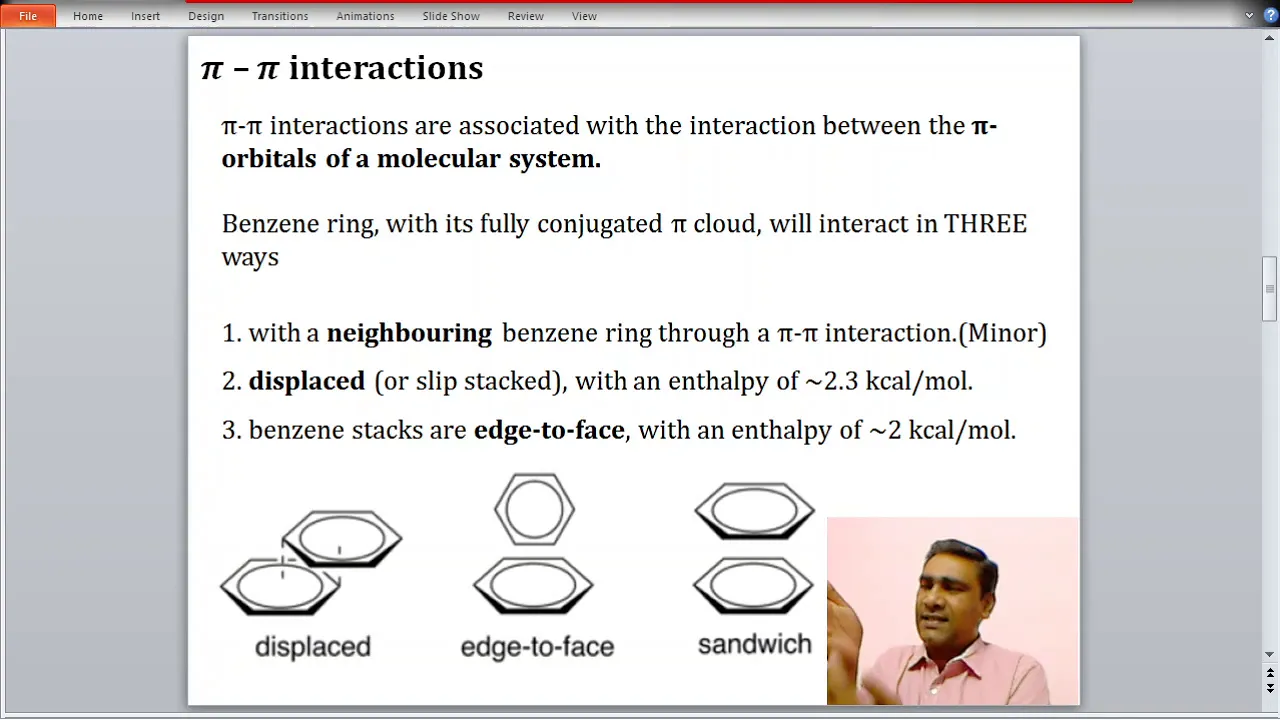
Pi Interactions in Supramolecular Chemistry Explained
@nandhakumarraju5524
20.7K views•2020-12-25
Biocatalysis and Catalysis in Islatravir Synthesis | Merck Webinar
@SCIwheresciencemeetsbusiness
675 views•2020-10-08

Polymers Explained: Radical, Cationic & Anionic Polymerization
@TheOrganicChemistryTutor
258.5K views•2022-08-07
Edible Water Bottles: A DIY Guide to Sodium Alginate Spherification
@ryan
10.5M views•2019-06-21
Related Study Plans & Knowledge Roadmaps
Structured learning paths in Chemistry