











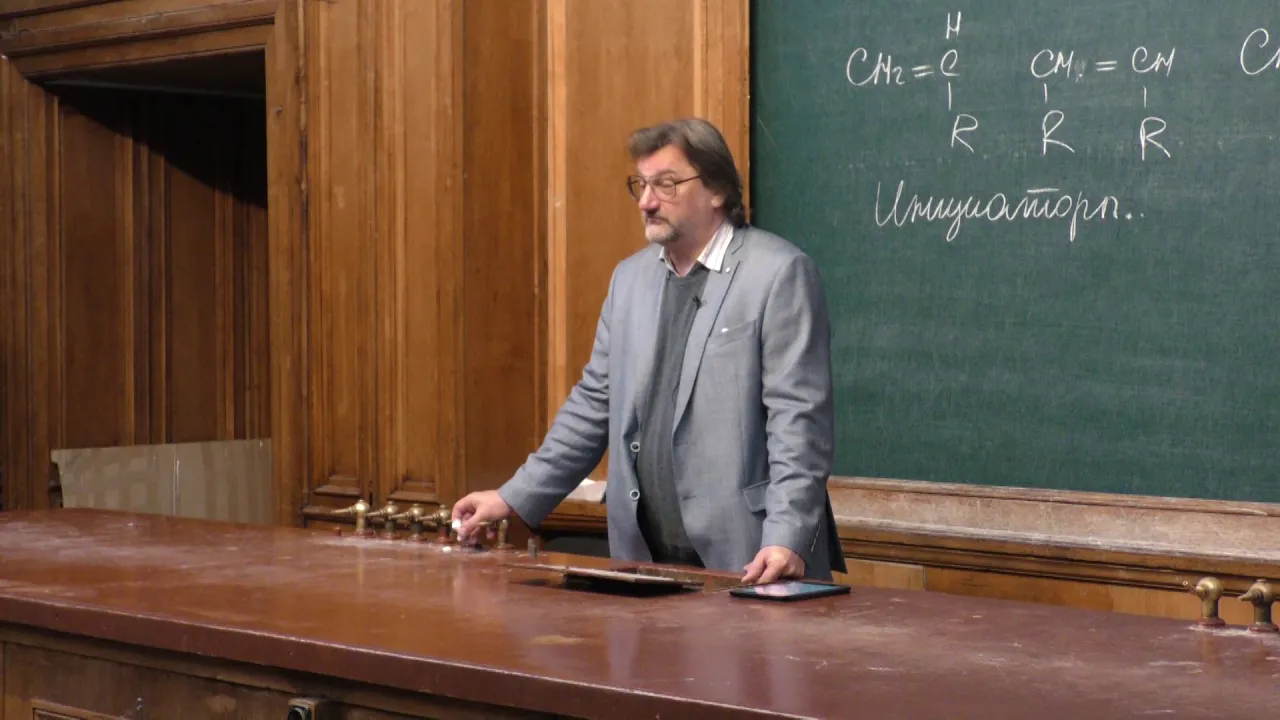







Polymers are large macromolecules composed of many repeating monomer units, where the structure of the repeating units determines the physical properties of the polymer; natural polymers include DNA (nucleotide monomers), proteins (amino acid monomers), and polysaccharides (monosaccharide monomers), while synthetic polymers like polyethylene, PVC, and polystyrene are formed from substituted ethylene monomers through three main polymerization mechanisms: radical polymerization (using radical initiators like organic peroxides), cationic polymerization (using electrophiles like boron trifluoride), and anionic polymerization (using nucleophiles like sodium amide), each favoring different types of monomers based on their electronic properties.
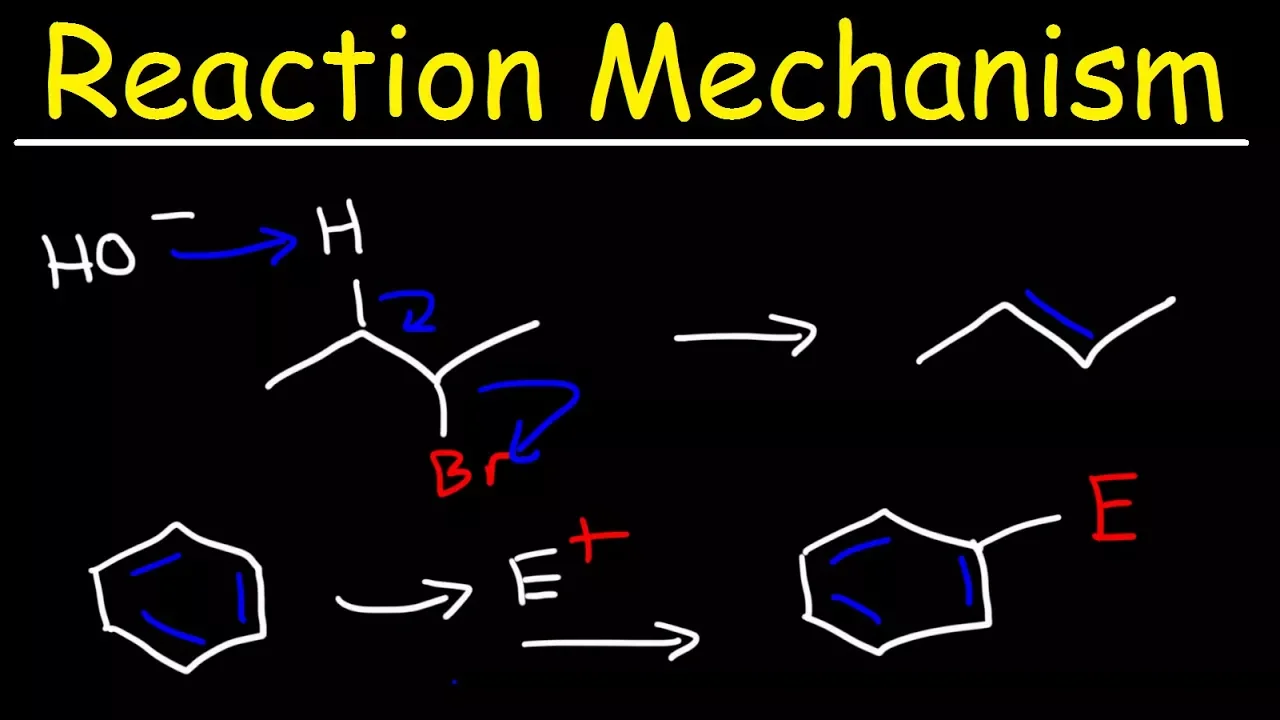
Polymers Explained: Radical, Cationic & Anionic Polymerization
Added:Understanding of organic chemistry reaction mechanisms, specifically electrophilic and nucleophilic addition reactions to alkenes.
Familiarity with reactive intermediates, including the generation, structure, and relative stability of carbocations, carbanions, and free radicals.
Knowledge of chemical bonding, electronegativity, and polarization of functional groups, which dictates how monomers behave.
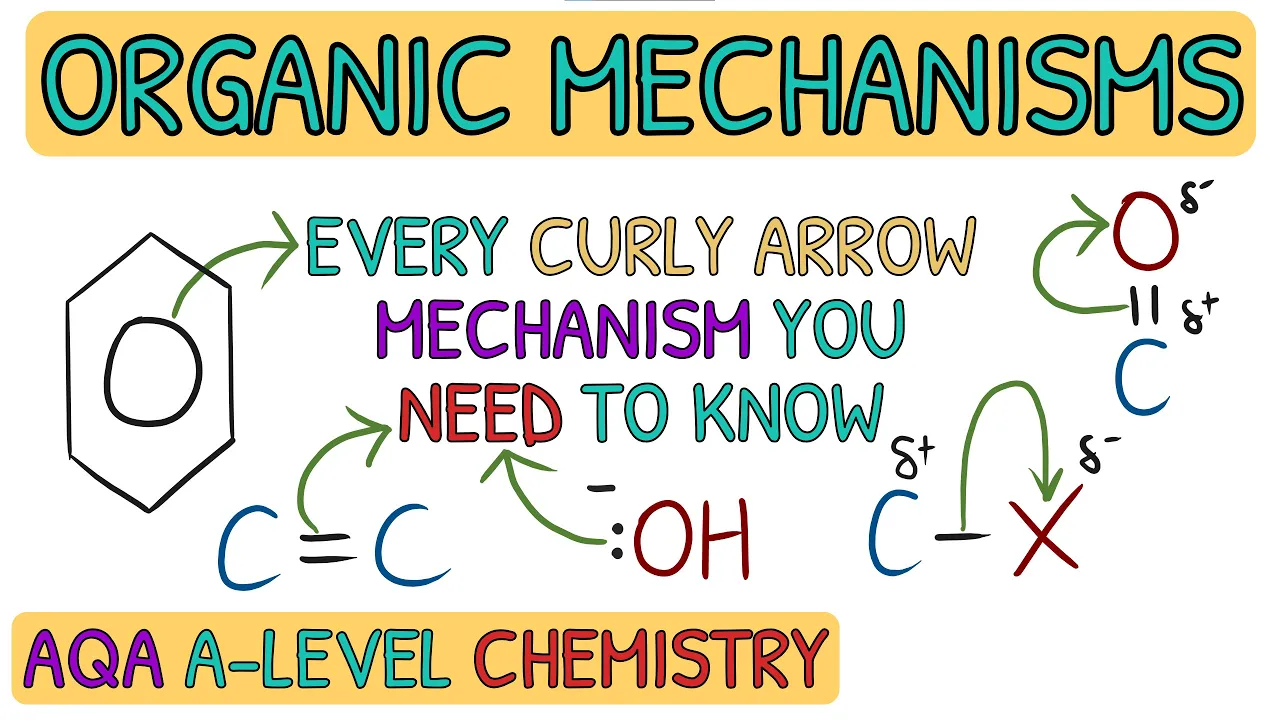
Basic comprehension of arrow-pushing formalism (curly arrows) to denote the movement of electrons during bond cleavage and formation.
The kinetics of chain-growth polymerization, analyzing how initiation, propagation, and termination rates affect overall polymer molecular weight.
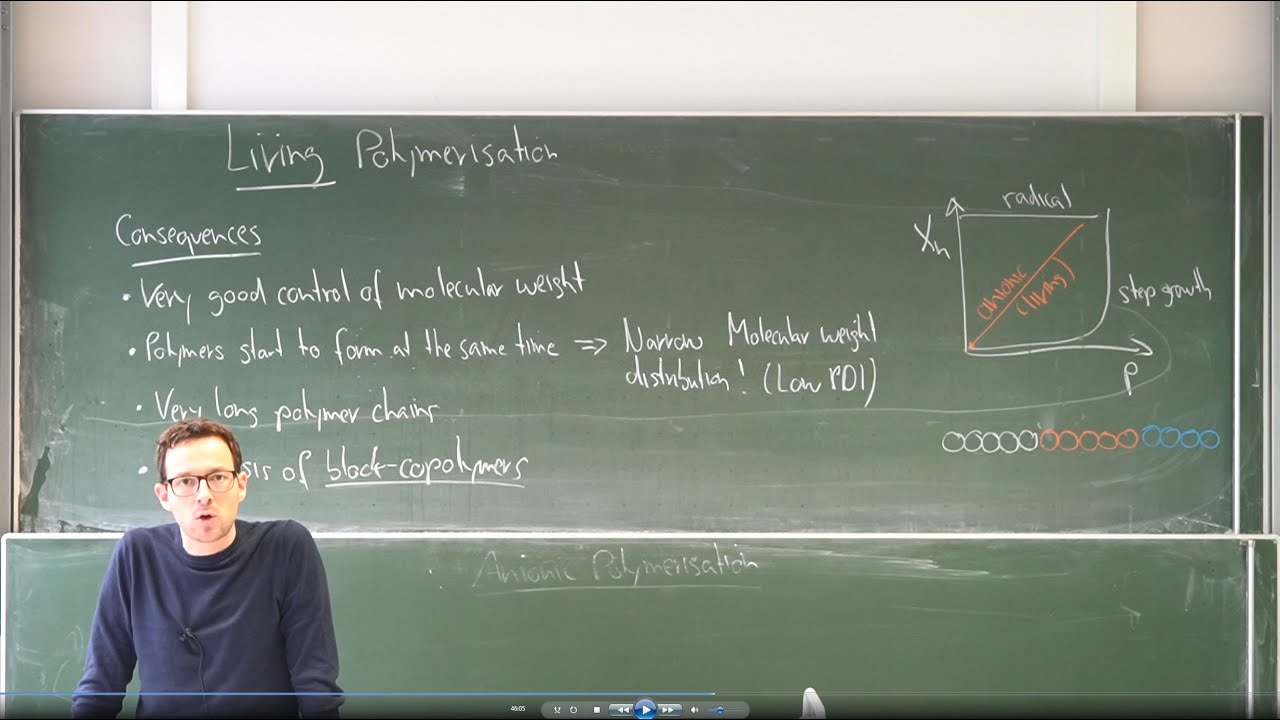
Living and controlled radical polymerization techniques (such as ATRP, RAFT, and NMP) designed to minimize termination steps and produce highly uniform polymers.
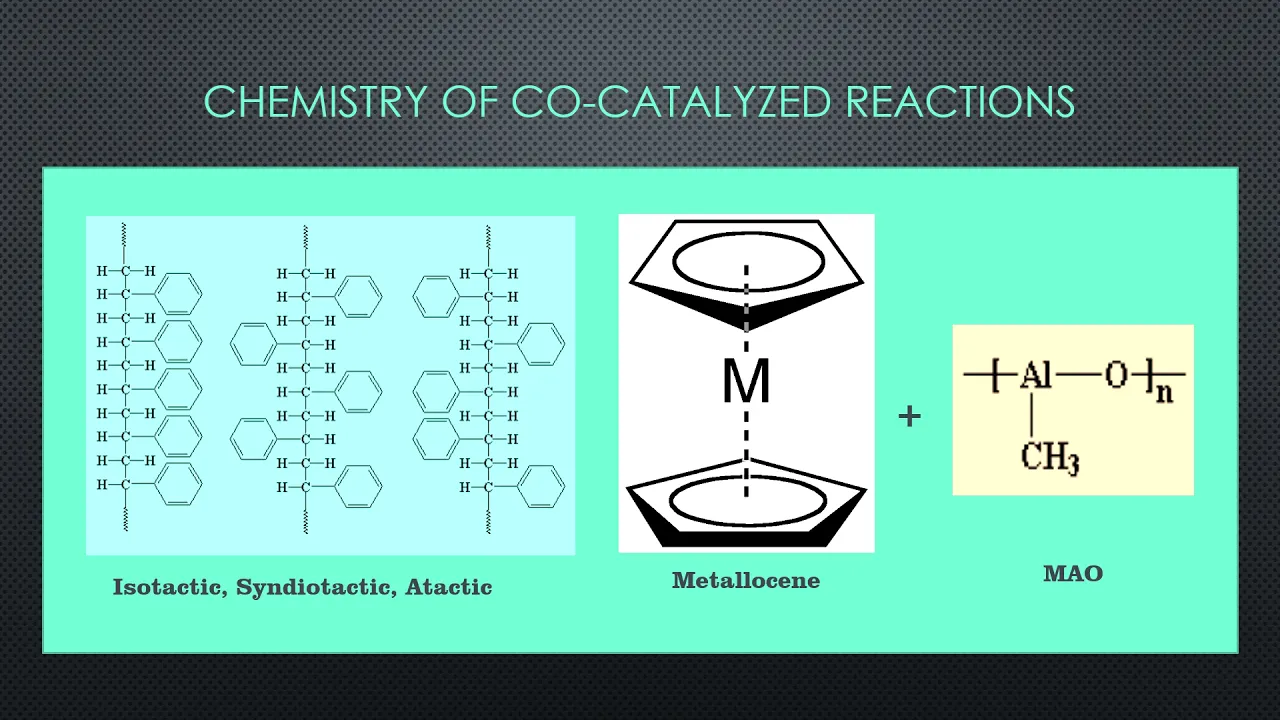
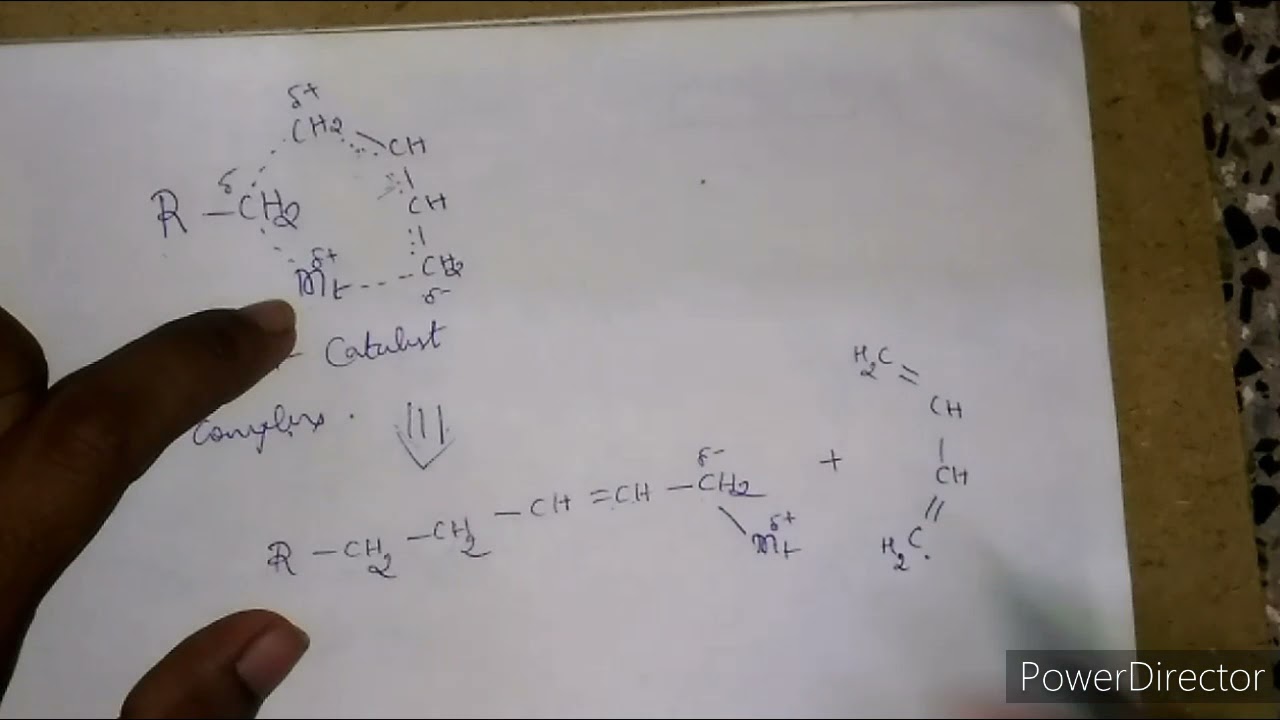
Coordination polymerization mechanisms, focusing on how Ziegler-Natta and metallocene catalysts control polymer stereochemistry (tacticity).
Characterization methods for polymers, such as Gel Permeation Chromatography (GPC) to measure molecular weight distribution and polydispersity index (PDI).
258.5K views4.1Klikes26:18Original Release: 2022-08-07
today we're going to talk about polymers polymers are large macromolecules composed of many smaller units known as monomers so here's a visual representation let's say a represents a monomer the prefix mono means one the prefix poly means many so polymer is composed of many smaller units known as monomers during polymerization these smaller units will get together and form a larger macromolecule so that's the basic idea of a polymer now a polymer can have hundreds or thousands of molecules maybe even tens of thousands so this can go on for a very long time now when dealing with polymers sometimes you may have different n groups what you need to know is that when a polymer is very large it is the repeating units that determines the physical properties of the polymer if you have 10 000 of these a units the identity of y and z the end parts of the polymers won't matter as much so it's really what's the repeating unit in the middle that will determine the physical properties of the monomer the beginning and the end it can vary depending on if you're using a free radical to initiate the polymerization or if you're using a nucleophile in the case of an ionic polymerization or if you're using an electrophile in the case of cationic polymerization so the identity of y and z can vary but the key here is that it's the the structure of the repeating units that determine the physical properties and also the size of the molecule as well so now that we've discussed the basics of polymers let's talk about some common natural polymers that you've encountered likely in biology so think of dna dna is a natural polymer now what is the monomer of dna if you remember dna is composed of nucleotides so that's the monomer of dna so think of nucleotides like adenine guanine cytosine thymine or uracil in the case of rna your cells found in rna but not in dna another example of a natural polymer are proteins the monomer or the monomers of proteins are amino acids so think of amino acids like tryptophan histidine cysteine methionine glycine proline valine isoleucine those are the monomers of proteins another example of a common natural polymer are polysaccharides so think of polysaccharides like starch cellulose the monomers of polysaccharides are known as monosaccharides the monomers of starch and cellulose is glucose so there's a lot of natural or there's a lot of polymers in nature that you've encountered uh many times now in the context of organic chemistry a common monomer that you're going to see is ethylene and substituted ethylene molecules so here's ethylene also known as ethene it's a two carbon alkane and during polymerization it will turn into polyethylene polyethylene is actually an alkane but the in comes from the fact that the monomer is an alkene so this is the repeating unit of polyethylene now when dealing with substituted ethylene molecules it's going to work in a very similar way so let's say z is or we could say r and that's like the the part that changes during polymerization the repeating unit is going to look like this basically you get rid of the double bond and just you draw what you see so that's how you can draw the repeating unit of if you're given the monomer in as a substituted ethylene derivative here's an example for you draw the repeating unit of ethyl chloride so during polymerization ethyl chloride will become pvc pvc stands for polyvinyl chloride it all comes from the polymerization of ethyl chloride pvc is found in pipin you've probably seen it used in plastic bottles so polymers have a lot of practical applications in real life let's look at another example consider the molecule styrene the r group is a benzene ring go ahead and draw the repeating unit for styrene feel free to pause the video as you work on this example so all we got to do is draw what we see but we're going to get rid of the double bond and turn it into a single bond and attach two bonds one to the left one to the right insert a bracket and that's all we need to do to draw the repeating unit if we're given a substituted ethylene molecule so the monomer is styrene the polymer is called polystyrene now polystyrene is used for insulation think of certain hot drink cups like maybe a styrofoam cup it's also used in egg cartons and other things like that as well now let's talk about the reaction mechanism for the formation of some of these polymers so first let's use ethyl chloride the first type of polymerization mechanism we're going to talk about is radical polymerization the initiator is going to be a radical so let's say we have an organic peroxide if we apply uv light or heat this bond that connects the two oxygens is going to break homolytically generating two powerful radicals keep in mind a free radical is basically a molecule with an unpaired number of electrons or an odd number of electrons now this free radical is going to react with ethyl chloride now this double bond here or this bond here has two electrons and remember a half arrow represents the flow of one electron so one electron in that pi bond is going to interact with the free radical electron and that's going to form a bond between the oxygen and the ch2 carbon so we're going to have ro dash ch2 now the other electron in this pi bond is going to become a radical on the ch carbon so this is what we now have now this radical is going to react with another ethyl chloride molecule i'm going to draw it right here and the mechanism will be the same we're going to use half arrows when dealing with radical reactions so now these two electrons will form a bond between the ch carbon and the ch2 carbon so we're going to have ro everything here ch2 ch cl now this ch carbon is connected to that ch2 carbon we broke the double bond so now we have a single bond and now the radical is on the ch carbon and this process is going to continue so let's do another step so we're going to react this with another ethyl chloride molecule whoops so now let's draw what we have after a while riding this out takes some time it becomes tedious but it really helps if you do at least three times maybe four at that point you can clearly see the repeating unit so here's the beginning part of the chain the repeating unit we can clearly see it's this part of the molecule as we drew before it's ch2 ch cl now we can put an n here because sometimes we could have 10 repeating units sometimes you can have a hundred sometimes n could be a thousand so this can go on for a long time depending on concentration reaction conditions pressure and temperature and all that stuff now so far we talked about the initiation step of this mechanism which was the formation of the radicals this step here where we had a radical reacting with an alkene to produce another radical that's a propagation step now this also termination steps if this meets up with another radical these two can get together and they can basically terminate the reaction in this case this will be an or group now the ending can also vary as well sometimes it can just be an alkane sometimes it could be an alkene you can get a disproportionate reaction there's a lot of things that can happen here but we're not going to focus too much on the end part of the molecule now the next type of polymerization reaction that we're going to talk about is a cationic polymerization reaction in this case what we're going to do is we're going to use an electrophile to initiate this reaction a good electrophile is boron trifluoride in the presence of water if we react an acid with an alkene like hbr hcl it'll create basically a bromoalkane like ethyl bromide ethyl chloride which we're not looking for that but when we put boron trifluoride in water water is going to react with the boron and we're going to get this molecule now the boron has four bonds so it's going to have a negative formal charge oxygen is going to have a positive formal charge and whenever oxygen has three bonds the hydrogen that's attached to that oxygen is acidic and that's going to be our electrophile here now let's combine that with an alkene so the monomer that i'm going to use is called methyl xenoether so we still have our ethylene our substituted ethylene derivative but the r group is an och3 group this time instead of a cl so in this case the alkene is going to act as a nucleophile and it's going to react with the electrophilic hydrogen these electrons are going to go back to the oxygen now which carbon will the hydrogen add to will it add to the ch2 carbon or the ch carbon so this is going to follow the markovnikov's rule where the hydrogen is going to go on the carbon with more hydrogens in this case this carbon here so we're going to have ch3 and note that the positive charge is on this carbon now that positive charge is stabilized by the oxygen atom the oxygen can donate a pair of electrons and through electron delocalization and resonance it can stabilize the carbocation so this particular type of molecule methyl vinyl ether works pretty well under cationic polymerization because this r group can stabilize the carbocation so certain derivatives certain r groups may favor one type of polymerization reaction compared to another all right so what i'm gonna do here is i'm gonna make some extra space now once we have this carbocation we can react it with another monomer the two electrons in this pi bond is going to react with the carbocation and we're going to form a bond between the ch carbon and the ch2 carbon so we're going to get this result so now the positive charge is on the next ch carbon which is stabilized by this och3 group and this is going to react again with another monomer now after doing it three times sometimes you may need to do it four times at this point you can clearly see the repeating unit so this is what's going to happen after this step but if we want to we can continue the chain we know what's going to happen next if we do it again it's going to be another ch2ch och3 and then i'm just going to put an x for the n group the n group could vary but i'm not going to get too much into that what i want to do here is identify the repeating unit so where is the repeating unit here notice that we always have a ch we always have a ch2 and we always have an o c h stream what we don't have is the beginning part of the molecule ch3 it's not the under repeating unit and the end in it's not there as well now what i like to do is i'd like to find out where to start the repeating unit should we start it here or should we start it here what would you say i like to start it from left to right based on the monomer if we look at the monomer it starts with the ch2 not with the ch so based on the way that's written i'm going to start the repeating unit with the ch2 and so that right there is the repeating unit so all we got to do is look at the monomer turn the double bond into a single bond keep the r group the same add two additional lines one to the left one to the right and then just insert the brackets now let's move on to the next topic let's talk about anionic polymerization so remember in the case of cationic polymerization we use an electrophile to initiate the reaction in the case of an ionic polymerization we're going to use a nucleophile to get this reaction going so we need to use a very good nucleophile sodium amide could work in this case you can also use butyl lithium i'm going to use sodium amide in this case nh2 minus now i'm going to use styrene as the monomer so instead of drawing the benzene ring i'm just going to put a phenyl group now remember it's the nucleophile that attacks the electrophile in cationic polymerization the monomer the alkene was the nucleophile an antibiotic polymerization this is the nucleophile so we're going to start the arrow from there it's going to attack the ch2 group and it's going to put a lone pair on the benzene ring now you might be wondering why does the base i mean the nucleophile which is also based in this case why does it attack the ch2 molecule and not the ch molecule well the first reason is that this one is more accessible this ch molecule i mean it's less accessible because of the benzene ring i mean this is a primary carbon this is a secondary carbon the second reason is putting the lone pair on a ch carbon it's a better situation because those electrons can delocalize into the benzene ring and so the benzene ring can help stabilize the negative charge through resonance also if your r group if it's an electron withdrawn group that can also stabilize the negative charge in the case of cationic polymerization the och3 group that we had was an electron donating group and those groups can stabilize a positive charge but electron withdrawing groups can stabilize a negative charge and so depending on what type of r group you have on a monomer it may favor an ionic polymerization over cation polymerization so now we're going to react this with another styrene molecule so the nucleophile is going to attack the ch2 again put in another negative charge on the ch and this is going to continue to build in that manner now let's add an additional step let's do this one more time so at this point you can clearly see the repeating unit in this chain and we can draw it based on the monomer so i'm going to start with the ch2 and the ch and the phenyl group will be on the right side of the bracket so that is the repeating unit of the polymer so that's basically it for this video hopefully it gave you a good introduction into polymerization and the different forms of polymerization such as radical polymerization cationic polymerization and anionic polymerization there's also other types of polymerization like condensation polymerization but i think i may put that in another video thanks for watching
Up Next

48:51
Polymers: Synthesis, Properties & Applications | MIT 3.091SC
@mitocw
30.5K views•2010-12-18
83:56
Biocatalysis and Catalysis in Islatravir Synthesis | Merck Webinar
@SCIwheresciencemeetsbusiness
675 views•2020-10-08
45:35
Intermolecular Forces: Hydrogen Bonding, Dipole-Dipole, Ion-Dipole
@TheOrganicChemistryTutor
2.5M views•2016-06-17

17:31
Edible Water Bottles: A DIY Guide to Sodium Alginate Spherification
@ryan
10.5M views•2019-06-21
Related Study Plans & Knowledge Roadmaps
Structured learning paths in Chemistry
chemistry
Nuclear Chemistry: Decay, Meds & Fuel Cycle
01Introduction to Nuclear Structure and Radioactivity
02Decay Dynamics and Kinetics
03Radiation Interaction and Detection
+ 2 more learning modules
24h5 modules
Explore Roadmap
chemistry
Supramolecular Chemistry: Forces & Machines
01Foundations of Chemical Bonding and Intermolecular Forces
02Introduction to Host-Guest Chemistry
03Thermodynamics and Dynamics of Self-Assembly
+ 2 more learning modules
16h5 modules
Explore Roadmap
chemistry
Photochemistry: Excited States & Reactions
01Foundations of Light-Matter Interactions
02Molecular Orbitals and Electronic States
03Photophysical Processes and Jablonski Diagrams
+ 2 more learning modules
18h5 modules
Explore Roadmap
chemistry
Coordination Chemistry: Bonding & Properties
01Introduction to Transition Metals and Ligands
02Crystal Field Theory (CFT) and Geometry
03Magnetic Behavior and Spin States
+ 2 more learning modules
14h5 modules
Explore Roadmap