


















Polymers are macromolecules formed through two primary mechanisms: addition polymerization (breaking double bonds to link monomers without losing mass, as in polyethylene and PVC) and condensation polymerization (linking monomers while eliminating small molecules like water, as in PET and nylons). Key properties include electrical insulation, transparency, chemical inertness, low density, and solid state at room temperature due to interchain van der Waals interactions. The glass transition temperature (Tg) determines whether polymers exhibit rubbery or glassy behavior, with applications ranging from food packaging to aerospace materials.
Polymers: Synthesis, Properties & Applications | MIT 3.091SC
Added:Fundamentals of organic chemistry, including identifying functional groups (such as carboxylic acids, amines, and alcohols) and understanding unsaturated hydrocarbons.
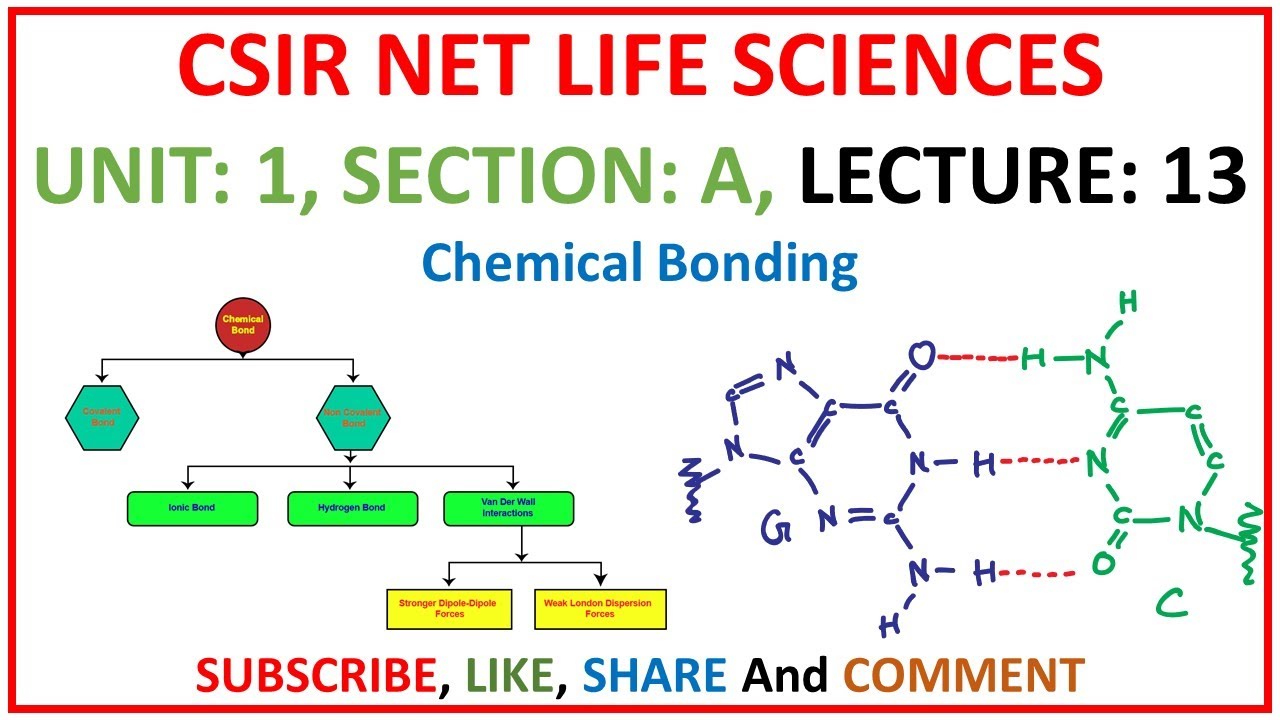
Concepts of chemical bonding, specifically covalent bonding and secondary intermolecular forces like hydrogen bonding and Van der Waals forces.
Basic chemical reaction principles, including how monomer activation and polymerization propagation occur at a molecular level.
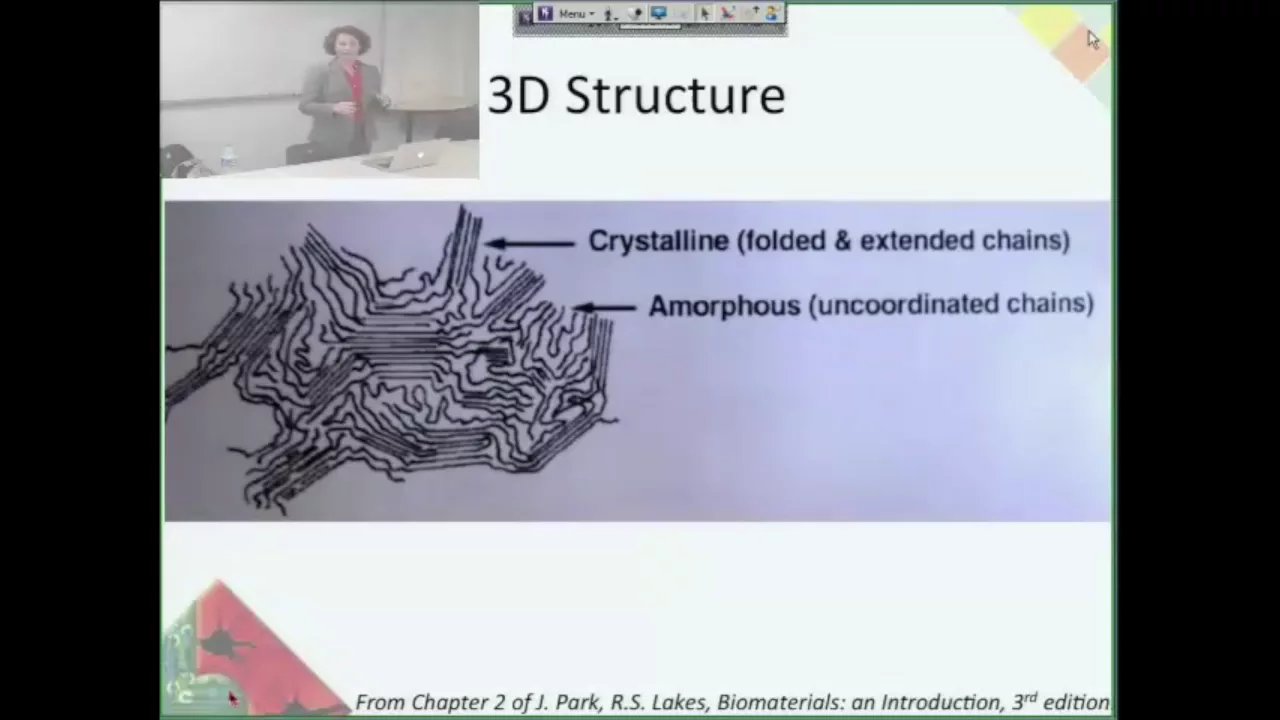
An introductory understanding of materials science phases, specifically the distinction between crystalline (ordered) and amorphous (disordered) solid structures.
Advanced polymer physics, focusing on the glass transition temperature (Tg), viscoelasticity, and mechanical deformation behaviors under stress.
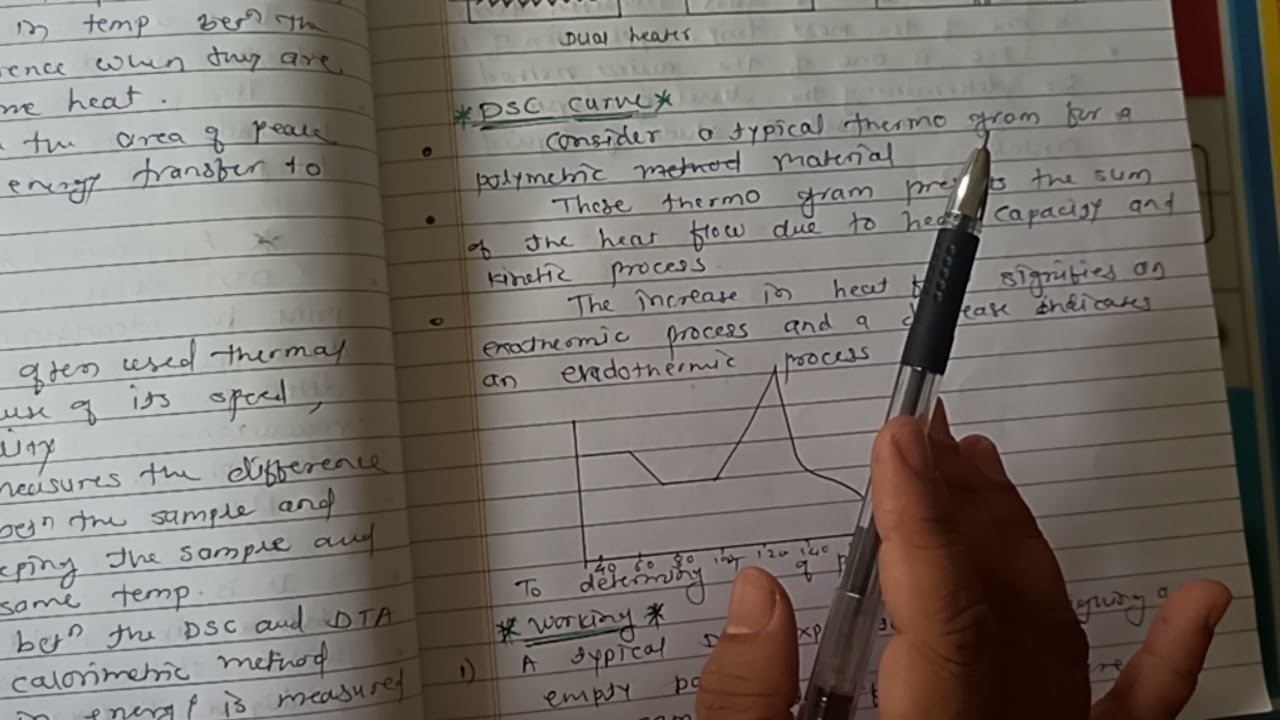
Analytical characterization techniques for polymers, such as Differential Scanning Calorimetry (DSC), Gel Permeation Chromatography (GPC), and X-ray Diffraction (XRD).
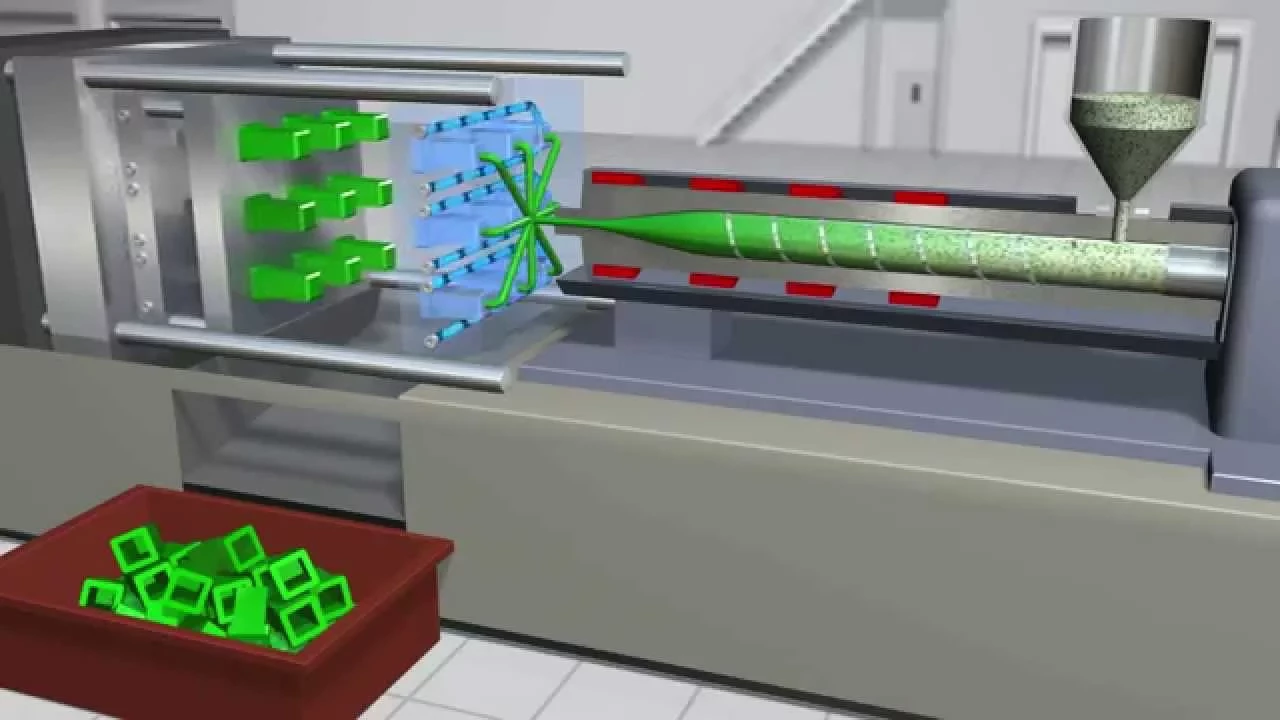
Industrial polymer processing and manufacturing methods, including injection molding, extrusion, and blow molding.
The chemistry and design of specialized macromolecules, such as conductive polymers, liquid crystal polymers, and biodegradable biomaterials.
30.5K views169likes48:51Original Release: 2010-12-18
The following content is provided under a Creative Commons license.
Your support will help MIT OpenCourseWare continue to offer high-quality educational resources for free.
To make a donation, or view additional materials from hundreds of MIT courses, visit MIT OpenCourseWare at ocw.mit.edu.
PROFESSOR: OK.
Perfect timing.
Let's turn to the announcements.
You know the big announcement is Monday, Celebration Part three.
I think Hilary sent all of you the coverage.
Just to be clear, start with defects, amorphous solids, kinetics, diffusions, solutions, acids, and bases.
No orgo, no polymers.
We'll catch the orgo and the polymers on the celebration of celebrations, the final exam.
OK, so let's get moving.
Last day we started talking about polymers.
These are macromolecules.
Here we've got an example of a simple compound with a double bond, vinyl chloride.
And by the action of addition polymerization, we can turn this into a macromolecule where you see a repeat unit.
The double bond has been broken to allow but carbon to bond to another vinyl chloride, and so on.
These are very, very large molecules, can be on the order of microns in length, mass measured in kilodaltons, or thousands of grams per mole.
So today I want to go back and look a little bit at polymer synthesis.
Then we're going to talk about properties of polymers, and end with some cultural implications that I alluded to the very beginning.
So we've already seen how this reaction begins, but let's see how it proceeds.
So here's an example of starting with an initiation reaction that generates this hydroxyl radical that starts from a peroxide.
And then you can see, in this first instance, the unpaired electron attacks the double bond, breaks the double bond links, and then moves that unpaired electron to the end, and so on, and so on.
So here I'm indicating that we're going to keep attaching, in this case, ethylenes to make polyethylene.
And then at some point, we decide that we've got the molecule long enough, and then we have to quench the reaction.
So then we add something that will cap this unpaired electron, and this step is called termination.
So this is how we make the long-chain molecules by this particular reaction.
And the thing to know, trivially, is that the composition of the polymer equals the composition of the mer.
You can see it right here, that I start with vinyl chloride.
Yeah, we've changed the double bond to a single bond, but it's still C2H3Cl, C2H3Cl taken many times.
That's it.
OK.
There's another way to make polymers.
And this is really important, not only in commerce, but it's most important in biology.
We do not have the biological apparatus to create radicals.
So during the course of this lecture, we have cell death proceeding in all of us, and cell generation and polymerization reactions occurring, amino acids being linked to form proteins and whatnot.
And that process goes by the second mechanism, condensation polymerization.
And I'll give you a simple example of that where we start with more than one mer, OK?
Involves more than one mer type.
Typically two, all right?
So let's look at a reaction.
So this is going to be a first kind of a mer, and R is just a general placeholder the people use in organic chemistry.
It comes from the word residual, but it's some giant piece of molecular mass, and there's a hydrogen here.
And this one then reacts with a second mer, which I'm going to designate R2.
And the second mer has a hydroxyl.
And what happens in condensation polymerization, is that we link R1 to R2.
R1 is now linked to R2 in a covalent manner.
And then, we take the hydrogen and the hydroxyl, and we send them over here.
So the hydrogen goes here, the hydroxyl goes here, to form water.
And this is typically conducted, in industry, not in our bodies, but in industry, it's typically conducted at elevated temperatures where this eventually goes into some kind of a condenser.
And then the water condenses and makes liquid.
And for this step, the condensation step of the byproduct of the reaction that we name the process.
The process isn't named for what happens here.
It's named for what happens over here.
So this is condensation polymerization, and you can see, we have covalent linkages at both ends, and we can add another R1H here, and then another R2OH here, and so on, and so on, and so on.
So clearly, we're losing some of the mass of the reactants here.
So the mass of the final polymer is less than the sum of the masses of all of the reagents.
So let's make a note of that.
That the mass of the polymer formed by condensation polymerization is less than the sum of the masses of the constituents.
Or let's say reactants, if we like.
Reactants.
Because we lose the condensate.
And so here's an example from commerce.
Oh, before I get to that, I wanted to show you some of the common addition polymers, which ones that you're familiar with that are made by this first process.
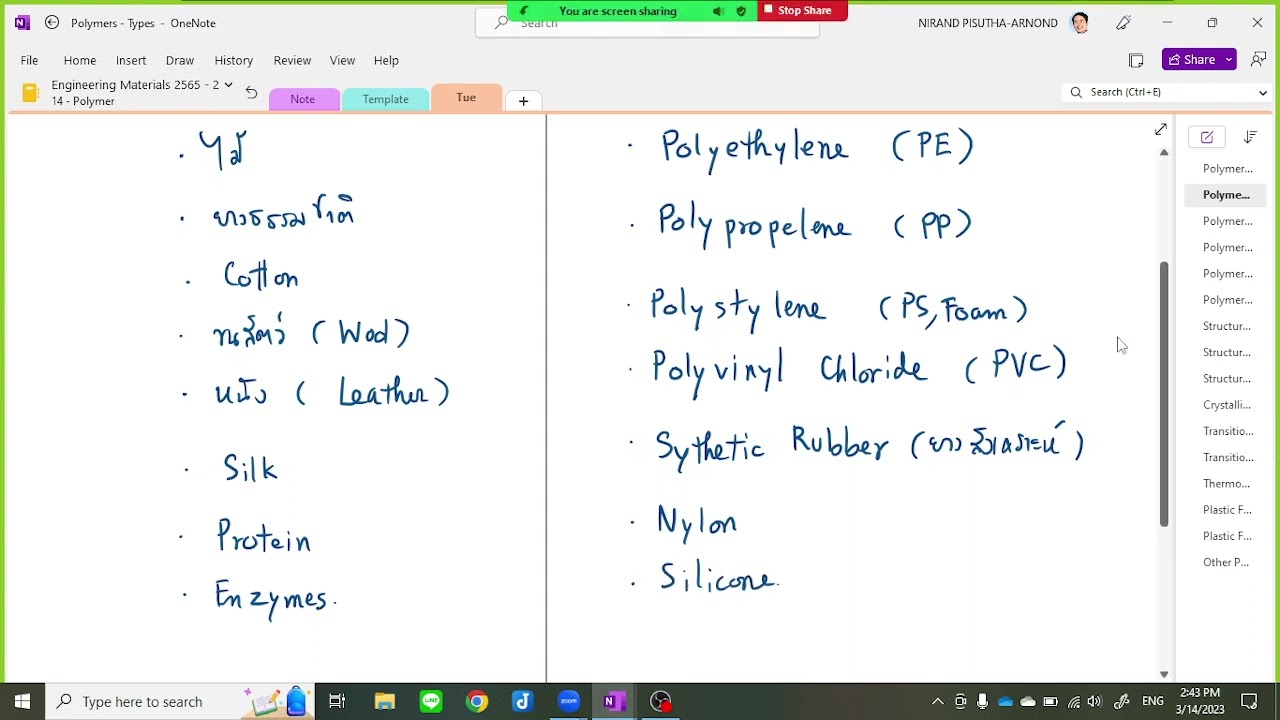
So at the top, we have polyethylene.
That's we started with.
And you know that's used in food wrap, it's used in milk jugs, and so on.
There's the polytetrafluoroethylene.
You remove the hydrogens, you put fluorines, and then you make Teflon.
So that's also made by addition.
Polypropylene, also used as separator.
In fact, polypropylene is found in every lithium ion battery.
It's the separator between the two electrodes, and it's engineered so that its glass transition temperature is about 60, 70 degrees Celsius.
So that if there's some event, and you start getting thermal runaway in your battery, and the temperature rises to whatever, let's say the number is 70 degrees C, the pores in the polypropylene collapse.
And when they collapse, they form a barrier, and it kills the battery, and prevents the battery from exploding.
And that's polypropylene.
There's butyl rubber.
What else do we have?
Polystyrene, you know, which is used in these cups and food containers.
Orlon, here.
Polyvinyl chloride, which is used in everything from old vinyl phonograph records to plumbing supplies.
That white PVC tubing that's used for piping.
Polymethyl methacrylate, this is plexiglass, which many of you are wearing in your eyeglasses.
That's this material here.
Butadiene, OK.
You see there's the after-polymerization.
There's still one unused double bond, so then we can mix this later on for cross-linking.
And the various rubbers, and so on.
You can see, they all have residual double bonds, which allows them to then participate in disulfide linkages.
OK.
So now here's the example I wanted to show you that you will be familiar with in commerce.
This is the PET, the polyethylene terephthalate, the plastic bottles.
The two-liter soda bottles are made of this stuff.
So you start with this thing, which is known industrially as terephthalic acid, which is really 1-4-benzene.
You see the benzene ring here, so one, two, three, four.
So off the one position and the four position, you have a carboxylic acid, and this is critical in proteins.
You're going to see the COOH structure over and over again.
And that H is detachable.
So this, then, it becomes a proton donor.
If it's a proton donor, it's an acid.
So this is the 1-4-benzenedicarboxylic acid.
And this is ethylene glycol, which you know as the base constituent of antifreeze for automobiles.
It's really ethane with two alcohols.
So it's a diol.
Ethanediol, 1-2.
And you mix the ethanediol with the terephthalic acid, spit off the proton and the hydroxyl, leaving behind this, which then forms the bridge here, and there's the basis for the plastic soda bottle.
This is the same material from which you can make Dacron, which is a fiber used sometimes in textiles, and Mylar, which is used in sheet films for polymer films. So this is the PET.
And note here, you see this oxygen is acting as a bridge.
It's acting as a bridge between the terephthalic acid residual and the ethylene glycol residual.
So again, we see nature relying on the fact that oxygen forms those two bonds and acts as a bridge for us.
OK.
A couple of other things to note.
Here are the typical polymers that are made by condensation polymerization.
All of the nylons.
The nylons are made by condensation polymerization.
And the bond here that exists between the nitrogen and the carbon is called the amide bond.
Even though it's spelled A M I D E, it's pronounced amid.
So these are all nylons.
The generic term is polyamides.
And you see the different types of nylon here.
Kevlar, used as a substitute for steel belting in tires, derives its strength from this, the benzene ring here.
And polyesters, OK?
The Dacron, the Mylar, I just showed you that.
Lexan.
This is used in everything from sports equipment, if you wear eyeglasses in sports, they're probably made of Lexan.
Again, look at these twin benzene rings, and then you've got the linkage on the end here.
And also used when you're sitting seven miles above the surface of the earth.
The only thing that prevents you from being asphyxiated or frozen to death in that airplane is a window made of Lexan.
And lastly, here are the silicones, which are also made by condensation polymerization.
And just a little note here for you.
The person who invented the silicones didn't know his chemistry.
And he thought that the silicone, in fact, had a double bond here.
See, this is acetone, and it from comes from the family of ketones.
So you have methyl above, methyl below, carbon, and a double bond off to the side.
Well, it turns out that silicone doesn't form double bonds.
Everybody in 3.091 knows this.
It's too big.
So it only has a single bond.
If it's a single bond, it's not an -one.
It's just like a pentane, methane, so on.
So this should be a siloxane.
So what people refer to as silicones today properly are called siloxanes.
OK.
Another thing to note.
Let's go back to the-- you see here?
We go down the backbone of the nylon, there's the carboxylic acid.
And there's a C with a double bond to the O, and it spit off its H, right?
That was the proton donor.
Look at over here.
There's an amino group here, a nitrogen with a hydrogen.
Well, if I line those two up just right, look at what can happen.
Here's a carbon-oxygen, and here's a nitrogen-hydrogen.
What do you know if you've got hydrogen sitting next to an oxygen?
It can form hydrogen bonds.
And so nylons derive their higher strength from the hydrogen bonds that form between the chains.
Doesn't this remind you of cross-linking?
It's sort of same church, different pew.
It's not as strong as a disulfite covalent linkage, but it does form linkages.
That's good.
It's good because it gives you strength.
But it doesn't come with the penalty that cross-linking comes with.
And what's the penalty?
You can't recycle cross- linked polymers very easily, because you've got these strong covalent bonds in the chains.
If you heat the polymer up, those bonds don't break.
If you heat this up, the hydrogen bonds will let go.
And you can remelt nylons, you can recycle those polymers much more easily.
So I want to make another taxonomy here that distinguishes polymers on the basis of their ability to be recycled.
Very important these days.
One of the first questions people ask if you're using a polymer in a process, is it recyclable?
And what do you do?
You start thinking about the molecular architecture in order to answer that question.
OK.
So let's talk about the ones that can be recycled.
So recyclable ones are called thermoplastics.
Weak van der Waals and hydrogen bonds only.
And this is between the chains.
You don't break the bonds up and down the backbone.
If you break the blinds up and down the backbone, you'll pyrolyze the material.
If you go to a high enough temperature to break covalent bonds in the backbone of a polymer, you're on fire.
So don't go there, all right?
So hydrogen bonds only, so this can reheat and reprocess.
So now we're talking about something that's almost like recycling metal.
You remelt it and reuse it.
The ones that have the strong covalent linkages are called thermal sets.
And the thermal set is difficult to recycle.
This is cross-linked-- difficult.
Notice I'm not writing impossible.
It's difficult to recycle, which is a polite way of saying, you can do it, and it's really expensive to do so.
You might be better off to just start with virgin material.
By the way, where do we get the material?
How do we make polymers?
Where do we get this carbon from?
From petroleum.
You say, well, why don't we use coal?
Well, you need carbon and hydrogen in these systems. And coal is carbon.
Petroleum is hydrocarbon.
So these are petroleum-derived.
So all these questions about resource utilization and so on come right up in center stage.
OK.
Now I want to take a few minutes to talk about use of crystallization to strengthen polymers, OK?
So crystallization for mechanical performance.
We want to improve the mechanical performance.
And I alluded to this last day.
We;ll do this really quickly.
So we've seen that if we want to, we know that if we-- let me give you the little icon here.
So you're going along like this, and some nice, long chain, and all of a sudden, you get a zone of crystallinity.
So I'm talking about adding crystallinity in order to strengthen the material.
And so we know that this has more bond density than the straight chain here, so this is going to be stronger.
So if I want to strengthen the polymer, introduce more crystallization, so what favors the onset of crystallization?
Or we'll say, partial crystallization.
The whole thing doesn't turn into a crystal.
To favor crystallization, what do we do with the various set points that we have in the material?
Well, first of all, we know with composition, composition is one of our levers.
And we want to make it uniform.
So that means homopolymer is favored over the copolymer.
Or maybe there are other instances where you don't want crystallinity.
In the soles of your running shoe, you don't want that turning into something that's semibrittle.
You want it to be soft.
So that's why we use copolymers in the soles of running shoes, in order to disfavor.
And if we want to do something like those jewel cases that I keep railing against, the jewel cases are a homopolymer that have a fair bit of crystallinity.
The second one we talked about last day, tacticity, this is a second lever that you have. So we know that isotactic over atactic.
The more uniform, the more likely the material will be to crystallize.
So the isotactic polystyrene makes those jewel boxes, whereas the atactic polystyrene makes the food containers that you get when you buy food from the trucks out here.
And number three, we talked about conformation.
And we know that conformation-- linear over branched, right?
Linear over branched.
If we have a branched polymer, it's not going to pack very well, so it's less likely to crystallize.
The linear one, as I've demonstrated in this cartoon, has a much, much higher propensity for crystallization.
All right.
How about properties?
Let's talk about properties.
Properties of polymers.
And I'm talking here about the bulk commodity polymers.
Sure, you can find specialty polymers that have remarkable properties that aren't characteristic of polymers, but I'm not talking about those.
So first of all.
Electrical properties.
They're insulators, electrical insulators.
Why are they electrical insulators?
We're talking about mainly covalent bonds here.
Covalent bonds, which means tightly bound electrons, tightly bound and localized, because you saw that in graphite, they're tightly bound, but they're delocalized.
So tightly bound electrons.
And no ions, because we've now recognized that we can conduct electricity not only by electrons, but by ions.
Tightly bound electrons, no ions.
That means no carriers, that means no connectivity.
Number two.
What's the second property?
Transparent to visible light.
Again, same thing.
Tightly bound electrons, not possible to excite, et cetera.
So these are clear, and furthermore, are generally colorless.
And this is especially in the case of amorphous materials.
Amorphous materials are clear, colorless.
What happens if we get semicrystallization?
Those crystalline zones, as I showed you last day, those crystalline zones are clear and colorless as well, but the index of refraction of the crystalline zone is not equal to the index of refraction of the amorphous zone, and so this boundary, if you will, scatters light.
So we have two clear and colorless zones of different index, and so if we put them together, we end up with something that is opaque, and that's in the case of the crystallinity.
When you have some crystallinity, you'll give up on that.
And actually, I wanted to show you a few things from the popular culture.
So I think what I've got here-- oh, these are the-- yeah, OK.
This is a little scene from the musical Chicago.
It's Mr. Cellophane.
Cellophane is polymer, viscose.
All right?
Listen to the properties.
They get it right.
[MUSIC PLAYBACK] -I tell you Cellophane, Mr. Cellophane, should I bend my name, Mr. Cellophane.
Because you can look right through me, walk right by me, and never know I'm there.
-Oh, I didn't see you.
[END MUSIC PLAYBACK] PROFESSOR: OK.
So sometimes the popular culture gets it right.
All right.
So now, what's the third property of polymers?
Chemically inert.
And this is why we use them in food packaging, and also in other forms of packaging.
Again, strong bonds, strong covalent bonds, means that it's not very reactive with the contents of many containers, including foods and beverages.
A fourth property that's exploited in polymers is very low density.
Why?
Well, what are the constituents of the polymers?
Contains things like carbon, nitrogen-- well, let's put carbon and hydrogen first. Those are the two biggies.
So we've got carbon and hydrogen.
You saw some nitrogen, oxygen, and then trace levels of other substances.
So these are all low Z elements.
So for example, in a beverage container.
I can make a beverage container.
You see a beverage container.
I see a bundle of properties.
What is the bundle of properties?
It has to be some physical rigidity, but not much, because I can squeeze this.
It's OK.
And it has to be chemically inert with respect to its contents.
So I could build this out of a borosilicate glass, a glass bottle.
And the density of borosilicate glass is about 3.54.
Or I can make it out of aluminum, and the density of the aluminum is about 2.7.
Or I can make it out of polymer, and the density is down close to 1.
So now if I load up the beverage truck, instead of transporting the contents plus the mass of the container, the higher fraction now is just the contents, and the container weighs less.
When I was your age, we had still soda cans made out of steel.
Steel soda cans.
Yeah.
They didn't have pull tops.
You had to have an opener to open them.
And the density of steel is 7.87.
Iron is 7.87.
So from steel, down to this, down to this, and so on.
So you see the low density has an advantage.
But, you know, we're going to have to go back over here and start thinking about recyclability.
So you see the balancing act here in choosing materials.
You can't just seize upon one attribute and say, oh, this is less dense than that, let's go with it.
But it's made from petroleum, and maybe it's not so recyclable.
So now what do you do?
Maybe you do make it out of steel, because you know, what you can recycle steel.
You can take the door off a 1928 Model-T Ford, melt that door down, and you can put it on a 2010 Taurus.
That's how recyclable iron is.
I'm just telling you what the properties are.
You're going to have to make the tough decisions.
And five, solid at room temperature.
And why are they solid at room temperature?
Because the interchain bonds, even though they're weak, they have a long, long, long, long surface contact area.
So entanglement of van der Waals bonds.
So you have the best of both worlds.
It's solid at room temperature, but in the case of a thermal plastic with modest heating, you can restore back to the original case.
Oh.
Here I have, I found the Polythene Pam.
I'll play you just a little segment of it, the first verse.
The interesting thing to listen to, in many of the Beatles songs, you can't tell this.
In the song, you can really tell the accent from Liverpool.
Listen carefully.
You'll hear the pronunciation.
That Merseyside accent.
And the way they're playing is the old skiffle.
This is how they started, in the clubs in Hamburg and so on.
This is this is not advanced Beatles.
They were playing here, it's sort of little joke in the middle of the Abbey Road album.
They go retro and show the way they were when they first formed the band.
[AUDIO CLIP REMOVED ] PROFESSOR: Did you catch that?
The Liverpudlian accent?
It comes complete with the glottal stop?
[IMITATING ACCENT] You know how you eat the tea?
Give me a bottle?
Yeah.
That's all from Liverpool.
Merseyside.
OK.
So now what do I have here?
Oh, here's recyclability codes.
Throw this in, you know, it's a part of the part of the pack.
So there's the polyethylene terephthalate, that I've shown you.
This is high-density polyethylene, PVC, low-density polyethylene, and so on.
And look here.
Invented by, invented by, invented by, invented by.
These are all man-made materials.
They didn't exist before.
Keep going.
Invented by, invented by.
And they're all invented in the 20th century, with one exception.
A pharmacist in Germany by the name of Eduard Simon was playing with the vinyl benzene and managed to make this goo that became what we know as polystyrene.
And nobody could explain.
Remember, in 18-- he was doing this in 1839, before Kekule had even speculated that you can get carbon-carbon linkages!
No benzene rings!
So that he was linking benzene, that they didn't even understand existed as a ring, and he was making polymers that they didn't appreciate that you could even make C17H36, let alone C10,017.
So in 1922, Hermann Staudinger gave the explanation that what we're seeing here is the polymerization into macromolecules.
And for that, he got the Nobel Prize in 1953.
Note, it took 30 years.
You don't invent something that's really, really prize-winning, and on the way home, turn on the radio and discover, oh, I won the Nobel Prize.
It takes time.
And especially, the more remarkable the discovery, it takes time before people accept it and say, this is not a hoax.
This is real.
They didn't have the characterization.
How were they going to verify in 1922?
So you keep waiting, waiting, waiting.
Look at what happened to de Broglie.
De Broglie said, lambda equals h over p, and they went, uh-huh.
And then, as soon as the fellows did the experiment down at Bell Labs and they got electron defraction-- boom!
He gets the Nobel Prize.
They said, you know what?
You're right!
That's how it works.
OK.
This was one of the giants.
This was Wallace Carothers.
Carothers, who for a short time was a lecturer at Harvard.
He left Harvard and joined DuPont, and he gave birth to an incredible array of synthetic materials, as they say here, similar to cellulose and silicon.
Invented neoprene, the first synthetic rubber.
This was very important for the United States and the Allied Powers during World War II, because we did not have access to natural rubber.
And the fact that they were making synthetic rubber here from materials that we had here allowed us to continue building for the war effort.
Invented nylon, in 1937.
An amazing man.
Unfortunately deeply troubled, very depressive.
And two days after his 41st birthday, he checked in a hotel in Philadelphia, and took his own life.
This is Wallace Carothers.
So I'm going to show you now some synthesis.
About ten years ago, I had a live demonstration here.
There was a gal who was doing her PhD over here in Building 13, and she'd come in and do these demos.
But, you know, it's been ten years now.
We let her graduate, so she's not around anymore.
So we took some videos of it.
So the first thing I want to show you is the synthesis of nylon.
So you're going to see this reaction.
So in this case, it's hexamethylene diamine and adipic acid.
And that's going to give you nylon-6,6 plus water, just as this reaction indicates here, and these are immiscible.
See, the adipic acid is in aqueous phase, and the hexamethylene diamine is a non-aqueous phase, so they form two phases right here, two liquid layers, and this reaction occurs at the interface between the two layers.
So you're going to see a close up of the beaker, and she's going to now dip an instrument in, and start pulling the solid.
She's making the solid from two liquids, and she's going to pull it.
And as she pulls it, she clears the interface.
Because once the interface is covered, new reactant can't get there.
So ironically, the product separates the two halves of the reaction from each other.
So you have to get the product out.
This is really cool.
So there's the chemistry.
So let's look.
This is Heidi Burch.
David, could we dim the lights, maybe?
[FILM PLAYBACK] HEIDI BURCH: The derivative of a carboxylic acid then is mercuric chloride.
I have it dissolved in hexane.
My base is hexamethylene diamine, and I've got it dissolved in water.
So to do this right, I have to make them float.
So we're going to pour, if I can get it open.
PROFESSOR: This is the old 10-250, too.
It's got a carpet here.
HEIDI BURCH: --because it's dissolved in water, which has a higher density than hexane.
And then I have my acid dissolved in the hexane.
So what's going to happen when I pour that in?
It's not going to mix, right?
PROFESSOR: It'll separate.
HEIDI BURCH: It's going to phase separate, exactly.
And we're going to have strata.
Is that going to help or hurt our reaction?
It's going to hurt our reaction, right?
To have a good reaction, you need intimate mixing.
Well-- PROFESSOR: This is like the Uzo water problem.
HEIDI BURCH: So this is pretty, actually pretty unexciting.
Nothing really interesting has happened.
It's just kind of sitting there.
Nothing's exploding out of the beaker, nothing's coming out.
It's kind of tame.
But if you look carefully, you can kind of see-- where did my pointer go?
You can kind of see this film right there.
See that big bubble?
Well, there's a scum that's floating at the interface between the two layers.
That's actually the nylon that we formed.
What happens is, I mentioned that nylon has that excellent chemical resistance.
Well, when we formed it, it made a barrier film between the two layers so that no more reactants could get through to each other to form more nylons.
So what I have to do is remove that barrier film to allow the reactants to come into contact.
And I'm doing that by drawing off the nylon as it's formed.
Because I'm drawing off the film, are very haphazard.
And what's happening is, the polymer I'm forming has a very broad molecular weight distribution.
It's not all 240 grams per mole or whatever.
And that greatly affects the mechanical properties, and, in fact, it affects them detrimentally.
So the mechanical properties of this nylon that I'm forming aren't very good.
[END FILM PLAYBACK] PROFESSOR: OK.
So that's the first one.
Now, the second one I'm going to show you talks about glass transition temperature, and how you engineer a rubber.
So it might shock you to know that a rubber is, in fact, a liquid.
It's a polymer that's above its glass transition temperature.
It might be supercooled liquid, but it's liquid.
And those disulfide linkages give you the flexibility so that the chains can move against one another.
If you drop the temperature below the glass transition temperature, the whole thing turns into an amorphous solid.
So what are the mechanical properties?
What I'm indicating here is the ball, all right?
So the bouncing ball is up here, above the glass transition temperature it's cross-linked and behaves as an elastomer.
If you get the temperature too low, you'll end up solidifying everything, and then it turns into something with the mechanical properties of a billiard ball, all right?
So we call that tough.
Tough means it has impact resistance.
It will absorb a lot of energy.
So if I drop the ball, it won't bounce, it takes the energy of falling and absorbs it and holds it.
So if you want a ball to bounce, you want to be above here.
So what we're going to do, is we're going to take two different polymers.
One that at room temperature is here, and one that at room temperature is here.
The one that's down here, we're going to put in the boiling water and get it over here.
The one that is naturally a bouncer here, we're going to put into liquid nitrogen and send it over here.
So we're going to make a bouncing ball not bounce, and we're going to make a flat unbouncy ball bounce.
We're going to teach these balls.
And what are we going to do?
We're going to teach these balls how to bounce and not bounce on temperature cue, by moving on opposite sides of the glass transition temperature.
So this is a glass, and this over here is a rubber, OK?
All right.
So here they are.
Those are the two rubbers.
One is norbornene, and the other is isoprene.
And both of these, if you go back to the earlier slides, have a double bond in the polymer, And that double bond has now been broken for disulfide linkages.
This is Heidi again.
[FILM PLAYBACK] HEIDI BURCH: OK.
The thing I want to talk about now, is the effect of temperature on polymer molecules.
Basically, when do I get rubbery behavior and when do I get glassy behavior?
Because I can get the same polymer to exhibit rubbery behavior or glassy behavior, depending on the temperature at which I use that material.
As Dr. Sadoway told you, polymers have what's called a glass transition temperature, and the type of behavior that I get is determined by my use temperature relative to my glass transition temperature.
So I have here six little balls with faces painted on them.
The ones with the happy faces are polyisoprene.
The ones with the sad faces are polynorbornene.
Now, polynorbornene is a synthetic rubber that was developed during World War II when we didn't have access to all the rubber tree groves in Southeast Asia.
So the happy balls are happy because their glass transition temperature is minus 67.
So our use temperature at room temperature is much greater that their glass transition temperatures, so they behave as rubber would.
The polynorbornene has a glass transition temperature of 40.
So we're actually below its glass transition temperature at room temperature, and it just dissipates all the energy.
We get a much more glassy-like behavior from this material, and it doesn't bounce.
So what we can do here to demonstrate the effect is we're going raise the use temperature of both materials, and we're going to lower the use temperature of both materials.
So I'm going to drop them in boiling water, and hope that the little faces stay on, because I just painted them on with white-out.
I don't know how that's going to work.
And then I'm going to drop two of them in liquid nitrogen.
Now, these will be our controls.
Remember, polynorbornene, polyisoprene.
Now something to think about, which I know Dr. Sadoway always likes to ask, is why does one have a high glass transition temperature, and why does one have a low glass transition temperature?
And I'll leave you to ponder that little conundrum, while I try to fish these bad boys out.
OK.
Oh!
White-out worked.
So this is the polyisoprene.
Can you hear the sound that it makes?
When I drop the one that's at room temperature, I get a nice rubbery sound.
When I drop that one, I get a plastic, hard glassy sound.
I've cooled it below its glass transition temperature, and now I get a totally glassy impact, like if I were knocking pool balls together.
Now let's go in for the polynorbornene.
Oh!
His eye came off.
Same thing.
I pulled the polynorbornene below its glass transition temperature as well, so it, too, exhibits a glassy collision, like a pool ball.
Now, let's go in here.
This is the polynorbornene, so it should still continue to bounce, because we've raised its use temperature further above its glass transition temperature.
That's not the exciting one.
The exciting one is-- if I can get it out.
What happens to the polynorbornene?
This is the sad ball, the one that wouldn't bounce at room temperature.
By raising its use temperature above its glass transition temperature by dunking it in boiling water, I get a rubbery response.
[END FILM PLAYBACK] PROFESSOR: Super.
OK.
House lights, please.
I don't read well in the dark.
OK.
So I hope you've seen some examples of how these work.
So now I want to talk a little bit about the broader societal issues.
So this, I think, is sort of a pattern of adoption of new materials.
You start off with this wonder, you know, this cool property that you get at the lab bench.
You know, when nylon was invented, it led to democratization.
Do you realize stockings, womens' stockings, were only owned by the wealthy?
Because they were made of silk.
When they were made out of nylon, they became cheap and abundant.
So that changed the way people dressed.
It changed the way people made clothing in a way that was unimaginable before.
So you could, for example, make a billiard ball, or piano keys, without killing an elephant.
You didn't have to use ivory.
You could use polymers.
Huge, huge implications.
So this is one of the first commercial polymers.
It's phenolic resin, and it's made by a condensation polymerization between carbolic acid and formaldehyde.
It was called bakelite.
and its corporate symbol was B with the infinity sign.
Material of a thousand uses.
And this, normally, is-- look at the elaborate art deco coffeepot.
And this is all-- it's thermal insulated, and so on.
These are all plumbing parts made out of bakelite, that previously would be made out of many pieces of metal that had to be machined and fashioned together.
You could take bakelite powder, put it into a die, heat it, and out comes the part, finished, in one step.
So this has a huge implication on productivity.
But then, so now we start talking about substitution, making the cheap things, the piano keys, the fork here, and on and on and on.
But then things that couldn't exist before.
You know, the movie film.
Look at the steering wheel here.
There's the, that's indicating the lady's stocking, and so on.
This is from Look magazine, 1940.
People thought these things were just godsends.
This is Synthetica.
This is a country, and it's got the province of Cellulose, Petrolia, Castphenolic and so on.
This is the 1960s.
This is plastics, the future has arrived.
It's at a museum in New York.
You're looking at the interior of a home with furniture built in, and it's all plastic walls, and formed, and so on.
I think maybe these guys were in a drug haze or something.
Those are the windows.
Maybe they thought those windows were square, rectilinear, I don't know.
So this is going way overboard.
And then let me show you a piece of iconic film from The Graduate.
You'll see a young Dustin Hoffman.
He's just come back from getting a bachelor's degree.
So this could be you someday in the not too distant future.
And he's at a party that his parents are throwing in his honor.
[FILM PLAYBACK] -We're all so proud of you!
Proud, proud, proud, proud, proud, proud.
What are you going to do now?
-I was going to go upstairs for a minute.
-I mean with your future?
Your life?
'Well, that's a little hard to say.
-Ben.
-Excuse me.
-Mr. McGuire?
-Ben.
-Mr. McGuire.
-Come with me for a minute.
PROFESSOR: See the lipstick?
-I want to talk to you.
Excuse us, Joanne.
PROFESSOR: See, it's the '60s.
They blow off the ladies.
Now the men are going to talk.
-I just want to say one word to you.
Just one word.
-Yes, sir?
-Are you listening?
-Yes, I am.
-Plastics.
-Exactly how do you mean?
-There's a great future in plastics.
Think about it.
Will you think about it?
-Yes, I will.
-Enough said.
That's a deal.
[END FILM PLAYBACK] PROFESSOR: All right.
So this was 1967, '68.
So what's happened since then in plastics?
Well, all of these other considerations about recyclability, environmental health and safety issues.
In order to facilitate molding, when you want to mold the plastic, to get those bonds to loosen up a little bit, we use a chemical known as a plasticizer.
It's a low molecular weight polymer that helps the-- it's sort of the equivalent of putting a little bit of olive oil in with the pasta, to give it that freedom to move.
And so this, then, when you sit in a new car, the new car smell is the smell of the plasticizer, which is still evaporating.
And some of those plasticizers have molecular architectures that are similar to hormones in our bodies.
And so it's not healthy for us to be breathing this stuff.
So maybe the bright future that was talked about is not quite as bright as some people might have thought it to be.
The other thing is-- you know how I showed you the plumbing parts?
Well, we started making all kinds of things out of polymers.
As a child, I remember my father bringing me, one day, a shoe.
The shoe was 100% man-made.
It was all polymer.
And we thought this was the coolest thing, because of all man-made.
Of course, there was a complete reversal.
People said, you know, your foot can't breathe, and this is a silly thing to have. But at the time, we started making-- and they were ugly.
And you know, for me, if it's ugly, I don't want to wear something that's ugly.
So what happened was, we started making all kinds of things out of polymers, or as the public knows them, as plastics.
And by the mid-'70s, to call something plastic was to make a derogatory comment.
It's plastic, it's cheap, it's shoddy.
So you know, making silk stockings cheaper as nylon stockings was good.
But if you get them too cheap, they're cheap.
See?
So there's an optimum there.
And all of that went into play.
By the way, how do we get the word plastic?
It comes from the Greek plastikos.
And same word as potter.
So when you're working with clay, you're working with a plastic medium.
It's deformable, it's malleable.
There's Samuel Johnson "let Thy plastick hand." So all plastics are polymers, but not all polymers are plastics, because some polymers can't be deformed.
If they're below their glass transition temperature, they're brittle solids.
All right.
So I've told you enough about concern.
Let's look at recycling.
In the United States right now, 100 billion pounds annually of polymer, 50 million tons of which 3 to 4 million are recycled.
It's a very low recycle rate.
So this ends up in the waste.
Contrast that to steel.
Steel, we still make 80 million tons a year of virgin metal in the United States.
It's still a world-class steel industry.
You can bet it's world-class.
With our wages and our high standards, if you're still in business making steel in the United States, you better be damn good.
Very good.
So 80 million tons virgin metal, 60 million tons recycled scrap.
We recycle more steel per year from automobiles than we consume building new automobiles.
It's a complete ecology.
And compare that to aluminum.
Aluminum, 4 million tons a year, 1 million tons recycled.
Very high rate on used beverage containers.
But that's the exception.
Because this was DFE, Designed For Environment.
The alloy choices were made in order to facilitate recycling.
So there were certain metals that were forbidden to go into the alloy because they would pose problems later in recycling.
So there are many ways to get the same deep-drawing characteristics.
You know, you make a beverage can out of a sheet, and you snap.
Punch down, punch up, there's no seam on the bottom.
This is made from a single sheet of metal.
And then a second piece comes down on the top.
And so this has only aluminum, silicon, and magnesium.
You could choose other metals, but with aluminum, silicon, magnesium, it is recyclable.
But aluminum ladders-- if you're building an airplane, let's say you're the chief purchasing agent for Boeing.
And you've got a choice of aluminum scrap, which, you know, people might have thrown some old fishing weights with lead in there, and that's now contaminant in the aluminum.
Or you're going to buy high-purity virgin metal, and you're going to bet the company's future.
What are you going to buy?
You're going to put recycled metal into an airplane.
Have the thing fall out of the sky.
No way.
So you have to be careful.
Those alloys, if you take the, I told you, the door off the 1928 Model-T, and you put it on a 2010 Taurus, you can't take the wing off a DC-3 and melt it down and put it on a 777.
Because the top has an aluminum alloy with zinc, and in the bottom one has an aluminum alloy with copper.
And if you co-melt those, you'll end up with intermetallics, and the alloy is unusable.
So you have to separate them.
Now it's not so simple.
So before you go make pronouncements saying, yeah, recycling is great, think about it.
Follow through.
OK.
If you find this interesting, and the impact that polymer had on American culture, this is a lovely book by Jeffrey Meikle on polymers and their use.
Up Next
8:33
Cationic Polymerization: Initiation, Propagation, Termination
@sonny-8247
55.9K views•2015-11-04
83:56
Biocatalysis and Catalysis in Islatravir Synthesis | Merck Webinar
@SCIwheresciencemeetsbusiness
675 views•2020-10-08
6:57
Ocean Acidification Chemistry | MIT Solid-State Chem
@mitocw
5.5K views•2020-12-07
17:31
Edible Water Bottles: A DIY Guide to Sodium Alginate Spherification
@ryan
10.5M views•2019-06-21
Related Study Plans & Knowledge Roadmaps
Structured learning paths in Chemistry
chemistry
Nuclear Chemistry: Decay, Meds & Fuel Cycle
01Introduction to Nuclear Structure and Radioactivity
02Decay Dynamics and Kinetics
03Radiation Interaction and Detection
+ 2 more learning modules
24h5 modules
Explore Roadmap
chemistry
Supramolecular Chemistry: Forces & Machines
01Foundations of Chemical Bonding and Intermolecular Forces
02Introduction to Host-Guest Chemistry
03Thermodynamics and Dynamics of Self-Assembly
+ 2 more learning modules
16h5 modules
Explore Roadmap
chemistry
Photochemistry: Excited States & Reactions
01Foundations of Light-Matter Interactions
02Molecular Orbitals and Electronic States
03Photophysical Processes and Jablonski Diagrams
+ 2 more learning modules
18h5 modules
Explore Roadmap
chemistry
Coordination Chemistry: Bonding & Properties
01Introduction to Transition Metals and Ligands
02Crystal Field Theory (CFT) and Geometry
03Magnetic Behavior and Spin States
+ 2 more learning modules
14h5 modules
Explore Roadmap