












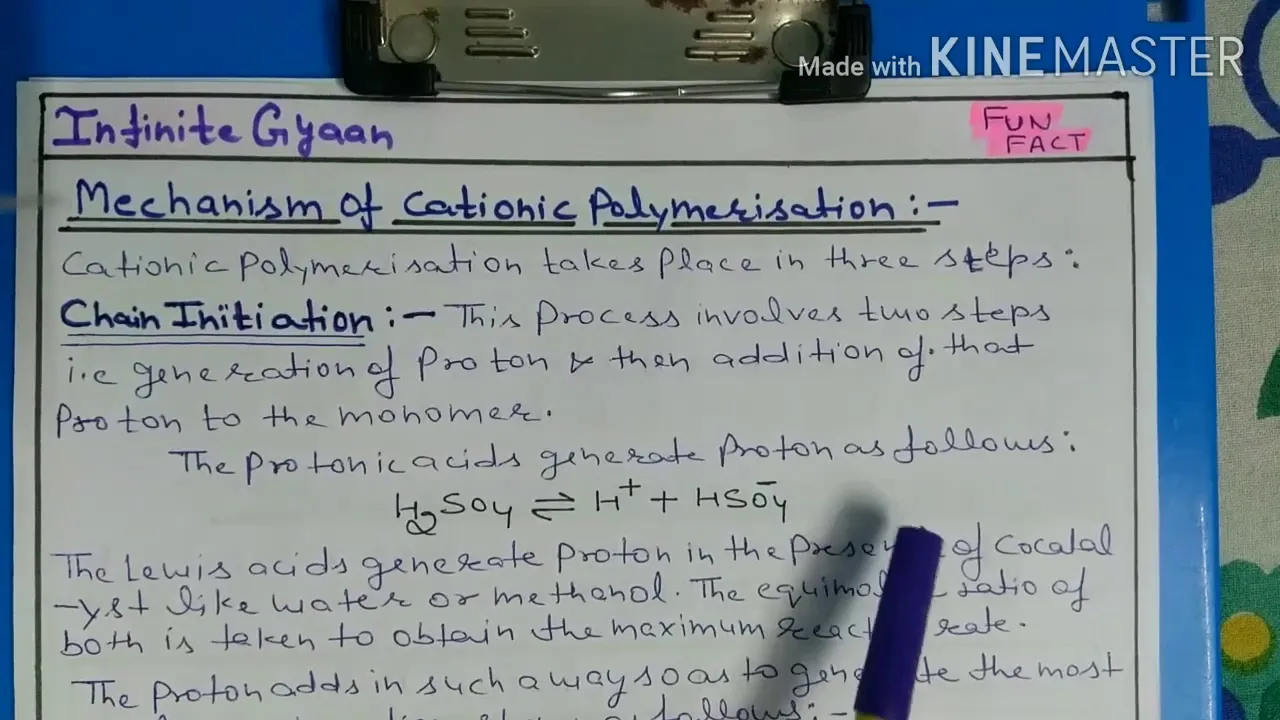







Cationic polymerization is a chain-growth polymerization process initiated by a Lewis acid-co-initiator system, where the Lewis acid accepts electrons from a base to generate a proton initiator; this proton then activates monomers by accepting both electrons from their double bonds, creating a positively charged chain end that propagates by repeatedly adding new monomers; termination occurs through either chain transfer (where the proton transfers to another monomer, creating a new chain) or combination (where two chain ends react together), ultimately yielding the final polymer product.
Cationic Polymerization: Initiation, Propagation, Termination
Added:Fundamental concepts of organic reaction mechanisms, specifically electrophilic addition and arrow-pushing formalisms.
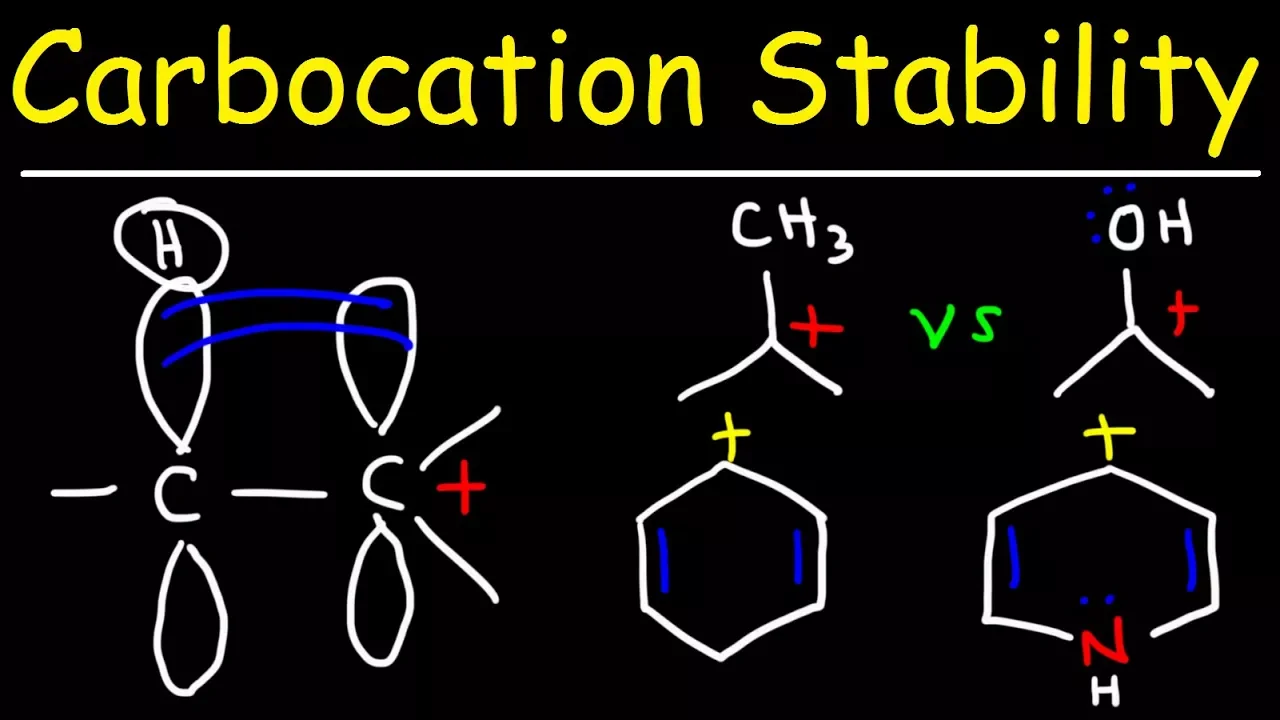
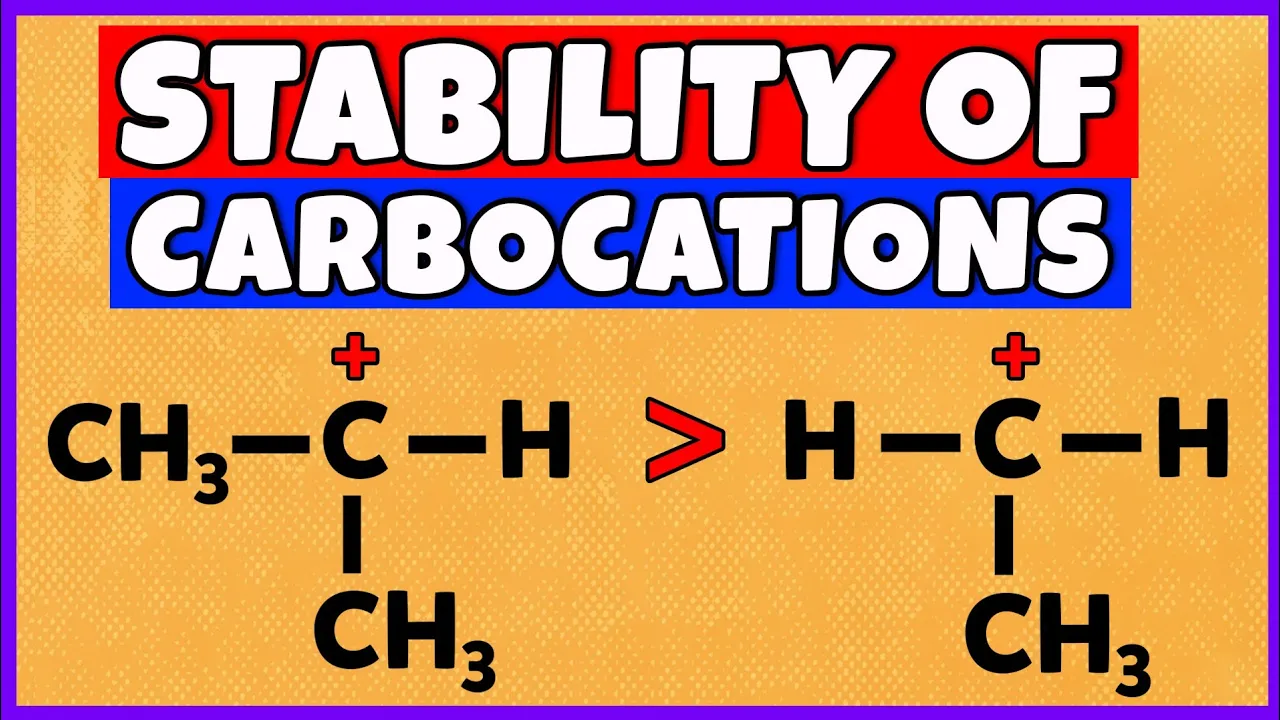
Structure and stability of carbocations, including the roles of inductive effects, hyperconjugation, and resonance.
The chemistry of Lewis acids, Bronsted-Lowry acids, and co-initiators used to generate initiating electrophiles.
Basic chain-growth polymerization principles, including the general concepts of monomers, initiators, and active centers.
Anionic and radical polymerization mechanisms to compare and contrast monomer selectivity and initiation conditions.
The kinetics of cationic polymerization, exploring how temperature, solvent polarity, and counterions affect reaction rates.
Controlled or 'Living' Cationic Polymerization techniques used to synthesize polymers with precise molecular weights and narrow dispersity.
Industrial applications of cationic polymerization, specifically the manufacturing of polyisobutylene (butyl rubber) and specialized resins.
55.9K views632likes8:33Original Release: 2015-11-04
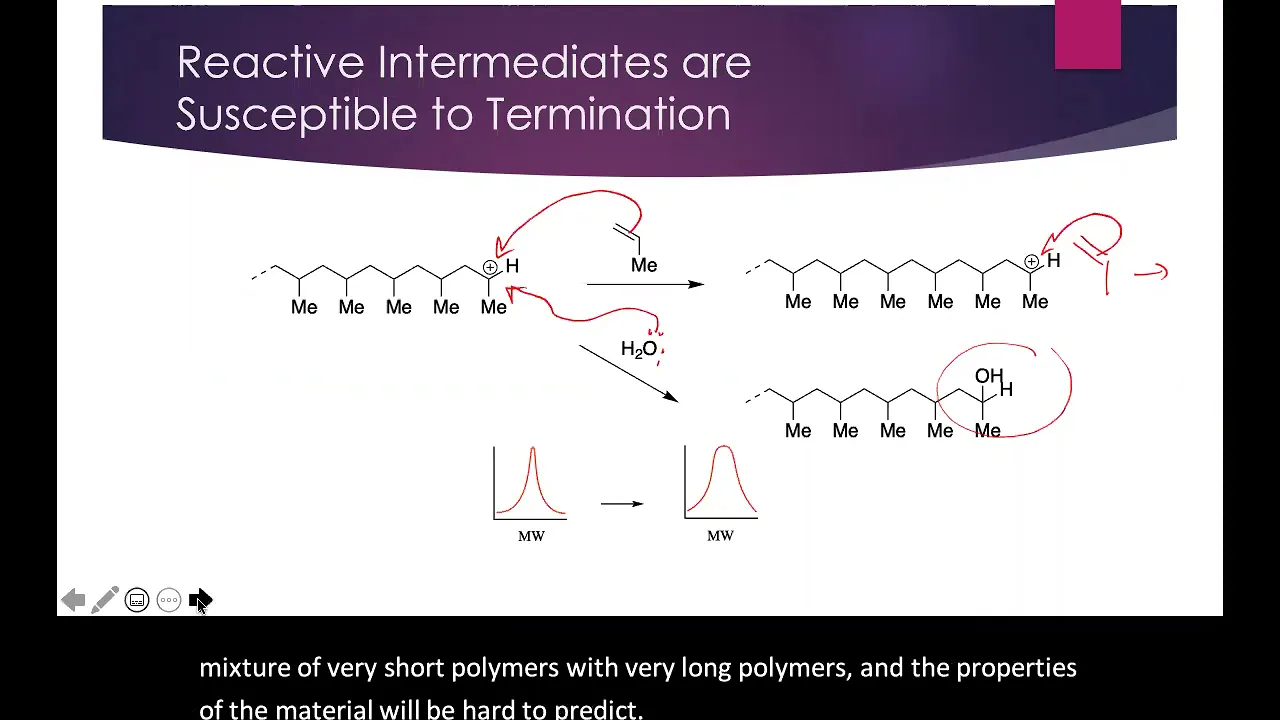
this video we look at the catonic polymerization um the initiation step takes place uh usually with a a leis acid and the leis acid is a molecule that can accept a pair of electrons so for example Boron TR chloride is a Lis acid and when it reacts with H2O or have an excess of uh electrons so a Lis base a co-initiator um those electrons can be donated to the Boron Tri chloride and this can accept that electron acceptor leis acid what will yield at the initiator and it will look like this here we get a negative charge and here we get a o group of the H2O plus a proton and this proton is actually the initiator of the reaction so the initiation step in the initiation actually I have to draw initiate to so okay we will activate it initiation step um we have the in suu produced oh in suu produced um initiator and it will react with the monomer for example we take this monomer so just an example and this double bond reactive and it can donate its electrons to the H where uh we um will react where it will will be re react um in this example uh in contrast to the three rical polymerization we use here whole headed arrows because both of the electrons will be donated to theh so we make a new covalent bound you will see that here uh where this H is calent Bond makes a covalent bond with the c and the two existing H uh atoms and the rest of the molecule what will yield of course here the uh positive charge with and now we will abbreviate something this part we will abbreviate that to uh the counter ion C counter ion um what have negative charge so we will oh sorry counter I on what will be positioned here so that's the first step um now we take take a look at the propagation step propagation and actually this process will go will go on in the propagation step so uh as the same as we have looked as we have seen in the in free radical polymerization we draw here a polymeric structure because we know a lot of monomers have reacted already uh like this in propag ation step and we just want to visualize what is happening in the propagation step so here is the positive charge with the counter ion and and new monomer like this and that will yield go to the next page uh what will yield the new polymer so we draw again the structure like this n + one the like the same in the three rical polymerization it's quite similar with the positive charge and the counter so excuse excuse me you see here I I'm uh a little bit confused with the Dutch uh notation so this is a counter ion okay um and now we already finished so we have the termination and we look at two termination mechanisms um and we can look at the chain transfer we will abbreviate it now actually in your exam you just write down of course this structure again and then what will happen but for this video we will abbreviate it a little bit so the chain end say H3 plus with the counter ion negative charge and for the chain transfer we just use another monomer this is a little bit strange because it looks like exactly the same as in the propagation step but something else will be uh taking place because instead um the counter ion of sorry the um the positive charge and the reactive Bond here what normally react in the propagation step is not taking place when we talk about chain transfer but this proton here that will re will react in the chain transfer reaction so this double bound will react with the the proton here here we have an X of electrons so this Bond will go here and here will here there will be a new bound uh formed and this positive charge of course that's why here the new bound can be formed uh will be canceled out and will be transferred to the monomer that's why it's called chain transfer so what will what is the product that is a terminated chain end so the double bound what is formed here we will see here [Music] um yes this is not correct uh oh yeah sorry let me think okay like this um and uh of course uh the product of the chain transfer itself ch3 ch3 M plus and the counter Ion with the negative charge still so this part uh comes from here so and this proton will be transferred here with a positive charge what will yield this one so was a little bit confused now um and the last step of course um an example of a of a normal termination step termination termination step is like this so we draw the chain end with a positive charge uh for example now we write down the uh write down the uh initiator with the negative charge and we can also see in this uh in this example that this Chlor chloride uh part um can be re can react with a positive charge what will yield next page what will yield oh I a PO like this H H C ch3 ch3 CL so this is um from the uh from the initiator plus b cl2 o what is neutral that's it
Up Next

4:39
Anionic Polymerization Mechanism Explained | Step-by-Step
@sonny-8247
45.7K views•2015-11-04
83:56
Biocatalysis and Catalysis in Islatravir Synthesis | Merck Webinar
@SCIwheresciencemeetsbusiness
675 views•2020-10-08
10:06
1H NMR: Determining Number of Peaks from Structure
@MSJChem
59.2K views•2017-04-06

17:31
Edible Water Bottles: A DIY Guide to Sodium Alginate Spherification
@ryan
10.5M views•2019-06-21
Related Study Plans & Knowledge Roadmaps
Structured learning paths in Chemistry
chemistry
Nuclear Chemistry: Decay, Meds & Fuel Cycle
01Introduction to Nuclear Structure and Radioactivity
02Decay Dynamics and Kinetics
03Radiation Interaction and Detection
+ 2 more learning modules
24h5 modules
Explore Roadmap
chemistry
Supramolecular Chemistry: Forces & Machines
01Foundations of Chemical Bonding and Intermolecular Forces
02Introduction to Host-Guest Chemistry
03Thermodynamics and Dynamics of Self-Assembly
+ 2 more learning modules
16h5 modules
Explore Roadmap
chemistry
Photochemistry: Excited States & Reactions
01Foundations of Light-Matter Interactions
02Molecular Orbitals and Electronic States
03Photophysical Processes and Jablonski Diagrams
+ 2 more learning modules
18h5 modules
Explore Roadmap
chemistry
Coordination Chemistry: Bonding & Properties
01Introduction to Transition Metals and Ligands
02Crystal Field Theory (CFT) and Geometry
03Magnetic Behavior and Spin States
+ 2 more learning modules
14h5 modules
Explore Roadmap