Anionic polymerization is a controlled polymerization technique where a negatively charged nucleophile (such as organolithium compounds) initiates the reaction by attacking a monomer, followed by propagation steps where additional monomers add to the growing chain; since this is a living polymerization, termination requires adding an external molecule like methanol to donate a proton and neutralize the active chain end, allowing precise control over molecular weight.
Anionic Polymerization Mechanism Explained | Step-by-Step
Added:Deep Dive
Basic organic chemistry mechanisms, specifically nucleophilic addition reactions and carbanion stability.

LIVE NEET 2026 | CHEMISTRY PAPER DISCUSSION | All India FULL SYLLABUS TEST (FST-42) | NEW LIGHT NEET
2.2K
Nucleophilic addition reactivity decreases with steric hindrance: formaldehyde > acetaldehyde > acetone > 3,3-dichloroacetophenone. For [Fe(CN)₆]⁴⁻, Fe²⁺ (3d⁶) with strong field CN⁻ ligands forms d²sp³ hybridization, octahedral geometry, diamagnetic. Carbanion stability: CH₃⁻ > CH₃CH₂⁻ > (CH₃)₂CH⁻ > (CH₃)₃C⁻. Electron-withdrawing groups stabilize carbanions by dispersing negative charge, while electron-donating groups destabilize them.
Click to watch →
G.O.C for JET UG 2026 | PYQ | Piyush Sir
218
Electrophilic addition reactions involve the addition of an electrophile to an electron-rich double bond. The mechanism typically involves the formation of a carbocation intermediate. Examples include addition of HBr to alkenes, which follows Markovnikov's rule. Carbanion stability follows the order: 1° > 2° > 3°, which is opposite to carbocation stability. This is because carbanions are destabilized by electron-donating alkyl groups through the +I effect. The more alkyl groups attached, the less stable the carbanion becomes. Understanding these stability trends helps predict reaction mechanisms and products in organic chemistry.
Click to watch →
Types of Organic Reactions | Addition Reactions | Organic Chemistry | BSc 1st year | By Pankaj Sir
23.9K
In nucleophilic addition, the substrate has both positive and negative centers (like carbonyl compounds). The nucleophile attacks the positive center first, forming an alkoxide intermediate with 8 electrons (complete octet). The electrophile then attacks the negative center. The reaction pathway is determined by intermediate stability: alkoxides are more stable than carbocations because they have complete octets. When both reaction pathways are possible, the pathway forming the more stable intermediate is favored.
Click to watch →
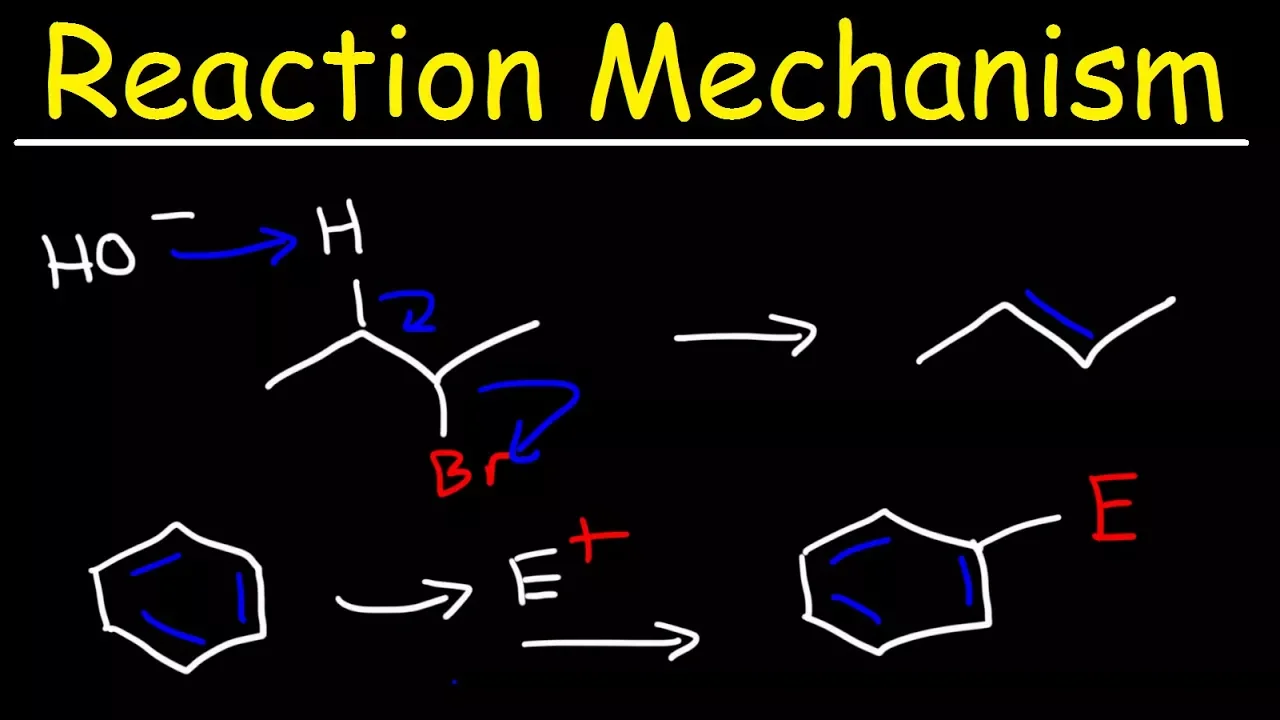
Organic Chemistry - Reaction Mechanisms - Addition, Elimination, Substitution, & Rearrangement
1.1M
Reducing ketones to alcohols using sodium borohydride is a nucleophilic addition reaction. The hydride ion attacks the electrophilic carbonyl carbon, forming a tetrahedral intermediate with partial negative charge on oxygen. Water then protonates this intermediate to yield the alcohol. Sodium borohydride provides hydride ions (nucleophiles) that attack the carbonyl carbon.
Click to watch →

Carbanion | Fundamentals of Chemistry | Aarti mam Chemistry | bsc 1st yr Chemistry
17.4K
Carbanion stability depends on inductive effects and resonance effects. The stability increases with the number of electron-donating groups attached to the central atom. The stability order is: CH3- > CH3CH2- > (CH3)2CH- > (CH3)3C-. More electron-donating groups provide greater stabilization through the inductive effect. Resonance can further stabilize carbanions when the negative charge can be delocalized in alternating positions with double bonds. Carbanion stability is compared with free radicals and carbocations. The stability comparison shows carbanion is less stable than carbocation but more stable than free radicals. The stability order follows the number of electron-donating groups and the ability to delocalize the negative charge.
Click to watch →
Deep Dive
The fundamental classification of polymerization processes (chain-growth versus step-growth polymerization).

Step-Growth Polymerization & Carothers Equation | Polymer Chemistry
21.8K
Polymerization reactions are classified into two main mechanisms: step-growth and chain-growth. In step-growth polymerization, any reactive end can react with any other reactive end, allowing random combination of chains of any length. In contrast, chain-growth polymerization involves only the growing chain end being reactive, adding monomers one at a time. Uncontrolled chain-growth results in a popcorn-like mechanism where chains grow randomly and terminate unpredictably, while controlled/living polymerization allows all chains to grow simultaneously at similar rates, producing more uniform molecular weights.
Click to watch →
Polymers 01 : Classification of Polymers | Class 12 NCERT
92.2K
Polymerization mechanisms are classified as: (1) Chain growth (addition) - monomers add to growing chain one at a time, involving unsaturated compounds; (2) Step growth (condensation) - monomers react stepwise with elimination of small molecules. Chain growth involves initiation, propagation, and termination steps. Step growth involves functional group reactions between monomers.
Click to watch →
고분자화학 1장: 고분자 구조 및 물성 (2)
411
Polymerization is classified into two main types: step-growth polymerization (condensation) and chain-growth polymerization (addition). In step-growth polymerization, monomers react step-by-step with byproducts eliminated, and molecular weight increases slowly even at high conversion (e.g., 98% conversion yields DP=50). In chain-growth polymerization, monomers with double bonds react rapidly through initiation, propagation, and termination steps, achieving high molecular weight even at low conversion. This fundamental difference affects how polymers are synthesized and their resulting properties.
Click to watch →

2.0 part1: intro to step growth polymerization
182
Step-growth polymerization builds chains stepwise through random union of any two molecular species (monomers, oligomers, or polymers) via functional group reactions. Each step involves two functional groups combining, and growth occurs throughout the entire reaction time. Chain-growth polymerization initiates from monomer double bonds using an initiator, propagating chains rapidly. Key differences include: step-growth produces high molecular weight only at reaction end, requires longer times, and has uniform activation energy; chain-growth achieves high molecular weight immediately and requires less time. Both mechanisms can produce similar polymers under certain conditions.
Click to watch →
Lecture 2 Molecular Weight Determination Of Polymers
3.1K
Polymers can be classified mechanistically into chain-growth polymerization and step-growth polymerization. Chain-growth polymerization involves vinyl-based monomers with C=C double bonds where an initiator starts the reaction and monomers add successively in a chain reaction (typical of addition polymers). Step-growth polymerization involves reactions between multifunctional monomers where dimers, trimers, and higher oligomers form progressively through stepwise reactions (typical of condensation polymers and polyurethanes). This classification better explains polymer formation mechanisms than addition/condensation alone.
Click to watch →
Deep Dive
How electron-withdrawing groups on monomers (such as cyano or carbonyl groups) stabilize negative charges during chain propagation.

Resonance of Electron Withdrawing Groups
2.2K
Electron withdrawing groups (EWGs) such as carbonyl (C=O), nitro (NO2), and cyano (CN) stabilize negative charge through resonance by delocalizing electron density onto electronegative heteroatoms like oxygen or nitrogen; in neutral molecules, EWGs induce positive partial charges on adjacent atoms by pulling electron density through conjugation, thereby affecting molecular properties including acidity and anion stability.
Click to watch →

anionic polymerization
1.9K
Anionic polymerization is a chain-growth polymerization mechanism where the monomer acts as an electrophile and the initiator acts as a nucleophile; the process involves three main steps: initiation (where the initiator attacks the monomer to create a negatively charged active site), propagation (where the negatively charged chain end attacks new monomers, breaking the bond in the direction opposite to electron donation to extend the chain), and termination (where the chain is neutralized, typically by reacting with a proton source like NH3); this mechanism requires monomers with electron-withdrawing groups such as cyano, nitro, or halogen substituents to stabilize the negative charge on the carbon atom.
Click to watch →

Class 11 - Some Basic principles & techniques of organic - NCERT Solution - Q 1 to 10
138K
Electron-withdrawing groups (EWGs) stabilize negative charges by pulling electron density away from the charged center. This reduces the concentration of negative charge on any single atom. Groups like -NO₂ are strong EWGs that help stabilize adjacent negative charges through inductive effects.
Click to watch →

Free Radical Polymerization-Clip 1 | Monomers | Dr.Bilal | Understand Chemistry
142
Electron-withdrawing substituents (Cl, CN, NO2, esters) stabilize propagating radicals through resonance, inductive effects, and hyperconjugation. This stabilization is critical for controlled chain growth: it raises termination activation energy more than propagation, slowing termination and enabling longer chains. Styrene's phenyl group provides strong resonance stabilization. Acrylates use ester groups for inductive polarization and carbonyl resonance. Methyl methacrylate combines alpha-methyl hyperconjugation with ester effects. Carboxylic acids and acrylonitrile use carbonyl resonance and nitrogen lone pair donation. Without stabilization, ethylene propagates too fast with excessive branching. Conjugated dienes like butadiene and isoprene provide resonance stabilization across multiple bonds.
Click to watch →
B.Sc.2nd Sem chemistry Mechanism & Kinetics Of Addition Polymerization Part- 3(Anionic Mechanism)
328
Anionic addition polymerization is a three-step process occurring in monomers with electron-withdrawing groups (-I groups). Chain initiation begins when a base attacks the monomer, creating a negatively charged anion and positive counterion. During propagation, this anion repeatedly attacks additional monomer molecules, with the electron-withdrawing group stabilizing the developing negative charge. The reaction continues until termination occurs, typically through combination with a proton source. The electron-withdrawing character of the monomer enables efficient charge stabilization throughout the growing polymer chain, allowing controlled chain growth until termination.
Click to watch →
Deep Dive
The chemical behavior of strong bases and nucleophiles, particularly organolithium reagents (e.g., n-butyllithium) used as initiators.

Organolithium chemistry | Wikipedia audio article
111
The C-Li bond is highly polarized, with carbon attracting most electron density and resembling a carbanion, making organolithium reagents strongly basic and nucleophilic. Common applications include use as nucleophiles, strong bases for deprotonation, initiators for polymerization, and starting materials for other organometallic compounds. As nucleophiles, they undergo carbometallation reactions where the C-Li bond adds across carbon-carbon double or triple bonds, forming new organolithium species. This is the most widely employed reaction, used in anionic polymerization processes where n-butyl lithium initiates polymerization of styrene, butadiene, or isoprene. Intramolecular carbometallation offers advantages over radical cyclization, including the ability to react with electrophiles and greater regio- and stereospecificity. Nucleophilic organolithium reagents add to electrophilic carbonyl double bonds to form carbon-carbon bonds, reacting with aldehydes and ketones to produce alcohols. Organolithium reagents are better than Grignard reagents at reacting with carboxylic acids to form ketones. They react with carbon dioxide to form carboxylic acids. For substrates where two sites of nucleophilic addition are possible, one-two addition to the carbonyl carbon or 1-4 conjugate addition to the beta carbon are possible. Organolithium reagents can perform enantioselective nucleophilic addition to carbonyl derivatives in the presence of chiral ligands, widely applied in pharmaceutical synthesis.
Click to watch →

Last 10 Years NEET PYQs Organic Chemistry || GUN Shot
35.1K
Organolithium reagents (RLi) are strong nucleophiles and bases. They react with carbonyl compounds to form alcohols after acidic workup. The reaction proceeds through nucleophilic addition to the carbonyl carbon, followed by protonation.
Click to watch →
![[2022 통합필수이론] 위클리 2회차](https://i.ytimg.com/vi/HxwK6lI4b0g/hqdefault.jpg)
[2022 통합필수이론] 위클리 2회차
1.6K
Organolithium compounds (RLi) and organomagnesium compounds (RMgX, Grignard reagents) are strong bases because the carbon atom bears a negative charge. The carbon atom is more electronegative than hydrogen, making the C-H bond in the conjugate acid (RH) relatively weak. These compounds are used as strong bases in organic synthesis. For example, n-butyllithium (n-BuLi) is a strong base used in deprotonation reactions. The pKa of the conjugate acid (RH) is approximately 50, making these compounds extremely strong bases.
Click to watch →
Organolithium Reagents
44.6K
Organolithium reagents are organometallic compounds prepared by reacting alkyl halides with elemental lithium in non-polar aprotic solvents, producing carbon-lithium bonds that are extremely polarized due to lithium's low electronegativity; these reagents serve as powerful nucleophiles for carbonyl addition reactions and as strong bases capable of deprotonating terminal alkynes to form acetylide ions for further synthetic transformations.
Click to watch →

Química Orgánica: Parte 3 REACCIONES (3.1) (La segunda parte NO se grabó)
188
Organolithium reagents are prepared similarly to Grignard reagents, by reacting alkyl halides with lithium metal. They are even more reactive than Grignard reagents and are the conjugate bases of alkanes (pKa > 50), making them extremely strong bases. They can react with carboxylate ions to form ketones, a reaction not possible with Grignard reagents. Like Grignard reagents, they are incompatible with acidic protons.
Click to watch →
Prerequisite Knowledge
- Concept 01Basic organic chemistry mechanisms, specifically nucleophilic addition reactions and carbanion stability.
- Concept 02The fundamental classification of polymerization processes (chain-growth versus step-growth polymerization).
- Concept 03How electron-withdrawing groups on monomers (such as cyano or carbonyl groups) stabilize negative charges during chain propagation.
- Concept 04The chemical behavior of strong bases and nucleophiles, particularly organolithium reagents (e.g., n-butyllithium) used as initiators.
Subsequent Learning
- Step 01Synthesis of advanced block copolymers (such as SBS rubber) and thermoplastic elastomers utilizing the 'living' nature of the polymer chains.
- Step 02Comparison of anionic polymerization with other controlled/living polymerization methods like ATRP, RAFT, and cationic polymerization.
- Step 03Engineering complex macromolecular architectures, including star-branched, cyclic, and graft copolymers.
- Step 04Industrial applications and the rigorous reaction engineering required to exclude air, moisture, and other protic impurities.
Initiation
Propagation
Termination
Initiation
0:00Playing Section
- 1
Discusses anionic polymerization initiation using a nucleophile.
- 2
Focuses on bond dissociation, forming a strong base.
- 3
Monomer addition starts the active chain reaction.
Reversible Deactivation Radical Polymerization (RDRP) as a Practical Alternative
While anionic polymerization is the historical gold standard for "living" polymerization due to its lack of inherent termination and precise molecular weight control, it suffers from severe practical limitations. It requires extremely stringent, air- and moisture-free conditions, and is restricted to a narrow scope of monomers that can stabilize negative charges. To address these limitations, polymer chemistry evolved to embrace Reversible Deactivation Radical Polymerization (RDRP)—encompassing techniques like ATRP and RAFT. RDRP serves as a powerful counter-paradigm by achieving comparable control over molecular weight, narrow dispersities, and complex architectures under much milder, more tolerant conditions. Unlike anionic polymerization, RDRP can tolerate water, impurities, and a vast array of functional monomers. This alternative perspective shows that the highly coveted benefits of "living" systems can be effectively mimicked through dynamic equilibrium in radical systems, making precision polymer synthesis vastly more accessible and industrially viable.
Deep Dive
Synthesis of advanced block copolymers (such as SBS rubber) and thermoplastic elastomers utilizing the 'living' nature of the polymer chains.

Mod-03 Lec-10 Principles of Polymer Synthesis (Contd.)
1.2K
Anionic polymerization uses sodium alkyls or amides to initiate monomers with electron-withdrawing groups. Once initiated, growing chains remain active indefinitely without spontaneous termination, termed 'living polymerization.' This enables sequential monomer addition to synthesize block copolymers like SBS (styrene-butadiene-styrene). Hard polystyrene blocks self-assemble into discrete domains dispersed in a polybutadiene soft matrix, creating thermoplastic elastomers with rubber-like elasticity at elevated temperatures and thermoplastic processability at lower temperatures.
Click to watch →
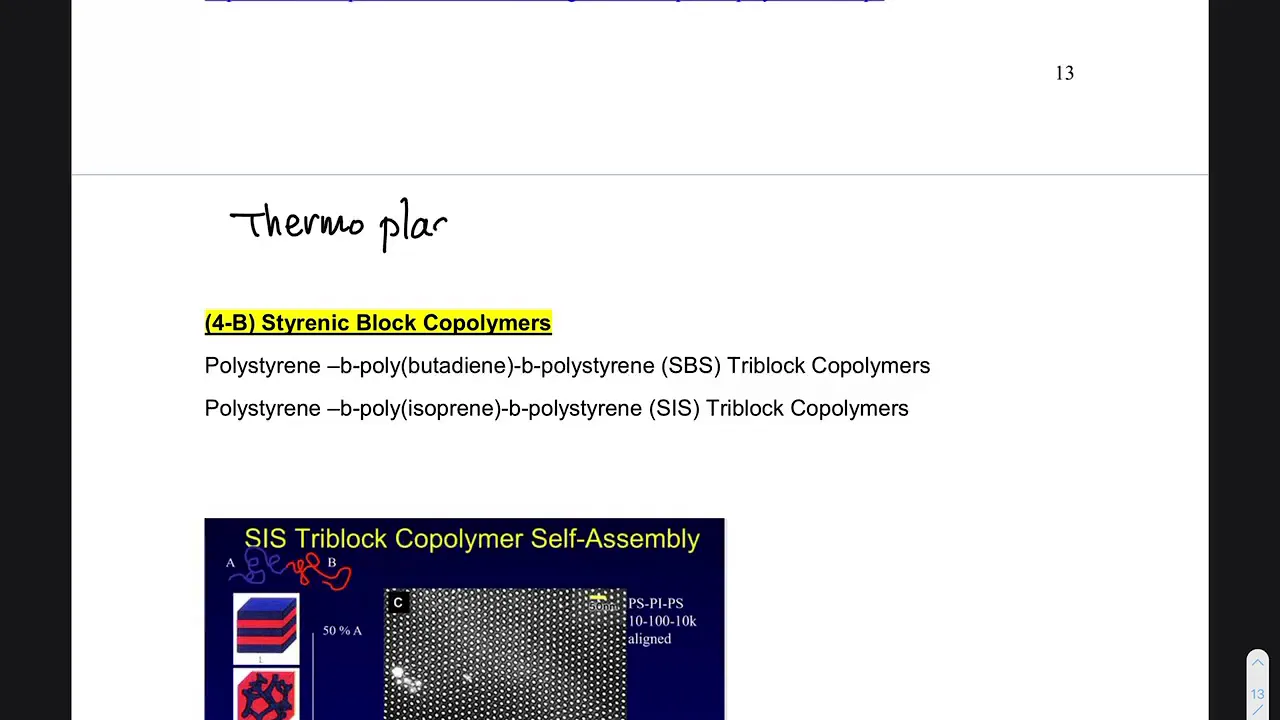
05.08 Thermoplastic Elastomers - Styrenic block copolymers (SBS and SIS)
2K
Styrenic block copolymers (SBS and SIS) are thermoplastic elastomers consisting of polystyrene hard segments (with Tg ~100°C) and polybutadiene/polyisoprene rubbery mid-blocks (with Tg ~-50°C to -60°C), where the polystyrene domains form discrete physical cross-linking sites within a rubbery matrix, enabling the material to behave as a thermoplastic (moldable above 100°C) while maintaining rubber-like elasticity at room temperature; these materials are widely used in adhesives, footwear, and asphalt modification due to their unique balance of stiffness and flexibility.
Click to watch →
Lecture 20 : Principles of Living Chain polymerization
1.3K
Living polymerization enables sophisticated polymer architectures including block, graft, and star copolymers. ATRP allows one-pot sequential addition or isolated macroinitiator methods for block copolymer synthesis. The macroinitiator concept transforms completed polymer chains into dormant species capable of initiating further polymerization. Applications include thermoplastic elastomers combining hard and soft blocks for improved mechanical properties. Key considerations include controlling conversion at ~90% to prevent bimolecular termination and avoiding residual monomer contamination. Future topics include nitroxide-mediated polymerization and RAFT processes, which provide alternative routes to living radical polymerization through reversible chain transfer mechanisms.
Click to watch →
Catalytic Activation of Renewable Resources - Professor Charlotte Williams - CPS 2021
624
The same catalytic systems enable precise control over polymer architecture through differences in monomer reactivity. Anhydrides insert most readily and form most stable linkages, CO2 has moderate barriers but less stable linkages, and lactones have highest barriers and least stable linkages. By controlling the catalyst environment, researchers can direct which monomer incorporates first, enabling block copolymer formation. Living polymerization behavior allows sequential addition of monomer mixtures to create multi-block polymers with hundreds of repeating units. For thermoplastic elastomers, adjusting hard/soft segment ratios tunes mechanical properties, with 50/50 compositions showing excellent toughness (1,000% elongation at break) comparable to or exceeding conventional plastics. The equilibrium nature of carbonate and ester chemistry provides inherent advantages: polymers resist unintended hydrolysis under normal conditions yet degrade controllably under specific conditions, enabling closed-loop recycling.
Click to watch →

Synthesis of Polymers Part -5
165
Living polymers form when no active hydrogen compounds terminate chains, leaving all chains as reactive ion pairs. These chains continue growing upon monomer addition, enabling isolation, storage, and controlled polymerization. The most significant application is block copolymer synthesis: grow living polymer with first monomer, isolate, add second monomer to extend chains, creating segmented block structures. This allows precise control over block sizes and tailored material properties, with applications in compatibilizing polymer blends.
Click to watch →
Deep Dive
Comparison of anionic polymerization with other controlled/living polymerization methods like ATRP, RAFT, and cationic polymerization.

Polimerizasyon Teknikleri : Anyonik Polimerizasyon (3. Kısım)
2.3K
Polymerization techniques are classified into chain-growth (radical, ionic, coordination) and step-growth (condensation) polymerization. Ionic polymerization divides into cationic and anionic types. Anionic polymerization uses carbanion active centers, while cationic uses carbocations. Living polymerization techniques include ATRP, RAFT, and anionic polymerization. Anionic polymerization produces polymers with very low polydispersity index (PDI < 1.1) due to living characteristics where all chains grow at similar rates. The reaction requires inert atmosphere conditions because oxygen and water act as inhibitors.
Click to watch →

精密連鎖重合
1K
Precision chain polymerization (living polymerization) is a polymerization technique where no termination or transfer reactions occur, allowing controlled molecular weight, narrow molecular weight distribution, and functionalizable chain ends; it was discovered in 1953 by Schwartz through anionic polymerization and has been extended to cationic and radical polymerization through methods like RAFT, ATRP, and reversible addition-fragmentation chain transfer (RAFT) polymerization.
Click to watch →
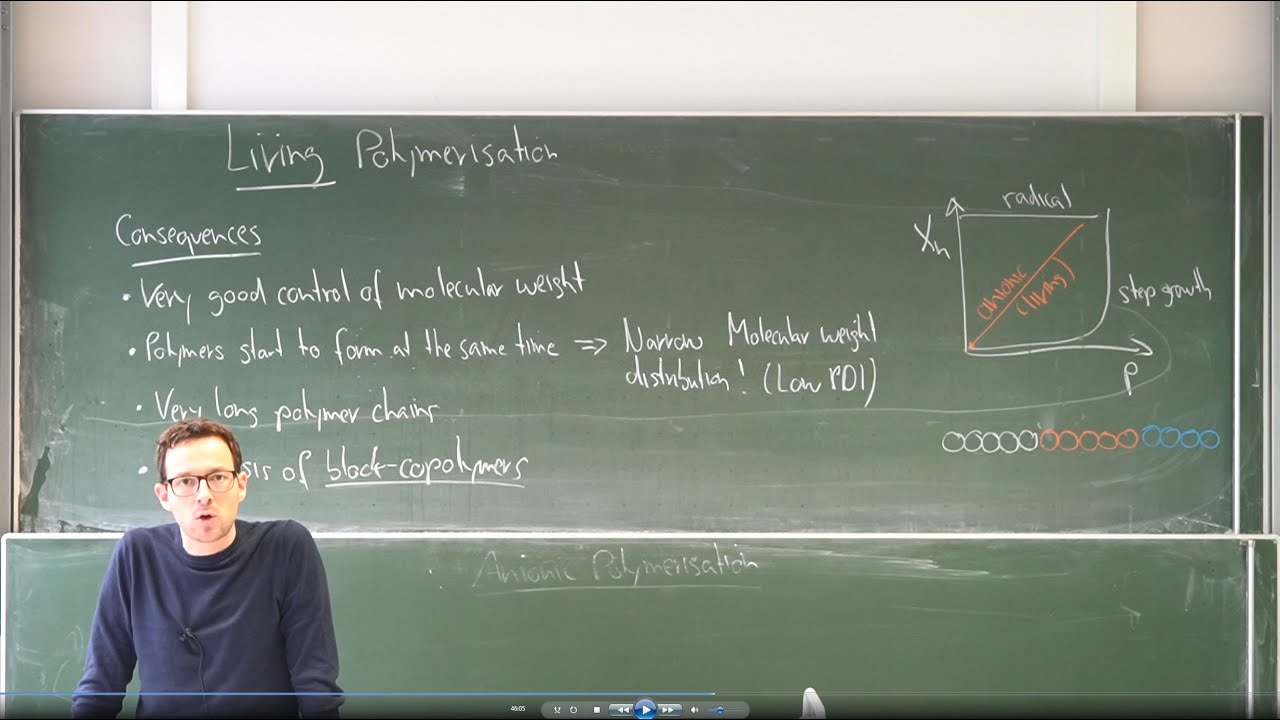
Polymer Science and Processing 05: other polymerization techniques
5K
This extensive section addresses achieving living characteristics in radical polymerization, which normally suffers from easy termination. The lecture presents two strategies: reversible capping (ATRP) and rapid chain transfer (RAFT). ATRP uses metal complexes to reversibly transfer electrons between dormant and active radical states, reducing radical concentration and suppressing termination. RAFT employs dithioester agents enabling rapid reversible chain transfer between polymer chains without changing total radical concentration. Both approaches maintain propagation rates while preventing termination, enabling living radical polymerization with good molecular weight control and narrow distributions. The football analogy illustrates how these mechanisms prevent radical encounters while maintaining reactivity.
Click to watch →

Lecture 02 - Polymers and Polymerization Techniques
3.4K
Anionic polymerization uses anion initiators attacking electron-deficient monomers, producing living polymers where all chains grow uniformly until monomer depletion. This yields very narrow molecular weight distributions. Suitable monomers include styrene, acrylics, cyclic ethers, and ring-opening monomers. Cationic polymerization uses cationic initiators and electron-donating monomers but suffers from high reactivity and termination challenges. Industrial examples include polyisobutylene and butyl rubber. Both techniques enable precise control over polymer architecture.
Click to watch →

Anionic Polymerization Lecture 5 Part 1
1.1K
Anionic polymerization is a controlled polymerization technique where the initiator generates carbanions that attack monomers, propagating the chain through electron-rich species; unlike conventional polymerization, anionic polymerization produces 'living polymers' because the active chain ends remain reactive until all monomers are consumed, allowing precise control over polymer molecular weight and enabling chain extension or modification by adding new monomers.
Click to watch →
Deep Dive
Engineering complex macromolecular architectures, including star-branched, cyclic, and graft copolymers.
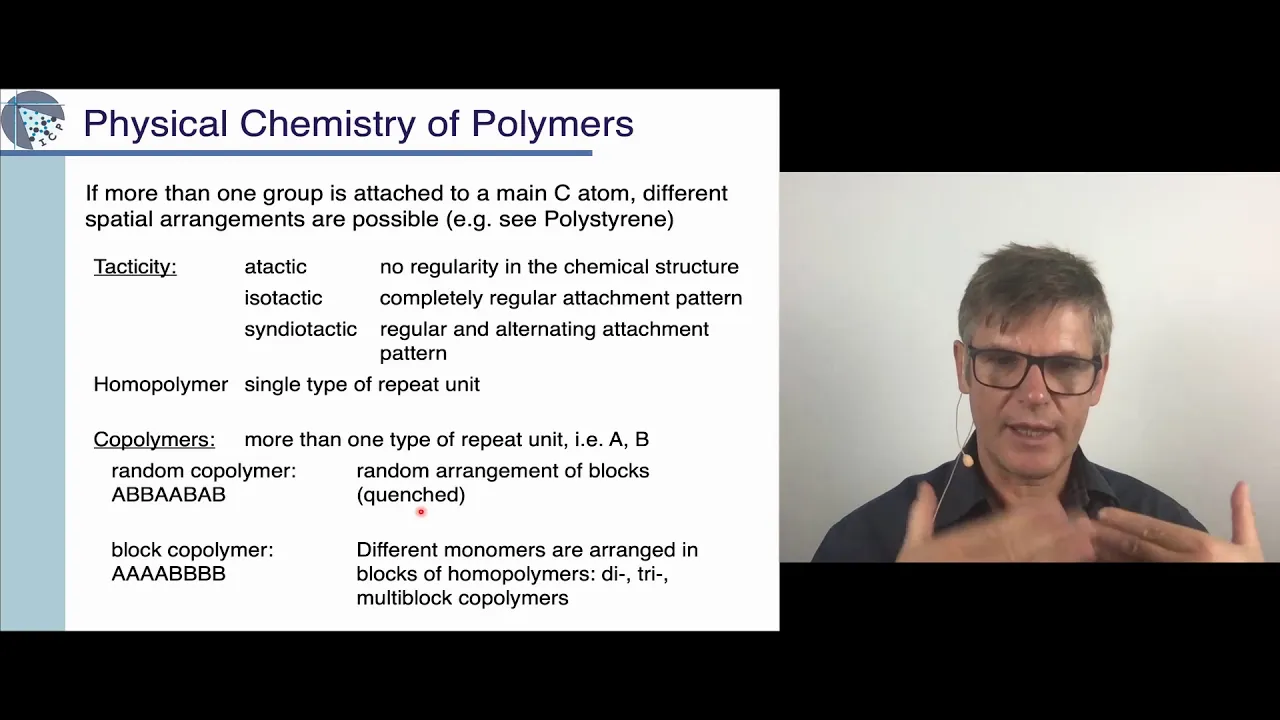
Molecular Modelling of Polymers
3.3K
Beyond linear chains, polymers can adopt complex architectures: ring polymers form cyclic structures when chains back-bite into tails; branched polymers have side chains attached to main chains; bottlebrush polymers feature densely grafted oligomeric side chains; star polymers have multiple arms radiating from a central core; cross-linked networks create gel-like phases or rubbers; dendrimers branch systematically from a center point with generations of branching; ladder polymers form ladder-like structures. Nature produces many of these complex architectures.
Click to watch →

généralités sur les polymères # chemistry#chemistry
288
Star polymers originate from a single central point or core and contain multiple arms. Dendritic polymers have a hyper-branched structure resembling a tree. Block polymers consist of distinct segments of two or more different polymer types covalently bonded together (e.g., A-A-A-B-B-B-A-A-A-B-B-B). Grafted polymers contain a main chain with one type of monomer and side chains or branches of a different polymer type.
Click to watch →
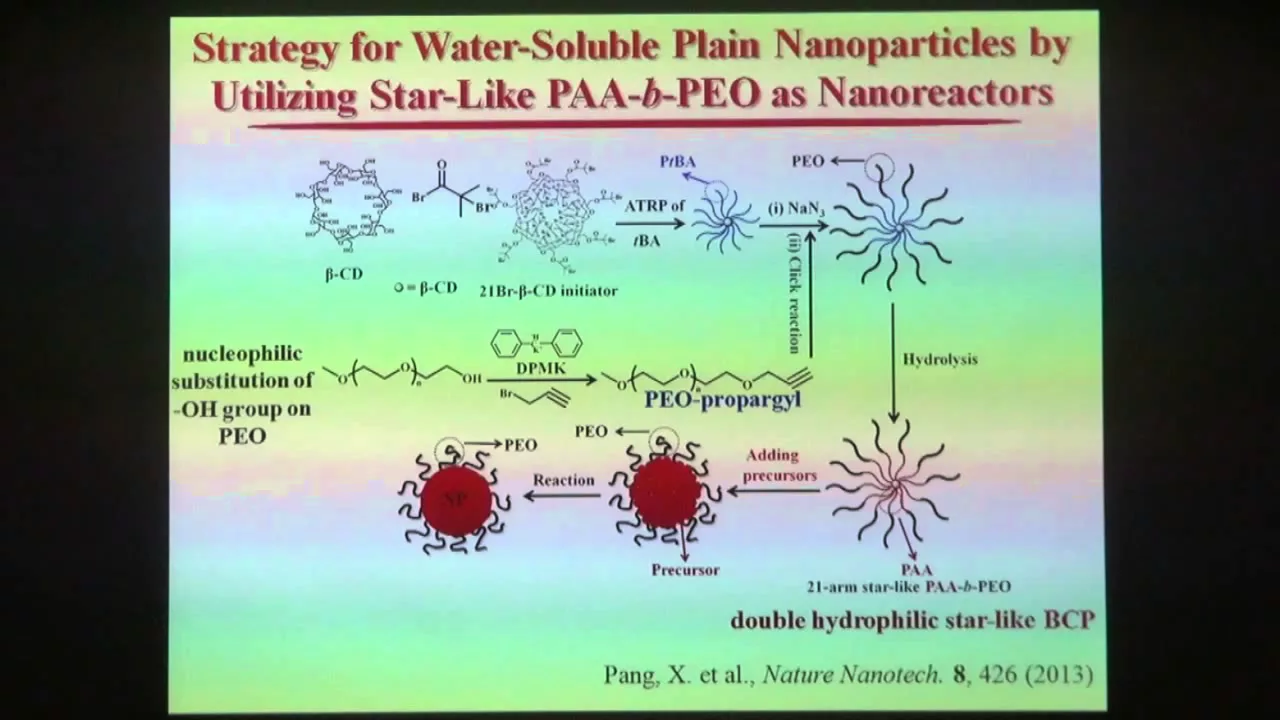
2015/06/05 I2CNER Seminar Series : Prof. Zhiqun Lin
1.1K
Star-like polymers possess compact structures with smaller hydrodynamic volume and radius of gyration compared to linear polymers of similar molecular weight. They exhibit lower solution and melt viscosity and show preferential adsorption at interfaces due to decreased entropic penalty from multiple arms. Multi-arm star-like block copolymers can be synthesized using atom transfer radical polymerization (ATRP) starting from beta-cyclodextrin macro-initiators with 21 hydroxyl groups. Sequential ATRP grows different polymer blocks from each arm, followed by hydrolysis to convert functional groups. Beta-cyclodextrin is preferred over alpha and gamma CDs due to lower cost and easier purification through crystallization.
Click to watch →
macromolecular design 3 - Control and Living Polymerization, Part 1
1.3K
Beyond simple linear polymers, controlled polymerization enables the synthesis of complex branched structures including star-like, brush-like, and dendritic macromolecules. Star-like polymers use multi-armed initiators to grow multiple chains simultaneously from a central core. Brush-like macromolecules feature a central backbone with side chains extending outward, created by directing polymerization to form both backbone and brush regions. Dendritic and hyperbranched macromolecules use initiator-monomer complexes where each initiator attaches to multiple monomers, creating complex three-dimensional structures. These advanced architectures demonstrate how controlled polymerization transforms basic monomers into complex macromolecular structures with tailored properties for specialized applications.
Click to watch →
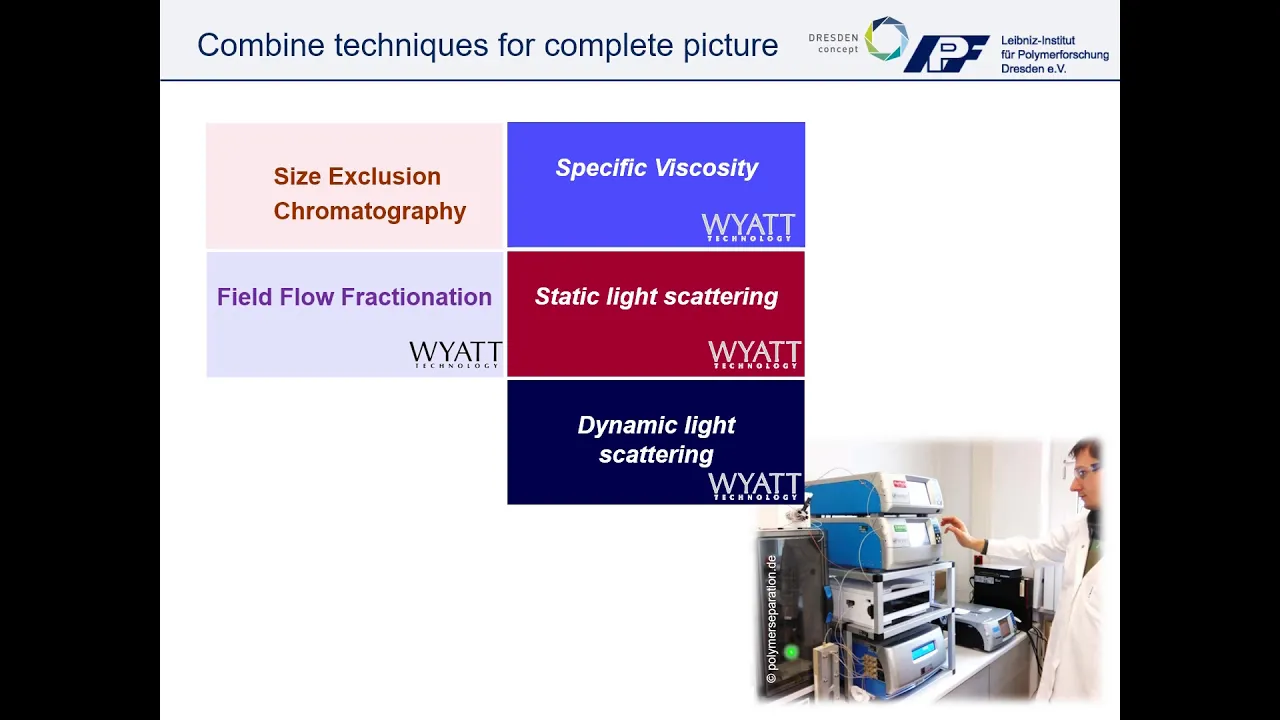
Separation and characterization of complex biomacromolecular architectures
218
This section explores the evolution of branched polymer architectures and their characterization. Dendrimers exhibit perfectly branched structures with dendritic and terminal units only, while hyperbranched polymers have statistical structures containing linear, dendritic, and terminal units with broad molar mass distributions. Chain walking mechanism polymers show much more complex, strongly branched structures compared to linear polymers. The alpha parameter decreases from 0.6 (linear coils) to 0.35 (hyperbranched) and approaches ideal sphere values for highly branched structures. Pseudo-dendrimers combine linear polymers with dendrons to create highly functional architectures, with each generation significantly increasing functional groups (from ~50 to 800) and molar mass. Despite branching decreasing slightly with generation, functionality remains over 85%. Molecular dynamics reveal that first-generation formation establishes dense core structures that subsequent generations build upon.
Click to watch →
Deep Dive
Industrial applications and the rigorous reaction engineering required to exclude air, moisture, and other protic impurities.

Lec 01 Introduction
2K
Reaction engineering studies how to conduct chemical reactions in laboratory or industrial settings. The course develops fundamental knowledge for solving chemical reaction engineering problems. Industrial applications include sulfur to sulfuric acid, ammonia to urea, and sodium to sodium hydroxide production. Basic requirements for industrial reactions are raw materials, reactors, and catalysts, along with temperature, pressure, flow rate, and by-product considerations. Chemical kinetics combines reaction mechanisms and rates with reactor design. Laboratory and pilot plant data are essential for scaling up to industrial reactor designs. Catalysts enable reactions at lower temperatures by promoting reaction rates.
Click to watch →

Organometallic Compounds Part 1 Introduction & Preparation of Organometallic compounds
1.2K
Several precautions must be observed during Grignard reagent preparation: (1) The reaction must be carried out under nitrogen atmosphere to prevent reaction with oxygen and moisture, (2) Anhydrous conditions are essential as Grignard reagents react violently with water and alcohols, (3) The reaction vessel must be dry and free from any protic impurities, (4) The reagent should be prepared and used immediately after preparation.
Click to watch →

ग्रिगनार्ड अभिकर्मक की मजेदार अभिक्रियाऐं Reaction of Grignard Reagent |12th || NEET || JEE
48.4K
Grignard reagents react with protic solvents like water and ethanol. When reacting with water (H2O), the C-Mg bond breaks, and the R group combines with hydrogen to form an alkane (RH), while MgX combines with the hydroxyl group to form Mg(OH)X. Similarly, with ethanol (C2H5OH), the R group combines with the ethyl group to form an alkane. These reactions demonstrate the nucleophilic nature of the carbon atom in Grignard reagents and their incompatibility with protic solvents.
Click to watch →

Operasi Teknik Kimia II (30 April 2021) Part 1
1.6K
Humidity is defined as water vapor concentration in 1 kg of dry air. Low humidity causes skin dryness; humidifiers increase indoor humidity by adding water to produce steam. Industrial air treatment removes impurities like water vapor to prevent corrosion. Sulfur dioxide (SO2) is produced by reacting sulfur with oxygen from air. Air composition (N2, O2) contains impurities that can cause equipment damage. Methods to remove water vapor include air conditioning, water traps, and specialized equipment. The psychrometric ratio (ε) relates heat transfer to mass transfer during evaporative cooling, typically ranging from 0.96 to 1.01.
Click to watch →

Tema 17 - Química - Estequiometría 02
10.7K
When impure reactants are used, the impurities act as excess reactants that do not participate in the reaction. The instructor explains that in industrial processes, it is often easier to separate the impurities after the reaction rather than trying to purify the reactants beforehand. The impurities remain as a mixture with the products.
Click to watch →
Initiation
Propagation
Termination
Initiation
0:00- 1
Discusses anionic polymerization initiation using a nucleophile.
- 2
Focuses on bond dissociation, forming a strong base.
- 3
Monomer addition starts the active chain reaction.
Reversible Deactivation Radical Polymerization (RDRP) as a Practical Alternative
While anionic polymerization is the historical gold standard for "living" polymerization due to its lack of inherent termination and precise molecular weight control, it suffers from severe practical limitations. It requires extremely stringent, air- and moisture-free conditions, and is restricted to a narrow scope of monomers that can stabilize negative charges. To address these limitations, polymer chemistry evolved to embrace Reversible Deactivation Radical Polymerization (RDRP)—encompassing techniques like ATRP and RAFT. RDRP serves as a powerful counter-paradigm by achieving comparable control over molecular weight, narrow dispersities, and complex architectures under much milder, more tolerant conditions. Unlike anionic polymerization, RDRP can tolerate water, impurities, and a vast array of functional monomers. This alternative perspective shows that the highly coveted benefits of "living" systems can be effectively mimicked through dynamic equilibrium in radical systems, making precision polymer synthesis vastly more accessible and industrially viable.
Basic organic chemistry mechanisms, specifically nucleophilic addition reactions and carbanion stability.
The fundamental classification of polymerization processes (chain-growth versus step-growth polymerization).
How electron-withdrawing groups on monomers (such as cyano or carbonyl groups) stabilize negative charges during chain propagation.
The chemical behavior of strong bases and nucleophiles, particularly organolithium reagents (e.g., n-butyllithium) used as initiators.
Synthesis of advanced block copolymers (such as SBS rubber) and thermoplastic elastomers utilizing the 'living' nature of the polymer chains.
Comparison of anionic polymerization with other controlled/living polymerization methods like ATRP, RAFT, and cationic polymerization.
Engineering complex macromolecular architectures, including star-branched, cyclic, and graft copolymers.
Industrial applications and the rigorous reaction engineering required to exclude air, moisture, and other protic impurities.
45.7K views570likes4:39@sonny-8247Original Release: 2015-11-04
video we look at the anionic polymerization first the dissociation in those examples typically typically we take B lithium or uh similar species because this Bond um can dissociate very easily the electrons here can go to the carbon what will yield a very alkalic structure very a very strong base with a counter ion lithium so this will initiate the reaction actually you see it's a negative charge and we call this a nucleophile so we also abbreviate it as a nucleophile initiation so we take the nucleophile note the L structure with the counter ion and we add a monomer for example this one we already do uh abbreviated to R uh in the next video we look at what R have to be to stabilize the negative charge um so this charge go here or those electrons we have uh too much electrons here so those will flip here and um they will yield uh the first step in the [Music] polymerization like this L structure and counter ion so don't forget that one yes propagation step so exactly as the same in the free radical polymerization and in the cathon polymerization we draw the structure with some oligomeric structures in the formula so like this H H and the active chain end negative and counter ion we add the monomer and exactly the same as in the initiation step this negative charge go here and flips to there and will yield the polymer or next step in the polymer polymerization so we write it down n + one because we added a new monomer and of course the active chain and with the counter ion lithium that's it um actually um we don't have to look at determination step because those mechanisms or anyonic polymerization are typically a living polymerizations so if we want to terminate the reaction we can add a molecule what donates for example a proton here what will cancel out the reaction so what we what we will now do I will abbreviate this structure to just polymeric speci n with the uh negative charge plus the counter ion so we can use it in uh a termination reaction if we want to terminate it so as a chemist we will have to add an extra molecule to terminate the reaction and we choose that moment by ourselves so normally typically um those are very nice polymerization because you can control the PO the um you can control the um the molecular weight much more easy than in the uh three radical polymerization so onic polymerizations so for example we take something with some protons methanol so this one can attack at the proton of the methanol and uh the methanol will be um mexy so we will get this one so a terminated polymer uh Plus this and the counter iron and that's it
Up Next
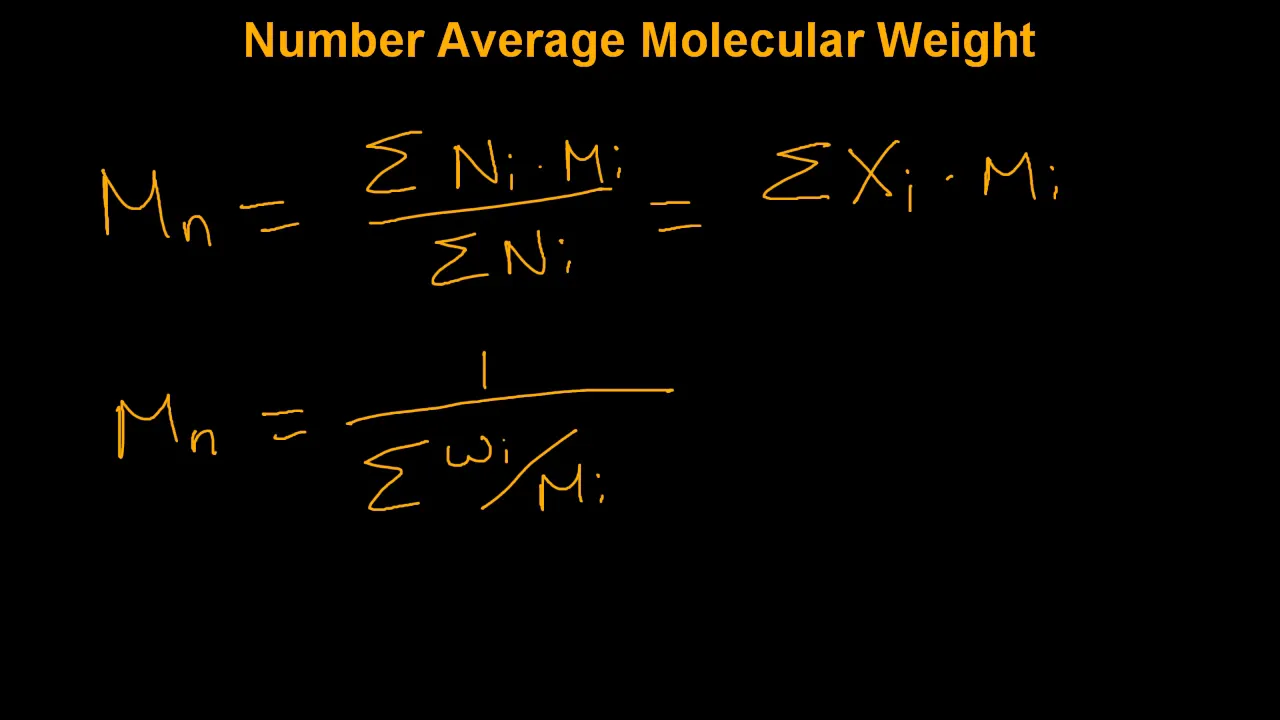
4:17
Number Average Molecular Weight of Polymers | Calculation & Definition
@MK-Chem
24.5K views•2019-05-11
83:56
Biocatalysis and Catalysis in Islatravir Synthesis | Merck Webinar
@SCIwheresciencemeetsbusiness
675 views•2020-10-08
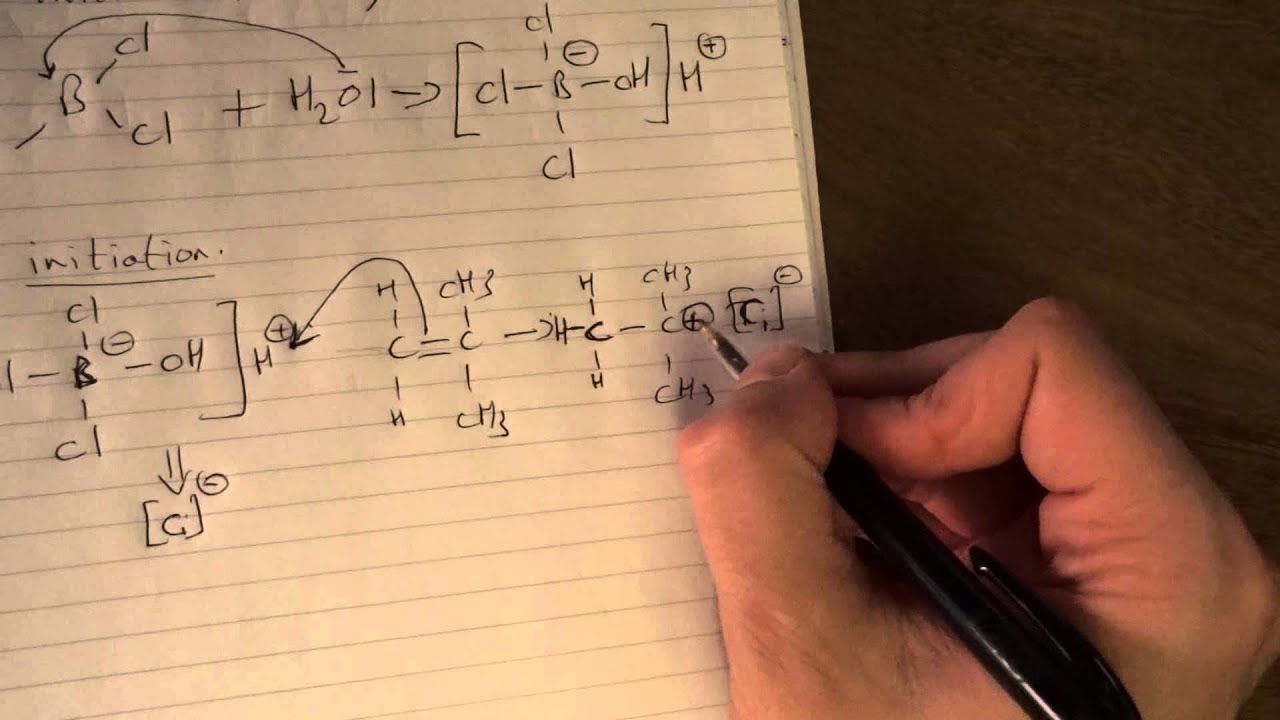
8:33
Cationic Polymerization: Initiation, Propagation, Termination
@sonny-8247
55.9K views•2015-11-04
17:31
Edible Water Bottles: A DIY Guide to Sodium Alginate Spherification
@ryan
10.5M views•2019-06-21
Related Study Plans & Knowledge Roadmaps
Structured learning paths in Chemistry
chemistry
Nuclear Chemistry: Decay, Meds & Fuel Cycle
01Introduction to Nuclear Structure and Radioactivity
02Decay Dynamics and Kinetics
03Radiation Interaction and Detection
+ 2 more learning modules
24h5 modules
Explore Roadmap
chemistry
Supramolecular Chemistry: Forces & Machines
01Foundations of Chemical Bonding and Intermolecular Forces
02Introduction to Host-Guest Chemistry
03Thermodynamics and Dynamics of Self-Assembly
+ 2 more learning modules
16h5 modules
Explore Roadmap
chemistry
Photochemistry: Excited States & Reactions
01Foundations of Light-Matter Interactions
02Molecular Orbitals and Electronic States
03Photophysical Processes and Jablonski Diagrams
+ 2 more learning modules
18h5 modules
Explore Roadmap
chemistry
Coordination Chemistry: Bonding & Properties
01Introduction to Transition Metals and Ligands
02Crystal Field Theory (CFT) and Geometry
03Magnetic Behavior and Spin States
+ 2 more learning modules
14h5 modules
Explore Roadmap