

















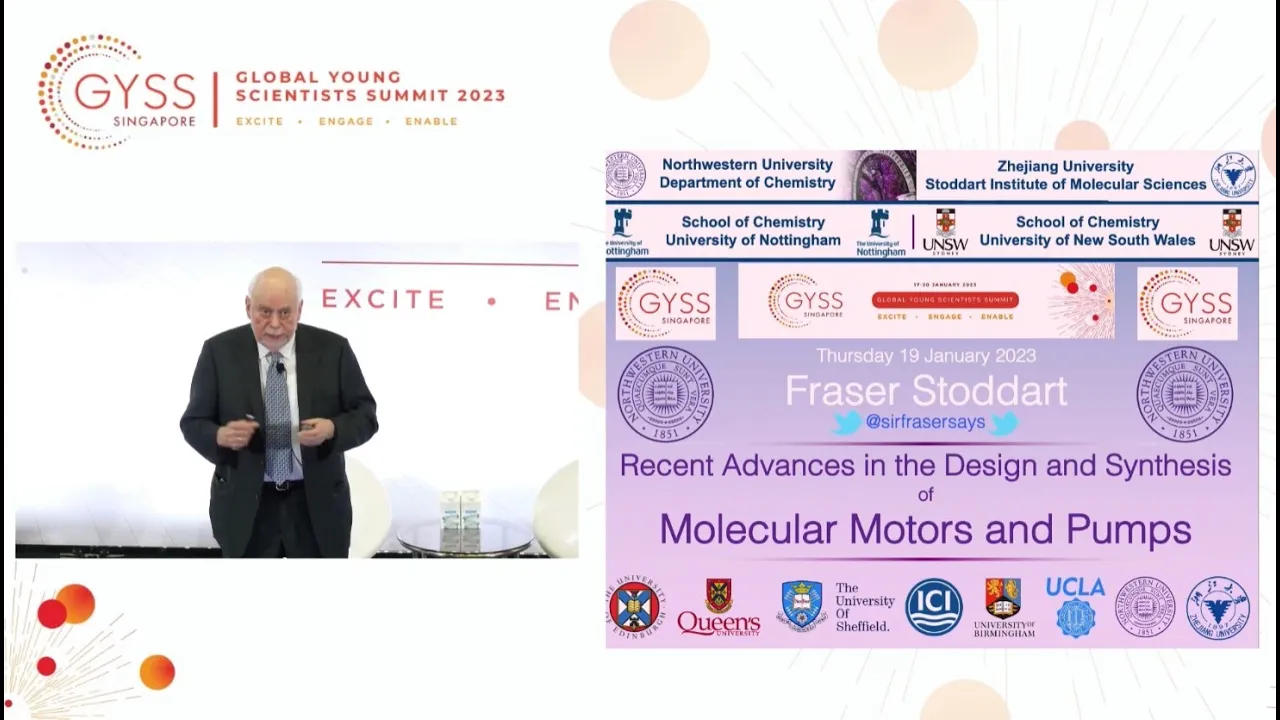

Molecular machines are nanoscale devices that can perform mechanical work at the molecular level, mimicking biological systems like the ATP rotary motor in cells. These machines, which can be powered by light and controlled through chirality (left-handed/right-handed molecular structures), enable applications ranging from smart drugs that activate only at specific locations to artificial muscles and self-cleaning materials. The development of molecular machines represents a fundamental shift from traditional top-down manufacturing to bottom-up assembly, where scientists build structures atom by atom, similar to how living organisms construct their cellular machinery. This technology holds transformative potential for medicine, materials science, and sustainable energy solutions.
Molecular Motors and Switches - Ben Feringa Nobel Lecture (English)
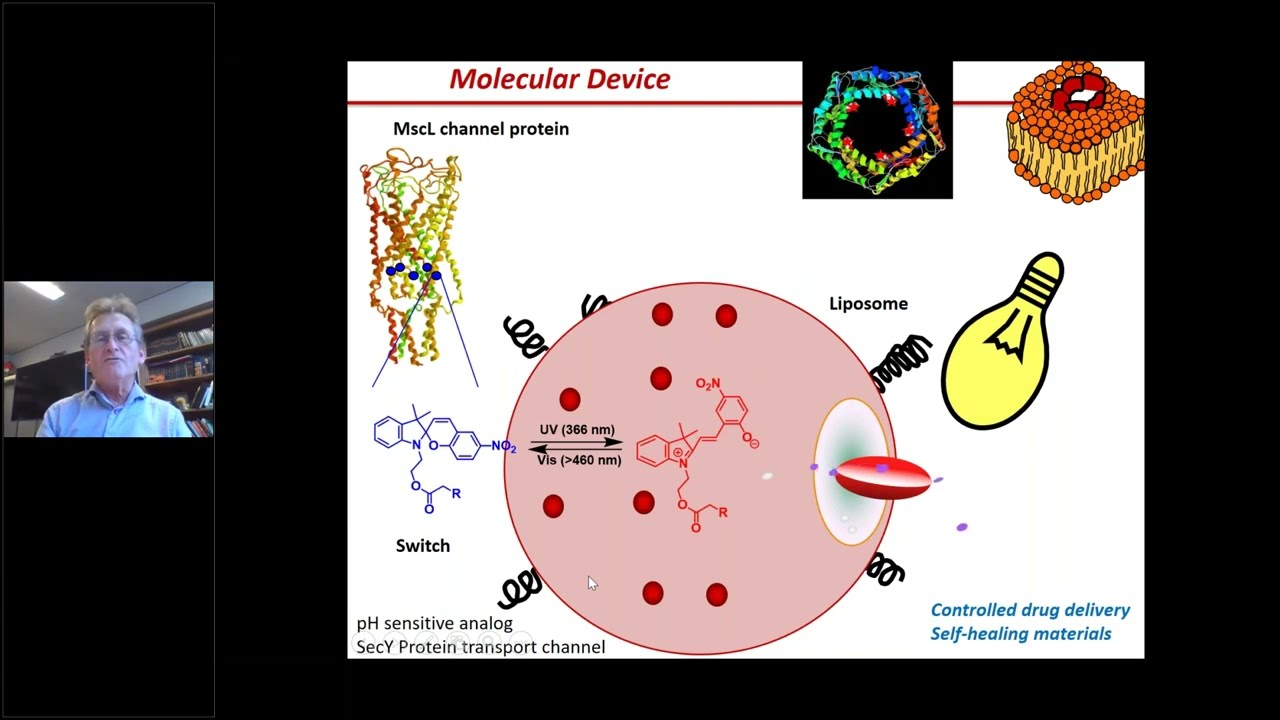
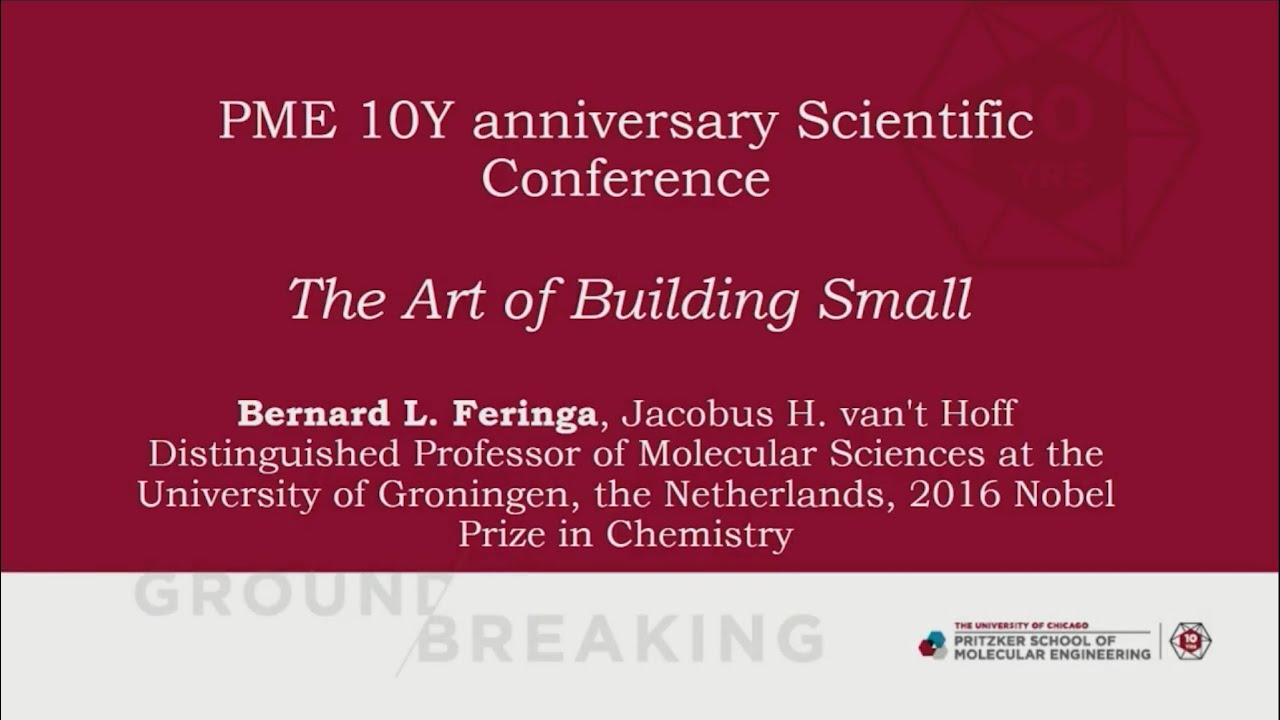
Added:e e y [Applause] hello good evening welcome to the ran foundation on its behalf I want to thank you for being here and participating at this event event my name is manuelo agil I'm member of the scientific Committee of the Ramones foundation and a member of the Royal Academy of Sciences my speciality is experimental high energy physics or part Elemental elementary particle physics and I'm currently research Meritus researcher at The Fad as many of you know the the Adis Foundation has a long and Consolidated trajectory in the promotion of projects and activities that have to do with science and technology thethis Foundation carries out these activities in the framework in a framework of collaboration with other institutions and organizations with similar interests like for instance the Royal Academy of Sciences the Royal Spanish Society of physics the Royal Spanish Society of chemistry and Mathematics ICS universities and centers of research as well as other as well as other foundations in Spain and all over the world the lecture this this evening is a good example of what I've just said and it is the result of the collaboration of the adius foundation with the Royal Academy of Sciences and the compens University of Madrid uh before I pass the floor to Professor Natario Martin who will summarize the multiple scientific contributions of pro Professor beninga I want to point out that uh among the most important events of the foundation are the lectures that have to do with Nobel prizes for physics and chemistry in recent years uh regarding chemistry we've had the privilege of hearing Nobel prizes Zam Mar Len 1987 jeanpierre saage 2016 Richard H Henderson 2017 Nim Frank 2017 Stanley Whittingham TW 2019 David McMillan 2021 and today we uh receive the 2016 Nobel Prize for chemistry Ben finga who shared hit the award with stard and janier Savari for the design and the synthesis of molecular machines on behalf of the dronist foundation I want to uh congratulate Professor finga for dur having received the title honoris cower honorary degree at the completen University of Madrid and he's also been appointed a member of the Royal Academy of Sciences of Spain as a foreign member thank you very much for accepting all this and now I pass the floor to Professor Martin thank the foundation the Ramon Foundation thank you for being here and hoping that you enjoy this fascinating lecture thank you very [Applause] much good evening before I I've been introduced my name is nataria Martin from the competen University of Madrid the uh faculty of chemistry my Dean is here um at the competencia University and I'm assistant director of the nanoscience uh institution at Kento Blanco in Madrid before I introduce Professor finga allow me to thank the Ramones foundation and Professor Manuel glad for their support and their determination to make this uh lecture today possible I'm going to do uh a quick uh brief introduction of the many merits of the lecturer we have with us today uh Professor beninga was born in a little village varap kesum in the Netherlands in 1951 where his family had a farm and and uh he studied at the University of Gran in the Netherlands where he took his PhD doctorate in 1978 after after a few years of working in the Shell Oil Company the bio Sciences Center not just in Holland but in the UK too for six years he returned to after 1984 to the University of Gran where since 2004 he is Professor uh professor at that University with Jack Jacobus malov chair for molecular Sciences that's his chair Jacobus Malto uh chair uh he is a Pioneer in the design and synthesis of molecular molecules that can work as uh Nano machines and these nanom machines uh were known in biological systems but uh it was a true challenge to build them and artificially and uh in this regard Professor finga showed that this is possible by synthesizing by through conventional chemical synthesis by connecting selectively connecting almost artistically I would say atoms and molecular fragments uh the work of Professor finga in the development of uh molecular unidirectional molecular engines which have the size of 1 millionth of 1 mm uh is considered the keyw work for the advance of Nano Nano science and molecular science he's shown that these molecular machines can work while they are connected to a surface and that their movement can even uh displays macroscopic objects he will show us with some uh pictures that are really extraordinary he also designed a nanocar that is a nanometric compound that contains four molecular engines uh which act as wheels and that can move on a Surface uh under stimulus external stimulus or stimulation his re group researches into synthetic and physical organic chemistry with the aim of exploiting the potential of synthetic chemistry to create new structures and functions here a significant part of this research has to do with mole Dynamic molecular molecular systems and is focused on molecular nanoscience new materials sensitive materials and what is called photo Pharmacy and it explores the biohybrid uh mechanisms self assemblage uh and molecular engines and in addition to that his research covers the development and application within what we might call biological chemistry of new selective synthesis mechanisms and asymmetric catalysis his activity is one of the main uh fields of work that he's been involved in and he over the years has researched into fundamental areas of stereochemistry including corrup phenomena phenomena uh Cal amplification and chirality the origins of chirality are interrelated with the origins of life I have to say among his his distinctions he was uh appointed honorary foreign member of the American Academy of Arts and Sciences and he's also a member and current vice president of the Academy of Sciences of the Netherlands 208 he was appointed professor at the Academy and received the title of night from uh the queen of Holland and uh the researcher Professor finga has been recognized with different Awards and I will select just a few of them and I am going to not give you the dates to make it briefer but he has the European award for uh Sciences the Spinosa prize the POF gold medal the uh paracelsus medal the K delity medal the Royal Society of chemistry uh medal the Humbolt uh award the Grand Prix scientific Chino Dela from the French Academy the maruri medal the gold medal of Nagoya and finally the uh Professor fingo was given the Nobel priz of chemistry in 2016 for the design and synthesis of molecular machines and in view of uh his many uh scientific merits I have the honor of introducing Professor Ben finger to this audience spectacular audience and auditorium at the Ramon arus Foundation please Ben the floor is yours thank you very much okay thank you very very much for uh all the kind words yeah for the great uh honor and pleasure to be here to speak here at this facilities of the Raman Aras foundation and that you make this possible here that I can be here to today I have many friends and collaborators in Spain you know over the years we exchanged students we had many Publications together but this is a very special days for me yesterday the honor at the competa University today I was at the Academy and now I'm here at this uh very famous Foundation which is so important for supporting science in your country I'm greatly honored thank you so much so what I will do is I will talk a little bit about my journey through the field of molecular nanoscience the joy of Discovery because it's indeed a joy to discover to make discoveries together with your students your young talents the young researchers that we educate for their future and I will tell you something about my personal experience but of course also about the highlights some of the highlights of the discoveries that we made but I often get the question ladies and gentlemen why do we need molecular machines why do we need molecular Motors this question was also asked to the R Brothers a similar question why does mankind need to fly if we want to fly God would have given us Wings nobody would have predicted more than 100 years ago that we would build in Europe now an airburst or in America Boeing that can carry 400 people across the ocean a th000 kilometers an hour we admire the flying pigeon eh it's absolutely beautiful but try to carry 400 people from here to New York 400 K Kil uh th000 kilometers an hour with a pigeon not possible eh you will fail this is the most fantastic one of the most fantastic pieces of engineering where different Sciences come together yeah chemist physics mathematics engineering of course and all these different disciplines to make it possible to build such an aircraft it's absolutely fantastic but we should also be very humble because my friends from biology tell me that we cannot build a pigon despite all the advances in biology and in The Sciences we cannot build a single cell of the pigeon we cannot build even one of the machineries of a pigeon so it's difficult to predict where fundamental science goes and so I suppose you all have a smartphone is that I ask it again is there somebody I see already a smartphone yeah great is there anybody who has not a smartphone nobody yeah you have not a smartphone or you will get one soon ask your mother the this when when what fundamental scientific discoveries and questions you know were needed don't forget it's only 17 years there e we have only 17 years this phones it started in the late 40s early 50s of the past Century where the physics discovered the first transistor the chemist make the first Liquid Crystal materials and then the batteries the engineers the computer scientist Etc in the early 50s IBM was building the first computer which was the size of half this room and could do way less than your smartphone and nobody of course had thought that we would 50 years later would build a smartphone the word did not exist in the early 50s of the past Century it took all these disciplines and we should not forget this man John Gau and his colleagues who found discovered the lithium battery in the 80s only 40 years ago otherwise we would not have electric cars now we would not have smartphones and we all agree that these devices com from fundamental science it has completely changed our world the way we communicate Etc with each other so the part to the Future yeah an adventure in the unknown it starts with fundamental science and the joy of Discovery means challenges challenges for our young students challenges for our scientists dreams for our young talents but opportunities for society and industry but the most important ladies and gentlemen is the question mark which question are we going to ask to Mother Nature and of course Serendipity plays a crucial role we should not forget that accidental discoveries mistakes please allow us at universities also to make some mistakes when we do research because we try to discover something new and that can be completely unexpected and often you know it is leads to really important discoveries look these two ladies shared the Nobel Prize in chemistry in 2020 for Chris peass that is the technique that you can modify DNA you can cut a piece out of DNA modify it Etc and look what she said as so often in science the discovery of this genetic scissors was was unexpected it was Serendipity Discovery but it completely changed yeah everybody is using it now within 10 years it exploded in the field of biology chemical biology biochemistry and medicine so indeed the path to the future in this beautiful garden the paradise of Science and knowledge isn't a part that we often goes with uncertainty and often we get completely lost yeah and then we get into questions there you can see that we have not even thought about to ask and that might be the most beautiful questions which giving very unexpected answers for me I'm a scientist building I'm a chemist and we build molecules and materials and I enjoy the beauty of the molecular world this can be molecules simply because we like to design beautiful molecules you can ask me later what is a beautiful molecule or we design molecules and materials to test the theory or for specific functions yeah a new drug or whatever so we have to go far beyond our Horizon to the Future to Think Bold to think creative so what was my Horizon this was my Horizon when I was a kid yeah I lived on a farm it was mentioned in a tiny village and this was the German border and there were Moors yeah and it was where my father grow potatoes and when you grow up as a small kid yeah with nine brothers and sisters and a huge family in such a remote area that is a lot to discover and I tell you Crossing Borders when I was a small kid I already illegally crossed the border because at that time we had still borders in Europe now we have borders again but at that time and I was crossing this border yeah which was in to Germany but it was an adventure because there was Wilderness there was a lot to discover and I think this actually is where it started where my career started this adventure in the unknown I felt often like this small boy that gets excited this is the discovery of phosphorus you know to look I was reading books about discoverers adventurers Columbus you know all these things that was absolutely fascinating and then I went to where you see in the in the on the farm this is by the way my my brothers and sisters I'm the second oldest actually and these were my parents and I was asking my father you know how is it that these potatoes have white flowers and why do they have this beautiful yeah red flower and why does from this Tiny Seed grows this beautiful crop yeah like a sunflower or this corn you know and my father had he was very smart I must say but he had not an answer either to all these questions but we had many many discussions and they stimulated us a lot and I think this makes a big difference you know so then I went to to high school and there I got confronted with chemistry and physics and Mathematics and biology and this was a new world for me the Natural Sciences and I I loved it with our chemistry teacher here this is my chemistry teacher we did experiments in the classroom you know and for chemistry you do a lot of experiments and I love that and then I went to the university this was my professor he was American and he stimulated to this a lot and I this is the University building by the way in Cronan and so wiberg gave me an an a topic which was absolutely impossible when I was a master student it was really tough but he told me I was in I never forget I was in his room for 10 minutes and then I was convinced I should do it he said Ben you can do it jealous young people you can do it we will make the American jealous this was my first molecule and I will remember that I came to his room and I said I made this molecule and he said this by the way this was absolutely useless molecule but he said to me nobody ever in the world made this molecule not even in America so I was so proud you know it was my molecule I did it so uh that gave me to the to build my future in chemistry but I want to give credit to our teachers because you should not forget for me it was extremely important the teachers and I'm sure everybody here remembers the Elder people one teacher that made the difference in her or his life a stimulating teacher so shaping the future with our young talents that's what we do our institutes our universities in the schools Etc so after my University PD I I went to work for Shell in the main Research Center in Shell in Amsterdam and then in the shell bioscience Center in in England and I must say coming out of the comfort zone of the University working for such a big multinational is a great experience because you learn a lot how Society but in particularly how industry how business operates Etc but I wanted to go back to the university to teach at the University and to do my own research so in the art of building small I work together with my students in the laboratory doing chemical synthesis and uh this is what we typically do building new molecules new materials and I developed a passion for molecules and I really my drive was to design my own molecular world so this is what we do building molecules and materials in the laboratory and so okay I show this picture again you have seen it before my students found this on TW on the on the web apparently when I started as a young lecturer after my shell period to build my own research this was me with long hair at that time and uh they found they said on Twitter we chemist are lucky you choose Academia and instead becoming a rock star now I cannot play music ladies and gentlemen so be happy that I'm not a rock star because I would have completely failed but apparently I said at that time this is now a long time ago the beauty of chemistry is that I can create my own molecular world and this was my passion so we build molecules that you connect things together for people that are now gamas you know in the laboratory we take compounds we connect them together we make more complex molecules this is taxo it's a bit like Lego yeah building things you know building complex structures this is a very complex molecule taxo it's an anti-cancer drug it's used in the hospital to treat yeah it's particularly for breast cancer it's absolutely a potent molecule but it's extremely difficult to to make in the Laboratories so in the laboratory with our students we have a universal language like in physics or mathematics you know we have the language of the molecules in the periodic table and you realize yeah when I go to China I don't speak Chinese yeah but everybody in China understands that this is a sugar molecule and that this is the elements that build up everything what I see here including your own body yeah everything in the university is built of these elements we have no borders we go beyond Frontiers we have international cooperation and a passion for Discovery and I want to emphasize these borders because you know now I'm strongly advocating going Beyond borders Frontiers and nowadays there's a lot of talk about borders but we should not forget Louie pastur he said long time ago science knows no country because knowledge belongs to humanity and is the torch which illuminates the world and I think this is more important than ever the torch which illuminates the world so these are the elements yeah this is mandev who discovered the periodic table so now uh my question this is the molecular formula of your body Professor can you stand up for a second and look into the public you saw Professor Martin look this is the formula of this man also you hydrogen 375 million oxygen 132 million some carbon he likes carbon there's a lot of carbon one lonely Cobalt why is there so much hydrogen and oxygen because this is 60% water plus a few other molecules 60 don't worry he looks very handsome and very good good shape despite all the water but it's great great maybe the ATS for my hair are I don't know I don't know I don't want to get in that discussion thank you so much for your help this is the human body you see the elements now the question to here are there more elements because I would argue the human body is the most complex system we know on the earth yes is there more distinct elements in your body or in your smartphone now the answer is there are more distinct elements in your smartphone so if if you purely look at the number of elements a smartphone is more complex than a human body now I would argue a human body is way more complex but purely from the number of elements can you imagine how much elements are needed to build a smartphone more elements than in your body so chemistry is the creating science it's often called and there are many many challenges facing our future Green Design sustainable process Reinventing materials are we going to fly in the future changing the pH of the chemical industry how are we going to make our drugs Pharmaceuticals Etc and I will show you some examples but there are many fundamental questions and many challenges perspectives to build our society and Industry of the future so we built tiny molecules like ethylene two carbons and four hydrogens 160 million on we build as I mentioned before very complex molecules vitamin B12 35 tons a year that's the world production why so little because you need only microgram quantities to stay healthy vitamin B12 very simple and very complex so this is what kemas do they build the drugs the dyes the cables the cars the components of your car not in isolation but together with our colleagues in physics engineering Material Science etc etc but this is everything we see in modern society and you need all these materials and chemistries Etc but what you don't see here is anything that moves and I move I can talk to you I can speak I can see you I can wave my hand but this does not move your chair does not move yeah the screen does not move in your body your body is full of motors and machines so there are these beautiful rotary m Motors that make the fuel in your body that are all these motors that transport things in your cell millions and millions of Motors the ribosome which is a fantastic robot that builds the proteins or most of the proteins in your body this is one of my favorites the fluela motor the bacteria Fela motor you see this is what makes the bacteria swim in your guts it goes forward or backward it can go clockwise or counterclockwise isn't it amazing that modern nature invented such a machine and this is where we started the switching process in your ey Optical information storage retrieval Etc that we can see each other so there is a distinct difference ladies and gentlemen between the Nano world and the micro world I don't know if you have ever been in a car manufacturing plant I know there are many cars produced in Spain go to a car plant sometime and you will see these robots and they build a car it's absolutely amazing but the this is the world the hard World hard material 2 m in size now you go to this robot in your body that makes your proteins it's the world at the Nano scale a billion times smaller and it's soft material and it's not so much about getting motion but it's more about how to control motion that's the key point that we have to address so the minorization of machineries nanot technology it was mentioned by Richard fman in 1959 there is plenty of room at the bottom what does he mean you so in chip technology we have gone from top down all the time smaller smaller smaller so we are now with the new latest chips and nanoc scale features smaller and smaller more information density but bottom up means like we do in our in living nature bu building it up with molecules larger and larger until you have your machine you have the components of your cell and it took 50 years before we could make the first machines and this is Je and Fraser start out Sur phraser start out that I had the privilege to go with them to Stockholm to get this metal so just to bring everybody on track nanotechnology one nanometer is one billion of a meter and you see here you see here one hair can you see it Madam One Hair yeah you know the the the cross-section of a human hair is 880,000 n 80,000 nanometer yeah yes Size Matters and you know that when you go to the beach like in the north of Holland we have sandy beaches yeah of course it rains a lot but when you have sandy beaches it's fantastic you drop there but when you go to the some beaches in Spain where there are Pebbles you are careful eh because it's the same material hot and soft so in nano technology you can buy Nano products yeah you can buy these Nano particles in sunscreens they are Nano sensitive they are fantastic they feel so good but they are also a bit expensive good feeling pretty expensive you know these led screens with the Nano you see the quantum dots they are absolutely gorgeous you see you get I mean I I don't want to mention any particular football team but when you say Atletico Real Madrid on such a screen it looks way better I tell you yeah because there are this high definition TV screens based on nanot technology so you can also you might ask how can you see molecules and atoms at the Nano scale because you cannot use a microscope and microscopes micro is thousand times too big but we have these nanoscopes so these are like a needle a needle that ends yeah in one atom and then you can write or feel the atoms yeah and you can write look on one cross-section of your hair yeah you can write 250 million letters so a lot of the books here of the foundation you can write on my hair one hair yeah this is the power of nanotchnology this is the size we are talking about so let me talk about switches so we start with switches zero you all know what a switch is you switch on your car you switch on the light your smartphone 01 and we started with the switch in the eye as I mentioned before the fact that I can see this lady and she can sees me is because there are millions and millions of these switches in the eye and they switch back and forth back and forth signal goes to the brain this is how we can see you see this is a band molecule this is a linear molecule it's just to change its shape and that is because with the light you excite the molecule a bond is cleaved a chemical bond it rotates yeah it goes from this band structure to a more linear structure and this is the 01 process but it's also crucial that it goes back because otherwise I would see you only one time and then it will be finished so we buil artificial switches and you see here an example you can forget the chemical structure but you can use light to switch two states and we build them G left handed and right-handed left-handed minus right-handed plus and that is because when we want to find out if we are in this state or this state it helps a lot if we know if you have a left-handed or right-handed molecule that was our means to detect if you have a zero and a one and we did information storage in this way writing zeros and ones yeah with molecules and you know I think you all know still what a compact disc yeah I recently asked my students and half of the students had no idea what a compact disc was because this is oldfashioned technology we together with the Philips company we were making plastic and writing zeros and ones and you know the storage capacity of one compact disc is this megabytes you can play 240 years of Music continuously with one compact disc so that means your grandparents and grandchildren six Generations can constantly ride uh uh sorry play music with one CD of course this is not true this is the potential of nanotechnology yeah this is sometimes what you read in the newspapers and so but of course you to write a zero and a one they should be separated or we cannot detect when they are very close together so we cannot reach this high density yet this is serious fundamental problem we can do zero and one but then one molecule is here in the building and the other molecule is somewhere out there on the street yeah and then we can detect zero and one but to make it highly dense yeah we still need a lot of work to be done okay let me show you something where we are very excited about and we put a lot of effort recently and that is making smart drugs photo pharmacology smart Pharmaceuticals if you go to the doctor and you get a pill you want to have it doing something otherwise you don't like your doctor e it should be active but we want to have it inactive and activate with a flash of light with a switch just like in your eye this is high Precision therapeutic action imagine you get a pill or a drug it doesn't do anything as soon as you hit here with a lamp or a laser or whatever you activate it on the spot and why do we want to do that off on off on with high Precision new medicines we work together with the medical people with the people in the hospital with the biologist Etc to make this possible we work on two important problems one is bacterial resistance the World Health Organization said this is one of Humanity's ticking time bombs because of the bacterial resistance we all see that in the newspapers and the other is cancer treatment chemotherapy we all know the nasty side effects of chemotherapy you get all kinds of nasty effects so wouldn't it be a dream if you have a tiny tumors I don't hope you get that but if you have these tiny tumors that a surgeon cannot remove yeah you image them you know where they are but they are so tiny and then you take a laser and you write yeah the activity of your chemotherapeutic agent you just activated there where it's needed and you don't get all the side effects in your body that's a dream still so we do fundamental research we work on antibiotics you see a cypro which is an antibiotic that's used in the hospital we put in a switch we switch on and off with light so this is left is the off state right is the on State and we can switch on the bacterial antibacterial effect so you see here bacteria growing and my students grow bacteria where they put they irradiate here with light and here they cover it and they don't irradiate where they don't irradiate yeah the bacteria grow normal and where they irradiate the bacteria are dead this is a Yan figure that my students made with bacterial cells why do we don't to do that because you want to activate your antibiotic and then after a few hours when it has done its job precisely where it's needed where there is an infection in your body it's off again and you don't build up resistance and you don't get problems with the bacteria in your guts that's the idea we use it also for precision chemotherapy again we can switch on and off compounds that are very important for chemotherapy to avoid side effects in chemotherapy again this is very early days very fundamental science but taking advantage of light switch to activate just with a flash of light with high Precision chemotherapy and recently yeah we went to the cells so make sure that this is fundamental research this is not in the clinic yet it takes a long journey to get it to what's application to get approval that you can use it in patients in the clinic but going to the cell you know the cell has a beautiful cell membrane around the cell to protect the Cell It's like a City wall and so we put a switch in a protein that that is that we got from a spider actually it's from Modern nature and we build in a light switch and then we can switch with light it forms a a hole in the cell membrane a por a hole so is this a stepping stone to molecular surgery what we did is we used it to drill a hole in a cancer cell can you imagine we take it from Mother Nature the protein yeah then we use a light switch the light switch makes it possible that it assembles to form a hole and it the cell burst open and dies or you can use it to deliver a drug to the cell so this is where we are at the moment targeting cells with high Precision yeah drilling Drilling literally drilling a hole in the cell membrane and uh yeah this brings me to this uh fingers here you might ask what is this of course it's crucial to get light in your body and it should not be U light eh because when you go to the beach you put on sunscreen because U light can be dangerous but you need red light because red light goes straight through your fingers yeah goes deep in the body and is innocent so when you want to go to the clinic to patients whatever to tissue or to animals you need red light and these this is the hand the fingers of my PhD student who made the first antibiotic that we could switch with that light and that we could use now in animal studies and there was a photographer from the United States that came to Cambridge and to several places and he came also to our lab because he had read this and he he actually made this beautiful photo of the hand of my PhD student yeah and it was in an exhibition this was in cloning but it was in many exhibitions around Europe so when you are a student and you make such a discovery you not only can get a nice publication in a scientific journal but you might also end up in an exposition in the museum so indeed science and art sometimes come very close together so indeed facing our pro pro uh our future yeah I show you a little bit how we can improve health and Medicine hopefully in the future and go to a bio Nano future so this is early days but in the future you will see this kind of applications into yeah the bio Nano world and into medicines to improve health now let me go to molecular Motors then in the second part of my talk because a switch ladies and gentlemen is not a motor eh you switch back and forth with a motor needs continuous operation like the motor in your car and I mentioned before there are many Motors billions of Motors in your body and they push a system out of equilibrium to make things moving like these animals on the beach okay I I I still have to give this message on television I see sometimes in these lifestyle programs be in equilibrium with yourself I see this also in magazines fancy magazine be in equilibrium please don't because if you are in equilibrium you are dead biologically these motors machines being in harmony or imbalance that's fine with your life but don't be in equilibrium these tiny machines push you out of equilibrium all the time we are out of equilibrium otherwise we would not be alive so this is the most fantastic IC motor that I know this is the atpa rotary motor in your body there are billions and billions of these motors you see it rotating it spins yeah things go in things go out I don't know if you have ever realized I was flabbergast when I heard this from my biology colleagues they told me that these tiny machines Nano machines they make half your body weight of ATP that's the fuel in your body every every 24 hours now I had in the past days fantastic Spanish food I cannot deny it was absolutely gorgeous yeah I have to thank my host Professor Nazario Matan for this fantastic but I don't eat my half my body weight every even if the Spanish food is so good I don't eat half my body weight every day come on these tiny machines yeah make half your body weight of fuel every day but what do they do they recycle everything so what is the most one of the most pressing problems we are facing recycling our materials recycling our Plastics come on guys we are not smart enough your body recycles half your body weight every day we have to learn how to do that and we will do it this is why we do discoveries so what is a fundamental problem the fun problem is of course how to control rotary motion in the Nano world and how to control left and right if you don't have Petrol in your car or your battery in your electric car is empty you will not get anywhere we fuel it with light it's powered by light and to control left and right I mean I'm standing here with my car and there's e probability going to this direction and that direction I will not get anywhere either you either have to go forward or backward clockwise or counterclockwise so how do we solve that problem we use gity and for all those no gamas here gity is absolutely fantastic it was this is the DNA the right-handed Helix of DNA and it was called by Nature the monaa of modern science and I think we all agree on that the DNA in your body is right-handed that's what all the information is and the amino acids the proteins in your body are left-handed now so it is about left or right we have to distinguish left or right clockwise or counterclockwise I grew up on a farm and I think we all struggle sometimes with left and right I mean we we sometimes make a mistake that we have the wrong shoe or but I tell you when as a small boy on the farm we had these wooden shoes in Holland yeah they are hard and when you step in the wrong wooden showe it does so much pain that you never no make a mistake again and you know for the rest of your life the difference between right and left so this is how I learned it and so we built this tiny machine this is the rotary motor we built you see it rotates yeah around this axle now the experts among you might ask how is it possible because I see two Bonds in the middle you cannot rotate around two bonds but of course like in your eye the energy from the light excites the molecule one bond is broken it rotates and that powers the whole system the size is 1 nanometer and it rotates either clockwise or counterclockwise because if you make this form it rotates clockwise if you make this one it rotates counterclockwise this is the first and smallest molecular motor that has ever been built in the world now you see it rotates in four steps yeah and this is how it goes continuously rotating yeah like the atpa rotary motor and it's powered by light now recently and this is very reason I wanted to show you this because my students make now more complex machines you see here the central axle it rotates and then this part rotates around and how did we Design This my students looked at the Boon and you might say are these students in cloning and so romantic that they look at the Moon all the time maybe I don't know what they do in the evening but there is something special with the moon because you all know you see the women or the man on the moon only from one side that is called synchronized rotary motion the moon around the earth yeah and we thought if we want to make complex Machinery we should build something that mimics this so you see here this movement yeah and you see it rotates around and it always see we see the same face yeah like the moon around the Earth and this is our stepping stone this was tough to make it and to prove it but this is the stepping stone to more complex machines so what I want to share with you in my final part of my talk yeah a little bit about what can you do with this Motors yeah now let me first answer the question how fast was this motor the rotary motor now I tell you the first motor we made was spinning once an hour now you cannot build a car you cannot do much with it but we now have Motors that Ro rotate 10 million times per second and everything in between so we can fine-tune precisely the speed up to 10 million rotations per second what we did is we put this tiny motos just a tiny amount one weight per in liquid crystals and you all know what a liquid Crystal is and because I realize you all except this lady you all have a smartphone and in your smartphone the display that is crystal display material you know that that's soft material eh if you push the class plate of your smartphone that's soft material behind it e don't push too hard because then you destroy your smartphone the soft material is these rodlike molecules yeah it's in the TV screens it's everywhere but when you put something that is either right-handed or left-handed like our motor you can make a helix and this is how you get a color pixel this is how you generate color in your smartphone if you have a long Helix the reflection of the light you get red light if it's a short helx you get blue light this is how you make color pixels in your smartphone pictures expanding Contracting and this is what we did with our motor you see we take a motor we put light and we can make every color within one minute just by changing yeah expanding Contracting so this is what we do and we also this was really a special moment I always have to show this because I tell you my students came to me quter 5 in the laboratory and they said you have to come to the lab we want to show you something and they had put this thin layer you see here a thin layer this is a thin film of this Liquid Crystal material imagine you take away the glass plate from your smartphone this is the soft material and you see this waves it's like waves on the sea the motor is extremely small that is a tiny amount and it's only 1 billion of a meter you don't see it but they put a glass rod of micrometer Dimension swimming on top of it so you have this surface with the soft material and the glass rod is swining on it and then the only thing they did when I was came there in the lab they switched on the light and this is what happened due to the motor the tiny amount you see the the whole surface is changing the colar is changing the glass rod is spinning and it's spinning clockwise eh we can make it spinning clockwise counterclockwise this was an urea moment in my career in all these years I could not speak for five minutes I was completely out seeing with my naked eye seeing this spinning completely autonomous without touching anything all based on the molecular Motors so this was the starting point for our recent work you see we may put this poly these uh Motors now in liquid Crystal polymers as it we call it we can make muscles you see they can band you can also walk we have a piece of plastic when you switch on the lamp it walks over the table how many plastic bags do you have in your kitchen that walk over the table not many HH no because they don't walk we have now a piece of plastic that walks towards the light if we switch on the lamp it works autonomously so my students made a beautiful movie how this works and I I will show you how this uh operates so we make a plastic taking these motors with two small arms yeah they are part of the polymer the plastic you you know is a polymer you see here these are these Liquid Crystal units there are a few of these motors that contract and expand contract and expand the material this is how it works they all cooperate to make it working and then we have a muscle and you can lift something up you can lift up some object and they can move back and forward this is how we make completely artificial muscles from these tiny Motors and you see we started with a motor 1 billion of a meter we make this Liquid Crystal Plastics and then we make an artificial muscle that you can use to lift things and this is a stepping stone to Soft Robotics in the future I want to show you one other example and that is about windmills and you might appreciate that in Holland we like windmills when we were spill when Holland was still part of the Spanish Empire yeah we built this windmills 500 years ago yeah 16 17th century and you can still see them today yeah and with the you come in the right season you see these beautiful flowers now we have the modern windmills like you have in Spain but we build the Nano windmill look these are the legs we put them on a gold particle we have a stut an axel this is where it starts to spin we have a rotor but it spins around this green axle and so we built a nano windmill park this is what our ancestors did 500 years ago we build them this is 20 M this is 2 nanometers a billion times smaller they are all standing on the surface and they spin under the influence of light not wind with light okay when the sun shines they start to rotate all in the same direction now I often get the question what are you guys doing at the University are you playing yeah like Lego with your students why do you want to build these tiny windmills but now look we build now materials and not only we are several groups in the world once you can make something moving responsive we make windows that clean themselves we make solar panels that clean themselves that that's not such an issue in the north of Holland where it's often raining but when you are in the south of Spain with all the dust yeah you have to clean them because otherwise the efficiency goes dramatically down the car in the future you will get Coatings you don't have to clean your car anymore you don't have to wash your car anymore not now within 20 years from now e technology development but then self-repair materials when I have a scratch in my finger yeah I don't have to do anything just keep it clean eh that it doesn't get infected and when it's clean it will repair itself your body will repair when you have a scratch in your car you are not so happy because you have to go to the garage and get it repaired in the future they will repair themselves because they are dynamic they have this Dynamic functions under the influence of sunlight or whatever we have in the lab now a piece of plastic that we can cut and we put it together again and 10 minutes later it's rep you can stretch it it's fine so this will be the kind of opportunities for the future selfcleaning self-repair windows that clean themselves etc etc and of course I don't even mention biomedical application artificial muscles but also biomedical applications for for for the for the medicine so this is another great honor you see I was in Berlin and you see your three legs and our motor and apparently this graffiti artist picked up our Windmill and he put it in his graffiti isn't it fantastic you know that you are a chemist you build molecules and you do this kind of Discovery and artist picks it up and puts it on the wall I was amazed okay then my final example the Nano car it was mentioned by Professor Matan you know the the power car powered by solar panels you you have seen those yeah the the students the engineers go to I think Australia and then they have a contest 3,000 kilometers through the desert so I got a grant from the ditch government and I had to explain to the minister what are you going to do with this money so I discuss with my students and my students said can we build something like that because then we can go to Australia and I said look guys we are not Engineers we are molecular engineers and they said okay we will build a nano car so we build a four-wheel drive you see four of these motors and we build a fourwheeler this is 2 m this is 2 nanom 2 billion a billion times small and we move it over the surface so I told my students if you build this Nano car you can go to Australia to a conference or whatever I will pay now a PhD in Holland is four years and it took us eight years to complete and to prove it so the first generation still students never made it despite their hard work I still feel sorry for them but they never made it to Australia but it took us 8 years to build it and to prove it so here is the car you see and of course it was not about a nano car it was how you get rotation into translation yeah to move forward that was the idea so we built this four-wheel Nano car and you see here it's moving a single Nano car moving over the surface yeah this is a single molecule eh okay eight years work and of course the Nano world is a little bit different I mean if I than the the micro world if I move my arm there are millions of these motors that make it possible that I can lift my arm and they walk it's not like the car in the street so probably the most the the this is probably how it works it steps you know it walks yeah over the surface this is the Nano world and if you don't believe me I borrowed this movie from Harvard and you see this is now exactly what happens in your body you see this is how you build the motorways in your body in yourself now at this moment you see here these filaments these are the highways yeah and when the car goes by the traffic in your cell it detaches and then it reforms it's all Dynamic it's unbelievable eh you have a Motorway from here to Barcelona when cars go by it detaches and then it fall and this is how it's transported in yourself can you imagine this is how it so maybe it's not so bad after all so this is an electric car yeah this is our Nano car this tiny powder this is typically what gamas do so this is a modern electric car micro scale this is ladies and gentlemen 1 billion times 1 billion identical nanocars I think our car manufacturing plant is not so bad after all eh so many identical Cs and oh yeah there was also a Formula One race for Nano cars look this was in Tulu 2017 the first ever nanoc car race yeah tiny nanocars 36-hour live race so now the question to end with will we have nanor robots that go through your blood veins you remember this maybe this move the Fantastic Voyage I don't know but we make a nano submarine yeah based on carbon nanot tubes and I put this in especially for the professor because he likes carbon materials which are extremely important this is not 2D it's 3D and we put these enzymes there because we were discussing with the students if you want to put a naral submarine in your body how to propel it and there's of course plenty of sugar in your body so we thought let's take sugar as a fuel and yes it moves we can move it with sugar if this works does it work why doesn't it work huh the fuel is sugar you see here this nanot tubes they they aggregate a little bit sorry for that but uh let me see if I can move them so this is these tiny spiders they are moving simply because they have sugar as a fuel and if there's no sugar water they stop and when I add sugar again they move again I I don't touch it's all based on sugar and these tiny machines convert the sugar and then they move so will we have Nano robots in the future science or science fiction I'm not sure I only predict that in 50 years from now the doctor the surgent in the hospital will inject a nano robot I don't know how they look like but they will do that and they will go for a tumor or deliver a drug or maybe do a repair in your cells but I'm a scientist I'm not very good in prediction so I would say the best way to predict the future is to invent it and this is what we do together as scientist so I want to finish in the art of building small we start with modern nature we build switches and motors and we build smart drugs responsive materials molecular machines soft robotics this is the goals for the future and there will be a lot a lot of opportunities because we are that very early days think of the ride brothers so I couldn't have you could think about yeah but what are the big challenges yes where what do do we need this nanot technology yes we need new Catalyst you know new principles to reduce CO2 to recycle our materials I told you before how to fly how to feed 10 billion people it's just of the few challenges where we scientists have to contribute and come with new original inventions we cannot go on to do the same all the time and uh in the labs the labs will also change we will have the lab of the future there will be a lot of automation artificial intelligence robotics Etc I have no time to go into details but there is a lot of new developments that will help us to do this you know so the students will also be trained in these new technologies and and of course talking about students this is my most important slide inventing our future together with our young talents at the universities sharing a passion that's so important and so for all the young talents follow your dreams be confident yeah this is what I learned during my career discover your energy what is your passion and discover your limits how high can you put the bar don't always take it too easy sometimes it's really nice to do something tough and difficult and we all have experienced that but most important message follow your dreams yeah and so when I started as a young boy at this Farm in this remote area where nobody went to the university did I know that I would get a Noble Prize no ladies and gentlemen but then I got a call from a colleague from the University of Illinois in 2011 I remember he called me late in the evening and he said Ben you were on American television and I said come come you're kidding why should I be on American television a boy a professor from chemistry department at the University of cloning in the nor of Holland he said yes in The Simpsons 2011 and you see this was the week before the announcement of the Nobel Prize that's always the last week of September and The Simpsons made the prediction you see chemistry Zar ming m got the Nobel Prize in 2014 and I had to wait another two years can you imagine the next morning I came to the lab and my students had seen this on Twitter and they said professor professor you will get the Nobel Prize I said okay yes predicted by The Simpsons I said look guys if you as a scientist are on American television in The Simpsons this is maybe the highest honor you can get so I uh I got uh 2016 the call from Stockholm I went there in December you see I just received the medal from uh the queen this is the King this is the Crown Princess it was absolutely fantastic a fairy tale and then uh we had a nice banquet for 1200 people yes it was gorgeous it was like being in a movie you know it's such a great great honor and distinction but it reflects also to all my team of all the young Stars over all these years and all the collaborators around the world yeah and then what to do after such a Nobel Prize I will finish I promise you uh I get I I started a foundation and I go to schools so every six weeks we go to elementary school and to high schools with a group of students phds Etc and we have a kind discussion with the kids and then we do experiments in the classroom in the morning in the basic elementary school and in the afternoon in the gymnasium and I was there together with I did this for 600 kids or so and then they said to me oh we want to give him a present so they said what should we give him to thank him you know and they said oh he has already a gold medal we cannot give him a medal anymore let's look in America how they do that this is Sir Fraser stodart whose Labs were in Chicago Northwestern University and look Reserve parking for sir Fraser stodart 2016 Noble AUD in chemistry permits fo1 fo2 so in front of the chemistry Department he has two big parking lots reserve for him this is probably his limousine yeah so this is typically how they do that in a big country like America American style but then they said yeah now we have a problem because Ben Never Comes by car car I always bike every morning to the lab so I have now you see in this biking shed in front of the building that is this plag this size bicycle parking space ref serve for Noble or I can put my bite there in this tiny spot this is how we do it in a small country like Holland in Europe you know so this is the difference so let me finish with my hero Leonardo DaVinci 500 years ago he said when Nature is finishes producing his own species man begins with the help of nature to create an Infinity of species we are just at the beginning of this big Adventure Science has so much to discover and for all the young people here in the audience imagine the unimaginable and with that once again thanks for the honor I'm grateful thank you so much [Applause] [Applause] thank you Pro Professor finga thank you Ben for such a stimulating and encouraging lecture particularly always focusing on young persons young scientists and also a lot of young stars in the audience also on the front row by the way sorry well there are young students over there young people even younger over there yeah yeah yeah okay and uh um well uh still we have time for some uh questions please let's start with young people please go well thank you very much for your presentation I'm sure that I would like to become part of your um Team just because of your energy I gave you a very tough problem I tell you but I uh I have many question best just when what's the composition of your um Nano car how do you make that uh rotation with light yeah you you see we have this rotor this motor that rotates and so you have the wheels and to construct four wheels so that it can move forward and uh that is really important that they have the right movement okay because why did we fail after four years and we took another four years I tell you I don't know if you many people here the senior people have cars and I don't know if you ever thought about it if you see a car moving on the street yeah going forward the wheels the front wheels they move clockwise like this okay but when you are behind the steering wheel one goes in this direction and one goes in this direction yeah it's a symmetric situation you need the wheels going opposite direction then you can move forward in the beginning we had the wheels both the all the wheels moving in the same direction and you know what happened the car was turning around and then we know that the basic fundamental stereochemistry was wrong we need one right-handed one left-handed then it goes forward that was the thank you for the question really important thank you external stimulus is light but uh he don't like to confess that his car never won the the this International nanoc car race there are there are many experts in STM that that compete you know and let me tell you the very last one race was Was Won by Spain okay but uh but we have Max foren you know Formula One hi I I was asking myself what uh how can you um modulates the speed of your car for example or your motor engine the question is how can you change the speed to modulate the speed you realize the photochemical step where you put in the energy is extremely fast 1.3 P seconds you know with the termal step The Next Step yeah that are four steps this first step is extremely fast the second step is a slow step because what happens is these two Hales have to move like this and this barrier we can tune if you make it a little bit wider it goes faster so we can precisely tune the what we call in chemistry the steric yeah and we can also control the electronic properties and that helps that's how we do that thank you yeah excuse me okay thank you very much that was aspiring um so two questions one is it was about the the the speed but but um you know following on that um have you consider or is there a way to you know to use these nanor robots to fuel on ATP Ah that's one question we fuel ATP that's a that's a real good good one because now we want to use this energy that you put in there to make you know for instance make ATP or make some fuel or doing something where you use the energy what we have done so far is motion as I showed you muscles walking these things but we are also working on making chemical reactions because you can imagine if you put things together yeah with this motor you can make bonds that you otherwise cannot make so we have used it indeed to connect things together I had no time to discuss it it's not any it's far away from the efficiency of ATP in your body but indeed we energize bonds we have also make Springs so we put a circle uh sorry uh two halves together and then we we wind it like a spring yeah you can imagine we rotate you make a spring and then we snap the bond and we see how much energy you need to cleave a band and this is the kind of approaches that we follow yes so thanks for the question we are working on that we have some nice Publications but it's not it's not the kind of ATP I would love to do that but still too difficult but I think at the end we will do it yeah because you can energize you can put energy in chemical bands yes great thanks but if I may yeah another one oh sorry I'm not the boss he's the yeah there is also questions in there were also some questions in the yeah yeah the youngest first yeah um thank you um my question is that um can you make like um nanor robots or Nano cars with the super heavy elements can I make Nano robots with super heavy elements I don't know we never tried that of course we change elements in the robot in this Nano machines because if you put different elements like chlorine or bromine or iodine which are heavier of course you change the way the energy is taken from the light yeah so that has an effect on the energy that you need to make the rotation possible so this is an important Point photo gemistry depends indeed on the nature of the atoms and often with heavy atoms you get different energy process energy transfer yeah and and we we explore that yes so we have now used such a principle to make recently we published the paper we have now a motar that uses more than 80% of the light yeah to do the rotation which is extremely efficient it's much better than in your eye yeah what modern nature found so we are very happy with that but this is a very good question how can you tune you know it's tough It's very difficult but yeah it can be this is the principles that that's one of the principles to use yes thank you thank you I guess that the with the super heavy ele me the car should be super heavy as well I don't know you know when you are at a naral scale what is the weight of a molecule you know you cannot compare it you know you don't think about gravity or so this is a different world you know it's about forces between molecules okay thank you last question uh one two three okay three last question please uh quick question please go there thank you very much and uh uh congratulations at the beginning You' spoken about uh researcher Carpenter you've mentioned and uh now that you're in Spain uh the predecessor Martinez moika with a very uh beautiful uh research project of macro at macro level had looked at the has looked into the DNA of cribs uh shouldn't he have got the Nobel Prize yeah not receive I first of all I yeah I'm not in the noble committee or in any of these committees so I cannot judge yeah you can nominate people if you get invited but this is a very uh this is a procedure of several years you know that there are committees that are symposia this is they are they ask expert advice that are reports made it's not so that they think oh this guy needs a Nobel Prize and they get a Nobel Prize overnight or so this is a long procedure you know of several years and I I cannot judge this you know I know that Jennifer dine and chaen J they were real Pioneers in this field doing this for the first but there are other names that were mentioned that were also active in this field there's also a guy of Harvard there's also a guy in Netherlands in wening University but apparently nobody made the real connection to to use it to to as in the Chris past case to to do the precise control of the DNA so but in this case I cannot judge I don't want to the brief translation of this is that um Professor finga is not on the committee but don't worry soon there'll be very soon there'll be a Spanish Nobel Prize nario some question over there um so about the future of scientific research because I feel like certain countries like Spain for example they invest really small amounts of money on scientific research so I feel like uh what what's your opinion on this like uh flight of like the smart people like the scientist that go to other countries how do you feel like how the governments should invest the money on scientific investigation I I don't know exactly the Spanish situation I cannot I'm not in politics and I don't want to judge but I only can say that looking at the future yeah there are many challenges for us yeah don't see it as problem see it there challenges challenges how to make a sustainable world how to deal with energy how are we going to fly in the future how are we going to recycle our Plastics and materials how are we making better drugs and pharmaceuticals so this needs a lot of fundamental science from many different disciplines including the humanities of course and think about the behavior of people yeah how do we behave to consume can we continue to consume more and more and more yeah how are we dealing with Society so I think it is the the duty of the academic world and our research in institutes to work on these challenges and to come up with solutions for the future not for today maybe for five or 10 years and most important here is how are we going to train and to educate our young people because they will make our society in 10 20 years they will build our new Industries and so we should train them for the future and I think a country and the European Union should invest sufficiently in basic science because that's the basis and then on top of that you know you go to Innovation and so what is sufficient you might ask you know I don't know either but I think you need a good level of fundamental investments in education and science because if otherwise the teams will be too small the IND in universities institutes don't have the right expertise you need different expertises to do this work so please don't forget investment in science is investment in the future and I know this foundation invests in science we are very glad with that your government invest European Union the ESC programs I'm myself in the ESC Council and we have to fight all the time to keep this level of science found funding uh import uh sorry uh sufficient so I can only advocate in general that we really have to have a strong basis in science please don't take away too much money because you yeah you will not build your future I hope that's clear for my message you know invest in your future keep a strong science basis and train your young people well yeah oh very much uh for another very inspirational uh lecture um you are not only Nobel Prize in chemics and chemistry I think you're Nobel Prize in life in general and and actually my question is not technical uh you have talked about Precision medicine and I was listening very carefully because Spain spends nowadays two billion Euro in Precision medicine in in a tool in a project called per the per of Salud vanguardia right yeah now do you think I know these predictions are hard to do especially about the future this is what nil Bor said right but do you think this the uh the development on Precision medicine will be affordable to everybody in the future or only to those who can pay it will have access to this no no no I I I cannot I don't I'm not in the medical field so I in in the health field and there are many problems I know that we also face this in our country so I cannot make a general statement there but I only say that if we come up with new technologies new inventions Etc they will help us you know to heal people yeah to to have a healthier life to solve some of these key problems you know in in the health uh yes of course and they will become cheaper because uh if you uh develop them in the beginning they might be a bit expensive but then it it becomes cheaper and cheaper you now you remember in the beginning when you bought these flat screens the liquid crystal display screens they were very expensive now everybody can afford them smartphones were really expensive now everybody has them uh electric cars get cheaper and cheaper all the time I I think once you develop useful technologies that can replace or can BR real innovation in health there's a big need and it will come a become available uh for sure let me give you one example we had all the covid period yeah we don't want to remind of it but it was in the 80s that Catal Linko and Drew wisman and so invented this micro RNA nobody believed in it yeah and then they puru and Sh and then to five six years ago suddenly that allowed us yeah to make these vaccines and during the covid crisis it was this fundamental discoveries that they improved they make it cheap and they make vaccines available for everyone and that helped save the life of millions of people maybe so yes it might take some time and in the beginning it looks expensive but after some years it will become available and I think honestly my personal opinion yeah this is not a political statement but a personal opinion is that you should make it available for everyone not only for people who can avoid it come on this is not our goal our goal is yeah to help for a better society and this is what we should do okay yes uh sorry there is no question that we have to stop here sorry for that uh but let me because this was we were discussing on this and uh for sure that mimicking modern nature is quite difficult and to go to molecular machines artificial molecular machines is quite difficult as well and we are at the very beginning of The Venture now the the story is considering that the Nobel Prize in physics and also in chemistry has been given this month in October and they have been strongly related with artificial intelligence what is the the the the obvious question is what what can do artificial intelligence for for helping to get you saw my picture that the new lab of the future you will have robotics artificial intelligence all these method we will integ great in our research yes and artificial intelligence can be very powerful of course people think about also danger of artificial intelligence but on the other hand it can help us to be more efficient research based on large data sets yeah what are the most efficient reactions chemical reactions or experiments physical experiments biological experiments you can do because we are dealing often with very complex problems many parameters and then you select fire artificial intelligence may be the right experiments and you can be more efficient and you see this popping up everywhere I think there will be great opportunities there but very important that we have to be critical because what you artificial intelligence doesn't solve all your problems you have to be also critical about the output you know and how we are going to use it Etc so yes on the one side that is tremendous opportunities with all these large data complex problems on the other hand human creativity Ingenuity yeah in the talents of our young people that help us to be creative to come with original Solutions I think that goes Way Beyond computers and artificial intelligence so I'm also a strong believer in new technologies but I'm even a more strong believer in the creativity of mankind of young people the tell yes and so we should explore that thank you for the answer thank you [Music] [Music] [Music]
Up Next

Fluid Mechanics Lecture 1: Introduction & Fundamental Concepts
@iit
1.1M views•2013-07-02
Ultrasonic Transducers: Resonant Frequency Measurement and Horn Design
@imajeenyus42
229.9K views•2017-02-22
Polymer Environmental Degradation: Mechanisms & Stabilization
@iit
1.8K views•2012-07-10
How a Student's Question Saved a NYC Skyscraper from Collapse
@veritasium
22.8M views•2025-04-26
Related Study Plans & Knowledge Roadmaps
Structured learning paths in Engineering