














![Preparação e caracterização do complexo de inclusão [6]-gingerol/β-ciclodextina](https://i.ytimg.com/vi_webp/LZjWhQ70Muk/maxresdefault.webp)








Cyclodextrins are cyclic oligosaccharides formed during bacterial digestion of cellulose, consisting of 6-8 α-D-glucopyranose units arranged in a truncated cone shape with a lipophilic central cavity and hydrophilic exterior; they form host-guest inclusion complexes through non-covalent interactions, enabling applications in pharmaceuticals for enhancing drug stability, solubility, and bioavailability, with α, β, and γ cyclodextrins differing by the number of glucose units (5, 6, and 7 respectively).
Cyclodextrins Explained: Structure, Properties, and Applications
Added:Basic carbohydrate chemistry, including the structure of D-glucose, alpha-1,4-glycosidic bonds, and the difference between linear and cyclic polysaccharides.
Fundamentals of intermolecular forces, particularly hydrophobic interactions, hydrogen bonding, and Van der Waals forces, which govern non-covalent bonding.
Basic principles of pharmaceutics, specifically drug solubility challenges, dissolution rates, and the concept of bioavailability.
Methods of chemical modification of natural cyclodextrins (such as hydroxypropyl-beta-cyclodextrin) to improve water solubility and safety profiles.
Analytical characterization techniques for inclusion complexes, including Phase Solubility Diagrams, NMR spectroscopy, and Differential Scanning Calorimetry (DSC).
Advanced drug delivery systems utilizing cyclodextrins, such as polymeric nanoparticles, liposomes, and stimuli-responsive smart drug carriers.
Industrial applications of cyclodextrins in environmental remediation (pollutant removal), cosmetics, and the food industry (flavor and aroma retention).
2K views29likes26:32Original Release: 2020-03-15
you after studying this module you shall be able to learn what our cyclodextrins and when were they discover it understand the structural aspects of cyclodextrins analyze their physical chemical properties and chemical properties and learn about the formation of inclusion compounds by these cyclodextrins and know about their applications in pharmaceutical and other areas now what are cyclodextrins cyclodextrins are known as structurally a related group of natural products which are formed during bacterial digestion of cellulose hence the name cyclodextrin cyclodextrins are cyclic oligosaccharides which contain one for alpha linkages in alpha d glucopyranose units and contain a sort of lipophilic central cavity and a hydrophilic surface as you can see in Figure is a bucket shape which has a thickness the inner part of the bucket is lipophilic whereas the outer part of the bucket is hydrophilic cyclodextrins were discovered by the French scientist named a Villiers as the products obtained from degradation of starch and named this Textron as cellulose in because they were discovered from cellulose degradation of cellulose so they were initially named as cellulose in in 1891 in 1903 another scientist Franz Scranton jur an Australian microbiologist who is the actual founder of cyclodextrin chemistry identified two compounds of similar nature which were crystalline and similar to cellulose in that was obtained from bacterial digestion of potato starch and he replaced the name of cellulose in by alpha dextran and baited extreme these were later called as alpha cyclodextrin because of their cyclic structure and beta cyclodextrin after the discovery of gamma cyclone extreme actually these alpha beta and gamma cyclodextrin simply differ by the number of local pyranose units in these cycles alpha has five glucopyranose units Becca has six glucopyranose units and gamma has seven micro pyranose units so the discovery of gamma cyclodextrin in the year 1935 feudin birth and kramer has suggested the existence of larger cyclone extremes that means larger than gamma cyclodextrins characterization and purification of delta epsilon tau ETA theta cyclodextrins which contained nine ten eleven twelve and thirteen glucopyranose units respectively it has been accomplished recently Sanford experience are important Maltese which are useful as molecular chelating agents they have a cage like super molecular structure that is similar to the structures formed by experience Krypton's cyclo feigns calyx earrings and crown eaters so what is similar between these molecules is they have a cyclic structure which is a three dimension in shape and they have a cavity inside them where we can encapsulate the smaller gas molecules these compounds possessing super molecular structures why we call supra molecular structures here supra molecular structures are basically when the host molecule itself gets aggregated by the non covalent interactions and these aggregation gives you another moiety so we call it a super molecular complex in fact the interaction of one great molecule with one host molecule itself is a super molecular assembly because this is interacting the guest and the host are interacting with non covalent interactions so this itself is a kind of supramolecular inclusion complex so the compound possessing super molecular structures often perform chemical reactions which involve intramolecular interactions these chemical reactions don't result in the formation of covalent bonds between interacting molecules or like ions or radicals most of the interactions involved in this category are host-guest type we have done in the earlier module they are called either dispersion forces or van der Waals interactions or it can be dipolar interactions cyclodextrins are most important when compared with the supramolecular hosts which are aforementioned the cyclodextrins have a huge range of applications in varied areas of drug delivery pharmaceutical industry and it is because of their characteristic ability of complexation and other versatile characteristic as well the most commonly known pharmaceutical application of cyclodextrins is their ability to enhance the stability solubility bioavailability and the safety of drug molecules so the main as I mentioned in the earlier module that the main applications of cyclic strains in pharmaceutical industry is the safe drug delivery or targeted drug delivery now let us see about the structure of these molecules as is indicated from the name these are cyclic oligosaccharides primarily consisting of 1 for alpha D glucopyranose units containing a relatively lipophilic central cavity and an outer area which is hydrophobic in nature the glucopyranose having the chair conformation note all the glucopyranose units have chair conformation so this chair conformation is a reason that cyclodextrins have a truncated cone shape like that of a bucket so it has not a perfect cylindrical shape but it is a cone like shape and this is because of the chair conformation of these glucopyranose units the hydroxyl function groups are oriented to the exterior side of the cone along with the primary hydroxyl moiety of the sugar red residues at the narrow edge of the cone the smaller one you have the hydroxyl moieties and the secondary hydroxyl moieties at the wider range that means the upper part of the bucket the central cavity is lined by the skeletal carbons which is the chair conformation of the glucopyranose moiety so that forms the central cavity of the bucket and the ethylene oxygens of the glucose residues which gives cycle a lipophilic character the polarity of the cavity formed has been estimated to be close to that of an Equus ethanolic solution the naturally occurring alpha beta and gamma cyclodextrins particularly because cyclodextrins are of limited equal solubility so be recycled Eckstein has the lowest solubility among its other members of the group this indicates that complexes resulting from interactions of lipo files with these cyclodextrins can be of limited solubility which results in precipitation of solid cyclodextrin complexes from water and in others ecosystems however interestingly the equus solubility of the naturally occurring cyclodextrins is much lower than that of the analogous acyclic saccharides so there is a strong intermolecular interaction bonding there is a strong intermolecular hydrogen bonding which is responsible for this property of the crystal state because of the hydrogen bonding the solubility goes down because intramolecularly when they are I mean say associated with hydrogen bonding they don't interact with the water molecules so the solubility reduces if you replace these hydroxyl moieties which are forming hydrogen bond with the molecule itself then the solubility can be increased so you can modify it by derivative so pharmaceutically important cyclodextrin derivatives which include hydroxy profile derivatives of a beta and gothiclogic strains and the randomly methylated beta cyclodextrin or there are other derivatives such as sulfur butyl ether of beta cyclodextrin and the branched cyclodextrin such as glycosyl beta cyclodextrin now a figure chose a substitution corresponding to the respective cyclodextrin derivatives and all of these derivatives are pharmaceutically important derivatives now let us see the physical chemical properties of cyclodextrins the physical state of all three cyclodextrins is crystalline and they exist as white powder cyclo residents do not have a sharp melting point however they begin to decompose beyond temperature 200 degree Celsius cyclodextrins have been classified mainly in two types the naturally occurring ones and the chemically modified cyclodextrins bio technologically formed cyclodextrins that is alpha beta and gamma cyclodextrins differ in the number of glucose residues present in them as I mentioned the gamma beta and alpha have 8 7 and 6 cyclo glucopyranose ring respectively the chemically modified cyclodextrin elevators have been prepared with an aim to increase or modify the desired physical chemical properties especially the solubility and inclusion capacity of the parent cyclodextrins so by modifying the substituent on cyclodextrins you can modify their host properties as well you can increase or decrease the cavity size as per the gas molecules requirement by just substituting or using different derivatives of cyclodextrins the solubility of cyclodextrins depends greatly upon the temperature as it is expressed by mathematical equations shown here equations 1 2 & 3 for alpha beta and gamma cyclodextrins you can easily see that concentration is a function of exponential of temperature and these values indicates that the beta cyclodextrin is a least soluble among all the members the table itself shows the physical data which shows the poor solubility of beta cyclodextrin cyclodextrins are largely water soluble except the beta cyclodextrins which shows remarkably low solubility as compared to alpha or gamma cyclodextrins which is evident from these values at higher temperatures the equal solubility of all cyclodextrin increases you know that on increasing the temperature solubility definitely increases so this is true for cyclodextrins as well when cyphertext rains are crystallized in aqueous medium sub molecules of water are included into the cyclodextrin cavity so whenever you are having a white powder in your and that white powder is cyclodextrins which is having a water molecule in their cavity now other molecules of water are present as an integral part of the crystal structure the cyclodextrin inclusion complexes whenever you form these inclusion complexes they are produced by substitution of the included water molecule from cyclodextrin cavity my appropriate guest molecules that means the guest molecule removes the water molecules from the cavity because it forms a more stable inclusion complexes psychotics planes show in solubility in almost all organic solvents what shows solubility in some polar aprotic solvents solubility depending on temperature of cyclodextrins may alter when it complexes with the guest molecules so that means solubility depends on the chemical interaction of the guest and the host the inclusion complex shows greater solubility then the cyclodextrin itself if the guest molecule has relatively higher solubility in water then the solubility of the entire inclusion complex will increase in contrast the inclusion complex formed with the guest molecule showing poor water solubility generally results in a lowering of solubility of the cyclodextrin itself although the solubility of inclusion complex is generally less than that of the cyclodextrin itself it is a greater than that of the guest molecule definitely let us see more of chemical properties now of these molecules cyclodextrins do not have any end groups which are reducing in nature so when we oxidize these molecules with pariah rate all the alpha beta and gamma cyclodextrins will split open the glucopyranose ring however formic acid 4 and formaldehyde are not formed as the byproducts this proves that cyclodextrins do not contain any free end groups the glycosidic bonds of cyclodextrins are fairly stable towards the basic conditions and even at elevated temperatures cyclodextrins show a better resistance to acid hydrolysis as compared to starch strong acids like hydrochloric acid tend to hydrolyze the cyclodextrins thus yielding a mixture of oligosaccharides ranging from open drink and simpler products such as glucose so whenever you are adding access to these cyclodextrins you are not getting any the the cyclic structure is not retained you get open chain structures or sometimes a single unit like glucose itself the acid hydrolysis rate tends to increase as a function of both increased temperature and the acid concentration so you can see the more concentrated the acid is the simpler products will be more that means it is going to break the glycosidic linkages of cyclodextrins the cyclodextrins hydrolyze minimally in the presence of weak acids like organic acids such as acetic acid psychotic signs show resistance to acid catalyzed hydrolysis compared to linear sugars and the ring opening rate of cyclodextrins increases with increasing cavity size that means the most stable of all cyclodextrins will be alpha cyclodextrins which has only six units six units of glucopyranose so alpha beta and gamma gamma will be the most unstable one because as you increase the cavity the ring opening rate by using acids that also increases now how the inclusion complexes are formed by these molecules the most integrating property of cyclodextrins is these molecules are able to form solid inclusion complexes also known as host-guest complexes with a very large range of solid liquid and gaseous compounds by following a molecular complex ation protocol dimensioned fit between let us say in such complexes a gas molecules is held within the cavity of the cyclodextrin host molecules as you can see in the figure in fact you can easily see a small molecule going into the cavity of these buckets shaped molecules and forming these inclusion complexes and these gas molecules are held within these pockets only by these non covalent interactions the guest goes inside only if it has a size absolute equivalent to the cavity okay no covalent bonds are cleaved or formed during this process from which the inclusion complexes are obtained the main driving force behind complex formation is the expulsion of the enthalpy rich water molecules from the cavity or cyclone extremes as I've mentioned whenever the gas molecule is coming inside the cavity the water molecules which were already sitting into the cavity will move out and this is enthalpically favorable that is why the inclusion complex form will be more stable this helps the system to attain a a polar a polar Association and decrease of cyclodextrin during strain resulting in a more stable lower energy state the binding of gas molecules within the host cyclodextrin is not a permanent phenomena so it is a reversible process the guest can come in and it can move out depending on the stability of these host-guest complexes it is a rather a part of a dynamic equilibrium so the guest molecule and the host molecule the inclusion complex is formed as a dynamic equilibrium between these molecules wherein the guest can come in and at some part of time it is coming going out so you have an equilibrium where you have some concentration of the inclusion complex and some concentration of the individual host and guest molecules when an inclusion complex of a given cyclodextrin with a guest molecule is formed it is a function of two key factors now what are these key factors the first one and the most critical factor is the steric factor and it depends on the relative size of Cyclone extreme as I told you the size of the guest and the cavity of the cyclodextrin must match to form the inclusion complexes the size of the guest molecule or the certain key functional groups within the guest wrongly sized gas molecules will not fit appropriately into the cyclodextrin cavity the second factor which is the thermodynamic factor here thermodynamic interactions from the important factor between the different components of the system that means the guest and the host molecule which is cyclodextrin in this case as well as the solvent molecule so in order for the complex formation to take place there must be a favorable net energetic driving force that pulls the guest into the cyclodextrin that means when the guest comes inside and the water molecules move out and the solvent is also this disturbed so the whole process should be enthalpy CLE favored or I would say it should be thermodynamically favored while the height of cyclodextrin cavity is alive for all three types whether it is alpha beta or gamma the height of the cavity is same the number of glucose units determine the internal diameter of the cavity and its volume so the smaller al-fatah cyclodextrin will be encapsulating smaller guest and gamma or cyclodextrin will be encapsulating relatively bigger guest based on these dimensions alpha cyclodextrins can typically form complexes with low molecular weight molecules or compounds like with LF at excite Chains beta cyclodextrins which are relatively bigger can complex with aromatics and heat recycles and the gamma cyclodextrin which are the biggest of out of three can accommodate larger molecules such as macro cycles or sometimes steroids now let us have a peek into the applications although the applications are enormous but we can definitely take a few examples to stress upon as each gas molecule gets surrounded by cyclodextrin individually the molecule is micro encapsulated from a microscopic perspective now when this guest molecule gets encapsulated in the cavity this give rights to fruitful changes in the chemical as well as physical properties of the guest molecules let us see how the changes occur when a guest molecule get encapsulated in the host molecule the changes can be the light or the oxygen sensitive substance can get stabilized if we have a guest molecule which is light-sensitive encapsulated into the host molecule it is not directly interacting with the light so it gets stabilized within that cavity another property changes are like guest molecules and the chemical reactivity of both the guest as well as the host molecule gets modified of course because there is a thermodynamic stability that we have achieved so chemical reactivity will definitely be modified in this case now example volatile substances they get fixed as a place so they are not evaporating once they are encapsulated their volatility is completely vanished so they get stabilized and fixed at one place another one is solubility of many substances is greatly improved so if you have more soluble molecule it will improve the solubility of the inclusion complex and vice-versa liquid substances often get modified into powders now because we are increasing the molecular weight when a simple guest molecule has a low molecular weight and the host molecule has a comparatively big higher molecular weight but the inclusion complexes have even more higher molecular weight so it may change the state of the guest molecule from liquid to solid for the powder form so this kind of interaction also aid for protection against degradation which is caused by microorganisms so it's a kind of protection that we are giving to the guest molecules we have a host molecule which are encapsulating or I could say protecting the smaller molecule within the air cavity so it protects against the degradation by microorganisms and then they also lock in the smell of these gas molecules so bad smell or taste often gets completely masked in these inclusion complexes the color of substances like pigments they can also be masked when they're under this interaction of guest and host molecules the catalytic activity of cyclodextrins with guest molecules also get modified you know that cyclodextrins also act as a good catalyst in various reactions so their catalytic activities also is modified depending on the guest molecules encapsulated within their cavity these characteristic properties of cyclodextrins or their derivatives make them appropriate for applications in analytical chemistry pharmaceutical industry agriculture and in the development of food flavors or let us say toilet articles so there are enormous applications of these molecules one has to just be more creative to identify more applications of such molecules now recent advancements and biotechnology have resulted in unprecedented improvements in the efficient manufacturer of cyclodextrins minimizing the cost of these materials and making them much more purified cyclodextrins and their derivatives and they are easily available economically cheaper in conclusion it is a unique architecture and the chelating property of cyclodextrins which are becoming an important part of the biotechnologists options in the horizons of bio catalysis encapsulation and a controlled release in many pharmaceutical applications so you know that how beautiful these molecules are and how much I would say the modification possibility are there and now because they are economically cheaper molecules can be synthesized with at a lower cost they can be easily modified to get the required properties and the users can be enormous so let us summarize what we have learned about these cyclodextrins the cyclodextrins were first discovered by french scientist whose name was a Villiers and are known as structurally related group of naturally occurring products formed during bacterial digestion of cellulose the glucopyranose units having their chair confirmation is the reason of cyclodextrin having a truncated cone shape rather than a perfect cylindrical shape the physical state of all three cyclodextrins is crystalline and they exist as white powder cyclodextrins do not have a sharp melting point so the decomposed at temperatures above 200 degrees celsius pharmaceutically important cyclodextrin derivatives are hydro Proposal derivatives of beta and gamma cyclodextrins the randomly methylated beta cyclodextrin x' sulfur butyl ether a beta cyclodextrin and the branch cyclodextrin such as glycosyl beta cyclodextrin the most integrating properties of cyclodextrins is their molecules that are able to form solid inclusion complexes and are known as host-guest complexes with a wide range of solid liquid and gaseous compounds by following a molecular complex ation protocol what is the molecular complexation protocol is whenever a guest molecule is making an inclusion complexes which is sterically favorable and thermodynamically favorable so the most widely known pharmaceutical application of cyclodextrins is their ability to enhance the stability solubility bioavailability and safety of the drug molecules these characteristic properties of cyclodextrins or their derivatives make them appropriate for applications in analytical chemistry pharmaceutical chemistry agriculture in the development of food flavors and the toilet articles
Up Next
39:33
Intermolecular Forces, Water, H-bonds & Hydrophobic Effect
@thebumblingbiochemist
693 views•2025-08-29
83:56
Biocatalysis and Catalysis in Islatravir Synthesis | Merck Webinar
@SCIwheresciencemeetsbusiness
675 views•2020-10-08
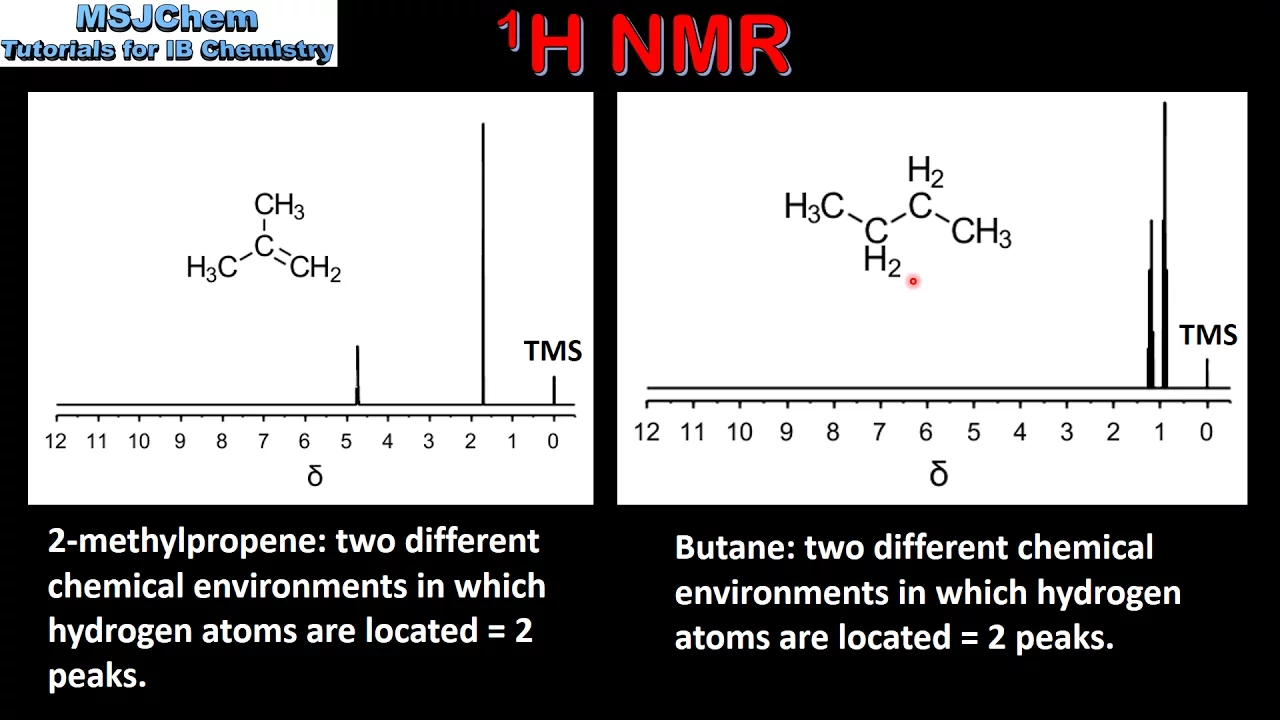
10:06
1H NMR: Determining Number of Peaks from Structure
@MSJChem
59.2K views•2017-04-06

17:31
Edible Water Bottles: A DIY Guide to Sodium Alginate Spherification
@ryan
10.5M views•2019-06-21
Related Study Plans & Knowledge Roadmaps
Structured learning paths in Chemistry
chemistry
Nuclear Chemistry: Decay, Meds & Fuel Cycle
01Introduction to Nuclear Structure and Radioactivity
02Decay Dynamics and Kinetics
03Radiation Interaction and Detection
+ 2 more learning modules
24h5 modules
Explore Roadmap
chemistry
Supramolecular Chemistry: Forces & Machines
01Foundations of Chemical Bonding and Intermolecular Forces
02Introduction to Host-Guest Chemistry
03Thermodynamics and Dynamics of Self-Assembly
+ 2 more learning modules
16h5 modules
Explore Roadmap
chemistry
Photochemistry: Excited States & Reactions
01Foundations of Light-Matter Interactions
02Molecular Orbitals and Electronic States
03Photophysical Processes and Jablonski Diagrams
+ 2 more learning modules
18h5 modules
Explore Roadmap
chemistry
Coordination Chemistry: Bonding & Properties
01Introduction to Transition Metals and Ligands
02Crystal Field Theory (CFT) and Geometry
03Magnetic Behavior and Spin States
+ 2 more learning modules
14h5 modules
Explore Roadmap