Host-guest chemistry involves the formation of supramolecular complexes where host molecules selectively bind guest species through non-covalent interactions such as hydrogen bonds, ionic bonds, van der Waals forces, and hydrophobic interactions; this principle has practical applications in environmental remediation, such as removing xenobiotics like radioactive cesium-137 and carcinogenic aromatic amines from contaminated environments.
Host-Guest Chemistry Explained: SL IB Chemistry Revision
Added:Deep Dive
Understanding of intermolecular forces, including hydrogen bonding, dipole-dipole interactions, and London dispersion forces.
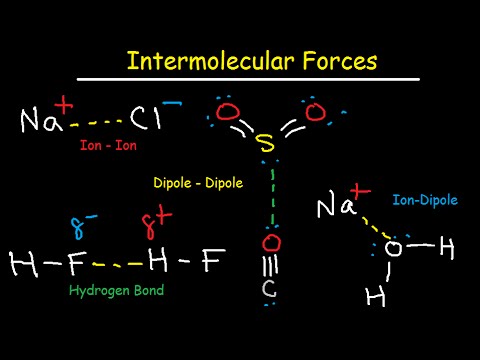
Intermolecular Forces: Hydrogen Bonding, Dipole-Dipole, Ion-Dipole
2.5M
Intermolecular forces are attractive forces between molecules that determine physical properties like boiling point and solubility. The five main types, ranked from strongest to weakest, are: (1) Ion-ion interactions (electrostatic attraction between oppositely charged ions), (2) Ion-dipole interactions (attraction between ions and polar molecules), (3) Hydrogen bonds (specialized dipole-dipole interactions between H and N/O/F), (4) Dipole-dipole interactions (attraction between polar molecules), and (5) London dispersion forces (temporary induced dipole interactions present in all molecules). The strength of these forces depends on factors including charge magnitude, molecular size, surface area, and polarity. For example, compounds with hydrogen bonding (like water) have higher boiling points than those with only dipole-dipole interactions, which in turn have higher boiling points than non-polar molecules relying only on London dispersion forces.
Click to watch →

قوى التجاذب | كيمياء 🧪
102.5K
Intermolecular forces determine the physical state of matter and include three main types: dispersion forces (weakest, occur between nonpolar molecules with zero electronegativity difference, strength increases with electron count), dipole-dipole forces (occur between polar molecules with electronegativity difference between 0.4-1.7, creating permanent dipoles), and hydrogen bonds (strongest, occur when hydrogen is bonded to nitrogen, oxygen, or fluorine). The strength hierarchy is: hydrogen bonds > dipole-dipole > dispersion forces. This explains why water (with hydrogen bonds) has a high boiling point of 100°C while methane (with only dispersion forces) has a very low boiling point of -164°C.
Click to watch →

Çözücü Çözünen Etkileşimleri | Sıvı Çözeltiler
115.3K
This section details the three main types of intermolecular forces. Dipole-dipole interactions occur between polar molecules with permanent dipoles. Hydrogen bonding is a special case when H is bonded to N, O, or F, creating very strong attractions. London dispersion forces (induced dipole-induced dipole) are the weakest and occur between nonpolar molecules. The section explains how these forces determine solubility: stronger forces between solute and solvent lead to better dissolution. Water exhibits all three forces simultaneously, with hydrogen bonding being the dominant one.
Click to watch →

Forces intermoléculaires
108.8K
Intermolecular forces are attractive forces between molecules that determine physical properties like boiling point. Dipole-dipole interactions occur between polar molecules due to electronegativity differences creating partial charges (δ+ and δ-), as seen in acetone (boiling point 56°C). Hydrogen bonds are the strongest intermolecular forces, occurring when hydrogen is bonded to highly electronegative atoms (F, O, N) and attracted to another electronegative atom with lone pairs, as in water (boiling point 100°C). London dispersion forces are the weakest but most universal, arising from temporary electron distribution fluctuations that create momentary dipoles, present in all molecules but dominant in nonpolar ones like methane (boiling point -161.5°C).
Click to watch →

توجيهي 2008 | القوى بين الجزيئات - الجزء 2
36.2K
This comprehensive lesson covers all three types of intermolecular forces. Hydrogen bonding requires H bonded to F, O, or N. Dipole-dipole forces occur in polar molecules with uneven electron distribution, creating partial charges. London dispersion forces exist in all molecules but are strongest in nonpolar ones. The strength hierarchy is: Hydrogen bonding > Dipole-dipole > London dispersion. This affects physical properties: boiling points, melting points, and viscosity. The instructor teaches how to identify which force each molecule exhibits and rank molecules by boiling point. Examples include HF (20°C), HCl (-85°C), H2O (100°C), NH3 (-33.4°C), and CH3Cl.
Click to watch →
Deep Dive
Concepts of molecular geometry, polarity, and the hydrophobic effect.
AP Chemistry Cram Session 2026
143
This section covers molecular geometry and polarity concepts. Molecular geometry is determined by bonding regions and lone pairs: 2 bonding + 2 lone pairs = bent (104.5°), 3 bonding + 0 lone pairs = trigonal planar (120°), 4 bonding + 0 lone pairs = tetrahedral (109.5°). Molecular polarity depends on charge distribution: polar molecules have dipole moments and exhibit dipole-dipole forces, while nonpolar molecules only have London dispersion forces. Hydrogen bonding occurs with N-H, O-H, or F-H bonds. All molecules have London dispersion forces, but polar molecules additionally have dipole-dipole forces.
Click to watch →

ELEKTROMƏNFİLİK. KİMYƏVİ RABİTƏNİN TİPLƏRİ. KOVALENT RABİTƏNİN NÖVLƏRİ. TEST 40-68 (SON). SƏH.82-84.
38.6K
Molecular geometry describes the three-dimensional arrangement of atoms in a molecule, determined by the number of bonding pairs and lone pairs around the central atom. Electron pairs repel each other and arrange themselves to minimize repulsion, resulting in different molecular geometries: linear (180°), bent (<180°), trigonal planar (120°), and tetrahedral (109.5°). Molecular polarity depends on electronegativity differences between atoms and molecular geometry. When atoms have different electronegativities, electrons are shared unequally, creating a dipole moment. Polar molecules have asymmetric charge distribution, while nonpolar molecules have symmetric charge distribution. This affects solubility, boiling point, and reactivity.
Click to watch →

Pembelajaran Guru Siswa SMAN 1 SLEMAN
113
This lesson covers two fundamental concepts in chemistry: molecular geometry and molecular polarity. Molecular geometry describes the three-dimensional arrangement of atoms in molecules, determined by the VSEPR theory which states that electron pairs repel each other and arrange to minimize repulsion. Examples include water (bent shape with two lone pairs), CO2 (linear), NH3 (trigonal pyramidal), PCl3 (trigonal pyramidal), and BF3 (trigonal planar). Molecular polarity determines how substances interact: polar substances like water dissolve in polar solvents, while non-polar substances like oil dissolve in non-polar solvents. When water and oil are mixed, they form separate layers because they cannot dissolve in each other, with oil floating on top due to lower density. These principles explain why certain substances mix while others do not.
Click to watch →

1er parcial ! Sistemas materiales, Estructura Atómica, Tabla Periórica. QUIMICA CBC
10.6K
Molecular geometry describes 3D atomic arrangements determined by electron domains (bonding pairs and lone pairs). Key geometries: linear (180°), trigonal planar (120°), tetrahedral (109.5°). VSEPR theory explains electron domain arrangement to minimize repulsion. Molecular polarity depends on bond polarity and geometry: polar molecules have net dipole moments, nonpolar molecules have dipoles that cancel. Lone pairs affect geometry and polarity, causing bond angles to deviate from ideal values.
Click to watch →
الكهروسالبية والقطبية | كيمياء 2-1 | شرح سهل ومبسط مع الأمثلة
9.7K
Molecular polarity depends on both bond polarity and molecular geometry. Polar molecules have distinct positive and negative ends, while nonpolar molecules have balanced charge distribution. Water (bent shape) is polar, while carbon tetrachloride (tetrahedral shape) is nonpolar because dipole moments cancel. Intermolecular forces include London dispersion forces (weakest), dipole-dipole forces (polar molecules), and hydrogen bonding (strongest, when H bonds to N, O, or F). These forces determine physical properties like boiling points and states of matter.
Click to watch →
Deep Dive
Basic principles of chemical equilibrium and thermodynamics (enthalpy, entropy, and Gibbs free energy).
All of Chemistry in 19 Minutes - Nuclear Engineer Reacts to Wacky Science
113.8K
Enthalpy (H) measures heat content; exothermic reactions release heat (ΔH<0), endothermic absorb heat (ΔH>0). Gibbs free energy (ΔG) determines spontaneity: ΔG<0 means spontaneous. Even endothermic reactions can be spontaneous if entropy increase offsets enthalpy change. Chemical equilibrium occurs when forward and reverse reaction rates equal, maintaining constant concentrations. This principle applies to phase changes and acid-base chemistry.
Click to watch →
بمحاضرة وحدة مثل كُل سنة 120 درجة بالوزاري/كيمياء السادس العلمي
116.4K
This section covers entropy, Gibbs Free Energy, and chemical equilibrium. Entropy is a measure of disorder or randomness in a system. The instructor explains that entropy increases in four processes: melting, vaporization, dissolution, and heating. Entropy change (ΔS) is calculated using the formula: ΔS = ΣS(products) - ΣS(reactants). Gibbs Free Energy (ΔG) determines whether a process is spontaneous: ΔG < 0 indicates spontaneous, ΔG > 0 indicates non-spontaneous, and ΔG = 0 indicates equilibrium. Gibbs Free Energy is calculated using the equation: ΔG = ΔH - TΔS. Chemical equilibrium is the state where the forward and reverse reaction rates are equal, and concentrations of reactants and products remain constant. The equilibrium constant (K) is a numerical value that expresses the ratio of product concentrations to reactant concentrations at equilibrium.
Click to watch →
ऊष्मागतिकी Class 11 One Shot✅| Class 11 Chemistry Chapter 5 | Thermodynamics One Shot - Ushmagatiki
133.5K
Enthalpy of neutralization is approximately -57.1 kJ/mol for strong acid-strong base reactions. Enthalpy of vaporization (ΔHvap) is heat to convert liquid to gas (water: +40.6 kJ/mol). Heat capacity (C = Q/ΔT) measures heat required to raise temperature by one degree. Molar heat capacity at constant volume (CV) and constant pressure (CP) are related by CP - CV = R for ideal gases. Entropy (S) measures system disorder. The Second Law states that for any spontaneous process, total entropy of the universe increases. Gibbs Free Energy (G = H - TS) determines spontaneity: ΔG < 0 indicates spontaneous process. The Third Law states entropy of perfect crystal at absolute zero is zero. Hess's Law states total enthalpy change is path-independent.
Click to watch →
EKLAVYA 4.0 : L-1 Chemical Thermodynamics | Sovind Sir | MHT-CET 2024 | BEST Teacher | XII | HSC
83.2K
Enthalpy (H) is defined as H = U + PV, with ΔH = ΔU + PΔV at constant pressure. For chemical reactions, ΔH_rxn = ΣΔH_f(products) - ΣΔH_f(reactants). Gibbs Free Energy (G = H - TS) determines spontaneity: ΔG < 0 means spontaneous, ΔG > 0 means non-spontaneous, ΔG = 0 means equilibrium. Entropy unit is J/K. The Second Law states total entropy of universe increases for spontaneous processes.
Click to watch →
AP Chemistry Cram Session 2024 | Free Worksheet In Description!
95.1K
Entropy (ΔS) measures disorder: solids < liquids < aqueous < gases (most entropy). Higher temperature means more entropy. More molecules mean more entropy. For reactions: gas → solid → negative ΔS; solid → gas → positive ΔS; aqueous ions → solid → negative ΔS; gas molecules increasing from 2 to 3 → positive ΔS. Thermodynamic favorability depends on enthalpy (ΔH) and entropy (ΔS): Exothermic reactions (ΔH < 0) tend to be favored; reactions with increasing entropy (ΔS > 0) tend to be favored. If both ΔH < 0 and ΔS > 0 → always favored. If both ΔH > 0 and ΔS < 0 → never favored. If only one factor is favorable: favored at certain temperatures (high temp for endothermic with positive ΔS; low temp for exothermic with negative ΔS).
Click to watch →
Deep Dive
Familiarity with organic functional groups and basic coordination chemistry.
![[HÓA 11] Hợp Chất Hữu Cơ Và Hóa Học Hữu Cơ (Sách Cánh Diều, Chân Trời Sáng Tạo, Kết Nối Tri Thức)](https://i.ytimg.com/vi/9l9f6_OlT7Y/maxresdefault.jpg)
[HÓA 11] Hợp Chất Hữu Cơ Và Hóa Học Hữu Cơ (Sách Cánh Diều, Chân Trời Sáng Tạo, Kết Nối Tri Thức)
96.6K
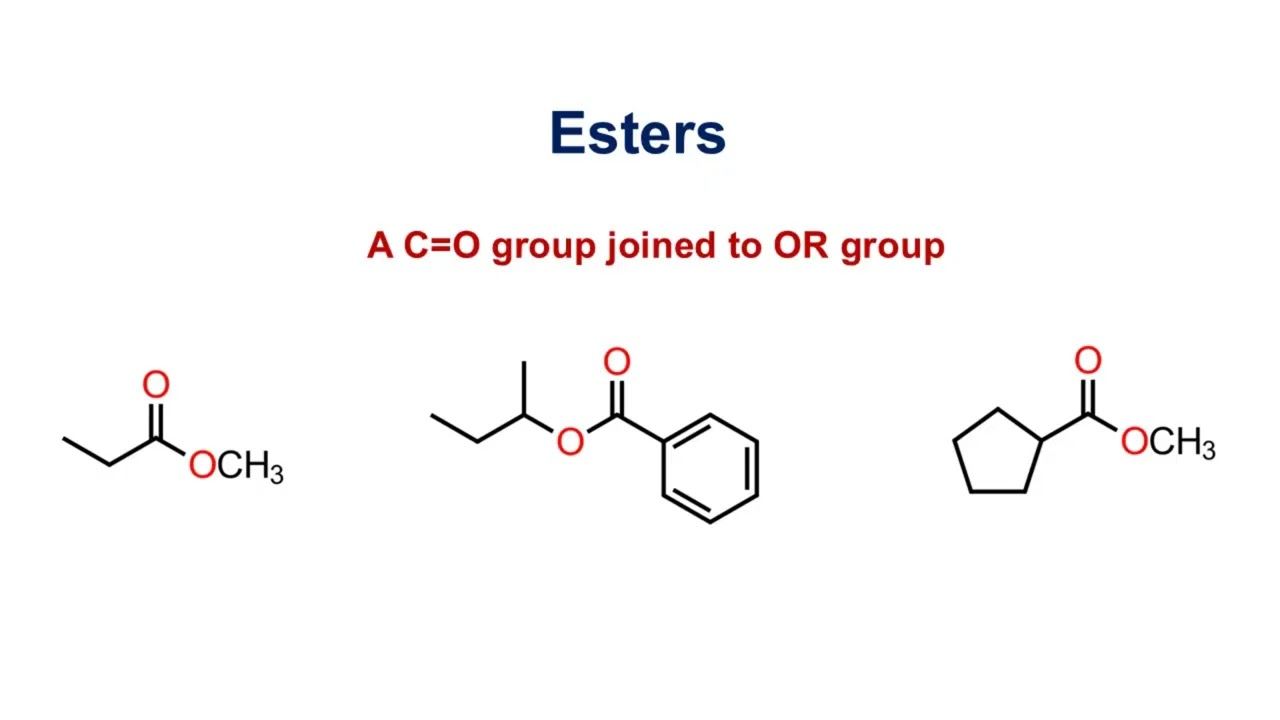
The basic functional groups in organic chemistry include: (1) OH group - belongs to alcohols; (2) COOH group - belongs to carboxylic acids; (3) CO group - belongs to ketones; (4) COO group - belongs to esters; (5) NH2 group - belongs to amines; (6) CHO group - belongs to aldehydes. These functional groups determine the chemical properties of organic compounds.
Click to watch →

EKLAVYA 4.0 : Basic principles of organic chemistry | Sovind Sir | MHT-CET 2024 | Class 11th | YT
23K
Functional groups are specific groups of atoms that determine the chemical properties of organic compounds. Key functional groups include: Alkyl halides (R-X), Nitriles (R-CN), Nitro compounds (R-NO2), Alcohols (R-OH), Aldehydes (R-CHO), Ketones (R-CO-R'), Ethers (R-O-R'), Carboxylic acids (R-COOH), Esters (R-COO-R'), Amides (R-CONH2), Acid anhydrides (R-CO-O-CO-R'), Acyl halides (R-COX), and Sulfonic acids (Ar-SO3H). The priority order for IUPAC naming is: Carboxylic acid > Sulfonic acid > Acid anhydride > Ester > Acyl halide > Amide > Nitrile > Isocyanide > Aldehyde > Ketone > Alcohol > Amine > Ether > Alkyl halide. Main functional groups get suffixes while side groups get prefixes.
Click to watch →

Basic of organic Chemistry
1.1K
Important functional groups include: (1) Hydroxyl group (-OH) for alcohols, (2) Carboxyl group (-COOH) for carboxylic acids, (3) Halogen atoms (F, Cl, Br, I) as halogens, (4) Nitro group (-NO2), (5) Cyano group (-CN), (6) Amino group (-NH2). Each functional group imparts specific chemical properties to the compound.
Click to watch →
Identifying Functional Groups
119
A functional group is a substructure within a molecule that can undergo chemical change. At the introductory level, fewer than 20 functional groups are typically studied. Key groups include: alkyl halides (halogen on sp3 carbon, substrates for elimination/substitution); alkenes (sp2 carbons with sigma/pi bonds, flat and electron-rich, undergo addition reactions); alkynes (sp carbons, linear, electron-rich); alcohols (hydroxyl group, central to organic synthesis); thiols (sulfur analogs of alcohols, more acidic, oxidizable); amines (nitrogen with 1-3 alkyl groups); ethers (stable, oxygen linking two carbons); sulfides (sulfur analogs of ethers, more reactive); arenes (aromatic cycles with conjugated pi electrons, flat and stable); ketones (carbonyl attached to two carbons); aldehydes (carbonyl with at least one hydrogen, easily oxidized); carboxylic acids (carbonyl with hydroxyl, vital in biochemistry); acid chlorides (useful synthetic intermediates); anhydrides (two carbonyls linked through oxygen, highly reactive); esters (acyl attached to alkoxy group); amides (carbonyl with amine, more stable than esters).
Click to watch →

Introducción a la QUÍMICA ORGÁNICA
1.3K
A functional group is a specific group of atoms responsible for characteristic chemical reactions. Key functional groups include: (1) Alcohols (-OH on saturated carbon); (2) Phenols (-OH on aromatic ring); (3) Ethers (R-O-R); (4) Aldehydes (R-CHO, terminal carbonyl); (5) Ketones (R-CO-R, internal carbonyl); (6) Carboxylic acids (R-COOH, terminal); (7) Esters (R-COO-R'); (8) Amines (R-NH2, R2NH, R3N); (9) Amides (R-CO-NH2); (10) Nitriles (R-CN).
Click to watch →
Prerequisite Knowledge
- Concept 01Understanding of intermolecular forces, including hydrogen bonding, dipole-dipole interactions, and London dispersion forces.
- Concept 02Concepts of molecular geometry, polarity, and the hydrophobic effect.
- Concept 03Basic principles of chemical equilibrium and thermodynamics (enthalpy, entropy, and Gibbs free energy).
- Concept 04Familiarity with organic functional groups and basic coordination chemistry.
Subsequent Learning
- Step 01Synthesis and properties of specific macrocyclic hosts, such as crown ethers, cyclodextrins, and calixarenes.
- Step 02Applications of host-guest chemistry in targeted drug delivery systems and pharmaceutical formulation.
- Step 03Design of molecular sensors and logic gates based on supramolecular recognition.
- Step 04Advanced environmental cleanup technologies, such as capturing heavy metals or volatile organic compounds (VOCs).
Host-Guest Basics
Supramolecule Example
Selective Binding
Four Interaction Types
Environmental Application
Xenobiotic Examples
Host-Guest Basics
0:02Playing Section
- 1
Host-guest complexes consist of two or more molecules.
- 2
They are held together through non-covalent bonding.
Reversibility, Competitive Interference, and Scalability Limitations in Environmental Remediation
While host-guest chemistry offers elegant molecular recognition for pollutant removal, critics highlight major practical limitations in real-world environmental applications compared to traditional methods like covalent degradation or bioremediation. First, because host-guest interactions rely on weak, non-covalent bonds, the binding is inherently reversible. Under changing environmental conditions (such as pH, temperature, or salinity fluctuations), trapped pollutants can desorb and re-enter the ecosystem. Second, real-world waste streams contain a complex mix of competing ions and organic matter that can easily outcompete target pollutants for the host's binding cavities, drastically reducing efficiency. Finally, the high cost and environmental footprint of synthesizing complex synthetic hosts (like cyclodextrins or calixarenes) often make them less viable and sustainable at scale than established, robust alternatives like activated carbon filtration or microbial bioremediation, which destroy or permanently immobilize contaminants.
Deep Dive
Synthesis and properties of specific macrocyclic hosts, such as crown ethers, cyclodextrins, and calixarenes.

Making 18-crown-6 - Crown Ethers
43.8K
Crown ethers are cyclic compounds with ether groups in a ring that selectively bind alkali metal cations; 18-crown-6 specifically binds potassium ions and enables dissolution of otherwise insoluble alkali salts in organic solvents. The synthesis involves two main steps: first, preparing 1,2-bis(2-chloroethoxy)ethane via an Appel reaction using carbon tetrachloride, triphenylphosphine, and triethylene glycol; second, performing a modified Williamson ether synthesis with potassium hydroxide to form the cyclic crown ether structure. The final product is purified through vacuum distillation, solvent extraction, and acetonitrile complexation, and its identity is confirmed by its characteristic ability to dissolve potassium permanganate in benzene.
Click to watch →

シクロデキストリンのことをもっと伝えたい!(副題:CMを化学で深掘り)Part1
135
Cyclodextrins are macrocyclic host compounds with a unique cyclic structure that can encapsulate other molecules. They are classified into three types based on glucose unit count: α-cyclodextrin (6 units), β-cyclodextrin (7 units), and γ-cyclodextrin (8 units). These compounds are part of a broader category of macrocyclic host compounds that include crown ethers and calixarenes. The term 'host' refers to the molecule that accepts or 'hosts' other molecules called 'guests.' Cyclodextrins have a unique amphiphilic nature with a hydrophobic interior cavity and hydrophilic exterior surface, making them ideal for encapsulating hydrophobic compounds. The different cavity sizes enable size recognition, where smaller molecules fit better in α-cyclodextrin, medium-sized molecules in β-cyclodextrin, and larger molecules in γ-cyclodextrin.
Click to watch →
MACROCYCLIC LIGAND
3.1K
Macrocyclic ligands are special polydentate ligands where donor atoms are constrained in a large ring (minimum 9 atoms with 3+ donor sites), exhibiting exceptionally high affinity for metal ions due to their pre-organized structure; crown ethers, a major class of macrocyclic ligands discovered by Pedersen in 1967, consist of oxygen atoms separated by methylene groups arranged in a planar crown structure that selectively binds alkali metal ions based on ring size (e.g., crown 5 prefers lithium, crown 6 prefers sodium, crown 7 prefers potassium), enabling unique applications such as enhancing alkali salt solubility in organic solvents and facilitating challenging syntheses like cesium-gold ionic compounds; natural examples include chlorophyll (magnesium-porphyrin), heme (iron-porphyrin), and vitamin B12 (cobalt-corrin), while synthetic examples include Curtis macrocycles, phthalocyanines (used as dyes and in solar cells), and cryptands (football ligands that form exceptionally stable complexes through three-dimensional encapsulation).
Click to watch →

AU24 CHEM 2510 - Lecture 27 - October 25
131
Crown ethers are cyclic ethers forming molecular cages around metal cations. They are size-selective, binding specific metal ions. Used therapeutically for heavy metal poisoning by encapsulating toxic metals. Symmetrical ethers form via acid-catalyzed dehydration (H2SO4, protonation, SN1/SN2). Asymmetrical ethers use Williamson synthesis: alkoxide nucleophile + alkyl halide electrophile via SN2.
Click to watch →

CSIR NET June 2026 Preparation | CSIR NET Chemical Science Main Group | CSIR NET CHEMISTRY
770
Crown ethers and cryptates are host molecules that form complexes with metal ions (guests). The cavity size determines which metal ion forms the strongest complex: 18-crown-6 with K+, 16-crown-5 with Na+, 12-crown-4 with Li+. The formation constant depends on how well the metal ion fits into the cavity.
Click to watch →
Deep Dive
Applications of host-guest chemistry in targeted drug delivery systems and pharmaceutical formulation.
المحاضرة المجانية فيزياوية د.ميس - complexation - part1
821
Inclusion compounds (clathrates) involve host-guest relationships where one molecule is trapped inside another. Channel-type compounds have tubular structures open at both ends. Cavity-type compounds have completely enclosed spaces with no openings. Cyclodextrin is a cone-shaped inclusion compound that traps guest molecules in its cavity. These compounds are important in pharmaceutical applications for drug delivery and stabilization. The host-guest relationship is a key characteristic of inclusion compounds.
Click to watch →

Charge Transfer Complex!Inclusion Compounds!Clatherates #bedkdian
29.6K
Inclusion compounds form when one molecule (guest) becomes enclosed within another (host). The host creates specific arrangements—either cage-like structures or channel systems—that trap the guest through weak van der Waals forces. Hydroquinone forms cage-type inclusion compounds with H2S, creating protective enclosures. Channel-type compounds form helical structures with passageways approximately 5 angstroms wide. These structural arrangements allow precise control over molecular environments, enabling applications in substance storage, preservation, and mixture separation.
Click to watch →

Host-Guest Chemistry (Enzyme Models) | Prepare for GATE, JAM, NET
4.9K
Host-guest chemistry is the study of non-covalent molecular assemblies where a host molecule (possessing a cavity or binding site) selectively binds to a guest molecule through various non-covalent interactions including electrostatic forces, hydrogen bonding, van der Waals forces, and pi-stacking; this principle explains biological phenomena like enzyme-substrate specificity and has diverse applications in pharmaceuticals (e.g., nitroglycerin-cyclodextrin complexes), environmental remediation, optoelectronics, and molecular sensing.
Click to watch →

1490. Карцова А.А.: Молекулярный детектив. Капиллярный электрофорез и аналитическая химия
295
Molecular recognition is the principle underlying selective separation, where specific interactions enable binding. Crown ethers, discovered in 1987 (Nobel Prize), are macrocyclic compounds that selectively bind metal ions based on cavity size. 18-crown-6 has 18 atoms including 6 oxygen donors. These compounds can be added to electrolytes to modify retention parameters. At pH around 2.5, only primary amino groups form complexes with 18-crown-6, enabling separation of compounds based on functional group characteristics. This host-guest chemistry allows sorting of complex mixtures with high selectivity.
Click to watch →
GPAT 2022 | QUESTION WITH EXPLANATION | PART - 1 | PHARMACEUTICS
2.9K
Digestion in pharmaceutical engineering is defined as maceration with gentle heat during extraction, exemplified by morphine extraction. Inclusion compounds are of two types: Molecular compounds (organic) and Inclusion compounds (with channels, lattice layers, and clathrates). The distinction is important for understanding drug delivery systems and host-guest molecular interactions in pharmaceutical formulations.
Click to watch →
Deep Dive
Design of molecular sensors and logic gates based on supramolecular recognition.

Lecture 30
195
Molecular electronics is an interdisciplinary field combining supramolecular chemistry with materials science to create electronic devices at the molecular level. The field implements standard digital logic gates (NOT, AND, NAND, OR) using molecular recognition events as inputs and fluorescence as readout. Fluorescence serves as an ideal readout mechanism due to its sensitivity, speed, and selectivity. The NOT gate inverts input signals through protonation-controlled PET processes. The AND gate requires both inputs to activate output, demonstrated using macrocyclic compounds with dual binding sites. The NAND gate combines AND and NOT operations, producing output of 1 except when both inputs are present. The OR gate produces output when either input is present, using cryptand-based systems that recognize multiple metal ions. These gates form the foundation for chemical computing systems, enabling information processing through molecular recognition events rather than traditional semiconductor materials. The field aims to integrate these molecular logic gates into functional circuits at the nanoscale, overcoming limitations of top-down semiconductor approaches.
Click to watch →
Lecture 1 Supramolecular Chemistry & Molecular Recognition | Chemistry Series
431
Supramolecular chemistry is the study of chemistry beyond individual molecules, focusing on non-covalent intermolecular interactions between guest and host components; molecular recognition occurs when these components match both sterically (shape and size) and electronically (reactivity), following the lock-and-key principle where a suitable cavity in the host allows efficient binding only when the guest's shape and size properly complement it, with the stability of the resulting supramolecular assembly depending on the degree of stereo-electronic fit between components.
Click to watch →
8th HOPE Meeting_Prof. Jean-Marie LEHN
365
Supramolecular chemistry studies interactions between molecules rather than within them, focusing on weak non-covalent forces like electrostatics. Defined in 1978, it examines molecular recognition (how molecules identify each other), transformation, and translocation. Molecular recognition requires both interaction and information storage, operating through shape complementarity and electrostatic interactions. Emil Fisher's 1894 lock-and-key model established that molecular recognition requires geometric complementarity. Chemists design molecular cages (cryptands) with precisely sized holes to selectively bind metal ions like Na+ and K+. Applications include drug discovery (molecular keys fitting biological locks), medical diagnostics (europium-labeled cryptands for imaging), and gene transfer (synthetic vectors carrying DNA across cell membranes). The genetic code itself exemplifies molecular recognition, using four chemical letters (A, G, T, C) with complementary base-pairing to store and transmit biological information.
Click to watch →

supramolecular chemistry|| type of molecular receptors|| PART 6
7.4K
Molecular receptors are host molecules that selectively bind guest molecules through non-covalent interactions; they include natural macrocyclic compounds like vancomycin (with antibiotic properties), synthetic crown ethers (first artificial receptors discovered by Charles Pedersen in 1967, which won him the Nobel Prize in 1987), macrocyclic polyamines, and thioether type thiacrowns, all demonstrating the macrocyclic effect where cyclic structures create preorganized cavities that form more stable and selective complexes with specific guest molecules.
Click to watch →

Quick Revision Of Interdisciplinary Topics | CSIR NET Chemistry Feb 2025 | Seema Chawla
1.5K
Molecular recognition involves specific binding of guest molecules to complementary host molecules to form host-guest complexes. Crown ethers bind cations through lone pairs on oxygen atoms. DNA is a supramolecular structure held together by hydrogen bonds between complementary bases. Pi-pi stacking interactions are not possible in cyclodextrins.
Click to watch →
Deep Dive
Advanced environmental cleanup technologies, such as capturing heavy metals or volatile organic compounds (VOCs).

Unidade 7 Parte 1 – Tecnologias de tratamento e remediação de áreas contaminadas
363
Soil remediation addresses hazardous substances threatening human health, water resources, and biodiversity. Physical methods remove contaminants through mechanical means: soil washing with surfactants for metals and VOCs, thermal extraction for hydrocarbons, Soil Vapor Extraction (SVE) using vacuum for VOCs, and Multi-Phase Extraction (MPE) for NAPLs. In-situ chemical treatments destroy contaminants directly at the site: ISCO injects oxidants like permanganate and persulfate to mineralize organics; ISCR uses zero-valent iron to transform chlorinated solvents and heavy metals; solidification and stabilization immobilizes metals through additive mixing. These technologies offer rapid response without excavation but depend on soil characteristics and contaminant types.
Click to watch →

RemPlex-IAEA Seminar: Assessing Environmental Remediation Technologies - Soil
408
Advanced in-situ remediation technologies represent the frontier of environmental cleanup. Soil vapor extraction effectiveness depends on contaminant volatility and well spacing—more wells achieve faster results than fewer wells with extensive heating. Smoldering combustion innovatively uses contaminants as fuel, requiring only heat, oxidants, and fuel for self-propagating remediation. In-situ stabilization combines Portland cement with sodium persulfate for permeability reduction and contaminant mass loss. Products like Duramid and Metafix utilize multiple mechanisms including reductive precipitation, reduction, and adsorption. Reactive gas injection (ozone for PCBs, hydrogen sulfide for chromium reduction) and electrokinetic technologies using direct current to move charged ions represent further advances, though requiring careful engineering due to safety concerns.
Click to watch →

CVE 351 - Class 40 (Hazardous Waste Storage, Treatment, and Remediation) 17 Dec 2015
1.4K
Advanced hazardous waste treatment combines incineration at temperatures exceeding 1000°C with pure oxygen and natural gas, followed by wet scrubbers for acidic gas removal and electrostatic precipitators for particle capture, producing residual ash for secure disposal. Secure landfills employ multi-layer protection including geomembranes, drainage layers, and compacted clay, with dual drainage systems serving as both functional components and early warning breach detection. Remediation technologies include air stripping for VOC removal, where water is sprayed over porous media while air is blown upward, transferring pollutants to gas phase based on volatility and temperature; and in situ vitrification using extreme high-voltage electrodes to melt contaminated soil into stable glass, permanently immobilizing hazardous pollutants.
Click to watch →
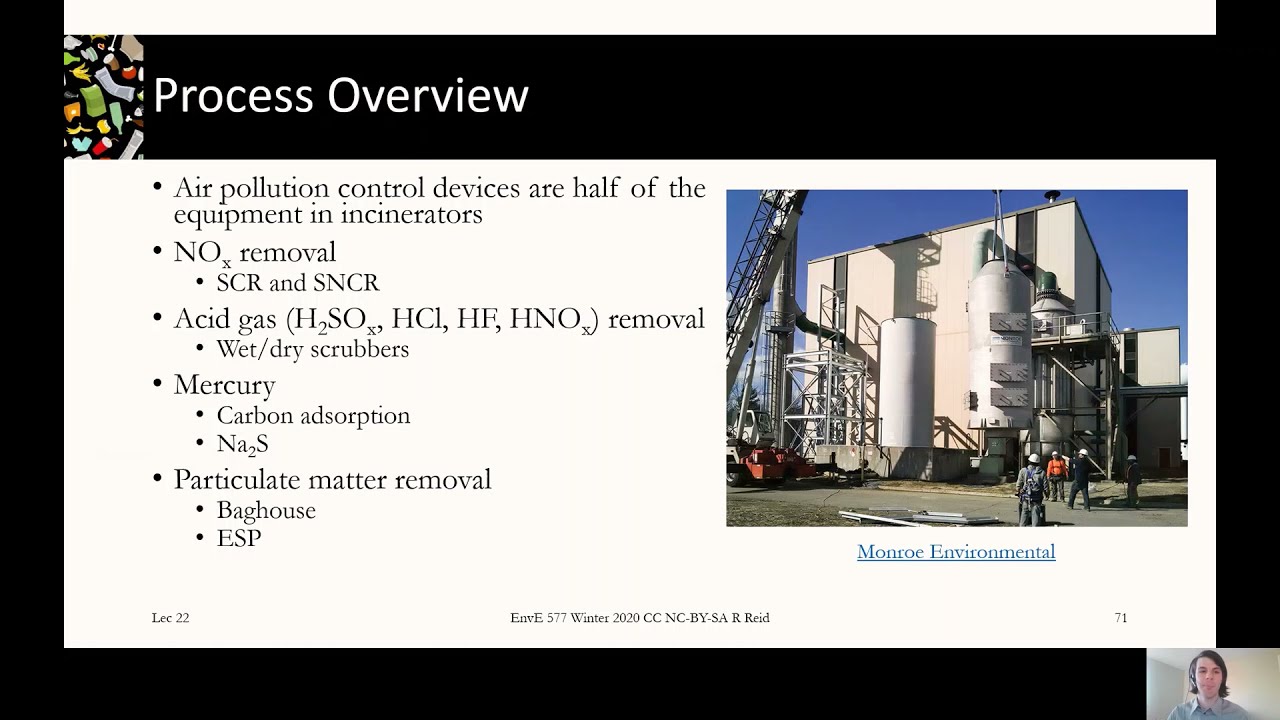
9.4c Pollution Prevention and Treatment Technologies
310
Acid gas removal relies on contacting acidic gases with basic solutions to neutralize them into soluble salts. Multiple scrubber designs maximize gas-liquid contact: packed towers use structured packing materials, atomized mist sprayers create fine droplets, venturi scrubbers force streams together at high velocity, and spray dryers evaporate liquid absorbents to leave solid reaction products. Dry sorbent injection introduces powdered sorbents directly into flue gas for pollutant capture. For heavy metals, carbon-based sorbents effectively capture both mercury and dioxins/furans through adsorption. Sodium sulfide provides an alternative mercury removal method by chemically reacting with mercury vapor to form mercury sulfide (cinnabar), a stable solid that can be easily separated and disposed of.
Click to watch →

Free Engineering Webinar - Groundwater and Soil Remediation
8.2K
This section covers advanced groundwater treatment technologies beyond basic pump and treat. Granular activated carbon filtration uses specially processed charcoal with extensive pore space to absorb VOCs, chlorinated solvents, PCBs, pesticides, and some metals. Conventional air stripping has been used for 60-70 years with packed towers and counter-current air flow, while shallow tray systems offer improved efficiency. Catalytic incineration burns VOCs, SVOCs, PCBs, and pesticides at reduced temperatures using catalysts. UV oxidation breaks down complex organics including nitroamines and pesticides, acting as a biocide. Ozone water purification injects ozone at high voltage to oxidize metals, kill bacteria, and improve taste/odor by removing hydrogen sulfide. These technologies can be combined in series for optimal treatment efficiency.
Click to watch →
Host-Guest Basics
Supramolecule Example
Selective Binding
Four Interaction Types
Environmental Application
Xenobiotic Examples
Host-Guest Basics
0:02- 1
Host-guest complexes consist of two or more molecules.
- 2
They are held together through non-covalent bonding.
Reversibility, Competitive Interference, and Scalability Limitations in Environmental Remediation
While host-guest chemistry offers elegant molecular recognition for pollutant removal, critics highlight major practical limitations in real-world environmental applications compared to traditional methods like covalent degradation or bioremediation. First, because host-guest interactions rely on weak, non-covalent bonds, the binding is inherently reversible. Under changing environmental conditions (such as pH, temperature, or salinity fluctuations), trapped pollutants can desorb and re-enter the ecosystem. Second, real-world waste streams contain a complex mix of competing ions and organic matter that can easily outcompete target pollutants for the host's binding cavities, drastically reducing efficiency. Finally, the high cost and environmental footprint of synthesizing complex synthetic hosts (like cyclodextrins or calixarenes) often make them less viable and sustainable at scale than established, robust alternatives like activated carbon filtration or microbial bioremediation, which destroy or permanently immobilize contaminants.
Understanding of intermolecular forces, including hydrogen bonding, dipole-dipole interactions, and London dispersion forces.
Concepts of molecular geometry, polarity, and the hydrophobic effect.
Basic principles of chemical equilibrium and thermodynamics (enthalpy, entropy, and Gibbs free energy).
Familiarity with organic functional groups and basic coordination chemistry.
Synthesis and properties of specific macrocyclic hosts, such as crown ethers, cyclodextrins, and calixarenes.
Applications of host-guest chemistry in targeted drug delivery systems and pharmaceutical formulation.
Design of molecular sensors and logic gates based on supramolecular recognition.
Advanced environmental cleanup technologies, such as capturing heavy metals or volatile organic compounds (VOCs).
27.2K views163likes1:23@MSJChemOriginal Release: 2015-06-15
this is msj cem in this video I'll be looking at Host guest chemistry host guest complexes are composed of two or more molecules or ions that are held together through non-covalent bonding here we have an example of a host guest complex which is also called a Supra molecule as you can see there are two guest molecules and a host molecule the host molecule binds the guest molecules using non-covalent bonding so as we saw in the previous Slide the host selectively binds a guest in order to produce a host guest complex which is also called a super molecule through non-covalent interactions the four types of non-covalent interactions between the host and guest are hydrogen bonds ionic bonds vandu's forces and hydrophobic interactions host guest ch chemistry can be applied to the removal of xenobiotics in the environment The Binding between a xenobiotic and a host produces a super molecule examples of xenobiotics in the environment are radioactive cesium 137 and aromatic amines which are known to be carcinogenic
Up Next

15:54
Crown Ethers, Cryptands & Micelles | Chemistry Lecture
@st.wilfredscollegeofartsco9332
292 views•2021-05-29
83:56
Biocatalysis and Catalysis in Islatravir Synthesis | Merck Webinar
@SCIwheresciencemeetsbusiness
675 views•2020-10-08
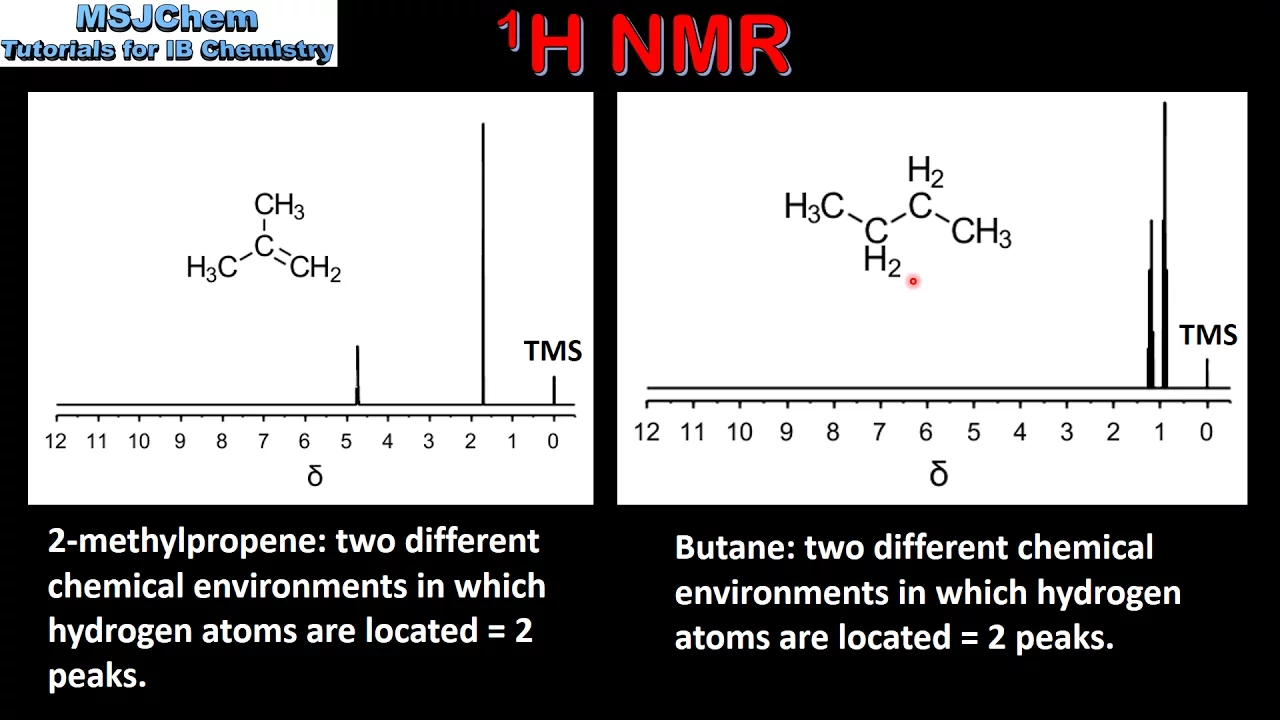
10:06
1H NMR: Determining Number of Peaks from Structure
@MSJChem
59.2K views•2017-04-06
17:31
Edible Water Bottles: A DIY Guide to Sodium Alginate Spherification
@ryan
10.5M views•2019-06-21
Related Study Plans & Knowledge Roadmaps
Structured learning paths in Chemistry
chemistry
Nuclear Chemistry: Decay, Meds & Fuel Cycle
01Introduction to Nuclear Structure and Radioactivity
02Decay Dynamics and Kinetics
03Radiation Interaction and Detection
+ 2 more learning modules
24h5 modules
Explore Roadmap
chemistry
Supramolecular Chemistry: Forces & Machines
01Foundations of Chemical Bonding and Intermolecular Forces
02Introduction to Host-Guest Chemistry
03Thermodynamics and Dynamics of Self-Assembly
+ 2 more learning modules
16h5 modules
Explore Roadmap
chemistry
Photochemistry: Excited States & Reactions
01Foundations of Light-Matter Interactions
02Molecular Orbitals and Electronic States
03Photophysical Processes and Jablonski Diagrams
+ 2 more learning modules
18h5 modules
Explore Roadmap
chemistry
Coordination Chemistry: Bonding & Properties
01Introduction to Transition Metals and Ligands
02Crystal Field Theory (CFT) and Geometry
03Magnetic Behavior and Spin States
+ 2 more learning modules
14h5 modules
Explore Roadmap