














![14. Mecanismo de Reação SN1 e SN2 | Substituição Nucleofílica | Reação Orgânica [QO]](https://i.ytimg.com/vi_webp/W-RlgUfDwRc/maxresdefault.webp)






![Phase - Transfer Catalysis in Green Chemistry[GREEN CHEMISTRY]#pipette and burette](https://i.ytimg.com/vi/Qd34vgjbSnQ/maxresdefault.jpg)



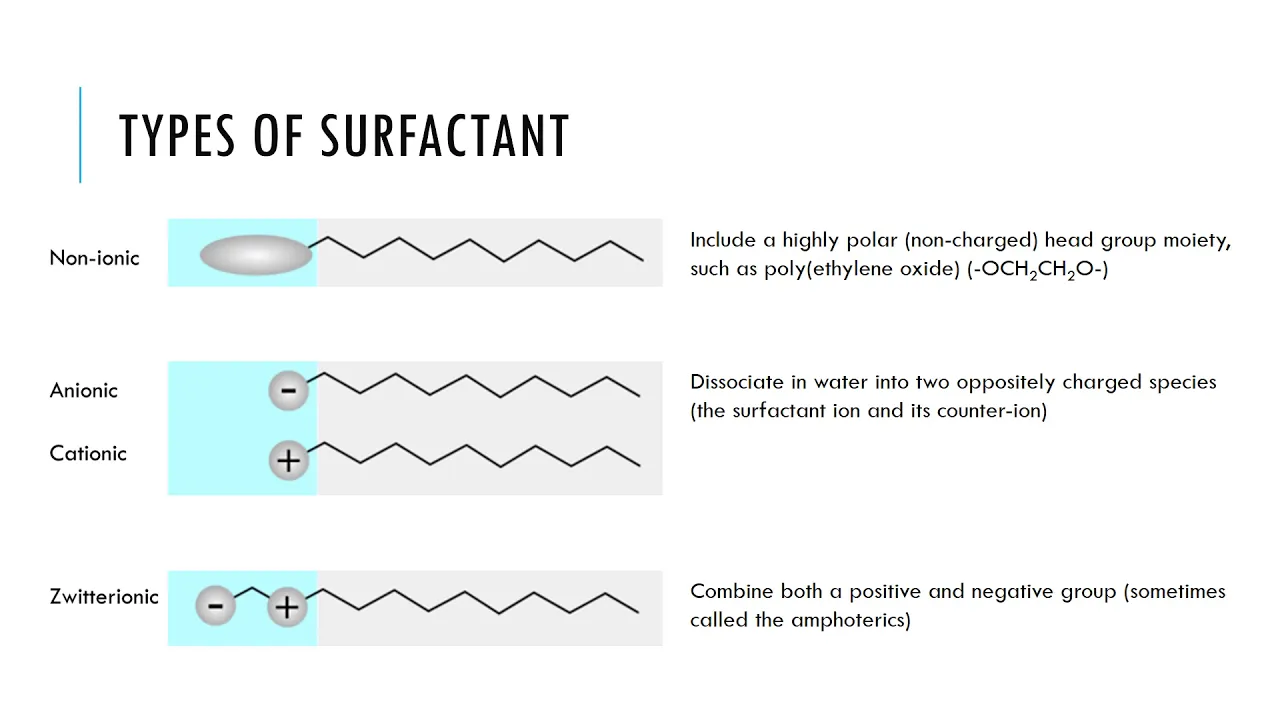
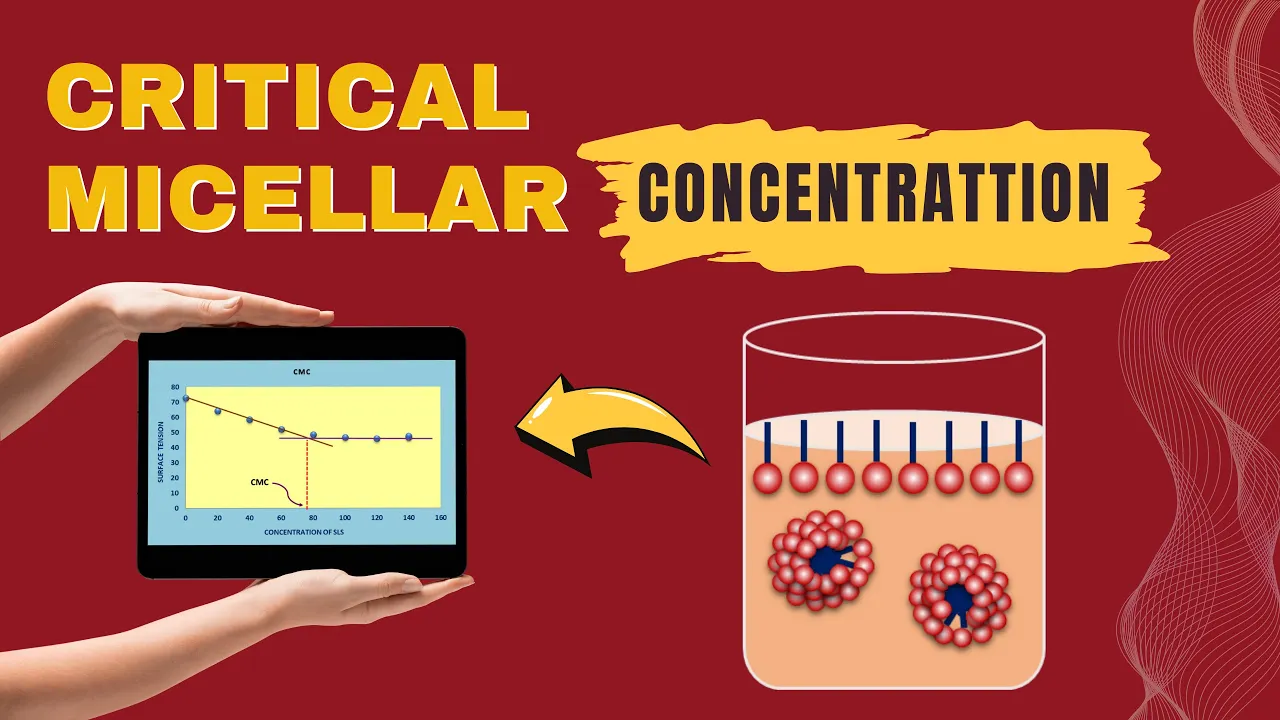
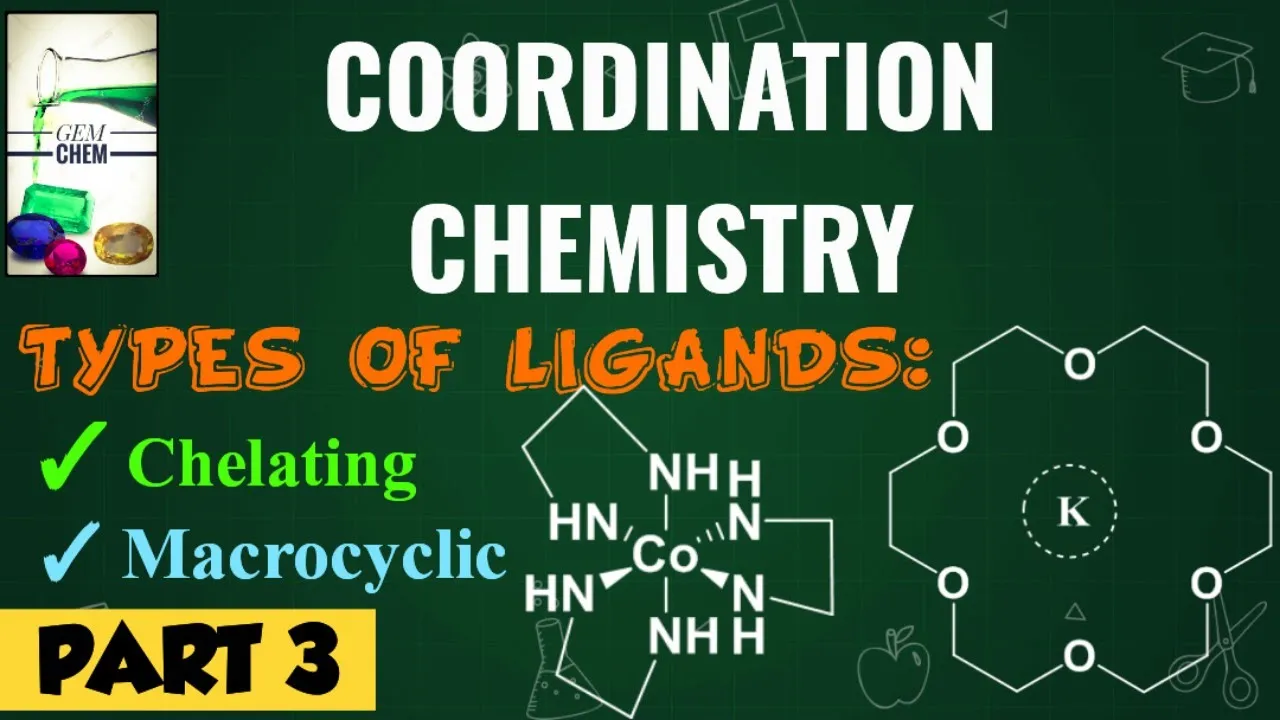


Crown ethers are cyclic polyether compounds named by total ring atoms and oxygen count (e.g., 18-crown-6), acting as phase transfer catalysts that form host-guest complexes with metal ions through ion-dipole interactions; cryptands are three-dimensional analogs of crown ethers with higher selectivity for cations; micelles are surfactant aggregates forming at the critical micelle concentration (CMC) with hydrophilic heads facing the aqueous phase and hydrophobic tails oriented inward, serving as valuable tools in life science research and nanoreactor applications.
Crown Ethers, Cryptands & Micelles | Chemistry Lecture
Added:Fundamental organic chemistry nomenclature and functional groups, particularly ethers and aliphatic chains.
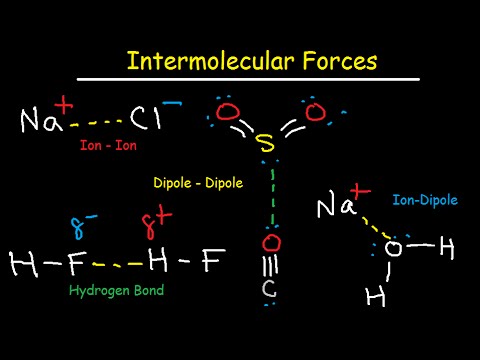
Intermolecular forces, specifically ion-dipole interactions, hydrogen bonding, and the hydrophobic effect.
Basic thermodynamics of solubility, including polar versus nonpolar solvent behavior and amphiphilicity.
Core organic reaction mechanisms, such as nucleophilic substitution (SN1 and SN2), to understand the context of phase transfer catalysis.
Supramolecular chemistry, focusing on host-guest chemistry, molecular recognition, and self-assembled systems.
Advanced industrial applications of Phase Transfer Catalysis (PTC) in green chemistry and multi-phase organic synthesis.
Colloid and surface chemistry, including Critical Micelle Concentration (CMC) thermodynamics and liposome formulation for targeted drug delivery.
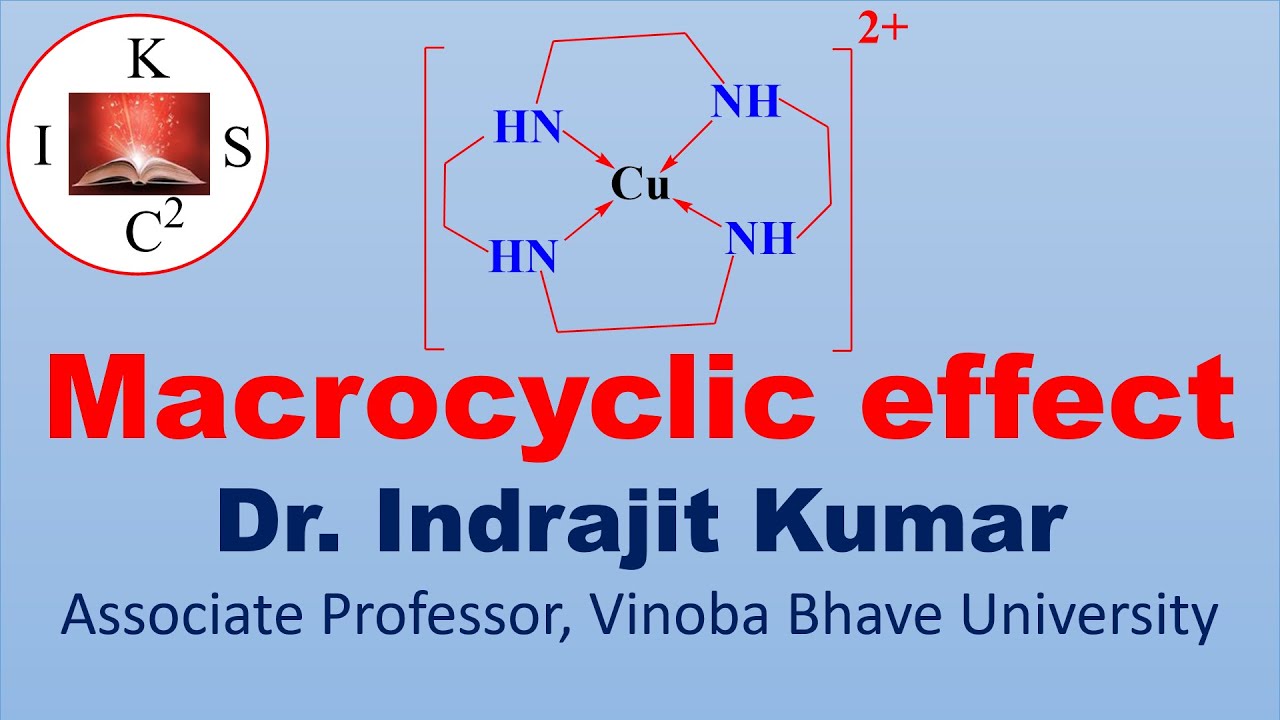
Macrocyclic chemistry and coordination chemistry, studying the thermodynamic stability of metal-ligand complexes (macrocyclic and cryptate effects).
292 views7likes15:54Original Release: 2021-05-29
our youtube channel sent to elected college of arts commerce and science myself a smith august faculty of saint wilfred college today's my lecture is about crown ethos micellars and kryptons in that we are going to see about first crown ethos about their structures about the synthesis after that we are going to see about nomenclatures and their applications after that crypt and in cryptand we are going to see about their definition or their synthesis and their applications last one is the mycell in mycelius we are going to see about formation of micellars for definition of micellar synthesis of isolates reactions of mycelium and last one its application okay so let's start with crown ethers crown ethers these are nothing but the family of a cyclic poly ether uh this the crown ethers has a cyclic chemical compound that consists of a ring containing several ether groups after that these are the large ring compounds containing several oxygen atoms in regular pot pattern if you are able to see then uh this structure shows that the oxygens are separated by two carbon atoms there is a ether linkage present and it is on one side it compound after that the most crown eaters are oligopolies of ethylene oxide now the important member of this serine are tetramer that is n is equal to four the pentamer n is equal to five and example n is equal to 6 the term crown refers to resemblance between the structure crown ether bound to a cation and a crown sitting on a person's head after that crown ethers are widely used as a phase transfer categories and are able to transport ionic compound into organic phase means ionic phase compound um is transported or uh can do reactions in organic phase after that next one is the nomenclature the crown efforts are designated as per their iupac nomenclature and also by their short names uh it is also represented by notations crown ether are named as x crown y their x is nothing but the total number of atom in ring and y is total number of oxygen if you uh see this structure in this structure total number of atoms are 18 and after that we are adding name crown and six is nothing but the number of oxygen atom present in that compound so the final name of this compound will be 18 crown 6 after that the first number designated the ring size and the second number designate the number of oxygen atoms in the ring in places of oxygen other heteroatom we can use like sulfur after that nitrogen also used after that if sulphur is present as a heteroatom if that heteroatom is a nitrogen then this is called as a parameter uh there are two structure first one is of a thyroid which contains sulfur as a heteroatom and second one is often which contain nitrogen as a heteroatom after that the relationship between the crown ether and iron that is called as a post-gaze interaction there are uh there are crown ether act as a host while the coordinating metal act as a guest example dibenzo 18 c6 c means crown k plus complex this special feature of crown ethers are as of the phase transfer categories due to formation of a complex through metal iron crown ether act as a very powerful phase transfer catalyst after that they are used to transfer ionic compound into organic phase from aqueous phase hence they are called as a iono force after that unlike quaternary ammonium salt crown ether are neutral molecule and the cation is hold together by iron dipole bond instead of a strong covalent bond hence crown ether are better phase transfer catalyst as compared to quaternary ammonium salt after that uh crown ethos forms a stable complex with most of the time potassium and sodium ions these complexes is then stabilized by iron dipole forces between the cation six oxygen atom of polythene also called as a crown ether the cation is then fits comfortably within the cavity of chronometer lipophilicity of external on the ground ether makes them soluble in organic solvent of very low polarity when it passes through organic phase from aqueous phase it carries an iron with it the negative charge of an anion is shielded from the charge of a central cation atom by bulky crown ether linkage thus due to loose bonding between cation and anion outer most anion is easily available for reaction after that we will move forward with uh applications of brown metals where we can use that crown meter first it is used in photostation reaction next one in resolution of the racemic mixture after that in benzoin condensation rearrangement reaction after that heterocyclization next synthesis of herons and next one is the acetylation of a secondary amine in presence of a primary amine uh these are the application where we can use crown ether as a phase transfer categories these all are the reaction where you we are using crown ether as a catalyst okay next one is the reaction esterification reaction of a crown crown ether have been used for esterification easternification means addition of a easter group easter boot will be there on in a product or let's see paragraph finite financing uh this one is our first reactant which name is a para bravo henna ester have been prepared by the reactions of a para bromofina acid bromide okay uh with potassium salt of a carboxylic acid using 18 crown c as the solubilizing agent which yield 92 percent of finna acid ester of a fatty acid which we are going to obtain so our reactant is a para bromo financial bromide okay after that we are going to react it with the carboxylic acid and uh nothing but unsalt potassium salt of carboxylic acid we are going to use crown ether which is 18 crown 6 okay and finally we will get our product which is paragraph easter if you are able to see then what happens that dr will be removed bromine atom which is a halogen atom it is removed and addition of a rco2 crimp means uh easter group is thickness on this carbon atoms where um uh and finally we will get our product as para bromo financing only br is removed bromine atom is removed after that next one is our cryptance kryptons these are the family of synthetic bicyclic compounds and a polycyclic multi-dentate ligand for a variety of cations after that kryptons are nothing but a macrocyclic amino ethos krypton as synthesized and investigated by professor len uh in 1971 to 1975 after that krypton have high ability to form a complexes preferentially with alkaline orthomaton and radish transition metal ions the term krypton implies that this ligands bind uh substrate in creates entering the guest as in a burying after that this molecule are three dimensional analog upper crown ethers but are more selective and strong as a complexes for the guest eye after that these resulting complexes are a lipophilic compounds after that synthetic applications for kryptons uh these are esterification we can use that krypton in esterification reaction after that the punification reaction on hydride formation reaction potassium per magnet oxidation the reaction in which we are using a potassium permanganate for oxidation purpose we are going to use krypton also there after that in aromatic substitution reaction we are going to use it after that in elimination reaction we are going to use krypton after that in displacement reaction we are using krypton as a catalyst next one is generation of a carbon carbon formation reactions now we are going to use it after that superoxide ions and alkylation reaction in in which ortho alkylation sorry oxygen alkylation carbon and evaluation this type of reaction can take place in presence of a crystal after that analytical application first determination of a gold in geological sample we can use that the catalyst for this type of reaction after that super critical full extraction of a stress metal from solid and liquid materials after that in ionic liquid in analytical chemistry after that oxidation reaction as we said or as we are going to use it with the help of the camera after that we can uh use it to determine aldehydes after that crown ethers are mostly used in laboratory as a phase transfer catalyst it transfer compound from ionic to organic foods after that next topic is our mental illness mycelium or this is an aggregate of monomer surfactant molecule dispersed in they are formed in aqueous solution by quaternary ammonium salt or carboxylic carboxylate salt which contain long chain of an atom this molecule are ionic in nature and also called as a surfactant it contains a one head that is hydrophilic region which is in contact with the surrounding solvent and sequencing the hydrophobic tail which uh with the tail extending out at low concentration the surfactant molecule are soluble in water but if their concentration is inert the surfactant molecule begin to come closer and closer to each other to form a aggregate molecule at a certain specific concentration large aggregate molecule are formed and this molecule are called as the mycells next one the concentration at which formation of a mycelia is complete is called as a critical y select concentration one aggregate mycelium molecule contains most of the time fifteen to one fifty mice okay opposite sample mycelium formation leads to a sudden change in physical property of a solvent such as surface conductivity melting and boiling points each molecule of surfactant has a one hydrophobic tail and hydrophilic head after that how are the myspace form okay and we said when the concentration of surfactant reaches to the critical concentration level the hydrophobe of the surfactant will organize to form a mycelium um the mycila the lipophilic hydrocarbon chains are oriented toward the interior of mycelium leaving the hydrophilic group on contact with aqueous medium after that as we said critical micellar concentration is nothing but the concentration at which micellar formation become appreciable okay or we can say that it started aggregate aggregated after that mycelia formation if you are able to see there is one or diagram which shows how that mycelia is going to form if you are you are going to see these are the one my this one is a one by sigma in which this one is your head which is hydro for acrylic and tail is hydrophobic okay when uh antibiotic molecules are dispersed in water micellar form about certain critical concentration known as the cmc after that a high cmc causes rapid exchange of constitution component fast disintegration upon dilution and less stability the molecule will rearrange themselves to form mickey this one is the mycinet structure as uh our concentration reach toward the cmc that all mycelials for form this type of aggregate compound which is known as a signal after that this one is the structure of nicely in which these are the hydrophilic heads from the surface of the micellar which are in contact with our solvents after that the inner part it is nothing but your hydrophobic tails and it is composed here at the interior of iceland after that next one is the applications of mycelium where we are going to use that micellar first one conication mix mixed nicely are produced from two molecules lecithin and glycogenic after that it is used in treatment of vitamin k if your vitamin k deficiency there then we are going to use mycelia after that deficiency bleeding dkd or db in pneumonics and inference after that last one is a conclusion reverse mycelia are relatively simple but are valuable tools for the study of various aspects of a life science we are going to use that micellar most of the time in life science reaction after that reverse niceness are controlled by variation factors like detergent type detergent concentration water content hydration ratio organic solvent etc by manipulating this variable of the system we can explore enzyme and protein chemistry in better way and gain useful information about the processes which are going to take place in the physiological system after that reverse mycelia also act as a nanoreactor perform many unconventional reaction like a trans esterification separation of valuable and biodegradation of a hydrophobic pollutants thank you
Up Next
45:35
Intermolecular Forces: Hydrogen Bonding, Dipole-Dipole, Ion-Dipole
@TheOrganicChemistryTutor
2.5M views•2016-06-17
83:56
Biocatalysis and Catalysis in Islatravir Synthesis | Merck Webinar
@SCIwheresciencemeetsbusiness
675 views•2020-10-08
10:06
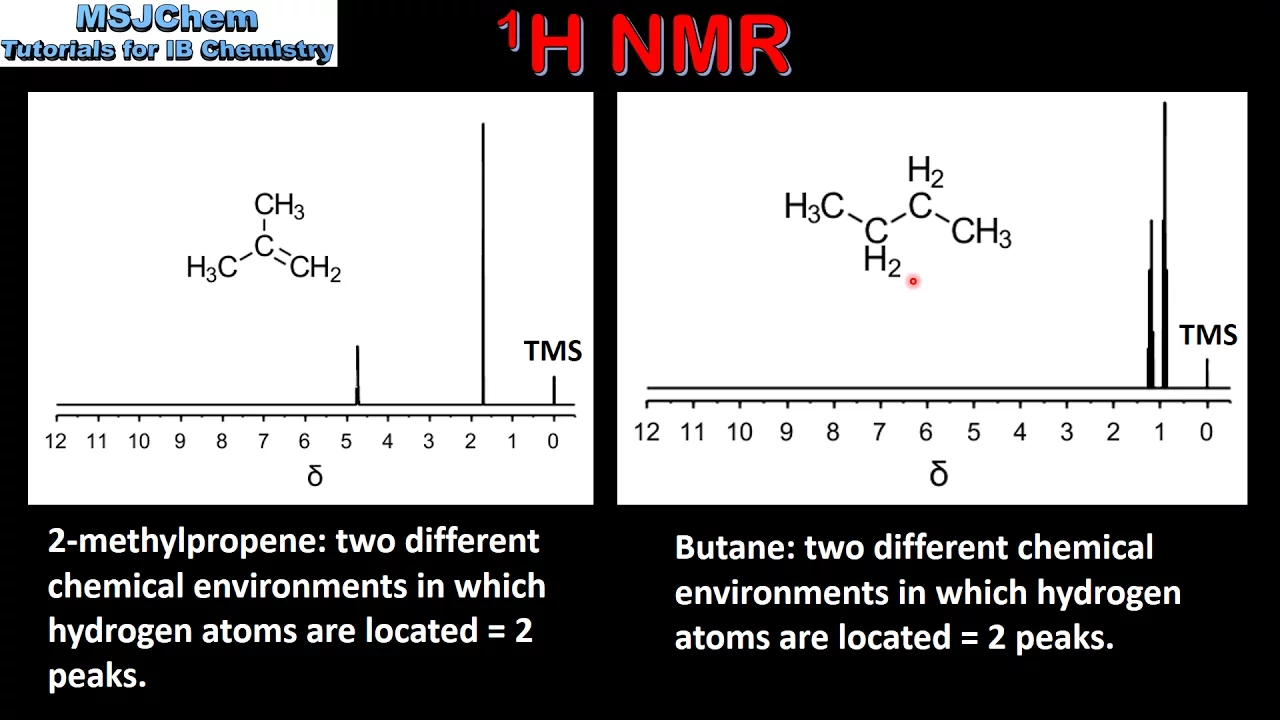
1H NMR: Determining Number of Peaks from Structure
@MSJChem
59.2K views•2017-04-06

17:31
Edible Water Bottles: A DIY Guide to Sodium Alginate Spherification
@ryan
10.5M views•2019-06-21
Related Study Plans & Knowledge Roadmaps
Structured learning paths in Chemistry
chemistry
Nuclear Chemistry: Decay, Meds & Fuel Cycle
01Introduction to Nuclear Structure and Radioactivity
02Decay Dynamics and Kinetics
03Radiation Interaction and Detection
+ 2 more learning modules
24h5 modules
Explore Roadmap
chemistry
Supramolecular Chemistry: Forces & Machines
01Foundations of Chemical Bonding and Intermolecular Forces
02Introduction to Host-Guest Chemistry
03Thermodynamics and Dynamics of Self-Assembly
+ 2 more learning modules
16h5 modules
Explore Roadmap
chemistry
Photochemistry: Excited States & Reactions
01Foundations of Light-Matter Interactions
02Molecular Orbitals and Electronic States
03Photophysical Processes and Jablonski Diagrams
+ 2 more learning modules
18h5 modules
Explore Roadmap
chemistry
Coordination Chemistry: Bonding & Properties
01Introduction to Transition Metals and Ligands
02Crystal Field Theory (CFT) and Geometry
03Magnetic Behavior and Spin States
+ 2 more learning modules
14h5 modules
Explore Roadmap