






















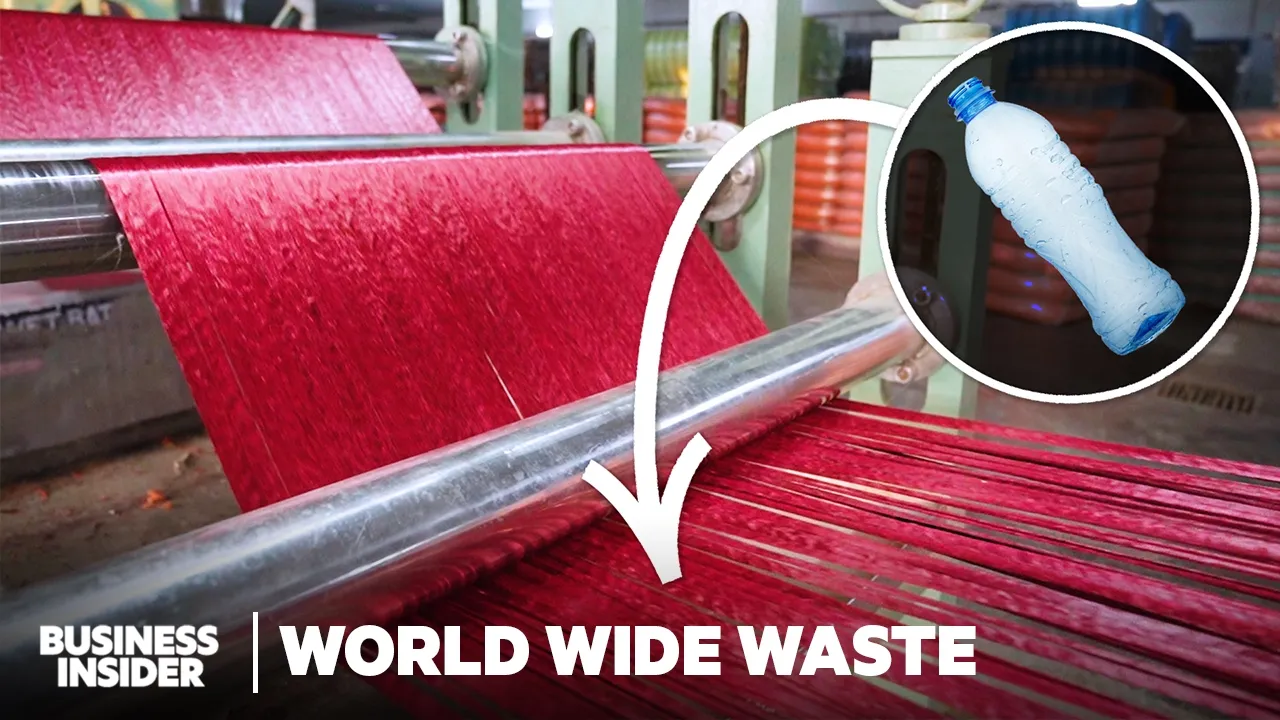




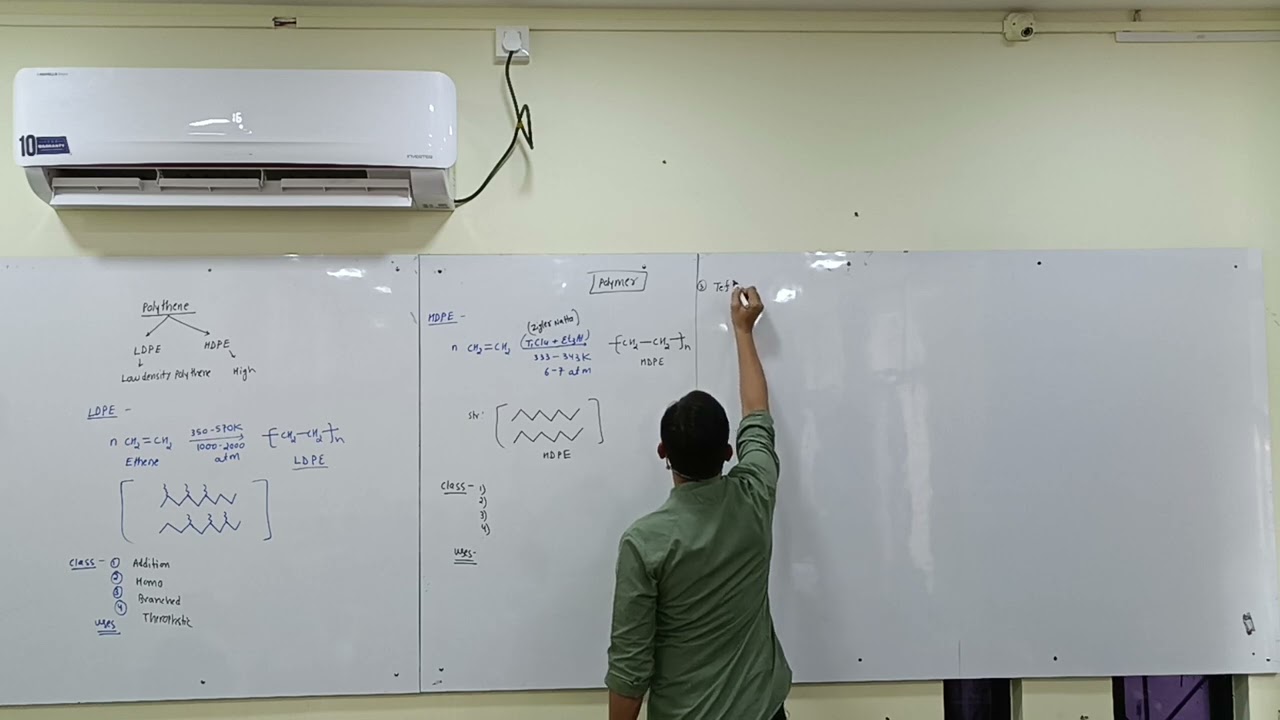


Nylon is the first fully synthetic fiber, meaning it is entirely man-made from non-natural substances rather than derived from natural polymers like rayon; it is prepared through polymerization of adipic acid and hexamethylene diamine (Nylon 66) at moderate temperature and pressure, releasing water molecules in the process, and possesses exceptional strength, elasticity, and light weight, making it suitable for applications such as ropes, parachutes, tents, and clothing.
Nylon: Properties, Preparation & Uses | Class 8 Chemistry
Added:Understanding the basic classification of fibers into natural (such as cotton, wool, and silk) and synthetic (man-made) types.
The foundational concept of polymers and monomers, specifically how small chemical units link to form long molecular chains.
Familiarity with basic physical properties of materials, such as elasticity, tensile strength, and water absorption.
An introductory understanding of chemical synthesis, defining how human-made substances are chemically manufactured from raw materials like coal, water, and air.
Comparing nylon's properties and structures with other synthetic fibers like polyester, acrylic, and rayon.
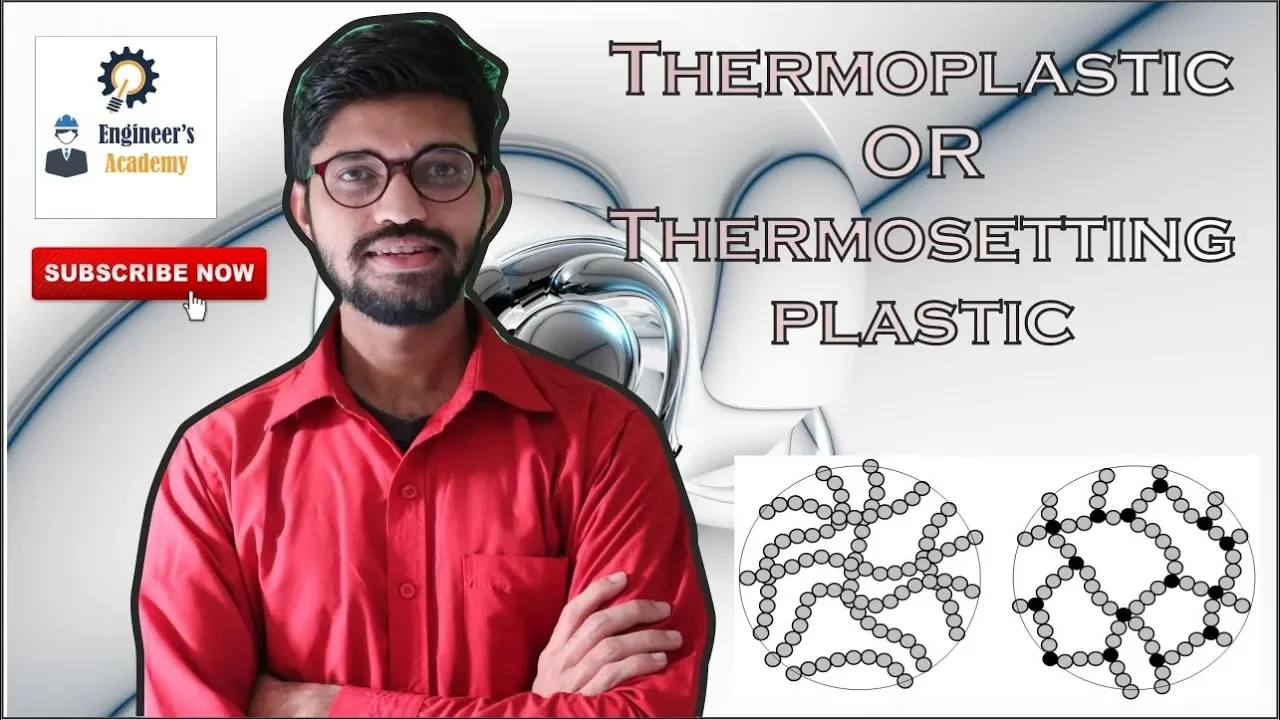
The study of plastics, including the distinction between thermoplastics and thermosetting plastics, and their molecular structures.
The environmental impact of synthetic fibers, focusing on their non-biodegradability, recycling challenges, and the accumulation of microplastics.
The chemical mechanism of condensation polymerization, detailing the reaction between diamines and dicarboxylic acids to form amide links (Nylon 6,6).
26.4K views219likes7:13Original Release: 2015-11-17
Hello friends this video on synthetic fibers and Plastics part five is brought to you by exam.com no more fear from exam so the next synthetic fiber that we will talk about is nylon so nylon is first man made fully synthetic fiber because in case of rayon we saw that it was semi synthetic because it was obtained from a naturally occurring polymer called cellulose from wood pulp of plants but in case of nylon it is fully synthetic that means it is obtained from substances which which are like not they are not natural polymers so everything happens artificially that is why it is a fully synthetic fiber so if you look at uh the structure of nylon they are polymers made up of many monomer units so here you can see the structure of nylon so these are the monomer units in case of nylon these monomer units are either acids or or amines or mixture of diamines and Di acids so that is how the structure or the chemical composition of nylon is so if you look at it structured you can actually see that there are repetitive units as you can see here so these are the repetitive units so you see the same units are getting repeated over and again and they are all connected or how are these units joined together they are joined together by by this Bond so this bond is joining together the units and what I'm sorry and what are these bonds called these bonds are known as the amide bond now I will not get into the details of all these things as you go to your higher classes you will know about different types of bonding you will learn about acids you learn about amines so I will not get into all those details what I'm trying to say is you always have repeated units which are joined together by bonds to form a polymer so this is how the structure of nylon would look like so now let's see how nylon is prepared so nylon is prepared from coal Water and Air so you see here in this case you really do not have a specific polymer from which nylon can be directly prepared so it is just from these raw materials coal Water and Air so with the with the help of these raw materials some acids are prepared some amines are prepared and then they react to form what we call as nylon so nylon do not exist in nature and the first nylon was produced in the year of 1935 so this was the year when the first nylon was produced and the nylon which was produced is called Nylon 66 so nylon is actually prepared in chemical plants from organic materials obtained from coal what are organic materials carbon containing materials coal contains carbon right so so in the process of preparation of nylon what happens is two fairly large molecules are reacted together at moderate temperature and pressure so what are those large molecules one is adipic acid and the other one is hexamine diamine now I told right nylon is composed of diamines di acids acids or amines so basically it is composed of acids and amines now here I am talking specifically about the preparation of Nylon 66 so for preparation of this particular type of nylon we use adipic acid and we use hexamethylene diamine now you might ask then why do we need coal so if we directly want to use these acids and amines but from where do we get these acids and amines so we actually get these from coal so this hexamethylene damine is actually derived from coal now we are not getting into those complex chemical reactions here but you should just know that this is what we actually get from coal and this is how the chemical structure looks like now when these two are allowed to react with each other at moderate temperature and pressure what happens is they both of them react with each other and in the process they release water molecule and what we get is a polymer and what we get is a polymer that is Nylon 66 and this in this process water is released so this process where polymer formation takes place is known as polymerization so this is how nylon is prepared so this is just example of one specific type of nylon which gets prepared but from this you can see that it is a pure synthetic fiber because you it is nowhere related to the naturally existing uh fibers the polymer here is actually prepared by a man process or an artificial process so let us look at the advantages of nylon the most important Advantage is that it is very strong when I say strong it is extremely strong so you can actually compare a nylon rope with that of an iron or a steel uh Rod so it is that strong it strength is so much and it is it has got some elasticity in it so because of this it is used to make ropes and these ropes are strong enough that people can use them for rock climbing so you can imagine how strong the ropes are so they just with the help of those ropes they climb huge mountains so the ropes are able to uh take the weight of persons not only one person sometimes multiple people also use the same rope for climbing so the RO rope they really have good strength it is also at the same time it is not very heavy it is strong but it is not heavy now since it is light in weight so it is more convenient to carry it from one place to another it is easy to wash so nylon is also used for making socks and some clothes also so that ways also it is easy to maintain clothes ropes tents belts bags parachutes that is the most wonderful example that n i mean this tells you the strength of nylon it is also used to make parachutes so you see these ropes and parachutes they are made up of nylon so the skiing which you use there also you often see nylon being used the nylon Rod is also used for drying clothes so there are a couple of advantages associated with nylon and the most beautiful character or property of nylon is that it is very strong elastic at the same time light and weight thank you please visit www..
exam.com to watch more educational videos with a better experience please do not forget to like And subscribe to our YouTube channel for latest updates thank you once again
Up Next
18:25
Isomerism in Coordination Compounds Explained | Types of Isomerism
@NAJAMACADEMY
289K views•2024-09-23
83:56
Biocatalysis and Catalysis in Islatravir Synthesis | Merck Webinar
@SCIwheresciencemeetsbusiness
675 views•2020-10-08

8:08
Structure of Atom: Continuous, Emission & Absorption Spectrum | CBSE Class 11 Chemistry
@LearnoHubClass1112
75K views•2012-12-02

17:31
Edible Water Bottles: A DIY Guide to Sodium Alginate Spherification
@ryan
10.5M views•2019-06-21
Related Study Plans & Knowledge Roadmaps
Structured learning paths in Chemistry
chemistry
Nuclear Chemistry: Decay, Meds & Fuel Cycle
01Introduction to Nuclear Structure and Radioactivity
02Decay Dynamics and Kinetics
03Radiation Interaction and Detection
+ 2 more learning modules
24h5 modules
Explore Roadmap
chemistry
Supramolecular Chemistry: Forces & Machines
01Foundations of Chemical Bonding and Intermolecular Forces
02Introduction to Host-Guest Chemistry
03Thermodynamics and Dynamics of Self-Assembly
+ 2 more learning modules
16h5 modules
Explore Roadmap
chemistry
Photochemistry: Excited States & Reactions
01Foundations of Light-Matter Interactions
02Molecular Orbitals and Electronic States
03Photophysical Processes and Jablonski Diagrams
+ 2 more learning modules
18h5 modules
Explore Roadmap
chemistry
Coordination Chemistry: Bonding & Properties
01Introduction to Transition Metals and Ligands
02Crystal Field Theory (CFT) and Geometry
03Magnetic Behavior and Spin States
+ 2 more learning modules
14h5 modules
Explore Roadmap