










![SLST Physical Science [CHEMISTRY] Class | IX-X Question-Answer Session](https://i.ytimg.com/vi/gRZxt5SI1hw/maxresdefault.jpg)








Continuous spectrum is produced when white light passes through a prism, showing all wavelengths as a smooth band of colors; emission spectrum occurs when excited atoms release energy as discrete lines when electrons fall back to lower energy levels; absorption spectrum appears as dark lines on a continuous background when cold gas absorbs specific wavelengths from passing light, and these line spectra serve as unique fingerprints for identifying elements, as demonstrated by Robert Bunsen who discovered several elements including rubidium, cesium, and gallium using spectroscopic methods.
Structure of Atom: Continuous, Emission & Absorption Spectrum | CBSE Class 11 Chemistry
Added:Basic wave properties of electromagnetic radiation, including wavelength, frequency, and the relationship c = λν.
Planck's Quantum Theory and the concept of energy quantization, specifically the photon concept (E = hν).
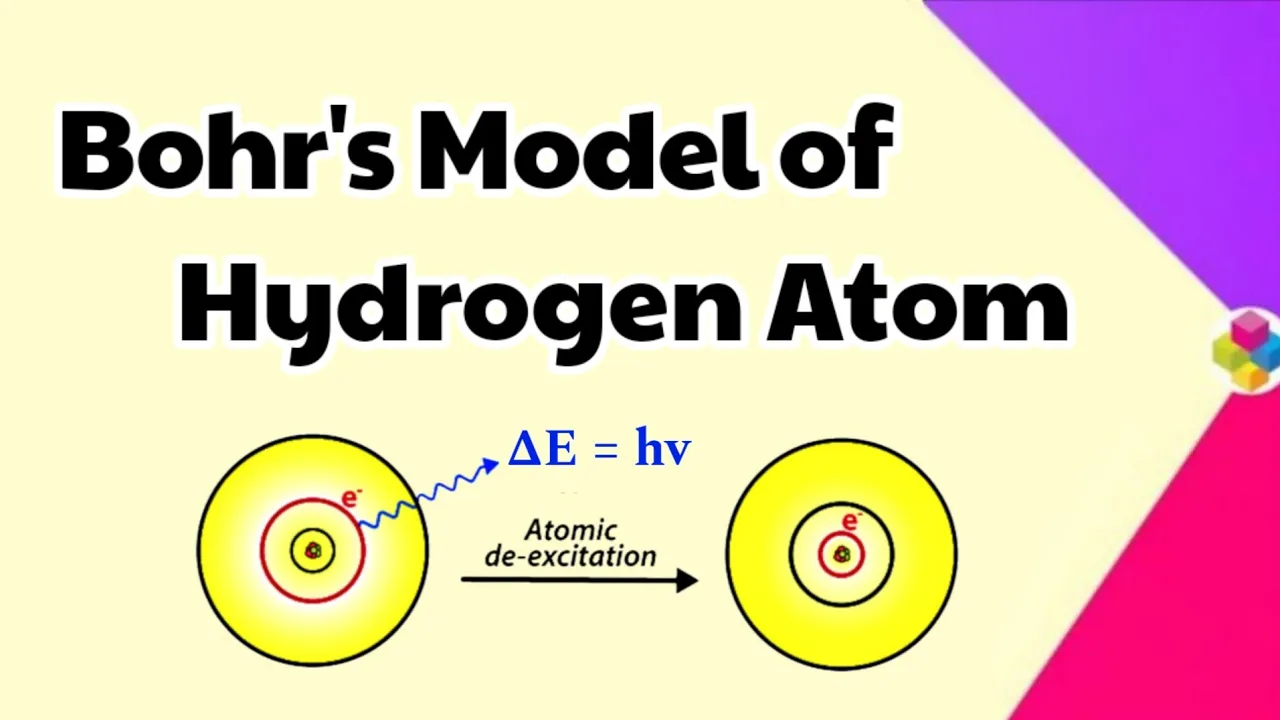
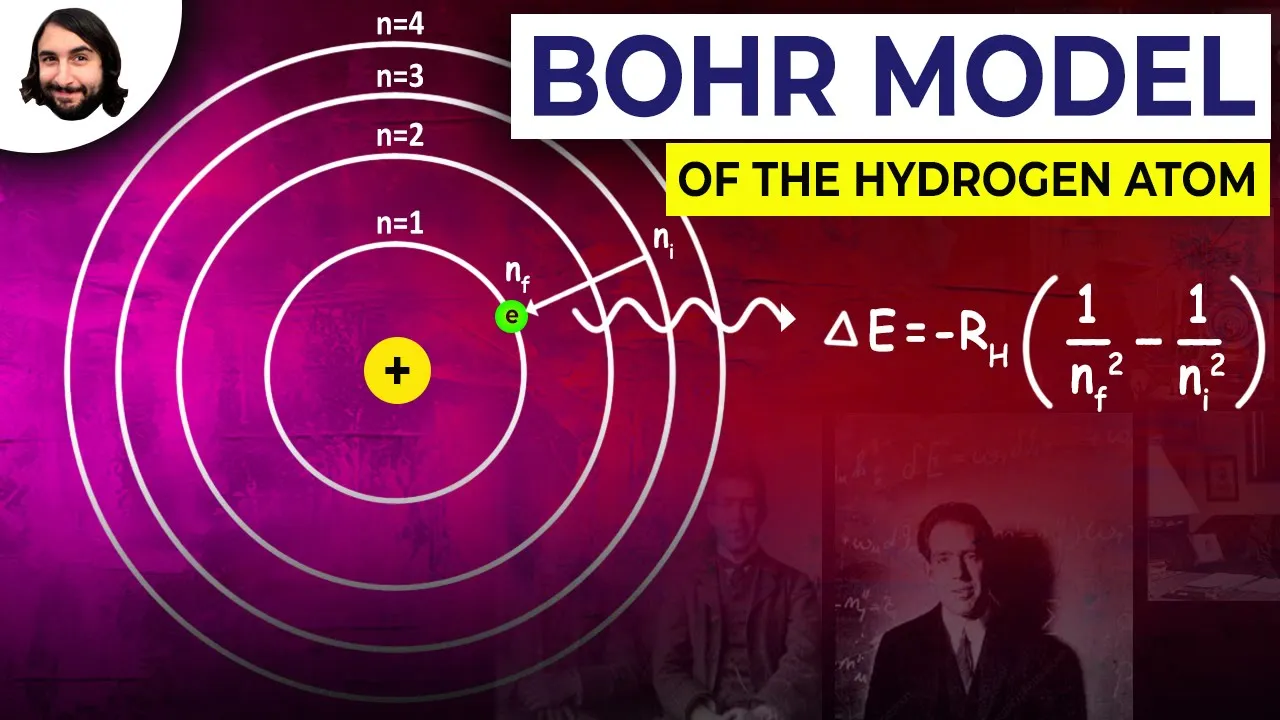
Bohr's model of the hydrogen atom, particularly the concepts of discrete energy levels, ground state, and excited states of electrons.
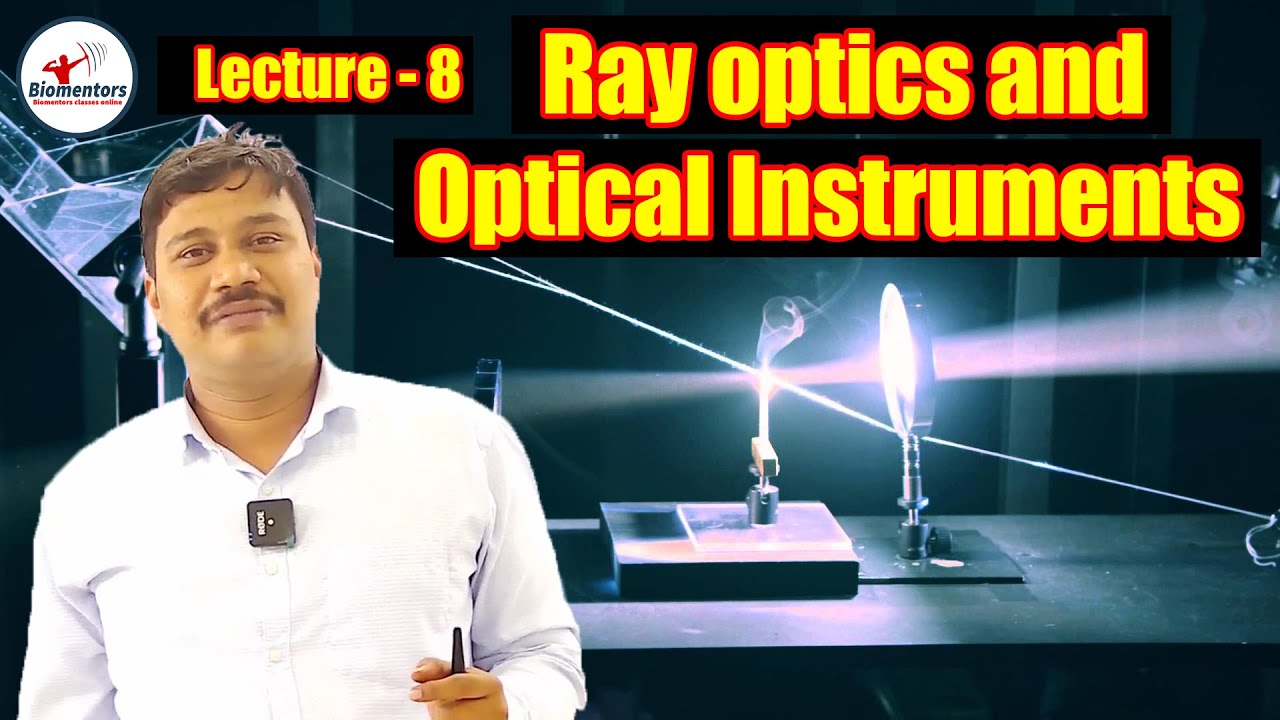
The phenomenon of dispersion of light, where white light splits into its constituent colors when passed through a prism.
Mathematical analysis of spectral lines using the Rydberg formula to calculate wavelengths of the hydrogen emission series (Lyman, Balmer, Paschen, etc.).
Limitations of Bohr's atomic model, including its inability to explain the spectra of multi-electron atoms and the splitting of spectral lines in magnetic/electric fields (Zeeman and Stark effects).
The transition to modern quantum mechanics, including de Broglie's wave-particle duality of matter and Heisenberg's Uncertainty Principle.
Real-world applications of spectroscopy, such as determining the chemical composition of distant stars (astronomical spectroscopy) and analytical chemical identification.
75K views233likes8:08Original Release: 2012-12-02
Hello friends, this video on structure of atom part 20 is brought to you by exam fear.com. No more fear from exam.
Before watching this video, please make sure that you have watched part one to part 19. If you see the continuous spectra, the white light is contin. If you if you pass this to a prism, you see a webjaw thing. It's all continuous, right? It's all continuous. That is nothing but a continuous spectra. But in in the the spectra which we get when we excite a hydrogen atom or any other atom that is not continuous that's because inside the atom inside the atom my energy is quantized I have this energy E1 E2 and E3 and I have only certain delta A is possible correct but when you see the white light it's a I mean it's a continuous spectrum correct and the reason why we use prism is there's a white light And the velocity of light is different in different medium and it's bend the split bends light differently all the lights and you get this different colors right because if you see the speed of light depends on the nature of medium it passes as a result light is deviated or refracted from the original path where it pass through the light of red color which has the longest wavelength is deviated the least and the light of violet which is the one which is deviated the maximum and does the use of prism actually. So we talk about emission spectrum emission spectrum of a radiation. So the spectrum of radiation emitted by substance that absorbs energy is called emission spectrum. I'll tell you example this is my uh electron. I'm just following the bore model to make because bore model is more visual. we can understand things but at the same time B model is not correct.
So if you see in this case if my electron is here and it absorbs some energy the moment it absorb energy it will jump to a higher orbital correct and then when it jumps to a higher orbital it absorbs some energy but as soon as you remove that extra energy it again jumps back and it emits light emits photon.
See the electron was happily sitting here. I'll show you. There's electron and this guy was happily sitting in this level. You gave some energy it went here. But the moment you lose energy this guy electron will all want to come back to its low energy state and while coming back it will emit photon and that photon is a emission phot it will emit. So here same thing you have this uh uh any you take any element you heat it and then if you see it it absorbs energy and then you the electron comes back to its own state and while coming back it emits the photon and you get this kind of spectra you to pass it through prism so that you can see it actually and you'll see something like this correct so Emission spectrum you first excite an element or electron comes back it emits a light. Absorption spectrum is just favors of emission spectrum. It is like a photographic negative of emission spectrum. So in this case we just pass a continuous I'll show you. So we just pass a continuous radiation. Okay. We just pass all this radiation. This this has all the lights, white light you can say. And there's a metal which absorbs something. For example, some of them are missing. Why?
Because some of them is absorbed by this this this has a molecules, right? This atom. So this atom will take some absorb some energy to go to this state, right? Higher state. It'll absorb some energy. So whatever you get here output this will have some missing spectrum right or missing photons. Why? Because it has everything you pass it through cold or some gas. So this guy has atoms inside this and here this energy is used by this atom to excite but only some kind of energy is used. So some of the energy is used. So some of the web length is used and then you pass it through the spring. You feel that some of them is missing. This is all missing. Why it is missing? This is missing because that is used by the cold gas and the one which is there is something which is not used. Okay. So let's see the overview of continuous emission absorption spectrum. So you have any white light you just pass it through prism you'll see a continuous spectrum everything is continuous. You have some hot gas right that will cool down actually and it'll emit. In this case, what will happen is the electron will jump from higher to lower and it'll emit light and that photon will when you pass through prism you get the emission spectrum and this case when you have the light when you pass through cold gas some of them is absorbed and what you get is absorption spectrum. So if you see in this absorption spectrum only few of the energy is missing few of the we is missing apart from that you get everything. These are three different kind of spectrum we have continuous you just take a light pass it to present you get continuous. You have a hard gas where if you see the electron is trying to all the electrons are excited now but it is going back to its low energy state and it is emitting photons and that you can see is the emission spectrum and here you have uh you you pass all this light white light cold gas will absorb some to become hot to become hot. So in this case if you see it's other way around in this last case. So here the energy is used by this electron to get go to higher state.
So this energy is missing here and there we is missing here. So that's how we get absorption spectra. Line spectra can also be used to identify elements as a very big field. Actually each element has a unique spectrum because each element has a unique quantized energy level. Right?
So for example, fingerprint is used to identify humans. Similarly, the line spectra can also be used to identify elements. And this guy, a German chemist, Robert Bunson, he was the first investigator to use line spectra to identify elements. It was surprised that rubidium, cesium, thalium, and gallium, helium, scanium these were discovered by SK spectroscopic method only. It was so powerful that they were elements which was very difficult to differentiate using chemical reactions. So it was differentiated using the spectra. Thank you. Visit examfere.com to watch free educational videos, try free online tests, get the best quality study materials, study from the best tutors and mentors and much more. Thanks once again.
Up Next
21:04
Spectroscopy Explained: Emission & Absorption Spectra
@PhysicsHigh
86.8K views•2019-03-31
83:56
Biocatalysis and Catalysis in Islatravir Synthesis | Merck Webinar
@SCIwheresciencemeetsbusiness
675 views•2020-10-08
7:13
Nylon: Properties, Preparation & Uses | Class 8 Chemistry
@LearnoHubClass1112
26.4K views•2015-11-17

17:31
Edible Water Bottles: A DIY Guide to Sodium Alginate Spherification
@ryan
10.5M views•2019-06-21
Related Study Plans & Knowledge Roadmaps
Structured learning paths in Chemistry
chemistry
Nuclear Chemistry: Decay, Meds & Fuel Cycle
01Introduction to Nuclear Structure and Radioactivity
02Decay Dynamics and Kinetics
03Radiation Interaction and Detection
+ 2 more learning modules
24h5 modules
Explore Roadmap
chemistry
Supramolecular Chemistry: Forces & Machines
01Foundations of Chemical Bonding and Intermolecular Forces
02Introduction to Host-Guest Chemistry
03Thermodynamics and Dynamics of Self-Assembly
+ 2 more learning modules
16h5 modules
Explore Roadmap
chemistry
Photochemistry: Excited States & Reactions
01Foundations of Light-Matter Interactions
02Molecular Orbitals and Electronic States
03Photophysical Processes and Jablonski Diagrams
+ 2 more learning modules
18h5 modules
Explore Roadmap
chemistry
Coordination Chemistry: Bonding & Properties
01Introduction to Transition Metals and Ligands
02Crystal Field Theory (CFT) and Geometry
03Magnetic Behavior and Spin States
+ 2 more learning modules
14h5 modules
Explore Roadmap