













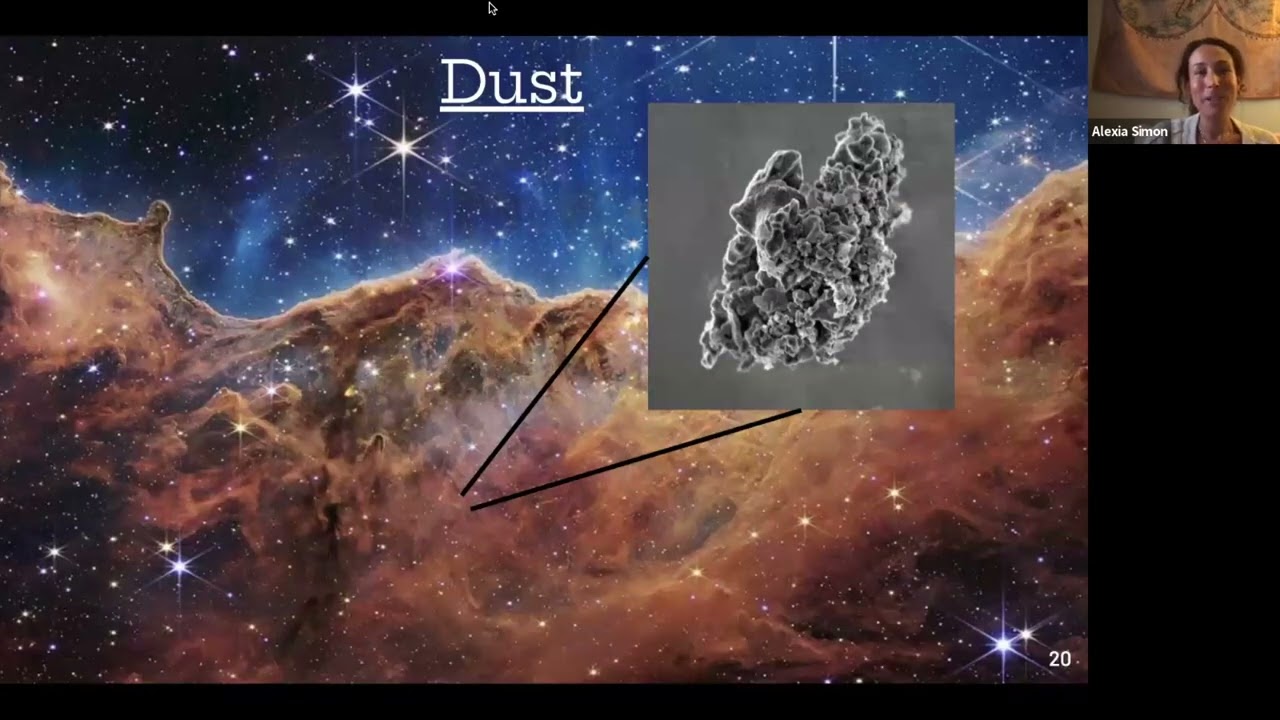
Interstellar dust grains, composed mainly of silicate minerals and carbon particles, are studied using infrared spectroscopy by observing how background starlight is absorbed at specific frequencies by vibrating molecules in the dust; in dense molecular clouds, silicate grains are covered with icy mantles containing water ice (the most abundant ice species), carbon dioxide, and carbon monoxide, while in diffuse regions, only bare silicates and hydrocarbon materials exist, and spectral analysis reveals that hydrocarbons form a separate dust component that doesn't align with magnetic fields like silicates do.
Infrared Spectroscopy of Interstellar Dust | Astronomy Seminar
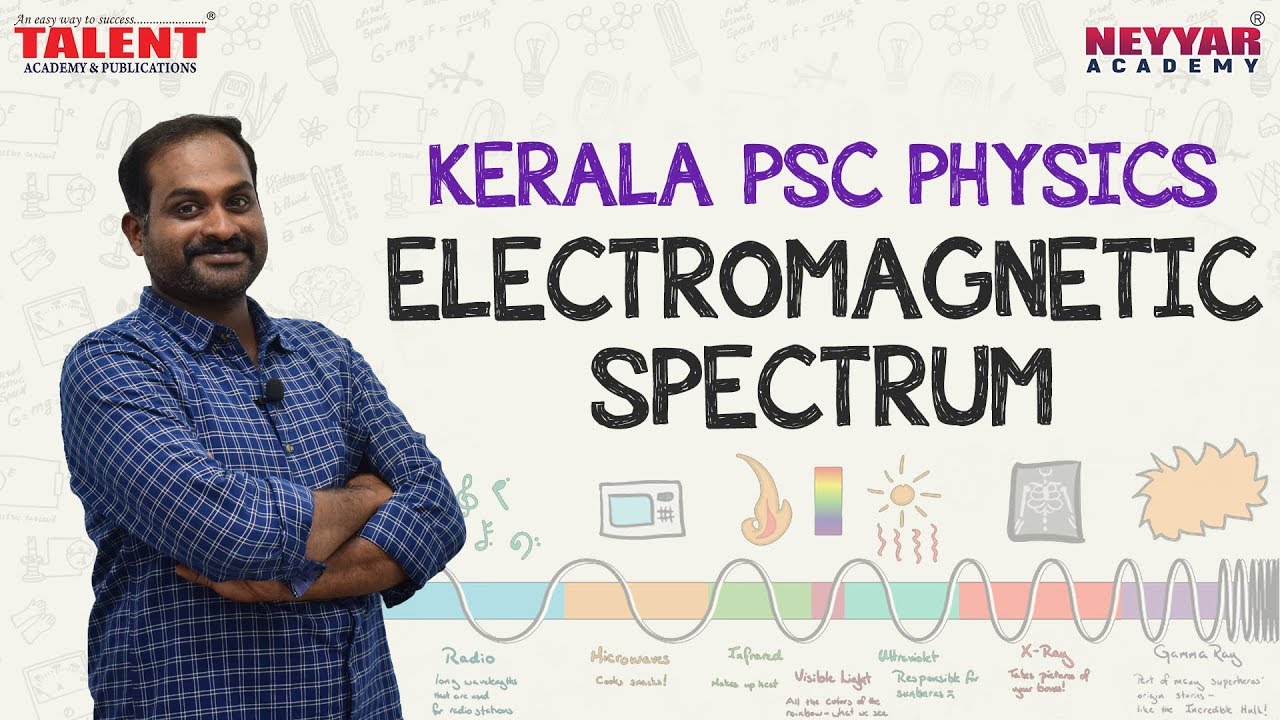
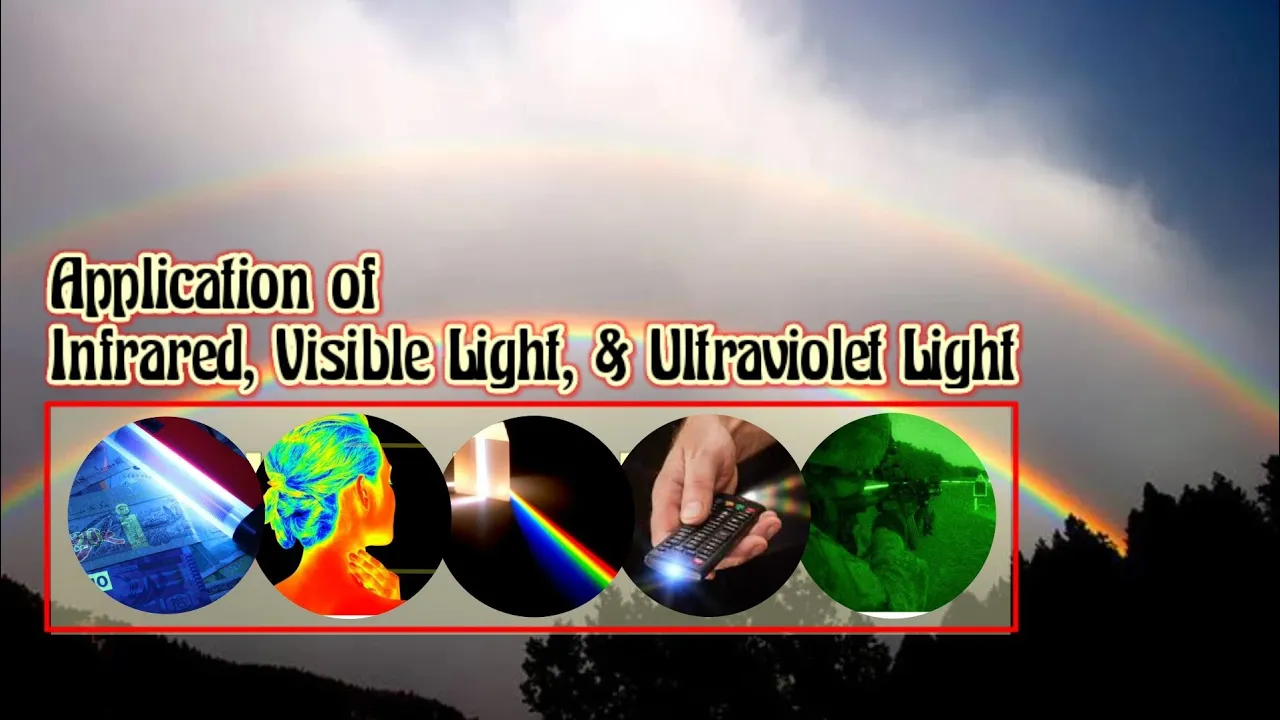
Added:Understanding the Electromagnetic Spectrum, specifically the properties of infrared radiation compared to visible and ultraviolet light.
Fundamental concepts of spectroscopy, including how molecular vibrations and rotations interact with light to produce absorption and emission spectra.
Basic composition and structure of the Interstellar Medium (ISM), including the distinction between interstellar gas and dust grains.
The chemistry of simple molecules and ices (such as water, carbon dioxide, and methane) and how chemical bonds behave at low temperatures.
Astrochemistry and chemical evolution, specifically how complex organic molecules form on the surfaces of icy dust grains in molecular clouds.
The mechanics of star and planet formation, focusing on how dust grains in protoplanetary disks coalesce into planetesimals.
The engineering and observational capabilities of space-based infrared observatories, such as the James Webb Space Telescope (JWST) and Spitzer Space Telescope.
Laboratory astrophysics methodologies used to recreate deep-space temperatures and pressures to obtain reference spectra for astronomical comparison.
3.3K views33likes59:58Original Release: 2014-03-11
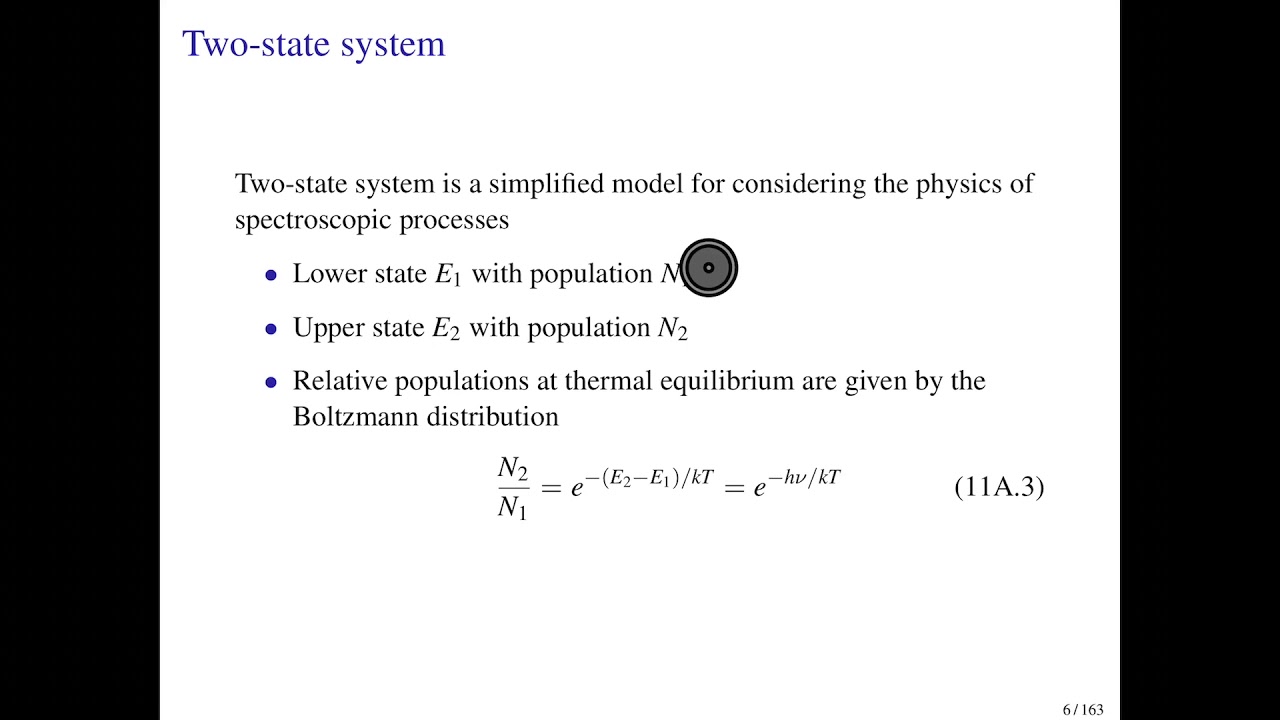
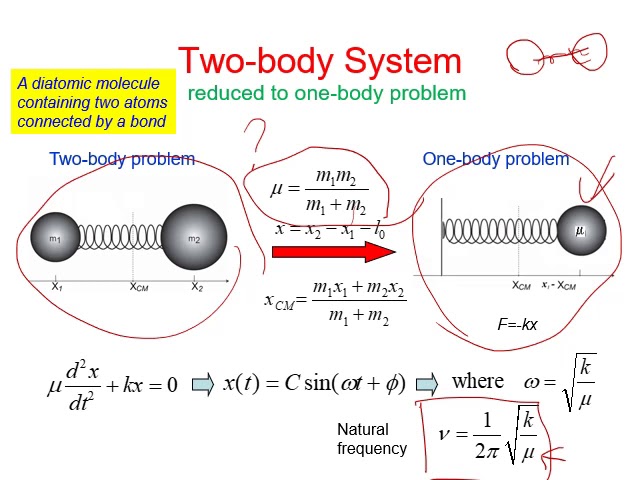
so welcome along ladies and gentlemen to your weekly City seminar Series today we're very lucky to be joined by Gene Chaya who's a pi here at the since uh a research scientist or principal investigator here at the city Institute she uh did her BS in physics with a specialist uh in a minor in Astro astronomy astrophysics at the renssela Polytechnic Institute RPI she also did a masters and PhD at the same Institute under Douglas widget then she went across to the West Coast leaving New York behind and coming to the great weather over here to conduct a NRC National research Council and Nasser Ames postdoc for two years with Yvonne Pendleton over at Nursery and she joined the city Institute in 1999 where she's been a principal investigator since then her career interests have focused around astronomy and astrophysics of star formation and circumstellar discs protoplanetary discs Interstellar dust and using Spectra spectropolarimetry and infrared spectroscopy particularly using the Spitzer Space Telescope to look at Interstellar dust and uh and other objects of Interest she's published on uh ice sparing molecular clouds Quest and molecular clouds and uh circumstellar carbonaceous material around wolf rayette Stars I'm sure we're going to learn exactly uh all the terms behind what I'm saying here um and then she's also published on silicate features in dense Interstellar Cloud so-called pixie dust and she's also looked at composition and distribution a long line of sight along towards the galactic center of dust so I think we're probably going to hear a lot about dust in today's talk so please join me in welcoming Gene [Applause] uh Interstellar dust and space dust so let me first Define what space dust is in the context of this talk so all of the Dust I will be talking about are small sub Micron sized particles outside of our solar system but inside of our own Galaxy similar Studies have also been done in other galaxies but that is not the focus of today's talk before I get into the spectroscopy part of my talk I want to show you a pretty picture so you have in your mind a general idea of the kinds of regions that these studies focus on 3.6 microns 8 microns and 24 microns and those are blue green and red in this particular image this image is from the row ofiyuki star formation region which is in the direction of the opucus constellation in the sky this is about a two degree by two degree image and I want to first point out to you the red stars that are in this image this is the very active star formation region and the red stars that you see here are still enveloped in their natal dust and gas clouds so they appear red in this image the blue stars in the image are stars that are further along in their evolutionary process so they have shed their natal Cloud material and they are now glowing bright blue in this image um this other stuff that you see here that is a glow in the image is the dust and gas that is being illuminated by stars that are within the cloud so what I study are the molecules in the solid state that are in this star formation region and why we see these beautiful colors so the way um or excuse me let me Define the interstellar medium so that region that I just showed you is all the interstellar medium so it's all of the stuff that is between the stars and the interstellar medium is divided into two components one is the gas component and the other is the dust gases most of the mass of the interstellar medium whereas dust is the one percent gaseous molecules are detected through vibrations and rotations and the dust molecules are detected just through their vibrational modes I've shown two example stretching or two vibrational modes in these little cartoons here one is the stretching vibration this is the strongest vibrational mode of any solid state molecule so if we want to figure out if a particular molecule exists in a certain region we will first look at the stretching mode since it is the strongest vibrational mode another kind of vibration is the bending vibration and there are other corresponding vibrational modes as well and ideally we'd like to detect as many modes as possible of a particular molecule because that gives us information about the nearest neighbors um and where the molecule lives on the dust grain okay so while dust only makes up one percent of the mass the effects that it has in the interstellar medium are very important and the chemistry that takes place because of the Dust is also very interesting so early astronomers found dust kind of annoying actually because it blocked the light of the stars that they were interested in studying so this image or these two images are of a Dark Cloud called Barnard 68 named after their discoverer to give you a sense of scale this entire kidney shaped object is about the size of our solar system out to the Oort cloud okay so it's actually small in terms of a size of a molecular cloud it contains about two solar masses and will someday collapse to form one single solar mass star okay so we studied these kinds of regions because we can understand by studying them the kinds of ingredients that went into forming our own solar system so now let me describe the images in particular the left-hand image is a visual image so this dark blob that you see is not empty space of course it's the it's a dust cloud and the Starlight behind the cloud is completely blocked by the dust particles so it appears dark in the image the right hem image is an infrared image and now you can see stars behind the cloud because dust is translucent at infrared wavelengths so these red little dots that you see in the image are not Stars inside of the cloud because remember this Cloud doesn't have any stars yet but it just stars behind the cloud so we call these stars background stars and they are actually in themselves important although they're not related to the cloud because we have to use something to probe along the line of sight and to probe the material and molecules inside of the cloud and so we use these background stars in order to do that yeah okay so now I'm going to get into the the meat of my talk and here is just a brief outline of the kind of things that I will talk to you about I will show you an example of the regions that we study give you an idea of the kinds of facilities that we use to use to make infrared observations and specifically spectroscopic observations and then I will describe to you the kinds of methods that we use and how we extract the information from the Spectra in order to draw conclusions from it okay so this is another example of a star formation region actually it's part of the same Cloud that I showed you earlier but just a different part of it it's called the pipe nebula and you can actually see why it's named that because it's shaped exactly like a pipe at least the dark dense part of it so astronomers like to get clever about names and these seem to get coined for all eternity so the thus environments the cold part is divided into two main categories the dense interstellar medium and the diffuse interstellar medium now both of these categories are really diffuse by Earth standards because they're both basically vacuum but in terms of astronomical standards we refer to diffuse and dense regions so hydrogen is the most abundant molecule of course in space and then there's more diffuse warmer regions most of the hydrogen is in atomic form and densities are around a few times 10 to the 13th the hydrogen atoms per cubic centimeter temperatures by Interstellar standards are warm so around 80 Kelvin that's warm to me probably cold too to you in the denser regions of the cloud so where the dark areas here that that you see the hydrogen is in molecular form and there's very little to or if any hydrogen in atomic form the temperatures are much cooler because here we're more protected from the interstellar radiation field as well as any stars that may be embedded in the cloud and the densities are about an order of magnitude higher than in these diffuse regions so what I'm going to do in my talk is just to describe to you the kinds of dust components that we see in these two different kinds of environments but first before I do that let me tell you a little about a little bit about the kinds of facilities that we use to make the observations now the the infrared is a tricky wavelength region to observe in because Earth's atmosphere of course contains lots of molecules that absorb in the infrared so to do these to study infrared spectroscopy we need to get as high above sea level as possible um so one way to do this is to go to high mountain tops so I've shown you one example here of the NASA's infrared telescope facility which is on Mauna Kea on the big island of Hawaii it's at 14 000 feet uh here we go get above about 90 percent of the water vapor in Earth's atmosphere in addition the site itself is extremely dry so I've been there for example when the humidity level has been about three or four percent so it's enough to make the skin on your face kind of crackle that's how dry it is and you want this because if we want to observe water for example in space we don't want to observe the water Earth's atmosphere at the same time now we can do even better than that by sending a telescope to 40 000 feet and we can do that with NASA's Sophia facility at forty thousand feet we get above about 99 of the water vapor which is really quite excellent so we it opens up a note another window for us in the infrared but still even at these high altitudes there is carbon dioxide and Earth's atmosphere and the only way to get above that is to send a telescope into space so I've just given one example here in this slide of NASA's Spitzer Space Telescope um the one drawback of space infrared facilities is that they need to be cooled with a cryogen and that cryogen of course does not last forever so when the cryogen runs out then the telescope and the instruments can no longer be used for their original purpose because the instruments and Telescope warm up and then they radiate in the infrared which kind of blows it if you want to make astronomical observations right so NASA's specific Space Telescope can no longer take infrared Spectra anymore although one of its cameras is still taking data in a couple of wavelengths okay so those are the kinds of facilities we use now how do we actually make the observations well first we need to find a background star so those are this star is just like the background Stars I showed you a few slides ago that were located behind that b68 cloud ideally we want to know the kind of star that this is so we want to know whether it's a giant and how or a different kind of star or how hot it is and what's in its own Photosphere because we need to correct for all that stuff before we can understand what's in the dust that that star is probing so in general we get observations of the kind of star that it is first so we can compare it to the observations that we get looking through the cloud okay so the star itself has a spectrum that looks kind of like a black body curve in a perfect world you know with this curve would be featureless but of course it's not in real life but for for a minute just imagine that it is so it's a featureless black body curve um that we can then model if we now throw a cloud of dust any kind of dust in front of it instead of getting a smooth black Body featureless Curve we will get an absorption band like the one shown here due to the chemicals that are in that cloud so I've only shown one absorption feature here but of course there's more than one molecule In This Cloud so you would have multiple absorption features and of course in real life they're not well separated and they may be superimposed so it's actually kind of some tricky business but the general idea is that you get dust and molecular absorption features superimposed on the spectrum of the star itself now in the upper right corner of the graph is kind of the next step in the analysis of the spectrum of the star so what we would do once we get The observed Spectrum here is that we model the spectrum of the star we model its black Body Curve and we model its Photosphere and we divide it out we take it away because we don't we care about it but we don't really want to analyze that any further we want to get rid of it because we care about the dust and the molecules that are in the cloud so we divide the model out and we take the natural log of that just mathematically and what we get is the image the spectrum that is shown in the upper right box right here so this spectrum is called an optical depth Spectrum so its scale here is wavelength on the bottom axis and octave on the vertical axis so this spectrum has all effects of the star completely removed from it and what this allows us to do is enter compare Spectra taken from different environments that may have used different stars to do the analysis so now we can compare these the shapes of the curves without having to worry about how the star itself affects the shape so we're just looking at absorption now due to the molecule or molecules that are in the cloud okay so that was of course a fictitious Spectrum in real life the Spectrum would look something more like this um so let me describe the pieces of this so this entire Spectrum goes from about uh two or so microns on the left hand side out to almost 30 microns on the right now there there are almost no telescopes that can take data over that full wavelength region we have to piece together Spectra from different facilities like the ones that I showed you previously so for example the Spectra that are on the left hand part of this slide are from a ground-based facility and these dips are from solid water and solid carbon monoxide that are on the dust grains the Spectrum on the right hand side is from Spitzer okay the broad absorption fear is absorption feature is due to silicate minerals these two little blips are actually not noise but they're due to some other dust components that I won't actually talk about any further today I'll talk about the silicates in a few more minutes this stuff over here is actually noise so it's not due to any absorption due to any molecules or anything like that um so one thing I want to remind you about is what you're looking at now is the tail of the black Body Curve remember it dips down quite a lot notice how the flux is dropping by a factor of 10 from the short end to the long end of the spectrum so as you go to longer wavelengths these sources are getting very faint so the signal to noise from the Spectra decreases a lot so you tend to get noisy Spectra here as well as these observations are just more difficult to make they need sensitive instrumentation and or larger telescopes to do them the pink points magenta points here are Broadband photometric measurements they are very carefully flux calibrated which is important because our Spectra are from two different instruments and they may be offset in flux so we need some way to accurately flux calibrate and piece together a spectral energy distribution so that we can model it so we use these data points to do that the green curve is now the black Body Curve from the background star notice that stars in real life actually have features of their own so on the left hand side of the spectrum are carbon monoxide gas phase carbon monoxide lines that are in the Photosphere of the star and those are actually very well modeled there are computational models as well as many observations of what we call Standard Stars which are stars that don't have junk in front of them so we can divide out the absorption due to the Photosphere as well as the shape of the black Body Curve from our interstellar medium Spectrum that's what that green curve is that you see so we divide that out take the natural log and that gives us our Optical depth Spectrum which is what we can now compare to other similar observations okay so in my next bunch of slides I'm going to talk in more detail about the actual dust components now though I've explained to you how we get the observations um remember that the interior regions of this Cloud are the uh where the dense cloud is so that the pipe is a great region that we've have actually made these observations in on the outskirts of the region north near the edges so where the the dark part kind of boundaries with where you start to see some more stars we don't get ice necessarily in those outer regions we get just bare silicate of grains so these are silicate minerals that are formed in the grains that are part of the grains probably a mixture of different kinds of minerals pyroxenes and olivines and I'll show you some Spectra a little later on in the denser regions of the cloud the temperatures are cooler this region is protected from the UV radiation from stars that may be embedded in the cloud as well as just the general Interstellar radiation field so in those regions we get molecules frozen out onto the dust grains and that's what is shown in here okay so you can think of this as being kind of an m m except in reverse because these molecules the ice molecules are not crunchy coating and they actually will melt in your mouth because they're very volatile right so these ice mantles do not stick around in warmer regions they will get evaporated okay so here's some more examples of dense Cloud Spectra so I want you to first concentrate on this spectrum here the lower one in the upper right hand box again this is just a piece of that whole black Body Curve so it's not the entire curve you're just looking at the Raleigh Jean's tail that kind of dips off you can see absorption due to the water ice molecule an absorption due to these other molecules carbon dioxide and carbon monoxide those three together are the most abundant ice species found in any molecular cloud dense Cloud environment water ice itself is the most abundant ice molecule so if there's going to be ice around a grain mantle it's going to be water ice first and that is because hydrogen is the most abundant element and water ice actually forms very easily on grains so you're never going to see observe carbon dioxide and carbon monoxide without first seeing water ice there now these other two molecules methanol and ammonia they are not as abundant but they are very interesting because if you have these species on the grain mantles and you irradiate these things with ultraviolet radiation or raise the temperature you start to get very interesting biologically important molecules so I ideally we'd like to get as many observations as possible of these kinds of molecules because they lead to more complex species which are relevant to origin of Life type studies okay this top Spectrum here is a spectrum of the same wavelength region from the diffuse interstellar medium remember we can't have ices there because they're volatile and they will evaporate in this kind of environment so this entire piece of the spectrum is flat because we don't have any absorption due to ice we do have absorption due to the silicate grains which you see both the dense clouds and in the diffuse interstellar medium now you see this little box here um the diffuse interstellar medium isn't completely flat but it actually has absorption due to aliphatic or hydrocarbon molecules that are in that environment and I will get to that a little bit later so set that aside that thought aside for now and look at this bottom left hand image so this blue spectrum is again an optimal depth units it is actually a piece of the spectrum that is right here on the shoulder of the ice feature so on the shoulder of this very deep broad Ice band is absorption due to actually hydrocarbons in the ice so CH bonds that are incorporated into the mantles on the ice so it's a very tricky observation because it's this material the absorption is superposed on a much much deeper and broader band so that's why it looks noisy and that's my excuse for those uh the lower signal to noise there um the Red Spectrum is the same wavelength region in the diffuse interstellar medium notice that the features look much different so in one case in the dense clouds we have a very kind of gaussian looking profile shape whereas in the diffuse interstellar medium we have lots of bumps now I'm going to get into more detail about the bumps and what they mean in a few more slides but just keep this visual in mind for now until we get there okay so that leads me to the diffuse interstellar medium so this is basically any dust that is outside of a formal star formation region okay so it is still cold so we're not talking about warm regions really warm regions yeah so around 80 Kelvin but we don't have any ice here all we have are silicate minerals and hydrocarbons in some form okay now there are two basic theories as to the structure or you know the how these hydrocarbons exist in these environments one is that they form coding around the silicate grains and the other is that they are actually a separate separate dust species that's just mixed up with the silicates and so in the rest of my talk I'm going to actually go into a little more detail about those theories and how we can rule out one over the other based on the observations which I haven't shown you yet but I will but before we get to that let's look at the the silicate band and the diffuse interstellar medium okay so this is actually the same spectrum that I showed you earlier so it's very flat over here because there's no ice absorption this is the absorption due to silicates silicate minerals it occurs at about 10 microns it is due to the sio stretch so when silicates were first discovered in the interstellar medium many many decades ago this was the first feature that was discovered and the lab data of Olivine type minerals fit this feature very well so it was originally thought that the in that the silicates in the interstellar medium were Olivine rich or made of these Olivine type of minerals however when we got observations at the longer wavelength so now we have observations that basically fill in the tail of the spectrum that would go out off the side of the graph that gave us this feature here which is the bending mode of the same stuff so the bending mode of the silicates the right hand panel is in optimal depth units rather than brightness or flux but the the left hand excuse me the short wavelength band here is the stretching mode this is the bending mode of the same stuff this green line in both panels is Olivine minerals so this is just stuff that's measured in the lab that is Olivine rich the red line oops is uh the pyroxine minerals if I were to stretch that green line down such that it fit the bottom of this feature what happens is that it overshoots tremendously the 20 Micron band so what we discovered after we had observations of the bending mode is that the Olivine didn't work anymore we had to come up with something else and that is why we actually started mixing these two types of minerals the pyroxenes along with the olivines to try to fit both features simultaneously and not just fit one of them and ignoring the other one so that the two panels on the right hand side are just the same kinds of minerals and using a different um dust model so the top one is uh porous spheres so these are spheres that have holes in them or pockets of vacuum in them and the lower one is a continuous distribution of ellipsoids one isn't necessarily better than the other one they actually both provide a modestly decent fit to both absorption features at the same time but they both reach the same conclusion that it looks like we really need both these types of minerals in order to describe the observations so well who cares what the minerals are in the interstellar medium the reason why we care is because the the minerals come from originally come from the outflows of stars right so these oxygen rich stars are throwing silicates into this interstellar medium but these stars are producing olivines they're not producing pyroxians so that means that there is some Gap in our knowledge of the process that changes the minerals from when they get produced in these outflows of oxygen rich stars to when we see them in the interstellar medium so that is still actually an open question in terms of trying to figure out the mineralogy of the silicate grains and I don't have the answer so I'm going to move on to the hydrocarbon materials um so let me draw your attention here to the wavelength region covered by this graph it's very small we're looking at a very detailed piece of the spectrum only from about 3.1 to 3.7 or so microns so that structure is all fine in terms of broad absorption features in general all of the dips that you see are real they're not noise they are due to the different components of the hydrocarbon material so these dips for example are due to ch3 modes and these are due to ch2 all of these are stretching modes and the relative strengths of those two kinds of bands the ch3s versus the ch2s actually tell you how long the chain of hydrocarbon is so if you look at this structure that I've drawn out over here notice the ch3s are at the end of the chain and the ch2s are in the middle and these bands the relative strength of those actually tells you the ratio of those two things so that tells you how long you can make your chain before you actually start not to be able to describe the features that you observe anymore so we know that the chain is approximately this long given the relative strengths of all those little dips that you see um the other interesting thing about this feature is that it is uniform wherever we see it the features look exactly the same so the relative strengths of those bands don't change and that's true within our own Galaxy and it's true everywhere else has been observed in other galaxies so whatever makes this stuff happens very easily and happens everywhere so it better be a process that we know occurs because otherwise we can't explain our observations anymore the other thing to point out is that how much that feature the whole thing shifts up and down in terms of optical depth tracks with how much dust there is so it's not like we only see it when we have a lot of dust we we always see it it doesn't just occur in clumps it's a kind of an additive process so the more dust we look through the stronger deeper that entire absorption gets okay so we can't just look at this feature in isolation because this is only the stretching mode and not only gives you a piece of the story and this we can do from the ground and we couldn't get the bending modes until we had airborne and space-based observations so this Spectrum here is from the ground it's uh or sorry no it's not it's from the infrared space Observatory it's lower respectful resolution than the one I just showed you because the infrared space Observatory instrument did not have as high spectral resolution as as the instrument where the original Spectrum just came from what it did have was a spectrometer that can observe these longer wavelengths so that gave us observations of the deformation mode of these hydrocarbon molecules so the important thing to get out of this picture and let me also point out that these the light squiggly lines are the observations themselves the important thing to get out is that those longer wavelength bands do not stretch all the way down to the same depth as the 3.4 Micron feature the short wavelength feature they are actually quite weak so what that did was toss out a whole bunch of candidates that were originally thought up to describe the shorter wavelength feature on its own um so that actually throughout the idea of processed ices because if you take ices around a grain and you process them the features that get produced here are way too deep to be described by the observations that we see in addition we could throw out the idea of different chemical subgroups being attached to the hydrocarbons so we don't get OHS dangling or nitrogens embedded or things like that those would also create features that are much deeper than what we see and I'll get this in a little more detail in a minute but we also know from the structure of these absorption features that we must have chains which is what I showed you before as well as Rings or aromatic molecules to describe all of the observations and the the solid line I forgot to describe that is actually an experimental data for a certain kind of hydrocarbon molecule and it's the best fit so far of just making a direct comparison between experimental data and the observations and it's some sort of hydrogenated amorphous carbon type molecule and I will revisit that in a few more slides but what I want to show you especially since Adrian mentioned it is some spectral polarimetry measurements so here we use a polarimeter to measure how much the grains of a certain type are aligned with a magnetic field in the star formation region okay the silicate grains those original ones that I showed you made up of olivines and peroxines line up with the magnetic field lines and we know that because when we observe the polarization over the same wavelength as the absorption band it shows a peak that lines up with the peak of the absorption band okay so this guy on the left here is the silica band that shows that it is indeed polarized okay so the silica grains are aligned with the magnetic field now if the hydrocarbon material is around the silicate grain then those that component too also has to be polarized because if the one thing is polarized and it's and the hydrocarbons are part of it then it has to go together so this right hand image is this similar observation spectral Polar Polar polarimetric observations of the hydrocarbon component this is a tricky observation to make from the ground because in this wavelength region right here there is methane that absorbs an Earth's atmosphere which makes this part of the spectrum very noisy um and it's a little bit cleaner out here so let me describe to you what you're looking at here these data points with the error bars are the data of course it's noisy here the error bars are large it's a little bit cleaner here the straight line is just an approximation of the Continuum it's just a mathematical approximation we haven't modeled the star or anything as complicated as that the red dashed line is the allowable depth or how much polarization we would we can allow given the observations so taking those error bars into account and the data such as they are this is the deepest most pronounced polarization that you can get from those observations so it's basically an interpolation over this over the polarization observation this dotted line it smells good this dotted line is what we expect the polarization to be if the hydrocarbon material is polarized along with the silicates so even given the noise and the observations there is no way that these observational data can describe this kind of polarization okay so this leads us to conclude that the hydrocarbons are not polarized okay because the the observations do not match that expectation at all that prediction at all so the hydrocarbons and the silicates do not live together on the same grain that doesn't make mean they're not mixed up together in the same environment they just don't live on the same Grain Together okay so the original idea that we have silicate grains with ice mantles in the dense clouds which is fine that's all good that when the dense Cloud dissipates all that same material those grains get thrown into the diffuse interstellar medium which is shown by this blob over here um because of those measurements and observations that I just showed you we know that this can't exist because otherwise we would have polarization we'd also see different absorption features at the longer wavelength bands so this picture doesn't work so forget about that what looks like that is really going on is that the hydrocarbon mineral of grains are actually a separate very small grain component that cannot align with the magnetic field so that bright blob over there is supposed to be a star exploding its stuff into the interstellar medium specifically carbon-rich dust and also oxygen-rich dust so the bigger rocks that you see here they're not really rocks remember all of this stuff is stuff is sub Micron sized these are the silicates the bigger ones and the little guys here are the hydrocarbon grains because they're so small they can't align with the magnetic field and they are also a separate component thus components separate from the silicates but mixed with them all right so I want to use a tool that the chemists use in the lab to Define structures of molecules it's called a ternary diagram and I'll give you a little bit of a primer on how to read it oops okay along the bottom axis we measure the sp3 which is uh tetral tetrahedrally bonded carbon this is Diamond okay so on the lower part of this graph we have no diamonds and the upper part of this graph we have diamond-like carbon okay so if I were to plot a point up here that would be basically diamonds or something very similar to Diamonds going from the right hand part of the graph down to the left hand corner are SP2 bonded carbon so this is like aromatic type of material this is most similar to the stuff that comes out of your fireplace or your campfire it's soot softer in texture not as hard as Diamond not nearly as hard as Diamond okay so think of this left hand corner as soot this upper top Apex as diamond and then finally in the lower right hand corner are the hydrogen rich hydrocarbons so as we go from the left down to the right this would be hydrogen-rich material and on the left hand side would be hydrogen poor material so what we want to do with our observations is actually place just one data point on this graph and that will tell us the structure of the hydrocarbon material is it more diamond-like is it very Hardy and hard or is it more like the soot that comes out of your fireplace so these are the Spectra or at least one of them is the spectrum that I showed you previously which is this one on the left the black line the one on the right here is of the aromatic so that those are the ring-like hydrocarbons that form part of the same material these happen in the six Micron region all of the the smooth colored curves that you see are gaussian curves so they're not experimental data directly but what they are are gaussian curves that are constrained by experiments done in the lab of these kinds of materials so these gaussians can't just go willy-nilly when we did the fit they are actually constrained in terms of central wavelength and width okay so we actually just carry out a fit to fit these gaussian curves over these two absorption features and that tells us how much aliphatic or diamond-like material versus how much soot like material is in the stuff that we're observing okay and at the same time we also get the height the hydrogen content so we have the aromatic CH stretch which is the ring likes the aliphatic or chain-like CH stretches and then the aromatic carbon-carbon stretch okay so all of this together like I said allows us to put one data point on that ternary diagram that I showed you previously so basically it puts the data point right here okay so we know that this stuff in the interstellar medium unfortunately is not like diamond so DLC stands for diamond-like carbon so you're not going to find your next beautiful piece of jewelry in the interstellar medium unfortunately you're going to find stuff that's more like the ash in your fireplace okay so this interstellar medium hydrocarbon dust is very like very aromatic in structure with a fairly low hydrogen content okay now this is only one data point but it isn't really because remember I told you that wherever we observe that feature it's the same everywhere so really that one data point is hundreds of data points in the same spot okay so if I did the same thing for another galaxy it puts the point in the same spot so wherever we observe it this stuff is kind of like with low hydrogen content so let me put that in the big picture of what this means in terms of the life of the Dust of this hydrocarbon component where does it come from and where is it going to go from here so this guy here on the left is the soot particle that comes out of carbon Rich Stars so we know from direct observations of the dust from carbon Rich stars that their dust is soot like like the stuff that comes out of your fireplace but small of course submitron sized if we were to look at a microscope at one of those little particles of dust we would see what is shown here which are basically these sheets of graphene so these are like the upper layers of that dust piece of grain dust grain when those dust species or when the dust particles get thrown into the interstellar medium that outer layer this stuff gets bombarded with hydrogen there's tons of hydrogen in these in the interstellar medium so the atomic hydrogen bombards that outer layer and that inputs hydrogen into the layer of uh material just on the top and so now instead of these sheets of graphene we get what's called an amorphous hydrocarbon material hydrogenated amorphous carbon so this is basically what we see so think of the carbon soot particle that's in the center and the outer part of it is this hydrogenated amorphous carbon so you have like the original grain from the star in the center and then the processed layer just on the outer parts of the grain itself that grain will eventually become part of some dense Interstellar cloud and actually will get covered with ice mantles that I talked about previously right so it's a complete picture and it is thought and actually known that the grains cycle back and forth between the environments so this same grain may go back and forth a couple of times between dense clouds and the diffuse interstellar medium so it may acquire some ices and then later on those ices will melt away when the grain gets thrown back into the diffuse interstellar medium and then we can piece together the the rest of the lifetime of this poor grain that will eventually dissipate into regions where it gets bombarded with ultraviolet radiation radiation from stars or just the general Interstellar radiation field and these outer layers of the grain will just get shattered broken apart and we will get free flying Paws in the interstellar medium which are also observed so it's great we've kind of explained a lot of things all at once here and these free-flying Paws actually if they are bombarded with ultraviolet radiation will have individual carbon atoms removed and when when that happens that sheet that you see pictured there will start to wrap around itself and that's how you get Bucky Balls or at least that's one of the ways that you get Bucky Balls and these are also now observed in a few areas of interstellar space furthermore this new ultraviolet radiation can create instead of cool Bucky Balls you'll just get smaller hydrocarbon type molecules and this process can kind of be reversible until the grain completely dies and that's kind of the end of its life right there um in addition the since the process is reversible this stuff the free flying pods can actually cluster back again to form that same stuff that we that I showed you the observations of a few slides ago so we seem to now be able to put together an entire picture of the whole life story of the hydrocarbon grain from its formation sites and the carbon Rich stars to where we see these hydrocarbon molecules in interstellar space in the different environments and I will leave you just with the summary slide which just gives you an overview of all the different components I talked about and I think now is a probably a good time for questions [Applause] Gene if I could just start off with the first question um so you started off with the star forming region uh and the dense clouds how how common is it to find dense clouds associated with Star formation regions and do you see any spectral differences between dance clubs that don't have star forming regions next to them and ones that do yes um so like the this that b68 cloud that I showed you yeah a long time a long time ago a little while ago um is a region that has not yet condensed down into it to form a star so that is like the most pristine kind of dense Cloud environment that we are able to study so when we study this kind of environment we know that whatever is there has not yet undergone any density enhancements any temperature increase due to you know shrinking down of the of the material to form a star formation region so this this is like the starting place the other environments that I showed you where there's Active Star formation the temperatures are higher turbulence is a little bit different you have more embedded stars that will affect the environment so yeah we try to get observations of all the different stages because we do see differences in the chemistry that goes on there and the silicate features as well the silica features um so far wherever we look at them in just the in any dense Cloud they are the same as any other dense cloud if we look at the silicates around an embedded star so like a protostar or a young Stellar object those sometimes we see silicates that are crystalline rather than amorphous so the feature looks sharp due to the crystalline structure and then in the diffuse interstellar medium we still have amorphous silicates but the ratio of the type of mineral is different than in the dense clouds so we do see some fine differences there um this is a facility question okay um how often are you using Sophia and um what have information have you gotten from it um well we we did get some time awarded in cycle one unfortunately we got only a fraction of the observations that we had originally been granted time for and they are not yet calibrated so the instrument scientists are working on the data now and one of our other programs actually did not get observed at all because of problems with the instruments and I don't know what the future holds I don't think anybody knows right now yeah which is a shame because now we're basically limited to ground-based observations and we can only see very small portions of the infrared Spectrum from here the next space-based infrared mission is the James Webb Space Telescope at that several years in the future when Spitzer goes behind the sun is it still going to be operating or or was it operating when it went behind and yes it is still operating okay but it hasn't gone behind the sun yet so it's in an earth trailing orbit so what do you mean by well it's going farther and farther away from the earth and eventually right on the opposite side right eventually well eventually we'll lose contact with it I'm not sure how many years are it gets obscured by the sign I think yeah I'm not sure how many years off that is okay but but it's still operating now it is still operating just in two wavelengths uh and one of the three instruments but no spectroscopy is not able to do spectroscopy anymore I have a question about the state of hydrogen in the two clouds is the difference in the states do just to the density and temperature differences or are there other factors involved there's H2 versus H right I think it's mainly the density difference so at increased densities the hydrogen will interact with other hydrogens and form molecular hydrogen very easily yes and no um in the in regions where there is dust actually that helps the formation of molecular hydrogen and it seems that we actually need dust grains in order to even explain the formation of molecular hydrogen because it doesn't do it so well just on its own and he's a third body right um maybe I missed it but did you explain why water is missing from the interstellar medium did I say that well the oh in the den in the diffuse diffuse interstellar medium you mentioned that there's no water detected or ice no water ice no water ice water ice right there is gaseous water but it's not cold enough or dense enough for water ice itself to survive or form coincidence well yeah right probably not dense enough right right yes for the at the beginning of the story of dust particles that you talked about at the end where the the suit that comes out of stars how does it how do those atoms get together instead of just carbon finding nearby hydrogen because it's more abundant how do you get the those initial suit particles from Stars so they're they're formed in the outflows of the Stars themselves which are carbon Rich so most of that processes takes takes place in the outflow I mean what exactly goes on there I have I don't know um but it but the gas that gets thrown out from those Stars helps in the processing that forms that soot and it's not just carbon there there's hydrogen in there as well hydrogen reacts with the carbon with the pass what is the energy because you need a lot of energy in order to break up aromatic carbs and hydrogenated what are the velocities what are the impact energies oh so I think you maybe need fast shocks I'm trying to remember the numbers now but like 50 kilometers per second to 100 kilometers per second to break up that stuff um some of it gets broken up very easily in just slow shocks some of it you needed more you need higher speeds yeah energy is I don't know off the top of my head I have to look up the numbers do you ever see any uh absorption features from the pah particles you mentioned uh what could be an easier way to do this right here we go um so this guy on the right hand side is the aromatic carbon-carbon stretch due to polycyclic aromatic hydrocarbon type of bonds so this is not a free-flying paw but it is a an aromatic stretch whether there are free flying Paws in the interstellar medium that absorb that's a different question which I haven't addressed here we are actually looking at the dense Cloud Specter to see if we can pull out absorption that might be due to pause in the ices but these absorption bands are weak and they of course are superimposed on absorptions that are much stronger so it's a very difficult kind of analysis to do well yeah the emission's hard enough but at least it's not the the emission from the pause isn't superposed on a mission from other stuff it's just super pose on a mission from pause and more pause right but for the absorption it's trickier because you have these broad ice bands that make it difficult to pick out narrow absorption due to the aromatics but we are actually working on that do do we know the composition of the cloud that's uh approaching the black hole at the galactic center have there been studies of the composition of that cloud that's supposed to start getting eaten fairly soon oh no I did some observations some years ago on the molecular cloud material just along the line of sight between us and the galactic center and it it didn't appear to be different than anything else the tricky thing about observing toward the galactic center is there's so much going on there and all of this stuff is moving that you get a lot of effects that are kind of added up along the line of sight um but I don't know in particular about that cloud that you just talked about I just know in general that along the line of sight we don't see major differences or any differences in the ices or the hydrocarbon materials in fact the hydrocarbon bans the sky here was first observed toward the galactic center because there's so much dust between us and them that it was a great line of sight to make the first observations um yeah I think that probably you'll only see that cloud in radio according to us Center black hole but uh I was just wondering in the for the Spectra shapes is it all due to the inherent vibration modes yes nothing nothing temperature or velocity uh well so velocity no because these bands are very Broad temperature yes so for the ices which I didn't really talk about in detail we do see variations in the band especially for the more volatile species like carbon monoxide and carbon dioxide that the profile shapes change depending on the temperature of the ice and actually we can get a lot of information about the temperature of the Eyes by studying those particular bands so yeah it does make a difference hi so I have kind of a wacky question oh um yeah I know uh so as a gedonkan experiment um say you took one of those um dents interstellar clouds that doesn't have star formation in it right so you've got you know a typical one and you take our like a neptune-sized rogue Planet you slam it into this Cloud um would there would there be any interaction that would create unusual molecules that you could use to perhaps detect the presence of a planet [Music] um like a methane ammonia atmosphere would that interact with this dense interstellar medium in any detectable way or would be so tiny amount that you would never notice well let's see so if you let's say you threw a Neptune planet or any planet with an atmosphere in there I think the first thing that would happen is the gases would interact and you'd probably you'd get an increase in temperature then yeah you'd have a density increase due to the shock so I would expect you'd get some interesting chemistry now how you would observe it and differentiate it from the chemistry that was there before you would need some before and after or during observations to try to you know pick apart what's going on specifically at that moment during the Smackdown this gives me the opportunity to mention that you should ask this question to the speaker in two weeks time Dave Stevenson has published um some ideas on extra solar planets that might be Interstellar planets that won't travel between the stars and interact and the way you're describing it must happen right we've just got to work out how to observe it okay last question well now that you've found okay now that you've found these molecules there's going beyond the molecules do these are they sticky enough to come together and form larger bodies and do we have an understanding of that process operates we are actually trying to figure that out what we're trying to do is actually build our observational database so they'll look in these environments where we expect them to Cluster together and to see if we can actually interpret the observations in terms of molecules or green components that are clustered so that that could possibly go on and we are looking into that with further observations and modeling specifically no not yet but it is it is actually the proposal that I'm writing right now has to do with that so so we're getting there yeah and the proposal is due on Friday yeah so without further Ado I know that you have to get back to the proposal writing business but I have to give you this um I've wiped it clean of any and Stellar dust that I have some micro anxiety you might not right right please join me in thanking Gene for a great time thank you
Up Next

4:44
Composition & Framing in Cinematography: A Masterclass with John de Borman
@CookeOptics
116.1K views•2015-11-18

12:54
Triumph of Orthodoxy Icon: Byzantine Art & History Explained
@BenCallan
2.1K views•2024-08-06

9:49
FastAPI vs Flask vs Django: Choosing the Right Python Web Framework
@TechWithTim
302.5K views•2024-05-26

1:42
Game of Thrones Opening Credits: A Cinematic Analysis
@gameofthrones
46.3M views•2011-04-18
Related Study Plans & Knowledge Roadmaps
Structured learning paths in General & Interdisciplinary Studies
general-studies
Elevator Engineering: History, Physics & Cities
01From Hoists to Safety Brakes: The Dawn of Vertical Lift
02Hydraulic vs. Traction: The Engineering Physics of Elevators
03Modern Speed, Safety, and Algorithms
+ 2 more learning modules
12h5 modules
Explore Roadmap
general-studies
Rubber: Material Science, History & Geopolitics
01Origins of Natural Rubber & Mesoamerican History
02The Chemistry of Natural Rubber & Vulcanization
03The Geopolitics of the Rubber Boom & Colonization
+ 2 more learning modules
12h5 modules
Explore Roadmap
general-studies
Containerization: Evolution, Logistics & Trade
01Ancient Trade & Bulk Cargo: Amphorae to Barrels
02The Industrial Revolution & Cardboard Packaging
03The Containerization Revolution: Malcom McLean
+ 2 more learning modules
12h5 modules
Explore Roadmap
general-studies
Textile Tech: Evolution, Labor & Global Impact
01Pre-Industrial Textiles: Handloom & Cottage Industry
02Mechanization: The Spinning Jenny to the Power Loom
03The Factory System & Global Labor Transformation
+ 2 more learning modules
10h5 modules
Explore Roadmap