Cosmic Distance Ladder: Parallax to Supernovae
Learning Goal: Mastering the calibration and application of the Cosmic Distance Ladder, from parallax and Cepheid variables to Type Ia supernovae, to determine the expansion rate of the universe.
- Prerequisites: High school physics (wave properties, basic algebra, mechanics) and basic trigonometry.
- Estimated Total Study Time: 12 Hours
Module 1: Cosmological Foundations: Light, Redshift, and the Scale of Space
To construct the Cosmic Distance Ladder, we must first understand the primary medium through which we study the universe: light. This module covers the physics of light propagation, the Inverse Square Law of luminosity, and how motion impacts light wavelengths via the Doppler effect and cosmological redshift.
Recommended Videos

Why this video is valuable: This tutorial provides a comprehensive physical walkthrough of redshift. It demonstrates how light waves stretch as an emitter moves away from an observer, establishing the mathematical foundations of cosmological redshift () and distinguishing it from local Doppler shifts.

Why this video is valuable: Understanding distance measurements in space relies heavily on the behavior of light as it propagates. This podcast segment explains the Inverse Square Law (), detailing how photon density dilutes across three-dimensional space as distance squared increases.
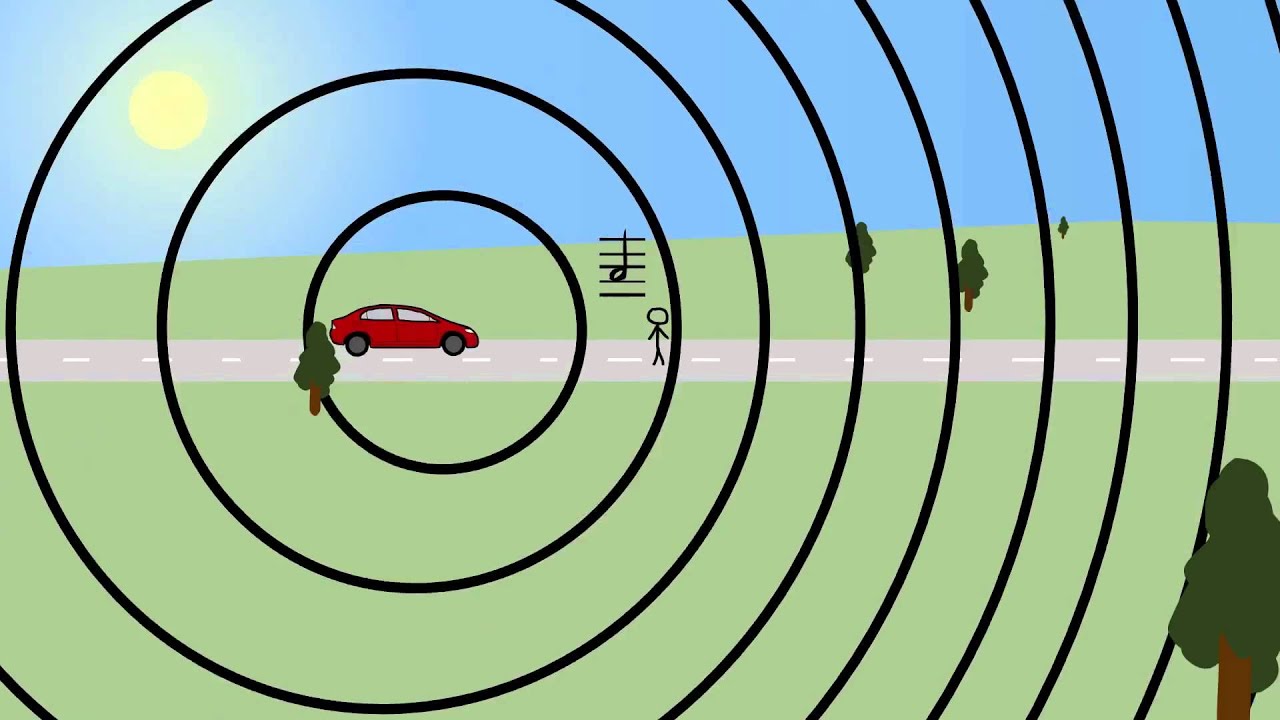
Why this video is valuable: An intuitive, visual introduction to the core mechanism behind the Doppler effect. It illustrates how relative motion compresses or stretches waves, establishing a conceptual bridge from sound waves to light waves.
Gap Analysis & Independent Study
⚠️ Curriculum Note: While the recommended videos offer excellent conceptual introductions to redshift and light intensity, the video pool lacks a dedicated, derivation-heavy lecture on the mathematical integration of the Inverse Square Law within expanding cosmological metrics (such as calculating luminosity distance ).
To fill this gap, independent study should focus on practicing calculations using the distance modulus formula: where is apparent magnitude, is absolute magnitude, and is distance in parsecs.
Knowledge Checkpoint
- Define the mathematical relationship between light intensity (), luminosity (), and distance ().
- Explain how redshift () is calculated from observed versus emitted spectral wavelengths ( and ).
- Differentiate between a standard Doppler shift (caused by local velocity through space) and cosmological redshift (caused by the expansion of space itself).
Module 2: The First Rung: Trigonometric Parallax and Astrometry
The foundational rung of the entire Cosmic Distance Ladder is trigonometric parallax. By utilizing basic geometry and Earth's orbit around the Sun as a baseline, astronomers can calculate absolute distances to nearby stars without relying on assumptions about the star's physical properties.
Recommended Videos
Why this video is valuable: Featuring world-renowned mathematician Terence Tao, this video walks through the geometric genius behind history's cleverest cosmic measurements. It breaks down how parallax operates as an elegant exercise in trigonometry using Earth's orbit as a baseline.
Why this video is valuable: This video clearly explains the unit of the "parsec" (parallax second) and details the physical mechanics of trigonometric parallax, showing how astronomers measure shifting stellar angles against background stars.
Why this video is valuable: This concise segment introduces the European Space Agency's Gaia mission, highlighting its capacity to measure stellar positions and parsecs with sub-milliarcsecond precision, which calibrated our baseline for nearby stellar distances.
Gap Analysis & Independent Study
⚠️ Curriculum Note: The video pool contains limited details regarding the complex engineering of the Gaia space telescope and how its two lines of sight reduce systematic errors.
To fill this gap, search for "How Gaia satellite measures stellar parallax astrometry" on Google Scholar or the ESA website to review how Gaia's continuous scanning mode constructs its highly precise 3D stellar catalog.
Knowledge Checkpoint
- Define a "parsec" in terms of astronomical units (AU) and arcseconds of parallax angle.
- Derive the basic parallax equation: , where is in parsecs and is in arcseconds.
- Explain how space-based astrometry missions like Gaia bypass the optical distortions of Earth's atmosphere to measure stellar positions.
Module 3: The Second Rung: Cepheid Variables and Henrietta Leavitt's Discovery
When stars are too far away for trigonometric parallax, we must transition from geometric triangulation to "Standard Candles." This module explores Cepheid variable stars and Henrietta Swan Leavitt’s historical discovery of the Period-Luminosity relationship (Leavitt's Law), which allowed astronomers to bridge the distance gap to other galaxies.
Recommended Videos
Why this video is valuable: Using the simulation tool Space Engine, this video visualizes Cepheid variables in three dimensions. It details their mechanical pulsation cycles (the kappa mechanism) and demonstrates how their pulsation periods correlate directly with intrinsic brightness.

Why this video is valuable: This deep dive uses Polaris—the closest Cepheid variable to Earth—to demonstrate how researchers apply Leavitt's Law in practice. It outlines the historical challenges of calibrating Cepheid distances and explains why they remain critical distance indicators.

Why this video is valuable: This segment offers a historical review of Henrietta Swan Leavitt's landmark work at the Harvard College Observatory, explaining how her study of Cepheids in the Small Magellanic Cloud held the key to unlocking galactic scales.
Gap Analysis & Independent Study
⚠️ Curriculum Note: High-quality, step-by-step mathematical tutorials analyzing Leavitt's raw data and the slope of the Period-Luminosity relation are sparse in the video pool.
To fill this gap, research "Henrietta Leavitt period luminosity relationship physics tutorial" or consult astrophysics textbooks to understand how the relation is mathematically expressed: where is the pulsation period in days, and is the mean absolute magnitude.
Knowledge Checkpoint
- Describe the stellar mechanics of a Cepheid variable's pulsation cycle (the relationship between helium ionization, opacity, and temperature).
- Explain why Henrietta Leavitt's choice to study Cepheids in the Magellanic Clouds was scientifically crucial for controlling the distance variable.
- Outline the steps to calculate the distance to an unknown galaxy using an observed Cepheid's period and its apparent magnitude.
Module 4: The Third Rung: Type Ia Supernovae as Standardizable Candles
To peer across billions of light-years to the edge of the observable universe, we need standard candles far brighter than individual Cepheids. This module covers Type Ia supernovae: exploding white dwarf stars that reach a uniform mass limit and detonate with incredibly consistent peak brightness.
Recommended Videos
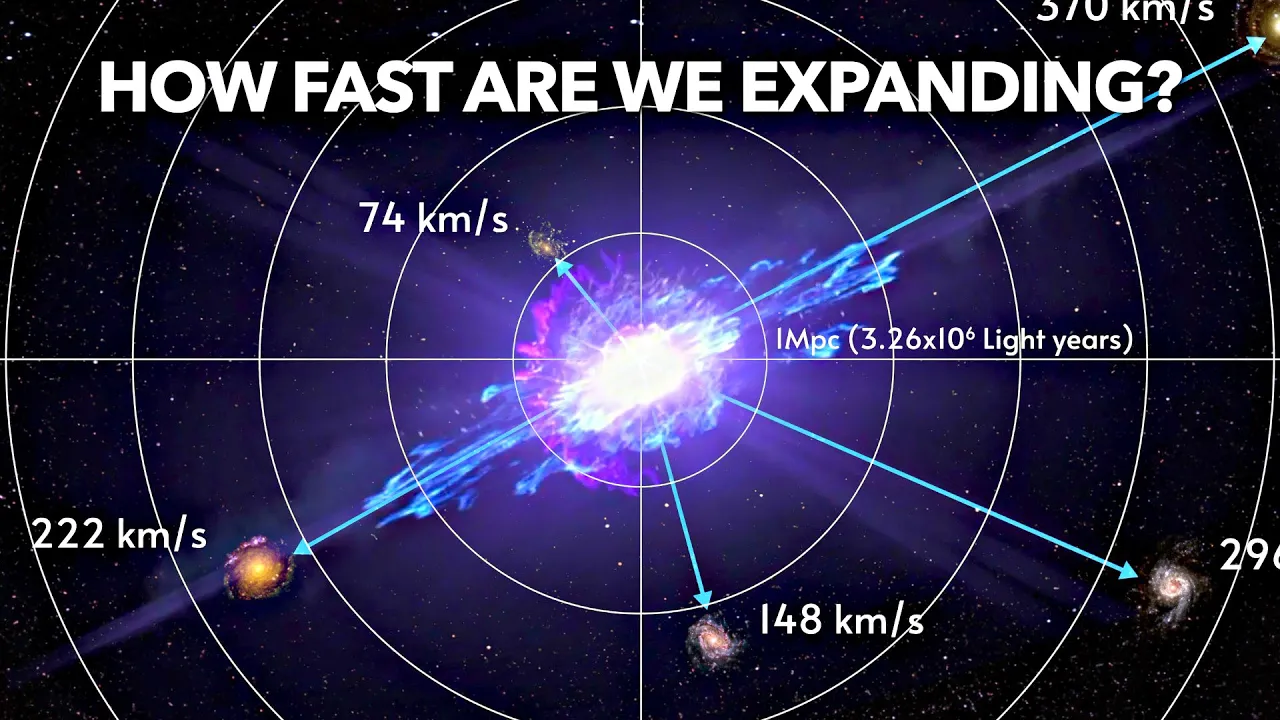
Why this video is valuable: This video provides an engaging explanation of how Type Ia supernovae serve as "standardizable candles." It outlines how they are calibrated using nearby Cepheid variables, allowing astronomers to calculate distances across the cosmos.
Why this video is valuable: A firsthand historical perspective on the work of astronomer Mark Phillips, who discovered that the rate of a Type Ia supernova's brightness decay correlates with its peak luminosity (the Phillips relation).

Why this video is valuable: This technical summary explains how the Phillips relation is applied to standardize the light curves of Type Ia supernovae, adjusting for slight variations in peak brightness to make them reliable cosmological markers.
Why this video is valuable: Nobel Laureate Brian Schmidt explains how measuring Type Ia supernovae led to the discovery of the accelerating expansion of the universe, demonstrating the profound cosmological impact of calibrating this rung of the distance ladder.
Gap Analysis & Independent Study
⚠️ Curriculum Note: The video pool has limited mathematical details regarding the physical cause of the Phillips relation. Specifically, why slower-declining supernovae have more nickel-56 () and are thus hotter and brighter.
To fill this gap, research "Phillips relation Type Ia supernovae calibration explained" in academic resources to study the math of the light curve decline parameter (the change in magnitude 15 days after peak brightness).
Knowledge Checkpoint
- Explain why the Chandrasekhar limit (~1.4 solar masses) causes Type Ia supernovae to explode with highly uniform energy outputs.
- Define the Phillips relation and explain how it is used to "standardize" supernovae that do not have identical peak magnitudes.
- Describe how a Type Ia supernova's light curve is observed and mapped over several weeks to calculate its distance.
Module 5: Calibrating the Ladder and Resolving the Hubble Tension
In this final module, we integrate all the rungs of the Cosmic Distance Ladder. By anchoring Type Ia supernovae to Cepheids, and Cepheids to trigonometric parallax, we can calculate the current expansion rate of the universe: the Hubble Constant (). We will also examine the "Hubble Tension"—the major modern cosmological crisis where early-universe predictions conflict with our local distance ladder measurements.
Recommended Videos
Why this video is valuable: This video provides a deep dive into the Hubble Tension. It contrasts the local distance ladder method (yielding ~) with early-universe Cosmic Microwave Background (CMB) measurements from the Planck satellite (yielding ~), detailing why this gap suggests potential new physics.

Why this video is valuable: An in-depth, interview-style discussion featuring Nobel Laureate Adam Riess. He explains how the James Webb Space Telescope (JWST) was used to cross-check and verify Cepheid calibrations, confirming that the Hubble Tension is not due to measurement errors.

Why this video is valuable: Astrophysicist Dr. Becky Smethurst explains the latest research on how local bulk flows and the gravity of massive structures like the Laniakea Supercluster affect our local measurements, making the cosmological crisis even more complex.
Knowledge Checkpoint
- State Hubble's Law mathematically and explain each of its variables ().
- Contrast the "local" (late-universe) method of measuring with the "early-universe" (CMB) method.
- Summarize how systematic calibration errors at any single rung propagate throughout the entire Cosmic Distance Ladder.
Course Map
Key People Index
- Henrietta Swan Leavitt (1868–1921): An astronomer working as a "computer" at the Harvard College Observatory, Leavitt discovered the Period-Luminosity relationship in Cepheid variable stars in 1912. This discovery established the first standard candle, allowing astronomers to measure distances across intergalactic space.
- Edwin Hubble (1889–1953): By identifying a Cepheid variable (V1) in the Andromeda "Nebula," Hubble proved that Andromeda was an independent galaxy outside our own. He later combined redshift measurements with distance observations to demonstrate that the universe is expanding.
- Mark Phillips (1951–present): An American astronomer who established the "Phillips Relation" in 1993. His work showed that a Type Ia supernova's peak luminosity is closely tied to how quickly its light curve decays, transforming these exploding stars into highly precise cosmological tools.
- Brian Schmidt & Adam Riess: Co-recipients of the 2011 Nobel Prize in Physics, they utilized calibrated Type Ia supernovae to discover that the expansion of the universe is accelerating. Today, they remain key researchers working to resolve the Hubble Tension using instruments like the James Webb Space Telescope.
Final Self-Assessment
Complete this comprehensive self-assessment to verify your mastery of the Cosmic Distance Ladder:
- Inverse Square Law: Can you mathematically calculate the apparent magnitude change of an object if its distance from the observer is tripled?
- Redshift Derivation: Are you able to compute the recession velocity () of a distant galaxy given its spectral redshift () using the low-velocity approximation ()?
- Parallax Computation: Can you calculate the distance to a star in parsecs and light-years if its parallax angle measured by Gaia is ?
- Geometric Limits: Can you explain why ground-based stellar parallax measurements are typically limited to stars within a few hundred parsecs, and how space telescopes bypass this?
- Leavitt's Law Application: Given a Cepheid variable with a pulsation period of 30 days and an observed average apparent magnitude of , can you outline the mathematical steps to find its distance modulus and distance?
- Standard Candle Criteria: Can you name the two main physical characteristics an astronomical object must have to be considered a viable "standard candle"?
- Type Ia Physics: Can you explain why white dwarf stars exploding at the Chandrasekhar mass limit produce highly consistent light curves compared to other types of supernovae?
- Phillips Relation Calibration: Can you draw a qualitative light curve comparing a brighter, slower-fading Type Ia supernova to a fainter, faster-fading one, and label the parameter?
- The Anchor Mechanism: Can you explain why Cepheid variables in nearby galaxies are needed to calibrate the peak luminosity of Type Ia supernovae?
- Hubble Constant Units: Do you understand the physical meaning of the units for the Hubble Constant ()?
- The Hubble Tension: Can you state the current values of measured by the local distance ladder versus early-universe CMB observations, and explain why this discrepancy poses a challenge to the standard model of cosmology?