




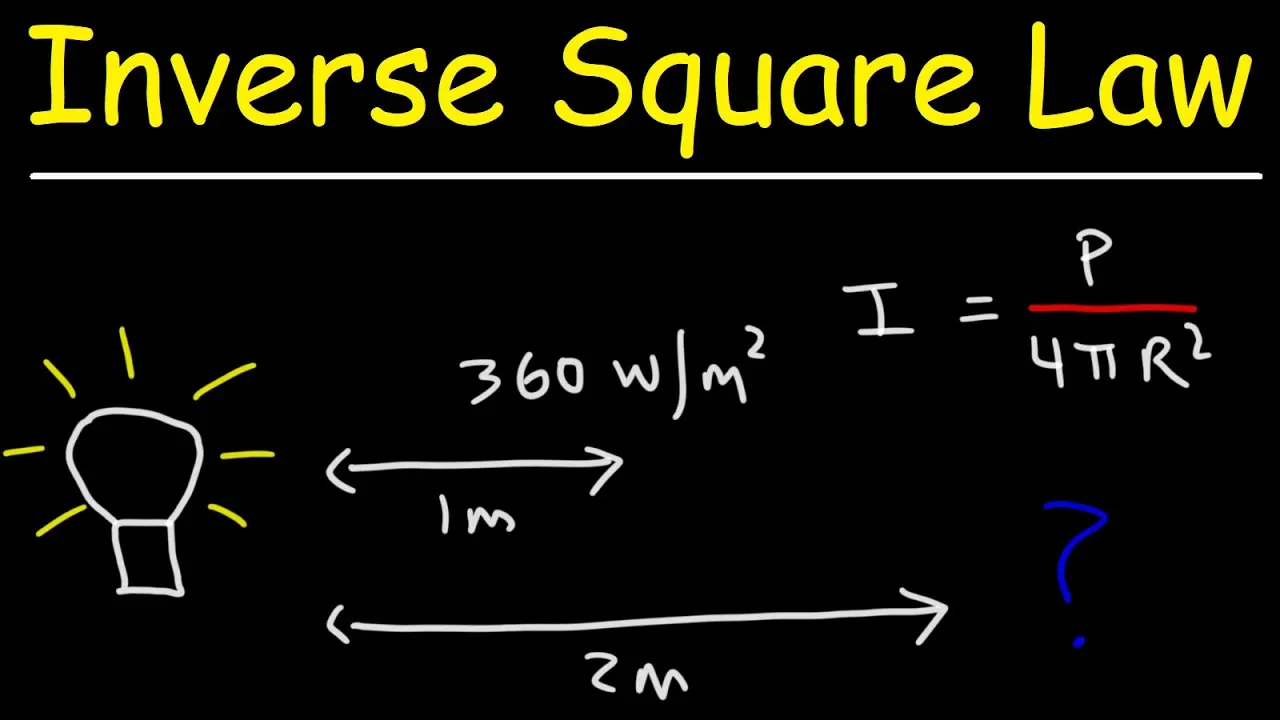












The Inverse Square Law states that light intensity decreases proportionally to the square of the distance from the source, meaning that when you double the distance from a light source, the intensity drops to 25% of its original value (I = 1/d²). This occurs because light spreads out in three dimensions from its point source, so at twice the distance, the same amount of light is distributed over four times the area. This principle explains why distant celestial objects appear dimmer and why light pollution significantly affects deep sky observation, as the artificial light from cities creates a competing light source that reduces contrast between the night sky and astronomical objects.
Astronomy Podcast: Solar System, Light, and Telescopes Explained
Added:Basic understanding of the Solar System's structure, including the distinction between planets, moons, asteriods, and the Sun.
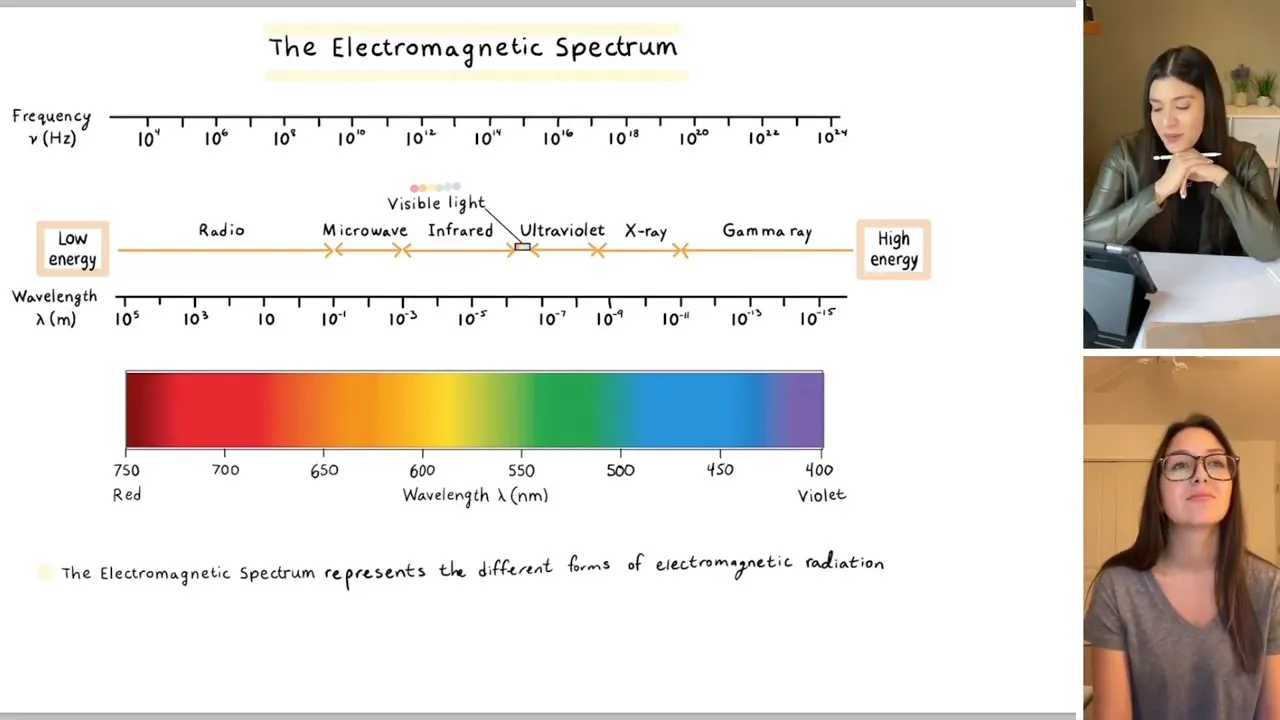
Fundamental concepts of light as an electromagnetic wave, including basic properties like wavelength, frequency, and intensity.
High school-level algebra and geometry concepts, specifically ratios and squared relationships, to prepare for the inverse square law.
An introductory awareness of the scientific method, including formulating hypotheses, testing, and observational replication.
Practical observational astronomy, including telescope alignment, star-hopping techniques, and reading celestial coordinates.
Astrophotography principles, focusing on sensor exposure, image stacking, and the use of narrowband filters to combat light pollution.
Astronomical spectroscopy, which is the study of how light is split into its component colors to determine the composition of distant celestial bodies.
Advanced orbital mechanics and planetary science, exploring the gravitational interactions and geological histories of objects within our solar system.
196 views19likes47:29Original Release: 2026-01-11
Welcome to the Lunar Lounge. This is the first episode of the official podcast and later after this video comes out, the audio version of this podcast is going to be available on YouTube Music.
So, welcome everyone. For our first guest tonight, we have the man that got me started in the hobby of astronomy and astrophotography, Torian McCoy. Thank you for making the hour and a half drive to come up here. How are you doing tonight?
>> I'm doing all right, man. I mean, along with the rain, it was really a downpour coming up here, but you know, it's great.
>> Yeah, I heard it was kind of torrential going pretty sure it was from all the way down from Alabama stretching up towards DC. It was just this big strip of rain supposed to bring like tornadoes and and whatnot, but uh glad you made it here, safe.
>> The ride was really cool. I mean, music had to make a stop, but have one little periodical time, but I wanted to be here to support you on your first time.
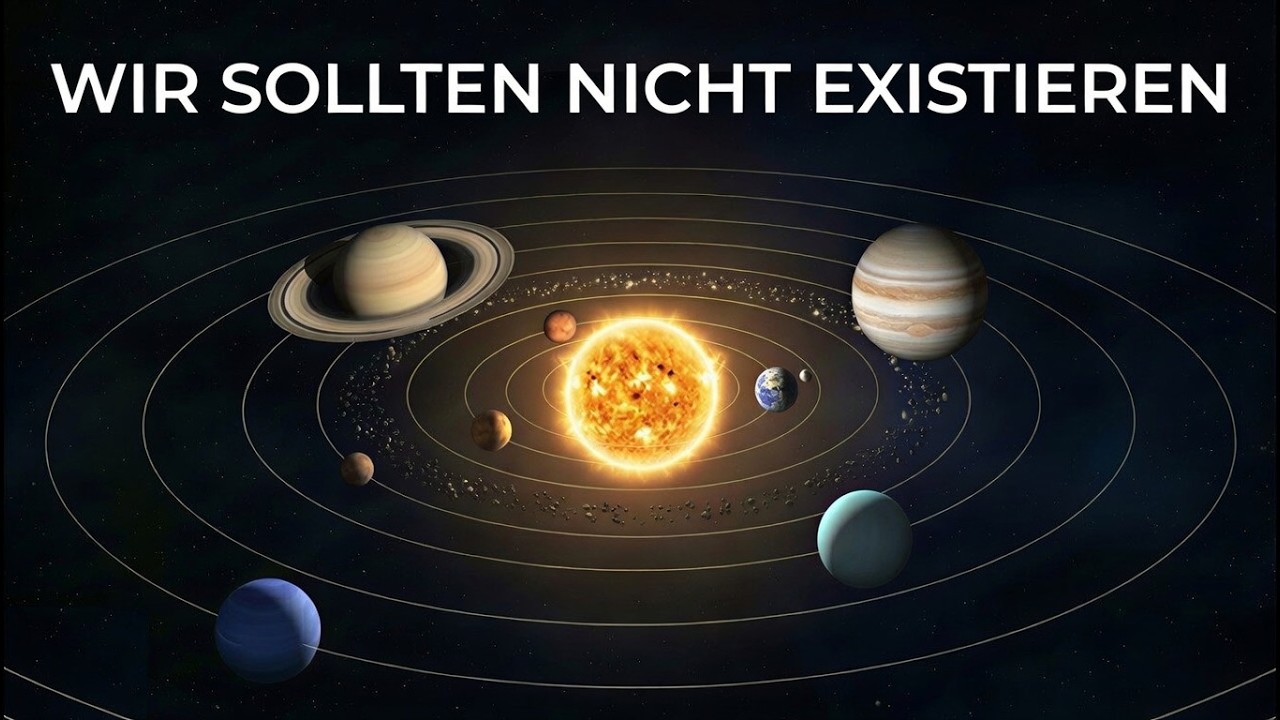
>> I appreciate that. And I mean, like I said, going back, you were the guy that got me started in it. So, it only makes sense for me to have you as the first guest on the podcast, which I never really expected to do. It was just a general idea that my wife gave me while we were listening to Star Talk with Neil Degrass Tyson. And I'm going to be honest with you, it's not going to be half as professional as a podcast made by a astrophysicist with plenty of degrees, but we still have some knowledge about the solar system, the inverse square law, and some other things as well that we would like to share. So getting started, we all know the planets in the solar system, right?
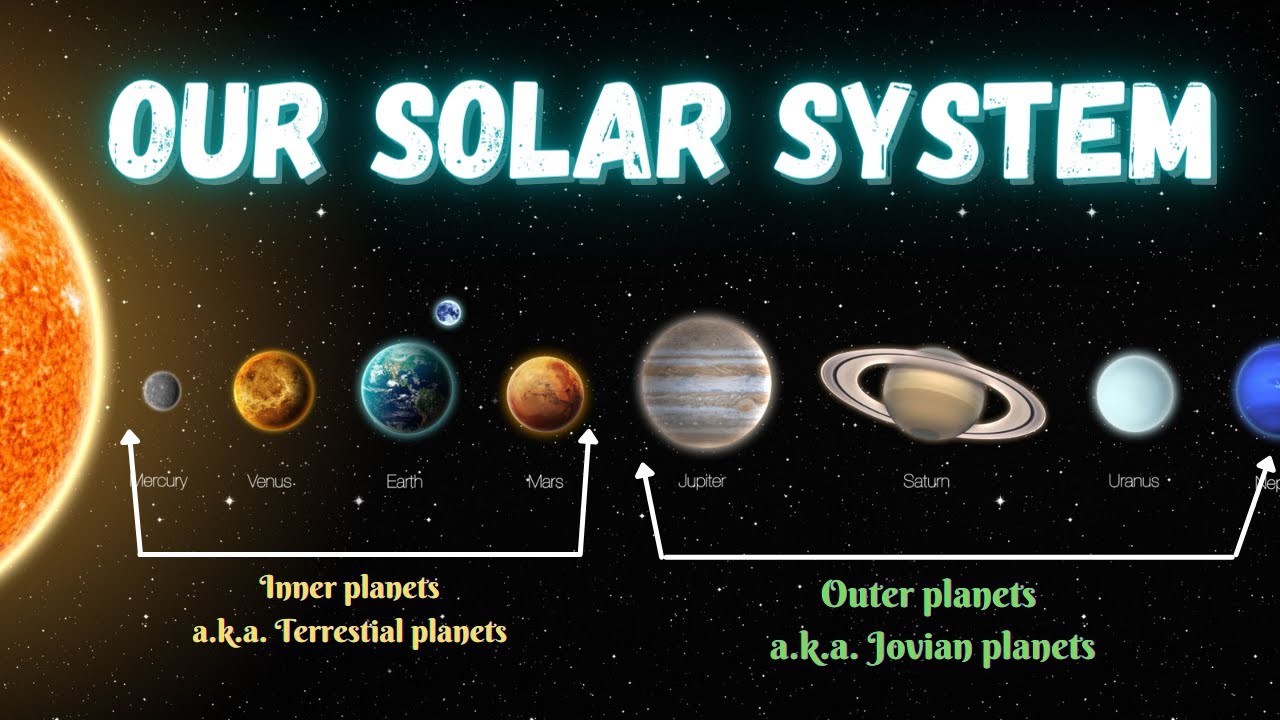
At least the order of it. It's it's Mercury, Venus, Earth, Mars, Jupiter, Saturn, Uranus, Neptune.
>> We think that we know how the solar system functions and how it's created and we think that we have human capacity to go to Mars supposedly, right? But have you heard of the Tulic system?
>> No, I have not. I can honestly say that.
>> So the Tulic system was a theory created by Claudius Tulus Pelisinus. And there's a possibility that I completely butchered that, so I apologize. Um, and in his model of the known universe, the Earth was at its center. So there was the earth and everything else revolved around earth which was perfect for what humans thought at the time with the idea being that humans were literally the center of the universe since us as humans were kind of a prideful bunch.
But do you know how old that theory was?
>> I'm going to make a guess. Uh I'm thinking about like at least probably 500 to 600 years.
>> So it it dates far past that. Um that theory was created in the year uh 150 AD. And do you know when we actually discovered that the or at least theorized proposed that the sun was a center of our solar system?
>> Yeah, I couldn't I can't even make a guesstimate about that myself.
>> Okay. So that happened in the year 1543 by Nicholas Capernicus and that's when he even proposed that the sun was at the center of our solar system and in his book I have it written down here on my sheet just to I guess reference in his book on the revolutions of the heavenly spheres he very bluntly states right in the middle of everything sits the sun.
Now that was 1,393 years after the tomeic system was created. So that means that over three 1300 years humans believed something that was wrong. Now let's put that into perspective.
We believe something that was wrong for 1300 years plus.
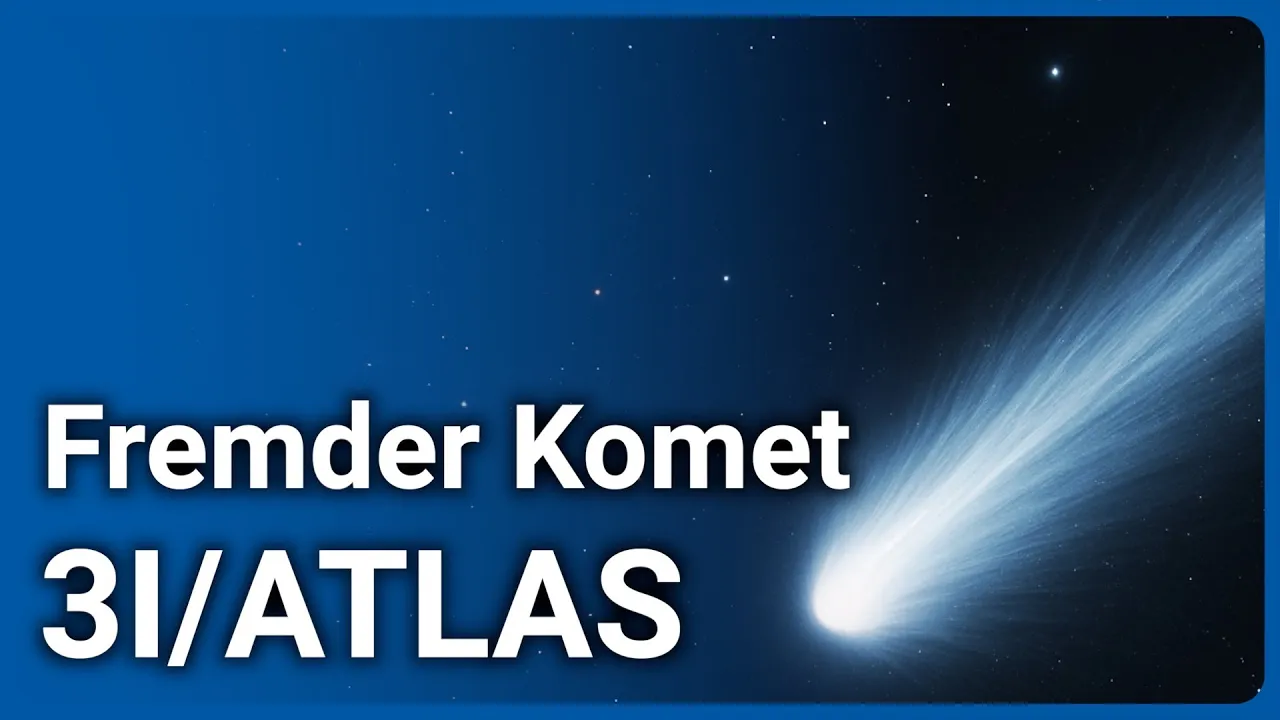
And now only 483 years later, we think that we understand how galaxies work, how black holes work, and we even think that we understand the origins of the universe, at least from a scientific perspective. But do we really? And I say all of that not trying to undermine the hard work that's been done by scientists. literally around the globe and even outside on the International Space Station studies that are being done up there. But I say that to help remind everybody to take things with a grain of salt like this comet uh three atlas that everybody was talking about for a while. I'm sure you've heard about that one. Do you know about the rumors?
>> Oh yeah, I've heard about the rumors. um where some had thought about it there was like a spaceship, others thought it was an actual living being at some one point in time. And I [clears throat] mean, I'm just going to be honest with you, I just thought it was an object that's probably been there longer than any of us have been alive and it's been going around the whole entire solar system or beyond for that matter. And me, I like that because it's natural.
It's beautiful and I was able to see it for the first time with the help of other kind of apparatuses that people have been using. But as far as those ideas concerned, no, I am not.
>> Yeah. So going back to what you said about it being a spaceship, we know now that it was just I mean we a lot of people knew at least think that they knew that it was an interstellar comet.
But there was one astrophysicist named Abby Loa who theorized that there was it possibly could have been an alien spaceship.
And people on social media took it and ran with it like it was the absolute and only truth of what it could be and like it was an undeniable fact. Of course, we know that was not the case. It was just it was just a comment. So if somebody says something that they think that they understand or act like it's an undeniable fact, always question it. Um you should always do your own research.
You should do everything that you can to understand it. And if you can understand it, try to either prove it right, prove it wrong, or just come up with an entirely different theory. Um and that's honestly what's fun about science. Do you remember the method that we learned about in middle school? The scientific method. Do you remember the steps for that?
>> Unfortunately, I don't remember that because for me it was a long time ago.
But it was one of my favorite subjects.
The the science of the of the sky of of the solar system along with earth science. They were always my favorite.
But those steps, I'm sorry, man. I can't call it back to mine. So I went [clears throat] to school a lot more recently and I still don't remember it.
So it's I have it written down here on the sheet to refer back to because honestly I could not call it steps back into mind. I knew about scientific method. I know what it is.
Again question everything. Maybe I didn't know what it is. Maybe it's all just a lie.
But going back to the sheet here, the steps for the scientific method. Uh the first step is you ask a question. Step number two, you do background research.
Step number three, you construct your hypothesis. Number four, you test it with an experiment. Number five, you analyze data and draw conclusions. And number six, you analyze the results. And I think personally that everybody should try doing that, not just in scientific endeavors, but also in their daily life.
Because if you look at it, you look at the simple things, you try to analyze it using this scientific method, it will make their life a lot more interesting.
Now, going back to questions, I believe you had said before we even started filming that you had some questions of your own. Is that correct?
>> Oh, yes.
>> Okay. So, before we get to that questions, we're going to have a quick break. And after that break, we'll hear we'll be here to answer some questions on the first episode of the Lunar Lounge.
Welcome back to the Lunar Lounge. We are now going to answer some questions that Torian has brought here with him. Uh so what you got for question one?
>> Well, for one, for the question I got is about light.
>> Okay.
>> Um well, it's a two-parter, but we're just going to go with the first part.
>> All right.
>> All right. First part is what is the importance of light when it comes to distance of an object that I wish to see.
>> Okay. So to understand that you have to understand how light works. Light from let's go ahead and get this whiteboard up here. Let me get you to hold that for me. Thanks sir. Mhm. So we got to understand that from its point source, light does not move in a straight line.
And that is because light is just tiny particles that are known as photons.
And as this light moves, it works like a flashlight. So, as light moves, it spreads out at an angle. So, is it right if I borrow your flashlight real quick to Yeah, sure.
>> give you a understanding.
>> So, I'm going to do a little mathematical formula before I turn this on.
>> Okay.
>> To understand how light moves, you have to understand the inverse square law.
And the formula for that is I which is intensity. The intensity of light is equal to 1 over the one is just a constant.
>> Mhm.
>> 1 over d^2. D stands for distance. So say I'm holding your flashlight up. See how bright I can get this.
There we go. And as bright as I can to blind you with it. Yeah. From one foot away. It's pretty bright. Yeah. Right.
So we'll put that into the formula. The intensity is equal to 1 over 1^2.
Do you know what 1 squared is? [sighs] >> Is that a multiplication of 1?
>> Yes.
>> Okay.
>> So 1 squar is just 1* 1. So you get 1 over one is equal to one. That's the original intensity that we have it at.
>> Gotcha. Now we move that back another foot. Now we're at two feet. It's not as bright, right?
>> Yeah, it's not.
>> Okay. So, we plug that into the equation. Okay, you're falling back.
Thank you. We have I is now equal to 1 over 2^2 which is equal to 1 over 4, which is equal to 25%.
So that original light that you saw, when you double the distance, you are now only seeing 25% of the original brightness, the original intensity. And that's because as it moves back from its point source, I'm going to draw. You have to remember that light is it moves around in a threedimensional fashion. It's not 2D like you have here. So as we go back, you got four lines.
You have that original square that that flashlight's hitting.
As you double the distance, now you'll see that that square is able to fit four of the size of the original square.
>> Okay?
>> And that continues to go back. So if you put a three in there, we have intensity equ= 1 over 3^2, which is equal to 1 over 9.
And it just continues to multiply. So we have to remember that as these particles spread out, the likelihood of you getting hit by these particles, these photons, lessens.
So the farther away you are from an object, the less light is the less bright is going to appear to you simply because there are less of these photons hitting your eye or hitting the sensor of the camera. So we can take the Andromeda galaxy as an example.
Andromeda in our night sky appears very bright. Well, not super bright, but it's visible to the naked eye. And that's because of how close it is. But these other deep sky targets, these other galaxies and nebula, >> if they were, let me put this back down now. Thank you.
>> If they were closer to us than they are now, they would appear obviously much larger, but also much brighter than they do in our night sky. Does that make sense?
>> It does. Now, >> okay. So, what was that second part of the question you had?
Well, the second part of that question I had for that um why is it so important to be in a dark place with minimal light pollution?
So to answer that question um the darker the skies the better. The lower the border class the better at least for viewing and imaging galaxies and nebula.
For imaging planets and the moon, it's not as vital to go to darker skies simply because they have lower magnitudes, which just means that they're brighter in our night sky. But for deep sky object viewing and imaging like galaxies, nebula, it is extremely important because you have to remember light pollution is called light pollution because it is light cast from the ground up.
And if it's visible and I mean if you go to cities like big cities like Atlanta, Lynchburg, Ron Oak, uh New York, you can see that as you approach the city at night, you can see that light just appear over the horizon.
>> And if it's visible to our eye, which it is, >> then it's also visible to our camera sensor.
And it's, as we know, camera sensors are a lot more sensitive than our eye is.
So, it's going to appear >> fairly prominent on the screen.
Now, to make it easier to understand, have you ever tried using your phone? At least I know iPhones don't have the brightest screens. Have you ever tried using your phone out on an extremely sunny day when the sun is like right up overhead?
>> Yeah, I have difficulty trying to look at it because it's the reflection from the light itself. I can't see anything on my phone.
>> Exactly. So, it's kind of the same principle.
When you have that light pollution, it creates another haze of light over what's trying to come in from outside of our atmosphere.
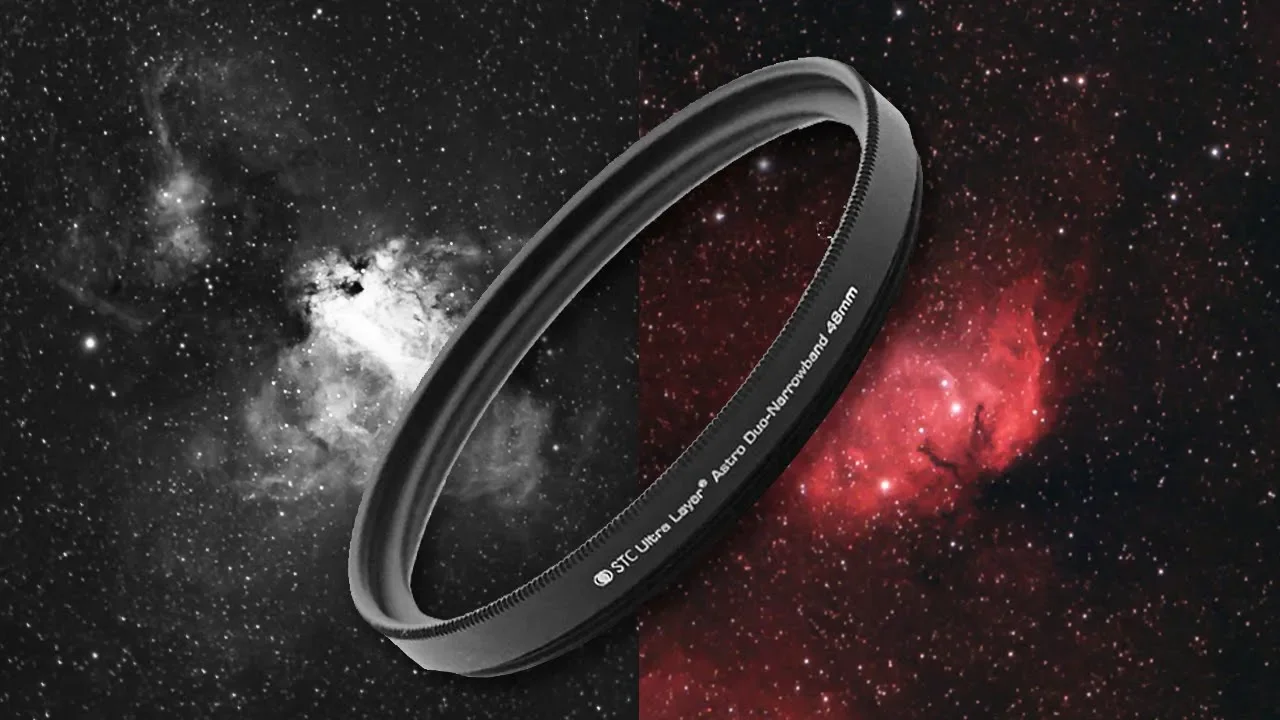
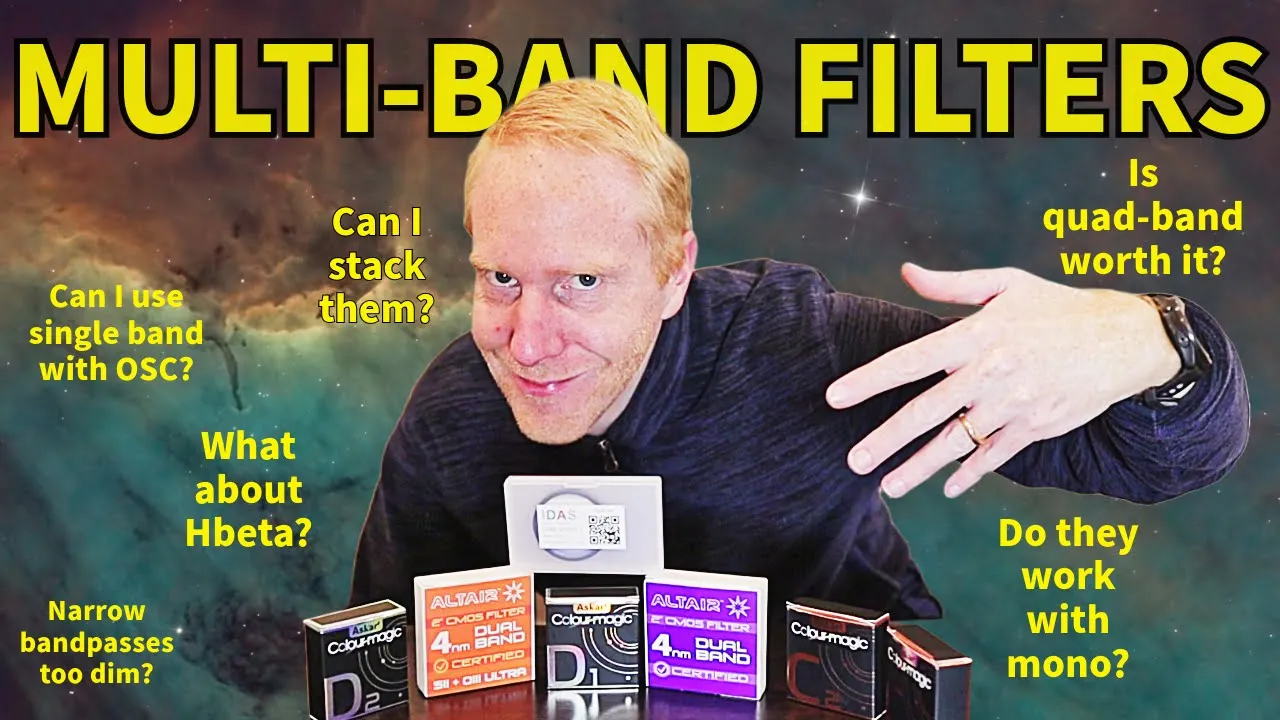
And when that light comes through and it appear hits our sensor, that light pollution is also hitting our sensor. So the contrast between our night sky, the the dark, the void >> you could call it, that contrast starts to disappear >> and you have a difficulty differentiating between details of these deep sky objects and just that haze of light pollution. It becomes a lot more difficult to process that data. And so it's more important that you go to these darker sky zones where there is no light pollution or you can use filters like duo band and narrow band filters for imaging nebula and there's some some light pollution cutting filters for galaxies but they don't work as good as the narrow band does.
>> Okay. Um, it is just so important that you go to these darker sky zones or skies that have a lower border class because again, the lower it is, the more of a contrast you have between the night sky and the deep sky object and it makes it easier to process and the pictures look a lot better.
>> That definitely does make sense. Okay, I'll have to definitely keep that in mind because I definitely want to get like the richness of every image that I can with my Dwarf 3. Um, so that's why sometimes I have to go between two houses to have the shadow just in order to be able to point it straight up to get something good. So I have other lights beaming down on my images.
>> Y >> that makes sense.
>> Yeah. And that I mean that even if you don't have the perfect border class, if you're just away from street lights, >> you'll see a difference in the pictures too because like you said, you don't have that light shining down hitting your sensor generating these images with strong gradients in it that's difficult to process out.
>> It's just better to avoid lights and it's just better to avoid light pollution altogether. [snorts] >> That's good to know.
>> So what was that second question that you had?
Second question. H okay. My second question was the weather. And believe me, the weather always played a problem. And what I mean for that is like for ast for astrophotographers, what is the best time of the year to get really good imaging?
So, we're going to touch on this uh later, >> okay? But the best answer for that is imaging is better in the winter and that's because there's lower humidity and the ground temperatures it's not as warm >> but again we're going to touch on that in a later question. So what's the one what's what do you have after that?
>> Okay I have temperatures.
>> Temperatures.
>> Yes.
>> Okay.
>> Temperatures have always been an issue with me. When it comes to temperatures, how does it play the important part in operating your device or rig in high or low temperatures?
>> So, you made me do a lot of research on this one. I mean, you didn't make me do it, but I in order to get you a good answer, I did have to do a lot of research and I have it here on my sheet.
Again, it's a really good question and it's something that beginners generally don't think about. Um, but it it is super important. And there's a reason that I always say, and this is we're going to be answering this in kind of two parts.
>> Mhm.
>> But there's a reason that I always say that it is super super super important to leave your telescope outside at least 30 minutes before you start imaging. And the reason for that is like everything else in the world except for specifically made zeroothermal uh expansion materials, telescopes can shrink and expand in temperature changes. And it might seem like a very minimal change, but in astrophotography and astronomy, these minimal changes to focus can completely ruin an entire night's worth of data.
>> Yeah, I know that all too well.
>> Because as these telescopes shrink or expand, the focuser moves with it and it moves away from the lens or the mirror that's inside of the telescope. Um, so it's extremely important that you always always just wait to adjust your focus until after the telescope has been acclimated to the outside temperature.
And another thing that you have to remember and this is when it comes to how temperature can even affect how our sky looks at night even with a naked uh naked eye. If you go outside at night it can be clear night between the hours of 8 to 11 o'clock >> at night. Obviously, on a clear night, the sky looks beautiful, but it is, and I'm sure you've probably noticed this and just not really thought about it all that much, but the sky just looks so crisp and pristine between the hours of 12:00 p.m. and 4:00 a.m. until the sun rises.
And there's several factors as to why.
And the reason, one of the reasons is the later that it gets, the more the ground cools off since the sun is gone.
And during the day, the ground heats up from the sunlight. And you might have seen this process with your own eyes. If you look at like a the hood of a car or a road on a really hot day.
>> Yeah.
>> You'll see this like it looks like the air is like boiling.
>> Oh yeah.
>> Going up from the surface of that.
>> Kind of reminds me like it's heat waves.
>> Yeah. Exactly. Yeah. That's what it looks like. It looks like heat waves.
But these heat waves are known as convection currents. And these convection currents distort the light from its source before it reaches our eye. And it's the thing convection currents are what make and and atmospheric agitation of course that's what makes it look like stars are twinkling.
And if you look at a planet as it's starting to rise, >> if you look at it through the eyepiece of your telescope, you'll notice that its shape is warping.
>> Yeah. Yes.
>> And that's all because of this these convection currents rising from the ground. Again, you'll notice it like I said, as it rises up above the horizon because it's so low to the ground there.
You'll still see these convection currents. it changes the shape of the planet's disc before it reaches our eye and the details aren't nearly as fine.
>> So, it's the same principle between again the hours of 8:00 to around 11:00 because the ground is still cooling off. These convection currents are still rising into the air. So, you'll see the sky looks agitated, the stars are twinkling. You might even see a planet >> twinkle. Even though generally >> this twinkling twinkling effect since they're since planets are not a point source since they're a planetary disc.
>> Mhm.
>> They the brightness of one side of the planet if that's twinkling that one side then the brightness of the other side of the planet will cancel that out. So, it generally looks like they're not twinkling. Even though as the light comes through the atmosphere, it's still moving around.
>> But between the hours of 12 to 4 in the clock in the morning, you'll see this twinkling effect disappear. And I like how I wrote this.
I'm kind of proud of how I wrote this.
And I'm just going to read it off the sheet because I know that I can't remember it.
As the ground cools down, these convection currents disappear and the atmosphere stabilizes. And in its stillness, the sky ceases to flicker and it really begins to shine. It's almost as if the universe has finally stopped moving to let us look. It is a universe in its most honest form. It is crisp, silent, and perfectly resolved.
So, if you haven't already, which I know that you have, I would definitely recommend to at least the viewers. I mean even to you even tonight it's cloudy tonight but if we could I definitely would go outside but again between the hours of 12 to 4 and you will see a huge difference between the night sky between 12 to 4 and the night sky between 8 to 11 just because these convection currents they settle down and they stop the the atmosphere becomes less agitated and the sky just looks like it's just a moment frozen in time as a picture just painted across the entire canvas of the sky.
>> I have to admit you're right about that.
I really do. Even though I lose sleep, but it's worth it. It really is worth it.
>> Yeah. So, it it's kind of like a lie. We were told our whole lives that stars twinkle.
If you look at I mean obviously we can't go to the moon >> but if we were on the moon the moon has no atmosphere. There's nothing for the light to travel through.
These stars don't twinkle. Stars do not twinkle.
You might think that they do just because that's what we were told our whole lives that stars twinkle. Stars don't twinkle. It's just the light getting distorted as it comes through our atmosphere. So that was just something else interesting I just wanted to share.
>> That makes sense because if you see how the Hubble telescope is being used out in space, there's nothing out there that's making any of the images, even the live feed that they'll do >> to be distorted. It's like you said, it's crisp. It's the clearest of images you can actually ever have.
>> Yep, that's right. So before we get to that next question, we're going to take another break and we will be back on the Lunar Lounge.
Welcome back to the Lunar Lounge. Torian has another question ready for us and I am looking forward to answering it. All right. Well, we've done a great job with answering the other questions. So, the next one would be [snorts] telescopes. Telescopes. Yes. Okay.
[sighs and gasps] Is it okay to have more than one rig or device for stellar photography?
>> I want to say absolutely.
It depends on who you're married to.
[laughter] >> Yeah. Yes. Yes.
>> I am very fortunate.
Like extremely fortunate. And that closet has telescopes in it. I got telescopes right there. Our bedroom closet has telescopes in it. I got a building outside that's got a telescope in it. I got lucky. But the definition of is it being okay is entirely up to your wife. [snorts] Because to the astro or or or to the husband because the wife could be interested in astrophotography and the husband could have not want nothing to do with it.
>> Mhm.
>> It depends on your spouse.
>> Yeah.
>> Completely.
>> That makes a whole lot of sense because [sighs] >> Yeah. When it comes to the budget, when I got my Dwarf 3, I saved for it. It's going to be about like six months to do that >> because my wife wanted to take some trips. She loves to eat out every now and again and we also like to go see family and she has family spread out. So when I'm like this close to being able to get this all of a sudden this expense comes up. I'm like okay >> another couple months.
>> That's right.
>> So yeah that makes sense. So that's why with the Dwarf 3, I'm utilizing it to the fullest of my ability until I can get another telescope for myself. But until then, I will be patient.
>> Well, at least until it drives you crazy that you don't have another one.
And that is what brought me to the Dwarf 3.
>> Yes. because I had my I have my original Celestron analog telescope that I used with the dials to be able to get everything just right, but I wanted the Dwarf 3 and it did get to that point where >> I could have saved up a little bit more and then finally I just said screw it.
>> I went on ahead and just got like my credit card and did it. [laughter] >> The Dwarf the Dwarf 3 Dwarf Lab's fantastic company. ZWO is a fantastic company. smart telescopes. If you want to get into astrophotography, that's honestly probably the way to go because they'll pretty much just teach you the basics. It's a great option. But there's there's a comment I saw on Facebook one time about pretty much the same question you just asked, and somebody said, "It's easier to ask for forgiveness than it is for permission."
Oh man, I [laughter] like where that is going.
>> So yeah, again having telescopes that completely depends on your spouse and your budget because telescopes take up space and money.
>> Oh yeah.
>> So what what you got next? What's the next question?
>> All right, my next question >> for that for that one. I didn't even have to write an answer on here. I just knew exactly what I wanted to say.
[laughter] So, what you got?
>> All right. My next question is this is about discovery.
>> Discovery. Okay.
>> Yeah.
>> When it comes to discovery, is it possible to find something new that no one else has?
>> Absolutely. I have absolutely no doubt about it. And there there's new discoveries happening all the time. Even with like we were talking about smart telescopes, uh you don't need the biggest and or the most fancy equipment to discover new things. For example, and I'm gonna butcher this name like I butchered the other name earlier, um Kenneth Mascola, he discovered this supernova and I checked with the transient name server.
This is according to that website. He discovered supernova AT 2024 NCK using a smart telescope and supernova. It's not a deep sky object. It's not like he discovered a nebula or a galaxy, but it's still, as I mentioned earlier, it is a moment in time captured from millions of miles away as it's happening.
Again, millions of years ago or light years ago. Anyways, it just that light just happened to reach us at that time.
That that's already happened. That supernova has already came and gone.
>> Mhm.
>> But it is a moment in time and space that was observed, captured.
It happened in that spot and it will never happen there again.
It will never be seen again.
So, as minor as a discovery might be, it's still major.
It's still a moment that happened in space that you were able to get from your own backyard. So, yes, you were able to discover new things. It's happening all the time. And who knows someone's who knows when someone's going to discover the next comet with a smart telescope. Anything can happen.
>> Okay. Hey, I'm glad to hear that because of the fact that I have always been interested in just looking at out outer space, >> you know, just staring off in one area.
>> And sometimes I found that using my telescope, I've been able to just pick a spot. I mean, it's good to go and look at what other people have seen so I can see for myself. But sometimes when I pick a spot, I don't know why. I just go with a feeling >> and it may not look significant at first, but as the hours go by from the processing and what I see, it amazes me to see the different colors of each star that's out there, to see actual red stars to the white stars to the blue stars, to see the different colors of those, and actually to see the possibility of something that may streak across it, >> you know? I just love doing that because sometimes I even see different formations of stars. Like some could be a straight line. Like one image I took where I actually saw like looked like a circle of stars like that and in the middle was a straight line but there was nothing else and no other stars knew that and that was actually after an 9hour exposure >> and nothing has changed and I really enjoyed that um you doing that because to me it was new to me but somebody else may have discovered it already but I just love doing that and that's why I always thought like I hope I can discover something one day and it's not really to put myself out there. But it's like just say like, "Hey, dude. I did that. I found that with my equipment.
That is awesome." To me, that is awesome. Because it is. I mean, it's something no one's ever seen before.
>> Mhm.
>> From millions of years away. I mean, light years away. No one's ever going to see it. Well, unless it's like, well, if if it's a supernova, no one's ever going to see it again. But if it's a deep sky object that no one's ever seen before, then you can share it with other people.
>> Other people can see it. they can experience it with you. It's it's a great hobby. And yeah, the making new discoveries, there's always a possibility. Anything can happen. I mean, it's it's like the the ocean. What do they say? How much is how much of the ocean has been explored [snorts] from what I've read? They said it's pretty much only like about 20% of the actual ocean has been explored because of the depth issue >> that it can only go but so far. Whereas like military can go down to a certain depth, but the actual depth of anything humanly possible to go, it's still out of reach.
>> So that's why it's only like 20% to 10%.
And speaking of depth, Tori and I were talking about this a little bit off camera and we don't have the time to discuss it in this episode.
But if you guys have any questions that you would like answered, make sure that you leave them in the comments and we'll be sure to get those answered. But what you were talking about with depth, there could be light from other galaxies and nebula that are just so far away that the light from those galaxies hasn't had the chance to reach Earth yet.
Galaxies we haven't seen because we didn't know they were there because the light hasn't gotten here yet. That's another thing to keep in mind.
>> I will definitely do that >> because that pretty much definitely goes along with my question of discovery.
Mhm. So, what's the next question? What you got?
>> Well, the question was pretty much more of a personal nature.
>> Okay. [laughter] >> Have you ever because as a kid when I was working with my analog telescope, I asked a person a question. I called up the company that did this. So, I want to ask you, have you ever dealt with aperture envy?
Every time I open up social media, every time. Every time I open up social media, there's some guy with this 20inch telescope that's able to take pictures that pretty much look like they were taken by Hubble or by the James Web Space Telescope. And then I look at my pictures and I'm like, man, not that good. Sure, I was excited when I saw the picture the first time, but then I look at other people's pictures and I'm like, what am I doing wrong?
And the thing that I'm doing wrong is I don't have the equipment for it because I can't afford it.
So, how do I deal with aperture envy? I don't. I let it fester.
[laughter] I let it fester until it makes me make a decision that I can't afford.
>> Oh, yeah. I know that all too well.
[laughter] That's the best way I can answer that question. I wrote something down.
>> I don't remember what it is.
>> That's just how I genuinely feel.
So, >> well, I love that feeling because it's really honest.
>> Yeah. I don't deal with after envy. It drives me nuts. And yeah, that's that's pretty much all I had to say about that.
So, we're going to take another break here because I accidentally forgot my cup of water over there and I am thirsty and I would like a sip of water. So, we will be back on the lunar lounge.
The thing that's always bugged me when it comes to the digital telescopes >> as smart telescopes.
>> The smart telescopes. Yes.
um is that when I look at the tutorials to help me to understand the method of being able to get the images that I would like to get that I really want to get >> like say for instance um the flaming nebula uh that which is one of my current projects I'm still working on >> the flame nebula or the flaming star nebula >> the flaming star nebula actually >> because I really want that because of the fact of how the nebula looks looks itself. It's like it's ribbons and it's getting a lot of light from the center star that's in it that's reflecting off of it and it's like different colors as it goes back off like in a swirl pretty much.
>> Yeah.
>> When it comes to a smart telescope to be able to use that and to sit there and process that image, >> um how in the world can I be able to get the image that I want to in a lesser time? because I know the more exposure time you get, the better. And between those times that you told me about, I've done that before and I have gotten the best image, but I feel like I want to get more. But the earlier I do it, I'm dealing with distortion. I'm dealing with like light pollution. I'm dealing with people who are walking around who are showing lights and people are driving around all the time. And then the hours of late at night where there's no one doing anything is like the best peak time. But I'm that's what I deal with. It's like I want more time to be able to get it because it's not a sickness. It's an addiction that I love to do. And of course my wife has gotten after me because she's like, "Look, you're staying out there in the middle of the night. It's not safe. Come back in. Let's sleep."
>> And I'm like, "Okay." So I'll come inside and I'm still sitting in the middle of my living room looking at my phone and at the same time looking at doing something else to help me to get things just right. But [clears throat] does it always have to be that short period of time?
>> When you say short period of time, like from the hours of 12 to 4 to get that best crisp image. The summer you have longer nights. I mean, the winter you have longer nights. The summer you have longer days, but the winter time, like I said, I'm dealing with light pollution where I live. And those hours are like the best imaging time, but I want to more because as soon as it comes up, I have a clear view of seeing it >> with my te with my smart scope, but then the image probably isn't as clear as I would like to have when it gets to the hour of 10 through 4.
>> So that's what I deal with. It's like because I could actually see the difference when I take it at an earlier time, like say when it rises at like 9:30 at night. Okay? I have to wait till about like 11. When it gets to 11, the image is not as good. But then as the um processing of the images go, as it's tracking and it's taking pictures, it slowly gets better. So I want to try to start at a really good time, but they have a longer time exposure time to be able to get what I need.
So that it's a good question.
Um, obviously we know that throughout the year the positions of constellations and objects in our night sky changes.
>> Yeah.
>> Obviously, we don't see the Orion constellation in July. No, >> we see the Orion constellation between the months of November and about March.
>> Mhm.
>> And I mean at the end of March, you only see the Orion Nebula, I mean the Orion constellation in the western hemisphere of the sky as starting to set.
>> Mhm. So you have for the flaming star nebula for example, you have that narrow window of the months between I'd say September.
>> Mhm.
>> Through around February, I would say >> before it starts to set again. So we have these longer nights in December. I mean in the winter time, >> like you said.
But there's no way to elongate the amount of time that that object's in the sky >> unless you were to go to Alaska or somewhere super far up north where it takes forever for the sun to rise. Um, in terms of imaging, at least I would wait till the object's at least 30 degrees in the sky to avoid those convection currents. Mhm.
>> It can be tempting to, like I said, just start imaging, but then you're losing out on the quality.
>> Yeah.
>> The subframes that you could be getting.
>> So, unfortunately, unless you just save the data from the year before >> and just add it add to it the year after, making sure that the frame is exactly the same uh exactly the same.
Otherwise, the images won't stack right.
>> Unless you just keep the images from the year before and add them to the year after and so on so forth. There's really no way to just elongate that.
>> So that is a possibility of doing the processing that way.
>> Yes. You mean like from one year to the other?
>> Yes. Yes.
>> Saving the data and adding to the data that I already have accumulated.
>> Yes. So the times that I have because I have actually filmed I mean processed those images of that nebula in particular seven times.
>> So if I take the best images I've gotten from those times and then add it to the other images I can have from the other times I've done it can give me a better result.
>> Absolutely. The more exposure time you get, the better the picture you're going to get.
>> Okay.
>> That's just the universal law.
>> Okay.
>> Mhm.
>> I like that. That works. That actually gives me hope to doing that because sometimes I'm really frustrated. I feel like is this the night the only night that I can do it?
>> Okay, I like that.
>> But at the same time, you do have to remember the night sky is not stationary. It's always changing. Yeah.
>> And you never know what details will be different between one year to the next year. So that's just another thing to keep in mind. That's good to know actually because that's one thing I've always had in my mind that it confuses me um to that because I really want to get the image that I want to. So if I have to do it that way, then that means that yes, I'm going to need more storage space to be able to do that to process that which I've already begun that process. Okay, that gives me a new goal to work with, too.
>> Something else you gota something else you got to buy more storage space.
>> Yeah, true. But it's worth it though.
But like, you know, I'm just have to do in the spaces and time and saving and also with communication with my spouse about like, hey, can I get this or can I save up for this like that? And if it's a green light, yes. If not, I will be patient.
>> Like I said, man, forgiveness.
[laughter] It's forgiveness. It's the way. It's [laughter] the way, right?
>> Yeah.
I have to use that forgiveness card.
>> That's [laughter] right. Forgiveness.
You have to >> followed by flowers and a good date of pampering her.
>> That's right. [laughter] I mean, hey, at least you'll have what everybody's happy.
>> She gets what you want, you get what you want.
>> I call it a good deal.
>> And that's what I'm have to work with then. [laughter] >> All right. So, do you have any other questions?
Actually, no. That's pretty much the spectrum of my questions that you have answered and the scientific aspect of that which I appreciate especially taking me all the way back to Greece that was to to the Greek way of doing things. I really enjoyed that because I love history. I've been a big fan of history ever since I was a kid and science is the second best subject that I've loved so much as well. And when those two work together, it makes a big difference to me.
>> It really does. But um well, I guess that if that's all the questions you have and that's all the material that I have, well that means that this first episode of the Lunar Lounge is coming to an end. And again, I hope you guys all enjoyed the podcast. If you have any questions, make sure that you leave them in the comments down below and we can make sure that we get that answered in the next episode. Now, I'm not sure who would be the featured guest on the next episode. It could be him again. I'm not sure when the next episode of the podcast is going to come out. It's going to be a work in progress. But if you did enjoy it, please again let us know down below in the comments and leave a like and subscribe if you haven't already. I hope you guys all have a great night and the clearest of skies.
Up Next
18:09
The Hubble Tension: A Deeper Crisis in Cosmology
@pbsspacetime
1.9M views•2021-03-16

12:53
21cm Hyperfine Transition in Neutral Hydrogen: Radio Astronomy Basics
@AaronRobertParsons
12.4K views•2011-10-13

32:32
NMR Spin Physics I: Zeeman Effect, Resonance Condition & Larmor Frequency
@nptel-indianinstituteofsci8064
2.3K views•2024-01-17

27:14
Entropy and the Second Law of Thermodynamics Explained
@veritasium
27.5M views•2023-07-01
Related Study Plans & Knowledge Roadmaps
Structured learning paths in Physics
physics
Nuclear Physics (Decay, Fission & Reactors)
01Atomic Structure and the Binding Force
02Radioactive Decay and Half-Life
03Nuclear Fission Mechanics and Chain Reactions
+ 2 more learning modules
12h5 modules
Explore Roadmap
physics
Soft Matter (Polymers, Colloids & Rheology)
01Foundations of Soft Matter & Thermal Forces
02Polymer Physics and Macromolecules
03Colloids, Surfactants, and Self-Assembly
+ 2 more learning modules
38h5 modules
Explore Roadmap
physics
Analytical Mechanics: Lagrangian & Hamiltonian
01Mathematical Foundations: Calculus of Variations
02From Newtonian Mechanics to Constraint Dynamics
03The Principle of Least Action & Lagrangian Mechanics
+ 3 more learning modules
28h6 modules
Explore Roadmap
physics
General Relativity (Spacetime & Cosmology)
01Foundations of Relativity: Special Relativity
02The Geometry of Spacetime: Equivalence Principle & Curvature
03Einstein's Field Equations: The Mathematics of Gravity
+ 2 more learning modules
55h5 modules
Explore Roadmap