












![260314 [창조과학 세미나 2강] 이재만 선교사](https://i.ytimg.com/vi/qcxlJsW4qAs/maxresdefault.jpg)





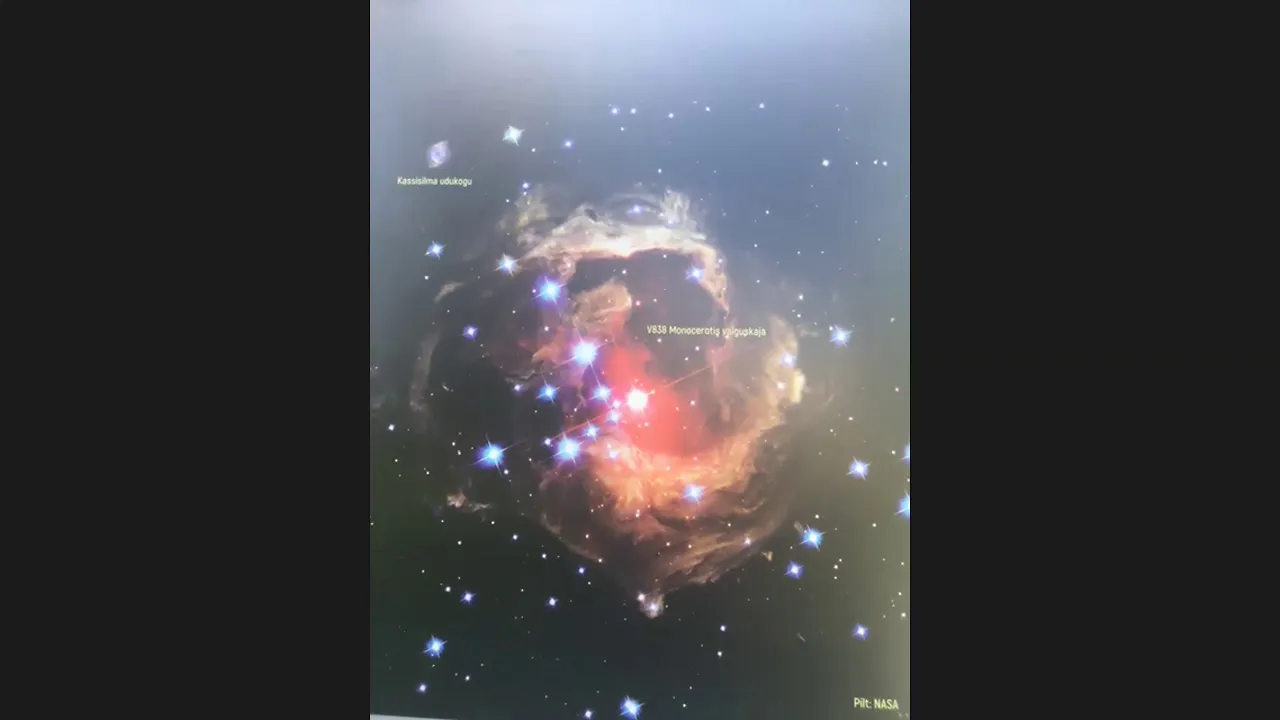

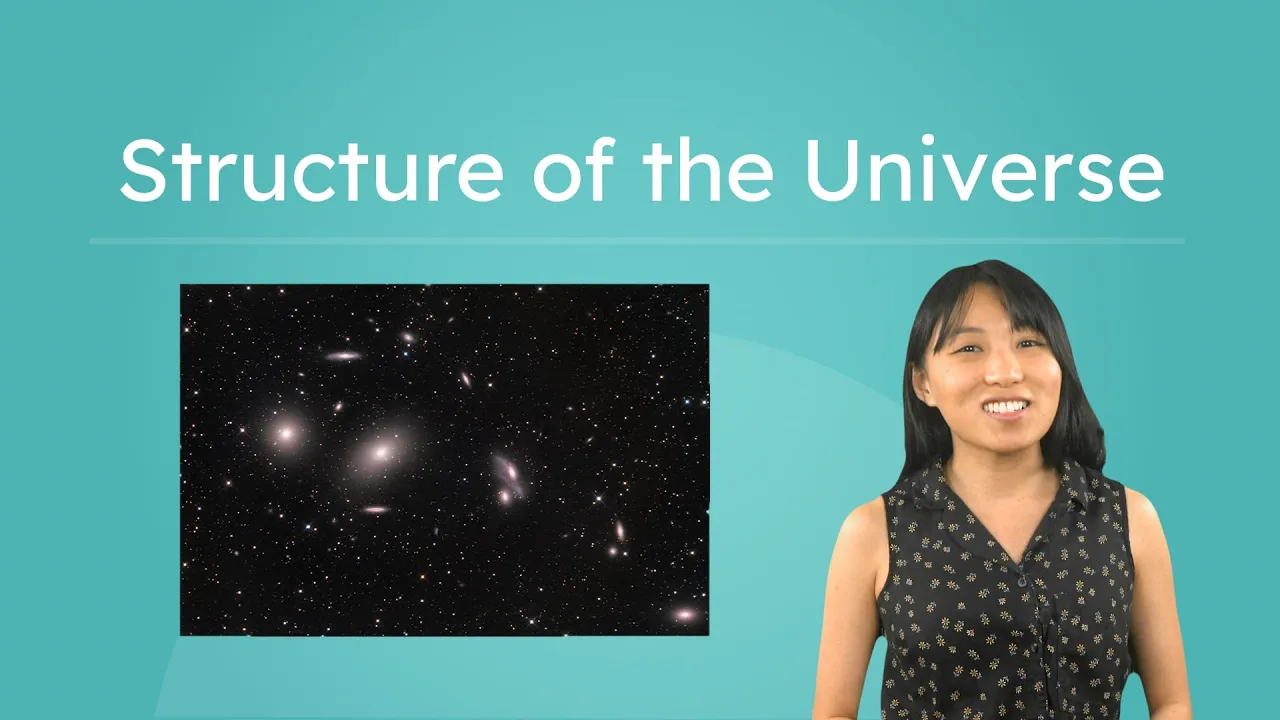
Astronomers measure star distances using trigonometric parallax (observing position shifts as Earth orbits the Sun), then use 'standard candles' like Cepheid variables to bootstrap measurements to more distant stars, ultimately building the Cosmic Distance Ladder that extends from our solar system to distant galaxies and reveals the universe's expansion.
Measure Star Distances: How Astronomers Map the Cosmos
Added:Basic geometry and trigonometry, particularly the concepts of angles, triangles, and triangulation.
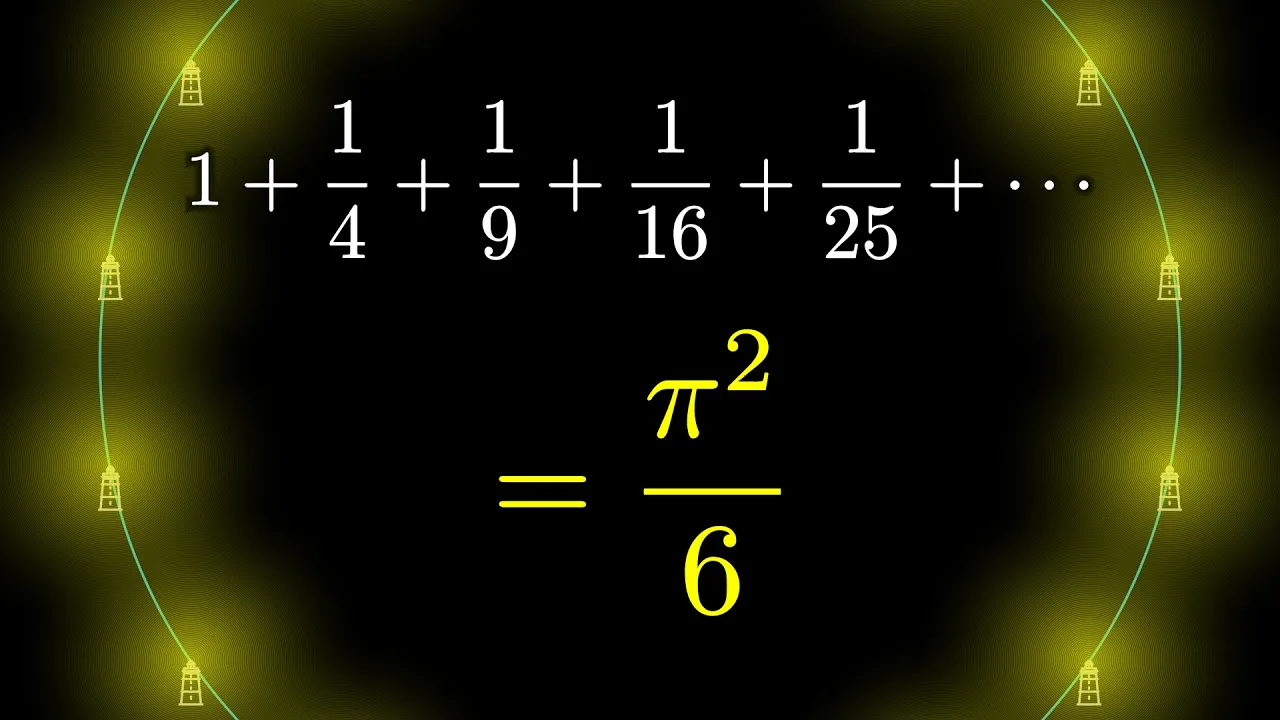
The inverse-square law of light, which describes how an object's apparent brightness decreases as distance increases.
Fundamental astronomical units of measurement, including Astronomical Units (AU), light-years, and parsecs.
The distinction between an object's intrinsic luminosity (actual energy output) and its apparent magnitude (how bright it looks from Earth).
Hubble's Law and cosmic expansion, specifically how distance measurements relate to the redshift of distant galaxies.
The discovery of Dark Energy and the accelerating expansion of the universe, which heavily relied on Type Ia supernovae as standard candles.
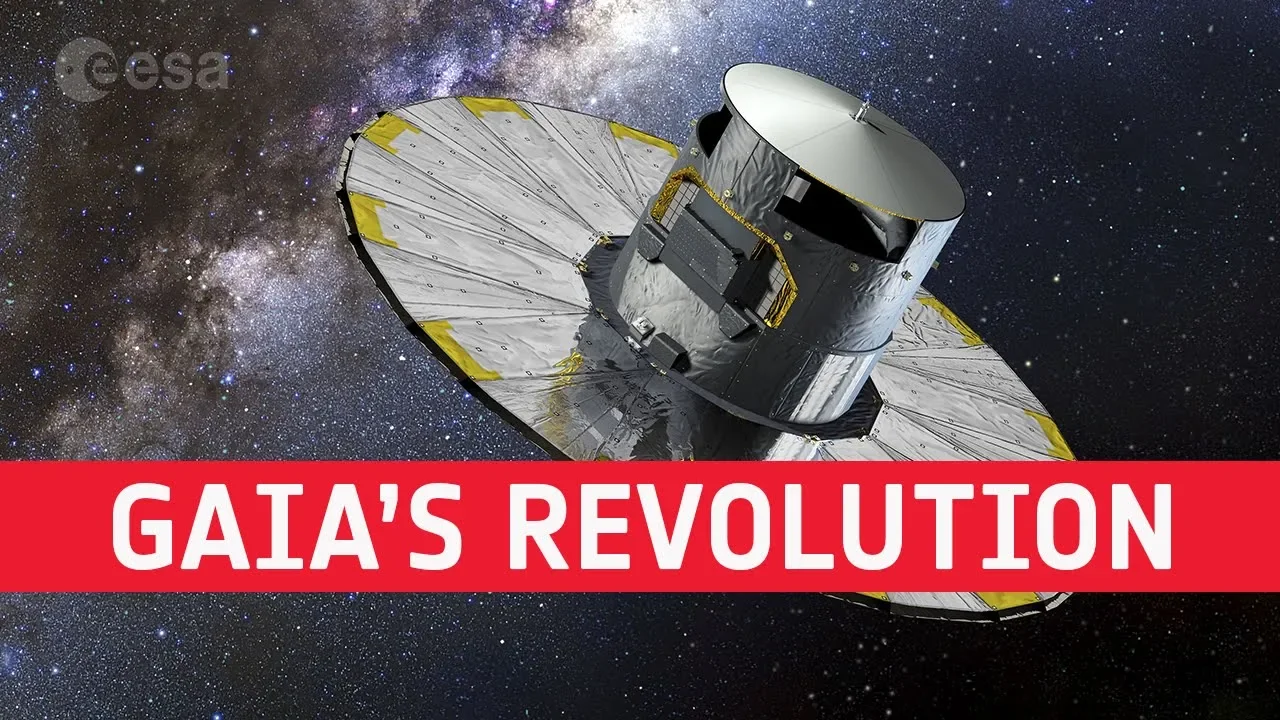
The role of space-based astrometry missions, such as the ESA's Gaia observatory, in mapping the Milky Way with unprecedented precision.
The mapping of the large-scale structure of the cosmos, including galaxy clusters, superclusters, and cosmic voids.
460.7K views11.7Klikes9:51Original Release: 2014-09-08
(school of YouTube intro reel, with a school bell ringing) September is the start of the school year for many students around the world, and we at SciShow have the luxury of learning all year long, but many young people are not in school simply because they can't afford it.
That's why YouTube is partnering with Comic Relief to raise money for education.
It's School of YouTube Week, where we can all learn something new so that others can too.
A little goes a long way.
Five US dollars will pay for a child in Zambia to go to school for two months and have a meal there every day.
If we can raise $500,000, we could help over 5,000 children go to school and have a meal there for a whole year.
If you wanna help, go to comicrelief.com and donate, or if you're in the US, you can text SOYT12 to 71777 - message and data rates may apply.
If you're in the UK, text SOYT12 to 70005 - texts cost £5 plus your standard network message charge.
Five pounds per text will go to Comic Relief.
You must be 16 years or older, and please ask the bill-payer's permission.
For full terms and conditions and more information, go to this link.
[Intro] Hi, this is Hank from SciShow.
This week on YouTube, it's the school of YouTube, where YouTubers learn things!
Uh, we're learning things all the time on SciShow, but I'm very excited right now to have Phil Plait, who is the Bad Astronomer of badastronomy.com - you've been talking about astronomy and science and advocating for science uh, for a long time!
Phil: Since you were a fetus!
Hank: Wow!
There are many things that I do not understand about the universe, but I think I'm gonna go with something fairly simple that I have never been able to get my head around.
How do we know how far away a star is?
We're looking up there, and you can see some of them are different brightnesses, uh, and you can- but that's really all I can tell.
Like, and how- how can we say "that's a brighter star 'cause it's closer", "that's a brighter star 'cause it's bigger"... This seems like an impossibility to me, from our one vantage point of the Earth, to have any idea how far away something so far away, is.
Phil: Well, I'll ask you.
How do you know how far away something is, when it's right in front of you?
Hank: Uh, I could either get a tape measure- Phil: Okay.
(Hank demonstrates measuring with a tape measure, with sound effects) Right.
Hank: Which I can't do with a star!
Phil: That is- uhh, well!
(Hank and Phil laugh) Hank: I'm pretty sure that we don't have any tape measures that- Phil: Yeah, that would be hard.
Yeah, it would be hard, okay.
Hank: -are lightyears long.
Uh, or I use my two eyes.
And so I go like- Phil: Bingo!
Hank: Okay.
Phil: Right on the nose!
Hank: But we've only got one planet to look from!
Phil: Ah, but our planet moves!
And that's how this works.
Hank: (gasps in astonishment) That's totally true!
Phil: The basic way this works - when you're looking at something, and it's far away, or medium distance, we have two eyes, and one eyes sees it at this angle, and one eye sees it at this angle.
And our brain processes those two different angles and can figure out how far away an object is.
The farther away it is, the more parallel our vision is, and the closer something else is, the harder you have to cross our eyes to see it, because the angle's much- much wider.
We can do that with the Earth as well.
Stars are very far away, and our eyes are too close together to see that angle-- basically past a few meters away everything looks the same distance.
But the Earth is going around the sun.
So the Earth takes a year to circle the sun once, so, at one point it's here and six months later it's over here, and that makes a binocular angle just like our eyes.
It turns out the closest stars are at a distance where, using telescopes and measuring their distance day after day for months or years, we can actually see the stars moving back and forth as the Earth is moving around the sun.
And this process is called "Trigonometric Parallax," because you're using trigonometry and parallax is just the idea of measuring a distance to something.
And that's how we did the nearest stars!
Hank: But there's a point where stars are so far away that it looks basically the same to our telescopes.
Phil: Yes.
Now, if you use a bigger telescope or put one out in space where our atmosphere isn't making the image swim and dance you can do a little bit better, you can actually see to a distance of maybe about a thousand light years.
And there are a lot of stars out to a thousand light years so we can do this pretty well.
But past there, yeah, the Earth's orbit isn't big enough and we can't do it.
But!
We have another technique where you can say, "Oh, here's a star that's two hundred light years away, we've measured it's position very well, and here's a star that's exactly like it but it's a hundred times fainter.
Well if it's a hundred times fainter then it must be ten times farther away, because the more distant something is the fainter it is and it goes with the square root of the distance, so it's a hundred times fainter it must be ten times farther away."
And you can measure the distance of this other star by bootstrapping it from the one you know.
Hank: But we have to know a lot about the kinds of stars there are out there-- Phil: We do!
Hank: -in order to do that.
Phil: And we do, we actually have been doing this for a long time, more than a century.
And we can look at two stars and compare them; for example taking their color or taking their spectrum, look at- look at each one, break their light up into thousands of colors, and that pattern of light.
There are chemicals in the atmosphere of a star that absorb certain colors of light, and so when you map that out.
you get a graph that has bumps and wiggles in it.
It's a bit like a fingerprint.
And so you can say, "Oh this star is cooler than this one, or this one is hotter, or this one's more massive", you can do all that, and you can say, "Oh this star looks just like this one but it's dimmer, must be farther away", and you can generate a distance to that more distant star.
Hank: So there's a special parallax term for that-- for that thing as well?
Phil: In fact yes.
And basically they are more 'bootstrapping' extrapolations.
Hank: Mhmm.
Phil: Now we know that if we see that kind of star that we've already measured the position of that is close by, and we're seeing it farther away in a different star we can figure out how far away that is.
You-- you can work your way out to the galaxy that way.
But it turns out that there are other galaxies where we don't necessarily see individual stars in them!
And there are other methods of finding out how far away those galaxies are: how fast they're moving away from us, if a star blow up in 'em, lots of things you can do to let us know how far away they are.
And we call this basically the "Cosmic Distance Ladder" [term graphic on the lower left].
Each rung is built on the rung before it.
And by doing this we've gone from measuring the distance from, y'know, the moon and the sun, out to the stars and the galaxies and distant objects in the universe itself.
Hank:... [awed voice] I hadn't even thought about how we'd measure how far away a galaxy is.
That's a different question.
Phil: It's related.
Hank: No it is totally, but like, wow.
I-- [continued stammering as he finds his point] I just didn't expect to get there, nor did I even consider... how amazing it is.
Phil: Yeah!
Hank: That we know how far away other galaxies are.
Phil: That's something that was done by Edwin Hubble and other people back in the 1910s, and 1920s.
They built telescopes big enough to see stars in other galaxies and measure they're distance, and then they discovered that galaxies are moving away from us and that how quickly they're moving away depends on their distance.
And again, that's the next 'rung', and you can bootstrap that all the way out to literally seeing the expansion of the universe itself, and EVEN the fact that the expansion is accelerating.
And-- we discovered in 1998, two different teams of astronomers looked at the universe, found out "Hey it's getting bigger more every day.
It's getting bigger faster NOW then it was yesterday."
And that was because we'd measured the distances to these very very distant objects in the universe.
Hank: That........ What must it have been like, for Edwin Hubble to realize that we, even as many stars as there are in our galaxy, that there were other galaxies out there.
Like, how much of a mind-shift, like... that's so, like, philosophically significant.
Phil: Yeah!
Hank: And then to be the person who just like, who has to tell the whole world about that.
Phil: It was a... change in the paradigm of astronomy, as much as discovering what cells were for biology or something like that.
There was a big argument, you know, we'd looked, we go out with our telescopes, we look up into the sky, we see these fuzzy objects, we're gonna call them 'nebulae' which means gas cloud.
And some of these things are forming stars, and some of them are spiral-shaped and fuzzy and weird-shaped!"
There was a big argument, a big debate, literally a debate in fact: were these objects in our galaxy or were they distant galaxies themselves?
And it was in the 1920s where that was resolved.
And yeah, they were separate objects.
Our galaxy is not the universe.
Once again, we'd done it over and again because astronomy is good at this, uh, it shook its finger at us and said that, "You guys got too big an ego on you!
You're a lot dinkier than you thought."
And no, the Milky Way isn't the whole universe, it's just one galaxy, and it turns out there are hundreds of BILLIONS of galaxies just like it in the universe.
Hank: And we've only known that for less than a hundred years!
Phil: Mhm.
Hank: We.... learn fast.
Phil: Yeah, and there's a lot more to figure out.
Hank: I found this personally extremely fascinating!
This was a very brief conversation and I hope that we will continue it over drinks later tonight.
Phil: Absolutely.
Hank: Um, but, you unfortunately won't be there for that, but thank you for everyone for checking out this School Of Youtube this week on Youtube, and for helping out and donating for Comic Relief.
Because we can learn things, have a good time, and make the world better for everybody, all at once!
Which is pretty amazing.
Thanks to Youtube for doing this; thanks for Phil for coming on SciShow.
Phil: Thank you!
Hank: Our pleasure.
Up Next
10:03
Understanding Redshift: Doppler Effect in Astronomy (Khan Academy) | Cosmology & Astronomy Physics Tutorial
@khanacademy
266.2K views•2010-11-19
61:17
First Billion Years of the Universe with the Square Kilometre Array
@iaaudc
121 views•2022-05-26

6:25
Kepler's Laws of Planetary Motion Explained (Educational Astronomy Video)
@Peekaboo_Kidz
404.9K views•2023-02-17
6:10
Gamma-Ray Bursts: Cosmic Snipers Explained | Astronomy
@kurzgesagt
15M views•2016-07-31
Related Study Plans & Knowledge Roadmaps
Structured learning paths in Astronomy
astronomy
Reionization: Pop III Stars, IGM & 21cm Line
01Foundations of Cosmology & the Early Universe
02Population III Stars & Cosmic Dawn
03Physical Mechanisms of Reionization
+ 2 more learning modules
17h5 modules
Explore Roadmap
astronomy
Planetary Rings: Dynamics, Roche & Resonances
01Foundations of Gravity and Orbital Mechanics
02Tidal Forces and the Roche Limit
03Structure, Composition, and Collisions
+ 2 more learning modules
10h5 modules
Explore Roadmap
astronomy
Asteroseismology: Stellar Waves, Ages & Cores
01Foundations of Stellar Astrophysics & Wave Mechanics
02Stellar Oscillation Modes: P-modes and G-modes
03Mathematical Framework of Asteroseismology
+ 2 more learning modules
35h5 modules
Explore Roadmap
astronomy
Adaptive Optics: Physics, Engineering & Control
01Foundations of Wave Optics and Wavefronts
02Atmospheric Turbulence & Optical Distortion
03Wavefront Sensing Technologies
+ 3 more learning modules
35h6 modules
Explore Roadmap