







![Efeito Doppler Fizeau relativístico [FÍSICA FÁBRIS] Física Moderna Aula 492](https://i.ytimg.com/vi/-0zxkywriMg/maxresdefault.jpg)











![Брайан Шмидт — он открыл ускорение расширения Вселенной [Veritasium]](https://i.ytimg.com/vi/mubdwo-A6jU/maxresdefault.jpg)
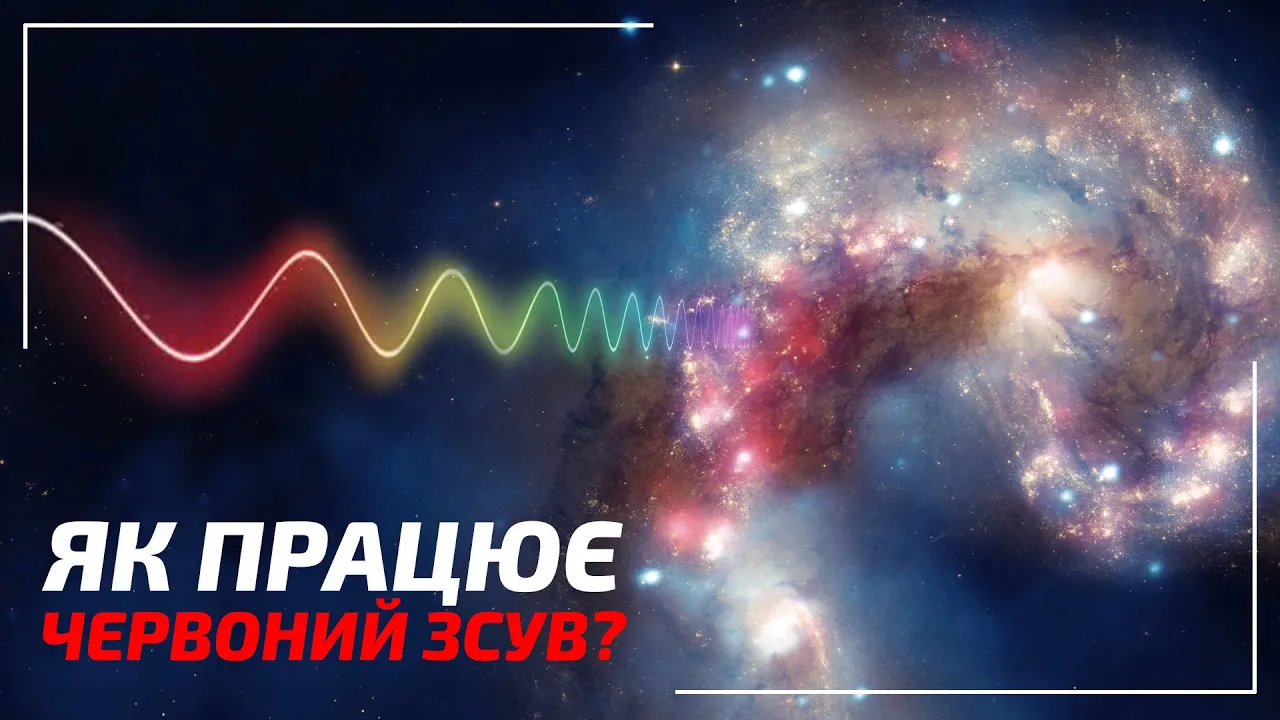
Redshift is the phenomenon where light from a source moving away from an observer appears shifted toward longer wavelengths (and thus redder colors) due to the stretching of light waves as the source recedes; unlike everyday objects where relative motion affects observed speed, light always travels at a constant speed regardless of source motion, but its perceived frequency and wavelength change based on the relative velocity between source and observer, allowing astronomers to determine whether celestial objects are moving toward or away from us and providing evidence for the universe's expansion.
Understanding Redshift: Doppler Effect in Astronomy (Khan Academy) | Cosmology & Astronomy Physics Tutorial
Added:Basic properties of waves, including wave speed, frequency, and wavelength.
The electromagnetic spectrum, specifically how different colors of visible light correspond to different wavelengths and frequencies.
The classical Doppler effect for sound waves, such as the pitch change of a passing siren.
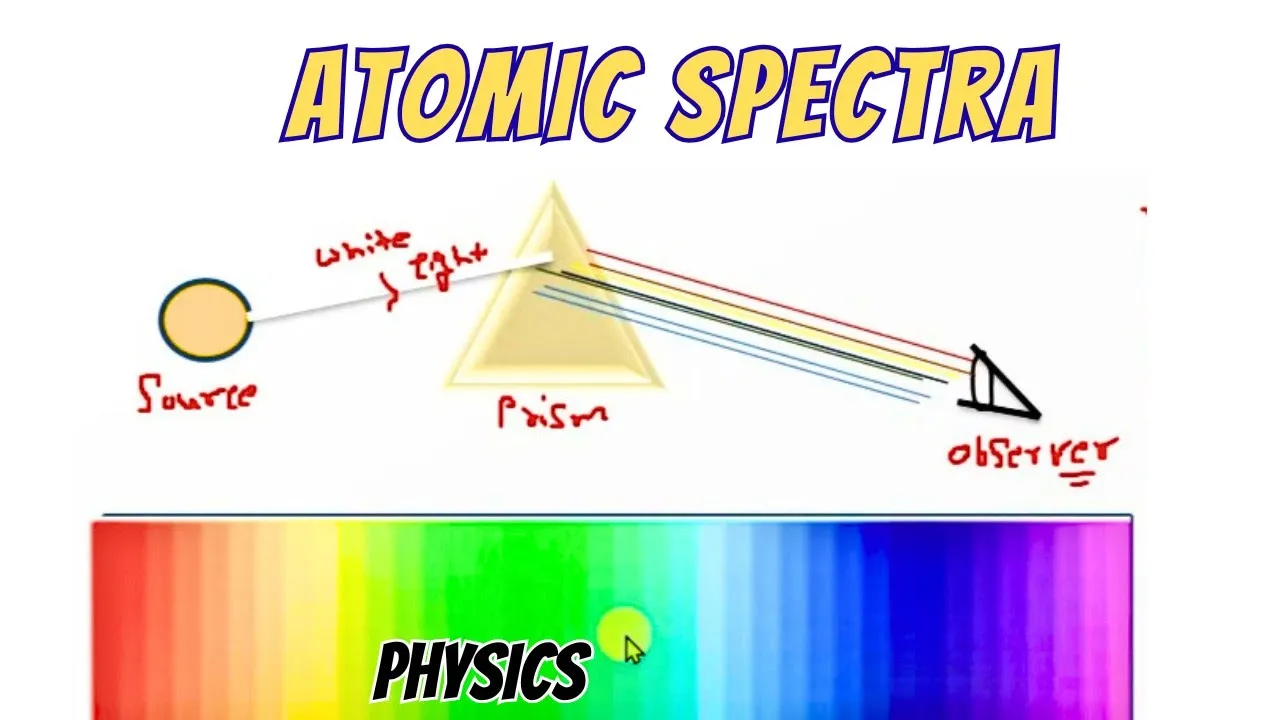
An introductory understanding of atomic spectra, specifically how elements produce distinct absorption and emission lines.
Hubble's Law and how redshift data is mathematically used to calculate the rate of the universe's expansion.
The conceptual difference between Doppler redshift (motion through space) and Cosmological redshift (the expansion of space itself).
The Cosmic Microwave Background (CMB) radiation and how its extreme redshift provides evidence for the early stages of the Big Bang.
The discovery of Dark Energy and the accelerating expansion of the universe through the study of high-redshift Type Ia supernovae.
266.2K views1.6Klikes10:03Original Release: 2010-11-19
Let's say I'm over here.
I'm going to do two scenarios.
So I'm an observer over here.
This is me.
And then maybe even better, I should just draw my eyeball because we're going to be observing light.
So I'm just going to draw my eyeball.
So this is me in the first scenario or this is one of my eyeballs.
And then this is one of my eyeballs in the second scenario.
Now in the first scenario-- so let me draw it-- so in both scenarios, we're going to have an object.
We're going to have some type of source of light.
But in the first scenario, relative to me, the source of light will not be moving.
While in the second scenario, the source of light-- just for the sake of discussion, just for fun-- will be moving at half the speed of light.
Unimaginably fast speed, but let's just assuming that it is.
So it's moving at-- it has a velocity of 1/2 the speed of light, 1/2 light speed away from me who is the observer.
Now let's just imagine what would happen.
They're both emitting light.
So and they're both going to start emitting light at the exact same time.
And when they start emitting light, they're both at the exact same distance from my eye.
The only difference is is that this is stationary, relative to me, while this is moving away from me at half the speed of light.
So let's say that after some period of time, that the light wave from this source reaches my eye.
And then it looks something like this.
I'll try my best to draw it.
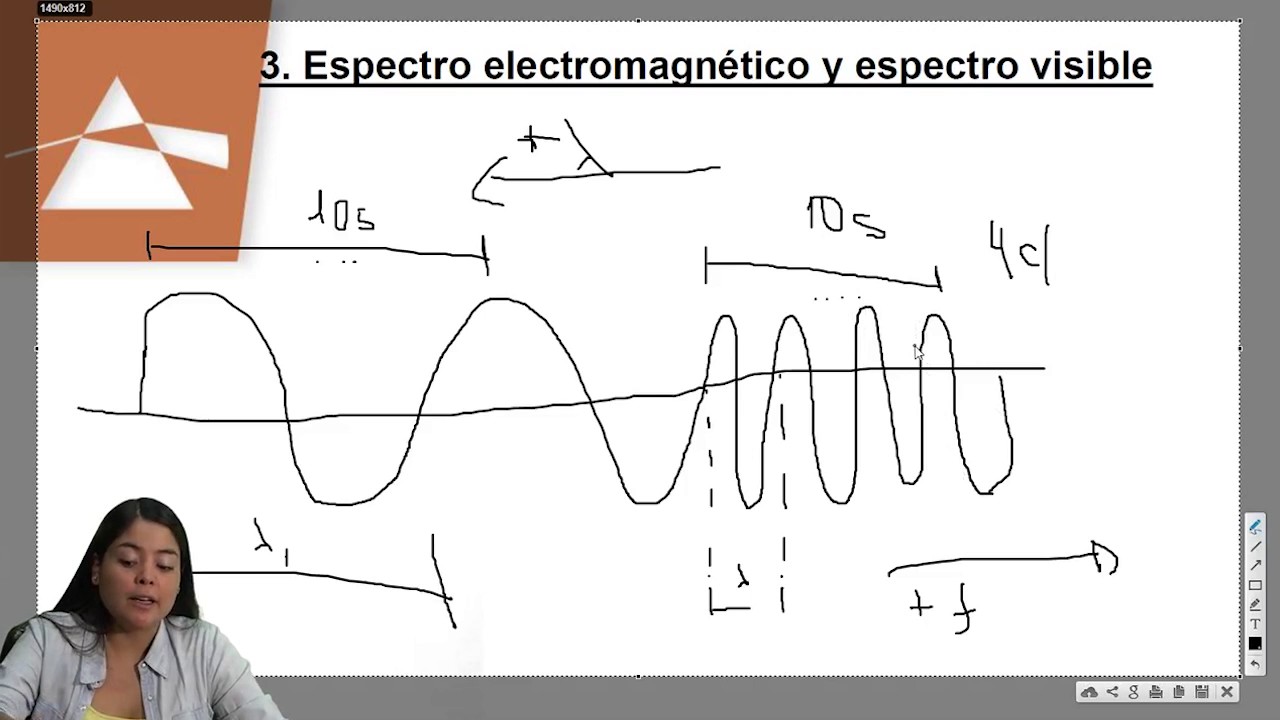
So let's say I have-- I want to draw a couple of wavelengths here.
So let's say that's half a wavelength.
That's a full wavelength.
That's another half, a full wavelength, another half, full wavelength, and then a half, and then a full wavelength.
So let me see if I can draw that.
So it would look like full wavelength, full wavelength, full wave length.
This is not easy to do.
And then you got another full wavelength.
So it would look something like that, the actual waveform.
And so the front of the wave form is just getting to my eye.
And then as the wave forms keep going past my eye, my eye will perceive some type of a wave length or frequency and perceive it to be some type of color, assuming that we're in the visible part of the electromagnetic spectrum.
Now let's think about what's going to happen with this source.
So the first thing is is that the front of the wave form is going to reach me at the exact same time.
One of those neat and amazing things about light travelling in general, or especially in a vacuum, it doesn't matter that this is moving away from me at half the speed of light.
The light will still move towards me at the speed of light.
It's absolute.
It doesn't matter if this is going away at 0.9 the speed of light.
The light will still travel to me at the speed of light.
And it's very unintuitive.
Because in our everyday sense, if I'm moving away from you at half the speed of a bullet and I shoot a bullet, the bullet will only move towards you at-- it'll kind of-- that half of its velocity will be subtracted.
And it'll only move towards me at half of its normal velocity, relative to whether it was stationary, but not the case with the light.
So with that out of the way, let's think about what the wave form would look like.
So by the time the light reached here, we need to think of-- let me actually redraw this over here.
Let me redraw this eyeball right over here.
So this is me again.
So by the time the light reaches my eye-- so they both started emitting the light at the exact same time-- this guy has traveled half this distance.
If it took light a certain amount of time to get this far, this guy will get half as far in that same amount of time.
So by the time the light reaches my eye, this guy will have traveled about half that distance.
So he would have traveled about that far.
They started emitting the light at the same time.
So that very first photon, if you view light as a particle, will reach my eye at the very same time as the very first photon from this guy.
So the wave form is going to essentially be stretched.
So instead of having-- so we're still going to have one, two, three, four full wavelengths, but they'll now be stretched.
Let me see if I can draw four full wavelengths.
So let me cut this in half over here.
And let me cut each of those in half.
So each of these are going to be a full wavelength.
And then they're going to have a half wavelength in between.
And so the wave form is going to look like this.
Let me try my best to draw it.
This is the hardest part, drawing the stretched out wave form.
And there you go.
It's going to look like this.
And so when it gets to my eye, my eye is going to perceive it as having a longer wavelength, even though from the perspective of each of these objects, if you're traveling with each of them, the frequency and the wavelength of the light emitted is the same.
The only difference is this guy's moving away from me-- or I'm moving away from it, depending on how you want to view it-- while I am stationary, while in this first case, the observer and the source are both stationary.
Now, in this situation, what's my eye going to say?
Well, my eye will get each of these successive pulses, or each of these successive wave trains.
And it's going to say, hey, there's a longer wavelength here, a perceived longer wavelength-- let me write that-- perceived longer wavelength here, and also, a perceived lower frequency.
So what would that do to the perception of the light?
Let's say that this is green light.
So if you are stationary with the observer, it would be green light.
So let's look at the electromagnetic spectrum.
I got this off of Wikipedia.
So if I were stationary towards-- with the observer, we'd be in the green light part of the spectrum, so a 500 nanometer wavelength.
But if all of a sudden, because the object is moving away from me at this huge velocity, the perceived wavelength becomes wider.
So from my perception, it is going to have a wider wavelength.
And you can see what's happening.
It will look redder.
It will move towards the red part of the spectrum.
And this phenomenon is called redshift.
And I've done a bunch of videos of the physics playlist on the Doppler effect.
And over there, I talk about sound waves and the perceived frequency of sound-- if something travels towards you verses away from you-- as the exact same idea.
This is the Doppler effect applied to light.
And the reason why the Doppler effect works for light traveling through space and for sound traveling through air is because the sound wave in air, regardless of whether the source is moving away or towards you, the sound wave is going to move at the speed of sound in air at a certain pressure and all of that.
And light is the same thing.
But in a vacuum, It will always, regardless of the source, regardless of what the source is doing, the actual light wave itself will always travel at the same velocity.
The only difference is is that its perceived frequency and wavelength will change.
And now the whole reason why I'm talking about this is you can use this property of light, that it gets redshift, to see whether things are traveling away or towards you.
And people talk about redshift because, frankly, most things are traveling away from us.
And that's one of the reasons why we tend to believe in the Big Bang.
The opposite, if something is traveling towards me at super high velocities, then we would have something called-- you don't hear the word-- it would be violetshift.
The frequency would increase.
So it would look bluer or more purple.
Now the other thing I want to highlight is this redshift phenomenon, this idea, it doesn't apply only to visible light.
So it could even apply the things that we can't even see.
So it would only-- it would become redder.
But it's not like you can even see.
It could even be applied to things that are even more red than red.
So maybe it's a microwave that is being emitted.
But because the source is moving away from us so fast, it could be perceived as an actual radio wave.
And actually, I should have talked about this in the video on the microwave background radiation is that we're perceiving it as microwaves.
But these sources were moving away from us.
They were being redshift.
So they were not actually emitting microwave radiation.
It's just what we observe-- and this is actually what would be predicted based on the Big Bang-- is actually microwave radiation.
So anyway, hopefully, that gives you a sense of what redshift is.
And now we can use this tool to explain why we think many, many things are moving away from us.
And now let me just actually make sure you get that idea.
If I have two objects, let's say that these are suns.
Let's say that these are both suns, or both galaxies, either way.
And because of other properties-- and I won't talk about them right now-- we know that they are probably emitting light of the same color.
They're probably emitting light of the same color because we know other properties of that star or of that galaxy.
Now, if what we actually perceive is that this one looks redder to us than this one, then we know that it is traveling away from us.
And the redder it looks, the more its wavelength is spread out relative to this other star, the faster we know that this is moving away from us.
Up Next
25:35
Cosmic Distance Ladder: Measuring the Universe with Terence Tao
@3blue1brown
1.3M views•2025-02-23
61:17
First Billion Years of the Universe with the Square Kilometre Array
@iaaudc
121 views•2022-05-26

6:03
Mantle Convection and Plate Tectonics | Earth Science
@khanacademy
281.7K views•2011-02-03
6:10
Gamma-Ray Bursts: Cosmic Snipers Explained | Astronomy
@kurzgesagt
15M views•2016-07-31
Related Study Plans & Knowledge Roadmaps
Structured learning paths in Astronomy
astronomy
Reionization: Pop III Stars, IGM & 21cm Line
01Foundations of Cosmology & the Early Universe
02Population III Stars & Cosmic Dawn
03Physical Mechanisms of Reionization
+ 2 more learning modules
17h5 modules
Explore Roadmap
astronomy
Planetary Rings: Dynamics, Roche & Resonances
01Foundations of Gravity and Orbital Mechanics
02Tidal Forces and the Roche Limit
03Structure, Composition, and Collisions
+ 2 more learning modules
10h5 modules
Explore Roadmap
astronomy
Asteroseismology: Stellar Waves, Ages & Cores
01Foundations of Stellar Astrophysics & Wave Mechanics
02Stellar Oscillation Modes: P-modes and G-modes
03Mathematical Framework of Asteroseismology
+ 2 more learning modules
35h5 modules
Explore Roadmap
astronomy
Adaptive Optics: Physics, Engineering & Control
01Foundations of Wave Optics and Wavefronts
02Atmospheric Turbulence & Optical Distortion
03Wavefront Sensing Technologies
+ 3 more learning modules
35h6 modules
Explore Roadmap