










![ISI ve SICAKLIK-5-[GENLEŞME]](https://i.ytimg.com/vi/oi07y6sdWxs/hqdefault.jpg)


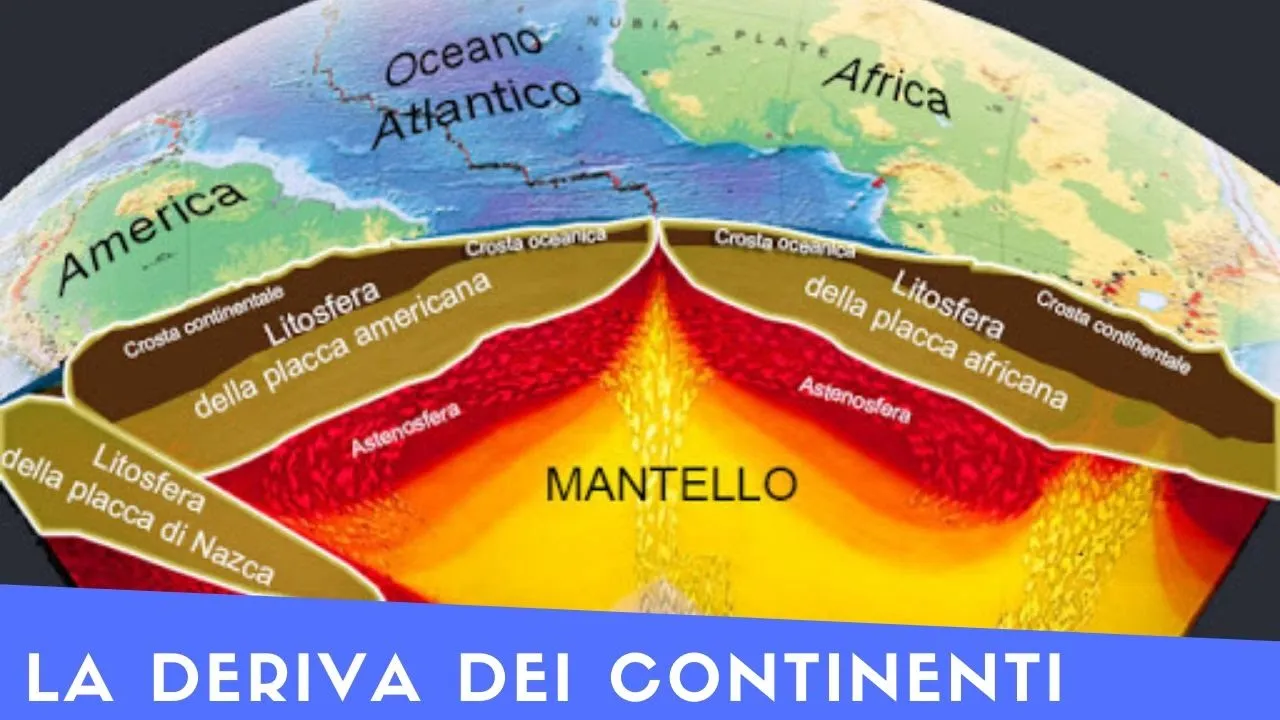





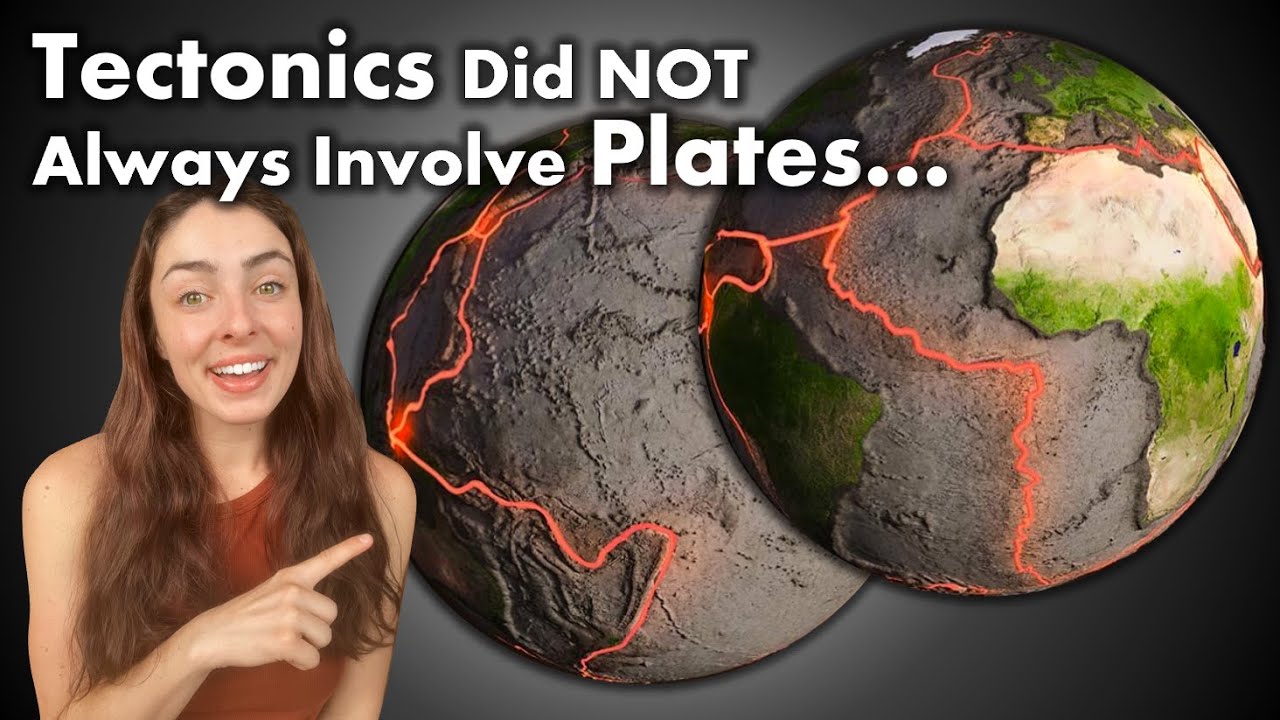







Tectonic plates move primarily due to convection currents in the Earth's mantle, where hotter, less dense material rises and cooler, denser material sinks, creating slow-moving circular motions that drag the lithosphere along with them.
Mantle Convection and Plate Tectonics | Earth Science
Added:Understanding of Earth's internal layers, specifically the distinction between the rigid lithosphere and the ductile, semi-fluid asthenosphere.
Basic principles of heat transfer, particularly the difference between conduction and convection.
The physical concept of density and buoyancy, specifically how temperature changes cause fluids or semi-solids to rise or sink.
A foundational awareness of the theory of Continental Drift and Alfred Wegener's early evidence for moving landmasses.
An in-depth analysis of the three major types of plate boundaries (convergent, divergent, and transform) and the specific landforms they create.
Study of auxiliary tectonic driving forces that work alongside convection, such as 'slab pull' at subduction zones and 'ridge push' at mid-ocean ridges.
Investigation of mantle plumes and hot spots, explaining volcanic activity that occurs far away from plate boundaries (e.g., Hawaii and Yellowstone).
Understanding the supercontinent cycle (such as the formation and breakup of Pangaea) and how plate tectonics shapes Earth's long-term climate and paleogeography.
Real-world application of plate tectonics in assessing seismic risks, predicting volcanic eruptions, and locating natural resources.
281.7K views1Klikes6:03Original Release: 2011-02-03
What I want to do in this video is talk a little bit about maybe why the plates are actually moving in the first place.
And nothing I'm talking about in this video has been definitively proved.
This is just kind of the current thinking, the leading thinking, on why plates are actually moving.
Although we haven't seen the definitive evidence yet, and it's probably a combination of a bunch of things.
Now, before we even talk about plates, let's just talk about convection.
And you might already be familiar with the term, but just in case you're not, let's do a little bit of review of convection.
So let's say I have a pot over here.
So that is my pot.
And it contains some water.
So I have water in my pot.
And let's say I only heat one end of the pot.
So I put a flame right over at that end of the pot.
So what's going to happen?
Well, the water that's right over the flame is going to be warmed up more than any of the other water.
So this water is going to get warm.
But when it gets warm, it also becomes less dense.
When you have a fluid, if you warm it up, the molecules are vibrating more.
They have more kinetic energy.
They're going to a bounce further distances away from each other.
They will become less dense.
And if you have something that's less dense, and it's surrounded by things that are more dense, and we're dealing in kind of a fluid state right here, that warm, less dense water is going to move upwards.
It's going to move upwards.
Well, when it moves upwards something has to replace it.
So you're going to have cooler water from this side of the container kind of replacing where that water was.
Now, this water, as it rises, what's going to happen to it?
Well, it's going to cool down.
It's going to get further from the flame.
It's going to mix with maybe some of the other water, or transfer some of its kinetic energy to the neighboring water.
So it'll cool down.
But once it cools down, what's it going to want to do?
Remember, in general, the closer you are to the flame.
So the water closer to the flame in general is going to be warmer.
So all of this stuff is going to be warmer, and all of this stuff up here, like the coldest water, is always going to be furthest from the flame.
And so the coldest water is going to be over here.
But remember, the coldest water is also the densest water.
So this water over here is dense.
And so it will sink.
It's denser than the water around it.
And it also helps replace the water that's going here to get warmed up again.
And so what you do is you have this cycle here.
Warm water rises, moves over to the right down here, and then goes back down as it cools down, and it's dense, and then it gets warmed up again.
And so this process, essentially what it's doing is it's transferring the heat.
It's allowing the heat to be transferred from this one spot throughout the fluid.
And so we call this process, this is convection.
Now, the reason why we think the plates are moving is because we think that there are similar types of convection currents in the asthenosphere, in the mantle, in the more fluid part of the mantle.
Remember, most of the mantle you can kind of view it as this mooshy, spongy, not quite liquid, but not quite solid state, kind of plastic.
It can kind of moosh past.
It can kind of flow like super, super, super thick, like super viscous fluid.
So not quite solid, not quite liquid.
But the same thing could be happening.
You have certain areas in the mantle that are hotter than others, and this particular in the asthenosphere.
And those areas, that's where you're going to have the material in the mantle move up, because it's hotter, it's less dense, and it will move up.
And maybe it'll cause one of these divergent rifts where kind of plate material and crustal material is forming.
And then as it moves up, it cools down, and eventually sinks, only to get heated up again.
So it has this kind of circular motion just like we saw with the boiling water.
And so that process, remember this isn't completely liquid.
It is rocky.
So it's going to potentially be able to take other things with it.
It could maybe drag the crust along with it.
Or I should say it could drag the lithosphere along with it, not just the crust.
It could drag all this rigid rock up here along with it, causing it to move in that general direction.
So you have the drag there.
You could also imagine this kind of a suction effect, where, if you view it as a fluid, you have a bunch of fluid coming down here.
So it would kind of pull the lithosphere down at those points, and it would kind of push the lithosphere up at those points.
So you have these convection currents that are essentially driving it.
These aren't going to be super fast moving fluid convection currents, like you would expect with boiling water or with heated water.
These would be slow moving convection currents, but they're moving enough, and they're able to kind of put enough drag on the lithosphere to take the lithosphere along with it.
And so that's kind of at a high level the dominant theory as to why they're moving.
There's other ones that talk about maybe these lithospheric plates, they kind of thicken as they move further away from this area where the ridge is forming.
And if we look at this oceanic crust right over here.
And so over time, they're denser over here, because there's more cooled down material at these points.
And it's already a little bit lower because this is where a lot of the land is being created.
And so there's maybe some gravitational effects.
But the dominant effect, we think, is due to this convection in the upper mantle.
Up Next
12:09
Astrophysical Jets: Black Hole and Neutron Star Physics Explained
@whatdamath
25.5K views•2019-01-06
61:17
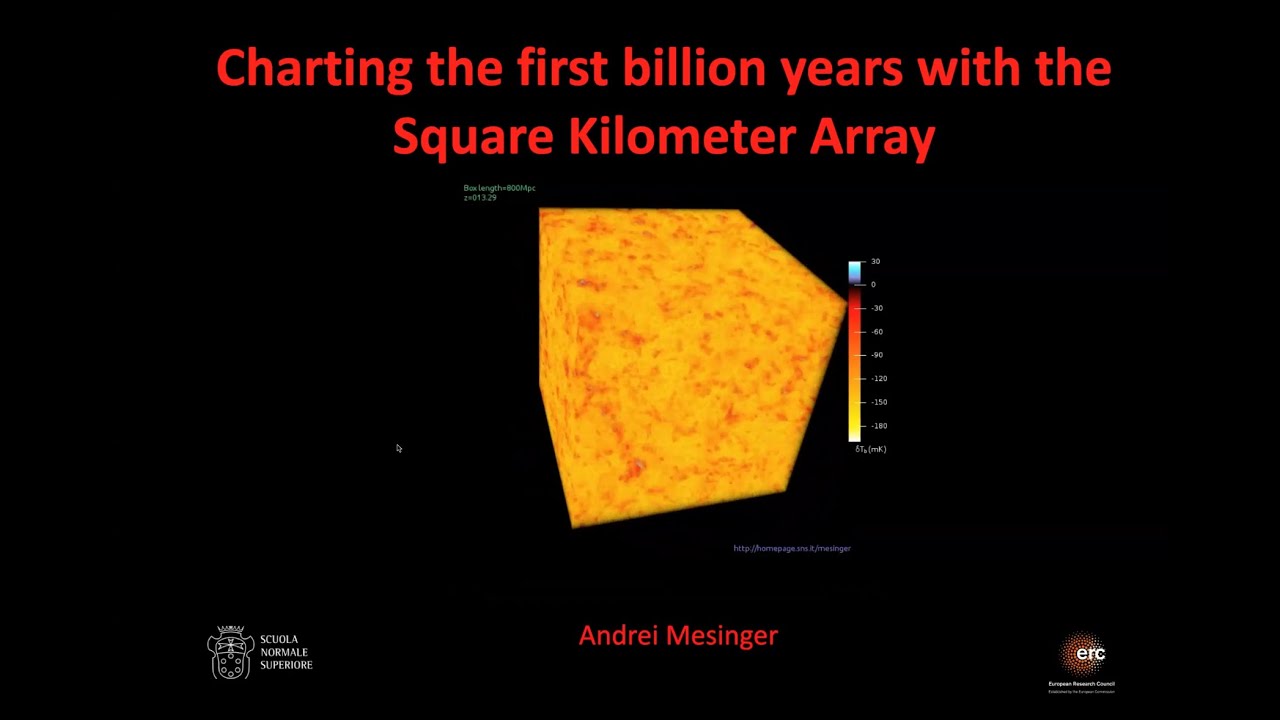
First Billion Years of the Universe with the Square Kilometre Array
@iaaudc
121 views•2022-05-26
10:03
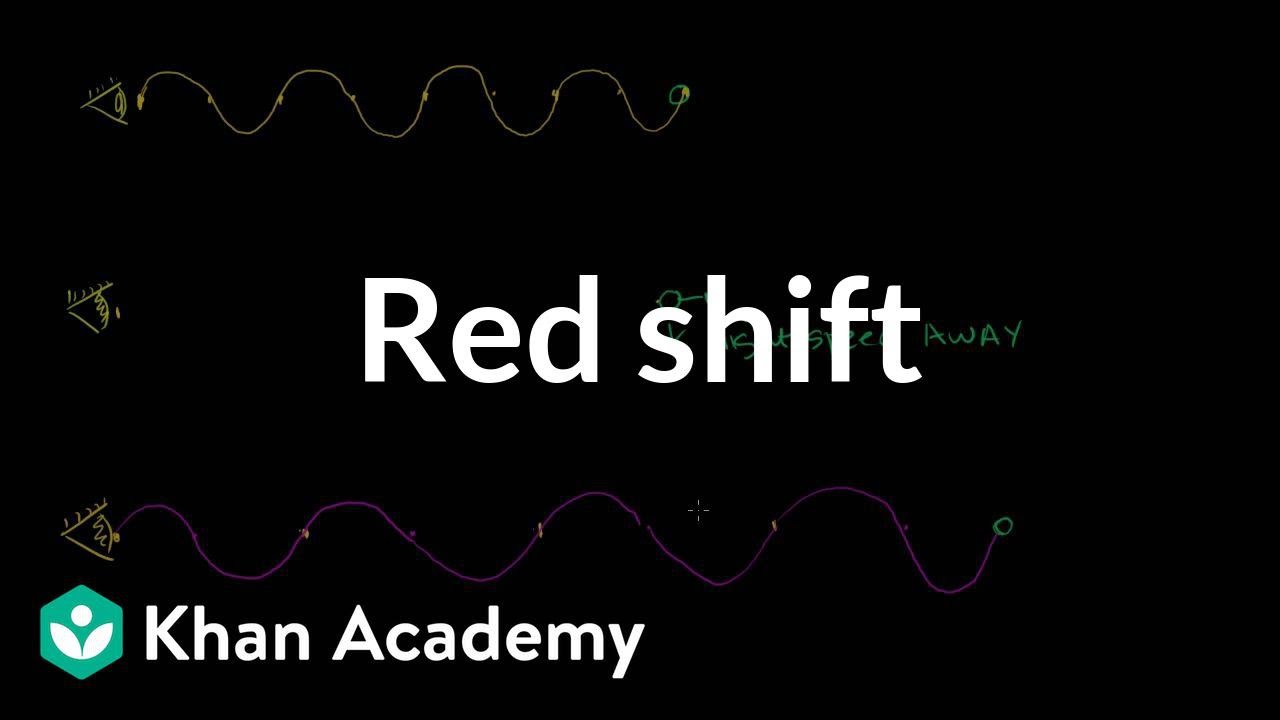
Understanding Redshift: Doppler Effect in Astronomy (Khan Academy) | Cosmology & Astronomy Physics Tutorial
@khanacademy
266.2K views•2010-11-19

6:10
Gamma-Ray Bursts: Cosmic Snipers Explained | Astronomy
@kurzgesagt
15M views•2016-07-31
Related Study Plans & Knowledge Roadmaps
Structured learning paths in Astronomy
astronomy
Reionization: Pop III Stars, IGM & 21cm Line
01Foundations of Cosmology & the Early Universe
02Population III Stars & Cosmic Dawn
03Physical Mechanisms of Reionization
+ 2 more learning modules
17h5 modules
Explore Roadmap
astronomy
Planetary Rings: Dynamics, Roche & Resonances
01Foundations of Gravity and Orbital Mechanics
02Tidal Forces and the Roche Limit
03Structure, Composition, and Collisions
+ 2 more learning modules
10h5 modules
Explore Roadmap
astronomy
Asteroseismology: Stellar Waves, Ages & Cores
01Foundations of Stellar Astrophysics & Wave Mechanics
02Stellar Oscillation Modes: P-modes and G-modes
03Mathematical Framework of Asteroseismology
+ 2 more learning modules
35h5 modules
Explore Roadmap
astronomy
Adaptive Optics: Physics, Engineering & Control
01Foundations of Wave Optics and Wavefronts
02Atmospheric Turbulence & Optical Distortion
03Wavefront Sensing Technologies
+ 3 more learning modules
35h6 modules
Explore Roadmap