










![SACANI RESPONDE [TEMAS VARIADOS #01] - Ciência Sem Fim #311](https://i.ytimg.com/vi/JntgF5qy9wA/maxresdefault.jpg)


![[Week 10] Active Galactic Nuclei](https://i.ytimg.com/vi/1NW252Ylaww/maxresdefault.jpg)


![[수면다큐]《우리 은하와 안드로메다가 충돌한다면 무슨 일이 벌어질까?》잠잘 때 들으면 시간순삭!](https://i.ytimg.com/vi/NegV5cYqs8Y/maxresdefault.jpg)



![우주 다큐 : M87보다 더 완전한 블랙홀 사진 [EP 118] - 미노스](https://i.ytimg.com/vi/YfSgKrSAT-A/maxresdefault.jpg)
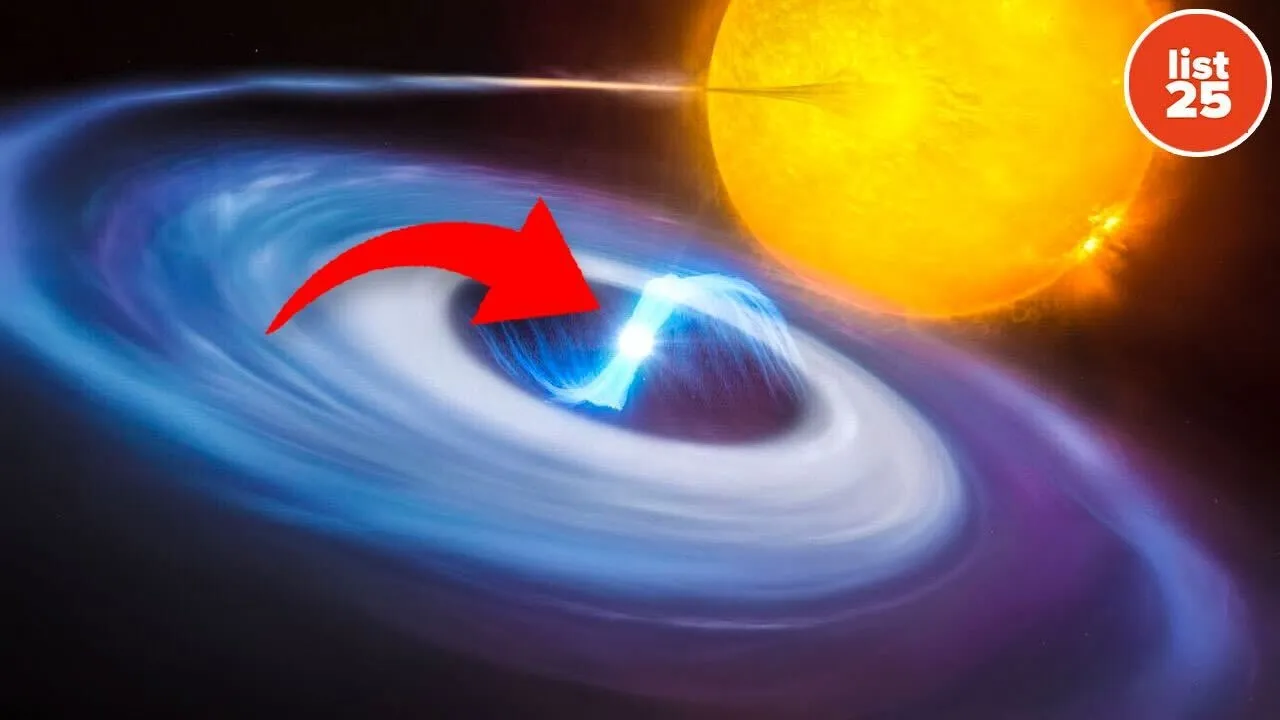
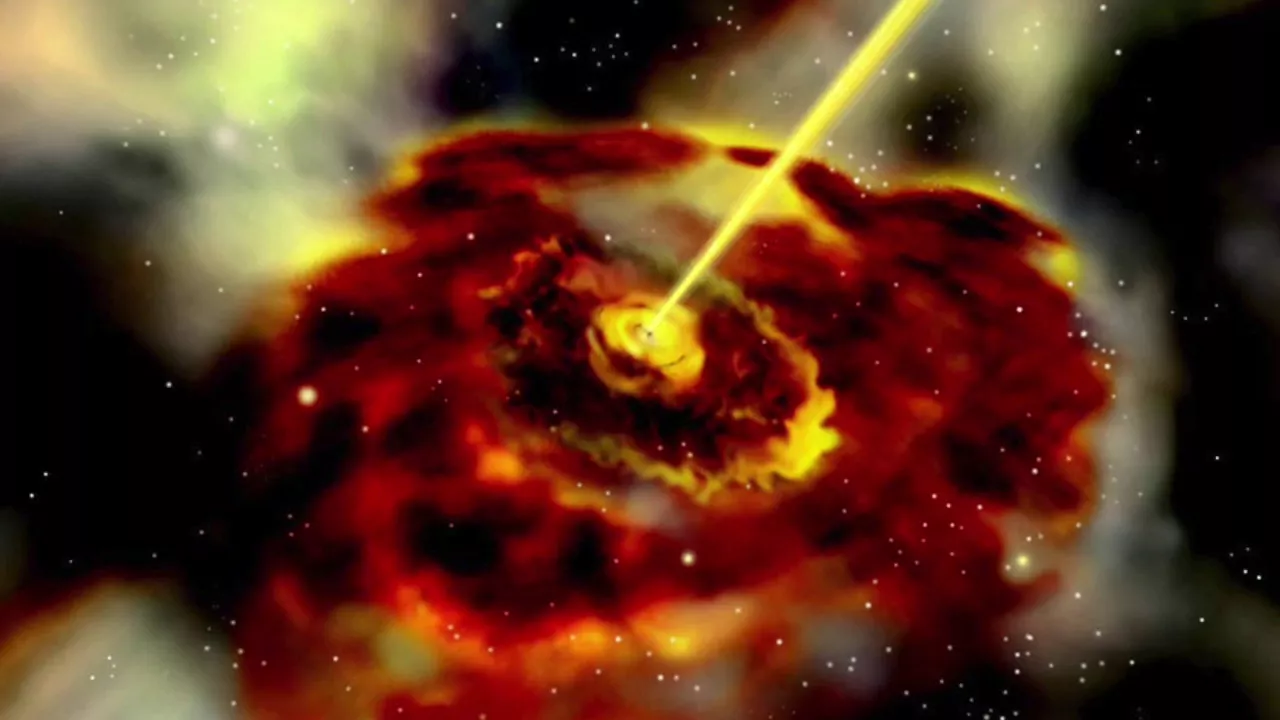
Astrophysical jets are powerful, collimated beams of plasma and particles that emanate from supermassive black holes and rapidly spinning neutron stars, formed through magnetic field interactions in accretion disks or frame-dragging effects near spinning black holes; these jets can extend millions of light-years and remain stable due to relativistic time dilation, representing one of the most efficient energy production mechanisms in the universe.
Astrophysical Jets: Black Hole and Neutron Star Physics Explained
Added:Fundamental concepts of General Relativity, including gravitational collapse and the nature of spacetime curvature around compact objects.
The physics of accretion disks, specifically how matter behaves, heats up, and radiates as it spirals toward a central gravitating body.
Basic principles of Electromagnetism and Magnetohydrodynamics (MHD), particularly how magnetic fields interact with moving ionized gas (plasma).
The physical properties and differences between stellar-mass compact remnants, specifically neutron stars and black holes.
The Blandford-Znajek and Blandford-Payne mechanisms, which detail the exact mathematical models of energy extraction from rotating black holes and accretion disks.
The role of Active Galactic Nuclei (AGN) feedback, exploring how supermassive black hole jets influence galaxy formation and evolution.
High-energy astrophysical phenomena associated with jets, such as Gamma-Ray Bursts (GRBs) and the relativistic beaming effects in blazars.
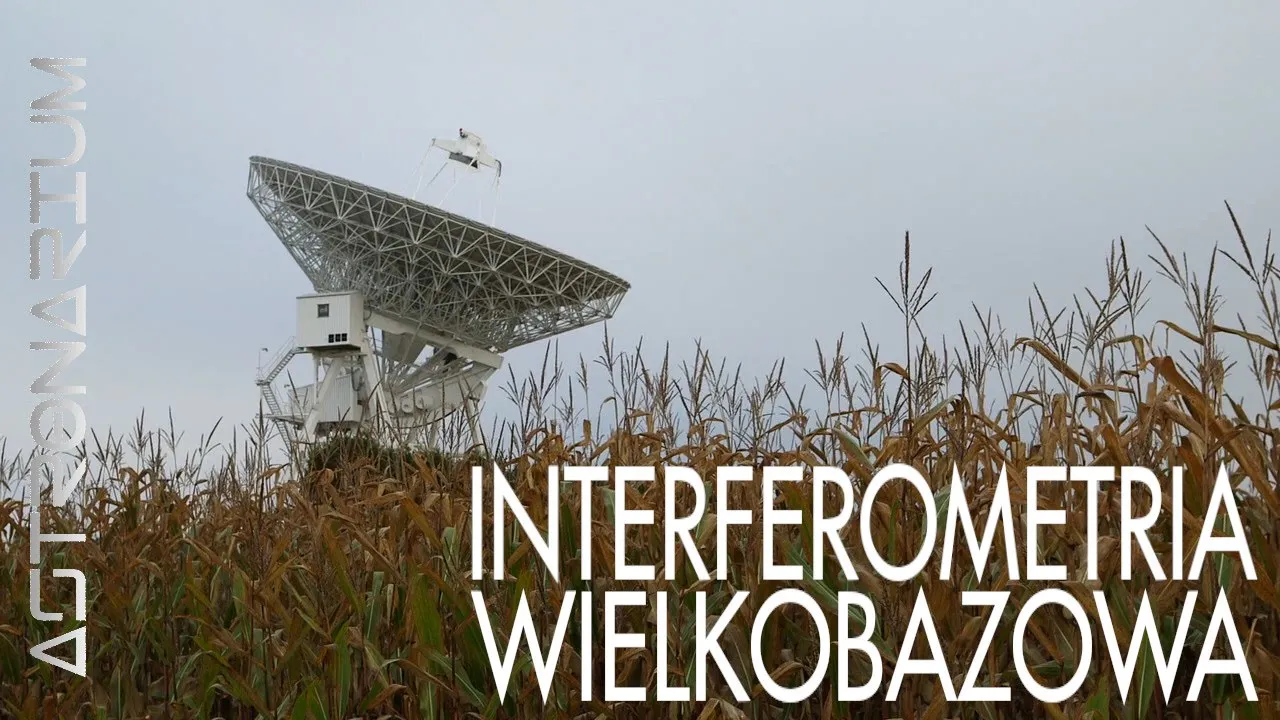
Modern observational techniques in multi-messenger astronomy, including how Very Long Baseline Interferometry (VLBI) is used to image jet launching sites.
25.5K views1.5Klikes12:09Original Release: 2019-01-06
hello wonderful person this is Anton and in this video we're going to briefly talk about these incredible creations known as the astrophysical jets these very very large Louie's are like projections that you see emanated from the supermassive black hole Sagittarius a star right here are actually still not really well understood as a matter of fact there's still quite a lot of mysteries behind them but luckily for us the most recent version of space engine actually now includes them as part of the simulation so I'm going to take a look at this and also give you an idea of what we actually know about them as of today welcome to Adam Ant so one day we might actually finally be able to see what our supermassive black hole looks like and chances are it will have something like this a very large jet emanating from two sites now these projections are normally referred to as astrophysical jets and not just black holes actually have them as a matter of fact many objects that have very very high magnetic field and are also spinning really fast have them as well as a matter of fact we know that several neutron stars have them as well and and when we actually see it pointed at us that's when we normally refer to those neutron stars pulsars now like I said we don't really yet understand entirely how these Jets are formed even though we are sure that there's actually quite a lot of correlation between the actual jet the size of the actual black hole the amount of stuff it absorbs and the length of the jet overall as a matter of fact some of the more recent studies discovered that the most supermassive black holes that absorb the most material usually have much higher accretion disk around them and as a result have much longer much more powerful looking Jets and so there is definitely a lot to actually still learn here but what do we actually know about these Jets well first of all um for neutron stars we are not entirely sure what makes them the way they are because we've discovered at least a few neutron stars that don't seem to spin very fast and they also don't seem to have that much of a accretion disk but they still produce very powerful Jets and the best example is actually right here this is the light house nebula that you see right there and the supernova remnant from which it was formed and we know that there there is actually quite a strong yet emanating here and you can actually even see it here's the zoomed in version of this but we also know that this particular a neutron star doesn't really spin as fast as the other ones but the jet is still very powerful and very large as a matter of fact this here is 37 light-years long which is 10 times the distance from Earth to the closest star to us and it's basically the longest jet in our galaxy but we can't really explain a real role because we expected these jets to form around really really really fast spinning neutron stars so this suggests that maybe just maybe a neutron star Jets and black hole Jets actually have different mechanisms of creation for a typical supermassive black hole we think that the way that this actually forms is because of the accretion disk and the amount of material that generates very very powerful magnetic field on the inside so one of the most prominent theories explaining how these Jets are formed suggests that as the material spins around the black hole it creates these very powerful magnetic strips or magnetic lines that because of the spin actually starts tangling together and create these patterns that you see on the screen and the material itself because it's actually charged follows the magnetic lines and comes off from two directions because of these very unusual but also very very powerful magnetic lines that create these two shapes so that sound one of the potential explanations for how these Jets are formed but another one actually involves a little bit more space-time theories and also the idea of space-time itself stretching and being kind of affected by the black hole in a very unusual way this particular theory known as pentose mechanism actually talks about the idea of a fast spinning black hole producing what's known as the air goes fear now I've actually mentioned this concept I think in a video about a year ago but a much much better video to watch is by these guys the famous youtubers which produce really cool animations known as ker guests that I think I don't really know how to pronounce it I looked it up right before making this video but I totally forgot anyway it's a german word that means in a nutshell so they made a really cool video talking about the black holes where the actual black hole spins really fast and i'm posting the link to it in the description below and they also explain the idea of Erebus fear really well and the main point here is it actually creates really crazy effects on the inside where you can use it to generate energy so for example an object falling into a ergo sphere can then actually leave the ergosphere with about up to 20% more energy and you can actually use this to generate tremendous amounts of or technically free energy that's coming from the black hole itself and so because of the frame dragging the actual space itself is stretched in such a way that by the time you leave the ergosphere you'll leave from two directions and this is um the second explanation for how we think maybe these Jets are actually formed but as of today there is no actual definitive answer to this the only definitive answer is really to the fact that we actually understand how the jet propagates afterwards and the actual structure as well so we know that like I said depending on the power of the black hole the jet may actually travel for a really really long distance as a matter of fact it can be millions and millions of light-years long and we know that every single jet will then have several shockwaves internal shockwaves and also external shockwaves as it hits material somewhere far away from the black hole but the most important thing about the jet itself is that we think that for the most part this is actually made out of neutral electrons and positrons and also nuclei all mixed together and that then basically travel kind of like in a sense a laser really really really fast but not at the speed of light as a matter of fact the actual speed itself determines how fast and how far the jet will propagate now one of the most famous Jets and I guess one of the most well studied is the closest galaxies to us that shows this and this is an actual photo of that galaxy in a galaxy known as Centaurus a and as you can see the jet here is not really long as a matter of fact it's only the shortest ones we've seen so far mostly because the actual black hole in the middle most likely does not produce very strong accretion disk that then doesn't produce a very long jet but nevertheless there are definitely visible Jets coming from both sides and the length of these Jets can be ridiculous so you could have a jet equivalent to I guess imagine like a hole that's about 2 centimeters or about 1 inch in diameter and it's spraying water that goes off to about 10,000 kilometers or about 7,000 miles that's how far and how the extremities Jets actually are and interestingly even the Jets themselves can actually have two major types and once again we're not entirely sure why yet but we know that some Jets become less bright with distance but some Jets for some reason actually acquire a brighter edge the farther they need travel and so we think there's actually two different types of jets and cannot also be formed but I guess the coolest part about these things is why they actually remain so stable over such long distances and this actually does have to do with the theory of relativity and also with the the fact that as you approach the speed of light time slows down now like I said the faster they travel the more far away the jet will actually propagate and so here as the actual particles themselves start traveling close to the speed of light the time for them slows down and so the interaction between them doesn't actually for the outside observer doesn't happen in the same timeframe as it does for those particles on the inside of the jet if it travels really really fast the particles will actually be kind of I guess lagging in the sense and will not interact with each other until much much later on and so that's why some Jets can be so long because literally it's kind of like they're frozen in time but not really they're just moving really really slow it basically takes much longer for the parts inside the jet to interact and communicate with each other if they're moving at ridiculously high speeds but the most recent research specifically the one that actually studied 217 of the supermassive black holes discovered that just as we thought this is actually an extremely efficient way of producing energy as a matter of fact we think that this is probably the most efficient energy production in the universe it essentially loses almost no energy whatsoever and creates these ridiculously powerful creations we see all over the universe we also discover that the luminosity of the disk itself the accretion disk is affected by the amount of stuff that falls into the black hole and then reflects on the length and power of the Jets and so in a sense this suggests that if one day we use black holes to create energy all we need to do is just give them more mass to absorb and and this will create a much more powerful jet and produce a lot more energy but it's very very efficiently much more efficiently than any nuclear power reactor now a lot of these mysteries and secrets will most likely be resolved when we finally get to actually see the first picture of the supermassive black hole in the middle of our galaxy that is still actually being processed by these scientists it was originally taken just over a year ago and that's when I first made a video about them releasing the picture of the black hole but because of the amount of data that they collected and because of the difficulty of processing so much data they still haven't really released the actual image hopefully that image will actually show us something that may actually look like this or it might actually create another mystery by not showing any of this at all but for now that's unfortunately all we know and this is actually what a neutron star jet may look like if you were to approach it relatively close as we discover new things I'm going to make another video explaining those new discoveries but for now that's all I wanted to say in this video and if you enjoyed it don't forget to subscribe share this video with someone who loves learning about space through simulations and video games and come back two more to learn something else that you may have not known before also maybe even consider supporting this channel patreon because it does help me quite a lot now this version of space engine as I mentioned is not actually available to public yet because it's a beta version but I believe it's in the progress of being released to the public really soon so you'll get to actually observe and enjoy these really beautiful jet creations that you see right here now it's not perfect yet but it's definitely a lot better than what we had before anyway I'll see you guys later space out and as always a byte you
Up Next
9:39
Cosmic Electric Currents in AGN Jets: Dr. Donald Scott Analysis
@ThunderboltsProject
27.2K views•2018-01-19
61:17
First Billion Years of the Universe with the Square Kilometre Array
@iaaudc
121 views•2022-05-26
14:59
JWST & ALMA Reveal New Planet Formation Secrets
@whatdamath
82.3K views•2024-03-13
6:10
Gamma-Ray Bursts: Cosmic Snipers Explained | Astronomy
@kurzgesagt
15M views•2016-07-31
Related Study Plans & Knowledge Roadmaps
Structured learning paths in Astronomy
astronomy
Reionization: Pop III Stars, IGM & 21cm Line
01Foundations of Cosmology & the Early Universe
02Population III Stars & Cosmic Dawn
03Physical Mechanisms of Reionization
+ 2 more learning modules
17h5 modules
Explore Roadmap
astronomy
Planetary Rings: Dynamics, Roche & Resonances
01Foundations of Gravity and Orbital Mechanics
02Tidal Forces and the Roche Limit
03Structure, Composition, and Collisions
+ 2 more learning modules
10h5 modules
Explore Roadmap
astronomy
Asteroseismology: Stellar Waves, Ages & Cores
01Foundations of Stellar Astrophysics & Wave Mechanics
02Stellar Oscillation Modes: P-modes and G-modes
03Mathematical Framework of Asteroseismology
+ 2 more learning modules
35h5 modules
Explore Roadmap
astronomy
Adaptive Optics: Physics, Engineering & Control
01Foundations of Wave Optics and Wavefronts
02Atmospheric Turbulence & Optical Distortion
03Wavefront Sensing Technologies
+ 3 more learning modules
35h6 modules
Explore Roadmap