






![Mathvengers: Integral War [ 24 ways to integrate cos(x) from 0 to pi/2]](https://i.ytimg.com/vi/gO8AwBmQK5Q/maxresdefault.jpg)



![[ИАД, осень 2025] Foundational models for spatial-time series. Занятие 8](https://i.ytimg.com/vi/VccbYbZc4Ow/hqdefault.jpg)







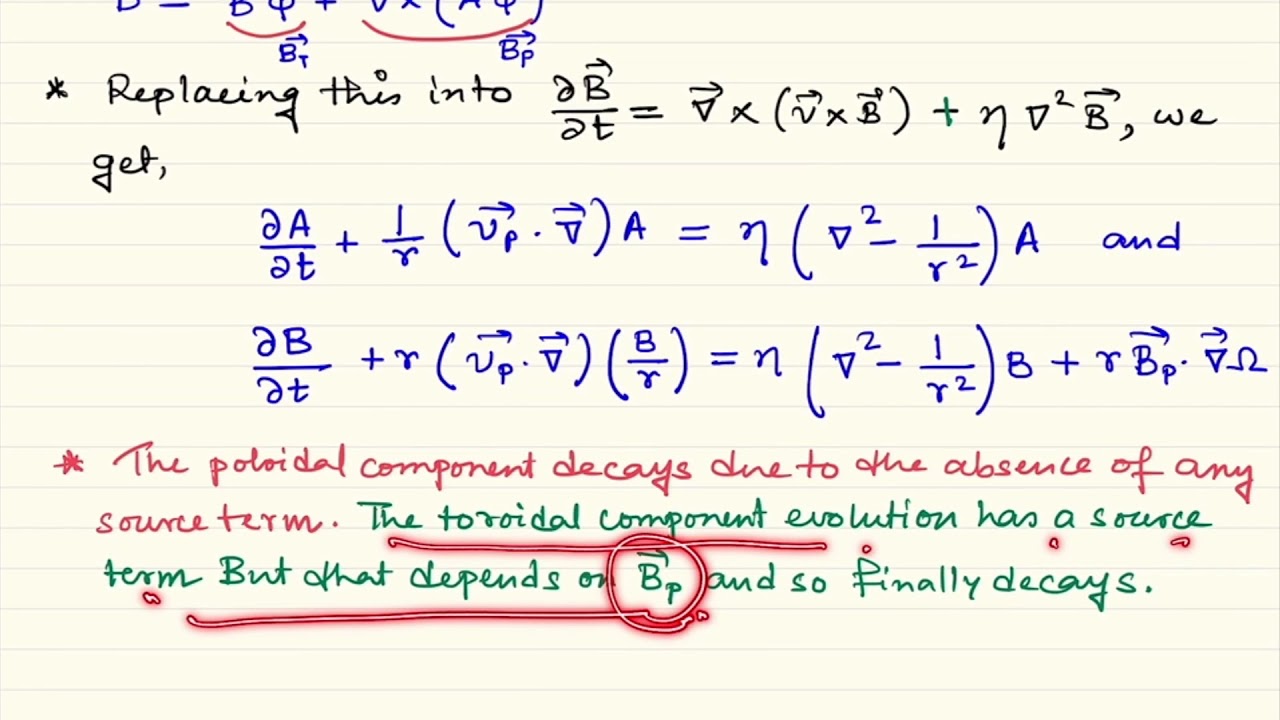


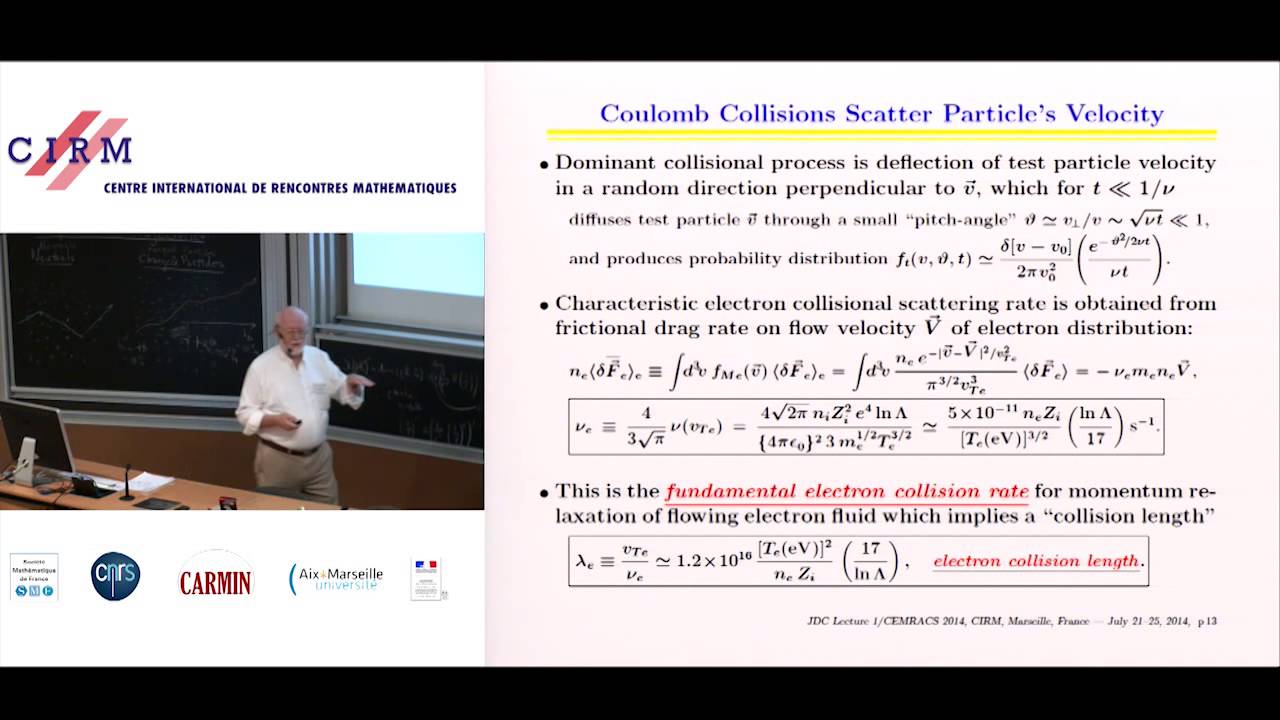

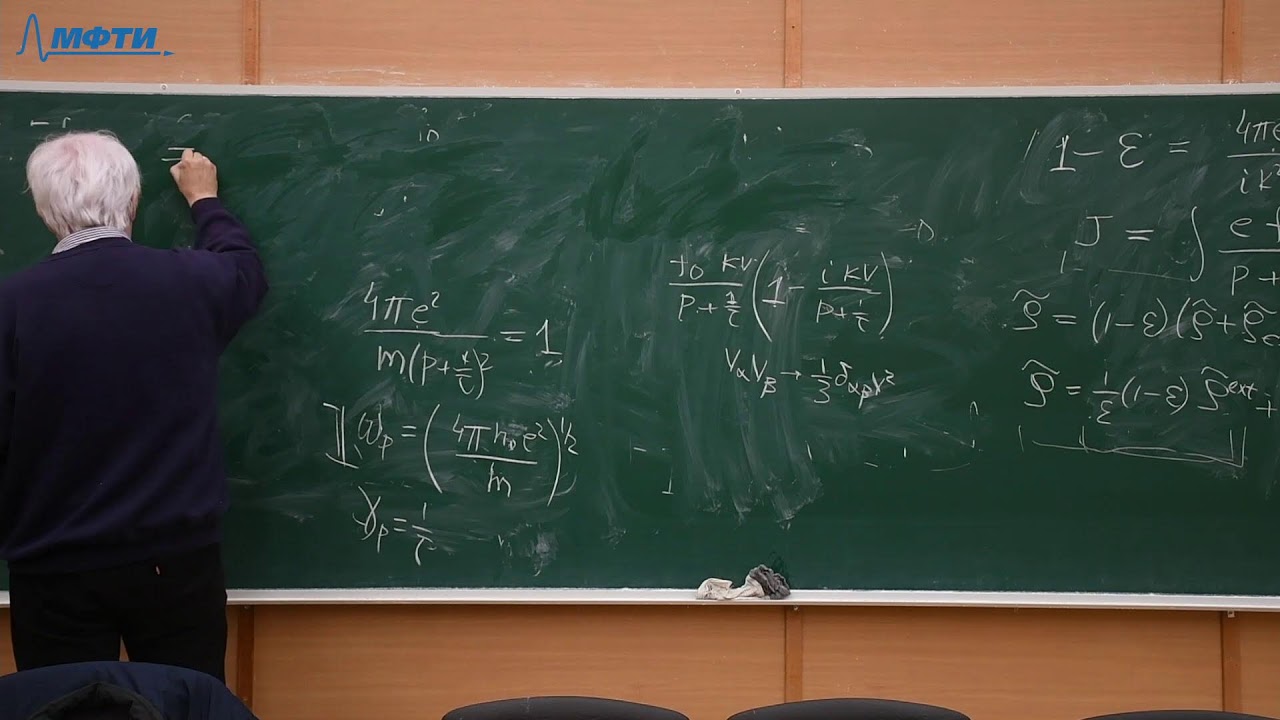
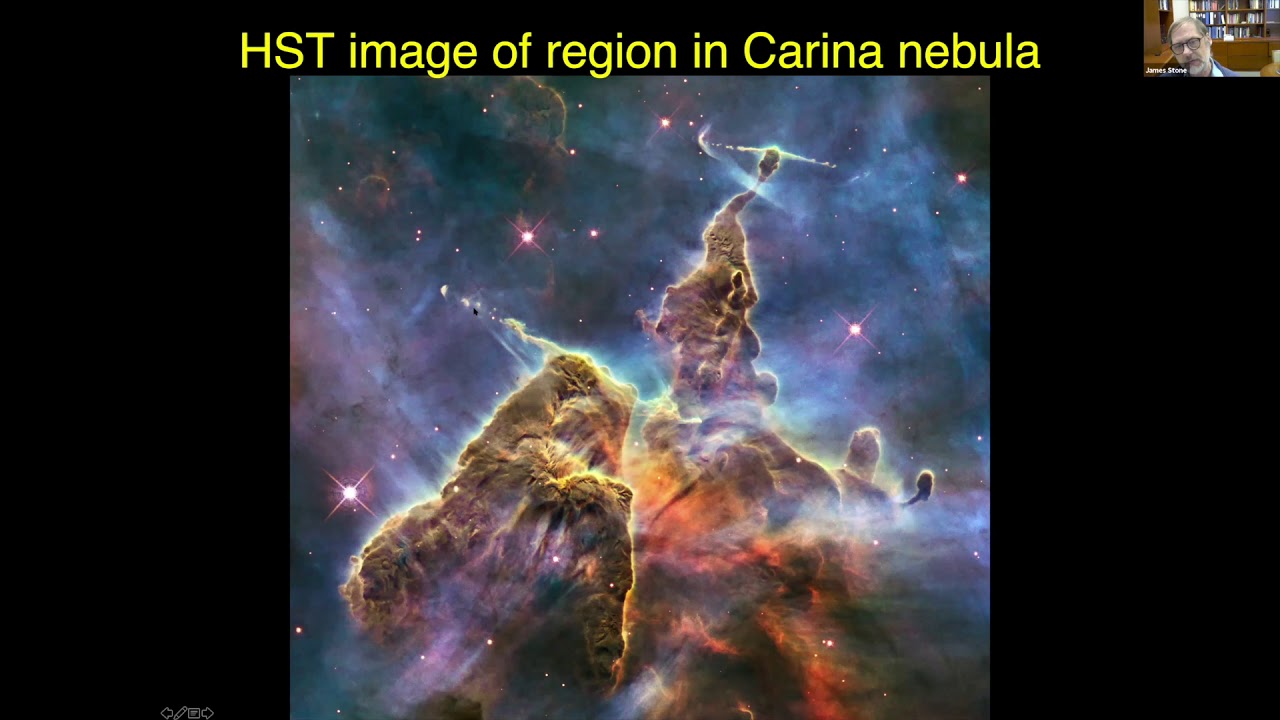
Magnetohydrodynamics (MHD) is a fluid theory for describing plasmas where magnetic fields are frozen into the plasma and evolve with it, governed by four fundamental equations: continuity (mass conservation), momentum (Newton's second law with Lorentz force), energy (entropy conservation), and induction (magnetic flux freezing). MHD applies when the mean-free path is small compared to system scales, enabling treatment as a fluid rather than tracking individual particles. Key concepts include the plasma beta (ratio of thermal to magnetic pressure energy), Alfvén waves (transverse waves along magnetic field lines), and the distinction between ideal MHD (perfect conductor, negligible resistivity) and non-ideal MHD (including effects like ambipolar diffusion and Hall effect in weakly ionized plasmas).
Introduction to Plasma Physics: Magnetohydrodynamics Basics
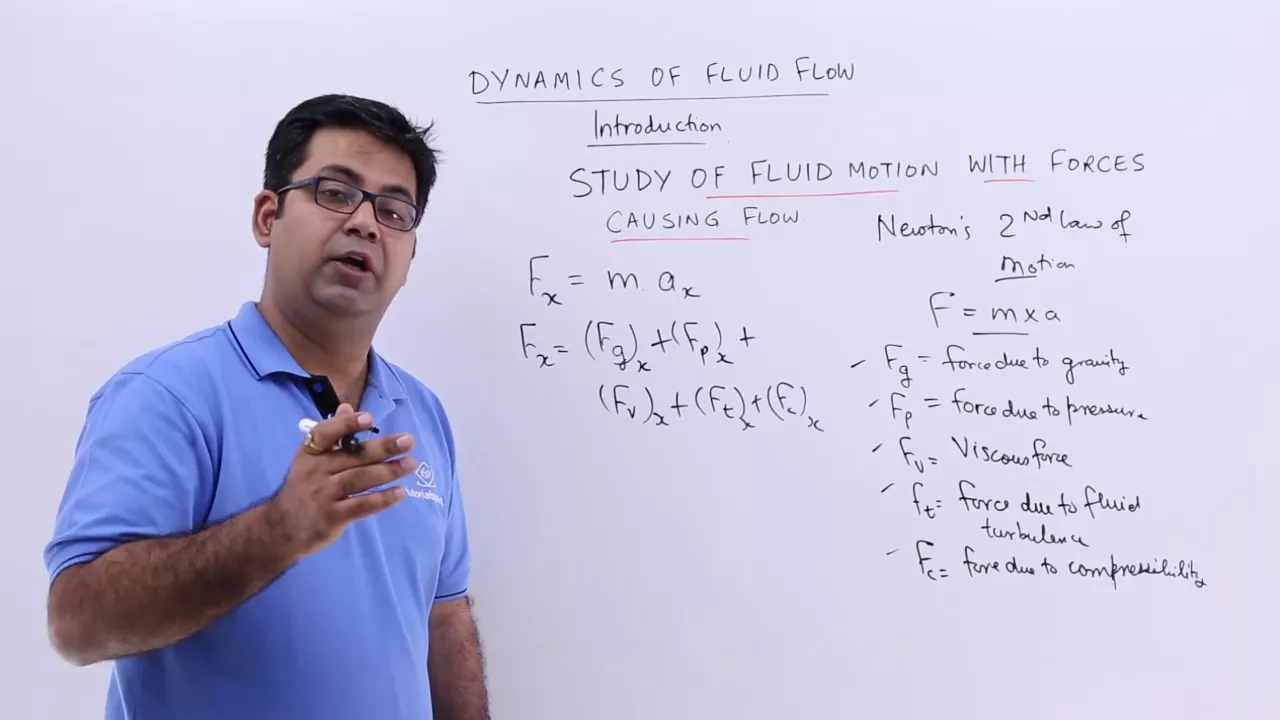
Added:all right so um gotten an hour and a half to to go through 50 pages of notes no I'm not gonna do that um so you you must have gotten an email with a PDF document um is quite long uh I'm not going to go through all of it and that's the whole point of giving you the document the idea is that there's a wide range of backgrounds here um some of you deserve some introductory material very introductory material some of you uh deserve something a bit more advanced and to appease all of you um you know I sweated a bunch of ink onto these Pages um so one advantage here is that a lot of the details of the things that I'm going to talk about like a of certain things I'm not going to do um there are a lot of blackboards but there not that many blackboards uh so you can use these notes as a reference uh I'll point to them as we go through the lecture uh for example I'm not going to drive um not going to drive the mhd equations on the board I'm just going to put them down by Fiat and we can discuss things physically and if you have questions please feel free to interrupt um and let's get started uh so just following on the disclaimer that I put on the second page of the notes that you have I mean what I'm going to present is by necessity incomplete right I you can't do mhd in an hour and a half um the idea here is to provide you with some mhd that has an astrophysical context it's the style of mhd that uh astrophysics astrophysicists practice um there will be two talks um focus more on magnetic confinement fusion and I do highlight a few things in the notes uh that point towards um very strongly magnetized plasmas like terrestrial plasmas I'm not going to talk about them in the lecture because there's just not enough time and you'll get enough of that from Michael Barnes later in the week um but I think it's important You know despite the notes being I think extensive uh there there's a lot missing here and I encourage you to go out and you use this as a springboard to to dig up some textbooks and and go exploring um right so this is uh an introduction to plasma physics uh to give you some background for the rest of the week um so the first thing that you have to consider is what is a plasma what do we mean uh when we talk about a plasma and that's actually um an extremely difficult question uh to answer the reason um you know plasma physics is so popular people people want to say that they work on plasma physics even when uh it might not quite be true um for example um warm dense matter is often classified under plasma physics even though it doesn't share a lot of properties uh as other plasmas um protoplanetary discs that you might learn about later in the week are extremely poorly ionized and yet uh we refer to them as plasmas in the mhd uh context um so one thing that I wanted to do was just uh you know this this diagram is already in the notes but I I put it on the board before you came in to show you the diversity of plasma is when when somebody talks about what is plasma physics um so it's quite difficult to classify all these things under one umbrella uh so here we've got a range of eight orders of magnitude and and temperature which by the way I I'm you know with apologies to boltzman I'm just the constant's gone so all the temperatures are are just T and and they're in energy units and this is uh 35 ORD of magnitude and density and these are plasmas um you know the interstellar medium uh sort of straddles the line between an ionized plasma and a poorly ionized plasma uh it's got a lot of neutrals here's the solar wind um if you go to galactic center the SJ star lives about here in this space the intracluster medium of Galaxy clusters Elliot's going to talk about this later um solar Corona you know light bulbs current experiments in fusion and if you uh were able to do nuclear fusion this is where a reactor would live here's the center of the sun here's laser Fusion experiments all the way up here is relativistic um I put this here to to let you know that I'm doing nothing near this line uh so I'll pretty much stay in the non-relativistic regime and down here are metals uh here's some white dwarfs and this line is pretty much the the only solid definition of what constitutes a plasma um you might look up in a textbook what's a plasma it'll say a sufficiently ionized gas um you defined sufficiently uh protoplanetary discs have degrees of ionization of 10 minus 10 10 Theus 11 10 Theus 12 and yet you know these are still mhd systems they're non ideal mhd systems but they're still mhd systems so you have to be very careful what you mean by this kind of definition but one thing that's quite solid um with apologies to warm dense matter people is this line which is um the plasma parameter it's the number of electrons in a divis sphere and this underlies the concept of of what's called Collective Behavior so um I'll write this on the board here's the chalk so the definition is right here um so it's the number density of your plasma times the cube of the Dubai dubby length so you probably um learn the Debby length at some time um essentially it's where electrostatic like coolum interactions are screened so if you were to write down uh electrostatic potential in a system of mobile charges it'll have the usual one over R but then it'll have um it'll have an exponential suppression on the Debby length and that's just because if you have an ion you also have a cloud of electrons around it that provide uh just screening of the charge and the reason why the Divide length is important to the definition of of a plasma is that this this marks the dividing line between um the roughly the kinetic energy uh that's in the random motions of the particles you know like the temperature and the potential energy which is just from Kum interactions on the scale of a Dubai cloud so you know kinetic energy is just temperature and um potential energy is uh some charge divided by uh Lambda to BU you can also show that this is a statement about the ratio of the mean-free path to the the Deb length and all the plasmas that were're interested in have this as a huge number so the idea is that um you don't don't if if you have a collection of particles you don't have to go counting pairwise interactions and and you know amongst 10 to the 20 particles that you can treat this um as a collection of particles that are interacting with some smooth background and the smooth background is achieved um because of this uh electric screening and you refer to that as as a a collective plasma is something that demonstrates um Collective behavior in this way good so um plasmas are diverse they're very hot they're very cold they could be partially ionized um but because they're so diverse it's really hard to lump them into one category so instead what I've done is I've provided uh both in the notes and on the board s of rogue's gallery of of exciting plasmas at least those that are exciting to me um so in the upper left that's the solar wind SW um we're sitting at an au so these numbers are characteristic of the solar wind at 1 Au so if you don't know the solar wind uh the outer outer uh parts of the sun are the temperature is hot enough that uh it's gravitationally Unbound and just sort of leaks off at 10 the 13 solar masses per year fills the inter medium and we put spacecraft out into it and you can measure these parameters directly so the temperature is about 10 EV the number density is about 10 particles per cubic centimeter and the field is about 100 microG of course this varies widely uh as you get closer to the the solar Corona but these are parameters for 1 Au uh other plasmas you might see this week are the intracluster medium so galaxies come equipped with uh plasma um and if you go to some characteristic scale in the iccm of 100 kilop parex these are the types of numbers that that you expect there so8 uh Kil electron volts um it's extremely diffuse so 5 time 10us 3 particles per cubic centimeter might be a typical number and um lo and behold just like uh most of the universe things are measured in micral the magnetic field there is about a microG uh I've also given you numbers for the galactic center which is just GC here so if you go 0.1 par sex from the galactic center which if you're an astronomy student um this what I'm about to say mean something to you that's roughly the Bondi radius so it's the the gravitational radius um and then I've also given some numbers for the interstellar medium at least the worm phase the nice thing about the ism is everything is just one you know it's it's one EV one particle per cubic centimeter um the magnetic field is roughly a micral so that's that's quite simple okay so these are just numbers you have to know what these units actually mean uh if you come from laboratory plasmas and used the Teslas um it might be useful to know that the magnetic field of the earth is roughly a half G so um you can kind of feel that so you know dial that down by 10 the six and and that's the magnetic field in in the ism and and and intracluster medium um so I've also given a couple other parameters here which are quite important velocities and length scales and time scales to be to be um to have at your fingertips when when you think about plasmas um one is just the thermal speed uh and here just a warning you you often have to be careful exactly what you mean by this because a lot of people Define it without the factor of two um so just be careful with that so this is just a a measure of the random motions of the particles um um for example if you had a collection of particles that were described by some distribution function that was maxwellian um that's what I mean by vermal it's just the the broad broadness of the the random motions um so that should be quite familiar um where's the hook so I give some examples of thermal speeds over there on the other board I think I put them all in kilometers per second yeah so they span about 10 kmers per second to a th000 kilometers per second um one thing I didn't write on the board because I didn't have enough room but it's important for later in the week uh it's in the notes and that's uh jet which is the joint European Taurus which is a fusion experiment and that's the outlier you know if you look at the notes on um P the charts on page five and six and eight uh you'll see another column and you'll see that the temperatures are kind of comparable to the hottest systems up there but the magnetic field is widely different and the idea there is that uh you know if you want to confine a plasma in astrophysics you just invoke gravity that's simple uh if you want to combine uh a plasma on Earth you have to not you have to invoke something else and so um you'll hear later in the we about magnetic confinement fusion and that's why uh the magnetic field is so strong in terrestrial plasmas right so there's another speed on the board which we'll come back to in the lecture which is the alphane speed I'm using CGS units it's only units you should be using um so this is the speed at which a disturbance propagates along a magnetic field we'll come back to that uh in the rest of the lecture uh the ratio is really important so um a lot of astrophysical plasma physics starts with uh this parameter the plasma beta so one thing that you should note on the board um is that astrophysical plasmas and space plasmas are pretty much High beta plasmas by which I mean anything bigger than one so um that doesn't mean that the magnetic field doesn't mean that the magnetic field is not important um it just means that the energy content and the random motions of the particles is higher than that in in the uh energy density of the magnetic field so you know if you go to the intracluster medium we think it's something like a thousand um it might be 100 in some regions 10 out four in some regions but uh just roughly now if you go into the chart and you look at what I wrote for the plasma beta of of that joint European Taurus it's about 1% so again that's the Dem that's the statement I was trying to make of a testial plasma you need to rely on something other than gravity to confine um and that's why the plasma beta in these systems are so low uh okay so that's plasma beta right so that's all I have to say about what a plasma is um the next step is defining what a fluid is because we we'll be talking about mhd which is fluid Theory so one would like to know you know when is a plasma a fluid and not not a fluid um and this is where the mean-free path comes in so you have uh pairwise uh you've got um small angle deflections as as particles Rush past each other and they get scattered you can characterize this as some collisional mean-free path um which is uh V thermal times some Collision time scale and I've given some numbers here and uh you can tell here that there's a huge variety um so the mean-free path in the solar wind is roughly an au it's meal an au so by the time a particle leaves the solar Corona and sweeps past the Earth it's interacted with another particle statistically once um so this uh is sort of borderline fluid um but if you look at another system like the interstellar medium you know characteristic sces in the interstellar medium are measured in parex or tens of parex and the mean free path is 10us 7 of parex so this is uh an extremely good uh fluid in that collisional sense um so what this means is that the distribution function of of the um of the particles which is something I'll talk about in the second lecture is very close to a maxwellian it's nice and isotropic uh and that's just enforced by collisions here now if you go to the galactic center Center and intracluster medium you'll notice that the mean free path is actually quite long and I'll talk about that in the second lecture what happens to mhd when the meanf free path gets gets long and you start to doubt whether this is really a fluid and can you treat it as a fluid and uh under what conditions is can you treat as a fluid and what kind of equations can you can you use short of the full Vass off Max will set all right so that's meanf free path um what I've given you on page seven you know if you want to define a mean free path you need need to know a collision time scale and because uh plasmas are are widely varied the Collision time scales are very different whether you're talking about a fully ionized plasma um or a plasma where the primary collisions are between charges and and a bunch of neutral species like neutral hydrogen or neutral helium so i' I've given you Expressions on page seven that you can serve as a reference to go look up uh Collision time scales between different species and different kinds of plasmas all right uh the last length scale that I'm going to talk about um is what I'll denote Ri so this is uh sorry this is down in the corner um so it's the thermal speed divided by uh the Lor frequency the gyro frequency of an ion um when I say ion here I really mean proton but of course you can have a multi species plasma like the soloin has a lot of minor ions uh with different masses here I'm just me and proton so this is um the ler scale this is uh the size of a gyro orbit of a typical particle uh in a plasma characterized by some thermal speed and the thing to really note here is that this is Tiny uh you know I didn't even write um the numbers for the joint European tourist down and it's tiny there too uh so in in the solar wind you P 7 Au um and the intracluster medium one scales uh that are the size of the system is like hundreds of kilop Parc Mega Parc row I is a nanop Parc um in the galactic center at the Bondi radius is 2 cenm um and the interstellar medium is 10 Theus 11 parex so huge scale separations this is quite characteristic of astrophysical plasmas um so in a lot of these systems uh even though the mean-free path might be small like here it's not smaller than RI and what that means is that the particles know about the magnetic field they're not being deflected by collisions so often that they lose track of the fact that they're living in a magnetized plasma um one of the things that I ran out of board space to give you but is is in page eight of the notes is uh typical gyro frequencies and for most the Universe um except in relative itic plasmas they're measured in hertz so they're it's just was quite fascinating right it's it's uh a gyro R gyro frequency that you can measure on human time scales embedded within something that evolves on 10 million years so just to give you a feeling for um the type of scale separation that are involved in astrophysical plasmas good so that's the little uh introduction survey um of course you'll hear a lot more about each of these system systems um the stability of the system the plasma properties of the system um my job is just to give make sure that we're all on the same level in terms of the the requisite theoretical background and so for that um just jump right into mhd so any questions about these numbers yet yeah doesn't matter um so uh I mean we'll come back to this but technically here the alphane spe is usually defined in in terms of the total mass density of the plasma but if you have ions and electrons the mass of the ion is 2,000 times the mass of the electron so this is the mass density is usually dominated by the ions which are sort of the inertia bearing species so that's that's why this is there um I was just lazy when I didn't put the eyes yeah um it depends on the plasma so some things that I'll talk about in the in the second lecture yeah the larma radius does play the role of the meem free path in some cases um but uh well you know plasmas are rich you can find any system where the mean free path is played by something else other than collisions or sometimes it's just only play by collisions but yeah we'll encounter each of these these options good so um what you could do if you wanted to be proper and rigorous and you have more than an hour and a half to do mhd is that you would write down a kinetic equation you would start taking moments of the kinetic equation and this is what would give you your fluid equation um that's done in these notes later on um but you know for the sake of of uh being concise I'm just going to write them down and we'll talk about them and then we'll we'll investigate some implications um so the first thing is just notation um if you use latch what I mean by this is VAR and the reason I do this is because this is the Lala radius and I don't want want to keep on using Row for two different things but you know just a warning if you look through uh articles or textbooks people use Row for both the mass density and the larma radius and sometimes it could get confusing if it's the first time that you're seeing some things um right so this is mass density so you sum up all the masses and number densities of all the species s in your plasma and and that's the mass density so the first mhd equation is continuity uh which is pretty self-explanatory um so this is uh the velocity you might ask what velocity we'll come back to that um what this says is that if you if you integrate this over volume this is just a statement of Mass conservation so you have some fluid element uh in mhd fluid elements are technically infinitesimal but it's just some collection of charges that Abey some collective behavior that you can describe uh by some sort of macroscopic from the standpoint of a of particles uh you could describe it by some sort of volume um within that volume the mass evolves and you can use uh you know Divergence Theorem here and so this is just the flux of mass through a surface of the volume so if you have some volume you have some mass in it if there's a flow through the surface of the volume of density traveling at some velocity that tells you how much that volume is leaking Mass so this is this is quite simple um if you have a multicomponent plasma that you want to uh instead of investigating some bulk properties like the total mass density if you want to investigate the mass deny of every single species each one satisfies something like this row is what it's far it's far row I haven't written any e yet second line yeah um no yeah sorry so that's a trick far row is is hard to write good so that's continuity if you go later in the notes you can just derive this from the zeroth moment of of the kinetic equation so so that's continuity equation then we have a momentum equation sometimes called a force equation uh depending on who's writing it um you can just motivate this from Newton's Second Law uh I'm just going to write it down and we'll talk about it well I'll write it like this okay so um the left hand side here just going to write like that so this is a Time rate of change of the velocity of a fluid element and what this term does is it makes sure that you're taking the time rate of change in the frame that's moving with the fluid element so this is what I mean by this this big D by DT sometimes this is called a co-moving derivative which is quite um descriptive or if you want to be fancy um it's also called a lran derivative for reasons that I'll come back to right so this is just ma right the right hand side are the forces um here's an obvious Force this is just gravity acting on the fluid element but you could replace any of your favorite velocity independent forces uh with gravity um if there's any body Force if you're stirring the plasma all that goes here uh this is the gradient of the pressure so if there any uh pressure gradients in the system this um I mean it shouldn't be too surprising I assume you all took uh basic physics um what is surprising here is that this thing is just a scaler and uh that is a consequence of the collisional ordering that goes into mhd which I'll I'll talk about in a second um in the second lecture we'll encounter a lot of systems where this is not a scaler um and this is what makes mhd mhd so that's Lorent Force so J here with apologies to Maxwell was determined by Ampere um by writing this down many of you know that implicitly I'm assuming non-relativistic motion um that's why I said with apologies to Maxwell because there's no displacement current here so of course you can write down a system of equations that are relativistic mhd uh but I won't do that um so this is non- relativist mhd you have an ampers law that links uh the curl of the magnetic field to the currents in the system which is just the sum of the Motions of all the charges uh and then cross B over C because CGS um thing keeps running away okay while I erase while I erase I'll tell you what Scott told me which is that there's some sort of efficient way of using all these boards I because I've just demonstrated that I don't know that way okay so some words about the Lawrence Force I understand that a lot of this would be basic to some of you but it's it's worth going through um so you look up some Vector identities uh and you write this down and people usually talk about this is a tension this is a pressure but that's not actually quite right um and we'll come back to that I understand that I keep on saying we'll come back to that but we will um the point of writing this now is not to say we'll come back to that is but it's just to show you that there's this term here under a gradient uh which you can stick along with the pressure um right there and so that's just to give you an indication that part of this lorence Force just acts like an enhanced pressure on on the on the plasma all right um one last thing so we need to know how the pressure evolves and in ideal mhd um that's just determined by entropy conservation so you just have a system if it has no losses or gains you know from your you know thermal Physics course that the entropy ought to be conserved um and that can be written uh like this so here's just d by DT remember that's in the frame of the fluid it's not just in the lab frame so in a fluid element as that fluid element moves within that volume uh log P row to the minus gamma where Gam adiabatic index you know degrees of freedom and all that um it's conserved now there's nothing um in mhd that necessitates the left or the right hand side to be zero of course you can add sources in syncs in fact most astrophysical systems have sources syncs of entropy um if you want to do that you just put a p on that side and you change you change that zero to a q uh and this is just um sources SNS of entropy I guess maybe a DOT for a good measure to remind us that it's a it's a rate so something I show just in a few lines in the notes is that um in such a system where the source inance syncs are zero if you have incompressible motions so if the Divergence of the flow is zero this means that t is a constant uh actually in in a fluid element so what I mean by that is the the Big D Big D by DT good so those are mhd equations so I could just stop um so actually they're they're extremely rich there's a lot of assumptions that go into them with which are worth talking about because usually um you can perfectly well use the MC equations without actually knowing uh what you've assumed by using them all right so before doing that um just a quick word on this lran derivative this D by DT so this thing could be quite tricky um so later in the week there will be lectures about uh accretion discs which are often modeled using um cylindrical polar coordinates there'll be parts of lectures that are talking about uh bondy flow or the solar wind or certain accretion flows which are more close to spherical or the sun where you have to deal with spherical polar coordinates and this thing gets really nasty um in these different coordinate systems and one reason why is that you have a gradient operator acting on a vector um so this you have to worry about that and I've given you a few pages in the notes where I discuss that for a cylindrical uh system and then I just write it down for a spherical system um and I'll just say a few words about that right now so this is I mean I I think one of the most difficult things in mhd is actually just getting the vector analysis right because it's really easy to just drop terms um so the issue here is that you're taking uh so this is this is for cylindrical coordinates you're taking an aamal derivative of a vector and inside that Vector are these unit vectors you know and I hope you recall that the derivative of these unit vectors is not zero and what you get out of this which I I just do in the notes for you is just a simple exercise and Vector analysis is that you get something which ends up being a coris force and something that ends up being your centrifugal force um and I'm not going to do Vector analysis on the board it's just here so you can look it up um one thing that I do in these notes also which I'll advertise is uh if you're in a rotating system so if your velocity is composed of some fluid velocity just random motions plus a large scale rotation if you're in an accretion disc there will be talks about that um and if you sub this into this uh convective derivative you'll get a whole bunch of extra terms and they're all quite important and I think it's a calculation that you should do if you haven't already done is to you know go through being in a rotating frame uh and making sure that you can drive the appropriate momentum equation so it's it's sketched in the notes good okay um so we've a continuity equation mass is conserved we've got a momentum equation F equal ma uh it's got we've got a a energy equation and the momentum equation has a magnetic field in it and I've not said how to evolve that now of course any way that you evolve the magnetic field it should satisfy that um so if you go to Maxwell's equations there Fair's law yet had another thing that I'll come back to is y and mhd is just that um you could also add let see how I want to do this is resistive diffusion so the simplest way of arguing for this equation which is called the induction equation is by saying that in mhd uh I have a near perfect conductor so the electric field just satisfies some sort of ohms law right e is a to J and then you have to be really careful about what you mean by your electric field you know is this the electric field in the lab frame is it in the fluid frame what do you mean by the fluid frame um so this is the electric field in the fluid frame and the way to convert between the the lab frame and the fluid frame is just to add on a UR cross B over C term and now I mean you may be wondering what exactly is this U you know is this what species velocity is this is this some special velocity or is this just the velocity of a fluid element um we'll come back to that when we talk about multifluid mhd but in mhd it's just the velocity it's the only velocity in the problem so that's where this comes from it's just OHS law in the frame of the flow and so I'm just going to give a few comments about what this implies everyone good I understand a lot of you have seen this kind of stuff but bear with me uh something I do on page 15 of the notes is I talk about the um the relative size of this resistive term in the law to this term which is sometimes called the obective term which is not quite true but uh the relative um the relative magnitudes of these terms are usually characterized by two numbers one's the magnetic relance number one's the list number uh I give these numbers in the notes I'm not going to go through them because I'm not going to talk about um things like uh reconnection where the list number is important um the only thing that you need to know is that physical systems these are absolutely huge numbers and I give some of the numbers here so in the interstellar medium the magnetic Rance number is 10^ the 18 so what that means is that uh on a lot of scales this term is not important of course you'll always get to some scale there's a gradient here there's two gradients here so you always get to some scale where the gradients are so large that it doesn't matter how small Ada is um and that's when you start talking about reconnection and and things like that which I'm not going to talk about um this lecture at least the first part of this is about ideal mhd good so there are two things that this equation implies uh because for now I'll get rid of this um one is called the lunis theorem one's called alane's theorem so let's look at those now there's vectors and cross products and derivatives here so uh it's a bit messy to look at it in this form you can look up your vector identities and you can expand the right hand side and that's actually quite useful to do that especially in in curval linear coordinat Ates because thinking about these gradient operators and curv linear coordinates is a lot easier than thinking about these curls and Cur linear coordinates at least for me um so there's three terms here there would be a fourth but there's no monopol and each of these terms has a straightforward physical interpretation um which I I write in the notes this is just stretching I'll show you why uh in a sec um this is ection and this is compression so the idea is that there's some magnetic field that's being carried around by some velocity that's what I mean by ection I'll I'll prove that it's carried around um on one of these boards uh here if there's a fluid flow with gradients it results in stretching the magnetic field that's what this term is and this term it's kind of obvious why it should be compression because there's a velocity and there's a Divergence so either the the fluid flow is diverging or or it's converging either way you're going to squeeze the magnetic field or rarify the magnetic field and that's that's what I'll I'll prove to you um now so one thing that you can do is you can take this form of the induction equation and you can take that top form of the continuity equation you can combine them and I'll just that done the notes reason it's done the notes is that I don't have to do it up here um and you get this equation so remember this D by DT it's the co-moving time derivative so you pick a fluid element move with it measure d by DT in that frame and what I've done here is I've divided the magnetic field vector by the mass density and it satisfies this nice equation and that might not mean too much to you if you haven't seen it before um but what you can show is that if you have a point some point x which characterizes a fluid element and that point is moving with some velocity U and if I go a little distance away uh squiggly letter uh to X+ C and then that other place there's another velocity you can show just by some simple geometry that and so what this means is that um this quantity B over row satisfies the same equation as uh as just a a line being Abed by some velocity so what this means is that if you have a field line and it's in some fluid flow and the fluid flow is moving that fluid flow is going to move along these trajectories uh but so is the magnetic field so this just says that field lines are fluid elements if they start on a field line they're not going to leave it field lines lie on whoops field lines that lie fluid elements that lie on field lines initially uh remain remain on that field line so this is called Lis theorem so it's the first little indication of something that's called flux freezing that a fluid element carries around a magnetic field line with it so there's two versions of flux freezing this is one of them this is kind of a weak version there's a there's a volume sort of volumetric statement about flux fusing which is um alane and this is the one that usually gets presented uh first instead of this lungis so the idea here is that I have some surface um there's some magnetic field lines that thread uh so here's some surface s here's the boundary of the surface Delta s there's some surface element there and um I'm not going to do the derivation because it's just right here for you on page 17 that if you compute the flux at some time through some surface so there's the surface now if you move that surface according to the momentum equation the you know if you move that surface uh such that every point in the surface abays something like this the flux doesn't change through that surface so if you measure this flux and you take the time rate of change of this um as this surface evolves this is going to be zero and like I said I'm not I'm not going to go through the steps because they're just done in the notes there's no point in me writing this but the you know the Salient point is just um between linis theorem and alphane Theorem what this means is that the the magnetic field is frozen in the flow so anywhere the fluid element moves the magnetic field lines go with it and so does the magnetic flux okay any questions about those two because it's sort of fundamental mhd yeah so that includes that includes both um so if you if you have a ball of plasma that's sitting between or in a solenoid and there's some external flux through the system so that'll be conserved and if there's any self drain generated magnetic fields due to current in the plasma those will be concerned okay when am I done okay good all right so one of the things that I said I was going to come back to to I'm finally coming back to uh and this is the Lawrence Force so we now know that the magnetic field is frozen in the plasma so if the if the fluid moves the magnetic field comes line the field lines come with it so now we want to know what do those flux frozen field lines do to the field the fluid elements in which they're being infected which they're being carried so had showed you uh by virtue of vector calculus that the Laurence Force splits into two parts one looks like a pressure which goes in with the thermal pressure in the momentum equation and then there's this other term with bunch of vectors um you can rewrite this in a handy way yep yeah it's exactly the same oh it it doesn't it doesn't matter so um so you're referring to something called Kelvin circulation theorem which if Omega is the curl of U this is called the verticity it satisfies an equation that looks identical to the ideal mhd induction equation so you have the same sort of principles where um the amount of vorticity in a fluid element as it's carried around by some flow uh is conserved it's like a Kelvin circulation theorem and alane's Theorem is just Kelvin circulation theorem for the magnetic field doesn't matter if the flow is compressible or not thanks so by virtue of the magnetic field being Divergence free you can write the lorence force in this uh in this full Divergence form which turns out to be quite useful this thing's just called the Maxell stress tensor probably saw it in M so there's a um an isotropic part that's the unit diad uh where the magnetic pressure lies and then there's this tensorial piece to it which has off diagonal elements um and this is right here this is what makes mhd mhd you know before this off diagonal stress um the flow is fairly isotropic right this is the thing that introduces Direction some sort of directionality into the system it biases the system uh based on the magnetic field whether the Field's strong uh and tells the fluid elements where to go or if the field is weak and the fluid elements tell the magnetic field where to go there's always this anisotropy introduced by by the Len Force um so what I'm going to do now is I'm going to rewrite this is something I haven't used yet going to rewrite this um more phys IAL form reason I don't like this is that people usually say the first term is pressure and the second term is tension but that's not that's not exactly true um so I'm going to introduce this unit Vector so if you have some field line uh that's just a unit Vector pointing in the direction of the local magnetic field and what you can do is you can rewrite uh this Max will stress well the force the Force um in the following following way so this is the the Run Force the magnetic force on the plasma so what I've done is I've taken this uh this big b. grab B and turned it into a little b. grab B which ended up giving me an additional this little little B do that which um is going to eat up part of the second term the nice thing about this form is it's clear that the mag this this Force operates perpendicular to the magnetic field which is obvious when you write it jross B which is perpendicular but it it's not obvious in that form because that second term has a gradient which has a component along B so it's it's nice to write it in this form everything's perpendicular this is just one over the radius of the curvature of the field lines and this is a perpendicular gradient of the of the magnetic pressure magnetic energy density so um I'll draw these pictorially uh so this term over here this is in fact the tension so I have some magnetic field here's B at the surface B do grad B points in here and it's sort of the radius of curvature of this field line so another way you could describe this is is just the curvature Force so a magnetic field that's bent wants to straighten out and that's what this term says so pictorially what this is is that if I have a bunch of magnetic fields that are pointing this way and I compress them perpendicular to the direction so that's what I've done here so this is the perpendicular Direction then there's a force this is um sometimes called a pressure Force so both of these things say that magnetic fields don't like to be messed with right they want to be straight they want to be spread out um if the fluid which is frozen into these this field curves the field The Field's going to want to back react on the fluid and straighten itself out and it'll it'll it'll try to push the fluid in order to ACH acheve this the same thing here if there's some compression in the flow which squeezes the magnetic field in some some direction perpendicular to its it its own Direction it's going to want to spread back out which means it's going to exert a force on the on the plasma in order to enforce that or in in order to force that to happen right so what this means is that I mean this is the fundamental difference between mhd and hydro this endows the fluid with some elasticity which it doesn't other wise have good okay so that's that's ideal mhd um so what I want to do now is discuss uh some applications and then discuss some limitations um does that say 1015 yeah okay so one calcul that you all should do if you've never done before is linear Theory um I mean I encourage you to go through the notes tonight if you've never just done linear theory of of mhd uh I go through it in detail in the notes of course I don't have time to do it at the board but um a lot of astrophysical fluid dynamics just rests on doing linear Theory first so what I mean by that is that you have some system characterized by some velocity some uh mass density some magnetic field some pressure and you construct some equilibrium which I'll at least in my notes I just denote with um subscript zero so there's some equilibrium you'll hear from other talks later in the week about equilibria how to set it up Michael Barnes is going to talk about grad stano equation which is one way of determining equilibrium and and like a toac for example um I'm not going to talk about it just suffices say there is some equilibrium and what I'm going to do is I'm going to make little perations to this which I was taught to denote by this this Delta now it's quite important to note what I mean by this Delta um this thing is called an orian perturbation there is something like this which is called a l Ian peration and just based on their name sakes you should be able to tell the difference so the orian is a change in the quantity in the lab frame so this is um and this is explained in the notes so this is uh for example Delta P would be um P at some position minus the equilibrium P at that same position um lran p uh the lran change this big Delta just like the lran derivative this big D by DT it's a change taken with the fluid element so this is p at some position which has been displaced from the initial position so some fluid element moves the properties inside that fluid element change and that's what this lran derivative is or this LR um changes uh so in everything that I'm going to do I'm just going to use oian perations because it's simple um it's important to do lran perations when you have things like um you have some stratified plasma and there's some background fluid flow and in that case doing oian peration theory is a bit tricky and it's often easier to do it with these lran perations I'll just do it with these oans so you have some equilibrium State you perturb the plasma and what I mean by linear theory is that every time you see a Delta squared you just drop it so all the nonlinear terms are gone and what I do here is a homogeneous uh stationary um plasma um threaded by a uniform magnetic field so that's what I do in these notes so you take a stationary this is a constant this is a constant this is a constant you perturb the fluctuations um you can assume just take the normal modes of the system and you just do linear algebra and you crunch and so all the derivations in the notes uh I'm just going to talk about the results and um uh yeah let's do this tell you some aspects of linear mhd yeah in 10 minutes okay so one wave you get it's called alame wave you can have all sorts of alane waves but the one I've drawn has a wave V which is only along the magnetic field so this is called a sheer alame wave uh it's polarized like that this has uh no compressions in the magnetic field it has no changes in the mass density it's quite boring you you just pluck the field like a string and um you find that the dispersion relation of the wave the relationship between Omega and K is is just this which is quite simple so it's not dispersive um Omega over K is just a single number it can propagate forwards or backwards um this is the fundamental building block of of theories of turbulence um it's the fundamental wave uh you can also here let me move this over you can also just have a bunch of field lines that don't move and you can put compressions here and rare fractions and compressions here and rare fractions and then you just get the sound wave where this is the Sound Speed so the idea here is that you've just made a bunch of compressions in the fluid in the pressure that launch a wave and the magnetic field lines just don't care so then there's a whole class of waves called magnetosonic waves which are hybrids of these two like I said the derivations in the notes I'm not going to do it here um but I will show you some examples so if you have a wave Vector which is has both a component parallel to the magnetic field and a component perpendicular to the magnetic field you can have field lines um that end up being perturbed like this now that's not enough to know what's going to happen to the wave you also have to know how the pressure responds and so there's there's two types of waves that come from this um so of course right here the magnetic field is strong because the field lines are bunched together and right here um the magnetic field lines are weak because they're spread apart and the two options that you get is whether you also have the the gas pressure high here or the gas pressure low here so if you have um if you have high pressure here uh this is called a fast wave I'll tell you why if you have high pressure here this is called a slope mode and the difference is that here you've got two restoring forces acting in concert right you've got some gas pressure that wants to expand the gas and you've also got a magnetic field which is resisting being compressed and so both of them try to spread out and um you launch this wave at a a fast speed because you have both you've got two uh pressures pushing on it here the the changes in the field strength and the gas pressure anti-correlated um and you get into a system a situation where um the combination of these two is quite small so the two act in antiphase um so I I go through gory detail on the notes about this I've got five minutes so I'm not going to say much more but the dispersion relations are in the notes uh the process of doing linear Theory to derive these waves as in the notes I encourage you tonight if you've never done this before it's really important that you learn how to do linear Theory um everything else follows from this um so the point of of just the qualitative discussion I've given here is that um there are several different classes of waves you have sound waves you got alane waves you got these hybrids which are called magnetosonic waves there's two types there's basically two types of magnetosonic waves a fast and slow mode there's also something called uh an entropy mode which I think is um attributed to Russell kood which just basically says that you just relabel all the fluid elements and that's the answer uh so those are all the modes of mhd so where I pick it up from there in the notes on page 25 is something called bruced mhd um I'm not going to go through this because I'm out of time and I want to get to multifood um but I I've provided a lot of detailed here it's a technique um sort of more advanced mhd that's used for describing alphane wave turbulence which is I I think something that Elliot quad is going to talk about no he's not going to talk about it so it's good that I'm skipping it because it doesn't matter um anyhow I think it's an extremely um useful thing uh to know particularly just from the mathematics if you want to know how to do ASM totic expansions of equations by which I mean you identify a small parameter and you do an ASM totic expansion of a set of equations in that small parameter reduced mhd is sort of the entry point for doing that in mhd um I do it in the notes it was first developed in the fusion community and then got into the solar wind community and The Helio physics Community um I highly encourage you to go through these notes um you know if you know mhd already but you don't know how to do astoic expansions it it's worked out in the notes for several pages okay so I want to come back to the last thing that I deferred which is probably on some board somewhere no well whatever um so one thing I deferred was when we wrote down the continuity equation when we wrote down the momentum equation when we went wrote down the indu equation I didn't actually tell you what the velocity was I just said there is a fluid element velocity now an mhd is technically defined as the sum of species of all the uh momenta divided by the total mass so this is the center of mass velocity So when you say U in the mhd equations what you're really referring to is the center of mass velocity now this can get really tricky uh for a number of reasons one is that suppose the degree of ionization in your plasma was small so suppose the number of ions versus the number of neutrals was small which means that uh your fluid velocity is just your neutral velocity you know it makes no sense for a magnetic field be frozen into a bunch of neutral particles um so you have to be very careful what you mean by you you know in ideal mhd this is just a fluid element but very quickly uh as soon as you depart from ideal mhd you have to be very careful about what this what this velocity actually means particularly if there's a large component of the plasma that's just neutral so you can ask a question um do the equations that I've been talking about still hold when you have have uh not that many charge carriers the answer is yes with some corrections um you can ask the question uh what changes you know we have this induction equation you know what is that velocity this is surely not the neutral velocity just wouldn't make any sense why would a field line be tied into a bunch of non-charged species so this is really important in molecular clouds and the interstellar medium and protostellar cores and protop plantary discs um so that subject is called multifluid mhd which I'll teach you all in two minutes is it oh you guys don't have questions um can I do multifluid mhd okay um okay so if you derive all of this from from the Vass off equation you know from the kinetic equation which it's done in the notes later I'll talk about this in the second lecture um what you'll find is that you have continuity equation for each species denoted by an S you have uh I'll use the Big D ran out of Bo you have a force equation for each species s so before I move on let me say what I mean here is that um there is some species with some mass and some density which has an acceleration which is measured that time rate of changes measured in the frame of that fluid element each fluid has its own pressure which in this this case I've written it down as just a scaler but it doesn't need to be a scaler and I'll talk about in the second lecture um it experiences a lorence force so the charged species have an electric field that or there's an electric field that they feel there's a magnetic field that they interact with and this is just friction so um technically this is the first moment of a collision operator which is what I'll talk about later but this is just friction between the different species um now if I were to sum this entire equation over all species this term better vanish or you know Newton thir wall doesn't work so the the momentum as an entire fluid is conserved with respective collisions but each individual fluid might exchange momentum by collisions um and of course there there's a thermal energy equation for each one of these if it were ideal mhd lossless ideal mhd each the entropy of each species would be conserved um but for uh sources and sys so um what is that if I were to write down the induction equation for a multifluid mhd plasma what do I choose for the velocity to stick in the into the induction equation um so the way I'll present it you can actually derve a generalized ohms law which I do in the notes just very rigorously and step by step but I'm just going to motivate this um physically so Suppose there uh is some frame in which the flux is Frozen whatever it is so I Define U of the field to satisfy this equation there's some frame where the magnetic field was frozen in and what I'm going to do is I'm going to just add zero a bunch of times so suppose I had some electrons in the plasma suppose I had um some ions in the plasma suppose I had some neutrals in the plasma and I have to to add that to make it all go away so I've done nothing right I've just added zero a bunch of times now in in ideal mhd this is zero this is zero this is zero and this is just the full fluid velocity right all the species move from the standpoint of the macro scales all the species move together um but if we had a system where the walk of the the plasma was neutral and so the momentum the inertia of the plasma was just dominated by the neutrals it would really really help to write an induction equation which looked like it was frozen in the neutrals but for additional terms and this is what it uh this is this is what it is so we haven't really achieved anything we just added zero a bunch of times um you know now you've actually got a fig figure out how much does the ion velocity differ from the neutrals how much does the ion velocity differ from the electrons how much does the electron velocity differ from the field bins and this brings in um three topics so omic dissipation which is kind of related to to that term uh something called ambipolar diffusion which is related to that term and something called the hall effect which is that I'm speaking quite roughly um you know if you had additional ion species or if you had a bunch of grains like you do in protoplanetary this there would be additional species I give you a reference in the not where in the notes where you can follow up on that if you're interested in in more adding even more species to a plasma um so this is just Associated as just mocked up basically by uh an Oh's law so just the electric field um due to this is a toj so that's just straightforward uh resistivity collisional resistivity this you know what UI over UE is because you know that the current is the sum over all the charges and their velocities and so this is just um that if I only had ions and electrons and if I have a neutral plasma that means that these charges have to be the same and so you know what what the difference between the ions and electrons velocity is it's just J and we know that J is just Cur of B so a few words on this before I move on to ambipolar diffusion the thing to notice here is that I have a difference between I electron velocities and this is related to the curl of a field all right and I'm going to stick that in here so I have curl of B cross B so it's already nasty uh and then I have curl of that so there's two gradient operators so it's kind of like diffusion uh but it's anisotropic in the sense that you know I've got all these cross products everywhere um so this this introduces um wave dispersion which is something that you don't see in ideal enert okay all right so we've got omic dissipation it's just the disruption of currents due to collisional processes we have the hull effect which is just the slippage of the the um ions past the electrons uh which is related just to the currents that are in the plasma and then we have ambipolar diffusion which is the slippage between the neutrals and the ions in in the plasma so how do we determine that well you have to ask why would you expect these two to differ um well they don't an ideal mhd and that's because everything is so collisional that all the all the um all the fluids move in concert so what that means is just turn down the collisions a bit so I don't know how much to write on the board about this I mean it it's it's all worked out in detail in um page 37 38 of the notes um I'll write down the answer and and motivate it so this is just force balance basically so I have a lorence force which is acting on the bulk plasma which contains mostly neutrals and then I have a collisional drag so if I can write it uh I can write it this way so neutrals are colliding with ions so you have a bunch of neutral particles around they don't know about the magnetic field uh but the ions do so you collide with the neutrals uh or you collide with the neutrals with the ions ions um now the neutrals know about the magnetic field through collisions with the ions this is the time scale of that Collision so this is like a drag Force right it's a difference in velocity divide by a time scale and this is lorence force and this is worked out in the notes and detail but the idea here is that you're balancing um a lorence force that's acting on a charge species with a drag Force where the charged species are talking to the neutral gas and this is what allows you to have um um that's what you plug in here now you notice that this is even more complicated than the other ones because it's j cross B it goes right here and then I cross it again with b and then I take its curl so there's again there's two gradient operators so it's like diffusion but it's anisotropic because there's all these cross products with the magnetic field so this is this is sort of the fundamental characteristic of non-ideal mhd in a poorly ionized plasma is that the diffusion is anisotropic so the um I won't call it resistivity I call it diffusion so the magnetic field diffusion uh is anisotropic and you can prove that for yourself I give you the equations here if you're looking for something to do tonight in your spare time um what I really highly encourage you to do is if you've if you've done linear theory of waves before you know the alane wave you know the magnetosonic modes um um what you should do is take the generalized ohms law that's derived in the notes and what I've just talked about which gives you a generalized induction equation and use that to redo linear theory for these waves so what happens to the alane wave when uh there's some drift between the ions and the neutrals what happens to the alane wave when there's some drift between the ions and the electrons you what happens to the slow mode what happens to the fast mode when each of these happens it's a very straightforward calculation um I mean it's sketched out in the notes and it's something that I really encourage you to do um once again if you know if you're really interested in astrophysical fluid dynamics which I guess you're here so yeah um if you want to learn how to do nonlinear problems you know the first stepping stone is linear theory if you could do linear Theory and really understand the physics that each one of these introduces and how it affects all the waves of mhd um that's that's a really really good first step um so I'll just give you a tiny bit of foreshadowing and then I guess we'll have questions um so going all the way back to the first you know the big chart that I erased and then this chart which I'm miraculously left up um so you can ask we just learned mhd we got a little taste of non-ideal mhd um I mentioned something called reduced mhd which I didn't talk about but it's derived in the notes and talked about in detail where can I actually use any of these things um and the solar wind you can people have used reduced mhd for a long time to look at the turbulence um it's technically valid at large scales but pretty much nowhere else so it doesn't really work uh mhd doesn't really quite hold in the solo wind because the solo wind's fairly collisionless um and we also observe the distribution functions not to be maxwellian so mhd doesn't really hold ideal mhd isn't hold the intracluster medium is extremely hot it's fully ionized so that's really good for mhd um but if you look down here the mean free path can get kind of long so the collisions aren't quite strong enough so mhd is marginal um it turns out that you can modify mhd to to look at a lot of the things in the intracluster medium that's something I'll talk about in the second lecture so okay so that doesn't really work there um so if you go to galactic center you see the meanf free path is roughly the size of the Bondi radius so that's not good if you're interested in incretion you can't really use that HD that well um particularly if you keep on Marching In if you keep on going into the galactic center you get within 100 short Shield radi of the central black hole the mean free path is huge so it's not really a fluid so that's great we just wasted an hour and a half um interst amum is really really good for mhd if you look at the mean-free path the mean free path is Tiny it's not so tiny compared to the ler scale so that means it's magnetized um of course the interium is a very diverse face very diverse space there's a a warm phase which are the numbers I've given here but there's also a cold phase in the cold phase things are poorly ionized and so you have to worry about um this kind of mess that I've talked about multifluid mhd uh but it's still all within the context of mhd you can add additional species there's dust grains and things like that uh and you can incorporate them all within the mhd framework quite cleanly so that's that's useful so one out of four ain't bad um okay I I think I'll stop there thanks [Applause]
Up Next
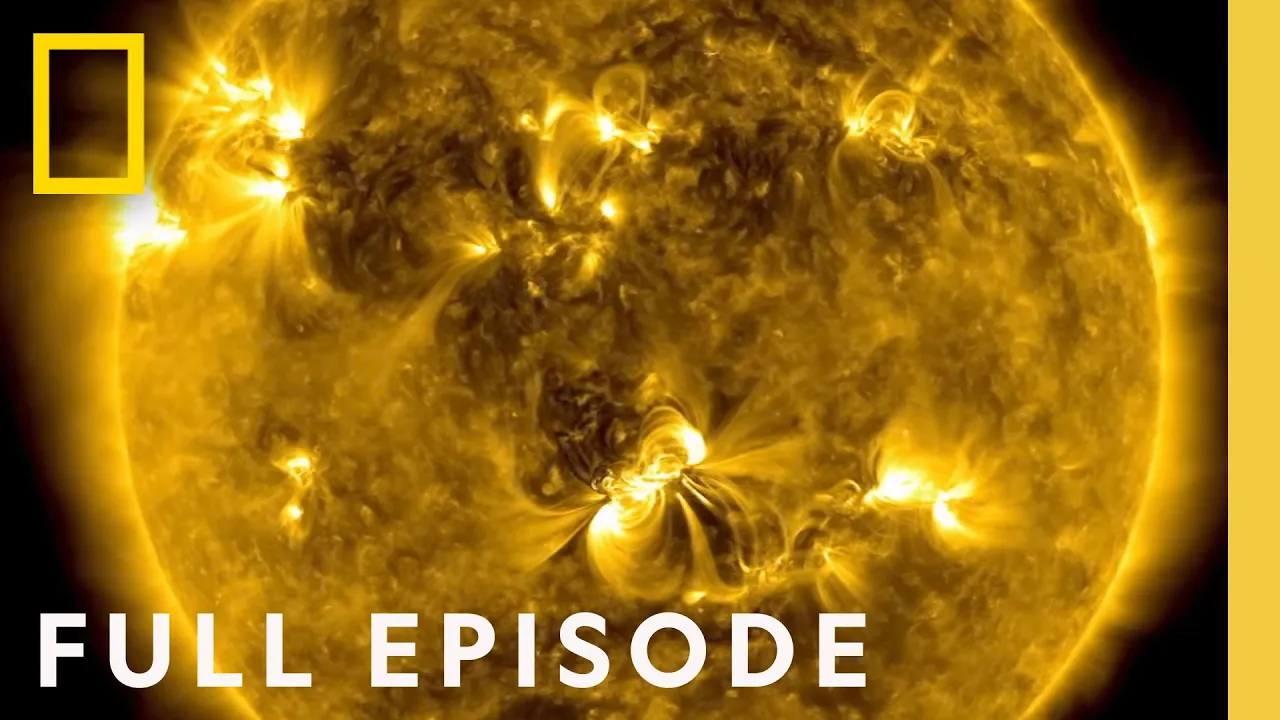
Solar Storms and Space Weather: Science of the Sun's Fury
@NatGeo
589.3K views•2024-08-11

21cm Hyperfine Transition in Neutral Hydrogen: Radio Astronomy Basics
@AaronRobertParsons
12.4K views•2011-10-13

Gravitational Wave Sources: Signals from Supermassive Black Holes & Inflation | IAS School
@videosfromIAS
501 views•2025-07-16

Entropy and the Second Law of Thermodynamics Explained
@veritasium
27.5M views•2023-07-01
Related Study Plans & Knowledge Roadmaps
Structured learning paths in Physics