

















![[CONFÉRENCE] "Euclid et le côté noir de l'Univers..." par Françoise Combes](https://i.ytimg.com/vi/IlTqqMwweC4/maxresdefault.jpg)










General relativity, developed by Einstein in 1916, describes gravity not as a force but as the curvature of spacetime caused by mass; massive objects warp the fabric of spacetime, causing other objects to follow curved paths, which explains phenomena like planetary orbits and light bending around massive objects, while also predicting effects such as gravitational lensing and black holes.
General Relativity Explained: Curvature of Spacetime & Gravity
Added:Newton's Law of Universal Gravitation and the classical concept of gravity as an attractive force between masses.
The fundamentals of Einstein's Special Relativity, specifically the constancy of the speed of light and the unification of space and time into a four-dimensional continuum.
Basic mechanics concepts such as acceleration, inertia, and Galileo's observation that all objects fall at the same rate in a vacuum.
The concept of coordinates and the difference between flat (Euclidean) and curved (non-Euclidean) geometry.
The astrophysics of Black Holes, focusing on event horizons, gravitational redshift, and spacetime singularities.
Gravitational Lensing, exploring how massive celestial objects bend light and allow astronomers to map dark matter and observe distant galaxies.
Gravitational Waves, including how accelerating massive systems generate ripples in spacetime and how observatories like LIGO detect them.
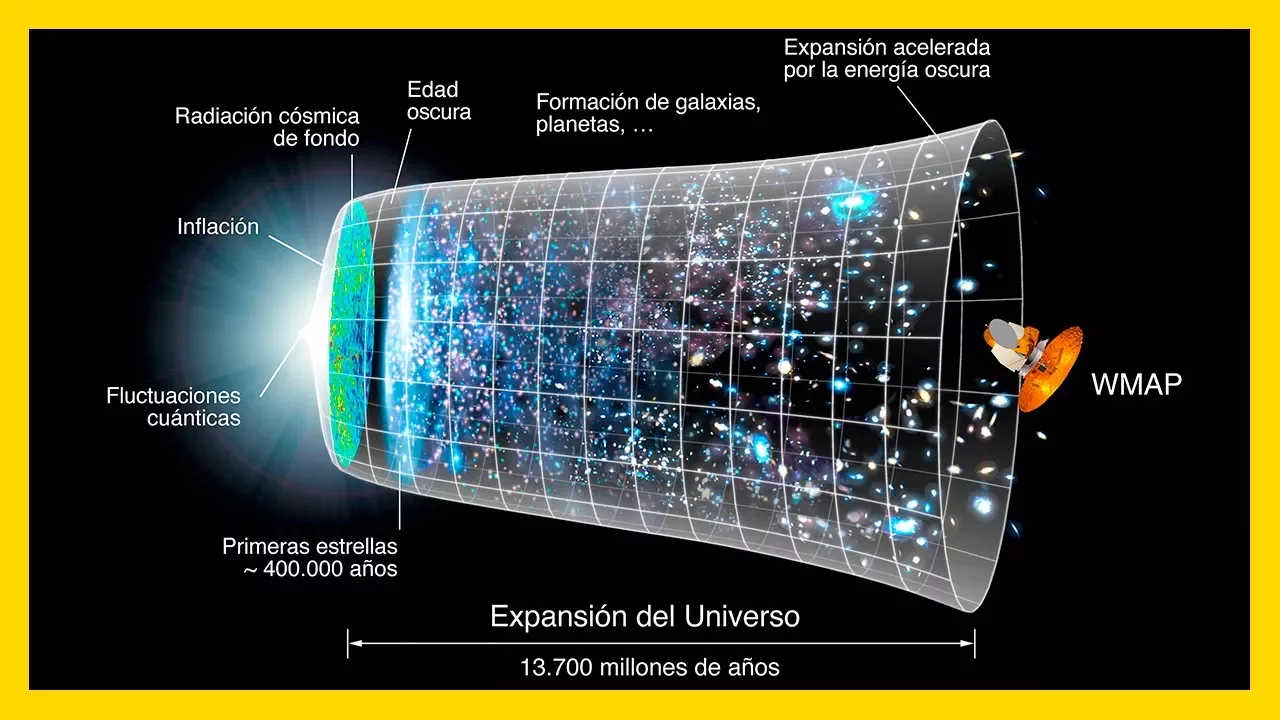
Modern Cosmology, specifically the expansion of the universe, the Big Bang theory, and how Einstein's field equations describe cosmic evolution.
Practical applications of relativity, such as the precise timing corrections needed for Global Positioning System (GPS) satellites to operate.
629.6K views13.1Klikes6:20Original Release: 2017-05-25
Hey it's professor Dave, I want to tell you about general relativity.
We just spent a good amount of time learning Einstein's theory of special relativity, which he developed in 1905. This and other publications of that year put him on the map as a force to be reckoned with. A decade later in 1916, he published his general theory of relativity, which described the geometry of space itself, and revolutionized the way we think of the gravitational force.
An adequate description of general relativity requires extremely complicated math that goes far beyond the scope of these tutorials, so we won't even try to touch it from that approach.
But we can still briefly describe some of the conceptual implications of the theory that will dramatically change your perception of the universe, so let's see what Einstein had to say.
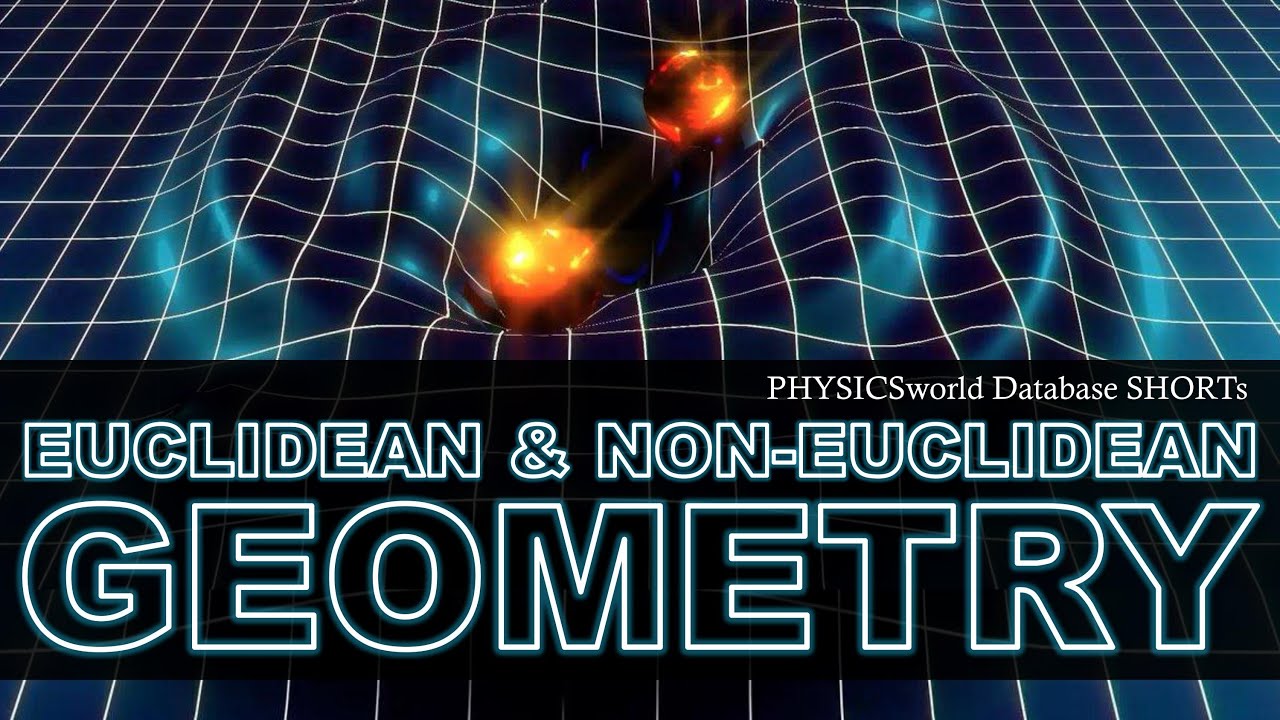
For centuries we thought that the universe obeyed Euclidean geometry. This is the kind from high school geometry class where parallel lines never intersect, the angles of a triangle add up to 180 degrees, and all kinds of other geometrical perfections hold true. With general relativity, Einstein showed that this is not the case. Just the way you can distort the shapes drawn on a piece of paper by bending the paper, space itself is distorted or bent around massive objects. That is to say that just the way that bending a piece of paper results in a two dimensional plane becoming wrapped around a third spatial dimension, the three spatial dimensions of space are wrapped around a fourth spatial dimension, according to the distribution of matter in the universe, as mass is the property that causes space to bend in this way. This is physically impossible to visualize, so don't worry when you find that you can't do it.
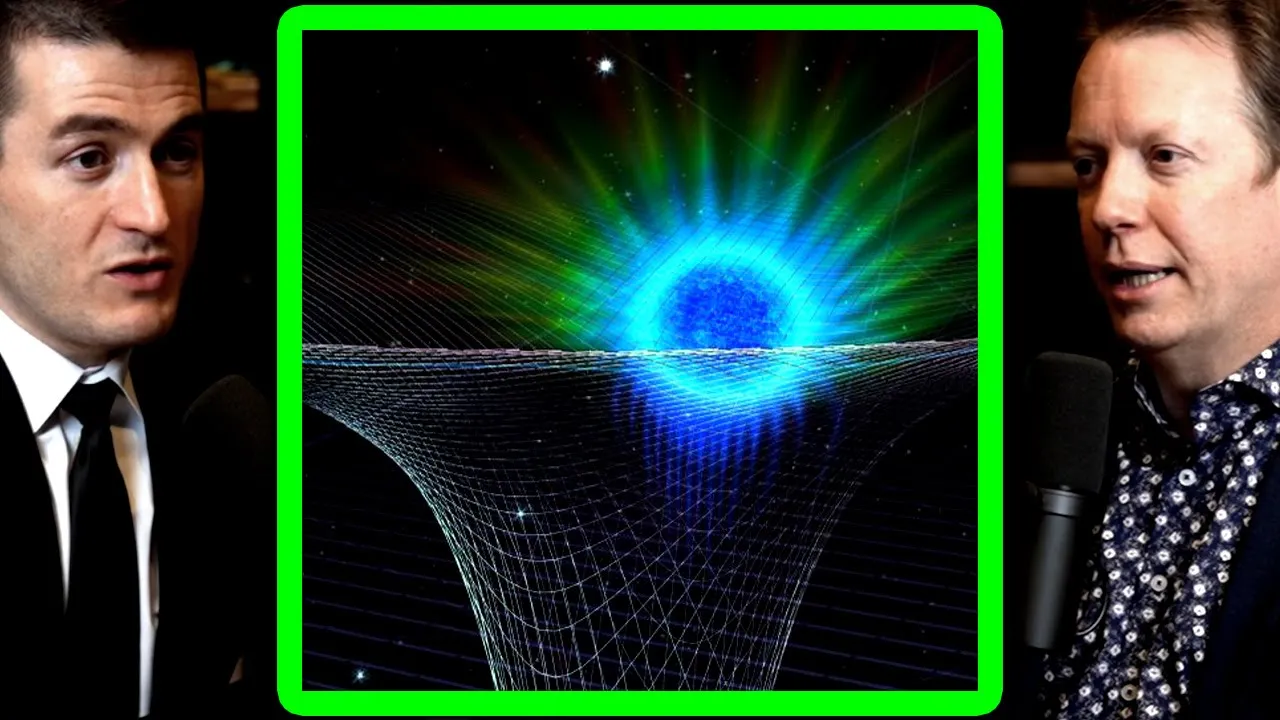
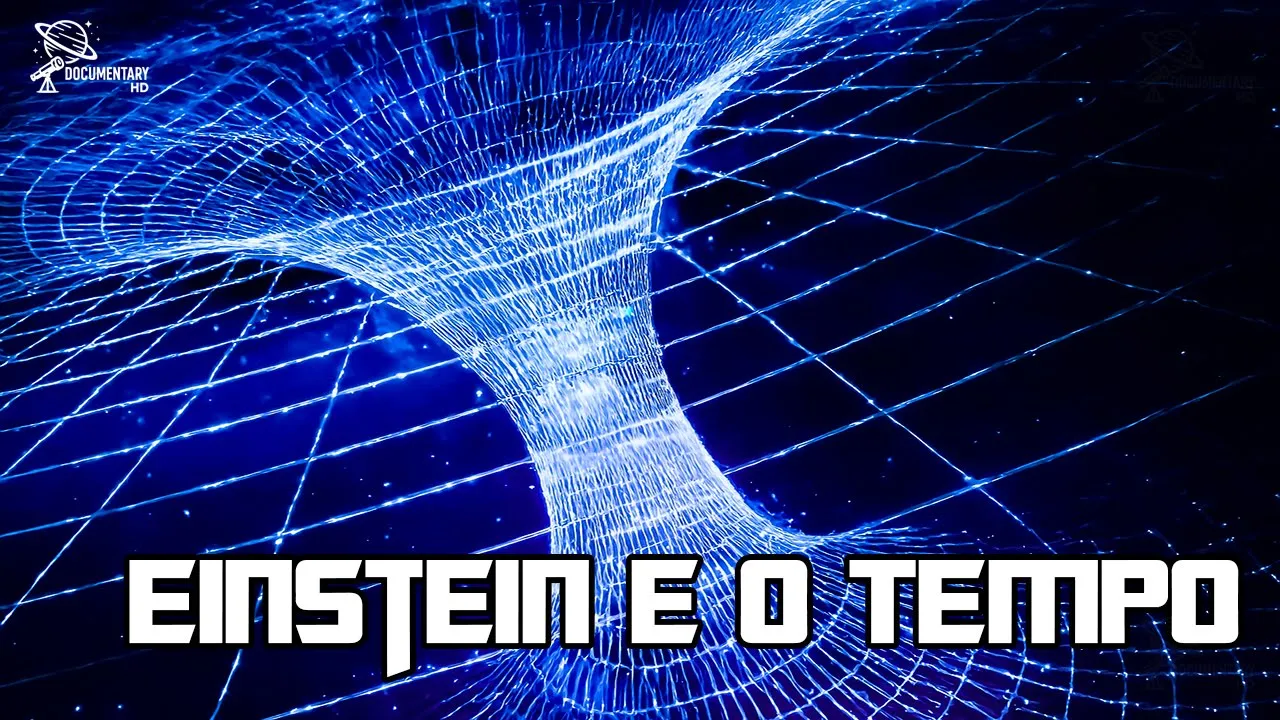
Our brains can only comprehend three spatial dimensions, and so the best we can do is to employ analogies, like the bending of the piece of paper, and understand that space does the same thing, illustrated in an image like this, where a two-dimensional representation of space-time is curved around a star or planet. This does not accurately depict the true curvature of space, it is simply the best we can do. These conclusions describe the universe as non-Euclidean.
Parallel lines can indeed cross if they move through curved space-time. Einstein derived this theory in an attempt to expand special relativity, which applies only to inertial reference frames, to include all reference frames, which is why it is called general relativity.
One result of this is the idea that the source of an acceleration has no effect on the force imparted, such that a ship in deep space accelerating at 9.8 meters per second squared would impart a force on someone inside that would feel exactly like the gravitational pull on the surface of the earth. Because we now understand that space is warped around massive objects, we see that general relativity is a big improvement on Newton's law of universal gravitation in terms of a satisfactory theory of gravity. Newton outlined aspects of the gravitational force, but he didn't know exactly what gravity is or how it propagates. Now we can regard it as the warping of space that deflects the path of other objects, like a bowling ball pressing down on a membrane. This curvature creates what we know of as gravity, being that massive objects tend to fall towards more massive objects, and this explains the orbits of the planets around the Sun, as well as the falling of objects towards Earth, without having to resort to a magical field force imparting action at a distance. Space is therefore no longer an empty expanse just the way that time is not a detached parameter. These two constructs are actually part of the same thing.
They comprise the space-time fabric.
Space-time tells matter how to move, and matter tells space-time how to curve.
General relativity, just like special relativity, enjoys a tremendous amount of corroboration by experiment. One necessary result of the theory is that light should follow curved paths around massive objects, and a famous experiment observed light from a distant star curving around the Sun during a solar eclipse, whereby the blocking of the sun's light allowed us to directly observe the light from the star behind, which appeared in a shifted location.
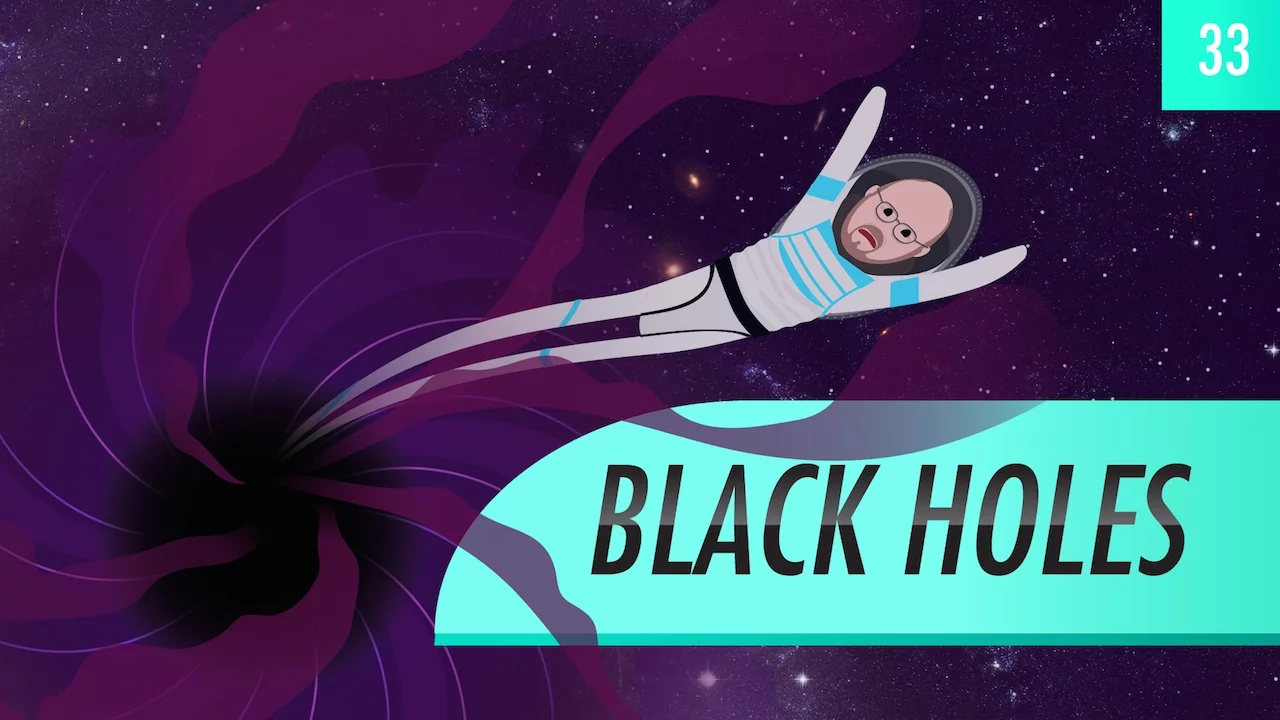
When light is deflected around more compact objects like black holes, the light from the more distant object can bend around the mass in a way that results in multiple images of the object.
This phenomenon is called gravitational lensing, and it is a common astronomical observation. General relativity predicts and explains all kinds of other observable phenomena, like anomalies in the orbit of the planet Mercury, and things like neutron stars and black holes, which we will cover in the astronomy course. But as strong as the theory of general relativity is, it is not complete, because it has not merged with the particle world. That is to say, we do not yet know how general relativity can be reconciled with quantum physics. To understand this problem, we need to do a comprehensive survey of all particles, so that we know exactly what we are dealing with, so let's move forward now.
Thanks for watching, guys. Subscribe to my channel for more tutorials, support me on patreon so I can keep making content, and as always feel free to email me:
Up Next

93:23
Dark Matter Evidence & Relic Density via Freeze-Out | Lecture 1
@iiptv
213 views•2024-03-20

12:53
21cm Hyperfine Transition in Neutral Hydrogen: Radio Astronomy Basics
@AaronRobertParsons
12.4K views•2011-10-13

4:00
Radioactive Half-Life Practice Problem: Decay Constant & Fraction Remaining
@ProfessorDaveExplains
70.5K views•2019-10-29

27:14
Entropy and the Second Law of Thermodynamics Explained
@veritasium
27.5M views•2023-07-01
Related Study Plans & Knowledge Roadmaps
Structured learning paths in Physics
physics
Nuclear Physics (Decay, Fission & Reactors)
01Atomic Structure and the Binding Force
02Radioactive Decay and Half-Life
03Nuclear Fission Mechanics and Chain Reactions
+ 2 more learning modules
12h5 modules
Explore Roadmap
physics
Soft Matter (Polymers, Colloids & Rheology)
01Foundations of Soft Matter & Thermal Forces
02Polymer Physics and Macromolecules
03Colloids, Surfactants, and Self-Assembly
+ 2 more learning modules
38h5 modules
Explore Roadmap
physics
Analytical Mechanics: Lagrangian & Hamiltonian
01Mathematical Foundations: Calculus of Variations
02From Newtonian Mechanics to Constraint Dynamics
03The Principle of Least Action & Lagrangian Mechanics
+ 3 more learning modules
28h6 modules
Explore Roadmap
physics
General Relativity (Spacetime & Cosmology)
01Foundations of Relativity: Special Relativity
02The Geometry of Spacetime: Equivalence Principle & Curvature
03Einstein's Field Equations: The Mathematics of Gravity
+ 2 more learning modules
55h5 modules
Explore Roadmap