



















![[W154] Basabendu Barman: Dissecting the Dark with Gravity](https://i.ytimg.com/vi/IDxtMPk3YzM/maxresdefault.jpg)
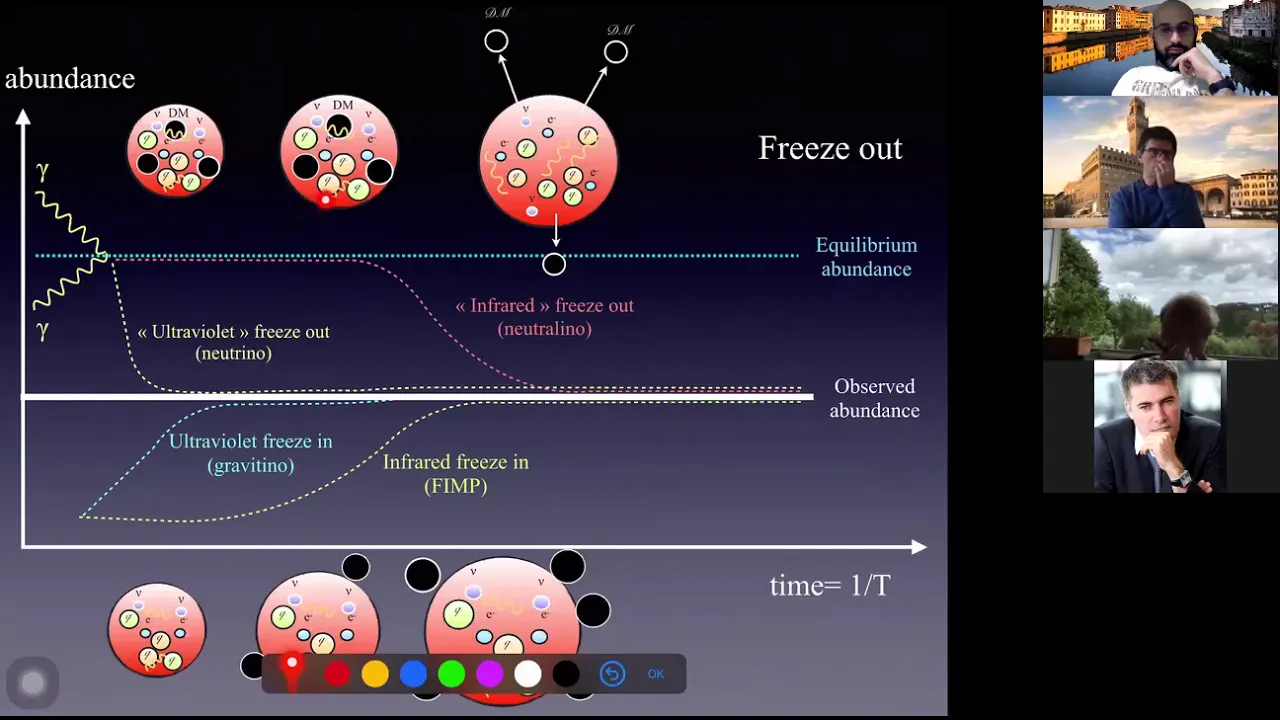




The freeze-out mechanism explains how dark matter achieves its observed relic density in the universe: as the universe expands and cools, dark matter particles initially in thermal equilibrium gradually lose their ability to interact and annihilate with each other because the expansion rate exceeds the interaction rate; this freeze-out occurs when the mass-to-temperature ratio (x = m/T) reaches approximately 20-30, ensuring dark matter is non-relativistic at freeze-out; the resulting relic abundance depends on the annihilation cross-section (σv) and mass of the dark matter particle, with typical weak-scale interactions producing the correct observed dark matter density.
Dark Matter Evidence & Relic Density via Freeze-Out | Lecture 1
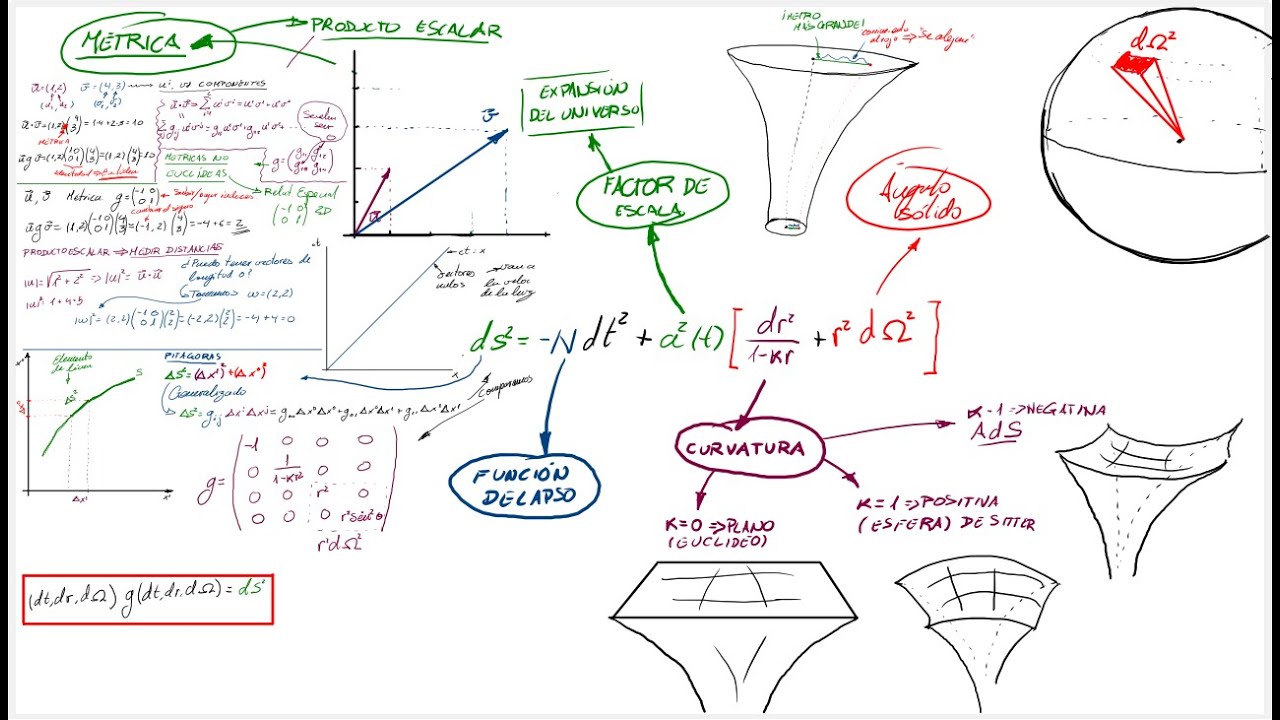
Added:Basic Cosmology and the FLRW Metric: Understanding the expansion of the universe, scale factors, Hubble's Law, and the Friedmann equations.
Thermal Physics and Statistical Mechanics: Familiarity with thermal equilibrium, partition functions, Maxwell-Boltzmann distribution, and entropy density in the early universe.
Introductory Particle Physics: Basic knowledge of the Standard Model, fundamental forces (especially the weak interaction), and the concept of interaction cross-sections.
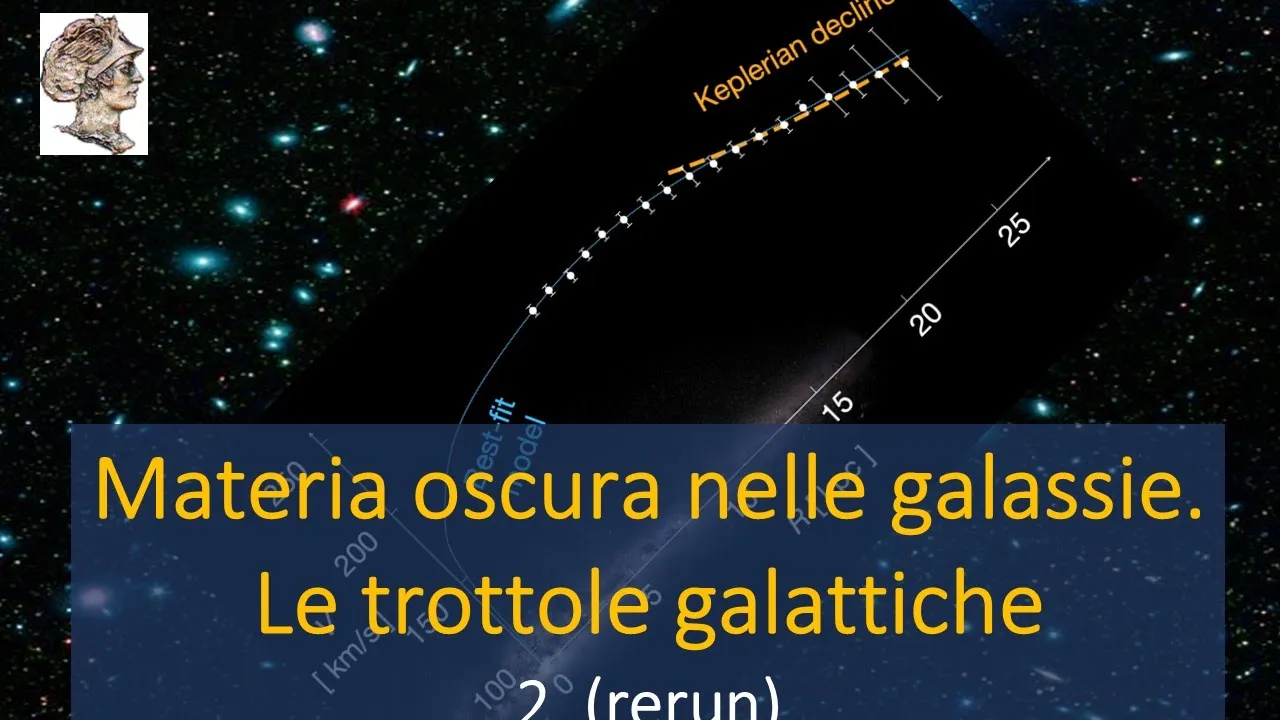
Keplerian Dynamics and Galactic Rotation: Understanding how rotational velocity is classically calculated based on visible mass distributions to comprehend the 'missing mass' problem.
Mathematical Derivation of the Boltzmann Equation: Solving the actual differential equations governing freeze-out to compute precise relic abundances.
WIMP Direct and Indirect Detection: Exploring how experimentalists search for dark matter via nuclear recoils (direct) or annihilation products like gamma rays and cosmic rays (indirect).
Alternative Dark Matter Candidates and Production Mechanisms: Studying non-thermal dark matter, the 'freeze-in' mechanism (FIMPs), axions, sterile neutrinos, and primordial black holes.
Modified Gravity Theories: Examining alternative explanations to dark matter, such as MOND (Modified Newtonian Dynamics) and its relativistic generalizations, and how they fit cosmological data.
213 views11likes1:33:23Original Release: 2024-03-20
you de case for dark matter so I must say that when I was a uh an undergrad student and someone for the first time mentioned to me the possibility of an dark matter I was like quite uh surprised and suspicious that what Dark Matter Ian what kind of matter is that and then eventually I realize what this name refer to dark is not like something hold on a second I'll put like this okay so what the dark really meant simply means that it's a some sort of matter which does not emit or potentially absorb any electromagnetic radiation that's what the dark name came from which was coined by zi in the 30s okay and but instead of going through a historical overview of how the Dark Matter uh the case for Dark Matter came about i' like to just review some of the evidence for dark matter I like to start one which is more common to all of you even for those who haven't studied dark matter in the past so this one has to do with BBN which is which stands for big band nuclear synthesis and Big B nucleos synthesis we learned in cosmology courses how to compute how much atoms let's say or protons and electrons neutrons protons are in the universe and how they combine to form nucleus or nucleus or how many or the amount of nuclei we form in the universe in the very beginning of the universe in the first minutes of the universe so BBN stands for a theory which predicts the amount of nucleus which are formed in the early universe so I will often refer to something called abundance and abundance to me I represent by Omega which is the density of a given species divided by the critical density and the critical density is simply the density at which the curvature of the universe is set to zero so when I set this to zero I refer this to critical density so the critical density is simply the Hubble rate divided by this constant okay when I compute so the abundance is the ratio between these two densities and we once we learn how to compute the abundance of those nucleus or these nuclei we find that the abundance of this nuclei should be around H should be around 02 25 if I remember correctly and so let me just emphasize so big big bang nuclear synthesis is a theory is in cosmology that we learn take into account the universe is expanding and is cooling down we compute how many nuclei are formed in other words when protons and neutrons how many protons and neut they combine to form helium delium burum helium 7 and so on so this is basically helium 4 because it's the most uh stable element we have and therefore most of the neutrons they combine to form helium 4 and these abundance of nuclei we have in the universe roughly coincides with the amount of helium for we have so is very close and I should say that as I set the coverture of the universe to zero to be consistent with the data this means that the the total abundance of all ingredients of the universe should be equal one so in other words if I sum the abundance of I know varans or atoms plus the amount of let's say dark energy plus the amount of the abundance of uh radiation I'll call this matter matter Dark Energy radiation or Omega CDM let me Encompass that in this so plus okay this should be equal one so if I sum all the meta I know and perhaps the one I don't know which I put in here plus basically the amount of dark energy which is uh a topic for a different talk the amount of the abundance of those elements should be equal one if the universe is flat okay so it means this if I somehow can constrain of this thing of matter or bionic matter bionic matter if I know how to compute this stuff and this is very different from one automatically I know that there is a large component of the universe that I don't know what it is and what I don't know what it is I call it dark so in the cas is if it's the thing I don't know is refers to energy I call dark energy and if refers to matter I call dark matter and the point is the amount is very close related to the amount of nuclei are formed in the early universe so if I plug in this number there I basically know that is a large component or abundance missing in the puzzle okay and one is in the form of matter and one is in the form of energy the difference between the two is that the energy component we first to is responsible for the accelerated expand of the universe whereas the other has a very different uh equation of state and is called dark matter which is the topic of today's lecture okay so BBN I to me is an evidence for dark matter not in the sense that we views the dark matter but because it tell us the amount of things that are made up by atoms and knowing this sum should be equal one if I know this then I know that is something else missing so it's an nness that is really something missing not necessarily dark matter but there is something missing for sure and why I refer to this as a really solid evidence because the this computation is quite solid so is this number is quite solid just involves uh beta decay inverse beta Decay and which are really well-known processes in particle physics okay and the another one which is CMB and this one to me was quite surprising because CNB just for those who are not familiar with are refers to the photons from the early Universe which arried to us in all directions at roughly the same temperature and the temperature of these photons is in the micr Kelvin and the difference in temperature of the photons reaching Us in different regions of the sky the difference in temperature is related to how much Barons we have or atoms dark matter we have and dark energy we have so the CMB Spectrum delta T over T delta T is the difference in temperature between photons in different regions of the sky over the mean temperature the average temperature as a function of the angle so it's roughly like this so I'm not going to put the units because this is normalized so let's say it goes like this and there are [Music] some and what happened is the first Peak here is very very sensitive to the curvature of the universe K the same K I wrote here these two peaks this one the difference in the height of this two peaks is related to the abundance of variance and the abundance of matter in the universe the other Peaks are related also to these quantities but not so sensitive to those quantities so what I'm trying to say is so these two from these two peaks the second and the third Peak I can somehow extract by the difference between them playing with them what should be so the bonus of atoms or perion I have is one the total amount of matter is something else so if this one the amount of matter is much larger than the abundance of matter is much larger than the abundance of variance it means that all the matter in the universe basically the majority of the matter in the universe is not formed by varans it's formed by something else which is exactly what we got from CNB data that Omega matter is much larger than Omega B and what we actually get that let's say that I don't know what is this extra matter and I'm just calling it by any reason cold dark matter we conclude that this Omega cold dark matter is roughly five times the Omega B barri so the amount or the abundance of gold dark matter in the universe is roughly is not precisely five but is roughly five times more abundant and we got this from CMB data okay and how we got this from the second and third Peak mostly but this peak does also depend on Omega B and Omega matter okay it's not just solely on the coverture but as you see since the Precision here let's pretend that I drew some Arrow bars here so the arrow bars would be maybe so small that you would not even see with your eyes Al so small they are they are super super tiny so therefore if I do find an evidence for something which is not barns using CMB data which is a relic from the early Universe means that we have a strong evidence for dark matter because anything you can come up with has to fit this data and the the arrow bars of this the CNB data are super super tiny so CMB Cod Dark Matter matches really well the power spectrum of the CMB okay and this way I ploted delta T over t as a function of theta Theta would be the angle at which I'm looking different difference between two points let say one point here one point there the difference in angle between these two points is called Theta and I can normalize this by 200 100 and sometimes they do I can instead of writing delta T over t as a function of angle I could write this as a harmonical spherics spherical harmonics and write this as a function of the Polar uh parameter of the spherical harmonic there are many ways how I can again reach the same conclusion which is if once I try to reproduce the difference in temperature between photons are reaching us from different angles of the sky if I try to reproduce this I need something else which is not just made of variance period does not have electric charge you cannot have it okay all right so a third [Music] one that's the most simple one to [Music] explain is the Galaxy rotation Cur so this seems to be simple but it's not so simple if you want to really talk in a scientific level but you let's try to see the the the easy picture so it means that let's assume that you have a circle here and that Circle has embedded a mass m and then you have a test particle of a mass m small M therefore so the as this sphere is is right there through the shell theorem we can prove that this sphere solid sphere behaves like one point particle in the center with mass capital M okay for this shell theorem so the gravitational force that M exerts in small m is g m m over the distance between the center and this point here square and if this particle is attached attached to this part particle m is just traveling in a circle like this so the the movement that this particle is doing so there's a force pulling that M keeping that in a circle plays the role of a centrifugal force therefore the mass velocity of that test particle over the distance is equal this the the gravitational force therefore I cut these M's and then I find that the velocity is proportional to square root of 1 / r so in other words so if I have this m here and then I took another M let's say here there that m is further away from so there's no more mass here right so this Mass stops there in this white circle so if I took an M here there's no more mass enclosed around there so the further away I go from the center this smaller should be the velocity of that s particle M okay so that's what I should see from Newton Dynamics okay that's fine so however if I'm in the center inside the circle if I'm inside the circle then I know that the density if the density is constant is mass divided by the volume in other words the mass is row over the volume of a sphere be 4 pi over 3 the distance Cube so now let me erase this part and now let's say I'm not taking this test particle M right there I'm taking that test particle in this circle in the center right here now this Mass which is outside this small Inner Circle does not contribute to the movement of this particle M through the shell theorem only this particle enclosed in this region will contribute to the motion of this m therefore only the mass inside this volume you contribute and this volume is this set by this small R here is m r which is this one okay so now let's still continue with this formula so apply again gravitational force it equal to the centrifugal force I have g m m over R 2 now this m I write as row I forget the constants okay R Cub time M I'm just forgetting the constants and this is equal to the mv^ 2/ r now I cut this this R to the fourth power here R4 with R2 is R2 then and when I Square it I take I find that V is proportional to R so in other words let's say now I have a Galaxy [Music] here then if I have a a a star inside a Galaxy and I'm inside the circle which is the limit in the Galaxy inside the velocity of the star should grow with r so I should see something like this growing R once I get outside of the circle or outside of the Galaxy the part where the mass is enclosed then the velocity should go down with one / R square root of R so that's what I should see this let me erase the Galaxy there I don't then I should see something like this okay and this is the velocity and this is the distance however what I actually observe is something like this so as when I get outside of the Galaxy instead of seeing the velocity falling off with the distance what I see is that the velocity is roughly constant but if the velocity is roughly constant then you go back to the formula look at here I'm going to just erase this for a moment and write back g m m i 2 m v 2 over R so for the velocity to be constant if this velocity is constant okay I'm going to cancel this m with this small M let me erase it so for the velocity to be constant this R will come here we'll get 1 / R I'm going to erase this R and this R here so outside outside of the Galaxy there is no more mass well as far as I can see but if the velocity is constant means that there is some Mass which must be growing with the distance otherwise the velocity will never be constant so if the M should be now an M of r r being the distance from the center so there must be some Mass involving this visible Mass but I don't see it so I call it dark because I don't see it then this dark matter is enclosed around or surrounding the Galaxy and the the mass should grow with r okay and that was firstly observed by ruin in the 7s she had another paper in 78 and in several other papers in the early 80s that confirmed these observation in dozens of galaxies and today we have collected data of roughly 200 galaxies and all of them present the same behavior well there are a few exceptions but are not so fully understood but the galaxies in general be behave like this okay so it means that we do need some Mass which is surrounds the visible mass and I call it dark that's why we have a dark matter but that's in English we call this term as dark Halo is a dark Halo or dark matter Halo in the galaxies okay so Galax rotation curves is a very compelling evidence for dark matter and these you might ask as far as the statistics is concerned we have you know how many Way Beyond five sigmas for the for the need of something which is behaves like dark matter and one often question people ask is whether I could explain the Galaxy rotation curves using bodified gravity for one Galaxy I could modify the Newton gravity formula and then modified it by some constant or for some function to fit the data for different galaxy I would modify again for different galaxy I would modify again for different galaxy I would modify again I have to be fitting for each Galaxy which proper parameter I have to put in modify the Newton Law to fit the parameter of to fit the data of each Galaxy but still you could still still you could explain the data of Galaxy rotation curves just using modified gravity but you have to need basically need one modified gravity equation for each Galaxy however it must we must say that as far as we know we have ask come I know I don't know any modified G modified theory of gravity that reproduces CMB that is none okay no one whatsoever and this is just the CB po Spectrum I didn't even mention bionic aquus oscillations which is related to the CNB power Spectrum but it's not necessarily the same has to do with the other PS later on which also no modified gra theory of gravity can can explain the data but let's go to the fourth let me see my list which one I put it okay Galaxy glass data so in this galaxy cluster data I say there are two types of data sets uh the first one which is really is closely related to Galaxy rotation curse for Galaxies but now we have a Galaxy cluster so in the same way this Mo M was a star inside a Galaxy you could have a Galaxy inside a Galaxy cluster the same thing continues and we do observe we do observe the need for dark matter in Galaxy clusters using the same idea that ver Rubin did a long time ago but besides this I'm going to mention another one this one so I just go instead of mention this one in detail because it's very similar to that one is Collision of clusters so to me this one was quite interesting because was roughly the time when I was uh started reading about Arc matter so in the early 2000s so what it was observed was the following so there was a let's say a Galaxy cluster here moving with velocity V and another galaxy CL cler there moving with velocity V towards one another and they would collapse so one Galaxy cluster matching another galaxy cluster as you know the universe is dynamic as we are moving towards Andromeda galaxy because one day we're going to all die right and find the future so well we're going to die way before that because of the Sun but anyways so the these galaxies are moving towards each other these Galaxy clusters and what they happen is the center of mass of these uh the if these objects Galaxy clusters were made of charge particles let's say protons and electrons such as barans in cosmology protons are barians electrons are variance but electrons are not Varan but in cosmology they are called varians okay it's just a historical reason everything is which is forms everything that forms atoms are called barians despite not being barians so protons and electrons so if Galaxy clusters were formed by protons and electrons and once they collapse what will happen is since these guys have electric charge charge and they if these particles for some of those cases are indeed barans they feel strong forces they would interact strongly and be concentrated so now let's say we have one picture we take the picture now they are coming and then we take another picture of them together collaps so what will happen is let's say the protons and the electrons would be interact one will pass through the other however those guys would interact strongly and let's say collapse or be clustered in a region and these particles since they have electric charge they once they move and they are accelerated they emit X-rays and those xay Rays can be picked up by instruments so by measuring cos Rays far away using telescopes or satellites I can determine where the charge particles are and this way using x-ray data they could infer where the bonss were and use using lensing which I'll explain soon they can determ where the center of mass in gravity is the potential well of those objects and the potential well of those objects one was was up here and the other was up there in regions which were separated from where the X-ray emission was coming from so is a way to separate the variance from the center of mass the the distance between the center of mass and the barians by measuring X-rays and gravitational lensing in other words what I'm trying to say is the center of mass of clusters are not where baring are so in other words Barons are not responsible for the mass of Galaxy clusters because they are not where the center of mass are is okay they are not at the same position and they observed this if I recall it was in 2004 and then there was one event and people why this is relevant well you're saying for the first time that today is an event to observed today not early Universe today that Barons are not responsible for the center of mass of Galaxy clusters today okay so it means that beers let's say the mass of this guy is M here M and this one is M Prime from the X-ray mission I can infer let's say the amount of light these guys emit so if I pick up the X-ray emission from this galaxy cluster the Luminosity of this galaxy cluster I can sort of infer how much Baran they are and from the X-ray mission of these guys I could in principle also got the Luminosity of this object however looking at objects individually is harder than looking at collisions because at collisions I do know that once they Collide because the interactions between these charge particles they will concentrate in the metal they'll not pass through each others because of the electromagnetic and strong interactions and since the S of mass are separated from the X-ray emissions is is located then I can do a statistical analysis and infer how distant it is this blue region in circle from this one from this Center of mass and from this Center of mass and then in this same paper is a large collaboration they concluded that no modified gravity theory of that time was able to reproduce this observation and since they separated the X-ray mission location from the center of mass region of those objects they were able to rule out modified theories of gravity at that time at roughly 7 Sigma so that's 9.69 of significance 99.66 6 99999 99% of confidence level okay and then that was 2004 however many people who advocate for the idea of having a modified gravity Theory were still complaining wait but you're trying to disfavor my theory because of one observation and today we have collected I'm now I'm trying to get the right number either 70 or 80 events just like this one and all of them collectively exclude modified theory of gravity at over 10 Sigma okay which was nearly seven before now is over 10 Sigma and again do remember that no alternative theory of gravity can explain CNB so we have now uh so far four five evidence for dark matter I like to mention the one that I used which is gravitational lensing for this one so this idea is simple well is how the let's say the I that's the reason why I came into Brazil anyways so he came because we could see the bending of light right so that's why he went to so BR to see the bending of light so that's what gravitational waves are basically bending of light due to gravity so if you are here and you emit some light and let's say this is a ray of light there and you have an object in the middle this light will bend due to gravity okay that's the way we see the uh the black hole of interstellar the way they look it looks because of the bending of light so in other words now I'm going to do the opposite so okay if you emit a light here will bend this way so let's say if I'm here now I'm looking here and I'm trying to see this object well if this guy is here in the middle and I'm here and this this thing is moving I'm going to wait for this guy to to pass in a given region so I can see it so before this guy these object was here and I would emit some light I would see it but very happy and as he moving down I perhaps I wouldn't see it however even when he moves that way when it light like this because of the bending I could still see it and this way comes here I'll still see it and as he moves what I'm trying to say is because of some object here in the middle the amount of Ray lights of rays I see they will be Amplified due to the presence of this object so it be look brighter than it is because of the mass of these objects the presence of a massive object between me the Observer and some object this guy will look brighter than he should because of this object and I can relate the brightness of these object to the mass of what's in the middle but I can obviously if these object is here I can look it and see how much light it comes from and given the if I know the light of this object and I know its mass if the mass of this object is much larger than the Luminous Mass it's called luminous mass of these object means that these object is more dark than luminous so let's say that this Mass over L is roughly 10 so in other words what I'm trying to say is there is 10 times more M more mass than Galaxy Zoid Stars emitting light so there's many more things pulling acting as with gravity as a gravity gravitational object then emitting light so there's a dark object there and comparing the ratio between the mass and the light I can infer how much dark matter or the mass that does not meet light we have in this object and and that's how I determined the total mass of this guy and the total mass of this guy so I knew it how much light would emit I knew how much light would Emit and I know looking at the object look keeping looking at this because eventually this guy will come between me and something I want to see it will look brighter and then I can infert the mass of these guys objects and depending whether these gu is close to me or far away or what I'm looking this lensing effect or gravitational lensing effect is called either weak strong or medium Ling okay because depends on how strong the effect is and you can see sometimes multiple images of the object depending of the positions between you the Observer and the source and the mass of the object okay and any doubts so far any questions no okay so I'll have this one but I won't mention I'll just write it down B one bionic aqu oscillations barion aqu oscillations the reason why I mentioned this because I have many colleagues who obviously work on gravitational alternative theories of gravity and I ask them often ah for now the dark matter does not exist dark matter is is why you believe dark matter and that's said well the day you prove me that your theory can reproduce CMB data or B data then I I'll jump with you and agree that dark matter is not the best theory but until you you don't do so then that's the best that is okay now I'm going to move to the particle physics side of this lecture to prepare you for Oscar's lecture which is now I'm going to cover the bosom equation I'm going to explain what this means so let me explain so this n here we first to the number of particles in a given volume and this DN dot is D and DT okay derivative in time and H is the expansion rate which is a function of time or temperature Sigma V is this thermal average so V is the relative velocity between two particles so I have one Kai meets another Kai or Kai bar in a given volume this volume v is this one this is the number of particles okay so I have many of them K Bar and the sigma V is the cross-section between them how How likely they will interact with each other V is the relative velocity between them this n is the number of particles in equilibrium so do you learn in statistical mechanics that whether you have a direct firment or are bized uh species the number density in equilibrium is bman suppressed or it can be both surprises if non relativistic but it's something like this beta Min plus minus one beta e am I right yeah I think so minus right and there are some integrals overt thank you it's proportional okay and you can solve it in the norales regime or in the relativ VIS regime whether is in equilibrium if it's in equilibrium there is a solution when it's equilibrium so it means that the number of particles that you produce and they are annihilated is the same or they at the same temperature and this n is just the the usual formula so one is in equilibrium the other is not so this one has a chemical potential that I forgot to put here me and the other is the form with the MU the other one is without the the MU okay so let me right just think of this for a moment so the BOS equation is telling you the how the number of particles in a given volume evolve with time take into account that they produ anihilate and produce other particles or they can be produced and that this volume itself is X growing with time so the volume is growing with time and the number of particles that are contained in that volume is changing with time because they interact with each other okay the what the number of bman is is giving you so the interesting aspect of this to me that to me the BOS equation the way is written is the birth of aop particle physics because the inhalation cross-section is particle physics this thing is cosmology and there is no way you can avoid that so you have to include cosmology and partical physics together in order to determine how much dark matter that is in the universe how much you know variance there are in the universe you have to solve the Vol equation so you have to join the two roads partical physics and cosmology all right so yeah each species so yes he's asking whether this expression is for each species yes is for each species so this equation must be coupled because one species reflects on the other so is a coupled system which coupling this one yeah the in the moment that I say okay I have two particles let's say Let me Give an example I have e+ e minus annihilates and produce a photon and this Photon produces no let's say Z Zar all right so it means that the amount of z z bar I have depends on the amount of e plus minus I have because if I had no a plus minus I would have no ZZ bar right so in order to know the amount of Z and z bar I have I need to know the amount of e plus e minus I have but if Z and z bar can the same way e plus e minus can anate into these two particles these two particles can eventually potentially unhate back into this one mhm yeah mhm all right so now I'm going to jump a little bit so I'm going to define a UD which is the number density of entropy this is entropy density which is the entropy normalized by the volume of my system so I'm just defining the UD or Y and I'm going to rewrite this equation as a function of this y okay you can rewrite like this Dy d x - XS Sigma v h y^ 2 - y equilibrium squar so uh this x here where X is equal mass of that species over the temperature and the Y is the just the number of particles over the entropy y equilibrium is the number of density in equilibrium over the temperature over the entropy okay I'm just changing the the symbols anyway noise all right so why I'm doing this because when I plot it when I plot the solution of this equation will be quite clear why we we just use we we change the the the problematization so the solution of that equation will be something like this y over Mass over D which is DX okay it be something like this so let me take different [Music] colors so this would be the Y in equilibrium so what it means let me explain the first one so it means this you have particles finding each other and annihilating producing e plus e minus and then one particle comes Finds Its anti particle and or whatever annihilating and producing a plus minus a Kai meets another Kai unhat and produces plus minus but they are in thermal equilibrium if those particles are non relativistic so these number then that n there this solution for n or for y is proportional to minus m / T So as this is X right m / T is X so as X grows the number density goes exponentially to zero in other words y goes exponentially to zero okay as X increases or whenever M/T increases okay so that's the equilibrium solution however I don't have this term only that is this term this ratio Sigma V over H what it means means that I have a in in a volume in a given volume let's say I have a volume like this I have a kai and a Kai bar particle and anti particle and they try to find each other but this volume represents like the volume of the universe and this volume expands right so that's what the H is saying so when they try to find each other but now instead of being like this is looking like this they are further away from each other so if this expansion happens faster than the time it takes for them to me each other then they can no longer annihilate okay so if these two particles take one second to find each other but I push them further away in less than one second then they won't find each other they won't annihilate self annihilate make sense okay so when that happens what it means is the following now let's draw one curve so I have Kai bar so this is the solution of the UD or the number density over the entropy I'm annihilating producing particles this is in equilibrium so Kai bar and inates produces St particles such as e plus minus but e plus minus can produce anate back into Kai Kai bar they are in equilibrium in equilibrium follows this curve and they are non relativistic what is non relativistic in my case I simply saying that the mass the mass over the temperature is larger than one and this temperature is the temperature of freeze out but I won't discuss this now but let's focus on what I said for a moment so I have the equilibrium curve but then the universe is expanding is expanding eventually if the universe expands before they anihilate they can no longer find each other therefore the whatever I had left of Kai will continue so because they can no longer find each other so the moment a which the expansion is of the universe is happening the moment which the expansion is happening now starting started to happen because it grows it starts to happen before the anihilation took place this moment right there I called freeze [Music] out freeze out so that's the moment right there so the this is the leftover leftover abundance that's the left over abundance of dark matter so I have particles so dark matter particles they were finding each other they were in equilibrium with this C of motor particles eventually the expansion rate equals the interaction rate or the time it took to to anihilate then if the expansion rate exceeds or equals the annihilation rate then this freeze out the freeze the inhalations freezes they no longer take place and whatever you had left of dark matter is there until today okay so this is called the abundance of dark matter so what I'm trying to say is if I have a model partical physics model and I want to know how much of dark matter that my model produces I have to solve take my model where my model goes to goes to here the sigma V cross-section particle physics and this H H is in principle is given by Lambda CDM is expansion rate of the universe which I wrote Somewhere there yeah in the very first equation so it's known I know this okay this is cosmology C cosmology particle physics this is sort of known then I just solve this equation and I find the amount of particles I have the yield remember the yield I divided I defined as the number density of the entropy and one thing I didn't say is that this I div I Define the abundance as the critical the density of one species divided by the critical density but for non relative Bic particles this is equal the number density times the mass of that particle divided by row critical this is known it's a constant okay it's a constant this is a constant so the number density I I know okay once I have this plot I know what n should be because I found y if I found the Y I know the entropy the entropy is also will be given by a constant at here I know the number density if I know the number density and once I just need to know the mass then I find the abundance so for whatever Mass I want I compute the abundance of dark matter how solving the bosom equation so the bosom equation is the equation that governs the abundance of dark matter in the universe which is just a function of temperature or time okay and I need as input cosmology and particle physics so for every particle physics model I have I have a different Sigma V therefore I have a different solution for the PO equation make sense okay but what's interesting is that let's say I picked one random number for Sigma v i put this value here Sigma V = 10 to minus 14 GV minus 2 that's in natural units okay [Music] the solution I'm going to get let's say I'm assuming to be something like that if I pick a different model let's say that cross-section is two orders of magnitude different if I do it and I solve the bom equation I'm going to find something like that that's a left over for Sigma V [Music] minus 10 GV minus 2 and then again I take a different dark metal model for a cross-section again different I'm going to choose a different color this [Music] one and the sigma V to be roughly 10 to - 8 GV minus U so what I'm saying is as you see okay it's going to change the left over abundance of Dark Matter however the moment at which the expansion equals the anihilation rate in other words to me is easier to think of time the time it takes for the inhalation to happen so so they find each other is the same as the same time it takes for the universe to expand the universe takes the same amount of time to expand is the same amount that they find each other this moment I called freeze out so I'm trying to say is if I change in orders of magnitude the crosssection so I have a fir my scaler now a mediator is a w b is a z b is the mass is huge this mass is small blah blah blah even if I change this in this vanila way of computing The Relic density the time at which the freeze out happens is roughly the same and this ratio between mass of a temperature occurs between 30 and let's say 50 here so this there's no units okay because mass and temperature have the same units in natural units X should be around 30 or 50 so the free temperature is roughly the same because X since X is roughly 30 let's say so this is roughly 30 think about it if this is roughly 30 means that the mass is 30 times larger than the [Music] temperature if the mass is 30 times in temperature indeed when the particle froze out it was non relativistic because the mass was indeed much larger than the temperature okay any questions so [Music] far all right so now I have to just go some scenarios to discuss some exceptions to this [Music] calculation okay the first one is called resonance so you can show that the let's say you have two particles coming in incoming Kai and Kai bar and they find each other so the cent of mass energy if those particles are non relativistic like like very small velocities is roughly given by the masses of those particles okay there is no basically no kinetic energy so it happens for dark matter the velocity of those dark matter particles are known to be known relativistic at freeze out because this is a result of the both equation we just found that this x perimeter is roughly larger than 10 therefore the mass is 10 at least 10 times the temperature therefore the dark matter is no relativ in this standard scenario so I don't know if you remember but the cent of mass energy of a given system is the square root of s s who has learned particle physics is the mstone variable which related to Cent Mass so forget this second term here so if I just concentrate on this term this is q m Kai which is okay so if I have M Kai and M Kai the the center mass energy I have is to M Kai if they are rest but they are not at rest they have some velocity so I have the the rest Mass rest Mass plus some ktic energy in this kinetic energy in the early universe is I can rewrite in terms of the temperature the universe had in the at that time so have this kinetic energy of the particle is not just coming from the velocity of the particle itself is com from the velocity distribution of the particle because the particle cannot have just one velocity imagine you are in a gas not all molecules in a gas have the same velocity they have a maybe a Max BMA distribution of velocities so you have to you can know the average velocity that you have learned how to compute in statistical mechanics which you integrate take the velocity over the man is infinity to infinity and then comput the average velocity we do the same for dark matter but instead of writing the velocity we write as a function of temperature so what I'm trying to say is in the early today let's say the universities the temperature of the universities today is very small less than an electron volt 10 to minus 4 roughly electron volt so today the there is no contribution from the temperature to the center of mass energy so saying if I have a Kai particle coming here and this Kai particle coming there and they are coming towards each other to find each other here so this they have a a relative velocity between them V when they find each other the center of mass energy if they are in the non relative visic approximation where this velocity is just really small negligible the Cent M energy I have is simply 2m Kai That's it because the velocity is super tiny okay fine that's today why because we know that the velocity of dark mattering galaxies are super small are roughly 10 to minus 3 c v of Kai is roughly 10 to minus 3 this speed of light so today the nor relativistic so if there are two particles finding each other the cent of mass energy is just 2 m k however in the early Universe where the temperature was really high I could have on top of 2 m Kai I could have some temperature dependence so the dark matter in the early un would have much more energy than they would have today okay the same particles so what I'm trying to say is even if the particle physics is the same so I have one Kai and one Kai find each other knowing when that Sigma V was computed makes the a big difference so today they have a center of mass energy which is 2 m Kai in the early Universe they have a center of mass energy which could be larger much larger than 2 m Kai because of this temperature dependence so so what so why this really matters well because the cross-section of any for some let's say s Channel diagrams when you have some mediators here I'm going to write down below so if you have K particle Kai annihilating through let's say a z boson and some fans e plus e minus this crosssection is proportional to 1 / s minus m squ m² b^ 2us m^ 2 and this pay is the momentum at the center of mass so look at this let's say this Mass here is the Z Mass Z okay think of this so if the momentum of those two particles match or the center of mass energy match the mediator Mass I have a pole we have seen particle physics we know that we have a pole however however so we have a pole so let's say I picked I picked a mass at which the momentum would equal the mediator mass and then I would have this would be zero one / zero explodes okay however in the early universe that momentum was different than today so I might not have a pole in the early universe but today I might have and the reverse continues to be the same let's say I pick the mass where I do not have the PO so the momentum is slightly smaller today it's just this P would be basically be the mass of the particle or the S okay fine so let me put it s here Min is s you can see here I wrote there where yeah here C mass energy square root of s or in other words when I Square this means that e^2 is equal s so if the C mass energy equals the mediator Mass this thing explodes however in the early universe as gets a component which is the temperature so think of this way I pick the mass and I pick the mass not to be in today so today this is zero I have just this part and matches this Factor M squ explodes today in the early Universe it won't because of this term and the reverse goes so now I picked an S this thing is zero today and this value is slightly smaller than M2 so in the early Universe because of this factor maybe that was a pole because now matches with the m so what I'm trying to say is the way we compute The Relic density the the sigma V today their cross-section today might be might be very different from the crosssection the early Universe why because the center of mass energy you have today and early on could be very different okay make sense awesome so now let me WR the second one yeah so we're going to finish in 5 minutes yeah I'm late it was supposed to finish in 1 hour so let me close the second case which is they're all related temperature is threshold Co anation so let's talk of both in right quickly so what's threshold so remember these three cases I'm discussing are the cases at which the way you compute the BOS equation you sure you get you have to solve the bosing equation anyways okay I'm just saying that this the way you compute Sigma V today this is early Universe right this is early Universe I'm just emphasizing that the sigma V comput from the early Universe can be very different today for three different reasons this is first reason is the resonance so the sigma V early Universe versus Sigma V today they can be different why the because of these three reasons first is the resonance second the threshold and this threshold has to do with the fact let's think of the way that M Kai is roughly M5 so if dark matter is non relativistic so the C of mass energy I have of this two guys is simply twice M Kai or Kai Kai let's I'm assuming they have the same Mass okay so M Kai M Kai so the center of mass energy here is 2 m Kai so if M Kai is larger than MF I canate today zero velocity no energy just with the center of M the rest Mass I can inate these two guys into these two guys because I'm still I can right this is available numerically available I I have two heavier particles and into two and something extra okay however I cannot go this way because it violates energy I can have two light particles inating two heavy ones okay makes sense right fine so now let's first one case if the M Kai is comparable to M5 today but it's slight slightly lighter so M Kai let's say is 1 GV and this M5 is no 1.2 GV 1.5 GV I cannot annihilate two guys and two F because these guys is heavier however in the early Universe where we had temperature component then this an inhalation took place today no but in the early Universe took place because I would had enough energy to inhala into 55 right then again this inhilation mode does not happen today let's say just slightly smaller so today this does not have sorry yeah today M Kai is larer than M5 so this inhilation mode will not happen today because these guys are heavier but in the early Universe because of the temperature component the center of mass energy I had was the mass of these two guys plus the temperature then I could have enough energy to produce fi and this effect is really important when the masses of these particles are comparable Not So Different they're similar okay why but why for now why could it be for any Mass I want well because this component here is not as large as you want so you can get some extra energy but not Infinite Energy so the temperature of the universe you give some energy but not very large and the quation case is a case where you have instead of just one dark metal particle you might have e q and the mass splitting between them is small so what I'm trying to say is that M Kai 1 minus M Kai 2 over this m Kai one or M Kai 2 is small okay so I'm saying that this the mass of this guys is very close to this one if this happens the way I compute the BOS equation I'm going to compute it solve it in a program computer program and then the result I find is a sigma V which in the early universe is different than today okay because of this Co inhilation the mass SP is small but obviously the situation is not as so simple as this but that's the idea so the idea should you should have from today so I can conclude is that in order to solve the dark metabolic so okay I have aidence for Dark Matter several of them and I if I want to compute the dark matter bonance of in a given particle physics model what I need to do is to solve the bosm equation period okay to solve it I need two inputs particle physics and cosmology I need both if I change cosmology my results in particle physics will change if I change will change because enter is here right the Hubble we change is unavoidable if I change eight we change everything else okay fine but if I keep cosmology the same as the way I know from Lambda CDM the only thing I can do now is play with particle physics and then there are ways how the sigma V the calculation of Sigma V might change bit which is in the presence of resonance in the presence of thresholds or in the presence of coalation in these three scenarios there are there are more today we can the way we solve the B equation is not as so simple as in that case I showed it's a bit more contrived or more uh complicated okay in the case that osar we cover is the one where this production of dark matter is not let's say using solving simply solve the BOS equation but using primordial black holes so is which is a different perspective from the the one I just mentioned okay because there are new production mechanism for Dark Matter there might be that we don't know about okay right any questions so it's up to you you she is asking about the the properties of the dark metap particle what could be a firman could be a Skiller could be you new pick it's going to change the cross-section because you're going to change the couplings the kind of lran you write down because remember you write down the lren from the LR you write down the FMA diagrams from the diagrams you compute the amplitude from the amplitude you compute Sigma so everything starts at the lran level at the lran level you have to tell me is a scalar is a vector is a firion interacts with CER model how through another scaler through the through the higs through the W BOS through the Z BOS for what once you decide how the Dark Matter interacting with the c particles then you can compute this and once you compute this then you have to do the rest and every time you change the property you have to do this all over again okay but fortunately today we have codes for that we have programs for that they compute the B equation like in less than a second no there's no more likely Nature has not reviewed its uh taste as far as dark matter is concerned yet okay so that's why sometimes I joke when I was a uh PG student I started learning a program called micromegas which what it does is to solve the BOS equation but to compute for one property takes 1 second but if you want to cover ah the mass is 1 GB one second no it's 1.2 GB 1 second 1.5 GB 1 second 1.6 GB another second but you want to run cover from 1 GV to 10 to 3 GV so it'll be 1 every step of the way and the coupling is not one it's 0.1 2 3 you're going to cover all of that sour then you multiply that then you have a computer Cod running for maybe days and then I'm saying this because I had a model implement the model have the motivation for the model want to explain the dark matter and so on okay have and then it coded coded it up in micro megas and I leave it running right the code and then I'll leave the code running okay but I had all the work to write like grung and so on knowing the other the details of the model implementing the model in micromegas and my my wife would say what are you doing this computer I said I'm no just a second I'm just going to leave it running and then my wife would say tell me H your life is so your life is so easy because you just leave things running so wow it's not running I had to do many things before running so but that's it any further questions no let mhm MH we also have same way and likes yeah likes yeah yeah for those who didn't listen so was is just saying that these mechanism has appeared in nature all the times such as the Computing the CMB Computing the neutron bance and Computing the neutrino abundance in the cup in temperature let's say so yeah we have used both equations three times over the history in those three times there were Nobel Prize awarded after them I mean they were tested theories proved to be right so seems a good guide to use it for dark meta as well right so why would be special yeah could be I mean [Music] so you put some value for the cross section around 10 to Theus GB squ so but that the good point with it is mechanism is that you if you put a pro of the order of the okay thank you if you put a a typical crosssection H around the weak scale you perfectly explain the the current that matter abundance for Electro also for Electro masses so at the end if you consider wi particle that it refers to a a particle with a mass of the order of 100 GB with interactions of the order of the weak scale everything matches perfectly yeah and the just commenting the crosssection that we need to for those crosssection I mentioned the 10 to minus 14 10 to- 12 or 10 to- 8 whatever and all these Regional Parise space here they can be probed with the experiments we have today and upcoming detectors so you discussing dark matter that can be probed by experiments so you can so in some way confirm whether what you did is right or wrong so it's not like okay let's speculate and is right or wrong I don't know but nobody will never know no you will know soon enough whether what you did is correct or not not I mean not the calculation itself but the predictions are ruled out or not so it's testable right so any [Music] further how how the gravitation links is and help to understand the mass and Luminosity of these two guys before they collider yeah so okay so she yes how can gravitational lensing can help us uh know the gravity the mass of these guys okay so the total mass of this object I know from gravitational lensing okay which is just knowing how the light is bent I know the total mass but I do not know how much of that mass comes from [Music] Varan but then once they Collide and then I do okay the total amount that comes from barans is different from the total amount of the whole galaxy cluster then I do know that variance do not account for the total mass so the total mass is much larger than the amount of mass that would come from barans make sense further questions no so let's thank this speak again all right [Music] guys
Up Next

16:32
The Absurd Search for Dark Matter: Why Physicists Are Stuck
@veritasium
10.8M views•2022-06-02

12:53
21cm Hyperfine Transition in Neutral Hydrogen: Radio Astronomy Basics
@AaronRobertParsons
12.4K views•2011-10-13
88:45
Gravitational Wave Data Analysis: Gaussian Noise, PSDs, and SNR
@iiptv
126 views•2019-06-27

27:14
Entropy and the Second Law of Thermodynamics Explained
@veritasium
27.5M views•2023-07-01
Related Study Plans & Knowledge Roadmaps
Structured learning paths in Physics
physics
Nuclear Physics (Decay, Fission & Reactors)
01Atomic Structure and the Binding Force
02Radioactive Decay and Half-Life
03Nuclear Fission Mechanics and Chain Reactions
+ 2 more learning modules
12h5 modules
Explore Roadmap
physics
Soft Matter (Polymers, Colloids & Rheology)
01Foundations of Soft Matter & Thermal Forces
02Polymer Physics and Macromolecules
03Colloids, Surfactants, and Self-Assembly
+ 2 more learning modules
38h5 modules
Explore Roadmap
physics
Analytical Mechanics: Lagrangian & Hamiltonian
01Mathematical Foundations: Calculus of Variations
02From Newtonian Mechanics to Constraint Dynamics
03The Principle of Least Action & Lagrangian Mechanics
+ 3 more learning modules
28h6 modules
Explore Roadmap
physics
General Relativity (Spacetime & Cosmology)
01Foundations of Relativity: Special Relativity
02The Geometry of Spacetime: Equivalence Principle & Curvature
03Einstein's Field Equations: The Mathematics of Gravity
+ 2 more learning modules
55h5 modules
Explore Roadmap