


![Best of Physik IMPP CRASHKURS (Physikum M1) - [Free Version]](https://i.ytimg.com/vi/zB1nSaoXHjk/maxresdefault.jpg)
















![One liners for "MICROBIOLOGY" by Dr. Preeti Sharma[MUST KNOW] | NEET PG, FMGE & INI-CET](https://i.ytimg.com/vi/6frE_SFv7c4/maxresdefault.jpg)

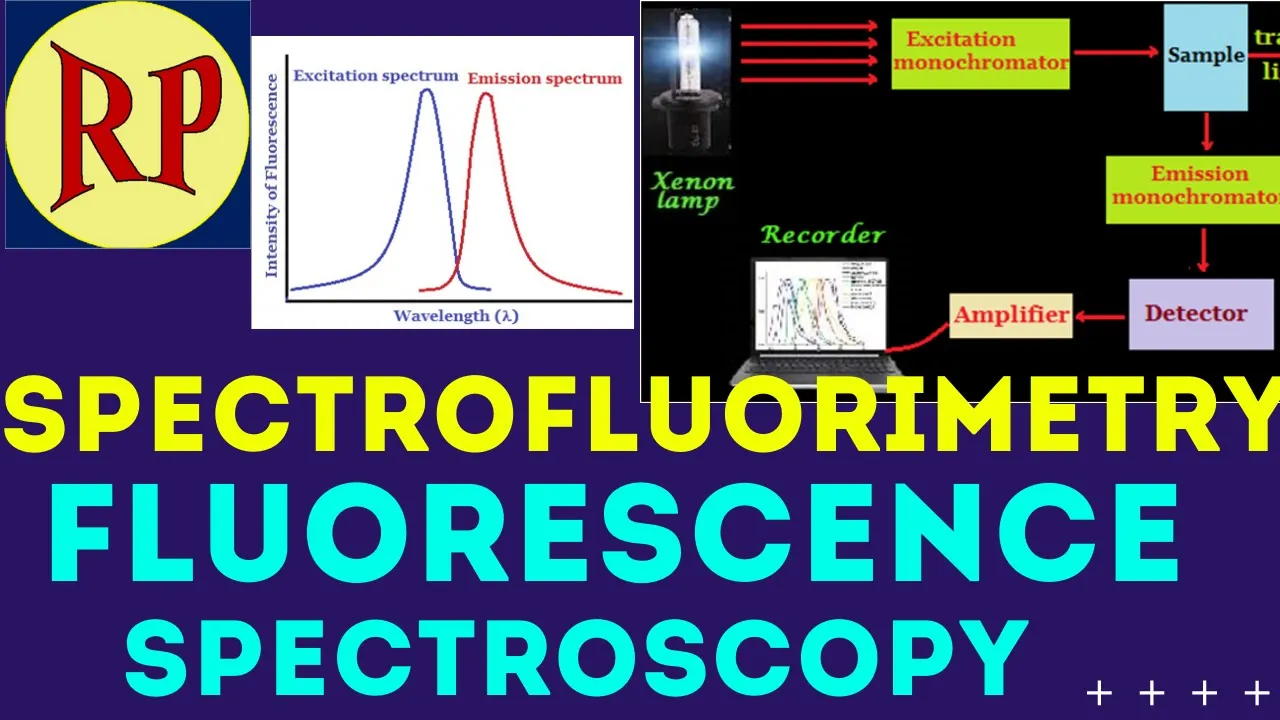
Fluorescence is the emission of light by molecules that have absorbed electromagnetic radiation, where each fluorophore has specific absorption and emission spectra; the Jablonski diagram illustrates the energy levels and relaxation processes, showing that after electronic excitation, electrons rapidly undergo internal conversion (non-radiative relaxation) to the lowest vibrational level of the first excited state, followed by radiative relaxation (fluorescence) or intersystem crossing to the triplet state (leading to phosphorescence or delayed fluorescence), with fluorescence occurring from singlet to singlet transitions and phosphorescence from triplet to singlet transitions.
Fluorescence & Jablonski Diagram | Molecular Photophysics
Added:Basic concepts of molecular orbitals, including ground state, excited states, and singlet vs. triplet spin configurations.
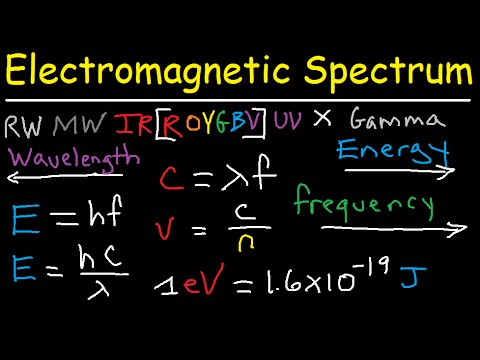
The electromagnetic spectrum and the relationship between photon energy, frequency, and wavelength (Planck's equation).
Fundamental principles of light-matter interaction, specifically quantum mechanical absorption and emission of light.
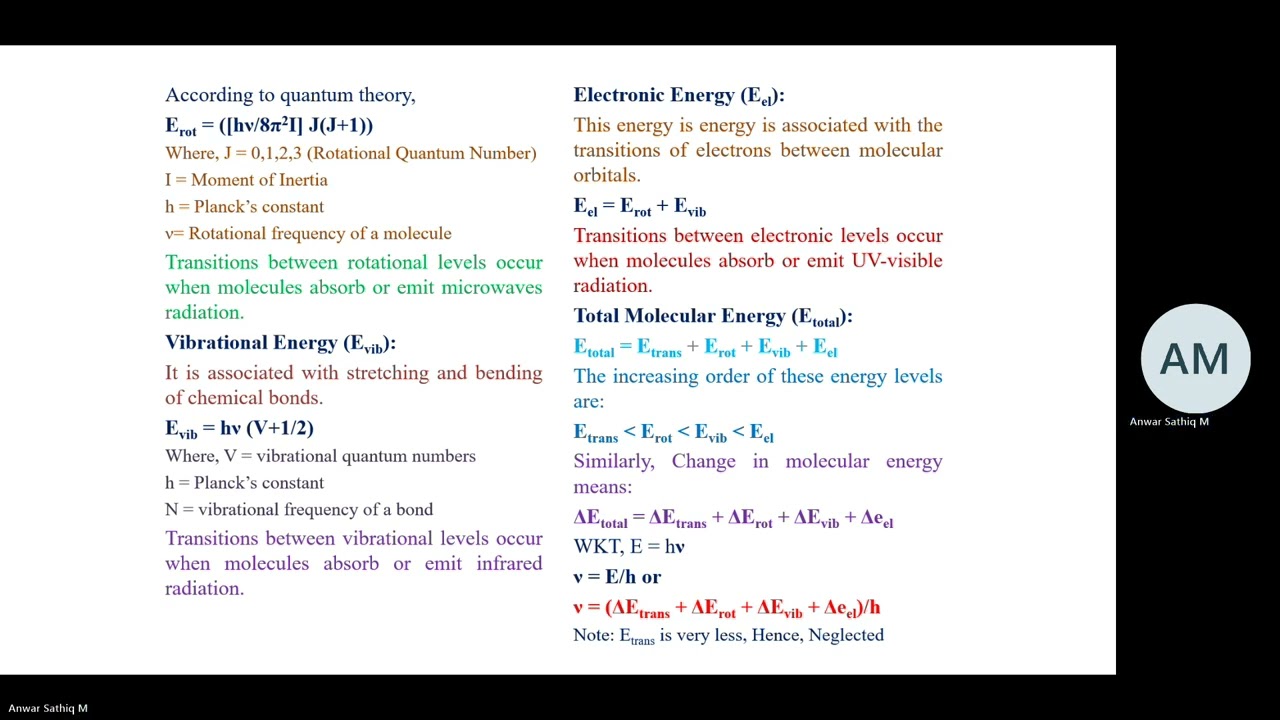
Quantization of molecular energy levels, including electronic, vibrational, and rotational states.
Phosphorescence and Intersystem Crossing (ISC), including spin-forbidden transitions and triplet-state lifetimes.
Fluorescence quenching mechanisms and Förster Resonance Energy Transfer (FRET) as molecular rulers.
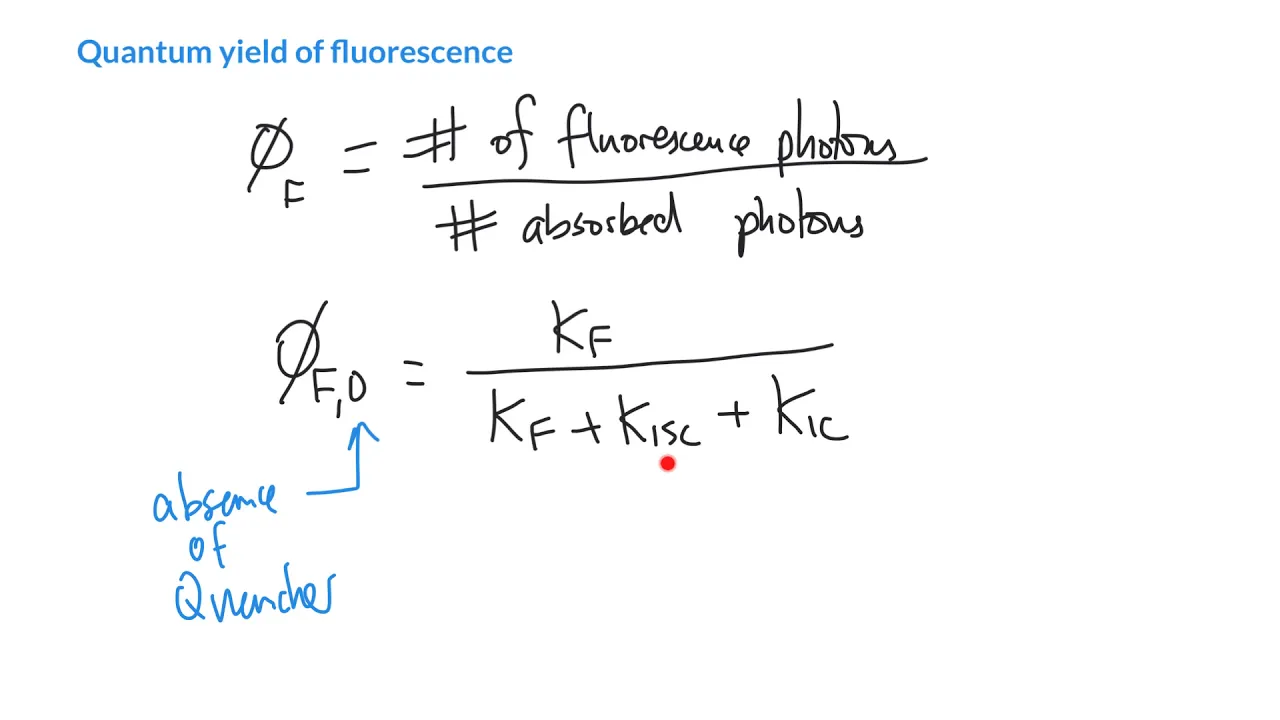
Quantitative measurements of excited states, specifically fluorescence quantum yield and time-resolved lifetime analysis.
Environmental effects on emission spectra, such as solvent polarity (solvatochromism) and the Stokes shift.
Practical applications in advanced instrumentation, including fluorescence microscopy, flow cytometry, and bio-imaging.
192.2K views0likes22:39Original Release: 2012-01-12
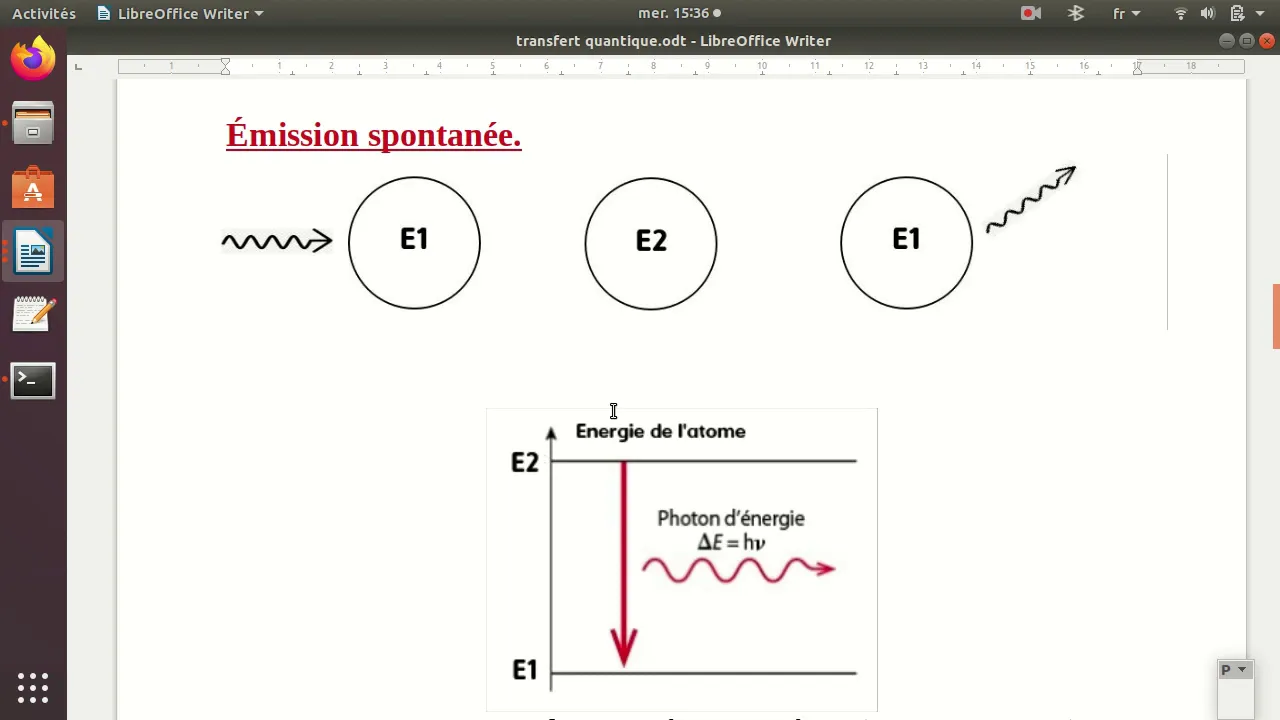
all right welcome back in this video we're going to discuss as you see the fluorescence presentation from the second week lecture for we're going to only start covering the material there's quite a bit to a review so this is just the first video of a few uh we're going to touch a little bit about the introduction of that whole subject and also what is the whole thing with the ablasi diagram which is super important to understand not only is it well represented in questions I have uh seen more than one an instance in an exam where they asked to draw it so we're going to do just that as well let's get started this is a copy paste from Wikipedia and uh I always say that I don't really uh like to use material from Wikipedia as much as other people but I do find their definitions very easy and comprehensive so fluoresence is the emission of light by a substance that has absorb light or other electromagnetic radiation which is essentially somewhat redundant electromagnetic radiation can be considered as light so what we need to understand is that there are molecules that are flop fores floro fores are molecules that can absorb light or electromagnetic radiation and emit light that is a specific characteristics of that specific molecules and different fluorophores can absorb different spectrum of Lights each Flor for has specific wavelengths that they can absorb that's it's called their absorption the absorption spectrum and accordingly they have a specific spectrum that they can emit light in and that is called the emission spectrum the emission spectrum you will also see often times the absorption Spectrum referred to as the excitation excitation Spectrum which is really the same thing what's important to understand is that if I have this uh this Flor here and I know this Fluor can absorb light and emit light what I also need to know is what wavelengths of light I can shine on this Flor for to get back that emission it's important to understand that you can't uh you can't excite a Fluor molecule with any wavelength of light it's specific for every molecule let's just say this specific molecule can be excited with blue light and would emit let's just say a green light this is a specific character for this specific floor for and that's uh that's really what we're looking at understanding and we're going to talk a little bit more at length about absorption and emission spectrums later on all right so uh let's let's keep going and talk a little bit about the a Blonsky diagram I'm going to talk about it at length and make sure it's very well explained and well understood just to touch base with you what I mean I'm talking about this little guy right here and all the other sub depictions this depiction this depiction this depiction this depiction it's all the same diagram it is the oblonsky diagram and that diagram is the essence of fluoresence of understanding what is going on we already know that we can use light or we can use photons to excite the molecule and namely we the electrons in the molecule electrons are excited the electrons absorb the energy absorb the energy never follow my footsteps as far as spelling what I'm going to do right now is I'm going to draw the oblonsky diagram from scratch mainly because I find it easier for other students to look at the diagrams that were freshly uh freshly um constructed and also being that they sometimes ask for students to draw it so I'm going to do just that I draw I drew the uh base level here this is the ground level or noted s0 this is the level which electrons are ideally at and will aspire to get to this is the stable level I'm going to have several excited level so say this is my first excited level this is my second excited level now we already discussed these are electron Transitions and also uh in between them in between these electronic transitions we have rotation and vibration levels as well meaning that the molecule the Flor for can lose some energy in vibration or rotation and not only having electrons jump back and forth in electronic Transitions and those are the lines that you see let's look at those lines that you see here and these lines basically fill in the gaps between these electronic transition levels perfect so we have the first excite uh the first excited level the second excited level and uh I'm going to just work with these two before I before I uh get into the uh other type of levels that we have but essentially let's see what's going on let's just say I have my electron it's green right here and I had a photon of light that uh that is in the absorption spectrum of the fluorophor which means the fluorophor can absorb it and that electron shot up got excited got some energy and shot up and now it's shot up and it's right around here the interesting thing is and this is an important idea is that as soon as electrons get excited the first thing that happens after they get excited is that they rotate or vibrate down to the to the closest level or the closest set electronic level let's just say that this electron shut up here the first thing that would happen is that it's going to vibrate and rotate down to get to this level this you can consider these level and intermediate semi-stable levels and the electron is not going to be able to stay in the and these intermediate rotation vibration energy levels it's going to have to get to one of these electronic set levels and this and it's quite important to uh to label this so we're going to do that this is called internal conversion an internal conversion follows the rule and it's quite important to understand because they often ask about this rule cashes Rule and it's just the same thing I just stated that an electron uh would always ass ired to get to semi-stable set level after being excited this is essentially the internal conversion is a follow-up idea or the implication of Cash's Rule and that's important to understand now after that uh my electron is you can you can uh you can say has some potential energy at this point and we always said that these electrons would aspire to get back to the stable uh ground level going to just label this here this is the the ground level all right this is the ground level and these are the excited levels going to just put it here excited perfect now when uh when we go down from a higher level to to a ground level we know that we're emitting energy and that energy could be emitted as a photon so if this little dude drops down here it can emit a photon let's just say this is a color of Photon and this Photon would be in the emission within the emission always within the emission spectrum of that specific Flor of that specific Flor for whereas the uh Photon that was exciting the Flor for would always have to be within the absorption absorption spectrum and this is important to understand perfect so I have my specific molecule was excited by a photon within the absorption spectrum of that specific Flor for one of my electrons dropped up got got excited got it got some energy because it was in the intermediate vibration rotation levels due to Cash's Ro it rapidly vibrated or rotated down to the first closest semi-stable lever here the semi-stable excited level here and then after a while and these are very short times and we're going to talk we're going to mention what time frames we're talking about this dude just dropped down and emitted the energy as a photon and it's important to understand that the uh this this emission of a photon is called radiative a radiative relaxation and just so you know what I'm talking about this is perceived as KF this is K fluoresence this is the relaxation as far as fluorescence and the KR the drop in down in the K NR refers to a non-radiative relaxation which means that we can have this little electron drop down and not emit a photon this would be a non-radiative or we're going to refer to it as non-radiative C non-radiative form of relaxation but it can also Amit a photon which is obviously a radiated pH relaxation so we mentioned these transitions let's mention some uh some time frames and again you would see these time frames cited slightly differently in different uh websites and articles but the gist is the same it is really quick the absorption happens really rapidly around 10 to the5 and the internal con conversion also happens very very rapidly 10 to theg 13 and just to make it just to make it obvious I'm talking about seconds here 10 to the negative 15 and 10 to -3 seconds and we can have fluoresence we're talking about radi fluoresence relaxation at around 10 to the 9 seconds just around there and now we understood that if we uh we have FL for that can that is excited by a photon that's within its absorption Spectrum one of the electrons is going to shoot up it's going to get excited essentially it's going to store for some energy it's going to lose some energy in internal conversion in a non-radiated fashion and that's also something I should have mention internal conver conversion is rotation and vibration it's non- radiative we would not get a photon from internal conversion and then it uh it achieved a semi-stable status here in the first excited level and obviously this can happen in the second excited level or the third excited level or whatever and emitted a photon what's important to understand also is that if I have this electron here let's say it's the same electron it run through internal conversion what it can do here it can also vibrate a little bit and then stop here and that from this point emit a photon it's important to understand that the vibration rotational levels are intermediate levels that the electron can go through and this is at random entirely at random what we also need to bear in mind that if we have a photon that was emitted from this this energy level and a photon that was emitted from a bigger energy level a bigger difference this is going to be a more energetic Photon than this or rather this is going to have a higher frequ higher frequency or lower wavelength than this Photon and this should make sense because the more energy is associated with the transition the more energy the photon is going to have okay fair enough so what I'm going to do now is I'm going to incorporate what we have left to talk about and what I'm going to draw right now is what we see here this side and understand what's going on this side too and it's always important and I I would encourage you as well to take your time and just draw the oblonsky diagram just a couple of times it helps it helps it set in your mind and helps you understand it and if need be in an exam where self-control you'd be able to draw it and uh what you going to we're going to name these uh these again just uh just to hit the point oh we have the ground state we have the excited States S1 and S2 and then we have the tripled State and this is what's what's denoted here as the T1 tripled State okay and it's also associated with vibration and rotational okay and this is quite important to understand where we at perfect and obviously it has vibration rotational levels up above it up below it so I'm not going to really draw all these lines all the way through but you can just imagine now what would uh what may happen is that I was excited by a photon within my absorption or excitation spectrum and I gained some energy and I got to this level right here I'm going to go through internal conversion and I'm not going to label it again you can imagine and it's already labeled in that one slide that I showed you so I'm going to go through internal conversion and get to this point another possible transition is called and this is the triplet triplet transition or the Forbidden this is called a forbidden transition as well we're going to touch on that in a second why is it called forbid now what may happen is that this electron can move to this state the triplet state that is in a slightly lower energy level than the excited state that we have here it's still an excited state still have has energy but it's slightly in the Lower State and this is called inter system Crossing inter system Crossing and it crossed that way and from this point a few things can happen in the same way it can vibrate all the way down or rather go down in a non-radiative fashion non-radiative fashion means that that I'm not getting a photon or it can also come down in a radiative fashion and if it comes down in a radiative fashion from this triple state it is going to be called phosphorescence phosphorescence and phosphorescence is considerably uh considerably takes longer or has a longer lifetime you can say than these lifetimes here and again it's cited very very differently in different places but I would say right around 10 to theg -3 seconds to even 10 seconds so you can appreciate you can appreciate that this is considerably slower than these transitions exponentially slower so this is the phosphorescence and again phosphorescence you can think of it as slow fluoresence but phosphorus and fluoresence are terms that are not interchangeable phosphorus is only occurs when there's a radiative relaxation from the tripol St and foses is considerably slower and I'm only reiterating this because you may encounter this same specific questions and variations in in your self-controls and your finals so phosphorescence I'm just going to put it here although I went through this radi perfect now another thing that may happen is that even though this electron went through internal conver inter system Crossing sorry this is a terminal inter system Crossing it can go back from this triplet state it can go back it can go back to here and this is also called in system Crossing meaning that enter system Crossing could go either way I can go down here to the triplet state with the Forbidden State and I can go back via interstem Crossing to my excited state if that happens if I go back and forth same thing can happen when I'm here if I'm here I can go down in a non-radiative fashion okay just like this this thing right here non-radiative but if I come down in a radiative fashion we already agreed it's going to it's going to be called fluorescence but this fluoresence is going to be called this fluoresence is going to be called delayed delayed fluoresence and why is it called the lay fluoresence well instead of going through the internal conversion and and just rapidly giving me a photon it went back to an interisting inter system Crossing back and forth to the excited level and only then did it emit a photon so it took its while going through transitions back and forth so it's delayed fluoresence and delayed fluoresence obviously is radiative because we're talking about a photon and it can go to inter system Crossing and back and also come down in a non-radiated fashion any of these transition can occur in a non-radiative fashion and also like we mentioned it could be a mix of non-radiative and radiative emissions and any emission that I would get any radiative relaxation any Photon I would emit is always going to be within my emission spectrum so for any given floor for I know what kind of visible light wavelengths I may expect it to Emit and that's quite important to understand now about the triplet State and it's only very very slightly represented in the minimals what's a triplet State what do they mean but basically I'm just going to touch based on the main idea we know that uh electrons have spins and we know that if I have an orbital this is my orbital let's just say I have two orbitals or three orbitals let's say this is my P orbitals right I have three p orbitals and if I put electrons in them I'm putting an electrons in them this in this fashion just following the rules and these rules say first of all you're only going to house one electron in one orbital before you start doubling them up and when you double them up it's really important that their spins are anti-parallel to one another and this is the stable uh we can say right way of housing electrons but when the molecule is it's in its excited state we'll go through that it's very uh it's very subjected to many various forces that apply to it and those forces can cause the shuffling of these electrons into a forbidding way of mixing them in their orbitals causing what we call the triplet State and what they say or the way they depicted it in the presentation is right here it's just the difference between the singlet state which is parallel and anti-parallel in the same in the same orbital to various situations which may not occur and being that they violate the laws they are called forbidden but this actually takes place even though it's called for that's really all I would I would uh I would make a point to knowing about the trip blood state it may be something that pertains to the minimal itself and being that we already mentioned going through the minimals a very important minimal is this one right here what are the possible ways of relaxation of an excited electron in a molecule and this refers to what we just went through a lot of times or rather it wasn't the second self-control in 2011 the lot of students saw this and did not associate it with fluorescence they're like okay it can vibrate down and it can relax down maybe emit a photon but they they didn't associate it with all these different variables that we went through this interent Crossing internal conversion vibration rotation non-radiative fashion radiative fashion phosphorescence delayed fluoresence and this is what I mean we have vibration and vibrational relaxation internal conversion following Casher rule inter system Crossing back and forth from and to the triplet State The Forbidden transition FL fence which is radiative phosphorescence also radiative it's very slow fluoresence but don't mix these two fluoresence and delayed uh sorry phosphorescence and delayed fluoresence are not the same we only get fluoresence when we get radiative relaxation from the triplet State when the triplet State radiates down it's always going to be phosphorescence even though it's considerably slower and whenever I radiate down from one of my excited set States is going to be fluoresence so please don't mix these fluorescence and phosphorescence and delayed FL fluoresence and obviously there's energy transfer to another molecule we're going to touch based on that uh when we talk about threet and just in case you're wondering should I be remembering all these this is kind of a little bit crazy but if you draw the oblonsky diagram a couple of times you'll notice that all the possible alignments of the transitions are going to be evident to you as well as as far as I remember they only asked for five so one 2 three four five would be enough even though you should know these two as well so this is pretty much all that that I'm going to cover about the ablon diagram hopefully I've made this a little bit clear I did in fact in my idea um cover all the material that is relevant to understanding the different transitions here uh make a point to drawing this a couple of times drawing the possible transitions labeling the axis I'm not sure if you should be remembering the time frames because uh when I went through the course they said that it's important but they never asked about it uh just stick to the minimals hopefully you found this useful and I'll see you in the next video
Up Next

4:05
How Does a Yagi-Uda Antenna Work? | Beam Antenna Design & Function Explained
@johnsonsTechWorld
3.1K views•2023-05-23

12:53
21cm Hyperfine Transition in Neutral Hydrogen: Radio Astronomy Basics
@AaronRobertParsons
12.4K views•2011-10-13

32:32
NMR Spin Physics I: Zeeman Effect, Resonance Condition & Larmor Frequency
@nptel-indianinstituteofsci8064
2.3K views•2024-01-17

27:14
Entropy and the Second Law of Thermodynamics Explained
@veritasium
27.5M views•2023-07-01
Related Study Plans & Knowledge Roadmaps
Structured learning paths in Physics
physics
Nuclear Physics (Decay, Fission & Reactors)
01Atomic Structure and the Binding Force
02Radioactive Decay and Half-Life
03Nuclear Fission Mechanics and Chain Reactions
+ 2 more learning modules
12h5 modules
Explore Roadmap
physics
Soft Matter (Polymers, Colloids & Rheology)
01Foundations of Soft Matter & Thermal Forces
02Polymer Physics and Macromolecules
03Colloids, Surfactants, and Self-Assembly
+ 2 more learning modules
38h5 modules
Explore Roadmap
physics
Analytical Mechanics: Lagrangian & Hamiltonian
01Mathematical Foundations: Calculus of Variations
02From Newtonian Mechanics to Constraint Dynamics
03The Principle of Least Action & Lagrangian Mechanics
+ 3 more learning modules
28h6 modules
Explore Roadmap
physics
General Relativity (Spacetime & Cosmology)
01Foundations of Relativity: Special Relativity
02The Geometry of Spacetime: Equivalence Principle & Curvature
03Einstein's Field Equations: The Mathematics of Gravity
+ 2 more learning modules
55h5 modules
Explore Roadmap