

















![[명강리뷰] 한반도: 10억 년 전으로의 시간여행 by 최덕근 ㅣ 2016 가을 카오스 강연 '지구인도 모르는 지구' 4강](https://i.ytimg.com/vi_webp/0Wx_3BMROVo/maxresdefault.webp)

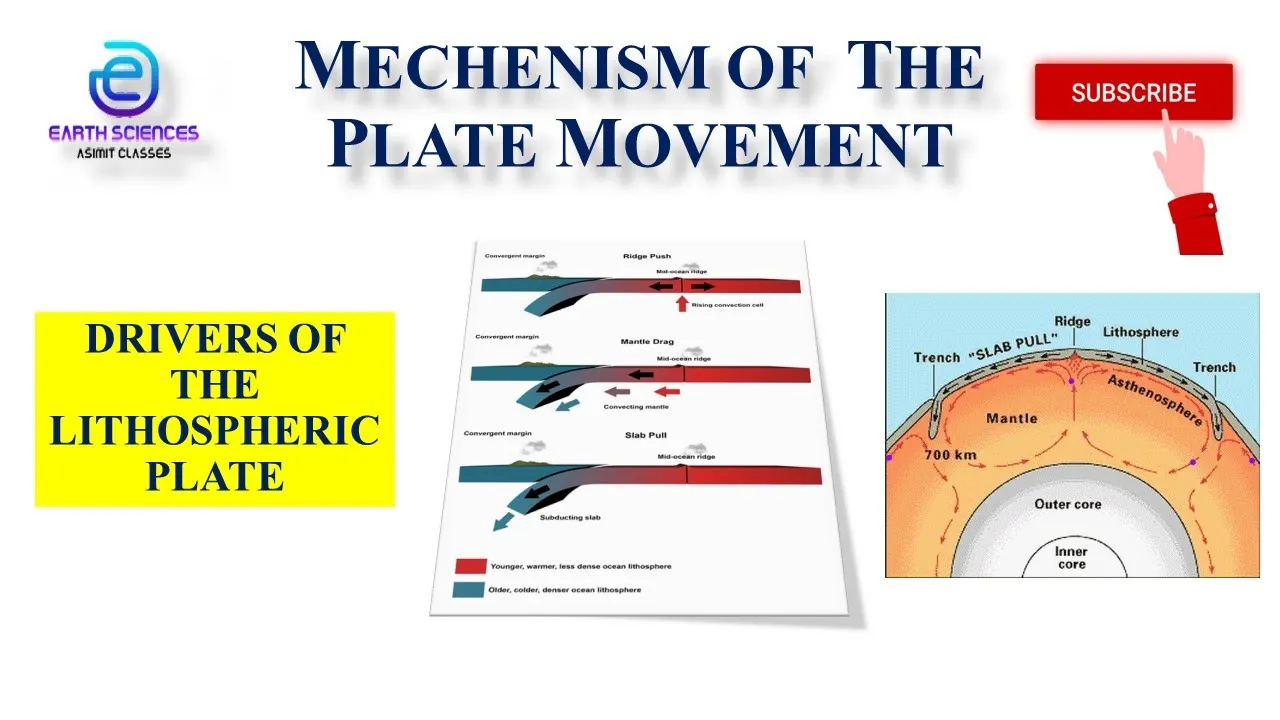


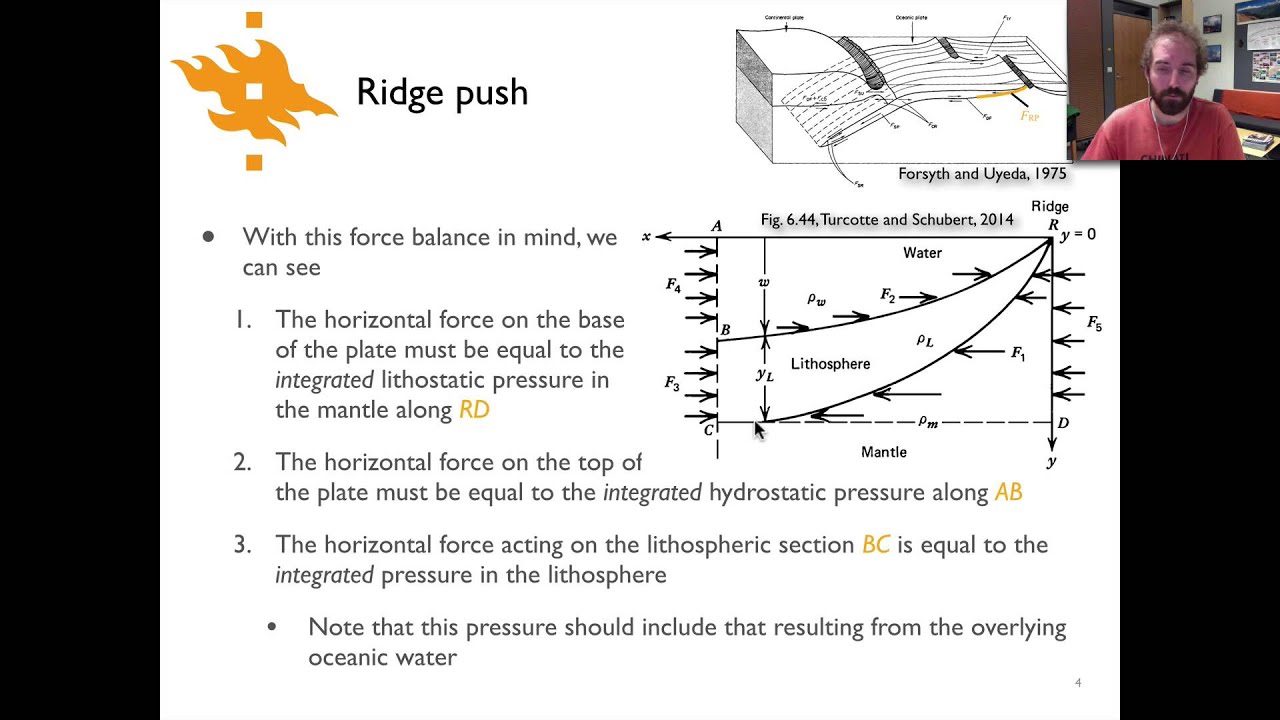
Plate tectonics is driven by convection currents in the Earth's asthenosphere, which create two primary forces: ridge push at divergent boundaries where rising mantle material pushes plates apart along mid-ocean ridges, and slab pull at convergent boundaries where sinking, dense oceanic plates are pulled downward into subduction zones; together with gravity, these forces explain how the lithosphere moves on top of the convecting asthenosphere.
Plate Tectonics Explained: Ridge Push and Slab Pull Forces
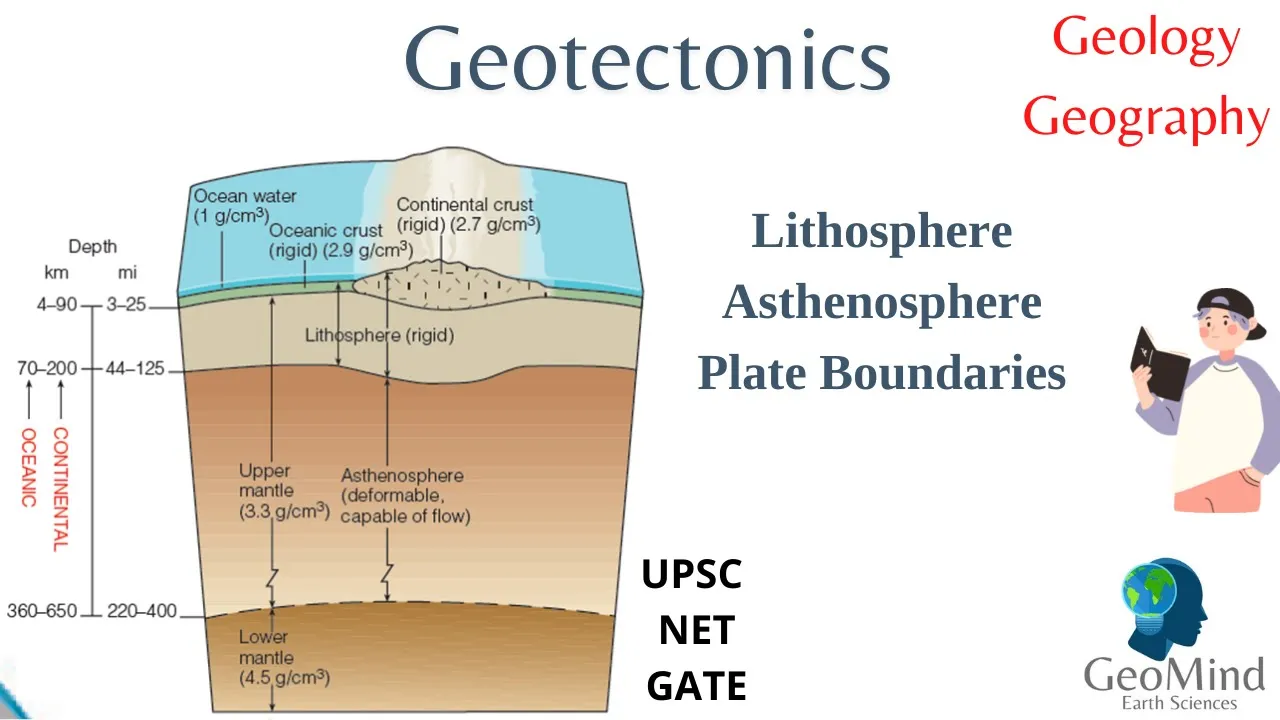
Added:The internal structure of the Earth, specifically the properties of the rigid lithosphere and the ductile, semi-fluid asthenosphere.
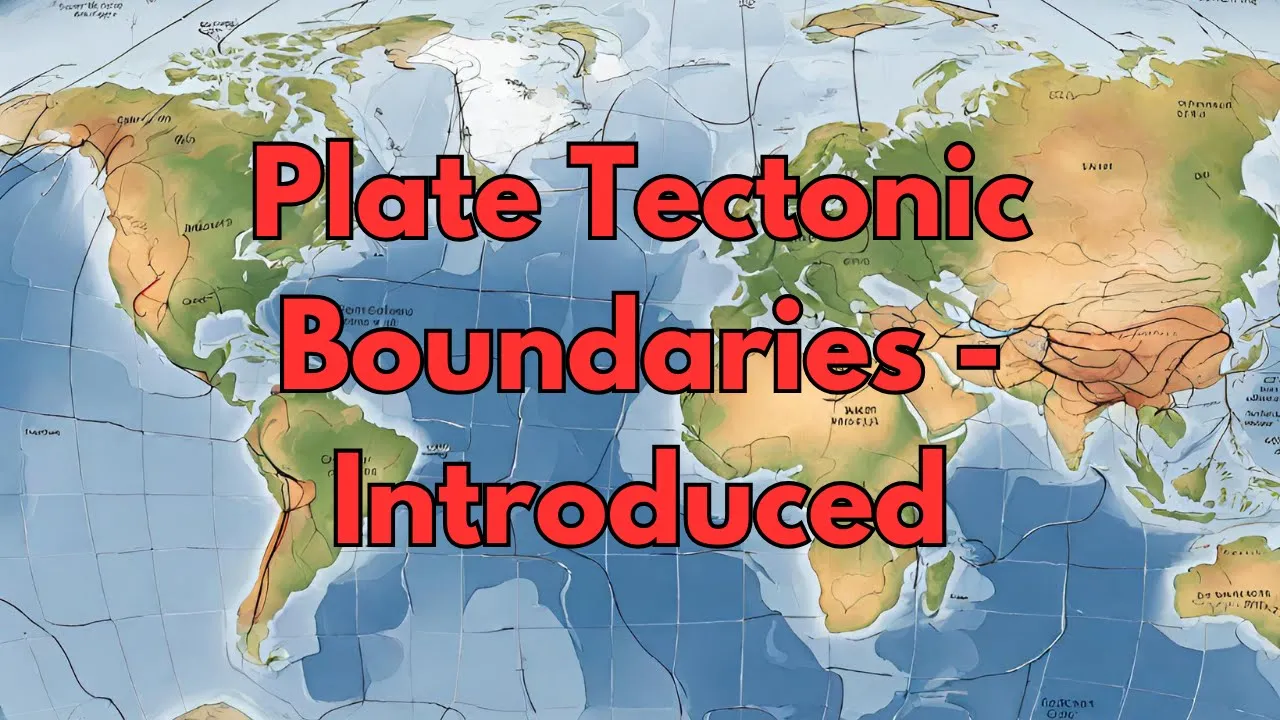
The fundamental theory of Plate Tectonics, including the definitions of tectonic plates and the three main types of plate boundaries (convergent, divergent, and transform).
The basic mechanics of thermal convection, explaining how temperature-induced density differences cause fluid movement within the Earth's mantle.
Basic physics concepts of gravity, density, and buoyancy, which are critical to understanding how tectonic plates sink or slide.
A comparative analysis of tectonic driving forces, exploring why slab pull is considered the dominant mechanism over ridge push and mantle drag.
The geological and geographical case studies associated with these forces, such as subduction zones (e.g., the Mariana Trench) and mid-ocean ridges (e.g., the Mid-Atlantic Ridge).
The Wilson Cycle, which describes the historical and cyclical opening and closing of ocean basins driven by these tectonic forces.
Advanced mantle dynamics, including the role of mantle plumes, hot spots, and the debate between whole-mantle and layered-mantle convection models.
97.3K views1.1Klikes14:08Original Release: 2017-01-12
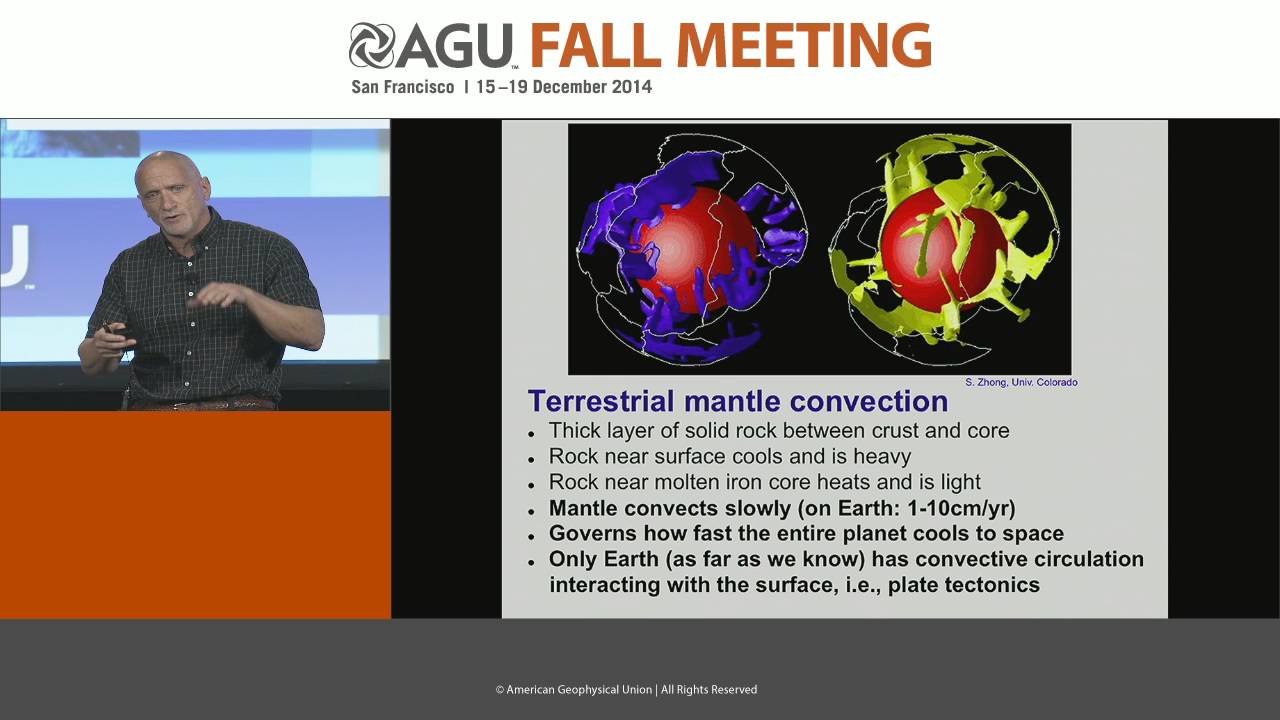
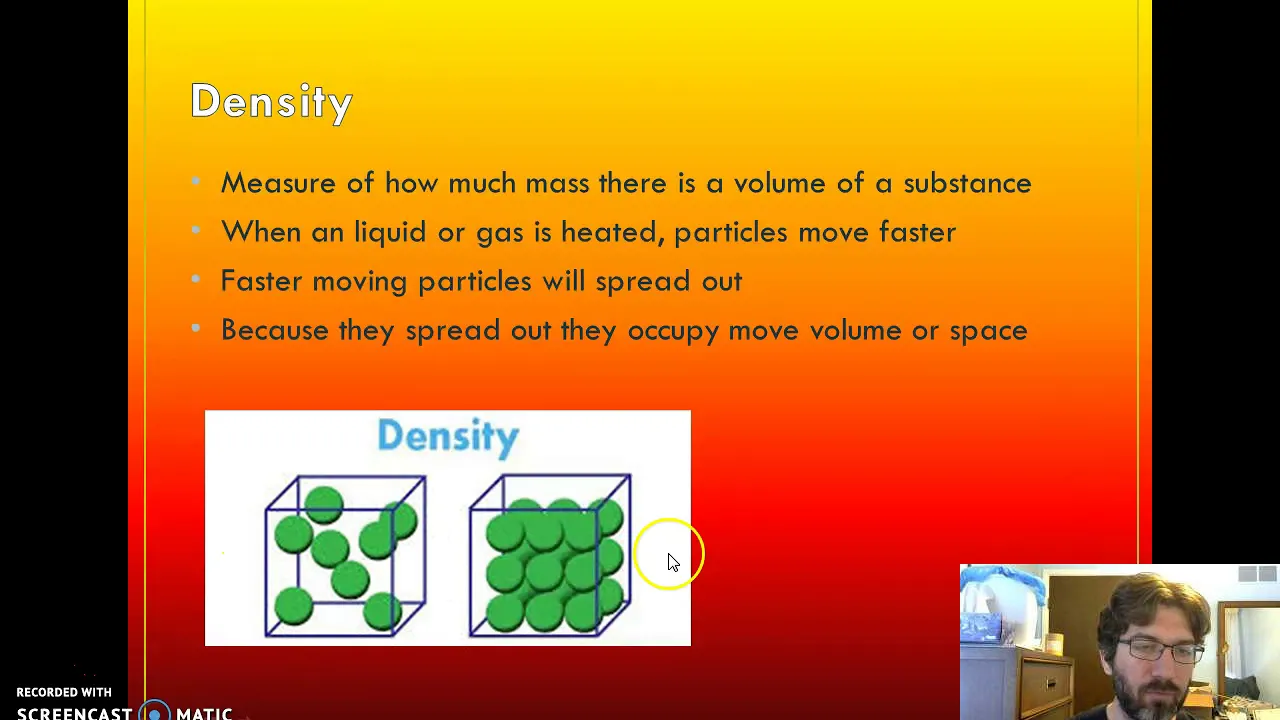
this discussion is all really about the how of plate tectonics we've talked a lot about evidence for plate Technics right we saw viger's evidence for continents coastlines fossils and climate um and then we also added some seaf FL evidence about the age of the rock the sediment and also the magnetics however we have yet to explain really how the continents are moving or what's creating them and so we're going to get into the Earth today and kind of figure out what's going on there to make our crust move on top we do that we have a few essential questions to think about we want to know really what a convection current is and what are the forces it creates and there's two main forces that we're going to look at with these convection currents one of them is called slab pull and one of them is called Ridge push we'll be looking at those two different forces and seeing well which type of boundary do those match up to and so that'll be kind of our Focus for today so to start out let's make sure we list out what those three forces are that make plate motion and again like we said this is really the how of plate tectonics that vegar could not explain okay this is the how the plates are actually moving we see all the evidence but we want to make sure we know how plates are moving so we'll talk about convection currents happening inside the earth and then these two are forces that occur because of that convection current so let's make sure we really know what convection currents are because we've actually talked about them quite a bit in other units like our climate lame cow unit but we haven't officially given them that name yet convection currents um convection is when we have circulation of any kind of material due to a change in density and so what we talked about with lame cow is when we have things that are more dense we see them tend to sink while things that are less dense tend to rise and so we actually see this happening inside of the Earth in our layer asthenosphere which is the top part of the mantle and we kind of use an analogy of a conveyor belt because what we're seeing happen here inside the earth is that as this conve occurs and we have material rising up in the asthenosphere well our thin layer of lithosphere is affected because of the movement underneath and so kind of like a conveyor belt anything that moves underneath is also going to move that layer above it so if you think about like at the grocery store when you put your groceries on that conveyor belt at the register right your bottle of pop or your jug of milk whatever it is because the conveyor belt moves that object also moves moves or even another analogy of like floating on something so we have water which would be like the asthenosphere and then a little boat hanging out on the water the current of the water drives the motion of the boat so that lithospheric crust that solid rigid layer can't move unless the asthenosphere layer is moving underneath so we have a nice visual here of what's Happening inside the asthenosphere and how that motion is directly correlated to the motion of the crust so we see the swirling and the movement of that material in the mantle because of density changes and then we see some arrows showing up here on the crust showing the movement of that material again because of the movement of this material underneath so let's think about on the right hand side there are other areas on Earth where convection is happening we talked a lot about this in our lame or a climate unit seeing this happen both in the air and the atmosphere or the ocean or water both of those materials are able to quickly change density and therefore move or have a flow to them because of those changes so we see here some global winds are happening because of convection right we have warm Rising here at the equator sinking here at the poles we have local winds where we see a mini version of the global wind idea and then here is our ocean currents again heated by the equator now all these things here have one major heat source and that of course is the sun okay but when we're thinking about our convection inside the Earth the Sun is not able to provide heat to those lower internal layers so our heat Source has to be coming from elsewhere all right so we have a heat Source coming in creating hot mantle material and we know from previous discussions that hot material has a lower density and therefore will rise upward so we want to label on our diagram here the warmer Rising material down here inside the earth and so let's get some arrows in there I'm using a red pen that would be a nice visual reminder that that is the warmer less dense material now that material can't stay that warm forever it's getting away from its heat source and eventually will cool down becoming more dense and then sinking and so that entire flow or that process is known as the convection current so here we have the cooling of the material and that like we said is the more dense so there is our entire flow of the convection current we've got some kind of heat Source down here inside the earth heating up the material causing it to rise reach the underneath part of the crust and kind of separate there and then cool as it's further away reheated and continually cycle through for our idea of convection so what is that heat Source where is the heat coming from well if we look at our diagram here we see our convection currents Happening Here in the asthenosphere and the heat has to be coming from this lower Source we know there is an immense amount of heat happening inside of the earth and it's happening there because of all this radioactive material inside of the Earth's core [Applause] so that hot material drives this convection current causing the warm to rise and then eventually causing the cool to sink and it's important that we note that this warm and cool there's still thousands of degrees it's just cooler here relative to the warm that's Rising upwards and that motion inside the earth creates then this movement here that we see on top like the conveyor a belt or like the boat on the water so let's make a connection here how really does convection cause plate tectonics well we know that inside the earth we have the asthenosphere and that asthenosphere has the flow to it where we see warm material rising up and cool material sinking down and so the movement of that material inside the Earth causes movement of the crust on the top and so we can't move on the surface unless we have move movement and motion underneath so give your own words a little explanation there in the summary section and then see if you can think back and add in one of those analogies that we gave what what did we say the asthenosphere and the lithosphere were like when they moved so because we have the motion of the convection inside the earth we see the same motion on the surface of the Earth and that motion then is connected to two forces or processes happening on the Earth's surface this section of convection is directly related to a force Ridge push while this section of the convection is directly related to a force slab pull so we want to investigate a little bit further what this Ridge push and slab pull are what kind of boundaries and features we then see at those locations r push is directly related to the part of convection that has Rising mantle material as that mantle material Rises up and hits the underneath of the crust it pushes and separates underneath the crust and because we have that separating motion underneath the crust we see then the actual crust moving in that same way that Force then created is called Ridge push now it creates a major feature here called the mid ocean rid which has a higher elevation and so gravity also plays a role in pulling those rocks down and away from the ridge being at a higher elevation we know gravity plays a role and pulls material down so it works together with the convection inside the earth to create Ridge push a few major features associated with Ridge push are the mid ocean ridge and the rift valley mid ocean ridge we've talked a lot about and we know that is located in the middle of the ocean but it's a pretty big feature it's the entire elevated area where magma is coming up around that boundary so this entire area we want to make sure we label as the mid ocean ridge the rift valley is part of the mid ocean ridge but it's actually right between the two plates so it's in the middle of the mid ocean ridge the location where the actual new crust is coming up because remember what's Happening Here is my convection underneath Rises pushes magma out of that Rift Valley and then the rest separates underneath the crust causing the lithosphere to move in that same way this again is known as a divergent boundary a location where the plates separate relative to each other so visual here of what these look like in real life we have here the ocean ocean divergent boundary where the plates are moving apart due to convection inside the Earth again we have the mid ocean ridge this entire elevated range around the rift valley where the actual magma comes up this one here is two pieces of continental crust no mid ocean ridge here cuz we don't have the ocean just simply the rift valley where the magma comes up the plates are still separating and over time this Rift Valley can become big enough to be a water bearing location second Force created by convection is slab pull slab pull occurs more where the convection is sinking due to cooler more dense material as it sinks it takes this older more dense crust with it and so we call this location here slab pull again grav gra it does play a role in this force due to the density and heaviness of this plate gravity continues aiding the pole downward common features found at a slab pole location are subduction zone and trench subduction zone is where we see the old plate being pulled down into the Earth and once it reaches further enough far enough into the Earth we know that the heat increases and we see that plate really melted and recycled back into the mantle so it can be reused trench is the Deep area most importantly between the two plates wherever subduction is occurring so if we're looking at our diagram here again remember slab pull is happening because of the cool sinking material and so this area right right here that is the subduction zone and the trench is right where those two plates meet those are common areas at slab pull again gravity plays a partial role in helping pull that old dense plate downward another visual here of our slab pull due to that sinking convection material this old plate is pulled downward you see lots of earthquakes happen as we go but the main thing to recognize is as it gets far enough down melting occurs causing magma toise to the surface creating volcanoes on the surface now that our discussion is complete be sure you go back and answer those essential questions 1 through five and there will be a slide um next just with a review here that you could practice pause and see if you can label all those locations
Up Next
29:24
Convergent Plate Boundaries Explained: Geology 101 with Willsey #4
@shawnwillsey
33.5K views•2024-06-26

12:54
Triumph of Orthodoxy Icon: Byzantine Art & History Explained
@BenCallan
2.1K views•2024-08-06

9:49
FastAPI vs Flask vs Django: Choosing the Right Python Web Framework
@TechWithTim
302.5K views•2024-05-26

1:42
Game of Thrones Opening Credits: A Cinematic Analysis
@gameofthrones
46.3M views•2011-04-18
Related Study Plans & Knowledge Roadmaps
Structured learning paths in General & Interdisciplinary Studies
general-studies
Elevator Engineering: History, Physics & Cities
01From Hoists to Safety Brakes: The Dawn of Vertical Lift
02Hydraulic vs. Traction: The Engineering Physics of Elevators
03Modern Speed, Safety, and Algorithms
+ 2 more learning modules
12h5 modules
Explore Roadmap
general-studies
Rubber: Material Science, History & Geopolitics
01Origins of Natural Rubber & Mesoamerican History
02The Chemistry of Natural Rubber & Vulcanization
03The Geopolitics of the Rubber Boom & Colonization
+ 2 more learning modules
12h5 modules
Explore Roadmap
general-studies
Containerization: Evolution, Logistics & Trade
01Ancient Trade & Bulk Cargo: Amphorae to Barrels
02The Industrial Revolution & Cardboard Packaging
03The Containerization Revolution: Malcom McLean
+ 2 more learning modules
12h5 modules
Explore Roadmap
general-studies
Textile Tech: Evolution, Labor & Global Impact
01Pre-Industrial Textiles: Handloom & Cottage Industry
02Mechanization: The Spinning Jenny to the Power Loom
03The Factory System & Global Labor Transformation
+ 2 more learning modules
10h5 modules
Explore Roadmap