







![The Dark Energy Mystery [4K]](https://i.ytimg.com/vi_webp/cQyoYzHxdvo/maxresdefault.webp)


![[Pierre Guillard] Quelles sont nos origines ?](https://i.ytimg.com/vi/qvYIiVVitI8/maxresdefault.jpg)






In 1998, astronomers Brian Schmidt, Adam Riess, and Saul Perlmutter independently discovered that the universe is accelerating in its expansion by observing distant Type Ia supernovae, which revealed that the universe contains approximately 70% dark energy (an unknown form of energy that causes gravity to push rather than pull) and only about 4.5% ordinary matter, fundamentally changing our understanding of cosmic evolution and the ultimate fate of the cosmos.
The Accelerating Universe: Nobel Laureate Brian Schmidt Explains Dark Energy
Added:The Hubble-Lemaître Law and the basic expansion of the universe from the Big Bang.
The concept of astronomical 'standard candles', specifically Type Ia Supernovae, used to measure cosmic distances.
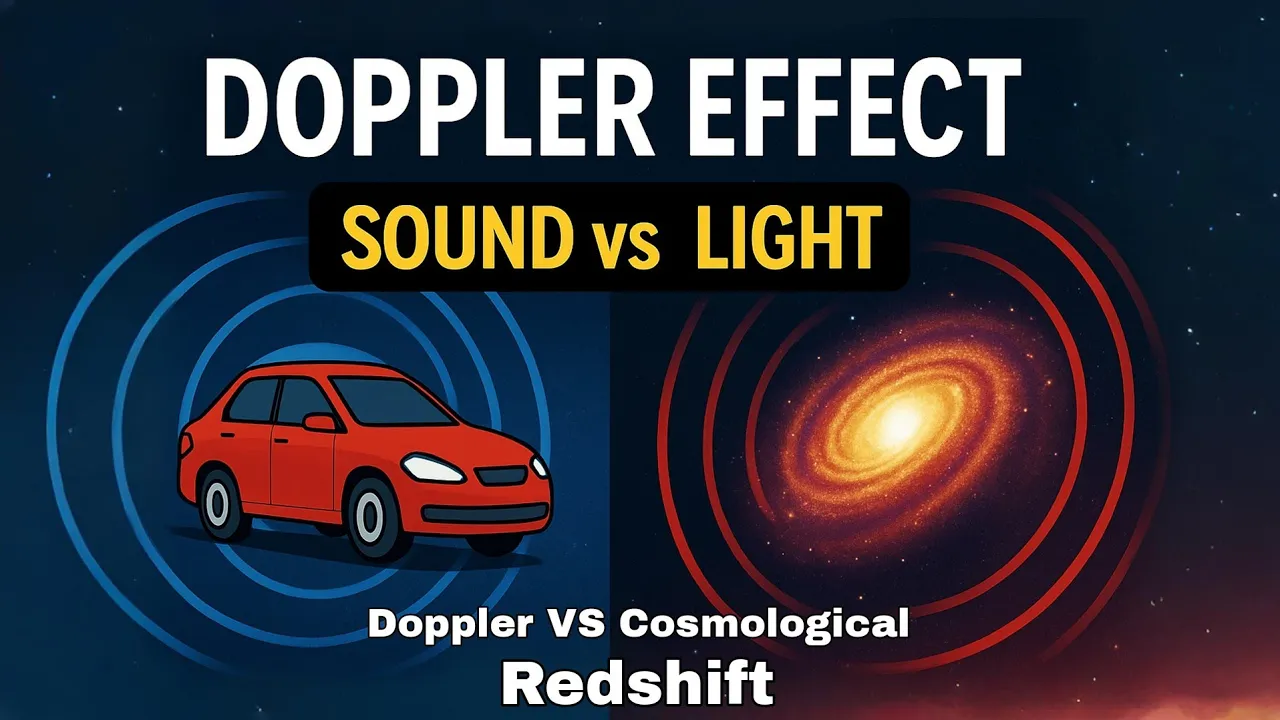
The Doppler Effect and cosmological redshift, which explain how light stretches as space expands.
Newtonian gravity versus Einstein's General Relativity, particularly how gravity acts as an attractive force on large scales.
Einstein's Cosmological Constant (Lambda) and its role in the Lambda-CDM model of physical cosmology.
The cosmological energy budget of the universe, including the proportions of dark energy, dark matter, and baryonic matter.
The ultimate fate of the universe scenarios, such as the 'Big Freeze' (Heat Death) or the 'Big Rip' determined by the equation of state of dark energy.
Alternative theoretical models for cosmic acceleration, such as Quintessence or modified gravity theories (f(R) gravity).
2.3M views18.2Klikes49:05Original Release: 2012-08-03
hello everyone uh my name is Brian Schmidt and today I'm going to tell you about the accelerating universe now the accelerating universe is not a story that is just my own it really is a story about cosmology and the Hundred Years of development over the past Century and so let's first start with the tour of the universe and the first thing I want to say is that the universe is big now to understand just how big we're going to use the speed of light as our tour guide and the fact that it travels 300,000 km per second that's seven and a half times around the earth each second so for example when Neil Armstrong took his one small step well we found out about it 1 and a half seconds after that event occurred and the radio waves from his voice were transported right down the road here at hunting suckle Creek and then transported around the world you may not realize it but the sun is five light seconds across so much bigger than the earth Moon system the reason the sun is so small in the sky is because it's so far away about eight light minutes in distance now our sun is only one of many stars in the sky the nearest of star Stellar systems is Alpha centuri the brighter of the two pointer stars to the Southern Cross Alpha centuri is a star not dissimilar to our own sun and I want you to imagine it being a pee if it were a pee and sitting here in my hand and we think of the sun being another P where would the sun have to be to be the right scale well about Sydney 270 kilometers away everything in between is empty space and so you can see why we call space space there's a lot of it out there so if we look out to our own Galaxy we see where are sun is some 30,000 light years from the center and our sun is made up of not just one or two stars but 100 billion stars like our sun and so it's a very exciting part of the universe but only a small part of it looking further a field we can see the nearest galaxies the large and small melenic clouds right down here are uh little satellite galaxies of the Milky Way They contain 10 billion and 1 billion stars respectively but they're tiny little galaxies that don't amount to much the first real Galaxy of any size is the Andromeda spiral about 2 million light years in distance it's a Galaxy that's a little bigger than our own Milky Way but just the tip of the iceberg here we are looking only in the nearest part of our own Universe the most distant image that we have been able to take of our universe thus far is with the Hubble Space Telescope and this is the image we call the ultra Deep Field in this image there are about 5,000 galaxies each of these galaxies is not dissimilar to our own Milky Way containing hundreds of billions of stars and so this part of the image this part of the universe very small is 132 millionth of the entire sky and so while the universe is huge it at least the part we can see is not infinite we take 32 million pictures like this and we've seen it all and the reason we can see it all is because the universe although very big and may be infinite is not infinitely old if we look back 13.7 billion years ago we see a picture of the sky that looks like this this is an image taken in microwaves and shows not stars and galaxies but little ripples of sound left over from The Big Bang each one of these ripples is a sound wave which eventually forms tens of thousands of galaxies and before that of course we have the time of the Big Bang all right so let's go to the beginnings of cosmology and figure out how we learned all of this I really see the beginnings of cosmology when we are able to take the light from Stars spread them out into the colors of the rainbow something we call a spectrum and uh a spectrum of a star reveals what the star is made out of because every element has a fingerprint a fingerprint of light and color which it absorbs in a m so for example sodium has a fingerprint where it emits an orangey yellow color which you can see in for example lights around airports or in other places that have sodium lights neon has a similar fingerprint that gives you the fingerprint of a neon sign well vesto Melvin slier in 1916 took the light of not stars but galaxies sped them out into the Spectrum and he saw that these galaxies looked a lot like stars but with a difference and that difference was that the light was stretched redward and slier knew that what that meant from something we called the Doppler shift so if you look at for example a police car that's coming toward you its sound waves are compressed by its motion and when you compress sound waves you raise the pitch of sound as that star as that car goes past you well then you're seeing the sound waves which are stretched rather than compressed and when you stretch sound waves you make the sound lower pitch now light is a wave and so it is affected by the exact same process and that process for light is when you compress light so an object moving towards you the light is made Bluer and when you stretch light well the light is made redder and so when slier went through and saw that all these galaxies light was stretched he realized that all of the galaxies in the universe seem to be moving away from us there are a few nearby objects which are actually coming towards us but very very few only a handful and so this was a big mystery in 1916 why would all the galaxies in the universe be moving away from us it see seemed to indicate that we were a special place in the universe so seeming very unpopular place in the universe which everything else was trying to get away from so trying to unravel this mystery uh took some time and it took being able to measure distances now measuring distances in astronomy is not easy we cannot lay down a ruler between us and the nearest star or Galaxy instead we have to resort to how things appear so for example a candle or any light source appears fainter the further away it is on the other hand a ruler of course appears smaller the further away it is so Edwin Hubble was able to use a law that Newton had come up with that is the inverse Square law which says that for example if you have a light bulb and you move it to half the distance that appears four times brighter and so by judging how bright objects are in the universe one can judge uh how far away they are so Edwin Hubble in 1929 looked at the star and slier galaxies and he realized that the faster the Galaxy was moving away the fainter its stars were or in other words the further the Galaxy was the faster it was moving away and to show you his data here is his data from 1929 and we have plotted here brighter Stars meaning nearby distances fainter Stars meaning further distances and then on this diagram these are the bottom part of the diagram is uh slow moving objects fast moving objects and from this data he said wow there's a relationship the further away you are the faster you're moving and he said in 1929 this means that the universe is expanding and to give you an idea why uh Hubble said that let's make a little toy model of the universe so here we have a universe full of galaxies which thanks to the power of a computer I can expand and when I expand those two images and look what's happened I'm going to Overlay them from a reference point in the center you can see that nearby objects have moved a little bit distant objects for example have moved a lot here here and here and so you can see the further away you are in an expanding Universe the faster you move just what Hubble saw and furthermore it affects all the parts of the universe the same so if I overlay those images at a new spot I see exactly the same thing we aren't a special place in the universe now it's nice to think of this toy model but you really want to understand things in the universe with a theory and our Theory comes from Albert Einstein widely respected as one of the greatest physicists of all time in 1907 Albert Einstein had a revelation that acceleration due to motion and acceleration due to gravity were indistinguishable that is imagine you were in a box and you were in on Earth and you don't know where you're at and you feel yourself being accelerated by 9.8 m/s squared the gravity of Earth Albert Einstein's thought was that you cannot tell using any physical test whether or not you're on Earth or in a rocket ship that's speeding up at that acceleration rate of 9.8 m/s squared a very simple thought but a thought that took him 8 and 1 half years to reconcile with mathematics the result his field equations and it predicted many things including curved space and allowed him to do something for the first time something that Newton was never able to do that is solve for cosmology how the universe is behaves on the largest scales now he did this in 1917 and he got a nasty surprise he found that the solutions for the universe were Dynamic that meant that the Universe had to be in motion had to be expanding or Contracting and in 1917 that was 12 years before Hubble made his great discovery and so Einstein did what any good theorist does when they have a theory which they're sure is right but doesn't quite fit the observations you come up with a fudge factor and his fudge Factor was the cosmological constant this is sort of like energy that is part of the fabric at space itself at least that's how we think of it now of course it was realized later on in his life uh when Hubble discovered the expanding universe that the Universe really is in motion and that Einstein could have predicted it from the basis of his theories along with everything else he predicted uh but it also turns out mathematically the universe wouldn't sit still even with the addition of this stuff so the idea of this stuff is you add some of it to counteract gravity because this stuff causes gravity to push rather than pull and we're going to come back to this later on so under Einstein's view of the universe things are a little different when we look to distant objects we're looking back into the past because light takes his time to reach us but the light as it travels to us as a wave is traveling through expanding space and so it's not so much that the objects are necessarily moving away from us it's rather that they're expanding they're traveling through expanding space and the further the object is away the more it has to travel through expanding space so the more it is redshifted as it gets to us so imagine a universe which is expanding let's put it in reverse things get closer and closer and closer until voila you get to the time of the Big Bang the time when everything in the universe is on top of everything else and so the Big Bang is sort of a natural concept quence of an expanding Universe having a time when everything was on top of everything else very very dense so think of this graphically imagine I have two galaxies separated by some distance at some time and if I go through and I uh run the universe back with this line and this line is the expansion rate of the universe what we call hubbles constant so the steepness of this line tells you how old the universe is and the steepness of this line is the value which we call the Hubble constant the rate that the universe is expanding today so by measuring how fast universe is expanding you can figure out how old the universe is now I thought this was a great thing to know back when I started my PhD in 1989 at Harvard and so 3 years 11 months and 4 days later but who's counting uh here I am showing my PhD supervisor Professor Bob kersner at Harvard my result for for the expansion rate of the universe and you can see I'm very excited about it and because the answer that I got was that the universe is about 14 billion years old or that's a Hubble constant of 70 in current me uh measurements now it turns out I was part of a larger discussion throughout the community that was figuring uh this number out the eventual answer was decided using the Hubble Space Telescope Le co-led by Professor Jeremy mold the director of stral Observatory and the the man who brought me here to Australia back in the end of 1994 so we think the universe is about 14 billion years old but there's an extra complication when I showed you this diagram that line is straight but what if gravity is slowing the universe down we expect by Einstein's equations and just Calon intuition that gravity is going to pull on stuff and so just like a ball that I throw up in the air and the Earth's gravity pulls and slows down I expect all the gravity in the universe to pull on the universe and slow it down and so this universe you can see is not as old as it might otherwise be indeed if we went through an added a reasonable amount of gravity to the universe the universe instead of being 14 billion years old might only be 9 or 10 billion years old and that might be a problem because we're pretty sure the oldest star STS in the universe are at least 12 billion years old and we cosmologists aren't too fussy but it is useful for the universe to be older than the stuff that's in it now when we look at a diagram like this we can also project into the future so imagine I look at a universe which isn't slowing down this is a universe which is empty and coasting it just keeps on going at the same right gets bigger bigger and bigger and bigger this is a universe which goes on forever it is infinite into the future on the other hand you can imagine a universe which is slowing down here's the universe if it slowing down quick enough will reach a maximum size Halt and then go into reverse just like the ball that I throw up into the air so while both these universes start with a big bang this second Universe of course ends differently it ends with a ganab Gibb that's a big bang backwards all right so as a review the slow going down of the universe affects how old we think the universe is from the Hubble constant it tells us the ultimate fate of the universe and it turns out it tells us the shape and weight of the universe and that's because Einstein's gravity bends space so imagine I have a heavy Universe the weight of the universe bends space onto itself and makes it finite this is the universe if I start here today and I head out this direction given enough time I will eventually come back to where I started on the other hand you can imagine a light Universe well space is naturally hyperbolic as we would say in Geometry it's the shape of a saddle it bends away from itself in this universe triangles when you add up their angles add up to less than 180° in the heavy Universe they add up to more than 180° and if that doesn't make sense go out and tribe a globe and make a triangle a big triangle on a globe and add up its angle and you will see that on a globe the angles of a triangle add up to more than 180° if you use string and finally we have the just right Universe the universe precariously balanced between the finite and the infinite a universe which is just right also because the theorists who study the Big Bang or right after the big bang period which we call inflation but that's a topic of another uh lecture uh they think that the Universe must be right on this precarious ious balance between the finite and the infinite uh for their theories to make sense so when I came to Australia at the end of 1994 I was moving to a new land and I decided I wanted to do something big so measuring the age of the universe was one one thing but measuring its ultimate future seemed like the biggest thing I could think of and so imagine the plan you go through and you measure how fast the universe is expanding now something I more or less did for my thesis and then I look into the past and I recreate that experiment I go and I look at these objects a long ways in the past so I'm looking a far far way away and that allows me to see how the universe changes over time if the universe isn't slowing down well then it's going to be coasting and it will mean that the universe is infinite it's empty it's going to go on forever on the other hand if the universe has got a lot of stuff in it and it's heavy well there is a trajectory in which gravity wins and faster than this if the universe is slowing down faster than this line well gravity wins and the universe is heavy and finite the other side of this line gravity loses the universe is light and infinite and so to do this test well we need to be able to measure distances across the universe's past and for that um the universe gave us something something called a type 1A Supernova an incredibly brilliant uh exploding star which to understand we need to First understand the life of a star so the life of a star like the sun is that was born our son was born 4.6 billion years from uh ago and in about 4 billion years it's going to puff up and eventually consume the Earth crash down to a tiny little star called a white dwarf a star about the size of the Earth but the mass of the Sun now if our sun was instead born not as a single star but as a binary that same process happens but when a big star puffs up next to another one this other star the first the smaller star Will Survive and it can go through the same process and that process allows this white dwarf to be grow in mass as it siphons off material and when it reaches 1.38 times the mass of the Sun it becomes a giant thermonuclear detonation producing light 5 billion times brighter than our sun and synthesizing about 2/3 of the iron in the universe these objects take about 20 days to reach their maximum brightness and then they fade away into Oblivion over time so these objects that turn out were first looked at by Fritz zwicki Fritz zwiki used a Schmid telescope Schmid telescopes are not named after me or any of my relatives but they're a special type of telescope that allow astronomers to take pictures of large portions of the night sky at a time and so by taking photographic plates one night and then looking a month later Fritz Wiki and his colleagues could go through and find things that changed and they discovered this class of objects supern noi which they named uh that were appearing uh in the nighttime sky and seemed to be these powerful explosions now 30 over 30 years they gathered a lot of data and by 1968 they were able to make their version of Hubble's diagram shown here by the one that Charlie Cowell did in 1968 and here bright supernova faint supern noi are plotted against their red shift low to high and you can see the same thing that Hubble saw the further away you go the faster you're moving or the more you have red shift as we would describe it and the scatter in this method was relatively large about a factor of 30 or 40% but it was consistent with the uncertainties in the experiment which were very very large from this work supern noi developed a reputation of being perfect standard candles that is almost all identical and to test that a group in Chile formed uh in the early 1990s the colon too Supernova search and I met Mario Hami here just above my head uh in France in 1990 when I was just starting my PhD and they were just starting this Supernova search and so they told me about their plans to use these objects as standard candles and when I visited chil in 1991 the group was very depressed they had been lied to these supern noi were not all the same three years later uh when I was uh seeing uh Mario he told me that actually there was a magic formula formula developed by his colleague and one of my colleagues also Mark Phillips which was that the supern noi while not all the same had a very specific pattern and that pattern was that these ones that rise and fall quickly are fainter than the ones that rise and fall slowly and we know from now that these things make and synthesize a little bit of iron these do a lot of iron and that process we can understand why this pattern happens in nature so in 1994 when Mario came and showed me his diagram and his here's his version of the Hubble diagram you can see it looks a little different than the other ones I've shown you because all of the dots each Supernova lie exactly on the line and that indicates that these supern noi were giving distances accurate to 6% and that is really good by astronomical standards even today from this work uh this group eventually found 29 supern noi and these have provided the fundamental basis of using type 1 a supernova as distant indic distance indicators so in 1994 there were two breakthroughs there was the one I've just shown you about how to use these Supernova but a group of Berkley had been working since 1988 to discover distant supern nois in the hope that they could be used to measure Precision distances had a major breakthrough they went through and were able to Define in a period of three months seven SE such objects and the thing that really contributed to that was a lot of hard work but also the idea of Technology uh enabling um in the form of computers and large CCD cameras which I'll talk about in a second so that started uh a race a race between a group that worked on the supern noi which uh was a group that uh myself and Nick sunf formed in 1994 who was competing with Sal Pearl Motors group we did talk about working together but the reality is we had very different ways of approaching the project at this time and so it became clear that we needed to do the projects in our own ways and this set up a competition between two teams the high Z team and the Supernova cosmology project and uh here you can see Saul perut the leader of the Supernova cosmology project and myself trying to punch each other out uh we had a spirited competition but I think most of the time uh we were very well behaved and certainly one thing is clear science benefited from the competition now I told you in 1994 we had these two breakthroughs and the one breakthrough uh that's implicit was technology in 1994 the kek telescopes came online these were the new 10 m size telescopes bigger than the four and 5 met size telescopes we had before these were necessary to go through and take the red shifts and Spectra of the Supernova that we needed for this experiment the other thing that came along were these large format CCD cameras these CCD cameras you know um in your digital cameras and video cameras but they came through the military through astronomy and we dispersed into uh civilian life by astronomers more than anyone and in 1994 we had the first 4 million pixel detectors or uh 2K X 2K detectors as we call them and these things are about a 100 times more sensitive than the ones for example in your iPhone uh and although 4 million pixels doesn't sound very big compared to your iPhone which typically has an 8 megapixel camera now uh you have to realize in 1994 we were dealing with computers that were Pentium 2 150 MHz and we're dealing with 1 gbyte hard drives and so we were usually taking 20 GB worth of data a night and so the technological challenge of sifting through this data and finding the Supernova was very hard now just to think make you think that we here at theu are not sitting still on technology theu through the Australian government uh for Australia has invested in the next generation of telescopes and these are called this new telescope that we've invested is called the giant mellan telescope a telescope that is made up of 7 8.36 m mirrors and you can see these mirrors all work together to give us both a deeper and sharper view of the distant Universe the scale of this is represented by the semi-trailer at the bottom can you see this huge telescope uh has to be aligned to incredibly precise accuracy of better than a micron or a millionth of a meter and it's a very technologically challenging project that we expect to reach fruition uh over the next decade it is a project we are doing in concert with uh the Carnegie Institution uh the country of Korea uh Harvard Smithsonian Texas ANM University of Texas and the University of Chicago and the University of Arizona so it's a great project for the future and to show you that it's really happening I was at the University of Arizona where I was a undergraduate which is making the mirrors and here is the first mirror 8.36 M polished to 19 nanom so a nanometer a billionth of a meter across the whole surface and that's mirror one it's done mirror two well it came out of the oven and here it is sitting there and mirror 3 goes in to be melted in the oven uh early next year and so this project is really coming online so technology is the secret uh enabler to astronomy and so I think astronomy with Investments like this has a has a great future in the future here in Australia so the technology of 1994 as I said was very challenging to go through and sift through data like this to find the exploding Stars there's 5,000 galaxies in this image and the key is to find the needle in the hay stack the exploding star and that exploding star is this little smudge right here and the way we find this is not by taking one image but by taking two and separating them in time so for example if we take an image and we take compare it to an image taken in this case 24 days earlier we can see that nothing has become something here this something a supernova 5 billion years in the universe has past a supernova which exploded before the earth was formed that is the power of cosmology being able to look in the past fortunately we can't look into the future we can only speculate about the future to give you an idea about how one of these uh trips works I'm going to take you to Chile to the ctio 4 meter telescope where we are getting ready for a night observing here we see Greg aldering from the Supernova cosmology project silog reted against the background because he's the bad guy Nick sunf here is uh leading the observations Nick is a uh incredibly finicky astronomer wants everything to be perfect and well so because we only get six nights a year because we have to share this telescope course with all the other astronomers in the world Nick makes sure that every image is precisely pointed and is of perfect quality so that my software can run on it and then a team of people can go through and look for the candidates my software puts up and see if we are finding things that we can use for measuring distances my software is okay it's not perfect there's a lot of junk and time is of the essence because we have to go and look at these things across the globe at the kek telescopes 36 hours later so we have to process all that data as fast as we can so we get on to with these large telescopes here we have Alex fileno and Adam ree making sure that they get Spectra and of course there we're sharing the telescope time also with the Supernova cosmology project saw PR mutter there um and they are too of course using the same facility we were both using the same facilities the best facilities that uh we had we're all on offer to do this work so in 1997 Adam Reese contacted me he was uh reducing uh and analyzing the data uh that we were taking for our next paper and he said well what do you think of this and what I saw was the following each Supernova here is a point uh and it has an error bar because the Supernova have an uncertainty and these error bars are essentially tell you where 68.3% of the time the correct answer lies so one in three chances it's out of here but two out of Threes it lies within that aab bar and when I looked at these nearby objects these are the objects of the uh colon toolo survey the Chilean group who are actually part of our team as well and you can see that compared to this trajectory on average you can't tell what's going on that's why we had to look a long ways away these objects the distant objects though not a single one of them is consistent with the universe which is finite but on average you can also see that they don't lie in the yellow part of the diagram the part of the diagram where the universe is slowing down instead they seem to lie up in the top part of the diagram the part of the diagram which says the universe is being accelerated by something unknown this case uh the question then was hm what's going on people ask did you say you a and the answer is no I think we really thought gez what have we done possibly wrong so uh here we have Adam Reese's uh lab notebook where he first written wrote down what this meant to him and what he found when he did the calculations by the traditional method is we had the universe had negative mass or effectively gravity was pushing rather than pulling so I'm afraid there was no Eureka there was a great deal of hard work uh to figure out what was going possibly wrong after the end of that period we decided nothing seemed to be going wrong it was a crazy result but as scientists we ultimately have to report what we see not what we like and so in 1998 uh we put a paper out and it turns out that the Supernova cosmology project was getting the exact same crazy result at the same time and so it wasn't one it was two papers that came out pointing towards an acceleration acceleration of the universe and so these two papers are what eventually led to um the uh discovery of the accelerating universe and to um what became the Nobel Prize of 2011 and because this work is really done not by three individuals who won the Nobel Prize but by two teams I think it's very important to point out the teams here's the Supernova cosmology project and our own high red shift Supernova team dressed as we like to normally dress in white uh white bow ties and Tails here for the first time ever together at the Nobel Prize ceremony in Stockholm so that sort of gives you an Insight of Team Dynamics this team had never all been together in one place until the Nobel Prize ceremony we all knew each other we had all worked with each other but because we were dispersed across five continents we were never able all to to uh be in the one place at the one time we had a great time in Stockholm and to give you a sense of what Stockholm's like when you cut off the plane if you're a Nobel Prize winner they first thing is they don't have you go through security in the normal way instead they give you a driver and they whisk you off the airplane and in my case I came up and my driver said hello my name is Stig and I said Stig H and I thought I think he's going to get us around the streets of Stockholm just fine thank you the other thing you get to do is you get to meet the king so here the king is presenting me the uh award and the swedes really wanted to know more than anything not what came before the big gang bang what is the universe expanding into nope they wanted to know what did the king say to you so in my case the king said congratulations on behalf of Swedish Academy for the Nobel Prize in physics and thank you very much for the bottle of wine because I'm a wine maker among other things and I had presented him a bottle of wine uh before the ceremony so I hope he liked it and the final thing that they give you uh in my case at least was a princess and here I am escorting Princess Victoria uh at the banquet and uh when I look at this Photograph when I first saw it I said to my wife I said geez I Look So Glamorous with a princess on my arm and that's uh turns out she didn't appreciate that as much as I I had hoped turns out she also had the Swedish prime minister a tall handsome guy so she didn't completely miss that all right so what is pushing on the universe well we only have to look to Einstein for the answer his cosmological constant the energy that is part of space itself well that turns out can actually provide us a way to make gravity push rather than pull this stuff if it exists makes gravity push as the fundamental way that gravity Works in his theory rather than pull so by adding some of this stuff to space we can go through and get the universe to speed beat up now we're not sure that Einstein's version of this is correct and so we give it another name and that name is dark energy now whenever astronomers use the word dark it's because we can't see it and that means since astronomers look at things we don't understand it very well so dark energy is really stuff we don't understand very well energy so if you do a detailed analysis of our work you come to the conclusion that the universe is a third % mixture of normal stuff pulling on the universe and 70% pushing on the universe so we really need a little bit of pull a little bit a fair bit of push to make our observations make sense now when we released these in 1998 the community was justifiably skeptical I was skeptical I couldn't believe the universe could be so crazy but I knew that our uh measurements were fundamentally correct that the supern noi were too faint to make uh make sense except for something crazy were going on so a series of experiments were made and the first one was done or one of the first ones was done here in Australia where uh a group using the Anglo Australian telescope an Anglo Australian group made a map of the nearby Universe out to about a billion light years making a map of 221,000 galaxies and you can see that the galaxies aren't smoothly distributed they sort of show this Cosmic foam and that foam is caused a signature of gravity and so it turns out by looking at this foam and how galaxies are moving and the the nature of this foam they would be very uh they were able to very precisely measure the weight of the universe in gravity as it attracts so they actually essentially to to weigh attractive G uh gravity here and so the amount of gravity pulling on the universe by their measurement was 27% of the amount of stuff necessary to make the universe flat so astronomers weigh the universe typically relative to the amount of stuff necessary to make the universe just right to bring it to that precarious position between finite and infinite the amount of stuff in the universe was 27% of the way there at least the stuff that has makes gravity pull the other experiment came sorry the um but the other thing I need to mention is that this well um not enough to make the universe flat was still five times stronger than the gravity we could account for by the number of atoms that were in the universe and so this stuff of course the shortfall is what we call dark matter or in the vernacular before I don't really understand matter this is stuff which uh we're hopefully going to get an insight into over the next couple years but uh we think it's some undiscovered particle that like a neutrino can pass right through the Earth so it has gravity just like atoms but is essentially invisible that's at least Our Hope with this stuff might be so the other experiment that was able to be done was using the cosmic microwave background this image of the universe taken right after the big bang 380,000 years after the big bang so these sound waves splashing around the universe have physics which is very similar to what we can do here on Earth very accurately and so the physics tells us exactly how long these sound waves are so for example one of these sound waves right here is about 450,000 light years long and if you remember how big something appears depends on how far away it is but it turns out it also depends on the shape of the universe if you look at uh things in a curved space the light waves get bent and so not dissimilar to a car objects for example in curved space that's finite appear larger um than in a flat universe so we can use that to make a precise measurement of the geometry of space and when you do this you find that those little bumps add up to being exactly what you expect for a universe which is geometrically flat that is has 100% of all the stuff necessary to be flat now the geometry of space doesn't care if it's made up of stuff that makes gravity pull or push it's sensitive to everything and that allows us to do a little bit of subtraction so if we add up everything we have 100% we subtract off the stuff which is attracting 27% and that leaves us with 73% mystery matter this same mysterious stuff that the Supernova found is pushing the universe apart so what does that leave us well it really leaves us with a mess a universe where 4 and a half% of the universe are atoms the stuff we know and love and are made out of we represent a very small minority of what's in the universe the rest of the stuff is dark matter and dark energy Dark Matter pulling dark energy pushing Dark Matter pulls along with the atoms in almost exactly the same way now you might think well if we only understand 4% of the universe and we have to make up 95 a half% of the universe we just don't know what we're doing and that may be a good call but this model of the universe has been asked to predict many many things and over the last 13 years everything it has been able to predict we've been able to go out and measure and show to be true and that is how science Works reality is what the theory um predicts you know when a when a theory predicts something to be true that is the reality of the the day now it may be that there's something wrong with this model and we're getting lucky uh at being able to predict things but the things we predict are sufficiently complicated now that I think most people think that this model has essentially the truth embodied in it and while it's probably not a perfect model of the universe it is a model like uh Newton's gravity uh which uh works very very well at describing the universe we live in Crazy yes messy yes but it seems to be the way the universe is constructed so dark matter as the universe expands the amount of matter and atoms stays the same so dark Matter's density and gravitational effect gets smaller as the universe expands on the other hand dark energy is tied to space itself as the universe expands the dark energy gets created with the created space and so it becomes stronger relative to Dark Matter over time so this sets up a battle for Domination of the universe Dark Energy versus Dark Matter after the big bang the universe was expanding Dark Matter would have been very dense and very strong it would have been slowing the universe down as the universe gets bigger and bigger Dark Matters d domination is dropping and at some point about 5 or 6 billion years ago it turns out the universe got sufficiently big Before Dark Matter could slow it down that dark energy took over and so the future of the universe well the future of the universe seems to be dark energy the more space expands the more dark energy can push against gravity creating even more space and even more Dark Energy leading to a runaway process event the creation of space can happen even more quickly than light can travel and so galaxies we see today will literally be lost as their light goes through and is stranded in the expansion of space between us and those galaxies in the first and one of the in the oldest picture of the Universe I showed you taken with the Hubble Space Telescope those galaxies that we see back 10 to 12 billion years ago the light they emit today will never reach us they will be those photons will be stranded in the creation of space between us now just to uh allly some of your fears attractive gravity has defeated Dark Energy in our part of the universe you are not expanding the Earth is not expanding the Milky Way is not expanding and that's because our part of the universe uh dark matter and atoms uh overwhelmed the expansion of the universe 13 billion years ago and so our part of the universe quit expanding and collapsed and there's a little sphere ball of material where there was enough Mass to do that and that's what formed our own part of the universe however uh that part of the ball of the universe is gravitationally bound and will eventually merge into what we will call a super Galaxy and so we believe the Andromeda galaxy which is one of the few galaxies in the sky that's coming towards us will eventually merge with the Milky Way in three or four billion years in the future and we're going to have this spectacular change uh in the nighttime sky from first two Milky Ways effectively in the sky finally merging into a big ball of stars into something that would look more like an elliptical galaxy as we call them but the rest of the universe beyond that b ball will be accelerated out of sight we will look out onto stars um and nothing else the rest of the universe will be empty and that will leave cosmologists such as myself who study the distant universe and galaxies out of a job because there'll be nothing left for us to look at but the reality is until we understand what is accelerating the cosmos anything is possible one of the most uh speculative ideas involves how dark energy might be a little different than Einstein's view you know when anything's possible this dark energy can change over time and potentially even accelerate the cosmos at a faster rate than Einstein's version and this leads to the potential and I should say this is very speculative of something called the Big Rip if Dark Energy gets created more quickly than the creation of space that is if I have a box and I double the size of the box by the expanding Universe I get more than double the amount of dark energy then that leads to a runaway that is able to penetrate to every part of the universe including your own body and your atoms and E and even down to Breaking the universe down into essentially subatomic particles in this point as the universe expands more and more quickly the density of this dark energy Rises and it eventually uh approaches Infinity allowing the dark energy to eat in to where the universe is already collapsed and so this really has almost a human time scale um to it as the galaxies disappear that happened a long time ago suddenly the stars in the Milky Way will start disappearing eventually the sun would disappear and then sometime later woof every atom in your body taken uh far enough away that light cannot be transported between any of the atoms and even the atoms themselves broken apart into quarks and electrons so a very exciting end of the universe and that leaves nothing Well it leaves something it leaves an infinitely dense Universe which is expanding very quickly and that has a certain uh Synergy I think with a big bang so I kind of like it uh at some level but it doesn't mean it's true so this is one of the things we can go out and try to see if the universe is doing at this point there is no evidence unfortunately that this is going to happen and I should say as far as a theory of the universe it has some real messiness associated with it uh having this energy getting created more quickly with space however that aside really uh unless Dark Energy suddenly disappears the universe will at an ever increasing rate expand and Fade Away in front of our eyes so that people like me 50 billion years in the future have nothing less to do thank you very much e
Up Next

14:22
Laniakea Supercluster Worsens the Hubble Tension Crisis
@DrBecky
978.7K views•2023-11-30
61:17
First Billion Years of the Universe with the Square Kilometre Array
@iaaudc
121 views•2022-05-26

6:25
Kepler's Laws of Planetary Motion Explained (Educational Astronomy Video)
@Peekaboo_Kidz
404.9K views•2023-02-17
6:10
Gamma-Ray Bursts: Cosmic Snipers Explained | Astronomy
@kurzgesagt
15M views•2016-07-31
Related Study Plans & Knowledge Roadmaps
Structured learning paths in Astronomy
astronomy
Reionization: Pop III Stars, IGM & 21cm Line
01Foundations of Cosmology & the Early Universe
02Population III Stars & Cosmic Dawn
03Physical Mechanisms of Reionization
+ 2 more learning modules
17h5 modules
Explore Roadmap
astronomy
Planetary Rings: Dynamics, Roche & Resonances
01Foundations of Gravity and Orbital Mechanics
02Tidal Forces and the Roche Limit
03Structure, Composition, and Collisions
+ 2 more learning modules
10h5 modules
Explore Roadmap
astronomy
Asteroseismology: Stellar Waves, Ages & Cores
01Foundations of Stellar Astrophysics & Wave Mechanics
02Stellar Oscillation Modes: P-modes and G-modes
03Mathematical Framework of Asteroseismology
+ 2 more learning modules
35h5 modules
Explore Roadmap
astronomy
Adaptive Optics: Physics, Engineering & Control
01Foundations of Wave Optics and Wavefronts
02Atmospheric Turbulence & Optical Distortion
03Wavefront Sensing Technologies
+ 3 more learning modules
35h6 modules
Explore Roadmap