








![SACANI RESPONDE [TUDO SOBRE COSMOLOGIA] - Ciência Sem Fim #273](https://i.ytimg.com/vi/CoDF65uzm88/maxresdefault.jpg)





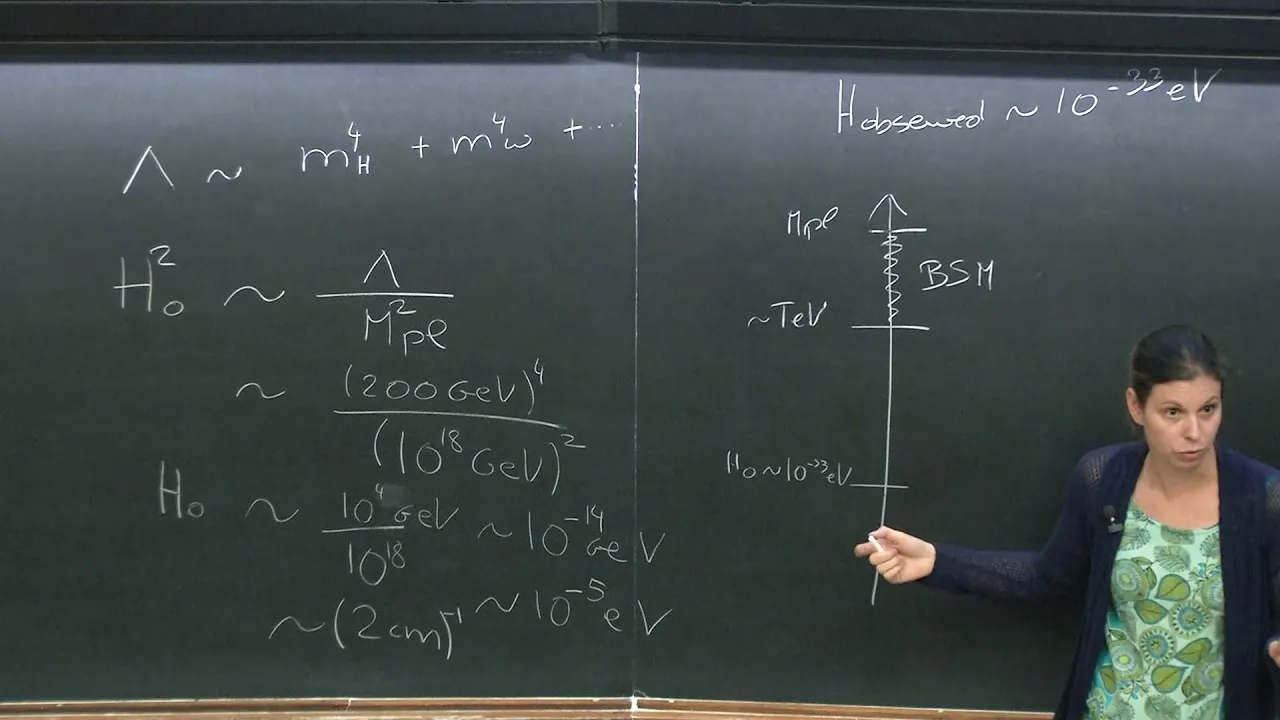

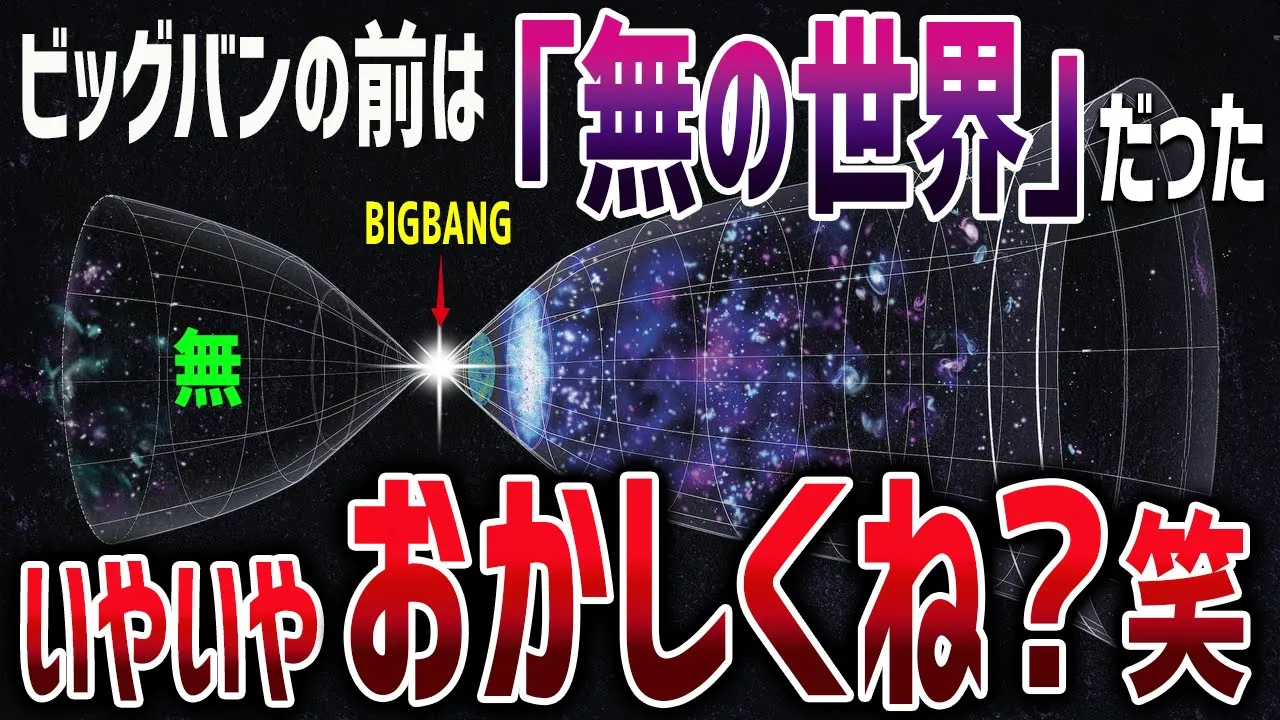
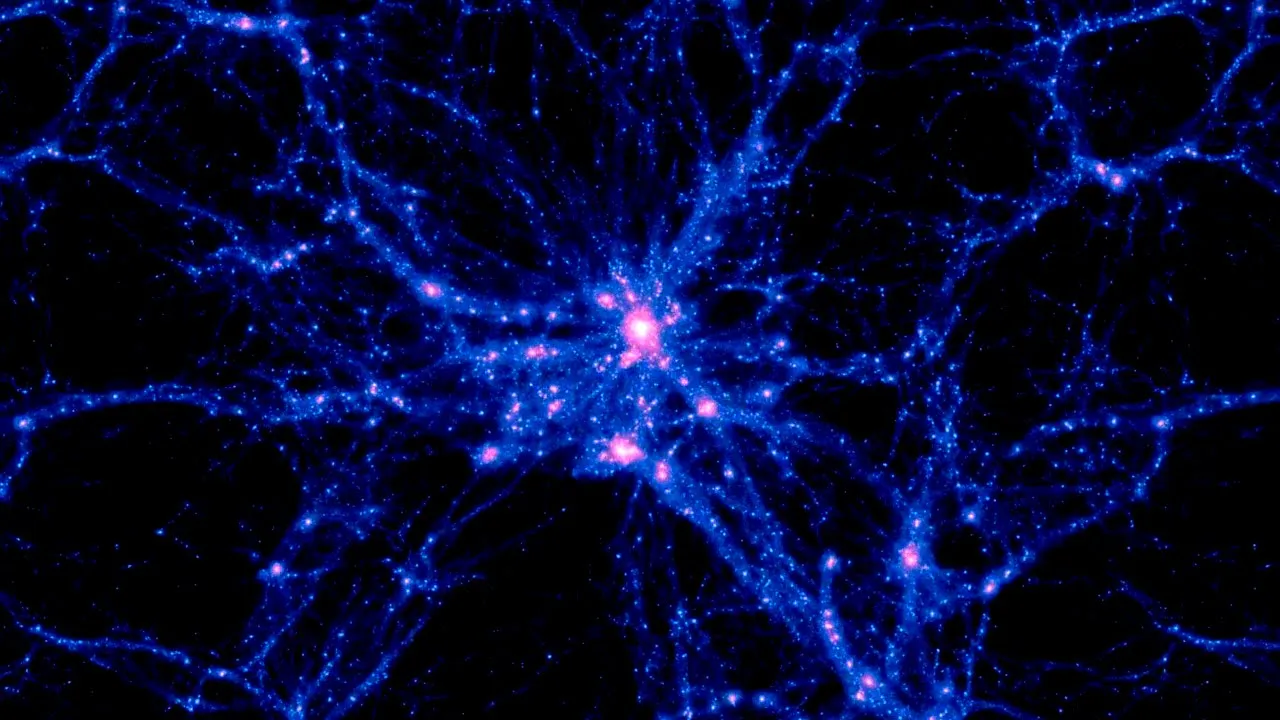




The universe is expanding at an accelerating rate due to dark energy, a mysterious form of energy that constitutes approximately 73% of the universe's total mass-energy content, counteracting the gravitational pull of matter (23% dark matter and less than 0.5% ordinary matter) and causing the expansion to speed up over time rather than slow down as previously expected.
Dark Energy and the Accelerating Expansion of the Universe
Added:Hubble's Law and the concept of an expanding universe, which establishes that galaxies are moving away from each other.
The phenomenon of cosmological redshift and how it is used to measure the velocity and distance of receding celestial objects.
Albert Einstein's General Theory of Relativity, specifically how mass and energy warp spacetime.
The use of Type Ia Supernovae as 'standard candles' to measure vast cosmic distances accurately.
The Lambda-CDM model, the standard mathematical model of modern cosmology that incorporates dark energy and cold dark matter.
Theoretical alternatives to the cosmological constant, such as Quintessence (a dynamic, evolving energy field).
Detailed scenarios for the ultimate fate of the universe, including the Big Freeze (Heat Death) and the Big Rip.
Current and future cosmological surveys (e.g., Euclid, the Vera C. Rubin Observatory, and the Nancy Grace Roman Space Telescope) designed to constrain dark energy parameters.
651 views7likes1:02:16Original Release: 2016-06-03
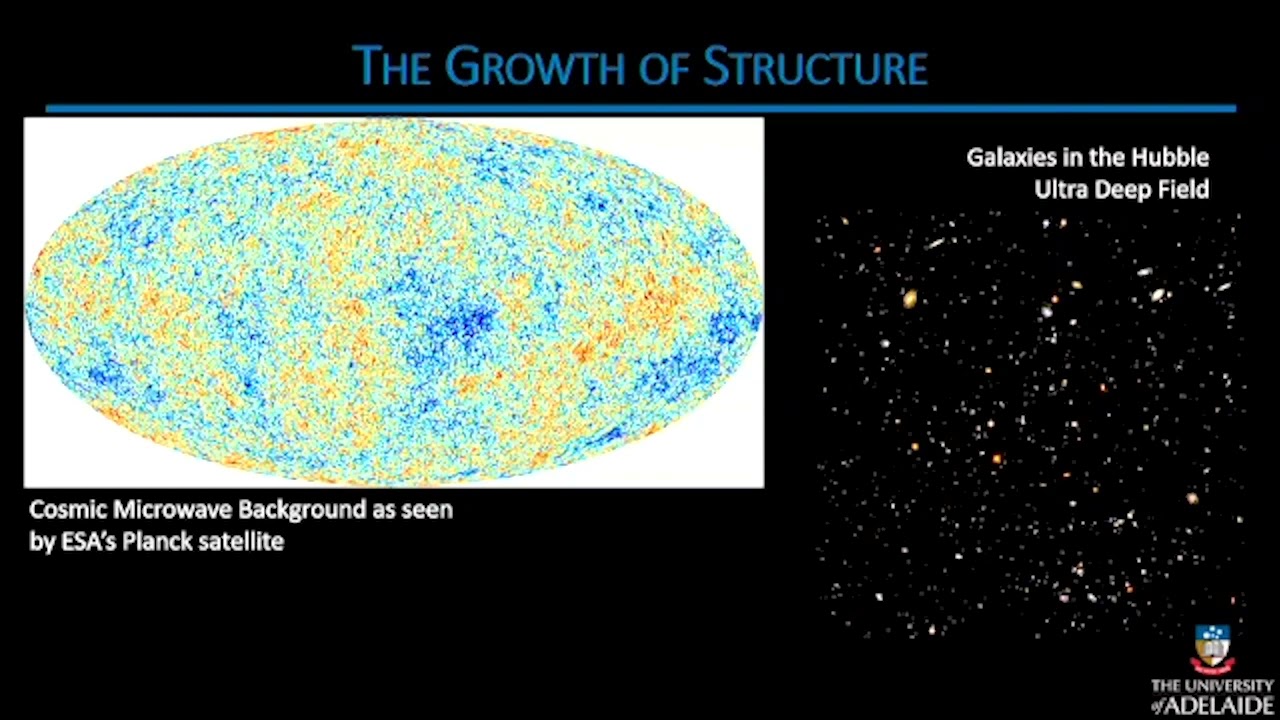
one of the things I find fascinating about astronomy is how the great discoveries fall into the context my personal life and perhaps you find this also so in 1998 I graduated from Christian Brothers University and here you can see a picture of me and my brother right outside around the corner from where this presentation is out front by the Tau Beta Pi bent and six months later this issue of science magazine was released and this was featuring the discovery of the year in 1998 the breakthrough of all Sciences and that is the discovery of the accelerating universe now as a result of this discovery these three gentlemen won the Nobel Prize in 2011 Saul Perlmutter of the Lawrence Berkeley Laboratory who was the leader of the supernova cosmology project Brian Schmidt who was the leader of the competing high Z redshift supernovae team and then Adam riess who was the co-author on the Schmidt paper and he actually did the measurements of the data that led to the discovery of the accelerating universe and the model that they discovered is completely counterintuitive basically if you did a pie chart of the mass energy content of the universe this is basically how it would break down 23% dark matter not made up of the same stuff that you and I are made up of roughly 73 percent dark energy and then this very small sliver right here represents everything else that you and I can see an experience basically there are more stars in the universe than grains of sand on all of the beaches and deserts of the earth and yet all of these stars added together along with everything else that we can see comets moons planets people etc makes up less than one-half of 1% of the stuff of our universe we now believe that the dominant stuff of our universe isn't even matter at all it's energy a mysterious dark energy that's causing the universe to expand more quickly with time and leading to a runaway universe and that's basically what we're going to talk about tonight so to set this up we're going to talk about the discovery of the expanding universe to start out with leading off of bill's present on cosmology the 12th section of the short course in astronomy will talk about the empirical evidence in the discovery of the accelerating universe possibilities dark energy possibilities and then finally the fate of the universe how does it play out how does the story end so to kind of set this up 100 years ago Albert Einstein published his general theory of relativity it's a problem he worked on for 8 years basically did nothing else and here you can see the issue of sky and telescope magazine from December of 2015 celebrating the 100 anniversary of this discovery and basically general relativity is a shift a paradigm shift and how we look at gravity gravity is not a force it's an effect due to the curvature of space and time summing it up matter tells space-time how to curve and curved space-time tells matter how to move the Sun or the Earth orbits the Sun not because the Sun pulls on the earth well because the sun's mass warps the fabric of space and time creating a curved path and that the earth naturally follows as it orbits the Sun and that's why the Sun the Earth orbits the Sun and why the moon orbits the earth is because of the distortion of space and time due to the presence of matter but Einstein had a problem all the galaxies in the universe have mass and so you should all be pulling on each other due to gravity so general relativity inherently predicted a universe that should collapse in on itself it should either be expanding or collapsing dynamic in some form now a hundred years ago this was completely counterintuitive because the prevailing world view at the time was that the universe is static and fixed and eternal so to get around this problem Albert Einstein did what any good theorist would do and that is he introduced a fudge factor into his equations of general relativity something called the cosmological constant or lambda to act as a counter to gravity to balance out the universe so to set this up imagine this foamy stuff here's all the stars and galaxies all the mass in the and you have this blue arrow here which represents gravity which would cause the universe to collapse in on itself because everything is pulling on everything that has matter calls out to everything else in the universe that has matter the cosmological constant would be represented by this pink arrow which is completely opposing gravity exactly equaling out gratit gravity which leads to a static universe so that's the idea behind the cosmological constant well it wasn't long after that that George Lemaitre made a radical proposition and that is he proposed that the universe had been born it was not static and it was not eternal but it actually had an origin and here you can see a picture of Albert Einstein in a young george'll Maitre radical new idea and something that Einstein didn't like here you can see an older Albert Einstein chastising a young George Lemaitre basically saying your calculations are correct but your physics is atrocious well unfortunately if Einstein the data was mounting at this time early 1900s to support George lemaitre's idea that the universe had in fact been born and it really began with this gentleman right here vestal melvin Slifer he worked for the Lowell Observatory he's actually the gentleman who hired Clyde Tombaugh which led to the discovery of Pluto in 1930 but in the 19-teens vessel Slifer used his 24 inch telescope to systematically measure the the velocities the radial velocities of a handful of nearby spiral nebula as if it was as they were called at that time again for the previous two centuries ever since people have been building telescopes they look through and they noticed these fuzzy patches which they called nebula weren't sure exactly what they were but the idea was that they were possibly gas clouds within our own Milky Way galaxy well in 1917 he measured the radial velocities of the nearby spiral nebula and discovered that 21 of the 25 were red shifted meaning that they were moving away from us again if you filter the white light of star through a prism you get the spectrum of colors that's how we can tell what stars are made of you see hydrogen ionized calcium sodium etc the absorption lines of stars what-what Slifer discovered was the the spectra of the nearby spiral nebulae were shifted toward the red portion of the spectrum that meant that the light had longer wavelengths and that they were moving away from us similar to the audible Doppler shift if you ever stand on a street corner and you hear the siren of a police car or an ambulance as its approaching you you notice that the sound is more high-pitched because the sound waves are being compressed as it's approaching you but then as it passes you by you hear more of a tired sounding the the sound shifts to the the longer wavelengths of the sound because it's moving away from you same kind of thing in astronomy if an object is moving toward you then the wavelengths of light will be compressed toward the blue end of the electromagnetic spectrum if it's moving away from you the wavelength will be longer it'll be stretched more toward the red end of the electromagnetic spectrum so Slifer discovered this for the spiral nebula we now know them to be galaxies and the bottom line is the spiral nebulae were different from stars so the same kind of thing was done with stars but there was no systematic movement with regard to stars some had radial velocities toward you away from you sideways whatever there was a kind of a random motion to stars but there seemed to be a systematic pattern to the spiral nebulae and that is that they were all red shifted meaning if they were all moving away didn't exactly know why and it wasn't until this man came along Edward Hubble in 1929 and discovered an empirical redshift distance relationship and this is four years after the paradigm shift occurred in 1925 Edwin Hubble published a paper resolving the mystery of the spiral nebula again two competing worldviews for centuries the nebular hypothesis that the spiral nebulae were in fact gasps clouds within the Milky Way early 1920s the perception of the universe was it was the entire Milky Way galaxy and then you had this little gas clouds that were part of the Milky Way galaxy like the Andromeda nebula and then you had the competing Island universes hypothesis meaning that the spiral nebulae were actually systems of stars outside of the Milky Way galaxy in fact separate Island universes immanuel kant's 1755 Edwin Hubble measured the distance to the Andromeda spiral figured out that it was in fact a separate island universe and overnight expanded the expanded the size of the universe by a factor of a hundred billion it's just an amazing discovery well four years later in 1929 picking up where Slifer left off Edwin Hubble discovered that there was a systematic distance redshift relationship meaning that the more distant the spiral galaxy was the guy the galaxies were the faster they were moving away and that led to the discovery of Hubble's law v equals H naught D and you can see basically a linear relationship here so the recessional velocity increases as the distance increases didn't exactly know why this was but essentially what Edwin Hubble discovered was the systematic expansion of the universe and it kind of again getting back to our raisin cake analogy if you have a dough of raisin bread and you put it in the oven and it expands in an expanse the dough would in fact be analogous to the space in the universe and the each raisin would be analogous to a separate galaxy within our universe so the reason why the universe is expanding is not because the galaxies are moving through some predetermined already-existing space but it's that space itself is stretching or space-time is stretching and just taking the galaxies along with it so there is no center to the universe we're not located in any special place but we we its perceived from our point of view as though we are a special point in the universe because we see every other galaxy moving away from us however it's an illusion if you were to contact an alien orbiting living on a planet orbiting a distant star in a distant galaxies billions of light years away he would think he was at the center of the universe it's just because that space is stretching in all directions within the universe another way to think of it this is a classroom setting we have individual chairs not necessarily the best setup in this room but imagine a classroom where you had individual chairs and individual desks and then I asked you to do a simple exercise every 30 seconds get up and put five feet of space between you and your next-door neighbor and do it again after every after every 30 seconds you get up and put an additional five feet of space between you and your neighbor what would we see the size of the room would be expanding in all directions now if you were sitting here the person immediately next to you would only be moving a little bit but the person on the other side of the room would be flying away from you because there's more space between you and the person at the other end of the room same kind of thing with the expanding universe the more space there is between you and a galaxy further away the greater the rate of expansion that's the Hubble's law that's the systematic expansion of the universe so after this was discovered Albert Einstein revisited the cosmological constant idea threw it out and labeled it as his biggest blunder and really missed out on an amazing opportunity to discover by first principles the expansion of the universe and here you can see a very sad and despondent Albert Einstein I don't know what he's thinking in this in this photo but it could be something like this you know land of what was I thinking but isn't it amazing and ironic that he discovered perhaps the most dominant stuff in the universe essentially three quarters of a century before the actual discovery was made 1961 Allan Sandage as cosmology develops as a legitimate science basically said that cosmology is the search for two numbers h-naught bubble constant and q-not the so called deceleration parameter now again it was always assumed that even though the universe is expanding it should be slowing down in its rate of expansion because all the galaxies are pulling on each other that's why Q naught was set up initially as a negative number it was always assumed that it would be decelerating in its rate of expansion hence the term deceleration parameter but if it's negative if you get a positive number then actually some an accelerating universe in 1990 the Hubble Space Telescope was launched and then fixed now Hubble not only a tribute to the man who led to who had made the initial discovery of the expanding universe but also its real purpose its mission the main focus of the hubble space telescope in the 1990s was to measure the Hubble constant or the Hubble parameter and this led to perhaps the most famous picture ever taken in all of astronomy the so called Hubble Deep Field every blob of light that you see here is a distant galaxy of at least a hundred billion stars like our Milky Way there are one or two stars in this field that are background star foreground foreground stars if you will in our own Milky Way galaxy but basically you have several thousand galaxies in here now this image the section of sky subtended by this photo is the equivalent of a grain of sand held at arm's length or about 125 millionth of the sky you're looking back 12 billion years into the past and for those of you taxpayers in the room this image cost about two billion dollars to take and it was worth every penny of it take the hubble space telescope pointed out the section of the sky where there's nothing going on complete blackness let it sit there for two weeks collect photons and this is what you get just an amazing image probably the most iconic image ever taken in the history of astronomy now I took stellar galactic astronomy in 1993 a couple years before the Hubble Deep Field was taken and toward the end of the class we got into cosmology briefed at that time it wasn't known what the ultimate fate of the universe was going to be so you had different cosmological models and you can see a snapshot here of my notes and one of the ideas was you have an Origin Big Bang an expansion expanding universe that slows down with time reaches a climax halts and then Rica lapses back to a singularity and then maybe you have an oscillating universe where this process happens collapses and then it repeats again so you have a Big Bang expansion then a Big Crunch Big Bang expansion and a Big Crunch or an oscillating universe the idea is Big Bang expansion halts rique elapses process takes about 80 billion years did you enjoy the show exact words of my astronomy professor another way to draw to graph this out is the density of stuff in the universe is ultimately going to determine the destiny of the universe density equals destiny so cosmologists we want to know what the fate of the universe is is the universe going to expand forever or is it going to expand for a while and then rika laps in on itself so in a dense universe like this if this is time equals now you go back in time and you have a universe that has an origin and an expanse if you have a really dense universe represented by this parameter Omega matter Omega sub M is the density of the matter in the universe you could have a universe that expands and then collapses or if you have a less dense universe you could have a universe that expands slows down in its rate of expansion and then asymptotically approaches some value so just can it just continues to expand for a while slows down and then just kind of floats or you can have a universe that equals the kriti the where the the Omega Semana matter equals the critical density so we based on measurements cosmologists now believe that the matter density of the universe is about 30 percent of the critical density the critical density being the total content to get a flat universe spatially flat universe so prior to the 1990s it was assumed that matter was all the stuff in the universe basically at ordinary matter and you had baryonic matter now to look forward in time to figure out what kind of a universe we live in we can't go forward in time but we can go backwards in time measure what the universe was doing at progressively different times in the past and then figure out which one of these curves the universe actually fits on so and that again gets back to the idea of the cosmic look-back time astronomy is a time machine we never see anything in the universe as it is we see it as it was it takes light eight minutes to reach Earth from the Sun so every time we look at the Sun we're seeing the Sun as it was eight minutes ago now here on earth light travels pretty fast so we see essentially things instantaneously but the farther out into space we look the further back in time we're looking so we see serious as it was eight years ago we see other stars around us as there were some hundreds or even thousands of years ago we can look back and see the galaxies as they were millions or even billions of years ago so we can measure through the look-back time we can measure the expansion rate of the universe as it was at progressively different times into the past and in the 1990s there were two teams that did this the so-called high Z supernova search team led by Brian Schmidt and the competing supernova cosmology project led by Saul Perlmutter and these two teams there was a fierce competition they didn't like each other as you can see by this photo right here competition is good though keeps everybody on their toes and basically makes sure that everything is done in the right way and that whatever results were obtained that you would check the results to make sure that you were getting the right and the right information basically to measure the expansion rate of the universe you do it two ways number one you measure the redshift all you got to do pretty simple galaxy spectrum determines the redshift of the galaxy and then you measure what's called the distance the luminosity distance now distance is one of the biggest problems in astronomy to tackle nearby stars fairly easy using trigonometric parallax techniques but measuring the distance to galaxies far and far away is is a difficult problem to solve but essentially to simplify it you can do something what's called a luminosity distance if I know how bright something appears I can measure the intrinsic brightness I can measure the met the intrinsic brightness but the brightness of a star is it appears here on earth then I can measure its distance if I know how intrinsically bright it is and that's basically just the inverse square law here so you measure the luminosity of an object using standard candles a standard candle is an object here you can see redshift so you can see the redshift of some some of the objects classes of objects in the in the universe so you can see for instance some a type 1a supernovae from 1994 at the time the most distant type 1a supernovae there's about 5 billion light years away had it had a redshift of 0.425 the most distant type 1a supernovae ever had had a redshift of 1.9 basically redshift Z the greater the number of Z the the higher the value z the greater the redshift so you can go all the way from point four up to the Cosmic Microwave Background which is the relic radiation left over from the Big Bang has a redshift of a little over a thousand the most distant galaxies gamma-ray burst quasar type 1a supernovae etc so again you can measure the redshift of a galaxy and then you can calculate its distance using the luminosity distance relationship if I know how intrinsically bright something if I know how bright something appears in the sky and I know its intrinsic brightness then I can measure how far away it is we do this every day good example is like a hundred watt light bulb if I if if a hundred watt light bulb is close to me it's going to appear brighter then it's it's on the other side of the room my eyes can calibrate the intrinsic disc or the distance of that to that hundred watt light bulb based on how bright it appears now intrinsically it's a hundred watts 100 watts is a hundred watts but if it's closer to me it's going to appear brighter than if it's further away same kind of thing in astronomy so if I know how intrinsically bright something is I can figure out how far away it is just basically using the inverse square law now the problem is I need to have a bright enough standard candle to be able to see it at vast distances and here you can see kind of a breakdown of the cosmic distance ladder Cepheid variables are great but they don't get you very far in the universe they only get you out to about the Virgo cluster we need a really really bright standard candle to see all the way across the universe unfortunately we have one in the type 1a supernova supernova is an exploding star our Sun won't be won't explode into a supernova but more massive stars will and a type 1a supernova occurs when a dense nugget called a white dwarf in a binary star system gravitationally accretes mass from a nearby companion as you can see here so if you have a dead white dwarf star and then its companion star moves off of main sequence swells up into a red giant star the outer layers could get sucked onto the star the white dwarf gravitationally leading to a thermonuclear one run away now Chandrasekhar calculated what this limit was it's about 1.4 solar masses so if it approaches 1.4 solar masses and exceeds it then it'll explode the reason why and here you can see why do or our son will become a white dwarf in about seven billion years it'll run out of hydrogen it'll go through the you know helium burning the helium flash and basically what will be left over at the end of its lifetime is a carbon oxygen core white dwarf during a type 1a supernova explosion the carbon and oxygen are converted into nickel which is very very bright so a type 1a supernova is like a one point four solar mass thermonuclear bomb going off and it's about five billion times brighter than our Sun to put this in perspective when a type 1a supernova occurs it can outshine an entire galaxy of stars briefly and you can see some examples here supernova 1990 4d here's its host galaxy in the Virgo cluster here's the type 1a supernova 2011 the closest type 1a supernova ever observed was in the pinwheel galaxy about 20 million light years away great opportunity to study up close what a type 1a supernovas like the reason why I type 1a supernova is such a good standard candle is because they all occur at about the same mass one point four solar masses so the physics of it is about the same so we need we need the same brightness the the same brightness across the board as we're doing a type 1a for an order for a standard candle to work so here you can see the light curve basically you have a moment of peak brightness and then it falls off systematically and that's one of the ways we can tell that it's a type 1a supernovae now not all type 1 A's are exactly the same in order to make them a true standard candle they had to be calibrated in order to become a standard candle and Mark Phillips and Mario Hume a were the ones who did the work to actually calibrate type 1a supernovas to become standardized Abel as a standard candle and the way this was done is he discovered that there was a a relationship between the peak manasa T of a type 1a and then it's decay rate or basically its speed of luminosity evolution after maximum light so the brighter a type 1a the longer it takes for it to fall off so there was a systematic relationship between how bright it is and how long it takes to actually fall off and here you can see the data so up here this data is kind of a mess really hard to use it as a as a standard candle but applying the phillips correction you get a tight curve that we can now use to to use all type 1a supernovas as they occur across the universe as a type of standard candle they're great the problem with type 1a supernovas is they don't occur very often in a typical galaxy like our Milky Way you may only have a supernova event occur once or twice every millennium the last one occurred in the early 1600s were overdue they're all so random there's no advanced warning of where to look and they're fleeting once they happen you got to be on your game and ready to observe them so if there's a galaxy that you're very fond of you could either sit there look through the telescope 24 hours 365 7 days a week until you actually observe a type or a type 1a supernova in which case you're going to be doing that for quite a while or you can do the next best thing fortunately there's a lot of galaxies in the universe and somewhere in the universe a supernova occurs approximately one once every second so we got to look at thousands of galaxies all at once in order to observe a handful of type 1a supernovas so we're looking at anywhere from 5,000 or more galaxies at a time in order to get to get a handful of type 1a supernovas so essentially we're putting the universe on surveillance and technology has enabled us to do this I mean we have a Keck telescope now in Hawaii obviously the Hubble Space Telescope Cerro tolola in Chile this is astronomy's version of conspicuous consumption big glass both on earth and in the sky so yeah we like to spend money in a strana - so this is how we make big discoveries in in astronomy and of course not only the size of the telescopes but the the invention of the CCD chip the silicon revolution really propelled astronomy forward - here's the pan-starrs telescope in maui hawaii and it contains the world's largest digital camera 1.4 gigapixels when the initial discovery was made it was the early 1990 mid 1990s so we had penny penny M ones and we had you know four megapixel cameras today we've come quite a bit further so basically what you do is you take snapshots of thousands of galaxies looking for supernovae you just look for arrows and anywhere you see an arrow you see a supernova so obviously it's a little bit more involved than that otherwise you know they wouldn't give out Nobel prizes for this kind of work but here you can kind of get an idea of how this works Keck in Hawaii Berkeley Cerro - Lolo and in Chile the Hubble Space Telescope you're basically taking a snapshot of thousands of galaxies in one field anywhere from 50 to 100 fields in one image and then you look for you're observing tens of thousands of galaxies and three week intervals between New Moon's so you get out there you observe during one New Moon you go back three weeks later take a state the same snapshot of the sky three weeks later and then you look for a difference between each of the fields so in one field you may not see anything and then a week later you may see an event that looks like a supernova here's a here's an example of that from the supernova cosmology project observing a field of galaxies one little image here you can see what the galaxy looked like three weeks before and then you look at it three weeks after and you can see a difference in luminosity indicating that there's something going on there now it may be a cosmic ray it could be a comet but it could also be a supernova event just don't know until you analyze the data so both teams did this systematically and they plot the data and this is basically the results of what they discover now again Hubble diagram the greater the Z this is the redshift on the horizontal axis the the greater than the value of Z the greater the redshift the further out into space you're looking the further back in time you're looking and what they discovered was completely counterintuitive the data were falling above the line now this is the inverse of the Hubble diagram that bill showed you so in Bill's diagram if it's curving up if it's if it's actually curving down that would indicate an accelerating universe this is the inverse of that so the data is curving up indicating that the universe is accelerating now what does that mean if I look further out into space and I look further back in time intuitively I would expect to see the expansion rate faster the further out into space that I look Big Bang model again if the universe had an origin then it should have expanded more quickly in the early ages of stages of the universe and then slowed down with time if all the galaxies were pulling on each other so I expect to see a universe that is expanding faster in the distant past and more slower in the recent past but that's not what these guys discovered they discovered a universe that was actually expanding slower in the past and faster in the more recent past completely counterintuitive you the supernova cosmic are the the two teams analyzed distant and nearby supernovae and they discovered that these supernovae right here are very very faint they're far fainter basically than they have any reasonable right to be and that's a clue to an accelerating universe so looking at a different plot here going further out the highest redshifted supernovae were fainter than would be expected even if you had an empty universe okay what does that mean getting back to the Apple analogy if I throw the Apple up the gravity of the earth pulls it back down now imagine the earth doesn't even exist and I throw the Apple up what happens it just keeps going alright if the Apple is analogous to the supernova the most distant supernovae were further away than if I thrown the Apple up and the earth didn't even exist where that Apple would be in other words that have to attach a rocket to this Apple to get it into a position of where it would be if it was analogous to some of these distant supernovae so you're seeing there falling on a plot here that curves upwards this is actually the opposite of the plot that bill showed in his presentation the upward curve in his was a decelerating universe downward was acceleration this data is just flipped so if it goes up and it's accelerating yeah yeah that's a great question I'm gonna answer that question in just a minute that's not that's an awesome question basically what she's asking is if I can paraphrase how do you know that they're not fainter because of dust so maybe dust is dimming the supernovae if you if you want to appear to ask an intelligent question an astronomy lecture it doesn't matter what the lecture is on just ask one question how would dust affect your results because we lived in a dusty universe so that's an excellent question it tells me you're listening I'm gonna come back to that question though so anyway getting back to the data it's falling on a curve that's telling us that the universe is accelerating expecting this instead we're getting this so getting back to our plot again assuming matter is the only thing that makes up the universe the data is not following this trend and it's not following any of these trends it's actually following this trend right here which tell us that there's got to be something else other than matter making up the universe so here's a snapshot from Adam riess one of the Nobel Prize winners lab notebook and you can see here that for an Omega meant a lambda term of zero according to the supernova data in the measurements he was getting a matter density of negative 0.36 of course he forgot to put the zero in there but anyway that's kind of strange because I exist and you exist so how can we have a universe with negative matter so it's kind of like one of those moments in science we were like oh god what did I do wrong it wasn't I made a discovery it was like I made the wrong measurement I made a mistake I've got to go back and check and see what's going on but it gave us a clue that it gave these guys a clue that a discovery had been made so emails at the time back and forth between the different members of the Heisey redshift team kind of imply that they're struggling rustling with the results cuz they went back did the measurements again came up with the same result there's Alex Filippenko the great astrophysicist from Berkeley Adam showed me fantastic plots before he left for our data imply a nonzero cosmological constant who knows this might be the right answer Brian Schmidt Australia another Nobel winner again write that right around the same time it is true that the supernovae say that the cosmological constant is greater than zero how confident are we in these results I find it very perplexing again this is strange Mark Phillips as serious and responsible scientists ha we all know that it is far too early to be reaching firm conclusions about the value of the cosmological constant finally Adam riess sent on the eve of our honeymoon over understandably icy stares from my wife may the honeymoon can wait all right I'm working on a Nobel Prize the results are very surprising shocking even I've avoided telling anyone about them because I wanted to do some cross-checks I have and I hate I wanted to get further into writing the results up before the other team got wind of it the data require a nonzero cosmological constant approach these results now with your heart or head but with your eyes we are observers after all that's the key we're observers you go into an experiment expecting one result on universe that is either going to slow down or is going to wreak elapsed instead you see a result that's just it's like that multiple choice answer in cow or you take on a test right none of the above it's not a B C or D it's e it's none of the above accelerating universe was not on the docket nobody would have predicted a cosmological constant and you know 20 years ago so the upshot of it is remember that lambda term that Einstein introduced into his equations of relativity and then threw out well 70 years later we've reincarnated the idea and it seems to be the dominant stuff that the universe is made of so here you see him sad and despondent have you ever introduced the cosmological constant in the first place so if it's alive today I don't know maybe is this reaction would be that and that of course led to the discovery of the accelerating universe and the Nobel Prize here you can see Einstein very very surprised not because he's blowing parallel universes from his pipe and if you don't know parallel universes come from the pipes of theoretical physicists but is even more surprised because these guys got the Nobel Prize and not him for something that he invented but he didn't have the courage to follow through with his convictions he introduced it and then threw it out but he missed a golden opportunity to predict by theory or first principles and accelerating universe okay so was the universe always accelerating maybe at one time in the distant past the universe was smaller the matter density was higher so maybe the universe was decelerating in the past and then accelerating so to answer that question Adam riess a few years later formed the higher red sea she hires E team and went out and measured even more distant supernovae and sure enough he found that it follows this curve right here so the upshot of it is about five billion years ago the universe went through a transition from expanding but slowing down its rate of expansion to speeding up in other words they went from a transition from deceleration to acceleration well the technical term in physics for transition from deceleration to acceleration is called a jerk so you have position velocity acceleration and jerk it was always expanding it was expanding but slowing down in its rate of expansion because the universe was smaller and denser at that time so the gravity from matter and dark energy was stronger because the matter density was higher so there was this tug of war going on between dark energy and dark matter and early in the universe dark matter was basically winning slowing down the rate of expansion then the universe expanded far enough so that it diluted the energy dense or the matter density sufficiently so that dark energy could take over and that's where you had that transition from deceleration to acceleration so again the change from deceleration to acceleration is called a jerk so right after this result came out the New York Times posted this newspaper article now if you're like me you rarely actually ever read the article you just read the headline and then you look at the picture so you can imagine that Adam was not too pleased when his colleagues were getting questions like now who's this cosmic jerk that you work with that reverse the universe no anyway okay now kind of getting back to your question so maybe you're skeptical the supernova data may be dust that dims the supernova even though there are ways around that no that's that's basically what Adam Reese's master's thesis was about doing light curve shaping to rule out the effects of dust but maybe you know maybe it's dust that's dimming the supernova or maybe the physics of type 1a supernovae was different in the distant past we have an accelerating universe extraordinary claims require extraordinary evidence so you're looking at a baby picture of the universe this is the Cosmic Microwave Background taken by the W map the Wilkinson microwave anisotropy probe you're looking at an image of the universe wind is about 375 or 317 thousand years old and each one of these little spots represents a slight variation in the temperature of the early universe well these are hot spots and these are cold spots one part in 10,000 so it's very very small missa course was discovered by Arnold Penzias and Robert Wilson in 1964 they eventually want to Nobel Prize for it it's the smoking gun for the Big Bang model the universe it's the most perfect black body and we've ever seen we can't even simulate a black body like this in the lab now we can use the W map data to measure the geometry of the universe so a quick review here of the geometry of the universe if Omega Omega being the total density of stuff everything that makes up the universe if that parameter is equal to one we have a flat universe like a Euclidian sheet of paper if Omega is greater than one we have a higher density universe which is basically a closed universe it's like a sphere so it's a universe that will expand and then contract back on itself if we have an under dense universe that would be like a saddle shape open universe so you can measure the geometry of the universe by looking at these little fluctuations in the Cosmic Microwave Background and also by measuring the angles of a triangle so the interior angles if they add up to more than 180 degrees you've got a closed universe less than 180 degrees you've got an open universe that's a ttle state if it's exactly 180 degrees you've got a flat universe the W map data points to a flat universe and again you just merit measure the various tiny fluctuations in the background what this tells us is that matter is not enough to account for the geometry of the universe matter only gives us about 30 percent of the critical density when I say matter I'm talking about baryons which is basically atoms the stuff that you and I are made up of and then also dark matter you know it's about ten times more dark matter in the universe and there is ordinary matter so you add up all the matter and in the matter density of the universe only gets us about 30% of the critical density so you need a significant non matter component or energy component to get a spatially flat universe based on the geometry measured from W man ok baryon acoustic oscillations it turns out that there is a one-to-one correspondence between the the slight density fluctuations in the Cosmic Microwave Background and the positions of galaxies in the universe today back when the universe was hot and dense and opaque before the moment of last scattering the the slight differences in density translated into gravitational potential wells that were sucking in the baryons and then the full times were pushing them back out and that created an effect Penna like sound waves rippling through the early universe analogous to throwing a stone in a pond and then those ripples go out well when the universe expanded and cooled that pattern was frozen into the universe and we can measure it today this is a technique independent of the supernova data that's the point instead of a standard candle technique for measuring the universe we now the standard ruler about 5min about 490 million light years so this is another clue to the existence of dark energy when you have independent techniques and the baryon acoustic oscillations again positions of galaxies in the universe you can measure statistically where they would where they're likely to occur based on the density and the distribution of matter but also the equation of state points to the nature of the dark energy being more like a cosmological constant so adding this all up we've got three independent techniques supernova data accelerated expansion cosmic microbat microwave background that tells us something about the geometry of the universe spatially flat and then also the baryon acoustic oscillations you map it all out and where they converge gives us this picture of the universe 30% matter 70% energy for cosmological constant light and that leads to the so called lambda-cdm model of the universe which is the standard cosmology model land of being your cosmological constant CDM being cold dark matter age of the universe 13.7 9 billion years and I need to update this because I put this together two weeks ago so I need them to add another two weeks to the age of the universe another joke from the Planck mission Hubble constant the density of baryons or ordinary matter about 4.8% so that's all the baryonic matter all the atoms in the universe cold dark matter 25.8% cosmological constant about 69% so the universe is made up 69% of the density of the universe is anti-gravity or energy okay so we talked about the evidence for the existence of dark energy but what is it the short answer is we don't know but we can at least talk about some of the default hypotheses for what the dark energy could be now quick review of gravity Newton versus Einstein in Newtonian gravity basically it's just the mass of the one object and the mass of another object and the distance between them so the Apple falls to the earth because of the mass of the earth and the mass of the Apple in the distance in between them but in general relativity there's this pressure term what do we mean by pressure the earth exerts an outward pressure on me that keeps me from falling to the center of the earth and that outward pressure translates into an inward gravitational pull so I weigh a little bit more on the surface of the earth when I do it with general relativity as opposed to Newtonian gravity now it's virtually negligible but if I was standing on a really really dense object like a white dwarf or a neutron star then it would there would be a significant difference well the rate of expansion of the universe is proportional of this term right here the energy density and then the pressure so but if the universe was filled with a negative pressure you could make this so it's negative meaning it's a decelerating universe by default mathematically it's set up as a decelerating universe but if you had a substance of negative pressure you could make the whole term positive and have an accelerating universe so if space were filled with a substance of negative pressure great enough to overcome the positive energy density the next thing the net effect would be repulsion and we think that the dark energy is something like that so one idea we've got to get into the korky world of quantum mechanics are the quantum fluctuations in the vacuum otherwise known as the zero-point energy the vacuum now we were all taught from the time that we were very very young that the vacuum is completely empty sheer nothingness turns out that's not exactly true according to the Heisenberg uncertainty principle there have to be low article and antiparticle payers coming in two and flashing out of existence all the time so neutrinos and antineutrinos quarks and antiquarks protons and positron or anti protons basically they flash into existence exist for a brief moment and then they annihilate each other it was always believed that the net effect would be zero but if there was a positive energy that resulted from this then you could have space filled with a vacuum energy that could cause the universe to stretch what's the empirical evidence or the experimental evidence for this the measured levels of the hydrogen at the measured energy levels of the hydrogen atom do not agree with the theoretical predicted energy levels of the hydrogen atom when you do not take into account the quantum effects it's called the lamb shift so you need quantum mechanics to accurately measure or get the measured results of the hydrogen atom to agree with theory theory and measurement don't agree if you don't take the quantum effects into account when you're measuring the energy levels of the hydrogen atom another experiment is the Casimir effect you can put two parallel plates in a vacuum two massless plates let them sit there and they slowly go together why because the vacuum pressure outside of the plates pushes on them and the pressure outside the plates is greater than the pressure between the plates because of the boundary conditions between the plates so the vacuum has energy so the upshot of it is maybe the dark energy is just the quantum energy of the vacuum and we're done well there's just one little problem when we do a quick back of the envelope calculation for how much dark energy there should be in the universe versus how much we actually see we come up with just a little discrepancy we're only off by ten to the hundred and twentieth power 20 orders of magnitude higher than a googol so you're in graduate school and you're taking one of Bill Buster's classes he gives you a test and you get the wrong answer and then you go to his office the next day and you want to argue the result I mean that's how I got through graduate school right it's not what you know it's how well your negotiate with professor so you know bill I don't understand why you gave me the wrong answer on this test question I was only off by 10 to 100 20th power I mean come on man show me some luck probably not gonna win that argument especially coming from a guy who's known for telling you that the answer is sometimes three or four significant digits out so this has been called the worst theoretical prediction in all of science vacuum catastrophe essentially now I would tend to argue that it's just an incomplete we haven't we're not far enough along yet they're really understanding the nature of what's going on but vac the quantum energy of the vacuum as an explanation for dark energy is out so one of the huge mysteries with dark energy is why is it so small I mean it causes the universe to expand on large scales but it's virtually undetectable on the everyday scale there's no way we can measure it so it's not like we could harness this stuff and add it to our cars and levitate over traffic and fly we can't harness the zero-point energy of the vac so another idea is quintessence you know when in doubt at a scalar field so the cosmological constant is constant and uniformly distributed quintessence is dynamic it could change over time quintessence comes from the Aristotelian fifth essence that supposedly makes up the rest of the universe so you have water fire earth and air and then you have the quintessence or the fit essence that's where the idea comes from the best way to understand the quintessence is through the concept of symmetry breaking so water droplets are more symmetrical than ice crystals so when you go from water to ice you're breaking symmetry and releasing some heat into the surroundings and you can actually do this you could have a liquid that has a certain latent heat associated with it so it's still in the liquid form even though it's below its freezing temperature and then you can manipulate it so that it freezes and then releases heat into the surroundings so that same concept again when you're going from vapor to liquid the water energy is released into the medium so that's the idea so maybe maybe the universe has a force field associated with it that's analogous to some kind of latent heat stored up and when that latent heat is released it exposes the universe to expand not likely the evidence seems to point to more of a cosmological constant idea for her dark energy or the third idea is maybe Einstein is wrong this really keeps the theorists up late at night maybe we need a new theory of gravity one that says that gravity is repulsive on large scales instead of attractive again it's really hard because general relativity works so well it even has engineering applications how many of you in here have used GPS in the last day or two GPS does not work if you don't take into account general relativity because the earth orbiting satellites are further away from the Earth's gravity and clocks tick faster onboard the earth orbiting satellites than they do on the ground so you got to take into effect the time dilation effects due to gravity it translates to about 6 miles a day and you don't want to get lost in Memphis this time of night so you want to make sure your GPS is working you can end up in a bad place so general relativity works bottom line is to understand dark energy we need to bridge the gap between general relativity and quantum mechanics and these two theories hate each other we need some theory to unify these two and quite frankly we're not even close so we got a lot of work to do okay so here we go Big Bang which is a terrible term by the way think about it Big Bang that is the worst term in all of science it wasn't big and there was no bang the universe was a singularity and there was no medium for anything to travel through and it also gives you this picture that the universe sort of what like like an explosion all this bits of stuff flying out from a singularity that's not what happened the universe supposedly went through a period of rapid inflation when went from boom to boom in the blink of an eye between 10 to the minus 36 and 10 to the minus 34 seconds supposedly the universe grew by a factor of 10 to the 40th the rapid inflation we see that it because how we can have points different points in the cosmic in the microwave background that are that are connected over large distances but anyway you have a Big Bang you have a period of expansion but decelerating expansion your cosmic jerk and then you have accelerating expansion and now looking off into the into the distant future one of three fates either a universe that will wreak elapsed into a Big Crunch or rip itself apart so and that depends on the nature of dark energy so if dark energy is more quintessence like in other words dynamic and can change with time then you could have a Big Crunch scenario where it changes signs and then the universe collapses back in on itself again not likely but it hasn't been completely ruled out yet the opposite of that is a big rip effect where the universe expands and then the dark energy strength increases with time and you're not only of accelerating expansion but you have accelerating accelerating expansion so the dark energy is really really small now but trillions of years into the future the dark energy is so strong that it rips everything apart basically galaxies structures then galaxies themselves get ripped apart then individual stars planets get ripped apart and then eventually individual atoms it's kind of a fun way to think about the universe engine you know just everything just gets ripped to shreds but in the 20 years since the discovery that's kind of ruled out if the equation of state is significantly negative this could happen but again it's not likely the most likely scenario is a cosmological constant that's constant uniformly distributed and you get an inner universe that just expands and cools forever so 100 billion years into the future the universe keeps going like it is basically you only see the Virgo cluster of galaxies there's no Cosmic Microwave Background it's too far away there's no evidence for an expansion and then you would conclude that the universe is small and static if there's any living creatures a hundred trillion years into the future it's the death of stars so most of the baryonic material matter in the universe right now is locked up in interstellar and intergalactic gas that's basically the wrong Tyrael performing stars well there's only a finite amount of matter and as gas compresses do it gravity and form stars and you go through the life cycle of stars every time around more and more matter is locked up into stellar remnants our Sun will become a white dwarf more dense stars more massive stars will become neutron stars and black holes so every time you go through the stellar cycle gravity takes its cut and more and more of the matter is being used up you know supernova spews the stuff back out in the interstellar medium but hydrogen is converted into metals and then stellar remnants more and more of the masses tied up in stellar remnants so if you go forward trillions of years into the future all you have are basically stellar corpses so you can envision a scenario if there's any life which there won't be huddled around a dim dying red dwarf star the white dwarfs will become black dwarfs the red dwarfs will become black the work so--that's trillions of years in the future ten to the seventeen years solar systems evaporate stellar encounters are very rare but given enough time eventually stars will interact and gravitationally they will allow rip planetary systems apart ten to the twenty seven years galaxies start to dissolve so all you have are stellar remnants they gravitationally interact and either fling out of the galaxy or they get thrown into the supermassive black hole ten to thirty two years matter dissolved there's some quantum mechanical models that suggest that even protons themselves are not stable nobody can - electrons neutrinos and positrons so matter itself has only a finite life ten to the sixty seven years stellar-mass black holes evaporate you a Hawking radiation and in 10 to the 100 years the supermassive black holes at the center of galaxies eventually will dissolve in in a flash of gamma rays so the end result is a Big Chill supposedly according to current models so summing it all up I think this poem by Robert Frost probably best some say the world will end in fire some say nice from what I've tasted of desire I hold with those who favor fire but if it had to perish twice I think I know enough of hate to say that destruction that for Destruction ice is also great and would suffice so the bottom line is if you want to see the universe you've got to come out for tomorrow night's observing self it's not gonna be around forever all right
Up Next
49:05
The Accelerating Universe: Nobel Laureate Brian Schmidt Explains Dark Energy
@ANUchannel
2.3M views•2012-08-03
61:17
First Billion Years of the Universe with the Square Kilometre Array
@iaaudc
121 views•2022-05-26

6:25
Kepler's Laws of Planetary Motion Explained (Educational Astronomy Video)
@Peekaboo_Kidz
404.9K views•2023-02-17
6:10
Gamma-Ray Bursts: Cosmic Snipers Explained | Astronomy
@kurzgesagt
15M views•2016-07-31
Related Study Plans & Knowledge Roadmaps
Structured learning paths in Astronomy
astronomy
Reionization: Pop III Stars, IGM & 21cm Line
01Foundations of Cosmology & the Early Universe
02Population III Stars & Cosmic Dawn
03Physical Mechanisms of Reionization
+ 2 more learning modules
17h5 modules
Explore Roadmap
astronomy
Planetary Rings: Dynamics, Roche & Resonances
01Foundations of Gravity and Orbital Mechanics
02Tidal Forces and the Roche Limit
03Structure, Composition, and Collisions
+ 2 more learning modules
10h5 modules
Explore Roadmap
astronomy
Asteroseismology: Stellar Waves, Ages & Cores
01Foundations of Stellar Astrophysics & Wave Mechanics
02Stellar Oscillation Modes: P-modes and G-modes
03Mathematical Framework of Asteroseismology
+ 2 more learning modules
35h5 modules
Explore Roadmap
astronomy
Adaptive Optics: Physics, Engineering & Control
01Foundations of Wave Optics and Wavefronts
02Atmospheric Turbulence & Optical Distortion
03Wavefront Sensing Technologies
+ 3 more learning modules
35h6 modules
Explore Roadmap