


![The ONLY unintentional ASMR voice you'll need to sleep tonight | David Butler talks Space [No Music]](https://i.ytimg.com/vi_webp/1tkM-Ml7hwE/maxresdefault.webp)











![[Astrophysique] Un été torride pour la cosmologie](https://i.ytimg.com/vi/xyMqLKE8fFo/maxresdefault.jpg)

The Hubble Tension is a fundamental discrepancy in cosmology where local measurements of the universe's expansion rate (using Cepheid variables and Type Ia supernovae) yield approximately 73 km/s/Mpc, while measurements from the cosmic microwave background radiation (from Planck satellite) predict approximately 67.5 km/s/Mpc—a difference of about 5 standard deviations. This tension suggests either new physics beyond our current understanding of dark matter and dark energy, or systematic errors in one or both measurement methods. The James Webb Space Telescope has helped verify that local measurements are reliable, ruling out image resolution issues, but the fundamental discrepancy remains unresolved, potentially requiring new theoretical frameworks or additional observations from future missions.
Nobel Laureate on JWST, the Hubble Tension, and New Physics
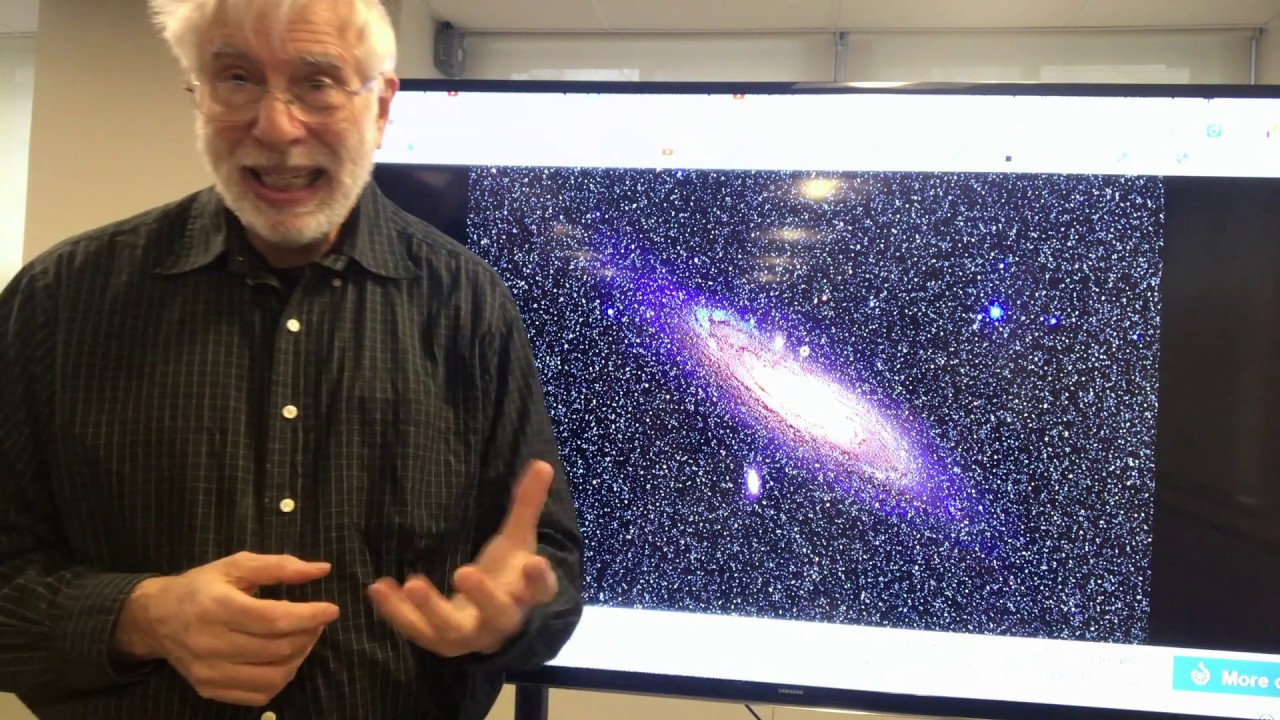
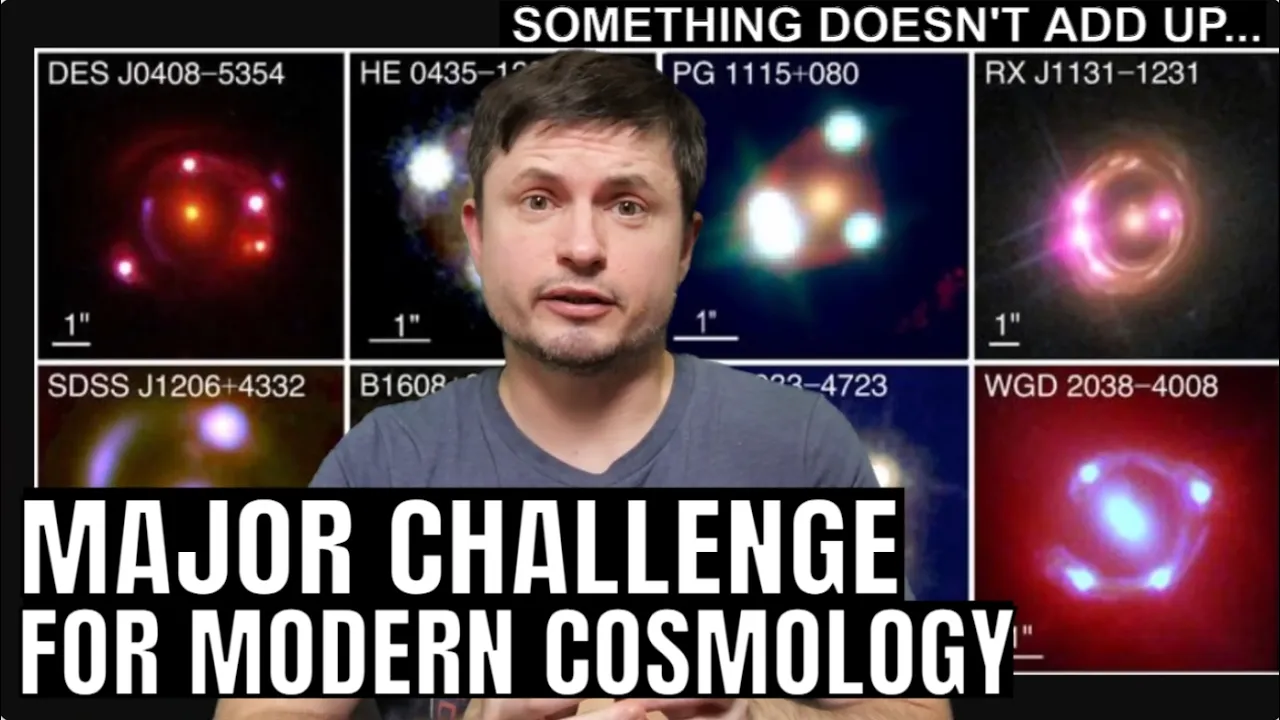
Added:we've talked quite a lot about the Hubble tension here on the channel and this of course this measurement of the expansion rate of the universe you measure it in the nearby Universe you get one number you measure it in the cosic microwave background radiation pretty much at the beginning of the universe you get a different number and they don't overlap their error bars and so something's going on like we don't understand perfectly the expansion rate of the universe or is new physics going on but maybe there's a mistake in the measurements and it's important to double check all of your measurements very very carefully and so my guest today is Dr Adam Reese he is one of the most capable uh error measurement double Checkers in existence he won a Nobel Prize in 2011 for being part of the team that discovered dark energy and Adam's work is in just measuring the expansion rate of the universe using seate variables with the most Precision he used the Hubble space t telescope and more recently he's got his hands on the James web Space Telescope and has been able to do even more precise measurements of sephi variables measuring the expansion rate of the universe with even more Precision just narrowing down those air bars to the point that they've almost gone away we've got a wide- ranging conversation here with Adam ree we talk about just like what are seed variables why are they so good for measuring the expansion rate of the universe and then we spend quite a while talking about other methods of measuring the expansion rate of the universe what's going to work what's not going to work how of the new tools coming fit into that capability it's a fascinating conversation I think you're going to get a lot out of it all right enjoy this interview with Dr Adam Reese Adam you have revolutionized your new team the the sephi variable method of measuring distance in the universe why are seied variables such an amazing yard stick for measuring distance of the universe right well I would say sephi Vari have been sort of the gold standard of measuring long range distances for about a century since Henrietta levit first discovered that they have a very tight relationship between the period with which they pulsate and their Luminosity um and so because they're a star um that means that you know they're a discret object uh they're common in the universe and so therefore when we see them far away way because of their uh pulsations uh and the particular shape of their light curve uh we recognize them to be Sephia variables because we can measure their periods independent of how far away they are just from their light curve that zeros in on what actually turns out to be really the mass of the star so it's a star of a certain Mass the fact that it is uh varying is because uh its temperature uh puts put it at a a particular position in Stellar Evolution that causes this pulsation so the consequence is we're dealing with a very specific object a very specific mass a very specific temperature and so that's what makes it such a great distance indicator is the specificity uh that we have even before we measure the distance the other thing that makes some fantastic standard candles is they are um just about the most luminous type of star we know of they are super giant Stars they live at the top of what we call the color magnitude diagram of All Stars they're the kings are Queens of stars and so uh this combination of the specificity uh and the great Luminosity makes them excellent standard candles uh for measuring distances the fact that we now have observatories that can observe them in the near infrared uh which allows us to avoid the you know what has in the past been the bane of cosmology dust which can obscure the the brightness of an object uh the near infrared allows us to see through the dust and so we really have sort of everything we need then to make very precise distance measurements and if you could transport us to a seied variable star system like what would we see over the course of this variation period right well you know first of all just to give some picture of it if you replace the Sun uh with one of these that star would be enormous and it would basically engulf the entire solar system so you know the first of all you'd have to figure out where you want to be to be safe so you know you probably have to be out well past Pluto just to not be immediately incinerated although you know it would still be extremely toasty um and then over the course of days weeks or months depending on the size of the star uh the entire star would kind of accordion in and out it would be pulsating uh while it's pulsating um you would also see it uh change its temperature or its color somewhat um you know it would compress uh at which point it would heat up it be become very hot um but compressed would still be relative it would still engulf the whole solar system and then it would expand and it would cool and it would keep going through this oscillation really like the most fantastic clock you can imagine so if the you know sephi had had a period of I don't know 10.12 days it would just keep doing that every 10.12 days not 10.13 or 10.11 days very periodic um now over the course of uh many years it might slowly shift that period a little bit you know maybe by you know 0.02 in in Period of days but really most seids don't change at all for tens of thousands of years and then what is the the mechanism inside the sepid variable that's driving this accordion like expansion and contraction over the course of this period right so the star like any other star is generating a tremendous amount of energy and heat inside and generally that energy or heat gets trapped by the atmosphere to some degree or the you know the inner layers and so like any other star there's this Exquisite balance between gravity which is trying to crush the star and the thermal pressure generated by the heat that's pushing it out so an ordinary star is in what we call hydrostatic equilibrium these these two forces the the squishing by gravity and the pushing back by thermal pressure are in Balance but in the case of a sepid variable um you're constantly overshooting that balance point kind of like a kid on a swing you know will overshoot the bottom and the reason that you do that is the opacity the ability of the internal part of the star to trap heat itself depends on the temperature of the star there's a there is generally helium down in the star and depending on the ionization state of the helium uh it may have more or less opacity and so a seph variable lives around a temperature where the inner atmosphere is right around that transition where helium changes its ionization State and so when the ionization State uh makes it more opaque then it traps in more heat and it's more effective at pushing out the star and so it'll push it past that that balance point with gravity um and then as it expands it cools again and so the ionization State goes back to the original and now the heat is getting out more easily and so it acts like you know a balloon that you put some holes in now it starts squishing down again and so it's constantly overshooting uh and that's because you know it lives at that kind of Goldilocks temperature down in that zone and goldilock pressure uh that allows that helium ionization state to change uh this is something I think it's sometimes called the Edington mechanism and it goes back to Edington you know this has been understood for many many decades and like how common these sound extreme like there can't be a lot of them in the Galaxy they're not very common first of all it takes a very massive star to produce one so you know generally we're talking about stars that might be a few to 25 solar masses and then this is a state that they live for you know a relatively short time in the life of a star as I said maybe 10 or or 100,000 years in that state um and this is a a state that only occurs for very young Stars so I would say you know a Galaxy like ours probably has several thousand of these Sephia variables but you know we're we're a galaxy with a 100 billion stars so you know these are truly rare objects and yet when we look at galaxies far away they are the most luminous and the ones that are varying so those are very good uh you know normally I would say it's a needle and a Hy stack problem but these needles are are very large and they're very pointy and as soon as you place your hand down on the stack you know you feel them uh so to speak you know they're easy to find they announce themselves and so like when you look at say a picture of Andromeda or some other Galaxy like like the seph variables are contributing a sizable amount of the radiation that's coming from that Galaxy you know I wouldn't say a large percentage of the radiation but as I said they are amongst the brightest stars so as soon as you have and this is a trick as soon as you have a telescope that has the resolution to start separating out individual stars then you could pick them out you know when we oh I don't know we listen to a crowd of people cheering at a football game um you know it's very difficult to pick out individual voices so you know you could the loudest person there but you know you'll have a hard time separating them but once you have enough resolution that you can hear the individual voices now you're definitely going to notice the loudest ones and pick those out and so that's what we do once we have a a telescope for example one in space that has that resolution then we could take a series of images of a galaxy every few days to every few weeks maybe over the course of many months and now we could uh measure the brightness of IND idual Stars over the course of that few month span and recognize the ones that are varying and they'll vary quite a lot they will vary by maybe you know in the in at visual wavelength something like a magnitude or you know a factor of you know five to 10 in their brightness right and I mean one of the sort of I mean we talk about the Hubble Space Telescope like like it's named after Edwood Hubble and Hubble did his work measuring the expansion rate of the universe measuring the distance to these sephi variables based on the work as you said by by Henri levit and and others to sort of lay that groundwork so it's right and I would even go further I would I would just point out that one of the main justifications for building the Hubble Space Telescope was to measure the Hubble constant by observing seian variables in distant galaxies so generally when you proposed to build a great new facility you have a number of um you know key cases or or projects where you say you know this new facility will allow us to do this specific thing that we could never do before and before the Hubble Space Telescope launched the value of the Hubble concept was debated to a factor of two 50 to 100 and many people recognized that you know the really the thing that was holding us back was that while we had these Sephia variables we could not isolate or resolve them in even some of the nearest galaxies without a telescope scope with resolution that is enabled by getting above the atmosphere um and so as soon as it launched there were already a couple of teams in place that had proposed to go out and measure the hobble content by measuring Sephia variables in nearby galaxies and and you know you you said that like between 50 and 100 so that's like that's a mega parex per second per second I forget the the number right that's the expansion rate the UN kilometers per second per MEAP SEC right right right right yeah right so it's you know every time you go out another Mega par SEC that piece of the universe will be moving away from us at another you know 50 or 100 kilometers per second right right and that's why the the more distant things are the faster they're moving away from us and that sort of explains this right this universe that we find ourselves in right um now that's a big air bar right 50 to that's correct that's correct right and so the work your work as well as others work was to bring that number down so tell me how you use the Hubble Space Telescope to bring that number down right so first I want to point out there was a a generation before us for example the Hubble Space Telescope key project um whose goal was to measure the Hubble conent to 10% Precision um and they succeeded in doing that by around the year 2000 using the first generation of instruments on the Hubble Space Telescope um but we recognized our our team was called the shoes team started around 2005 um with the recognition that in order to learn more about dark energy which is this uh you know fascinating phenomenon that is accelerating the expansion of the universe to learn more about it um it would be very powerful if we could measure the Hubble constant to sort of percent level Precision because that would be a great complement to the cosmic microwave background in learning about Dark Energy because you know after the big bang the universe is expanding um and the cosic microwave background Witnesses essentially the expansion rate that time shortly after the big bang as well as tells us quite a lot about the model of the universe and so if we have the right model of the universe then you should be able to predict how fast the universe would be expanding today the Hubble constant from that and if that prediction doesn't match uh the most generic form of the model which is called Lambda CDM which assumes that dark energy is a cosmal constant then what you're actually doing is probably measuring how uh the cosmal constant is not exactly what we have in our universe that we have some other exotic form of dark energy so when we started in 2005 we were interested uh in doing that as a complement to the cosic microwave background experiments and also realizing that there were there was a new generation of instruments that was being placed on the Hubble Space Telescope that would allow you to push this method further so the astronauts installed the Advanced Camera in 2002 and Widefield camera 3 uh in 2009 and also added infrared near infrared capabilities to the telescope uh and so this formed the foundation of sort of rebuilding this this process called the distance ladder to try to reach percent level precision and so as you were fine-tuning your method you're getting access to this more sophisticated equipment on the Hubble Space Telescope a completely different team was they had the plunk Mission as well as WAP they W map WAP and then PL right right and they were measuring this cosmological constant within the cosic microwave background radiation and you were getting numbers that were kind of similar yeah so I would say you know around 2005 2009 our early results were you know around 72 to 74 um but you know with sizable uncertainties of you know plus or minus three or four and the initial measurements from WAP the the NASA satellite uh was only measuring you know a piece of the CMB Spectrum uh they were getting numbers around 7071 so everybody was relatively like this is okay and things are looking fine right but um you know from my perspective there was a pretty significant shift around 2011 we really got our airor bars down to about plus or minus two and a half okay so we were at like 73 plus or minus two and a half or 74 something like that and then the plunk first results came out in 2013 and lo and behold the the value was more like 67 ultimately 67 and a half with very small errors like plus or minus half and the reason is because they had extended the range of measurements of the cosm microwave background from just not just the the what we call the low frequency or chunkiest information but rather also getting the fine scale information and there's a lot of additional information in there about the state of the universe at Early times and so this you know produced kind of a a change from our our perspective we didn't see that coming but you know a lot of tests were done of the data and it looks to check out pretty well um at the same time we continue to push the the methods primarily calibrating type 1A supern noi which are exploding white dwarf stars with the sephi variables uh collecting more and more of them and as of last year we've now calibrated 42 of them which is sort of every type 1A Supernova that was available to calibrate in the last 40 years um and we got our eror bars down to about plus or minus one and so now we're sitting here at 73 plus or minus one versus 67.5 plus orus.5 and you know those are about five Sigma five standard deviations five times their Mutual error bars apart um and so that becomes very serious now talk about this sort of this method of calibrating sephi variables against type 1 a supernova because it it's feels to me that the sa variable is the one that's accurate the type a because they're farther distances the physics are a little less known it seems like you go the other way around you would Right double check type 1 yeah right so so so so ideally we would measure uh distances geometrically that would be ideal so you know the Greeks taught us you know how to imagine triangles in space um and uh uh the concept of Parallax that you know as the earth goes around the Sun our perspective on a nearby object relative to a distant one changes so that measures the angle interior in that triangle whose Baseline is the orbit of the Earth around the Sun and so with simple geometry we can measure distances that would be great however that technique doesn't work beyond the Milky Way because the angles involved become very very small the the Baseline of the earth going around the sun is not very large and so if you want to measure into deep space and actually see the universe expanding now you have to calibrate types of objects that are very luminous and so for example the sephi variables we don't know a priori exactly how luminous they are we don't calculate that uh with a computer it still would be very complicated to do that what we actually do is measure The Parallax of let's say sub seied variables in the Milky Way and that allows us to infer their Luminosity from their brightness uh and that would be great but with the uh Hubble Space Telescope we can only see sepian variables out to a distance of you know maybe 40 or 50 megap Parx so that's sort of you know not even quite to the nearest supercluster um and that's a still a very small volume the universe is expanding but the effects of individual motions become quite comparable to the expansion of the universe for example many many people know the Andromeda galaxy is moving towards us and so you might go well if the universe is expanding why is andrometer coming towards us and the answer is it's pulled by our gravity because on very small scales like Omega Parc between us and Andromeda uh the effect of attractive gravity can dominate over the expansion of the universe so you really need to get out hundreds of MEAP parex uh where the effects of individual motions of gravity of galaxies dampens out and you can measure the expansion of the universe and so we cannot do that uh that effectively with Sephia variables so what we do do is we look at nearby galaxies within about 40 50 megap SE where a type 1 a supernova went off in the last 40 years and we go back with the Hubble Space Telescope and we find the Sephia variables in that Galaxy and we use the now known knowledge of the distance from the seph variable to calibrate the type 1A Supernova and then the type 1A Supernova we could see all the way out to maybe red shift of one or so and there's been a lot of work over decades used to uh calibrate type 1A supern noi and measur distances this is actually what I did my thesis work on originally uh and uh was part of the discovery of the acceleration of the universe and and so this this distance ladder just sort of takes you from step to step from astrometry you knowre from parall in the short that's right right the closest distances they overlap with seids and then you go to type2 Supernova and and so on and I guess that that's right that and so if I understand then Hubble was great but it it wasn't quite able to really do a good job of distinguishing between the the proper motion of these galaxies as they're just kind of drifting around or maybe drifting towards us versus the the stuff that's farther away that you could really lock in that that expansion so in the last couple of years you got a powerful new Tool uh at your disposal and that of course is James web that's right so so yeah so let me tell you a little bit about what the James web Space Telescope superpowers are and how they play a role in this story um so James Webb is a much bigger telescope and the resolution of a telescope in space if it's well built um is mostly a function of the size of the telescope also James web is a very cold telescope that's optimized to work in the near fored where we want to observe sephi variables because then we can see through the Dust so uh that's great um very powerful and uh what this does for us see when we saw that the Hubble constant was higher than what it was expected to be um we were very concerned people were very concerned they you know challenged this in in many ways and said maybe there's some mistake in this three rung distance ladder you know some something occurs along the way and so over the last decade because you know going back to 2013 this Hubble tension has been around and grown in significance for about a decade you know people in the community have suggested all kinds of things and all kinds of studies that have been done but none of them have panned out in terms of an explanation leaving us with you know the most uh exciting interesting possibility that there's something we don't understand about the universe that you know our ability to predict how fast it should be expanding based on how it looked 13 billion years ago you know depends on our understanding of the universe and maybe there's something missing so you know before going to that we've sort of been like you know going down a checklist of could it be anything else and one idea people had suggested is maybe when you look at these seied variables in these hosts of type2 supern noi despite the fact that using the Hubble Space Telescope which is the best telescope you know best resolution we've ever had the images are still not sharp enough um and in particular uh if you look at maybe you'll you'll end up being able to put up some of these images if you look at some of these sephi variables through seen with Hubble they look like blobs sitting around other blobs and you have to measure how bright the blob is okay and you know we're we're we're pay the big bucks to measure the blobs okay um and you know we do the best we can and we do lots of tests of that but at the end of the day there's there's nothing quite like you know getting a new pair of classes and instead of looking at blobs you're looking at sharp Rays sharp points and so that's what jwc has given us and in a couple of papers over the last six months my colleagues and I have uh reobserved the known sepian variables that Hubble observed now with the James web Space Telescope and we've observed we picked the galaxies that were richest in seads that had the most seids so they would give us the best statistics and so now we've observed over a thousand seids um with the James Webb Space Telescope and the consequence is that the noise in the measurements comes down dramatically um it's quite dramatic in the figures if you look uh in our most recent paper uh the overall noise reduces by a factor of two and a half um not 10% but two and a half so you know in my lifetime I have not experienced such a scale of improvement where I was working on something one day for a long time and then said somebody said hey here try this instrument and you're like wow um but it is like that so the great news for really all of us is that we have this great telescope and I I have to say I'm extremely grateful to the people who have spent Decades of their lives uh building it uh and uh succeeding with it so I'm just a user but what we saw was that the uh measurements from the Hubble Space Telescope appear to be right they are we can rule out that there was a large uh error due to the imperfect sharpness of the images from Hubble in fact um in our most recent paper we show we can rule that out at 8 Sigma in fact we have greater confidence that there's not a problem in the Hubble measurements than we even do about the existence of the Hubble tension um and so you know science is a very painstaking process you know you make a list of you know you see something surprising you say could it be this no could it be this no and you know we're going down the checklist and this is a very powerful check this this one uh from James web this is essentially seeing the same thing with two telescopes and one of them is now much better uh for this purpose than the other yeah yeah and I I I sort of imagine you as the person who is like checking the rulers and you're like cuz you all the ason are using these rulers and you are in there you use rulers and then you go well how do we know the rulers right and again this is you know if if it weren't for the Hubble tension if it weren't for the the consequence could be new physics in the universe you know we'd go I'm sure the ruler's fine you know but in this case uh you know given the stakes I would say um you know you sort of check everything and you check everything again and you know you get a better telescope and you redo things um but you know this is this is just where we are today I mean it's a fantastic result and so you say with with the sigma so where does that bring your error bars down to now where do you think we are so there are there are sort of I would say in an experiment there are sort of two two kinds of exercises one where you might collect more data and bring down your error bars and another where you have a concern what we call a systematic error and you check it whether it exists at all or not and so the work with James web up until now is more of that second variety that it you know it checks a concern uh a possible systematic error and it rules it out uh but on the other side of the Ledger just you know improving our knowledge of the Hubble constant um it's hard to do a lot better as I mentioned earlier uh in my talk uh about this um we've calibrated 42 type 1 a supern noi all the ones that we've seen in the last 40 years that are within range um nature produces a new type 1A Supernova in the volume in which we can we can measure them with seids about once a year so you know collecting doubling the sample will take another you know 40 years or so and so um you know so it's not easy for us by this method uh to do a lot better um now you know some might say well you don't need to do a lot better you are already are you know five you know five Sigma five standard deviations apart the name of the game is not just improving the Precision but you know checking things like jwsd can do is you know is there a concern and so you know a lot of our attention has really been there but um there are other experiments coming along like ligo uh which can make independent measurements of the Hubble constant uh and new cosic microwave background experiments that can make uh new independent measurements of the model of the universe Early times that could reveal something new that would be very exciting so I mean the observations that you're double-checking and confirming were at the very limit of what Hubble can do so now when you look at the capability of jwst what are the kinds of observations that you think that you could make that would be at the very limits of what jwst could do right one thing you could start to do is you could start to use some of these tools like SE feed variables uh and other stars that serve a similar role and you could measure them out so far that for example maybe you don't need the typ 1A Supernova you you simplify the measurement process from three rungs down to two rungs we did a little bit of that with the hubbles Space Telescope uh but the answer was not as precise as using the third rung uh but you know that could change with jwst uh in fact you know ultimately you know a lot of good measurements are about simplifying the process um and so I expect you will see measurements like that over the next few years I mean I know that there has been a you know because of this Hubble tension there's people have taken another look at the you know how well you can trust a Tai 20 Supernova to be always right exploding with the same amount of Luminosity does that feel like like the kind of thing that that is now much easier to double check um you can um except and you know just so that people have a clear picture of that what makes the distance ladder method so powerful and sort of hard to you know avoid the conclusions we have is you might say oh well what if I just change the Luminosity of type 1 a supern noi but that isn't what changes the the result you have to change the Luminosity of type supern noi in this set of galaxies the ones where we're calibrating them with with the James Webb Space Telescope versus another set of galaxies the ones just a little further out where we're measuring the expansion of the universe so that's the tricky bit is um you know there there's there's a principle that uh you know most of my colleagues and and I believe in pretty strongly called the cosmological principle which says that there's nothing special about where we live in the universe okay and so you know to to change the thing I said requires this you know violating that in a way that would be you know far worse than any tension I could imagine uh it's to say oh things are different right around us where we measure them but you know if you go out a little further further then things are different again you know the the kinds of stars you'll see will be different the kinds of supern noi will be different not because uh the universe was different earlier in its history we're not looking out very far that we're talking about very much time in the history of the Universe um so really we're just saying there's something funny around us that all galaxies around us and the stars in them would be different and you know that that would be weirder than the weird that we see right yeah but as you said there like you know there's nothing special about where we live in the universe but there is something slightly special about when we live in the universe and as we look farther away we are looking back in time right right so if we were talking about you know out to Red shift of you know one or or a half we'd be talking about billions of years in the past and you know the universe can and probably is somewhat different then but when we measure the Hubble constant the expans anent rate of the universe we're comparing between you know supern noi that are calibrated at a red shift of 01 to the ones that we see at RI of maybe 0.3 or 04 um and so the difference in time is just you know 100 million years um and so that's not very much time all the galaxies all the universe uh around us out at a red shift of 03 looks just like the universe does today that's very little we call Look Back Time um and so there's there's never nobody's ever seen evolution of the Universe on that recent a time scale now I've done interviews with people who have worked with the plunk Mission and they are just so happy with their result and the Precision of it yeah and their number it's beautiful work yep and your number are different numbers right and so like where do we go from here what's the what think is the viable strategy to solve this right so so the most important thing for people to understand when they hear that that these are different numbers is that we're not measuring the same thing um so we don't require them to be the same number unless we really understand the universe well and so we can tell you a story that goes from the beginning to the end and with sufficient Precision that it can predict one number from the other um and so you know the if you're an optimist you might say your number is only 9% different than their number uh you know over you know 14 billion years that's like you know threatening the eye of a needle from you know the other side of the Moon I mean you know it's it's a long way and this you know extrapolation based on physics that is kind of not that well understood with dark Manner and dark energy it's pretty good but it's not exactly right um and so what we need is we need ideas we need new theories uh that could explain this and we need of course more measurements um we meas we need to measure particularly different things um you know it would be great if we can make very precise measurements at intermediate times in the history of the universe so there are new missions coming along like Roman uh Space Telescope from NASA and the ruin Observatory there's the European uid uh Observatory that are going to measure the expansion history of the universe between essentially now and high red shift uh and they will tell us are there any funnies or Kinks or you know differences that occur there relative to the cosmological model um you know likewise uh one of the favorite uh ideas for solving this Hubble tension is to change the universe uh before recombination before the cosic micro background radiation gets out it's sort of like changing their ruler you know their ruler is essentially the physics of the early universe and how uh a wave can propagate in the early Universe until the universe becomes transparent and the size of that wavelength which is called the sound Horizon the distance that a fluctuation can travel before the universe becomes transparent that's their ruler um so if you change the physics of the universe before recombination you change the size of their ruler you might solve the tension but you have to be very careful because if you do it in a way that is uh uh too much or too crude or or it will leave other signatures in the cosic microwave background that maybe are not seen and that is the case there are many solutions that have been posited uh but they will lead to other features in the cosmic microwave background that are not seen But the flip side of that is as we get better data from the cosic micro background we might see features or signatures that are not expected that actually point to the existence of some new or additional physics before recombination so it's uh there's there's a lot of Discovery potential I would say over the entire Cosmic history that might tell us something more about this yeah I mean I know that there's indirect evidence say of a nutrino background in the cosic microwave background radiation there is the Bion acoustic oscillations that connect that original Universe to the large scale structure of the universe that we see around us today and so any slight variation that you want to make to that is going to Ripple out literally into the universe you've got to account for all that if you're going to tweak one little variable back in the beginning right but you know by the by the same token you know what we're trying to do is we're trying to predict based on how fast the universe was expanding shortly after the big bang how fast it should be expanding today and that requires understanding dark Manner and dark energy whose nature we don't really understand well so what we do is we take the most vanilla guesses about them in the case of dark matter we say okay let's assume that it only has gravity that there there's no other Force we have to worry about there's no interactions there's no collisions we have to worry about we'll just ignore all those things for Dark Energy we say we don't know what that is but let's say it's static it doesn't change over time uh and that it's always had this strength and that it is the cosmological constant and whenever we compare the results from plunk let's say the CNB to what we measure locally that's what we're doing is we're saying take all the vanilla guesses and when they don't agree what we're saying is maybe one of those vanilla guesses is not right when you think about these standard candles and and yard SS I mean we talked about a the parallx method leading to sa variables leading to type2 Supernova but there have been dozens of yard sticks proposed uh and some are really creative like I really like ideas about looking at quazar light moving through intervening gas there's all these kinds of ideas which of these do you think is going to be most powerful to fill in that missing middle right right you know um it's funny it's uh like uh you know with technology we can invent new technologies and so you know maybe in the future we'll have you know some incredible thing hovercrafts that we didn't have before but you know we don't invent new types of objects in space this is an observational field we sort of have the zoo of things that are out there um and so what we really rely on then is somehow understanding the better in a way that means that uh now suddenly it's a it's a a much better understood object so when you see it far away you could tell how far away it is so it's tough to beat the seped variables in the type 1 a supern noi because they are the most luminous the seids are about the most luminous star that exists in sort of a galaxy and the superi type 1A are about the most luminous state that maybe a star becomes for a very short period of time uh but what's so beautiful about the typon supern noi is uh they explode right around the chandr ha car Mass which within you know some some modest uh variation of that and so that's a that's a homogenizing factor that produces a great standard candle um what's difficult with the quazars is they come in such a range that uh you know it's very difficult to standardize them and end up with something that's very precise likewise galaxies themselves are very inhomogeneous things uh and so to use them as distance indicators it's difficult it's sort of like saying you know uh what's a better standard object a person or a crowd of people if I see a person far away I'm not sure exactly how tall they are but it gives me a pretty decent idea of how far away they are from how big they appear if I see a crowd of people now I'm in more trouble because some crowds of people have 10 people and some crowds of people have you know millions of people um and if I can't you know pick out individual things in that crowd I just have to gauge and assume you know it's a standard crowd uh if I try to make some some estimates based on that I'm going to be pretty far off and so many standard candles uh that we use distance indicators are good because uh they tell us something that about their nature uh that allows us to understand them very precisely so we see when far away we make a precise uh measurement U many others have have not been on the other hand the advantage of quazars is they're the only game in town at Red ships you know five to 10 they're the only really luminous thing that you could see well and so um unless jwst can actually F start finding supern noi out at those regs which is possible it just hasn't happened yet um you know we don't have many other options of course gravitational waves are another option um they are sort of self-calibrating standard candles in gravitational waves and future generations of ligo or Lisa the space-based version uh indeed might be capable of reaching out very far so um so other things may come along but I think it's not likely because we discover new kinds of objects uh as much as we understand the objects we have around us already but better right right um and I can sort of see that problem with with web because like if you knew where to look you could probably see a brand new type2 Supernova going off in the Galaxy but the problem is that you you don't have James webs looking in every direction all the time to catch those supern no going off to know to look so it's got to be accidental discoveries of these well you have observing some Galaxy right yeah right like you know a typical Galaxy might have a type 1 a supernova once a century um and so the way we've learned to find supern noi is by taking wide enough angle images that each image contains you know 100,000 galaxies and so you know you take an image like that every month and one of those is bound to show you something so uh the capability of finding supern noi whenever we want to has really been about having wide angle telescopes James web is not a particularly wide wi angle telescope it's it's more of a narrow field for follow-up investigations or you know studying very very distant objects and so um you know it it will take a lot of time from James web in order to to find supern noi right and so if someone would be willing to just point web at a Galaxy for a hundred years at Red shift Zed I don't know five or something then that would be great but you know it's busy you know eventually and I think this will happen you know James web isn't so new the time isn't so precious that we can't afford to essentially start covering large areas with the James web Space Telescope so this happened with Hubble as well in its later years uh people start tiling areas you know you could always make a wide field image out of many small field images and so you tile a large area you build a mosaic uh that actually does contain a lot of galaxies a lot of space and then you come back a month later or a year later and you re observe it and you digitally subtract one from another um I think that will happen it's not it's not the first thing that was done with the telescope out of the gate because it takes a lot of time and you know all the all the astronomers have a lot a big wish list of things they've been waiting to do that only takes you know an hour 20 minutes or something and so we're doing those ones first uh but you know I think the the next phase will come pretty soon here I mean there are these surveys being done there's the Jade survey the Sears survey like there's a bunch of these surveys that are that are Imaging and so the question is if you are you GNA only examine new parts of the sky are you gonna come back around and check for changes that's right that's right and so you know it's a different area of science it's very important and it as I said I expect it will be done soon but again you know the first time people with the telescope there they're going to look at new fields that have never been observed with James web the other interesting phenomenon is uh this is a consequence of cosmology is when you look at high RI objects uh they evolve more slowly because of a phenomenon called called time dilation they actually evolve at at a normal rate but as OB seen in our frame uh this is a kind of a relativistic uh phenomenon um they appear to age as uh one one plus the regim one plus Z so you know if I'm looking at a Galaxy uh at Red shift of nine you know uh what is 10 days for me is only one day for for it and so the supern noi we see in those galaxies will appear to change very slowly what that means is that we need to space out our observations maybe 10 times longer than normally we would so you know if I were going to look every month for nearby Supernova when I look at a distant one you know the same amount of searching will be just once a year it might take me 10 years what took a year uh nearby so this is unfortunately makes the problem harder uh because you know we're we're sitting here watching a very slowly evolving Universe far away and and there was a piece of news that went around that clocks run slower in the past and people quite excited about that and and I was saying like this is just this is just how time dilation works like there was a nice uh during garrant Lewis and and others had sort of done the nice calculation but this was you know fairly well known um so then I want to go back to familiar objects can they you know we understand the physics we hope of SE variables and the type2 Supernova to a certain extent so is there something in the behavior of quazars quazar surrounded by a cre discs the polarity of light coming from like where do you think that those next Innovations in distance ladders might come from so people are trying and they already have found found some what I would call standardizing relations uh but the problem is after the standardizing relation uh the variation that's still left is pretty large um it could still be a factor of 10 or more um and the problem is when you have a standard candle who's that still has a lot of variation in it now you start coming up against another bane of cosmology which is called uh selection effects or you know the selection phenomenon so you know going back to my crowd analogy you know you look at a distant crowd and the people you can see are the tallest people in the crowd um and so you know you do much better if you start out with a crowd of people whose size has already been you know evened out you know there was some screening process involved or you know you've decided to pick a class of people you know that has a very narrow range of heights um and so the quazars still have too big a range and so when we see them far away we know we're only going to end up finding the most luminous ones and they will give us biased uh measurements unless we can debias the measurements and that itself is can be tricky and and have uncertainties involved and so I think we need to make more progress in standardizing them um you know some of it VAR ation comes because you know the the black holes at the centers of galaxies that produce the quazar just have a big range of sizes there's also a big range of environments around them so some have you know obscuring materials and dust around them and some don't and so it becomes a fairly complex problem it's not it's not like one object like a star like a sephi variable or a supernova but rather it's a little ecosystem there that you're trying to sort of calibrate and model and understand so you can turn it into a a distance measuring tool it's it's harder but I mean are there some specific examples of ones that make you think oh that's really clever that's on the right track I really hope they make progress right well as I as I said I think the people who are trying to measure quazars are trying to do that and they're you know in some cases they're using type 1A supern noi as a function of red shift to sort of train or teach their algorithms uh sort of like what is it that varies with the quazars that is allowing us to do that um and you know I think there will be progress in that area especially as the cataloges of quazars get bigger uh but you know it's it's uh I think it's still uh hard work I mean I think when it comes to the Hubble tension the the thing you're going to be looking for is the moment when the universe started doing something different from that earliest age to the more recent age you've got this vast amount of time and be if they don't match then one possible explanation is that something varied in that time right and with type2 Supernova that only gets you out to I don't know whatever five billion years ago that's right that's right maybe red chip one or two maybe with the James web Space Telescope will start getting out to Redi 3 but you know our our ambition is to be able to look back as far as we can I mean you know there's a part known as sort of the Dark Ages not you know our our Dark Ages here on Earth but in the universe uh sort of after the cosic M great background gets out at Red shift of a thousand and then you know before the first generation of stars and galaxies really light up um and so there there will inevitably be some region that we can't really observe but you know hopefully nature won't be as mean as hiding its Secrets uh in in our blind spots literally so uh it came up with quum mechanics so that's right that's right yeah nature does not play fair right right uh God uh what was the expression of that God doesn't play dice or throw them where we can't see them um or some he does I don't know but uh anyway in our case you know we hope that the critical measurements are available to us so I mean we're so early on in this process and I think it has generated a lot of excitement among astronomers because you've got this genuine mystery that is quite fresh and and exciting and so then that drives funding and proposals and time on telescopes and things like that and so so which kinds of searches do you think will be most effective like with limited resources where should astronomers be spending their their brain power to try and solve this problem do you think right well I think you know sort of going through the recent chronology of it there was a sort of you know first discovery of the phenomenon whatever is causing it and then there was then there has been a lot of followup of oh let's check things so I think the checking phase is starting to come to an end I mean you know we're never done checking so you know I can never say there's a day on which we go stop checking uh but you know I I think yeah start right so but you know after you go through a few iterations of checking it becomes less and less likely you're going to find something then there's an element of time involved you know it's been you know years of seeing this and so you know people particularly theorists have been coming up with ideas um and some many of those ideas don't check out so you know those are ruled out but now there's a handful of ideas that are like maybe that make uh some predictions of what we should see and so now I think we're in the soon starting the phase where we go chasing those predictions so um the you know the next generation of cosmic microwave background experiments are about to start or near starting the Simons Observatory uh and S4 um there are new causing R Great background data set so I think looking for hints of new physics before recombination is a whole element of this story that is very important even if you know they don't find this thing you know that's a very important study to do anyway there are the um uh as I mentioned briefly there is this whole parallel way of measuring the Dark Universe now with gravitational waves and so um looking for distant kilov these are inspiraling neutron stars with an optical counter part whose gravity waves you measure that will be an important part of the story um another profound aspect of all this is it affects how old we think the universe is and so if the universe really has the the has had the lower Hubble concept the one we see from the CM M great background then it's older you know it's the number we often say 13.8 billion years old um if it actually has this higher Hubble constant and you know we've been sort of miscalibration the cosic right great background the universe could be a billion years younger and so you know I expect you know more studies it's a little harder but studies of the age of the universe the age of objects in the universe that's a whole other it's probably harder because you know it involves theoretical modeling it isn't just a measurement process but you know that's something that that uh can be done and I think there are some promising Avenues as well there other tools uh there are other kinds of stars red giant Stars uh astoic giant brinch Stars other things they don't live quite as high up in the uh color magnitude diagram the hierarchy of stars but they're still luminous enough to see with the James Webb Space Telescope so there's work going on there that I think looks very promising um you know it's a very kind of interdisciplinary problem I would say it's not like I can tell you oh once we do this experiment it will solve it partly because we don't quite understand what's causing it uh but I think this kind of interdisciplinary nature of collecting you know new ways of looking at the universe is likely to either address this or maybe even tell something new um I think what people often don't appreciate is we're not very satisfied with where we are even without this Hubble tension um you know dark matter and dark energy make up 96% of the universe and we don't really understand them and we sometimes lull ourselves into kind of a complacency by saying well it's dark matter and it's dark energy but those are you know those are words and the words you know have a a very uh you know I would say naive story behind them uh with a lot of physics we don't understand and so uh I think if if we if we uh are in that state of non- understanding we need to be looking at new phenomenon and new measurements anyway because we need to put some some more you know meat on the bone of the understanding of dark matter and dark energy even if the Hubble tension is or not related to it uh you know I'm I'm very hopeful that we get some more clues about those but I mean we think about sort of the generations of the telescopes and you know James web was initially designed as the Next Generation telescope you know I'm sure when John Mather was planning out the capabilities of James web he wasn't thinking like oh Adam's gonna love this when he wants to make some SEI variable measurements but it turned out that it was perfect for this job and so this Hubble tension is relatively new say maybe within the last decade that we're starting to really understand the consequences of it and yet all of the instruments that are coming online both in terms of the giant telescopes on Earth VI Rubin the space-based telescopes that you mentioned even the Next Generation stuff that's in the works like say Lisa that just got like approved yesterday um that I'm recording this uh these are all maybe answering last generation's questions right do you think there's an instrument needed to like if you were to sort of Envision the perfect instrument to solve right the Hubble tension what would it be do you think right so um I think one of the reasons we've been fairly successful in space-based astronomy over the last few decades is we uh sometimes we build a small targeted mission to do a certain something you know plank or W map are great examples of that but then sometimes we we build facilities with a broad range of capabilities um and the broad range of capabilities then can address whatever problems come up while you're building the telescope or or what's most relevant at the time you launch it and then you know we have a Time allocation committee that Awards the time and what to do with it sort of Year bye as we see what's going on and so you know that's what has allowed you know Hubble the telescope or James web to be you know very relevant we're not doing science that we expected to do 30 years ago when we first thought about building James Webb we're doing you know current Cutting Edge stuff so what I would Advocate instead of trying to build the instrument to solve the Hubble tension is you know generally to look at the capabilities that we have and to see which windows are most covered you know where where we're most blind uh and look there build that capability and then you know we'll figure out when it's built you know the the unique ways that will address some of these problems but you know because this is an observational science it's really about getting the broadest view in terms of wavelength in terms of resolution uh you know in terms of uh you know time we can look back or energy scale you know and that I think has ultimately been the most productive way of making progress on a large range of problems and so where do you think we are most blind yeah well you know um the James Webb Space Telescope for example is a near infrared telescope which is fantastic highest resolution ever um but you know once we uh go down that road right we have we want to continue to uh um improve our capabilities in the optical or in the ultraviolet these are areas that Hubble did very well but now Hubble was designed you know 40 years ago 50 years ago it's been up there a very long time so you know I think and I you know many of my colleagues agree uh that we need to plan for a large scale space Optical UV telescope um and this is sort of the capability we need to look for life around other planets uh it uh is that this is the energy where seian variables put out most of their energy there's a lot of advantages there and you know Hubble's getting very long in the tooth um and so I think that is probably you know the future um is going to be involved in building that that's the number one recommendation of the decadal survey uh but it's going to be hard it's going to take a lot of time to build but it I mean and it'll be amazing um and but that gets us back to sort of our closer environment I mean do you see a need for a far infrared instrument sort of at the same scale as James web to look even earlier into the Universe I mean telescopes are funny and that you know it seems like farway objects are faint and so we just want to build a bigger and bigger telescope to chase them but you know we see the furthest back with the cosmic microwave background which you know does breaks that Paradigm because you know we're now looking at different phenomena um and uh you know it may be though ultimately we want a you know gravitational wave telescope that can see the ripples from from The Big Bang after inflation um you know people have talked about that as well and at different frequencies so um you know it it really comes back to you know what you're trying to look at and you know what capability you need it's not um unfortunately it's it's not sort of a a one-dimensional axis of bigger equals better but you know it's uh it's this more complex uh you know these are instruments at the end of the day and you know like when a you know a doctor goes to do surgery they're not like oh this is hard surgery give me a bigger saw and a bigger saw you know but like you know they're like no now I need lasers or now I need you know this other kind of instrument or you know all kinds of other probes or tools or whatever we're not just like a bigger saw so uh you know that's the that's the place we're in we we've passed the point of just we need bigger and now we need you know more optimized for you know what we can do um you know there's a new generation of ground based telescopes as well the extremely large telescopes I know it's not a very uh uh exciting name but but you know it's pretty descriptive which are going to be the biggest light buckets so that's just to observe the faintest things even if we don't always have the resolution that we have from space or with Adaptive Optics we may get back some of that resolution um and so those are underway being built on Europe in the US and those may show us things as well so just like a lot of glass would be correct a lot of glass yeah Adam what are you obsessed with right now yeah so uh you know I'm I'm I'm still in the midst of we have James web Space Telescope data coming in and we're trying to squeeze everything we can out of it you know when these telescopes work you know you want to make hay while the sun shines and so we're trying to learn everything we can uh from that data um and so you know that's sort of what's most present right now but also uh involved in looking at the for example the Roman Space Telescope which is due to launch in just a couple of years going back to the area I started in measuring type 1A Supernova and the acceleration of the universe uh to see whether there are any inclinations that uh the dark energy equation state is not the cosmological constant um those are you know those remain very pressing uh questions well can you get a second Nobel Prize like if you solve if if you solve that will they give you another one how does that work right I I think uh I think it's unlikely I think um you know maybe literature or economics would be more likely right okay okay you got to Branch out into some other field right well Adam it's been a pleasure talking to you and it's so great to hear sort of the story from the person who made a lot of the ground break breaking discoveries in this in this field and it sounds like an exciting time you you do sound a bit like a kid in the candy store with the most fun tools available to you not to mention the ones that are coming shortly so I'm guess you're going to be very busy for the coming years and I just want to take one moment just to say you know that uh there's a tremendous team of people who have built these telesc Scopes and other teams who are using these telescopes to as much or better productivity than we are um and you know this is really a community's effort um to understand you know the universe around us in these surprising phenomenons so um you know it takes a cosmic Village uh to do this and uh I think that uh ours is very fortunate to uh have the facilities we have right now well thank you for your time I hope you enjoyed that interview with Adam Reese I know I did um it was amazing and I'm going to talk some more about my sort of thoughts about this interview but first I'd like to thank our patrons thanks to Abe Kingston hey Twilight douge Stewart Steven Kaki David Richards Mark Anis Joel yansy Antony lyara Dustin cable Vlad chiplin moo George David Gilton Andrew Gross Jeremy murn Josh Schultz and Jordan Young Who support us at the master of the universe level and all of our other supporters on patreon we find ourselves in the middle of a mystery and in this case the mystery is how fast is the universe expanding and from that we get other questions about how old the universe is what is the nature of Dark Matter Dark Energy all of these questions are intertwined and we are in the middle we don't know the answer and this is an experience that scientists and those who watch science unfold have been through throughout all of scientific history there was a time when people didn't know how the Sun worked a time when they didn't know how gravity worked but yet slowly carefully meticulously scientists have worked out the pieces and the details and build towards this scientific consensus of what's going on and this is our generation's big mystery big questions in astronomy and when we get out the other side maybe it'll take better tools maybe it's going to be better techniques but we will have a better understanding of this universe that we live in but don't be impatient let it unfold enjoy the ride enjoy each one of these new discoveries each piece of evidence as it gets set a top the larger and larger pile of evidence that starts to lean towards one conclusion or another and we are so early on to this process but I'm finding it just so entertaining and I hope you are too now I've done a lot of interviews that are very kind of similar in a similar light to this but one of the interviews that I think you'll really enjoy is the one that I had with the other Nobel Prize winner that I talked to recently John May we talk about his development of the James Webb Space Telescope as well as his ideas for what kinds of future observatories maybe use a star shade as a way to block the light for earth-based observatories to be able to see planets around other stars some pretty creative ideas you can see he's got a lot still to offer to the astronomical Community all right we'll see you next time
Up Next

Laniakea Supercluster Worsens the Hubble Tension Crisis
@DrBecky
978.7K views•2023-11-30
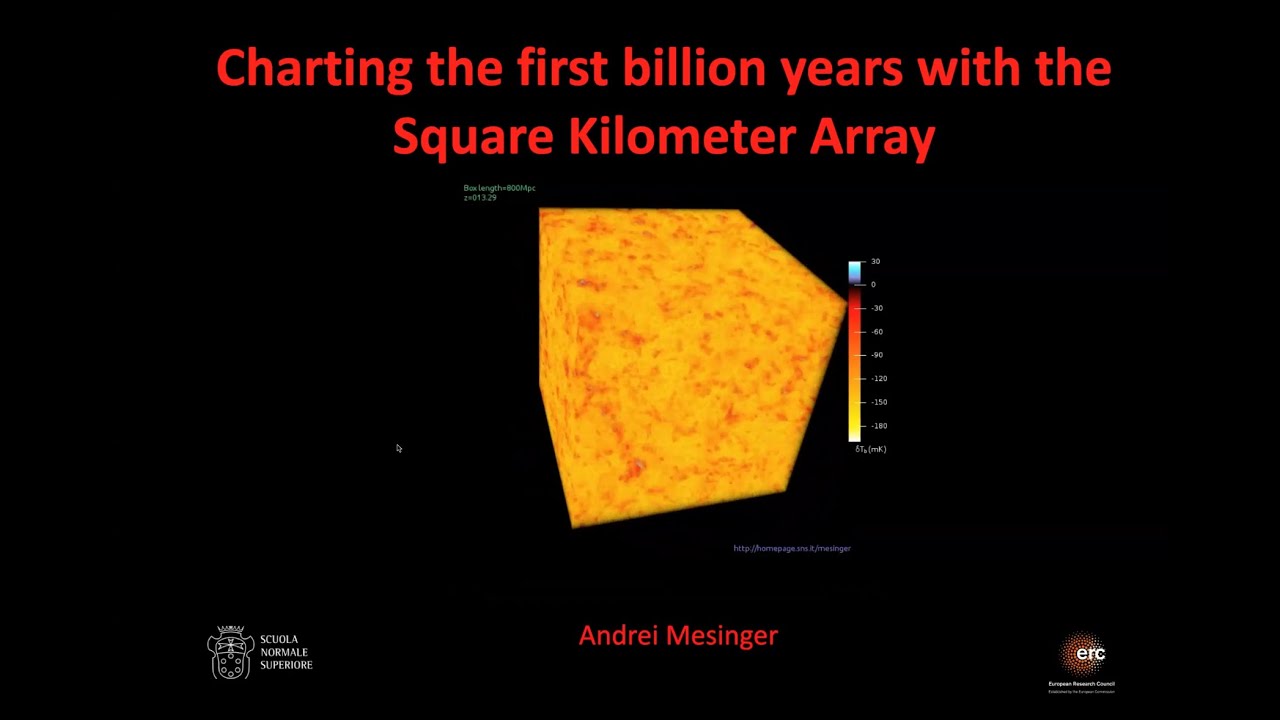
First Billion Years of the Universe with the Square Kilometre Array
@iaaudc
121 views•2022-05-26
Cosmic Dark Ages Explained: 21cm Line & Moon Telescope Research
@frasercain
26.7K views•2025-07-07
Gamma-Ray Bursts: Cosmic Snipers Explained | Astronomy
@kurzgesagt
15M views•2016-07-31
Related Study Plans & Knowledge Roadmaps
Structured learning paths in Astronomy