
























The Cosmic Microwave Background (CMB) is the oldest light in the universe, emitted approximately 380,000 years after the Big Bang when the universe cooled enough for neutral hydrogen atoms to form, allowing photons to travel freely; this relic radiation provides crucial evidence for the Big Bang theory and reveals the universe's age (~13.8 billion years), composition, and structure through tiny temperature fluctuations (anisotropies) that map the acoustic oscillations imprinted in the early plasma, with missions like COBE, WMAP, and Planck progressively refining our understanding of cosmic inflation and the universe's fundamental properties.
The Cosmic Microwave Background Explained: The Big Bang's Afterglow
Added:The Big Bang Theory: Understanding the concept of an expanding universe that originated from a hot, dense initial state.
The Electromagnetic Spectrum: Familiarity with photons, wavelengths, and specifically where microwave radiation falls on the spectrum.
Cosmological Redshift: How the expansion of space stretches the wavelength of light traveling through it over cosmic time.
The Concept of Recombination: The phase in the early universe when protons and electrons first combined to form neutral hydrogen, allowing light to travel freely.
Cosmic Inflation Theory: Exploring the rapid exponential expansion of the early universe that explains the extreme uniformity of the CMB.
The Lambda-CDM Model: Studying how CMB data is used to determine the exact composition of the universe, including dark matter and dark energy.
CMB Anisotropies: Analyzing the minute temperature fluctuations in the CMB to understand the seeds of galaxies and large-scale structures.
Primordial Gravitational Waves: Investigating B-mode polarization in the CMB to search for direct evidence of the universe's earliest fractions of a second.
800.2K views16.7Klikes27:39Original Release: 2021-09-18
you've probably seen or heard this thing before right it's static background noise received by a tv or radio's antenna when it is not tuned to a nearby broadcaster static is the result of incoming stray radio signals being picked up from different points in the sky the vast majority of these signals originate from earth from unwanted leaky ground-based radio transmitters however a small portion of this static is actually coming from space not from aliens or anything like that but from the universe itself this static which sounds something like what you're hearing right now is a microwave band low pitched humming emanating from all regions in the sky pretty much equally and if we map this noise with sensitive enough equipment then it gives us the oldest map in the universe the cosmic microwave background aka the afterglow of the big bang this map provides us a clear window into the early universe and is the most deep and complete collection of cosmic knowledge that we have it allows us to deduce large amounts of information about our universe today and provides crucial evidence for the big bang as we understand it that's where our story begins today the big bang all the way back near the beginning of time the cosmic microwave background is fundamentally linked to the big bang it is the relic radiation from the final stages of the early universe before it became the vast dark expanse that we know it as today the big bang theory holds that the universe began from a microscopic volume of unimaginable heat and density little under 14 billion years ago a volume that has been expanding ever since in reality the use of the word bang can be a little misleading it suggests that a single explosion event at time zero gave rise to the universe in actual fact it would be more reasonable to say that the universe was a giant continuous explosion up until around 380 000 years after it was born before that it was considerably smaller and its contents all the galaxies and matter in the universe today were crushed into an area millions of times smaller than the space they currently occupy temperatures sat well above 100 million kelvin so hot that light and matter could not be separated locked together in an ultra energized white hot soup which flooded all of space as the universe expanded in its early years these contents spread out and cooled particles formed inside and the white hot soup evolved into an opaque orange fog consisting of three roaming electrons and exposed hydrogen nuclei known as a plasma within this plasma the temperature was still far too hot to allow subatomic particles to latch onto one another and form atoms and instead they darted across space randomly and chaotically coming together and breaking up localized interactions were occurring within the plasma as the gravitational pulling force of its matter tussled with the outward radiation pressure of its light the colliding and dispersing of concentrations of matter generated acoustic sound waves which flowed outwards tracing oscillatory patterns within the plasma contents which added a degree of randomness to its near uniformity and then at around 379 000 years after the universe was born it expanded to around 1 1100 of its current size its interior temperature fell to around 3000 kelvin suddenly it was no longer hot enough to maintain the universe's plasma state and so instead of zipping around free roaming electrons began latching onto exposed atomic nuclei and could remain stable the plasma was harvested all over the universe in an event known as the epoch of recombination a process which created the universe's first neutral hydrogen atoms unlike within an ionized plasma photons of light are barely affected by hitting neutral hydrogen and so light could now travel freely and indefinitely around the universe mata and light decoupled from each other as photons were no longer being absorbed and the universe went from resembling an opaque orange fog to a transparent black void through which light could stream [Music] during this transition event the final acoustic wave patterns traced into the plasma by the baryonic acoustic oscillations were forever frozen into the arrangement of the universe's contents atoms formed along the framework laid by the oscillatory patterns creating denser areas where mata was in the process of coming together and sparser areas in which mata had been cleared out the final photons emitted by the energized plasma in its dying breaths then scattered off of this arrangement one last time before becoming free to shoot around the universe forever more that's what the cmb is the final photons of light emitted from when this plasma turned to atoms marking the end of the big bang therefore the cmb is the oldest light in the universe that we are able to see or detect but these aren't photons of visible light anymore the universe has been expanding for almost 14 billion years ever since and all the while its growth has been stretching out waves of travelling light in space reducing their photon energy and shifting them through the electromagnetic spectrum today the cmb's photon energy has been reduced by an average factor of 1090 before long these photons were redshifted out of the optical spectrum and into the infrared spectrum and then into the microwave spectrum where we can now detect them as this faint humming between the airwaves thus if we map this ancient cold light precisely enough we can analyze the universe as it was during the moment of recombination only 379 thousand years after the birth of the universe the furthest back in time it is possible to look this is why the cmb is commonly referred to as the afterglow of the big bang it is relic radiation from the final seconds of the universe's fiery initiation and it yields an incredible wealth of information about the properties of our universe both then and now there are still many unknowns and we are always striving for greater accuracy but if nothing else the cmb's existence effectively proves two things the first is that the universe is around 13.8 billion years old and the second is that it was much smaller and hotter early in its life two major postulations of the lambda cold dark matter model of cosmology the standard model for astronomers and the theory you're most likely to find in the textbooks this afterglow has been present in the sky for as long as humanity has existed but we didn't discover it until the 1960s when the advent of radio astronomy first allowed us to pick it up on the 20th of may 1964 american astronomers robert wilson and arno penzias of bell telephone laboratories were attempting to use the holmdelhorn antenna in new jersey to search for sources of static so that they could improve the quality of telecommunications what they found was that no matter where they tuned to their antenna there was always a consistent excess temperature which could not be accounted for in the words of pensiast himself it wasn't until they had exhausted every other possible explanation for the sound's origin that they realized they had stumbled across something big and something big indeed it was arguably one of the most important and iconic scientific discoveries of all time initially radio technology wasn't sensitive enough to detect any variations in this microwave humming this is because the cmb has a nearly uniform average temperature of 2.725 kelvin with variations of only one part per hundred thousand or less and so when we started surveying the microwave sky it seemed to be completely uniform but we've spent over 60 years and more than a billion dollars refining and improving our mapping technology revealing tiny temperature fluctuations on scales of a matter of micro kelvin known as anisotropies the cmb's anisotropes are its tiny treasure chests containing some of the most important information about the universe ever discovered the first and largest anisotropy we found was a temperature change of around north point naught naught eight kelvin on this scale the microwave sky appears to resemble a yin yang symbol however this is not a result of the big bang but rather a result of the sun and the milky way galaxy moving through space towards a series of galaxy clusters known as the great attractor this creates a temperature gradient in the microwave sky from one side to the other known as the dipole anisotropy once we'd smoothed that out and accounted for the dipole we had to get down to scales of around 30 times more precise before we were able to see any real differences nasa's first big breakthrough contribution to this quest was the cosmic background explorer also known as kobe it's launched in 1989 and collected data up until 1996.
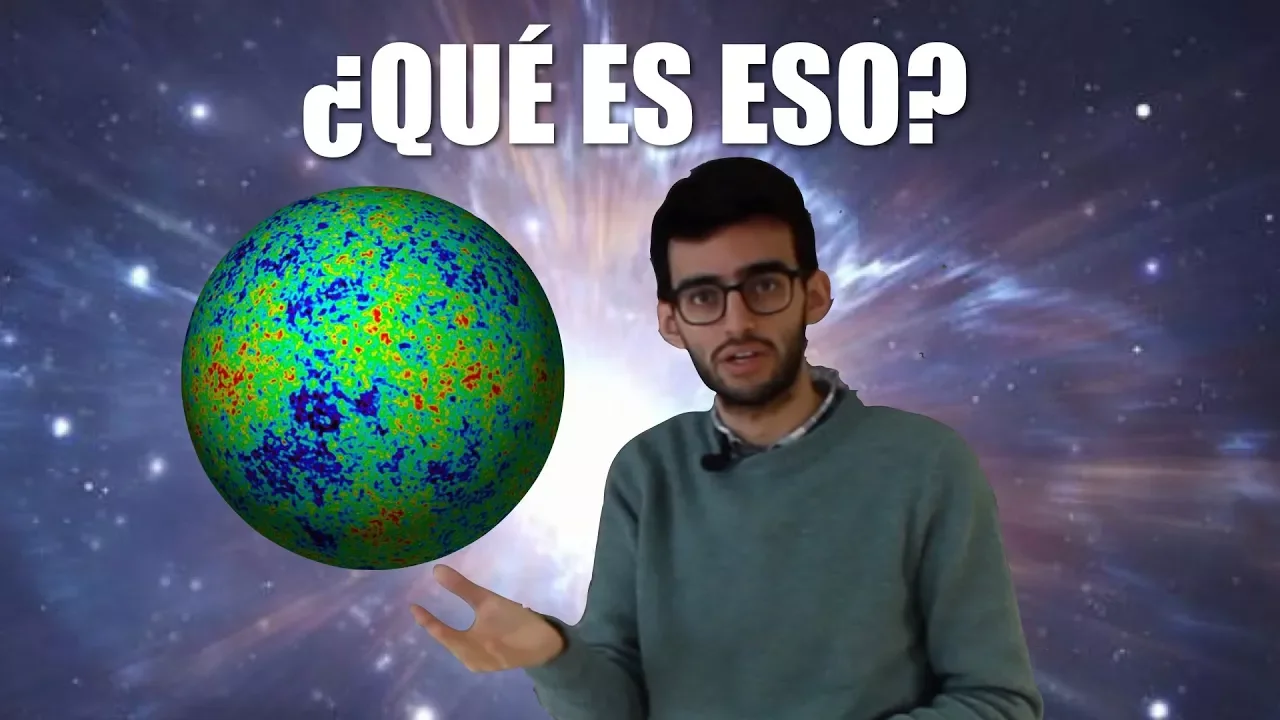
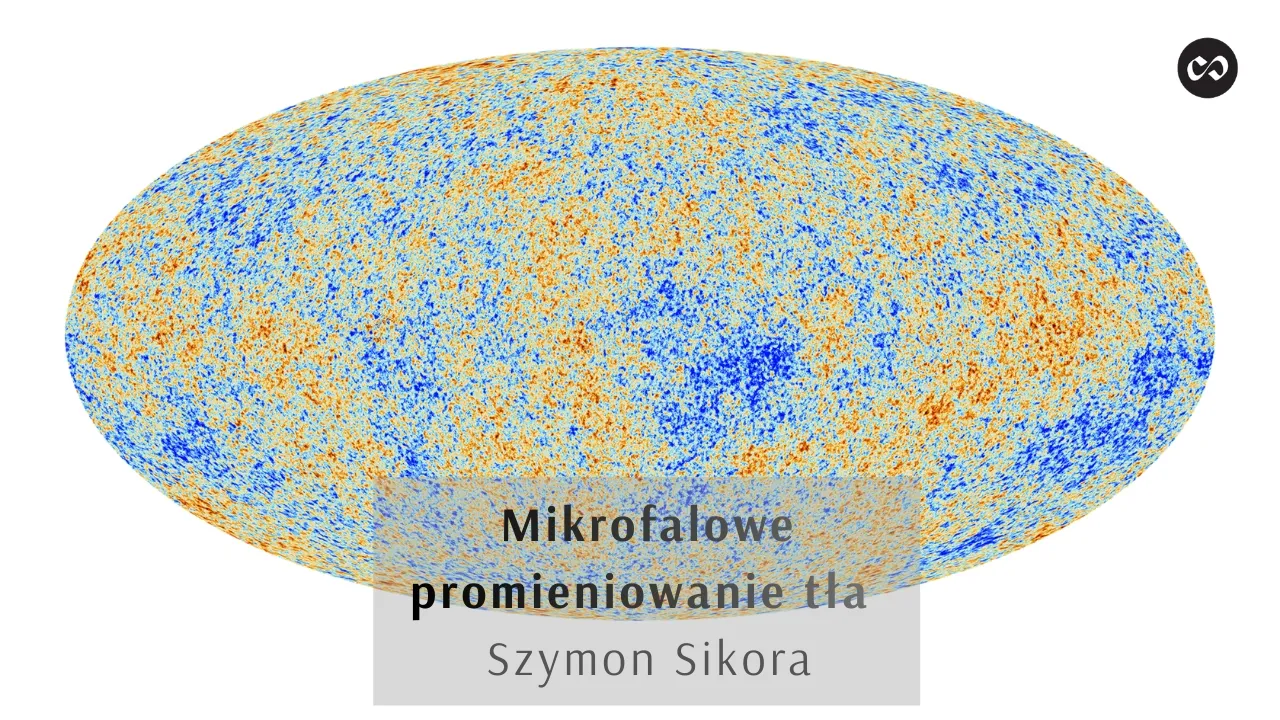
it's built upon work from previous ground and balloon-based experiments to study the cmb and gave us our first full-sky map of the microwave background it is said that kobe was the start of cosmology as a precision science it wasn't nearly as sensitive or accurate as the equipment we have surveyed the cmb with since but it nonetheless mapped large-scale anisotropies and gave us our first complete view of the whole universe at once in the early 2000s nasa launched the wilkinson microwave anisotropy probe also known as wmap it launched in late june 2001 and ran up until 2010 surveying the background radiation from more than one and a half million kilometers away from the earth it gave us considerably more accurate and detailed measurements of the anisotropies and revealed heaps of new information about the age size and structure of the universe it revealed that the universe was about 13.7 billion years old but that stars may have begun forming as early as 200 million years after the big bang far earlier than anyone had predicted and then while the wmap satellite was still active in 2009 the european space agency launched the planck satellite by far the most sensitive and sophisticated mission to date it was deactivated only four years after its launch but this 700 million dollar spacecraft nonetheless gave us our most precise deep and complete look at the afterglow of the big bang and it remains our most comprehensive snapshot of the early universe to date the planck satellite gave us our most accurate measurements of the universe's age its ratios of baryonic and dark matter and its rate of expansion it recorded anisotropis on a scale three times more sensitive than w map and surveyed nine frequency bands in comparison to wmap's five enabling a much clearer and more concise view of the universe's anisotropics so what exactly do these anisotropists tell us well there are two main types of fluctuation primary anisotropies which are a direct result of the baryonic acoustic oscillation patterns frozen into the universe's plasma when it turned to atoms and secondary anisotropis which are a result of stuff in the way of the cmb photons as they have traveled towards earth like galaxies and voids therefore this provides a great way for us to get a sense of the universe's large-scale contents where we see red warmer areas we are looking at galaxies and galaxy clusters whereas the cooler blue areas correlate to voids and supervoids the colours on the map do not represent absolute temperatures rather they show the level of deviation from the cmb's average temperature of 2.725 kelvin but as we mentioned these deviations are on tiny scales of a few micro kelvin extremely marginal when compared with its absolute temperature in a broad sense the cmb shows us that the universe is smooth isotropic and randomly distributed across its entire expanse there are variations in gaps in space which are significant when compared with us but when viewed on a wide enough scale such as the cmb these variations iron out to show a strikingly smooth cosmos with its contents spread in a manner analogous to a homogenous hot gas this informs and affirms one of our most fundamental yet controversial assumptions about the very early universe the idea of cosmic inflation in order for the universe to be so well distributed even to this day it must have been scaled up in size incredibly quickly and radically from its primordial state the inflationary theory states that one of the earliest things to happen after the universe was born was an expansion event which appears to have violated all known speeds and laws in the universe today space was scaled up from nanometers to light years all in less than a microsecond when this happened the tiny irregularities and deviations in the very early universe's ultra-compressed contents were smoothed out the only fluctuations that remained were caused by small quantum ripples in the inflation energy field which gave rise to the minor variations that we see today this theory has its fair share of skeptics to be sure and perhaps with good reason but the remarkable uniformity of the cnb shows us that inflation fits the facts as well as any other alternative explanation if the universe had grown any slower or in any other way then gravity would have had more than enough time to distort the uniform structure of matter no other theory can explain the cnb's origins and properties so precisely and thus its existence lends a lot of credence to the big bang theory cosmic inflation and the lambda cold dark matter model overall so that's the story of the cosmic microwave background and of our universe and like with any great discovery in cosmology there exist anomalies and unanswered questions within the cmb which we still can't account for specifically anomalously warm and cold areas of the radiation which seem unnatural when compared with the near uniformity of the microwave sky let's start with the latter an unusually large and cold anisotropy in the southern galactic hemisphere aptly known as the cold spot the cold spot is an area of the cmb where the temperature drops very sharply when compared with other anisotropis implying that there is something more at work than simply a less dense region of space this anomaly was first noted by the wmap satellite before being unexpectedly detected again by the planck satellite effectively ruling out the possibility of it being a data processing error whatever the cold spot is this thing actually exists somewhere out there in the darkness the anomaly is located predominantly within the constellation of aridness and has a width in the night sky of more than 20 times the diameter of the earth's moon correlating to a cold empty patch of space hundreds of millions or perhaps even billions of light years wide making it one of the largest things in the known universe it is several times larger than the average size of cold anisotropis and while average temperature fluctuations within the cmb are around 18 micro kelvin the cold spot dips by an average of 70 micro kelvin and in some places it drops by more than 140 micro kelvin voids and supervoids can usually explain such large cold areas because voids have a diminishing effect on the energy of the photons traveling through them including the cmb photons but even the light sapping effect of a void of this enormous unlikely size would not be sufficient to account for the sharp drop in temperature that we're seeing in fact some scientists argue that big bang cosmology and the idea of a smooth isotropic cosmos cannot account for such a large anomaly period if the universe really is nearly homogeneous by the grace of cosmic inflation then such a universe should not be able to naturally give rise to such a large empty and cold supervoid and so naturally the inexplicable nature of the cold spot has led to wilder more eyebrow-raising theories perhaps among the most interesting of them is that the cold spot is what's known as a cosmic texture a damaged or defective area of the universe analogous to a crack within an ice sheet no known physical mechanism could allow for such a defect in space and thus cosmic textures are hypothetical at best but some have taken this a step further claiming that the source is extra universal some propose that the cold spot is a bruise from where our universe bumped into another bubble universe while others proposed that the cold spot is an imprint from where our universe became quantumly entangled with a perfect parallel when it sprung into existence before the two were separated by cosmic inflation but those are admittedly some pretty outlandish and at the moment unevidenced hypotheses while it is an intriguing mystery and a spooky coincidence the cold spot is more than likely going to be due to some kind of improbably large void perhaps with the help of a few data processing artifacts or something in the way to enhance the effect or cams razer and all that but don't get too disappointed because the cold spot is not the only anomaly on the cmb which might imply some kind of alternate reality and in contrast to the cold spot these anomalies constitute significantly warmer than average regions as opposed to cold ones i'm talking about hawking points powerful spherical sources of energy within the cmb around eight times the diameter of the full moon within these spots the temperature fluctuates sharply upwards by more than 30 times the mean temperature increase for warm anisotropies suggesting that they are sources of high amounts of photon energy these points went undetected for the longest time it was assumed that any anomaly like this would be an artifact of data processing as cosmic inflation wouldn't allow for such irregularities but after being noticed on the planck satellite data these points were then confirmed within the wmap data as well analysis has since revealed no less than 30 of these points within the cmb and some scientists in particular oxford mathematician roger penrose believe that these points are in fact echoes from a previous iteration of our universe to understand why one must consider an alternative twist on the big bang theory namely the paradigm of conformal cyclic cosmology which proposes that our universe is just one in a number of so-called aeons or cycles of our universe being born expanding and then collapsing down into a new big bang to be born again with the process repeating at infinitum not a parallel universe like what's being suggested with the cold spot but rather an oscillatory universe which expands up and then squashes down repeatedly one of the major selling points of conformal cyclic cosmology is that it offers a slightly more explainable hypothesis for cosmic inflation moving it to before the big bang of our universe the theory suggests that what we perceive as cosmic inflation in the nanoseconds after the big bang was actually the very remote far future of the previous universe which was so old and vast and expanding so rapidly that it mimicked the behavior of what we believe happened during the inflationary epoch of our universe so where does the cmb come into all of this well conformal cyclic cosmology proposes that during the previous universe's rescaling event when it is squashed back into a new big bang the only thing that will exist by then are black holes which will have had more than enough time in their remote futures to consume their entire galaxy groups and each other leading to a few unfathomably massive black holes dotted around the enormous universe but this exponential expansion in the previous universe's future occurs at near timelike infinity long after even the largest black holes will have evaporated into hawking radiation the hawking radiation is what will then be squashed back into the new big bang but rather than being blended in with the new universe's contents this energy is retained as a single point which persists into the new iteration it is only during the new universe's epoch of recombination when its cnb is created that this photon energy is freed and if all this is true then by now any such point in the preceding universe should be about three or four degrees of the sky across around eight times the diameter of the full moon and sure enough this is what has been seen in the cmb data and proposed by penrose et al as evidence of an oscillatory universe pretty spooky right there are no less than 30 of these points lurking within the cnb map the question is are they really the evaporated ghosts of 30 massive monster black holes from a previous universe not everybody thinks so follow-up studies have suggested that the findings for hawking points are not as statistically significant as they were first thought to be in summary the jury is still out on the nature of hawking points as it is for the nature of the cold spot these two classes of anomaly on the cmb may not indicate new universes and may instead be illusions caused by data processing artifacts or chance alignments but even if the cnb doesn't contain any information about other universes it still contains almost an unknowable amount of information about ours from its earliest years to its present day contents to where it's headed the cmb has been cooling down ever since it was first created and it will continue to cool until it eventually becomes so faint that it is superseded by the radiation from other stars and it will never be detectable again but if what we've discussed about cyclic cosmology is anything to go by then that will by no means be the end so you
Up Next
17:32
Baryon Acoustic Oscillations: Cosmic Sound Echoes Explained
@pbsspacetime
724.2K views•2019-02-07
61:17
First Billion Years of the Universe with the Square Kilometre Array
@iaaudc
121 views•2022-05-26

6:25
Kepler's Laws of Planetary Motion Explained (Educational Astronomy Video)
@Peekaboo_Kidz
404.9K views•2023-02-17
6:10
Gamma-Ray Bursts: Cosmic Snipers Explained | Astronomy
@kurzgesagt
15M views•2016-07-31
Related Study Plans & Knowledge Roadmaps
Structured learning paths in Astronomy
astronomy
Reionization: Pop III Stars, IGM & 21cm Line
01Foundations of Cosmology & the Early Universe
02Population III Stars & Cosmic Dawn
03Physical Mechanisms of Reionization
+ 2 more learning modules
17h5 modules
Explore Roadmap
astronomy
Planetary Rings: Dynamics, Roche & Resonances
01Foundations of Gravity and Orbital Mechanics
02Tidal Forces and the Roche Limit
03Structure, Composition, and Collisions
+ 2 more learning modules
10h5 modules
Explore Roadmap
astronomy
Asteroseismology: Stellar Waves, Ages & Cores
01Foundations of Stellar Astrophysics & Wave Mechanics
02Stellar Oscillation Modes: P-modes and G-modes
03Mathematical Framework of Asteroseismology
+ 2 more learning modules
35h5 modules
Explore Roadmap
astronomy
Adaptive Optics: Physics, Engineering & Control
01Foundations of Wave Optics and Wavefronts
02Atmospheric Turbulence & Optical Distortion
03Wavefront Sensing Technologies
+ 3 more learning modules
35h6 modules
Explore Roadmap