



















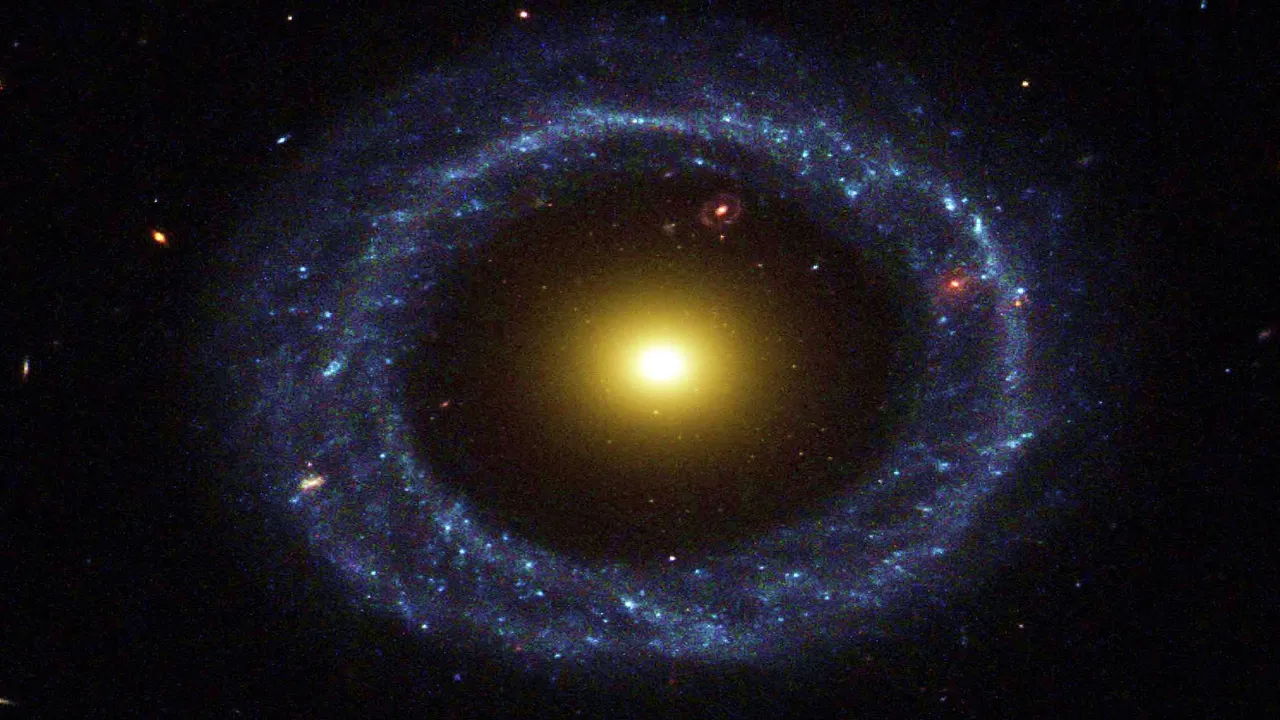


Modern cosmology has become a data-rich field where we can describe the universe's evolution using just six parameters (the Lambda-CDM model), yet we lack fundamental understanding of dark matter, dark energy, and the cosmological constant problem, which remains a major theoretical challenge despite decades of research.
Cosmology's Big Questions: Dark Matter, Dark Energy & the Multiverse
Added:The Big Bang Theory and the metric expansion of space, which lay the physical groundwork for modern observational cosmology.
Einstein's General Theory of Relativity, specifically how mass-energy curves spacetime and governs the gravitational behavior of the universe.
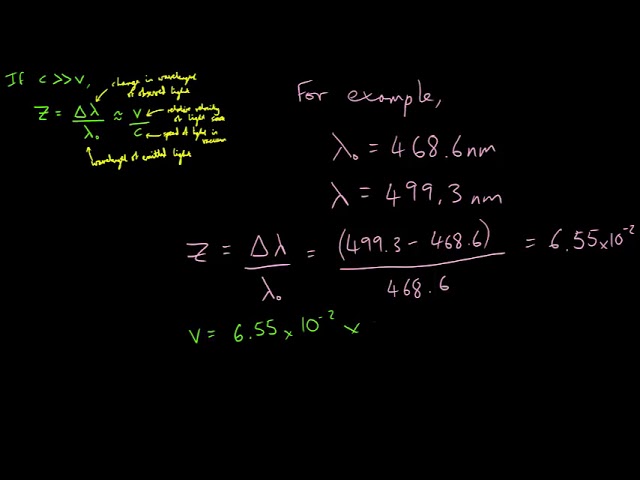
The concept of redshift and how astronomers use the Doppler effect to measure the recessional velocity of distant galaxies.
An introductory understanding of the Cosmic Microwave Background (CMB) radiation as the relic radiation from the early universe.
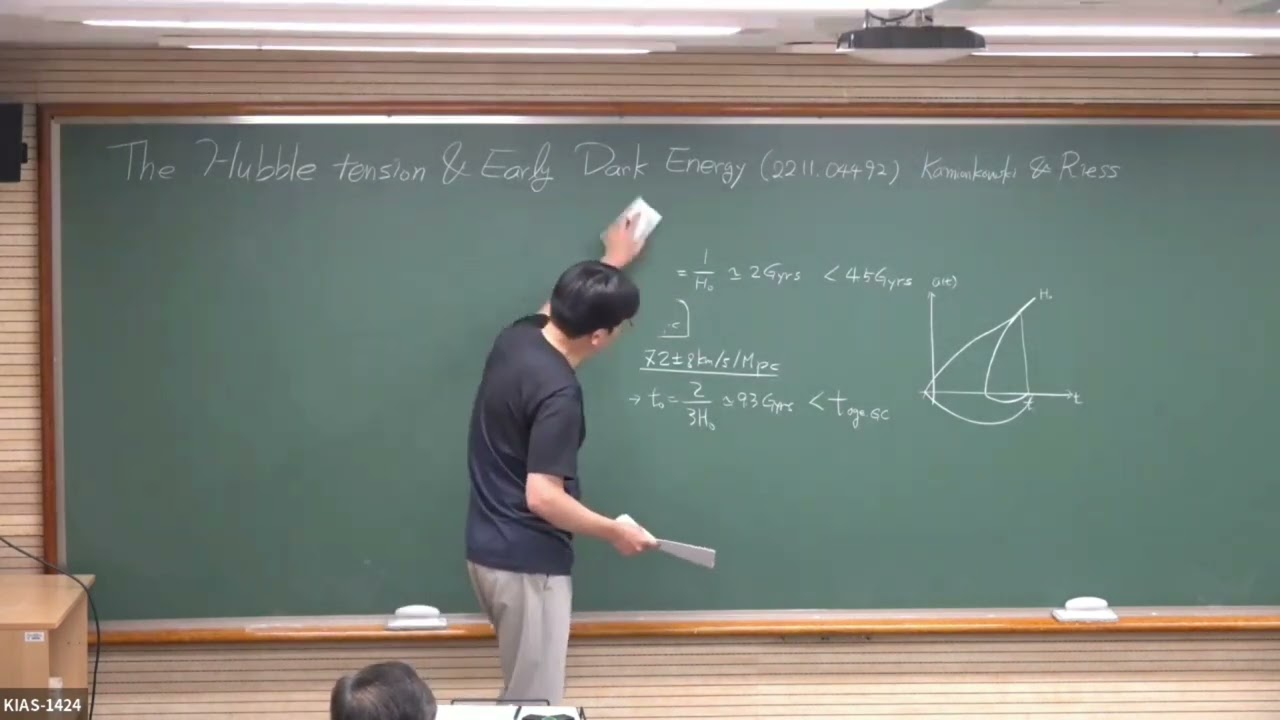
A deep dive into the 'Hubble Tension', exploring the mathematical discrepancies between early-universe and late-universe measurements of the Hubble constant.
The theoretical framework of Cosmic Inflation and how quantum fluctuations in the inflationary epoch could lead to chaotic inflation and the multiverse.
Current experimental methods for dark matter detection, including underground direct-detection experiments (like LUX-ZEPLIN) and particle accelerator searches.
Advanced models of Dark Energy, comparing Einstein's Cosmological Constant with dynamic scalar field models like Quintessence.
57.3K views1.1Klikes1:33:42Original Release: 2025-05-16
[Music] Hey everyone, thanks for joining us.
Today's conversation will be in one of our favorite areas, cosmology. talking about, you know, some of the great achievements, some of the remaining mysteries, probably dark matter, dark energy, things of that sort will be part of the material we'll cover. And I'm so thrilled that we have really one of the great young leaders of the field. That's Herana Pius, who is the 1909 professor of astrophysics at the University of Cambridge. And I'm I think I'm correct in saying that she is the first woman to hold this chair in 115 years which is which is absolutely wonderful and she holds this chair because of the great contributions that she has made and is continuing to make to cosmology. So Herana welcome to our conversation.
Thanks so much for joining us. Thank you so much Brian. It's really wonderful to see you again and I'm really thrilled to talk to you. Absolutely. You know, and I was thinking as I was walking over here this morning and I could be wrong and correct me if I'm wrong, of course, but could it be that the last time we had a conversation was at the University of California, Santa Barbara in like 2003 or something like that? I I think that's right. I think that it was the postw conference at the KITP which was a very exciting time. Yeah. So, so perhaps I'll just jump in with the following question given that that is the last conversation we've had. So, when you go back 20 years to your younger self and you think about where you imagine cosmology might be 20 years later or 22 years later in the year 2025, how have we done?
I think that we have done extremely well on the perspective of actually probing the universe with data and uh I think it's exceeded my expectations in terms of the different epochs in the history of the universe from which we have observations and we have pieced together a story of the universe that spans nearly 14 billion years of of co cosmic time. What has disappointed me however is that uh we have discovered all of these mysterious components of the universe and we are no closer I think from 20 years ago in understanding how this information from the very largest scales we can observe actually connect to the physics that we can describe uh at the very smallest scales the microfysical picture. So that juxtaposition is very interesting to me and uh so cosmology is at a very strange time right now where we're drowning in data and we can't explain it in terms of fundamental physics very well. Now, just to give the audience a sense, the fact that you can say those words drowning in data when we're talking about cosmology, this is not in any way, shape, or form the way the history of the subject always has been, right? I mean, in the earlier days, you would have probably said something radically different from that, right? Absolutely.
If we go back 40 years or even 30 years, we would have said completely the opposite thing. There were many many theories and very very little data to constrain them. So it was a playground for theorists. Uh people had fabulous ideas about what the origin and the composition of the universe could be.
Many of those theories have actually been ruled out by the data that we have now. Um so it's gone from a very speculative field to being a very datarich field. And uh as we have narrowed down the theories that could fit the datab uh we are left uh with uh just a handful of possibilities from the ideas that were around even when I was a PhD student. And so would you say when you assess the field and then we'll turn to getting into some of the details of the mysteries and your own work and so forth, but when you assess the field as a whole, would you say that the theorists have yet to be sufficiently creative to come up with the right ideas? I mean, the fact that we have a few remaining ideas, is that because we're so good and so smart and we've been able to cull the rich class of possibilities all the way down or have we just not been creative enough to put forward perhaps the the ideas that would take us to the next level of understanding. Uh I don't think it is a challenge in creativity in the sense that there were very very creative proposals put forward. Uh however when we measure the few numbers that we can actually get from the sky uh that constrain these theories what's left um is a sort of vanilla version of the original very creative uh highly elaborate proposals in the sense that um the numbers we have don't really point to a microfysical fundamental understanding that we can look at and say that's the answer. So it's definitely not a challenge in in creativity. It's just that the universe happens to fit a phenomenological picture which reveal huge puzzles in fundamental physics and we don't have any smoking gun to point us towards a particular theory direction to go in. So when you say a phenomenological picture and I think that is how I would describe our current state of understanding as well but maybe just for the audience what what does that mean to you? Yeah.
So what it means to me is that so we have rich data sets that we fit uh with uh a model that's phenomenological that's constructed under the assumption essentially that general relativity is correct uh and that leads to solutions for the um expansion of the universe over time and how structure grows within it. And so there are ingredients that go into uh the prediction for the data that comes from postulating such a model. And uh the ingredients that we we have found to fit uh the data includes you know dark matter um and dark energy. Uh dark matter at least there are many theoretical proposals that are plausible. Dark energy is a word we give to a phenomenon that we just don't understand which is leading the expansion of the universe to accelerate over time and also there has to be a primordial origin for all of the structure we see in the universe. Uh our description of that is at the level of a toy model. uh I think that we have seen some very non-trivial observations that narrow down the field as I said before but these three different ingredients they're like you know three tooth fairies when you're maybe allowed one to be part of a model and and so that's what I call phenomenological we can describe uh how these ingredients affect the observables that we measure but there's no actual fundamental microfysical understanding of what those phenomenological components mean. Now, oftentimes cosmologists speak of parameterizing the data using six numbers, right? So, you've named a few of the parameters that go in. The others are a little bit technical, but perhaps you can just give a a nodding reference to what the other parameters are. Okay.
So, uh rather than listing the parameters, we could just talk about, you know, what um constitutes the cosmological model. So first you need to um postulate um some form of the primordial fluctuations. So that's an amplitude and that is a scale dependence like at each wavelength how much power you have. So those are two numbers and then we have to describe the geometry of the universe. Um and the geometry could be flat or open or closed spatially and once we fix it to be flat which is observationally motivated as well. So we we have tested that assumption that essentially uh gives a class of cosmological models that you can go on to look at the ingredients of and then that set of ingredients are barons which is all of the stuff that we see around us in the universe. um everything that interacts with light, the physics we test in the laboratory in the large hydrron collider, all of that is barons to astronomers, that's only 5% of the energy budget of the universe. Uh the rest of it, the 95% is dark matter and dark energy, mostly dark energy, but dark matter outweighs ordinary matter by a factor of 5 to one. And so that is a very confusing picture. And on top of that we can also measure when the first stars formed. So that kind of completes the set of six numbers that that uh we talk about. And I mean how remarkable is it that effectively all observations you know broadly defined can be at least described in this phenomenological model that you made reference to using just six dials. you know, six dials, you turn them and you're able to in some sense understand the observations. Is that is that shocking? Is that remarkable? I think it's truly remarkable because uh originally at least this this set of six numbers came from uh looking at the cosmic microwave background which is the earliest most ancient light that we can see in the universe. So um when when we fit to the the cosmic microwave background, it's not just that we have these six dials, we can actually postulate many other dials that you know suggest many different deviations from this six parameter model and we can test those also and we find that those other dials are not necessary more or less and then we can do a consistency check. We can push this model forward in time from the very earliest times to now and we can make predictions for how the universe would evolve under the assumption of those six dials. And every time we've done that consistency check uh it passes at at quite remarkable levels. There are inconsistencies that I'm sure that you will bring up later but those are at quite small levels compared to the whole qualitative picture which seems to make sense and hold together. Uh so that's why we take this phenomenological picture seriously enough to then start to talk about what is the fundamental physics that we don't understand yet. Right. Now, you also made reference to the this the underlying model which you know most cosmologists I think today still focus on the inflationary theory as sort of the dominant paradigm. You called it a toy model. Yeah. And um you know I I wonder do you think that some of the founders of the theory would like take offense at that or do they agree would they agree that it's sort of in a in a rudimentary early stage as opposed to a mature final cosmological description of the universe? I definitely think they would agree. Um maybe the word toy is not what they would use but they probably would agree that it is not the final answer that explains everything. Uh inflation postulates physics uh at a much much higher energy scale than what we can test in the laboratory.
It is an extrapolation of fundamental physics uh or order many many orders of magnitude. So uh I I think you know it would uh take a very brave person to say we know everything about the physics that takes place at such high energy scales. However, I think inflation even as a toy model as as a paradigm has made very non-trivial predictions that have been observationally confirmed. The the favorite one that I have which which makes me as a more observation inclined person to take inflation seriously is that it predicted super horizon fluctuations.
And when we measured the correlation at very large angular scales between the temperature and the polarization of the uh cosmic microwave background in WM all the way back in uh 2003, we saw direct evidence for super horizon fluctuations.
this at a fel swoop uh ruled out a lot of um theories for the causal origin of uh you know cosmic structure and so you know for me that is a really non-trivial uh piece of information that we now have about primordial physics and and again just for the audience maybe just super horizon may not be a familiar term for everybody maybe just give us a quick sense of what that means. Sure. So um when when we take the size of the observable universe and we push it further back in time, I said earlier it's been expanding over time. So at earlier times that observable region was smaller and smaller and smaller, right?
So um if you look at the the cosmic microwave background, it comes from a time when the universe was only about 380,000 years old. Now it's 13.7 billion years old. So this is like a baby picture of the universe. And if you look at the universe at that time in the cosmic microwave background light, we see very tiny variations in the temperature of the background which correspond to very tiny deviations uh in the density of the universe at that time from place to place uh at about one part in a 100,000.
So if you look at the universe today at very evolved uh times you know you can see the universe is very inhomogeneous.
We are sitting on a planet that's extremely dense out there in space. Uh the number of hydrogen atoms in very large volumes will be very tiny. It's very inhomogeneous in the vacuum of space compared to to us. Right? So why was this uh early universe so uniform?
Um that requires an explanation and uh one possible explanation of that uniformity could be a causal explanation. There's uh some physics that can communicate just at the speed of light and make everything in that observable volume back then the same from different places.
uh however uh inflation postulates that actually it's an aorausal mechanism that uh created that structure. In other words, the early universe expanded much much faster than the speed of light.
This often uh strikes confusion when when you talk to to uh people who haven't studied general relativity uh because you know we've all learned that light has a speed limit and it is the ultimate speed limit and you can't communicate faster than light and that is absolutely right but spacetime can actually expand faster than light. So uh by super horizon it it basically means that uh the horizon that uh uh inflation creates will be much larger than the one that you would naively expect under this causal picture where everything just operates at the speed of light. And just for clarity even though you use the word aausal it's still causal. It's just that inflation makes it appear as though it would be a causal because the absolutely places are so far apart that using naive speed of light calculations they would be beyond each other's cosmic horizon the distance that like could travel since the time of the that's a perfect way of putting it. So, so, so that's great evidence as you note in in favor of the in favor I should say of the inflationary picture, but as you also mentioned there, you know, it it's more just a paradigm as opposed to the final proposal for how things are constructed in our universe. And so I thought it'd be good now to dig in a little bit more deeply, especially on issues that you've spent some time thinking about like dark matter. So, you know, I think most in our audience are are certainly familiar with the the notion of dark matter that it was introduced all the way back in the 1930s. people like Fritz Zwicki and then Vera Rubin, you know, from the motion of galaxies and stars and galaxies inferring that there had to be more stuff than light revealed otherwise stars should be being flung outwards from rapidly rotating galaxies and so forth. So given Matt's background, where would you say we are in our level of confidence that dark matter is real and not just a a dial in a cosmological toy model that we use to model data?
Absolutely. So um from a phenomenological point of view uh in terms of probing its gravitational interactions uh I think that dark matter is very real and we have evidence for it. You mentioned a a few uh uh of those for example galactic rotation curves. So this is dynamical evidence for dark matter. If you look at um clusters of galaxies, we can directly see the effect of lensing um the dark matter in clusters of galaxies. Gravitationally lenses distant galaxies in the background and we can see exactly what we expect from the presence of dark matter. There is the so-called bullet cluster uh which which also shows that uh where we see gravitational lensing is not where we see ordinary matter. Uh so it's not like some kind of weird ordinary matter uh that is uh that we don't know about that is causing that lensing effect. We can see it in the weak gravitational lensing um of of galaxies and uh we can definitely see it in a more phenomenological sense but in a very real sense in how we describe the cosmic microwave background power spectrum uh where if we didn't have dark matter our prediction for that would be extremely different. Um so observationally it seems very very solid to me that there is a type of matter that we can't see. The alternative could be that actually I said right at the start that we have general general relativity underlying our cosmological model as an assumption and uh maybe you know general relativity isn't right and uh there's some different theory of gravity that uh somehow naturally predicts the existence of some other phenomenon which we would uh wrongly interpret as dark matter. So uh many physicists have been pursuing those ideas and uh I think that many of these observations that are very naturally explained by the presence of a type of matter that we can't see through normal electromagnetic interactions.
uh you know that idea is is a much more natural explanation uh for um our observations than these other theories where you have to literally like uh turn upside down and dance a jig in order to try to even explain part of that uh you know set of observations. So it seems to me that uh this phenomenon is not going to go away. we just need to explain it, you know, in terms of fundamental physics and I personally think it's a particle. And has there can you imagine any upcoming observation or experiment that would cause you to change your mind on dark matter?
Um, probably not. Yes. if you can um come up with some experiment that can exclude um both the wimp hypothesis and the axion hypothesis like completely perhaps you know I would start to wonder uh but currently we feel we are in the middle of an investigation to these very compelling classes of uh dark matter candidate particles And uh I'm personally on one side of um that investigation. I'm very much interested in studying the axion hypothesis and trying to constrain that both with cosmological data but also in the laboratory. Um and you know many large collaborations of physicists are going after the wimp hypothesis. So yeah, if if both of these ideas are shown to fail, I think it is uh very motivated then to to start to um think twice about uh what what we could be seeing. But um currently I I don't foresee an experiment that would um make me change my mind on this. So let's let's jump into those two classes. You know, my very first paper as a graduate student was uh a dark matter candidate, which falls into the WIMP category, weekly interacting massive particles for people who don't know the acronyms. Let's let's start there. And and I can tell you what impresses me the most, and I think many people share this view, but I wonder if it's also what compelled you to at least take it seriously.
The idea of the dark matter being one of these weakly interactive massive particles, the WIMP idea did not emerge as a solution to the dark matter problem. It emerged to a whole different problem in particle physics that we could spend a little time talking about called the hierarchy problem. But you try to solve one problem in particle physics and you do so by introducing various kinds of symmetries which yield this kind of weakly interacting massive particle. And then as a byproduct of solving that problem in particle physics, you seem to solve the dark matter problem. That to me made it almost seem like this has to be this has to be true, right? It almost is too beautiful to be wrong. I mean is that I mean a generation behind me was that your experience learning about this as well? Absolutely. I I think this is also true for the axion set of ideas as well.
Um I really uh find it very compelling for both wimps and axons that they were not invented like as a just so model to fit a hole in cosmology. they instead arose from completely different and fundamental considerations in particle physics and the hierarchy problem on one hand, the the strong CP problem on the other. And so you know you try to follow uh fundamental considerations to try to explain a phenomenon in particle physics and then out of that a particle arises naturally and uh at least in the early days for the wimp case naturally explains the abundance of the uh the dark matter in the universe. Um I think that that scenario has actually possibly gone away now for whims. Um uh however you know those motivations which are not like let's invent a particle to fix a problem in cosmology. Um that that's why I really highlighted those two categories. There are also many candidates for dark matter that seem to be uh motivated just by oh here's a new idea for dark matter. And I find those kinds of approaches to try to explain dark matter to be uh less motivated because you don't want to invent something to fit a hole. You want to think things through uh from a fundamental perspective and and see whether the overall picture about our understanding of particle physics and cosmology hangs together. And in the case of these two candidates, it really does. Yeah. And so I'll go to axons in just a moment because I know that you are working on that directly. But just to give our viewers a sense, people have been looking through experiments, observations for these wimp dark matter candidates for I don't know how many years, but a lot of years, right? It's probably 40 years or so, something on the order of that. Yes, there have been hints now and then. None of them seem to have really uh become consensus. I think the general view is that we certainly have not found the wimp dark matter. So at what point do you do you say h it was a greatlook idea on paper but it's just not something that nature seems to have made use of. Yeah. I I think that we will get to a a floor that is set by experimental considerations after the next set of WIMP experiments and um that is probably when we should call it a day with the WIMPs. Um but I think there's still some discovery space left and so uh I personally believe we should actually completely test the hypothesis. The fact that somebody didn't find something for 40 years in fundamental physics, I don't think really matters as as much as here is a theoretical idea that's very well motivated. We need to exclude it completely uh to say that that it's dead. Um I mean just taking a a completely different experimental scenario. Um people were measuring noise in gravitational wave observatories for 40 years before they found them. Uh we are pitting our wits against the entire universe. It's a very audacious undertaking like you don't expect to make discoveries like this and that. Um however what I think is true and I I don't know if you agree with me is that the original uh part of the parameter space of the WIMP hypothesis which would have naturally explained both the hierarchy problem and predicted the uh the the the uh observed abundance of dark matter that's already been excluded. So from that perspective it no longer quite you know solve the problem and you know gives you the the dark matter at the same time. So uh from my perspective that that's why I personally don't work so much on on that hypothesis. Yeah. No, the the WIMP idea is of course under serious pressure and I think you're right within a small number of years you know maybe we'll find it which would be you know uh earthshattering but if we don't we probably do need to retire that particular idea. And as you mentioned, there is a second idea which I guess I mean in terms of crediting wimps, it's really hard. There's so many people who are involved in in that idea from super symmetry and things of that sort. But for for axons, I guess it's really, you know, Steve Weinberg and Frank Wilch and probably others that I'm leaving out.
So, it's always dangerous to give credit, but it's a it's a somewhat more difficult problem to talk through the strong CP problem.
Maybe speaking in terms of the observations of the neutrons electric dipole moments. I mean, how would you try to explain the whole imparticle physics that this idea was meant to solve and then as a byproduct giving a dark matter candidate? uh I I probably wouldn't explain it in terms of particle physics because it'll be like extremely confusing but um I do find that the explanation in terms of the neutron electric dipole moment actually helps people understand it. So he you know there's a number uh in the standard model of particle physics which is the so-called uh neutron electric dipole moment and this number uh is not predicted by theory uh it could have taken any value and when you try to measure it observationally or experimentally you find that the number is extremely small I think it's like something like 10 the minus 10 correct me if I'm wrong so um this this number being so close to zero Z was a surprise.
It could be a a number which is of order one and instead is tiny. So you know physicists don't like fine-tuning. So people tried to postulate a dynamical mechanism to make this number uh naturally go very close to zero. Um and so that was the explanation for the so-called strong CP problem. But then Frank Wilchek and others noticed that you know if you solve the problem that way out pops a particle which which they call the axion. Uh axion actually is a type of detergent I believe and it was meant to wash away the sins of the the standard model of particle physics. Uh and Frank shows this wonderful picture of the actual box of this detergent.
I've never seen one in person myself. um maybe it doesn't exist anymore but but that was the origin of of the axion. Um the uh subsequent years have seen uh variations on the theme of axons. Um it's different from the wimps, right? Uh it's got wavelike properties as well as particle like properties which means that the way that you would try to detect it in the lab is very different.
Um and people also um postulated ultra light versions of this this axion which doesn't necessarily uh you know go towards um the original motivation uh for for axons but uh it does allow a very very very large range like orders of magnitudes in mass over which the particle can exist which means that it can be quite challenging to experimentally test in in comparison to the WIMPs. And it also is the case that the experimental technologies uh that are required to to detect the axion are uh much more uh challenging um and and and so it has been a much harder um type of dark matter candidate to try to detect in the lab and even to test cosmologically which the very very small mass versions of these axons the ultralight axons they leave a signature in the sky. Um and we can try to test it there. Uh so there are possibilities but when you have a particle veing in in mass over 20 orders of magnitude almost uh you know where do you look right any experiment you can build will only scan over a tiny fraction of that allowed range. uh and and so um you could probably say you know if you can't predict the mass over such a a large range uh then perhaps it's less compelling um but um you know we can have that discussion uh however I think it is very well motivated especially the QCD axion uh so so that's uh what I would like to see tested in the laboratory and I'm part of one experiment and you are part of an experiment doing that if I understand.
Is that right? Yeah. Yeah. So, um do you want me to talk a little bit? Yeah, why not? Yeah. I mean, how do you I mean, I guess people just on on the wimp front, you know, people have set up more standard detectors really trying to catch one of these particles as they waft through the detector. But I gather the strategy that you're taking is quite different from that. Yeah, that's right.
So we tried to use the wavelike nature of the axion to try to catch it. Uh so there's a very very very tiny probability of an axion decaying into two photons. Right? So the probability is so low that if you were trying to just catch one of these decays in the act, you would have to wait for several lifetimes of the universe which you know we are not patient enough to to do that.
So what you instead try to do is to stimulate the decay by uh putting um a cavity in a very very strong magnetic field to stimulate decay and at this point the axion field if it exists will be acting like a classical field.
Okay. So there are many many axons in in in in this cavity and that boosts the uh decay probability to a sufficient number that it's e it's still very very tiny but we might be able to um detect it after observing for you know a small number of years like four years or something like that. So um what you do is basically try to match the resonance frequency of the cavity to the wavelength of the axion mass you would like to to detect. And this immediately hopefully tells you that if you have a box in which you're trying to catch the axion and the wavelength has to be the size of the box that you can only scan over a very narrow range in mass. And I said earlier one of the challenges is that the the the mass range is very large. Uh so our experiment actually broke that connection between the geometry of the the cavity and the wavelength by introducing a resonator that was made up of what is called the wire metamaterial which means that what matters is the plasma frequency of this meta material rather than the geometry of the cavity in terms of matching it to the axon wavelength. So our experiment can tune and uh furthermore it allows you to actually test the the the prime parameter space of the so-called postinflation QCD axion which is one of the most motivated ranges in parameter space. So, so basically, so basically, again, correct me if this is a wrong metaphor, but you it's as if you have an axion radio and you're able to tune the frequency at which it would be able to broadcast and using this clever technique of these metamaterials, you're able to tune those wavelengths over a much wider range than you would have ordinarily thought. Yeah, that's a perfect analogy. In in fact I think one of the experiments not ours is is called the dark matter radio. So Oh is that right? I did not know that. Yeah. Yeah.
People actually do use that metaphor. Uh indeed. So you know the the radio imagine the radio had just one uh station on it and you didn't know where in the frequency range you can scan over uh this station was right. So you know where would you build uh the the range of uh dial tuning that you can do?
Probably most people listening to your the this interview don't even know that you can tune a dial in a radio anymore.
I don't know that that's a thing. I haven't owned a radio for a long time actually. It's too old a metaphor you're saying. Yeah. Yeah. It's too old a metaphor maybe. Uh however, you know, it's like you don't know where to find the station, so you have to tune. And uh so we we've built a type of radio where you can tune in the part of the the the frequency range where physicists think the particle is most likely to exist. Um so that that is very exciting. So this experiment is currently being built at Yale and and what's sort of the team I mean is this is this particle physicists or more of the condensed matter phys or both? I mean who No, no. So, so they're they're particle physicists, but they are people that are not necessarily uh from the same community that do the WIMP experiments. Um, it actually has very close connections to the technology that you would use for the cosmic microwave background. the microwave uh receivers that you build in the cosmic microwave background you know the signal the um the signal that we're trying to read out the readout technologies have very much in common so uh yeah it's a different community but they're still you know particle physicists um they tend to be very specialized in doing these axion experiments um so in our uh team actually no it's a tabletop experiment Right? It's not like a gigantic international collaboration. It's more the size of, you know, a W map, you know. Uh so it's really nice to work in a small team where uh everybody has a role and everybody contributes and they have a commitment to the project. So that that's been very nice. And so did was your history and I probably should have mentioned it early on that were you David Spurggle's student am I getting is that right? Yes. Yes, I I was. Yes.
Yeah. So we had David on this uh series of conversations not too long ago uh talking of course about WMAP. So our audience should know that you were part of part of that team. But did that experience has that experience informed what you're doing in this Axion search?
Uh not not directly. Um so let me give you a little bit of history about where this Axion um experiment idea came from.
uh before I was in Cambridge, I was the director of a center in Stockholm which was uh basically the mission of that center was to stimulate um collaborations and conversations and exchange between cosmologists, particle physicists and uh astronomers and uh Frank Wilchek um actually spent quite a lot of time in Stockholm and so he also had postocs working with him And uh two of those postocs and Frank came up with this idea for tuning using wire meta materials taking the limitation uh of these cavity experiments and removing it with with with this idea. Um so as you know I'm not not an experimentalist that works in the laboratory. Uh but as the director my role was to kind of uh try to stimulate uh uh a actual version of this experiment to be built and it the idea attracted uh huge attention because it was so cool and uh we were able to provide um seed funding to actually validate the concept to the point that we could propose it as a full-scale experiment. And one of the people that was also in the the the Stockholm community was Yan Goodmanson uh who might be known to some of your uh viewers as a a cosmic microwave background experimentalist uh who had actually done his PhD also in in in Princeton and being trained by the Princeton group to do uh CNB work. and uh he brought his CMD experiment um expertise and translated it into uh the technologies that that uh we use now for these biometical material resonators and so where where are you in the experiment then is it is it underway or uh so it's it's currently at the stage where we are setting up the magnet so I mentioned that there has to be a very high field magnet uh we inherited a magnet from a previous experiment experiment in Yale but now we are in the process of actually not using that but actually building uh a bespoke magnet for this experiment. Uh we are also in the R&D phase of actually selecting what is the style of resonator and what exact tuning mechanism uh we would use. So once those selections are made and the magnet is in place, we would start data taking probably in another couple of years or so. So the lifetime of the experiment is more like six years to actually probe a prime part of the parameter space. We of course want to go deeper and more sensitive and that would probably require a superconducting version of this um this experiment. Currently the resonator um I should have brought it actually it's in my office um but I don't have it with me. The the resonator is literally you can hold it in your hand. It's small and it's a tabletop experiment literally uh that fits in a university lab. Um so it's got just like a bunch of wires and you can do many things with these wires to actually try to enable tuning by literally changing the spacing between the wires. But there's many ways to do that. And you can also um you know uh have the consideration that you know this um experiment once it's put into the cavity in the magnet um and the whole thing is cooled down you don't want lots of mechanical things going on in there shaking things up and making vibrations and changing temperature. Uh so you we you want to minimize the mechanical uh uh mechanism that you would use to tune mechanically. So um so so those are the investigations we are doing now. U but it goes at a very fast pace. And what's the what's the mass range for the axon that you'll be able to potentially be sensitive to? Yeah. So, so it's basically this uh uh 10 to 20 gigahertz range which is currently decided to be the the prime uh kind of real estate in in terms of the post uh inflation QCD axion. So recently I think possibly motivated by the fact that these experimental searches are starting up theories are starting to refine their calculations. For example, Ben Safi at Berkeley is is working on this. Um, basically the calculation is uh feasible, which is uh not true for many theoretical proposals. It's feasible, but it's challenging. It involves um doing l simulations of cosmic string decay following inflation. And uh there is possibly some hint theoretically out of these numerical studies that the masses are actually a bit higher than that 10 to 20 GHz range. Um and so you know the next version of this experiment would probably be designed to push even higher and there are experimental ideas to do that. So it it will be feasible. I see this is all incredibly exciting. So this has been so far on the more sort of particle physics if you will end of things you know wimps QCD axons and various generalizations thereof you're also working on the observational front right aren't you also part of the uh via rubin um telescope absolutely yeah so most of my work actually these are side projects that I mentioned uh so most of my work actually is uh on okay I moved gone kind of from working on the cosmic microwave background to working with very very large galaxy surveys to probe the more uh recent universe part partly from kind of um my journey as a researcher that was motivated by uh yes we built a model based on this very early epoch of the universe now I want to test it in the late time universe so that's my personal motivation for kind of slightly changing direction uh in my uh focus is um so I'm very excited by the the coming Rubin data. So literally uh a couple of weeks ago we got the first photons on the LSSD camera. Sorry, LSSD is the legacy survey of space and time. This is what will be conducted by the Verac Rubin Observatory um which is a huge uh wonderful observational facility which is in Chile. And have you gone down have you gone down to Chile?
And yes, I have. Um I managed to actually get to visit it in December 2023. Uh it was so cool because you know I've been part of this experiment since uh I sorry cosmologists call observatories experiments. Forgive me.
It's really an observatory. It's there to observe the universe. Um so I was hooked by the concept of Rubin and I joined the project in uh 2013 I think and in December 2023 I managed to actually go to the summit and see the construction project. Um it was just before Christmas so we basically got the whole thing to ourselves and we got a fantastic tour. The thing is enormous.
It's like a huge machine and it's more like visiting the LHC and and seeing those huge experiments um to to to see this amazing purpose built built uh telescope mount. Um so now the camera has actually been installed in there.
The camera is the size of about a truck.
It's the biggest digital camera ever built. And it will observe the sky. So it'll take pictures of the southern sky, the entire southern sky roughly every 3 days and do that for 10 years. So it'll make a picture of the universe that is varying in time which is a movie, right?
We stitch together images to make movies. Um and so basically that's the uh that's a concept. a movie of the universe. And let me tell you the the level of advance that this uh project is your your viewers might have heard about the Sloan digital sky survey which was uh a milestone in observing the sky with this automatic automated digitized survey modes. Um, so that took data for 20 years and the depth reached by each of these sky scans every 3 days by Reuben equals the full 20-year depth of the Sloan Digital Sky Survey. Wow. It's like mindboggling. Yeah. And uh so so this observing mode of getting very deep data over a very wide uh you know uh part of the sky but also very rapidly.
This has never been done before and it's this discovery space that really excites me because every time we've looked at the sky in new ways we find new things.
So you're saying just to emphasize that crazy data point you gave us, every three days is equival of of of the LSST is equivalent to 20 years of the Sloan Digital Sky Survey. Wow. Yes. And so, you know, when you hear data of that magnitude, you know, especially in this era where we have AI systems that are being built to handle or really to leverage big data sets, is AI an important part of how you will go about analyzing that data or what I maybe will say differently. What role if any will AI have in in trying to make sense of this amount of data? huge role. It'll have a huge role. It has to. I mean, my personal work um towards actually analyzing the data very very reliant on uh something called generative AI um specifically diffusion modeling if you've heard about that. U but there are many many different ways to actually uh leverage AI in into our analysis. One is simply classification. So let me explain this. So you know every night we will get 10 million alerts telling us something is changing in the sky right? Uh okay well most of those changes will not be interesting but there could be very rare and extremely valuable sources that you want to then point follow-up instruments at and take spectra or take more observations while Rubin will have moved on. Right? How do you look at the needle in this haystack every night? Humans can't do that.
There's no way. Like we could hire all of the graduate students in the universe and we could not do that. Um, but we can create filters saying we want to look at things that match this set of criteria or we want to look at objects that don't match any known classes of objects and we can implement those filters to run live and usually these leverage classification algorithms that are machine learning algorithms. uh because we don't have principled physics models for the sources necessarily. We have to use a datadriven approach to actually construct our models of what these uh sources will be and how to pull out the ones we want to look at and how to look at unusual sources or rare sources. And so that is one context in which um we just could not do it without machine learning. and and so will you be sort of waiting for the bells to go off when for instance the alert is this is something we have no idea how to classify because we've never seen anything like and then you then you jump on that I mean is that really the the the the moment that you're waiting for in the next you know months or years yes so uh I also have sources which are very rare that I really care about uh that um I would also jump at not just the unknown unknowns. Yeah. So there are um there are sources we've never seen before. Uh there are sources which are very very rare and let me give you a couple of examples. So um you probably know that there is one source known which uh is a gravitational wave compact object merger. a merger of neutron stars that also had emitted an electromagnetic counterpart. Oh, you mean you mean GW1 17817 or something like that. Okay. Yes, that is what I mean. So, you know the telephone number. It is very famous. Uh and uh you know I probably got the number wrong I should say. No, no.
GW7087. You're perfectly right. Okay. So that had an electromagnetic counterpart uh which has an astronomical telegram number which I can't even remember.
There's a there's a name for the counterpart as well which is a telephone number. Anyway, um this one source and the coincidence of the gravitational wave and electromagnetic uh observations uh revealed a huge wealth of information about for example uh our process elements in the universe where gold is made in in the universe and also weeded out theories of modified gravity over something like 10 orders of magnitude in uh in in a parameter that that matters in terms of classifying such theories.
So we know of one such object. The last one was you know back in 2017. Rubin is so I should ask I should ask I I don't follow that detail. So there has not been another example of a of a merger that had an electromagnetic counterpart that No.
Okay. That's right. Um but Reuben is the perfect instrument for actually discovering these counterparts. So that's that's one of those um that's one of those that's a filter a filter you've got in there and wow. Yeah, that's right. So so so my my team and I have been uh constructing uh models of what the electromagnetic uh emission would look like from populations of sources.
Right? We can't just use the one known source because if you look for exactly the one you've seen before, you probably will miss a lot of sources that are from the population but not exactly like that one. So yeah, so that that's one example of a a rare source. Another one is and before just what let's say you were able to find another or a dozen other of that variety. What would you what would you be able to do with that? Can you imagine what it will lead to? Oh, absolutely.
So, so the the reason I got interested in this, do you want to talk about the Hubble tension because it's okay so um so I mentioned right at the beginning that the universe is expanding. This is the most fundamental fact about the universe. Um the fact that it's expanding and we can you know make measurements in the cosmic microwave background and predict what the current expansion rate of the universe would be.
This is called the Hubble constant. So that's a prediction um of data that was fitted uh uh at a time when the universe was uh a baby, right? And now it's an adult and we want to see how fast it has grown. So uh so we can try to measure this expansion rate at late times and uh there's a method called the distant lad distance ladder which actually allows you to do that measurement. Um and guess what the numbers are different. um one is about 68, one is about 73 and they differ by what uh physicists called uh five or six sigma which is quite a substantial statistical difference and this is called the Hubble tension and it hasn't gone away despite uh about a decade of debate now and um people have refined their analyses on both sides the early universe side and uh the distance ladder method and uh despite a huge amount of work uh the the tension hasn't gone away and before you go on to the next step I should just remind our audience just for people who are regular viewers we've had on this program talking about that Adam Reese and Wendy Freriedman so those are two really good examples to have in mind we've had Alex Filipenko we had David Spurgle we had Lyman Page so we've had a wholear variety of perspectives fleshing out this Hubble tension. But you're right, we ultimately at this stage come to a place of there's a real difference between early universe and late universe measurements or predictive measurements of the expansion rate and we don't exactly know what to do. And so I gather you're going to give us some potential way of using these mergers to gain insight. Absolutely. So, um, the the problem with the distance ladder method is that you have to start locally like in the neighborhood of our Milky Way and measure distances and red shifts out to further and further distances from us.
And you can't do that in one fell swoop.
You have to do it in different rungs of the distance ladder. And at each rung astrophysical complexities come in to the picture and there are always debates about oh is it new physics or you know is there some astrophysical systematic that we don't understand just to be concrete to be concrete can you just remind us of a couple of the early rungs maybe sephiids and type yeah so the the first thing is uh sephiids so um it's actually a really a good time to talk about about it because you know it's it's been about a hundred years since we knew that there were other galaxies out there right so I believe it was October tw 1923 that Hubble detected a sephiid uh out in the Andromeda galaxy which is the the we now know is the nearest uh big galaxy to the Milky Way but at that time they didn't know that it was an external galaxy and the key evidence came from measuring this uh variable star called Sephiid and um Henriet Swan Levit um who was also a brilliant astronomer had worked out that there was a relationship between the luminosity and the period of this kind of pulsating star and if you could measure its period you knew its its luminosity its brightness absolute absolute brightness absolute brightness and then you know something's absolute brightness and you uh see it at its apparent brightness and you know its period. So you can actually then work out how far away it is, right? And we can also measure uh distances to the lowest rung by the method of parallaxes as well. So we we can measure um sephids in our Milky Way. We can measure them in the large melaninic cloud and also in some distant galaxies. Um and these stars are not bright enough to be seen out way way out in the distant universe.
So there you have to use a type of um standard candle which is called a type 1A supernovi. And so this is a class of exploding star which are much much brighter. They can be brighter than their entire host galaxy. So we can see them further out. And so you have those two types of standard or standardizable candles. And if you can measure in an intermediate regime in some galaxies where you have both sephi feeds that you can see and type 1a supernova going off then you've got a connection between those two rungs and then you can connect things up. So those are examples of different rungs. There are other more complicated ones that I won't go into.
But the key here is working out distances to red uh to objects and also their red shift. Okay.
So because there are all these rungs and and you know Wendy Freriedman has another type of rung that she is working on which bypasses some astrophysical uncertainties that are in the original way of doing this distance ladder. So so there are many astrophysical ways that you could try to construct rungs. Um I personally feel that all of these wrongs will have astrophysical uncertainties associated with them always. And so therefore I would like to see a sample of gravitational wave standard sirens. And so let me explain what that is. Um if you are able to basically you know get a sample of about 50 of these objects where you have both the gravitational wave detection and an electromagnetic counterpart. The gravitational wave detection which is pure physics, pure general relativity, gives you a distance and the electromagnetic counterpart gives you a red shift and you can construct this Hubble diagram in a very very clean way. Ultimately this method is basically you know limited by its absolute calibration which is literally you know what is the actual power of the laser that LIGO is using right that is the limitation that's an experimental thing that you can always improve. So you know we we calculated uh that if we have 50 of these sources out of which we've seen one then we would be able to attain a percent level precision on the measurement of the Hubble constant. Oh wow.
So you know the universe has to be kind to us and give us 50. Currently in several years we have one. So maybe we'll be waiting for a long time. Um but you know um the there are upgrades planned to LIGO which is going to detect the gravitational wave um uh side of things and with Reubin we can go and look for any electromagnetic counterparts and we are ready on that side and so over time I'm sure there will be more of these sightings and we will build up a sample of uh 50 of of these sources and we will be able to actually directly get a more physics-based measurement uh of the Hubble constant in the local universe.
So I'm very excited for that prospect.
And you call it as you you made reference before to standard candles which are things by virtue of understanding their physics. Well, we know their intrinsic brightness and therefore we can determine their distance by their apparent brightness.
use this term standard siren siren in this case and I gather it's because the gravitational waves we like to think about them as analogous more to sound waves than light waves so to speak and using them you're saying you get a whole new way of judging distances and in principle could get that Hubble parameter down so that we would know whether it's absolutely I I think the the phrase standard siren is actually a little bit of a misnomer. It there's no sense of knowing an absolute siren and measuring an apparent siren. You literally do measure distances and red shifts, but I think it it was originally uh come up with as a nice sounding phrase. I I really it's very evocative.
It's very evocative. I absolutely like that. Um so that so that's uh in in in the offing principle. So you said you've got your first photons now down at the uh LSST. When does it become fully is it you know in the in the stage of getting to full operation right now? Absolutely.
So in July is the last thing I heard uh is when the survey will start. So, it's currently in the commissioning phase and uh they're not really telling us the official like how it's going story yet, but you just have to look at the faces of the people that are doing the commissioning and they look very happy indeed. Yeah. Well, that's fantastic. Um and so, so back to the the theory front.
So, we started, you know, with this phenomenological model of cosmology which had the six dials, the six parameters, dark matter being among them. dark energy being this other one that is directly relevant to when we're talking about the expansion of the universe. Where do you think we stand on theory and in trying to ah okay so um so where do I stand on the the theory is that when we discovered the accelerated expansion of the universe one of the most um stark things that came out of that was that we didn't understand the vacuum energy of spacetime Uh there is a linkage between the so-called cosmological constant which is um the the energy of empty space which will make uh spaceime accelerate um in its expansion and um you know vacuum energy in a particle physics sense. So the second thing you can try to calculate by looking at all of the contributions to the vacuum energy that you get from the known uh aspects of the standard model of particle physics and if you do that calculation it's off by a huge amount.
You know some some estimates are 10 ^ 60 some are 10 ^ 120 depending on various theoretical niggles that we won't go into but it's a huge number that's off the actual measurement if you interpret the accelerated expansion as a cosmological constant or vacuum energy.
So you know for me this problem we all acknowledge is uh given extra motivation by this cosmological observation of accelerator expansion which is very secure. It's a very secure observation to the level that you know it's received a Nobel Prize already and I personally don't see very much theoretical development in trying to resolve this cosmological constant problem. everybody can make the calculation and acknowledge it and then I think you know many theorists perhaps just kind of then kind of close their eyes and think you know um there's some symmetry that we don't know about that sets this to zero takes it from 10 to the 120 and sets it to zero and the accelerated expansion we observe is you know caused by some other particle we invented or field we invented for that purpose a scale of field perhaps that gives a a time varying uh equation of state and I'm afraid I I don't like this way of reasoning it's completely the opposite of the the story we discussed about the dark matter um where there were fundamental compelling reasons for coming up with the dark matter candidate it wasn't invented to fit a dark matter observation. Here we're doing the opposite thing. We're saying here is a very very fundamental problem.
Let's just ignore it, park it and you know invent a field that we say explains expansion. So from theory front I I think there hasn't been a huge amount of of progress beyond that. um you know u the ex expansion observation was in 1998 that's the year I started my PhD and we still talking about a parameterization that was uh the so-called WWA parameterization that people invented back then to make sort of simple forecasting calculations that's what we are still testing uh it's just you know a tailor expansion Um so this tells you that there hasn't been a theoretical motivated uh kind of target that the observers have have been set um in order to go beyond this. So, uh, I think the answer to this is obvious. In fact, maybe even the question you would say is not completely wellformed, but early on I asked you, could you imagine an experiment or an observation that would convince you that dark matter is the wrong idea? And you pretty much said, uh, not really.
You know, if we rule out whims, rule out axons, then I could be forced to, but you know, it's not really where you imagine things going. When it comes to dark energy, if I was to say to you, can you imagine things developing in such a way that you would retire the word dark energy from your vocabulary? Is that is that something which you can imagine happening in the in the I live in hope that we can retire the word dark energy and actually describe this phenomenon in terms of physics.
uh I don't think the observation of the accelerated expansion um as such will go away. Uh so so definitely that's very robust and again like the dark matter phenomenology it's probed by multiple approaches now and I think we will characterize the way the universe is accelerating and its expansion better and better over the next decade. you'll do that extremely well through multiple probes. But I I guess you're asking, you know, what what is driving this phenomenon? And I think there, you know, it's wide open. I don't I don't back a horse here. Um I don't think there's a compelling theoretical idea. What I have been a bit frustrated about is that there's been very very little attention paid to you know what is the solution or resolution to the cosmological constant problem and completely apart from my my work in observational cosmology I'm trying to you know um convene uh theorists in different scenarios to try to start work motivating people to work on on on that um I can go into that if you fish and some strange ideas from condensed matter physics. But anyway, yes. Well, I I I would like to go down that direction a little bit because I think many of us agree that the dark energy mystery is far deeper than any of the other mysteries that really we've been talking about because as you say, all it is right now truly is a parameter in an equation. I mean you can take it to be Einstein's cosmological constant with just a value for lambda different from the one that Einstein put forward.
Right? So it's it's just a number in an equation. And you're also right in that when we try to do first principles calculations of what the amount of energy susing space should be, we get numbers that are radically different from what we know it to be from observation. So I think people at home should know it's not for want of trying of ideas. I mean the cosmological constant problem perhaps I should just say historically long before it was agreed that it's a nonzero number.
Everybody thought well it has to be zero or most people thought it had to be zero and yet the calculations were yielding a number like 10 to the 120 or 10 to the 60 depending on how you parameterize things. A big difference from zero. And so for many decades, people came up with ideas for how you might get it to be exactly zero, you know, through symmetry mechanisms and things of of that sort.
But in the end, none of it none of it worked. So people have tried for decades. And then when the observation showed that it is nonzero, it was like, oh my god, now the problems problems even worse now, right? Because now we don't getting zero is a number we know how to get, right? some kind of symmetry can set things here. But getting a number that's decimal point0000 120 zeros depending how you primitize things and a one now you're like okay I don't know what to do and so people have thrown up their hands and gone in a direction that some consider non-scientific consider profound which is this idea of a multiverse. And so if we could sort of go there a little bit because that to me is the strongest motivation for not thinking the idea of a multiverse is totally nuts. Um yeah um you might know this. I don't think the idea of the multiverse is is totally nuts. Um my motivation for um you know thinking about the multiverse came from actually not the dark energy side but literally you know very early on in in my career being confronted with this observational evidence for super horizon fluctuations which led me to take the ideas of inflation seriously and therefore if you buy inflation you have to buy eternal inflation. So can you explain that point because that's a pretty important step right? Yes it that's right. So um if inflation is the explanation for the little pertibbations we see in the cosmic microwave background. So if it generates um structure through essentially quantum fluctuations in a scalar field. So a scalar field um we know of one scalar field in nature the Higs field is a scalar field. uh so that suggests that you know the universe can have other scalar fields. So that doesn't necessarily uh strike me as a big extrapolation then um it is a type of fundamental um component that the universe can make.
So basically if you have one of these scalar field it makes space expand um very very uh rapidly but eventually to make the universe like ours this inflation of space. So it's not so this is called inflation. This this accelerated expansion and so we now think there's accelerated expansion in the early universe and in the late universe but it is accelerated expansion and this is not what's happening to the economy. We call it inflation. Okay. Um so you know hopefully just like what will happen to the economy eventually inflation has to end in the early universe and uh and and then u the standard more sedate expansion of the universe that is undergoing now can start um so the question is does inflation stop everywhere and in this picture you know it seems very unlikely that it it would.
Inflation doesn't make a universe about as big as ours. It makes universes that are much much bigger than ours. And also uh there could be like a vast structure outside our observable volume where in some places inflation has stopped and in other places it's space is still very uh you know expanding extremely extra rated rates in between. So these places where the the expansion has stopped are like bubble universes and we could be inside one of these bubbles and there could be many other bubble universes. So this sounds like science fiction.
However, you have to kind of stare this concept in the face if you buy that our universe um had a a phase of inflation uh in its very beginning and that led to the origin of all the structure we see in it. And just let me just give a quick just to give people at home a picture that I I don't if you like it or not, let me know. But I like to think of it as the entire universe or the the big multiverse, if you will, is like a big block of expanding Swiss cheese, stretching Swiss cheese with little holes that open up. The little holes are universes like ours. And the cheesy part is that scalar field you were talking about whose exp whose whose vacuum value whose energy is pushing space to to rapidly expand. Yeah, that that that's a good analogy. But that that cheese is then one time slice through this uh through this massive structure. Um you know um you know I'm a huge fan of science fiction but I'm empirical scientist. So, ever since confront confronting that that picture early in my career, I've been trying to think of ways to test it. Um, there is a very small window of opportunity by postulating that um neighboring bubble universes could have collided uh in their early history and that leaves uh potential signatures in the cosmic microwave background. We've looked for those signatures. Um, it came up with inconclusive evidence and that led me to Hey, wait a second. So, you you were actually on a paper early on.
Am I wrong? You wrote a paper. Yeah.
Yeah. Yeah. So, so I I my my team led that study, right? And and so I've often made reference to that paper saying, you know, there has been, you know, a hint of a possibility, but, you know, haven't really. So, where where I I I'd forgotten that that was you. That's great. A and so where where do we stand on that? Is there all right so so we haven't really changed very much in the observational picture since then. So when we studied the data from um from W map and plank uh we saw that there were four patches on the sky that were consistent with the expected signature of these cosmic bubble collisions but the evidence wasn't high enough for us to claim anything. We came up with two ways to test this uh further. Um one is potential gravitational wave background from these bubble collisions and one being um we measured them in the temperature once you measure the temperature the polarization signature that is predicted automatically is very specific. So those are two other ways we could have tested those patches to see whether we can increase the evidence. Um and then uh the limitation has been the technology. So there still aren't highfidelity enough polarization signatures over those patches that we can go and look in. Although there starting to be and perhaps with Simon's observatory we will finally get that data. Um since then there's of course been this very interesting development of evidence for stochastic background of gravitational waves uh from pulsar timing arrays. So even the other possibility which we thought was very futuristic is coming into uh potential observational tests. Um but do doing that analysis was what um led me to understand that the there were big theoretical uncertainties that were driving the low evidence and uh one of those uncertainties is the you know the rate of bubble collisions. Like for example if a bubble nucleates here what's the likelihood that another one will nucleate right next to you? Is is it just uniform or is it increased probability that two bubbles nucleated?
And perhaps you should say they need to be nucleiated close together because if they're far apart then they will be driven far apart by the exponential expansion of the space between them.
Indeed. Yeah. If they don't nucleate next to each other as you say this the cheese in between is expanding extremely rapidly. So they be driven apart. So they'll never collide and you'll never get these images. So we uh have no theoretical tools currently or we didn't at the time to calculate whether there's an enhanced probability of two bubbles nucleating right next to each other. So that this led me down a completely fascinating area of quantum simulators in the laboratory which I can talk about briefly if you want. Yeah. So so is that something that you are doing now to try to Oh absolutely. Yes. Okay. Okay. Yeah.
No to tell us for sure. Before you do, let me just quickly say so that the audience doesn't lose track of the thread by which we happen to get here in this conversation. Yes. One utility of a multiverse is that you could imagine and there are theoretical reasons for imagining this that the amount of dark energy could vary widely from universe to universe. Which means if you had a huge number of universes, there'd be a huge range of values for the dark energy within those universes, which would almost guarantee that there have to be a whole bunch of universes that have the tiny amount of dark energy that we witness. So that's where the multiverse has utility in trying to address the dark energy question. But of course, it has to be more than science fiction, as you're saying. And so let us know what you're doing in the laboratory to try to gain some insight into that question. Uh yeah before that let me just add to your your point there. I mean I completely agree about this this calculation where you know there there will be many universes where the the dark energy value is is is low uh if this multiverse picture is correct. Um, however, you know, there's also the uh the infamous anthropic principle that tells you that we are only likely to exist in universes where the dark energy uh value is is low. Yeah. That makes the argument even stronger really. Exactly. Exactly.
That's right. But many many physicists hate the anthropic principle. So uh so so that's why there's such a controversy about that explanation for for dark energy. Um uh I I mean I I take a very agnostic view on this because I'm an you know I'm an empirical scientist. I I want to see observational evidence and some sometimes I think physicists make very strong statements about what can be true and what can not be true ever without very much other than an opinion behind it. So anyway, so so before you go on, I just want to emphasize because that point is so important and I agree with it completely. So you know, sometimes I get hammered by people saying that, you know, like I wrote a book on multiverse ideas and I have spoken about them. They're in my Nova program. You know, maybe we use some of the graphics when we, you know, put this out on YouTube and so forth. And so people say, you know, but that's that's, you know, so speculative. How could you, you know, talk? Look, my view, I think like yours is this is an interesting idea. It's far out. We don't know whether it's right or wrong, but until we can actually rule it out mathematically or observationally, allow us to explore it to see whether we can gain new insight, use it to solve problems, and like you're saying, maybe even get some potential evidence that it's real. You just can't rule out exotic ideas because they're too bizarre or too weird. So absolutely I mean that at some point atoms was a speculation at some point exoplanets was a speculation. Uh now the the search for life in the universe is a very mainstream activity and it was done by crackpots according to some people even 20 years ago. So, I I really don't like this way of saying certain areas of investigation are too speculative to to be allowed to even take place, even if it's just in people's brains. But anyway, um indeed, yeah, let's try to kind of uh uh examine these theories and make them more rigorous perhaps and and and try to gain more theoretical insight at least uh to to what they predict. So, so that's the motivation for our uh idea to actually simulate um the false vacuum decay which is the technical name given to this phenomenon of bubble nucleation um through uh simulating them. So this is essentially okay. So when you put equations on a computer, you are not making a real universe. You're simulating a universe. Um it's very hard to do that for this phenomenon of false vacuum decay because it's a very nonlinear non-perturbative phenomenon of quantum field theory and the mathematical techniques that we have to make predictions from it. for example for the rate of bubble nucleation um assume certain symmetries and outside those assumptions you can't make calculations. So this mathematical formalism is called the instant on formalism. It simply doesn't have any view as to whether a bubble nucleates right next to one that's coming out because it just pops into place. There's no real time description for that popping into place. Um so what what we want to do is to build a uh condensed matter system. This is an actually an ultra cold atom system where we can simulate a phase transition where if a certain set of experimental considerations hold. It's entirely analogous to the phenomenon of false vacuum decay in a Klein Gordon model.
And so this is an idea we've been um developing for quite some time now probably about 10 years and it's developed to the stage that we have um got very detailed understanding of those experimental conditions and also a prototype experiment is being built in in Cambridge in the laboratory of my collaborator Zoran Hudzy Babage. So we can forward simulate this experiment just like we simulate uh theoretically cosmological observables. So from the perspective actually doing the doing even though this data is not like the data I study from the sky the exercise we are doing is the same. We're forward simulating an experiment and we're comparing what the experiment actually measures with our simulations. Um and to do this we came up with this semiclassical realtime picture of vacuum decay uh which is uh basically based on putting all the quantum mechanics in the initial conditions and real time simulating the evolution of the field through lattice simulations. Now this is also a hypothesis of course that this semiclassical uh real-time picture is a good picture of vacuum decay but what the experiment is doing is the full you know quantum thing. So just seeing the match between the experiment and our simulations will tell us whether even the underlying assumptions are correct when we make these calculations. So it's not an empirical verification of the multiverse. It is rather a a uh uh becoming a better versed in building rigorous theories of false vacuum decay that help us understand the predictions of the multiverse. And do you see a pathway to go from the results of that work to some probability framework for nucleating bubbles near one another which is Yeah, absolutely. So, so we will be able we already have some evidence from the semiclassical simulations that indeed there is an enhanced probability of of bubble nucleations right next to each other.
Um, and we also have a uh kind of a qualitative physical understanding of why that happened. This has already been published. But the real deal will be seeing whether those experimental conditions that we can now implement will bear out these predictions that the rate of bubble nucleation gets enhanced when there's already one bubble uh that that has formed in in the experiment. Um so already there is that prediction that we we we now uh say through the semiclassical picture that there will be enhanced bubble nucleation next to each other. Uh we have also have other experimental observables that are not actually uh able to be calculated with instant formulism. For example, we know that the precursor of these bubbles is a type of solon. We can get that by stacking many many many versions of these um these nucleated bubbles and finding out the profile and we definitely see this precursor. We could inject a precursor like that in the experimental side and see whether that causes a bubble to form. So the experimental control in these experiments is is just astonishing. Um and and so on. So, so there are already theoretical uh concepts and and and new tools that we have brought together uh which didn't exist before we started talking about or thinking about these experiments. So, it's a very exciting time. Wow. That that that sounds really wonderful. you know, it uh I I I look forward to hearing the the results of that and frankly of all the remarkable things that you're involved with, you know, from the dark matter side, the particle physics version, the observational version, you know, these issues of dark energy inflationary cosmology and doing this wonderful work in the laboratory that may ultimately give us some insight. So, look, this has been a fascinating conversation. I want you to promise me that when you get the great data from the LSST, we can have you back on and give us an update on on what you guys find. But uh until then, thank you so much for joining us. This has been great. Thank you so much. It been really fun to discuss all these topics with you and great to see you again. Great to see you. Bye bye.
[Music]
Up Next
47:31
Voyager's Grand Tour: Interstellar Science with Dr. Linda Spilker
@EventHorizonShow
43.5K views•2024-01-18
61:17
First Billion Years of the Universe with the Square Kilometre Array
@iaaudc
121 views•2022-05-26
95:18
Big Bang Ripples Confirmed? Cosmology's New Frontier | WSF
@WorldScienceFestival
650.9K views•2014-06-26

6:10
Gamma-Ray Bursts: Cosmic Snipers Explained | Astronomy
@kurzgesagt
15M views•2016-07-31
Related Study Plans & Knowledge Roadmaps
Structured learning paths in Astronomy
astronomy
Reionization: Pop III Stars, IGM & 21cm Line
01Foundations of Cosmology & the Early Universe
02Population III Stars & Cosmic Dawn
03Physical Mechanisms of Reionization
+ 2 more learning modules
17h5 modules
Explore Roadmap
astronomy
Planetary Rings: Dynamics, Roche & Resonances
01Foundations of Gravity and Orbital Mechanics
02Tidal Forces and the Roche Limit
03Structure, Composition, and Collisions
+ 2 more learning modules
10h5 modules
Explore Roadmap
astronomy
Asteroseismology: Stellar Waves, Ages & Cores
01Foundations of Stellar Astrophysics & Wave Mechanics
02Stellar Oscillation Modes: P-modes and G-modes
03Mathematical Framework of Asteroseismology
+ 2 more learning modules
35h5 modules
Explore Roadmap
astronomy
Adaptive Optics: Physics, Engineering & Control
01Foundations of Wave Optics and Wavefronts
02Atmospheric Turbulence & Optical Distortion
03Wavefront Sensing Technologies
+ 3 more learning modules
35h6 modules
Explore Roadmap