

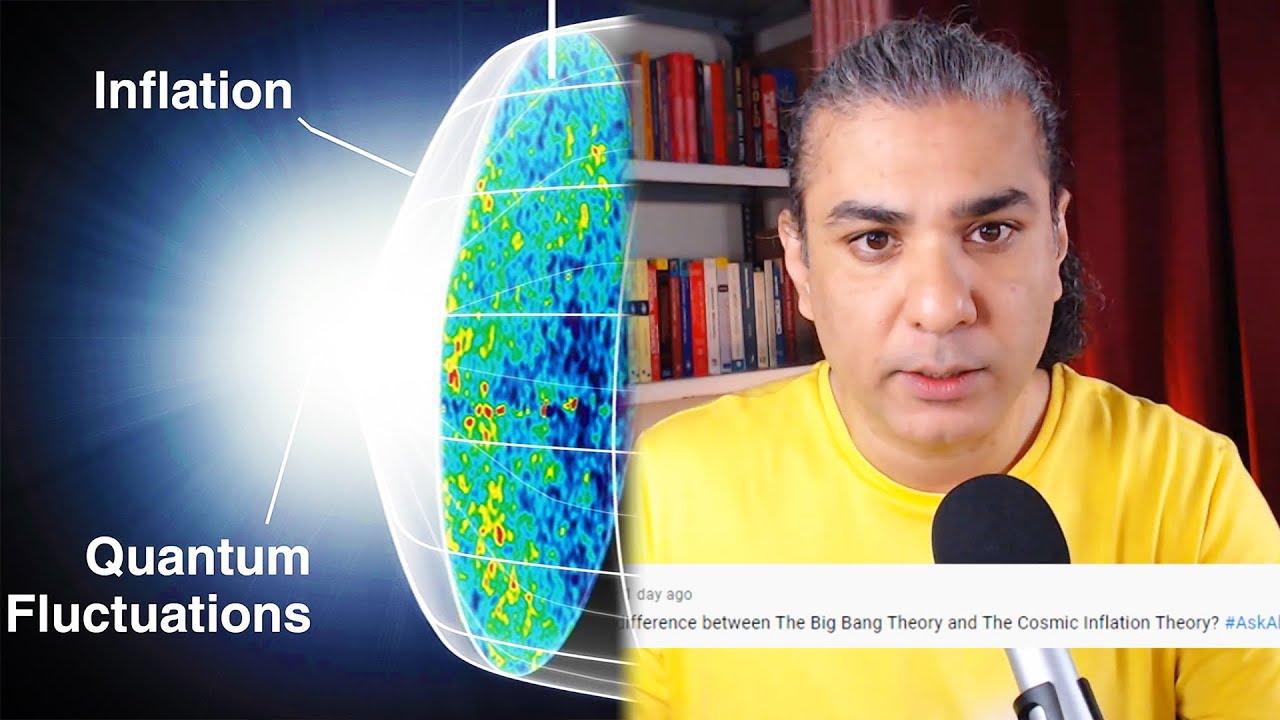











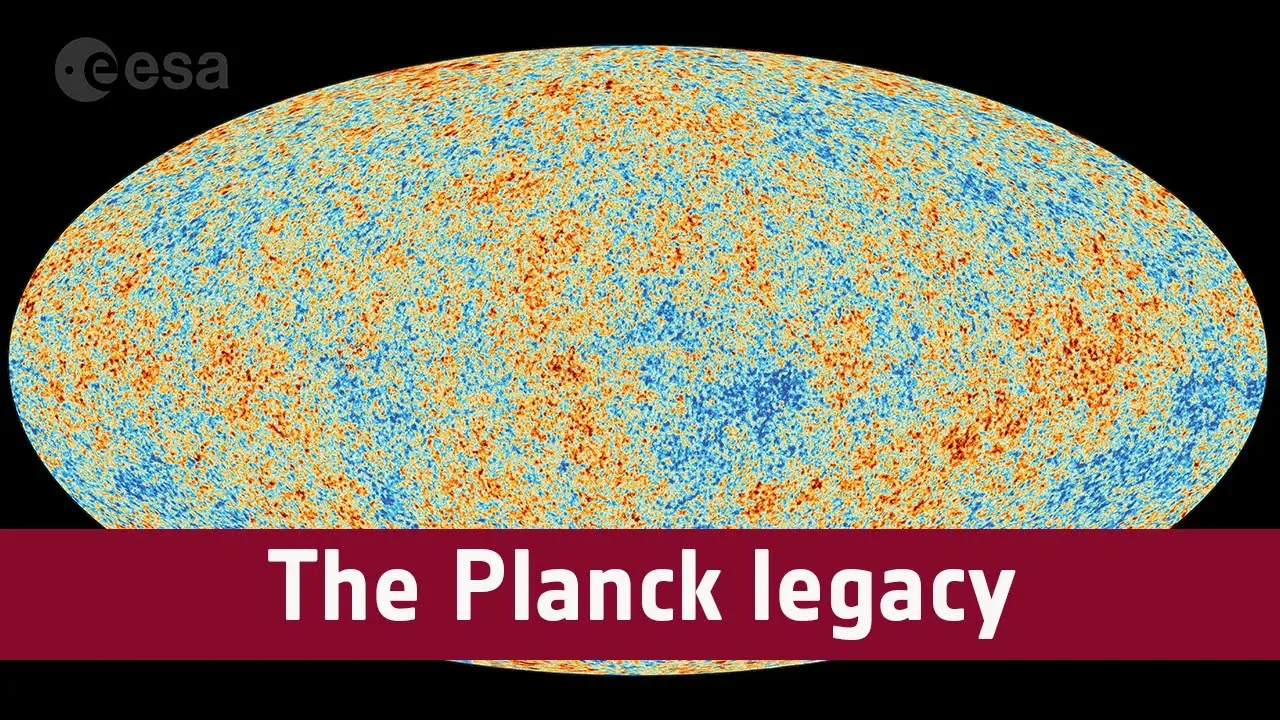


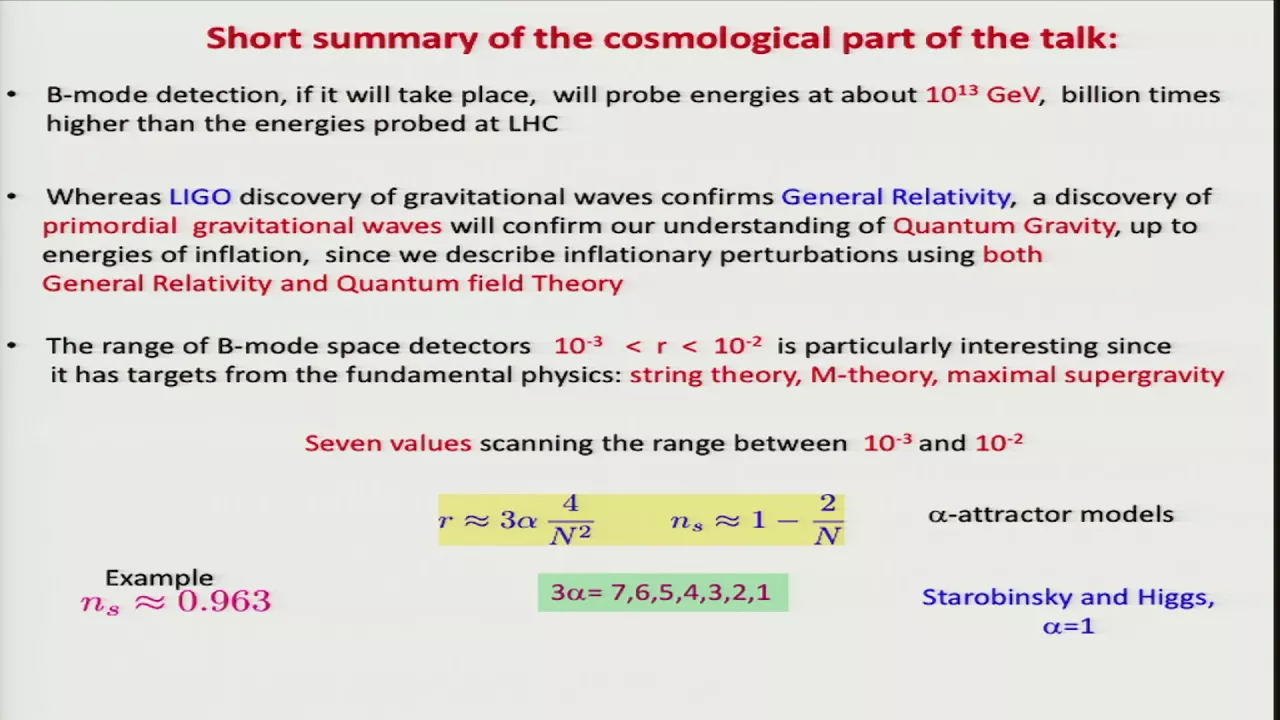
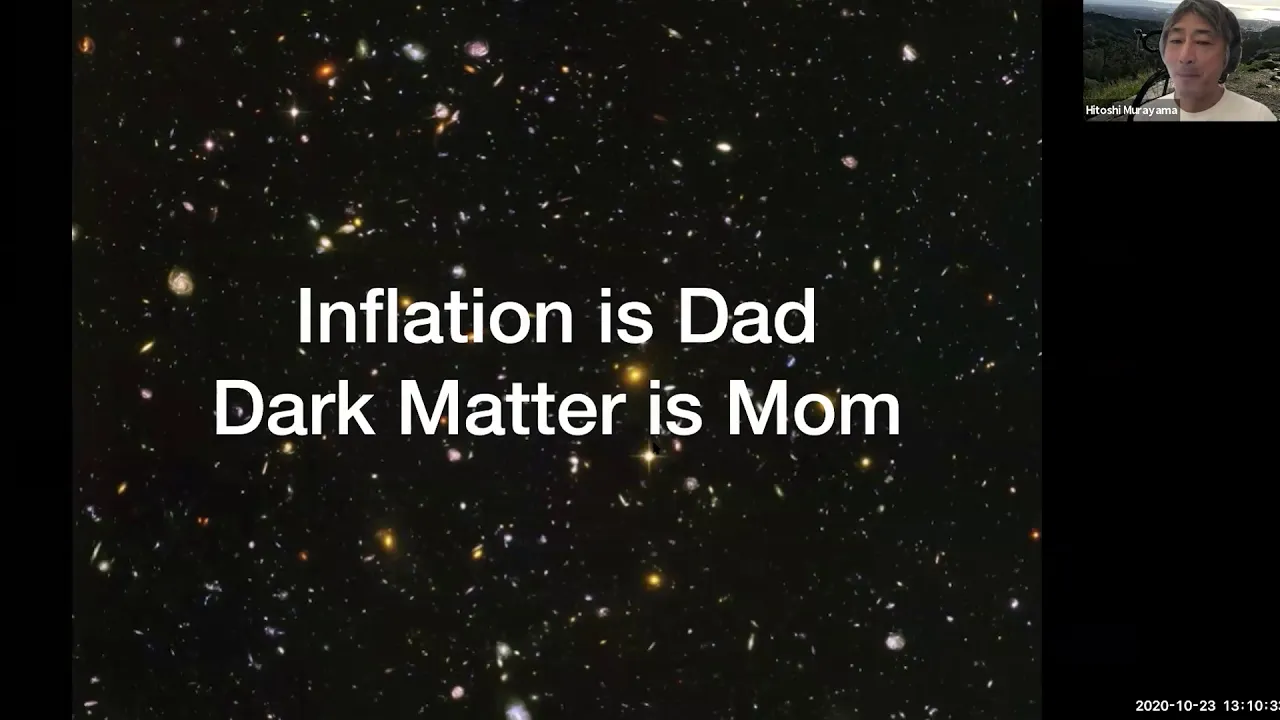


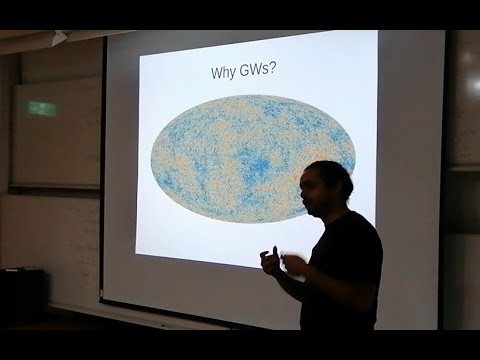




The inflationary theory proposes that the early universe underwent a brief period of exponential expansion driven by repulsive gravity, which solves the flatness and horizon problems of the standard Big Bang model by stretching quantum fluctuations to cosmic scales, creating the density variations that eventually formed galaxies; this theory predicts that gravitational waves from the inflationary epoch should leave a distinctive swirling polarization pattern (B-modes) in the cosmic microwave background radiation, which was claimed to be detected by the BICEP2 experiment in March 2014, though subsequent analysis suggested significant contamination from galactic dust may have contributed to the observed signal.
Big Bang Ripples Confirmed? Cosmology's New Frontier | WSF
Added:Understanding the Big Bang Theory and the concept of Cosmic Inflation (the rapid expansion of the early universe).
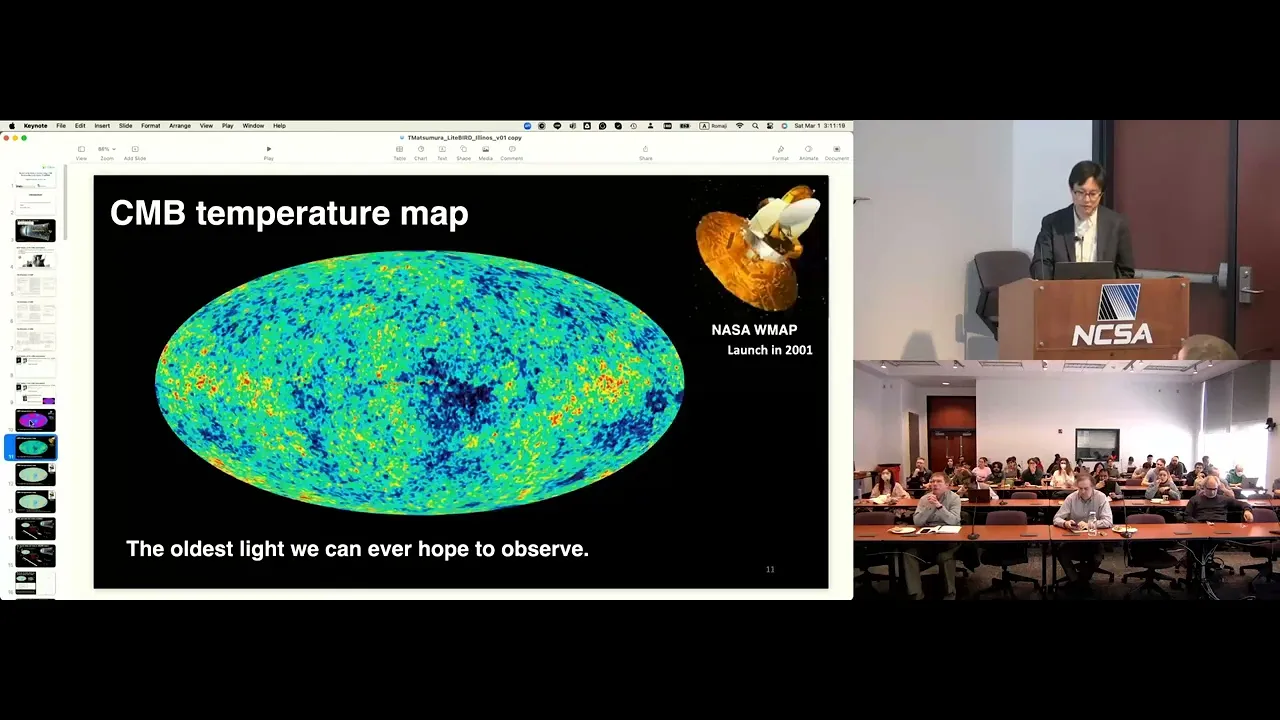
Familiarity with the Cosmic Microwave Background (CMB) radiation, its discovery, and its role as a snapshot of the infant universe.
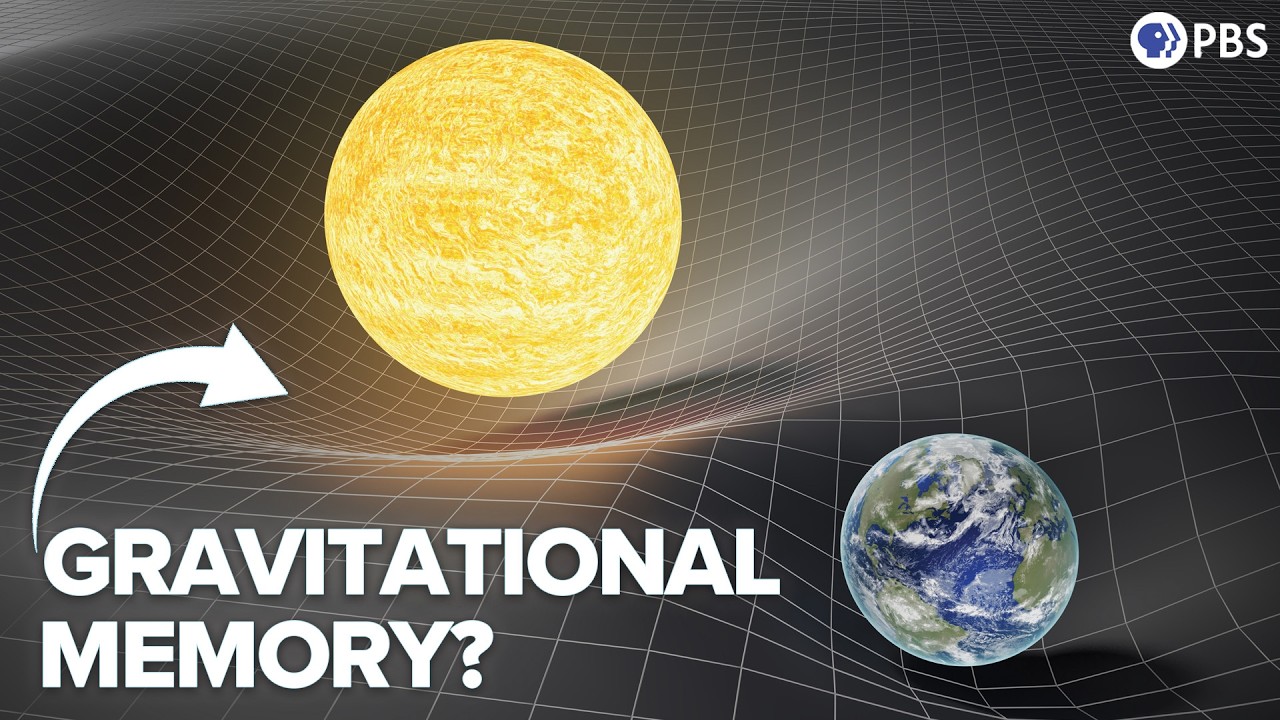
Basic concepts of Einstein's General Theory of Relativity, specifically how mass and energy warp spacetime to produce gravitational waves.
An introduction to wave polarization, specifically the difference between E-modes (gradient-like) and B-modes (curl-like) in the polarization of light.
The analysis of the BICEP2 controversy, including how cosmic dust in the Milky Way was identified by the Planck satellite as the true source of the detected signal.
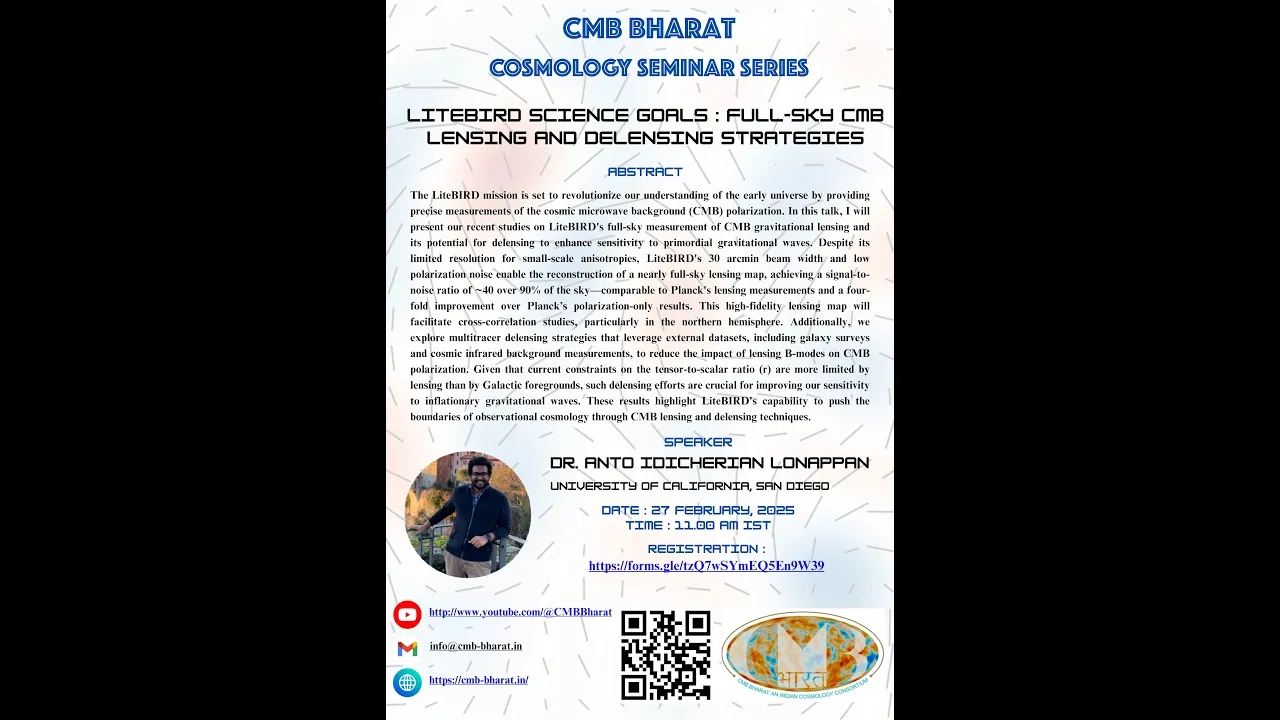
Next-generation CMB polarization experiments, such as CMB-S4 and the LiteBIRD space mission, designed to search for authentic primordial B-modes.
Theoretical implications for Quantum Gravity, as observing primordial gravitational waves would provide direct evidence of gravity being quantized in the early universe.
The broader field of Gravitational Wave Astronomy, comparing primordial waves with those detected from modern stellar events by LIGO, Virgo, and LISA.
650.9K views4.8Klikes1:35:18Original Release: 2014-06-26
[Applause] thank you welcome to tonight's program in the beginning said Douglas Adams the universe was created and this made many people very angry and is widely regarded as a bad move now whether or not that's your view of our universe it was created we are stuck with it and many of us want to figure out how it actually began and that is what the subject of tonight's program tonight's discussion will be all about and what I'm going to do here in just the uh first few minutes of the program kind of prologue if you will is just give you an overview of the basic ideas the basic language in our thinking about the origin of the universe that will then set us up for our discussion in which we'll have some of the leading thinkers the prime movers The Architects of our understanding of cosmology joining us on the stage and we will take this initial discussion much further okay so to understand the origin of the universe it turns out that you need to have an understanding of that Force which is most relevant on large distances Cosmic scales that is the force of gravity so let's begin just by way of things that I think most of us are quite familiar with the first attempt to understand gravity which of course takes us to this picture here right it's Isaac Newton late 1600s writes down the famous universal law of gravity that we are all familiar with you can say it with me FAL G M1 M2 over R2 thank you and with that little equation Newton is able to predict the motion of objects planets the moon terrestrial objects and the predictions coming from that little equation are borne out by observation which gives a sense that gravity is now understood but then something pretty dramatic happens early part of the 20th century if we fast forward a new thinker comes on the scene of physics and this thinker is unwilling to accept Authority accept the notion that all issues that had been viewed as solved by a previous generation perhaps they need to to be rethought and in this particular case of course I'm talking about Albert Einstein and when he focused on Newton's law of gravity there was kind of a puzzle that immediately occurred to him which is how does how does gravity actually exert that force that we call gravity right if you have the sun over here you got the Earth over there there basically empty space between them what's the mechanism by which the sun affects the Earth's motion right so this was a deep puzzle Einstein naturally thought that he should go back to the writings of Isaac Newton to get a sense of what he was thinking about in terms of the mechanism underlying the force of gravity so he goes back to the prinkipia you know all the results that Newton found during his lifetime he looks up gravity right you know letter G finds you know FAL gm1 M2 over r² the universal law of gravity he looks underneath subheading M for the mechanism by which gravity operates and there Newton says I don't know how gravity Works in fact in his own words he says to the answer of that important question the mechanism by which gravity operates he said i' leave it to the consideration of the reader now most readers would read that and read on right but this is Einstein who's reading at this moment and he sees this as a Grand Challenge to figure out the underlying mechanism by which gravity is transmitted from one place to another so he spends 10 long years trying to figure it out and finally he comes to an answer which is kind of the most simple answer you could imagine in a sense because if you got the sun here the Earth here if there's empty space in between them then somehow it must be space itself that is the medium for transmitting the force gra somehow space must be exerting the force that we usually a tribute to gravity and indeed that is the idea and here's how it goes so Einstein imagines here is 3D space kind of grid-like image a little hard to think in full 3d so let's go to a two-dimensional version which captures all the ideas and here's the key idea space is flat if there's nothing there but according to Einstein if the Sun appears the fabric of space curves it warps and in fact if you look in the vicinity of the earth the earth curves the environment around it too and now Focus your attention on the moon because here is the main point the Moon is kept in orbit because it's rolling along a valley in the curved environment that the Earth creates that is how gravity works and if you pull back the Earth is kept in orbit for the same reason rolling along a valley in the curved environment that the sun creates that's the basic idea of Einstein's general theory of relativity and of course that's an artist rendition an animation of the basic ideas there's an equation underlying this picture too right the equation that takes the place of Newton's equations again you can say it with me right R muu minus a half g muu r because 8 Pi G over C the 4 T muu right so that is the new equation of Einstein's general theory of relativity now this is a spectacular interesting idea how do you test it how do you know if it's correct well Einstein himself realized that if space actually curves to communicate the force of gravity then imagine the following light from distant stars as that light passes by the Sun the curvature of space will cause the trajectory of the light to be curved which means if you look at distant Stars when the sun is between us and the star the Starlight will curve as I just mentioned but 6 months later when the sun is on the other side the trajectory of the Starlight will not Bend and therefore the position of the stars in the sky should shift between those two observations now how can you see distant star s when the sun is between us well you need a solar eclipse to block out the sun temporarily making Those Distant stars appear so this was the idea 1919 two teams of astronomers go out to measure the positions of stars during a solar eclipse to see if they shift in the manner predicted by Einstein's theory of general relativity and the amazing thing is as we see here they found lights are all a skew in the heavens men of science more or less AG Gog over results of eclipse observation Einstein's theory triumphs Stars not where they seem to be or were calculated to be but nobody need worry Einstein's theory was confirmed through this prediction giving rise to an observation that agrees with it Story Goes that Einstein received telegram telling him about these results and he was asked Professor Einstein what would you have said what would you have thought if the observations didn't agree with the predictions of general relativity and Einstein is reported to have said I would have been sorry for the dear Lord because the theory is correct now I don't think that he actually really would have said that but it shows how the power of a theoretical idea can almost in some sense emanate a sense of truth but ultimately that must be confirmed by observation now this result made Einstein famous worldwide Theory attained great Fame and that led people to start to think about using the general theory of relativity to try to solve various problems apply it in various ways and this fellow over here Belgian priest George LT he took Einstein's idea his equations and applied those equations to the entire universe and found something very unexpected he found that the math was showing that the Universe couldn't be static it couldn't be unchanging it had to either be stretching or Contracting the fabric of space would be growing or shrinking over time as this was a very unfamiliar heretical idea he took this idea and told Einstein about it 1927 and Einstein said your mathematics is correct but your physics is abominable what he meant by that was you can't believe all mathematics right you have to have good sense Einstein was saying you have to know which mathematics to trust because if it gives an implication that's manifestly wrong you can't believe it right Einstein was saying he was paring the philosophy of the time that in the largest of scales the universe is static Eternal unchanging you look out there nothing on the largest of scales is happening so he just thought this is wrong now the reason why he said your math is correct was actually because of this guy over here Alexander Friedman who I should say looks just like an accountant I used years ago and in fact right around tax time he would look at me just like that but anyway so this is uh Alexander freedmont And even earlier even before lra he had also undertaken a similar calculation shown it to Einstein Einstein at first said your math is wrong but then he was convinced by Freeman that Einstein was wrong Einstein had to retract that criticism but he never thought Einstein never thought that the math was telling us anything about reality and all that changed with this guy over here Edwin Hubble Hubble used the powerful telescope at Mount whistle Observatory to look at distant galaxies and found that the galaxies were all rushing away from us right the universe is expanding and you know it's it's sound of amazing you know Hubble was an Oxford trained lawyer who turned his attention to astronomy which to me proves There's Hope for absolutely everyone but there we had it so the data was showing that the math was right the universe was expanding and of course this gave rise to the picture of the big bank if the universe is today expanding and the ideas ever earlier back in time the universe smaller and smaller and smaller until way back in the beginning it was really small as we just showed and underwent a rapid swelling that we are still witnessing the aftermath of today by seeing those distant galaxies all rushing away the Big Bang Theory was born now that of course is a great Triumph but the Big Bang Theory itself has a number of problems some of which we are going to focus on in the discussion in just a few moments but let me just ra one of them right here just to give us a sense of where we're going an unanswered question in The Big Bang Theory it turns out is well what is it that drove the outward swelling of space what force was pushing everything apart now this is a question that people struggle with in one form or another for for many years but thankfully in our age these gentleman over here Alan gu Paul stard Andre Lind Andreas albrech as well as contributions from many other scientists came up with an answer to that question I sort of love this imagery right here because like if you compare the right side to the left side you see that modern cosmologists are so happy now what they found and what we're going to be talking about here tonight is the inflationary Theory what they found as we're going to discuss is that well we're used to gravity being an attractive Force pulls things together but in the hands of Einstein with general relativity in the hands of these gentlemen over here they realize that if you had a kind of exotic source for Gravity not not the Earth or the Sun the usable usual sources for Gravity I should say instead if you have the universe being filled with a kind of energy filling space that energy can give rise to a repulsive gravity that pushes everything apart that can fuel the Big Bang itself that's a beautiful idea but again how do you test it you don't believe anything until you can test it and you can at least according to certain ways of looking at that we're going to talk about here tonight test these ideas the test for this makes use of the cosmic microwave background radiation one of the most important features of the observable universe to gain insight into the earliest moments of creation so what is the microwave background radiation well it's heat left over from The Big Bang kind of afterglow of creation Now it was calculated by a number of theorists going back to George gamma alfur Hermon others people like Bob Dicky and Jim PE so a number of theorists calculated that there should be this heat filling the universe something like 400 photons in every cubic centimeter rushing through space but again that's calculation what about confirmation well confirmation did come from these fellas over here Arnold penus Robert Wilson working at Bell lab New Jersey were working with a a horn shaped antenna to communicate with satellites through radio waves and that they needed to do is eliminate all sources of interference so they could perform those calculations so they got rid of you know radar interference radio broadcast they cooled it to get rid of the thermal interference but still they found a noise that the detector kept showing they couldn't get rid of the noise they even wondered whether the noise might be coming from bird dropping some birds had nested in the horns they cleaned out the bird droppings but still the noise was there and of course what they found was the hiss of Creation The Cosmic microwave background radiation and indeed it was 50 years ago this week that the discovery happened the two gentlemen won the 1978 Nobel Prize in physics and we are honored that in the audience here tonight is Robert Wilson take a stand [Applause] here so again it's a beautiful story of prediction and Confirmation and a raise it here this will now lead into a broader discussion because the inflationary Theory suggests that there is additional information hidden in that radiation that could give us insight into whether the inflationary Theory itself is correct what's the basic idea we'll come back to it the basic idea is early Universe they Quantum fluctuations in homogenates that get stretched by the rapid swelling of space coming from this repulsive gravity and that yields tiny temperature differences in this radiation sprinkled all across the sky so the prediction then is that there is something that looks like this these little Speckles represent slight temperature variations in space that are in principle detectable in fact have been detected let me now show you a comparison between the theoretical prediction and the observations so let's take a quick look here the curve theoretical predictions statistical features of the temperature variations these now are the observations and I'll just sort of Stand Back holy cow right gives you a sense that theorists know what they're doing that we have some sense of what things were like in the early universe and we're going to talk a little bit more about this in the discussion in a moment let me conclude though with the following final point which will drive our discussion the theory claims that there should be even a more subtle imprint in the microwave background radiation that might in some sense be the true final Smoking Gun at least According to some for this Theory who heal dissenting voices in the conversation but some would say that if we could find the signal I'm about to describe that would really seal the case what's the signal I'm talking about well those Quantum fluctuations I was mentioning they also affect not just stuff in space but space itself so space itself can undergo Quantum ripples Quantum Jitters right now this is at the microscopic scale if inflation actually happened these guys would be stretched out into longer ripples gravitational waves Rippling through the fabric of space and when the temperature variations in the microwave background are laid down these ripples can have an impact on that Relic radiation giving rise to a swirling pattern in something known as the polarization in the microwave background radiation and in March there was an announcement that the swirling pattern had been found and we're going to be talking about that here tonight generated much excitement a lot of controversy we'll try to sort it all out with some of the great experts on the planet today all right so let's bring them on our first guests groundbreaking discovery of the inflationary Theory changed the game on how we look at the big bang and we've all been playing on his field ever since the prime mover in our modern understanding of cosmology Alan G our next guest took Alan Goose discoveries a step further when he proposed a new version of inflation even suggested that our universe might not be the only Universe one of the most influential cosmologists of the last 30 years please welcome Andre [Music] [Applause] Lind along with Alan goof and Andre Lind our next guest is one of the architects of the inflationary model he also has developed alternative models at in part by issues that he has identified with the inflationary Theory please welcome from Princeton University Paul [Music] steinhardt our next guest leads Columbia University's experimental cosmology group and has had great impact on understanding of the microwave background radiation please welcome the first dean of Science of Columbia University professor of physics Amber Miller all right our final guest for two decades has been designing deploying and operating telescopes at the South Pole and one of them may have found evidence confirming How the Universe began certainly has ignited a spirited discussion on the Big Bang in inflation please welcome from Harvard University John [Applause] kovat all right so John in a moment we're going to talk about what it is that you announced in March but just to set a little bit of context I just want to get really quick thoughts on how important the discovery of say these ripples in the fabric of space from The Big Bang would be so Amber fellow Observer of the universe how exciting would it be to confirm that these ripples in the fabric of space have been found very all right good concise right uh Allan thoughts on that from a theoretical perspective well I agree very important uh in particular it is very strong confirmation that inflation took place it also allows us to determine for the first time the rate of expansion of the universe at the time of inflation which is a very important number which we otherwise don't know now Andre we sort of know what your reaction is because there's this viral YouTube video which caught your reaction when when you when you first heard this news so I almost don't have to ask you but exciting uh it would be this one of the confirmations of uh general theory of relativity at Quantum level so it is a next stage it's not just general theory of relativity but it's quantization at the energies uh which are spectacularly larger than energies which can be reached at the highest well the most powerful accelerators on the earth great now Paul you know I know that you have somewhat differing views on the inflationary Theory today and we're going to all come to that but putting that to side for a moment just the actual observation of gravitational waves from the beginning of the Universe Scale 1 to 10 how cool would it be oh 100 100 there we go now it' be extraordinarily important I I I don't think we can should jump to the conclusion that it's a comes from inflation I think that's something that needs to be proven I think there are various possible sources of gravitational ways uh including things that we might not yet have thought of so but it will be it would be an extraordinary gift that nature gave us a cosmic signal that nature gave us that will eventually enable us to determine what you know where the history of the universe uh originated from and where we're going yep absolutely very important all right so with that sort of as the context of the importance let's turn to John kovak and just want to get a sense of the experiment and and what you found so even just to set what it's like how many people work on B cep two which is the name of the experiment so we've had um a very talented team about 45 people of that order um working at different institutions uh lead institutions Caltech Stanford uh the University of Minnesota my own institution Harvard uh a lot of the people young people students and postdocs who have really dedicated their careers to this and uh uh this telescope we see a picture of it here it's a very uh it's a very unusual very custombuilt telescope it's good really at doing one thing at measuring the polarization of the cosmic microwave background on the specific angular scales in which this theory predicts that gravitational waves would arise and it's a um it's a crazy outlandish Theory from an experimentalist point of view that we could imagine uh what's happening at energy so extreme in times so early so the idea that this Theory gives us a Target something that we can build a machine to go out there and look for and see whether it's there or not motivates uh you know my team motivates lots of teams that are doing similar work around I'm going to ask you in a second to explain some of the terms that that you use and I've been using gravitational WS polarization but what did you find in fact I think we can even show the graph one of the key graphs from your paper right so that's it huh that's it yeah and uh compared to the graph that you showed uh just the minute ago of the beautiful measurements of the the temperature Speckles across the sky and how they match up in the theoretical curve you can see the the the level of the data at this stage that we've extracted so the so the bump in that curve is the bump in the curve the uh uh the excess of uh the points the black data points yep above the red curve which is below there shows the excess of uh this swirling pattern in that map above the simplest expectation so can we see the swirling again just to have that picture in mind I think it's the right so this actually slightly different colors than than you're used to but it's the same the same exact data yeah same swirls yep um so so those swirls are indicating the polarization that you're talking about and um it comes from gravitational waves that have an impact when the CM B is formed a few hundred thousand years after the big bang so can you just give us a quick explanation of what polarization is just so that we all know what we're talking about sure so uh light as I'm sure the whole audience knows is is a uh it's both a particle and a wave phenomenon so if we think of it as a wave phenomenon it's a disturbance that's uh in the electric in magnetic fields so as light propagates in a direction the electric field might be aligned in a particular orientation with respect to the way that that light is coming in fact I think we have a little visual can you bring up the polarization video just to uh right so this is what you're talking about so an electromagnetic wave light and there so here we see the the light coming towards us out of the screen and imagine the electric field is represented by the red here and the amplitude of that field is oscillating up and down in a vertical plane so a light wave like it's being animated here would be described as 100% polarized completely polarized in the vertical Direction so if we go back to the map what we're actually seeing with our telescope is very small degrees of polarization of this early this this light that's coming to us microwave light from the sky the uh uh the patterns that we see uh in this map at each point Express the degree of polarization that's coming of polarization of the light coming to us from that spot on the sky so when you see a vertical bar on that map that actually represents not 100% polarization of the light but uh polarization at the level of typically one part in 30 million if you think of particles of light photons coming to us from that spot in the sky what that means is for every 30 million photons that are coming to us with a horizontal orientation in its field you might see 30 million in one on average coming with a vertical orientation extremely faint effects so you need to build a very specialized telescope to be able to teach this out and and the the origin of that polarization that tiny polarization that you're talking about may have come from gravitational waves that originated with in some sense the Big Bang so just quickly gravitational waves I mentioned it briefly in my introductory marks I think we have a little image of it if you can just explain what that is and what a gravitational wave would do sure so a gravitational w wow that's strong gravitational wave hold on to your seats so a a a gravitational wave not nearly that strong uh passing through the early universe that arises according to this theory of inflation that we've been uh um that we've been given uh has the potential to uh distort SpaceTime uh in the early Universe when these microwave photons are being released and that Distortion of space time can be thought of as a a a stretching and a compression and that can impart a particular polarization to the light that comes to us from that region in space and the geometry of this stretching and compression of a gravitational wave can actually impart a specific swirling pattern to the polarized light as we look at it across the sky that kind of swirling pattern isn't expected to arise from uh the the other well-known physics that produces polarization of the cosmic microwave background light so how long did it take you to find this data to accumulate this data so the data that you see uh behind you was collected by the bicep 2 Team uh over three years of Relentless observations from the South Pole training our telescope on a small patch of sky and you're down there like doing this or you like in Cambridge just like hey turn on the telescope when I was a young student I actually did spend an entire year at the South Pole through one winter one winter was enough for me y uh but we go down there in the summer months three months of the year you can get in and out of the South Pole station the National Science Foundation flies Us in and out on ski equip c130s it's really an amazing adventure and then when the last plane leaves in uh February uh we leave behind a small crew and typically one person running each telescope uh and that person will operate the telescope for the next nine months and we have that telescope trained on that Patrick Sky collecting as many of those photons as possible because you need an awful lot of them to tease out those really really small effects so three years of data went into that map all right fantastic so the excitement when you made this announcement in March was largely tied to the inflationary Theory which suggests that this is the kind of result that you'd expect if the inflationary theory is right so I'd like to now place it in context and head back to the discovery of the inflationary Theory so Allan I'm going to start with you you you know had a fantastic great breakthrough in the late 1970s and I just want to sort of briefly walk through it so first off in the 1970s what was the state of big bang cosmology what were the essential problems and there are actually two that I'd like you to focus on the flatness problem The Horizon problem if you can just tell us what those are the flatness problem is something that I in fact just learned about almost by coincidence at a lecture I dropped in on uh given by Bob Dicky from Princeton uh but it's a problem that has to do with the fine-tuning of the expansion rate of the early Universe uh as Bob Dicky explained it uh that expansion rate if you think for example of the universe at a time of 1 second after the instant of creation that expansion rate had to be just right to an accuracy of about 14 decimal places uh if it was expanding just a little bit faster by one digit in the 14th decimal place the universe would have flown apart so fast that galaxies would never have had a chance to form and if it was expanding just a little bit slower again just by one digit in the 14th decimal place uh the universe would have rapidly recollapse before any galaxies or structures could form and within the conventional Big Bang Theory there was nothing that explained why the expansion rate was what it had to be it just had to be that or else the universe would not look anything like what it does look like and presumably we would not be here yep that's the flatless problem uh The Horizon problem uh has to do with the uniformity of The observed Universe now we're not that used to thinking of the universe as being that uniform we see clumps of galaxies and Galaxy clusters but if you average over larger scales the universe starts to look amazingly uniform and this uniformity is most striking in the cosmic background radiation uh astronomers have now very carefully measured the temperature pattern and we see fluctuations which we've seen maps of on the screen here um but nonetheless the temperature is in fact uniform to one part in 100,000 those Maps describe very very small fluctuations tremendously exaggerated so the question is how did the universe get to be so uniform and so uniform so early this cosmic background radiation was released at about 400,000 years after of the instant of creation uh so you can imagine that somehow things smooth themselves out uh but but when you try to calculate you soon realize that within the parameters of the conventional Big Bang Theory that's simply not possible uh in particular you can imagine tracing back the photons coming from that direction in the sky and similarly you could trace back the photons coming from the opposite direction uh and when you do that calculation you find that at the time of emission those two sources were separated from each other by about a 100 times the distance that light could have traveled up until that time and that means that there's no way that that Photon could have known anything about that Photon uh yet somehow they arranged to have the same temperature to an accuracy of one part in 100,000 and nobody had the fogy idea how that could happen and that was the Horizon problem so at the risk of this sounding like a Seder what was special about the night of December 6th 1979 okay um it it was sort of the climax of about a year of my working on this um very much influenced by a fellow postto at Cornell at the time Henry Tai who's the first person who got me into this in the first place really uh we were looking at the question of suppression of magnetic monopole production which I won't want to get into now uh but in any case uh we were dealing with the hypothesis that the Universe underwent a tremendous amount of super cooling uh at a phase transition that certain particle theories predicted would have taken place in the early Universe uh and I went home that night and answered a question which Henry had raised actually which is what effect would this super cooling have on the expansion rate of the universe uh and once you write down those equations the answer is actually pretty obvious uh it has a tremendous effect on the expansion of the universe it drives the universe into this phase of exponential expansion which we now call infl so this was in your own words a spectacular realization realization yeah you know it's amazing thing you know there's all this you know talk about the NSA and you know sometimes you know it's good stuff we actually got a hold hope you mind of um they had footage of a nandy cam that you had set up that night if you don't mind you can bring up the footage so there you are you know working away now I just wondered did you think it was a breakthrough when like the equation started floating sort of that or was it like when your pen started you know drifting you know so the the universe is really expanding all was that that sort of that's what that's what it's like right we want to get a sense yeah I think it was the pen that didn't yeah um so so this was you know an amazing moment um and we actually have I think a shot of your notebook if we can bring that up on the screen so there we have it right spectacular realization yeah that's real unlike the previous film yeah no no I should say the other other film was a not real um it's from a from a Nova program uh but um so there there is what you found and I just want to go a little bit more deeply into what it is that you found so you said the universe super cooled so basically if I understand correctly and I'm just going to move us along here there's a field that you hypothesize which is kind of a a substance that fills space and the idea was that the field was occupying a certain value that was giving an energy that would fill space in fact the energy was such that it could drive this acceleration this outward expansion of space so if we can just show a little picture maybe you can just describe if this is a good description of this I can bring that up so what are we seeing right here okay what we're seeing here is a graph uh where the horizontal axis is the value of this scal or field that we're studying or hypothesizing and the vertical axis is the energy density that space would have if the field had that value value on the horizontal axis uh and we really believe that there are very likely scal fields in nature which behave this way the higs field of the standard model looks something like that uh so what the little ball shows is the possibility that the scalar field could have the value uh at the bottom of that hill and if it did classically it would stay there forever uh because it could never have enough energy to get over the hill to get get to the lower energy Quantum mechanically you can tunnel uh can tunnel through the barrier fact I think we can show this can we just let this guy tunnel through there it goes right tunnel through the bar you just ask for it and happen snap your fing happens right so when it tunnels through then that would be the end of this inflationary process so we can just just see the again so the process would be then something like this the fields hanging out that value and then it tunnels through and that happens very quickly and that's the end of this rapid phase of expansion of the early universe good so you know just to sort of see this in a little bit more detail those of you who don't like equations can ignore this but so this is the basic math behind this right so what's that equation we're looking at up there uh that's one of the famous equations derived by Alexander Freedman in 1922 and if maybe 24 I don't know and if what we have on the right hand side if if the energy density and the pressure satisfy that relation then then what happens is a double dot which represents the acceleration of the expansion changes sign normally it's positive normally that equation is dominated by the first term there which is the Greek letter row which means mass density uh but if the pressure is negative which it is for this peculiar State uh then that quantity row + 3p over c^2 uh becomes negative and the force of gravity is reversed it magically becomes repulsive instead of attractive and that gives us a solution to this equation that any undergraduate or high school kid could work out where the expansion goes faster and faster over time and that then gives rise to the bang so that's the way we want to think about that okay so this was the beginning of the inflationary Theory let's just quickly describe for us how does it solve the problems that you started off with for why we would look for an alternate Theory at all so how does this address the flatness problem okay this we do have some video some some Stills that might be useful for okay okay he didn't show me these in you know I knew you could do it on the Fly especially because this came from your book okay but there are multiple explanations some of which are not in my book but okay we'll do the one from my book um the um equations of general relativity themselves which we haven't written entirely here uh link uh this expansion rate to the curvature of the universe and the prediction from inflation uh is that the expansion rate is going to be just the right rate to correspond to a flat universe uh and given that it's now pretty obvious to see what this next picture is going to be the sphere is going to get bigger and bigger which is what inflation does I assume we're going to have that uh and as it gets bigger and bigger if you look at a fixed size of the image it gets to look flatter and flatter so it's just like the basic reason why the surface of the Earth looks flat to us even though we we know perfectly well these days uh that the Earth is actually round uh but as long as you look at a small patch of it it looks flat and for the same reason uh our patch of universe looks flat to us because we're basically looking for at a very small part of something which on a much larger scale may be curved we really don't know okay and for Horizon problem we have another little image over here which basically just sets up the problem you're talking about two distant regions in the universe having temperatures that were very very close but if they tried to communicate by sending a signal between them you said that if a photon starts to travel say from the patch on the left and it's traveling outward doesn't have enough time to reach the region way over there how therefore do they correlate their temperatures how does inflation address that problem basic idea is very simple uh inflation inserts into the scenario of the universe a period of gigantic expansion uh which is just not there in the conventional model without inflation and that means that if you imagine thinking about the region of the universe that we see today and tracing it backwards in time when it goes through this period of inflation it's now Contracting rather than expanding this we're falling up backwards uh it means that before inflation the region was vastly smaller than we ever would have thought in the context of conventional cosmology uh and that means that before inflation there's plenty of time for the universe to smooth out both in density and temperature in exactly the same way as the air in the room Smooths itself out across the lecture hall acquiring an approximate constant temperature and constant density so those guys are so close that it's easy for them to communicate early on and then then P then infation takes over yep and magnifies this tiny region to become large enough to include everything that we currently see so that's the basic idea and just quickly the aftermath of this discovery so here's your paper Okay describe this and then we have also here a cool little magazine article cernus Galileo Hubble and now Goose I love that right was that like so this then changed everything for yeah no it certainly changed everything for my career uh before the discovery inflation I had been a postto for nine years uh at four different places and uh I had a job for one more year after that that had been lined up but beyond that who knew yep uh and suddenly I was getting offers from all over uh the full story is that I got offer from essentially all over except from MIT which is where I wanted to be I had been a graduate is there and liked it so I finally actually on the advice of a fortune cookie uh up enough nerve uh to call M and ask if maybe maybe they'd be interested in hiring me too since lots of other places seem to be and they said yes and I went to MIT and been there ever since wow I didn't know that story fantastic all right so Andre and Paul uh in Allen's original version of inflation all these good things happen but there even Allan had pointed out that there were some some issues and that's when both of you come into the story what what was the main issue that needed to be addressed to make this Theory fly as far as one would like it to yeah well one can explain it in the following way in Ellen's Theory the scale field sits in the minimum of the potential and does not move so this looks like exactly like an empty space and when you are talking about empty space then the question is how do you even know that this empty space expands because there is nothing there so the notion of expansion becomes kind of questionable uh on the formal level this means that there is no preferable coordinate system and in some system actually the universe collapses and then it expands and then when it decays when it tunnels it tunnels in different regions totally incoherently and as a result even though the idea how inflation exponential expansion Smooths the universe you need to explain what its smoothest if it's already smooth if it's vacuum and how it decays simultaneously everywhere so the same problem of simultaneous Decay requires some marks on what expands to say that it is simultaneous so this is the basic reason why you have a problem with the Simplex so what so you came up with a way of addressing this issue yeah it was actually uh it was like that uh you know you have this minimum like Alan and then the question was do you really tunnel directly to the absolute uh minimum or not and at that time I was just well running my computer and checking how it goes and I seen that actually sometimes you are tunneling almost horizontally and then for a uh for a long time you are rolling down and then when you rolling down then the universe continue expanding almost exponentially somewhat like we're seeing here you're looking at that can we run that one again right okay so rather than having it sitting in some yeah little minimum you're imagining a shape more like this yes and that addresses yeah the issues right and at that time when I first realized that this is possible I thought that maybe I'm just dreaming making a mistake because it could not be real so I called at night and this was in summer 81 I called at night one of my colleagues and I asked him whether you uh well thought about anything like that and because I was afraid to wake up my family I was calling sitting uh at night in the restroom at the telephone calling so not to wake up the children and I asked him and he said nope I did not think about it I say oh then I hang up and I wake up my wife and told I know how the universe was born so Paul you also uh were inspired to work on inflationary ideas around the same time what did what did you find something similar to this is my understanding yeah well first of all I should say that the whole reason why I entered cosmology was because I was privileged to hear a talk by Allen one of the first talks he gave on inflationary cosmology I I walked in the room as a as a young postto never having taken a course on cosmology never having studied it but in the course of one hour I was converted um it was I I always describe it as the most inspiring and most depressing talk I ever heard um because for most of the talk Allan was telling this wonderful story just how he described how there were these fundamental problems to be solved and and um and how inflation could potentially solve them but then in the very last five minutes of the talk he explained how the idea failed that although you managed to get the field trapped in this uh minimum that you that that was down there uh although would occasionally tunnel it would only tunnel out in a tiny region a tiny bubble of empty space nothing that would contain the stars and galaxies that we would see and that occasionally maybe these bubbles would Collide but that would not produce enough stuff to make the universe that we observed so he began the solution to the problem but there was a sticking point how do you ever end this inflation and it would be now call a graceful way in a smooth way that leaves a universe which is filled with the matter and radiation that we see so I remember sitting in the room after everyone I just was stunned by this talk and I just sat in I think I was like the third or fourth row back and everyone was LE leaving and I was just thinking there's got to be a solution to this problem this is too sweet an idea to let just stand there so um so I thought well I'll spend a few weeks working on you know learning a little bit of cosmology and doing this and I can go back to what I normally do but uh in fact I haven't stopped working on cosmology ever since and I guess my inspiration was I was trying to look for different solutions to get around this problem getting caught by this energy barrier and the process of reading about phase transition super cooling I've discovered there was a different kind of phase transition that people that was not so well known certainly not in the hogy OR cosmology Community uh which isn't the kind that occurs by this but tunneling but it's what's called a spinodal transition has a technical name it's known in the Metallurgy literature quite a bit but it was not known in in even most condensed matter physicists don't know it that uh thoroughly and U and that turns out to be a picture in which the phase transition occurs that in such a way that as you super cool the barrier disappears and you can end up with this flat Plateau that we saw here and that was the that's where the idea came from uh that there was this alternative phase transition I have to say that um I I I I was not quite as excited as Andre was when I when I made the well you weren't in the bathroom when you did it I wasn't in the bathroom but there was but there was a prob was there was a fe there was a feature there was a feature that bothered me then and continues to bother me now which is to have this special kind of phase transition you have to tune the parameters in the theory rather specially so your goal is to explain naturally why certain things occur but you're doing it at a price of arranging this phase transition sort of dialing the knobs that make that curve and just so way and that's a one of the problems that remains with us today now Andre you've thought about this this problem of T you've you've argued that there're more General shapes that can still give rise to inflation and so tell us a little bit about chaotic inflation well that was a continuation of The Story So This was um first Allen's model then our model of new inflation and then this model of new inflation survived for about a year and then we had some problem even with this new model uh and the problem was well many different aspects of it but it stemed in particular from our assumption that first there was this hot big bank then there were this phase transitions then there was the Super cooling then there were this tunneling Etc and all of this set of things it was very difficult to match together and what happened later is that I realized that you don't not necessarily need it because instead of all of this strange potential with stuning Etc you can just have simplest parabolic potential and then the scale oh yeah right yeah that it is service you know everything oh my God okay so well so the scale of field in this potential and interestingly in normal kind of previously studied models where the field stuck in the minimum for a while then here there is maybe not even minimum you may have it temporary does not matter and you may not need any phase Transitions and super cooling anything but what happens is that when you are solving Einstein equations together with equation for the scale of field and expanding Universe you find out that there is a strong friction which stops the field from rapidly running down it's like the universe helps the scale field please stay here for a while no no I want to go down but please stay here for a while so when the scale Fields a base then it stays for a while at approximately the same height without any need to some support like that just like that on the wall and during this time because the amplitude of the scale field almost does not change then the universe expands almost exponentially now this thing about almost doesn't change is extremely important if the shape of the potential such that it's very very curved no inflation rolls down too fast if it is very very flat there is an opposite danger the speed of the motion of the field becomes very slow like in the original model where it just totally flat and then what happens is that perturbations of density which we disc come just a moment in the beginning they are too large so you must be just the golden medium between that not too steep not too flat just try than the universe gives you well galaxies which you want to live in now another feature which which both of I think all of you have played a part in is that we have these models of inflation so you've got this field filling space energy is giving rise to this repulsive gravity pushing everything apart but it's very hard to get it to fully end which suggests that there may be other Realms other regions that are undergoing this expansion too which in Poetic language can be spoken of as other universes there a tell anybody wants to jump in on that one well I can say a little just using uh this my potential which I've shown here so naturally you would expect that this is what you go you just go down you go down you go down straightforward but you notic it maybe you can show it again that potential notice it notice it that this uh dot was jumping here so what this jump mean well during expansion of the universe there are tiny tiny Quantum fluctuations of the scale field they are tiny but the universe expands them and then the the universe expands new Quantum fluctuations are produced and in new Quantum fluctuations sometimes not always not everywhere this Quantum fluctuations bring the scale field upwards again and then the universe expands scale of field goes down and in some places it is brought back again and when it happens in those parts of the universe where the scale of field jumps back again the speed of expansion becomes as large as it was initially and then this part becomes separate exponential large part of the universe so it looks like the universe self reproduces itself this is like if you think about what Greeks told us here is our universe and this is perfect sphere or at least we are trying to understand why it is perfect so now that we understood that it is perfect these Quantum fluctuations make it slightly imperfect and it's like imperfections sometimes produce galaxies as we will learn later and sometimes it produces new pieces of the universe which are also expanding and the universe becomes a fractal so it is eternally growing fractal tree consisting of new universes and new universes producing back we have a little video on that can you skip ahead to the Eternal inflation video just to give a sense of what the universe would look like so that would be a single Big Bang that's the decay of the inflation in one place all the other so each of these bubbles here floating in this background of Lymon field would be one of the universes that you're talking about with our universe just being one in this big vast collection so that's the place that we've gotten to with these ideas of inflation and to bring in The Observers as I'd like to do in a moment I want to turn now to the evidence that we have for these ideas where the argument usually comes from the mway background radiation and these fluctuations so I want to turn to just a quick discussion of that all of you guys have had a hand in this Allan and Paul I think there was this famous Workshop right what was it called the nfield workshop was that the one so tell us what was going on there okay um this was the summer of 1982 uh shortly after this new inflationary model is invented by Andre and Paul and Andy albrech uh and uh people were beginning to think about the question of how uniform should the universe be and for a while a number of us uh were very worried that inflation because it just stretches everything to make it smooth would produce a universe that would be completely smooth and if it started out completely smooth there'd really be no way that galaxies could form uh so uh eventually the idea started circulating around the community um in my local group it kind of started with stepen Hawking although I later learned the idea goes all the way back to Andre sakarov much earlier uh but the idea was that maybe quantum theory can be responsible for these fluctuations and at first that idea sounds very weird because we always think of quantum theory as describing things that are very very small and now we're trying to describe the galactic structure of the universe uh but nonetheless when you think about it carefully uh it certainly initially had the germ of working uh because inflation has this wonderful property of stretching these tiny Quantum fluctuations from very small scales to bring them up to macroscopic and cosmological scales and at this nuffield Workshop uh four different groups I guess uh were working on the question of how to actually calculate these density Renovations uh and at the beginning of the conference I think maybe stabinsky knew the right answer the rest of us didn't uh but during the course of the conference we gradually came up with answers compared them a lot of them just read with each other uh we were arguing like mad for I think it was a three-week conference uh but finally by the end we all agreed on the picture and then we all published our separate papers uh with basically the same conclusions and Paul you were you were PA was one of them yeah our group was one of them we were trying to use a method special method that was developed by Jim bardine of what it's called a gaug inv variant method and that was an important contribution because I think it was the the method that's the most reliable sure method of doing a calculation in general relativity there's this subtlety that um when you're looking for a lump or an ex the question we're trying to address is where are there lumps of energy or lumps in temperature and distinguishing that from um simply a CO a choice of coordinates re different choice of coordinates in general relativity is a is a difficult um mathematical challenge that it was solved by Jim and and having that powerful method and have all having that method give the same results and converge with these other results to give the same numerical answer I think made us all really excited at the end of the conference that we had actually nailed the question that um we came into the conference worrying that the quantum fluctuations could destroy the inflationary Theory could be that you did the calculation found the quantum fluctuations and found that they gave us uh variation with space that was incompatible with things we knew uh instead what we found was something in between we found that the initial models that we were thinking of had the right shapes of hot spots and cold spots but amplitudes the degree of hotness and coldness was way too strong and um but by the end of the meeting once we understood how this mechanism worked for producing the fluctuations we knew what to do we knew how to change those inflationary potentials to infl change it in order to now make models which would give the not only the right uh number of hot spots and cold spots not just the right distribution but also the degree of hotness and coldness it came at a price again that we have to still live with today which which is you again needed to do even more additional fine-tuning of the parameters than before so even Andre's favorite model of that cup potential has to be super fine-tuned by 15 orders of magnitude in order to we're going to come back come back don't answer just yet because now we have something to look for right so you guys have now made predictions and uh thank you uh he's never done that that's a beautiful thing didn't I get a picture of that um so Amber so now now there's something to look for and just give us before these ideas what was the state of observational cosmology did people sort of know what to look for is this sort of a turning point now there's something to shoot for well before inflation you still we still had this idea of the hot big bang um so there is something to look for there so the idea is if the universe started hot and dense however we got to the hot and dense point if it started hot and dense we should see this Cosmic microwave back ground so that's what Brian was talking about at the beginning where penus and Wilson discovered that there is in fact the cosmic microwave background that had been predicted in advance and then following that initial Discovery the Kobe satellite then demonstrated that Not only was the hot big bang correct but in fact the statistical properties of what you would expect to see in that data were also correct and in particular the hot plasma emits as a what is called a black body it's a type of emission that depends only on the temperature of the plasma so it's an enormously simple system it's not difficult and you can go and predict what you should see and you can measure it and it turned out that what Kobe measured was that the prediction and the measurement were so close to each other that if you draw the theoretical curve and you plot the data on top of the theoretical curve unlike the that Brian showed for the fluctuations that temperature alone you can't even tell the difference between the theoretical curve and the actual measurement so this was this was the first spectacular demonstration we were on the right track so that that spectacular discover the next step then is to look for the fluctuations and how do you how do you how do you do that you go out and You observe the cosmic microwave background and at every step here we're just trying to get better at doing that so we're trying to measure it more precisely and the game is that you're always trying to develop the latest technology or pushing the boundaries this is a hard thing to do so you need very sensitive instruments you need very well-controlled instruments so it isn't just about raw sensitivity you need to design your instrument so the signal that you see you're really really sure it didn't originate in your instrument so that's a really important point that sometimes get lost when you're talking about this the instruments really really need to be very specially designed um and then the other thing you worry about is you want to make make sure that when you're observing what you think is the cosmic microwave background you're indeed observing the cosmic microwave background you're not observing something that lives in our galaxy or between our galaxy and the microwave background remember that when you're observing the microwave background you're observing the universe as it was when it was only 380,000 years old which means that the light was traveling throughout the entire history of the universe until it crashes into your detectors so if it came through anything else that could have changed the character or if anything between the microwave background and your detectors is itself emitting it can complicate that signal fortunately there are clever ways that you can design your instruments to tell the difference between the signal in the front and the signal in the back um but you have to do that right too so the game is to design these instruments precisely and analyze your data very carefully so that you're sure that what you're seeing is what you think you're seeing um what you're seeing in the background in these pictures is another approach so there are three primary approaches to measuring the cosmic microwave background there are the groundbased telescopes like the ones that John was talking about there are balloon born experiments like the one you see here and there are The Satellites um you saw a picture a minute ago both Kobe and W map satellites in some sense are the gold standard they are very expensive you don't get to fly them all the time the other issue with satellites though is that you have to lock in the technology you're going to fly in a satellite years before the satellite actually launches and the technology development has been proceeding so quickly and for groundbased experiments and balloon boorn experiments part of the game is you grab that technology when it is hot off the press or you're involved in developing it and testing it and then you're allowed in a balloon boor experiment or a groundbased experiment to put the technology on the experiment and try it um whereas a satellite you have to be much more careful so the main difference between balloon born and ground experiments as I discovered when I was a graduate student is if you're really sane you will choose to work on a groundbased experiment so I've naturally in the last several years been working on a balloon born experiment instead if you're really Brave you work on a balloon that's kind so the the goal of working on a blo born experiment other than being not sane um this this is my experiment called ebex being launched um roughly a year ago also from Antarctica so Antarctica is the magic place to do this um in in John's case because it's a really great place to observe in our case because it's a really Place great place to get up over the atmosphere so these balloons fly at about 130,000 ft um the reason to fly from Antarctica is not that there's anything special about the location per se but that it is the only place in the world where you're allowed to go and fly for a long time and the winds are circumpolar the poles you could do this in principle in the north but Russia doesn't like it when the US flies equipment over their air St for reasons I can't imagine why they'd have a problem with that um so in Antarctica you're allowed to do this so you also go down on the planes with the skis and and um do something crazy like build your experiment and then this thing you've been working on for five to seven years the folks and Nasa say okay science team hands off your heart goes into your throat and you know that all the stuff that on the ground that you could fix when when not if when it breaks you you don't get to fix it right so this is why it's insane to do this um the reason one would do it even though it's insane um is that you can observe at frequencies that are very difficult to observe at from the ground um so on the ground the atmosphere is transparent in some frequency bands or relatively transparent and not all frequency bands and if you want to discriminate between um emission from something like dust in our own Galaxy and microwave background radiation it's nice to be able to measure at a frequency where dust is the stronger thing that you expect to see as well as measure at a frequency where the microwave background is the thing that is the strongest thing you expect to see compare those two signals and then you can subtract the dust um and that's something you can do from a balloon much more easily than you can do from the ground so when you put it all together through all these wondrous devices satellites balloon groundbased telescopes the relationship between the fluctuations predicted and the fluctuations measured how closely do they match um you showed the data well let me show it again so here so this is temperature fluctuation yes so this is actually just sort of a schematic why don't we actually move forward to um the actual real graph right right there so just uh what are we seeing here so this is a what's called an angular power Spectrum but really you can think of it as how much fluctuation power you see on that map of fluctuations um as you look at different characteristic scales so if you think of blobs of a of big blobs how much Big Blob you see is measured by what you see at the far left and as you go to characteristic separations between smaller and small small small and smaller scale fluctuations you move over there toward the right the uh green curve is the theoretical prediction and the red curve is what the data actually measures and what's interesting if you look down the theoretical prediction is very precise on smaller scales and it's not so precise on the larger scale there's some uncertainty and that has to do with the fact that we only have one Universe to observe so if you're trying to characterize what you would predict from the very largest scales you don't have enough even theoretical information to be able to say what exactly it should look like on the very largest scale so that it's called Cosmic variance it's just something we we cannot measure more than that at the bottom line is a pretty impressive agreement between spectacularly agreement and that's John now where where you come in so this is the temperature fluctuations you go one step further and just remind us again just so we can see the next data just remind us of you can put the swirly data back on if you will so this is the experiment where you're not just looking at temperature variations but this more subtle signature the polarization the vibrational direction of of the light right that's so different spots in the sky different blobs different characteristic scales you're not just counting up how many more photons you see in that patch versus that you're uh measuring the alignment of the electric field and you're counting up whether you see an excess of one alignment over the other that's what these uh these lines on this map represent we map out a patch of the sky and in this case it's a small patch of the sky about 1% of the sky and we tease out the pattern of these alignments across that patch so this basically takes us up to March 177 2014 right so we've marched through the theory the observations and it seems like a a pretty strong story but now we want to move on to the next chapter of our discussion here where we're going to examine the case a little a little bit more closely for the for the remainder of the time that we have here and Paul I want to now give you time to speak your mind on why don't we start with with the observation so there's been a lot of discussion in in the community and it' be good to just have a friendly discussion out here of Are We certain that the polarizations that have been found are originating with the creation event inflationary expansion or could it be something else so Paul thoughts on that and then John will let you answer of course go actually I'd like to hear John's answer first because there has been a lot of discussion and I don't know what the current answer is uh but but why don't me just raise the issue because I don't know that every have you guys listen to the physics conversation probably not that much I I can I can I'll put on the table just to help your discussion what the issue is and then you can pick it up from there because I just don't I just don't know what the bicep 2 group group's view is on things and they you should be speaking for that so the issue is been uh just the issue that Amber brought up uh we want to make sure the signal we're seeing that the swirly pattern is really due to something that's happening in the most distant parts of the universe the cosmic microwave background and not due to say to the effects of lensing of galaxies in the foreground or dust in our own Galaxy or effects in the atmosphere or even effects in the telescope which can mix which can turn a pattern which has no any one of those things can take patterns which have no Swirls and turn them into a swirly pattern so you know part of the challenge of the team that they work really hard to do is to make sure they can you know they've really checked all those effects and you know they're just beginning to roll out their data and their analysis and it isn't I haven't seen you know I haven't seen for example a systematics paper that's helps us analyze some of those effects but one of the effects that can be analyzed from the outside is partially is you know the the degree which dust would contribute a b mode signal of its own a AWI signal of its own and so people have tried to use different kinds of data and different kinds of models of dust to estimate what that so-called foreground that dust foreground would be and um and so did the bicep 2 Team try to do the same but the results disagree I think that the you know the results of uh group at Princeton led by Raphael flager for example looking at all the dust models uh same dust models that the that the um that the bicep 2 to team um uh used in their analysis um concludes that actually you could account for most or perhaps all of the signal that they've observed in the in terms of swirly patterns not due to anything to do with the microwave background not due to anything to do with gravitational waves but might be due entirely to dust in the foreground so we need to resolve that yeah so the question is how confident are you where do things stand the swirls do they come from Quantum fluctuations stretched by inflationary expansion and printing on on the microwave background or could it be something else yeah so so the answer to the question as you put it originally are we certain that these swirling patterns that we see on the sky are actually coming from Quantum fluctuations that are telling us about the inflationary Theory the answer is no we're not certain we uh the way that science works is we always need followup we need confirmation we need more data what we said in March was that we uh as we reported that pattern that our telescope had observed over 3 years and we had analyzed over four years of the data is that we were very confident looking at the statistics of our data set that that pattern is not there by random chance yes extremely confident that uh there was a high significance detection of B mode polarization the swirling pattern that's right on the sky yeah and in fact that was the title of the paper that we chose the detection of the mode polarization at degree angular scales so uh we did an analysis uh a thorough analysis and we're we're looking forward to rolling out all of the papers but the analysis actually complete and it's in the result paper on uh the systematics effects that we looked at in our instrument to convince ourselves that this was not a spous effect that arose somewhere in our instrument and we feel very confident of that statement I I think it's it's it's unlikely that there is a systematic effect that we' somehow missed in all the cross checks that we've done in four years of analysis this data and we analyzed the data with a great deal of skepticism when we saw a signal starting to emerge from this that was an unexpected signal for our team this this swirling pattern at at an amplitude that was you know much larger than frankly people were expecting to see one so uh the the last question of uh what is the interpretation of this signal the likely interpretation what our team did is uh we compared the signal in many ways to what the expectations were for uh emission from our galaxy we looked at Radio emission so not dust emission and we think we can very confidently rule that out there are a lot of discussions including from the Princeton group about some contribution from uh from Radio emission synchron emission we actually think that the the data from that beautiful W map satellite indicates that that's really NE negligible so you know we think that people should look closely at that but we think people can generally agree based on the data in hand that that's not significant uh the galactic dust there's a lot more uncertainty so we said that when we rolled out the the the results in March but we looked at it in as many different ways as we could with the data at hand so we compared the amplitude of our signal to uh the expected level given historical projections of how much dust power there ought to be in our patch and I don't think that that's in dispute that all of those projections were quite a bit lower than the signal that we saw uh the uh the the recent controversy I think comes from the interpretation of what new information has been brought to this problem from the new pla satellite and data that they're only starting to show us now on whether the the polarization of this dust emission might be higher than people have previously assumed so we look wh that data when will that plank data be uh available uh well we'd like to know I think we'd all like to know uh we're very eager to see it um but uh so far the pl I heard three weeks actually I heard over breakfast yeah two days ago I think you were there right I was there right I there I heard a similar thing that would be great um we're very eager to see what they have to to say about the polarization in our region because up until now uh what they've shown us actually blanked out that region in their published paper a few weeks ago because they said that the uncertainties were very high in their data set on what the polarized dust emission looks like there but we we looked at the data in several other ways uh we looked at its spatial distribution across our field uh there was no evidence for the kinds of uh unevenness that we would expect to see from Galactic dust we looked at the pattern of our B modes and it doesn't match the pattern of anybody's predicted pattern of dust polarization and we looked at the evidence that we have which right now is very limited in the uh the the color or the different frequency composition of the signal that we saw and uh although it's not a very significant result it favors CMB and disfavors dust and we reported all of those things I think we reported them pretty pretty carefully and pretty accurately the net result in March was that that uh we concluded and many people who looked at the data agreed that uh um the most likely interpretation is that it's probably not dust that it's probably dominated by uh inflationary gravitational waves my favorite comment at the time uh of our March 17th release was from somebody who's not in our team a theorist Mark Kowski he said it quacks like a duck bottom line is whatever uncertainty there is say within a year but probably less there'll be other data that will allow us to sort it all out that's right science is able to do really excited about the new data that's going to be brought to bear from the plunk satellite we're looking forward to comparing our Maps directly and doing a joint analysis that's going to be really powerful other groups including ambers are working really really hard on producing more data sets and our own team already has a lot more new data that we're eager to get out there and we're eager to see the answer we're eager to see uh how the data breaks as much as everybody else's yep great can I ask a question because you know this this announcement really created a huge impact in the field and it had an impact on people's lives on people's careers on grants and the attitudes of the public at large it's a really you know I think it made us makes us appreciate that the science we do really has a huge impact and people are very interested in it all over the world I think it you know but and since that announcement there has been a lot of discussion about what are possible I sources of Al alternate explanations for the same data set and um I appreciate what John said but you know now that you've had this two months of experience of getting some feedback what is the U in March 17 there was a very clear strong statement in the paper and in the announcement that gravitational waves had been observed and there were statements about you know lot high confidence levels what would you say today what is the right way to characterize a fair way to characterize a situation as you see it today I think the way we characterize the situation now is the same way that we characterized it in March and we did not say in the paper that gravitational waves had been observed we said the simplest and most economical explanation for the data that we were reporting was gravitational wav no I'm sorry but the your last line in your paper was quite dramatic that the era had apparently begun so apparently begun okay that's right no no no so so so listen I I I think that we as scientists don't need to uh um dumb down the conversation for the sake of the the I just want to make sure so you're qualifying it that's fine we we were careful to qualify it and and and uh I think it's important as we um as we report our scientific results and that those get discussed in the public that we not pretend that things are always black or white that uncertainty is either zero or 100% so uh as we reported the results and I think most of what I saw written about our results was actually On Target in this sense that what was being presented was evidence infl in in favor of gravitational waves these quite confidence level uh with what confidence level would you express it how what how confident should we be we often express that in science in terms of um uh percentage confidence levels or Sigma or you know and there's some statements like that in the paper so you know looking back at it looking at at the current situation how you see it now which you say is the same as seen then how would you express it how would you best express it I I think that uh we express it by explaining the different lines of argument that we have in which the data right now don't match up with the expectations from dust combining those different lines of arguments quantitatively is as difficult as combining the lines of argument favoring inflation versus Alternatives of inflation right now because they're model dependent statements really on what your preconceived notions are of what a reasonable model of of dust ought to be in the absence of data so uh I I I think you know there they extrapolations from regimes where we understand what uh the uncertainties are to regimes where people can actually disagree on what reasonable guesses are so the best that we can do in a situation like that as a scientist is to lay out all of the evidence and to allow people to discuss it I think we did that very fairly okay so Paul you also um have expressed some reservations even though you played a pivotal role in the development to the inflationary Theory with the theory itself we got only about about 9 minutes left but do you want do you do you want to have a brief conversation about some of those concerns and allow these gentlemen over here to sure sure I'll try I'll try to be brief so to to help out um yeah I think there are um I think the the major concern about the inflationary Theory to me is that we've learned over the last 30 years about inflation is um it's extraordinary flexibility in terms of what it can produce we originally thought of it as a theory which very simply Smooths flattens the universe and leads a very special spectrum of perturbations behind and what we've discovered is it has at least three different levels of flexibility that allow you to vary what comes out arbitrarily uh to begin with it turns out that in uh it's extra its results are extraordinarily sensitive to the initial conditions how what exactly happens coming out of the Big Bang we thought that inflation would be robust and produce the you know automatically take over and produce the bang as shown in your beautiful movies but we've learned that actually only works if you have rather special initial conditions go away from those special conditions and then the output changes a second degree of flexibility is you've been showing different curves of this inflationary field and there's you know some choices and how you shape that that curve and as you change that curve you change what the predictions are Andre has recently written a paper in which he continuously changes a parameters and continuously changes the output showing that in fact you can get a whole range of possible predictions from the theory not something specific but a whole range and then thirdly even if you fix those first two things I allows you to fix the initial conditions I allow you to fix any particular shape that you want then you end up with the third issue which is the Multiverse you don't end up with a uniform Universe which has all the same properties physical properties and cosmological properties you end up with the universe which is a Multiverse which is a patchwork of different patches which span every conceivable cosmological possibility so yes some are flat like our universe like we were hoping for but some are not in fact an infinite number of these patches are not an infinite number will have a beautiful simple microwave background what we observe but an infinite number will not etc etc so in fact there's no since every combination of things can happen in this Multiverse uh the re um there's no prediction in such a theory there's so much flexibility there's no prediction of such a theory which is to say there's no test you can make of the theory that would allow you to disprove it now that's an important line when you cross in science when you get to a point then a theory reaches a point where you cannot conceive of a test that would rule it out then that theory crosses from conventional science that we've been practiced over you know the last 100 years into a a different realm and um some people think that's okay I'm a conservative I think that from my point point of view that is you know takes you past science into something that I would call metaphysics and um makes the theory you know what we call scientifically meaningless because you you can't disprove it all right Andre you've been extraordinarily well [Laughter] behaved Alan Andre any thoughts on that left him speechless that was good that was good H let me start by commenting about uh Paul's most recent comment about testability um I think anybody who's looked seriously at the history of science uh realizes that the old popper idea that theories are falsifiable and you test them and test them and test them and then you discover an experiment that doesn't work and then the exper then the theory is falsified that's just not the way science happens uh rather science is an arena of competing ideas uh and right now inflation is by far the most widespread idea in cosmology uh but if somebody comes up with another idea people will start comparing the two uh and it's the preponderance of evidence that ultimately determines which Theory survives which Theory dies uh and so far inflation just beautifully fits all the data we have uh so it's it's thriving uh now does part of the confidence come from the fact that the initial calculations were done you know in a single universe and you got amazing agreement we've seen it between the data and the theory so it was really a prediction not a postdiction that to me feels impressive and it means that you know I understand the issues that Paul's raising Paul and I had a lot of conversations we had a email exchange that went on I don't know like a year back and forth about all I was looking at it the other day but it still feels that this has got to have some truth in it how could you have that agreement is that part of what drives your confidence oh yeah absolutely absolutely abolutely and maybe I should also clarify that inflation is not a unique Theory which is really part of what Paul was talking about inflation is really a general idea you know we showed you these curves but those are just typical curves uh so it is true as Paul says that inflation is not a unique Theory but a class of theories but nonetheless what we've found so far is that the simplest versions of inflation are the ones that fit the data beautifully the ones that we're graphing against on these graphs that we're showing you so we haven't had to add any bells and whistles and look at extremely exotic versions of inflation in order to fit the data uh it just looks like a beautiful fit too beautiful I would say to have much chance of not being on the right track Andre I I can uh well not replying directly because it would be well lengthy I will just give two citations I think that they from church something well analogy between democracy and inflation so democracy is the worst uh possible form of government except for all others that have been tried from time to time and then another and then another one that sometimes well people eventually come to right decision only after trying all Alternatives so that's exactly what is going on right now you we're trying all alternative all alternative for quite a while many alter possibilities of alternative solution of all existing problems have been proposed in particular by Paul and I've studied many of them and every single one which I have been able to check every single one which I was able to check this does not mean that every single one because they are many but all of them did not work in the end so this maybe just rule I was unlucky or maybe there was something wrong in the way were in but this pattern repeats and repeats and repeats and every year we have another alternative which is actually encouraging on the other hand yes it sounds like something very strange is going on previously we were in the handun of the wild goose right okay so we are now in the hand of quacking duck so certainly there is a lot of progress but what I can say independently of those who is going to win who is going to lose I just feel there's something in the atmosphere something happening right now that was 30 years ago where all of us were developing one kind of theories we were extremely exciting because we had this feeling very similar to what you told when you're talking about Einstein that Lord could not make these mistakes Etc and I remember very vividly thinking for myself I'm not religious person but I formulated it for me like that God would make a stupid mistake missing an opportunity like that and I just cannot believe that he would do it okay so that was uh theoretical and on the other hand at that time it was kind of unbelievable that we will come to experimental test of all of this all of these wonderful curves tested by plank satellite it's magnificent I remember how I was boarding the airplane to United States from Geneva at the time when this well perturbations have been announced and so my my wife sent me a message and I'm getting it on my cell phone which I borrowed from my wife yeah so she sent me no non gaity that is something which everybody expected everybody expected that right now 99% of un inflationary theories will be dead because plank satellite is going to find some specific not pleasant feature of these perturbations and she said no non goity I am downloading 30 papers by plank issued just right now as I am boarding while and then I'm reading all of this during my flight to years and I feel myself just I'm I was almost actually I was physically crying at that time I'm looking at this this was totally Spectacular Now we're having different set of evidences we don't not know yet in which direction it will all go we know that one way or another disagreement agreement we will eventually reach some consensus about this that's how science work it's sometimes painful it sometimes really really hurt okay but but on the other hand I found myself all the time repeating well just I just noticed that this I'm repeating fantastically interesting when when you hear somebody else say does not matter but when you see hear yourself saying fantastically interesting then I go out the home I return back from the lectures are repeating myself fantastically interesting we are living in the times when we are stimulated about all of these experimental discoveries and about theoretical development into something which uh sooner or later will be resulted in something beautiful I'm sure and I just can congratulate everybody who participates in this because because it is such a beauty contest whoever wins it it is a big [Applause] win so so thank you we uh we unfortunately are are out of time this has been a delightful conversation I think the point you make is a great and it is just astounding that we can sit here and seriously talk about what happened a trillionth of a trillionth of a trillionth of a second after the beginning we can talk about it observationally theoretically I mean it truly is the Golden Age of cosmology so please join me in thanking this wonderful
Up Next
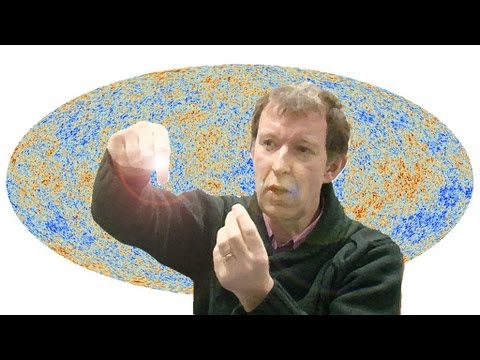
17:25
CMB Radiation Explained | Sixty Symbols Physics
@sixtysymbols
320.6K views•2013-03-26
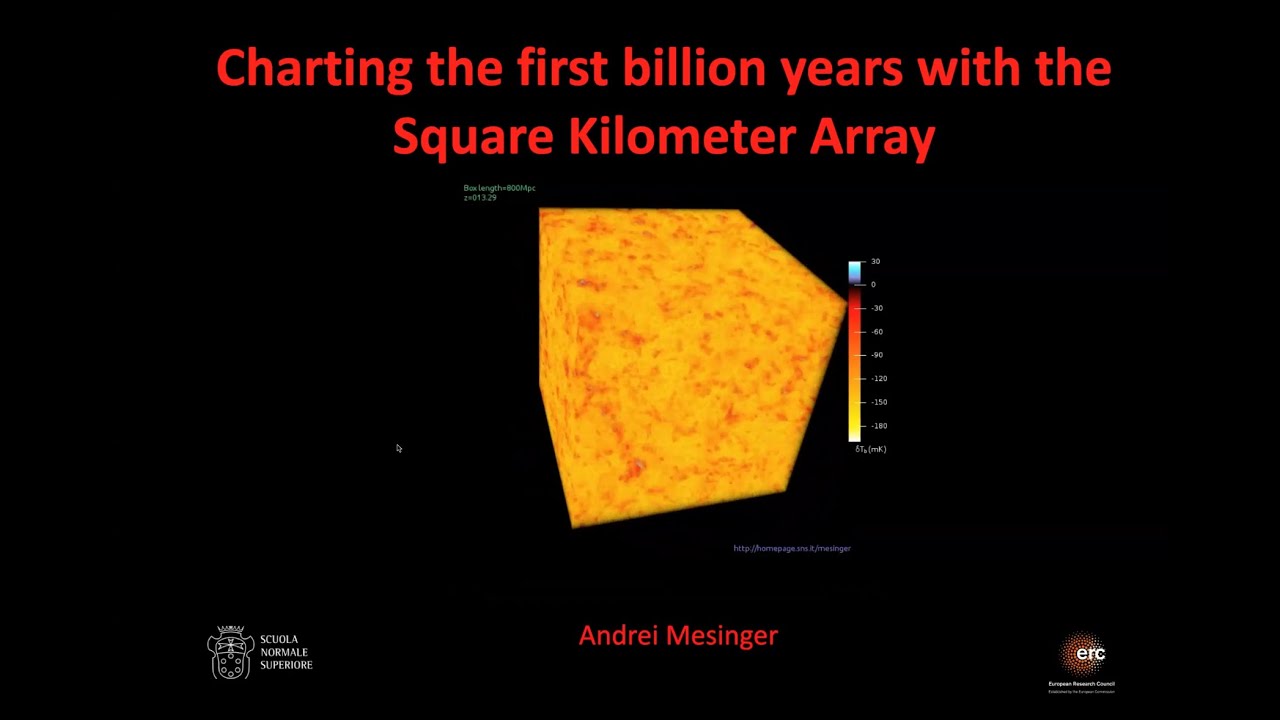
61:17
First Billion Years of the Universe with the Square Kilometre Array
@iaaudc
121 views•2022-05-26
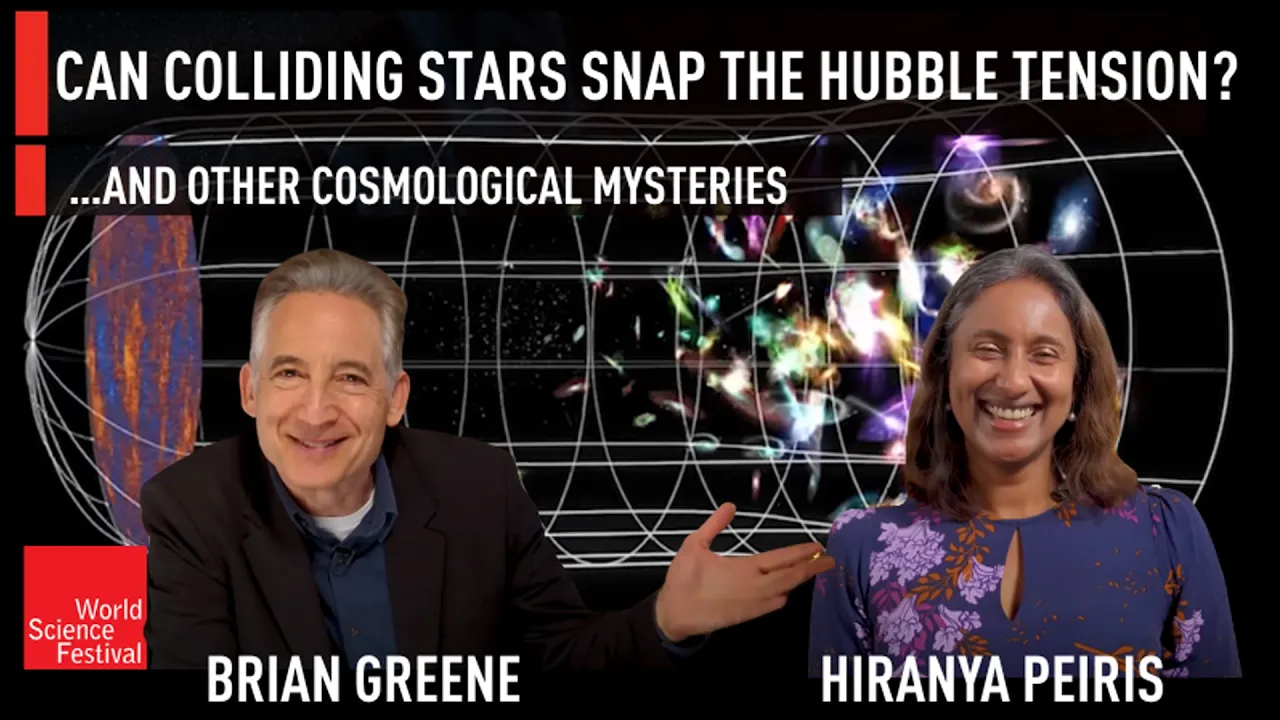
93:42
Cosmology's Big Questions: Dark Matter, Dark Energy & the Multiverse
@WorldScienceFestival
57.3K views•2025-05-16
6:10
Gamma-Ray Bursts: Cosmic Snipers Explained | Astronomy
@kurzgesagt
15M views•2016-07-31
Related Study Plans & Knowledge Roadmaps
Structured learning paths in Astronomy
astronomy
Reionization: Pop III Stars, IGM & 21cm Line
01Foundations of Cosmology & the Early Universe
02Population III Stars & Cosmic Dawn
03Physical Mechanisms of Reionization
+ 2 more learning modules
17h5 modules
Explore Roadmap
astronomy
Planetary Rings: Dynamics, Roche & Resonances
01Foundations of Gravity and Orbital Mechanics
02Tidal Forces and the Roche Limit
03Structure, Composition, and Collisions
+ 2 more learning modules
10h5 modules
Explore Roadmap
astronomy
Asteroseismology: Stellar Waves, Ages & Cores
01Foundations of Stellar Astrophysics & Wave Mechanics
02Stellar Oscillation Modes: P-modes and G-modes
03Mathematical Framework of Asteroseismology
+ 2 more learning modules
35h5 modules
Explore Roadmap
astronomy
Adaptive Optics: Physics, Engineering & Control
01Foundations of Wave Optics and Wavefronts
02Atmospheric Turbulence & Optical Distortion
03Wavefront Sensing Technologies
+ 3 more learning modules
35h6 modules
Explore Roadmap