























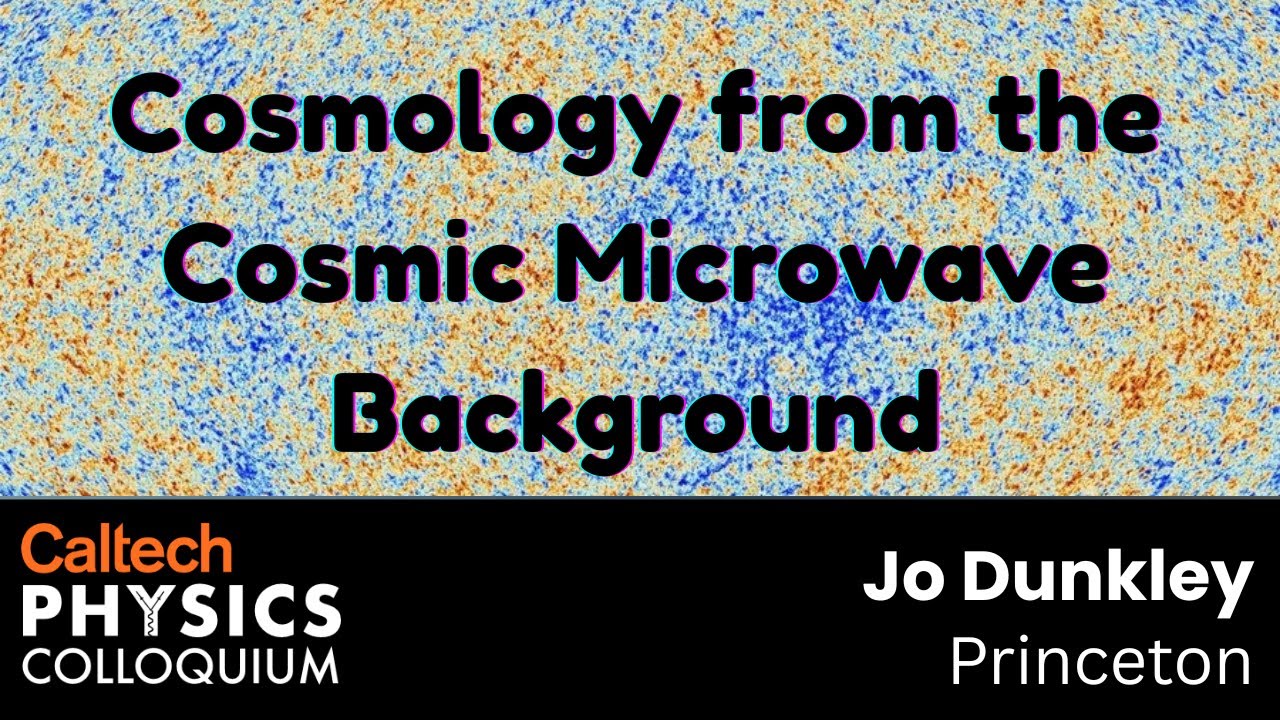


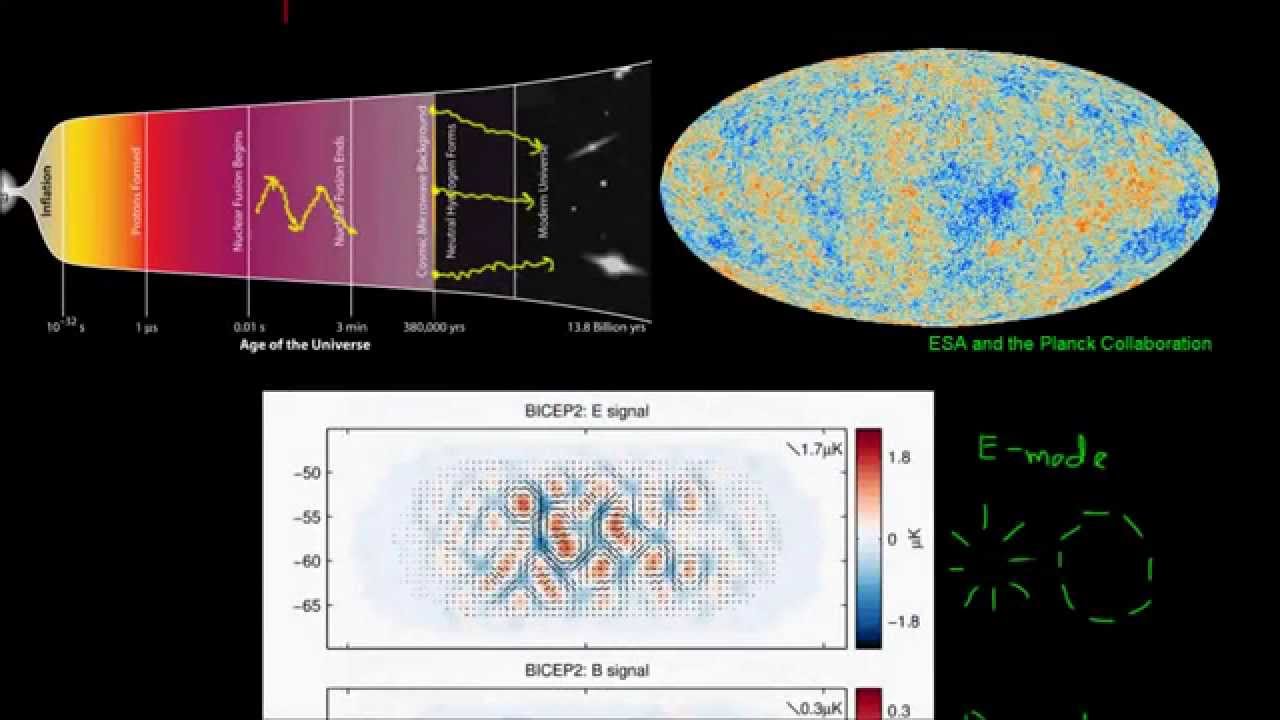
The Cosmic Microwave Background (CMB) is relic radiation from the Big Bang, emitted approximately 380,000 years after the universe's formation when atoms first formed and photons decoupled from matter. This radiation, now cooled to about 2.7 Kelvin from its original 3,000 Kelvin, is remarkably uniform across the sky but contains tiny temperature fluctuations of about 1 part in 100,000. These fluctuations, originating from quantum fluctuations in the inflaton field during the universe's rapid inflation period within the first 10^-30 seconds after the Big Bang, are crucial because they seeded the density variations that eventually led to the formation of all cosmic structures like galaxies and stars. The Planck satellite has mapped these fluctuations with unprecedented accuracy, confirming the standard model of cosmology (containing baryons, dark matter, and dark energy) while also revealing some anomalies that may indicate new physics.
CMB Radiation Explained | Sixty Symbols Physics
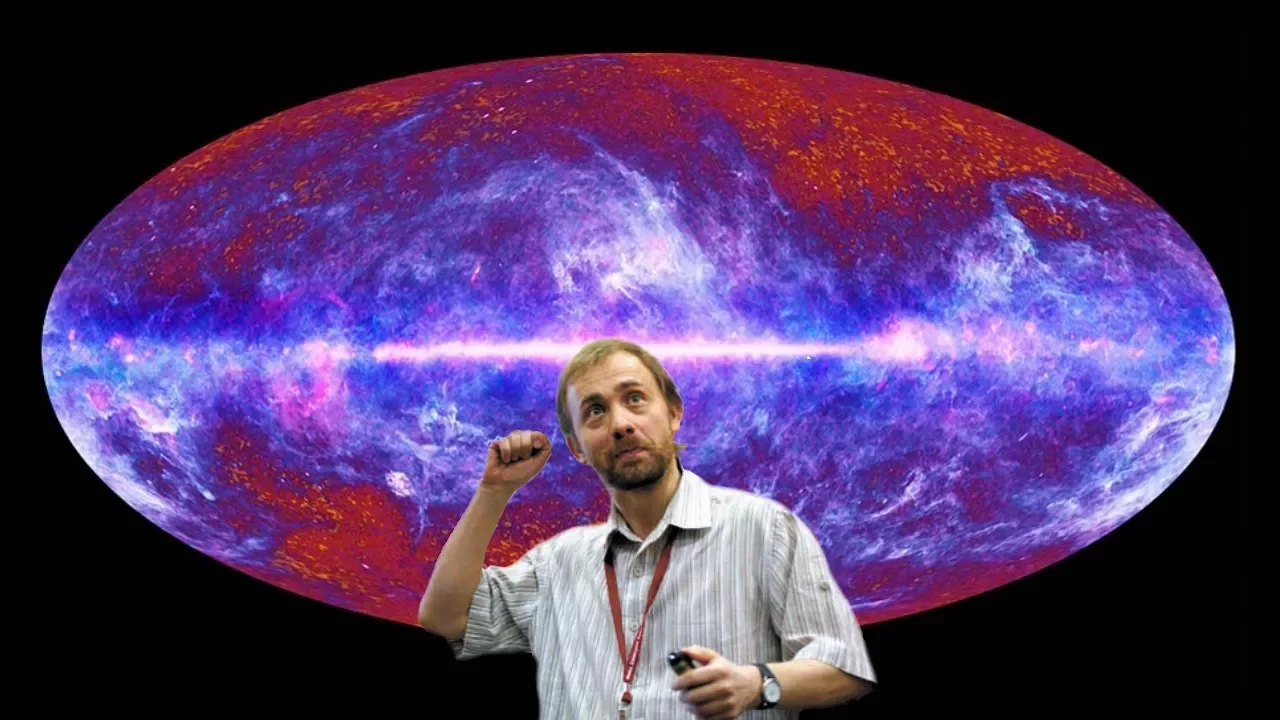
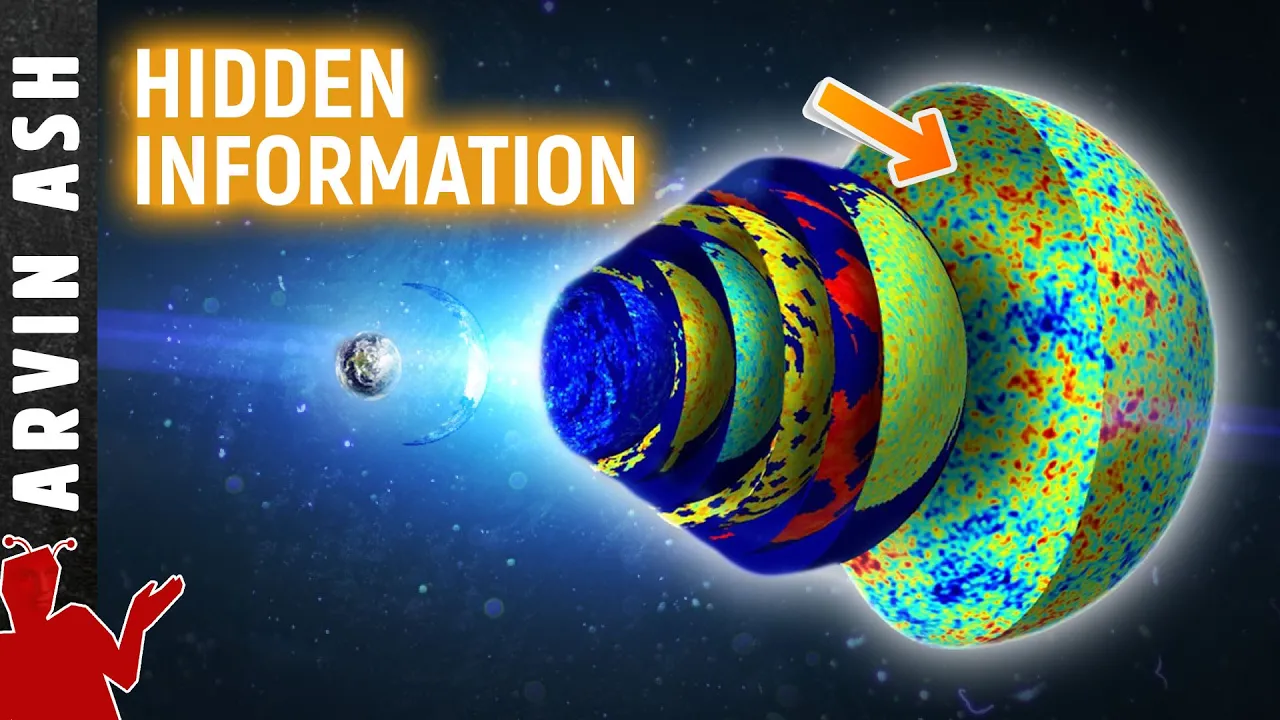
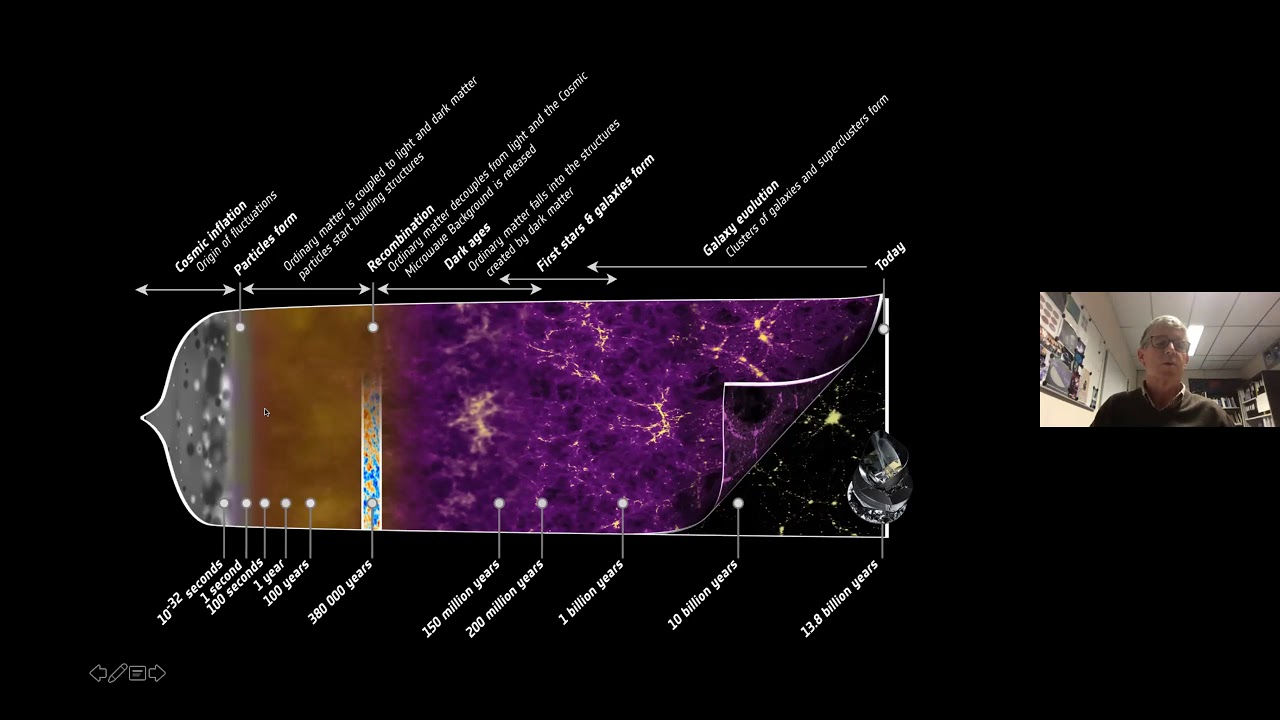
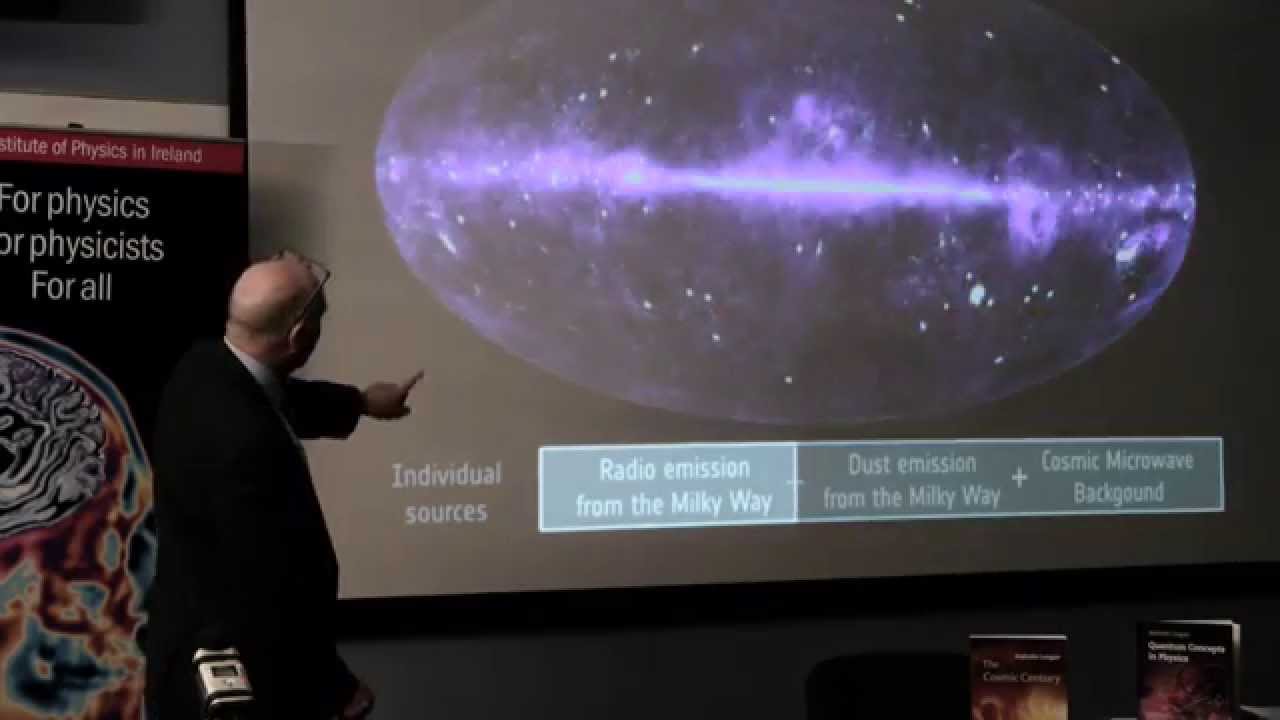
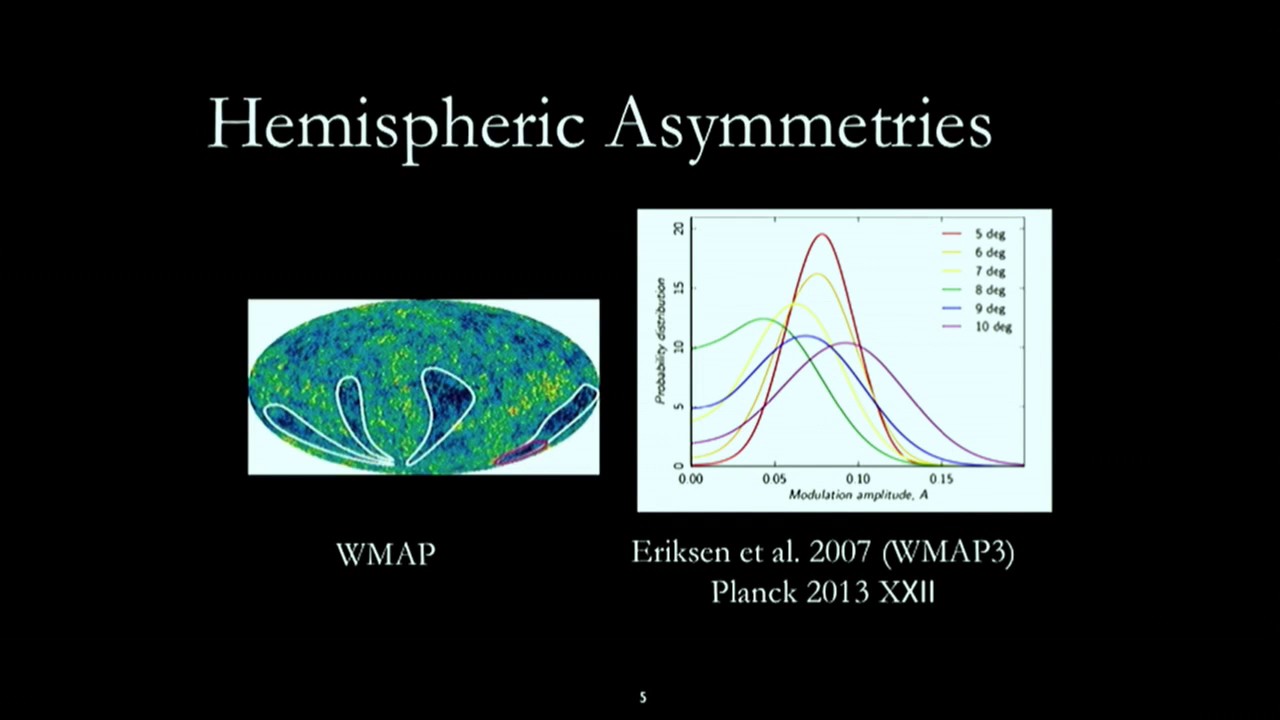
Added:it's exciting times it's uh finding all the major press Outlets BBC New York Times cosmologies front page it's really good they've been looking out into the sky looking at the microwave background there's a radiation from the pig big bang and finding small fluctuations in the temperature of this radiation and they've done it to unprecedented accuracy so by looking at the sky today you're constraining some of the earliest phenomena in the universe is that literally what they're doing here are they going the temperature there is that the temperature there is that the temperature there is that is it is it that simple it's pretty much that what they're looking at are temperature differences but they it means they are looking at the temperatures in different parts of the sky and comparing them and by by doing that you can your theories actually predict what those temperatures should be like and so by looking at this distribution of these temperatures you actually begin to constrain your theory the different theories will have a different distribution of the temperatures what sort of temperatures are we looking at here very very cold very very cold the background temperature of the of this radiation uh and is about 2.7 de Kelvin this is 2.7 de above absolute zero but that's not what the real excitement is that has been known for a long time the the excitement is that this background temperature which is amazingly uniform it looks the same in whichever direction you look in the sky there are actually small fluctuations in it how can they even do this space is full of galaxies and stars and black holes and burning hydrogen and all sorts how can you point your thermometer anywhere and get a and measure something that cold that's crucial you've hit the nail on the head and this is why it takes so long to do it of course the temperature that we see is way higher than that there's radiation coming from all sorts of sources even locally right from the Sun there's masses of radiation that Keep Us Alive and you have to manage somehow to subtract all of that so the first thing that they do is this satellite the plank satellite they send up into a particular orbit so that it's Point always pointing away from the Sun but you've still got the fact that we're part of a a Galaxy and the Galaxy is full of dust and radiation of all different wavelengths lots and lots of stars shining and so they have to actually subtract all of these all of these sources the the thing that's in their favor that allows them to do it is that different sources whether it be dust in the universe or x-rays or infrared they all come with different wavelengths and so if they have enough detectors sensitive to those wavelengths then they can actually see how much is coming in each wavelength and that's what plank has you can extract all that out and with a bit of Lu what you're left with is the primordial Cosmic microwave background that was emitted about 380,000 years after the big bang the early Universe was very hot and dense and it was full of particles and full of radiation and that radiation was was very hot very high energy particles very high energy radiation it was too hot for particles to combine and form atoms say because as soon as they'd try and combine as soon as an electron would try and orbit around a proton and that's where we get our hydrogen a photon of light would come in and smash it apart because it was too high energy but the universe is expanding and we know that if if you've got radiation in a box that's expanding the radiation cools down its wavelength begins to stretch So eventually there will have been an Epoch when when the electrons began to form to go around the protons most of the photons of light didn't have enough energy to break them up again that and that moment is when when the atom first hydrogen atoms form that's when the and that's when the radiation decouples from the particles and that is the formation of the cosmic microwave background happened about 380,000 years after the big bang just before then right just before this decoupling when the photons are released what you actually what you you have are these particles that you have the you have your fundamental particles right we believe we had quarks and we have electrons and we have neutrinos all part of the standard model of fundamental particles and in the early Universe when it's so hot they haven't been able to combine they they're they're moving around freely and so you have what's known as a plasma a plasma of these particles and you've got the you've got radiation photons shooting around but because these particles are free there are many many of them a high density of them so imagine now a photon I'll be a photon here I come in and I hit a particle I bounce off the particle but now I hit another one and I bounce off that and I hit another one and hardly go anywhere so it's called a very I have a very short mean free path between the collisions this means that the Universe when I'm looking back at it looks opaque it I can't see into it because the photons haven't been able to get to me and now as the universe cools down a number of things happen after about 3 minutes the first nuclei begin to form the the quarks managed to combine to give me protons and neutrons and they begin to combine to give me the early the Early nucleus of the lightest elements then if I wait 300, 80 3 180,000 years or so the temperature has dropped down enough that the of the photons that the electrons which up until now have been flying around as well and and the same thing's been happening the F the photons are banging off these electrons and hardly going anywhere these electrons begin to form atoms you know they combine with the protons and form your hydrogen all of a sudden the density of the particles has dropped because they've all they're combining to give me these atoms and now I have big gaps basically between the particles so your typical Photon just shoots straight through now and that's when I I can then see it hardly interacts after that when it when it left when when it left those atoms and left them alone and waved them goodbye that that temperature was about 3,000 Dees Kelvin and but as the universe has expanded that it's cooled down that that radius is cooled down basically it gets stretched and uh it just cools as it it fills this bigger and bigger volume until today it's about 3° Kelvin uh so it is a remnant of the of the of that earliest moments and it's just been cooling ever since the the microwave background radiation which has been propagating since the atoms formed is incredibly smooth in it's got the same temperature in all directions and that was determined well the microwave backgrounds were first discovered in the 1960s by penus and Wilson and the the smoothness of it was really demonstrated in 1992 by the Kobe satellite the onp top of this beautifully smooth background are some very small fluctuations these you know one part a few parts in 100,000 so temperatures of 2.73 de Kelvin plus or minus you know 10us 5° Kelvin a bit hotter here or a bit colder there but very small deviations it's vital that those deviations are there without that Devi those deviations in the temperature actually we wouldn't be here it's that dramatic if the universe was perfectly smooth structures in the universe would never form and and one of the things we're trying to understand is a what what do these deviations really look like what's their Distribution on the sky and then from a theorist standpoint how did they come there you say without the de without these deviations structures wouldn't exist yeah but the deviations were caused by the formation of atoms St chicken and egg the deviations were there way before that the way way before that these deviations in fact these de this is what makes this so cool is that those deviations ow their origin if it's if the theories are correct to the inflationary universe and in the inflationary universe that occurred that period of inflation where the universe expanded exponentially rapidly that occurred about within the first 10 to the minus 30 seconds after the big bang and the fluctu and that that expansion actually had associated with small Quantum fluctuations in in the field that was responsible for the expansion which is called the inflaton field small fluctuations in this field and it's that that we now see in the microwave background we see the effect of those small fluctuations so they were they were imprinted in the in in our gravitational field much earlier than the than when the atoms were formed so what you're looking at if if the theories are correct what you're looking at is actually evidence of the slightly different movements of the of this inflaton field it's called of of the thing that drives that early period of acceleration different parts of the universe were driven at different rates because the infon had had different values in different parts of the universe this field had a different value in different parts of the universe and it because of the fluctuations in it due to Quantum Mechanics then those fluctu ations imprint themselves eventually through to the microwave background fluctuations basically what happens is those fluctuations in the field couple through to the gravitational field and the gravitational field is a thing that then determines how through Einstein's equations tells us how matter and radiation move and and so by seeing how the radiation moves that's seeing how hot and cold that radiation is we can see something about those initial fluctuations in this field the reason why you need some fluctuation is pretty straightforward I think imagine there was no fluctuation imagine you are an atom in the very early Universe and everything is perfectly smooth everywhere you around look around you it looks exactly the same I have to form structur somehow if I'm an atom that's going to be part of a structure I have to determine where am I going where am I going to go now the universe is just as smooth here as it is here as it is in front of me as it is behind me I have no preferred direction to go in and so I basically stay still and now that my neighboring atom feels exactly the same and the one beside it and the one beside it there is no way that there's no preferred direction for structures to begin to form however if if instead of that you have it's almost smooth but you have small ripples in in the matter content maybe a bit more here and a little bit less here and a bit more here then then an atom that's here will move preferentially that way and leave this region behind does this mean that the world's greatest cosmologist armed with all the equations they want could look at this wobble in the inflaton field and accurately predict what the universe was going to look like in 13.8 billion years no see this inflaton field actually eventually decays and it has to repr as it decays it releases its energy and it has to produce all the particles and radiation that we see today so the only way that we can really predict what that's going to look like is by knowing how the inflaton field is coupled to these particles so just in its own the inflaton field isn't enough to give me that information I guess what I'm asking is are we an inevitable predetermined projection of what happened all that time ago or did more were more dice rolled in between now and then we're not predetermined in the sense that the the distribution of of these even the distribution of these hot and cold spots on the microwave background that's a statistical distribution some of those led to structures forming others didn't and and and that's it's that's a chance thing as to you know where the hot and cold spots really appear that that then lead led to structures so the news is that um the plank uh collaboration which is a big big collaboration you in involving a number of countries and scientists from a number of countries have measured this microwave background to incredible accuracy and uh they've put out their data showing you what the map looks like of the of the microwave background fluctuations showing you you know where the power is in this map compared you're looking at different scales on the universe with what different scales contribute to the overall map and and then comparing the map with the the favorite models of our universe and the the the initial impression seems to be that the standard model of cosmology that people have which is basically a universe made up of Barons that's what you and I are made of of dark matter and then dark energy in the form of a cosmological constant subject to these initial period of inflation and the fluctuations that that that inflaton field provided that that seems to fit the data beautifully incredibly well and so the they call it the vanilla model of the universe seems to be working well although as they point out there are because they've now got sort of incredible sensitivity on on small angular scales and on large angular scales they've actually begin to see the odd thing sort of not fitting the standard model very well it was it was actually pointed out previously by another fantastic experiment called W map uh which was the previous generation to this plank one and they'd seen the odd little anomaly that didn't seem to fit the standard model but I think overall the standard model is looking pretty healthy the map is uh the map of the hot and cold spots in the universe on all different scales and what you look for are correlations you look for how one bit of the of the sky correlates with another bit of the sky and by doing that you can work out what's known as as the power Spectrum you can work out the power on any given scale in the universe how how much is that on that given scale that given angular scale how much is it contributing to them these fluctuations and you end up with a series of beautiful Peaks and troughs you know because things Peak at one particular scale and then there's not much at another scale and this is all to do with Theory tells us that it should be looking like this it's the effect of Barons and photons acting together in the early Universe your models actually tell you what that Peak and trough distribution should look like for any given model with any given distribu ution of matter and dark matter and dark energy you can work out what you expect this peak and troughs to look like both where they are and how high they are relative to one another and so what you basically do with this wonderful data is you you look what the distribution looks like and then you begin to test it against the different models to see which fit the data best and which don't and through it you you actually begin to rule out classes of models and other classes look to be fitting the data better than other things do you actually look at what's in space do you look at the map and go there's a warm patch there's a cold patch and wherever there's a warm patch it seems there are more galaxies people do do that yes they the generally you're looking at the statistics you're looking at the statistical distributions so statistics of what of these hot and cold spots you know what's the what's the typical number density of spots of a given size of of a given temperature so that's that's a statistical thing where you're not particularly saying where they are but of course you do like to know where they are and one of the anomalies that seems to be there which is a bit unusual is that if I imagine the the the observable sky and and and sort of separate it into a Northern Hemisphere and a southern hemisphere there seems to be a slight excess temperature in the southern hemisphere compared to the Northern Hemisphere well given what I said earlier about this isotropy and how you expect all to be uniform temperature with these small fluctuations you don't necessarily expect there to be this kind of preponderance for hot a bit down here and cold a bit up there and this is one of the anomalies that people are trying to understand is it is it telling me something about new physics of the very early universe or is it a a systematic in the way that the data has been collected um then there is there are indeed some some actual spots there's one in particular that that they've been highlighting which the W map team also spotted so to speak uh which is seems to be much colder and it's a much colder spot in a bigger region than you would normally expect given the models that I'm telling you about the the one that's got the cosmological constant and the C out matter and the matter you wouldn't naturally have expected such a big spot but it's not out of the question it could have formed it just seems to bit unusual
Up Next
Reionization: Physics of the First Stars and Cosmic Phase Transition
@ictphighenergycosmologyand3398
1.6K views•2018-03-13
First Billion Years of the Universe with the Square Kilometre Array
@iaaudc
121 views•2022-05-26
Understanding the s-Process: How Stars Create Heavy Elements
@sixtysymbols
229.5K views•2016-10-25

Gamma-Ray Bursts: Cosmic Snipers Explained | Astronomy
@kurzgesagt
15M views•2016-07-31
Related Study Plans & Knowledge Roadmaps
Structured learning paths in Astronomy