







![Neutron Activation Analysis | Master Neutron Activation Analysis In Hindi [ FAST ]](https://i.ytimg.com/vi/9WkNO06WA0Q/maxresdefault.jpg)



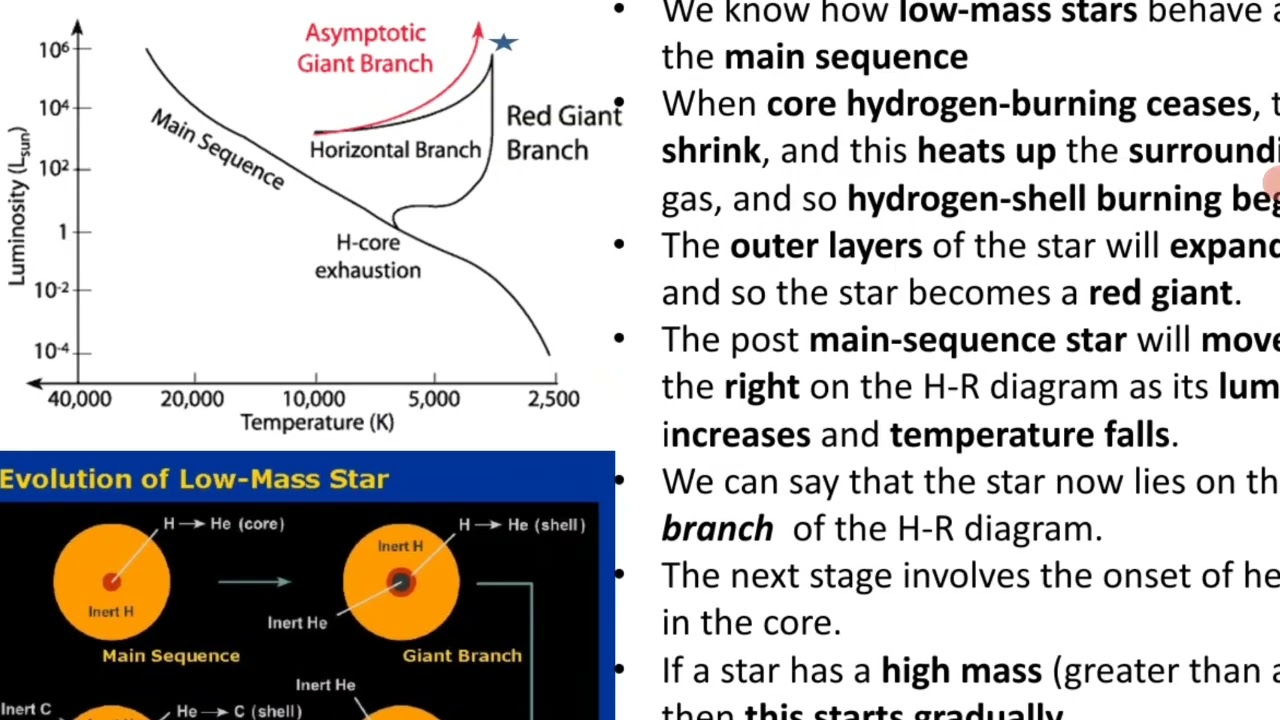


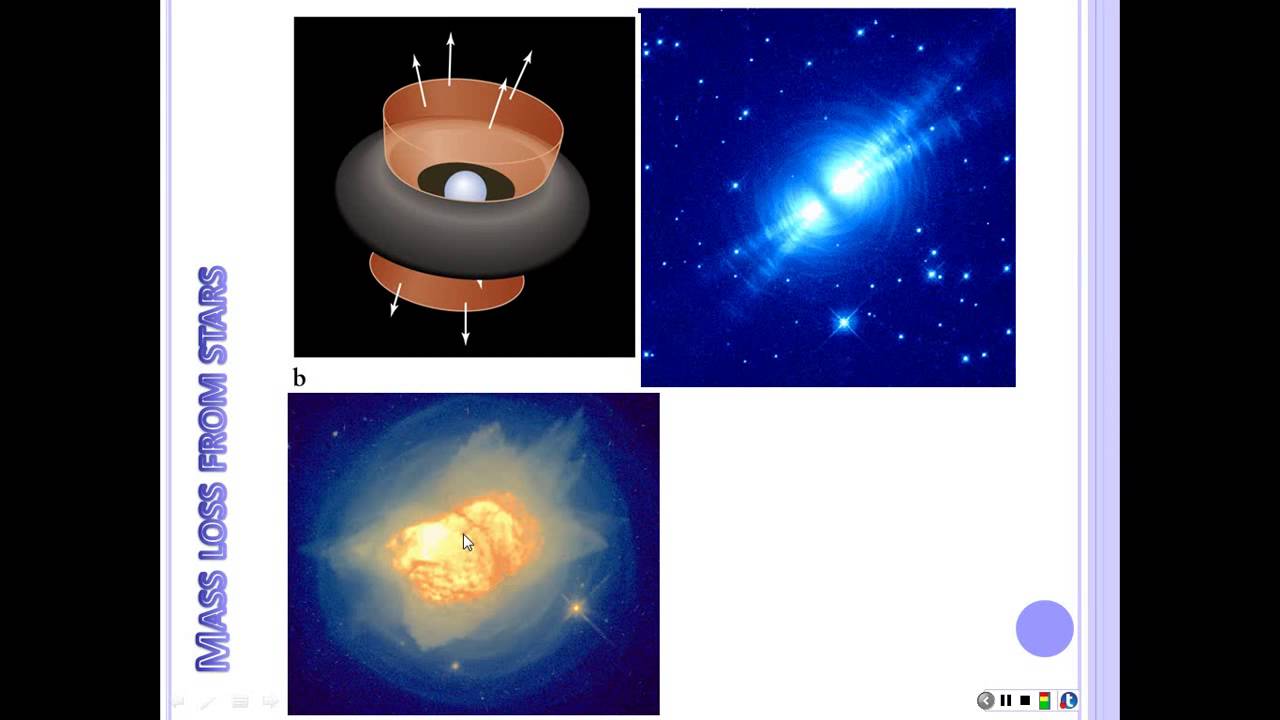








Stars forge elements through two primary neutron-capture processes: the rapid r-process in supernovae, where nuclei absorb neutrons so quickly they bypass stable isotopes to create heavy elements like gold; and the slow s-process in late-stage stellar evolution, where nuclei absorb neutrons gradually over thousands to millions of years, allowing beta decay to convert neutrons to protons and create elements like barium, lanthanum, and cerium that cannot form through the r-process alone.
Understanding the s-Process: How Stars Create Heavy Elements
Added:Basic principles of stellar nucleosynthesis, including hydrogen and helium fusion cycles that form elements up to iron.
Fundamentals of nuclear structure, specifically isotopes, radioactive decay (especially beta-minus decay), and nuclear binding energy.
The concept of neutron capture cross-section, which measures the probability of a nucleus capturing a free neutron.
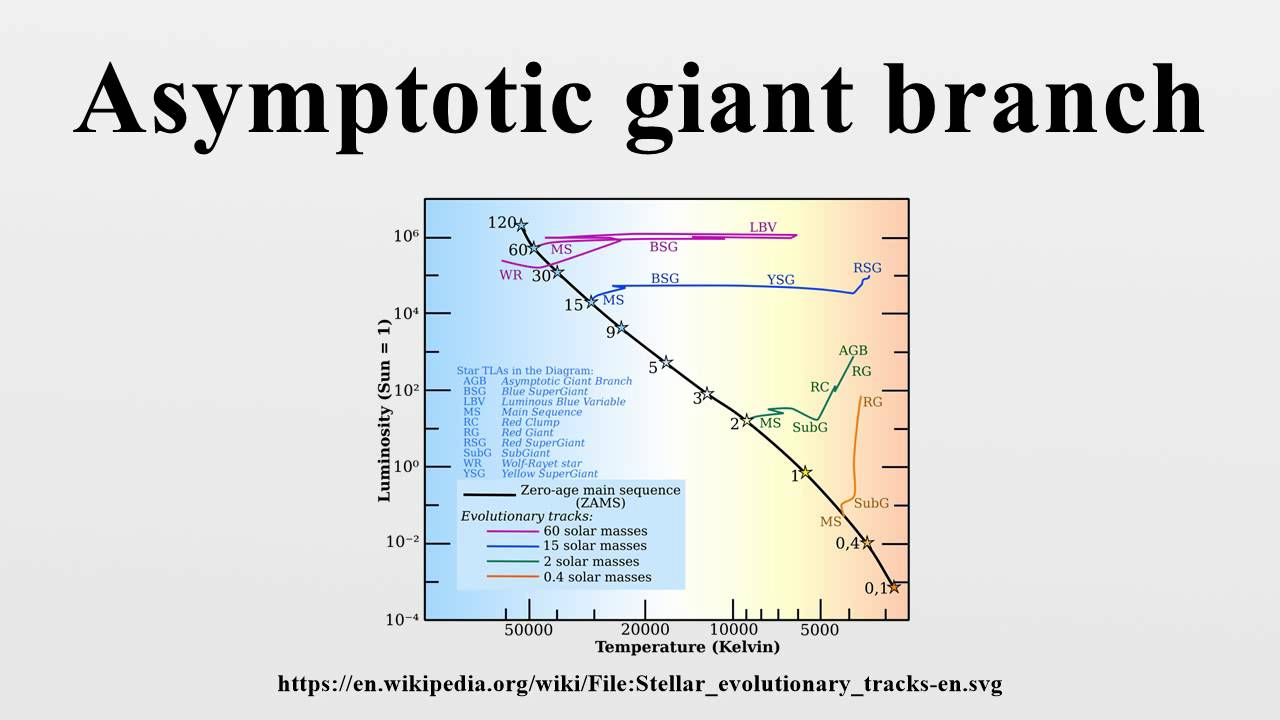
The lifecycle of low- to intermediate-mass stars, particularly the structure and evolutionary phases of Asymptotic Giant Branch (AGB) stars.
The r-process (rapid neutron capture process) and its occurrence in extreme cosmic events like supernovae and neutron star mergers.
The p-process (proton capture mechanism) and other nucleosynthesis pathways responsible for producing proton-rich heavy isotopes.
Stellar spectroscopy and the observational methods used to detect s-process elements (such as barium or technetium) in the atmospheres of stars.
Galactic chemical evolution, exploring how the products of stellar nucleosynthesis are dispersed and enrich the interstellar medium over time.
229.5K views6.3Klikes9:35Original Release: 2016-10-25
i'm going to talk about where the chemical elements come from if you want something close to a symbol i'm going to talk about the r-process and the s-process we're gonna talk about chemical elements which means i need to venture alarmingly close to chemistry and actually talk a little bit about the periodic table so first let me show you an astronomers periodic table which is this there are only three things in the universe as far as astronomers are concerned there's hydrogen helium and everything else which we tend to call metals.
and the fraction of each we tend to call x y&z i'm going to show you this because it really annoys chemists but actually to a large extent it's sort of helpful because actually was one of the things that astronomers broadly know is that hydrogen and helium were mainly made in the big bang and everything else was more or less made in stars. you do it by mass is about three-quarters hydrogen one-quarter helium and a tiny bit of everything else, so a few percent of everything else.
so these are not to scale in that sense.
All right, but it turns out astronomers do actually know a bit more about chemical elements and where they come from that and in fact it's a very nice graphic that be a little while ago that tries to summarize it. it's caused quite a lot of discussion and debate in the astronomical community but at least for a first approximation it kind of tells you what's going on. and it's sort of reflects the story that I've just told you that hydrogen and helium were made in the big bang and pretty much everything else was made in stars. now it turns out course that that's not true when you start looking in detail at things. so for example when you start looking at all the very heavy elements, which have very short lifetimes. the only way we can actually make that is by making them ourselves. So anything that's made in stars has long since decayed away so the very heavy elements are actually human-made rather than starmade and actually it turns out when you look at the light into things things are a little more complicated as well because you've got things like lithium and beryllium: you've got little 'c's next to them here. they're actually made through a process called cosmic ray spallation. cosmic rays are these very high-energy particles moving through space and when a very high-energy particle-- it could be an atomic nucleus-- wacks into another particle --could be another atomic nucleus, you can actually have fission occurring. that the atomic nuclei can fall apart or something which was initially a heavier element can actually be splattered into these little bits we believe the main way of lithium and beryllium and boron get made is through that spallation process. so they weren't actually made in stars --well at least something heavy was probably made in a star, but then he got smashed to pieces from cosmic ray interactions. the broad story is that hydrogen and helium made in the Big Bang, then you have stars, stars in their center fuse lighter elements into heavier elements because that's how their powered. They're fusion powered. and so you can make heavier elements. one of the main ways you make heavy elements in the core of a star when you've got hydrogen turning into helium and helium turning into carbon and so on. but that kind of gives out at iron because once you get to iron, then making heavier things by smashing iron nuclei together-- it turns out that absorbs energy rather than giving energy out. so you stop getting energy out of the process when you get to iron. and of course if you're trying to power a star, you need to get energy out. so stars give up once they get to iron. and so again the simple law in in astronomy is hydrogen and helium came in the Big Bang,everything up to iron was made in the centers of stars, and then everything heavier than iron only gets made it super novae because when a star explodes then you have lots of energy around you can have these very inefficient processes. you're not trying to power star anymore so actually you can smack things together and create the heavier elements like gold and all the heavier things that are around-- get made in super novae. and if you look at this plot that's kind of true in that if you just look at it so we've got the green and the yellow are stuff that's made in stars and you can see all the lighter elements as we go down the periodic table tend to be green in nature till we get to about iron and then they sort of start turning more to this pinky orange color which is super novae, and so you can see the more massive elements tend to get made in in supernovae. but interesting this is not entirely true it's not like everything stopped at iron and then suddenly everything is made in supernovae. and in particular if you look at these guys here, i'm gonna have to struggle with my command of the periodic table and chemistry in general. that barium lanthanum and cerium you can see they're actually made in stars but they're way heavier than iron right. Iron's somewhere way up here and these are what down towards the bottom of the periodic table and so the question is how on earth you end up with heavy elements which clearly aren't made in super novae but are actually all are made in stars somewhere along the line. and that's where we get to this thing called the r-process in the s-process. it's actually quite hard to make a heavy element because you have to take-- so if you're gonna make a heavy element through fusion you got to take two fairly heavy nuclei and smack them together and get them to stick. and heavy nuclei have quite large charges associated with them so you know hydrogen only had one-- you know, one proton but by the time you get to these heavier elements they have to have lots of protons. they have lots of positive charge, lots of positive charge so actually they repel each other very effectively. so it's very hard to make heavy elements just by smacking nuclei together. turns out there's an easier way to make heavier elements which is that if you've got a neutron, the neutral particle, then you kind of make that stick to a nucleas. so you basically smack it into a nucleus, it'll stick and that then add to the weight of the nucleus. now you haven't actually changed the chemical at that point because --so chemicals that the chemical properties of something depend on how many protons there are on it, not how many neutrons are on it. So adding a neutron to it just changes the isotope of the chemical. it doesn't actually change the chemical. but neutrons can then decay through a process called beta decay and the neutron basically turns into a proton and kicks out an electron and a neutrino in the process. so you sneak the proton in there by the backdoor? Exactly.
Without having to overcome these Coulomb repulsions I've managed to sneak a an extra particle in which then magically turns into a proton so i've changed the element that way so it turns out that's actually the main way. you make these heavy elements just by adding neutrons. and in a supernova there's loads of neutrons around huge neutron flux. There's a lot of everything around a supernaova; it's a complete mess.
and so you can have a nucleus and you can just basically bombard whole load of neutrons into it and then it'll end up a very heavy isotope of whatever it started with but then those neutrons will go: bing-bing-bing-bing and will beta decay down into protons so you can end up creating heavier elements that way. and that works great you can actually you know it decays once and that moves at one place at the periodic table because you added a proton effectively and then it decays again and so you can kind of walk your way up the periodic table that way.
the problem is that sooner or later in that process you reach a stable isotope, one which will just stay there forever.
so it will decay for a while and then it'll stick and that means that anything kind of further upstream from that nucleus you can't make anymore because it you've got stuck at that point where it's actually it's... everything's decayed as far as its going to; nothing else is going to happen to it after that so what I've just described as a thing called the r-process, or standing for rapid because you added a whole bunch of neutrons very rapidly. now there are other chemicals that that exists in the universe that that are kind of blocked by this process that they wouldn't actually form from this process. and the only way you can make those is through this thing called the s-process which is a slow process. which is that you add a neutron, you wait for it to decay, it turns into a proton (it changes it) and then you add another neutron, and you wait for decay and it turns into the next element up. and that way you you don't have this kind of blocking effect because you can always just had another neutron and then it will decay and so on so through that process you can get to a whole other set of elements through this thing called the s- process that don't get made through the r-process, but you can... there other decay chains that will get you to these s-process elements. but in a supernova everything happened very quickly because you got this massive neutron flux and then it's all over in, you know, hours.
[Brady] so you only get one go to add a neu-- [Merrifield] Exactly and these decays if you do this is s-process, you know you added --you add a neutron sometimes these decays can take weeks months years thousands of years and so actually you're never gonna-- that s-process is never going to work in a supernova because you've added one, and by the time it's decayed to the next thing along, the whole supernova's over. and so you're not going to add any more neutrons. and so things which you've made through this s-process can't be made in supernovae. so we have to look somewhere else where there is this process where you can have neutrons things but over a much longer period of time tens years hundred years thousands of years rather than all in one go.
and it turns out that in the late stages of some stars' lives, they actually produce quite a lot of free neutrons.
some of the late-stage burning things that when you're burning carbon into heavier elements and we need to do you actually get liberated quite a few neutrons along the way. and so there are free neutrons over the hundreds of thousands of years that the the star is going through this phase of its lifetime.
kind of... bimbling around within the star which means that you can actually then, over time, add neutrons with these s-process. these elements here that i was talking about before: barium, lanthanum, cerium, are only made through this s-process.
and that means that the only way they can possibly be made is that was probably from a previous generations of stars. there was a fairly heavy element in the in the star, like iron or something like that, which then had an-- late in the lifetime of the star, had these this sort of free Neutron flux bumping into it over tens of thousands, hundreds of thousands of years, which would through this s-process turn it into one of these heavier elements like barium. is quite interesting that that whenever you get some Barium, you know you know pretty much how that has to have formed. then it's actually quite a long story. [This is a rod of barium we've got in here.] that must have been a first generation of stars that went supernovae, threw out lots of heavy elements, that that will produce through this r-process. but that wouldn't have made the barium. then some of those heavy elements were then incorporated into a later generation of stars, relating the lifetime of that particular star. there was a strong one-- Neutron flux within the star which would then through this s-process get it up to these these heavy elements like barium, and lanthanum.
[Brady] Quite a journey some of those atoms have been on It really is and I you know it's kind of astounding that just by sort of understanding the nuclear physics and how these various chemical elements get made you can actually trace... you know when you've got one of these elements, you can actually look at it and say well I know how this must be formed. and it's quite --as you say it's a kind of long, involved story and some of these elements.
you should be able to file a little bit of the barium onto this foil ok I can see little bits coming off actually they're very very small
Up Next

51:07
Core-Collapse Supernovae: Stellar Death & Nucleosynthesis
@JasonKendallAstronomer
103.8K views•2018-09-03
61:17
First Billion Years of the Universe with the Square Kilometre Array
@iaaudc
121 views•2022-05-26
17:25
CMB Radiation Explained | Sixty Symbols Physics
@sixtysymbols
320.6K views•2013-03-26
6:10
Gamma-Ray Bursts: Cosmic Snipers Explained | Astronomy
@kurzgesagt
15M views•2016-07-31
Related Study Plans & Knowledge Roadmaps
Structured learning paths in Astronomy
astronomy
Reionization: Pop III Stars, IGM & 21cm Line
01Foundations of Cosmology & the Early Universe
02Population III Stars & Cosmic Dawn
03Physical Mechanisms of Reionization
+ 2 more learning modules
17h5 modules
Explore Roadmap
astronomy
Planetary Rings: Dynamics, Roche & Resonances
01Foundations of Gravity and Orbital Mechanics
02Tidal Forces and the Roche Limit
03Structure, Composition, and Collisions
+ 2 more learning modules
10h5 modules
Explore Roadmap
astronomy
Asteroseismology: Stellar Waves, Ages & Cores
01Foundations of Stellar Astrophysics & Wave Mechanics
02Stellar Oscillation Modes: P-modes and G-modes
03Mathematical Framework of Asteroseismology
+ 2 more learning modules
35h5 modules
Explore Roadmap
astronomy
Adaptive Optics: Physics, Engineering & Control
01Foundations of Wave Optics and Wavefronts
02Atmospheric Turbulence & Optical Distortion
03Wavefront Sensing Technologies
+ 3 more learning modules
35h6 modules
Explore Roadmap