












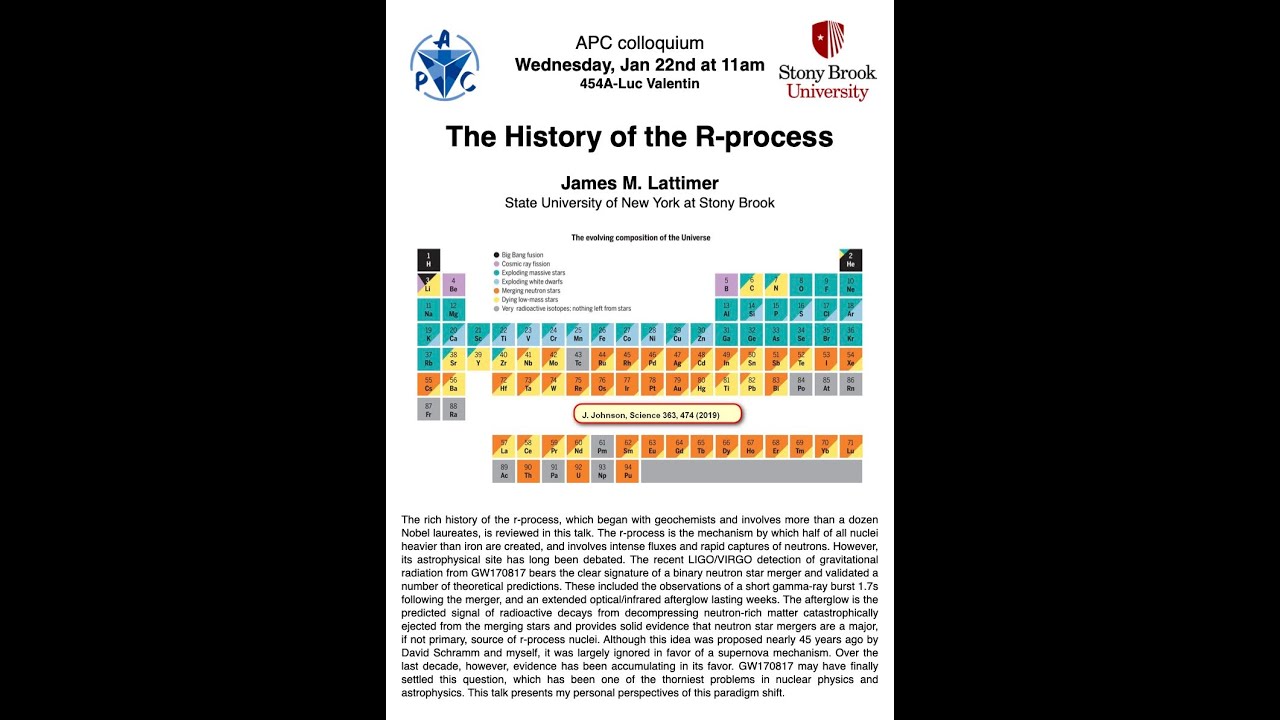




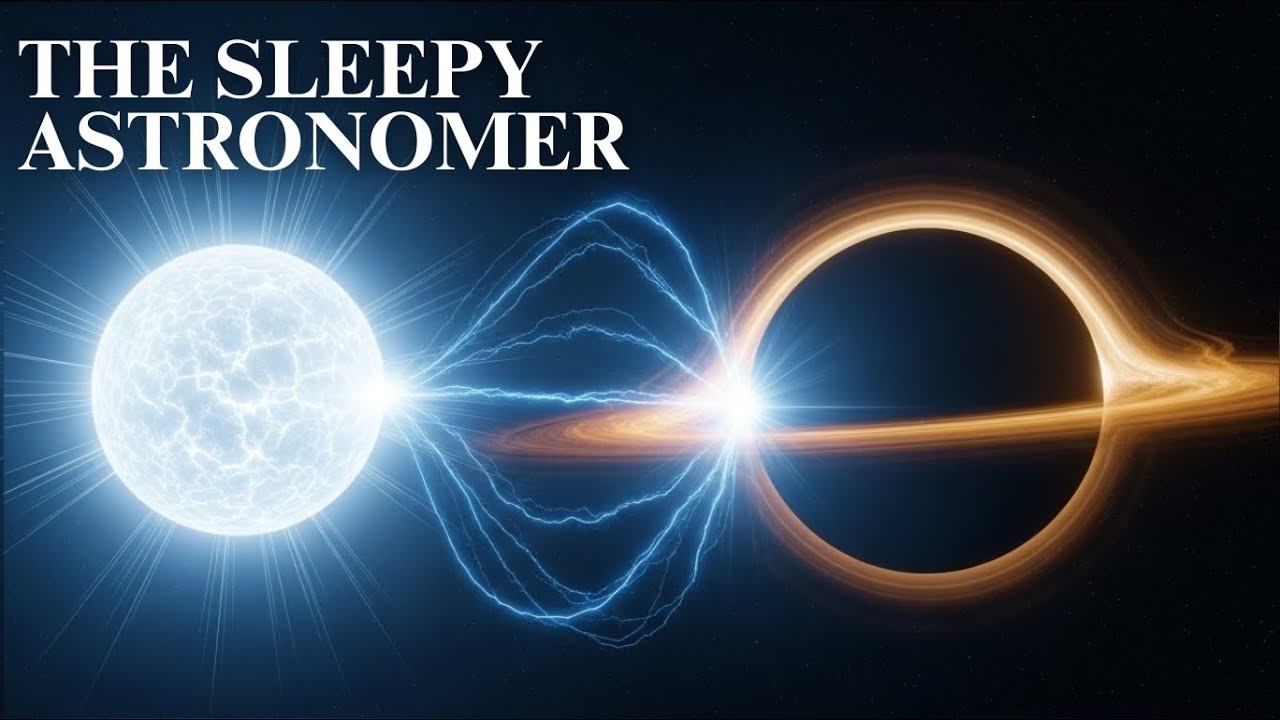







Elements heavier than iron, including gold, platinum, barium, and lead, are not created by nuclear fusion in supernovae but primarily through neutron capture processes. The r-process (rapid neutron capture) occurs in neutron star mergers, where abundant neutrons allow nuclei to capture neutrons faster than they can decay, creating heavy elements like gold and platinum. The s-process (slow neutron capture) happens in certain dying stars, where slower neutron capture allows beta decay to occur between captures, producing elements like barium and lead. Together, these processes explain how approximately 50% of heavy elements are formed in neutron star mergers and 50% in asymptotic giant branch stars, with the B2FH paper providing the theoretical foundation for this understanding.
The Woman Who Solved the Mystery of Heavy Elements: R-Process & S-Process
Added:all the elements that are heavier than ion like the golden platinum in your jewelry the barium used in green fireworks and the lead used in your car batteries they were all created by nuclear fusion reactions in a fraction of a second during a super NOA explosion or are they the story is almost correct except for these elements are not really created by nuclear fusion reactions and they're mostly not created in super noi when I first learned that this was a huge misconception that I had I got so many questions like why do we say that these heavier than ion are not created by nuclear fusion reactions and if not by nuclear fusion how are they created and if not in superi where are they created and most importantly how do we know about all this stuff oh my God so many questions and I had no answers to all of them until I met Margaret Burbridge and then my mind was truly Brown so the goal of this video is not just to learn but like always to ReDiscover where and how exactly are these elements that make up your jewelry or fireworks how are these elements heavier than ion actually created so if you're ready for this let's begin let's back up a little bit we all know about the incredibly beautiful but also incomplete story about how the elements are made it goes something like this the hydrogen and the helium were made in the Big Bang and all the other elements were manufactured in the stars by the way you keep asking me where I get my t-shirts well I've started making my own and now you can buy them as well okay stars are powered by nuclear fusion reactions you probably know this right because when lighter nuclei fuse together the heavier nuclei are more tight bound as a result they release energy and the Stars use that energy to you know counteract Against Gravity so if you could Peak inside the core of a very massive star you will actually find shells of heavier and heavier Elements which are being forged by nuclear fusion reaction but that is only until we get an ion core it is one of the most tightly bound nucleus in the universe so if you try to fuse ion together it will not release energy you require energy and therefore Fusion stops and that's why you can only use nuclear fusion to produce elements up to ion and now because there's no longer Fusion there's no longer a power source gravity vins and the core starts shrinking and because of the extreme pressure generated inside the core the electrons actually fuse with protons to create a neutron star this is one of the densest things in the universe and now the collapsing shell bounces off against this neutron star sending a shock wave producing a supernova explosion and the story usually ends with one last sentence which says that all the other elements in the periodic table are created in a fraction of a second during this super NOA explosion and it's this last sentence that we really want to pick apart in this video and to do that we're going to talk to who is she you ask oh you know just a regular badass astronomer I mean she was incredibly influential in a field that was completely dominated by men during that time not only that when she was awarded a prestigious astronomy award which was exclusively reserved for women she rejected it because gender discrimination and most importantly she she co-authored one of the most influential one of the most argu arguably the most important paper ever written in astronomy the b square FH paper so Market why are elements heavier than ion cannot be created by nuclear fusion reactions I mean I understand that fusing these elements will not release energy they will you know they're endothermic reaction they absorb energy but we we're talking about Supernova explosion there's so much plenty of energy over there so surely this must be happening right and Margaret says Mahesh fusing such heavier elements require hundreds of billions of Kelvin to overcome the kum's barrier and I'm like I get it but Supernova and she's like that's not the point do you have any idea how much energy photons would have at such temperature and I'm like no but why are we talking about energy of the photons and marget says well you can easily calculate that just by using bolman's equation right like KB into T um where KB is the bolman's constant and T is absolute temperature in in Kelvin temperature in Kelvin okay so if you just plug in the numbers you would find that the average energy of the photons at such high temperatures of hundreds of billions of kin would be about 10 to 20 Mega electron Vol and I'm like okay but why should I care about that because this is The Binding energy of all the nuclei in other words a photon with this much energy can actually rip apart a nucleus so Margaret what you're saying is if you want to fuse heavy nuclei the temperatures required are so high hundreds of billions of Kelvin that even if we do achieve that temperature the photons over there would be so energetic they would actually rip the nucleus apart and Margaret is that that's yeah exactly and that's why you cannot have nuclear fusion of heavier elements this is called photo disintegration and I'm like oh my God I never really thought about this so Margaret it looks like it's going to be hard for nature to start creating heavier than iron elements isn't it and Margaret says actually mes it's going to be super easy bar in inconvenience I'm like how use neutrons during a supernova a lot of neutrons are created some of them come from the photo disintegration at such high temperatures we spoke about others can come because you have a neutron star at the core of a supernova right so when something bounces off of it a lot of neutrons get splattered off and so these heavy nuclei like ion for example can start capturing a lot of neutrons and that's how it can start creating heavier and heavier elements and I'm like Margaret wait a second capturing neutrons does not produce new heavier elements they just produce the new isotopes of the same elements right well marget reminds us that mahes true but when you capture a lot of neutrons like what happens in a supern noi nuclei tends to get unstable too many neutrons make a nuclei unstable remember that we've talked about that in detail you know as to why that happens in a previous video but just to summarize just like electrons protons and neutrons inside the nucleus also have energy levels and they fill it kind of like the electrons do and so if you have too many neutrons look the energy level of the entire nucleus becomes too high and so what the nucleus what happens now is that some of these neutrons will get converted to protons so that the energy overall energy can be reduced and the whole thing becomes much more stable than before this is called the beta Decay it's called so because in this conversion beta particles like electrons are created and even neutros are created which I haven't shown over here because that's besides the point also because I got a little lazy animating that but long story short if you have too many neutrons if you capture too many neutrons well it becomes unstable and some of those neutrons can be converted into protons and that's how you can create newer and heavier elements okay so Market what you're saying is because fusing heavier elements directly is not possible because of the huge kums barrier we get instead what happens is they capture a lot of neutrons and then convert some of the neutrons into protons via better Decay I find that hilar ious because that's kind of like nature giving the kum's barrier the finger all right so we now have our correct story all the elements that are heavier than ion like the gold and the platinum in your jewelry the barium used in the green fireworks and the lead used in your car batteries they were all created by Neutron captures and then a better DK in a supernova explosion or is it so mahes now we know that Neutron capture is the key to creating heavier than IR elements right so if you have a lot of neutrons flying around more chances of the capture more efficient this process becomes so superi definitely creates a lot of neutrons and back then we thought that super noi is the only source of creating neutrons but where else do you find a lot of neutrons packed together neutron stars the core of the neutron star is packed with neutrons and the density is that of an atomic nucleus the one of the densest things in the universe besides black holes depending on how you think about density by the way but there is a thin crust of heavy nuclei like ion and nickel over here as well which can act like seeds to capture these neutrons but wait a second we need some kind of an explosion to set this in motion isn't it what kind of an explosion can do that well what if you have two neutron stars orbiting each other then they can lose energy due to gravitational waves and crash into each other and when that happens of course they create a black hole but a lot of neutrons are whipped out and you have a lot of neutron flux over here a perfect sight for an efficient Neutron capture so today we think that neutron star mergers they are the dominant sites for creating such heavier than ion elements in an explosion but wait a second neutron star mergers are way more rare compared to supern noi because you need two neutron stars orbiting each other right and yeah they are but we believe that the efficiency is so high that it compensates for that but the big question is do we have evidence for this well certainly not during Margaret's time because back then the concept of neutron star was just being theorized but today we do you probably know that in 2017 Humanity for the very first time detected gravitational waves from a neutron star merger but what else happened is we looked at the signature the optical signature that you know that comes during the neutron star merger and from that we were able to actually see we were able to detect heavier than ion elements being formed in fact our estimat showed that roughly about 10 Earth wors of gold and Platinum alone were formed during that one you know neutron star merger that must have happened you know I think millions of years ago so yes today we have proof that it is indeed the neutron star merger which is the dominant site for creation of these heavier than iron elements not superi neutron star mergers okay so putting it all together we finally have our story this means all the elements heavier than ion like the gold and the platinum in jewelry the barium used in the green fireworks and the lead used in your car batteries they were all created by Neutron captures and a subsequent bar Decay mostly in neutron star mergers or is it turns out that neutron star mergers and the small contribution that we get from superi they're collectively responsible only for creating about 50% of the Isotopes that are heavier than ion so the big question is what about the remaining 50% where do they come from and again how do we know over all of this stuff well to answer that question Market says let's get into the details of the neutron capture that's happening during explosive events like this so for example during a neutron St merger let's say we have an ion nucleus over here okay it is capturing lots and lots of neutrons per second very rapidly because there are so many neutrons over there right in fact the ion has become extremely unstable right now and it wants to undergo a better DK maybe it even does but it's capturing neutrons at such a staggering rate it just keeps accumulating neutrons until it reaches a point where it can no longer just hold neutrons anymore and only once it reaches this point it'll stop capturing neutrons and now it can better Decay and convert those neutrons into protons and eventually get to a stable element and you can see now this new new stable nucleus has a much higher atomic number compared to ion because there are so many more protons compared to so many new protons compared to what we had before right this is what we call the r process rapid Neutron capture R stands for Rapid over here this is what must be happening in explosive events like Neutron St mergers and supern noi and the beautiful thing about this is that we can even predict what the end elements of the r process would be where it would naturally end up if we do the math which we're not going to do it but if we do it turns out that our processes should end in elements like gold and platinum and other elements like selenium for example so these must be The Natural end points of the art process theoretically now if that is true then if you look up in the sky then these elements which are the natural end products of our process these elements must be abundant right because they should get accumulated and so we looked up in the sky and guess what that's exactly what we found we found that elements like gold platinum and selenium which are the natural end products of our process they are indeed more abundant compared to their neighboring Isotopes and that was a huge evidence in support of our process in support of neutron capture which is insane if you think about it right but there was a problem we also found some other elements to be abundant compared to their neighbors which are not the end products of our fres for example berium and Lead they in fact turns out that they get skipped over by the r process so what's causing them to get accumulated was the big question what's going on over here Margaret Margaret says to answer that question she and her team can hypothesize that there must be another way Neutron capture must be happening one that's happening much more slowly so that it doesn't skip over any element for example let's again start with ion and let's say you capture now one Neutron per month so you capture a neutron you wait for a month if it's stable fine it stays that way capture another one and wait for a month if it wants to dek it can Decay and now look the next element can be formed and then you wait for another month and see if you want to capture another Neutron again if it's stable it's stable and then if you want to Decay well again you can Decay so you can get the next element and maybe now you'll get to the element like barium and Lead what's special about barium and Lead is that they have a neutron magic number so just like how in noble gases electrons are completely filled and so they will not react with any element and that's what makes them Noble and stable turns out the same thing happens at a nuclear level as well certain isotopes of barium and Lead they have a neutron shells which are compl completely filled and as a result they will not accept any more neutrons after that and so look in this slow Neutron capture process barium and lead and elements like these which have Neutron magic numbers they tend to be unnatural endpoints right and so if a process like this happens then these elements can build up so Margaret and her team hypothesized that there must be an S process as well s stands for slow Neutron capture allowing enough time for bet Decay to happen but the big question now the final question now is where exactly does s process happen I mean clearly it cannot happen in explosive EVS like neutron star mergers or supern noi because that's there you get a rapid flux where do you get one Neutron per month where does this happen Margaret turns out that there are certain dying stars in which nuclear reactions can produce neutrons and so that would be a perfect site for the s process but wait do you see how radical this claim is I mean so far we used to think that all the heavy elements were produced in an explosion but now Margaret and her team are challenging that and saying ah about 50% of those elements heavier than iron are produced in a dying star not explosion but in a star that is an extraordinary claim back then and extraordinary claims need extraordinary evidences so Margaret what's the evidence for that and Margaret asks Mahesh what do you think what would be the evidence for finding s process you know that s process indeed happens in a star and I'm like oh I know just point your telescopes at those particular stars and see if you can find spectral signatures of elements that are created by S process like barium and Lead if you see them then that's evidence that they're over there that that they're indeed present in the stars and therefore they must be created over there right and Market says not really just because you find the elements in a star doesn't necessarily mean they were created there right it's possible that those elements were created outside and they found their way into the star just like how all of the ion that is there in the earth right now were created outside of the earth and it's found its way into the Earth right so just because you find it over there doesn't mean you know it was created over there I'm like okay fine that doesn't work so then what do we do look for radioactive isotopes that have a very short halflife and I'm like that is ingenious I mean if you detect a radioactive isotope an isotope that only has element that only has radioactive isotopes with a short half life say for example radium which is only half life of, 1600 years then if it was created outside then there's a very good chance it would have decayed long before it has any time to enter into the star so if you detect radium inside the star you know for sure that it was created in the star amazing so all we have to do is look for elements that have radioactive only radioactive isotopes and short half-lies that means we have to look for elements above bismo that have very short half lives right yeah the problem though is that all the elements after bismo can only be created in our process because remember s process ends in lead so that doesn't work oh no okay so this means we need element which only has radioactive isotopes which are heavier than iron but lighter than lead and has a relatively short halflife do we have an element like that luckily we do we have technum it doesn't have any stable isotopes only radioactive isotopes it is heavier than iron lighter than lead and it's the maximum half life it has is about 4 million years which is very short compared to the life cycles of these Stars which is hundreds of millions of years so if we could detect technum in stars that would be a strong evidence of s process so it all boils down to this trying to detect technici in Stars so what happened did we detect it yes we did in fact astronomer made Paul mer just before his retirement detected technum in those particular stars and since then we have detected a lot of technum stars so the fact that we've seen technician being found in the stars is a proof Beyond doubt that indeed those elements were created in the Stars themselves and therefore s process is indeed a thing that happens in these Stars this is how we know today that about 50% of these elements heavier than iron must be forged in those dying Stars oh my God putting together all this reasoning and evidence and so much more Margaret and her team wrote what some people call the most important paper in astronomy the b square FH paper it completely revolutionized the way we think about Stellar nucleo synthesis so now we can put it all together you and me for one last time you can say it with me all the elements that are heavier than iron like the gold and the platinum in your jewelry the barium in your green fireworks and the lead in your car batteries the 50% of them are created by the r process in neutron star mergers and some of them in supern as well and the remaining 50% of them are created by this s process the slow Neutron capture process in certain dying stars but I guess the broader message over here is that whatever we learn as facts about this universe are actually conclusions that scientists have made based on logic reasoning and evidence and learning about them is so much more richer than just learning about the facts and one of the cool and free ways to do that is by using brilliant who sponsored this video why do I recommend brilliant because just like in this video brilliant helps you ReDiscover concepts by reasoning and building intuition using a Hands-On approach but not just in physics or math but also in data programming and even AI for that matter for example check out their course on how llms like chat gbt works it lets you interact with it to redcore ideas of word probabilities predictions tokens and so much more and because they have bite-sized lessons you can learn on the go and level up anytime you have a few minutes to spare I've been asking my students to use brilliant from way before they have started sponsoring me so if you want to try everything that brilliant has to offer for free for a full 30 days then you can go to brilliant.org Flathead physics the link is in the description or you can just scan the QR code and you'll also get a 20% off on their annual premium subscription not only does it help you become a better Problem Solver but you also help support my channel thank you brilliant again for sponsoring the video and thank you for watching I hope you have a Merry Christmas and a Happy New Year
Up Next
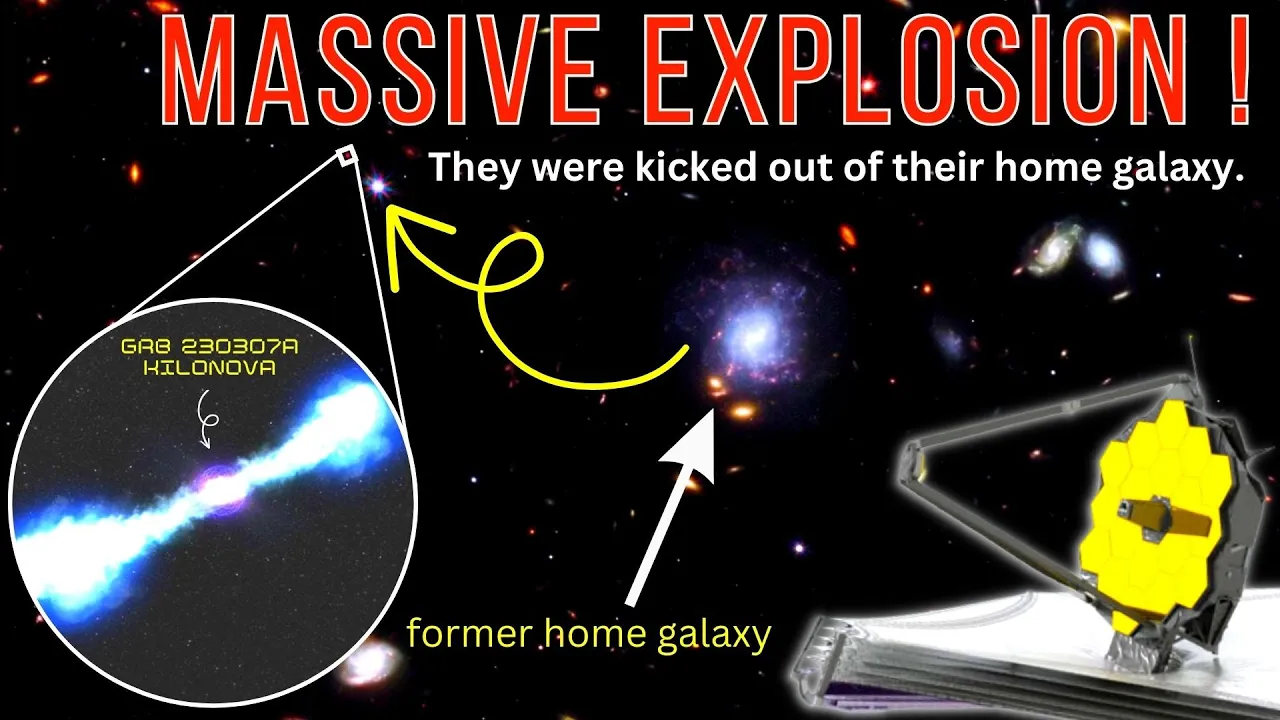
JWST Reveals Kilonova Heavy Element Creation: Tellurium, Iodine, Thorium
@NSpaceNews
124.5K views•2023-10-27
First Billion Years of the Universe with the Square Kilometre Array
@iaaudc
121 views•2022-05-26

Kepler's Laws of Planetary Motion Explained (Educational Astronomy Video)
@Peekaboo_Kidz
404.9K views•2023-02-17
Gamma-Ray Bursts: Cosmic Snipers Explained | Astronomy
@kurzgesagt
15M views•2016-07-31
Related Study Plans & Knowledge Roadmaps
Structured learning paths in Astronomy