




















Kilonovae are powerful cosmic explosions resulting from neutron star collisions that produce heavy elements like tellurium, iodine, and thorium through rapid neutron capture (r-process); the James Webb Space Telescope's observation of GRB 230307A provided unprecedented spectral evidence of these elements, helping scientists understand how the heaviest elements in the universe are synthesized and distributed, which has implications for understanding cosmic evolution, dark energy, and testing Einstein's theory of general relativity.
JWST Reveals Kilonova Heavy Element Creation: Tellurium, Iodine, Thorium
Added:The basics of stellar nucleosynthesis, including how stars fuse lighter elements into heavier ones up to iron.
The nature of neutron stars and the physics behind binary neutron star mergers, which result in a kilonova.
The fundamentals of spectroscopy and how telescopes like the James Webb Space Telescope (JWST) use infrared light to identify chemical signatures.
An introduction to the rapid neutron-capture process (r-process) as a theoretical mechanism for synthesizing elements heavier than iron.
The concept of multi-messenger astronomy, specifically combining gravitational wave detections (from LIGO/Virgo) with electromagnetic observations of kilonovae.
Galactic chemical evolution models and how the distribution of heavy elements (like iodine and thorium) impacts the formation of rocky, habitable planets.
The nuclear physics of highly unstable, neutron-rich isotopes and how researchers simulate these extreme environments in laboratory settings.
The role of future space-based observatories and ground-based surveys in tracking transient cosmic events to map the history of elemental creation in the universe.
124.5K views781likes9:42Original Release: 2023-10-27
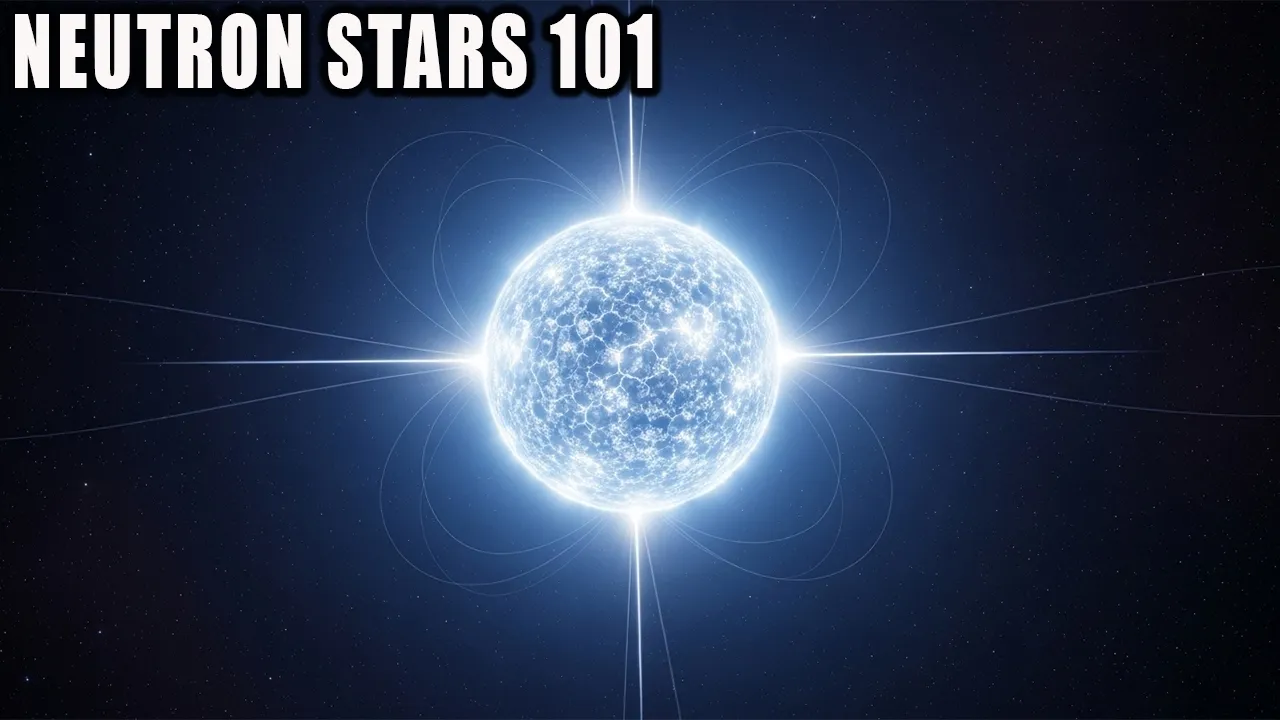
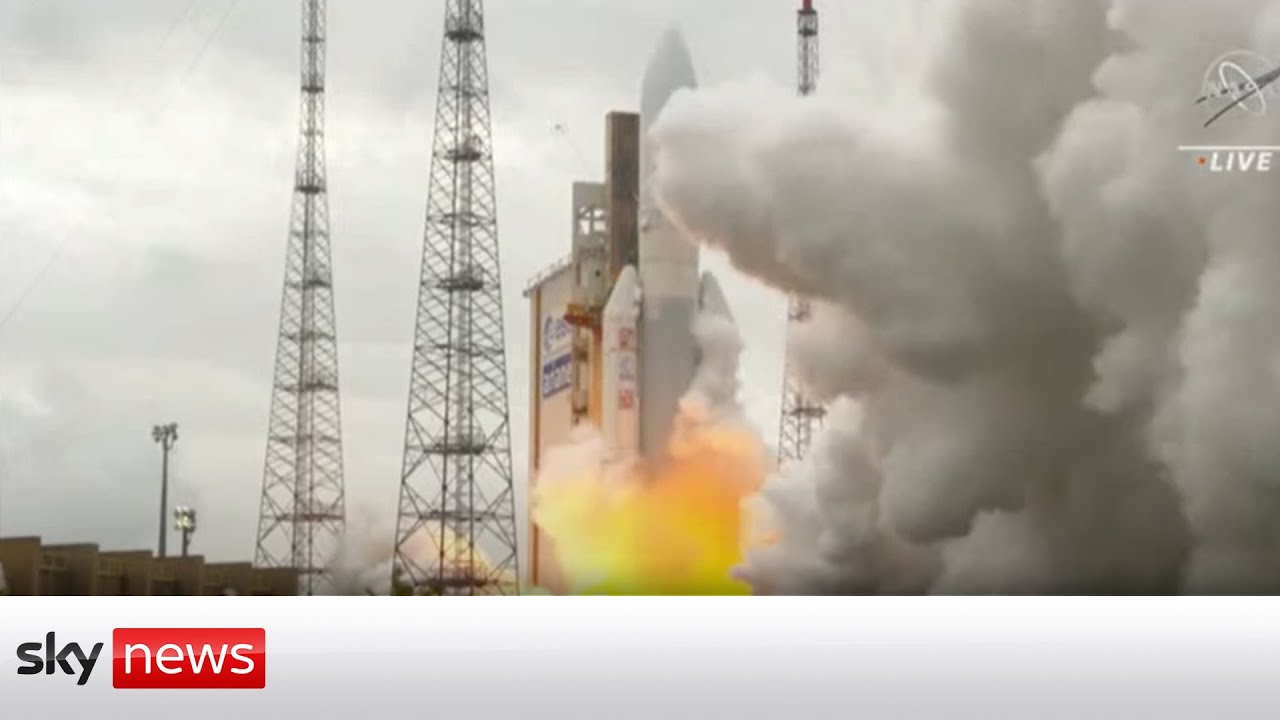
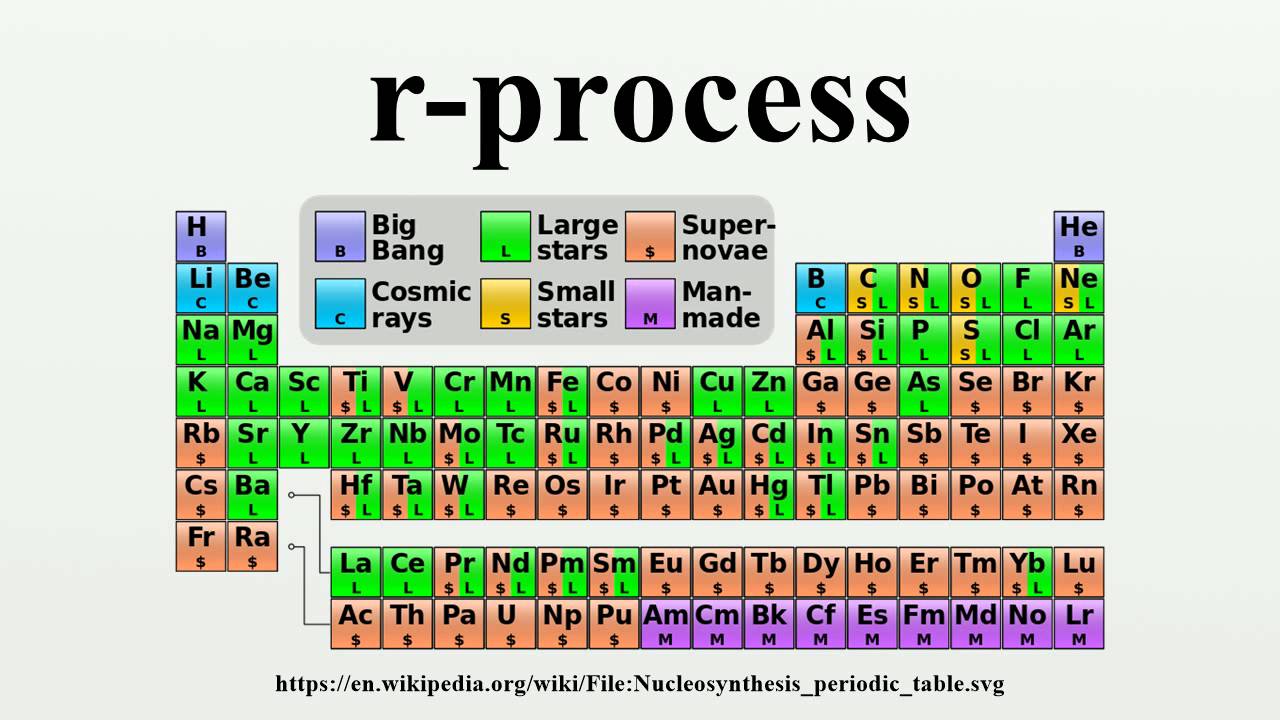
[Music] have you ever wondered how some of the heaviest elements in the universe are made well you are not alone scientists have been trying to solve this mystery for decades and they have just made a breakthrough they have observed a rare and spectacular event a powerful explosion that occurred on March 7th 2023 using NASA's James web Space Telescope this event is called Aila NOA and it is a powerful explosion that occurs when two neutron stars the dense remnants of massive stars smash into each other and create a new black hole this event also produces a burst of gamma rays the most energetic form of light and a cloud of radioactive debris that contains some of the heaviest elements in nature such as torium iodine and thorium these elements are essential for life and Technology but they are so rare that we don't know how they are made or how much they exist exist in the universe in this video we will explore this new observation of this kilin NOA by the James web Space Telescope and how it can help us answer some of the biggest questions in astronomy and astrophysics so stay tuned and get ready to witness one of the most amazing wonders of nature the kilin NOA that we are going to talk about today was named grb 2330 7A which stands for gamma ray burst 23307 a it was first detected by the Swift satellite on March 7th 2023 Swift is a NASA mission that monitors the sky for gamma ray bursts which are brief flashes of gamma rays that can last from a few milliseconds to several minutes gamma ray bursts are among the most powerful and mysterious events in the universe but they are also very hard to observe because they are very faint and and very fast luckily Swift was able to pinpoint the location of this explosion quickly and alert other telescopes to follow up on it one of these telescopes was the James web Space Telescope Webb was able to observe the explosion within an hour after Swift's detection using its near infrared camera near Cam and midinfrared instrument Miri these instruments can capture images and Spectra of infrared light at different wavelengths and resolutions it observes the event for about 10 hours over 2 days collecting valuable data on its brightness color shape and composition what James web saw was stunning the event was one of the brightest gamma ray bursts ever seen lasting for 34 seconds it was also one of the closest gamma ray bursts ever seen at a distance of about 130 million light years from Earth this means that it happened when dinosaurs roamed our planet but most importantly web saw something that no other telescope had ever seen before the clear signature of a kilin [Music] NOA ailin NOA is a rare type of gamma ray burst that is caused by the merger of two neutron stars neutron stars are the densest objects in the universe with masses comparable to the Sun but sizes comparable to a city they are formed when massive stars explode as supernovas at the end of their lives leaving behind their collapsed cores sometimes these cores can orbit each other in a binary system gradually losing energy due to gravitational waves until they Collide when two neutron stars collide they create a spectacular show of fireworks first they emit a short burst of gamma rays that can be seen across the universe then they eject some of their material into space at high speeds creating a cloud of radioactive debris that glows brightly in infrared light this cloud is called a Kil NOA and it is where some of the heaviest elements in nature are made so how do these elements form well it's a process called rapid Neutron capture or R process for short basically what happens is that some of the neutrons from the neutron stars are captured by lighter nuclei such as iron or Nickel in the debris Cloud these nuclei become unstable and Decay into heavier nucle such as torium iodine and thorium then they emit radiation that heats up the cloud and makes it Shine but how do we know that these elements are present in the kilin NOA well we can use their spectral signatures which is a graph that shows how much light an object emits or absorbs at different wavelengths each element has a unique spectrum that acts like a fingerprint allowing us to identify it by analyzing the Spectra of the kilonova we can see which elements are there and how much they are now let's see why are these elements important well for one thing they are essential for life and technology for example torium is used in solar cells and memory devices iodine is used in medicine and nutrition and thorium is used as a potential source of nuclear energy but more importantly these elements are Clues to the history and fate of the universe by measuring how much of these elements exist and how they are distributed we can learn about the origin and evolution of matter energy and life in the [Music] universe so what can we learn from these kinds of events well a lot for one thing we can learn about the origin of the elements we know that most of the Light Elements such as hydrogen and helium were created in the Big Bang and most of the medium elements such as carbon and oxygen were created in stars but we don't know how much of the heavy elements such as torium iodine and thorium were created in kilin noas or other processes by observing more kovas we can estimate how often they occur and how much they contribute to the chemical enrichment of the universe for another thing we can learn about the expansion of the universe we know that the universe is expanding and accelerating due to a mysterious Force called Dark Energy but we don't know how fast or why by observing more kilin noas we can measure their distances and velocities using their Spectra and their brightness this can help us determine the expansion rate and the dark energy equation of state which are key parameters for understanding the fate of the universe for yet another thing we can learn about the nature of gravity we know that gravity is described by Einstein's theory of General relativity which predicts that massive objects can warp space and time and emit gravitational waves but we don't know if this theory is complete or if there are other effects Beyond it by observing more kilin noas we can test general relativity and look for deviations or anomalies that could indicate new physics or Dimensions these are just some of the exciting questions that kilin noas can help us answer but there are also many challenges and limitations that we face in observing them for one thing kilin noas are very rare and unpredictable we don't know when or where they will happen next so we have to rely on luck and alertness to catch them for another thing kilin noas are very short-lived and faint they only last for a few days or weeks and they are easily obscured by dust or gas in their host galaxies this means that we need powerful and sensitive telescopes like James Webb to observe them fortunately web is not alone in this Quest there are other telescopes and instruments that can complement its capabilities and enhance its discoveries for example there are gravitational wave detectors such as Lio and Virgo that can sense the ripples in SpaceTime caused by neutron star mergers there are also radio telescopes such as ska and Alma that can probe the Afterglow of gamma ray bursts and there are many more planned or proposed missions that could join this effort in the future together these observatories form a network of eyes and ears that can scan the sky for kilin noas and other Cosmic Wonders by combining their data and insights we can gain a deeper understanding of our universe and our place in it we hope you have enjoyed this video and learned something new from it if you did please give it a thumbs up and share it with your friends if you have any questions or comments about this topic or any suggestions for future videos please leave them below thanks for watching [Music] [Music] [Music]
Up Next
57:28
Why the Night Sky Is Dark: The Expanding Universe Explained
@SpaceRip
2.5M views•2024-04-03
61:17
First Billion Years of the Universe with the Square Kilometre Array
@iaaudc
121 views•2022-05-26

6:25
Kepler's Laws of Planetary Motion Explained (Educational Astronomy Video)
@Peekaboo_Kidz
404.9K views•2023-02-17
6:10
Gamma-Ray Bursts: Cosmic Snipers Explained | Astronomy
@kurzgesagt
15M views•2016-07-31
Related Study Plans & Knowledge Roadmaps
Structured learning paths in Astronomy
astronomy
Reionization: Pop III Stars, IGM & 21cm Line
01Foundations of Cosmology & the Early Universe
02Population III Stars & Cosmic Dawn
03Physical Mechanisms of Reionization
+ 2 more learning modules
17h5 modules
Explore Roadmap
astronomy
Planetary Rings: Dynamics, Roche & Resonances
01Foundations of Gravity and Orbital Mechanics
02Tidal Forces and the Roche Limit
03Structure, Composition, and Collisions
+ 2 more learning modules
10h5 modules
Explore Roadmap
astronomy
Asteroseismology: Stellar Waves, Ages & Cores
01Foundations of Stellar Astrophysics & Wave Mechanics
02Stellar Oscillation Modes: P-modes and G-modes
03Mathematical Framework of Asteroseismology
+ 2 more learning modules
35h5 modules
Explore Roadmap
astronomy
Adaptive Optics: Physics, Engineering & Control
01Foundations of Wave Optics and Wavefronts
02Atmospheric Turbulence & Optical Distortion
03Wavefront Sensing Technologies
+ 3 more learning modules
35h6 modules
Explore Roadmap