









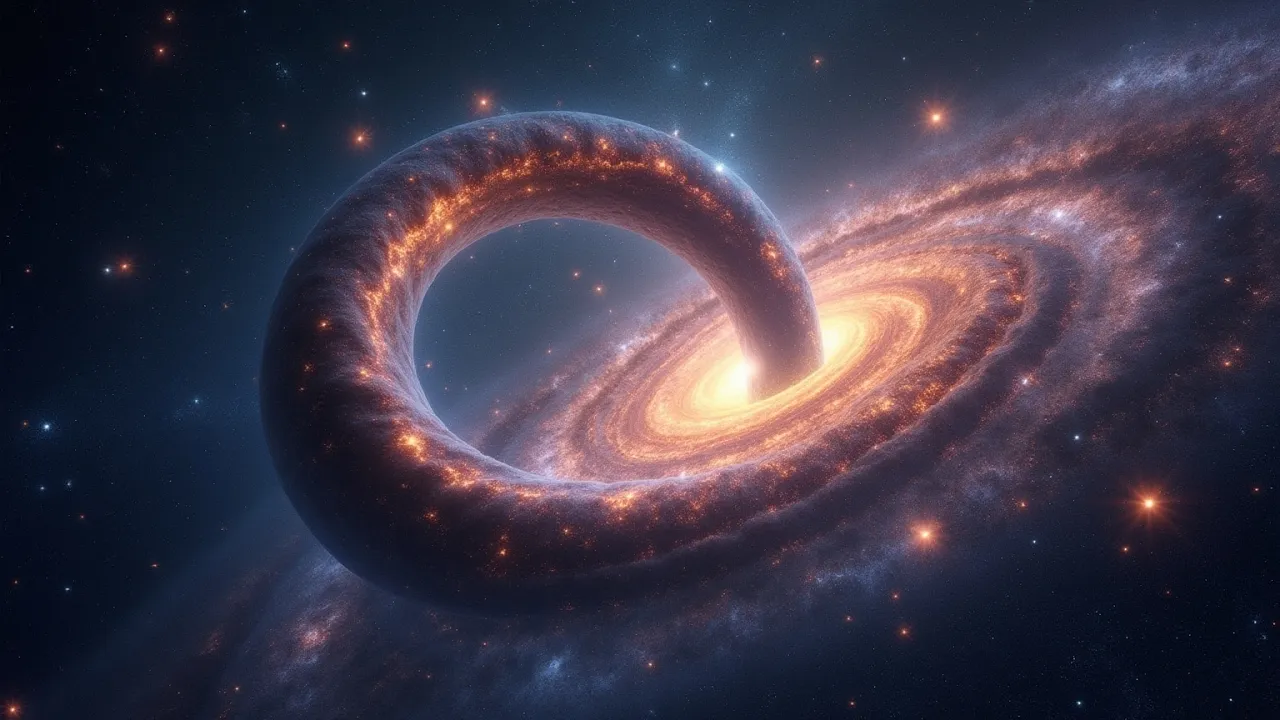







The universe is vastly larger than ancient civilizations believed, containing hundreds of billions of galaxies each with trillions of stars; this understanding emerged through centuries of scientific advancement including the development of non-Euclidean geometry by Gauss and Riemann, Einstein's general relativity which revealed space-time as dynamic and curved, and Hubble's discovery that the universe is expanding, ultimately explaining why the night sky appears dark despite containing countless stars because light from distant galaxies hasn't had enough time to reach us since the Big Bang.
Why the Night Sky Is Dark: The Expanding Universe Explained
Added:Understanding that the speed of light is finite, which implies that observing distant objects is equivalent to looking back in time.
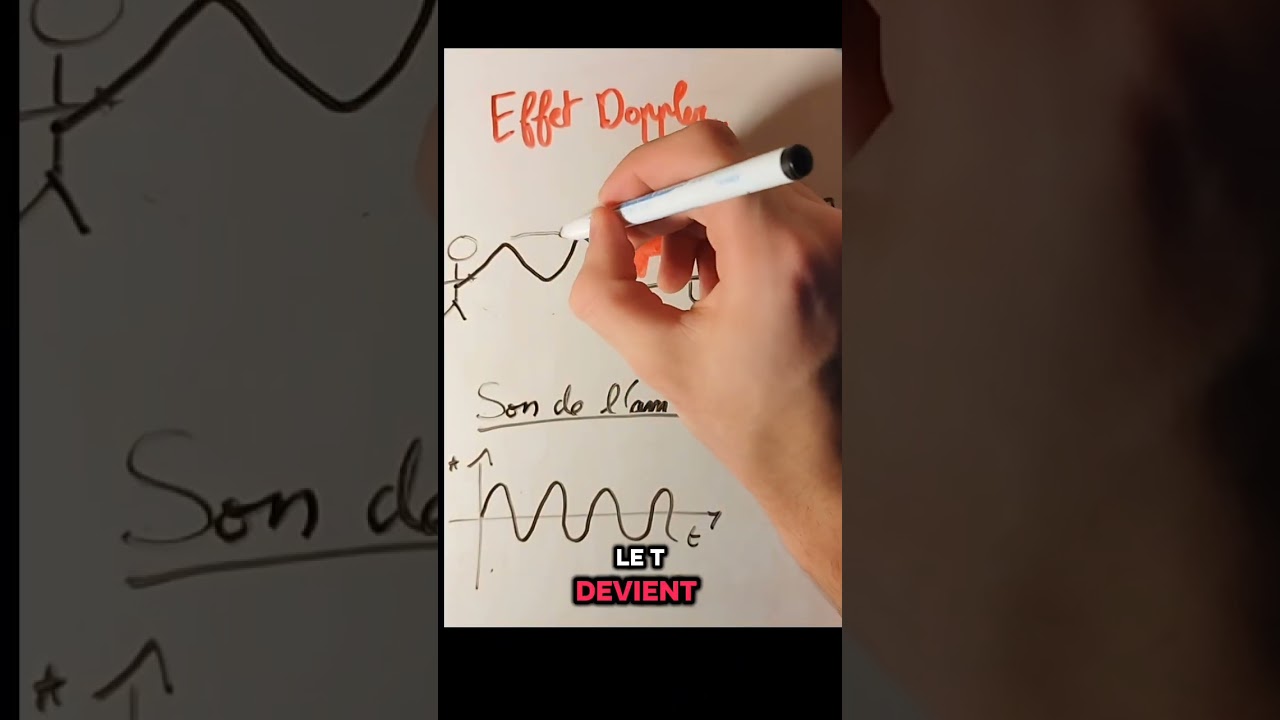
The physical concept of the Doppler effect and its application to light, known as redshift.
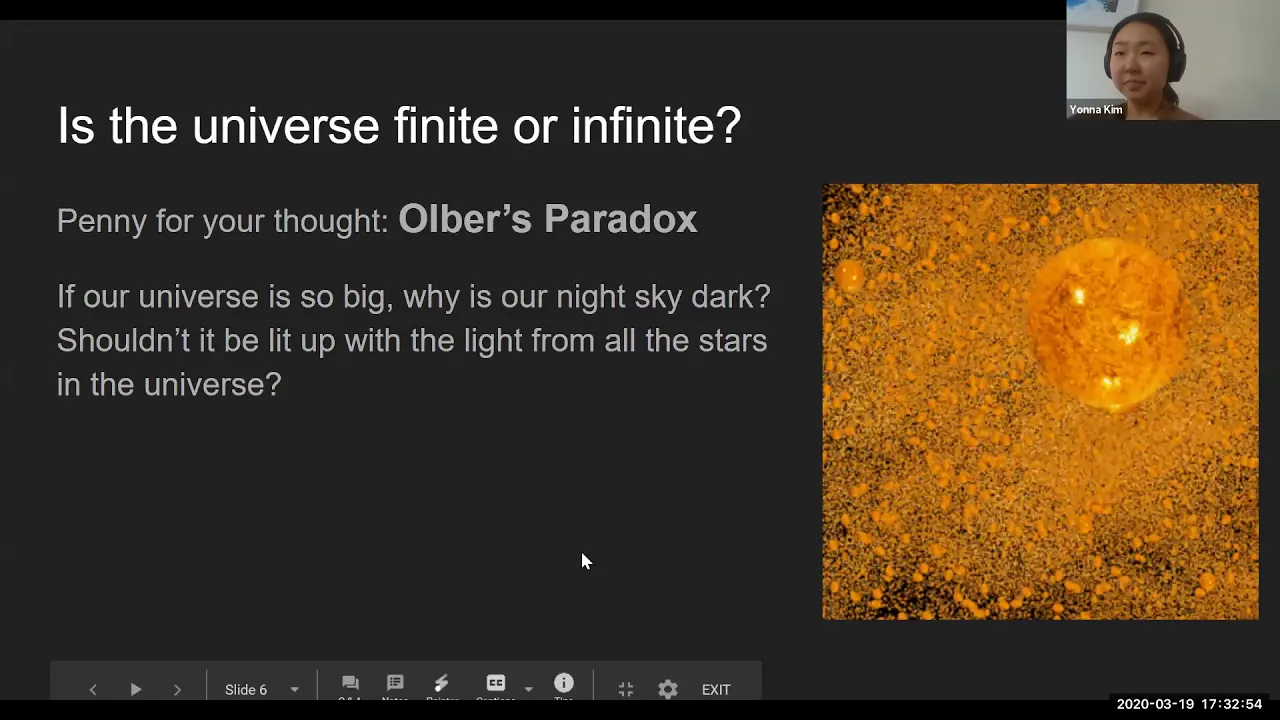
The premise of Olbers' Paradox, which questions why the night sky is dark if the universe is infinite and filled with static stars.
Basic astronomical concepts regarding cosmic scales, galaxies, and the nature of supernovae.
The study of the Cosmic Microwave Background (CMB) radiation as the redshifted relic radiation of the early universe.
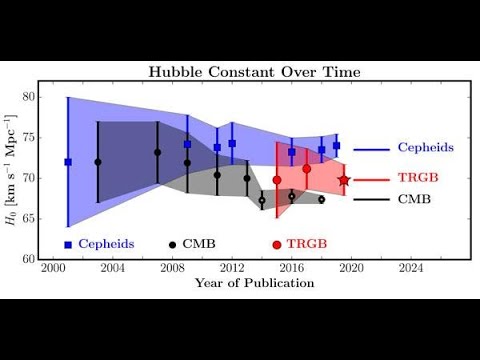
Hubble's Law and the techniques astronomers use to measure the rate of cosmic expansion (the Hubble Constant).
The discovery of Dark Energy and its role in the accelerating expansion of the universe.
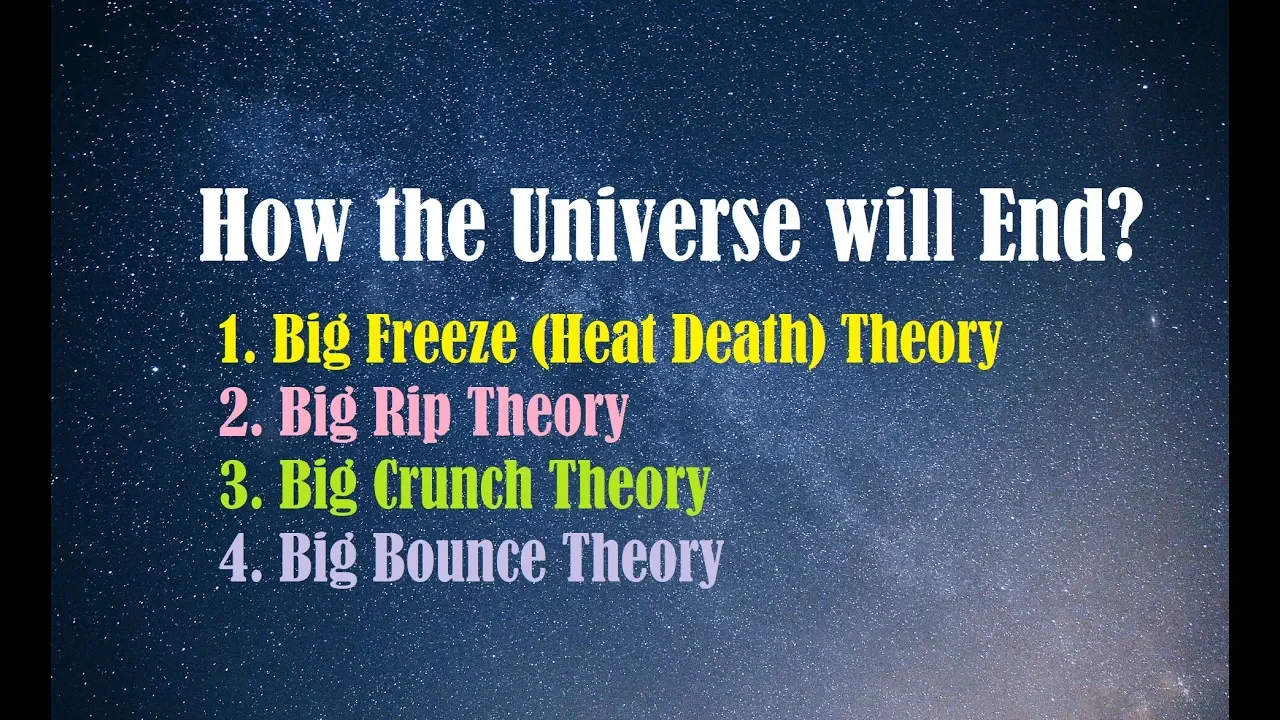
The ultimate fate of the universe, including theories of the Big Freeze, the Big Rip, and the Heat Death.
2.5M views30.1Klikes57:28Original Release: 2024-04-03
- Imagine that our sun is the size of just a single grain of sand.
Now our sun is just one of a multitude of stars.
It's surrounded by over 200 billion of them in our own Milky Way galaxy alone.
Our sun is just a speck in the vast beach of stars.
(soft music) But the Milky Way galaxy is in itself just one of a 100 billion galaxies scattered throughout the cosmos.
It's been estimated that there are more stars in the universe than there are grains of sand on all the beaches in all the world.
Just think about that for a moment.
The size and scale of the universe is awe inspiring, but as a scientist, what I find so remarkable is that the human race has managed to deduce so much about what it looks like.
Let me try and put this achievement into context.
From our vantage point, living on a minuscule speck orbiting around this single grain of sand we've managed to deduce the size and shape of all those beaches.
To my mind this is one of the human races greatest accomplishments and I'd like to tell you the story of how we did it.
(soft music) This film is the astonishing story of how we gazed upward from our isolated and unremarkable vantage point and began to deduce the shape, size, and origin of everything that there is.
It's the story of how we came to understand reality at the largest scale.
It's the story of everything.
(fire crackling) I want you to pause for a moment and think about this one basic question.
Here I am sitting under the night sky.
Above me is the atmosphere and beyond that, the moon and way beyond that the stars.
But then what?
What's the totality of everything there is?
It's a question we've all asked at one point or another.
I remember as a kid growing up in Baghdad, during the summer we'd take the beds up onto the roof and I remember lying awake at night looking up at the stars and wondering whether space went on forever or whether the universe had an edge.
Today we're beginning to understand just how complex this question really is.
But 500 years ago, it seemed like there was a very simple answer.
You see, the prevailing belief was that the earth was enclosed in a vast, but thin shell of rotating stars that were fixed in position.
(soft music) When you look up on a starry night, it's not difficult to see why people believed we lived within this shell.
But in the 16th century, something happened, which would shatter this view of the universe.
It was an event that would set the human race on a journey to uncover the true size and shape of everything.
This is a type 1a Supernova, an exploding star.
It's an event of almost unimaginable scale.
It shines five billion times more brightly than our own sun.
In 1572, a supernova like this would've become visible on planet earth.
At the time it was known simply as the phenomenon.
And to anyone who saw it, it must have been an extremely shocking and mysterious sight.
This new light in the night sky, shine more brightly than Venus and even became visible during the day.
It's not surprising then that many source a religious explanation for this bizarre and troubling event.
- One possible interpretation of the new star of 1572 which was put forward by some intellectuals was that this is the star the wise men saw, 1,570 years earlier.
It's the star that shined over Bethlehem and it's now returned.
So something as cosmically important as the incarnation of God on earth might be being proclaimed by this new star.
- The phenomenon fascinated and mystified many people across Europe and in England it fired the imagination of the MP of the sleepy oxteter town of Wallingford.
His name was Thomas Digges.
(soft music) But just as Digges began to study this mysterious new star, it started to grow dimmer.
Digges' friend, mentor, and fellow astronomer, a man named John Dee, reasoned with him that this phenomenon could be a moving star, something previously thought to have been impossible.
Perhaps it had grown brighter as it approached the earth and faded as it had gone away.
(soft music) Now although this theory was wrong, it got Digges thinking about the true nature of the stars that surround the earth.
It began to seem very unlikely that they were all arranged in a vast thin shell.
Maybe this apparent shell was just an allusion.
It would take Thomas Digges another four years before he published his strange idea.
And when he did, it was in the form of a simple diagram added to a translation of the works of Nicholas Copernicus, the man who'd first argued that the sun was at the center of the universe.
Have a look at this.
On this side is Copernicus' model, absolutely revolutionary, it has the sun at the center, with the earth in orbit around it, along with the other planets.
And then the outermost shell is that of the fixed stars, the Stellarum Fixarum.
On this side is Digges' diagram included in the English translation.
Exactly the same, but he's taken Copernicus' stars out of their fixed shell and scattered them out into endless space.
Digges' diagram was describing a radical new picture of the cosmos.
One where the stars in the night sky now existed in an infinite space.
- Digges shows it, unlike Copernicus, Digges shows it as being infinite.
This is a sphere, he says, of the stars fixed infinitely up.
And that is a moment when perhaps Europeans start to think of the world as unbounded, as infinite, as a world without end.
- [Professor Jim] Digges' new picture of the universe was revolutionary.
Previously we'd been contained within a small shell of stars.
Now we were suspended within an infinite static universe.
(soft music) But this picture of everything produced a strange paradox.
If this infinite universe contained an infinite number of stars, then why was it dark at night?
- In the traditional old fashioned view of the universe, this universe was infinite and static.
It was very soon recognized that a static infinite universe was ridiculous and that is because in such a universe, there would be an infinite number of stars and every line of sight from ours would intercept one of these stars.
A static infinite universe could not be dark, it should be glowing as bright as the sun and we know that's not our universe.
Our universe, the night sky is dark.
(soft music) - Although Thomas Digges first raised this question, the problem came to be known as Olbers' paradox.
As simple as the question sounds, it would take until the 20th century to find a truly satisfactory answer for why the night sky is not as bright as the day.
Solving all this paradox would require many great scientists who weren't afraid to think differently, radically differently.
You see, solving the paradox is all about understanding the shape, size, and origin of everything there is.
Without this understanding, the puzzle would be impossible to solve.
You see, stuck here on earth, we don't have access to interstellar travel, so we have to allow our minds to make that intellectual leap.
(soft music) By simply looking up, Digges and his contemporaries had begun a scientific journey to understand what everything might actually look like.
But for 200 years after Thomas Digges' insight, little progress was made in understanding the most distant reaches of the cosmos.
At the end of the 18th century however, all that would change.
- Until the end of the 1700's, everything that lies outside the solar system, is for astronomers pretty uninteresting.
Astronomy until then was the science of our system, of the earth and the planets, satellites, and comets.
And the stars were a kind of glorified and rather interesting backdrop.
This changes around 1800.
(soft music) - This small and unremarkable house in Bath, was once home to the astronomer William Herschel and his sister and devoted assistant Caroline.
Together they would develop and build a new generation of telescopes that would allow them to see further out into space than any human had ever done before.
William Herschel was born in Hanover, but moved to England in 1761 to pursue a career as a musician and composer.
But he soon developed a passion for astronomy and began building telescopes in his spare time.
Herschel soon perfected a technique for producing telescopes borrowed from Sir Isaac Newton.
The telescopes used metal mirrors that were capable of capturing much more starlight than the glass lenses that were popular among other astronomers.
This tiny room at the back of Herschel's house used to be his workshop.
It was here that he'd smelt various metals together in the furnace to make the reflecting mirrors for his telescopes.
And he would experiment with different metals, different combinations to get them as reflective as possible.
Then with sister Caroline to help him, he'd spend literally hours on end polishing the surface of the mirrors to achieve the precision required.
And let's remember, this is quite a dangerous confined environment.
The floor still bears the scars of the molten metal that'd they'd spilled cracking the paving stones.
(soft music) With his powerful telescopes, Herschel and his sister Caroline would scour the heavens night after night cataloging the stars.
The universe they were seeing was revealing itself to be one of dynamic complexities, a universe of natural organic motion, a place of endless wonder.
Herschel's revolutionary telescope design made him famous.
With it he'd discover a new planet, Uranus, a discovery that would earn him the job of the King's Astronomer.
Now this new role gave him the time and resources to start a much grander task to try and map all the stars in the universe in an attempt to draw a picture of everything.
(soft music) In 1785, Herschel published this remarkable image.
It shows an approximation of the Milky Way with our sun residing at the center.
Herschel had seen that we are part of a vast disc of stars, a huge galaxy of suns that seemed to have a clear boundary.
It appeared as though Herschel's craftsmanship had actually allowed him to see to the edge of everything.
But soon, a nagging problem began to emerge.
Docied around the sky, Herschel and others had been observing strange, cloud-like objects known as nebulae.
Some of these nebulae seemed to have distinctive form and complex structure.
Some astronomers began to suggest a radical idea.
Perhaps the Milky Way wasn't everything that there was.
Perhaps some of these nebulae were in fact themselves gigantic galaxies of stars just like ours that actually existed in deep space.
Unfortunately there was no way to answer this question satisfactorily The problem was that for all Herschel's great technological achievements and for all those long cold nights that he spent with Caroline outside gazing painstakingly at the heavens, there was one problem they couldn't solve.
They had no way of accurately measuring distances in outer space.
(soft music) It wouldn't be until after Herschel's death that the cunning method was developed to measure the distances to objects deep into space.
The technique was known as stellar parallax.
If you look at an object like your finger from two vantage points, it will shift in your frame of reference.
By observing how much it shifts, you can calculate how far away it is.
My finger is moving a lot more between each frame than the building that's behind it.
(soft music) Now an astronomer called Friedrich Bessel worked out that if you took images of stars when the earth was at either side of its orbit around the sun, it would be possible to actually see the stars shifting.
By observing how much they shifted, you could then work out their distance from us.
Bessel calculated that the relatively close star 61 Cygni must be some 100 trillion kilometers away.
But amazing though this technique was, it was still very severely limited.
The diameter of the earth's orbit is 300 million kilometers.
This means the parallax method can only measure objects out to about 300 trillion kilometers, only a tiny fraction of the size of the Milky Way.
It soon became clear that there was plenty in the heaven that was practically impossible to measure, particularly those mysterious nebulae.
They would remain an enigma until the beginning of the 20th century when they ignited a great debate.
- One group of astronomers agrees that there is only one galaxy, ours, the Milky Way and everything else we see, the globular clusters, the nebulae are all somehow inside that galaxy.
Then there are other astronomers who argue no, many of these nebulae are themselves giant island universes, unimaginably far away from us.
There was evidence on both sides.
(soft music) - This mystery remained a source of bitter debate until the beginning of the 1920's.
The woman who would help solve the problem is one of the great unsung heroes of science.
She worked at the Harvard College Observatory and her name was Henrietta Leavitt.
Leavitt's job was to count and catalog the stars, producing images from observatories around the world.
She was a brilliant scientist who loved her work.
(soft music) This is one of the photographic plates of space that Leavitt worked with.
You can see her bright mark highlighting tiny details within the image.
With meticulous care, hundreds of subtle features of stars have been noted.
(soft music) It was this ability that would help her come up with an ingenious idea, one that would help unravel the true size of the universe.
The idea rested on finding an objective way of defining the true brightness of a star.
Leavitt became fascinated by a type of star known as a Cepheid variable, which pulses in the night sky.
Her breakthrough was discovering that their brightness was precisely related to the speed they blinked.
Let me explain.
These two stars are blinking at the same rate, which means they should be exactly the same brightness.
If one star appears dimmer, you can then calculate how much further away it is than the brighter one.
Leavitt's method meant that she knew the true brightness of the Cepheid variable.
She'd found a method to measure the distance to stars that lay far beyond the reaches of parallax.
But without access to a telescope, she could go no further with her work.
She was forbidden from working in the supremely male dominated world of the Observatory, but her discovery now gave astronomers a tool to measure the distances to the mysterious nebulae.
The idea that our Milky Way might contain everything that existed was about to crumble.
- The scale of the universe is really only understood amazingly recently.
In the 1920's it was absolutely plausible that the universe consists of one galaxy.
And some of the best astronomers in the world, in the US for example, seriously held that view and had good evidence that it was true, and they were wrong.
(soft music) - The evidence to finally settle the great debate would be found thanks to the powerful new Hooker telescope being built at the Mount Wilson Observatory just outside Los Angeles.
Using this incredible piece of technology and Henrietta Leavitt's ingenious method for calculating distance, a young astronomer would make a discovery that would change our view of the universe and forever immortalize his name.
The astronomer was called Edwin Hubble.
Hubble was a very different kind of scientist to Leavitt.
He was a larger than life character, extrovert with a huge ego, but he was still a hugely talented and visionary scientist.
He was born and grew up in America, but spent some time in England and this seems to have had a lasting impression because he'd be heard walking around the observatory shouting things like "by jove" and "what ho" in a completely over the top british accent.
(soft music) The talented, passionate, and eccentric Hubble rapidly gained a name for himself in the world of astronomy, but it wouldn't be until 1923 that he would discover something in what was then known as the Andromeda Nebula that would reveal the true scale of our universe.
I've come to the University College London Observatory to meet astronomer Dr. Steve Fossey to see for myself just what Hubble's revelation was.
- We're gonna key in the coordinates for Andromeda to the console here.
- [Professor Jim] So zero hours, 43 minutes.
For Hubble and his assistant Milton Humason, studying Andromeda was a long and painstaking process, but today we can quickly locate and photograph it in great detail.
- So this is an image that we took a couple of weeks ago.
- Right.
- And if I zoom in you'll see, just there is the Hubble sphere, the first sphere that he found that unlocked the whole problem.
- Because presumably that's when he could use Leavitt's method of working out how far away it is.
- Exactly, once he'd seen this and identified it as a variable, he then had the key to determining just how bright that object really was.
- And worked out that it couldn't have been in our own galaxy, it had to be millions of light years away.
- Absolutely, that's exactly it.
And you see the nuclear region, but as we adjust the contrast here, I can stretch the contrast just to bring out some of the detail in the galaxy.
- Oh wow. - All spiral on.
- [Professor Jim] Yep, yep.
- You see dust lanes in silhouette against the billions of stars that are within Andromeda there.
(soft music) - By finding one of the variable stars in Andromeda, and measuring exactly how long it took to pulse, Hubble was able to use Leavitt's work to calculate exactly how far away it was.
This is the photographic plate where Hubble marked his new Cepheid variable star.
Using it, he calculated that Andromeda was many many times more distant than the furthest reaches of the Milky Way.
Andromeda was indeed an island universe.
A vast galaxy of stars.
We now know that Andromeda is over two and a half million light years away.
This means that the light that reaches us from Andromeda today, left on its journey before modern humans had evolved.
That's our neighbor?
- That's our neighbor, that's our nearest large galactic neighbor.
- I have to remember that what I'm looking at here is the real thing.
Using photons and have traveled millions of years to reach my eye.
- [Dr. Steve] That's right.
- These are photons directly from Andromeda that are arriving in my eye.
(soft music) Today, we have the power to see Andromeda as Hubble had only dreamed of.
We now estimate that Andromeda contains over a trillion stars and it's just one of a vast multitude of galaxies scattered throughout our universe.
(soft music) In 1923, the universe had been the size of the Milky Way.
By 1924, the space that surrounds us had been revealed to be billions of times bigger and home to almost unimaginable cosmic complexity.
(soft music) Hubble had shown that there are a multitude of galaxies outside of our own and had pushed back the boundaries of the universe.
But he'd not seen an edge of space.
He had not seen everything.
There was still no clue as to how big our universe was or even what shape it might be.
To understand the strange truth about everything would require more than just observations, it would require mathematics.
A powerful new type of mathematics that would be able to describe the bizarre properties of space itself.
- When you're trying to understand the universe, it's easy to think what you do is you make lots of observations, you see what's there, and then you fit it all together into your grand picture.
But the problem is unless you have some sort of idea what the picture should be, you don't know what observations to make.
You don't know what's significant.
And throughout the history of science, every so often someone has to come up with a new mathematical idea.
- The new mathematical ideas about space were so weird, so far removed from common sense that it would take over 2,000 years and the genius of Albert Einstein to formulate them.
But when they were ready, these strange new types of mathematics would lead to a revolution in our understanding of the space that surrounds us.
(soft music) Okay, so what is space?
We think we know the answer to this.
I can talk about this room being spaceous.
There's a lot of space in here.
Or a confined space, there's not enough volume, not enough space.
But does space only exist when there's stuff in it?
Does space only have a meaning when it's enclosed by walls.
Think of the distance between two objects, does that gap still exist if you take the objects away?
What meaning can we give to distance if it doesn't have a start and end point?
Ultimately the question is this, does space in itself, have form?
Does it have structure or shape?
Or is it just a place where things happen?
The properties of space were first described by the mathematician Euclid over 2,000 years ago in his legendary text The Elements.
In it, he laid down a set of simple logical rules about space in what today we call Euclidean geometry.
- Euclidean geometry is the geometry we see around us every day.
If you're sitting in the room and it's the usual rectangular room, what you see is lots of straight lines, right angles, you see parallel lines.
If you have a window, the two sides of the window are parallel.
If you extended them, they'd stay exactly the same distance apart, they would never meet.
And the other thing you would see if you looked a little closer is that any triangle you draw, the angles in the triangle always add up to 180 degrees.
And that's characteristic of Euclidean geometry.
And people used to think that this was just how geometry was, that nothing else was possible.
(soft music) - For Euclid himself, and for almost all mathematicians for the next 2,000 years, these rules weren't just true mathematically, they were also true statements about physical reality itself.
So they thought that two parallel lines would remain parallel forever, that a triangle in real space would always have angles adding up to 180 degrees.
But, weird as though this might sound, Many others would refine and develop Gauss' ideas, but one of his greatest achievements will be to give us a cunning method of accurately measuring curvatures.
It would become known simply as the Remarkable Theorem.
Let me explain with this globe.
You see, we can see that it's three dimensional because we can stand back and look at it.
But what if you were an ant stuck on the surface, how would it know that that surface is curved?
So imagine you're the ant, and you start off at the North Pole and facing south, you move down towards the Equator.
At the Equator, you still face South and you shuffle sideways along the Equator.
Then you reach a certain point and then you start walking backwards, so you're still facing the same direction, and head back to the North Pole.
Now, look what's happened here.
You've been pointing south all the way round and yet when you arrive back at your starting point, you're facing in a different direction.
Understanding this gives us a way of calculating the curvature of a surface without ever leaving it.
This was an amazing insight, but it only applies to curved surfaces, which are two-dimensional.
It would take a brilliant student of Gauss', Bernard Riemann to develop these ideas in a way that could be applied to the three-dimensional space that surrounds us.
It would be a daring, outlandish, and to non-mathematicians absurd sounding concept.
Aged just 26, Riemann encapsulated his strange new ideas about geometry in a lecture that was to become legendary among Mathematicians.
In June, 1854, Riemann delivered his lectures to an enraptured audience.
In them, he detailed how he'd taken Gauss' ideas on curved surfaces and generalized them so that they applied not only to curved two-dimensional surfaces, but the curvature of space in any dimension.
(rapid clapping) Okay, so I'm sure this all sounds rather complicated.
What exactly do we mean by curved space in any dimension?
So, let me try and explain.
Here's the thing, Gauss talked about curved two-dimensional surfaces.
Well, here we have a sheet of paper and it's two-dimensional.
So if I curve it, we can visualize and see this curvature, but only because it's embedded in three dimensions.
Now, what if we curved three dimensions, presumably, we'd need a fourth dimension.
But how do you get to this four-dimensional space?
It's impossible to step outside of our three-dimensional world.
Wherever you travel in the universe, no matter how far you go, you're always stuck in three dimensions.
The genius of Riemann was to show that you didn't need to stand in a fourth dimension to tell it's space was curved.
You could actually do it from the inside.
But for Riemann, this would always remain a purely mathematical idea.
It would take Albert Einstein to tie these mathematical ideas together and apply bendy, curved, non-Euclidean geometries to the real space that surrounds us.
- I think the most important point about the whole story of non-Euclidean geometry is it shows how mathematics in the real world relate and it starts out with mathematician's plurring around asking, could there be a geometry different from Euclid's?
And if anyone came to them at time and said why are you studying in that?
They'd say, I don't have a clue.
What's it useful for?
No idea.
It's just interesting.
But they prodded around and they found a surprising answer, that different geometries were possible and even at that point, nobody had any real applications for this idea.
And then when the moment is right, Einstein comes along and said that's what I need, that's real physics.
And suddenly this piece of esoteric mathematics becomes vital to the scientific enterprise.
- Einstein would reveal that we live not in the flat world of Euclid, but in the strange curved worlds of Gauss and Riemann.
In the space of a few short years, Einstein went from wrestling with some of the most difficult and abstract mathematical ideas to dinner dates with Charlie Chaplin.
And it was all thanks to the pinnacle of his life's work, the general theory of relativity.
In the general theory of relativity, Einstein took the mathematics of Gauss and Riemann and used it to paint a revolutionary picture of the physical world.
He showed that just as Gauss had suspected, the geometry of the space around us isn't always of the regular flat Euclidean kind.
Right, now, since newton's time, gravity was thought to be a force that pulls all objects together.
So if I drop this apple, it's as though there's an invisible rubber band that's pulling it down towards the earth.
But Einstein's general theory of relativity gives us a completely different picture But the equations of general relativity didn't end there.
They revealed that it was the presence of mass that caused the space to curve and distort.
The reason we have gravity on earth is because the earth is actually bending the space around it.
- In Einsteinian theory of the universe, space becomes a dynamic entity that reacts to its contents.
Space knows about the presence of gravitating bodies and responds to the presence by changing its geometry in really interesting ways.
So what was in the 16, 17, 18, 19th century, a very boring still object, come up with a description of how the space and time we exist in can be warped.
They showed that space and time are not the fixed, unchanging stage on which the actions of the universe are played out, they're actually part of the performance.
It was soon realized that because the general theory of relativity applied to everything, it gave physicists a way of being able to step outside the universe and imagine how it might be behaving in its entirety.
And when they did this, they saw something that was extremely disturbing.
The equations were getting a description of the universe that seemed ridiculous.
They were describing something that was actually expanding.
It seemed preposterous that the entire universe could be some sort of moving, organic, expanding entity.
It was such a strange prediction that even Einstein refused to believe it.
Einstein had overturned common sense notions of space and time, held by humans over thousands of years, but he still couldn't accept that the whole universe might be dynamic and changing.
In fact, he was so convinced that it was static, that he was prepared to modify his original equations by adding an extra turn called the cosmological constant that would stabilize the universe.
But Einstein was trying to fix something that wasn't broken.
It's at this point that our story returns to Edwin Hubble.
Armed with the Hooker telescope, Hubble would reveal the truth that Einstein had refused to believe.
After discovering that our galaxy was just one of many, Hubble began to study the ways in which these other galaxies were moving.
Hubble knew that as a light source approaches us, the light wave would become compressed and appear blue.
If an object was receding, the light waves will become stretched out and appear red.
What he saw was astounding.
All distant galaxies were being red shifted.
They were all moving away from us.
Not only that, but the further away a galaxy was, the faster it was moving away.
Hubble's observations and Einstein's general theory of relativity were in agreement, but, and this is the crucial point here, it's not that the galaxies are flying away from each other through space, but rather that the fabric of space itself, in between the galaxies is expanding.
So the universe in its entirety is getting bigger.
This is what Hubble and Einstein's work revealed.
(soft music) Einstein soon visited Hubble to see the data for himself.
He would go on to admit that changing his equation had been his biggest scientific blunder.
So why was space expanding in this way?
Both Hubble and Einstein soon came to agree, if the fabric of space was expanding, it meant previously the universe was smaller.
Rewind the clock far enough back, and it appeared as if there was a point when our entire universe began.
(dark music) The data were pointing towards the moments of creation.
But many scientists were not convinced by this apparent Big Bang.
It seems like a leap too far.
But there was one piece of evidence that had the power to convince everyone.
It seemed that if the Big Bang had happened, then sometime after the instance of creation, a flash of light should have been emitted throughout the universe.
Every part of the cosmos should now be filled with this light.
And it turned out it was, it just happened to be in a rather unusual form.
As unlikely as it sounds, the relic of the Big Bang Fireball was actually visible on television.
Let me explain how this is possible.
Imagine this balloon is our universe.
Here it is just a few hundred thousand years old.
At this point, something very strange happens because the universe suddenly becomes transparent to visible light as atoms form.
It is though a fog has lifted and light is suddenly able to travel freely through the universe.
At every point in space, photons began to travel unimpeded and the entire universe filled with a blinding light.
But this light, released in the hot turmoil of the early universe didn't stay bright forever.
As space expanded, it stretched through the spectrum from visible light down into microwaves.
And it's these microwaves that get picked up by television aerials.
Incredibly, almost 1% of this static is the afterglow of creation itself.
It's the stretched out remnants of the very earliest light in the universe.
Using the microwave radiation, cosmologists could even date it.
Our entire universe is 13.7 billion years old.
This beginning of everything will be the final piece of information needed to answer the question Thomas Digges had first posed over 400 years ago.
It would finally give us a satisfactory explanation for why it gets dark at night.
Okay, so here it is, here's where I hope this all makes sense.
The further away a star is, the longer it would take for its light to reach the earth.
So, if the universe has been around forever, then all the light that's out there will have had time to reach us and the night sky would be ablaze with starlight, but it's not.
And here's why.
Imagine when the universe was much younger and smaller than it is today.
A beam of light on the other side of the universe begins a journey towards our vantage points.
But as space expands, the distance the light has to cross keeps getting bigger and bigger.
Fast forward to today, and this light still hasn't reached us.
So no matter how hard we look into the sky we simply won't be able to see it.
We can only see the stars whose lights have had time to reach us in the 13.7 billion years since the Big Bang.
This region is known as the observable universe.
And there are not enough stars here to light up the night sky.
So we only ever see the stars and galaxies whose light has had a chance to reach us and that's why it gets dark at night.
(soft music) - I think it's a fact that we take for granted that the sky at night is dark.
It's in fact incredibly profound.
It took 200 years of theorizing of thinking.
It took the development of general relativity before we could understand why the sky at night is dark.
- By reasoning and observing and imagining, we found ever better ways to project outside of the confines of our small rock, tumbling through space.
We've become ever more skilled at creating pictures of everything.
This is a computer simulation of the universe in its infancy.
Using it, we can see how the force of gravity has shaped the universe over billions of years.
The brightest whites and yellow regions in this image show where galaxies and clusters of galaxies fall.
You can see how as the universe evolves, a strange and hidden structure begins to emerge.
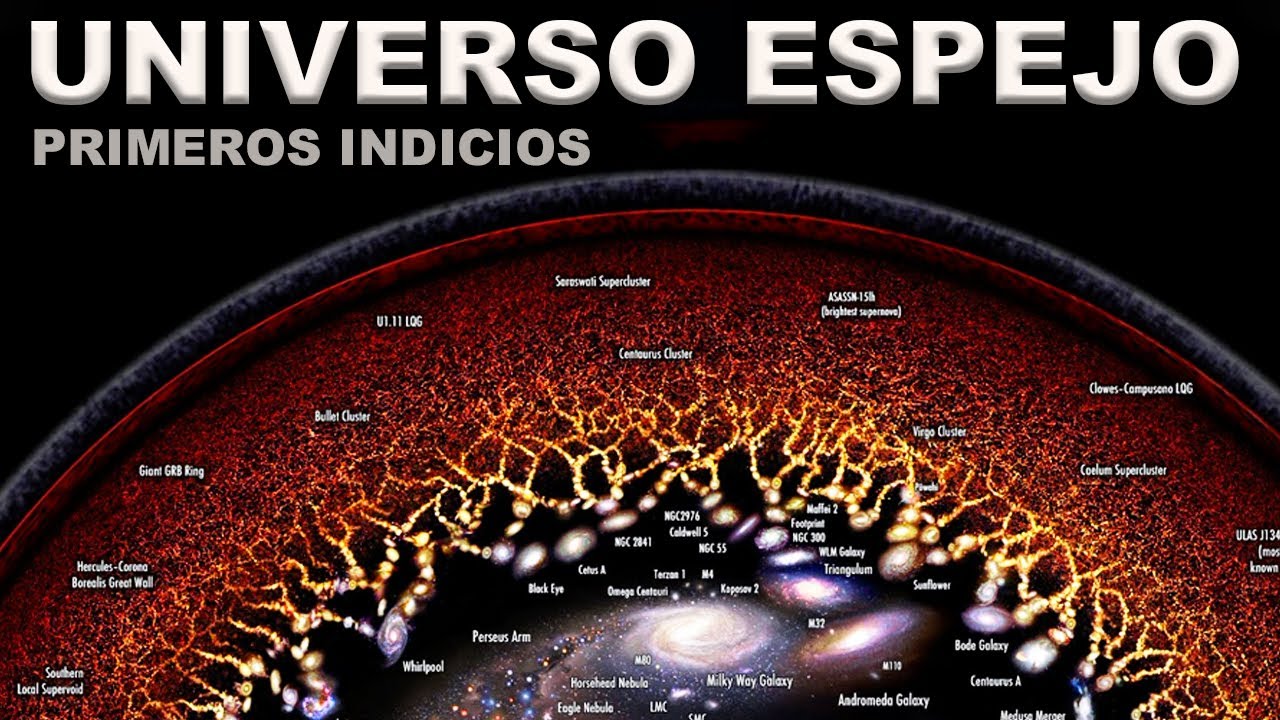
This is the cosmic web.
It's our best picture yet of what everything might look like at the largest scales.
It shows massive clusters of galaxies linked together in vast filaments, each one containing trillions of stars.
Its scale is sometimes difficult to appreciate, but it would take light almost 10 billion years to cross the distance in this image.
But this incredible picture of everything is destined to change.
We're starting to understand that in the distant future, the universe will become a terrifyingly bleak and desolate place.
In 1998, a team of astronomers published a paper in which they looked at supernova explosions in distant galaxies.
They were hoping to measure very accurately how fast the universe is expanding.
Now they expected to find that the rate of expansion was slowing down, just because of the pull of gravity of all the matter in the universe.
But, they were in for a big surprise.
The universe was getting bigger, faster.
The rate of expansion was accelerating.
There seemed to be some mysterious force pushing everything apart.
We still don't understand its origin, but it's been dubbed dark energy.
There's one fascinating, yet disturbing consequence of this.
If the expansion of the universe continues to accelerate, then our visible universe will begin to empty.
Let me explain.
Imagine I'm in a distant galaxy that you can see from earth.
Now as the space between us stretches, there'll come a time in the future when it's expanding so rapidly that the light can't outrun it and the galaxy will disappear from view.
What this means is that far into the future, some hundred billion years from now, if intelligent life forms still exist in our galaxy, they'll look out into space and see only the stars in our own Milky Way.
All the other galaxies will have disappeared and they'll be alone in a vast, dark, empty expanse.
(dramatic music) I have here a box.
What would happen if I were to remove everything I possibly could from inside it.
What then exists inside the space in the box?
Is it really nothing?
(dramatic music)
Up Next

40:37
Cosmology & Distance Measurement: Galaxy Clusters to Dark Energy (4K)
@howfarawayisit
2.3M views•2020-11-08
61:17
First Billion Years of the Universe with the Square Kilometre Array
@iaaudc
121 views•2022-05-26

6:25
Kepler's Laws of Planetary Motion Explained (Educational Astronomy Video)
@Peekaboo_Kidz
404.9K views•2023-02-17
6:10
Gamma-Ray Bursts: Cosmic Snipers Explained | Astronomy
@kurzgesagt
15M views•2016-07-31
Related Study Plans & Knowledge Roadmaps
Structured learning paths in Astronomy
astronomy
Reionization: Pop III Stars, IGM & 21cm Line
01Foundations of Cosmology & the Early Universe
02Population III Stars & Cosmic Dawn
03Physical Mechanisms of Reionization
+ 2 more learning modules
17h5 modules
Explore Roadmap
astronomy
Planetary Rings: Dynamics, Roche & Resonances
01Foundations of Gravity and Orbital Mechanics
02Tidal Forces and the Roche Limit
03Structure, Composition, and Collisions
+ 2 more learning modules
10h5 modules
Explore Roadmap
astronomy
Asteroseismology: Stellar Waves, Ages & Cores
01Foundations of Stellar Astrophysics & Wave Mechanics
02Stellar Oscillation Modes: P-modes and G-modes
03Mathematical Framework of Asteroseismology
+ 2 more learning modules
35h5 modules
Explore Roadmap
astronomy
Adaptive Optics: Physics, Engineering & Control
01Foundations of Wave Optics and Wavefronts
02Atmospheric Turbulence & Optical Distortion
03Wavefront Sensing Technologies
+ 3 more learning modules
35h6 modules
Explore Roadmap