










![SACANI RESPONDE [TEMAS VARIADOS #01] - Ciência Sem Fim #311](https://i.ytimg.com/vi/JntgF5qy9wA/maxresdefault.jpg)
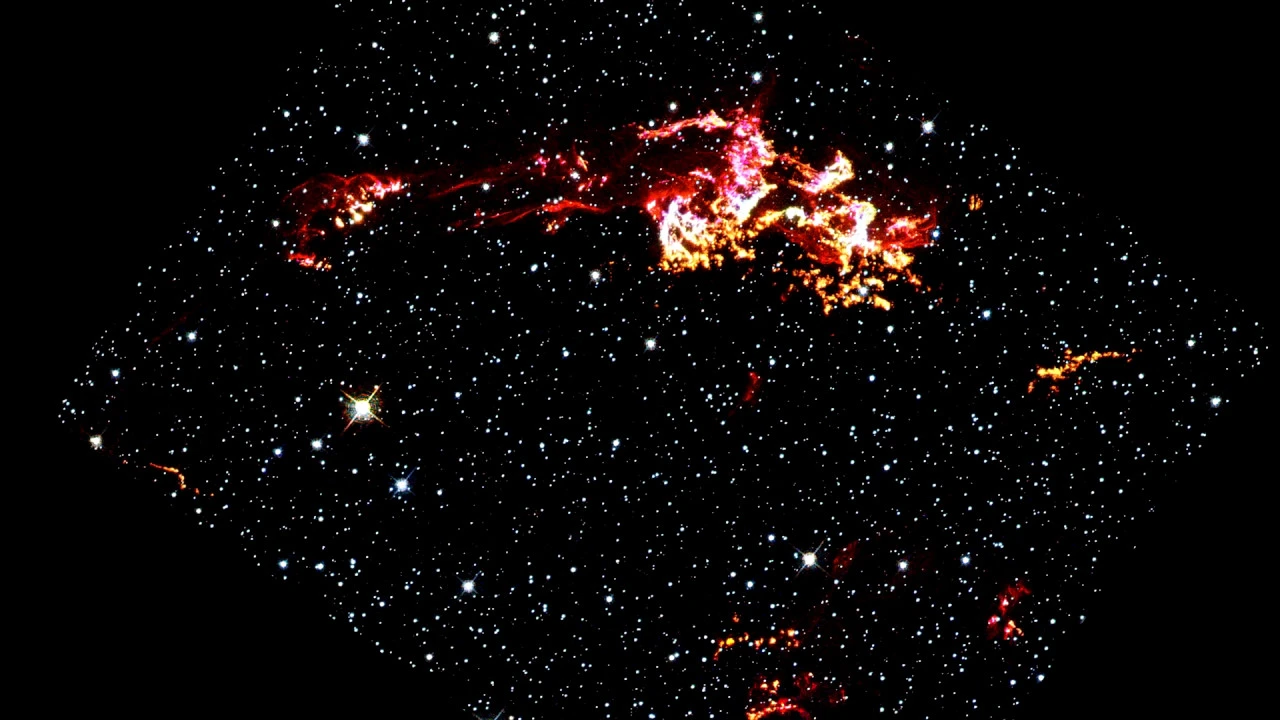








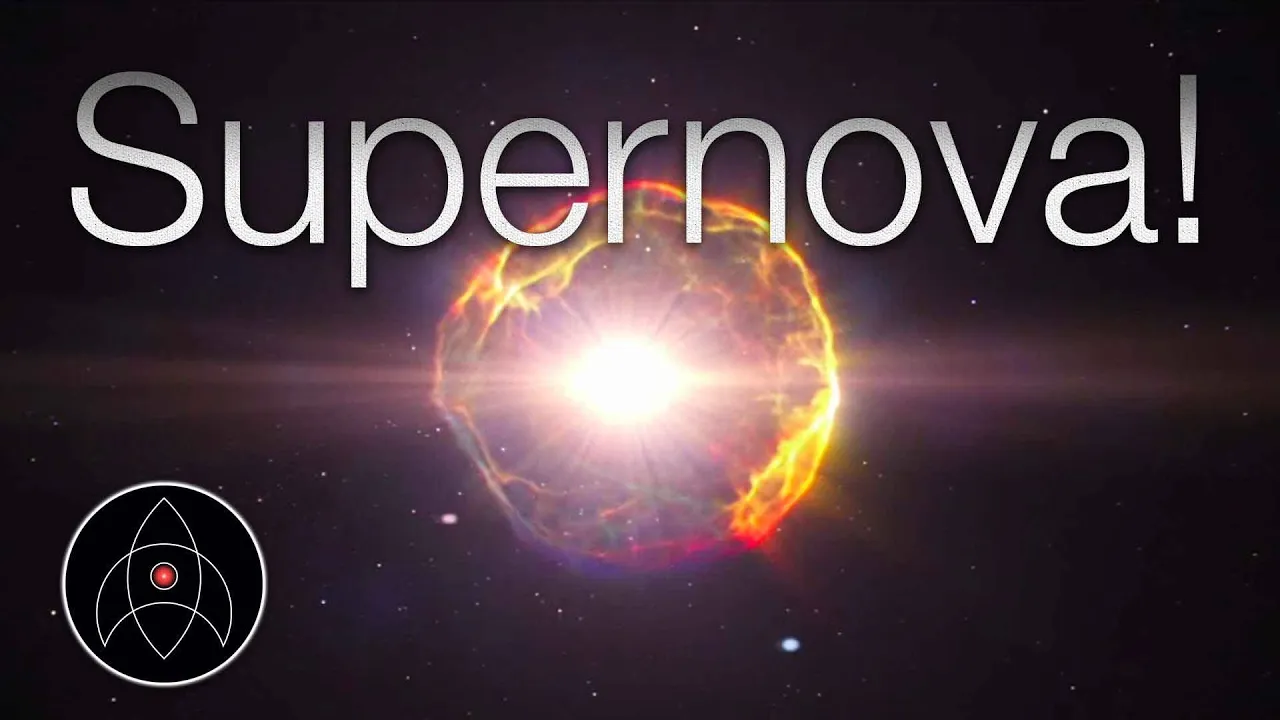
Core-collapse supernovae occur when massive stars (over ~12 solar masses) exhaust their nuclear fuel, building up an iron core that cannot sustain fusion because iron has the highest binding energy per nucleon; this causes catastrophic gravitational collapse, followed by a bounce that generates a shockwave and releases approximately 99% of the explosion's energy as neutrinos, while the remaining energy powers the visible explosion and creates heavy elements through explosive nucleosynthesis.
Core-Collapse Supernovae: Stellar Death & Nucleosynthesis
Added:Stellar evolution of massive stars, including the progressive nuclear burning stages that lead to an 'onion-skin' shell structure.
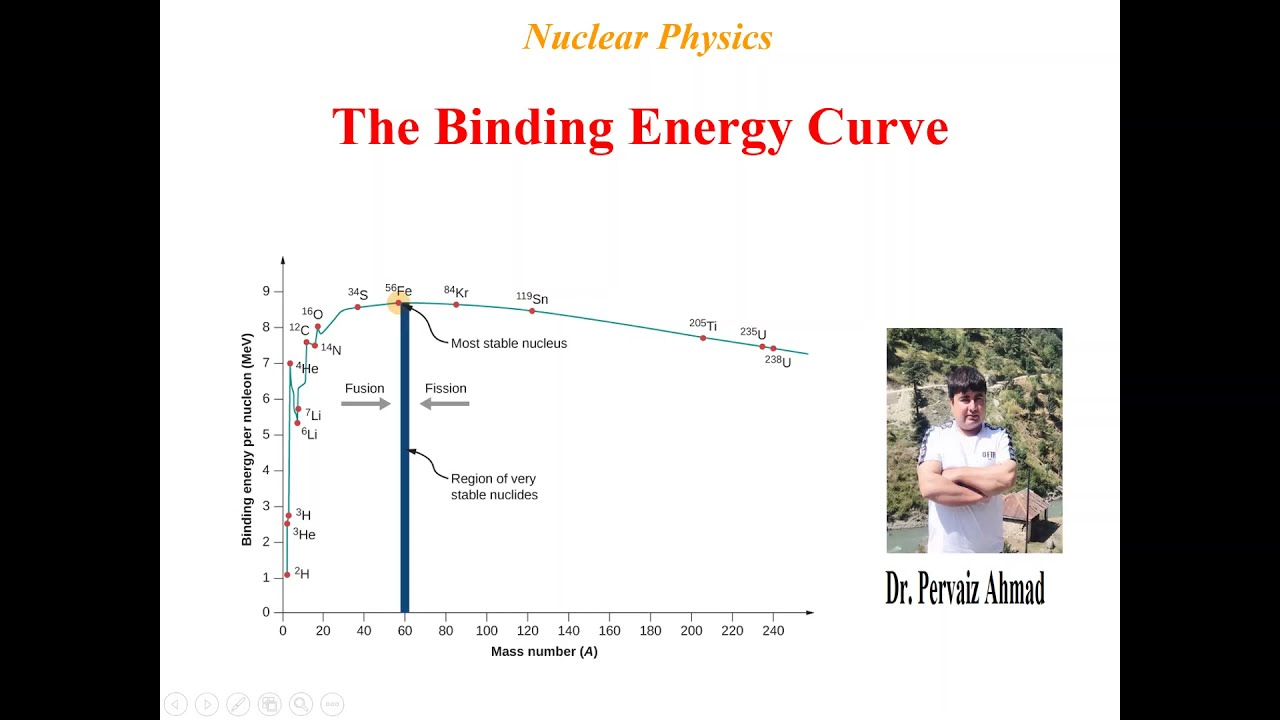
The principles of nuclear fusion and the binding energy curve, specifically why iron represents the thermodynamic limit for exothermic fusion.
The concept of hydrostatic equilibrium in stars, which is the balance between gravitational contraction and outward thermal/radiation pressure.
Electron degeneracy pressure and its role in supporting stellar cores, including the significance of the Chandrasekhar limit.
The physics and properties of compact remnants left behind by supernovae, specifically neutron stars (pulsars, magnetars) and stellar-mass black holes.
Advanced nucleosynthesis pathways, such as the r-process (rapid neutron capture) and its occurrence in supernovae versus neutron star mergers (kilonovae).
Multi-messenger astronomy, focusing on neutrino detection (inspired by Supernova 1987A) and gravitational wave signatures from core-collapse events.
Cosmic chemical evolution and how supernova ejecta enrich the interstellar medium to seed the formation of next-generation stars and planetary systems.
103.8K views1.4Klikes51:07Original Release: 2018-09-03
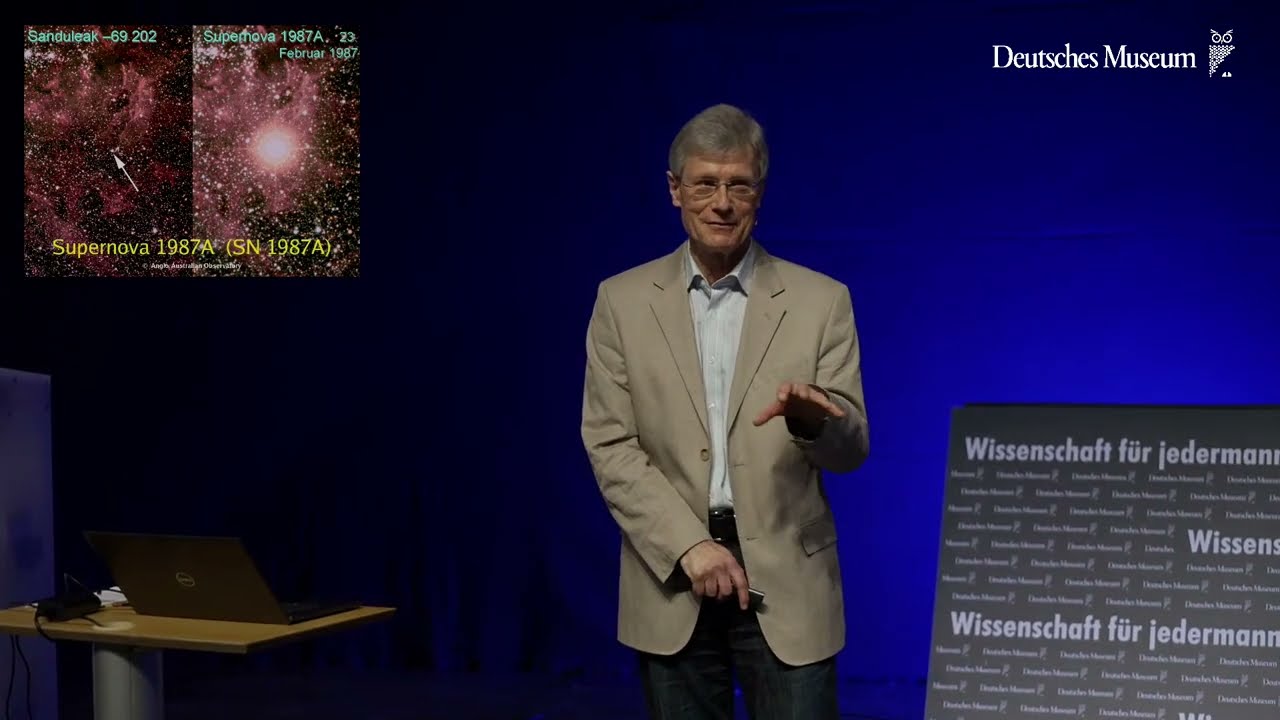
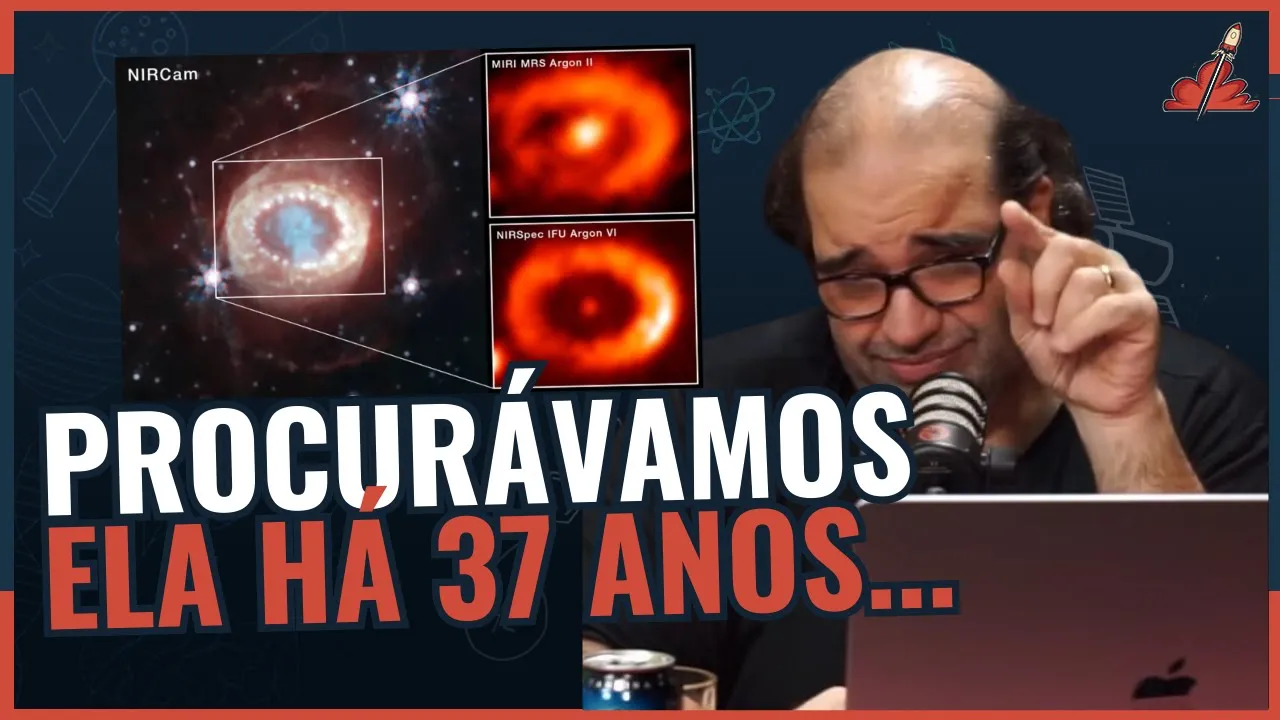
hello this is Jason Kendall welcome to the next of my introductory astronomy lectures today we're going to be talking about supernovae and supernovae are exploding stars super massive stars that are at the end of their life and they go out with up bangs let's see how they work because we've talked about large stars and how they lived last time and we found that they actually don't live as long a lifespan as low mass stars so let's see what the big one the big boys do so the endpoints of various style stars of solar mass levels I can be I was kind of summarized here this comes from one of the Pearson type textbooks and if it's really small less than 8% the mass of the Sun it does not do anything dramatic if it becomes there they're brown dwarfs and they basically do not they never even ishi eight hydrogen fusion between about 8% of the mass the Sun about a quarter of the mass of the Sun the final end state would be a star that is completely converted itself from hydrogen into helium and it becomes a helium white dwarf somewhere between say about a quarter of the mass in the Sun and about eight four to eight times the masses on this this table I think is a little the star ends up as a white dwarf a carbon-oxygen white dwarf and if it's much much larger than about four to eight times the mass of about twelve times the mass is own at the time of main sequence burning then they'll end up with a neon oxygen white dwarf and if it's larger than that north of twelve solar masses you get a supernova and a supernova doesn't produce a planetary nebula or a white dwarf it produces something completely different so let's see what that looks like last time we talked about the last days of a supermassive star and where we ended it with where massive stars go through these and twelve assed burning burning now means fusing hydrogen into helium or some element into another element to liberate energy and very massive star is roughly at least eight to ten times at least ten times the mass of the Sun they burn hydrogen into helium for only about ten million years a very short time period compared to the sun's ten billion year rough life sky span which is about a thousand times longer and once they do that they only the helium from 1 million years I convert carbon into oxygen and neon for only a thousand years convert fuse neon into oxygen for only about 10 years oxygen into silicon only for about a year and then the final stage of burning silicon into nickel and iron only lasts a day now this means that down in the core of this nested iron onion skin sort of thing way down in the core a very very large inert pull iron and nickel core is building up rapidly and compressing mostarda to do a major compression as its not producing any any energies but it does release energy by compressing so it's releasing some of its heat by simply releasing it through gravitational compression and that's what the iron core is doing so at the end of this day there's a height there's all this shell burning and we've seen burning again here means fusion hydrogen fusion helium fusion carbon night neon oxygen silicon and fusion all the way down into the core the exterior of the star is now extraordinarily massive it's a red supergiant or a red giant or maybe even a blue supergiant but it's definitely a supergiant star and the size of the star now has expanded out to about five astronomical units are almost the orbit of Jupiter or larger but the core is extraordinarily compact and that's where all the action is the outer envelope is just primarily hydrogen and helium there's practically no mixing between the outer pork the outer envelope and the inner core so we're gonna really don't now we have a touchstone that we have to actually understand for what's gonna happen next and what we've really been talking about the entire time is how much energy is liberated by combining a nuclei together and that's what we call the binding energy per nucleon and this graph which is which is comes from data that I downloaded from the International nuclear structure and decay data network which is a subdivision of the internet the International Atomic Energy Agency I which do governs which which tries to help people not explode nuclear weapons various countries and so forth it's one of the things they do anyway they do have a very fascinating set of a data about the nature of atomic energy and nuclear energy and so I downloaded all the data and to find found how the binding energy per nucleon is in mega electron volts which is a little tiny amount of energy but in terms of nuclei it's pretty large the number of nucleons on the bottom shows how many protons and neutrons there are in the nucleus so those were the nucleons we're talking about protons and neutrons and notice the graph has a peak right around 50 or 60 right just north of 55 or 60 and there's some other residual Peaks off to the right and there's a big drop-off to the left everything that we've been talking about with those little stars up to this main sequence stars takes tiny nuclei which would be on the lower left with a number of nucleons one is hydrogen which is a proton and the number of nucleons builds from one up to four and in fact I'm just going to move my mouse across and show you where helium is right there where I put my new where am I put my helium where I put this on there that is helium helium nuclei are incredibly well bound so if you put helium to get hydrogen together to helium you get a big jump so there's an enormous enormous jump that happens when you bind hydrogen into helium alright so this graph shows how much energy is liberated when you put all these protons and neutrons that PUE that into a nucleus or how much energy you have to provide to the nucleus to tear them apart so it's interesting to note that this this graph has a peak and it drops off to the right for very very large nuclei and it drops off to the left for very small nuclei so this means that we will have what's called a nuclear impasse diffusion of light in elements anything less than iron gives off energy due to fusion so we see in this graph below that that hydrogen or h1 which is just a proton gives off energy by fusing hydrogen to deuterium h2 which we see down below it and that's what we vote we've known that though since we talked about the proton-proton chain and we also knew that hydrogen fusing to helium gives off a lot of energy because there you see each efore in this graph when that Goods off energy we also know that acute fusing helium into carbon gives off energy but not as much you see the difference in energy between alien four and carbon 12 it's not as much as the difference between hydrogen one and helium four there's a large amount of energy that's given off by fusing hydrogen helium but not as much from helium to carbon and the step is even smaller from carbon to oxygen in fact if you look you can see that as you go up and up and up to the peak at iron-56 that each step is progressively smaller you get less and less and less energy out of the reaction by combining something with carbon carbon-12 combining it with a helium nucleus to form oxygen 16 you don't get as much energy in fact the energy difference to get up from oxygen 16 to iron-56 is very small so therefore there's less it this is what we were talking about the last time is the as it progresses each successive step provides less and less and less energy output it also takes more energy to do it because these things have protons and the protons push against each other for the electrostatic force and so you get less and less energy out the nuclei are bound less and less strongly which means it takes less and less energy in order to rip them apart and if you fuse high but but the general trend of this whole graph is that if you fuse elements lighter than heat iron together you do get energy out and if you have entered and to get elements heavier or more massive than iron with more nucleons in the nucleus of the of the nucleus then it actually has less bounce so if you look at uranium 238 we have the cross there we on the right hand side we see that as it is less bound than iron 56 meaning it has less binding energy per nucleon and so just piling stuff on top of it doesn't mean it means it takes energy to put these things together in order to in order to actually create uranium 238 be you don't liberate energy you absorb energy you'd go there so here it is again in larger form we see that helium to carbon gives off energy because you go up carbon to oxygen gives energy because you go up and oxygen all the way up to neon and magnesium all the way up to nickel gives energy up all the way up to iron 56 and below that fusion gives off energy but if you fuse elements together and try to go more massive than iron it takes energy because the binding energy is less so you have to push it together to keep it together that's a better way of talking about it in fact another way to look at it is we use uranium in our fission nuclear reactors in order to get electric power and we get that and get that power by uranium deep radioactively decaying down to LED and that gives off energy it's over uranium decaying to lead which is about halfway up or more than halfway up that from the far right hand side to the left towards the peak gives off energy so above iron fission gives off energy and to get things more massive than iron it it takes energy alright so this is a more detailed view and it was poking around on the internet to try to find a little better view but this is not very clear and what I did then as I decided to try to zoom in and show you what's really there but it's really not clear we've got iron 56 and nickel 58 at the top we have strontium 860 88 and scandium and cesium and there's Polonia lead 208 way down there but these graphs are kind of hard to read I'll grant that because oh they're in low resolution later on so again I went back to the to the IAEA website and grabbed just that data to see what will the most bound nuclei are and we'll look at the top top top top peak we see there's three three nuclei that are the most bound and iron-56 is the leftmost of the three top ones nickel 58 is just a little bit more more bound and then there's nickel 62 which is also just a little bit more bound than nickel 58 so what you find then but nickel 58 is I believe really is radioactive so it's going to decay and I am nickel sixty-two is also radioactive so it will decay and they'll decay rather rapidly so even though they have a high binding energy they have a hot they're also radioactive so they fall apart in any event and also they take a lot more energy and conditions tend to not be correct for them to actually stay together so you have to have very different conditions and were going to see what those conditions are in the center of a star because iron-56 is the most cut is the most common element in the in the universe for a reason and it's at the top of this peak so anything below this peak you get energy by fusing things from the left-hand side of the peak up to the right-hand side of the peak and the typical fusion means take an element take a nucleus and either slam a proton into it or slam a helium nucleus into it that tends to be the the dominant reaction that you would do in order to do fusion if you sometimes have like two carbon nuclei slamming together and that falls apart and gets lost stuff but tip but it's very easy to say let's get a helium nucleus because it's lighter than a carbon nucleus and spin it up really fast where they can smack into stop be that as it may however many many many many ways there can be because each one of these dots is a separate nucleus so there's lots of different nuclei lost in different isotopes of various nuclei but you get them by doing fusion or then radioactive decay by fission alright so what happens in the center of a star in the center of the supermassive star the iron core is going to grow and grow and tip by the feet by the silicon fusion happening above it until the mass becomes about somewhere between 1.2 1.4 solar masses and then the core will collapse under its own mass because it's exceeds the Chandrasekhar limit for a well yeah it exceeds the limit that a white dwarf can have before it will explode so a white dwarf is basically forming an electron degenerate core in there it can't be supported by electron degeneracy and all of a sudden the core collapses down rapidly and 'extra and heats up i heats up amazingly and it gets up to about 10 billion Kelvin and the density is about 10 billion grams per cubic centimeter so one sugar cube would weigh 10 million kilograms or that roughly translates and do a few hundred thousand tons so we have a sugar cube weighing hundreds of thousands of tons that's a lot of weight and that's how dense the nuclear war becomes however even though it's that dense it is still a gas because it is so incredibly hot and way down in the center it's incredibly turbulent because the Stars core is rotating and as it rotates it spins everything around and so you have those crazy mixing happening and even though the core is there it's not not moving it's the whole star itself is spinning now though there when it's that hot the energy is primarily in the form of kinetic energy of the nuclei bouncing into each other and that's at roughly the same temperature as the light so there are gamma ray photons that can't go very far because the density is so incredibly high that they actually equalize the temperature with the material around them so everything is the same temperature both the light the profile of the light and the blackbody spectrum as well as the nuclei that are zipping around and that has a number of results once you get enough of the energy in the form of light then the light itself has enough energy in form of a number of mega electron volts to actually disintegrate the nuclei remember those nuclei have binding energies of nuke of iron is roughly about eight oh and eight and a half and nine mega electron volts and once the temperature of the center of the area exceeds about ten billion Kelvin which is really high that's ten billion right ten billion once it exceeds that then a significant fraction of the energy of the light actually has an energy on the order of a few about ten or so mega electron volts which is a very high-energy gamma ray so once these gamma rays go flying around they can actually disintegrate the iron nuclei and when the iron nuclei disintegrate they absorb the energy of the light and then that lifts the nucleus apart giving the upper constituents its energy and that binding energy is absorbed out of the system and so as the entire store as the nuclei now start to absorb the light and then break apart because of it this is called photodisintegration it removes the light and therefore removes the energy that supports it it robs the core of energy it robs the core of pressure because if it's hot it has high pressure second then the if the density continues to increase and at this because that's when everything's breaking apart then there you have three neutrons and three protons so as the as there's photodisintegration happening it doesn't just break it into helium nuclei it breaks it down into also protons and neutrons that's very high-energy light and so now the protons and electrons are are very close together they can fuse together to form neutrons and the neutrons then of course give off neutrinos and neutrinos carry a tiny amount of energy and as they carry a tiny amount of energy they escape and they just leave because neutrinos don't see anything right when we talked about the surface of the Sun deep deep deep in the core of the Sun where neutrinos just escape the reactions occur in the Sun and they don't even see anything so the new videos get out of there taking energy further away from the from the core leaving it with no energy so there's no energy to provide pressure against gravity because remember gravity is always working so the neutrinos escape carrying away more energy to provide the pressure and then it collapses catastrophic ly so right about this this only lasts about a day this whole event and once the iron core starts to collapse it begins at about something roughly the size of the earth at a density of over up and the iron core collapses at about a hundred million grams per cubic centimeter and then a second later this is almost free it's faster than freefall actually it is freefall given the gravitational pull that it is in total freefall its drops from six thousand kilometers in size down to 50 kilometers in size in less than a second at about a quarter of a second later and then the the density increase - almost 10 to the 14th grams per cubic centimeter which is astonishingly high density and that density is the same density as they as an atomic nucleus so you can't really push the nuclei together anymore because now they're literally in contact so the density raises in the core and the comp and it has to stop because now Neutron degeneracy comes into play just like we talked about electron degeneracy in the center of the Sun that that causes the helium flash in low mass stars but with Neutron degeneracy that then says I I'm a neutron I can't go on top of another Neutron I can't go inside another Neutron we can be right together we can be next to each other we can we can touch each other but we can't be inside each other so therefore the neutrons don't have any place to go except stack up against each other and they cannot compress anymore so since they cannot compress basically talks makes a bounce so then you have an enormous bounce off the core because material still is piling down on top of it the core is now collapsing down to about 2.5 times 10 to the 14th grams per cubic centimeter which is the density of an atomic nucleus and the strong nuclear force now comes into play which which does all sorts of your things strong nuclear forces really poorly understood but what it does is it actually says that now you have glue ones that are interact doing the interaction between the protons and neutrons and that interaction is very powerful and keeps the nuclei from going on top of each other so the inner three-quarters of solar mass of the core that just stops so everything else this starts to fall on top of it and it springs back a bit doing what's called a bounce and so material still keeps falling on top of it but now but now that core collapse is coming back up and that creates a shockwave that shockwave kicks out about a huge amount of energy 10 to the 44th joules which is the equivalent of about a hundred billion suns that all happens in less than quarter of a second and in about 20 to 40 milliseconds which is the same time it takes you to blink here snap your fingers all the matter that is getting swept up by the shockwave gets it there's a bunch of stuff that's falling down on top and the shockwaves coming up and it stalls because now you've got material coming up and material coming down you've got a shock wave above it and then the interior the core because the neutrons are becoming because protons and neutrons protons and electrons are still becoming neutrons inside of that core as part of this compression the neutrinos are still trying to get out and they can't so they basically create they get trapped finally it becomes dense enough for neutrinos to get trapped and by trapped I mean one out of every billion or so the other 999 million get out but one in a billion considering how many and neutrinos are coming out that's enough to do it those neutrinos get trapped in the gas they then heat the gas depositing their energy through through weak nuclear reactions inside of the gas and that turns it because it's uneven across these across there because the neutrino because neutrino interactions are rare so it's going to be an on the even sort of distribution that leads to incredibly violent convection right above the core which is trying to bubble away and turn itself into one big atomic nucleus and that makes a new shock wave as the neutrinos now push the whole thing apart about 300 milliseconds about which is a which is just over a quarter of a second which is also interestingly enough that's about as fast as your brain processes thoughts 300 milliseconds that's interesting to think so as fast as your brain can process the thought the shock wave reappears and smashes out through the star pushing up against the infalling matter creating a massive amounts of nuclear fusion in the wake because of the dense the high density and high temperature that shock that comes back up which is now a shock wave for an explosion wave heats and accelerates the rest of the star and the shock eventually breaks out through the surface moving at almost 10% of the speed of light and from a distance we see a star that's now about the size of Jupiter's orbit explode and that's what we call a supernova a for a very very brief time within minutes as they supernova can outlast up to one to ten billion times the luminosity of the Sun just a few minutes and in fact much longer and it can outlast an entire galaxy of stars in terms of its output of light and the outer envelope ISM blown off into space along with much of the core and accelerated ulta to a fraction of the speed of light remember the speed of light is 300,000 kilometers per second so this is going one thirtieth of the speed of light that's pretty fast and that's a really fast shockwave it's not a pretty thing if you were next to it you'd be dead it doesn't matter how close you are you'd be get you can't be Superman you'd be dead if you were within a Lightyear you'd be dead that's just how this all works out and well you're not gonna be there and they're never going to do an episode of Star Trek and I'm even sure a doctor who would lose it on that one anyway the gas will expand eventually cooling off leaving only the core behind and we see in the background here a galaxy with that that has a supernova in it we see the supernova on the outskirts of this galaxy and notice how it's almost as bright as the core of the galaxy this is a ground this is a dimmer a supernova but it was but it was seen there on that galaxy in fact you could think we might might even be brighter than the core and remember the core of the galaxy is composed of maybe tens of billions of stars itself so one star is much brighter than maybe tens of billions fifty billion stars that are deep in the core of this galaxy for just a few months and that's what a supernova is and this has a name 1990 4d because it was seen in 1994 and it was the fourth one observed in 1994 so that's why it's called supernova 1994 d then this was one that I saw in 2014 this what this happened in the nearby galaxy m82 it was a different kind of supernova but still the points the same is a super bright star and that bright star appears inside of the disk of the galaxy don't look at the star that's right above the number of the the magnitude label look inside the disk and you'll see that there is one star that's actually getting brighter and brighter with time and then fading with time and so we see that as time goes on this particular star is getting brighter and brighter brighter and then fading so the order of the images is upper right middle right lower right upper left middle left lower left which is kind of a weird Organization for it but what the heck somebody was reading it that way that's good for them I forget why this image came about like that but we definitely see the star getting brighter as time goes on and that's that was in January of 2014 and I remember taking out a telescope into seeing this supernova inside of that galaxy I had a 15-inch scope at the time and and when I looked at that thing I could definitely see a line of three stars I can see the the two stars and is most obvious in the lower left-hand corner this image as well as the core of that galaxy so this is this was eminently within the observational capacity of a sub a large like I looked a fifteen inch telescope in an urban environment what did I find and there's another image this was taken by a microwave circuit or and we see all the way over on the right and I'll Juicy's my house to kind of point over to it there it is right there there's the supernova in m82 here's another supernova in the galaxy NGC 1309 and there's a Hubble follow-up image with respect with this this the left-hand one by taking about the Lick Observatory was in 2002 and once you've run out of letters you start doing two letters so they went through the entire alphabet and that's because F and K what is F and K meanwhile there's been since 1994 serious supernova studies so people are able to find large numbers of supernovae by going and hunting for them so dedicated supernova searches have been found hundreds a year and we see in the Hubble image from 2005 they're able to pinpoint exactly where that star was in the sky and try to find look for remnants and there's one that happened in 2005 in the nearby galaxy m51 which is the rule pool nebula and there's that galaxy we saw in 1994 and finally let's look at the nature of what a supernova explosion kind of looks like they're very very very luminous and we talk about light curves and that's why we have these images that we looked at before is that how does the luminosity of such a star change with time and there's two types two general types there many many many sub classifications but I'm just going to keep it with these two types because it makes a little easier to understand because there's two principal versions of super novae and we're really only talking about one kind this time which is called core collapse supernova and a core collapse supernova is called a type 2 supernova and that's the green line in the background what you see is that there's an incredible brightening and then it dims for a while and then it has a plateau a flat plateau for a while where it stays at roughly the same brightness for a long time maybe a month or so and then dims again it kind of occurred and then the curve changes shape again each one of those changes of curvature is a result of different material glowing so the initial trillions of the supernovae will fade over time and it's slow because all of the gamma rays remember that supernova explosion had all sorts of things mixing down right above the core and that means there was a number a huge amount of nuclear fusion that occurred explosively in the core and rather rapidly so in that explosion it created large numbers of radioactive elements in this primarily radioactive nickel and radioactive cobalt and the two curves actually are through we see that there is a decay of radioactive nickel two cobalt two gamma rays those gamma rays then illuminate the gas that surrounds the supernova and makes it glow because the light the gas might be too thick to actually let the gamma rays come straight out but then the gamma rays themselves glow it means that the gamma rays the Glick the gas itself glows because it's been heated by the radioactive decay of nickel and cobalt and so that's how we have these kind of plateaus and peaks as the glow as the radioactive decay that those Peaks then plateau and then peak and then decay and that's all because of the radioactive decay of those other things the Mint nickel tends to be the thing that fades out more slowly at the top and cobalt is primarily responsible on the right so there are also these two types of supernovae not just their light curves meaning one just gets bright and then slowly dims where the that's the type ones the type twos have a slightly different appearance to them type ones have no hydrogen lining mission features but type twos do and that makes sense that type 2 supernova would have a lot of hydrogen lining mission remember hot hydrogen gas happens because it gets really hot right and so it'll it'll be ayat they the atom gets ionized or excited and drops back down from excited states down through so you get hydrogen emission lines in visible light and saying you should see that pinkish flow of hydrogen or at least an emission line we're looking at the spectrum that's because the outer five astronomical units of the star or a significant fraction of the star did not participate in the fusion down in the core so it's still hydrogen so type 1 type 2 supernova have hydrogen emission lines but strangely enough type ones don't so core collapse supernovae are the type twos they do have significant hydrogen absorption lines but type ones don't which is really interesting so let's look at one in particular one of the more recent ones that came out that happened when I was at when I just got done with high school so when I was in high school 1986 I graduated it went off to college I started studying astronomy and everybody all those things started talking about supernova 1987a the first one in 1987 and February 23rd and that happened in the Large Magellanic Cloud and that's a and Large Magellanic Cloud is a neighboring galaxy to the Milky Way it orbits at about 100 160 million light hundred sixty thousand light years away so for a very short period of time it was brighter than five billion suns which is amazing finally which would made this really important it was we haven't had many milk Milky Way based supernovae you know a large manager like cloud is not part of the Milky Way and if the Large Magellanic Cloud is outside the Milky Way but we haven't seen many naked-eye supernovae since Kepler saw one in 1604 so this is the picture that was taken by the anglo-australian observatory of supernova 1987a the right hand side shows before and since it's in the large on a cloud and that's a closeby galaxy this is an extraordinarily studied area and because it's so well studied there's lots of pictures and people were able to determine exactly which star it was before it exploded and there's the star and we can see there's the Large Magellanic Cloud itself in the sky it's a star forming region it's a huge star Factory and from the this is from then we take a slightly different view of it from an emission line survey on the left-hand side and then we show where this location is in supernova in the Ottawa anglo-australian observatories image of it and then we see a Hubble Space Telescope image of being close up and this was a the is a star that exploded that 20 solar masses so here's some of the vital statistics for 1987a which was a supermassive star has a funny name named after the guy who actually made a catalogue of these large stars these hot stars in an area Large Magellanic Cloud distance about 50 thousand parsecs and the type of star was a B type star a B type supergiant so it's not as hot as an au star but it definitely is a hot blue star and the size of the star before it exploded was about 50 times the radius of the Sun the surface temperature was about was 16,000 LT the Sun is is 6,000 Kelvin so the surface temperature wasn't as LA was just only a little bit hotter Li three times hotter from the surface of the Sun however the core was a different matter the luminosity of That star prior to his explosion was over a hundred thousand times the luminosity of the Sun and his mass was about 16 times the mass of the Sun now there was another really interesting thing that happened at this exact time that the star went off a neutrino burst was detected at that time there were a number of neutrino observatories and three of them actually detected it and there were 19 anti neutrinos detect anti electron neutrinos detected by the various neutrino observatories across the world the the cami oak and Observatory which is in Japan observed 12 of those 19 and the energies of these neutrinos were about 20 mega electron remember the binding energy of the core of the sava typical of a nucleus is about eight or nine for iron nuclei so these these these neutrinos were given almost three times the energy required in order to rip apart an atomic nucleus of iron which was fascinating so there was a huge amount of energy being pushed into neutrinos as the star was collapsing in the core the nice the thing that made it really interesting and began what Clutton this this star began the process of what's called neutrino astronomy because they were detected three hours prior to the light of the star the star was observed added up by an astronomer it because it was up at night and it was seen in the sky at night I and he reported it in the time he saw it and he swung a small telescope over to take a picture of it I when it was observing down in donut Australia I forget the name of the person but under the 1987a website you can certainly find it on Wikipedia you could certainly find out about but because the distance to it is a hundred and sixty-eight thousand light-years and because we detected 19 anti neutrinos across the earth that meant because of how seldom and how rarely neutrinos interact with normal matter there had to be fifty billion neutrinos coming from supernova 1987a arriving at Earth at the Earth's distance from it 168 thousand light years away fifty billion neutrinos per square centimeter so hold out your thumbnail that's about a per square centimetre and at that moment fifty billion neutrinos passed through that your thumb at that point from that one supernova that meant the total number of neutrinos I was admitted from this explosion was about ten to the 58th that's a big amount of neutrinos it's a one with 58 zeros after it that's I mean I didn't even bother to write it out because I mean it'd be cute and everything but who wants to do that on this thing and the neutrino burst lasted about 10 seconds which lends credence to the idea that the neutrinos get all bunched up and there were actually two or three waves of neutrinos that occurred the total energy released in the neutrinos is about 10 to the 48th joules which is about 10 to the 2 and this since then if you added up over 10 seconds that's 10 to the 22nd loot times the luminosity of the Sun that's a lot of energy in fact 99% more than 99% of all of the energy of supernova 1987a and all core collapse supernovae go out in the form of neutrinos neutrinos carry away almost all the energy sure we can see it by death as a as a bright thing but if we could look in neutrino if we had neutrino detecting eyes we would be blinded because there would be too many neutrinos for us to see and the neutrino the luminosity of it was astonishing in terms of how much luminosity there was in in energy compared to that Sun that's and so the peak visible luminosity meaning how much light it emitting was about only a measly four times ten to the twenty thirty third joules which is only a hundred which is only about ten million solar luminosities which isn't much so that's incredibly small compared to the neutrino luminosity it's a tiny fraction remember to subtract that's about 10 to the fifteenth times less luminosity in light than there was in neutrinos well the material they got ejected got ejected really hard at ten to the seventh meters per second that's about three percent the speed of light and about four solar masses of material got ejected from this supernova and it primp arted ten to the 44th joules of energy so the kinetic energy of the material is comparable or at least it begins to be comparable to the total energy released in neutrino so the kinetic energy is about one hundredth of one percent of the neutrino energy and they just to give it a reference frame it became as bright as a three magnitude star so that's it was pretty bright so if you were down there you could say hey what's that new star in the sky cuz a 3rd magnitude sky under dark sky conditions and if you're know and if you know your night sky you'd say that's a new star you would have noticed it it is a distinctly noticeable star wasn't this bright as like - - like Venus or something but it was as bright as one of the stars in the one of the belt stars in Orion as as bright as that or one of the brighter stars and bright constellations such as those in the Big Dipper so it became pretty bright it was definitely make Addai star remember most of the energy was not in light wasn't even in ejected material almost all of it was in the neutrinos however that doesn't stop people from looking at stuff and what's really neat is the American Association and variable star observers had a number of people who went took a look and what we see is this is the light curve from visual visual observations of supernova 1987a teen 87a and this is in the V magnitude and we see people making out to measurements over the course of time and this can be downloaded from the double a DSO org and it shows that there were it was caught before the peak occurred then the peak occurred and then it had a plateau a sort of long slope and then it had another drop-off so the first peak they when it was observed was the initial explosion and then it got brighter as time went on because a new Col 56 which is radioactive decays to cobalt 56 and which is also radioactive so the the nickel has a very short half-life and that's the first decay of the curve and if we got brighter because that stuff was seen as the as the shroud of gas was revealed it got brighter and brighter and brighter so the first slope down is the dimming as the nickel-56 finally decays and becomes cobalt 56 then that drops away there's not much nickel-56 left when we got a bunch of cobalt 56 and so we got this longer slow slanted curve and that shows it decaying to normal iron 56 so iron 56 is the most common thing in the universe because everything more massive than it or at least many of the products that would be formed in supernovae decay to nickel to iron 56 and then it kind of is a nice little curve at the bottom and that's just the remaining gas and dust being heated by x-ray emission from residual things as well as shock heating from the fairground and he got dimmer and dimmer and dimmer and once he got below magnitude six it was below naked eye view and then people were using telescopic views all the time so that's really interesting and we see how long it takes for these things to go and you can see that it was observed in February and it was a big burst of observations right there but as people ran to their telescopes in order to make these strong observations and if you look whence the WPS or website you see how many people actually participate it which is a lot so later on we see images of the rings surrounding supernova 1987a and the bar shows the angular diameter cornea of the moon which is one sixtieth of the angular diameter of the moon which is about one one one half of a half of an arc minute so that they chose it's not very big in the sky but at least it's noticeable in a small telescope so when this was looked at it was determined by subsequent Hubble observations that this glowing ring has exists these rings that really bright ring in the center has they have been there for about twenty thousand years before the star exploded and when the egg and the x-rays from this explosion energized all the gas it's making a blog and the all these things these blobs are moving really fast that blobby structure is moving at about twenty million miles an hour and that creates a shockwave of material that slams into and that shockwave material heats it up and makes material in the surrounding medium the surrounding interstellar medium to low so there's the glowing material moving at millions at tens of millions of miles an hour slamming into the interstellar medium and causing it to be hot and emit x-rays and there's also these kind of interesting bubble shells as well which are like light echoes and we can see that the Hubble Space Telescope imagery from 1992 4 to 9 2003 shows the evolution of this ring the initial ring was heated by by x-ray emission and then as time went on the mature material from the supernova slammed into that hot ring and made a glow brighter I never see a detail there we see a brighter detail showing them knots of X gas that's been heated to tend to extraordinarily hot give back maybe tens of millions of degrees it also emits an X rays and how did this actually come about how did this what's different about this and we're gonna go into this a little bit later too but let's let's look at how supernova 1987a might have arisen and where those rings came from probably the star was a binary system and the more massive star evolved first became a red giant I and is it as it became a giant it had literally engulfed its close companion so these two were incredibly close stars and then the two stars one star was got larger and larger and that provided drag on the other star third the two stars the that in so spinning most of the star of the red giant got pushed out into a spinny envelope to conserve angular momentum as one part merged and the other part expanded away so then you have this ring that's been expanding away as the two star is now merged together into one then as they merge you have basically something that's very similar to a protoplanetary disk like we saw in the interstellar medium stuff and that's what the bipolar outflow is a gas main it made us made this ring like structure and the bubbles above finally then there's a massive explosion that occurs and that's the supernova that we saw all in bright light and then the ejecta start to move outward and once they ADEA then from the supernova slams into the disk it makes it glow and forms those beads so there's the story of how people think it actually worked and so we have all these knots of gas and dust there's bipolar flows being us but that inner glow is about from the Jets that occurred from the from the supernova as the material flows outward so there's some hot materials in there and yet this should have formed some sort of neutron star or black hole but it isn't seen yet and it basically has not been revealed yet because the gas density might be too high this there's no to think that it's not there yet it's just hidden for some reason maybe he got ejected and shot out to the left or something like that and left the entire area but there should be some kind of disruption if it did that an angular momentum would say that it probably be shooting off into the green structure around him anyway we see that there's a pretty interesting explanation for those fun ring structures at supernova 1987a which was the nearest supernova to us since since 1604 and why we care about supernovae and we're getting close to the end here so bear with me is because nucleosynthesis is where we get all of the elements in the cosmos we start the universe with hydrogen and helium the Big Bang made hydrogen and helium but stars make everything else they fuse hydrogen into the light elements up to iron and nickel and they in court they became common layers and when a supernova explosion comes out that releases nuclear fusion of the light elements up to iron and nickel that explosive fusion does and then there's all sorts of neutron based reactions because of the dense area inside of the supernova explosion itself and also the radioactive decay in the supernova remnant that occurs and that creates all sorts of Halle heavy elements up to 250 for California which is 254 nucleons in it which is really rich in nucleons neutrons and those things then decay rapidly to other things like the land or higher supernova explosions create um nearly all of the heavy elements in nature that's where they come from the iron that you use in that is in your blood was formed in a star the mini nickel that you paid the nickels to pay a piece of candy for at the nickel and dime store that was made in the center of a star the universe started out with about 75% hydrogen just again just under 25 percent helium and little bits of lithium boron and beryllium but but nothing else every other element were fused in nuclear reactions inside of stars and all heavy elements above high-heel I mean sorry above iron are formed in supernova explosions of various kinds so the ten most abundant elements in the entire universe are hydrogen helium starting at the top all the way down to sulfur in magnesium and notice what's interesting about what we see in the topmost 10 abundant elements is that many of them like magnesium carbon oxygen nitrogen iron those things are really important for life so the elements that make up life are incredibly common elements in the cosmos and they've they're all so small on the on the periodic table we also see silicon being a very large amount it was formed and notice what the Earth's crust is made out of mostly primarily silicon oxides and so that mean that shows where planetary objects come from so planets are made from silicon and iron predominantly with all sorts of other stuff and carbon and oxygen as and light uses those common elements in in huge amounts in order to endure to metabolize and live so what happens to that supernova remnant such as 1987a well you get all sorts of the all the materials that were made in that all the fusion and rich stuff it was made in the explosion it expands at thousands of kilometers per second that makes a blast wave as we saw with 1987a it plows into the interstellar medium it stirs the interstellar medium it makes an ionized nebula that can be seen for thousands of years we'll talk about supernova remnants next time but that makes something to be seen for a few thousand years after the explosion and that material then mixes with the interstellar gas that mixed gas makes this becomes part of the next generation of stars with these metals and then the next stars are more metal rich and bi-metal I don't mean like iron and nickel and so forth I mean any other element heavier than helium that's what astronomers call metals that's a really funny thing so metals are things that are heavier than helium and all successive stars have more of it as a result of that so the material that was formed in those supernovas goes out into space and all of the things that are us that were formed in some supernova a long time ago and in the same galaxy and some were very nearby free cuz there would be stars such as but slightly less massive stars he made a huge amount of carbon and oxygen before they decay there's a different kind of star but the vast majority of all heavy elements come from supernovas such as these and therefore the solar system itself formed five billion years ago by gas that was enriched from these massive star explosions and so star is formed they evolved they live and they die and then they push out that stuff into the interstellar medium and make more stars and that's what we mean by this thing that we saw earlier on that this beginning stars start from clouds of gas and dust they form protostars they go through their main sequence lifespan they then become red giants or explode as supernovae if they become red giants they puff off their outer layers as planetary nebula the more massive red star is like a little bit more massive than the Sun churned out a lot of carbon before they do that the most massive stars go into these core collapse supernova and explode in wildly in order to make these type 2 supernova sometimes they'll form a neutron star and sometimes they'll form a black hole the most massive star is at the top of this thing don't even can do can go straight to a black hole and that's really interesting and we'll talk about those we talked about gamma-ray bursts but for now notice the cloud on the left form stars that are proto stars and stars become that way and they shed their outer layers or explode or something like that and seed the right-hand side of this which is more and more and more gas and dust and that then leaps around to the left with those small mass stars at the bottom and the high mass stars on the top with 80% of all the stars in the Milky Way just brown dwarfs and red dwarfs with the rarest of things the the tiniest sliver of stars are become blue giants blue supergiant and and explode violently in these ways to make supernovae alright so that's a more about supernova and we'll be talking about their remnants next time
Up Next
20:35
The Woman Who Solved the Mystery of Heavy Elements: R-Process & S-Process
@Mahesh_Shenoy
142.6K views•2024-12-19
61:17
First Billion Years of the Universe with the Square Kilometre Array
@iaaudc
121 views•2022-05-26
29:29
Stellar Motions: Parallax, Proper Motion & Radial Velocity
@JasonKendallAstronomer
9.6K views•2018-07-16
6:10
Gamma-Ray Bursts: Cosmic Snipers Explained | Astronomy
@kurzgesagt
15M views•2016-07-31
Related Study Plans & Knowledge Roadmaps
Structured learning paths in Astronomy
astronomy
Reionization: Pop III Stars, IGM & 21cm Line
01Foundations of Cosmology & the Early Universe
02Population III Stars & Cosmic Dawn
03Physical Mechanisms of Reionization
+ 2 more learning modules
17h5 modules
Explore Roadmap
astronomy
Planetary Rings: Dynamics, Roche & Resonances
01Foundations of Gravity and Orbital Mechanics
02Tidal Forces and the Roche Limit
03Structure, Composition, and Collisions
+ 2 more learning modules
10h5 modules
Explore Roadmap
astronomy
Asteroseismology: Stellar Waves, Ages & Cores
01Foundations of Stellar Astrophysics & Wave Mechanics
02Stellar Oscillation Modes: P-modes and G-modes
03Mathematical Framework of Asteroseismology
+ 2 more learning modules
35h5 modules
Explore Roadmap
astronomy
Adaptive Optics: Physics, Engineering & Control
01Foundations of Wave Optics and Wavefronts
02Atmospheric Turbulence & Optical Distortion
03Wavefront Sensing Technologies
+ 3 more learning modules
35h6 modules
Explore Roadmap